



1. Introduction
We may somewhat arbitrarily date the beginning of contemporary neuroscientific interest in consciousness to 1949 and the discovery of the cerebral activating and alerting functions of the brainstem's reticular formation (Moruzzi & Magoun, Reference Moruzzi and Magoun1949). This discovery sparked a decade of pioneering research and theory summarized in major symposium volumes that featured the term “consciousness” in their titles: Brain mechanisms and consciousness (Adrian, Bremer, & Jasper, Reference Adrian, Bremer and Jasper1954) and Brain and conscious experience (Eccles, Reference Eccles1966). Although the hopes pinned on the reticular activating system as the key to consciousness went unfulfilled, in subsequent decades the topic of consciousness found exponents in psychology (Baars, Reference Baars1988; Luria, Reference Luria1973; Mandler, Reference Mandler and Solso1975; Shallice, Reference Shallice1972) and in behavioral biology (Griffin, Reference Griffin1976; Schwartz & Shapiro, Reference Schwartz and Shapiro1978), and elsewhere. Since then, a wide variety of novel bids for a neurobiological account of consciousness have appeared. They include proposals regarding re-entrant processing (Edelman, Reference Edelman1989), neuronal correlates of subjective experience (Logothetis & Schall, Reference Logothetis and Schall1989), gamma synchrony (Crick & Koch, Reference Crick and Koch1990; Llinas, Ribary, Contreras, & Pedroarena, Reference Llinas, Ribary, Contreras and Pedroarena1998; Singer, Reference Singer1998); the “neural self” and core consciousness (Damasio, Reference Damasio1998); a neuronal global workspace (Dehaene, Kerszberg, & Changeux, Reference Dehaene, Kerszberg and Changeux1998), neural complexity (Tononi & Edelman, Reference Tononi and Edelman1998), feedforward-feedback convergence (Lamme, Reference Lamme2000), a neural reality space (Merker, Reference Merker2007); integrated information (Tononi, Reference Tononi2008), selfhood and interoception (Seth, Suzuki, & Critchley, Reference Seth, Suzuki and Critchley2011), the entropic brain (Carhart-Harris et al., Reference Carhart-Harris, Leech, Hellyer, Shanahan, Feilding, Tagliazucchi and Nutt2014), passive frame theory (Morsella et al., Reference Morsella, Godwin, Jantz, Krieger and Gazzaley2016); and “projective consciousness” (Rudrauf et al., Reference Rudrauf, Bennequin, Granic, Landini, Friston and Williford2017), among many others.
Contemporary science, in other words, is well embarked on a quest to obtain closure at the observer end of its naturalistic project by finding a neurobiological or (neuro)computational account of the conscious observer itself. The heterogeneity of the just-cited sample of candidate accounts indicates, however, that the quest is still in its early stages. In ways that frustratingly echo the results of past attempts to approach consciousness seriously from the seventeenth century to the nineteenth, and this in spite of the prodigious accumulation of relevant knowledge in the twentieth and twenty-first centuries, the quest has yet to crystallize around a generally agreed-upon paradigm featuring shared first principles, explananda, evidentiary criteria, and methodology. As a result, “schools” advocating disparate theoretical bids for paradigmatic status contend with one another without the benefit of any shared means of adjudicating the relative merits of their conflicting proposals. In Kuhnian terms, these are the cardinal characteristics of the “prehistory” stage of a nascent science (Kuhn, Reference Kuhn1970, sect. 2). On this “route to normal science,” the proponents of rival theories, formulated in scientific terms and supported by empirical evidence, often find themselves talking past one another for the lack of shared assumptions. Such a scientifically unsatisfactory state of affairs is typically resolved, still speaking with Thomas Kuhn, at the transition to science proper “by the triumph of one of the pre-paradigm schools, which, because of its own characteristic beliefs and preconceptions, emphasized only some special part of the too sizable and inchoate pool of information” (Kuhn, Reference Kuhn1970, p. 17).
One of the research programs currently aspiring to this paradigmatic position is the body of work constituting the integrated information theory (IIT) of consciousness, propounded by Giulio Tononi and colleagues (Mayner et al., Reference Mayner, Marshall, Albantakis, Findlay, Marchman and Tononi2018; Oizumi, Albantakis, & Tononi, Reference Oizumi, Albantakis and Tononi2014; Tononi, Reference Tononi2004; Reference Tononi2008; Reference Tononi2012; Tononi, Boly, Massimini, & Koch, Reference Tononi, Boly, Massimini and Koch2016). As a candidate paradigm for a scientific account of consciousness, it deserves thorough scrutiny in its conceptual, formal, and empirical aspects. This is all the more so because, according to IIT, consciousness is not uniquely associated with animal brains and their potential creations (e.g., artificial consciousness in machines) but extends, as we shall see, to natural objects and artifacts much farther afield. As a consequence, aspects of panpsychist metaphysics have begun to take on the appearance of relevance to the conceptual framework of IIT (Tononi & Koch, Reference Tononi and Koch2015), a development seized upon by the popular science media under headlines such as “Minds everywhere: ‘panpsychism’ takes hold in science” (Ghose, Reference Ghose2016).
In what follows, we motivate our claim that IIT rests upon a misconstrual of what its central concept of integrated information and prime quantity Φ in fact reflect. First, we examine the construct validity of IIT's measure of consciousness, phi (Φ), by placing it in formal, conceptual, and empirical contexts in sections 2, 3, and 4. They address, in turn, the construct “integrated information” in terms of its formal properties, its relation to salient, possibly defining aspects of consciousness, and its co-variation with relevant empirical circumstances. In section 5, we examine how its identification of what Φ measures with consciousness has brought IIT toward the orbit of panpsychist ideation. Section 6, finally, explores lessons that may be gleaned from the manner in which IIT fails as a theory of consciousness. These lessons concern the constitution of consciousness and also bear on the current impasse in the search for its neural correlates. We end by suggesting that better articulated and constrained hypotheses about the nature and structure of consciousness are required to enable continued progress toward an empirically satisfactory theory and offer a few suggestions in this regard.
2. IIT in context, I: Integrated information
IIT identifies consciousness with integrated information, that is, according to IIT, consciousness just is integrated information, a constitutive claim: “According to the IIT, consciousness is one and the same thing as integrated information” (Tononi, Reference Tononi2008, p. 232).Footnote 1 Much, therefore, hinges on how integrated information, and its measure, Φ, are understood in IIT. In its latest version, integrated information is construed as the extent to which the causal structures of a system, for example, the brain, achieves state transitions that cannot be reduced to the joint transitions of their parts independently of one another (Oizumi et al., Reference Oizumi, Albantakis and Tononi2014). More colloquially expressed, integrated information is “the amount of information generated by a complex of elements, above and beyond the information generated by its parts” (Tononi, Reference Tononi2008, p. 216). Such an informational difference is an attribute of those parts of a system whose causal structure exhibits a kind of complexity that combines system differentiation with integration (Tononi & Edelman, Reference Tononi and Edelman1998; Edelman & Tononi, Reference Edelman and Tononi2000, Ch. 6; Mediano, Seth, & Barrett, Reference Mediano, Seth and Barrett2019b; Tononi, Sporns, & Edelman, Reference Tononi, Sporns and Edelman1994). That is the bedrock on which IIT rests its identification of integrated information with consciousness (Oizumi et al., Reference Oizumi, Albantakis and Tononi2014; Tononi, Reference Tononi2004; Reference Tononi2008; Reference Tononi2012).
IIT not only identifies consciousness with integrated information, it proposes a formal (algorithmic) approach for quantifying the degree to which a physical system exhibits integrated information and thus, ex hypothesi, consciousness (Mayner et al., Reference Mayner, Marshall, Albantakis, Findlay, Marchman and Tononi2018). A system here is understood as a set of potentially active nodes and their interconnections, that is, a network in the graph-theoretic sense. Without entering too heavily into technical details, the key operation in the way IIT measures the extent to which such a system combines integration with differentiation is first to analyze the behavior, under iterated perturbation, of each of its subsets (S 1…Sn) of nodes (or elements) in terms of the quantification of information transfer across all the bipartitions of the subset (Si) under consideration (a bipartition divides Si into one of its subsets and its complement relative to Si), in each direction and across each bipartition. The extent to which information transfer within such a subset (Si) is not accounted for by the separate behaviors of its bipartitions (its “irreducibility” to their joint behavior, in IIT terms) is the extent to which that subset (Si) integrates information, as measured by a scalar quantity Φ (see, e.g., Steinhart, Reference Steinhart2018, pp. 160–162 for an accessible technical presentation). There are many circumstances in which such a procedure would identify multiple system subsets with substantial Φ. On IIT's identification of consciousness with integrated information, this would entail the coexistence of multiple consciousnesses in a single system at a given time, rather than a single, unified consciousness, as phenomenology and parsimony considerations would seem to dictate. IIT eliminates the possibility of multiple consciousnesses in a single system by fiat through an “Axiom of Exclusion”Footnote 2 that stipulates that only the subset with the largest Φ, or ΦMAX (the “maximally irreducible” one) is the conscious one.
Additional formalities concern the manner in which nodes are perturbed, the way to deal with the distorting consequences of very unequal bipartitions, methods for assessing functional interdependence (information transfer) across a bipartition, and whether one or two time steps are included in the calculations. Although choices in these respects have varied in different versions of IIT, they need not detain us here because they are not germane to the arguments that follow. We are concerned, rather, with the generic core of the IIT formalism, which is designed to capture the extent to which a network combines differentiation with integration in the above sense. That core has remained invariant irrespective of formal differences between IIT's versions, as has the claim that integrated information (described and assessed in a particular way) is consciousness. Our concern with the generic core of IIT is twofold: IIT relies on an under-constrained characterization of consciousness, a matter to be considered in sections 3 and 6; moreover, integrated information itself is a hypothetical construct in search of a unique and well-defined formal definition and measure (Barrett & Mediano, Reference Barrett and Mediano2019; Mediano, Rosas, Carhart-Harris, Seth, & Barrett, Reference Mediano, Rosas, Carhart-Harris, Seth and Barrett2019a; Mediano et al., Reference Mediano, Seth and Barrett2019b; Tegmark, Reference Tegmark2016). As is also the case for the related construct “dynamical complexity” (see Mediano et al., Reference Mediano, Rosas, Carhart-Harris, Seth and Barrett2019a, Reference Mediano, Seth and Barrett2019b), “integrated information” remains a “work in progress.”
The current version of IIT is formally defined only for discrete and memoryless (Markovian) systems (Balduzzi & Tononi, Reference Tononi2008; Oizumi et al., Reference Oizumi, Albantakis and Tononi2014). But, even under these simplifying assumptions, the computational requirements for determining Φ grow exponentially with the number of elements in the system, preventing it from being implemented and analyzed on anything more than toy systems of less than 20 elements, and typically far fewer.Footnote 3 Compounding the computational burden on IIT is the fact that it must search for a maximal Φ (ΦMAX) over all scales at which a system's “elements” might be defined (Oizumi et al., Reference Oizumi, Albantakis and Tononi2014; Tegmark, Reference Tegmark2016; Tononi, Reference Tononi2004). In effect, IIT, by its own criteria, identifies the conscious subset of elements a posteriori, after ΦMAX is found. For the brain, this means that, in principle, the search must be conducted from, at least, the level of its atoms to that of whole cortical areas (Balduzzi & Tononi, Reference Tononi2008; Tegmark, Reference Tegmark2016). This compounded computational intractability alone prevents IIT from being tested on relevant brain data.Footnote 4 Although issues of computational intractability may indeed limit the practical applicability of parameter-adequate models to certain complex physical systems, it is hardly common to leave matters so wide open, vis-à-vis relevant “elements,” as to span from (at least) atoms to large-scale populations of neurons.
As a result of these various obstacles to empirical testing, a number of proxy measures for Φ have been developed (Barrett & Seth, Reference Barrett and Seth2011; Mediano et al., Reference Mediano, Seth and Barrett2019b). However, relating these to Φ is problematic because even variant “measures that share similar theoretical properties can behave in substantially different ways, even on simple systems” (Mediano et al., Reference Mediano, Seth and Barrett2019b, p. 23). For example, variant measures of integrated information do not agree on the relative ranking of integration scores across the members of a diverse set of network types (Mediano et al., Reference Mediano, Seth and Barrett2019b, Figs. 4 and 5). This seems to undermine the validity of current proxy measures as stand-ins for Φ and counsels extreme caution in attempting to relate experimental results obtained by proxy measures to the theoretical claims of IIT.
In this discouraging situation, much would be gained if there were a way of exploring integrated information apart from the formalism of IIT. A way to do so has, in fact, been provided by the recent development of a method that removes the principal computational bottleneck in measuring integrated information, namely the problem of finding the so-called “minimum information bipartition” within a system (Toker & Sommer, Reference Toker and Sommer2019).Footnote 5 This construct, also known as “the cruelest cut,” is the terminus of the search across bipartitions for the one with the least causal interdependence across the partition. It is this crucial step in determining Φ that is subject to a combinatorial explosion over the number of elements of the system. Toker and Sommer have remedied this computational bottleneck by applying the graph-theoretic method of “spectral clustering” to the search problem (Toker & Sommer, Reference Toker and Sommer2019; for a concise graph theory primer, see Stam, Reference Stamn.d.). Integrated information can now be assessed on large arrays of neural time-series data, as demonstrated by a proof-of-principle analysis of electrocorticogram time-series data from 125 electrodes distributed across one cerebral hemisphere in each of two macaques (Toker & Sommer, Reference Toker and Sommer2019).
The Toker–Sommer advance sheds much needed light on the IIT formalism by showing that its measure of integrated information, Φ, tracks the extent to which differentiated dynamic networks achieve efficiency in their global information transfer (Toker & Sommer, Reference Toker and Sommer2019, Fig. 5, p. 16). For ease of reference, we shall refer to such networks generically as efficient networks, irrespective of the details of how they combine integration with differentiation, and with the proviso that “efficiency” here refers strictly to the efficiency with which a differentiated network accomplishes global information transfer. Φ, it turns out, is one measure of this network property, a property that has been under intense scrutiny for decades in the discipline of network science. That discipline had its first beginnings in the mathematical analysis of random graphs on the one hand (Erdös & Rényi, Reference Erdös and Rényi1959; Gilbert, Reference Gilbert1959), and in the “small world” connectivity of social networks on the other (Milgram, Reference Milgram1967). It came into its own with pioneering studies of network dynamics (Barzel & Barabási, Reference Barzel and Barabási2013; Watts & Strogatz, Reference Watts and Strogatz1998), the scaling behavior of networks (Barabási & Albert, Reference Barabási and Albert1999), and the development of a measure of the efficiency of their global information transfer (Latora & Marchiori, Reference Latora and Marchiori2001).
Since then, network science has found a profusion of applications in the analysis of complex systems. These include the logistics of transportation, telecommunication systems, and computer networks, biological networks such as metabolic, immune, and gene-regulation networks; neural, cognitive, and semantic networks, and social networks (all reviewed by Boccaletti, Latora, Moreno, Chavez, & Hwang, Reference Boccaletti, Latora, Moreno, Chavez and Hwang2006; for neuroscience applications, see Bullmore & Sporns, Reference Bullmore and Sporns2009; Harriger, van den Heuvel, & Sporns, Reference Harriger, van den Heuvel and Sporns2012; Markov et al., Reference Markov, Ercsey-Ravasz, Van Essen, Knoblauch, Toroczkai and Kennedy2013; Sporns & Zwi, Reference Sporns and Zwi2004; van den Heuvel & Sporns, Reference van den Heuvel and Sporns2019; van den Heuvel, Stam, Kahn, & Hulshoff Pol, Reference van den Heuvel, Stam, Kahn and Hulshoff Pol2009). Further significant applications extend to evolutionary and ecological dynamics (Lieberman, Hauert, & Nowak, Reference Lieberman, Hauert and Nowak2005), economics (Vitali, Glattfelder, & Battiston, Reference Vitali, Glattfelder and Battiston2011), and epidemiology (Zhang & Zhen, Reference Zhang and Zhen2012). In all these cases, the efficient networks, variants of which go under names such as “small world,” “expander graph,” “rich club,” “core-periphery,” and “bow-tie” networks, combine integration with differentiation, the key construct of IIT. They do this as a means of performing complex network functions under temporal, spatial, and energy efficiency constraints; consciousness is not, to all appearances, a necessary condition of such network organization.
At the outset of his path to IIT, Tononi himself did not identify the extent to which a system combines differentiation and integration with consciousness specifically. He had developed a quantitative measure of this network attribute in work on the functional organization of the cerebral cortex with Olaf Sporns and Gerald Edelman (Tononi et al., Reference Tononi, Sporns and Edelman1994). They called this immediate predecessor of Φ “neural complexity,” envisaging its broad relevance to biological and technological systems far afield from brains:
A number of other biological systems exhibit complexity and appear to be susceptible to the kind of analysis described here. The circuits of gene regulation in prokaryotes and eukaryotes, various endocrine loops, and the coordinative events observed during embryological development are significant examples. It remains to be seen whether our approach will also prove useful in more widespread applications such as the analysis of parallel computation and communication networks (Tononi et al., Reference Tononi, Sporns and Edelman1994, p. 5037).Footnote 6
They correctly anticipated, in other words, the relevance of their complexity measure to the diverse systems using information integration explored independently of IIT by network science in subsequent years. IIT was born when Tononi took the additional step of directly identifying integrated information with consciousness (Tononi, Reference Tononi2004).
This direct identification of integrated information as measured by Φ with consciousness is the central constitutive claim of IIT. It goes well beyond, in other words, the more modest claim that consciousness as we know it requires network efficiency of the kind measured by Φ to support its rich contents. As we shall discuss in more detail in section 5, this radical claim commits IIT to the conscious status of all systems with substantial Φ scores – from gene expression networks to large-scale electrical power grids – a conceptual burden that has, rather incongruously, tended to bring IIT toward the orbit of panpsychist ideation (Tononi, Reference Tononi2008, p. 236; Tononi & Koch, Reference Tononi and Koch2015). Much is, therefore, at stake in assessing the warrant for this identity claim. This mandates close scrutiny of the arguments and evidence marshaled in its support. We accordingly turn next to an examination of the grounds on which IIT bases its identification of consciousness with integrated information.
3. IIT in context, II: Consciousness
IIT bases its identification of consciousness with integrated information on the way in which key principles of the domains appear to coincide. As we saw in section 2, integrated information requires a causal system to combine integration and differentiation. Throughout the development of IIT, consciousness is described as being both integrated (the venerable synchronic “unity” of consciousness in any given instance) and differentiated (the rich diversity of its contents or, roughly, the informativeness of its separate instances) (Edelman & Tononi, Reference Edelman and Tononi2000, Chs. 3, 6, 10, and 11; Tononi, Reference Tononi2004, Reference Tononi2008, Reference Tononi2012; Tononi & Edelman, Reference Tononi and Edelman1998). These descriptors, and even their combination, are perfectly legitimate, yet partial, characterizations of consciousness. However, their fit with our intuitions about consciousness by no means entails that they must be understood in the precise sense in which “integrated” and “differentiated” are defined in the IIT formalism.
The issue is a crucial one: First, because the basic identity claim of IIT hinges on it, and second, because recent versions of IIT claim that the entire formal apparatus by which IIT defines and measures Φ is derived from the phenomenologically available attributes of consciousness via their axiomatization and conversion into postulates governing the implementation in systems of what is measured by the IIT algorithms (Oizumi et al., Reference Oizumi, Albantakis and Tononi2014; Tononi, Reference Tononi2012).Footnote 7 The viability of IIT, therefore, rests on the adequacy of its characterization of consciousness and more specifically on whether the kind of “integration” and “differentiation” that can be ascribed to consciousness on phenomenological grounds, on the basis of first-person experience, is, in fact, the kind of integration and differentiation formalized in IIT. Unless, at the appropriate level of abstraction, the phenomenological characteristics are captured in all essentials by the formal constructs that define Φ, there is no basis for claiming an identity between the prima facie disparate domains. In other words, the phenomenological predicates “integrated” and “differentiated” must pick out the very properties picked out by the homonymous predicates as defined in IIT. We shall examine IIT's claims regarding the two attributes separately, beginning with “integration,” or “the unity of consciousness.”
The various arguments, illustrations, and thought experiments by which IIT seeks to identify consciousness with integrated information are introduced in a compact form in the 1998 paper by Tononi and Edelman (and elaborated in more detail in Edelman & Tononi [Reference Edelman and Tononi2000] and subsequent publications by Tononi). For “integration” as an attribute of consciousness they cite William James on its unity, followed by the claim that “Integration is best appreciated by considering the impossibility of conceiving of a conscious scene that is not integrated, that is, one which is not experienced from a single point of view” (Tononi & Edelman, Reference Tononi and Edelman1998, p. 1846, emphasis added; cf. Edelman & Tononi, Reference Edelman and Tononi2000, pp. 23–29). Similarly, in papers on IIT proper: “Phenomenologically, every experience is an integrated whole, one that means what it means by virtue of being one, and that is experienced from a single point of view” (Tononi, Reference Tononi2008, p. 219, emphasis added; and identically in Tononi, Reference Tononi2012, p. 295). That is, as late as 2012, IIT links the phenomenology of integration to a feature of consciousness that is not uncommonly considered fundamental and essential to its unity, namely its property of realizing a single point of view (cf. Merker, Reference Merker, Edelman, Fekete and Zack2012, Reference Merker2013b; Nagel, Reference Nagel1974; Rudrauf et al., Reference Rudrauf, Bennequin, Granic, Landini, Friston and Williford2017; see also sect. 6). How and where then, in the formalisms of IIT, is this viewpoint underwriting the unity of consciousness implemented?
According to IIT: “Since information can only be integrated within a complex and not outside its boundaries, consciousness as information integration is necessarily subjective, private, and related to a single point of view or perspective” (Tononi, Reference Tononi2004, p. 6; “a complex” here refers to a subset of system elements that qualifies as conscious by IIT criteria). Similarly: “A complex, then, can be properly considered to form a single entity having its own, intrinsic ‘point of view’ (as opposed to being treated as a single entity from an outside, extrinsic point of view)” (Tononi, Reference Tononi2008, p. 221). The intent of these claims is to tie three separate, albeit related, aspects of consciousness – privacy, subjectivity, and the realization of a point of view – to integrated information as implemented in IIT. However, these claims are problematic.
To show that a set of elements coheres informationally in the way specified by the IIT algorithm, and therefore that it yields a substantial Φ score, is only to show that the set causally participates in the operation of an efficient network (whatever function that network may serve). It is not to show that the set “exists as an entity from its own intrinsic perspective” (Oizumi et al., Reference Oizumi, Albantakis and Tononi2014, p. 4). There is no rationale for the latter claim inherent in the IIT formalism. Specifically, where in the formalism is perspective, let alone “its own perspective,” defined? These are locutions from phenomenologically based discourse on consciousness that are introduced as attributes of a network constellation without warrant in the formalism itself. This attribution of an “intrinsic perspective” to a set of elements of an efficient network occurs 22 times in Tononi (Reference Tononi2012), and 25 times in Oizumi et al. (Reference Oizumi, Albantakis and Tononi2014). It gradually eclipses reference to the unity of consciousness under a “point of view” in the exposition of IIT, a locution that has disappeared altogether in the latest version of IIT (Oizumi et al., Reference Oizumi, Albantakis and Tononi2014). However, nothing substantively corresponding to the first-person phenomenological fact of the unity of consciousness under a point of view is to be found anywhere in the formalisms of IIT (cf. sect. 6), a major point of mismatch between phenomenology and the IIT formalism. “Unity” in the sense of putting many things together in some (functionally) organized fashion, which occurs in many systems, both biological and artificial, simply does not seem to be the same thing as the unity under a point of view characteristic of consciousness (cf. sect. 6).
Thus, IIT has dispensed with reference to the phenomenological unity of consciousness under a point of view, in any robust sense. And it has taken what remained of that idea and assimilated it to its ad hoc attribution of an “intrinsic perspective” to any system with a substantial Φ score. In this regard, IIT, by fiat, trivializes the concept of perspective or point of view by reducing it to the notion of individuation in terms of Φ (cf. Cerullo, Reference Cerullo2015, p. 8). The issue is a crucial one for consciousness theory and will receive further consideration in sections 5 and 6.
But IIT also rests its formalism-phenomenology identity claim vis-à-vis the unity of consciousness on a presumed experiential irreducibility principle, as follows: “Consciousness is integrated: each experience is (strongly) irreducible to non-interdependent components” (Oizumi et al., Reference Oizumi, Albantakis and Tononi2014, p. 3, “Integration Axiom”). Although we would not think of denying the phenomenological reality of the Gestalt-type phenomena that partly motivate this axiom (see, esp., Edelman & Tononi, Reference Edelman and Tononi2000, p. 25), it is far from clear that one can safely assume that the kind of “unity” that corresponds to a substantial Φ score is ipso facto of this Gestalt type, or that the latter is a special case of the former. In fact, as Merleau-Ponty pointed out in 1945, the basic figure-ground structure isolated and characterized by the Gestalt psychologists presupposes a viewpoint or “point-horizon” structure (see, e.g., Merleau-Ponty, Reference Merleau-Ponty2012, pp. 102–105; cf. Lehar, Reference Lehar2003, pp. 68ff.); this structure, as noted, is not recoverable from the IIT formalism by itself.
We would further agree that consciousness typically does seem to involve multimodal integration, temporal integration, feature binding, the coherent combination of sensory and cognitive factors, and possibly other forms of “unity,” in addition to unity under a point of view (cf. sect. 6). But our contention is that it is far from clear that the IIT formalism expresses the single core principle behind these possibly quite different aspects of unity or that their specific structures are so readily accessible in first-person experience as to be reduced to the form of a single axiom purporting to be purely phenomenological in substance.
The wording of the (putatively purely phenomenological) Axiom of Integration suggests that it is meant to echo the specific characterization of irreducibility inherent in the IIT formalism. Arguably, it parallels the way the “Axiom of Exclusion” eliminates subsets of ΦMAX from conscious status by fiat, as noted in section 2. That axiom was introduced to eliminate the possibility of multiple consciousnesses cohabiting a single system in order to bring the results of the formalism into accord with phenomenology (and, presumably, parsimony); and now, upon trivializing reference to a point of view as a distinctive unifying factor, the unity of consciousness is formulated and axiomatized in a way that may well beg the question in favor of IIT and its specific formalism.
We conclude that short of a phenomenological account of this purported irreducibility (this unity or unities of consciousness, as the case may be) untainted by borrowings from the irreducibility requirements of the formalism, IIT fails to convincingly match phenomenology with formalism on both its “intrinsic perspective” and “irreducibility” construals of the phenomenological fact of the unity (or unities) of consciousness. In the case of the former construal, this is because the “intrinsic perspective” (and predecessors, viz., the “single point of view”) is not found in the IIT formalism per se and is trivialized when added to it ad hoc. In the latter case, this is because it is simply unclear that the varieties of “unity” describable from the phenomenological point of view are all captured by the kind of irreducibility native to the IIT formalism, as the “Integration Axiom” implicitly assumes. Moreover, among these varieties, a strong argument can be made that figure-ground or Gestalt-type unities actually require a non-trivial viewpoint structure for their adequate accounting. We turn then to the IIT treatment of that other fundamental and undoubted attribute of consciousness, its “differentiation.”
One would think that the richly differentiated, composite nature of any given conscious experience, most conspicuously in perceptual consciousness, would be a prime exhibit for a robust notion of the differentiation inherent in consciousness. The closest we get to this is the Composition Axiom (“Consciousness is compositional (structured): each experience consists of multiple aspects in various combinations,” Oizumi et al., Reference Oizumi, Albantakis and Tononi2014, p. 2).Footnote 8 This highly abstract characterization, which is also convenient vis-à-vis the IIT formalism, is then tied to the unity of consciousness via the “irreducibility” claim considered above, rather than to its concept of differentiation. This is because IIT reserves the term “differentiation” for something quite different, namely the hypothetical “informativeness” of a given experience relative to all possible conscious experiences. Thus, “the occurrence of a given conscious state implies an extremely rapid selection among a repertoire of possible conscious states”; and “the occurrence of one particular conscious state over billions of others therefore constitutes a correspondingly large amount of information” (Tononi & Edelman, Reference Tononi and Edelman1998, p. 1846; cf. Edelman & Tononi, Reference Edelman and Tononi2000, pp. 29–34). Or “By definition, a highly conscious experience is a discrimination among trillions of alternatives – it specifies that what is the case is this particular state of affairs, which differs from a trillion other states of affairs in its own peculiar way” (Tononi, Reference Tononi2008, p. 240). By 2014, this construal of differentiation was formulated as follows in the “Axiom of Information”: “Consciousness is informative: each experience differs in its particular way from other possible experiences. Thus, an experience of pure darkness is what it is by differing, in its particular way, from an immense number of other possible experiences. A small subset of these possible experiences includes, for example, all the frames of all possible movies” (Oizumi et al., Reference Oizumi, Albantakis and Tononi2014, pp. 2–3).
We would be lucky indeed were the informativeness of our momentary experiences concretely defined with respect to the universe of all possible experiences, and based on “discrimination among trillions of alternatives”! But such a claim conflates informativeness with information capacity, which are by no means equivalent concepts. The set of all distinct system states – in this case “all possible experiences” – is a measure of a system's information capacity, in principle calculable from a knowledge of the number of elements that compose it and their causal connectivity. Informativeness, on the contrary, pertains to the significance of a given experience to the “haver” of that experience, and, loosely speaking, to the system itself in that given state or state transition. The extent to which that significance is a function of other experiences of which that system is capable is a matter of the extent to which the given state has direct or indirect access to or information about other states (experiences) of the system, an issue subject to innumerable factors regarding the organization of the system and its properties.
Fortunately, we need not enter into these complexities because the systems so far defined by the IIT formalism are memoryless (Balduzzi & Tononi, Reference Tononi2008), precluding them from such access. The IIT systems so far studied dwell in a perpetual pristine present for which no content outside the state it is in exists, precluding them from (meaningfully) registering either surprise, boredom, or interest.Footnote 9 Informativeness, as characterized in the previous paragraph, is therefore not defined for such systems, although this does not mean that such a system is incapable of performing useful functions. So far bereft of a principled account of the informativeness of experience, IIT proceeds as if half a century of progress on the topic can safely be bracketed (Bindra, Reference Bindra1959; Friston, Reference Friston2005; Hinton & Zemel, Reference Hinton, Zemel, Cowan, Tesauro and Alspector1994; Knill & Richards, Reference Knill and Richards1996; Merker, Reference Merker2004; Rao & Ballard, Reference Rao and Ballard1999; Rudrauf et al., Reference Rudrauf, Bennequin, Granic, Landini, Friston and Williford2017; Sachs, Reference Sachs, Zubin and Hunt1967; Sokolov, Reference Sokolov1963). “Differentiation,” as defined in IIT, thus joins “integration” as another point where the phenomenology of consciousness and IIT formalisms fail to substantively and naturally match. But these two – integration and differentiation – are the principal points on which IIT rests its thesis of an identity between consciousness and integrated information.
One possible reason for the survival across successive versions of IIT of these questionable or question-begging analogies and these mismatches between phenomenology and formalisms is the confinement of the mathematical apparatus of IIT to the information side of its attempted identification of integrated information with consciousness, with the arguable exception, just noted, that formulations from the information side make their way into the characterization of the phenomenology itself. Although the information side is formulated in rigorous algorithmic terms, its phenomenological side is couched in heuristic terms, featuring intuitive illustrations and thought experiments, rather than primary phenomenology.Footnote 10 This disparity in language and rigor vis-à-vis the two sides of the IIT identity thesis enables the kind of imprecise and outright mistaken bids to identify the two domains with one another reviewed in the foregoing.
This unsatisfactory state of the phenomenological side of IIT is not merely a consequence of the limitations under which the nascent science of consciousness is laboring at this early phase of its development (see the Introduction). There is no dearth of structural, quantitative, and more rigorously framed qualitative phenomenological data by which to constrain and fortify the “consciousness side” of the prima facie distinct domains IIT seeks to equate. Perhaps, most notably in the present context, more than a century and a half of psychophysics, much of whose material consists of quantified data about conscious phenomenology, lies untapped by IIT.
From the geometries of visual space (Wagner, Reference Wagner2006) to the many dimensions along which sensory and cognitive contents of consciousness are articulated, psychophysics provides a wealth of empirical data based on quantitative methods and mathematical interpretation (Gescheider, Reference Gescheider1997; Price & Barrell, Reference Price and Barrell2012; Read, Reference Read2015; Rudrauf, Bennequin, & Williford, Reference Rudrauf, Bennequin and Williford2020; Rudrauf et al., Reference Rudrauf, Bennequin, Granic, Landini, Friston and Williford2017; Steingrimsson, Reference Steingrimsson2016). To give but one example: since its very inception, psychophysics has been concerned with “the difference that makes a difference,” a concept prominently featured throughout IIT (e.g., Oizumi et al., Reference Oizumi, Albantakis and Tononi2014, p. 9; Tononi & Edelman, Reference Tononi and Edelman1998, p. 1846); yet on the phenomenology side of IIT, this construct remains completely abstract. Recourse to relevant psychophysics (for a mathematical treatment, see Iverson, Reference Iverson2006) might, in principle, allow quantification of the differences that actually make a difference phenomenologically to be weighed and tested against the formalisms on the algorithmic side of IIT. In practice, serious barriers might, of course, remain, given the general difficulties with the application of IIT to real systems, even on its own criteria, discussed in section 2. But, at the least, a more thoroughgoing attempt to come to terms with the relevant psychophysics and phenomenology, especially as they bear on the “difference that makes a difference,” “unity,” and “composition” issues would seem to be de rigueur. Even so, as we have argued for the latter two issues, serious attention to the phenomenology and psychophysics might well undermine the convenient formulations of their codifying axioms. Selection of the appropriate level of abstraction as well as the central phenomenological features around which to center one's mathematical modeling is crucial. This is a non-trivial matter that requires close attention to the relevant psychophysics and phenomenology.
As things now stand, the under-constrained – even misconstrued – nature of the phenomenological side of the IIT identity thesis allows tropes and metaphors borrowed from its mathematical side to intrude into or even substitute for phenomenological data, as noted. However, if phenomenology is to offer support for the IIT thesis, it must be genuinely empirical phenomenology rather than heuristic arguments and thought experiments alone; and it must, above all, remain completely untainted by intrusions and borrowings from the side of the algorithmic formalism, at least when it is being appealed to as a primary and independent source of evidence for the identity claim. It is to little avail in this regard to fortify the phenomenological side of the thesis by secondarily casting its claims and conjectures in an axiomatic form, as has been attempted in the presentation of IIT since 2012. Its axioms and postulates provide, at worst, no more than a codification of the mismatches covered in the foregoing. As shown in a comprehensive review of the axiomatic format of IIT by Tim Bayne, its axioms either fail to qualify as “axiomatic” (in Tononi's intended sense) or fail to provide substantive theoretical constraints (Bayne, Reference Bayne2018). We refer the reader to Bayne's treatment for details.
Here, we merely supplement Bayne's critique by noting that the difficulties encumbering the IIT “Axiom of Exclusion” are a consequence of not keeping the informational and the phenomenological sides of IIT methodically distinct. As we noted in section 2, the ad hoc “Axiom of Exclusion” serves to eliminate the possibility of congeries of consciousnesses (in the plural) otherwise entailed by the IIT formalism, in violation of the phenomenological unity of consciousness under a point of view (as well as some general parsimony considerations). The problem solved in this arbitrary fashion would not exist if a unifying point of view could be derived from the IIT formalism as such, because there would then be only one such viewpoint, underwriting the unity of the whole with no room for subsets with potential viewpoints of their own. The violation of the phenomenological unity of consciousness thus removed, the need for an “Axiom of Exclusion” would disappear.
We end this section by noting that even if we assume, for the sake of argument, that these mismatches and anomalies can somehow be removed from the theory, and it could be established that consciousness necessarily requires a combination of integration with differentiation of the very kind specified formally by IIT, this, absent further premises, would still not ipso facto amount to a sufficient condition for consciousness and therefore still could not serve to define it. All that can be concluded from the conjunction of integration with differentiation as a necessary condition for consciousness is that in the absence of that combination of attributes, there is no consciousness. At a minimum, the claim of sufficiency would require independent evidence that all members of the great diversity of natural and artificial systems that do, in fact, combine integration with differentiation (in the formal IIT sense) are, in fact, conscious. No such evidence has ever been presented by Tononi and colleagues, a matter to be further considered in sections 5 and 6.
If, then, the IIT bid to identify integrated information with consciousness by the coincidence of their defining principles fails, does not the co-variation of its proposed measure of consciousness with a number of relevant empirical circumstances nevertheless support that identity? We turn next to an examination of IIT's claims in that regard.
4. IIT in context, III: Neuroscience
The intractability of computing Φ for a physical system such as a mammalian brain or its parts prevents IIT from being subjected to direct empirical testing. To support its claims, it has relied instead on proxy measures and substitutes for Φ, including extrapolation from toy systems. In view of the problems encumbering such expedients already noted in the fourth and fifth paragraphs of section 2, this is an approach beset with perils. A case in point is IIT's frequently invoked claim about the contrasting contributions of the cerebral cortex and cerebellum to consciousness. Compared to the cerebral cortex, the cerebellar contribution in this regard is generally taken to be negligible (Romaniello & Borgatti, Reference Romaniello, Borgatti, Manto, Schmahmann, Rossi, Gruol and Koibuchi2013), a contrast which, according to IIT, is captured by contrasting levels of Φ generated by the two neural systems (Oizumi et al., Reference Oizumi, Albantakis and Tononi2014; Tononi, Reference Tononi2004, Reference Tononi2008; Tononi & Edelman, Reference Tononi and Edelman1998).
That claim is not based on actual measurements of Φ for either cerebral cortex or cerebellum, however, but on assessing Φ on the causal connectivity of toy networks. Thus, a network of 12 elements grouped into three “modules” (Tononi, Reference Tononi2008, Fig. 4B), or even six elements, again in three modules (Oizumi et al., Reference Oizumi, Albantakis and Tononi2014, Fig. 17A), serve as stand-ins for the intricate connectivity of the approximately 100 billion neural elements of diverse types that make up the cerebellum (Andersen, Gundersen, & Pakkenberg, Reference Andersen, Gundersen and Pakkenberg2003). Such a way of proceeding might make sense if the toy systems schematically approximated the well-known connectivity of the cerebellum, but this is not the case. The sole link between the IIT stand-in networks and the actual cerebellum is the assumption of a loosely defined “modularity,” implemented differently in the two publications just cited. But even that minimal commitment may be hazardous because the cerebellum is more than its cerebellar cortex, on whose organization the assumption of patch-like local modularity is based.
Embedded in the white-matter core of the cerebellum lie the cerebellar nuclei. These not only receive, via collaterals, extra-cerebellar information destined for the cerebellar cortex, but massive recurrent projections from the Purkinje cells of that cortex. Moreover, they issue sometimes widely branching axonal projections up to the cerebellar cortex itself. These branching axons span cerebellar zones as well as lobules, thus breaking the modularity of cerebellar organization (for a concise summary, see Haines & Dietrichs, Reference Haines, Dietrichs, Subramony and Dürr2012; see also D'Mello, Gabrieli, & Nee, Reference D'Mello, Gabrieli and Nee2020). In some respects, this reciprocal (two-way) connectivity between cerebellar cortex and cerebellar nuclei is reminiscent of the organization of the thalamocortical complex. In this setting, the modularity-abrogating consequences of cerebellar nucleo-cortical connectivity make it impossible to say anything about cerebellar Φ levels without actually assessing them on credible models of its functional architecture, something never attempted in IIT. Short of that, claims relating Φ to the relative contributions of the cerebellum and the cerebral cortex to consciousness are moot, and cannot provide independent support for IIT's identification of integrated information with consciousness.
As regards the cerebral cortex, given the origin of the measure Φ in the attempt to capture the way the cortex combines integration with differentiation (Tononi et al., Reference Tononi, Sporns and Edelman1994), there is no doubt that the functional architecture of the cerebral cortex (henceforth “cortex”) would yield high levels of Φ, if that quantity could be measured empirically on cortical operations. That prospect has been brought nearer to realization by the Toker–Sommer advance reviewed in section 2. As we saw there, Φ tracks the efficiency of global information transfer in differentiated causal networks (Toker & Sommer, Reference Toker and Sommer2019). There is overwhelming support for this property of cortical organization, irrespective of the method used to assess it (Bullmore & Sporns, Reference Bullmore and Sporns2009; Cherniak, Reference Cherniak2012; Harriger et al., Reference Harriger, van den Heuvel and Sporns2012; Markov et al., Reference Markov, Ercsey-Ravasz, Van Essen, Knoblauch, Toroczkai and Kennedy2013; Merker, Reference Merker2004, pp. 563, 566; Modha & Singh, Reference Modha and Singh2010; Sporns & Zwi, Reference Sporns and Zwi2004; Toker & Sommer, Reference Toker and Sommer2019; Tononi et al., Reference Tononi, Sporns and Edelman1994; van den Heuvel et al., Reference van den Heuvel, Stam, Kahn and Hulshoff Pol2009).
In section 2, we noted the wide range of natural and artificial networks that employ efficient network design to carry out their functions. The common denominator of all these networks, from metabolic and gene-regulation networks to electrical power grids and the cerebral cortex, is the need to optimize complex, multicomponent network interactions under temporal, spatial, and energetic efficiency constraints. The cortex maintains its wide-ranging inter-areal interactions of millions of components under all three of these constraints. It is the largest part of the mammalian brain, draped across its surface like a bark, giving it its name. Interactions across this extensive surface impose a distance cost on its operations (Cherniak, Reference Cherniak2012). Cortical activity bridges those distances at speeds some 30 to 180 million times slower than electronic circuitry,Footnote 11 adding a severe temporal constraint to its operations. These operations are also metabolically expensive (Hyder, Fulbright, Shulman, & Rothman, Reference Hyder, Fulbright, Shulman and Rothman2013; Laughlin, Reference Laughlin2001; Lennie, Reference Lennie2003; Niven, Reference Niven2016) and deliver their verdicts in real behavioral time some three to four times per second (the frequency of gaze movements, the leading edge of most behavior, Merker, Reference Merker2013b). The inevitable upshot of working under these severe spatial, temporal, and energetic constraints is that for any processes other than its strictly local ones, the cerebral cortex, whatever its functional roles, must be organized in an efficient network fashion (cf. Bullmore & Sporns, Reference Bullmore and Sporns2012; Cherniak, Reference Cherniak2012; Markov et al., Reference Markov, Ercsey-Ravasz, Van Essen, Knoblauch, Toroczkai and Kennedy2013; Modha & Singh, Reference Modha and Singh2010; see also van Rossum, Turrigiano, & Nelson, Reference van Rossum, Turrigiano and Nelson2002), irrespective of how those roles may be related to consciousness.
The cortical network efficiency in question is one of global information transfers in flexible balance with local specializations (see Fig. 2A of van den Heuvel & Sporns, Reference van den Heuvel and Sporns2019). In such a network, any node can be reached from any other node via but a few intervening nodes, although each of them is a member of specialized local or “regional” clusters. In the case of electrical power grids, this enables swift redistribution of loads in the face of sudden fluctuations of diverse local or regional demands. In the cortical case, its efficient network organization extends up to its most global level, that is, the cortex as a whole is an efficient network (Markov et al., Reference Markov, Ercsey-Ravasz, Van Essen, Knoblauch, Toroczkai and Kennedy2013; van den Heuvel & Sporns, Reference van den Heuvel and Sporns2013). Might there be some generic cortical function that requires such a high Φ mode of organization at the global level, and therefore might account for this functional architecture without in any way warranting the consciousness conjecture advanced by IIT?
No cortical function lies nearer at hand in this regard than the process by which the cortex accomplishes what is arguably its cardinal function: efficient long-term storage of information (Braitenberg, Reference Braitenberg1974; Brunel, Reference Brunel2016; Mansvelder, Verhoog, & Goriounova, Reference Mansvelder, Verhoog and Goriounova2019; McClelland, McNaughton, & O'Reilly, Reference McClelland, McNaughton and O'Reilly1995; Merker, Reference Merker2004; Squire & Alvarez, Reference Squire and Alvarez1995). That process, which involves what is known as “systems consolidation” (reviewed by Dudai, Karni, & Born, Reference Dudai, Karni and Born2015; Frankland & Bontempi, Reference Frankland and Bontempi2005; Miyashita, Reference Miyashita2004; Winocur & Moscovitch, Reference Winocur and Moscovitch2011), is utterly unlike information storage in computer memory systems. For one thing, the storage process is not a one-off event, but extends over days, weeks, months, and even years. For another, over its time course it transforms the stored information itself through changes in the nature and location of the synaptic modifications through which cortical storage takes place. And finally, in the course of these transformations it interacts with and affects earlier stored information through the distributed synaptic or connectivity changes that implement the consolidation process.
The open-ended nature of systems consolidation (and “reconsolidation”) is such that, in a sense, it never ends (Dudai, Reference Dudai2012). This means that different kinds of information, acquired at different times and under different circumstances, are undergoing perpetual change through their interactions. For such a mode of information storage to be functional, rather than to degenerate into arbitrary distortions of its contents, something must ensure the coherence of the process as a whole. That is what the efficient network organization of the cortical system as a whole accomplishes. The network alterations that implement storage, whether they involve changed synaptic weights (Rogerson et al., Reference Rogerson, Cai, Frank, Sano, Shobe, Lopez-Aranda and Silva2014) or structural remodeling (Chkloskii, Mel, & Svoboda, Reference Chkloskii, Mel and Svoboda2004; Knoblauch & Sommer, Reference Knoblauch and Sommer2016; Poirazi & Mel, Reference Poirazi and Mel2001), are driven by neural activity, and neural activity follows the connective structure of the network. When the latter is organized for efficient global information transfer (high Φ) any point in the network can reach any other with few intermediate steps. Activity anywhere is, thus, potentially capable of affecting activity anywhere else by local propagation.
The joint effect of all such propagating influences taken together constrains activity anywhere by the state of the system elsewhere and ultimately – because the network efficiency of the cortex is global – by the state of the system as a whole. The exponential distance rule of cortico-cortical connectivity (Ercsey-Ravasz et al., Reference Ercsey-Ravasz, Markov, Lamy, Van Essen, Knoblauch, Toroczkai and Kennedy2013) ensures that such influences are graded by synaptic distance. Synaptic distance in the cortex translates to functional dissimilarity (e.g., Passingham, Stephan, & Kötter, Reference Passingham, Stephan and Kötter2002). As a consequence, the cortical system, and the pattern of long-term change wrought by activity within it, is organized along contextual lines of relevance (see Merker, Reference Merker2004, for details). Such a contextually organized information storage capacity amounts to a coherent epistemic space. Colloquially, we call it our “knowledge,” most of which lies outside the bounds of our consciousness at any given point in time.
Thus, the global efficiency of information transfer that provides the operative setting for “systems consolidation” rescues cortical long-term memory from its potentially self-defeating interactive malleability by imposing contextual coherence on its organization. When disposed in a countercurrent fashion, as the cerebral cortex manifestly is (Markov et al., Reference Markov, Ercsey-Ravasz, Van Essen, Knoblauch, Toroczkai and Kennedy2013),Footnote 12 such a network becomes a powerful engine for the inductive accumulation and storage of what, in Bayesian terms, amounts to the priors needed for the feats of inductive inference that have preoccupied cortical theorists over the past three decades (Dayan & Hinton, Reference Dayan and Hinton1996; Friston, Reference Friston2002, Reference Friston2005; Hinton, Reference Hinton2007; Knill & Richards, Reference Knill and Richards1996; Merker, Reference Merker2004; Mumford, Reference Mumford1992; Rao & Ballard, Reference Rao and Ballard1999; Ullman, Reference Ullman1995). Add to this the evolutionary expandability and functional resilience to path loss of the cortical network (Markov et al., Reference Markov, Ercsey-Ravasz, Van Essen, Knoblauch, Toroczkai and Kennedy2013; see also Doyle & Csete, Reference Doyle and Csete2011; Rudrauf, Reference Rudrauf2014), and it becomes clear that there are multiple compelling and convergent reasons, irrespective of any hypothetical relation to consciousness, for the functional architecture of the cortex to exhibit efficient network organization and correspondingly high Φ. Short of evidence that it is consciousness specifically that mandates a cortical organization optimized for global information transfer, measures of cortical Φ provide no support (neither prima facie nor secunda facie) for IIT's identification of Φ with consciousness.
But has not IIT provided exactly such evidence, that is, evidence that it is consciousness specifically that is served by the efficient network organization of the cortex, by showing that Φ varies in an appropriately graded fashion with departures from wakefulness such as dreaming and dreamless sleep, anesthesia, seizures, and coma (e.g., Casali et al., Reference Casali, Gosseries, Rosanova, Boly, Sarasso, Casali and Massimini2013; Ferrarelli et al., Reference Ferrarelli, Massimini, Sarasso, Casali, Riedner, Angelini and Pearce2010; Massimini et al., Reference Massimini, Ferrarelli, Huber, Esser, Singh and Tononi2005)? Beside the fact that it is stand-ins for Φ and not Φ that have been measured in these circumstances, the problem here is that these are the very conditions under which the performance requirements for cortical operations dependent on efficient network interactions are relaxed or absent. When there is no need for targeting gaze movements, say, there is no need for efficient fronto-parietal network interactions for gaze control, and similarly for all other extra-local cortical traffic, up to the global level of systems consolidation reviewed in the foregoing. The brain has no reason to sustain these interactions when they are not needed. In fact, going into the various states of less than full wakefulness is how the cortex behaves when the need for its prime service of efficient network organization is lessened or absent! The demand for these wide-ranging interactions is lessened across the stages of sleep, and altogether absent in anesthesia or coma (see, e.g., Mashour, Reference Mashour2013). Therefore, it is hardly surprising to see Φ reflect the extent to which they are, in fact, engaged.
Stand-in Φ measures, in reflecting the extent to which cortical operations served by network efficiency are, in fact, operationally patent and engaged, accordingly provide potentially useful indices of the extent to which the cortex is working normally and making its particular contribution to the brain's over-all functional division of labor. To go from such empirical reflections of cortical engagement generally to identifying Φ with consciousness specifically would require experimental dissociation of the consciousness variable itself from the operations that are dependent on efficient cortical information transfer and crowned by systems consolidation, a tall order unlikely to be achieved in the foreseeable future.
Finally, we note that contrary to IIT's predictions, surgical severance of the principal connection between the two cerebral hemispheres (the corpus callosum) appears to leave the unity of consciousness intact (Pinto, de Haan, & Lamme, Reference Pinto, de Haan and Lamme2017a; Pinto et al., Reference Pinto, Neville, Otten, Corballis, Lamme, de Haan and Fabri2017b). Sperry (Reference Sperry1968, Reference Sperry1984) and Gazzaniga (Reference Gazzaniga1967) based their conclusion that split-brain patients have two separate consciousnesses, one for each hemisphere, on partly inconsistent, non-quantitative assessment of the laterality of patient response mode (left vs. right hand, or verbal response, the latter left-lateralized) relative to which hemisphere “saw” the laterally presented visual stimuli. As far as cortico-cortical anatomy after callosotomy is concerned, a visual stimulus which because of its presentation to the right of fixation is represented in the left hemisphere should be reportable both through the right hand (controlled by the left hemisphere) and verbally (left lateralized language), whereas one presented to the left of fixation should be reportable only through the left hand and not verbally. According to Sperry and Gazzaniga, patient performance conformed to this pattern, yielding their conclusion that two separate conscious agents were present in these patients. Careful quantitative assessment of response mode in split-brain patients by Pinto and colleagues confirms that their visual fields are indeed split between the hemispheres as reported by Sperry, but their response mode is not. Contrary to the original claims and lingering textbook accounts, they act as single conscious agents: They are capable of responding with either hand as well as verbally to stimuli whether they are presented to the right or to the left of fixation (de Haan et al., Reference de Haan, Corballis, Hillyard, Marzi, Seth, Lamme and Pinto2020; Pinto et al., Reference Pinto, de Haan and Lamme2017a, Reference Pinto, Neville, Otten, Corballis, Lamme, de Haan and Fabri2017b).
Knowing exactly what these new findings imply regarding neural mechanisms of consciousness more generally still depends on answers to some interpretive issues raised by de Haan and colleagues; but one distinct possibility is that no theory of consciousness couched in terms of cortical circumstances alone can be complete. Here, we only note that in terms of IIT, the severance of the principal conduit of communication between the two cerebral hemispheres is a “cruel” cut indeed, with a correspondingly drastic impact on information integration. Thus, according to IIT, the split-brain syndrome yields a measure of integration for each hemisphere that is larger than for the two hemispheres taken together. Under its principle of exclusion, and assuming rather boldly no other substantive (e.g., subcortical) paths of integration, this should result in two independent conscious systems rather than one conscious agent in a split-brain patient (Tononi, Reference Tononi2005), as originally claimed by Sperry and Gazzaniga but contradicted by the quantitative assessment performed by Pinto and colleagues.
In sum, we submit that IIT is a theory of integrated information of the kind defined by what we have called efficient networks rather than of consciousness. It is the cortical need to perform complex multicomponent operations under temporal, spatial, and metabolic constraints at a global level that accounts for its formal kinship with systems as far afield as gene expression networks, large-scale electrical power grids, social networks, and arrays of exclusive-or gates arrayed in an expander graph fashion. To identify integrated information with consciousness over and above the interpretation offered by network efficiency amounts to an easily avoided overreach. Because Φ, in fact, reflects the efficiency of global information transfer, it is the efficient network organization of the working cortex that gives it its high Φ score (and similarly for the non-neural systems), irrespective of whether consciousness is one of the functions served by that organization.Footnote 13 From the point of view of neuroscience, there is, thus, no reason to identify Φ with consciousness specifically, but there is every reason to expect Φ to reflect the state of cortical operations. IIT insists, however, on identifying Φ with one of the functions served by cortical network efficiency (the latter presumably being a requirement for rich and sophisticated contents of consciousness as we know it), rather than with the network efficiency Φ actually measures. This amounts to a functional misassignment – the mistaken identity of our title – whose consequences have led IIT from ordinary science toward the orbit of panpsychist ideation, a matter to be considered next.
5. From functional misassignment to pan(proto)psychism
In section 2, we saw how, at the beginning of the development of their formal measure of integrated information, Tononi and Edelman expected it to apply to a wide range of complex systems, from networks of gene regulation to communication networks (Tononi, Sporns, & Edelman, Reference Tononi, Sporns and Edelman1994; see also Marshall, Kim, Walker, Tononi, & Albantakis, Reference Marshall, Kim, Walker, Tononi and Albantakis2017). At the time, this expectation was motivated by considerations of causal network complexity alone, rather than by any inherent connection between causal complexity (integrated information) and consciousness. Section 3 reviewed the failure of IIT to make good its direct identification of integrated information with consciousness in both its “integration” and its “differentiation” aspects. And in section 4, we saw that the cerebral cortex, given the constraints that encumber its operations, must exhibit globally efficient network organization to accomplish its demanding functions, and its crucial information storage function in particular, however those functions might relate or contribute to consciousness.
Recall the fact with which we concluded section 3, namely, that even if consciousness as we know it necessarily features a combination of integration with differentiation, it does not follow that wherever that combination is present, there is consciousness. If it is only a necessary condition for consciousness, logic dictates simply that wherever that combination is missing there is no consciousness, not that wherever it is present, there also is consciousness. It is fortunate, therefore, that the labors of network science have yielded a truly diverse set of natural and artificial systems that are well characterized in terms of their high capacity for efficient global information transfer in differentiated networks, the very network property measured by Φ. As we have noted, that set includes metabolic and gene-regulation networks, social networks, communication, transportation, and power distribution networks (including the internet), a variety of electronic circuit board designs (e.g., “expander graph”), and neural and semantic networks (Aaronson, Reference Aaronson2014; Boccaletti et al., Reference Boccaletti, Latora, Moreno, Chavez and Hwang2006). In each of these cases, we know that their capacity for efficient global information transfer yields substantial Φ scores (Toker & Sommer, Reference Toker and Sommer2019).
The two claims bearing on the empirical distribution of Φ across such systems are:
(1) The efficiency of global information transfer in differentiated networks is the functional factor that co-varies with Φ, with no need to invoke consciousness merely on the basis of its presence.
(2) Consciousness is the factor that co-varies with Φ, because consciousness is integrated information, which is what Φ measures.
In the case of claim 1, cast in terms of network efficiency as defined here, we know for a fact that every one of the diverse systems just enumerated is an efficient network, yielding high Φ. For claim 2, the claim central to IIT, we have direct evidence of consciousness for only a single one of these system kinds, namely the human brain and, based on multiple analogies (e.g., Butler, Reference Butler2008), circumstantial evidence for some other brains, but not for any other natural or artificial systems such as power grids and gene expression networks. As we know, IIT nevertheless insists on identifying integrated information with consciousness (Oizumi et al., Reference Oizumi, Albantakis and Tononi2014; Tononi, Reference Tononi2004, Reference Tononi2008, Reference Tononi2012).
Pending independent evidence of consciousness across the diverse set of natural and artificial objects that score high on Φ, claim 2 seems gratuitous, quite apart from the many grounds for doubting the central claim of IIT we have reviewed in sections 2 through 4. Yet IIT, in the absence of such evidence, is committed to claim 2, and accordingly attributes consciousness to gene-regulation networks, large-scale electrical power grids, and so on, solely on the basis of their substantial Φ scores.
With tentative beginnings in 2008 (Tononi, Reference Tononi2008, p. 236), Tononi and colleagues have found a potential rationale for that commitment in the realm of panpsychist ideation: “in line with the central intuitions of panpsychism, the integrated information theory treats consciousness as an intrinsic, fundamental property of reality” (Tononi & Koch, Reference Tononi and Koch2015, p. 11). According to panpsychism, “psyche,” mind, or consciousness is not uniquely associated with brains or brain-like objects, but enjoys a much wider distribution, as required by IIT.
IIT cannot, however, fully embrace panpsychism in its classical form of postulating mind “everywhere and all the way down,” that is, the stance that psyche, mind, or consciousness is a fundamental and ubiquitous feature of reality and that everything, therefore, is endowed with consciousness or consciousness-like properties. This will not do for IIT because if everything is endowed with consciousness, IIT is trivialized as a constitutive theory of consciousness. The entire computational apparatus supporting the Φ measure would be gratuitous with respect to the constitutive issue of consciousness per se, because many systems scoring zero on that measure would nevertheless possess consciousness, according to panpsychism as classically conceived. IIT accordingly eschews panpsychism in this sense: “Unlike panpsychism, however, IIT clearly implies that not everything is conscious” (ibid.). The key to this “partial panpsychism,” to put it oxymoronically, is supplied by the cryptic statement that follows to the effect that “IIT offers a solution to several of the conceptual obstacles that panpsychists never properly resolved, like the problem of aggregates (or combination problem)” (ibid., citing Chalmers, Reference Chalmers, Bruntrup and Jaskolla2016b and James, Reference James1890, for the “combination problem”).
Tononi and Koch do not spell out this promised solution, yet their reference to Chalmers and the “combination problem” hints at what they have in mind. The metaphysics of consciousness Chalmers (not completely unfavorably) considers in this connection does not postulate mind, consciousness, or phenomenality “all the way down,” but only “protophenomenality” (Chalmers, Reference Chalmers, Bruntrup and Jaskolla2016a). Somewhere between ubiquitous protophenomenality and consciousness proper there would accordingly have to be a transition from one to the other. Protominds are simple and numerous, whereas conscious minds like ours are complex and less numerous. Could it be that IIT, having started as an attempt to understand the functional organization of the cortex, has uncovered the conditions under which protophenomenality combines or aggregates in the transition to consciousness proper?Footnote 14
If that were true, conscious power grids and gene-regulation networks would cease to be compelling counterexamples to IIT. Moreover, the prospect of a complete integration of panprotopsychism with IIT holds out the tantalizing possibility of fomenting a scientific revolution by showing that science as we know it has misconstrued the boundary conditions for the genesis of consciousness by missing a critical factor at the very foundations of our universe, as Chalmers has maintained elsewhere on speculative grounds (Chalmers, Reference Chalmers1995, Reference Chalmers1996). Chalmers refers to Tononi and IIT, albeit non-committally, in his paper on the combination problem (Chalmers, Reference Chalmers, Bruntrup and Jaskolla2016b), whereas Tononi and Koch, as we saw, cite that paper of Chalmers on the same topic. Nor are they alone in pursuing the prospect of non-trivially relating IIT to some version of panpsychism (see, e.g., Moerch, Reference Moerch2018). Note, however, that the special and irreducible “mindish” ingredient that panprotopsychism would postulate, motivated ultimately by an entirely different set of (dubious) arguments (see, e.g., Williford, Reference Williford2020), is what would, on such a theory, be providing the rock-bottom explanation of phenomenal consciousness as such, and not IIT, which, in that case, would at best provide a story about how conscious minds like ours (and like those of electricity grids, etc.!) come about via the sort of “combination” it describes.
Given the mismatches detailed in section 3 and the ready availability of an evident account of high Φ scores (in the brain and elsewhere) provided by network science – and, in fact, by IIT itself, considering what its formalism actually measures – no reason to abandon science as we know it for panpsychist or panprotopsychist metaphysics can plausibly be drawn from IIT. If, therefore, as the sum total of our analysis suggests, IIT can be safely set aside as a failed bid for a scientific account of consciousness, what are the prospects, in the third decade of the twenty-first century, for arriving at a better account? And what principles are available to guide and constrain the search for it?
6. What then is consciousness, if not integrated information?
In the foregoing, we have examined a rather comprehensive set of aspects of IIT vis-à-vis its claim to offer a theory of consciousness. For each aspect examined, we have found IIT to be encumbered by serious shortcomings. In the aggregate, these shortcomings converge on the conclusion that IIT is not only under-constrained as a theory of consciousness, but also that it is a theory of something other than consciousness, namely of that which, for short, we have called network efficiency. As we have been at pains to point out, the powers of efficient networks are such that numerous natural and artificial systems have availed themselves of their benefits for reasons that can be specified without warranting any reference to consciousness whatsoever. Nevertheless, IIT, as a theory of consciousness, insists on identifying the integrated information defined by global information transfer in differentiated networks with consciousness itself (Oizumi et al., Reference Oizumi, Albantakis and Tononi2014; Tononi, Reference Tononi2004). Throughout the development of IIT, this identity claim has been supported by a small set of intuitive illustrations and thought experiments. These intuitive commitments were eventually clothed in a spuriously axiomatic form (Bayne, Reference Bayne2018; Tononi, Reference Tononi2012), although their content predates IIT itself (Edelman, Reference Edelman1989; Edelman & Tononi, Reference Edelman and Tononi2000).
Such a less than rigorous way of proceeding is not uncommon in the early stages of a nascent discipline. As noted in our Introduction, by way of quoting Thomas Kuhn, the safeguards of generally shared and agreed-upon norms, definitions, and first principles are not available to the pioneers laboring in the pre-history of a science. However, when conjectural commitments made in such a situation occasion attribution of consciousness to power grids and gene expression networks and associated excursions into the ideational domain of panpsychism (Tononi & Koch, Reference Tononi and Koch2015), they deserve scrutiny, as attempted in sections 3 and 5. We found the multiple mismatches between the two sides of the IIT identity claim, the concentration of actual formalism to one side of it, and the questionable conceptual borrowing between its two sides to provide ample grounds for rejecting that claim and with it IIT's claim to have constitutively identified what consciousness, in fact, is.
A lower possibility nevertheless remains, namely that integrated information of the kind defined by efficient networks might be a necessary, although not sufficient, condition for a conscious mode of operation, that is, that consciousness is present only in systems organized in an efficient network fashion. That possibility is, of course, not eliminated by rejecting the identity claim, but it also evidently does not follow merely from the fact that creatures like us, in possession of neural mechanisms capable of efficient global information transfer, also are conscious. The existence of natural and artificial systems whose efficient network organization can exhaustively be accounted for without warranting any reference to consciousness means that some evidence apart from a capacity for efficient global information transfer is needed to motivate a linkage between the two in any particular case. Once the identity claim has been rejected, showing that global information transfer in differentiated networks is a necessary condition for consciousness will ultimately hinge on some characteristic or attribute of consciousness itself, some defining property of consciousness, that can only be realized in networks of that type.
That human consciousness features information generated by neural operations dependent on efficient global information transfer – integrated information in IIT terms – is beyond question. We are most assuredly the beneficiaries of such information, as outlined in section 4 in connection with the logistics of cortical information storage. That, however, does not tell us either why or how such information enters consciousness. For one thing, much of human information processing appears to take place without consciousness (for which see Doyle & Csete, Reference Doyle and Csete2011; Kihlstrom, Reference Kihlstrom and Velmans1996; Merker, Reference Merker, Edelman, Fekete and Zack2012; van Gaal & Lamme, Reference van Gaal and Lamme2012; Velmans, Reference Velmans1991). For another, there are no a priori grounds for ruling out the existence of species who lack differentiated networks with efficient global information transfer but are nevertheless possessed of consciousness. What is needed to settle such questions is a sufficiently precise specification of the nature and structure of consciousness to be able to determine under what conditions consciousness might exist.
But isn't such a specification exactly what the quest for neural correlates of consciousness (NCC) is designed to supply, and – for good measure – in terms of actual neural mechanisms? Defined as “the minimal set of neuronal events jointly sufficient for a specific conscious percept” or “specific phenomenal conscious state” (Koch, Reference Koch2004, pp. 104, 304), the NCC have been pursued by intensive experimentation ever since a paradigmatic example employing binocular rivalry was introduced by Logothetis and Schall in 1989 (Logothetis & Schall, Reference Logothetis and Schall1989). However, decades of clever experimentation in many laboratories notwithstanding, there is still not a single generally agreed upon neural correlate of consciousness on record. Instead, the quest has settled into two incompatible camps: The “report” camp on the one hand (for which see Dehaene & Changeux, Reference Dehaene and Changeux2011; van Vugt et al., Reference van Vugt, Dagnino, Vartak, Safaai, Panzeri, Dehaene and Roelfsema2018) and the “no report” camp on the other (see Lamme, Reference Lamme2006; Tsuchiya, Wilke, Frässle, & Lamme, Reference Tsuchiya, Wilke, Frässle and Lamme2015). They continue to produce convincing empirical evidence for the soundness of their respective positions only to be met before long by a counter-demonstration by the other camp.
The seeds of this impasse were sown by defining the NCC in terms of correlates on the one hand and neural conditions “sufficient for a specific conscious percept” on the other. Correlates can be quite remote, after all: The tangible correlate of internal combustion engines represented by Sri Lankan rubber plantations tells us little of interest regarding such engines. The apparent precision of a delimitation to a “specific conscious percept” is also problematic. By studying the conditions under which a specific percept enters consciousness one is actually studying the conditions under which that particular percept manages to intrude on an already perfectly conscious condition, albeit featuring some other percepts than the experimentally relevant one. Depending on what one chooses to include in one's criteria for such intrusion or capture – for example, whether the ability to report its occurrence is included or not – one ends up with different minimal conditions and thus with different neural correlates.
Given this, it is hardly surprising that competent investigators have ended up drawing different conclusions, and have coalesced into opposing camps. As Ned Block has argued, the bone of contention is not so much first-order empirical evidence as a “constitutive” issue, namely whether the cognitive underpinnings of being able to report on (Block, Reference Block2007), or even think about (Block, Reference Block2019) experience form a proper part of what it is to be conscious in the first place. Determining whether those cognitive underpinnings do form such a proper part turns on determining what consciousness, in fact, is in its own right. To know that, one needs to know, not “the minimal set of neuronal events jointly sufficient for a specific conscious percept,” but “the minimal set of neuronal events jointly sufficient for consciousness as such,” a very different matter. Indeed, experiments designed in reliance on a definition of consciousness not accepted by the other camp cannot resolve the impasse between them. Resolving it requires an answer to the constitutive question that both can, at least provisionally, accept; and the question is where to find such an answer?
IIT cannot supply the criterion for consciousness needed to adjudicate between the two NCC camps, although one of them may consider the kinship between its commitment to a neural feedforward-feedback loop as key to conscious perception and the “recurrence” central to the IIT definition of a positive Φ to be grounds for such a hope (Lamme, Reference Lamme2010; Tsuchiya et al., Reference Tsuchiya, Wilke, Frässle and Lamme2015). As we have been at pains to argue, however, the IIT failure to support its identity claim means that it cannot tell us what consciousness as such is, and therefore cannot provide the constitutive support the no-report camp seeks. Until we have an answer to that question, we also cannot know whether efficient global information transfer in differentiated networks might be a necessary, although not sufficient, condition for consciousness, and thus whether conscious creatures without such neural circuitry might exist.
We appear to have arrived, in other words, at a point where it is no longer possible to do as Francis Crick and Christof Koch did in helping to launch the recent wave of concern with the topic of consciousness in neuroscience with their influential paper “Towards a neurobiological theory of consciousness” (Crick & Koch, Reference Crick and Koch1990). Cognizant of the early stage of the project outlined in that paper they adopted an approach of circumspection and minimal initial commitments. Topics they deliberately and explicitly “left on one side” included “any attempt at a formal definition” of “what consciousness is,” as well as “arguments about what consciousness is for” (Crick & Koch, Reference Crick and Koch1990, p. 264).
Such initial reticence when it comes to defining even the very topic of inquiry leaves investigators free to pursue intuitive hunches of the kind reflected in the diversity of proposals for neuronal accounts of consciousness listed in our Introduction. By the same token, this way of proceeding is fraught with hazard, because, without being anchored to a conception of their subject matter robust enough to eventually lead to the target, hunches will be pursued in vain. Ultimately, of course, and supposing things go as they ought, only the approach that gets its subject matter right will be crowned with success, and that requires coming to grips with the very questions Crick and Koch wished to keep in abeyance. The NCC impasse and theoretical commitments that, for example, invite excursions into the ideational domain of panpsychism seem to be telling us that those questions require better answers.
If so, constitutive and related theoretical questions can no longer be left off the programmatic agenda of the neuroscience of consciousness. We need to come to grips with the essential question of what defines a condition of consciousness in the first place, the formal requirements, ultimately in mathematical terms, for specifying such a condition, and, finally, how such a condition, once specified, might be implemented neurally. With questions such as these we find ourselves traveling down the David Marr programmatic hierarchy (Marr & Poggio, Reference Marr and Poggio1977) – from formulating the problem, to solving it algorithmically, to implementing it in a neural or other medium. One does not have to treat that program as a prescription for sequential implementation in order to recognize its hint that addressing the top, constitutive, level cannot be postponed forever.
We are, of course, not about to present an answer to the constitutive challenge in this paper, whose main topic is IIT's failure to meet that challenge in its account of what consciousness, in fact, is. However, some of the specifics of that failure, dealt with at length in the foregoing, do turn on issues that have to be resolved for continued progress toward a future conceptually and empirically robust theory of consciousness. As an example of one significant such issue, we return to the question of the unity and mode of integration of consciousness under a point of view, discussed in section 3. The problems encumbering the IIT account of the unity of consciousness discussed there turn on IIT having trivialized reference to unity under a point of view in accounting for this central feature of the phenomenology of consciousness (Oizumi et al., Reference Oizumi, Albantakis and Tononi2014). Its case for unity rests on intuitions and thought experiments subsumed under the Axiom of Exclusion, which was introduced, in a potentially circular way, to save the IIT formalism from entailing the existence of multiple consciousnesses in a single system. All this can be avoided by taking the unity of consciousness under a point of view, and irrespective of its contents (visual, auditory, bodily, and so on), as a primary and non-trivial phenomenological datum. In doing so, one can look to psychophysics rather than thought experiments to rigorously identify and characterize many of the phenomenological facts.
In section 3, we insisted that psychophysics provides a rich source of empirical evidence bearing on the phenomenology of consciousness, and this is a case in point. Psychophysics has long since worked out for us important features of the viewpoint we occupy as first-person observers, at least as far as the modalities of vision and audition are concerned. Hering's (Reference Hering1879) “law of visual direction” allows the visual egocenter (the technical term employed in psychophysics) or viewpoint to be experimentally pinpointed with millimeter precision on an individual basis (Hering, Reference Hering1879; see also Barbeito & Ono, Reference Barbeito and Ono1979; Howard & Templeton, Reference Howard and Templeton1966; Roelofs, Reference Roelofs1959). The approach has since been extended, albeit with far greater experimental difficulty and lower precision, to audition (Cox, Reference Cox1999; Neelon, Brungart, & Simpson, Reference Neelon, Brungart and Simpson2004; Sukemiya, Nakamizo, & Ono, Reference Sukemiya, Nakamizo and Ono2008). Thus determined, the visual egocenter is found to be, first of all, single or cyclopean (not a foregone conclusion given that we have two eyes) and located in the midsagittal plane, just behind the midpoint between the eyes, some 4–5 cm behind the bridge of the nose. Such a location, as in the left panel of Figure 1, agrees well with our vaguer intuitive sense of “where we are located” when assessed empirically (see Limanowski & Hecht, Reference Limanowski and Hecht2011; Starmans & Bloom, Reference Starmans and Bloom2012).
Point of view and egocenter. Left panel: The visual egocenter of the first author assessed by the method of Howard and Templeton plotted on a magnetic resonance image of the skull at the eye level. Right panel: Ernst Mach's famous drawing of the phenomenology of a monocular view of his studio from his egocenter. The dark fringe of his eyebrow, the silhouette of his nose, and the edge of his moustache frame the view. These close-range details are typically not as crisply defined in visual experience as in the drawing, and in a full cyclopean view with both eyes open the nose typically disappears from view (see Harding, Reference Harding1961, for a detailed first-person account). Adaptations of Mach's drawing appear in Tononi and Koch (Reference Tononi and Koch2015), an apparent allusion to the subjective perspective under a point of view that is no longer featured in the presentation of IIT. The original drawing appears as Figure 1 in Mach (Reference Mach1897, p. 16). It is in the public domain, and is reproduced here in a digitally retouched version, courtesy of Wikimedia.

The habitual position of the viewpoint/egocenter is acquired and calibrated on the basis of experience, as shown by the difference of its location in the cases of congenital blindness, blindness acquired later in life, and the normally sighted (Sukemiya et al., Reference Sukemiya, Nakamizo and Ono2008; see also Cattaneo & Vecchi, Reference Cattaneo and Vecchi2011, pp. 21–23). In the congenitally blind, the auditory egocenter is located close to the center of rotation of the head. With visual experience it is “pulled” toward the visual egocenter, while presumably also exerting some “pull” on the latter, so that in the normally sighted the two essentially share a location a bit behind the line joining the center of rotation of the eyes, as in the left panel of Figure 1.Footnote 15 The egocenter can also, under certain conditions, such as in out-of-body experiences, be dislodged from its location behind the bridge of the nose to be suspended in the space of the experienced world apart from the experienced body (Blanke, Landis, Spinelli, & Seeck, Reference Blanke, Landis, Spinelli and Seeck2004; Ehrsson, Reference Ehrsson2007; Metzinger, Reference Metzinger2005; Rudrauf et al., Reference Rudrauf, Bennequin, Granic, Landini, Friston and Williford2017), implying that the egocenter is a product of a dynamic process, integrating multiple sensory modalities, whose parameters are not innately constrained, in keeping with what is said in footnote Footnote 15.
Besides the fact of its existence, the empirically determined location of the perceptual egocenter harbors additional implications for consciousness theory. It confronts us with the stark contrast between the first-person (phenomenological) deliverances of consciousness and the third-person description of the relevant facts. Confining ourselves to vision only for the moment: Phenomenologically we face the world from our egocenter/viewpoint along straight and uninterrupted lines of sight. They pass from this single viewpoint inside our skull to the world in front of us through an open (empty) cyclopean aperture occupying the upper face region of this experienced body of ours. Yet, as we know, this location – some 4–5 cm behind the bridge of the nose – is, objectively speaking, surrounded on all sides by opaque biological tissues (see Fig. 1, left panel). How, then, is it possible to have unobstructed lines of sight into the world from a location inside our heads that is surrounded on all sides by opaque tissues?
That is one of the more acute questions the psychophysics of spatial phenomenology poses to consciousness theory. In brief, our experienced head is the head of the neural virtual body included in the brain's neural simulation of reality, for which arrangements are possible that are not realizable for the physical head itself (see Merker, Reference Merker, Edelman, Fekete and Zack2012, pp. 53, 55 and Merker Reference Merker, Pereira and Lehmann2013a, pp. 26–27 for details; see also Rudrauf, Reference Rudrauf2014; and Rudrauf et al., Reference Rudrauf, Bennequin, Granic, Landini, Friston and Williford2017; Williford, Bennequin, Friston, & Rudrauf, Reference Williford, Bennequin, Friston and Rudrauf2018 for the “virtual” nature of such models). We bring the matter up here only to highlight the way in which a viewpoint-based approach elicits the kinds of questions that need to be answered by any theory of consciousness that aspires to paradigmatic status.
A number of investigators have included reference to a point of view and the associated perspectival attributes of the phenomenology of consciousness in their models of and thinking about consciousness. We already saw Tononi and Edelman (Reference Tononi and Edelman1998) cite James (Reference James1890) to this effect. Other more recent examples include, but are not limited to Nagel (Reference Nagel1974), Trehub (Reference Trehub1977, Reference Trehub2007, Reference Trehub2013), Velmans (Reference Velmans1990), Green (Reference Green2002), Lehar (Reference Lehar2003), Merker (Reference Merker, Edelman, Fekete and Zack2012), Rudrauf et al. (Reference Rudrauf, Bennequin, Granic, Landini, Friston and Williford2017), Pereira (2018), and Godfrey-Smith (Reference Godfrey-Smith2019). However diverse the theories espoused by these authors might be in other respects, they accord a central place to a point of view and the perspectivalism that goes with it in characterizing the first-person phenomenology of consciousness. Although some of these treatments are formulated primarily in visual terms, and the term viewpoint itself is a visual metaphor, the significance of the construct is by no means limited to vision, as the already cited studies of the auditory egocenter, and its normal coincidence with the visual one, indicate. Rather, phenomenologically, all the senses are integrated into a supramodal virtual space that encompasses both body and world, and is perspectivally organized (Rudrauf et al., Reference Rudrauf, Bennequin, Granic, Landini, Friston and Williford2017), even in the blind (Heller & Kennedy, Reference Heller and Kennedy1990; Tinti et al., Reference Tinti, Chiesa, Cavaglià, Dalmasso, Pia and Schmidt2018).
In fact, a “point of view” (“egocenter”) appears to be a general, formal, and necessary constituent of the integration of multimodal information into a supramodal three-dimensional space organized in a perspectival manner that frames human phenomenal consciousness, as recently formalized in the projective consciousness model (Rudrauf et al., Reference Rudrauf, Bennequin, Granic, Landini, Friston and Williford2017, Reference Rudrauf, Bennequin and Williford2020, Reference Rudrauf, Sergeant-Perthuis, Belli, Tisserand and Di Marzo Serugendo2022; Williford et al., Reference Williford, Bennequin, Friston and Rudrauf2018). It casts this space as a three-dimensional projective space subject to projective transformations in accordance with the formalisms of projective geometry. Such projective spaces in three dimensions are governed by the group of projective transformations in four dimensions, the so-called Projective General Linear Group (PGL(4)). A simpler example, to get the intuitive idea of the role of the point of view in framing information in projective geometry, is the case of projective spaces in two dimensions P(2), with which we are acquainted through pictures of three-dimensional objects (perspective paintings and photographs). The patterns that compose the picture are two-dimensional objects containing a projection of a surrounding three-dimensional space, based on an origin (the origin of projection). This origin must reside outside of the picture plane itself, along a third dimension in a three-dimensional vector space V(3). In the two-dimensional case, that vector space can coincide with the real physical three-dimensional space, and the origin can be located in that latter space. In a camera, for example, that origin would correspond to the optical center of the camera through which all rays of light pass after crossing the lens and before reaching the sensor or film plane. In the projective model, the plane of projection is normally in front of the origin, however, as the canvas is in front of the eyes of a painter. The picture plane itself is, in any case, excluded as a possible location for the origin by geometric necessity.
In the three-dimensional case, which is the one relevant for human consciousness, the origin of the projection must also reside outside of the three-dimensional projective space along a fourth spatial dimension in a four-dimensional vector space V(4), a dimension obviously not available in our experienced space of three dimensions. This mathematical constraint has two significant consequences for consciousness theory. For one thing, it accounts for the singularity and uniqueness of the subjective origin of consciousness: There is only one four-dimensional origin {0}, from which all possible perspectives on the three-dimensional ambient space are taken through PGL(4). For another, it explains why this origin or viewpoint cannot appear in perception or more generally be simply perceptually objectified as an object in the ambient three-dimensional space, not even through the imagination, which is governed by the same constraints according to the model. Thus, the projective geometrical formalism automatically excludes the viewpoint from what is being “viewed,” in good agreement with the phenomenology.
This fourth spatial dimension, and more generally the three-dimensional subjective space in perspective which depends on it, as entailed by the projective geometrical model, is a necessary, although not a sufficient, condition on any theory of consciousness that would do justice to the phenomenology of human consciousness as we know it. Completing the steps down the Marr program from this formal specification of the projective geometry (i.e., the algorithmic level) to its concrete implementation in neural circuitry is a further, as yet outstanding, matter. At first blush, it might seem as if the physical deployment of neurons in three-dimensional space renders the neural implementation of a fourth spatial dimension problematic, but this is not so. Brain evolution has repeatedly solved problems of far higher dimensionality than the four dimensions required here, olfaction being a prime case in point. The similarity spaces for mapping olfactory stimuli are irreducibly high-dimensional (Cleland, Reference Cleland, Hölscher and Munk2008), and although the exact number of dimensions involved is still being studied, they amount to many multiples of four (Magnasco, Keller, & Vosshall, Reference Magnasco, Keller and Vosshall2015; Mamlouk & Martinetz, Reference Mamlouk and Martinetz2004).
No issue of fundamental principle, therefore, stands in the way of searching for a neural topology that implements the viewpoint relation inherent in the perspectivally organized supramodal space of human conscious phenomenology. Although still a matter for the future, we note that success in that endeavor would provide a neuronal as well as more conceptually satisfying theoretical point of attack for the elucidation of the constitutive aspects of consciousness, rather than mere correlates. That, in light of what has been discussed in this section, would obviously be a high-priority desideratum for progress toward a credible paradigm of consciousness. It would also provide a fulcrum for dealing with the perspectival nature of consciousness and its realization of a “point of view,” an issue which Thomas Nagel in his famous paper suggested might pose an inherent obstacle to a scientific account of consciousness (Nagel, Reference Nagel1974) but which, in light of the above, may instead provide, with some irony, the very key and entry point to such an account.
We end on this optimistic note regarding the potential for progress latent in re-orienting the neuroscience of consciousness around constitutive questions, fully cognizant of the thorny issues that must be resolved in order to make such an endeavor a viable one. This is not the place to expand on the many ramifications and challenges of moving constitutive questions to the top of the consciousness agenda in neuroscience.Footnote 16 We have raised the question here because it was forced upon us by the case of mistaken identity that supplies the subject matter of a major programmatic bid for a scientific account of consciousness. That error turns on a constitutive question concerning what consciousness, in fact, is and how it is structured, attention to which may also resolve the stalemate afflicting the supposedly more neutral, empirical search for the neural correlates of consciousness. With such a focus, the neuroscience of consciousness, and consciousness theory more generally, might be better equipped to tackle its far from finished labors of characterizing the nature of consciousness and its actual implementation in terms of formal and neural mechanisms, a prospect which the issues raised in this article are meant to further.
Acknowledgments
We would like to thank Miguel Ángel Sebastián, Grégoire Sergeant-Perthuis, Daniel Bennequin, and six anonymous reviewers for crucial feedback on or discussions related to this paper.
Financial support
David Rudrauf was supported by the Swiss National Science Foundation, project funding in Mathematics, Natural Sciences and Engineering (division II) No. 205121_188753.
Conflict of interest
The authors declare no conflict of interest.
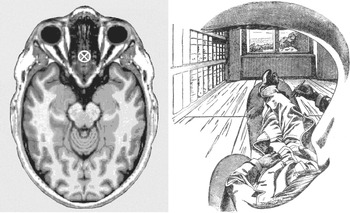



Target article
The integrated information theory of consciousness: A case of mistaken identity
Related commentaries (23)
A call for comparing theories of consciousness and data sharing
Anatomical, physiological, and psychophysical data show that the nature of conscious perception is incompatible with the integrated information theory (IIT)
Axioms and postulates: Finding the right match through logical inference
Computation, perception, and mind
Consciousness generates agent action
Consciousness is already solved: The continued debate is not about science
Consciousness, complexity, and evolution
Does the present moment depend on the moments not lived?
Encapsulation and subjectivity from the standpoint of viewpoint theory
Escaping from the IIT Munchausen method: Re-establishing the scientific method in the study of consciousness
Explaining the gradient: Requirements for theories of visual awareness
Functional theories can describe many features of conscious phenomenology but cannot account for its existence
IIT is ideally positioned to explain perceptual phenomena
IIT, half masked and half disfigured
Is the neuroscientist's grandmother in the notebook? Integrated information and reference frames in the search for consciousness
Measures of differentiation and integration: One step closer to consciousness
Meta-criteria to formulate criteria of consciousness
Searching in the wrong place: Might consciousness reside in the brainstem?
The disintegrated theory of consciousness: Sleep, waking, and meta-awareness
The integrated information theory of agency
To be or to know? Information in the pristine present
What is exactly the problem with panpsychism?
Why evolve consciousness? Neural credit and blame allocation as a core function of consciousness
Author response
The integrated information theory of consciousness: Unmasked and identified