



1 Introduction
This article is a kind of companion-piece to [Reference Khanaki18] on analytical contents of generically stable types/measures for arbitrary theories. Pillay and Tanović [Reference Pillay and Tanović21] introduced the notion of generically stable type, for arbitrary theories. The notion abstracts/expresses/preserves the crucial properties of definable types in stable theories, and definable and finitely satisfiable types in
$NIP$
 theories. In [Reference Hrushovski, Pillay and Simon12], this notion was correctly generalized to Keisler measures, for
$NIP$
 theories. Assuming
$NIP$
 , there are also equivalences on the notion, namely,
$dfs$
 ,
$\textit{fam}$
 , and
$\textit{fim}$
 .Footnote
1
The important question that remains is what is the “correct” notion of generic stability for measures in arbitrary theories. This seems to be more complicated than what is expected in the first encounter.
Recently [Reference Khanaki18], it is shown that a global type p in a countable theory is generically stable over a small model M if and only if p is definable over M, and there is a sequence
$(c_i:i<\omega )$
 inside M such that
$(tp(c_i/{\cal U}):i<\omega )$
 converges to p, in a strong sense.
Footnote
2
The significance of this result is that this notion is characterized by only a specific sequence in the model/set, and the information of all Morley sequences is encoded in that sequence so that we can call it the Morley sequence. On the other hand, it gives an analytical characterization of the notion which links it to other fields including, topology/functional analysis/descriptive set theory. This suggests that a similar result holds for measures in arbitrary (countable) theories.
On the other hand, a line of research is randomization of first-order structures/theories. The randomization of a complete first-order theory was introduced by Keisler [Reference Keisler13] and formalized as a metric theory by Ben Yaacov and Keisler [Reference Ben-Yaacov and Keisler5]. Intuitively, for a (complete) classical theory T the randomization
$T^R$
 of T is a (complete) continuous theory whose elements of models are random elements of M for some model M of T. A default theme is that model-theoretic properties are preserved in randomization.Footnote
3
As an example T is stable/
$NIP$
 if and only if
$T^R$
 is so. It is known that “measures” in classical logic correspond to “types” in randomization. With these ideas in mind, and since the notion of “generic stability for types” is practically known even for continuous logic, we are looking for some properties of measures in classical logic which are close to generic stability of types in randomization.
The present article aims to investigate ‘generic stability’ for measures in arbitrary theories. (We focus more on measures in classical logic which are not types, and types in continuous logic/randomization.) For this, we first generalize/adapt some results of [Reference Khanaki18] on generically stable types to continuous logic, and then, we transfer these results to measures in classical logic using randomization. We define the notions of
$R^{\mathrm{type}}$
 -generic/R-generic stability, as a property of types/measures in classical logic, and show that a type is
$R^{\mathrm{type}}$
 -generically stable if and only if it is generically stable in the usual sense. We will see that, in countable languages, for every measure, R-generic stability and
$\textit{fam}$
 are equivalent. We study generic stability of measures through two procedures for transferring Keisler measures to types in the randomization, namely, “natural extension” and “corresponding random-type”. We also provide different proofs of some well-known results by assuming
$NIP$
 . Finally, we prove that a type is
$R^{\mathrm{type}}$
 -generically stable if and only if its corresponding random-type is generically stable (over a model of the form
$M\otimes \mathcal {A}$
 ).Footnote
4
To simplify reading through the article, we list some more important results: 2.7, 2.13, 2.14, 2.17, 3.5, 3.7, 3.16, 3.23, 4.4, 4.5.
Let us give our motivation and background. First, we believe that model theory has a deep analytical nature that is not yet fully studied. In [Reference Khanaki14, Reference Khanaki16–Reference Khanaki and Pillay20], some analytical aspects of model theory/classification theory were studied. Roughly, it is shown that some model-theoretic notions appeared independently in topology/functional analysis/descriptive set theory, and moreover various characterizations yield the characterization of
$NOP$
 /
$NIP$
 /
$NSOP$
 in a model M or set A, and some important theorems in model theory have twins there. Also, there are connections between classification in model theory and classification of Baire class 1 functions which lead to a better understanding of both of these topics [Reference Khanaki17]. The key idea is that the study of the model-theoretic properties of formulas in ‘models’ instead of only these properties in ‘theories’ develops a sharper stability theory and establishes important links between model theory and other areas of mathematics. In the present article, we continue this approach and complete/generalize some results of [Reference Khanaki16, Reference Khanaki18]. Another work that has influenced this article is [Reference Gannon9], in which an analytic aspect of generically stable types in (countable) theories is given (cf. [Reference Gannon9, Theorem 4.8]). And of course, the note [Reference Ben-Yaacov2] on finite satisfiabiliy in randomization and the paper [Reference Ben-Yaacov1] on continuous
$VC$
 -theory have influenced our work.
It is worth mentioning that two preprints [Reference Conant, Gannon and Hanson7, Reference Gannon10] have been released shortly after our article which address some similar questions. The aims of Sections 1–3 in [Reference Conant, Gannon and Hanson7] are similar to those in our article, but the approaches and methods in our work and theirs are completely different. Sections 1 and 2 in [Reference Gannon10] clarify some of the definitions and claims of the note [Reference Ben-Yaacov2]. Although we have not utilized the results of these two preprints, for greater clarity regarding the results/claims we obtained from the note [Reference Ben-Yaacov2] and to assist the reader of this text, we refer to some definitions and results in them.
Convention 1.1. (1): Although many of our results can be generalized to uncountable case as well, in this article, we study countable theories, classic or continuous. When we say T is a theory we mean a countable classical theory, and we say T is a continuous theory otherwise; of course it is still countable. Also, all theories are complete.
(2): The monster model for a classical theory is denoted by
$\cal U$
 and for a continuous theory is denoted by
$\Bbb U$
 . This distinct is important, especially when we point out that any model of the randomization of the form
${\cal U}\otimes \mathcal {A}$
 is a strict substructure of
$\Bbb U$
 .Footnote
5
(3): In this article, when we say that
$(a_i)\subset {\cal U}$
 (or
$(a_i)\subset {\Bbb U}$
 ) is a sequence, we mean the usual notion in the sense of analysis. That is, every sequence is indexed by
$\omega $
 . Similarly, we consider Morley sequences indexed by
$\omega $
 .
(4): In this article, a variable x is a tuple of length n (for
$n<\omega $
 ).Footnote
6
Sometimes we write
$\bar x$
 or
$x_1,\ldots ,x_n$
 instead of x. All types are n-types (for
$n<\omega $
 ) unless explicitly stated otherwise. Similarly, a sequence
$(a_i)\subset {\cal U}$
 (or
$(a_i)\subset {\Bbb U}$
 ) is a sequence of tuples of length n (for
$n<\omega $
 ).
This article is organized as follows. In Section 2, we generalize/adapt some results of [Reference Khanaki18] on generically stable types to continuous logic. We give characterizations of generic stability of continuous types in the terms of convergence of (Morley) sequences of types. We also show that generically stable continuous types are
$\textit{fim}$
 . In Section 3, we introduce the notions
$R^{\mathrm{type}}$
 -generic/R-generic stability for types/measures in classical logic. We show that a type (in classical logic) is
$R^{\mathrm{type}}$
 -generically stable if and only if it is generically stable in the usual sense. In measures case, we show that R-generic stability and
$\textit{fam}$
 are equivalent. We also give some results on
$\textit{fim}$
 and
$\textit{fam}$
 measures and their corresponding random-types. In Section 4, we prove that a type is R-generically stable if and only if its corresponding random-type is generically stable.
2 Continuous logic and generic stability
In this section we introduce the notion of generic stability for types in continuous logic and give characterizations of this notion which will be used later. The proofs are adaptations of the arguments in classical logic [Reference Khanaki18].Footnote 7
If the reader thinks that it is not necessary to state, repeat and review the results of classical case (i.e., [Reference Khanaki18]) for continuous logic, we must give the following warnings: (a) Not all results of classical logic can be directly translated into continuous logic. For example, Shelah’s theorem (i.e., stable=
$NIP$
 +
$NSOP$
 ) cannot be translated into continuous logic (cf. [Reference Khanaki15]). (b) It is important to have correct definitions in continuous logic and to check that the proofs work in this case, and why these proofs still work or do not. (c) The results in continuous case sometimes lead to new results even in classical logic, as we will see in Section 3 of the present article and as was seen in [Reference Khanaki15].
Therefore, we introduce the notion in detail but we will refer the proofs to the classical case and explain why arguments in classical case work here as well. We assume familiarity with the basic notions about continuous model theory as developed in [Reference Ben-Yaacov, Berenstein, Henson, Usvyatsov, Chatzidakis, Macpherson, Pillay and Wilkie4].
In this section, we fix a continuous first order language L,Footnote
8
a complete countable (continuous) L-theory T (not necessarily
$NIP$
 ), and a small set A of the monster model
$\Bbb U$
 . The space of global types in the variable x is denoted by
$S_x(\Bbb U)$
 or
$S(\Bbb U)$
 .
In the following,
$\phi (\bar x)$
 is a formula,
$r,s$
 are real numbers in
$[0,1]$
 , and
$\phi (\bar x)\leq r$
 ,
$\phi (\bar x)\geq r$
 , and
$\phi (\bar x)= r$
 are L-statements (or L-conditions) in continuous logic.
Recall that, in continuous logic, we use
$\sup ,\inf ,\min ,\max , \leq $
 instead of
 , respectively. However, we will sometimes continue to use classic symbols to make our article more readable.
Remark 2.1. Notice that L is countable and we assume that M is a separable model (i.e., there is a countable dense subset
$M_0\subseteq M$
 ). We work with a countable system of connectives containing
 (where
 ). Recall from [Reference Ben-Yaacov, Berenstein, Henson, Usvyatsov, Chatzidakis, Macpherson, Pillay and Wilkie4, Theorem 6.3] that this does not impose any restrictions. In this article, we can work with
$L(M_0)$
 -statements of the form
$\phi (\bar x)\leq r$
 and
$\phi (\bar x)\geq s$
 where
$r,s$
 are rational numbers in
$[0,1]$
 . Therefore, the set of all statements is countable and all diagonal arguments in [Reference Khanaki18] work well in the present article.
Definition 2.2. Let
$A\subset \Bbb U$
 and
$\phi (x_1,\ldots ,x_n)\in L(A)$
 . We say that
$\phi (x_1,\ldots ,x_n)$
 is symmetric if for any permutation
$\sigma $
 of
$\{1,\ldots ,n\}$
 ,

Example 2.3. Let
$\phi (x,y)$
 be a formula, and
$r<s$
 . The following formula
$\theta _{\phi ,n}^{r,s}(x_1,\ldots ,x_n)$
 is symmetric:

This formula should play a key role in the arguments in the present article. See Remark 2.4 and Theorem 2.7 below, and also [Reference Khanaki18, Theorem 2.8].
Remark 2.4. Let
$(a_i:i<\omega )$
 be an indiscernible sequence of x-tuples and
$\phi (x,y)$
 a formula. Then, it is easy to check that the following are equivalent:
-
(i) For any parameter $b\in \Bbb U$
 , the truth value of sequence
$(\phi (a_i,b):i<\omega )$
is eventually constant.
-
(ii) For any $r<s$
there is a natural number n such that
$\models \neg \ \theta _{\phi ,n}^{r,s}(a_1,\ldots ,a_n)$
.


The following is an adaptation/generalization of [Reference Khanaki18, Definition 2.3].Footnote 9
Definition 2.5. (i) Let
$(b_i)$
 be a sequence of
$\Bbb U$
 and
$A\subset \Bbb U$
 a set. The eventual Ehrenfeucht–Mostovski type (
$EEM$
 -type) of
$(b_i)$
 over A, which is denoted by
$EEM((b_i)/A)$
 , is the following (partial) type in
$S_\omega (A)$
 :

(ii) Let
$(b_i)$
 be a sequence of
$\Bbb U$
 and
$A\subset \Bbb U$
 a set. The symmetric eventual Ehrenfeucht–Mostovski type (
$SEEM$
 -type) of
$(b_i)$
 over A, which is denoted by
$SEEM((b_i)/A)$
 , is the following partial type in
$S_\omega (A)$
 :

Whenever
$(b_i)$
 is A-indiscernible, we sometimes write
$SEM((b_i)/A)$
 instead of
$SEEM((b_i)/A)$
 .
(iii) Let
$p(x)$
 be a type in
$S_\omega (A)$
 (or
$S_\omega ({\cal U})$
 ). The symmetric type of p, denoted by Sym
$(p)$
 , is the following partial type:

The sequence
$(b_i)$
 is called eventual indiscernible over A if
$EEM((b_i)/A)$
 is a complete type. In this case, for any
$L(A)$
 -formula
$\phi (x)$
 , the limit
$\lim _{i\to \infty }\phi (b_i)$
 is well-defined.
Let
$p(x)$
 be a global A-invariant type. The Morley type (or sequence) of
$p(x)$
 can be easily defined similar to classical logic.Footnote
10
The Morley type (or sequence) of
$p(x)$
 is denoted by
$p^{(\omega )}$
 . The restriction of
$p(x)$
 to A is denoted by
$p|_{A}$
 . A realisation
$(d_i:i<\omega )$
 of
$p^{(\omega )}|_A$
 is called a Morley sequence of/in p over A.
Lemma 2.6. Let
$p(x)\in S(\cal \Bbb U)$
 be finitely satisfiable in M where M is a separable model.Footnote
11
Then there is a sequence
$(c_i)$
 in M such that
$SEEM((c_i)/M)=\text {Sym}(p^{(\omega )}|_M)$
 .
Proof. Let
$I=(d_i)$
 be a Morley sequence in p over M. Since T is countable and M is separable, there is a sequence
$(c_i)$
 in M such that
$\lim tp(c_i/MI)=p|_{MI}$
 .Footnote
12
We can assume that
$(c_i)$
 is eventual indiscernible over
$MI$
 . That is, the type
$EEM((c_i)/MI)$
 is complete. (Notice that, as
$MI$
 is separable and T is countable, using Ramsey’s theorem and a diagonal argument, there is a subsequence of
$(c_i)$
 which is eventual indiscernible over
$MI$
 . See also Remark 2.1 above.) We claim that
$(c_i)$
 is the desirable sequence. That is,
$SEEM((c_i)/M)=SEM((d_i)/M)=\text {Sym}(p^{(\omega )}|_M)$
 . The proof is by induction on symmetric formulas similar to [Reference Khanaki18, Lemma 2.7].
We say that a sequence
$(d_i)\in {\Bbb U}$
 of x-tuples converges (or is convergent) if the sequence
$(tp(d_i/{\Bbb U}):i<\omega )$
 converges in the logic topology. Equivalently, for any
$L({\Bbb U})$
 -formula
$\phi (x)$
 , the sequence
$(\phi (d_i):i<\omega )$
 is convergent, i.e., for any
$\epsilon>0$
 there is an natural number n such that
$|\phi (d_i)-\phi (d_j)|<\epsilon $
 for all
$i,j\geq n$
 . If
$(tp(d_i/{\Bbb U}):i<\omega )$
 converges to a type p, then we write
$\lim tp(d_i/{\Bbb U})=p$
 or
$tp(d_i/{\Bbb U})\to p$
 . Notice that
$tp(d_i/{\Bbb U})\to p$
 if and only if for any
$L({\Bbb U})$
 -formula
$\phi (x)$
 ,

Theorem 2.7. Let T be a separable continuous theory, M a separable model, and
$p(x)\in S(\Bbb U)$
 a global type which is finitely satisfiable in M. Let
$(d_i)$
 be a Morley sequence of p over M. If
$(d_i)$
 converges then there is a sequence
$(c_i)$
 in M such that
$tp(c_i/\Bbb U)\to p$
 .
Proof. The proof is an adaptation of the argument of Theorem 2.11 of [Reference Khanaki18]. Indeed, by the argument of Lemma 2.6, we can assume that there is a sequence
$(c_i)$
 in M such that
$tp(c_i/M\cup (d_i))\to p|_{M\cup (d_i)}$
 and
$SEEM((c_i)/M)=\text {Sym}(p^{(\omega )}|_M)$
 . We show that
$tp(c_i/{\Bbb U})\to p$
 . Let q be an accumulation point of
$\{tp(c_i/{\Bbb U}):i\in \omega \}$
 . Then
$q|_{M\cup (d_i)}=p|_{M\cup (d_i)}$
 . Therefore, by an easy induction, we can show that the Morley types (sequences)
$p^{(\omega )}|_M$
 and
$q^{(\omega )}|_M$
 are the same. Now, as
$(d_i)$
 converges, it is easy to show that
$p=q$
 . (If not, using an standard argument, one can build a Morley sequence
$(a_i)$
 such that for a parameter
$b\in \Bbb U$
 , a formula
$\phi (x,y)$
 , and for
$r<s$
 , we have
$\phi (a_i,b)<r$
 if i is even, and
$\phi (a_i,b)>s$
 otherwise. This contradicts the convergence of
$(d_i)$
 . Cf. Claim 1 in the proof of Theorem 2.11 in [Reference Khanaki18].) Also, using Rosenthal’s lemma (cf. [Reference Khanaki18, Fact 2.10])Footnote
13
, similar to the Claim 2 in [Reference Khanaki18, Theorem 2.11], we can show that the sequence
$(tp(c_i/{\Bbb U}):i<\omega )$
 converges. If not, there is a formula
$\phi (x,y)$
 ,
$r<s$
 , and a Morley sequence
$(a_i:i<\omega )$
 such that for any n the formula
$\theta _{\phi ,n}^{r,s}$
 holds in this Morley sequence. (Cf. Example 2.3.) This means that
$(a_i:i<\omega )$
 diverges, a contradiction. These prove the theorem.
The following is the counterpart of Definition 3.1 below to continuous logic.
Definition 2.8. Let M be a model and
$(p_n(x):n<\omega )$
 be a sequence of types over M. We say that
$(p_n:n<\omega )$
 Baire-
$1/2$
 -converges (or is Baire-
$1/2$
 -convergent) if the independence property is semi-uniformly blocked on
$(p_n:n<\omega )$
 , that is, for any formula
$\phi (x,y)$
 , and for each
$r<s$
 , there is a natural number
$N=N_{r,s}^\phi $
 and a set
$E\subset \{1,\ldots ,N\}$
 such that for each
$i_1<\cdots <i_{N}<\omega $
 , and any parameter
$b\in M$
 , the following does not hold

Notice that Baire-1/2 convergence implies that the sequence is convergent. Indeed, for any formula
$\phi (x,y)$
 and parameter b the sequence (
$\phi (p_n, b) : n<\omega )$
 is a Cauchy sequence of real numbers and so is convergent.
In the above, we can assume that M is the monster model.
Remark 2.9. Notice that in Theorem 2.7, the sequence
$(tp(c_i/\Bbb U):i<\omega )$
 is Baire-1/2-convergent. In fact, as
$SEEM((c_i)/M)=\text {Sym}(p^{(\omega )}|_M)$
 , any/some Morley sequence is convergent if and only if
$(tp(c_i/\Bbb U):i<\omega )$
 is Baire-1/2-convergent. In particular, if the Morley sequence of p is totally indiscernible (e.g., p is generically stable),

This means that Morley sequences of p are controlled by the sequence
$(c_i)\in M$
 , and vice versa. We will shortly see that this fact leads to a new and useful characterization of the following notion, namely, generic stability.
Remark 2.10. Recall that, in classical logic, the types are
$\{0,1\}$
 -valued. In this case, we say that the sequence
$(p_n:n<\omega )$
 of types is
$DBSC$
 -convergent (or
$DBSC$
 -converges) if it is Baire-
$1/2$
 -convergent as in Definition 2.8. More precisely, the sequence
$(p_n:n<\omega ) DBSC$
 -converges if for any formula
$\phi (x,y)$
 there is a natural number
$N = N_\phi $
 such that for any parameter b, we have
$\sum _{n=1}^\infty |\phi (p_{n+1},b)-\phi (p_n,b)|\leq N$
 . (Cf. [Reference Khanaki18, Definition 3.4].) When
$(p_n:n<\omega )$
 is
$DBSC$
 -convergent, we say the independence property is uniformly blocked on
$(p_n:n<\omega )$
 . (Notice that, in this case, for any
$r<s$
 and formula
$\phi (x,y)$
 , the natural number N (in Definition 2.8) depend just on
$\phi $
 .) Recall from [Reference Khanaki19] that these notions of convergence are related to different subclasses of Baire-1 functions. In fact, the limit of a
$DBSC$
 -convergent (resp. Baire-
$1/2$
 -convergent) sequence is a
$DBSC$
 (resp. Baire-
$1/2$
 ) function, and the class of
$DBSC$
 functions is a proper subclasses of Baire-1/2 functions.
The following is the natural/correct adaptation of generic stability from [Reference Pillay and Tanović21] to continuous logic (cf. Remark 2.12(v) below).
Definition 2.11 (Generic stability).
Let T be a continuous theory and A a small set of the monster model. A global type
$p(x)$
 is generically stable over A if p is A-invariant, and every Morley sequence
$(a_i:i<\omega )$
 has the following properties:
(i)
$(a_i:i<\omega )$
 is totally indiscernible; and
(ii)
$(a_i:i<\omega )$
 has no order; that is, there is no sequence
$(b_i:i<\omega )$
 , formula
$\phi (x,y)$
 , and
$r<s$
 such that
$\phi (a_i,b_j)\leq r$
 if
$i<j$
 and
$\phi (a_i,b_j)\geq s$
 otherwise.
Remark 2.12. Let
$p(x)$
 be a global A-invariant type. The following are equivalent.
-
(i) p is generically stable over A.
-
(ii) For any Morley sequence $(a_i:i<\omega )$
of p over A, we have
$\lim tp(a_i/\Bbb U)=p$
. -
(iii) The condition (ii) holds and furthermore, the sequences $(tp(a_i/\Bbb U):i<\omega )$
are Baire-
$1/2$
-convergent. -
(iv) Any Morley sequence of p is totally indiscernible and convergent.
-
(v) For any Morley sequence $(a_i:i<\alpha )$
(any
$\alpha $
, not only
$\omega $
) of p over A, and any formula
$\phi (x)$
(with parameters from
$\Bbb U$
) and
$r<s$
, at least one of
${\{i: \ \models \phi (a_i)\leq r\}}$
or
$\{i:\ \models \phi (a_i)\geq s\}$
is finite.


Proof. (i)
$\Rightarrow $
 (ii): As any Morley sequence
$(a_i)$
 is totally indiscernible and has no order, it is easy to see that
$(a_i)$
 is convergent. If not, there is a formula
$\phi (x,y)$
 ,
$r<s,$
 and parameter
$b\in \Bbb U$
 such that the sets
$\{i: \phi (a_i,b)\leq r\}$
 and
${\{i:\phi (a_i,b)\geq s\}}$
 are infinite. Now, by total indiscernibility, one can find a sequence
$(b_j)$
 such that
$\phi (a_i,b_j)\leq r$
 if
$i<j$
 and
$\phi (a_i,b_j)\geq s$
 otherwise, a contradiction. Now, a (continuous) generalization of Lemma 4.2 in [Reference Khanaki18] implies that
$\lim tp(a_i/{\Bbb U})=p$
 .
(ii)
$\Rightarrow $
 (i): As any Morley sequence is indiscernible and convergent to p, it is easy to see that some/any Morley sequence is totally indiscernible. (Indeed, suppose for a contradiction that some/any Morley sequence
$(a_i:i<\omega )$
 is not totally indiscernible. As
$(a_i:i<\omega )$
 is indiscernible, similar to the argument of Theorem 12.37 of [Reference Poizat22], can someone find a formula
$\psi (x,y)$
 (with parameters)Footnote
14
and the numbers
$r<s$
 , such that this formula has the order property with the sequence
$(a_i)_{k\leq i<\omega }$
 (for some k) and
$r<s$
 . Now, someone can find a Morley sequence
$(c_i:i<\omega +\omega )$
 and a parameter b such that
$\psi (c_i,b)\leq r$
 if
$i<\omega $
 and
$\psi (c_i,b)\geq s$
 otherwise. This means that
$\lim _{i<\omega }tp(c_i/{\Bbb U})\neq \lim _{i>\omega }tp(c_i/{\Bbb U})$
 , a contradiction, because for any Morley sequence the limit is p.) Suppose for a contradiction that some Morley sequence
$(a_i)$
 has order for formula
$\phi (x,y)$
 and
$r<s$
 ; that is, there is a sequence
$(b_j)$
 such that
$\phi (a_i,b_j)\leq r$
 if
$i<j$
 , and
$\phi (a_i,b_j)\geq s$
 otherwise. Then, as
$(a_i)$
 is totally indiscernible, one can find a parameter
$b\in \Bbb U$
 such that
$\phi (a_i,b)\leq r$
 if i is even, and
$\phi (a_i,b)\geq s$
 otherwise, a contradiction.
(iii) follows from (ii) and the indiscernibility of Morley sequences. Indeed, if some Morley sequence is not Baire-
$1/2$
 -convergent, then there is a Morley sequence which is not convergent, a contradiction. (Cf. the direction (i)
$\Rightarrow $
 (ii) of Theorem 4.4 in [Reference Khanaki18], for classical case.)
(iv)
$\Rightarrow $
 (i) is given in the proof of direction (ii) to (i).
(i)
$\Rightarrow $
 (iv) is given in the proof of direction (i) to (ii).
(iv)
$\Rightarrow $
 (v) is evident. If not, one can find a formula with order, and by (i)
${\iff}$
 (iv), a contradiction.
(v)
$\Rightarrow $
 (ii): Clearly every Morley sequence
$(a_i:i<\omega )$
 is convergent. We need to show that its limit is p. If not, there is a formula
$\phi (x,y)$
 ,
$r<s,$
 and parameter b such that
$\lim \phi (a_i,b)=r$
 but
$(\phi (x,b)=s)\in p$
 . Now, it is easy to find a Morley sequence
$(c_i:i<\omega +\omega )$
 such that both sets
$\{i:\phi (c_i,b)\leq r\}$
 and
${\{i:\phi (c_i,b)\geq s\}}$
 are infinite, a contradiction.
The following theorem gives a characterizations of generically stable types for countable theories. The important one to note immediately is (ii).
Theorem 2.13. Let T be a continuous theory, M a small model of T, and
$p(x)\in S(\Bbb U)$
 a global M-invariant type. The following are equivalent:
-
(i) p is generically stable over M.
-
(ii) p is definable over a small model, and there is a sequence $(c_i)$
in M such that
$(tp(c_i/\Bbb U):i<\omega )$
Baire-
$1/2$
-converges to p. -
(iii) p is definable over and finitely satisfiable in some small model, and there is a convergent Morley sequence of p over M.


Proof. The proof is an adaptation of the argument of Theorem 4.4 of [Reference Khanaki18]. First, notice that, similar to classical case, we can assume that M is separable.
(i)
$\Longrightarrow $
 (ii) follows from Theorem 2.7 (see also Remark 2.9).
(ii)
$\Longrightarrow $
 (i): As p is definable and finitely satisfiable, any Morley sequence is totally indiscernible. Let
$(d_i)$
 be a Morley sequence. Similar to Lemma 2.6, it is easy to see that
$SEEM((c_i)/M)=Sym(tp((d_i)/M))$
 . Therefore, as
$(c_i)$
 is Baire-1/2-convergent, the Morley sequence
$(d_i)$
 converges. By Remark 2.12(iv), p is generically stable.
(i)
$\Longrightarrow $
 (iii) follows from Remark 2.12(iv) and the fact that the Morley sequences of definable and finitely satisfiable types are totally indiscernible. (i)
$\Longrightarrow $
 (iii) is evident.
The following is a consequence of the previous results, although it has not been stated anywhere before, even for classical logic.
Corollary 2.14. Let T be a continuous theory, M a small model of T, and
${p(x)\in S(\Bbb U)}$
 a global M-invariant type. The following are equivalent:
-
(i) p is generically stable over M.
-
(ii) There is a sequence $(c_i)$
in M such that
$(tp(c_i/\Bbb U):i<\omega )$
Baire-
$1/2$
-converges to p, and
$(c_i)$
has no order, that is, there is no
$(b_i)\in \Bbb U$
,
$r<s$
, and formula
$\phi (x,y)$
such that
$\phi (c_i,b_j)\leq r$
if
$i<j$
and
$\phi (c_i,b_j)\geq s$
otherwise.


Proof. This follows from Theorem 2.13 and Grothendieck’s double limit theorem (cf. [Reference Khanaki17, Fact 2.2]). Indeed, by Theorem 2.13, there is a sequence
$(c_i)$
 in M such that
$(tp(c_i/{\Bbb U}):i<\omega )$
 Baire-1/2 converges to p. We need to show that
$(c_i)$
 has no order. For any
$c_i$
 and any formula
$\phi (x,y)$
 , define map
$F^\phi _{c_i}:S_{\phi ^{opp}}(M)\to [0,1]$
 via
$q\mapsto \phi (c_i,b)$
 for some/any
$b\models q$
 , where
$\phi ^{opp}(y,x):=\phi (x,y)$
 . The set
${A=\{F_{c_i}^\phi :i<\omega \}}$
 is a set of continuous functions on the type space
$S_{\phi ^{opp}}(M)$
 . Notice that, as
$tp(c_i/{\Bbb U})\to p$
 , the pointwise closure of A is the set
$A\cup \{F_p^\phi \}$
 , where
${F_p^{\phi }(q)=r}$
 if
$(\phi (x,b)=r)\in p$
 for some/any
$b\models q$
 .Footnote
15
By Grothendieck’s theorem,
$F_p^{\phi }$
 is continuous if and only if there is no sequence
$(b_j)$
 and
$r<s$
 such that
$\phi (c_i,b_j)\leq r$
 if
$i<j$
 and
$\phi (c_i,b_j)\geq s$
 otherwise. Recall that p is definable if and only if for any formula
$\phi (x,y)$
 the function
$F_p^\phi $
 is continuous. This proves the claim.
2.1 Continuous types and
$\textit{fim}$

In this section we introduce the notion
$\textit{fim}$
 to continuous types and show that any generically stable type in continuous logic is
$\textit{fim}$
 .
Let
$\phi (x,y)$
 be a formula, and
${\bar a}=(a_1,\ldots ,a_n)$
 and b parameters. Then we define
$Av({\bar a})(\phi (x,b)):=\frac {1}{n}\sum _{i=1}^n\phi (a_i,b)$
 .
Definition 2.15 (Continuous
$\textit{fim}$
).

Let
$p(x)$
 be a continuous type and A a small set. We say that p is
$\textit{fim}$
 if it is A-invariant and for any formula
$\phi (x,y)$
 and
$\epsilon>0$
 , there is an
$L(A)$
 -statement
$\theta (x_1,\ldots ,x_n)$
 such that:
-
(i) $\theta (x_1,\ldots ,x_n)\in p^{(n)}$
; and -
(ii) for all $\bar a\models \theta (x_1,\ldots ,x_n)$
we have $$ \begin{align*}\sup_{b\in{\Bbb U}}|p((\phi(x,b))-Av({\bar a})(\phi(x,b))|\leq\epsilon.\end{align*} $$


Lemma 2.16. Let
$p(x)$
 be a continuous type. Suppose that its Morley type/sequence
$p^{(\omega )}$
 is totally indiscernible and convergent. Then for any formula
$\phi (x,y)$
 and
$\epsilon>0$
 there is a natural number
$n_{\phi ,\epsilon }$
 such that for any Morley sequence
$(a_i:i<\omega )\models p^{(\omega )}$
 we have:
for any
$b\in \Bbb U$
 , the number of i such that
$|\phi (a_i,b)-\lim _i\phi (a_i,b)|>\epsilon $
 is
$\leq n_{\phi ,\epsilon }$
 .
Proof. If not, using total indiscernibility and compactness, one can find a divergent Morley sequence, a contradiction.
Proposition 2.17. Let
$p(x)$
 be a continuous type. If p is generically stable, then it is
$\textit{fim}$
 .
Proof. The proof is an adaptation of Proposition 3.2 of [Reference Conant and Gannon6]. As p is definable, for any formula
$\phi (x,y)$
 and any
$\epsilon>0$
 , there is a formula
$\psi _{\phi ,\epsilon }=\psi (y)$
 (with parameters), which is a finite continuous combination of the instances of
$\phi (a,y)$
 , such that
$\sup _{b\in {\Bbb U}}|p(\phi (x,b))-\psi (b)|\leq \epsilon $
 . Recall that, as p is generically stable, any Morley sequence
$(a_n:n<\omega )$
 is totally indiscernible, and
$\lim tp(a_n/\Bbb U)=p$
 .
Define the statement
$\theta (x_1,\ldots ,x_n)$
 as follows:

We will show that for big enough
$n\gg n_{\phi ,\epsilon }$
 ,
$\theta (x_1,\ldots ,x_n)\in p^{(n)}$
 , and the condition (ii) of Definition 2.15 holds. Indeed, for any Morley sequence
$(a_i)$
 , as
$\lim tp(a_i/{\Bbb U})=p$
 , we have
$|\lim \phi (a_i,b)-\psi (b)|\leq \epsilon $
 for any
$b\in \Bbb U$
 . Notice that, for all b, we have
$|\phi (a_i,b)-\psi (b)|\leq |\phi (a_i,b)-\lim \phi (a_i,b)|+|\lim \phi (a_i,b)-\psi (b)|\leq |\phi (a_i,b)-\lim \phi (a_i,b)|+\epsilon $
 . Therefore, by Lemma 2.16, the number i such that
$|\phi (a_i,b)-\psi (b)|>2\epsilon $
 is
$\leq n_{\phi ,\epsilon }$
 . This means that
$\models \theta (a_1,\ldots ,a_n)$
 , and so
$\theta (x_1,\ldots ,x_n)\in p^{(n)}$
 . On the other hand, for any
${\bar c}=(c_1,\ldots ,c_n)$
 where
$\models \theta (\bar c)$
 , we have
$|Av(\bar c)(\phi (x,b))-p(\phi (x,b))|\leq |Av(\bar c)(\phi (x,b))-\psi (b)|+|p(\phi (x,b))-\psi (b)|\leq |Av(\bar c)(\phi (x,b))-\psi (b)|+\epsilon $
 for all
$b\in \Bbb U$
 . As
$\models \theta (\bar c)$
 , it is easy to see that
$\sup _{b\in \Bbb U}|Av(\bar c)(\phi (x,b)-\psi (b)|\to 2\epsilon $
 as
$n\to \infty $
 . Therefore, for big enough n, we have
$\sup _{b\in \Bbb U}|Av(\bar c)(\phi (x,b))-p(\phi (x,b))|\leq 4\epsilon $
 . As
$\epsilon $
 is arbitrary, the proof is completed.
3 Measures and random types
In this section we study generic stability of measures through two procedures for transferring Keisler measures to types in a continuous structure, namely, the randomization. These two procedures are called natural extension (cf. Section 3.2) and corresponding random-type (cf. Section 3.3), although they sometimes go by other names in other literature. Wherever necessary, we refer to the literature for more clarity.
In Section 3.1, we first introduce and study the notion of R-generic stability, as a property of a measure in classical logic, and then in Sections 3.2 and 3.3, using the results of Section 2, we study this notion and related random-types in the randomization (i.e., natural extension and corresponding random-type) and their connections.
3.1 R-generic stability
In this section we introduce the notions of
$R^{\mathrm{type}}$
 /R-generically stable type/measure in classical logic, and show that for constable theories: (i)
$R^{\mathrm{type}}$
 -generic stability and the usual notion of generic stability for types are equivalent, and (ii) R-generic stability and
$\textit{fam}$
 are equivalent for measures.
In this section, we fix a (classical) first-order language L, a complete countable L-theory T (not necessarily
$NIP$
 ), and a small set A of the monster model
$\cal U$
 . The space of global types in the variable x is denoted by
$S_x({\cal U})$
 or
$S({\cal U})$
 .
We first give a notion/notation. Let
$\mu (x)$
 be a global measure,
$r_1,\ldots ,r_k\in [0,1]$
 such that
$\sum r_i=1$
 . The measure
$\mu ^{\sum r_i}$
 is defined as follows: for any formula
$\phi (x,y)$
 , and any parameters
$b_1,\ldots ,b_k$
 ,

The following notion is technical but we will shortly see that it is the natural generalization of the corresponding notion in the case of types.
Definition 3.1. Let
$(\mu _n(x):n<\omega )$
 be a sequence of global A-invariant measures, and
$\mu (x)$
 a global A-invariant measure.
(i): We say that
$(\mu _n:n<\omega )$
 is randomly convergent (or randomly converges) if for any formula
$\phi (x,y)$
 and for each
$r<s$
 , there is a natural number
$N=N_{r,s}^\phi $
 and a set
$E\subset \{1,\ldots ,N\}$
 such that for any
$r_1,\ldots ,r_k\in [0,1]$
 with
$\sum r_t=1$
 and any parameters
$b_1,\ldots ,b_k$
 and for each
$i_1<\cdots <i_{N}<\omega $
 , the following does not hold

(ii): We say that
$(\mu _n:n<\omega )$
 randomly converges to
$\mu $
 if
$(\mu _n:n<\omega )$
 randomly converges and, additionally,
$(\mu _n:n<\omega )$
 converges to
$\mu $
 in the space of measures.
Remark 3.2. In the above definition, if
$(*)$
 holds just for
$k=1$
 , then we say that
$(\mu _n:n<\omega )$
 is Baire-1/2-convergent (or Baire-1/2 converges). (Compare to Definition 2.8 above.) A question arises: is every Baire-1/2-convergent sequence randomly convergent?
Definition 3.3. (i) Let
$\mu (x)$
 be a global measure. We say that
$\mu $
 is R-generically stable over A if
$\mu $
 is definable over A, and there is a sequence
$(\mu _n:n<\omega )$
 of measures such that:
-
• $\mu _n=\frac {1}{k_n}\sum _{i=1}^{k_n}p_{n,i,}$
where
$a_{n,i}\models p_{n,i}$
and
$a_{n,i}\in A$
(for all n); and -
• $(\mu _n:n<\omega )$
randomly converges to
$\mu $
.(ii) Let $p(x)$
be a global type. We say that p is
$R^{\mathrm{type}}$
-generically stable over A if p is definable over A, and there is a sequence
$(p_n:n<\omega )$
of types such that: -
• $a_n\models p_n$
and
$a_n\in A$
(for all n); and -
• $(p_n:n<\omega )$
randomly converges to p.


Remark 3.4. (1): Notice that for a type p, the conditions in (ii) implies the conditions in (i), but there is no reason for the converse to be true.
(2): On the other hand, we can make a more subtle distinction. Indeed, for any finite set F of real numbers in
$[0,1]$
 , we can give a generalization of Definition 3.3(ii) as follows. Let
$\mu (x)$
 be a global F-valued measure. We say that
$\mu $
 is
$R^F\kern-1.2pt$
 -generically stable over A if
$\mu $
 is definable over A, and there is a sequence
$(\mu _n:n<\omega )$
 of F-valued measures such that:
-
• $\mu _n$
is a F-valued measure of a convex combination of types realized in A (for all n); and -
• $(\mu _n:n<\omega )$
randomly converges to
$\mu $
.


Although we will not study it in this article, we believe that for a fixed F, the latter notion and the usual notion of generically stable type are of the same nature and complexity.
First we show that, for types,
$R^{\mathrm{type}}$
 -generic stability and the usual notion of generic stability coincide. The following is a new characterization of generic stability which is interesting in itself.
Fact 3.5. Let
$p(x)$
 be a global M-invariant type. The following are equivalent:
-
(i) p is generically stable over M (as in [Reference Pillay and Tanović21]).
-
(ii) p is $R^{\mathrm{type}}$
-generically stable over M (as in Definition 3.3).

Proof. We use a result from [Reference Khanaki18], namely, Theorem 4.4. Using this theorem, p is generically stable (in the usual sense) if and only if it is definable and there is a sequence
$(a_n)\in M$
 such that
$(tp(a_n/{\cal U}):n<\omega ) DBSC$
 -converges to p.Footnote
16
It is easy to check that if
$(tp(a_n/{\cal U}):n<\omega )$
 randomly converges, then it
$DBSC$
 -converges. Conversely, if
$(tp(a_n/{\cal U}):n<\omega ) DBSC$
 -converges, then by Lemma 2.8 in [Reference Khanaki17], for any formula
$\phi (x,y)$
 there is a natural number m such that for any parameters b,

Now, by the triangle inequality, it is easy to check that for any
$r_1,\ldots ,r_k\in [0,1]$
 with
$\sum r_i=1$
 and parameters
$(b_i)_1^k$
 , we have

(Notice that
$(\dagger )$
 is Fubini.)
This implies that
$(tp(a_n/{\cal U}):n<\omega )$
 randomly converges. Indeed, suppose for a contradiction that there are parameters
$(b_i)_1^k$
 , natural number
$N>\frac {m}{|r-s|}$
 ,
$r_1,\ldots ,r_k\in [0,1]$
 with
$\sum _1^k r_i=1$
 , and
$j_1<\cdots <j_N<\omega $
 such that
$\mu _{j_t}^{\sum r_i}(\phi ;(b_i)_1^k)\leq r$
 if t is odd, and
$\mu _{j_t}^{\sum r_i}(\phi ;(b_i)_1^k)\geq s$
 if t is even. (Here
$\mu _{n}^{\sum r_i}(\phi ;(b_i)_1^k)=\sum _{i=1}^k r_i\cdotp \phi (a_n,b_i)$
 .) Then

This contradicts
$(\dagger )$
 .
3.2 Representation of
$\textit{fam}$

We want to show that R-generic stability is a representation of
$\textit{fam}$
 . This is useful in the next section.
First, we need to recall from [Reference Gannon9, Definition 3.1] the notion of sequential approximation of measures. Let
$\mu (x)$
 be a global measure. We say that
$\mu $
 is sequentially approximated over A if there is a sequence
$(\mu _n:n<\omega )$
 of measures such that:
-
• $\mu _n=\frac {1}{k_n}\sum _{i=1}^{k_n}p_i$
where
$a_i\models p_i$
and
$a_i\in A$
(for all n); and -
• $(\mu _n:n<\omega )$
converges to
$\mu $
.


Notice that convergence is in the logic topology or equivalently the topology of pointwise convergence (cf. [Reference Gannon9], Definition 2.1). Gannon [Reference Gannon9, Proposition 3.4] showed that, in countable theories, every definable and sequentially approximated measure is
$\textit{fam}$
 .
The following observation was suggested to us by the referee.
Proposition 3.6. Let
$\mu (x)$
 be a global measure. If
$\mu $
 is
$\textit{fam}$
 over A, then
$\mu $
 is R-generically stable over A.
Proof. If
$\mu $
 is
$\textit{fam}$
 over A, then
$\mu $
 is definable over A. It suffices to show that the random convergence condition. As T is countable, enumerate formulas from L,
$(\phi _i)_{i<\omega }$
 . Choose a sequence
$(\mu _i:i<\omega )$
 such that
$\mu _n$
 is a measure concentrating on finitely many realized types (in A) and for each
$i\leq n$
 and
$b\in {\cal U}^y$
 ,

(ThisFootnote 17 is possible using a construction in [Reference Gannon9, Proposition 3.3(iii)].)
We show that the sequence
$(\mu _n:i<\omega )$
 randomly converges to
$\mu $
 . For a contradiction, suppose that there is a formula
$\phi (x,y)=\phi _m(x,y)$
 and numbers
$r<s$
 such that for any
$N=\{0,\ldots ,N\}$
 and
$E\subseteq N$
 , there exist
$\bar r=r_1,\ldots ,r_n, \bar b=b_1,\ldots ,b_n$
 and
$i_1<\cdots <i_n$
 such that

Let
$n_1>\frac {1}{(r-s)/3}$
 and
$n_2=m$
 (the index of our formula). Let
$N=\{1,\ldots , \max \{n_1,n_2\}+2\}$
 and
$E=\{\max \{n_1,n_2\}+2\}$
 and
$k=\max \{n_1,n_2\}+1$
 . Then notice that for
$\bar r$
 and
$\bar b$
 and
$i_1<\cdots <i_N$
 , if
$\nu =\sum _{t=1}^n r_t\delta _{b_t}$
 then

(Here
$c\approx _{\epsilon /3}d$
 if and only if
$|c-d|\leq \epsilon /3$
 .)
Hence, if
$\mu _{i_{k+1}}^{\sum r_t}(\phi ,\bar b)\leq r$
 , then
$\mu _{i_k}^{\sum r_t}(\phi ,\bar b)\leq r+2\epsilon /3$
 and so it is not greater than or equal to s. To summarize,
$(\mu _n:i<\omega )$
 randomly converges to
$\mu $
 .
Corollary 3.7. Let
$\mu (x)$
 be a global measure.
$\mu $
 is R-generically stable over A if and only if
$\mu $
 is
$\textit{fam}$
 over A.
Proof. By Proposition 3.6 above, we just need to show left to right. This follows from Proposition 3.4 of [Reference Gannon9]. First notice that, as T is countable and
$\mu $
 is definable, we can assume that A is countable. Clearly, by definition,
$\mu $
 is sequentially approximated over A. As
$\mu $
 is definable and sequentially approximated, Proposition 3.4 of [Reference Gannon9] implies that
$\mu $
 is
$\textit{fam}$
 .
However,
$\textit{fam}$
 and R-generic stability are the same, the latter presentation is useful in the following. In the next section we study connections between R-generic stability(=
$\textit{fam}$
 ) and random-types in randomization.
Recall that the notion of generically stable measures for
$NIP$
 theories was introduced and studied in [Reference Hrushovski, Pillay and Simon12]. The next observation shows that the new and usual notions coincide, in
$NIP$
 theories.
Corollary 3.8 (Assuming T is
$NIP$
).

Let
$\mu $
 be a global measure. Then
$\mu $
 is R-generically stable over A (as in Definition 3.3(i)) if and only if it is generically stable over A (as in [Reference Hrushovski, Pillay and Simon12]).
Proof. Recall that, in
$NIP$
 theories, any measure is
$\textit{fam}$
 if and only if it is generically stable. Therefore, this follows from Corollary 3.7. (In particular, for types, R-generic stability and
$R^{\mathrm{type}}$
 -generic stability are the same.)
Remark 3.9. In [Reference Khanaki18], we make a claim: generic stability (for types) is strictly stronger than sad. (Recall from [Reference Gannon9] that a type is called sad if it is both sequentially approximated and definable.Footnote 18 Notice that sequential approximation for types and measures are differently defined in Gannon’s paper.) Although, in [Reference Khanaki18] we suggested an example of a non-generic and sad type, we have not found clear examples yet.
3.3 Random types and R-generic stability
A randomization of a first-order structure M, as formalized by Ben Yaaocv and Keisler [Reference Ben-Yaacov and Keisler5], is a new continuous structure whose elements are random elements of M. In this section we show that a measure
$\mu $
 (in classical logic) is R-generically stable (as in Definition 3.3) if a canonical random-type (i.e., the natural extension) behaves like generically stable types in continuous logic (as in Theorem 2.13).
We assume familiarity with the basic notions about randomization of classical structures/theories as developed in [Reference Ben-Yaacov2, Reference Ben-Yaacov and Keisler5]. Although we will recall some notions and results from the research note [Reference Ben-Yaacov2] in the following, and since this note is informal, we also refer to [Reference Conant, Gannon and Hanson7, Section 3.2] and [Reference Gannon10, Sections 1 and 2] for greater clarity and precision whenever necessary.
In the following T is a classical theory in the language L and
$T^R$
 its randomization in the language
$L^R$
 , as a continuous theory.
Convention 3.10. In this section, the symbol
$\otimes $
 is not used for the Morley product of types/measures, but will be used in another sense.
Convention 3.11. In the rest of the article, whenever necessary, we write the parameters in continuous logic (i.e., in
${\Bbb U}$
 ) in bold letters
$\mathbf {a}, \mathbf {b}, \mathbf {c}\ldots $
 . Otherwise, we use
$a, b, c,\ldots $
 .
Let M be a classical L-structure and
$\cal A$
 an atomless measure algebra. The
$L^R$
 -pre-structure
$(M\otimes {\cal A})_0$
 is defined as follows. The domain consists of all formal finite sums
$\sum _{i<k} m_i\otimes e_i$
 , also written
$\bar m \bar e$
 , where
$m\in M$
 and
$\bar e =(e_i)_{i<k}\subseteq {\cal A}$
 is a partition of the identity. If
$e'$
 is any other event then one can easily refine the partition and we identify members of
$(M\otimes {\cal A})_0$
 with other members obtained by refinement of partition. In this case, it is easy to check that:


As the distance symbol interprets a metric on
$(M\otimes {\cal A})_0$
 , its completion is denoted by
$M\otimes {\cal A}$
 . Notice that if
$M\models T$
 then
$M\otimes {\cal A}\models T^R$
 . (In [Reference Conant, Gannon and Hanson7], the construction
$(M\otimes {\cal A})_0$
 is denoted by
$M_0^{\Omega }$
 . Cf. Section 3.2 in there.)
Remark 3.12. Notice that every element
$\mathbf {a}=\sum _{i<k}m_i\otimes e_i$
 of
$(M\otimes {\cal A})_0$
 is a map from
$\cal A$
 to M as follows: for each
$i<k$
 ,
$\mathbf {a}(t)=m_i$
 if
$t\in e_i$
 (cf. [Reference Conant, Gannon and Hanson7] or [Reference Gannon10]). This means that
$\mathbf {a}$
 is a simple function, i.e., its range is finite. Therefore, we can assume every element m of M belongs to
$(M\otimes {\cal A})_0$
 via the map
$m\mapsto m\otimes 1$
 where
$m\otimes 1$
 is the constant map
$t\mapsto m$
 .
Convention 3.13. In the rest of the paper, sometimes we write m instead of
$m\otimes 1$
 for simplicity. Therefore, for an L-formula
$\varphi (x)$
 and parameter
$m\in M$
 , we can write
${\Bbb P}[\varphi (m)]$
 instead of
${\Bbb P}[\varphi (m\otimes 1)]$
 .
Let
$\mu (\bar x)$
 be a measure over M. Then, it is a random type over M, but not over
$M\otimes {\cal A}$
 . Although there is a natural extension
$\mu \otimes {\cal A}$
 of
$\mu $
 over
$M\otimes {\cal A}$
 . For every L-formula
$\phi $
 we define

As this is only defined for formulae over the parameter set
$(M\otimes {\cal A})_0$
 , it can be extended by continuity to the whole structure. (Cf. Lemma 3.8 in [Reference Conant, Gannon and Hanson7] for an exact statement of this point.) The type
$\mu \otimes {\cal A}$
 is called the natural extension of
$\mu $
 . In [Reference Conant, Gannon and Hanson7, Fact 3.10] and [Reference Gannon10, Definition 1.3], assuming that
$\mu $
 is definable, this type is expanded on the monster model
$\Bbb U$
 and is denoted by
$r_\mu $
 . (Notice that in the present paper, we defined
$\mu \otimes {\cal A}$
 as a type on models of the form
$M\otimes {\cal A}$
 but not
$\Bbb U$
 . This is an important point and is discussed in Remark 3.15 below.)
Fact 3.14. Let
$\cal U$
 be the monster model of T,
$\mu $
 a global measure, and
$\cal A$
 an atomless measure algebra. Suppose that M is a separable model of T and
${\cal A}_0\preceq {\cal A}$
 is separable.
-
(i) $M\otimes {\cal A}_0\preceq {\cal U}\otimes {\cal A}$
. -
(ii) $\mu $
is definable over M if and only if the type
$\mu \otimes {\cal A}$
is definable over M. -
(iii) $\mu $
is finitely satisfied in M if and only if the type
$\mu \otimes {\cal A}$
is finitely satisfied in
$M\otimes {\cal A}_0$
.


Proof. This is proved in Proposition 1.1 of [Reference Ben-Yaacov2]. For an accurate proof of (ii) (see Fact 3.10 and Remark 3.11 of [Reference Conant, Gannon and Hanson7]).
Remark 3.15. There is an important point regarding Fact 3.14(iii), and that is: In general, the model
$\cal U\otimes \cal A$
 is a small model of
$T^R$
 , because this model is often not sufficiently saturated. (This means that
${\cal U}\otimes {\cal A}\prec {\Bbb U}$
 but
${\cal U}\otimes {\cal A}\neq {\Bbb U}$
 . See Remark 3.18(ii), for an example.) Therefore,
$\mu \otimes {\cal A}$
 is a type on
${\cal U}\otimes \cal A$
 but not a type on the monster model
$\Bbb U$
 of
$T^R$
 . Thus, if
$\mu $
 is finitely satisfiable then so is
$\mu \otimes \cal A$
 , but the type
$\mu \upharpoonright ^{\Bbb U}$
 on
$\Bbb U$
 (as defined in Section 3.3 below) may not be finitely satisfiable. In [Reference Gannon10, Definition 1.4], the type
$\mu \upharpoonright ^{\Bbb U}$
 is denoted by
$s_\mu $
 , and in Proposition 2.2 in there, it is shown that for a definable measure
$\mu $
 ,
$s_\mu =r_\mu $
 .
In Proposition 3.26 of [Reference Conant, Gannon and Hanson7], the authors introduced a type q that is definable and finitely satisfiable, but
$r_q$
 is not finitely satisfiable. This does not contradict Fact 3.14(iii), because
$r_q$
 is a definable global type (i.e., over
$\Bbb U$
 ), and its restriction to
${\cal U}\otimes \cal A$
 becomes
$q\otimes {\cal A}$
 . Notice that, by Fact 3.14(iii),
$q\otimes \cal A$
 is finitely satisfiable and has a finitely satisfiable extension to a global type (over
$\Bbb U$
 ), which we denote by
$R_q$
 . Clearly
$R_q\neq r_q$
 and
$R_q$
 is not definable. To summarise,
$R_q$
 is a finitely satisfiable extension of
$q\otimes \cal A$
 and
$r_q$
 is a definable extension of
$q\otimes \cal A$
 .Footnote
19
The observation below is nothing more than translating random-types to Keisler measures, which, considering the previous discussions, is enlightening and can lead to further results (cf. Remarks 3.17 and 3.18).
Proposition 3.16. Let T be a (countable) classical theory, M a small model of T, and
$\mu (x)$
 a global M-invariant measure. Let
${\cal A}$
 be an atomless measure algebra such that
$[0,1]\preceq {\cal A}$
 . Then (i)
$\Rightarrow $
 (ii):
-
(i) $\mu $
is definable over M and there is a sequence
$(\mathbf {a}_n)\in M\otimes [0,1]$
such that for any L-formula
$\phi (x,y)$
and every
$\mathbf {b}\in {\cal U}\otimes \cal A$
the sequence
${\Bbb P}[(\phi (\mathbf {a}_n,\mathbf {b})]:n<\omega )$
Baire-1/2-converges to
${\Bbb P}[\phi (x,\mathbf {b})]^{\mu \otimes {\cal A}}$
. -
(ii) $\mu $
is R-generically stable (
$\textit{fam}$
) over M (as in Definition 3.3).


Proof. We can assume that M is separable. Let
$M_0\subseteq M$
 be dense and countable, and
${\cal A}_0\subseteq [0,1]$
 be dense and countable. By Fact 3.14(ii),
$\mu $
 is definable over M if and only if
$\mu \otimes {\cal A}$
 is definable over
$M\otimes [0,1]$
 . The point of referencing to Fact 3.14 is to be able to assume definability when proving (1) implies (2) below:
(1): There is a sequence
$(\mathbf {a}_n)\in M_0\otimes {\cal A}_0$
 such that for any L-formula
$\phi (x,y)$
 and every
$\mathbf {b}\in {\cal U}\otimes \cal A$
 the sequence
$({\Bbb P}[\phi (\mathbf {a}_n,\mathbf {b})]:n<\omega )$
 Baire-1/2-converges to
${\Bbb P}[\phi (x,\mathbf {b})]^{\mu \otimes \cal A}$
 .
(2): There is a sequence
$(\mu _n=\frac {1}{k_n}\sum _{i=1}^{k_n}p_{n,i} :n<\omega )$
 , where
$a_{n,i}\models p_{n,i}$
 and
${a_{n,i}\in M_0}$
 (for all n and i), such that
$(\mu _n:n<\omega )$
 randomly converges to
$\mu $
 .
(1)
$\Rightarrow $
 (2): Assume that (1) holds. Then, by Definition 2.8, for any
$\phi (x,y)\in L$
 , and for each
$r<s$
 , there is a natural number
$N=N_{r,s}^{{\Bbb P}[\phi ]}$
 and a set
$E\subseteq \{1,\ldots ,N\}$
 such that for each
$i_1<\cdots <i_N<\omega $
 , and any parameter
$\mathbf {b}\in {\cal U}\otimes \cal A$
 , the following does not hold:

Notice that every
$\mathbf {a}_n$
 is of the form in
$\sum _{i\leq k_n} a_{n,i}\otimes e_{n,i}$
 where
$a_{n,1},\ldots ,a_{n,k_n}\in M_0$
 and
$e_{n,1},\ldots e_{n,k_n}$
 is a measurable partition of
${\cal A}_0$
 (such that the measure of
$e_{n,i}$
 is
$\frac {1}{k_n}$
 for all
$i\leq k_n$
 ). Set
$\mu _n:=\sum _{i\leq k_n} a_{n,i}$
 . That is,
$\mu _n(\phi (x,b))=\frac {1}{k_n}\sum _{i\leq k_n} \phi (a_{n,i},b)$
 for all
$b\in \cal U$
 . Let
$\mathbf {b}\in ({\cal U}\otimes {\cal A})_0$
 be arbitrary. By the construction,
$\mathbf {b}$
 is of the form in
$\sum _{j\leq m} b_j\otimes e_j$
 where
$b_1,\ldots ,b_m\in \cal U$
 and
$e_1,\ldots e_m$
 is a measurable partition of
$\cal A$
 . With the following computation we check that the condition (2) holds:

(Recall from Convention 3.13 that in the above we wrote
$a_{n,i}$
 and
$b_j$
 instead of
$a_{n,i}\otimes 1$
 and
$ b_j\otimes 1$
 .)
Now, define the Keisler measure
$\mu _n:=\frac {1}{k_n}\sum _{i=1}^{k_n}p_{n,i}$
 , where
$a_{n,i}\models p_{n,i}$
 (
$i\leq k_n$
 ). By (
$*$
 ), we have

(Cf. Section 3.1 for the notation
$\mu ^{\sum }$
 .)
Therefore, by
$\Diamond $
 , for each
$i_1<\cdots <i_N<\omega $
 , and any parameter
$b_1,\ldots ,b_m\in M_0$
 , the following does not hold:

This means that the sequence
$(\mu _n=\frac {1}{k_n}\sum _{i=1}^{k_n}p_{n,i} :n<\omega )$
 randomly converges. It easy to see that its limit is
$\mu $
 and was left to the reader. As
$({\cal U}\otimes {\cal A})_0$
 is metrically dense in
${\cal U}\otimes {\cal A}$
 , the proof is completed.
It seems that we showed something stronger than (i)
$\Rightarrow $
 (ii), since in the argument the
$\mathbf {a}_n$
 ’s are in
$M_0\otimes {\cal A}_0$
 . Indeed, notice that for each n, we can replace
$\mathbf {c}_n\in M\otimes [0,1]$
 with
$\mathbf {a}_n\in M_0\otimes {\cal A}_0$
 such that
$d(\mathbf {c}_n,\mathbf {a}_n)<\frac {1}{n}$
 . Now,
$(\mathbf {c}_n)$
 Baire-1/2 converges if and only if
$(\mathbf {a}_n)$
 Baire-1/2 converges. Therefore, (i)
$\Rightarrow $
 (ii) is exactly equivalent to what we proved.
Remark 3.17. In general, the direction (ii)
$\Rightarrow $
 (i) in Proposition 3.16 does not hold. (Cf. Remark 3.18 below for some explanation, and Example 3.26.) However, it is still possible to prove something weaker. Suppose that (ii) holds. That is, there is a sequence
$(\mu _n=\frac {1}{k_n}\sum _{i=1}^{k_n}p_{n,i} :n<\omega )$
 , where
$a_{n,i}\models p_{n,i}$
 and
$a_{n,i}\in M_0$
 (for all n and i), such that
$(\mu _n:n<\omega )$
 randomly converges to
$\mu $
 . Let
${\cal N}={\cal U}\otimes ({\cal A}\times [0,1))$
 be the model presented in [Reference Gannon10, Fact 2.3] which is denoted by
${\cal U}^{\Omega \times [0,1)}$
 in there. Define
$\mathbf {a}_n\in \cal N$
 as follows:
$\mathbf {a}_n(t,s)=a_{n,i}$
 if
$s\in [\frac {i-1}{k_n},\frac {i}{k_n})$
 . Then, it is easy to see that for any L-formula
$\phi (x,y)$
 and every
$\mathbf {b}\in {\cal U}\otimes \cal A$
 the sequence
${\Bbb P}[(\phi (\mathbf {a}_n,\mathbf {b})]:n<\omega )$
 Baire-1/2-converges to
${\Bbb P}[\phi (x,\mathbf {b})]^{\mu \otimes {\cal A}}$
 . Obviously, this result is weaker than the condition (i), because the
$\mathbf {a}_n$
 ’s are in
$\cal N$
 and may not be in
${\cal U}\otimes \cal A$
 .
On the other hand, similar to the argument of Proposition 3.16, one can show that if the corresponding random-type
$\mu \upharpoonright ^{\Bbb U}$
 (as defined in the next section) is generically stable over
$M\otimes \cal A$
 , then
$\mu $
 is
$\textit{fam}$
 over M. (Cf. Theorem 3.25 below.)
Remark 3.18. (i) As mentioned above, in general, the direction (ii)
$\Rightarrow $
 (i) of Proposition 3.16 does not hold, and so one can not expect that a combination of Proposition 3.16 and Theorem 2.13 implies that a measure
$\mu $
 (in classical logic) is R-generically stable if and only if “its randomization” is generically stable (in continuous logic). The reasons are that: (1) In general,
${\cal U}\otimes \cal A$
 is not the monster model
$\Bbb U$
 of
$T^R$
 . (See the following example by James Hanson on (non-)saturation of models of the form
$M\otimes \mathcal {A}$
 .)
And (2) the randomization of average Keisler measures (as defined in the next section) may not be realized in the monster model
$\Bbb U$
 . This is related to the fact that the direction (ii)
$\Rightarrow $
 (i) in Proposition 3.16 does not hold in general. (See Remark 3.17 above and also Remark 3.24 in [Reference Conant, Gannon and Hanson7].)
(ii) James Hanson pointed out to us that randomizations of the form
$M\otimes \mathcal {A}$
 are not sufficiently saturated in general.Footnote
20
For an easy example, let T be
$DLO$
 with constants added for
$\Bbb Q$
 . Consider the Lebesgue measure on
$[0,1]$
 and let p be the corresponding type in
$T^R$
 . No model of
$T^R$
 of the form
$M\otimes \mathcal {A}$
 can realize p, because for any element
$\mathbf {a}$
 of such a model,
$tp(\mathbf {a})$
 corresponds to a measure in T with atoms. (And this is in the completion, not just the pre-model. Any type corresponding to a measure with finite support has distance
$1$
 from p in
$T^R$
 ’s type space.) He also suggested a characterization of a theory T such that models of
$T^R$
 of the form
$M\otimes \mathcal {A}$
 can be arbitrarily saturated: a proper subclasses of stable theories.
3.4 Global random-types and
$NIP$

In this section we first review the notion of corresponding random-type
$\mu \upharpoonright ^{\Bbb U}$
 of a global measure
$\mu $
 (in classical logic),Footnote
21
and then study this notion and its connection with generic stability of measures in general/
$NIP$
 theories. The content of this section is mostly descriptive, and much of it can be found in certain articles. However, it is useful in that it clarifies certain concepts and highlights the relationships between them.
Definition 3.19. Let T be a classical theory,
$M\models T$
 and
$A\subseteq M$
 . Let
$\mu (x)$
 be a measure over M. In the following, we assume at least one of the two cases: (1)
$\mu (x)$
 is definable over A, or (2) T is
$NIP$
 and
$\mu (x)$
 is finitely satisfiable in A.
Therefore, for any formula
$\phi (x,y)$
 , there is a Borel function
$f_\mu ^\phi :S_y(A)\to [0,1]$
 such that
${\Bbb P}^\mu [\phi (x,b)]=f_\mu ^\phi (q)$
 where
$q=tp(b/A)$
 .Footnote
22
If
$\Bbb M$
 is a model of
$T^R$
 containing M (e.g.
${\Bbb M}\succeq M\otimes \mathcal {A}$
 or
$\Bbb M=\Bbb U$
 the monster model of
$T^R$
 ), there is an extension
$\mu \upharpoonright ^{\Bbb M}$
 of
$\mu $
 over
$\Bbb M$
 as follows:

where
$tp(\mathbf {b}/A)$
 is a Borel probability measure on
$S_y(A)$
 . In this paper, the type
$\mu \upharpoonright ^{\Bbb M}$
 is called the corresponding random-type of
$\mu $
 . In [Reference Gannon10, Definition 1.4], this type is denoted by
$s_\mu $
 , and in Proposition 2.2 in there, it is shown that for a definable measure
$\mu $
 , we have
$s_\mu =r_\mu $
 .
Remark 3.20. (i) If
$\mu $
 is definable, by Proposition 2.2 in [Reference Gannon10] and Fact 3.10 in [Reference Conant, Gannon and Hanson7],
$s_\mu $
 is well-defined and consistent. If
$\mu $
 is finitely satisfiable and T is
$NIP$
 , by Proposition 2.4 in [Reference Gannon10],
$s_\mu $
 is well-defined and consistent.
(ii) In addition, if
$\mu $
 is finitely satisfiable in A, then
$\mu \upharpoonright ^{\Bbb M}$
 can be defined as follows:

where
$f_\mu ^\phi :q\mapsto {\Bbb P}^\mu [\phi (x,b)]$
 with
$q=tp_{\phi ^*}(b/A)$
 , is the defining function of
$\mu $
 on
$S_{\phi ^*}(A)$
 , and
$tp_{\phi ^*}(\mathbf {b}/A)$
 is a Borel probability measure on
$S_{\phi ^*}(A)$
 . (In this case, we say that the definition of
$\mu $
 is factors via
$S_{\phi ^*}(A)$
 . That is,
${\Bbb P}^\mu [\phi (x,b)]={\Bbb P}^\mu [\phi (x,b')]$
 if and only if
$tp_{\phi ^*}(b/A)=tp_{\phi ^*}(b'/A)$
 .)
(iii) Notice that if
$\Bbb M=M\otimes \cal A$
 , then
$\mu \upharpoonright ^{\Bbb M}=\mu \otimes \cal A$
 (as in the previous section). This follows from Proposition 2.2 of [Reference Gannon10].
Fact 3.21 (Assuming
$NIP$
).

Let M be a model,
$\mu $
 a global measure, and
${\cal A}\prec [0,1]$
 an atomless probability algebra. If
$\mu $
 is finitely satisfiable in M, then
$\mu \upharpoonright ^{\Bbb U}$
 is well-defined, consistent and approximately finitely satisfiable in
$M\otimes {\cal A}$
 .
Proof. This follows from [Reference Gannon10, Proposition 2.4].Footnote 23
In [Reference Khanaki19], using a crucial result due to Bourgain, Fremlin, and Talagrand, we gave an alternative argument of [Reference Gannon9, Theorem 5.10] (see Theorem A.1 in [Reference Khanaki19]). In fact, [Reference Khanaki19, Theorem A.1] is a refinement of [Reference Gannon9, Theorem 5.10]. The following is another argument.
Theorem 3.22 (Assuming
$NIP$
).

Let T be a countable theory and M a countable model of T. Then, every global measure
$\mu (x)$
 which is finitely satisfiable in M is the limit of a sequence of average types realised in M, that is, there is a sequence
$(\bar {a}_n)\in M^{<\omega }$
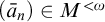 such that for every formula
$\phi (x,y)$
 ,

Proof. Let
${\cal A}\prec [0,1]$
 be any atomless probability algebra. As T has
$NIP$
 , the corresponding random type
$\mu \upharpoonright ^{\Bbb U}$
 is finitely satisfiable in
$M\otimes {\cal A}$
 by Fact 3.21. Again, as T is
$NIP$
 , by [Reference Ben-Yaacov1, Theorem 5.3],
$T^R$
 is
$NIP$
 . Therefore, some/any Morley sequence of
$\mu \upharpoonright ^{\Bbb U}$
 (over
$M\otimes {\cal A}$
 ) is convergent. By Theorem 2.7, there is a sequence in
${M\otimes {\cal A}}$
 which is (Baire-1/2) convergent to
$\mu \upharpoonright ^{\Bbb U}$
 . Now, by a translation similar to the argument of Proposition 3.16, it is easy to see that there is a sequence of averages measures of realized types in M which converges to
$\mu $
 . This is enough. (Furthermore, such a sequence is randomly convergent.)
Fact 3.23 (Assuming
$NIP$
).

Let T be a (countable) classical theory, M a small model of T, and
$\mu (x)$
 a global measure which is definable over M. Let
${\cal A}$
 be an atomless measure algebra such that
$[0,1]\preceq {\cal A}$
 . Then (i)
$\Longrightarrow $
 (ii).
-
(i) $\mu $
is R-generically stable over M. -
(ii) $\mu \upharpoonright ^{\Bbb U}$
is generically stable over
$M\otimes [0,1]$
.


Proof. First note that as
$\mu $
 is
$\textit{fam}$
 over M,
$\mu \upharpoonright ^{\Bbb U}$
 is definable over, and finitely satisfiable in
$M\otimes [0,1]$
 (cf. Fact 3.21). As
$T^R$
 is
$NIP$
 , some/any Morley sequence of
$\mu \upharpoonright ^{\Bbb U}$
 is convergent. By Theorem 2.7, there is a sequence
$(\mathbf {a}_n:n<\omega )$
 in
$M\otimes [0,1]$
 such that
$\lim tp(\mathbf {a}_n/{\Bbb U})=\mu \upharpoonright ^{\Bbb U}$
 . Furthermore, by Theorem 2.13, this measure is generically stable.
Remark 3.24. Notice that, assuming
$NIP$
 , Fact 3.23 provides a reverse to Proposition 3.16. Indeed, by Theorem 2.13, the condition (ii) of Fact 3.23 imples the condition (i) of Proposition 3.16.
The following is a kind of complement to Proposition 3.16 for
$\mu \upharpoonright ^{\Bbb U}$
 .
Theorem 3.25. Let T be a (countable) theory, M a model of T, and
$\mu (x)$
 a global measure (in T) which is definable over M. Suppose that
$\mu \upharpoonright ^{\Bbb U}$
 is generically stable over
$M\otimes \mathcal {A}$
 . Then,
$\mu $
 is R-generically stable (
$\textit{fam}$
 ) over M.
Proof. First notice that, as
$\mu $
 is definable, by [Reference Gannon10, Proposition 2.2],
$\mu \upharpoonright ^{\Bbb U}$
 is well-defined and consistent. Furthermore, recall that
$\mu \upharpoonright ^{{\cal U}\otimes \cal A}=\mu \otimes \cal A$
 . By Theorem 2.13, there is a sequence
$(\mathbf {a}_n)\in M\otimes [0,1]$
 such that the sequence
$(tp(\mathbf {a}_n/{\Bbb U}) :n<\omega )$
 Baire-1/2-converges to
$\mu \upharpoonright ^{\Bbb U}$
 . In particular, the sequence
$(tp(\mathbf {a}_n/{\cal U}\otimes {\cal A}):n<\omega )$
 Baire-1/2-converges to
$\mu \otimes {\cal A}$
 . Therefore, by Proposition 3.16,
$\mu $
 is R-generically stable over M.
The following example shows that one can not expect a converse to Theorem 3.25.
Example 3.26. Consider the unique complete type
$p\supset \{\neg xEb:b\in {\cal U}\}$
 in the Henson graph. Conant and Gannon [Reference Conant and Gannon6] showed that this type is
$\textit{fam}$
 but not
$\textit{fim}$
 . Using the methods of the present paper it is easy to see that randomization of
$\textit{fam}$
 measures are
$\textit{fam}$
 again. (This has been proven in [Reference Conant, Gannon and Hanson7, Theorem 3.25] with a different approach than here.) Also, in Corollary 4.5, we will show that randomization of generically stable types are generically stable. (See [Reference Conant, Gannon and Hanson7, Corollary 3.19] for a different proof.) To summarize, the Dirac measure
$\delta _p$
 is
$\textit{fam}$
 and its corresponding random-type
$\delta _p\upharpoonright ^{\Bbb U}$
 is not generically stable.
4 Continuous
$VC$
-theory and generically stable types

In this section, using powerful tools provided in [Reference Ben-Yaacov1], we can refine some of the previous results. We give an argument of the fact that the generic stability for types is preserved in randomization (cf. Corollary 4.5).
We first recall some notion and notation from [Reference Ben-Yaacov1]. Let I be a set, and
$Q\subseteq [0,1]^I$
 a collection of functions from I to
$[0,1]$
 . For any
$r<s$
 , there is a collection
${Q_{r,s}=\{q_{r,s}:q\in Q\}}$
 of fuzzy sets, where the
$q_{r,s}$
 ’s are defined as follows:
$i\in q_{r,s}$
 if
$q(i)\leq r$
 and
$i\notin q_{r,s}$
 if
$q(i)\geq s$
 ; and it is not known/important that i belongs to
$q_{r,s}$
 or not if
$r<g(i)<s$
 . The
$VC$
 -index for
$Q_{r,s}$
 , denoted by
$VC(Q_{r,s})$
 , is defined similar to classical case. (We refer to [Reference Ben-Yaacov1, p. 316] for a precise definition of fuzzy sets and the
$VC$
 -indexes of Q.) Q is called a
$VC$
 -class if for any
$r<s$
 ,
$VC(Q_{r,s})<\infty $
 . If Q is a
$VC$
 -class, one can easily show that for every
$\epsilon>0$
 there is an upper bound
$d_\epsilon <\infty $
 for the
$VC$
 -indexes of classes
$Q_{r,r+\epsilon }$
 where
$r\in [0,1-\epsilon ]$
 . To summarize, the notion of a
$VC$
 -class is such that we have the following important observations/connections:
Observation 4.1. Let J be a set, and
$\varphi :{\Bbb N}\times J\to [0,1]$
 a function. Then, (i)
$\iff $
 (ii)
$\Rightarrow $
 (iii).
(i):
$\varphi ^J=\{\varphi (\cdot ,j):{\Bbb N}\to [0,1] \ | \ j\in J\}$
 is a
$VC$
 -class.
(ii):
$\varphi _{\Bbb N}=\{\varphi (i,\cdot ):J\to [0,1] \ | \ i\in {\Bbb N}\}$
 is dependent. That is, for every
$\epsilon>0$
 there is a natural number
$N=N_\epsilon $
 such that for every
$r<s$
 with
$s-r=\epsilon $
 the following does not hold:

(iii) There is a subsequence
$(\varphi _n:n<\omega )$
 of
$\varphi _{\Bbb N}$
 such that
$(\varphi _n:n<\omega )$
 Baire-1/2-converges. That is, for each
$r<s$
 , there is a natural number
$N=N_{r,s}$
 and a set
$E\subset \{1,\ldots ,N\}$
 such that for each
$i_1<\cdots <i_{N}<\omega $
 , the following does not hold

Proof. The equivalence (i)
$\iff $
 (ii) is folklore in classical logic (cf. [Reference van den Dries25]). The argument is a straightforward adaptation of the classical case.
(ii)
$\Rightarrow $
 (iii) is similar to the argument of the direction (i)
$\Rightarrow $
 (iii) of Proposition 2.14 in [Reference Khanaki17]. Indeed, suppose for a contradiction that there is no Baire-1/2-convergent subsequence. Using Ramsey theorem, let
$(\varphi _n:n<\omega )$
 be a
$\varphi $
 -N-A-indiscernible sequenence as in Definition 3.1 of [Reference Khanaki15]. (Here N is a natural number and
$\{r,s\}=A$
 .) For suitable N and A, the condition
$(*)$
 above holds for
$(\varphi _n:n<\omega )$
 , because this sequenece is not Baire-1/2-convergent. As N is arbitrary, this contradicts (ii).
Observation 4.2. With the above notation, every Baire-1/2-convergent sequence
$\{\varphi (n,\cdot ):n\in {\Bbb N}\}$
 is dependent (as in (ii) in Observation 4.1).
Proof. Immediate.
Compare to Definitions 2.8, 3.1, and Remark 3.2.
Fix a probability space
$(\Omega ,{\frak B},\mu )$
 . Given sets I and J, a family of
$[0,1]$
 -valued functions on
$I\times J$
 is given as
$\varphi :\Omega \to [0,1]^{I\times J}$
 by
$\omega \mapsto \varphi _\omega (\cdot ,\cdot )$
 . For every
$\omega $
 ,
$(\varphi _\omega )_I=\{(\varphi _\omega )_i:i\in I\}=\{\varphi _\omega (i,\cdot ):i\in I\}$
 and similarly
${(\varphi _\omega )^J=\{(\varphi _\omega )^j: j\in J\}}$
 . The family
$\varphi =\{\varphi _\omega :\omega \in \Omega \}$
 is called uniformly dependent if for every
$\epsilon>0$
 there is
$d=d_{\varphi ,\epsilon }$
 such that
$VC\big (((\varphi _\omega )^J)_{{r,r+\epsilon }}\big )\leq d$
 for every
$r\in [0,1-\epsilon ]$
 and
$\omega \in \Omega $
 .
We say that
$\varphi =\{\varphi _\omega :\omega \in \Omega \}$
 is a measurable family if for any
$(i,j)\in I\times J$
 , the function
$\omega \mapsto \varphi _\omega (i,j)$
 is measurable. Then, we define function
${\Bbb P}[\varphi ]:I\times J\to [0,1]$
 by
${\Bbb P}[\varphi ](i,j):={\Bbb P}[\varphi (i,j)]$
 .
We say that
${\Bbb P}[\varphi ]:I\times J\to [0,1]$
 is dependent, if for every
$r<s$
 , the collection
$({\Bbb P}[\varphi ]^J)_{r,s}$
 is a
$VC$
 -class (cf. [Reference Ben-Yaacov1]).
Explanation. We explain how
${\Bbb P}[\phi ]$
 will be interpreted in the next theorem (4.4). Let
$\varphi (x,y)$
 be an L-formula and
$A,B$
 subsets of a model
$\mathbf {M}\models T^R$
 . Recall from the construction of randomization that the universe of every model
$\mathbf {M}$
 of
$T^R$
 is a set of measurable maps from an atomless probability algebra
$\Omega $
 to a model M of T. This means that for each
$\mathbf {a}\in \mathbf {M}$
 and every
$\omega \in \Omega $
 , we have
$\mathbf {a}(\omega )\in M$
 .
Let us enumerate
$A=\{\mathbf {a}_i:i\in I\}$
 and
$B=\{{\mathbf {b}}_j:j\in J\}$
 . Set
$\psi (x,y)={\Bbb P}[\varphi (x,y)]$
 , i.e it is the corresponding formula of
$\varphi $
 in randomization. Define
$\chi _\varphi :I\times J\to [0,1]$
 via
$\chi _\varphi (i,j):=\psi (\mathbf {a}_i,{\mathbf {b}}_j)$
 . Therefore,

In particular, recall that M is a subset of
$\mathbf {M}$
 via
$a\mapsto a\otimes 1$
 , where
$a\otimes 1$
 is the constant map
$\omega \mapsto a$
 . In this case, as mentioned in Convention 3.13, to simplify the notation, we continue to use a instead of
$a\otimes 1$
 .
The key result is the following.
Fact 4.3 [Reference Ben-Yaacov1].
If
$\varphi =\{\varphi _\omega :\omega \in \Omega \}$
 is a measurable family of uniformly dependent functions, then
${\Bbb P}[\varphi ]:I\times J\to [0,1]$
 is dependent.
The following localizes Theorem 5.3 of [Reference Ben-Yaacov1] in two way: for a formula and a sequence. (We strongly suggest that the proof of [Reference Ben-Yaacov1, Theorem 5.3] should be read before reading the rest of this section.)
Theorem 4.4. Let M be a model of T,
$\psi (\bar x,\bar y)$
 a formula with
$|\bar x|=n$
 ,
$|\bar y|=m$
 , and
$(a_i)$
 a sequence in M of n-tuples. If the sequence
$(\psi (a_i,\bar y):i<\omega ) DBSC$
 -converges, then the sequence
$({\Bbb P}[\psi (a_i,\bar y)]:i<\omega )$
 Baire-1/2-converges. (Here
${\Bbb P}[\psi (\bar x,\bar y)]$
 is the corresponding formula in
$T^R$
 .)
Proof. The proof is an adaptation of the argument of [Reference Ben-Yaacov1, Theorem 5.3]. We write
$\varphi (\bar x,\bar y)={\Bbb P}[\psi (\bar x,\bar y)]$
 . We will show that
$\varphi ^{\Bbb U}$
 is dependent on
$\{a_i:i<\omega \}\times {\Bbb U}^m$
 . Let us enumerate
${\Bbb U}^m = \{\bar {\mathbf {b}}_j\colon j \in J\}$
 , and set
$A=\{a_i:i<\omega \}$
 . Let
$\mathbf {p} = tp(A , {\Bbb U}^m/\emptyset )$
 . We may write it as
$\mathbf {p}( \bar x_i, \bar y_j )_{i\in \omega ,j \in J} \in S_{\omega \cup J}(T^R)$
 , and identify it with a probability measure
$\mu $
 on
$\Omega = S_{(\omega \times n) \cup (J\times m)}(T)$
 such that for every formula
$\rho (\bar z)$
 of the theory T,
$\bar z \subseteq \{\bar x_i,\bar y_j\}_{i\in \omega ,j\in J}$
 :

We can replace
$\Omega $
 by
$\Omega ':=\{q\in \Omega : (c_i)\models tp(A/\emptyset ) \text { for any } (c_i)_{i<\omega }\cup (d_j)_{j\in J}\models q\}$
 , and assume that
$\mu $
 is concentrated on
$\Omega '$
 . In fact, we can assume that
${\Bbb P}[\rho (\bar z)]^{\mathbf {p}} = \int _{S_{(J\times m)}(T)} \rho (\bar a_i, \bar y_j)^{q_j}\, d\mu (q_j)=\int _{\Omega '} \rho (\bar x_i, \bar y_j)^q\, d\mu (q).$

For
$i \in \Bbb N$
 ,
$j \in J$
 and
$q \in \Omega '$
 define:
$\chi _q(i,j) = \psi (\bar x_i,\bar y_j)^q$
 . Then
$\chi = \{\chi _q\colon q \in \Omega '\}$
 is a measurable family of
$\{0,1\}$
 -valued functions on
${\Bbb N} \times J$
 and
$\varphi (\bar a_i,\bar {\mathbf {b}}_j) = \varphi (\bar x_i,\bar y_j)^{\mathbf {p}} ={\Bbb P}[\psi (\bar x_i, \bar y_j)]= \Bbb P[\chi ](i,j)$
 where expectation is with respect to
$\mu $
 . (Notice that, as
$\psi (\bar x,\bar y)$
 is a formula, for
$(i,j)\in {\Bbb N}\times J$
 , the functions
$q\mapsto \chi _q(i,j)$
 are measurable.) Then, by Observations 4.1 and 4.2 and the assumption of
$DBSC$
 -convergence, the family
$\{\chi _q\colon q \in \Omega '\}$
 is uniformly dependent. That is, for any
$\epsilon>0$
 , there is
$d=d_{\varphi ,\epsilon }$
 such that
$VC((\chi _q)^J)_{[r,r+\epsilon ]}\leq d$
 for all
${r\in [0,1-\epsilon ]}$
 and
$q\in \Omega '$
 . Therefore, by Fact 4.3,
$\Bbb P[\chi ] \colon {\Bbb N}\times J \to [0,1]$
 is dependent. By Observation 4.1, this means that
$\{\varphi (a_i,y):{\Bbb U}^m\to [0,1]~|i\in {\Bbb N}\}$
 is dependent. Therefore, by Observation 4.1(iii), there is a subsequence
$({\Bbb P}[\psi (a_{i_j},\bar y)]:j<\omega )$
 which is Baire-1/2-convergent.
Since
$\textit{fim}$
 and generic stability are equivalent for types, the direction (i) to (ii) of the following result is a case of [Reference Conant, Gannon and Hanson8, Corollary 3.19]. However, our method is completely different and enlightening in some ways.
Corollary 4.5. Let
$p(x)$
 be a global type (in T) which is definable. Then the following are equivalent:
-
(i) p is generically stable.
-
(ii) There is a sequence $(a_i)\in \cal U$
such that
$(tp(a_i/{\Bbb U}):i<\omega )$
Baire-1/2-converges to
$p\upharpoonright ^{\Bbb U}$
. (Therefore,
$p\upharpoonright ^{\Bbb U}$
is generically stable.)


Proof. (i)
$\Longrightarrow $
 (ii) follows from Theorem 4.4. Indeed, by Theorem 4.4 of [Reference Khanaki18], there is a sequence
$(a_i)\in \cal U$
 such that
$(tp(a_i/{\cal U}):i<\omega ) DBSC$
 -converges to p. By Theorem 4.4 above,
$(tp(a_i/{\Bbb U}):i<\omega )$
 Baire-1/2-converges to
$p\upharpoonright ^{\Bbb U}$
 . Indeed, notice that, by Theorem 4.4, for every L-formula
$\phi (x,y)$
 , the sequence
$({\Bbb P}[\phi (a_i,y)]:i<\omega )$
 Baire-1/2-converges to
${\Bbb P}[\phi (x,y)]^{p\upharpoonright ^{\Bbb U}}$
 . By the elimination of quantifiers in
$T^R$
 , the same holds for every formula in
$L^R$
 with variable x. (More precisely, it is easy to see that if
$\varphi _1,\varphi _2$
 are formulas of the form in
${\Bbb P}[\phi _1]$
 and
${\Bbb P}[\phi _2]$
 , then for every continuous combination
$\psi (x,y)$
 of them, the sequence
$(\psi (a_i,y):i<\omega )$
 Baire-1/2 convergence to
$\psi (x,y)^{p\upharpoonright ^{\Bbb U}}$
 . (For this, one can use the argument Corollary 3.5 in [Reference Ben-Yaacov1].) This means that we proved the claim for every atomic formula. Furthermore, it is easy to see that the same holds for uniform limit of formulas.Footnote
24
Now, by the elimination of quantifiers, the claim is proved for every formula.)
(ii)
$\Longrightarrow $
 (i): As
$(tp(a_i/{\Bbb U}):i<\omega )$
 Baire-1/2 converges to
$p\upharpoonright ^{\Bbb U}$
 , the sequence
$(tp(a_i/{\cal U}):i<\omega )$
 Baire-1/2 converges to p. (This follows from an argument similar to Proposition 3.16, even simpler.) Notice that, for types,
$DBSC$
 -convergence and Baire-1/2 convergence coincide. So, by Theorem 4.4 of [Reference Khanaki18], p is generically stable.
Remark 4.6. (i): In the previous version of the present paper we asked whether the generic stability of
$p\upharpoonright ^{\Bbb U}$
 implies the condition (ii) in Corollary 4.5; equivalently, if
$p\upharpoonright ^{\Bbb U}$
 is generically stable, then is p generically stable? In Proposition 3.20 of [Reference Conant, Gannon and Hanson7], this question was answered positively. Therefore, a definable type in classical logic is generically stable if and only if its corresponding random-type is generically stable.
(ii) A question that naturally arises is why not use the method used in this section for measures instead of just types. The answer is that the randomization of average measures is not necessarily realized in
$\Bbb U$
 , something that does not happen for types, i.e., if a realizes p, then
$a\otimes 1$
 realizes
$p\upharpoonright ^{\Bbb U}$
 .
(iii) The final point is that the result of this section also holds for continuous theories, meaning we could have assumed that T is a countable separable theory.
Acknowledgements
I want to thank James Hanson for his helpful comments (especially because of the point on non-saturation of models of the form
$M\otimes \mathcal {A}$
 ).
Funding statement
I would like to thank the Institute for Basic Sciences (IPM), Tehran, Iran for the support. This research is partially supported by IPM grant 1401030117.



