

Introduction
Laws and regulations related to labour, unemployment, and reform challenges are of paramount importance in China, especially given the role of the government and the Chinese Communist Party (CCP), and the evolving structure of labour relations and economic policies. This socio-economic landscape encompasses the relationship between employees and employers, as well as the broader regulatory framework that governs labour markets, wages, social protections, and workforce stability (Pan Reference Pan2023). The Chinese government has historically played an important role in shaping labour policies, while the main goal of the CCP is to promote China’s economic development while maintaining social stability. It often prioritises job creation and reducing unemployment, especially among urban youth, through investment in labour-intensive industries, vocational training programs, and rural-urban migration policies. In addition, the government ensures access to social services, a key focus of reform efforts (Tian et al Reference Tian, Xu, Li and Yu2022). The influence of the CCP extends to labour unions, which are often seen as instruments for controlling workers’ rights and grievances (Cheng Reference Cheng2022). Given China’s increasingly central role in the global economy, the trajectory of China’s labour policies are internationally significant.
Strict labour laws in China are designed to ensure fair treatment; they protect workers by regulating aspects such as wages, working hours, safety conditions, and dispute resolution. The Labor Contract Law mandates employers to provide written contracts with clear terms on wages, job duties, and conditions (Feng et al Reference Feng, Cooke and Zhao2020). The Minimum Wage Law guarantees that employees receive a baseline level of pay set by local authorities (Howell Reference Howell2020). The Working Hours Regulation limits weekly working hours, requires rest periods, and mandates overtime pay (Ye et al Reference Ye, Gindling and Li2020). While the Occupational Health and Safety Law aims to ensure a safe working environment and mandates preventative measures for workplace accidents and diseases, its implementation has faced challenges, particularly in enforcement and employer compliance, especially in high-risk industries (Zhang et al Reference Zhang, Yang and Martínez-Aires2021; Chen et al Reference Chen, Yang, Cheng and Yuan2023). Research highlights that despite improvements, work-related accidents and occupational diseases remain a concern, partly due to weak oversight mechanisms and fragmented institutional responsibility. The Social Insurance Law obligates employers to contribute to various social insurance programs, including pensions, medical, unemployment, and work-related injury insurance (Deng et al Reference Deng, Lai, Liu and Pu2022). Additionally, the Employment Promotion Law seeks to reduce unemployment and foster job creation by encouraging fair labour practices (Sun et al Reference Sun, Yujie Chen and Rani2023). The Labor Dispute Mediation and Arbitration Law offers mechanisms for resolving disputes between employers and employees through mediation and arbitration services (Hu and Martin Reference Hu and Martin2020). Together, these laws seek a fair and safe working environment for employees across China. The CCP significantly influences these laws through its central and local government agencies, shaping regulations to align with its economic and social objectives. The CCP offers institutional oversight, with Party branches in enterprises empowered to enforce labour laws and ensure compliance (Cheng Reference Cheng2022). The CCP also plays a crucial role in adjusting and reforming labour laws in response to economic conditions and political priorities, such as during economic transitions or industrial restructuring (Gruin Reference Gruin2020). On the other hand, while the Party’s influence aims to strengthen labour law enforcement and worker protection, its effectiveness can vary depending on the extent of Party involvement and the specific circumstances of each enterprise.
Laws and regulations relating to labour and unemployment
As noted above, China’s employment protection laws have evolved significantly to address worker vulnerabilities and align with socio-economic development goals. Before the introduction of the Labor Contract Law in 2008 (Remington and Cui Reference Remington and Cui2015), many workers, especially in private and informal sectors, lacked written contracts, leaving them without legal recourse against unfair dismissal or wage exploitation. By contrast, the Labor Contract Law mandates written contracts, specifies conditions for termination, and ensures severance pay for terminated employees, aiming to enhance job security and fairness.
Similarly, the Minimum Wage Law (2004) Reference Deakin, Wilkinson, Dau-Schmidt, Harris and Lobelsought to ameliorate inadequate pay levels, which had failed to cover basic living costs, especially for rural migrant workers. This law set localised minimum wage standards, addressing wage disparities and improving livelihoods (see also Deakin and Wilkinson Reference Deakin, Wilkinson, Dau-Schmidt, Harris and Lobel2009). The Employment Promotion Law (2007) Reference Agovino, Garofalo and Marchesanoemerged to tackle unemployment, particularly among urban youth and rural migrants, through vocational training programs and incentives for job creation in high-demand sectors (see also Agovino et al Reference Agovino, Garofalo and Marchesano2018). Additionally, the Occupational Health and Safety Law (2014) Reference Adeyemo and Smallwoodwas enacted to combat frequent workplace accidents by mandating safety measures and penalties for non-compliance (see also Adeyemo and Smallwood Reference Adeyemo and Smallwood2017).
These laws collectively aimed to transform China’s labour landscape by formalising employment relationships, reducing exploitation, and enhancing worker protections, especially in regions undergoing rapid industrialisation.
Laws and regulations relate to reform challenges
Laws and regulations play a crucial role in addressing reform challenges, providing a structured framework to guide and govern the process. Labour reform, whether in legal, social, or economic sectors, often encounters resistance and complexities that require a legal foundation for resolution (Pitchay et al Reference Pitchay, Ramlan, Abd Jalil and Ratnasari2024). Legal frameworks are designed to ensure fairness, equity, and adherence to societal values during reform efforts. They define the scope of permissible changes, protecting individual rights, and maintaining order. For instance, in constitutional reformation, laws may outline procedures for amendments, ensuring a balanced and democratic approach (Ansah et al Reference Ansah, Voss, Asiama and Wuni2023). Regulations contribute by offering specific guidelines for implementation. They detail procedures, standards, and oversight mechanisms, developing transparency and accountability. Environmental or economic reforms, for instance, may require regulations to manage industry transitions responsibly (Schramm Reference Schramm2024).
Contributions and novelty
This research provides a novel contribution by examining the laws and regulations related to labour and unemployment, highlighting the reform challenges within the context of the CCP. It assesses the relationship between the stringency of labour laws and unemployment rates, and analyses government-initiated regulatory reforms related to labour and employment. By expanding on the importance of these regulatory frameworks, the research offers insights into the relationship between regulatory reforms and unemployment rates in China, and provides practical recommendations for enhancing economic development.
Research objectives
The research aims to assess the importance of laws and regulations related to labour, unemployment, and reform challenges within the context of the CCP and the Chinese government. It seeks to evaluate the relationship between regulatory reforms and unemployment rates, as well as to examine the implications of party-led labour policies on workers’ rights and economic development in China.
The subsequent sections of the paper are arranged in the following manner. The next describes the related works and offers a research model including hypotheses, after which the methodology employed is discussed. These are followed by explanations of the results and the discussion of the findings of the study, including practical implications, theoretical implications, policy recommendations, as well as the limitations of this research and future scope.
Related works and the research model
Due to the significant economic and structural differences between China and other nations, especially regarding labour market dynamics, this study avoids direct comparisons between Chinese labour laws and those of Europe or other regions. Instead, it uses scholarship from the Global North to explore the general principles of employment protection laws, focusing on their functionality and impact. Where applicable, the methodology of this study mirrors research approaches from the Global North, ensuring a thorough analysis within China’s specific context. This strategy enables a more relevant investigation of Chinese labour law reforms, without making potentially problematic comparisons to countries with differing structural realities. This review organises the current studies into three major themes, the global influence of labour and trade policies, the impact of technological innovation, and the CCP’s influence on the enforcement of labour law. These themes as a whole capture the principal structural, economic, and political forces driving labour law reforms in China. These issues also correlate closely with the study’s emphasis on regulatory reforms, labour market forces, and the pivotal position of political institutions in policy enforcement.
Global labour law reforms and trade policies
Though scarce, research reveals the manner in which trade policy in the Global North has impacted labour law reform across the globe. Christou and Damro (Reference Christou and Damro2024), for example, studied the influence of labour advocates within the US and EU, and identified that trade agreements have been used to impose higher labour standards. In the same vein, Gyulavári and Menegatti (Reference Gyulavári and Menegatti2022) considered structures of labour law in various economic systems, positing that protections of labour have declined in most Western economies, evolving from strict protections to more elastic arrangements. Though such research is not comparable per se to China’s unique economic system, it provides valuable insight that situates the theoretical foundations of labour reforms within a global framework.
Technological innovation and labour market dynamics in China
Rapid technological innovation in China has dramatically transformed the labour market, with both beneficial and adverse effects. Su et al (Reference Su, Yuan, Umar and Lobonţ2022) investigated how technological innovation, especially in patents, affects labour markets and employment. Their study identified that while innovation can create employment opportunities in new industries, it also causes job displacement, especially in routine or manual occupations, as a result of heightened automation. To this, Yang et al (Reference Yang, Yao and Dong2023) noted that digitalisation in manufacturing and service sectors has created more demand for highly skilled labour, further increasing skill mismatches and income disparities. These results highlight the intricate dynamics between innovation and employment, whereby technological progress requires adaptive labour policy and workforce reskilling initiatives. This aligns with the theoretical argument that labour laws must be adapted to support innovation-driven economies, particularly in managing job displacement and fostering workforce adaptability (Degryse Reference Degryse2016; Fernandez et al Reference Fernandez, Hyee, Immervoll and Pacifico2019). While Su et al (Reference Su, Yuan, Umar and Lobonţ2022) do not compare China’s experience directly with that of other countries, their study provides valuable insights into how labour laws might need to evolve to balance the growth of new job sectors with the protection of displaced workers.
Regulatory reforms in China and the CCP’s role
The final category centres on the role of political influence, particularly from the CCP, in shaping labour law reforms within China. Studies by Long and Yang (Reference Long and Yang2022) and Cheng (Reference Cheng2022) have shown how the presence of CCP branches in private enterprises has led to stronger enforcement of labour contracts, social insurance coverage, and worker benefits. These findings are crucial to understanding how political oversight in China directly impacts the application of labour laws and how the CCP integrates economic and social goals into labour market policies. These studies underscore the Party’s central role in labour law enforcement, suggesting that Party-led reforms can enhance compliance and benefit workers more effectively than in regions without such political influence. This focus on the CCP contrasts with broader labour law reforms in Western countries, where it is the labour unions or non-governmental bodies which typically push for reform, rather than the government itself.
Gaps in the literature and research questions
While the existing literature offers limited but useful insights into labour law reforms in other regions, this study primarily focuses on China-specific reforms, drawing from a contextual analysis of regulatory developments and the role of the CCP, there are notable gaps, particularly in understanding how China’s unique system of governance and economic policies impact the labour market. Most studies focus on formal labour markets or broad regulatory frameworks, but there is a lack of detailed analysis on the ways in which regional variations in labour laws across China, such as differences in minimum wage enforcement between provinces like Guangdong and Gansu, or variations in labour contract oversight in urban versus rural areas, affect unemployment rates and workforce stability (Lin & Yun Reference Lin and Yun2020; Silalahi & Walsh Reference Silalahi and Walsh2023). These disparities are often noted but not deeply explored in terms of their impact on labour market outcomes. To fill these gaps, this study aims to address the following research questions:
RQ1: What is the significance of labour-related laws and regulations in the context of the CCP and the Chinese government, particularly concerning labour, unemployment, and reform challenges, for key stakeholders such as workers, employers, and policymakers in shaping workforce stability and economic development?
RQ2: What is the relationship between regulatory reforms and unemployment rates in China?
RQ3: What are the implications of labour policies led by the CCP on the rights of workers and economic development in China?
The review of existing literature demonstrates the complexity of labour law reforms in both Western and Chinese contexts. While global scholarship informs the theoretical underpinnings of employment protection, it is clear that China’s labour reforms should be seen within their context, taking into account the unique political, economic, and structural features of the country. This study will focus on filling the gap in the literature emphasising the specific role of CCP-led reforms in shaping labour laws, and their direct implications for unemployment and economic development within China.
This study incorporates institutional theory and social contract theory as theoretical foundations assisting in exploration of the interplay between labour laws, regulatory reforms, and economic outcomes. Institutional theory emphasises the role of formal and informal institutionsReference Peters, such as the CCP, in shaping regulatory frameworks and labour market behaviour (Peters Reference Peters2022). It provides a basis for understanding how labour laws are created and enforced within China’s unique political and economic context. Social contract theory, on the other hand, focuses on the reciprocal obligations between the state and its citizens, where labour laws serve as mechanisms to promote social equity, job security, and economic development (Vanberg Reference Vanberg1994). These theories collectively underpin the proposed hypotheses, linking the variables of labour laws and reforms to economic growth
By investigating the significance of labour-related laws and regulations in the CCP context, the relationship between regulatory reforms and unemployment rates, and the implications of CCP-led labour policies on worker rights and economic development, this study aims to provide a deeper understanding of labour market transformation in China. Following the research questions, several hypotheses are proposed to explore further the intricate relationships between labour laws, regulatory reforms, and their broader impacts. These hypotheses aim to provide a structured framework for understanding how stringent labour laws are associated with lower unemployment rates, enhanced job security, and worker protection.
The study investigates the extent to which the CCP shapes and influences labour-related policies and regulations and assesses whether labour law reform initiatives positively impact economic growth in China. The following hypotheses are formulated to offer a systematic framework for analysing the effect of labour law reforms, CCP-led regulatory measures, and policy interventions on workforce stability, unemployment levels, and economic growth. These hypotheses draw on institutional and social contract theories, which emphasise the significance of legal structures and governance arrangements in determining labour market outcomes.
The proposed hypotheses are as follows:
H1. Stringent labour laws enhance job security and worker protection, leading to lower unemployment rates and improved economic growth.
H2. Government-implemented regulatory reforms, such as the Employment Promotion Law, positively influence labour market efficiency and contribute to economic growth by reducing unemployment.
H3. The CCP, as a key institution, significantly shapes labour-related policies, ensuring alignment with economic goals and promoting workforce stability, which positively impacts economic growth.
H4. Labour law reform initiatives drive economic growth by addressing unemployment, improving worker rights, and enhancing job quality, thereby reinforcing the social contract between the government and its citizens.
H5. Party-led reforms improve labour market adaptability to changing economic conditions, fostering economic resilience and sustained growth.
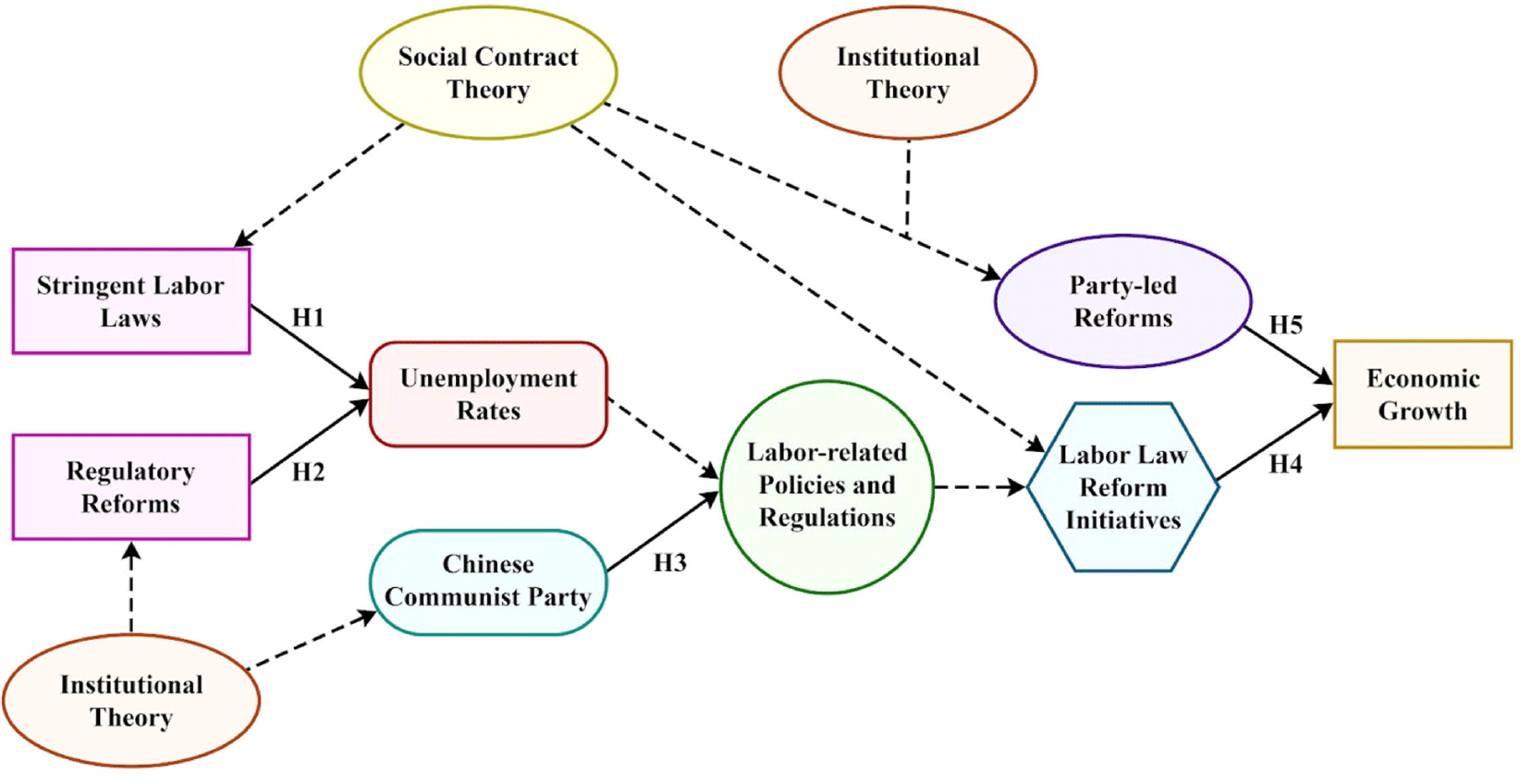
The hypotheses integrate insights from institutional theory by examining how labour laws and reforms are implemented and enforced through CCP-led mechanisms, ensuring alignment with China’s institutional framework. At the same time, social contract theory underscores the role of labour laws as tools for fulfilling societal obligations, promoting equity, and enhancing economic stability. The interplay of these theories highlights how labour laws and reforms serve as critical levers for fostering economic growth in China. Additionally, the hypotheses seek to understand how party-led reforms contribute to the labour market’s adaptability in response to changing economic conditions. From these hypotheses, the research model of this study is framed.
Figure 1 illustrates the research model that represents the cause-and-effect relationships between labour laws and reforms and economic growth. It positions labour laws (including stringent labour laws, regulatory reforms, and party-led reforms) as key variables influencing job security, unemployment rates, and workforce adaptability, ultimately driving economic outcomes. The CCP’s institutional role and the principles of social equity derived from social contract theory are central to this framework.
Research model.

Methodology
This research seeks to examine the legal framework related to labour, unemployment, and the challenges associated with reform. This section discusses the study’s structure, intended audience, tools, and methodologies for data gathering, demographic details, variables, metrics, and techniques for data interpretation. The collected data are subjected to analysis through the utilisation of Smart PLS 2.0 software to discern patterns and trends.
The study employs a general quantitative analysis approach to examine the relationships between labour law reforms, regulatory policies, and their impacts on unemployment rates and economic growth in China. The statistical analysis identifies patterns and trends based on survey responses. Detailed modelling was not the focus of this study, which aimed instead to highlight broader relationships and perceptions using descriptive and inferential analysis.
Research design
This project employs a cross-sectional study with a quantitative research approach. The research drew on a set of precisely crafted questionnaires as its primary data collection tool and embraced a descriptive research design, aiming to furnish an understandable and all-encompassing representation of the labour laws and regulations and their consequences for unemployment within China. The chosen research framework facilitated the collection of data from a diverse group of respondents, affording insights into the influence of labour laws and regulations in China. This, in turn, facilitated an examination of how these factors intersect with economic growth and unemployment rates.
Target population
The target population for the study included labourers, government officials, and lawyers. This diverse group was chosen to provide a comprehensive perspective on the impact of regulatory reforms and the role of the CCP in shaping labour policies. The experience of labourers is crucial for understanding the direct impact of these policies on the workforce. Government officials were selected for their involvement in the creation and implementation of labour policies and regulations. Lawyers were included in order to provide a legal perspective on the frameworks surrounding labour laws and the practical implications of regulatory reforms on labour rights and protections. By selecting this diverse target population, the study aims to capture a holistic view of labour market transformation in China, ensuring that various stakeholder perspectives are represented and analysed.
Data collection tool and procedure
The participants were chosen using a random sampling method to ensure that everyone within the target groups had an equal opportunity to be selected. Special care was taken when selecting government officials to minimise potential bias. Specifically, responses from officials with strong CCP affiliations were excluded from the final sample to reduce the risk of political bias influencing the results. To promote honest responses, the questionnaire was designed to guarantee anonymity, assuring participants that their answers would not impact their professional status or relationships with their departments.
Additionally, to reduce bias further, the questionnaire included neutral, balanced questions that were reviewed by an independent party to prevent leading questions. A confidentiality notice was included in the survey introduction, reassuring respondents that their data would be securely stored and handled with strict privacy.
Data validation and minimising bias
To ensure that responses were not biased, several steps were implemented:
Anonymity: Respondents were assured that their responses would remain anonymous and confidential to reduce social desirability bias, particularly from government officials who may feel pressured to provide responses that align with official viewpoints.
Preliminary Testing: A preliminary pilot test of the questionnaire was conducted with a small sample from the target population, including government officials, to identify any potential sources of bias or ambiguity. This process helped refine the questionnaire and eliminate any items that could cause discomfort or prompt biased responses.
Random Sampling: Random sampling was used to minimise selection bias, providing each individual within the target population an equal chance of being selected.
Exclusion Criteria: Responses from government officials with a clear partisan bias towards the CCP were excluded from the final dataset, ensuring that the results were not skewed by political affiliations.
By employing these strategies, the study aimed to maintain the impartiality of the data, especially in cases where government officials were involved.
Sample size and demographic details
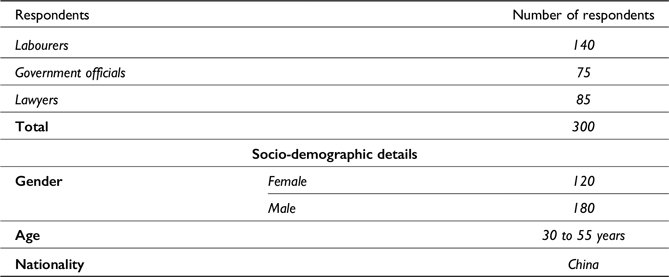
Initially, 385 questionnaires were distributed across labourers, government officials, and lawyers. A total of 354 questionnaires were returned, of which 300 were deemed relevant and selected for analysis. To ensure the sample represented a broad range of perspectives, 140 labourers, 75 government officials, and 85 lawyers were included. The careful selection process ensured the sample was balanced and provided reliable data for analysis. Table 1 presents the demographic profile of the samples. The demographic profile of samples helps to understand the makeup of the participants in terms of their occupation (labourers, government officials, and lawyers), gender, age range, and nationality. The study involved a total of 300 respondents, with 140 labourers, 75 government officials, and 85 lawyers. In this investigation, 120 respondents were female, and 180 were male. The analysis focused on individuals aged between 30 and 55 years. All respondents were Chinese citizens.
Demographic profile of samples

Variables and measures
The metrics of the research are derived from latent variables identified in prior studies. The metrics of the research are based on latent variables found in previous studies, including Kanbur and Ronconi (Reference Kanbur and Ronconi2018) for Stringent Labour Laws, Haidar (Reference Haidar2012) for Regulatory Reforms, and Marston et al. (Reference Marston, Feldstein and Hymans1976) for Unemployment Rates. The research encompasses five variables: Stringent Labour Laws, CCP, Labour law reform Initiatives, Party-led Reforms, and Economic Growth. The variable, ‘Stringent labour laws’ was adopted from Ronconi (Reference Ronconi2019), comprising 3 items. ‘Regulatory reforms’ was adopted from Macdonald and Charlesworth (Reference Macdonald and Charlesworth2021), comprising 4 items. ‘Chinese Communist Party’ was adopted from Liu (Reference Liu2024), comprising 3 items. ‘Labour law reform Initiatives’ was adopted from Piper and Saraswathi (Reference Piper and Saraswathi2024), comprising 3 items. ‘Party-led reforms’ was adopted from Wu et al (Reference Wu, Deng, Feng, Wang, Wang and Zhang2024), comprising 3 items. ‘Unemployment Rates’ is adopted from Giles et al (Reference Giles, Albert and Zhang2005), comprising 3 items. ‘Economic growth’ is adopted from Allen et al (Reference Allen, Qian and Qian2005), comprising 3 items. Measurement is conducted using the Likert scale, labelled 1–5 as follows: ‘1: strongly disagree, 2: disagree, 3: neutral, 4: agree, 5: strongly agree’.
The study classifies labour laws into three main categories: stringent labour laws, regulatory reforms, and party-led reforms, based on their core objectives and implementation mechanisms. This classification is drawn from existing research and the observed effects of these laws. Stringent labour laws, such as the Labor Contract Law and the Minimum Wage Law, aim to enhance worker protections and ensure job security. Regulatory reforms, including the Employment Promotion Law and the Occupational Health and Safety Law, focus on broader socio-economic goals, such as reducing unemployment and promoting safer workplaces. Party-led reforms involve CCP-driven initiatives that combine political oversight with the enforcement of labour laws to align with economic and social objectives. These categories were established through a thematic analysis of labour policies and their connections to study variables, allowing for a systematic assessment of their effects on unemployment and economic development.
Data analysis
The measurement model was assessed using SmartPLS 2.0, which included descriptive statistics, reliability, and an analysis of convergent validity analysis. In the context of this study focusing on labour laws, regulations, and their consequences on unemployment in China, a discriminant validity analysis was executed to guarantee the validity of the measurement tools. The relationships stated in the hypotheses were assessed through structural equation modelling (SEM).
Results from the investigation
The investigation assesses the laws, regulations, and labour dynamics within the context of the Chinese government and the CCP. Descriptive statistics, dependability, analysis of convergent validity, discriminant validity analysis, and SEM analysis were carried out to determine the Laws and regulations related to labour including unemployment and reform challenges. The analysis findings are tabulated and illustrated in the following sections.
The findings highlight the specific impacts of labour law reforms, such as the Labor Contract Law, on job security and unemployment rates. The results indicate that stringent laws enhance workforce stability by mandating written contracts and severance pay, while regulatory reforms, such as the Employment Promotion Law, contribute to job creation through targeted vocational programs. Party-led reforms under the CCP have further strengthened compliance with labour regulations, ensuring greater social insurance coverage and worker protections.
Descriptive statistics and tests of reliability and convergent validity
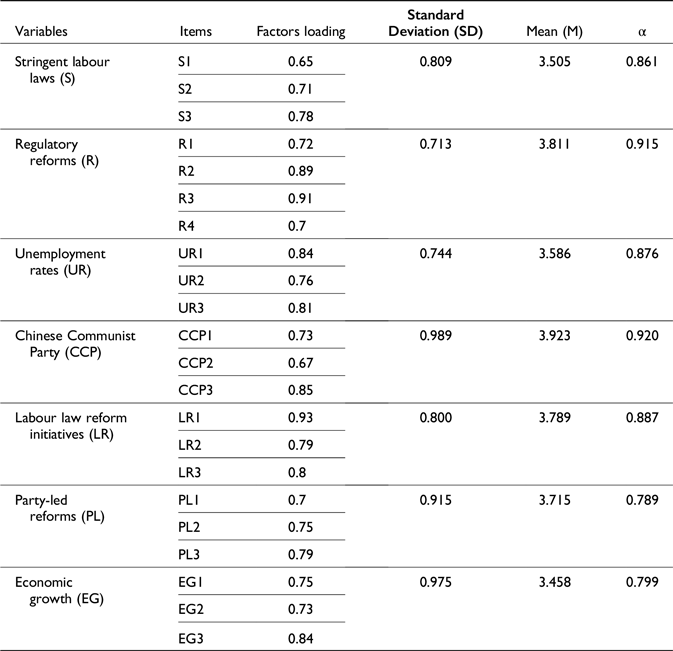
Table 2 presents a detailed analysis of the study’s key variables, including their descriptive statistics, reliability, and convergent validity. Each variable, such as Stringent Labour Laws, Regulatory Reforms, Unemployment Rates, the CCP, Labour law reform Initiatives, Party-led Reforms, and Economic Growth, is assessed through specific items. Factor Loadings display how strongly each item correlates with its respective variable, with values generally meeting or exceeding the threshold of 0.70, indicating a strong association. SD measures the variability in responses, where a lower SD signifies more consistent responses among participants.
Descriptive statistics, reliability, and convergent validity analysis results

M shows the average response on a scale from 1 to 5, reflecting general sentiment. Reliability (α), using Cronbach’s Alpha, evaluates the internal consistency of each set of items. Values above the 0.70 threshold confirm high reliability, demonstrating that the measurement scales are consistent and dependable. The reliability scores for all variables exceed the 0.70 threshold, and the factor loadings for each item also meet the necessary threshold.
Discriminant validity analysis
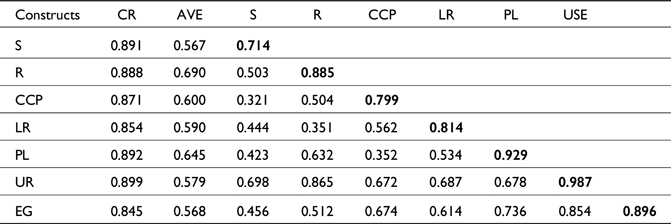
Discriminant validity is crucial for ensuring that each variable measures a unique aspect of the phenomenon being studied and does not overlap excessively with other variables. Table 3 provides an analysis of discriminant validity, where each row and column represent different constructs from the study. Construct reliability indicates the reliability of each construct. It measures how well the items used to assess a construct are consistent. Higher values are better, with a threshold of 0.70 typically considered acceptable as is the case in this study. AVE reflects the amount of variance captured by a construct relative to the amount of variance due to measurement error. An AVE value above 0.50 is desirable, as it indicates that the construct explains more than half of the variance in its items. In this research, all AVE values meet this threshold, demonstrating that the constructs are effectively capturing the intended information.
Discriminant validity

The diagonal values in each cell represent the square root of the AVE for each construct. These values should be higher than the correlations (off-diagonal values) with other constructs, indicating that the constructs are more strongly related to their own items than to other constructs. For example, for the construct “Stringent Labour Laws,” the diagonal value is 0.714, which is greater than its correlations with other constructs in Table 3. These values represent the correlations between different constructs. For each pair of constructs, the off-diagonal values show how strongly they are related to each other. Lower correlations between different constructs suggest better discriminant validity, meaning the constructs are measuring different aspects of the phenomenon. The results show that all constructs have high CR and AVE values, and the diagonal values are higher than the off-diagonal correlations, confirming that each construct is distinct and measured effectively.
Analysis of participant perceptions regarding the effectiveness of recent labour law reforms in reducing unemployment
This study aimed to assess participant perceptions of the effectiveness of recent labour law reforms in reducing unemployment in China. The analysis focused on responses collected through a structured questionnaire, which included a range of statements designed to gauge participants’ views on the impact of these reforms. The data collected from the questionnaire were used to create a distribution of responses, illustrating the varying degrees of agreement or disagreement among participants. The data collected from the open-ended question in the questionnaire provide a comprehensive overview of participant perceptions regarding the impact of recent regulatory reforms on unemployment rates in China.
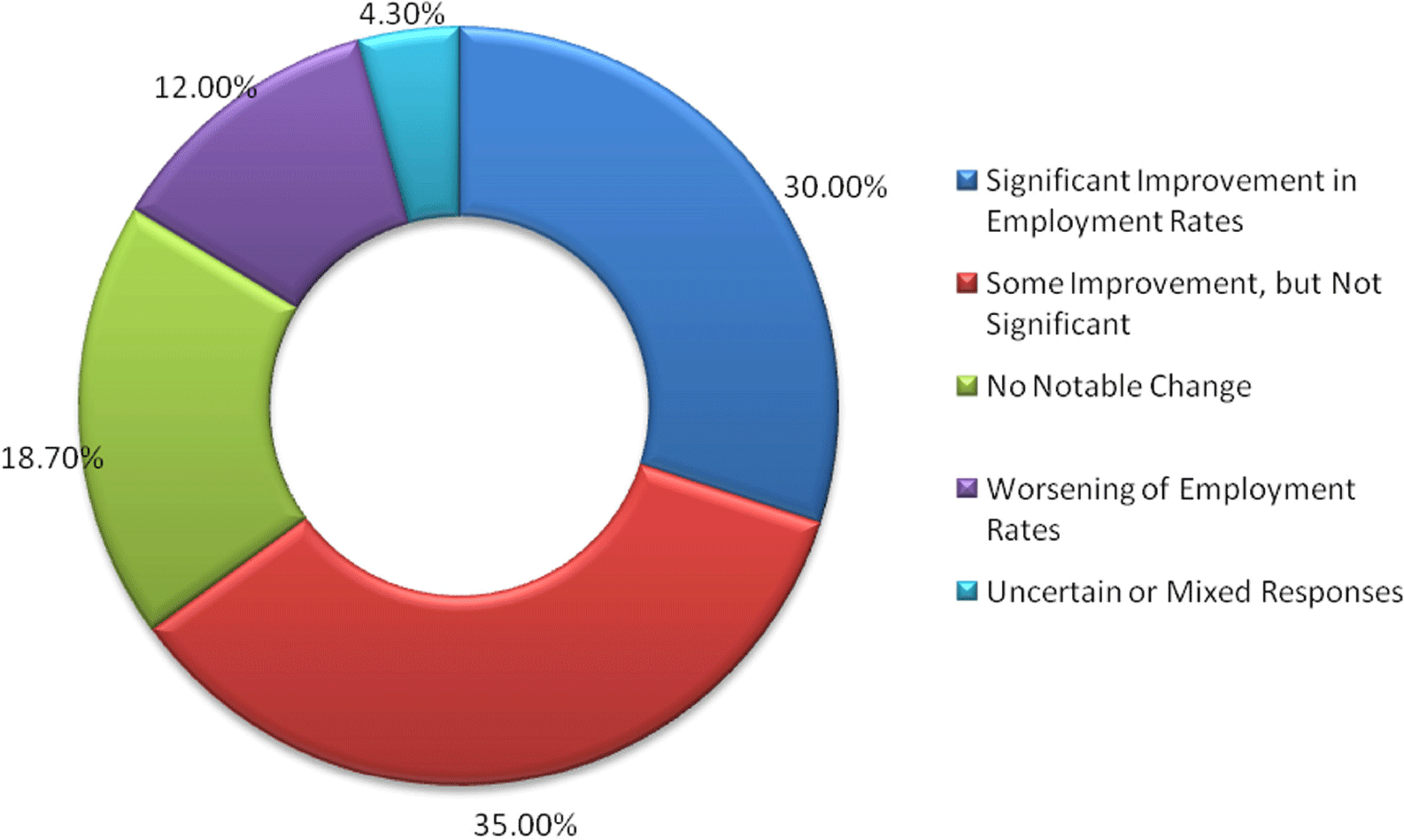
Figure 2 classifies the responses of participants into five groups according to perceived change in the rate of unemployment after recent labour law reforms. Approximately 30% mentioned that there was significant improvement, implying a very positive perception of the reforms. The biggest group (35%) recorded some improvement, implying a moderate but not revolutionary effect. At the same time, 18.7% saw no change in unemployment, and 12% thought unemployment got worse because of the reforms. Such answers indicate anxiety or dissatisfaction among the minority. Generally, the statistics reveal that 65% of the respondents saw some improvement, but 30.7% did not see positive change. These findings underscore the complexity of the issue and the varying perceptions of the impact of regulatory reforms on different segments of the population. This perhaps suggests that while there are positive perceptions regarding the effectiveness of the reforms, there remains a significant proportion of scepticism and concern that warrants further investigation and consideration in policy-making.
Distribution of responses on post-regulatory reforms.

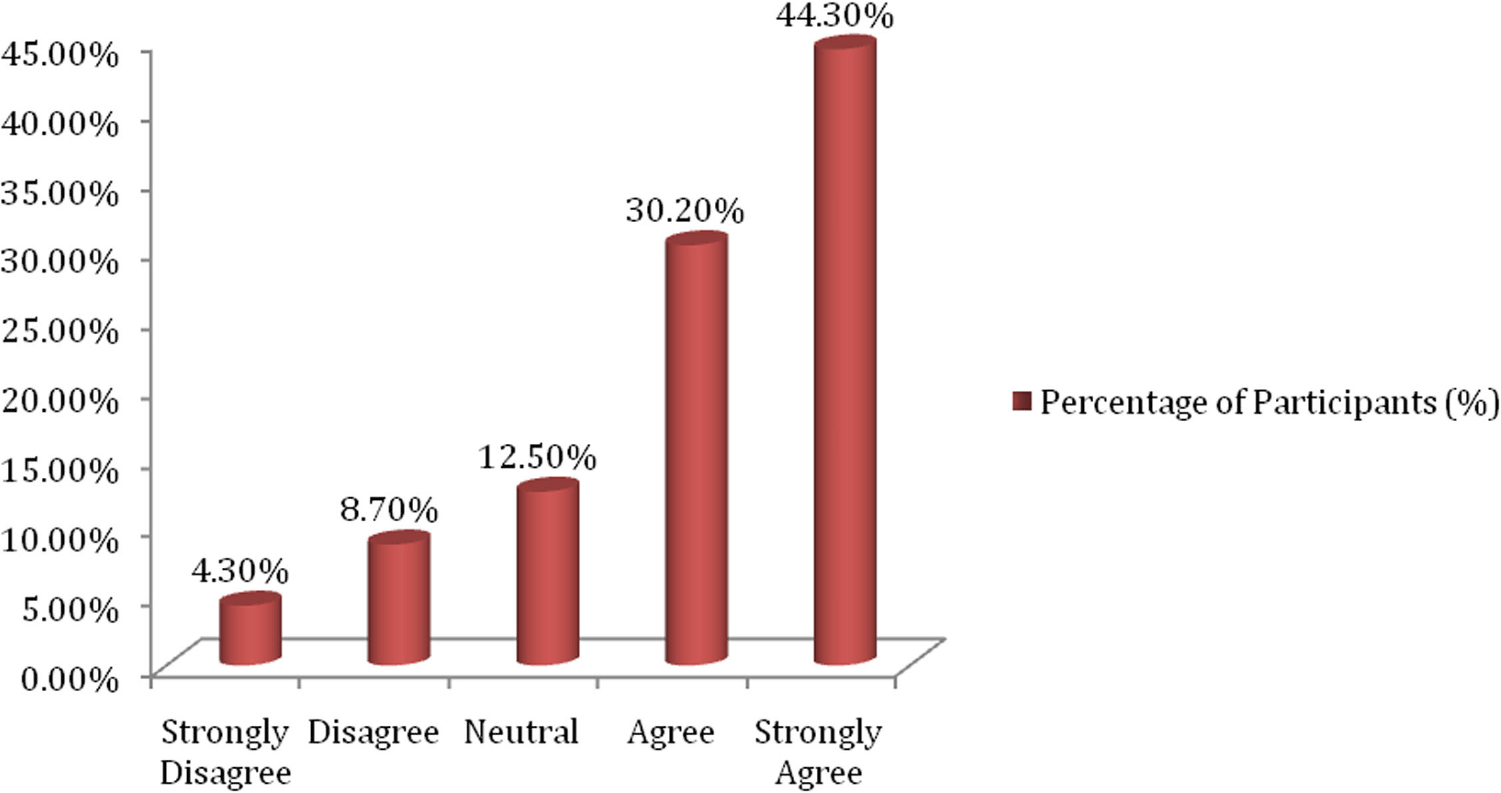
Figure 3 displays answers to a certain statement regarding the effect of labour law reforms on unemployment. It employs a Likert scale of strong agreement to strong disagreement. A definite majority of 44.3% strongly agreed and 30.2% agreed that labour reforms had a positive effect on unemployment, amounting to 74.5% positive agreement. 12.5% were neutral in their responses, and 8.7% disagreed, with 4.3% strongly disagreeing. This spread confirms the result in Figure 2: labour reforms are considered beneficial by the majority of participants. But since Figure 3 indicates a stronger percentage of agreement, this means that the participants were more positively inclined to judge a definitive statement, compared to categorising their impressions independently. Overall, both indicators report a broadly favourable perception of recent reforms. But the categorical approach in Figure 2 reports more ambivalence than the statement-based consensus in Figure 3. These results indicate that although there is widespread support, perceptions are complex and further research is required to determine the causes of residual scepticism.
Distribution of responses on the impact of recent labor law changes on unemployment rates.

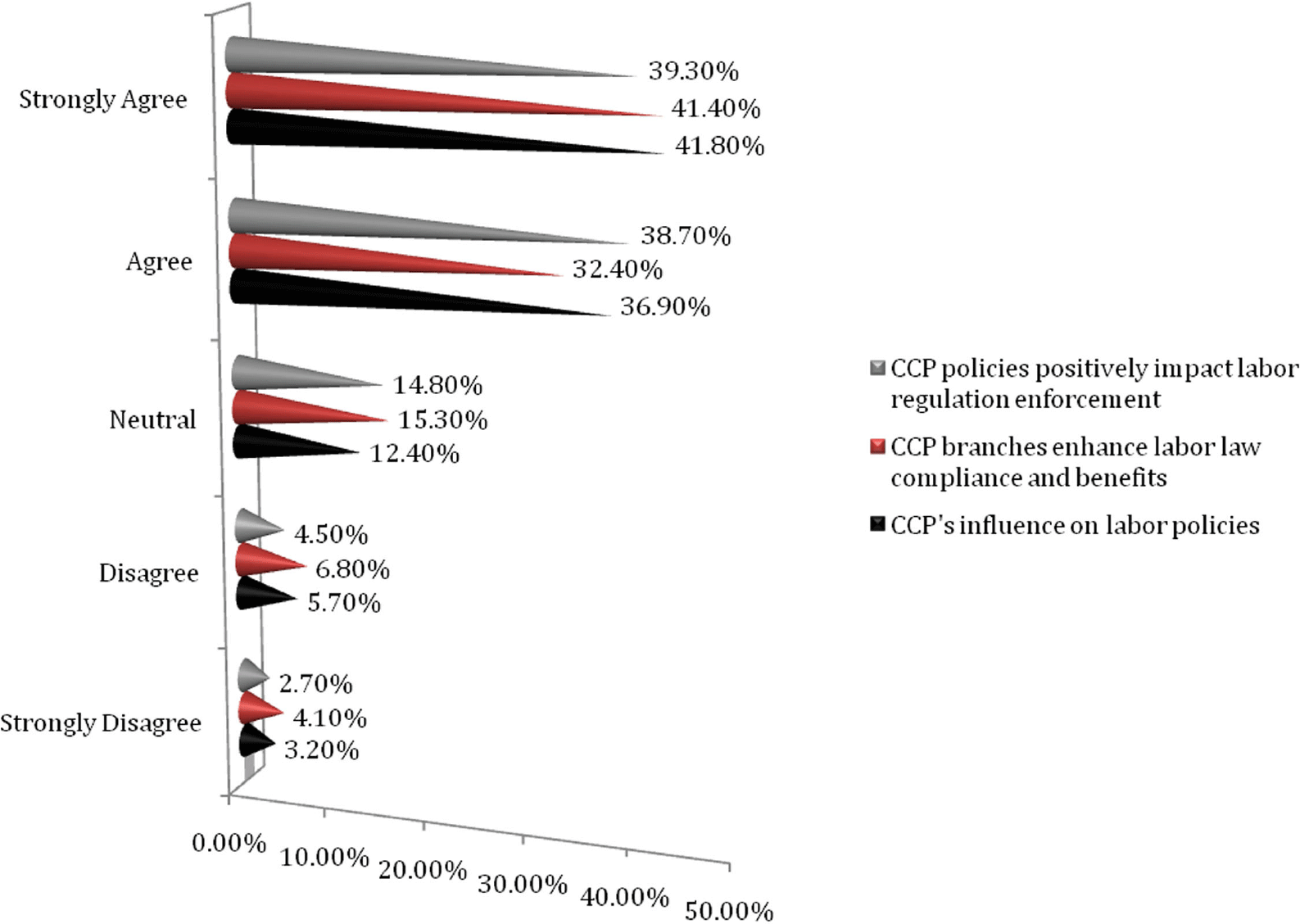
The survey findings on the CCP’s impact on labour policies and regulations show a strong sense of the CCP’s positive influence, as indicated in Figure 4. For the item “CCP’s impact on labour policies,” 78.7% agreed or strongly agreed, which reflects a widespread view that the CCP has an important role to play in designing labour-related policies and determining regulatory direction. Few disagreed (5.7%) or strongly disagreed (3.2%), and 12.4% did not express a view. Conversely, the assertion “CCP policies have a positive effect on labour regulation enforcement” is concerned with the enforcement stage—whether CCP policies actually translate into improved on-the-ground enforcement of labour regulations. In this case, 78.0% of the respondents agreed or strongly agreed, indicating that the majority of participants are of the opinion that CCP-led policies lead to improved monitoring, compliance, and enforcement results. There was minor disagreement (4.5%) and strong disagreement (2.7%), with 14.8% being neutral. Together, these findings show that by far the majority of participants perceive the CCP’s contribution to policy-making and regulatory enforcement as positive, but a very small proportion are neutral or unsure.
Survey results on the influence of the CCP on labor policies and regulations.

Structural equation modelling
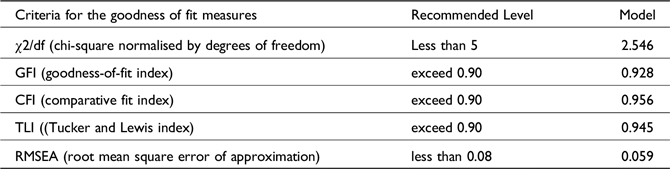
Table 4 displays the goodness-of-fit indices for the structural model, assessing how well the model represents the relationships between variables in the study. The χ2/df ratio, which should be less than 5 for a good fit, is 2.546, indicating a strong fit. The GFI value, which should exceed 0.90, is 0.928, showing a good fit.
Goodness of fit indices for the structural model

The CFI, also ideally above 0.90, is 0.956, demonstrating an excellent fit. Similarly, the TLI, with a recommended value exceeding 0.90, is 0.945, further confirming the model’s robustness. Lastly, the RMSEA, which should be less than 0.08, stands at 0.059, indicating a close fit. Collectively, these indices suggest that the model accurately fits the data and effectively represents the studied relationships. Table 5 presents the results of the hypothesis testing through path analysis, assessing the relationships between key variables in the study.
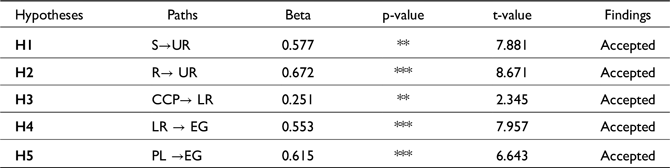
Path analysis for hypothesis testing

Note: **p < 0.01, ***p < 0.001.
Hypothesis 1, which posits that stringent labour laws reduce unemployment rates, is supported by a beta value of 0.577, indicating a strong positive effect, and a t-value of 7.881, with a p-value of ** (p < 0.01), confirming that stricter labour laws significantly contribute to lower unemployment. Hypothesis 2, suggesting that regulatory reforms decrease unemployment rates, shows a beta value of 0.672, reflecting a substantial impact, with a p-value of *** (p < 0.001) and a t-value of 8.671, confirming that these reforms are effective in reducing unemployment. Hypothesis 3, which asserts that the CCP significantly influences labour-related policies, is also supported with a beta value of 0.251, a t-value of 2.345, and a p-value of ** (p < 0.01), indicating the CCP’s notable role in shaping labour regulations.
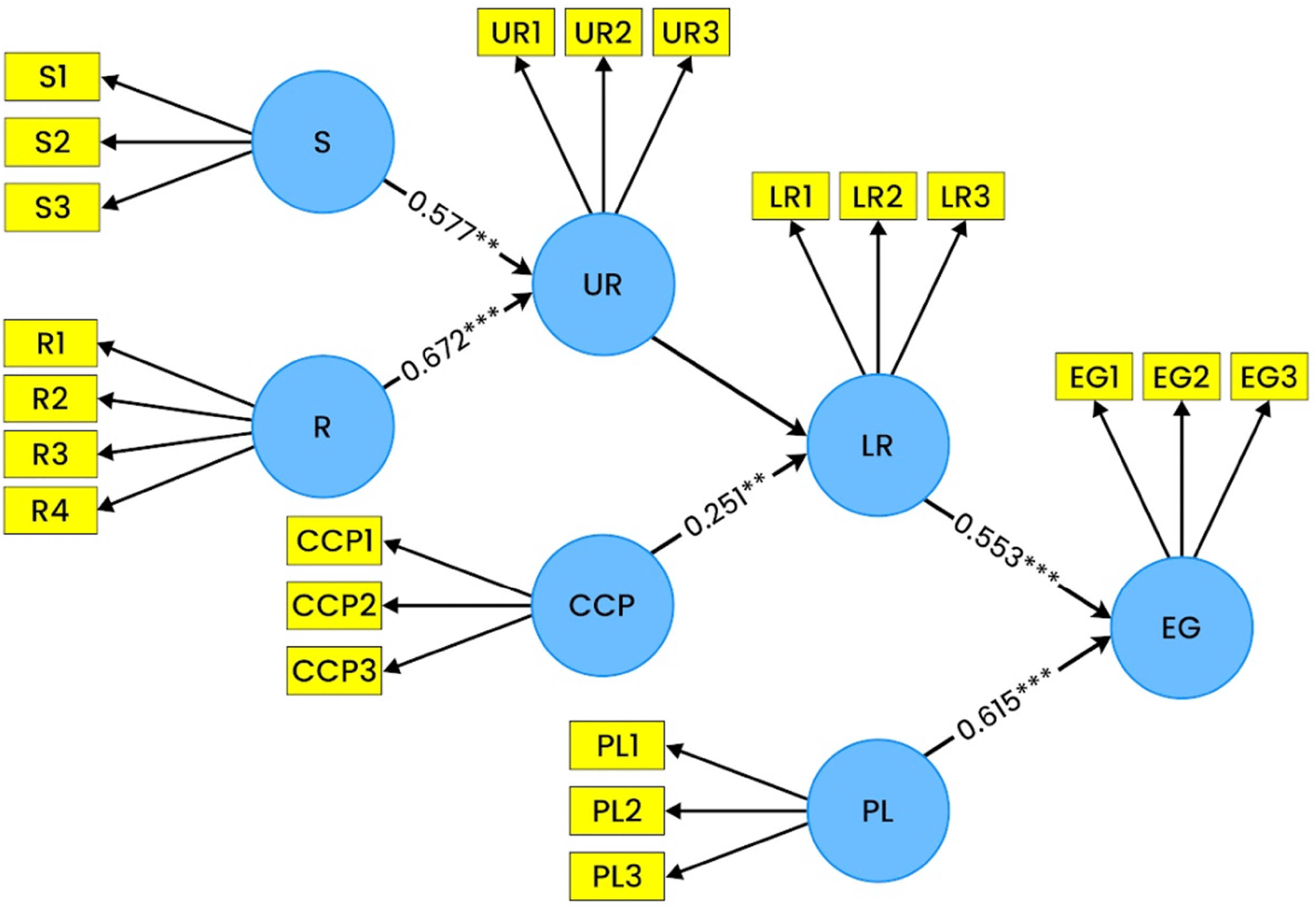
Hypothesis 4, proposing that Labour law reform initiatives drive economic growth, is confirmed with a beta value of 0.553, a t-value of 7.957, and a p-value of *** (p < 0.001), demonstrating that these initiatives significantly enhance economic growth. Finally, Hypothesis 5, which suggests that party-led reforms improve the adaptability of the labour market to economic changes, is supported with a beta value of 0.615, a t-value of 6.643, and a p-value of *** (p < 0.001), indicating that such reforms effectively increase the labour market’s flexibility. Overall, all hypotheses are affirmed, with significant statistical evidence backing their validity. In Figure 5, the structural model assessment is illustrated.
Structural equation model.

Discussion
The analysis underscores the critical role of labour laws and reforms in shaping workforce dynamics in China. Stringent labour laws improve job security, while regulatory reforms address broader market inefficiencies. The CCP’s involvement enhances enforcement and ensures alignment with economic policies. By focusing on the specificities of these laws and reforms, the study offers valuable insights for labour scholars seeking to understand how China’s unique political and economic framework influences its labour market.
The current study supports the hypothesis that stringent labour laws contribute to lower unemployment rates (H1), and also aligns with institutional theory, which underscores the role of strong institutional mechanisms in fostering compliance and stability. The conclusion also aligns with other research in this area. For instance, Gyulavári and Menegatti (Reference Gyulavári and Menegatti2022) observed that more protective labour laws enhance job security and help reduce unemployment. Similarly, Eichhorst and Marx (Reference Eichhorst and Marx2021) found that regulatory reforms across Europe contributed to more dynamic labour markets and lower unemployment rates. Christou and Damro (Reference Christou and Damro2024) noted that stringent labour standards promoted through trade policies led to improved worker outcomes. These global insights complement the present study’s conclusion that stringent labour laws are associated with lower unemployment. Additionally, Aminda et al (Reference Aminda, Septiani, Sundarta, Agung, Kuraesin, Karyatun and Endri2024) demonstrated a link between improved human development and reduced unemployment, indirectly reflecting the importance of labour regulations.
This study also supports H2, which posits that government-implemented regulatory reforms reduce unemployment. The finding is consistent with social contract theory, which views the state as responsible for ensuring equitable labour conditions. Eichhorst and Marx (Reference Eichhorst and Marx2021) provide cross-national evidence that reforms have revitalised labour markets. Zhao (Reference Zhao2021) highlights how government restructuring in China affects labour disputes and employment trends. Su et al (Reference Su, Yuan, Umar and Lobonţ2022) similarly emphasise that while technological innovation can disrupt employment, regulatory interventions help manage these shifts. Together, these findings underscore that regulatory reforms are central to improving labour market outcomes.
Regarding H3, the analysis affirms the CCP’s pivotal role in labour-related policymaking. Long and Yang (Reference Long and Yang2022) demonstrated that CCP committees in private firms enhance worker benefits and improve firm performance. Cheng (Reference Cheng2022) found that CCP branches increase labour contract coverage and social insurance, reinforcing their regulatory influence. This is echoed by Chen (Reference Chen2023) and Li (Reference Li2024), who explored how the CCP uses legal tools and political rhetoric to manage labour relations and reinforce legitimacy. These findings align with institutional theory, which emphasises the role of political institutions in shaping regulatory frameworks.
The study also supports H4, suggesting that labour law reform initiatives strengthen the social contract by improving worker rights and driving economic development. Long and Yang (Reference Long and Yang2022) reported that CCP-led reforms result in better worker protections and economic outcomes. Similarly, Eichhorst and Marx (Reference Eichhorst and Marx2021) highlighted how labour market reforms in Europe contributed to economic dynamism. Su et al (Reference Su, Yuan, Umar and Lobonţ2022) observed that innovation-driven changes can boost employment if paired with appropriate reforms. These findings highlight how labour law reforms serve not only social but also economic objectives.
In relation to H5, the findings confirm that party-led reforms enhance labour market adaptability to economic change. Long and Yang (Reference Long and Yang2022) and Cheng (Reference Cheng2022) both show how CCP initiatives strengthen firm-level compliance and workforce stability. Sabatino (Reference Sabatino2022) further illustrates that the CCP uses legal mechanisms to align private and public interests, promoting resilience in a rapidly evolving labour landscape. These reforms improve the ability of the labour market to respond to fluctuations while maintaining worker protections.
In summary, the results affirm that stringent labour laws and regulatory reforms reduce unemployment by improving job security. The CCP plays a central role in shaping and enforcing these laws, contributing to greater compliance and worker benefits. Labour law reform initiatives and party-led interventions also drive economic growth and enhance adaptability, reinforcing the importance of institutional governance and regulatory effectiveness.
The evolution of employment protection laws in China underscores their role in stabilising the labour market. The Labor Contract Law (2008) curtailed arbitrary dismissals and improved job security, aligning with Gyulavári and Menegatti’s (Reference Gyulavári and Menegatti2022) findings. The Minimum Wage Law (2004) helped reduce income inequality, reflecting Howell’s (Reference Howell2020) conclusions. The Employment Promotion Law (2007) supported skill development, resonating with Eichhorst and Marx (Reference Eichhorst and Marx2021), while the Occupational Health and Safety Law (2014) led to a decline in workplace accidents, consistent with Zhang and Kim (Reference Zhang and Kim2021). Collectively, these laws show the government’s evolving commitment to worker protection and labour market resilience.
The findings of this study open up several avenues for future research. While this study focused on the role of the CCP in enforcing labour laws, future research could explore comparative studies between China and other economies with different labour governance models. Additionally, with the rise of digital labour markets and the gig economy, future studies could investigate how labour laws adapt to emerging employment structures and whether traditional regulatory frameworks remain effective in non-standard labour arrangements.
Practical implications
The evidence points to the conclusion that government-induced labour reforms, especially those imposed by the CCP, are responsible for lowering unemployment and increasing compliance. Policymakers need to give top priority to evidence-driven reforms that reinforce the success of current policies like the Labour Contract Law and the Employment Promotion Law by extending their coverage to the informal sectors and underdeveloped areas. In order to create labour market flexibility, companies, particularly those in fast digitising sectors, are being urged to make investments in technology-related targeted training, as evidenced by Su et al. (Reference Su, Yuan, Umar and Lobonţ2022). Improving occupational health and safety standards, especially in risk-heavy sectors, is also vital in light of enduring gaps recognised through recent research (Zhang & Kim Reference Zhang and Kim2021).
Practical measures involve the creation of regional compliance systems within CCP oversight, the creation of skill-matching platforms to correct urban–rural disparities in employment, and incentivising companies to use long-term labour contracts through tax or regulatory incentives. Multi-stakeholder partnerships involving the CCP, enterprises, and local unions should aim to jointly craft labour policies that balance workers’ protections with economic growth support. By basing reforms on the findings of the study, policymakers and companies can adopt more accurate and efficient interventions to construct a robust and inclusive labour market.
Theoretical implications
-
Institutional Theory:
In this research, Institutional Theory is used to explain the dynamics of reforms in China’s labour laws. It provides a lens through which to view how institutionalised and non-institutionalised structures, like the CCP, influence regulatory implementation (Peters Reference Peters2022). The research indicates that the CCP’s presence in regulatory oversight helps ensure better compliance and worker protection, demonstrating how institutional capacity can impact labour market outcomes under a state-directed governance framework.
-
Social Contract Theory:
Social Contract Theory is a normative framework used to study how labour laws function as instruments for addressing societal demands for fairness and protection (Vanberg Reference Vanberg1994). Legal reforms like the Labour Contract Law and the Employment Promotion Law illustrate the state honouring its commitment to job security and reduced unemployment. These examples align with the theory’s focus on reciprocal obligations between government and citizens.
-
Contribution and Future Research:
Although this research does not aim to develop new theoretical approaches, it demonstrates how established theories can be applied to labour law enforcement in politically centralised regimes. Future studies may build on this methodology by applying these frameworks in comparative or longitudinal research across different governance contexts.
Policy recommendations
This study highlights critical areas for improving labour laws and their implementation in China. To address current challenges, the following detailed policy recommendations are proposed:
-
1. Support Expansion of CCP Branches in Private Firms: Strong public support was found for the function of CCP branches in improving compliance with labour contracts and social insurance. Policymakers can consider expanding such mechanisms in underrepresented regions or sectors, reinforcing institutional oversight where it is effective.
-
2. Refine Labour Law Reform Strategies by Region: While the study did not directly compare regions, the findings highlighted the need for more targeted investigation into how reforms are applied across different provinces. Policymakers should order regional assessments to ensure even application of reforms and realign strategies to local conditions.
-
3. Strengthen Data Gathering for Informal and Digital Labour Markets: The research concentrated on formal labour trends, but policy-making and research in the future should tackle the increasing data deficit for informal and platform work. Better tools and industry-specific surveys can assist in making labour protection fit these new spaces.
-
4. Strengthen Policy Implementation Evaluation: The study confirms the positive effect of regulatory reforms but also indicates the necessity for more effective tools to monitor implementation success. Annual monitoring and open reporting mechanisms must be given priority to determine if intended outcomes are being met.
These recommendations aim to provide a holistic approach to labour law reform in China, balancing economic development with workforce stability and social equity.
Conclusion
This study presents a detailed analysis of how perceptions of stringent labour laws, regulatory reforms, and the influence of the CCP are seen to shape labour market outcomes in China. By focusing on a well-defined sample of 300 participants, including labourers, government officials, and lawyers, the research provides a nuanced understanding of the interplay between these factors and their impact on unemployment rates. The findings underscore the importance of robust labour regulations in safeguarding employment and fostering stability within the workforce. It is show how government intervention are seen to shape labour market dynamics and improve job prospects for workers. The research also confirms the critical role of the CCP in shaping labour-related policies and regulations. It was insightful to find that the presence of CCP branches in firms enhances the enforcement of labour laws and the provision of worker benefits, indicating that the CCP’s influence extends to practical implementation. Furthermore, Labour law reform initiatives driven by the CCP are seen to have had a positive impact on economic growth, demonstrating that party-led reforms can contribute to a more adaptable and resilient labour market. The findings provide valuable insights into the mechanisms through which labour policies and party-led initiatives contribute to labour market stability and economic growth, offering a detailed understanding of the current labour landscape in China.
Limitations
The findings of this analysis are primarily applicable to the specific context of China and its unique political and economic structure, but it may not be appropriate to generalise these findings to other countries or regions with different settings. Labour laws, regulations, and their effects may change over time, and the results of the study do not give any description of changes over time. Economic growth and unemployment rates may be affected by a variety of external factors beyond labour reforms, such as global economic trends, trade policies, and natural disasters, but these are not addressed in this study. As well, the study does not take into account labour market dynamics and potential social and cultural elements on the success of labour reforms.
Future scope
Future research should be conducted to examine the long-term effects of stricter labour laws and regulatory reforms on unemployment rates and economic stability. Comparative analyses should be conducted between China and other countries with different labour laws and party systems to identify patterns and lessons that can inform policy recommendations. Extensive research should be conducted on specific case studies within China where labour reforms have been particularly impactful or controversial. Further investigation should be conducted on how labour laws and regulations affect gender equality and the rights of minority groups in the workforce. A detailed investigation should be conducted on how the digital economy and the rise of job platforms intersect with labour regulations.
Data availability statement
The data that support the findings of this study are available from the corresponding author upon reasonable request.
Acknowledgements
Not Applicable.
Funding statement
Not applicable
Competing interests
The authors declare that they have no conflict of interest.
Human and Animal Rights
This article includes studies involving human or animal subjects conducted by the authors.
Informed Consent
Informed consent was obtained from all individual participants included in the study.
Appendix
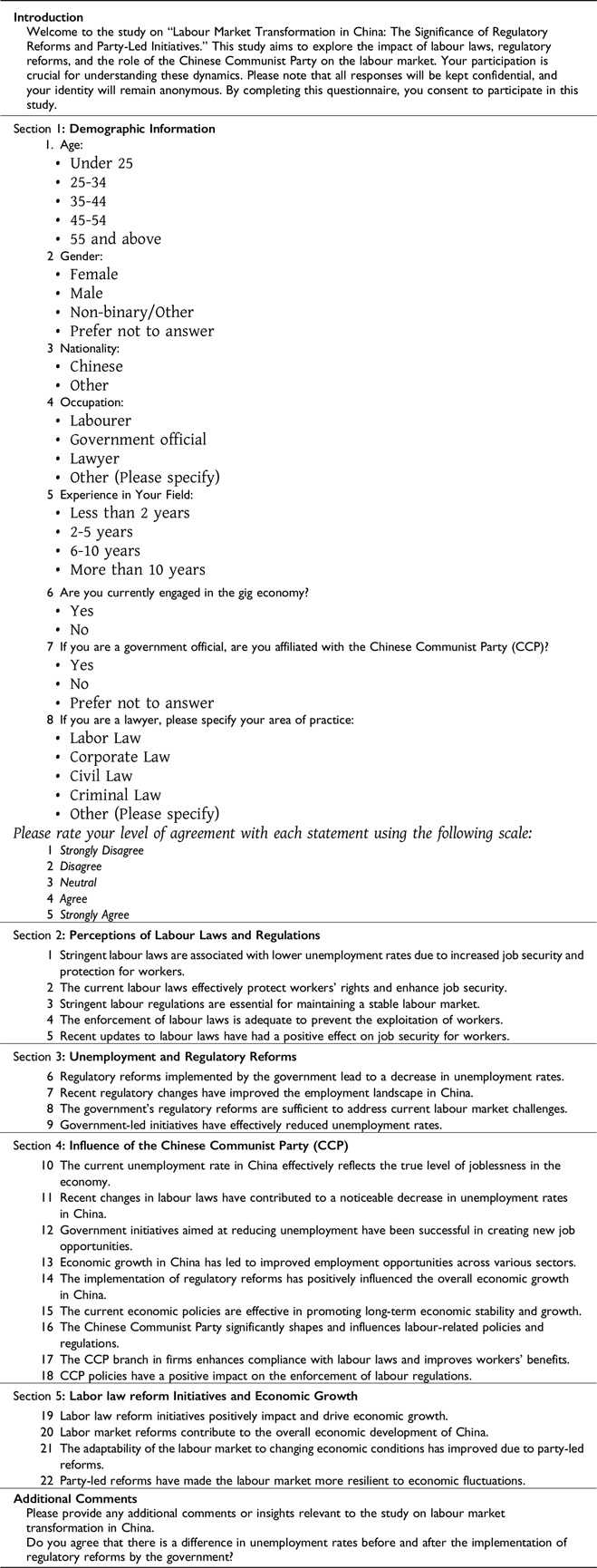
Questionnaire

Wenyi Yang has been working at Henan Institute of Science and Technology. His research interests include grassroots social rule of law and rights guarantee.
Shuping Zhang has been working in Henan Institute of Science and Technology. Her research interests include international contract performance and jurisdiction.