



1 Introduction
1.1 Brauer–Manin obstruction and the descent conjecture
Let X be a smooth variety defined over a number field k. We say that X satisfies the Hasse principle (or the local–global principle) if either
 $X(k_v) = \varnothing $
for some completion
 $k_v$
of k or
 $X(k) \neq \varnothing $
. It was Manin who introduced a general method to study the failure of the Hasse principle on X, as follows. Assuming X geometrically integral, we associate to X the cohomological Brauer group
 (which generalizes the Brauer group
 $\operatorname {Br}(k) = \mathrm {H}^2(k,\bar {k}^\times )$
of the field k), and consider the unramified subgroup
 $\operatorname {Br}_{\operatorname {nr}}(X) \subseteq \operatorname {Br}(X)$
(see Subsection 1.3 below). One then defines the Brauer–Manin pairing [Reference ManinMan71]

where
 $X(k_\Omega )$
is the product of all the
 $X(k_v)$
’s, and where
 $\operatorname {Br}(k_v) \hookrightarrow \mathbb {Q}/\mathbb {Z}$
via the invariant map from local class field theory. By the global reciprocity law (Albert–Brauer–Hasse–Noether), the pairing (BMnr
) vanishes on the image of
 $\operatorname {Br}(k)$
in
 $\operatorname {Br}_{\operatorname {nr}}(X)$
and on the diagonal image of
 $X(k)$
in
 $X(k_\Omega )$
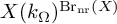
. If we denote by
 $X(k_\Omega )^{\operatorname {Br}_{\operatorname {nr}}(X)}$
the subset of families of local points of X orthogonal to
 $\operatorname {Br}_{\operatorname {nr}}(X)$
, then its vacuity is an obstruction to the existence of k-points on X, the so-called Manin obstruction. If either
 $X(k_\Omega )^{\operatorname {Br}_{\operatorname {nr}}(X)} = \varnothing $
or
 $X(k) \neq \varnothing $
(that is, the Manin obstruction to the Hasse principle for X is the only one), we shall say that X satisfies the property
 $\mathbf {(BMHP)}$
.
We are also interested in the question of weak approximation, namely, the density of
 $X(k)$
in
 $X(k_\Omega )$
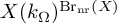
(equipped with the product of v-adic topologies). By continuity of (BMnr
), the closure
 $\overline {X(k)}$
is contained in the (closed) set
 $X(k_\Omega )^{\operatorname {Br}_{\operatorname {nr}}(X)}$
. Thus, a family of local points on X not orthogonal to
 $\operatorname {Br}_{\operatorname {nr}}(X)$
cannot be approximated by k-rational points. This is known as the Brauer–Manin obstruction to weak approximation. If
 $\overline {X(k)} = X(k_\Omega )^{\operatorname {Br}_{\operatorname {nr}}(X)}$
(that is, the Brauer–Manin obstruction to weak approximation for X is the only one), then we say that X satisfies the property
 $\mathbf {(BMWA)}$
. Note that we included here the case where both sides are empty (hence, the property
 $\mathbf {(BMWA)}$
implies the property
 $\mathbf {(BMHP)}$
). The properties
 $\mathbf {(BMHP)}$
and
 $\mathbf {(BMWA)}$
are stable birational invariants, thanks to the stable birational invariance of the unramified Brauer group, the theorem of Nishimura–Lang [Reference NishimuraNis55] and the Artin–Whaples approximation lemma.
Definition 1.1 (Campana–Kollár–Miyaoka–Mori).
A smooth variety X over a field k is said to be rationally connected if, for every algebraically closed field K containing k, two general points
 $x_0$
,
 $x_1 \in X(K)$
can be connected by a K-rational map
 $\mathbb {A}^1_K \dashrightarrow X \times _k K$
.
Rational connectedness is a stable birational invariant. Examples of rationally connected varieties include (geometrically) unirational varieties. For example, in characteristic
 $0$
, this is the case for homogeneous spaces of connected linear algebraic groups (indeed, the celebrated theorem of Chevalley asserts that such groups are geometrically rational, and even unirational over their fields of definition [Reference ChevalleyChe54]). An important conjecture concerning arithmetics of rationally connected varieties over number fields is the following.
Conjecture A (Colliot-Thélène).
Every smooth rationally connected variety over a number field satisfies the properties
 $\mathbf {(BMHP)}$
and
 $\mathbf {(BMWA)}$
.
One of the reasons why Conjecture A is so strong is that its truth would imply that any finite group is a Galois group over k. This is the inverse Galois problem over number fields, long known to be open. The reader is invited to take a look at the recent notes [Reference WittenbergWit24] by Wittenberg. One of the techniques to attack Conjecture A is the descent theory. Namely, let
 $f: Y \to X$
be a torsor under a linear algebraic group G defined over a number field k, that is, f is an fppf morphism between smooth k-varieties, where Y equipped with a right action
 $Y \times _k G \to Y$
of G such that f is G-equivariant and
 $G(\bar {k})$
acts simply transitively on the fibre
 $f^{-1}(x)$
over each geometric point
 $x \in X(\bar {k})$
. For each Galois cocycle
 $\sigma : \operatorname {Gal}(\bar {k}/k) \to G(\bar {k})$
, we have a twisted torsor
 $f^{\sigma }: Y^\sigma \to X$
under an inner k-form
 $G^{\sigma }$
of G. Then, we have the following partition of
 $X(k)$
(see e.g. [Reference SkorobogatovSko01, p. 22]):

The idea of the descent theory is to establish an equality of the form

in the topological space
 $X(k_\Omega )$
. In particular, if the ‘descent varieties’
 $Y^{\sigma }$
satisfy
 $\mathbf {(BMHP)}$
(resp.
 $\mathbf {(BMWA)}$
), then it is also the case for X. In the very same notes, Wittenberg formulated the following conjecture, which we shall call the ‘descent conjecture’ [Reference WittenbergWit24, Conjecture 3.7.4].
Conjecture B. With the above notations and assumptions, suppose in addition that Y (hence also X) is rationally connected. If the varieties
 $Y^{\sigma }$
satisfy the property
 $\mathbf {(BMHP)}$
(resp.
 $\mathbf {(BMWA)}$
), then X itself satisfies the property
 $\mathbf {(BMHP)}$
(resp.
 $\mathbf {(BMWA)}$
).
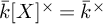
Descent theory was originally developed in the foundational work [Reference Colliot-Thélène and SansucCTS87] of Colliot-Thélène and Sansuc for torsors under a torus T, over a variety X with
 $\bar {k}[X]^\times = \bar {k}^\times $
. From its birth, this approach has given many nice results on the Brauer–Manin obstruction for (geometrically) rational varieties, notably for Châtelet surfaces as in the works [Reference Colliot-Thélène, Sansuc and Sir Swinnerton-DyerCTSSD87a, Reference Colliot-Thélène, Sansuc and Sir Swinnerton-DyerCTSSD87b] by Colliot-Thélène, Sansuc and Swinnerton-Dyer. As noted by Skorobogatov (see [Reference SkorobogatovSko01, §6.1]), the torus T can be replaced by a group of multiplicative type S. The torsors under consideration (i.e., the twists of a given torsor) are the torsors of the same ‘type’. The notion of extended type, introduced later by Harari and Skorobogatov [Reference Harari and SkorobogatovHS13], enabled descent theory (under a group of multiplicative type) for varieties with nonconstant invertible functions. Other generalizations in this direction are found in the various works of Stoll [Reference StollSto06], Demarche [Reference DemarcheDem09], Skorobogatov [Reference SkorobogatovSko09], Poonen [Reference PoonenPoo10], Wei [Reference WeiWei16] and Cao–Demarche–Xu [Reference Cao, Demarche and XuCDX19]…, where there is notably the notion of étale Brauer–Manin obstruction for torsors under a finite (étale) group scheme.
Conjecture B was established by Harpaz and Wittenberg for torsors under a torus [Reference Harpaz and WittenbergHW20] or a finite supersolvable group (scheme) [Reference Harpaz and WittenbergHW24]. In the present article, we prove this conjecture for torsors under an arbitrary connected linear algebraic group. More precisely, we shall prove
Theorem A (Theorem 3.11).
Let k be a number field, X a smooth rationally connected k-variety, and G a connected linear algebraic k-group. Let
 $Y \to X$
be a torsor under G, then

in the topological space
 $X(k_\Omega )$
. In particular, if the varieties
 $Y^{\sigma }$
satisfy
 $\mathbf {(BMHP)}$
(resp.
 $\mathbf {(BMWA)}$
) for all
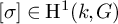 $[\sigma ] \in \mathrm {H}^1(k,G)$
, then it is also the case for X.
The proof of Theorem A relies on the technique of Harpaz–Wittenberg in [Reference Harpaz and WittenbergHW20] and Borovoi’s general machinery of abelianization of nonabelian cohomology [Reference BorovoiBor98]. This latter allows one to pass from the nonabelian Galois cohomology set
 $\mathrm {H}^1(k,G)$
to a hypercohomology group of a
 $2$
-term complex of tori. We shall discuss this in Section 2 before proving Theorem A in Section 3. We also prove the following result, which reduces Conjecture B to the case of finite (étale) torsors.
Theorem B (Theorem 3.15).
Let k be a number field, X a smooth geometrically integral k-variety, and G a linear algebraic k-group. Suppose that
 $f: Y \to X$
is a torsor under G, with Y rationally connected (the existence of such a torsor requires in particular that X is rationally connected). Let
 $G^{\circ }$
denote the identity component of G and
 $Z:=Y/G^{\circ }$
, which gives a torsor
 $g: Z \to X$
under the finite k-group
 $G/G^{\circ }$
. Then

in
 $X(k_\Omega )$
. In particular, Conjecture B holds for the torsor
 $Y \to X$
if it holds for
 $Z \to X$
.
What we shall show is in fact slightly stronger. Theorems A and B hold true even when we do not have a torsor a priori, but only a descent type (see Theorems 3.12 and 3.14). This is a definition introduced in the recent work [Reference LinhLin25], which unifies the various notions of type by Colliot-Thélène–Sansuc, Harari–Skorobogatov, and Harpaz–Wittenberg. This new notion enables descent theory in the case where
 $X(k)$
is not necessarily nonempty (let us say, when X is a homogeneous space of a linear algebraic group), which is useful for the study of the property
 $\mathbf {(BMHP)}$
.
As an application, we give a new proof for Borovoi’s theorem, which states that the property
 $\mathbf {(BMHP)}$
and
 $\mathbf {(BMWA)}$
hold for homogeneous spaces of connected linear algebraic groups with connected geometric stabilizers (cf. Corollary 3.13), using the theorem of Sansuc for principal homogeneous spaces.
1.2 Analogue for zero-cycles
In Section 4, we consider the Brauer–Manin obstruction to the Hasse principle and to weak approximation for zero-cycles. Let X be a smooth proper geometrically integral variety over a number field k. Let
 $\mathrm {Z}_0(X)$
be the free abelian groups of zero-cycles on X, whose elements are (finite) formal sum
 $x = \sum _{P} n_P [P]$
, where P runs through the closed points of X, and
 $n_P \in \mathbb {Z}$
. The degree of such a cocycle is
 $\deg _k(x) := \sum _P n_P [k(P):k]$
. For any
 $\alpha \in \operatorname {Br}(X)$
and place v of k, we may evaluate
 $\alpha $
at the closed points
 $P_v \in X_{k_v}$
to obtain
 $\alpha (P_v) \in \operatorname {Br}(k_v(P_v)) \hookrightarrow \mathbb {Q}/\mathbb {Z}$
. By linearity, we obtain a local pairing

Let
 $\operatorname {CH}_0(X)$
denote the quotient of
 $\mathrm {Z}_0(X)$
by rational equivalence (see e.g. [Reference FultonFul84, Chapter 1]). Since X is proper, the above pairing factors through a pairing
 $\operatorname {CH}_0(X_{k_v}) \times \operatorname {Br}(X) \to \mathbb {Q}/\mathbb {Z}$
. If v is an Archimedean place, this latter also factors through
 $\operatorname {CH}_0'(X_{k_v}):=\operatorname {Coker}(\mathrm {N}_{\bar {k}_v/k_v})$
, where
 $\mathrm {N}_{\bar {k}_v/k_v}: \operatorname {CH}_0(X_{\bar {k}_v}) \to \operatorname {CH}_0(X_{k_v})$
denotes the norm (or corestriction) map. By reassembling these local pairings, we obtain a Brauer–Manin type pairing

where
 $\operatorname {CH}_{0,\Omega }(X):=\prod _{v \nmid \infty } \operatorname {CH}_0(X_v) \times \prod _{v | \infty } \operatorname {CH}_0'(X_v)$
. The pairing
 $\left <-,-\right>_{\operatorname {BM}}$
vanishes on the image of the localization (or restriction) map
 $\operatorname {CH}_0(X) \to \operatorname {CH}_{0,\Omega }(X)$
. Hence, we obtain a complex

Since the group
 $\operatorname {Br}(X)$
is torsion, we have a complex

Conjecture C (Conjecture (E)).
The complex (E) is exact for any smooth proper geometrically integral variety X over a number field k.
The above conjecture is due to Colliot-Thélène, Sansuc, Kato and Saito [Reference Colliot-Thélène and SansucCTS81, Reference Kato and SaitoKS86, Reference Colliot-ThélèneCT95], and has been reformulated into this form by van Hamel [Reference van HamelvH03] and Wittenberg [Reference WittenbergWit12]. It entails two previous conjectures, namely Conjecture (E
 ${}_0$
) and Conjecture (E
 ${}_1$
).
Conjecture D (Conjecture (E
 ${}_1$
)).

Let X be a smooth proper geometrically integral variety over a number field k. If there exists a family of local zero-cycles of degree
 $1$
on X that is orthogonal to
 $\operatorname {Br}(X)$
relative to the pairing
 $\left <-,-\right>_{\operatorname {BM}}$
, then there exists a zero-cycle of degree
 $1$
on X.
The property in the statement of Conjecture D can be seen as an analogue of
 $\mathbf {(BMHP)}$
.
Conjecture E (Conjecture (E
${}_0$
)).

Let X be a smooth proper geometrically integral variety over a number field k. Let
 $A_0(X) \subseteq \operatorname {CH}_0(X)$
be the subgroup of rationally equivalence classes of zero-cycles of degree
 $0$
. Then, we have an exact sequence

As was pointed out by Wittenberg in [Reference WittenbergWit12, Remarques 1.1 (ii)], we have

for Archimedean v. Thus, exactness of (E) does indeed imply that of (E0
). Liang has shown that the exactness of (E0
) and the existence of a global zero-cycle of degree
 $1$
imply some sort Brauer–Manin obstruction to weak approximation for zero-cycles [Reference LiangLia13, Proposition 2.2.1] (as soon as a suitable topology on the groups
 $\mathrm {Z}_0(X_{k_v})$
is defined, see Subsection 4.1 below). Thus, the property in Conjecture E is an analogue of
 $\mathbf {(BMWA)}$
(assuming the existence of a k-rational point).
In the recent work [Reference Balestrieri and BergBB24], Balestrieri and Berg introduced a formalism for the descent theory for zero-cycles. This allows us to formulate an analogue of Conjecture B in this context. It turns out that, under the rationally connected assumption, this version of the descent conjecture is true for torsors under an arbitrary linear algebraic group.
Theorem C (Theorem 4.1).
Let k be a number field, X a smooth geometrically integral k-variety, and G a linear algebraic k-group. Suppose that
 $Y \to X$
is a torsor under G, with Y rationally connected (in particular, X is rationally connected). If Conjecture C holds for the smooth compactifications of the twisted torsors
 $Y^{\sigma }_K \to X_K$
, for all finite extensions
 $K/k$
and all
 $[\sigma ] \in \mathrm {H}^1(K,G)$
, then it also holds for the smooth compactifications of X.
The proof of Theorem C combines Liang’s method [Reference LiangLia13], the fibration theorems of Harpaz and Wittenberg [Reference Harpaz and WittenbergHW16] and Theorem A on ‘connected descent’.
1.3 Notations and conventions
The following notations shall be deployed throughout the article.
Abelian groups. When A is a topological abelian group which is either discrete torsion, profinite, or of finite exponent, we denote
 $A^D:=\operatorname {Hom}_{\operatorname {cts}}(A,\mathbb {Q}/\mathbb {Z})$
its Pontrjagin dual.
Fields. When k is a field, we use
 $\bar {k}$
to denote a fixed separable closure of k and
 $\Gamma _k:=\operatorname {Gal}(\bar {k}/k)$
to denote its absolute Galois group. By convention, a k-variety is a separated k-scheme of finite type. We usually denote
 $\bar {X}:=X \times _k \bar {k}$
, but
 $\bar {X}$
does not always mean the base change to
 $\bar {k}$
of some k-variety. A smooth compactification of X is a smooth proper variety containing X as a dense open subset. In characteristic
 $0$
, such a compactification (assuming X smooth) always exists by resolution of singularities [Reference HironakaHir64].
A local field is, by definition, the field
 $\mathbb {R}$
,
 $\mathbb {C}$
or a field k which is complete with respect to a discrete valuation, with finite residue field. If k is a number field,
 $\Omega _k$
(resp.
 $\Omega _k^{\mathrm {f}}$
, resp.
 $\Omega _k^\infty $
) denotes the set of places (resp. finite places, resp. Archimedean places) of k. For
 $v \in \Omega _k$
,
 $k_v$
denotes the v-adic completion of k, and
 $\mathcal {O}_v$
denotes the ring of integers of
 $k_v$
if
 $v \in \Omega _k^{\mathrm {f}}$
. If X is a k-variety, let
 $X_v:=X \times _k k_v$
, and write
 $\operatorname {loc}_v: \mathrm {H}^i(X,-) \to \mathrm {H}^i(X_v,-)$
for the localization maps in cohomology. Equip the set
 $X(k_v)$
with the natural topology induced by the topology on
 $k_v$
(see e.g. [Reference ConradCon12, Proposition 3.1]), and the set
 $X(k_\Omega ):=\prod _{v \in \Omega _k} X(k_v)$
with the product topology. On the subset
 $X(\mathbb {A}_k) \subseteq X(k_\Omega )$
of adelic points of X, we always consider the topology induced by the product topology on
 $X(k_\Omega )$
(there is also the adelic topology, related to strong approximation, but this does not concern us.).
Cohomology. Unless stated otherwise, all (hyper-)cohomology groups will be étale or Galois. If X is a scheme,
 $\mathcal {D}^+(X)$
denotes the derived category of bounded below complexes of sheaves of abelian groups on
 . If k is a field,
 $\mathcal {D}^+(k):=\mathcal {D}^+(\operatorname {Spec}(k))$
is equivalent to the bounded below derived category of
 $\Gamma _k$
-modules.
Let k be a number field, and let C be a bounded below complex of either
 $\Gamma _k$
-modules which are finitely generated (as abelian groups) or commutative algebraic k-groups. Let
 $\mathcal {C}$
be a complex of commutative group schemes over
 $\operatorname {Spec}(\mathcal {O}_{k,\Sigma })$
extending C, where
 $\Sigma \subseteq \Omega _k$
is some finite set containing
 $\Omega _k^{\infty }$
. For
 $i \ge 0$
, the restricted product
 $\mathbb {P}^i(k,C)$
is the subset of
 $\prod _{v \in \Omega _k} \mathrm {H}^i(k_v,C)$
consisting of families
 $(c_v)_{v \in \Omega _k}$
for which
 $c_v$
comes from
 $\mathrm {H}^i(\mathcal {O}_v,\mathcal {C})$
for all but finitely many
 $v \notin \Sigma $
. We define the ith Tate–Shafarevich group
 to be the kernel of the localization
 $\mathrm {H}^i(k,C) \to \mathbb {P}^i(k,C)$
.
Nonabelian cohomology. Let X be a scheme and let
 $G \to X$
be a smooth (not necessarily commutative) X-group scheme. A (right) X-torsor under G is, by definition, an fppf X-scheme Y equipped with a right X-action
 $Y \times _X G \to Y$
of G, such that the morphism

is an isomorphism. When G is affine, these torsors are classified by the nonabelian
 $\check {\text {C}}$
ech cohomology (pointed) set
 $\mathrm {H}^1(X,G)$
(see [Reference MilneMil80, Chapter III, §4] or [Reference SkorobogatovSko01, p. 18]). The class in
 $\mathrm {H}^1(X,G)$
of such an X-torsor Y under G is denoted by
 $[Y]$
.
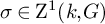
Twisting. Suppose that G is a smooth algebraic group over a perfect field k. If
 ${\sigma \in \mathrm {Z}^1(k,G)}$
is a Galois cocycle (that is, a continuous map
 $\sigma : \Gamma _k \to G(\bar {k})$
satisfying
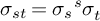 for all
 $s,t \in \Gamma _k$
), we may twist G by it to obtain an inner k-form
 $G^{\sigma }$
, which can be defined by Galois descent as follows. As a
 $\bar {k}$
-group,
 $\bar {G}^{\sigma }:=\bar {G}$
, but the twisted Galois action on
 $G^{\sigma }(\bar {k}) = G(\bar {k})$
is given by

We may also twist the k-variety G to obtain a k-form
 $G_{\sigma }$
, whose Galois action is given by

Then, one has
 $G_\sigma (k) \neq \varnothing $
if and only if
 $[\sigma ] = 1$
, the distinguished element of
 $\mathrm {H}^1(k,G)$
. Equipped with the obvious translation actions (which are a priori defined over
 $\bar {k}$
), the variety
 $G_{\sigma }$
is a left torsor under G and a right torsor under
 $G^{\sigma }$
. When X is a k-variety and
 $f: Y \to X$
is a torsor under G (more precisely, under
 $G_X:=G \times _k X$
), we define the twisted torsor
 $f^{\sigma }: Y^{\sigma } \to X$
to be the contracted product
 $Y \times _k^G G_{\sigma }$
, i.e., the quotient of
 $Y \times _k G_{\sigma }$
by the left action
 $g \cdot (y,h) := (y \cdot g^{-1}, gh)$
of G. This is a right torsor under
 $G^{\sigma }$
. Thus, we obtain a twisting map

For
 $X = \operatorname {Spec}(k)$
, the map
 $\theta _\sigma $
takes
 $[\sigma ]$
to
 $1$
and
 $1$
to
 $[G_{\sigma }]$
. In general, we may ‘evaluate’ Y at any point
 $x \in X(k)$
to obtain a class
 $[Y](x):=[Y_x]=[f^{-1}(x)] \in \mathrm {H}^1(k,G)$
. Then, we have
 $x \in f^{\sigma }(Y^{\sigma }(k))$
if and only if
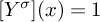 $[Y^{\sigma }](x) = 1$
in
 $\mathrm {H}^1(k,G^{\sigma })$
, or
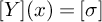 $[Y](x) = [\sigma ]$
in
 $\mathrm {H}^1(k,G)$
. If
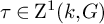 $\tau \in \mathrm {Z}^1(k,G)$
is another cocycle, then
 $G^\tau = (G^{\sigma })^{\theta _\sigma (\tau )}$
,
 $Y^{\tau } = (Y^{\sigma })^{\theta _\sigma (\tau )}$
and
 $f^{\tau } = (f^{\sigma })^{\theta _\sigma (\tau )}$
. If G is commutative, then
 $G^{\sigma } = G$
,
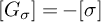 $[G_\sigma ] = -[\sigma ]$
in
 $\mathrm {H}^1(k,G)$
and
 $[Y^\sigma ] = [Y] - p^\ast [\sigma ]$
in
 $\mathrm {H}^1(X,G)$
, where
 $p: X \to \operatorname {Spec}(k)$
is the structure morphism.
Finally, if k is a number field, we define the pointed set
 $\mathbb {P}^1(k,G) \subseteq \prod _{v \in \Omega _k} \mathrm {H}^1(k_v,G)$
as a restricted product in a similar way as in the commutative case. We also put

This means, for any k-torsor P under G, one has 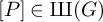 if and only if
 $P(\mathbb {A}_k) \neq \varnothing $
.
Cartier duality. Let k be a field. If G is an algebraic k-group, we denote by
 $\widehat {G} := \mathscr {H}\kern -.5pt om_k(G,\mathbb {G}_m)$
its Galois module of geometric characters, that is,
 $\widehat {G} = \operatorname {Hom}_{\bar {k}}(\bar {G},\mathbb {G}_{m,\bar {k}})$
as a (finitely generated) abelian group, equipped with the action of
 $\Gamma _k$
defined by
 for all
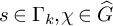 $s \in \Gamma _k, \chi \in \widehat {G}$
and
 $g \in \bar {G}$
. A k-group of multiplicative type is a k-form of
 $\mathbb {G}_m^n \times _k \prod _{i=1}^m \mu _{n_i}$
, where
 $n \ge 0$
and
 $n_i \ge 1$
. A k-torus is a connected k-group of multiplicative type (i.e., a k-form of
 $\mathbb {G}_m^n$
). The formation
 $G \mapsto \widehat {G}$
is an additive exact anti-equivalence of categories between k-groups of multiplicative type and finitely generated abelian groups equipped with a continuous action of
 $\Gamma _k$
, called Cartier duality. This extends to a duality between groups of multiplicative type and twisted constant group schemes over an arbitrary base. We refer to [Reference GrothendieckGro70a, Reference GrothendieckGro70b, Reference GrothendieckGro70c] for a complete exposition.
A k-torus T is said to be quasi-trivial if it is isomorphic to
 $\operatorname {Res}_{A/k}(\mathbb {G}_{m,A})$
for some étale k-algebra A, where
 $\operatorname {Res}_{A/k}$
denotes the restriction of scalars à la Weil. This is equivalent to saying that
 $\widehat {T}$
is a
 $\Gamma _k$
-permutation module, i.e., it has a
 $\mathbb {Z}$
-basis which is
 $\Gamma _k$
-stable. In this case, one has
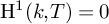 $\mathrm {H}^1(k,T) = 0$
by Shapiro’s lemma and Hilbert’s Theorem 90.
Brauer group. By convention, the Brauer group of a scheme X is always the Brauer–Grothendieck group
 $\operatorname {Br}(X) := \mathrm {H}^2(X,\mathbb {G}_m)$
. For a smooth integral variety X over a field k of characteristic
 $0$
, Grothendieck’s purity theorem [Reference Colliot-Thélène and SkorobogatovCTS21, Theorem 3.7.7] asserts that

where
 $\partial _\xi $
are the residue maps, and
 $X^{(1)}$
is the set of points of codimension
 $1$
of X. In particular,
 $\operatorname {Br}(X)$
is torsion. The unramified Brauer group
 $\operatorname {Br}_{\operatorname {nr}}(X)$
is the subgroup of
 $\operatorname {Br}(k(X))$
consisting of elements
 $\alpha $
whose residue
 $\partial _{\mathcal {O}}(\alpha )$
at every discrete valuation ring
 $\mathcal {O} \supseteq k$
with
 $\operatorname {Frac}(\mathcal {O}) = k(X)$
vanishes (in particular,
 $\operatorname {Br}_{\operatorname {nr}}(X) \subseteq \operatorname {Br}(X)$
). If
 $X^c$
is a smooth compactification of X, then
 $\operatorname {Br}_{\operatorname {nr}}(X) = \operatorname {Br}(X^c)$
. The group
 $\operatorname {Br}_{\operatorname {nr}}$
is a stable birational invariant of smooth integral varieties [Reference Colliot-Thélène and SkorobogatovCTS21, Proposition 6.2.7, Corollaries 6.2.10 and 6.2.11].
When k is an (Archimedean or nonarchimedean) local field, we identify
 $\operatorname {Br}(k)$
to a subgroup of
 $\mathbb {Q}/\mathbb {Z}$
using the local invariant map (this group is
 $\mathbb {Q}/\mathbb {Z}$
in the nonarchimedean case,
 $\{0\}$
if
 $k = \mathbb {C}$
, and
 $\mathbb {Z}/2$
if
 $k = \mathbb {R}$
). If
 $K/k$
is a finite extension, the local invariants of K and k are compatible with the corestriction map
 $\operatorname {cor}_{K/k}: \operatorname {Br}(K) \to \operatorname {Br}(k)$
(thus, the restriction
 $\operatorname {res}_{K/k}: \operatorname {Br}(k) \to \operatorname {Br}(K)$
corresponds to the multiplication by
 $[K:k]$
in
 $\mathbb {Q}/\mathbb {Z}$
).
The algebraic Brauer group of X is
 $\operatorname {Br}_1(X):=\operatorname {Ker}(\operatorname {Br}(X) \to \operatorname {Br}(\bar {X}))$
(recall that
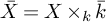 ${\bar {X} = X \times _k \bar {k}}$
). If k is a number field, we define
 to be the subgroup of
 $\operatorname {Br}_1(X)$
consisting of ‘everywhere locally constant’ elements, i.e.,

A result of Harari [Reference HarariHar94] assures that  (for X smooth geometrically integral). A variant of the product Brauer–Manin pairing (BMnr
) is the adelic Brauer–Manin pairing

For any subgroup
 $A \subseteq \operatorname {Br}(X)$
, we denote by
 $X(\mathbb {A}_k)^{A}$
the subset of adelic points orthogonal to A relative to the pairing (BM𝔸
). By the global reciprocity law, every adelic point is orthogonal to
 $\operatorname {Im}(\operatorname {Br}(k) \to \operatorname {Br}(X))$
, and
 $X(k) \subseteq X(\mathbb {A}_k)^{\operatorname {Br}(X)}$
. When X is proper, one has
 $X(\mathbb {A}_k) = X(k_\Omega )$
by the valuative criterion for properness,
 $\operatorname {Br}_{\operatorname {nr}}(X) = \operatorname {Br}(X)$
, and the pairings (BMnr
) and (BM𝔸
) coincide.
2 Preliminary remarks
2.1 Nonabelian descent types
The notion of (nonabelian) descent types enables descent theory in the context where no torsors are given a priori. An example where the need of this object arises is as follows. If G is a linear algebraic group over a field k,
 $H \subseteq G$
is a Zariski closed subgroup, and
 $X:=H \backslash G$
, then the projection
 $G \to X$
is a torsor under H. But if X is only a homogeneous space of G (with
 $X(k) = \varnothing $
), then we do not have a torsor
 $G \to X$
. Worse, the stabilizer
 $\bar {H}$
of a point
 $x \in X(\bar {k})$
need not be defined over k.
A complete theory of nonabelian descent types is available in [Reference LinhLin25], which builds on the previous works of various authors on kernels (or lien, or band) and nonabelian Galois
 $2$
-cohomology. We refer to [Reference BorovoiBor93, §1 and §2], [Reference Flicker, Scheiderer and SujathaFSS98, §1] and [Reference Demarche and Lucchini ArtecheDLA19, §2.2] for this subject. To summarize, a k-kernel (where k is a perfect field) is a smooth algebraic
 $\bar {k}$
-group
 $\bar {G}$
equipped with an outer semilinear action
 $\kappa $
of
 $\Gamma _k$
(grosso modo, it is a semilinear Galois action modulo conjugation) satisfying certain continuity and algebraicity conditions. If
 $L = (\bar {G},\kappa )$
is a k-kernel, the set
 $\mathrm {H}^2(k,L)$
of nonabelian Galois
 $2$
-cohomology with coefficients in L classifies the extensions of topological groups

bound by L, that is, the outer action of
 $\Gamma _k$
on
 $\bar {G}(\bar {k})$
induced by this extension coincides with the one induced by
 $\kappa $
. Here, we require that
 $\bar {G}(\bar {k})$
is discrete in E and that the map
 $E \to \Gamma _k$
is open. If such an extension E has a (continuous) section
 $\varsigma $
, we say that its class
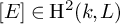 $[E] \in \mathrm {H}^2(k,L)$
is neutral. The section
 $\varsigma $
defines a semilinear action on
 $\bar {G}$
, hence also a k-form G of
 $\bar {G}$
(by Galois descent). In this case, we call G a k-form of L, and write
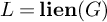 $L = \mathbf {lien}(G)$
. It might happen that the set
 $\mathrm {H}^2(k,L)$
does not have any neutral class; and a neutral class is not necessarily unique if it exists. If
 $\bar {G}$
is commutative, then the outer action
 $\kappa $
is in fact an action, hence L has unique k-form G. In this case, the set
 $\mathrm {H}^2(k,G):=\mathrm {H}^2(k,\mathbf {lien}(G))$
is the usual Galois
 $2$
-cohomology group with coefficients in G, and its unique neutral class is
 $0$
.
Let X be a nonempty k-variety. If
 $\pi : \bar {Y} \to \operatorname {Spec}(\bar {k})$
is a nonempty
 $\bar {k}$
-variety equipped with a morphism
 $\bar {Y} \to \bar {X}:=X_{\bar {k}}$
, we say that an automorphism
 $\alpha \in \operatorname {Aut}(\bar {Y}/X)$
is semilinear if there exists
 $s \in \Gamma _k$
such that
 $\pi \circ \alpha = \operatorname {Spec}(s^{-1}) \circ \pi $
. Such an s is necessarily unique. If
 $\operatorname {SAut}(\bar {Y}/X) \subseteq \operatorname {Aut}(\bar {Y}/X)$
denotes the subgroup of semilinear X-automorphisms of
 $\bar {Y}$
, then we have an exact sequence

Let
 $L = (\bar {G},\kappa )$
be a k-kernel. A descent type on X bound by L [Reference LinhLin25, Definition 2.1] is the equivalent class
 $\lambda = [\bar {Y},E]$
of a pair
 $(\bar {Y},E)$
, where
 $\bar {Y} \to \bar {X}$
is a torsor under
 $\bar {G}$
and
 $E \subseteq \operatorname {SAut}(\bar {Y}/X)$
is a subgroup fitting in an exact sequence

of topological groups, where the top row is bound by L and the bottom row is (2.1). Here, we impose that two such pairs
 $(\bar {Y},E)$
and
 $(\bar {Y}',E')$
are equivalent if there exists a
 $\bar {G}$
-equivariant
 $\bar {X}$
-isomorphism
 $\iota : \bar {Y} \to \bar {Y}'$
such that
 $\iota \circ \alpha \circ \iota ^{-1} \in E'$
for all
 $\alpha \in E$
. The set of descent types on X bound by L is denoted by
 $\operatorname {DType}(X,L)$
.
Thus, a descent type
 $\lambda \in \operatorname {DType}(X,L)$
entails not only a torsor
 $\bar {Y} \to \bar {X}$
under
 $\bar {G}$
, but also a class
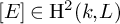
 $\partial (\lambda ):=[E] \in \mathrm {H}^2(k,L)$
. If
 $Y \to X$
is a torsor under a k-form G of L, it defines a descent type
 $\mathbf {dtype}(Y) \in \operatorname {DType}(X,G):=\operatorname {DType}(X,\mathbf {lien}(G))$
, whose attached
 $2$
-cohomology class in
 $\mathrm {H}^2(k,G)$
is neutral. The converse also holds.
Lemma 2.1. Let X be a quasi-projective, reduced and geometrically connected variety over a perfect field k. Let
 $L = (\bar {G},\kappa )$
be a k-kernel, and
 $\lambda = [\bar {Y},E] \in \operatorname {DType}(X,L)$
.
-
(i) The class
$[E] \in \mathrm {H}^2(k,L)$
is neutral if and only if there exists a torsor
$Y \to X$
under a k-form G of L, of descent type
$\mathbf {dtype}(Y) = \lambda $
. -
(ii) If
$X(k) \neq \varnothing $
, then the class
$[E]$
is neutral. -
(iii) Let
$Y \to X$
be a torsor under a k-form G of L, of descent type
$\mathbf {dtype}(Y) = \lambda $
. If
$Y' \to X$
is a torsor under a k-form
$G'$
of L, then
$\mathbf {dtype}(Y') = \lambda $
if and only if there exists a cocycle
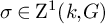
$\sigma \in \mathrm {Z}^1(k,G)$
such that
$G' = G^{\sigma }$
and the X-torsors
$Y'$
and
$Y^{\sigma }$
under
$G^{\sigma }$
are isomorphic.










Proof. See [Reference LinhLin25, Proposition 2.4].
The set
 $\operatorname {DType}(X,L)$
enjoys a functoriality property in X (see [Reference LinhLin25, Construction 2.5]) as follows. Let
 $f: X' \to X$
be a morphism of nonempty k-varieties. If
 $\lambda = [\bar {Y},E] \in \operatorname {DType}(X,L)$
, we may define the pullback type
 $f^\ast \lambda = [\bar {Y}',E'] \in \operatorname {DType}(X',L)$
, where
 $\bar {Y}' := \bar {Y} \times _{\bar {X}} \bar {X}'$
and
 $\partial (f^\ast \lambda ) = [E'] = [E] = \partial (\lambda )$
in
 $\mathrm {H}^2(k,L)$
. Furthermore, for any overfield
 $K/k$
, the k-kernel L restricts to a K-kernel
 $L_K$
, and there is a restriction map

which is compatible with the restriction map
 $\mathrm {H}^2(k,L) \to \mathrm {H}^2(K,L_K)$
on
 $2$
-cohomology.
There is also a partial functoriality with respect to L, which allows some sort dévissage argument on descent types. Let
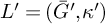 $L' = (\bar {G}',\kappa ')$
be a second k-kernel, and
 ${\varphi : L \to L'}$
a surjective morphism of k-kernels (that is, a surjective morphism
 $\bar {G} \to \bar {G}'$
of algebraic
 $\bar {k}$
-groups which is compatible with the outer Galois actions
 $\kappa $
and
 $\kappa '$
). Let
 ${\bar {H}:= \operatorname {Ker}(\bar {G} \xrightarrow {\varphi } \bar {G}')}$
.
Lemma 2.2. With the above notations, the following are true.
-
(i) There is a canonical pushforward map
$\varphi _\ast : \operatorname {DType}(X,L) \to \operatorname {DType}(X,L')$
. If a descent type
$\lambda \in \operatorname {DType}(X,L)$
has the corresponding torsor
$\bar {Y} \to \bar {X}$
under
$\bar {G}$
, then the
$\bar {X}$
-torsor under
$\bar {G}'$
associated with
$\varphi _\ast \lambda \in \operatorname {DType}(X,L')$
is
$\bar {Y}/\bar {H}$
. -
(ii) Let
$\lambda = [\bar {Y},E] \in \operatorname {DType}(X,L)$
. Then, every torsor
$Z \to X$
of descent type
$\mathbf {dtype}(Z) = \varphi _\ast \lambda $
gives rise to a k-kernel
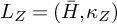
$L_Z = (\bar {H},\kappa _Z)$
and a descent type
$\lambda _Z = [\bar {Y},E_Z] \in \operatorname {DType}(Z,L_Z)$
. -
(iii) Let Z,
$G'$
,
$L_Z$
, and
$\lambda _Z$
be as in (ii). Then, for any torsor
$Y \to Z$
under a k-form H of
$L_Z$
, of descent type
$\lambda _Z$
, the composite
$Y \to Z \to X$
is a torsor under a k-form G of L, of descent type
$\lambda $
. In particular, one has
$G' = G/H$
and
$Z = Y/H$
.















Proof. See [Reference LinhLin25, Construction 2.6, Lemma 2.7, Proposition 2.11].
For abelian descent types, the set
 $\operatorname {DType}$
has a very nice description.
Lemma 2.3. Let G be a commutative algebraic k-group. Then, the set
 $\operatorname {DType}(X,G)$
is equipped with a structure of abelian group, functorial in X and G (even for nonsurjective morphisms
 $G \to G'$
of commutative algebraic k-groups), and fits in a complex

If X is quasi-projective, reduced and geometrically connected, then (2.2) is exact.
Proof. See [Reference LinhLin25, Construction 2.6, Lemma 2.8, Theorem 3.8].
We note that if G is a k-group of multiplicative type and X is a smooth quasi-projective geometrically integral k-variety, then (2.2) is equivalent to the ‘fundamental exact sequence’ for extended types by Harari–Skorobogatov [Reference Harari and SkorobogatovHS13, Proposition 8.1] (see [Reference LinhLin25, Theorem 4.1]).
If X is geometrically connected, a finite descent type on X in the sense of Harpaz–Wittenberg [Reference Harpaz and WittenbergHW24, Definition 2.1] is a connected étale cover
 $\bar {Y}$
of
 $\bar {X}$
such that the composite
 $\bar {Y} \to \bar {X} \to X$
is Galois (i.e., the field extension
 $\bar {k}(\bar {Y})/k(X)$
is Galois). In this case, the homotopy exact sequence

yields an outer action
 $\kappa $
of
 $\Gamma _k$
on
 $\bar {G}:=\operatorname {Aut}(\bar {Y}/\bar {X})$
(viewed as a finite constant algebraic
 $\bar {k}$
-group), hence a k-kernel
 $L = (\bar {G},\kappa )$
, as well as a descent type
 $[\bar {Y},\operatorname {Aut}(\bar {Y}/X)]$
on X bound by L.
2.2 Abelianization of nonabelian cohomology
The proof of Theorem A (i.e., Conjecture B for torsors under connected linear algebraic groups) requires the machinery of abelianization of nonabelian cohomology. Fix a base scheme X, which, for simplicity, is assumed to have residue characteristics
 $0$
. Let us start with the following remark on
 $2$
-term complexes of tori. Let
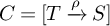 $C = [T \xrightarrow {\rho } S]$
be a complex of X-tori, with T in degree
 $-1$
. Let
 $\widehat {T}:=\mathscr {H}\kern -.5pt om_X(T,\mathbb {G}_m)$
,
 $\widehat {S}:=\mathscr {H}\kern -.5pt om_X(S,\mathbb {G}_m)$
, and let
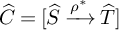 $\widehat {C} = [\widehat {S} \xrightarrow {\rho ^\ast } \widehat {T}]$
(with
 $\widehat {S}$
in degree
 $-1$
) be the ‘Cartier dual’ of C. Following Demarche’s construction [Reference DemarcheDem11b, p. 4], we have a pairing

in
 $\mathcal {D}^+(X)$
, as follows. Represent the derived tensor product
 $C \otimes ^{\mathbb {L}} \widehat {C}$
by the ‘total complex’

concentrated in degrees
 $-2,-1,0$
, where the first differential is
 $(\operatorname {id}_T \otimes \rho ^\ast , -\rho \otimes \operatorname {id}_{\widehat {S}})$
and the second one is
 $\rho \otimes \operatorname {id}_{\widehat {T}} + \operatorname {id}_S \otimes \rho ^\ast $
. The composite

where the first arrow is just the direct sum of the canonical pairings and the second one is the product map, gives rise to a morphism of complexes
 $\operatorname {Tot}(C \otimes \widehat {C}) \to \mathbb {G}_m[1]$
, hence a pairing as in (2.3). From its construction, this pairing is compatible with the canonical pairings between the tori T, S and their respective Cartier duals. Since the pairing
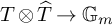 ${T \otimes \widehat {T} \to \mathbb {G}_m}$
induces an isomorphism
 $T \cong \mathscr {H}\kern -.5pt om_X(\widehat {T},\mathbb {G}_m)$
, and
 $\mathscr {E}\kern -.5pt xt_X^i(\widehat {T},\mathbb {G}_m) = 0$
for all
 $i> 0$
[Reference Colliot-Thélène and SansucCTS87, Lemme 1.3.3 (ii)] (and similarly for S), we deduce, using a dévissage argument, that (2.3) induces a quasi-isomorphism

In particular, taking hypercohomology yields
 $\mathrm {H}^i(X,C) \cong \operatorname {Ext}^{i+1}_X(\widehat {C},\mathbb {G}_m)$
for all
 $i \ge -1$
.
A reductive X-group scheme is a smooth affine group scheme
 $G \to X$
with connected reductive fibres [Reference DemazureDem70a, Définition 2.7]. We use
 $G^{\operatorname {ss}}$
to denote its derived subgroup (whose fibres are connected semisimple),
 $G^{\operatorname {tor}} = G/G^{\operatorname {ss}}$
its coradical torus [Reference DemazureDem70b, Définition §6.2], and
 $G^{\operatorname {sc}}$
the universal covering of
 $G^{\operatorname {ss}}$
(whose fibres are simply connected semisimple) [Reference ConradCon11, Exercise 1.6.13 (ii)]. The morphism
 $G^{\operatorname {sc}} \to G^{\operatorname {ss}}$
is a central isogeny, whose kernel
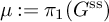 $\mu :=\pi _1(G^{\operatorname {ss}})$
is a finite étale commutative X-group scheme (the algebraic fundamental group of
 $G^{\operatorname {ss}}$
).
Associated with G is a
 $2$
-term complex of X-tori C concentrated in degrees
 $-1$
and
 $0$
, which is canonically defined up to quasi-isomorphism, called the algebraic fundamental complex of G. It can be defined in terms of t-resolutions [Reference Borovoi and González-AvilésBGA14, Definition 2.1, Propositions 2.2 and 4.1] as follows. A t-resolution of G is a central extension

where T is an X-torus and H is a reductive X-group scheme such that
 $H^{\operatorname {ss}} = H^{\operatorname {sc}}$
. The complex C is then represented by the cone of the composite
 $T \hookrightarrow H \twoheadrightarrow S:=H^{\operatorname {tor}}$
, that is, the complex
 $[T \to S]$
(with T in degree
 $-1$
). The cohomology of C is
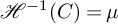 $\mathscr {H}^{-1}(C) = \mu $
and
 $\mathscr {H}^0(C) = S/T = G^{\operatorname {tor}}$
.
The dual algebraic fundamental complex
 $\pi _1^D(G)$
of G is the complex
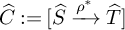 $\widehat {C}:=[\widehat {S} \xrightarrow {\rho ^\ast } \widehat {T}]$
, with
 $\widehat {S}$
in degree
 $-1$
. Its cohomology is
 $\mathscr {H}^{-1}(\widehat {C}) = \widehat {G^{\operatorname {tor}}} =: \widehat {G}$
and
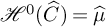 $\mathscr {H}^0(\widehat {C}) = \widehat {\mu }$
. If G has a maximal torus
 $T^{\max }$
(e.g., when
 $X = \operatorname {Spec}(k)$
, where k is a field of characteristic
 $0$
), let
 $T: = T^{\max } \times _G G^{\operatorname {sc}}$
(which is maximal torus of
 $G^{\operatorname {sc}}$
). Then, C is represented by the complex
 $[T \to T^{\max }]$
, with T in degree
 $-1$
(see [Reference Borovoi and González-AvilésBGA14, Lemma 3.9]). There are also the abelianization maps

defined for
 $i = 0,1$
. When
 $X = \operatorname {Spec}(k)$
, they were introduced by Borovoi in [Reference BorovoiBor98]. This was later generalized to arbitrary base schemes by González-Avilés (combine [Reference González-AvilésGA12, (3.12)] and [Reference Borovoi and González-AvilésBGA14, Proposition 4.1]). There are two extreme cases where the maps
 $\operatorname {ab}^i$
have a simple description.
-
• If
$G^{\operatorname {ss}} = G^{\operatorname {sc}}$
, then
$C \simeq G^{\operatorname {tor}}$
, and
$\operatorname {ab}^i: \mathrm {H}^i(X,G) \to \mathrm {H}^i(X,G^{\operatorname {tor}})$
are the pushforward maps. -
• If
$G = G^{\operatorname {ss}}$
, then
$C \simeq \mu [1]$
, and
$\operatorname {ab}^i: \mathrm {H}^i(X,G) \to \mathrm {H}^{i+1}(X,\mu )$
are the connecting maps induced by the central extension
$1 \to \mu \to G^{\operatorname {sc}} \to G \to 1$
.







Proposition 2.4. With the above notations, the following are true.
-
(i) (Breen’s exact sequence) We have a functorial exact sequence
of pointed sets. Furthermore,
$\operatorname {ab}^0$
is a group homomorphism which induces an injection -
(ii) If
$X = \operatorname {Spec}(k)$
, where k is a local field of characteristic
$0$
, then
$\operatorname {ab}^1: \mathrm {H}^1(k,G) \to \mathrm {H}^1(k,C)$
is surjective. It is bijective if k is nonarchimedean. -
(iii) If
$X = \operatorname {Spec}(k)$
, where k is a number field, then there is a Cartesian square with surjective arrows. In particular,
$\operatorname {ab}^1$
induces a bijection .








 .
Proof. For (i), see [Reference González-AvilésGA12, Theorem 1.1, Proposition 3.14 (a)]. For (ii) (resp. (iii)), we refer to Theorem 5.4 and Corollary 5.4.1 (resp. Theorems 5.12 and 5.13) in [Reference BorovoiBor98].
Proposition 2.5. Let G be a reductive X-group scheme and
 $f: Y \to X$
a right torsor under G. Let
 $P \to X$
be a left torsor under G and let
 $G^P$
be the corresponding twisted X-group (cf. [Reference GiraudGir71, Chapitre III, §2.3]; in particular,
 $P \to X$
is also a right torsor under
 $G^P$
). Let
 $f^P: Y^P \to X$
be the twist of Y by P (that is,
 $Y^P$
is the quotient of
 $Y \times _X P$
by the left action
 $(g,y,p) \mapsto (y \cdot g^{-1}, g \cdot p)$
of G), which is a right torsor under
 $G^P$
. Denote by C the algebraic fundamental complex of G, and by
 $\widehat {C}$
the dual algebraic fundamental complex
 $\pi _1^D(G)$
.
-
(i) The constructions
$G \mapsto C$
and
$G \mapsto \widehat {C}$
commute with base change.


Assume that G admits a maximal torus
 $T^{\max }$
. Then, the following are true.
-
(ii). The algebraic fundamental complex (resp. the dual algebraic fundamental complex) of
$G^P$
is canonically isomorphic to C (resp.
$\widehat {C}$
). -
(iii). We have
$\operatorname {ab}^1([Y^P]) = \operatorname {ab}^1([Y]) - \operatorname {ab}^1([P])$
in
$\mathrm {H}^1(X,C)$
.




Proof.
-
(i) This follows from the fact that t-resolutions are preserved by base change.
-
(ii) It suffices to combine [Reference González-AvilésGA12, Definition 3.1] and [Reference Borovoi and González-AvilésBGA14, Proposition 4.1], noting that the centers of G and
$G^{\operatorname {sc}}$
remains unchanged under twisting. -
(iii) See [Reference González-AvilésGA12, Proposition 3.11].

2.3 The relative units-Picard complex
Let
 $f: Y \to X$
be a morphism of schemes. Then, we have a canonical morphism
 $\mathbb {G}_{m,X}\to f_\ast \mathbb {G}_{m,Y}$
of sheaves on
 . We define the sheaf of relative units of
 $Y/X$
to be

We also recall the relative Picard sheaf
 $\operatorname {Pic}_{Y/X}:=\mathbb {R}^1 f_\ast \mathbb {G}_{m,Y}$
. Following González-Avilés [Reference González-AvilésGA18, (3.15)], we define the relative units-Picard complex
 $\operatorname {UPic}_{Y/X}$
to be the cone of the morphism

It is represented by a complex concentrated in degrees
 $-1$
and
 $0$
, with cohomology
 $\mathscr {H}^{-1}(\operatorname {UPic}_{Y/X}) = \operatorname {U}_{Y/X}$
and
 $\mathscr {H}^0(\operatorname {UPic}_{Y/X}) = \operatorname {Pic}_{Y/X}$
. By definition, we have a distinguished triangle

which splits if f has a section [Reference González-AvilésGA18, Lemma 3.8]. The class in
 $\operatorname {Ext}^2_X(\operatorname {UPic}_{Y/X},\mathbb {G}_m)$
of the morphism
 $\operatorname {UPic}_{Y/X} \to \mathbb {G}_{m,X}[2]$
in
 $\mathcal {D}^+(X)$
associated with (2.5) is then an obstruction to the existence of sections of f.
Proposition 2.6. Let X be a locally Noetherian regular scheme, G a reductive X-group scheme, and
 $Y \to X$
a torsor under G. There exists an isomorphism
 $\varphi _Y: \operatorname {UPic}_{Y/X} \xrightarrow {\simeq } \pi _1^D(G)$
in
 $\mathcal {D}^+(X)$
, functorial in Y and G. In particular,
 $\operatorname {U}_{Y/X} \cong \widehat {G}$
and
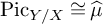 $\operatorname {Pic}_{Y/X} \cong \widehat {\mu }$
, where
 $\mu :=\operatorname {Ker}(G^{\operatorname {sc}} \to G^{\operatorname {ss}})$
.
Proof. The case where
 $Y = G$
is the trivial torsor was dealt with by González-Avilés in [Reference González-AvilésGA19, Theorem 1.1]. The case where
 $X = \operatorname {Spec}(k)$
is due to Borovoi–van Hamel [Reference Borovoi and van HamelBvH09, Lemma 5.2]. The proof in the general case is similar; we shall deploy Sansuc’s argument, using the additivity theorem for
 $\operatorname {UPic}$
. More precisely, the projections
 $p_Y: Y \times _X G \to Y$
and
 $p_G: Y \times _X G \to G$
induce a canonical morphism

in
 $\mathcal {D}^+(X)$
. By [Reference González-AvilésGA18, Proposition 4.4, Remark 5.2 (a)],
 $\varsigma _Y$
is an isomorphism. Note that the existence of an ‘étale quasi-section’ of
 $Y \times _X G \to X$
as in (i) of loc. cit. is guaranteed by [Reference GrothendieckGro67, Corollaires 17.16.2 and 17.16.3 (ii)], since this morphism is smooth [Reference MilneMil80, Chapter III, Proposition 4.2] and surjective, and that for every generic point
 $\eta \in X$
, the ‘étale index’ [Reference González-AvilésGA18, Definition 2.3] of
 $G_{\eta }$
is
 $1$
since it has a
 $\kappa (\eta )$
-rational point. Let
 $\varphi _Y$
denote the composite

where
 $\alpha : Y \times _X G \to Y$
is the X-action of G on Y, and
 $\pi _G$
is the second projection. According to its construction,
 $\varphi _Y$
is functorial in Y and G. Since the result is known for the trivial torsor
 $G \to X$
, it remains to show that
 $\varphi _Y$
is a quasi-isomorphism, that is,
 $\mathscr {H}^{-1}(\varphi _Y): \operatorname {U}_{Y/X} \to \operatorname {U}_{G/X}$
and
 $\mathscr {H}^0(\varphi _Y): \operatorname {Pic}_{Y/X} \to \operatorname {Pic}_{G/X}$
are isomorphisms of étale sheaves over X. This follows from the units-Picard-Brauer sequence, see [Reference González-AvilésGA19, Lemmata 2.5 and 3.2, Proposition 3.6, Corollary 3.8] and their proofs.
Let X be a locally Noetherian regular scheme, G a reductive X-group scheme, and
 $f: Y \to X$
a torsor under G. Let C (resp.
 $\widehat {C}$
) denote the fundamental algebraic complex (resp. the dual fundamental algebraic complex) of G. In view of Proposition 2.6, triangle (2.5) becomes

Our aim is to relate the class in
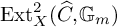 $\operatorname {Ext}^2_X(\widehat {C},\mathbb {G}_m)$
of the corresponding morphism
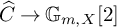 $\widehat {C} \to \mathbb {G}_{m,X}[2]$
in
 $\mathcal {D}^+(X)$
and the abelianized class
 $\operatorname {ab}^1([Y]) \in \mathrm {H}^1(X,C)$
under the identification (2.4).
Proposition 2.7. With the above notations, the isomorphism
 $\mathrm {H}^1(X,C) \xrightarrow {\cong } \operatorname {Ext}^2_X(\widehat {C},\mathbb {G}_m)$
induced by (2.4) takes
 $\operatorname {ab}^1([Y])$
to the inverse class of the morphism
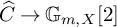 $\widehat {C} \to \mathbb {G}_{m,X}[2]$
from (2.6), in the following cases.
-
(i)
$G^{\operatorname {ss}} = G^{\operatorname {sc}}$
(for example, when G is a torus). -
(ii) The torsor
$Y \to X$
is isotrivial, that is, there exists a finite étale surjective morphism
$U \to X$
such that
$Y_U \to U$
is a trivial torsor under
$G_U$
(for example, if
$X = \operatorname {Spec}(k)$
, where k is a field of characteristic
$0$
).




Proof.
-
(i) When
$G^{\operatorname {ss}} = G^{\operatorname {sc}}$
, one has
$C \simeq G^{\operatorname {tor}}$
and
$\widehat {C} \simeq \widehat {G^{\operatorname {tor}}}[1] = \widehat {G}[1]$
, and the abelianization map
$\operatorname {ab}^1: \mathrm {H}^1(X,G) \to \mathrm {H}^1(X,C)$
is simply the pushfoward along the projection
${G \to G^{\operatorname {tor}}}$
. By functoriality, it is enough to prove the claim when
$G = T$
is a torus. In this case,
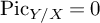
$\operatorname {Pic}_{Y/X} = 0$
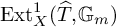
, and it was shown by Colliot-Thélène and Sansuc that triangle (2.6) is quasi-isomorphic to the short exact sequence provided by the relative version of Rosenlicht’s lemma, whose class in
$\operatorname {Ext}^1_X(\widehat {T},\mathbb {G}_m)$
turns out to be precisely
$-[Y]$
(see [Reference Colliot-Thélène and SansucCTS87, Propositions 1.4.2 and 1.4.3]).
-
(ii) We follow Kottwitz’s argument in [Reference KottwitzKot86, p. 369]. Suppose that
$\pi : U \to X$
is a surjective finite étale morphism trivializing Y. Take any t-resolution of G, and consider the sheaf
$T_1:=\pi _\ast T_U$
(which is representable by an X-torus). Let
$\partial : \mathrm {H}^1(X,G) \to \mathrm {H}^2(X,T)$
denote the connecting map. Then, the restriction of
$\partial ([Y])$
to
$\mathrm {H}^2(U,T)$
is
$0$
. Now, by the global version of Shapiro’s lemma (which can be obtained by combining [Reference GrothendieckGro73, Corollaire 5.6] and the Leray spectral sequence), one has
$\mathrm {H}^2(U,T) \cong \mathrm {H}^2(X,T_1)$
. Hence, the map
$i_\ast : \mathrm {H}^2(X,T) \to \mathrm {H}^2(X,T_1)$
(induced by the inclusion
$i: T \hookrightarrow T_1$
) takes
$\partial ([Y])$
to
$0$
. Let
$H_1$
denote the pushout of i and the inclusion
$T \hookrightarrow H$
. Then
$H_1^{\operatorname {ss}} = H^{\operatorname {ss}} = H^{\operatorname {sc}}$
is simply connected, hence
$1 \to T_1 \to H_1 \to G \to 1$
is also a t-resolution of G, and the corresponding connecting map
$\delta : \mathrm {H}^1(X,G) \to \mathrm {H}^2(X,T_1)$
takes
$[Y]$
to
$0$
. It follows that there is a torsor
$Z \to X$
under
$H_1$
such that the map
$\mathrm {H}^1(X,H_1) \to \mathrm {H}^1(X,G)$
takes
$[Z]$
to
$[Y]$
. We know from (i) that the statement of the proposition holds for Z. By functoriality, it also holds for Y.
























Remarks 2.8. When
 $X = \operatorname {Spec}(k)$
, the statement of Proposition 2.7 without any restriction on G or Y was proved by Borovoi and van Hamel in [Reference Borovoi and van HamelBvH09, Theorem 5.5]. The author, unfortunately, does not know if this result holds true in full generality. Should it be the case, a possible approach would be to adapt the proof from the toric case by Colliot-Thélène and Sansuc [Reference Colliot-Thélène and SansucCTS87, Propositions 1.4.2 and 1.4.3] using
 $\check {\text {C}}$
ech cocycles for étale hypercohomology. A catch there is that the quasi-isomorphism
 $\operatorname {UPic}_{Y/X} \simeq \pi _1^D(G)$
from Proposition 2.6 is not explicit (it is constructed using the axioms of triangulated categories, cf. the proof of [Reference González-AvilésGA19, Theorem 1.1]). This would make the computation rather cumbersome, and since the result in the isotrivial case is sufficient for further uses in the article, the author decides to refrain from including a proof for the general case (if it exists at all).
Corollary 2.9. Let k be a field of characteristic
 $0$
,
 $p: X \to \operatorname {Spec}(k)$
a smooth geometrically integral k-variety, G a connected reductive linear algebraic k-group, and
 $f: Y \to X$
a torsor under G. Let C (resp.
 $\widehat {C}$
) denote the algebraic fundamental complex (resp. dual algebraic fundamental complex) of G. Then, for every Galois cocycle
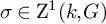 $\sigma \in \mathrm {Z}^1(k,G)$
, we have a distinguished triangle

in
 $\mathcal {D}^+(X)$
. If either
 $G^{\operatorname {ss}} = G^{\operatorname {sc}}$
or the torsor
 $f: Y \to X$
is isotrivial (cf. Proposition 2.7 ii), then the map
 $\mathrm {H}^1(X,\widehat {C}) \to \mathrm {H}^3(X,\mathbb {G}_m)$
associated with the above triangle is given by
 $\widehat {c} \mapsto (-\operatorname {ab}^1([Y]) + p^\ast [\sigma ])\cup \widehat {c}$
, where the cup-product is induced by the pairing (2.3).
Proof. This follows directly from Propositions 2.5 and 2.7. We note that in the case where
 $f: Y \to X$
is isotrivial, the twisted torsor
 $f^{\sigma }: Y^{\sigma } \to X$
is also isotrivial for any
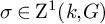 $\sigma \in \mathrm {Z}^1(k,G)$
. This is because the class
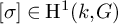 $[\sigma ] \in \mathrm {H}^1(k,G)$
is trivialized by a finite extension of k.
For further use in Section 3, we also require the following technical results.
Proposition 2.10. Let X be an integral Noetherian regular scheme and let
 $1 \to T \to H \xrightarrow {p} G \to 1$
be a t-resolution of a reductive X-group scheme G. Let
 $Z \to X$
(resp.
 $Y \to X$
) be a torsor under H (resp. G) such that
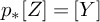 $p_\ast [Z] = [Y]$
(i.e., there exists a p-equivariant X-morphism
 $\pi : Z \to Y$
making Z a Y-torsor under T). Then, the following are true.
-
(i) There is a distinguished triangle
(2.7) -
(ii) Triangle (2.7) is functorial in the following sense. Let
$1 \to T' \to H' \xrightarrow {p'} G' \to 1$
be a t-resolution of another reductive X-group scheme
$G'$
. Let
$Z' \to X$
(resp.
$Y' \to X$
) be a torsor under
$H'$
(resp.
$G'$
) such that there exists a
$p'$
-equivariant X-morphism
$\pi ': Z' \to Y'$
. Let
$u: T' \to T$
be a morphism of X-tori and let
$v: Z' \to Z$
,
$w: Y' \to Y$
be morphisms of X-schemes such that the diagram commutes. Then, we have morphism of distinguished triangles







Proof.
-
(i) We construct a commutative diagram
(2.8)where the bottom row is the distinguished triangle associated with the given t-resolution of G (see [Reference González-AvilésGA19, Proposition 4.12]). The quasi-isomorphisms
$\varphi _Y$
and
$\varphi _Z$
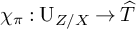
are given by Proposition 2.6. The unlabeled arrow on the top row of (2.8) is the composite where
$\chi _\pi : \operatorname {U}_{Z/X} \to \widehat {T}$
is the map from the units-Picard-Brauer sequence (cf. [Reference González-AvilésGA19, Corollary 3.8 (i)]), and where the inclusion
$\operatorname {U}_{Z/X}[1] \hookrightarrow \operatorname {UPic}_{Z/X}$
is a quasi-isomorphism because
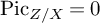
$\operatorname {Pic}_{Z/X} = 0$
(note that
$H^{\operatorname {sc}} = H^{\operatorname {ss}}$
). The map
$\lambda _\pi : \widehat {T} \to \operatorname {UPic}_{Y/X}[1]$
is the extended type of the torsor
$Z \xrightarrow {\pi } Y$
under T, constructed in [Reference Harari and SkorobogatovHS13, Definition 8.2]. Let us verify that diagram (2.8) indeed commutes. To this end, we recall the construction of
$\varphi _Y$
and
$\varphi _Z$
from the proof of Proposition 2.6. The left square of (2.8) commutes because we have a commutative diagram where
$\alpha _Y: Y \times _X G \to Y$
and
$\alpha _Z: Z \times _X H \to Z$
denote the respective action morphisms, and where right horizontal arrows are the second projections. Indeed, the left square commutes because
$\alpha _Y \circ (\pi \times _X p) = \pi \circ \alpha _Z$
(the morphism
$\pi $
being p-equivariant), and the other two squares obviously commute.
The middle square of (2.8) commutes because it corresponds to a commutative square
Indeed,
$\mathscr {H}^{-1}(\varphi _Z)$
is just the map from the units-Picard-Brauer sequence for Z (cf. [Reference González-AvilésGA19, Corollary 3.8 (i)], and hence the commutativity of the above square follows from the functoriality of the same sequence (see loc. cit., Remarks 3.7 (a)).
As for the right square of (2.8), since T is central in H, we have a commutative diagram
where
$\nabla : T \times _X T \to T$
denotes the multiplication morphism. By functoriality of the extended type construction, we obtain the commutativity of the left square of the following diagram: The other squares in the above diagram obviously commute. The composite of the top row is
$\operatorname {id}_{\widehat {T}}$
(composing the first two arrows yields the diagonal map
$\widehat {T} \to \widehat {T} \oplus \widehat {T}$
), and that of the bottom row is
$\varphi _Y$
(when
$\operatorname {UPic}_{G/X}$
is identified to
$\pi _1^D(G)$
). Furthermore, by unwinding the definition of the extended type in [Reference Harari and SkorobogatovHS13, Proposition 8.1, Definition 8.2] (see also [Reference LinhLin25, §4.1, pp. 415—416], one checks that the composite
$\widehat {T} \xrightarrow {\simeq } \operatorname {UPic}_{T/X} \to \operatorname {UPic}_{G/X}[1]$
is precisely the extended type
$\lambda _p$
of the torsor
$p: H \to G$
under T. This shows that the right square of (2.8) commutes.
Since the bottom row of (2.8) is a distinguished triangle and since the vertical arrows there are quasi-isomorphisms, the top row is also a distinguished triangle.
-
(ii) The catch here is that the morphism
$v: Z' \to Z$
need not correspond to a morphism
$H' \to H$
of X-group schemes. Nevertheless, once the maps in (2.7) are explicitly constructed, our claims follow easily from the functoriality of the maps from the units-Picard-Brauer sequence as well as the extended types.


















Proposition 2.11. Let X be an integral Noetherian regular scheme, G a reductive X-group scheme, and
 $f: Y \to X$
a right torsor under G. Let
 $P \to X$
be a left torsor under G and let
 $G^P$
be the corresponding twisted X-group. Let
 $f^P: Y^P \to X$
be the twist of Y by P (cf. Proposition 2.5). Let C (resp.
 $\widehat {C}$
) denote the fundamental algebraic complex (resp. the dual fundamental algebraic complex) of G and assume either of the following.
-
(i)
$G^{\operatorname {ss}} = G^{\operatorname {sc}}$
(for example, when G is a torus). -
(ii) The X-torsors Y and P are isotrivial (cf. Proposition 2.7 (ii)).

Then, we have a commutative square

in
 $\mathcal {D}^+(X)$
, where the horizontal maps are the quasi-isomorphisms from Proposition 2.6 (see also Proposition 2.5 (ii)), where
 $\pi : Y \times _X P \to Y^P$
is the canonical projection, and where
 $\Delta $
is the diagonal map.
Proof. The main difficulty here is that if G is not commutative, the morphism
 $\pi $
is not equivariant with respect to any morphism
 $G \times _X G^P \to G^P$
of X-group schemes. We start with the case where
 $G = T$
is a torus. In this case, one has
 $G^P = T$
,
 $\widehat {C} \simeq \widehat {T}[1]$
and
 $\pi $
is
 $\nabla $
-equivariant, where
 $\nabla : T \times _X T \to T$
is the multiplication morphism. Since
 $\nabla $
induces the diagonal map
 $\Delta : \widehat {T} \to \widehat {T} \oplus \widehat {T}$
on character modules, the claim in the toric case follows.
Next, we consider the case where
 $G^{\operatorname {ss}} = G^{\operatorname {sc}}$
. Then
 $\widehat {C} \simeq \widehat {G^{\operatorname {tor}}}[1]$
. Let Z (resp. Q) denote the pushforward of Y (resp. P) along the projection
 $u: G \to G^{\operatorname {tor}}$
, which are torsors under the X-torus
 $G^{\operatorname {tor}}$
. Then, the projections
 $u^P: G^P \to (G^P)^{\operatorname {tor}} = G^{\operatorname {tor}}$
and
 $u \times _X u^P: G \times _X G^P \to (G \times _X G^P)^{\operatorname {tor}} = G^{\operatorname {tor}} \times _X G^{\operatorname {tor}}$
have the respective properties that
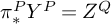 $\pi ^P_\ast Y^P = Z^Q$
and
 $(\pi \times _X \pi ^P)_\ast (Y \times _X P) = Z \times _X Q$
. Let
 $\varpi : Z \times _X Q \to Z^Q$
be the canonical projection. The commutativity of the square

yields the commutativity of the left square in the following diagram:

The right square commutes thanks to the toric case which was dealt with above.
Now, we consider the case where the torsors
 $Y \to X$
and
 $P \to X$
are isotrivial. Take a surjective finite étale morphism
 $U \to X$
trivializing both Y and P. Then, by repeating the argument from the proof of Proposition Proposition 2.7 (ii), we obtain a t-resolution

such that
 $Y = u_\ast Z$
and
 $P = u_\ast Q$
for some right torsor
 $Z \to X$
and some left torsor
 $Q \to X$
under H. Note that

are also t-resolutions (recall that T is central in H hence remains unchanged under twisting), and that we have
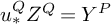 $u^Q_\ast Z^Q = Y^P$
and
 $(u \times _X u^Q)_\ast (Z \times _X Q) = Y \times _X P$
. Let
 $\varpi : Z \times _X Q \to Z^Q$
(resp.
 $\nabla : T \times _X T \to T$
) denote the canonical projection (resp. the multiplication morphism). One easily checks that the diagram

commutes. By Proposition 2.10, we have a morphism of distinguished triangles

Now, since
 $H^{\operatorname {ss}} = H^{\operatorname {sc}}$
, we deduce from the result in the previous case that the second column in the above diagram can be replaced by the map
 $\Delta [1]: \widehat {S}[1] \to (\widehat {S} \oplus \widehat {S})[1]$
, where
 $S:=H^{\operatorname {tor}}$
. Since
 $\widehat {C}$
is by definition the cone of the morphism
 $\widehat {S} \to \widehat {T}$
, we obtain the claimed result using the functoriality of the quasi-isomorphisms constructed from Proposition 2.6.
3 Torsors under connected linear algebraic groups
This section is devoted to the proof of Theorems A and B.
3.1 Some calculations
In this subsection, we fix a field k of characteristic
 $0$
, a smooth geometrically integral k-variety
 $p: X \to \operatorname {Spec}(k)$
and a connected reductive linear algebraic group G over k. Let C (resp.
 $\widehat {C}$
) denote the algebraic fundamental complex (resp. dual algebraic fundamental complex) of G. Let
 $f: Y \to X$
be a torsor under G. Taking hypercohomology of the distinguished triangle (2.6), we obtain an exact sequence

where the last arrow is given by
 $\widehat {c} \mapsto -\operatorname {ab}^1([Y]) \cup \widehat {c}$
if either
 $G^{\operatorname {ss}} = G^{\operatorname {sc}}$
or the torsor
 $Y \to X$
is isotrivial (Corollary 2.9). Let us investigate the two middle terms of (3.1). First, we need some lemmata.
Lemma 3.1. If G is split, then
 $\operatorname {Br}_{\operatorname {nr}}(Y) \subseteq f^\ast (\operatorname {Br}(X))$
.
Proof. Take a split maximal torus S of G, and let T be its preimage in
 $G^{\operatorname {sc}}$
. Then
 $[\widehat {S} \to \widehat {T}]$
(where
 $\widehat {S}$
is in degree
 $-1$
) is a complex of split tori representing
 $\widehat {C}$
. Let
 $K:=k(X)$
and let
 $V \to \operatorname {Spec}(K)$
be the generic fibre of f. By [Reference Borovoi and KunyavskiiBK00, Corollary B], the group
 $\operatorname {Br}_{\operatorname {nr}}(V)/ f^\ast (\operatorname {Br}(K))$
injects into the subgroup
 of
 $\mathrm {H}^1(K,\widehat {C})$
consisting of elements that become trivial after restriction to every procyclic subgroup of
 $\Gamma _K$
. Let
 $r:=\dim (T) = \dim (S)$
, then
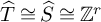 $\widehat {T} \cong \widehat {S} \cong \mathbb {Z}^r$
as
 $\Gamma _K$
-modules. In particular, one has
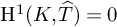 $\mathrm {H}^1(K,\widehat {T}) = 0$
. It follows that
 $\mathrm {H}^1(K,\widehat {C})$
injects into
 $\mathrm {H}^2(K,\widehat {S})$
. On the other hand, there is an exact sequence

of abelian groups equipped with the trivial actions of
 $\Gamma _K$
. The term
 $\mathbb {Q}^r$
is uniquely divisible, hence cohomologically trivial. It follows that
 $\mathrm {H}^2(K,\widehat {S}) = \mathrm {H}^1(K,(\mathbb {Q}/\mathbb {Z})^r) = \operatorname {Hom}_{\operatorname {cts}}(\Gamma _K, (\mathbb {Q}/\mathbb {Z})^r)$
, and similarly for any procyclic subgroup of
 $\Gamma _K$
. It follows that
 , a fortiori
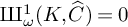 , and hence the map
 $f^\ast : \operatorname {Br}(K) \to \operatorname {Br}_{\operatorname {nr}}(V)$
is surjective.
Viewing that
 $k(Y) = K(V)$
, we have
 $\operatorname {Br}(Y) \subseteq \operatorname {Br}(V) \subseteq \operatorname {Br}(k(Y))$
. Let
 $\alpha \in \operatorname {Br}_{\operatorname {nr}}(Y) \subseteq \operatorname {Br}_{\operatorname {nr}}(V)$
. From what has been established above,
 for some
 . It remains to show that
 . Indeed, let
 $\xi \in X^{(1)}$
be any codimension
 $1$
point. Let
 $\eta $
be the generic point of the fibre
 $f^{-1}(\xi ) \to \operatorname {Spec}(k(\xi ))$
, which is a codimension 1 point of Y. Since
 $\alpha \in \operatorname {Br}(Y)$
, the residue
 $\partial _\eta (\alpha ) \in \mathrm {H}^1(k(\eta ),\mathbb {Q}/\mathbb {Z})$
vanishes (cf. (1.1)). Since
 $f^{-1}(\xi )$
is geometrically integral, the map
 $\mathrm {H}^1(k(\xi ),\mathbb {Q}/\mathbb {Z}) \to \mathrm {H}^1(k(\eta ),\mathbb {Q}/\mathbb {Z})$
is injective. By functoriality of the residue map [Reference Colliot-Thélène and SkorobogatovCTS21, Theorem 3.7.5], we have
 . It follows that
 , which concludes the proof.
Following Harpaz and Wittenberg [Reference Harpaz and WittenbergHW20, §2.2], we define the relative algebraic Brauer group

It is obvious that
 $f^\ast (\operatorname {Br}(X)) \subseteq \operatorname {Br}_1(Y/X)$
. By Lemma 3.1, one has
 $\operatorname {Br}_{\operatorname {nr}}(Y) \subseteq \operatorname {Br}_1(Y/X)$
.
Lemma 3.2. The group
 $\mathrm {H}^2(X, \tau _{\le 1}\mathbb {R} f_\ast \mathbb {G}_{m,Y})$
is identified to

and it contains
 $\operatorname {Br}_1(Y/X)$
.
Proof. Taking hypercohomology of the distinguished triangle

in
 $\mathcal {D}^+(X)$
yields an exact sequence

On the other hand, by taking cohomology of the distinguished triangle

we have
 $\mathrm {H}^2(X,\tau _{\le 2} \mathbb {R} f_\ast \mathbb {G}_{m,Y}) = \mathrm {H}^2(X,\mathbb {R} f_\ast \mathbb {G}_{m,Y}) = \mathrm {H}^2(Y,\mathbb {G}_m) = \operatorname {Br}(Y)$
, noting that
 $\tau _{\ge 3}\mathbb {R} f_\ast \mathbb {G}_{m,Y}$
is acyclic in degrees
 $0$
,
 $1$
,
 $2$
, and that
 $\mathbb {H}(X,-) \circ \mathbb {R} f_\ast \simeq \mathbb {H}(Y,-)$
[Reference WeibelWei94, Corollary 10.8.3]. It follows that (3.3) yields an identification

Let us check that this group contains
 $\operatorname {Br}_1(Y/X)$
. First, note that the composite

is
 $0$
because
 $f^\ast $
factors through the map

from (3.3). In view of the commutative diagram with exact rows

we see that the inclusion
 $\operatorname {Br}_1(Y/X) \subseteq \mathrm {H}^2(X,\tau _{\le 1} \mathbb {R} f_\ast \mathbb {G}_{m,Y})$
would follow from the injectivity of the canonical map
 $\mathrm {H}^0(X,\mathbb {R}^2 f_\ast \mathbb {G}_{m,Y}) \to \mathrm {H}^0(\bar {X},\mathbb {R}^2 f_\ast \mathbb {G}_{m,\bar {Y}})$
. Indeed, since
 $\mathbb {R}^2 f_\ast \mathbb {G}_{m,Y}$
is the sheaf on
 associated to the presheaf
 $(X' \to X) \mapsto \operatorname {Br}(Y')$
(where
 $Y' := Y \times _X X'$
), any element
 $a \in \mathrm {H}^0(X,\mathbb {R}^2 f_\ast \mathbb {G}_{m,Y})$
comes from some element
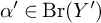 $\alpha ' \in \operatorname {Br}(Y')$
for some étale cover
 $X' \to X$
. If the image of a in
 $\mathrm {H}^0(\bar {X},\mathbb {R}^2 f_\ast \mathbb {G}_{m,\bar {Y}})$
is
 $0$
, then there is a finite field extension
 $K/k$
and an étale cover
 $X" \to X^{\prime }_K$
such that the image of
 $\alpha '$
in
 $\operatorname {Br}(Y")$
is
 $0$
, where
 $Y" := Y_K \times _{X_K} X" = Y \times _X X"$
. This means
 $\alpha '$
is trivialized by the étale cover
 $X" \to X$
refining
 $X'$
, hence
 $a = 0$
.
Lemma 3.3. We have
 $\mathrm {H}^1(k,\widehat {C}) = \operatorname {Ker}(\mathrm {H}^1(X,\widehat {C}) \to \mathrm {H}^1(\bar {X},\widehat {C}))$
.
Proof. Represent C by a complex
 $[T \to S]$
of k-tori (with T in degree
 $-1$
), then
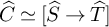 $\widehat {C} \simeq [\widehat {S} \to \widehat {T}]$
(with
 $\widehat {S}$
in degree
 $-1$
). We have a commutative diagram

with exact rows. Since
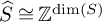 $\widehat {S} \cong \mathbb {Z}^{\dim (S)}$
over
 $\bar {k}$
, we have
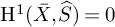 $\mathrm {H}^1(\bar {X},\widehat {S}) = 0$
. By the Hochschild–Serre spectral sequence
 $\mathrm {H}^p(k,\mathrm {H}^q(\bar {X},\widehat {S})) \Rightarrow \mathrm {H}^{p+q}(X,\widehat {S})$
, one has
 $\mathrm {H}^1(k,\widehat {S}) = \mathrm {H}^1(X,\widehat {S})$
and
 $\mathrm {H}^2(k,\widehat {S}) = \operatorname {Ker}(\mathrm {H}^2(X,\widehat {S}) \to \mathrm {H}^2(\bar {X},\widehat {S}))$
. Similarly, we have
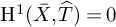 $\mathrm {H}^1(\bar {X},\widehat {T}) = 0$
,
 $\mathrm {H}^1(k,\widehat {T}) = \mathrm {H}^1(X,\widehat {T})$
, and
 $\mathrm {H}^2(k,\widehat {T}) = \operatorname {Ker}(\mathrm {H}^2(X,\widehat {T}) \to \mathrm {H}^2(\bar {X},\widehat {T}))$
. By a diagram chasing, we check that the map
 $\mathrm {H}^1(k,\widehat {C}) \to \mathrm {H}^1(X,\widehat {C})$
is injective, and that its image is precisely the kernel of the map
 $\mathrm {H}^1(X,\widehat {C}) \to \mathrm {H}^1(\bar {X},\widehat {C})$
.
In view of Lemmata 3.2 and 3.3, we extract from (3.1) an exact sequence

which lies in the heart of the proof of Theorem A. By Corollary 2.9, if either
 $G^{\operatorname {ss}} = G^{\operatorname {sc}}$
or the torsor
 $Y \to X$
is isotrivial, then the map
 $\delta $
in (3.4) is given by
 $\delta (\widehat {c}) = -\operatorname {ab}^1([Y]) \cup p^\ast \widehat {c}$
(the cup-product being induced by the pairing (2.3)).
3.2 The method of Harpaz and Wittenberg
Having established the exact sequence (3.4), we shall now prove in this subsection the following generalization of [Reference Harpaz and WittenbergHW20, Théorème 2.1], which would imply Theorem A.
Theorem 3.4. Let G be a connected reductive linear algebraic group over a number field k. Let X be a smooth geometrically integral k-variety and
 $f: Y \to X$
a torsor under G. Let
 $A \subseteq \operatorname {Br}(X)$
denote the preimage of
 $\operatorname {Br}_{\operatorname {nr}}(Y)$
by the map
 $f^\ast : \operatorname {Br}(X) \to \operatorname {Br}(Y)$
. Then

We keep the notations
 $k, G, X, Y, p, f, C$
, and
 $\widehat {C}$
from the previous subsection.
Lemma 3.5. Let
 $Z \to \operatorname {Spec}(k)$
be a torsor under G. Consider the exact sequence (3.4) for Z:

Then, for any field extension
 $K/k$
and any
 $z \in Z(K)$
,
 $g \in G(K)$
,
 $\alpha \in \operatorname {Br}_1(Z)$
, one has

in
 $\mathrm {H}^2(K,\mathbb {G}_m) = \operatorname {Br}(K)$
. Here, the cup-product is induced by the pairing (2.3).
Proof. If G is a torus, this is [Reference Harpaz and WittenbergHW20, Lemme 2.4]. When
 $G^{\operatorname {ss}} = G^{\operatorname {sc}}$
, we have
 $C \simeq G^{\operatorname {tor}}$
, and the map
 $\operatorname {ab}^0$
is just the homomorphism
 $G(K) \to G^{\operatorname {tor}}(K)$
. By functoriality and the toric case, the result also holds for the case where
 $G^{\operatorname {ss}} = G^{\operatorname {sc}}$
.
In the general case, it suffices to repeat the argument in [Reference KottwitzKot86, p. 369]. Take any t-resolution

of G and let
 $\partial : \mathrm {H}^1(k,G) \to \mathrm {H}^2(k,T)$
denote the connecting map. Let
 $K/k$
be a finite extension trivializing the class
 $\partial ([Z]) \in \mathrm {H}^2(k,T)$
and let
 $T_1:=\operatorname {Res}_{K/k}(T_K)$
(where
 $\operatorname {Res}$
denotes the restriction of scalars à la Weil). Let
 $i: T \hookrightarrow T_1$
denote the canonical inclusion. By Shapiro’s lemma and [Reference Neukirch, Schmidt and WingbergNSW08, Proposition 1.6.5], the map
 $i_\ast : \mathrm {H}^2(k,T) \to \mathrm {H}^2(k,T_1) \cong \mathrm {H}^2(K,T)$
takes
 $\partial ([Z])$
to
 $0$
. Thus, we obtain a t-resolution

where
 $H_1$
is the pushforward of H along i, with the property that the connecting map
 $\mathrm {H}^1(k,G) \to \mathrm {H}^2(k,T_1)$
takes
 $[Z]$
to
 $0$
, that is, there exists a k-torsor W under
 $H_1$
and a
 $\pi $
-equivariant morphism
 $W \to Z$
.
Now, we consider the torsors
 $H_1 \to G$
and
 $W \to Z$
under
 $T_1$
, and the fibres
 $(H_1)_g \to \operatorname {Spec}(K)$
,
 $W_z \to \operatorname {Spec}(K)$
. Take a finite extension
 $K'/K$
trivializing the classes
 $[(H_1)_g], [W_z] \in \mathrm {H}^1(K,T_1)$
. Put
 $T_2:=\operatorname {Res}_{K'/K}((T_1)_{K'})$
and
 $T_3:=\operatorname {Res}_{K/k}(T_2) = \operatorname {Res}_{K'/k}(T_{K'})$
, then
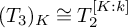 $(T_3)_K \cong T_2^{[K:k]}$
. Let
 $j: T_1 \hookrightarrow T_3$
denote the canonical inclusion. By Shapiro’s lemma and [Reference Neukirch, Schmidt and WingbergNSW08, Proposition 1.6.5], the map
 $j_\ast : \mathrm {H}^1(K,T_1) \to \mathrm {H}^1(K,T_3) \cong \mathrm {H}^1(K,T_2)^{\oplus [K:k]} \cong \mathrm {H}^1(K',T_1)^{\oplus [K:k]}$
takes
 $[(H_1)_g]$
and
 $[W_z]$
to
 $0$
. Thus, we obtain a t-resolution

where
 $H_3$
denotes the pushforward of
 $H_1$
along j, with the following properties.
-
• There exists a k-torsor
$W'$
under
$H_3$
such that the map
$\mathrm {H}^1(k,H_3) \to \mathrm {H}^1(k,G)$
takes
$[W']$
to
$[Z]$
. -
• The point
$g \in G(K)$
lifts to a point
$h \in H_3(K)$
. -
• The point
$z \in Z(K)$
lifts to a point
$y \in W'(K)$
.





Since the claim in the lemma holds for
 $W'$
(because
 $H_3^{\operatorname {ss}} = H_3^{\operatorname {sc}}$
), it also holds for Z by functoriality.
Let
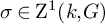 $\sigma \in \mathrm {Z}^1(k,G)$
be a Galois cycle. The complexes C and
 $\widehat {C}$
remain unaffected after twisting by G (see Proposition 2.5 (ii)). By Lemma 3.1, we have

and the exact sequence (3.4) for the twisted torsor
 $f^\sigma : Y^\sigma \to X$
is

The following is an analogue of [Reference Harpaz and WittenbergHW20, Proposition 2.3].
Proposition 3.6. Let
 $Z := G_\sigma $
be the left torsor under G defined by
 $\sigma $
(which is also a right torsor under
 $G^{\sigma }$
), so that
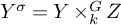 $Y^{\sigma } = Y \times _k^G Z$
(see Subsection 1.3). Then, we have an exact sequence (cf. (3.4))

-
(i) Suppose that
$\mathrm {H}^3(k,\mathbb {G}_m) = 0$
. Let
$\pi : Y \times _k Z \to Y^{\sigma }$
,
$p_1: Y \times _k Z \to Y$
and
$p_2: Y \times _k Z \to Z$
be the canonical projections. Then, for every
$\alpha ^{\sigma } \in \operatorname {Br}_{\operatorname {nr}}(Y^\sigma )$
, there exist
$\alpha \in \operatorname {Br}_1(Z)$
and
$\alpha ^1 \in \operatorname {Br}_{\operatorname {nr}}(Y)$
such that
$\varphi ^\sigma (\alpha ^\sigma ) = \varphi ^1(\alpha ^1) = \varphi (\alpha )$
in
$\mathrm {H}^1(k,\widehat {C})$
and
$p_1^\ast \alpha ^1 + p_2^\ast \alpha = \pi ^\ast \alpha ^{\sigma }$
in
$\operatorname {Br}_1((Y \times _k Z) / X)$
.Also, the subgroup
$\varphi ^{\sigma }(\operatorname {Br}_{\operatorname {nr}}(Y^\sigma )) \subseteq \mathrm {H}^1(k,\widehat {C})$
does not depend on
$\sigma $
. -
(ii) The preimage of
$\operatorname {Br}_{\operatorname {nr}}(Y^{\sigma })$
by
$(f^\sigma )^\ast : \operatorname {Br}(X) \to \operatorname {Br}(Y^\sigma )$
does not depend on
$\sigma $
.






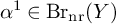









Proof.
-
(i) Since
$\mathrm {H}^3(k,\mathbb {G}_m) = 0$
, the map
$\varphi $
from (3.6) is surjective; hence
$\varphi ^{\sigma }(\alpha ^{\sigma }) = \varphi (\alpha )$
for some
$\alpha \in \operatorname {Br}_1(Z)$
. Take a nonempty open subset
$U \subseteq X$
such that the restriction
$V:=f^{-1}(U) \xrightarrow {f|_V} U$
is an isotrivial torsor under G. When we replace
$f^{\sigma }$
by
$f^{\sigma }|_{V^{\sigma }}$
in the sequence (3.5), the map
$\delta : \mathrm {H}^1(k,\widehat {C}) \to \mathrm {H}^3(U,\mathbb {G}_m)$
is given by thanks to Corollary 2.9 and the fact that
$[\sigma ] \cup \widehat {c} \in \mathrm {H}^3(k,\mathbb {G}_m) = 0$
(the cup-product being induced by the pairing (2.3)). Thus, this map does not depend on
$\sigma $
. It follows that the subgroup
$\varphi ^{\sigma }(\operatorname {Br}_1(V^{\sigma }/U)) \subseteq \mathrm {H}^1(k,\widehat {C})$
does not depend on
$\sigma $
. Hence, we may write
$\varphi ^{\sigma }(\alpha ^{\sigma }) = \varphi ^1(\alpha ^1)$
for some
$\alpha ^1 \in \operatorname {Br}_1(V/U)$
. Let us now make the necessary modifications to
$\alpha ^1$
and
$\alpha $
so that the conditions in the statement are fulfilled. From now on, the argument is the same as in [Reference Harpaz and WittenbergHW20, Proposition 2.3 (i) and (ii)]. Let
$q: Z \to \operatorname {Spec}(k)$
denote the structure morphism and let
$h:= f \times _k q = f \circ p_1 = f^{\sigma } \circ \pi $
. Then
$h: Y \times _k Z \to X$
is a torsor under
$G \times _k G^{\sigma }$
(a connected reductive k-group with dual algebraic fundamental complex
$\widehat {C} \oplus \widehat {C}$
). Let us now consider the distinguished triangles (2.6) (deduced from (2.5) and Proposition 2.6) associated with the torsors
$f^{\sigma }|_{V^{\sigma }}: V^{\sigma } \to U$
,
$h|_{V \times _k Z}: V \times _k Z \to U$
,
$f|_{V}: V \to U$
, and
$q: Z \to \operatorname {Spec}(k)$
. By functoriality and by Proposition 2.11, we have a commutative diagram where
$\Delta : \widehat {C}_U \to \widehat {C}_U \oplus \widehat {C}_U$
denotes the diagonal map and where
$\nabla : \mathbb {G}_{m,U} \oplus \mathbb {G}_{m,U} \to \mathbb {G}_{m,U}$
is the addition map. Now, the exact sequences of the shape (3.4) associated with the rows of the above diagram are given by Since
$\Delta (\varphi ^{\sigma }(\alpha ^{\sigma })) = (\varphi ^{\sigma }(\alpha ^{\sigma }),\varphi ^{\sigma }(\alpha ^{\sigma })) = (\varphi ^1(\alpha ^1),\varphi (\alpha ))$
, the elements
$p_1^\ast \alpha ^1 + p_2^\ast \alpha $
and
$\pi ^\ast \alpha ^{\sigma }$
have the same image in
$\mathrm {H}^1(k,\widehat {C}) \oplus \mathrm {H}^1(k,\widehat {C})$
. By exactness of the middle row, there exists such that , or On the other hand, since
$\varphi ^1 \circ f^\ast = 0$
. Replacing
$\alpha ^1$
by , we may assume that
$\varphi ^{\sigma }(\alpha ^{\sigma }) + \varphi ^1(\alpha ^1) = \varphi (\alpha )$
and
$p_1^\ast \alpha ^1 + p_2^\ast \alpha = \pi ^\ast \alpha ^\sigma $
. It remains to check that this implies
$\alpha ^1 \in \operatorname {Br}_{\operatorname {nr}}(Y)$
. Indeed, since
$\alpha ^{\sigma } \in \operatorname {Br}_{\operatorname {nr}}(V^\sigma ) = \operatorname {Br}_{\operatorname {nr}}(Y^{\sigma })$
, we have
$p_1^\ast \alpha ^1 + p_2^\ast \alpha \in \operatorname {Br}_{\operatorname {nr}}(Y \times _k Z)$
. Let
$\xi $
be any codimension
$1$
point on a smooth compactification of Y, and let
$\eta $
denote the generic point
$\xi \times _k Z$
(which is a
$k(\xi )$
-torsor under
$G_{k(\xi )}$
). Then
$\eta $
is a codimension
$1$
point on a smooth compactification of
$Y \times _k Z$
, hence
$\partial _{\eta }(p_1^\ast \alpha ^1 + p_2^\ast \alpha ) = 0$
. It follows that
$\partial _{\eta }(p_1^\ast \alpha ^1) = 0 \in \mathrm {H}^1(k(\eta ),\mathbb {Q}/\mathbb {Z})$
because
$p_2^\ast \alpha \in \operatorname {Br}(Y \times _k Z)$
. Since
$\xi \times _k Z$
is geometrically integral, the restriction map
$\mathrm {H}^1(k(\xi ),\mathbb {Q}/\mathbb {Z}) \to \mathrm {H}^1(k(\eta ),\mathbb {Q}/\mathbb {Z})$
is injective. By functoriality of the residue map [Reference Colliot-Thélène and SkorobogatovCTS21, Theorem 3.7.5], we have
$\partial _\xi (\alpha ^1) = 0 \in \mathrm {H}^1(k(\xi ),\mathbb {Q}/\mathbb {Z})$
. Since
$\xi $
is arbitrary, we conclude that
$\alpha ^1 \in \operatorname {Br}_{\operatorname {nr}}(Y)$
.
We have shown that
$\varphi ^{\sigma }(\operatorname {Br}_{\operatorname {nr}}(Y^{\sigma })) \subseteq \varphi ^{1}(\operatorname {Br}_{\operatorname {nr}}(Y))$
for any torsor
$Y \to X$
under any reductive group G and any
$\sigma \in \mathrm {Z}^1(k,G)$
. If
$\sigma ,\tau \in \mathrm {Z}^1(k,G)$
, then
$\varphi ^{\sigma }(\operatorname {Br}_{\operatorname {nr}}(Y^{\sigma })) \subseteq \varphi ^{\tau }(\operatorname {Br}_{\operatorname {nr}}(Y^\tau ))$
(resp.
$\varphi ^{\tau }(\operatorname {Br}_{\operatorname {nr}}(Y^\tau )) \subseteq \varphi ^{\sigma }(\operatorname {Br}_{\operatorname {nr}}(Y^{\sigma }))$
) thanks to a twisting argument by
$\tau $
(resp.
$\sigma $
). It follows that
$\varphi ^{\tau }(\operatorname {Br}_{\operatorname {nr}}(Y^\tau )) = \varphi ^{\sigma }(\operatorname {Br}_{\operatorname {nr}}(Y^{\sigma }))$
. -
(ii) It suffices to repeat the proof of [Reference Harpaz and WittenbergHW20, Proposition 2.3 (iii)].
























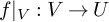









 such that
 , or

 since


 , we may assume that


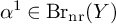











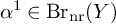


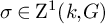






We can now proceed to prove Theorem 3.4. Keep the notations and assumptions therein.
Proof of Theorem 3.4.
For any Galois cocycle
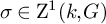 $\sigma \in \mathrm {Z}^1(k,G)$
, the subgroup
 $A \subseteq \operatorname {Br}(X)$
is the preimage of
 $\operatorname {Br}_{\operatorname {nr}}(Y^{\sigma })$
by
 $(f^\sigma )^\ast : \operatorname {Br}(X) \to \operatorname {Br}(Y^{\sigma })$
, thanks to Proposition 3.6 (ii). The inclusion

is then obvious, by functoriality of the Brauer–Manin pairing (BM𝔸
). Let us take a family
 $x_{\mathbb {A}} = (x_v)_{v \in \Omega _k} \in X(\mathbb {A}_k)^A$
and show that it can be lifted to
 $Y^{\sigma }(\mathbb {A}_k)^{\operatorname {Br}_{\operatorname {nr}} (Y^{\sigma })}$
for some
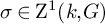 $\sigma \in \mathrm {Z}^1(k,G)$
. First, we try to lift
 $x_{\mathbb {A}}$
to
 $Y^{\sigma }(\mathbb {A}_k)$
by exploiting the orthogonality to
 $\operatorname {Ker}(f^\ast )$
. This has already been done in [Reference Cao, Demarche and XuCDX19, Proof of Theorem 3.5]. We present here an alternative proof in the spirit of [Reference Harpaz and WittenbergHW20, Proposition 2.5] for the sake of uniformity.
Lemma 3.7. There exists a Galois cocycle
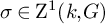 $\sigma \in \mathrm {Z}^1(k,G)$
such that
 $x_{\mathbb {A}} \in f^{\sigma }(Y^{\sigma }(\mathbb {A}_k))$
.
Proof. Since the torsor
 $Y \times _X Y \to Y$
under G is trivial, the map
 $f^\ast : \mathrm {H}^1(X,G) \to \mathrm {H}^1(Y,G)$
takes
 $[Y]$
to
 $1$
, hence
 $f^\ast (\operatorname {ab}^1([Y])) = 0$
in
 $\mathrm {H}^1(Y,C)$
by functoriality of
 $\operatorname {ab}^1$
. It follows that
 $f^\ast (\operatorname {ab}^1([Y]) \cup p^\ast \widehat {c}) = 0$
for any
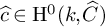 $\widehat {c} \in \mathrm {H}^0(k,\widehat {C})$
(the cup-product being induced by the pairing (2.3)), or
 $\operatorname {ab}^1([Y]) \cup p^\ast \widehat {c} \in \operatorname {Ker} (f^\ast ) \subseteq A$
. Since
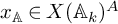 $x_{\mathbb {A}} \in X(\mathbb {A}_k)^A$
, the family
 $\operatorname {ab}^1([Y](x_{\mathbb {A}})) \in \mathbb {P}^1(k,C)$
is orthogonal to
 $\mathrm {H}^0(k,\widehat {C})$
. By the Poitou–Tate exact sequence for C (see [Reference DemarcheDem11b, Théorème 6.1]), there exists
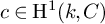 $c \in \mathrm {H}^1(k,C)$
such that
 $\operatorname {ab}^1([Y](x_v)) = \operatorname {loc}_v(c) \in \mathrm {H}^1(k_v,C)$
for all
 $v \in \Omega _k$
.
Let us now apply Proposition 2.4 (iii). First, let
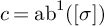 $c = \operatorname {ab}^1([\sigma ])$
for some cocycle
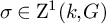 $\sigma \in \mathrm {Z}^1(k,G)$
, so that
 $\operatorname {ab}^1([Y](x_v)) = \operatorname {ab}^1(\operatorname {loc}_v([\sigma ]))$
in
 $\mathrm {H}^1(k_v,C)$
for all
 $v \in \Omega _k$
. By Proposition 2.5 (iii), this is equivalent to
 $\operatorname {ab}^1([Y^{\sigma }](x_v)) = 0$
. Twisting by
 $\sigma $
, we may assume that
 $\operatorname {ab}^1([Y](x_v)) = 0$
for all
 $v \in \Omega _k$
. If
 $v \in \Omega _k^{\mathrm {f}}$
, this means
 $[Y](x_v) = 1 \in \mathrm {H}^1(k_v,G)$
by virtue of Proposition 2.4 (ii). Since
 $\mathrm {H}^1(k,G)$
is the fibre product of
 $\prod _{v \in \Omega _k^{\infty }}\mathrm {H}^1(k_v,G)$
and
 $\mathrm {H}^1(k,C)$
over
 $\prod _{v \in \Omega _k^{\infty }} \mathrm {H}^1(k_v,C)$
, there exists
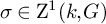 $\sigma \in \mathrm {Z}^1(k,G)$
such that
 $[Y](x_v) = \operatorname {loc}_v([\sigma ])$
for all
 $v \in \Omega _k^{\infty }$
and
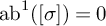 $\operatorname {ab}^1([\sigma ]) = 0$
(in particular,
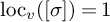 $\operatorname {loc}_v([\sigma ]) = 1$
for
 $v \in \Omega _k^{\mathrm {f}}$
). It follows that
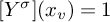 $[Y^\sigma ](x_v) = 1$
in
 $\mathrm {H}^1(k_v,G^\sigma )$
for all
 $v \in \Omega _k$
, i.e.,
 $x_{\mathbb {A}} \in f^\sigma (Y^\sigma (\mathbb {A}_k))$
.
Twisting by the cocycle provided by Lemma 3.7, we may assume that
 $x_{\mathbb {A}} \in f(Y(\mathbb {A}_k))$
. Then
 $x_{\mathbb {A}} \in f^{\sigma }(Y^\sigma (\mathbb {A}_k))$
for any cocycle
 $\sigma $
such that
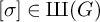 . For such a cocycle, we define a map

where
 $y_{\mathbb {A}} = (y_v)_{v \in \Omega _k} \in Y^{\sigma }(\mathbb {A}_k) = Y(\mathbb {A}_k)$
is any lifting of
 $x_{\mathbb {A}}$
and where
 $\alpha ^{\sigma } \in \operatorname {Br}_{\operatorname {nr}} (Y^\sigma )$
is such that
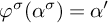 $\varphi ^\sigma (\alpha ^{\sigma }) = \alpha '$
(which exists by Proposition 3.6 (i)). The map
 $\varepsilon _\sigma $
is well-defined:
-
• It does not depend on the choice of
$\alpha ^{\sigma }$
. Indeed, upon replacing
$\alpha ^{\sigma }$
by (in view of the exact sequence (3.5)) for some , one has where the last equality is due to the fact that
$f^{\sigma }(y_{\mathbb {A}}) = x_{\mathbb {A}} \in X(\mathbb {A}_k)^A$
.
-
• It does not depend on the choice of
$y_{\mathbb {A}}$
. Indeed, since
$Y \to X$
is a torsor under G, upon replacing
$y_{\mathbb {A}}$
by
$y_{\mathbb {A}} \cdot g_{\mathbb {A}}:=(y_v \cdot g_v)_{v \in \Omega _k}$
for some
$g_{\mathbb {A}} = (g_v)_{v \in \Omega _k} \in \mathbb {G}(\mathbb {A}_k)$
, one has by Lemma 3.5 applied to each fibre
$(f^\sigma )^{-1}(x_v) \to \operatorname {Spec}(k_v)$
. But
$\operatorname {loc}_v(\alpha ') = 0$
for all
$v \in \Omega _k$
since , hence
$\left <y_{\mathbb {A}} \cdot g_{\mathbb {A}}, \alpha ^{\sigma }\right>_{\operatorname {BM}} = \left <y_{\mathbb {A}}, \alpha ^{\sigma }\right>_{\operatorname {BM}}$
.


 (in view of the exact sequence (
 , one has








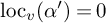

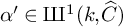 , hence

In what follows, we denote by  the global Poitou–Tate pairing induced by (2.3), which is a perfect duality of finite groups (see [Reference DemarcheDem11b, Théorème 5.7]).
Lemma 3.8. Let 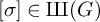 . Let Z be the k-torsor under
 $G^{\sigma }$
in Proposition 3.6 (hence
 $Z(\mathbb {A}_k) \neq \varnothing $
) and
 $\varphi $
the map from (3.6). For any
 (cf. (1.2)) and
 $z_\Omega \in Z(k_\Omega )$
, one has

Proof. Since  , it suffices to show the identity in the statement for any family
 $z_\Omega $
, which can be chosen at our disposal. We deploy the same trick as in the proof of Lemma 3.5. If G is a torus, the result is [Reference SansucSan81, Lemme 8.4]. When
 $G^{\operatorname {ss}} = G^{\operatorname {sc}}$
, we have
 $C \simeq G^{\operatorname {tor}}$
, and the map
 $\operatorname {ab}^1$
is just the natural pushforward
 $\mathrm {H}^1(k,G) \to \mathrm {H}^1(k,G^{\operatorname {tor}})$
. Let
 $Z' \to \operatorname {Spec}(k)$
denote the k-torsor
 $Z \times _k^{G} G^{\operatorname {tor}}$
under
 $G_{\operatorname {tor}}$
. Note that the map
 $\varphi $
induces an isomorphism
 , and similarly,
 . By functoriality and the toric case, the result also holds for the case
 $G^{\operatorname {ss}} = G^{\operatorname {sc}}$
. In the general case, it suffices to show that there exist a surjection
 $\varpi : H \to G$
, where H is a connected reductive k-group with
 $H^{\operatorname {ss}} = H^{\operatorname {sc}}$
such that
 $[\sigma ]$
lifts to
 . Indeed, as in [Reference KottwitzKot86, p. 369], there is a z-extension
 $1 \to T \to H \to G \to 1$
, i.e., a t-resolution with T quasi-trivial, such that
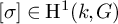 $[\sigma ] \in \mathrm {H}^1(k,G)$
lifts to a class
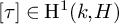 $[\tau ] \in \mathrm {H}^1(k,H)$
. Since
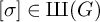 and
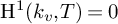 $\mathrm {H}^1(k_v,T) = 0$
for all
 $v \in \Omega _k$
, one has
 . This concludes the proof of the lemma.
Lemma 3.8 allows us to relate the maps
 $\varepsilon _1$
and
 $\varepsilon _\sigma $
from (3.7) as follows. Let Z be as above, then
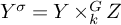 $Y^{\sigma } = Y \times _k^G Z$
. Let
 $\pi : Y \times _k Z \to Y^{\sigma }$
,
 $p_1: Y \times _k Z \to Y$
and
 $p_2: Y \times _k Z \to Z$
be the canonical projections. For any
 , by Proposition 3.6 (i), there are
 $\alpha \in \operatorname {Br}_1(Z)$
,
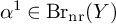 $\alpha ^1 \in \operatorname {Br}_{\operatorname {nr}}(Y)$
and
 $\alpha ^{\sigma } \in \operatorname {Br}_{\operatorname {nr}}(Y^{\sigma })$
such that
 $\varphi (\alpha ) = \varphi ^1(\alpha ^1) = \varphi ^{\sigma }(\alpha ^{\sigma }) = \alpha '$
and
 $p_1^\ast \alpha ^1 + p_2^\ast \alpha = \pi ^\ast \alpha ^\sigma $
. Take any
 $z_{\mathbb {A}} \in Z(\mathbb {A}_k)$
, then

Since the group
 $\mathbb {Q}/\mathbb {Z}$
is divisible, the homomorphism
 $\varepsilon _1$
can be extended to the whole group
 . Since the Poitou–Tate pairing
 is a perfect duality and since the map
 $\operatorname {ab}^1: \mathrm {H}^1(k,G) \to \mathrm {H}^1(k,C)$
induces a bijection
 by Proposition 2.4 (iii), there exists
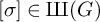 such that
 $\varepsilon _1(\alpha ') = \left <\operatorname {ab}^1([\sigma ]), \alpha '\right>_{\operatorname {BM}}$
for all
 . By the above calculation, we have
 $\varepsilon _\sigma = 0$
. Twisting by the cocycle
 $\sigma $
as above, we may assume that
 $\varepsilon _1 = 0$
. The rest of the proof is to show that this implies
 $x_{\mathbb {A}} \in f(Y(\mathbb {A}_k)^{\operatorname {Br}_{\operatorname {nr}}(Y)})$
. As always, we fix an adelic point
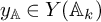 $y_{\mathbb {A}} \in Y(\mathbb {A}_k)$
lifting
 $x_{\mathbb {A}}$
, and consider the homomorphism
 $\varepsilon : \operatorname {Br}_{\operatorname {nr}}(Y) \to \mathbb {Q}/\mathbb {Z}$
given by
 $\varepsilon (\alpha ^1):=\left <y_{\mathbb {A}},\alpha ^1\right>_{\operatorname {BM}}$
. Then, one has

Hence,
 $\varepsilon $
factors through a homomorphism
 . On the other hand, the map
 $\varphi ^1$
induces an injection
 . Since
 $\mathbb {Q}/\mathbb {Z}$
is a divisible group, there exists a map
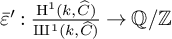 such that
 $\bar {\varepsilon }' \circ \bar {\varphi }^1 = \bar {\varepsilon }$
, or equivalently, a map
 $\varepsilon ': \mathrm {H}^1(k,\widehat {C}) \to \mathbb {Q}/\mathbb {Z}$
such that
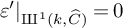 and
 $\varepsilon ' \circ \varphi ^1 = \varepsilon $
. By Proposition 2.4 (i), one has a commutative diagram with exact rows

Actually, the first column from the left is a complex, which is exact at the term
 $\mathrm {H}^1(k,\widehat {C})^D $
[Reference DemarcheDem11a, Théorème 2.9]. The arrow on the second column is bijective (Kneser–Harder–Chernousov; see [Reference Platonov and RapinchukPR94, Theorems 6.4 and 6.6]). The other columns are obviously exact. Since
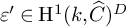 $\varepsilon ' \in \mathrm {H}^1(k,\widehat {C})^D$
is mapped to
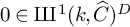 , it comes from an element
 $c_{\mathbb {A}} = (c_v)_{v \in \Omega _k} \in \mathbb {P}^0(k,C)$
. Its image
 $\gamma _{\mathbb {A}}$
in
 $\mathbb {P}^1(k,G^{\operatorname {sc}})$
comes from a unique element
 $\gamma \in \mathrm {H}^1(k,G^{\operatorname {sc}})$
, whose image
 $\delta $
in
 $\mathrm {H}^1(k,G)$
lies in
 . Since
 $\operatorname {ab}^1(\delta ) = 0$
, we have
 $\delta = 1$
by Proposition 2.4 (iii). It follows that
 $\gamma $
comes from an element
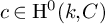 $c \in \mathrm {H}^0(k,C)$
. Its localization
 $\operatorname {loc}_\Omega (c) := (\operatorname {loc}_v(c))_{v \in \Omega _k} \in \mathbb {P}^0(k,C)$
has the same image in
 $\mathbb {P}^1(k,G^{\operatorname {sc}})$
as that of
 $c_{\mathbb {A}}$
, hence there exists
 $g_{\mathbb {A}} = (g_v)_{v \in \Omega _k} \in G(\mathbb {A}_k)$
such that
 $\operatorname {ab}^0(g_v) = \operatorname {loc}_v(c) - c_v$
for all
 $v \in \Omega _k$
. Since the first column is a complex, the image of
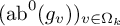 $(\operatorname {ab}^0(g_v))_{v \in \Omega _k}$
in
 $\mathrm {H}^1(k,\widehat {C})^D$
is the same as that of
 $-c_{\mathbb {A}}$
, i.e.,
 $-\varepsilon '$
. Let
 $y_{\mathbb {A}} \cdot g_{\mathbb {A}}:=(y_v \cdot g_v)_{v \in \Omega _k}$
. By virtue Lemma 3.5, we have, for all
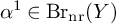 $\alpha ^1 \in \operatorname {Br}_{\operatorname {nr}}(Y)$
(noting that
 $\varepsilon = \varepsilon ' \circ \varphi ^1$
),

We have found a lifting
 $y_{\mathbb {A}} \cdot g_{\mathbb {A}} \in Y(\mathbb {A}_k)^{\operatorname {Br}_{\operatorname {nr}}(Y)}$
of
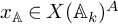 $x_{\mathbb {A}} \in X(\mathbb {A}_k)^A$
, and this concludes the proof of Theorem 3.4.
3.3 End of proof of the main theorem
Let us now finish the proof of Theorem A, using Theorem 3.4 from the previous subsection. The first step is to drop the reductive assumption.
Theorem 3.9. Let G be a connected (not necessarily reductive) linear algebraic group over a number field k. Let X be a smooth geometrically integral k-variety and
 $f: Y \to X$
a torsor under G. Let
 $A \subseteq \operatorname {Br}(X)$
denote the preimage of
 $\operatorname {Br}_{\operatorname {nr}}(Y)$
by the map
 $f^\ast : \operatorname {Br}(X) \to \operatorname {Br}(Y)$
. Then

Proof. Let
 $G^{\operatorname {u}}$
be the unipotent radical of G and
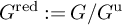 $G^{\operatorname {red}} := G/G^{\operatorname {u}}$
(which is connected reductive). Letting
 $Z:=Y/G^{\operatorname {u}}$
, we obtain a torsor
 $g: Z \to X$
under
 $G^{\operatorname {red}}$
and a torsor
 $h: Y \to Z$
under
 $G^{\operatorname {u}}$
. Now, [Reference SansucSan81, Lemme 1.13] tells us that
 $\mathrm {H}^1(K, (G^{\operatorname {u}})^{\sigma }) = 1$
for any field extension
 $K/k$
and any cocycle
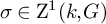 $\sigma \in \mathrm {Z}^1(k,G)$
and that the map
 $\mathrm {H}^1(k,G) \to \mathrm {H}^1(k,G^{\operatorname {red}})$
is bijective. For every
 $[\tau ] \in \mathrm {H}^1(k,G^{\operatorname {red}})$
, there is a unique class
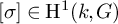 $[\sigma ] \in \mathrm {H}^1(k,G)$
lifting
 $[\tau ]$
, hence the torsor
 $f^{\sigma }: Y^{\sigma } \to X$
has a factorization
 $Y^{\sigma } \xrightarrow {h^\sigma } Z^\tau \xrightarrow {g^\tau } X$
. Since
 $h^{\sigma }$
is a torsor under
 $(G^{\operatorname {u}})^{\sigma }$
and
 $\mathrm {H}^1(k(Z^\tau ), (G^{\operatorname {u}})^{\sigma }) = 1$
, it is a stable birational equivalence, hence induces an isomorphism
 $(h^{\sigma })^\ast : \operatorname {Br}_{\operatorname {nr}}(Z^\tau ) \xrightarrow {\cong } \operatorname {Br}_{\operatorname {nr}}(Y^{\sigma })$
. In particular, A is equal to the preimage of
 $\operatorname {Br}_{\operatorname {nr}}(Z)$
by the map
 $g^\ast : \operatorname {Br}(X) \to \operatorname {Br}(Z)$
. In view of Theorem 3.4, it remains to show that
 $h^{\sigma }(Y^{\sigma }(\mathbb {A}_k)^{\operatorname {Br}_{\operatorname {nr}}(Y^{\sigma })}) = Z^\tau (\mathbb {A}_k)^{\operatorname {Br}_{\operatorname {nr}}(Z^\tau )}$
. The inclusion ‘
 $\subseteq $
’ is obvious. Conversely, let
 $z_{\mathbb {A}} \in Z^\tau (\mathbb {A}_k)^{\operatorname {Br}_{\operatorname {nr}}(Z^\tau )}$
. Viewing that
 $\mathrm {H}^1(k_v,(G^{\operatorname {u}})^{\sigma }) = 1$
for all
 $v \in \Omega _k$
, we may lift
 $z_{\mathbb {A}}$
to a family
 $y_{\mathbb {A}} \in Y^{\sigma }(\mathbb {A}_k)$
. Since
 $\operatorname {Br}_{\operatorname {nr}}(Z^\tau ) \cong \operatorname {Br}_{\operatorname {nr}}(Y^{\sigma })$
, we have
 $y_{\mathbb {A}} \in Y^{\sigma }(\mathbb {A}_k)^{\operatorname {Br}_{\operatorname {nr}}(Y^{\sigma })}$
by functoriality of the pairing (BM𝔸
). The theorem is proved.
If X is proper, then
 $\operatorname {Br}_{\operatorname {nr}}(X) = A = \operatorname {Br}(X)$
, and the statement of Theorem 3.9 becomes

which implies Conjecture B for the torsor
 $f: Y \to X$
. Under the rationally connected assumption, one can establish Theorem 3.11 below (i.e., Theorem A) without properness. To this end, it will be sufficient to deploy Harari’s formal lemma [Reference HarariHar94, Théorème 2.1.1, Corollaire 2.6.1].
Lemma 3.10. Let X be a smooth geometrically integral variety over a field k of characteristic
 $0$
.
-
(i) If X is rationally connected, then
$\operatorname {Br}_{\operatorname {nr}}(X)/\operatorname {Br}(k)$
is finite. -
(ii) Suppose that k is a number field and
$A \subseteq \operatorname {Br}(X)$
is a subgroup containing
$\operatorname {Br}_{\operatorname {nr}}(X)$
such that
$A/\operatorname {Br}(k)$
is finite. Then, one has
$\overline {X(\mathbb {A}_k)^A} = X(k_\Omega )^{\operatorname {Br}_{\operatorname {nr}}(X)}$
in the topological space
$X(k_\Omega )$
(both sides can be empty).





Proof.
-
(i) Combine [Reference Colliot-Thélène and SkorobogatovCTS13, Lemma 1.3] and [Reference DebarreDeb01, Corollary 4.18].
-
(ii) Let
$X^c$
be a smooth compactification of X (so that
$\operatorname {Br}_{\operatorname {nr}}(X) = \operatorname {Br}(X^c)$
) and apply [Reference Colliot-Thélène and SkorobogatovCTS00, Proposition 1.1] (which is a consequence of Harari’s formal lemma) to the inclusion
$X \subseteq X^c$
. This result says that
$\overline {X(\mathbb {A}_k)^A} = X^c(k_\Omega )^{\operatorname {Br}_{\operatorname {nr}}(X)}$
in
$X^c(k_\Omega )$
, a fortiori
$\overline {X(\mathbb {A}_k)^A} = X(k_\Omega )^{\operatorname {Br}_{\operatorname {nr}}(X)}$
in
$X(k_\Omega )$
.







Theorem 3.11 (Theorem A).
Let k be a number field, X a smooth rationally connected k-variety, and G a connected linear algebraic k-group. If
 $f:Y \to X$
is a torsor under G, then

in the topological space
 $X(k_\Omega )$
. In particular, if the varieties
 $Y^{\sigma }$
satisfy
 $\mathbf {(BMHP)}$
(resp.
 $\mathbf {(BMWA)}$
) for all
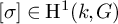 $[\sigma ] \in \mathrm {H}^1(k,G)$
, then it is also the case for X.
Proof. The inclusion ‘
 $\supseteq $
’ is obvious by functoriality and continuity of the pairing (BMnr
), so let us show the inclusion ‘
 $\subseteq $
’. Let
 $A \subseteq \operatorname {Br}(X)$
denote the preimage of
 $\operatorname {Br}_{\operatorname {nr}}(Y)$
by the map
 $f^\ast : \operatorname {Br}(X) \to \operatorname {Br}(Y)$
. By Theorem 3.9, we have

Thus, it remains to show that
 $X(k_\Omega )^{\operatorname {Br}_{\operatorname {nr}}(X)} = \overline {X(k_\Omega )^A}$
. In view of Lemma 3.10 (ii), we are reduced to show that the group
 $A/\operatorname {Br}(k)$
is finite. Since X is rationally connected, it follows from the Graber–Harris–Starr theorem [Reference Graber, Harris and StarrGHS03] that Y is also rationally connected (see [Reference DebarreDeb03, Corollaire 3.1]). By Lemma 3.10 (i), the group
 $\operatorname {Br}_{\operatorname {nr}}(Y)/\operatorname {Br}(k)$
is finite. Thus, to establish the finiteness of
 $A/\operatorname {Br}(k)$
, it is enough to show that
 $\operatorname {Ker}(\operatorname {Br}(X) \to \operatorname {Br} (Y))$
is finite. Using Sansuc’s units-Picard-Brauer exact sequence [Reference SansucSan81, (6.10.1)], we are reduced to prove the finiteness of
 $\operatorname {Pic}(G)$
. The same sequence tells us that this property is stable under extensions of groups. Hence, we may deal separately with the following cases.
-
• If G is unipotent, then
$\operatorname {Pic}(G) = 0$
since the k-variety G is isomorphic to an affine space. -
• If G is a torus, then
$\operatorname {Pic}(G) = \mathrm {H}^1(k,\widehat {G})$
by [Reference SansucSan81, Lemme 6.9 (ii)]. Let
$K/k$
be a finite Galois extension splitting G, then
$\mathrm {H}^1(K,\widehat {G}) = 0$
, so
$\mathrm {H}^1(k,\widehat {G}) = \mathrm {H}^1(\operatorname {Gal}(K/k),\widehat {G})$
by the inflation-restriction sequence. This latter is torsion and finitely generated, hence finite. -
• If G is semisimple, by [Reference SansucSan81, Lemme 6.9 (iii)],
$\operatorname {Pic}(G)$
injects into the character module of the algebraic fundamental group
$\pi _1(\bar {G}) = \operatorname {Ker}(\bar {G}^{\operatorname {sc}} \to \bar {G})$
, which is finite.



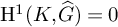



Having established Theorem 3.11 for torsors, we can now generalize it to the situation where no torsors are given a priori. Let us bring the notion of nonabelian descent types from Subsection 2.1 into play.
Theorem 3.12. Let X be a smooth quasi-projective geometrically integral variety over a number field k. Let
 $L = (\bar {G},\kappa )$
be a k-kernel, where
 $\bar {G}$
is a connected linear algebraic
 $\bar {k}$
-group, and
 $\lambda = [\bar {Y},E]$
a descent type on X bound by L. If X is rationally connected, then

in the topological space
 $X(k_\Omega )$
. In particular, if the torsors
 $f: Y \to X$
of descent type
 $\lambda $
satisfy
 $\mathbf {(BMHP)}$
(resp.
 $\mathbf {(BMWA)}$
), then it is also the case for X. By convention, this hypothesis holds vacuously if there are no such torsors at all.
Proof. By Lemma 2.1 (iii), two X-torsors of descent type
 $\lambda $
differ by twisting by a Galois cycle. Hence, deducing the present theorem from Theorem 3.11 amounts to showing that torsors of descent type
 $\lambda $
exist whenever
 $X(k_\Omega )^{\operatorname {Br}_{\operatorname {nr}}(X)} \neq \varnothing $
. To this end, the condition
 is in fact sufficient, where the subgroup
 was defined in (1.2). Indeed, this has been proved in [Reference LinhLin25, Proposition 3.10].
As an application of Theorem 3.12, we give a direct proof of Borovoi’s theorem on the Brauer–Manin obstruction for homogeneous spaces with connected stabilizers [Reference BorovoiBor96, Theorems 2.2 and 2.3], using Sansuc’s result for connected linear algebraic groups.
Corollary 3.13. Let k be a number field. Then, the property
 $\mathbf {(BMHP)}$
and
 $\mathbf {(BMWA)}$
hold for homogeneous spaces of connected linear algebraic groups over k with connected geometric stabilizers.
Proof. Let G be a connected linear algebraic group over k and let X be a homogeneous space of G. Fix a
 $\bar {k}$
-point of X and let
 $\bar {H} \subseteq \bar {G}$
be its stabilizer, which we assume to be connected. As in [Reference Harari and SkorobogatovHS02, Proposition 3.3], the subgroup
 $E_X \subseteq \operatorname {SAut}(\bar {G}/X)$
consisting of semilinear s-automorphisms (for some
 $s \in \Gamma _k$
) for which
 for all
 $x \in X(\bar {k})$
and
 $g \in G(\bar {k})$
fits in an exact sequence

of topological groups, which defines a k-kernel
 $L_X$
as well as a descent type
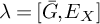 $\lambda = [\bar {G},E_X]$
on X bound by
 $L_X$
. The torsors
 $Y \to X$
of descent type
 $\lambda $
(if they exist) are left torsors under G (they are k-forms of the variety G twisted by cocycles with values in
 $\bar {H}(\bar {k})$
). According to [Reference SansucSan81, Corollaires 8.7 and 8.13], these torsors satisfy
 $\mathbf {(BMHP)}$
and
 $\mathbf {(BMWA)}$
. In fact, Sansuc’s original result concerning the property
 $\mathbf {(BMHP)}$
requires the absence of
 $E_8$
factors, since his proof used the result of Kneser–Harder (see Théorème 4.2 in loc. cit.) which excluded the
 $E_8$
case. This problem, however, was later resolved by Chernousov [Reference ChernousovChe89] (see also [Reference Platonov and RapinchukPR94, Theorems 6.4 and 6.6]). It follows from Theorem 3.12 that the properties
 $\mathbf {(BMHP)}$
and
 $\mathbf {(BMWA)}$
hold for X.
3.4 Reduction to the finite case
Next, let us show that Conjecture B can be reduced to the case of torsors under finite group schemes. Actually, instead of working directly with torsors, it is more convenient to replace them with descent types.
In what follows, when G is an algebraic group over k, we denote by
 $G^{\circ }$
its identity component, and
 $G^{\mathrm {f}}:=\pi _0(G) = G/G^{\circ }$
. When
 $L = (\bar {G},\kappa )$
is a k-kernel, the outer Galois action
 $\kappa $
induces a canonical outer action on
 $\bar {G}^{\mathrm {f}}$
(since
 $\bar {G}^{\circ }$
is characteristic in
 $\bar {G}$
). This gives rise to a k-kernel
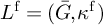 $L^{\mathrm {f}} = (\bar {G},\kappa ^{\mathrm {f}})$
and a surjective morphism
 $\pi : L \to L^{\mathrm {f}}$
of k-kernels. If X is a nonempty variety and
 $\lambda \in \operatorname {DType}(X,L)$
, we shall write
 $\lambda ^{\mathrm {f}}:=\pi _\ast \lambda \in \operatorname {DType}(X,L^{\mathrm {f}})$
(cf. Lemma 2.2 (i)), which can then be thought of as a finite descent type on X in the sense of Harpaz–Wittenberg, i.e.,
 $\lambda ^{\mathrm {f}}$
is completely determined by the
 $\bar {X}$
-torsor
 $\bar {Z}:=\bar {Y}/\bar {G}^{\circ }$
under
 $\bar {G}^{\mathrm {f}}$
(see p. 11).
Theorem 3.14. Let k be a number field,
 $L = (\bar {G},\kappa )$
a k-kernel with
 $\bar {G}$
linear (not necessarily connected), X a smooth quasi-projective k-variety, and
 $\lambda = [\bar {Y},E] \in \operatorname {DType}(X,L)$
a descent type with
 $\bar {Y}$
rationally connected (in particular, X is rationally connected). Then, one has

in the topological space
 $X(k_\Omega )$
. Here, we use the convention that both sides can be empty (for example, when there are no torsors of mentioned descent types at all). Furthermore, consider the following statements.
-
(i) If the X-torsors of descent type
$\lambda ^{\mathrm {f}}$
satisfy
$\mathbf {(BMHP)}$
, then X itself satisfies
$\mathbf {(BMHP)}$
. -
(ii) If the X-torsors of descent type
$\lambda ^{\mathrm {f}}$
satisfy
$\mathbf {(BMWA)}$
, then X itself satisfies
$\mathbf {(BMWA)}$
. -
(iii) If the X-torsors of descent type
$\lambda $
satisfy
$\mathbf {(BMHP)}$
, then X itself satisfies
$\mathbf {(BMHP)}$
. -
(iv) If the X-torsors of descent type
$\lambda $
satisfy
$\mathbf {(BMWA)}$
, then X itself satisfies
$\mathbf {(BMWA)}$
.


Proof. The inclusion ‘
 $\subseteq $
’ of (3.8) follows from the following fact. If
 $Y \xrightarrow {f} X$
is a torsor under a k-form G of L, of descent type
 $\lambda $
, then
 $Z:=Y/G^{\circ } \xrightarrow {g} X$
is a torsor under the k-form
 $G^{\mathrm {f}}$
of
 $L^{\mathrm {f}}$
, of descent type
 $\lambda ^{\mathrm {f}}$
(see e.g. [Reference LinhLin25, Construction 2.6]). Conversely, let
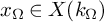 $x_\Omega \in X(k_\Omega )$
be a family lying in the right hand side of (3.8). Then, for any neighborhood
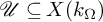 $\mathscr {U} \subseteq X(k_\Omega )$
of
 $x_\Omega $
, there exists a torsor
 $g: Z \to X$
of descent type
 $\lambda ^{\mathrm {f}}$
such that
 $g(Z(k_\Omega )^{\operatorname {Br}_{\operatorname {nr}}(Z)}) \cap \mathscr {U} \neq \varnothing $
, or
 $Z(k_\Omega )^{\operatorname {Br}_{\operatorname {nr}}(Z)} \cap g^{-1}(\mathscr {U}) \neq \varnothing $
. By Lemma 2.2 (ii), we obtain a k-kernel
 $L_Z = (\bar {G}^{\circ }, \kappa _Z)$
and a descent type
 $\lambda _Z = [\bar {Y},E_Z] \in \operatorname {DType}(Z,L_Z)$
. By Theorem 3.12, there exists a torsor
 $h: Y \to Z$
of descent type
 $\lambda _Z$
such that
 $h(Y(k_\Omega )^{\operatorname {Br}_{\operatorname {nr}}(Y)}) \cap g^{-1}(\mathscr {U}) \neq \varnothing $
, or
 $g(h(Y(k_\Omega )^{\operatorname {Br}_{\operatorname {nr}}(Y)})) \cap \mathscr {U} \neq \varnothing $
. By Lemma 2.2 (iii), the composite
 $g \circ h: Y \to X$
is a torsor of descent type
 $\lambda $
. Hence,
 $x_\Omega $
lies in the left hand side of (3.8). The identity (3.8) is thus proved.
Now, we suppose that (i) holds true and proceed to show the contraposition of (iii). Assume that the property
 $\mathbf {(BMHP)}$
fails for X. Under the assumption that (i) holds true, there exists a torsor
 $Z \to X$
of descent type
 $\lambda ^{\mathrm {f}}$
that fails the property
 $\mathbf {(BMHP)}$
, that is,
 $Z(k_\Omega )^{\operatorname {Br}_{\operatorname {nr}}(Z)} \neq \varnothing $
but
 $Z(k) = \varnothing $
. In particular, the right hand side of (3.8) is nonempty. Hence, the left hand side is also nonempty, that is, there exists a torsor
 $Y \to X$
of descent type
 $\lambda $
such that
 $Y(k_\Omega )^{\operatorname {Br}_{\operatorname {nr}}(Y)} \neq \varnothing $
. But, since
 $X(k) = \varnothing $
, we have necessarily that
 $Y(k) = \varnothing $
, i.e., Y fails the property
 $\mathbf {(BMHP)}$
. This means (iii) holds true.
Finally, we suppose that (ii) holds true and proceed to show (iv) directly. Assume that every torsor
 $Y \to X$
of descent type
 $\lambda $
satisfies
 $\mathbf {(BMWA)}$
. Let
 $g: Z \to X$
be any torsor of descent type
 $\lambda ^{\mathrm {f}}$
. Assume that there is a family
 $z_\Omega \in Z(k_\Omega )^{\operatorname {Br}_{\operatorname {nr}}(Z)}$
, and let
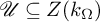 $\mathscr {U} \subseteq Z(k_\Omega )$
be any neighborhood of it. Again, by Lemma 2.2 (ii) and Theorem 3.12, we obtain a torsor
 $h: Y \to Z$
under a k-form of
 $\bar {G}^{\circ }$
such that
 $h(Y(k_\Omega )^{\operatorname {Br}_{\operatorname {nr}}(Y)}) \cap \mathscr {U} \neq \varnothing $
, and the composite
 $g \circ h: Y \to X$
is a torsor of descent type
 $\lambda $
. Under our assumption, one has
 $Y(k) \cap h^{-1}(\mathscr {U}) \neq \varnothing $
, a fortiori
 $Z(k) \cap \mathscr {U} \neq \varnothing $
. This means Z satisfies
 $\mathbf {(BMWA)}$
. Under the assumption that (ii) holds true, the variety X also satisfies
 $\mathbf {(BMWA)}$
, which proves (iv).
In Theorem 3.14, the quasi-projective assumption is required since we were working with descent types instead of torsors. If a torsor
 $Y \to X$
is given, it is possible to drop this condition, allowing one to recover the following.
Theorem 3.15 (Theorem B).
Let k be a number field, G a linear (not necessarily connected) algebraic k-group, X be a smooth k-variety and
 $f: Y \to X$
a torsor under G, with Y rationally connected (in particular, X is rationally connected). Put
 $Z:=Y/G^{\circ }$
, which gives a torsor
 $g: Z \to X$
under
 $G^{\mathrm {f}}$
and a torsor
 $h: Y \to Z$
under
 $G^{\circ }$
. Then, one has

in the topological space
 $X(k_\Omega )$
. Furthermore, consider the following statements.
-
(i) If
$Z^\tau $
satisfies
$\mathbf {(BMHP)}$
for every
$\tau \in \mathrm {Z}^1(k,G^{\mathrm {f}})$
, then X itself satisfies
$\mathbf {(BMHP)}$
. -
(ii) If
$Z^\tau $
satisfies
$\mathbf {(BMWA)}$
for every
$\tau \in \mathrm {Z}^1(k,G^{\mathrm {f}})$
, then X itself satisfies
$\mathbf {(BMWA)}$
. -
(iii) If
$Y^\sigma $
satisfies
$\mathbf {(BMHP)}$
for every
$\sigma \in \mathrm {Z}^1(k,G)$
, then X itself satisfies
$\mathbf {(BMHP)}$
. -
(iv) If
$Y^\sigma $
satisfies
$\mathbf {(BMWA)}$
for every
$\sigma \in \mathrm {Z}^1(k,G)$
, then X itself satisfies
$\mathbf {(BMWA)}$
.


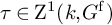


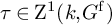


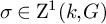


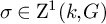

Proof. If X is quasi-projective, then the theorem follows from Theorem 3.14 and Lemma 2.1 (iii). In the general case, take any dense affine open subset
 $U \subseteq X$
, and let
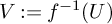 $V:=f^{-1}(U)$
and
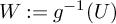 $W:=g^{-1}(U)$
. Then, the identity (3.8) from Theorem 3.14 becomes

which implies (3.9), because
 $V^{\sigma }(k_\Omega )^{\operatorname {Br}_{\operatorname {nr}}(V^{\sigma })}$
(resp.
 $W^{\tau }(k_\Omega )^{\operatorname {Br}_{\operatorname {nr}}(W^{\tau })}$
) is dense in
 $Y^{\sigma }(k_\Omega )^{\operatorname {Br}_{\operatorname {nr}}(Y^{\sigma })}$
(resp.
 $Z^{\tau }(k_\Omega )^{\operatorname {Br}_{\operatorname {nr}}(Z^{\tau })}$
) for all
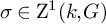 $\sigma \in \mathrm {Z}^1(k,G)$
(resp.
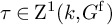 $\tau \in \mathrm {Z}^1(k,G^{\mathrm {f}})$
), thanks to Lemma 3.10. The implications ‘(i)
 $\Rightarrow $
(iii)’ and ‘(ii)
 $\Rightarrow $
(iv)’ follow from the respective implications in Theorem 3.14 (applied to U) and the birational invariance of the properties
 $\mathbf {(BMHP)}$
and
 $\mathbf {(BMWA)}$
.
The ‘finite case’ of Conjecture B is hence the most difficult one. The inductive argument used in the proofs of Theorems 3.14 and 3.15 was used in a similar way by Harpaz and Wittenberg in their work [Reference Harpaz and WittenbergHW24] on supersolvable descent. The base case (i.e., ‘cyclic descent’) relies on the Graber–Harris–Starr theorem [Reference Graber, Harris and StarrGHS03]. If we were able to prove Conjecture B (for torsors) in the finite abelian case, then we would obtain the same result for descent types thanks to [Reference Harpaz and WittenbergHW24, Lemma 3.7]. Using the same sort of dévissage argument, the descent conjecture for the descent types whose underlying
 $\bar {k}$
-group are finite solvable (as an abstract group!) would then be proved. In particular, this would imply that homogeneous spaces of connected linear algebraic groups with finite solvable geometric stabilizers have the properties
 $\mathbf {(BMHP)}$
and
 $\mathbf {(BMWA)}$
(it suffices to repeat the proof of Corollary 3.13). A direct consequence of this would be Shafarevich’s theorem on solvable Galois groups. Unfortunately, at least to the author’s knowledge, a proof of Conjecture B in the finite abelian case is currently out of reach. It should be noted that if G is a connected linear algebraic group over a number field k such that
 $G^{\operatorname {ss}} = G^{\operatorname {sc}}$
and X is a homogeneous space of G with finite abelian geometric stabilizers, then X satisfies
 $\mathbf {(BMHP)}$
and
 $\mathbf {(BMWA)}$
(see [Reference BorovoiBor96, Theorems 2.2 and 2.3]).
Just like in the cyclic case, where Harpaz and Wittenberg applied the sophisticated theorem of Graber–Harris–Starr, a proof of the descent conjecture for G finite abelian should use the rational connected assumption in an essential way. As a matter of fact, this assumption is absolutely indispensable, even when
 $G = \mathbb {Z}/2$
. Indeed, in [Reference Harari and SkorobogatovHS05, Theorem 2.10, Proposition 2.11], Harari and Skorobogatov constructed a double cover
 $f: Y \to X$
, where X is an Enriques surface X over
 $k = \mathbb {Q}$
, and Y is a Kummer surface, such that
 $X(k_\Omega )^{\operatorname {Br}(X)} \not \subseteq \bigcup _{[\sigma ] \in \mathrm {H}^1(k,\mathbb {Z}/2)} f^{\sigma }(Y^{\sigma }(k_\Omega ))$
(by properness, this latter is a closed subset of
 $X(k_\Omega )$
). Worse, the work of Balestrieri–Berg–Manes–Park–Viray [Reference Balestrieri, Berg, Manes, Park and VirayBBM+16, Theorem 1.2] gave an Enriques surface X over
 $k=\mathbb {Q}$
, and a double cover
 $f: Y \to X$
, where Y is a
 $K3$
surface, such that
 $X(k) = Y^{\sigma }(k_\Omega )^{\operatorname {Br}(Y^{\sigma })} = \varnothing $
for all
 $\sigma \in \mathrm {H}^1(k,\mathbb {Z}/2)$
, but
 $X(k_\Omega )^{\operatorname {Br}(X)} \neq \varnothing $
(that is, the descent varieties
 $Y^{\sigma }$
vacuously satisfy
 $\mathbf {(BMHP)}$
and
 $\mathbf {(BMWA)}$
, but X does not).
4 The descent conjecture for zero-cycles
In this section, we prove Theorem C. For convenience, all of the subsequent results shall be formulated in the language of descent types. They can be easily converted into ones for torsors (dropping the quasi-projective assumption) using the same trick deployed in the proof of Theorem 3.15.
4.1 Brauer–Manin obstruction for zero-cycles
We recall some facts on the Chow groups of zero-cycles.
Zero-cycles. The standard reference for the Chow groups is [Reference FultonFul84]. When X is a smooth variety over a field k, denote by
 $\mathrm {Z}_0(X)$
the group of zero-cycles on X, which is functorial contravariantly with respect to flat morphisms of relative dimension
 $0$
, and covariantly with respect to any morphism. Its quotient
 $\operatorname {CH}_0(X)$
by rational equivalence is the zero-dimensional Chow group of X, which is functorial covariantly with respect to proper morphisms, and contravariantly with respect to generically finite morphisms (between smooth varieties). For any field extension (not necessarily finite)
 $K/k$
, we have a restriction homomorphism
 $\operatorname {res}_{K/k}: \mathrm {Z}_0(X) \to \mathrm {Z}_0(X_K)$
, which preserves degree. If
 $[K:k]$
is finite, we also have a corestriction homomorphism
 $\mathrm {N}_{K/k}: \mathrm {Z}_0(X_K) \to \mathrm {Z}_0(X)$
(also called the
 $(K/k)$
-norm) which multiplies the degree by
 $[K:k]$
. Both of these maps induce homomorphisms on Chow groups, and the composite
 $\mathrm {N}_{K/k} \circ \operatorname {res}_{K/k}: \mathrm {Z}_0(X) \to \mathrm {Z}_0(X)$
is the multiplication by
 $[K:k]$
.
Local (co-)restrictions over number fields. If k is a number field, put
 $\mathrm {Z}_{0,\Omega }(X):=\prod _{v \in \Omega _k}\mathrm {Z}_0(X_v)$
. For
 $v \in \Omega _k$
, denote by
 $\operatorname {loc}_v: \mathrm {Z}_0(X) \to \mathrm {Z}_0(X_v)$
the restriction map
 $\operatorname {res}_{k_v/k}$
, and let
 $\operatorname {loc}_\Omega = ((\operatorname {loc}_v)_{v \in \Omega _k}): \mathrm {Z}_0(X) \to \mathrm {Z}_{0,\Omega }(X)$
. The local norm

is defined as follows. For each family
 $x_\Omega = (x_w)_{w \in \Omega _K} \in \mathrm {Z}_{0,\Omega }(X_K)$
, we define
 $\mathrm {N}_{K/k} (x_\Omega ) \in \mathrm {Z}_{0,\Omega }(X)$
to be the family whose v-component, for each
 $v \in \Omega _k$
, is
 $(\mathrm {N}_{K/k}^{\Omega }(x_\Omega ))_v:=\sum _{w \in \Omega _K,\,w|v}\mathrm {N}_{K_w/k_v}(x_w)$
. One checks with ease that the construction (4.1) is functorial and compatible with the global norm
 $\mathrm {N}_{K/k}$
. Similarly, we define the local restriction

as follows. For each family
 $x_\Omega = (x_v)_{v \in \Omega _k} \in Z_{0,\Omega }(X)$
and each place
 $w \in \Omega _K$
lying over a place
 $v \in \Omega _k$
, let
 $(\operatorname {res}_{K/k}^{\Omega }(x_\Omega ))_w:=\operatorname {res}_{K_w/k_v}(x_v)$
. Then, (4.2) is functorial and compatible with the global restriction
 $\operatorname {res}_{K/k}$
. Furthermore,
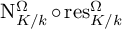 $\mathrm {N}_{K/k}^{\Omega } \circ \operatorname {res}_{K/k}^{\Omega }$
is the multiplication by
 $[K:k]$
on
 $\mathrm {Z}_{0,\Omega }(X)$
.
Brauer–Manin obstruction. A complete exposition on the Brauer–Manin obstruction in the context of zero-cycles can be found in [Reference Colliot-Thélène and SkorobogatovCTS21, §15.1]. Let X be a smooth geometrically integral variety over a number field k. We have the local pairings

defined for all
 $v \in \Omega _k$
, which factors through a pairing
 $\operatorname {CH}_0(X_v) \times \operatorname {Br}(X) \to \mathbb {Q}/\mathbb {Z}$
whenever X is proper. If
 $v \in \Omega _k^{\infty }$
, this pairing vanishes on the image of the norm
 $\mathrm {N}_{\bar {k}_v/k_v}: \operatorname {CH}_0(\bar {X}_v) \to \operatorname {CH}_0(X_v)$
. By restricting to the unramified elements of
 $\operatorname {Br}(X)$
, we obtain from (4.1) a pairing

The pairing (BMcyc
) vanishes on the image of
 $\operatorname {loc}_\Omega $
and on
 $\operatorname {Im}(\operatorname {Br}(k) \to \operatorname {Br}(X))$
, thanks to the global reciprocity law. When X is proper, we let

Put
 $\operatorname {CH}_{0,\Omega }:=\prod _{v \in \Omega _k} \operatorname {CH}_0'(X_v)$
. Then, the pairing (BMcyc
) induces a pairing

which vanishes on the image of
 $\operatorname {loc}_\Omega $
, hence a map
 $\operatorname {CH}_{0,\Omega }(X) \to \operatorname {Br}(X)^D$
fitting in a complex

Applying the functor
 $A \mapsto \varprojlim _n(A/n)$
to (E′
) (noting that the group
 $\operatorname {Br}(X)$
is torsion) yields the complex (E). Recall that the conjecture (E) (i.e., Conjecture C) predicts that (E) is exact for any smooth proper geometrically integral variety X. Note that the exactness of (E) is a stable birational invariant of smooth proper geometrically integral varieties, because the groups
 $\operatorname {CH}_0(X)$
and
 $\operatorname {Br}(X)$
are so (see [Reference WittenbergWit12, Remarques 1.1 (vi)], [Reference FultonFul84, Example 16.1.11], and [Reference Colliot-Thélène and CorayCTC79, Proposition 6.3]).
Weak topology on
 $\mathbf {Z}_{\boldsymbol {0,\Omega }}\mathbf {(X)}$
. Following Liang [Reference LiangLia13, §1.2], we consider the problem of weak approximation for zero-cycles. Let X be a (not necessarily proper) smooth geometrically integral variety defined over a number field k. Let
 $X^c$
be a smooth compactification of X. For each
 $v \in \Omega _k$
, we equip the group
 $\mathrm {Z}_0(X_{v})$
with the initial topology defined by the composites

for
 $n \ge 1$
, where
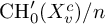 $\operatorname {CH}_0'(X_{v}^c)/n$
is equipped with the discrete topology. By birational invariance of the group
 $\operatorname {CH}_0$
, this topology is independent of the choice of the smooth compactification
 $X^c$
. If
 $K/k_v$
is any finite extension and
 $P, P' \in X(K)$
are two points which are close to each other, then
 $[P]$
and
 $[P']$
are close in
 $\mathrm {Z}_0(X_v)$
[Reference WittenbergWit12, Lemme 1.8]. Finally, we equip the group
 $\mathrm {Z}_{0,\Omega }(X) = \prod _{v \in \Omega _k} \mathrm {Z}_0(X_{v})$
with the product topology. Hence, two families
 $x_{\Omega } = (x_v)_{v \in \Omega _k}$
and
 $x^{\prime }_{\Omega } = (x^{\prime }_v)_{v \in \Omega _k}$
are close to each other if for a large (but finite) subset
 $S \subseteq \Omega _k$
and a large integer
 $n \ge 1$
, the local zero-cycles
 $x_v$
and
 $x^{\prime }_v$
have the same image in
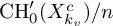 $\operatorname {CH}^{\prime }_0(X^c_{k_v})/n$
for every
 $v \in S$
.
Descent. In [Reference Balestrieri and BergBB24], Balestrieri and Berg developed a formalism allowing one to study descent theory in the context of zero-cycles. In short, given a torsor
 $f: Y \to X$
under an algebraic group G over k, we consider all finite extensions
 $K/k$
and all the twisted torsors
 $Y^{\sigma }_K \to K$
, where
 $[\sigma ] \in \mathrm {H}^1(K,G)$
. Since the notion of descent type (introduced in Subsection 2.1) classifies torsors up to twisting by a Galois cocycle, it is more convenient to translate the formalism of Balestrieri–Berg into one in this new language. Let
 $\lambda $
be a descent type on X bound by a k-kernel L. We fix an algebraic closure
 $\bar {k}$
of k, and let
 $\mathscr {T}_\lambda $
be the set of pairs
 $(K,[Y])$
, where
 $K \subseteq \bar {k}$
is a finite extension of k, and
 $[Y]$
is the class of a torsor
 $Y \to X_{K}$
of descent type
 $\mathbf {dtype}(Y) = \lambda _K:=\operatorname {res}_{K/k}(\lambda ) \in \operatorname {DType}(X_K,L_K)$
. Following [Reference Balestrieri and BergBB24, Definition 2.2], we define the ‘recombining’ map associated with
 $\lambda $
as

On the local level, one defines

where
 $\mathrm {N}_{K/k}^{\Omega }: \mathrm {Z}_{0,\Omega }(X_K) \to \mathrm {Z}_{0,\Omega }(X)$
is the local norm map (4.1). Denote by
 $\mathrm {Z}_{0,\Omega }(X)^{\operatorname {Br}_{\operatorname {nr}}(X)}$
the subgroup of
 $\mathrm {Z}_{0,\Omega }(X)$
consisting of the families orthogonal to
 $\operatorname {Br}_{\operatorname {nr}}(X)$
relative to the pairing (BMcyc
). By functoriality of this pairing, (4.4) restricts to a homomorphism

Here is the main result of this section.
Theorem 4.1 (Theorem C).
Let X be a smooth quasi-projective variety over a number field k. Let
 $\lambda = [\bar {Y},E]$
be a descent type on X bound by a k-kernel
 $L = (\bar {G},\kappa )$
, with
 $\bar {Y}$
rationally connected (the existence of such a descent type implies that X is rationally connected) and
 $\bar {G}$
linear. For any smooth compactification
 $X^c$
of X, one has

in the set
 $\mathrm {Z}_{0,\Omega }(X)$
equipped with the topology defined in p. 34. In particular, if for every finite extension
 $K/k$
and every torsor
 $Y \to X_{K}$
of descent type
 $\mathbf {dtype}(Y) = \lambda _K$
, Conjecture C holds for the smooth compactifications of Y, then it is also the case for the smooth compactifications of X.
The strategy for the proof of Theorem 4.1 is as follows. In Subsection 4.2, we combine Liang’s method (passing from rational points to zero-cycles) in [Reference LiangLia13, §3.2] with Theorem 3.12 to deal with the case where
 $\bar {G}$
is connected. In particular, this can be applied to the case where
 $\bar {G} = \bar {T}$
is a torus. Next, using the fibration argument of Harpaz–Wittenberg in [Reference Harpaz and WittenbergHW24, §3.1 and 3.2] for rational points to deal with the case where
 $\bar {G}$
is a group of multiplicative type in Subsection 4.3 (this requires the previous case of torsors under a torus). In particular, this implies the result in the case where
 $\bar {G}$
is finite abelian. An inductive argument then yields the result in the case where
 $\bar {G}$
is finite solvable. The case where
 $\bar {G}$
is finite is treated in Subsection 4.4, by passing to its Sylow subgroups (this uses an argument similar to one in [Reference Harpaz and WittenbergHW20, §7.2]). Finally, we deploy (again) a dévissage argument to combine the results in the finite and connected cases.
4.2 The connected case
In this subsection, we prove the following result.
Proposition 4.2. Let X be a smooth quasi-projective rationally connected variety over a number field k. Let
 $\lambda $
be a descent type on X bound by a k-kernel
 $L = (\bar {G},\kappa )$
, with
 $\bar {G}$
linear and connected. Then, one has

where
 $\mathrm {Z}_{0,\Omega }(X)$
is equipped with the topology defined in p. 34.
First, we show the following.
Lemma 4.3. Let X be a smooth proper geometrically integral variety over a number field k such that the Néron–Severi group of
 $\bar {X}$
is torsion-free and
 $\mathrm {H}^1(\bar {X},\mathcal {O}_{\bar {X}}) = \mathrm {H}^2(\bar {X},\mathcal {O}_{\bar {X}}) = 0$
(this is the case if X is rationally connected). For any
 $x_\Omega = (x_v)_{v \in \Omega _k} \in \mathrm {Z}_{0,\Omega }(X)^{\operatorname {Br}(X)}$
, any finite set
 $S \subseteq \Omega _k$
of places and any integer
 $n \ge 1$
, there exist a finite extension
 $K/k$
and a family
 $P_\Omega = (P_w)_{w \in \Omega _K} \in X_K(K_\Omega )^{\operatorname {Br}(X_K)}$
such that
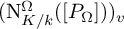 $(\mathrm {N}_{K/k}^{\Omega }([P_\Omega ]))_v$
and
 $x_v$
have the same image in
 $\operatorname {CH}_0'(X)/n$
for all
 $v \in S$
.
Proof. Note that, for (smooth proper) rationally connected varieties, the complex (E′
) is exact if and only if (E) is so (see [Reference Harpaz and WittenbergHW20, Rappel 1.3]). For
 $X = \operatorname {Spec}(k)$
, the complex (E) is exact because it is the dual of the Albert–Brauer–Noether–Hasse sequence from global class field theory:

It follows that (E′
) is also exact for
 $X = \operatorname {Spec}(k)$
. Since
 $\operatorname {CH}_0'(\operatorname {Spec}(k_v)) = \mathbb {Z}$
for
 $v \in \Omega _k^{\mathrm {f}}$
and
 $\operatorname {CH}_0'(\operatorname {Spec}(\mathbb {R})) = \mathbb {Z}/2$
, any family
 $(x_v)_{v \in \Omega _k} \in \mathrm {Z}_{0,\Omega }(X)^{\operatorname {Br}(X)}$
has ‘the same’ local degree in the following sense. There exists an integer
 $d \in \mathbb {Z}$
such that
 $\deg _{k_v}(x_v) = d$
for all
 $v \in \Omega _k^{\mathrm {f}}$
and
 $\deg _{k_v}(x_v) \equiv d \pmod 2$
for all real places
 $v \in \Omega _k^{\infty }$
. For
 $v \in \Omega _k^{\infty }$
, we take any point
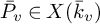 $\bar {P}_v \in X(\bar {k}_v)$
and add a suitable multiple of the
 $0$
-cycle
 $\mathrm {N}_{\bar {k}_v/k_v}(\bar {P}_v)$
to
 $x_v$
(which does not affect the class of
 $x_v$
in
 $\operatorname {CH}_0'(X_{k_v})$
). Hence, we may assume that
 $\deg _{k_v}(x_v) = d$
for all
 $v \in \Omega _k$
.
The rest of the proof is essentially done in [Reference LiangLia13, Proof of Theorem 3.2.1] if
 $d = 1$
, and in loc. cit., Proposition 3.4.1 if
 $d \neq 1$
. At the end of these proofs, we obtain a finite extension
 $K/k$
and a family
 $P_\Omega = (P_w)_{w \in \Omega _K} \in X_K(K_\Omega )^{\operatorname {Br}(X_K)}$
satisfying the stated condition.
Proof of Proposition 4.2.
Let
 $X^c$
be a smooth compactification of X and let
 ${x_\Omega \in \mathrm {Z}_{0,\Omega }(X)^{\operatorname {Br}(X^c)}}$
. By Lemma 4.3, we find a finite extension
 $K/k$
and a family
 $P_\Omega \in X_K^c(K_\Omega )^{\operatorname {Br}(X^c)}$
such that
 $\mathrm {N}_{K/k}^{\Omega }([P_\Omega ]) \in \mathrm {Z}_{0,\Omega }(X^c)^{\operatorname {Br}(X^c)}$
is sufficiently close to
 $x_\Omega $
. By Lemma 3.10, we may assume that
 $P_\Omega \in X_K(K_\Omega )^{\operatorname {Br}(X^c)}$
. By Theorem 3.12, there exists a torsor
 $f: Y \to X_K$
of descent type
 $\lambda _K$
and a family
 $Q_\Omega \in Y(K_\Omega )^{\operatorname {Br}_{\operatorname {nr}}(Y)}$
such that
 $f(Q_\Omega )$
is sufficiently close to
 $P_\Omega $
, hence
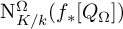 $\mathrm {N}_{K/k}^{\Omega }(f_\ast [Q_\Omega ])$
is sufficiently close to
 $x_\Omega $
.
4.3 The multiplicative type case
In this subsection, we adapt the argument from [Reference Harpaz and WittenbergHW24, §3.2] to show the following.
Proposition 4.4. Let X be a smooth quasi-projective variety over a number field k. Let M be a k-group of multiplicative type and let
 $\lambda = [\bar {Y},E] \in \operatorname {DType}(X,M)$
, with
 $\bar {Y}$
rationally connected (in particular, X is rationally connected). Then, for any smooth compactification
 $X^c$
of X, one has

in the set
 $\mathrm {Z}_{0,\Omega }(X)$
equipped with the topology defined in p. 34.
We require the following analogue of [Reference Harpaz and WittenbergHW24, Theorem 3.6] in the context of zero-cycles.
Lemma 4.5. Let Z be a smooth geometrically integral variety equipped with a dominant morphism
 $\pi : Z \to \mathbb {A}^n_k$
, for some
 $n \ge 1$
. Let
 $U \subseteq \mathbb {A}^n_k$
be a dense open subset over which
 $\pi $
is smooth, and suppose that
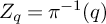 $Z_q = \pi ^{-1}(q)$
is rationally connected for all
 $q \in U$
. Then, for any smooth compactification
 $Z^c$
of Z and any family
 $z_{\Omega } \in \mathrm {Z}_{0,\Omega }(Z)^{\operatorname {Br}(Z^c)}$
, there exist a global zero-cycle
 $z \in \mathrm {Z}_0(Z^c)$
, a closed point
 $q \in U$
and a family
 $z^{\prime }_\Omega \in \mathrm {Z}_{0,\Omega }(Z_q)^{\operatorname {Br}_{\operatorname {nr}}(Z_q)}$
such that
 $\operatorname {loc}_\Omega (z) + \mathrm {N}_{k(q)/k}(z^{\prime }_\Omega )$
is sufficiently close to
 $z_\Omega $
in
 $\mathrm {Z}_{0,\Omega }(Z^c)$
(equipped with the topology defined in p. 34).
Proof. Since the group
 $\operatorname {CH}_0$
is a birational invariant of smooth proper geometrically integral variety, it is enough to prove the lemma for an arbitrarily chosen smooth compactification
 $Z^c$
. Hence, by Nagata’s theorem, we may assume that
 $\pi $
extends into a proper morphism
 $\pi ^c: Z^c \to \mathbb {P}^n_k$
, which is smooth over U (after shrinking U if necessary).
We proceed by induction on n. For
 $n = 1$
, this follows from [Reference Harpaz and WittenbergHW16, Proposition 8.7] (note that
 $\mathrm {Z}_{0,\Omega }(Z_q)^{\operatorname {Br}(Z_q^c)}$
is dense in
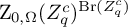 $\mathrm {Z}_{0,\Omega }(Z_q^c)^{\operatorname {Br}(Z_q^c)}$
by continuity of (BMcyc
) and Lemma 3.10 (i)).
Let
 $n \ge 2$
and let
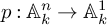 $p: \mathbb {A}^n_k \to \mathbb {A}^1_k$
be the first projection. Let
 $V \subseteq \mathbb {A}^1_k$
be a dense open subset over which
 $p \circ \pi $
is smooth, such that
 $U \cap p^{-1}(r) \neq \varnothing $
for every
 $r \in V$
. For such r, the fibre
 $Z_{r} = (p \circ \pi )^{-1}(r)$
is equipped with a dominant morphism to
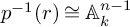 $p^{-1}(r) \cong \mathbb {A}^{n-1}_k$
with rationally connected generic fibre, hence is rationally connected by the theorem of Graber–Harris–Starr (see [Reference DebarreDeb03, Corollaire 3.1]). Given a family
 $z_{\Omega } \in \mathrm {Z}_{0,\Omega }(Z)^{\operatorname {Br}(Z^c)}$
, by the case
 $n = 1$
applied to
 $p \circ \pi $
, we find a global zero-cycle
 $w \in \mathrm {Z}_0(Z^c)$
, a closed point
 $r \in V$
and a family
 $w^{\prime }_\Omega \in \mathrm {Z}_{0,\Omega }(Z_{r})^{\operatorname {Br}(Z_r^c)}$
such that
 $\operatorname {loc}_\Omega (w) + \mathrm {N}_{k(r)/k} (w^{\prime }_\Omega )$
is sufficiently close to
 $z_\Omega $
. By the induction hypothesis applied to the restriction
 $\pi |_{Z_r}: Z_r \to p^{-1}(r)$
, we obtain a global zero-cycle
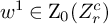 $w^1 \in \mathrm {Z}_0(Z^c_r)$
, a closed point
 $q \in U \cap \pi ^{-1}(r)$
, and a family
 $z^{\prime }_\Omega \in \mathrm {Z}_{0,\Omega }(Z_q)^{\operatorname {Br}(Z_q^c)}$
such that
 $\operatorname {loc}_\Omega (w^1) + \mathrm {N}_{k(q)/k(r)} (z^{\prime }_\Omega )$
is sufficiently close to
 $w^{\prime }_\Omega $
. Let
 $z := w + \mathrm {N}_{k(r)/k}(w^1)$
, then
 $\operatorname {loc}_\Omega (z) + \mathrm {N}_{k(q)/k}(z^{\prime }_\Omega )$
is sufficiently close to
 $z_\Omega $
.
Proof of Proposition 4.4.
Let
 $x_\Omega = (x_v)_{v \in \Omega _k} \in \mathrm {Z}_{0,\Omega }(X)^{\operatorname {Br}(X^c)}$
. There is an exact sequence

where T is a k-torus and Q is a quasi-trivial k-torus (see e.g. [Reference Harpaz and WittenbergHW24, Lemma 3.8]). Let us apply Proposition 4.2 to the pushforward descent type
 $\iota _\ast \lambda \in \operatorname {DType}(X,T)$
(cf. Lemma 2.3). We then obtain a finite extension
 $k'/k$
, a torsor
 $g: Z \to X_{k'}$
under
 $T_{k'}$
with
 $\mathbf {dtype}(Z) = \iota _\ast \lambda _{k'}$
, and a family
 $P^{\prime }_\Omega \in Z(k^{\prime }_\Omega )^{\operatorname {Br}_{\operatorname {nr}}(Z)}$
such that
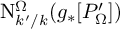 $\mathrm {N}^{\Omega }_{k'/k}(g_\ast [P^{\prime }_\Omega ])$
is sufficiently close to
 $x_\Omega $
. Furthermore, by the exact sequence (2.2) (also from Lemma 2.3)), we have a commutative diagram

with exact rows, where
 $p: X \to \operatorname {Spec}(k)$
denotes the structure morphism. Since
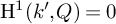 ${\mathrm {H}^1(k',Q) = 0}$
, the left arrow from (4.7) is surjective and the right arrow there is injective, by virtue of the long exact sequence associated with (4.6). Since
 $\iota _\ast \lambda _{k'} = \mathbf {dtype}(Z)$
, one has
 $\iota _\ast \partial (\lambda _{k'}) = \partial (\iota _\ast \lambda _{k'}) = 0$
. Thus,
 $\partial (\lambda _{k'}) = 0$
by injectivity of
 $\iota _\ast : \mathrm {H}^2(k',M) \to \mathrm {H}^2(k',T)$
. It follows that there exists a torsors
 $f: Y \to X_{k'}$
with
 $\mathbf {dtype}(Y) = \lambda _{k'}$
. By exactness of the bottom row, one has
 $\iota _\ast [Y] = [Z] - p^\ast [\tau ]$
for some
 $[\tau ] \in \mathrm {H}^1(k',T)$
. By surjectivity of
 $\iota _\ast : \mathrm {H}^1(k',M) \to \mathrm {H}^1(k',T)$
, we may write
 $[\tau ] = \iota _\ast [\mu ]$
for some
 $[\mu ] \in \mathrm {H}^1(k',M)$
. Twisting Y by a cocycle
 $\mu $
representing
 $[\mu ]$
(which yields a torsor
 $Y^{\mu } \to X_{k'}$
of descent type
 $\mathbf {dtype}(Y^{\mu }) = \lambda _{k'}$
), we may assume that
 $\iota _\ast [Y] = [Z]$
. In other words, we have an isomorphism
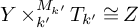 $Y \times _{k'}^{M_{k'}} T_{k'} \cong Z$
of
 $X_{k'}$
-torsors under
 $T_{k'}$
.
By Nagata’s theorem [Reference NagataNag63], we may extend g to a proper morphism
 $g^c: Z^c \to X^c_{k'}$
, where
 $Z^c$
is a smooth compactification of Z. Let us now follow the argument in [Reference Harpaz and WittenbergHW24, p. 797]. The second projection
 $Y \times _{k'} T_{k'} \to T_{k'}$
induces a morphism

which has the following property. For every overfield
 $K/k'$
and every K-point
 $q \in Q(K)$
, if
 $\delta : Q(K) \to \mathrm {H}^1(K,M)$
is the connecting homomorphism associated with (4.6) and
 $\mu $
is a cocycle representing
 $[\mu ] = \delta (q)$
, then the fibre
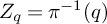 $Z_q = \pi ^{-1}(q)$
is isomorphic to
 $Y^\mu _K$
as
 $X_K$
-torsors under
 $M_K$
(in particular,
 $Z_q$
is rationally connected). Indeed, if
 $\varpi : T \to Q$
denotes the projection, then
 $[\mu ] = [\varpi ^{-1}(q)] \in \mathrm {H}^1(K,M)$
and hence
 $[Z_q] = [\pi ^{-1}(q)] = [Y_K \times _{K}^{M_K} \varpi ^{-1}(q)] = [Y_K^{\mu }] \in \mathrm {H}^1(X_K,M)$
by the very definition of twisting.
Since Q is a quasi-trivial torus, it is a dense open subset of an affine space. Hence, we may apply Lemma 4.5 to obtain a global zero-cycle
 $z \in \mathrm {Z}_0(Z^c)$
, a closed point
 $q \in Q_{k'}$
, and a family
 $z^{\prime }_\Omega \in \mathrm {Z}_{0,\Omega }(Z_q)^{\operatorname {Br}_{\operatorname {nr}}(Z_q)}$
such that
 $\operatorname {loc}_\Omega (z) + \mathrm {N}_{k'(q)/k'}(z^{\prime }_\Omega )$
is sufficiently close to
 $[P^{\prime }_\Omega ]$
. Twisting
 $Y_{k'(q)}$
by a cocycle
 $\mu $
representing
 $\delta (q) \in \mathrm {H}^1(k'(q),M)$
, we may assume that
 $\delta (q) = 0$
. As mentioned above, there is an isomorphism
 $Z_q \cong Y_{k'(q)}$
of
 $X_{k'(q)}$
-torsors under
 $M_{k'(q)}$
. Thus, we obtain a family
 $y_\Omega \in \mathrm {Z}_{0,\Omega }(Y_{k'(q)})^{\operatorname {Br}_{\operatorname {nr}}(Y_{k'(q)})}$
such that
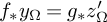 $f_\ast y_\Omega = g_\ast z^{\prime }_\Omega $
in
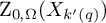 $\mathrm {Z}_{0,\Omega }(X_{k'(q)})$
. Let
 $x := \mathrm {N}_{k'/k}(g^c_\ast z) \in \mathrm {Z}_0(X^c)$
. Then
 $\operatorname {loc}_\Omega (x) + \mathrm {N}_{k'(q)/k}^{\Omega }(f_\ast y_\Omega )$
is sufficiently close to
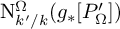 $\mathrm {N}_{k'/k}^{\Omega }(g_\ast [P^{\prime }_\Omega ])$
, hence also to
 $x_\Omega $
.
4.4 The general case
We prove Theorem 4.1 in this subsection. First, we start with the finite solvable case. Recall that a finite descent type on a smooth geometrically integral variety X is an isomorphism class of a (connected) finite étale cover
 $\bar {Y} \to \bar {X}$
such that
 $\bar {Y}$
is Galois over X (cf. p. 11).
Lemma 4.6. Let X be a smooth quasi-projective variety over a number field k. Let
 $\lambda = [\bar {Y}]$
be a rationally connected finite descent type on X (in particular, X is rationally connected) such that the finite group
 $\bar {G} = \operatorname {Aut}(\bar {Y}/\bar {X})$
is solvable. For any smooth compactification
 $X^c$
of X, one has

in the set
 $\mathrm {Z}_{0,\Omega }(X)$
equipped with the topology defined in p. 34.
Proof. We proceed by induction on the derived length n of
 $\bar {G}$
. If
 $n = 0$
, there is nothing to prove.
For
 $n \ge 1$
, let
 $x_\Omega \in \mathrm {Z}_{0,\Omega }(X)^{\operatorname {Br}(X^c)}$
. The derived subgroup
 $[\bar {G},\bar {G}]$
of
 $\bar {G}$
is solvable of derived length
 $n-1$
. Let
 $\bar {Z} := \bar {Y}/[\bar {G},\bar {G}]$
, which defines a finite descent type
 $\lambda ^{\operatorname {ab}}$
on X, and
 $\operatorname {Aut}(\bar {Z}/\bar {X}) = \bar {G}^{\operatorname {ab}}$
is finite abelian (hence of multiplicative type). By Proposition 4.4, we find a global zero-cycle
 $x \in \mathrm {Z}_0(X^c)$
, a finite extension
 $k'/k$
, a torsor
 $g: Z \to X_{k'}$
of descent type
 $\mathbf {dtype}(Z) = \lambda _{k'}^{\operatorname {ab}}$
, and a family
 $P^{\prime }_\Omega \in Z(k^{\prime }_\Omega )^{\operatorname {Br}_{\operatorname {nr}}(Z)}$
such that
 $\operatorname {loc}_\Omega (x) + \mathrm {N}^{\Omega }_{k'/k}(g_\ast [P^{\prime }_\Omega ])$
is sufficiently close to
 $x_\Omega $
.
By Nagata’s theorem [Reference NagataNag63], g extends into a proper morphism
 $g^c: Z^c \to X^c_{k'}$
, where
 $Z^c$
is a smooth compactification of Z. Now,
 $\bar {Y}$
is Galois over Z since it is Galois over X, hence
 $\lambda _Z = [\bar {Y}]$
is a finite descent type on Z, with
 $\operatorname {Aut}(\bar {Y}/\bar {Z}) = [\bar {G},\bar {G}]$
. By the induction hypothesis, there is a global zero-cycle
 $z \in \mathrm {Z}_0(Z^c)$
, a finite extension
 $K/k'$
, a torsor
 ${h: Y \to Z_K}$
of descent type
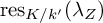 $\operatorname {res}_{K/k'}(\lambda _{Z})$
, and a family
 $P_\Omega \in \mathrm {Z}_{0,\Omega }(Y)^{\operatorname {Br}_{\operatorname {nr}}(Y)}$
such that
 $\operatorname {loc}_\Omega (z) + \mathrm {N}^{\Omega }_{K/k'}(h_\ast [P_\Omega ])$
is sufficiently close to
 $[P^{\prime }_\Omega ]$
. The composite
 $f = g_K \circ h: Y \to X_K$
is then a torsor of descent type
 $\mathbf {dtype}(Y) = \lambda _K$
. We have
 $x + \mathrm {N}_{k'/k}(g_\ast ^c z) \in \mathrm {Z}_{0,\Omega }(X^c)$
and
 $\operatorname {loc}_\Omega (x + \mathrm {N}_{k'/k}(g_\ast ^c z)) + \mathrm {N}^{\Omega }_{K/k}(f_\ast [P_\Omega ])$
is sufficiently close to
 $x_\Omega $
.
We can now deal with the finite case using the strategy in [Reference Harpaz and WittenbergHW20, §5].
Proposition 4.7. Let X be a smooth quasi-projective variety over a number field k. Let
 $\lambda = [\bar {Y}]$
be a rationally connected finite descent type on X (in particular, X is rationally connected). Then

in the set
 $\mathrm {Z}_{0,\Omega }(X)$
equipped with the topology defined in p. 34, for any smooth compactification
 $X^c$
of X. Here, the ‘recombining’ map
 $\operatorname {rec}_{\lambda ,\Omega }^{\operatorname {Br}}$
was defined in (4.5). More precisely, for any
 $x_\Omega \in \mathrm {Z}_{0,\Omega }(X)^{\operatorname {Br}(X^c)}$
and any prime number p, there is an integer
 $n_p$
prime to p such that

Proof. Let
 $\bar {G}:=\operatorname {Aut}(\bar {Y}/\bar {X})$
. Let
 $x_\Omega \in \mathrm {Z}_{0,\Omega }(X)^{\operatorname {Br}(X^c)}$
and let p be any prime number. By [Reference Harpaz and WittenbergHW20, Lemme 5.6], we have a commutative diagram with exact rows

where
 $\bar {H}$
(resp. E, resp.
 $\Gamma _{k'}$
) is a p-Sylow subgroup of
 $\bar {G}$
(resp.
 $\operatorname {Aut}(\bar {Y}/X)$
, resp.
 $\Gamma _k$
) in the profinite sense (see [Reference SerreSer94, Chapitre I, §1.4]). The subgroup E is of index
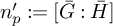 $n_{p}' := [\bar {G}:\bar {H}]$
in
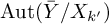 $\operatorname {Aut}(\bar {Y}/X_{k'})$
, hence corresponds to an étale cover
 $Z' \to X_{k'}$
of degree
 $n_{p}'$
, over which
 $\bar {Y}$
is Galois. The cover
 $Z' \to X_{k'}$
is the base change to
 $k'$
of an étale cover
 $Z \to X_{\ell }$
, for some finite extension
 $\ell $
of k contained in
 $k'$
(hence of degree
 $n_p":=[\ell :k]$
prime to p). Recall from (4.2) that we have a local restriction map
 $\operatorname {res}_{\ell /k}^{\Omega }: \mathrm {Z}_{0,\Omega }(X) \to \mathrm {Z}_{0,\Omega }(X_\ell )$
. By functoriality of the pairing (BMcyc
), one has
 $\operatorname {res}_{\ell /k}^{\Omega }(x_\Omega ) \in \mathrm {Z}_{0,\Omega }(X_\ell )^{\operatorname {Br}(X^c_\ell )}$
.
By Nagata’s theorem [Reference NagataNag63], we may extend the
 $Z \to X_\ell $
to a morphism
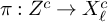 $\pi : Z^c \to X^c_\ell $
, which is generically finite of degree
 $n_p'$
, where
 $Z^c$
is a smooth compactification of Z. Applying the refined Gysin pullback
 $\pi ^!$
[Reference FultonFul84, Definition 8.1.2] to the rational equivalence class of
 $\operatorname {res}_{\ell /k}^{\Omega }(x_\Omega )$
yields a family
 $z_\Omega = (z_w)_{w \in \Omega _\ell } \in \mathrm {Z}_{0,\Omega }(Z^c)$
such that
 $\pi _\ast z_w$
is rationally equivalent to
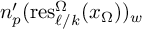 $n_p' (\operatorname {res}_{\ell /k}^{\Omega }(x_\Omega ))_w$
for all
 $w \in \Omega _\ell $
. Since
 $\operatorname {res}_{\ell /k}^{\Omega }(x_\Omega ) \in \mathrm {Z}_{0,\Omega }(X_\ell )^{\operatorname {Br}(X^c_\ell )}$
, we have
 $z_\Omega \in \mathrm {Z}_{0,\Omega }(Z^c)^{\operatorname {Br}(Z^c)}$
by (covariant) functoriality of the pairing (BMcyc
). We may assume that
 $z_\Omega \in \mathrm {Z}_{0,\Omega }(Z)^{\operatorname {Br}(Z^c)}$
by continuity of (BMcyc
) and Lemma 3.10 (i). Now, since
 $\bar {Y}$
is Galois over Z, it defines a finite descent type
 $\lambda _Z$
on Z, with
 $\operatorname {Aut}(\bar {Y}/\bar {Z}) = \bar {H}$
. Furthermore, any Z-torsor of descent type
 $\lambda _Z$
is an
 $X_\ell $
-torsor of descent type
 $\lambda _\ell $
and an X-torsor of descent type
 $\lambda $
. Since
 $\bar {H}$
is a p-group (a fortiori solvable), we have

by Lemma 4.6. Applying
 $\pi _\ast $
to both side, we obtain

Finally, applying the local norm
 $\mathrm {N}_{\ell /k}^{\Omega }$
to both sides, one gets

where
 $n_p:=n_p' n_p"$
is an integer prime to p.
Let us now show that
 $x_\Omega $
lies in the closure of
 $\operatorname {loc}_\Omega (\mathrm {Z}_0(X^c)) + \operatorname {Im}(\operatorname {rec}_{\lambda ,\Omega }^{\operatorname {Br}})$
. Fix an integer
 $n \ge 1$
and a finite set
 $S \subseteq \Omega _k$
of places. For each prime
 $p | n$
, we have seen that there are an integer
 $n_p$
prime to p, a global zero-cycle
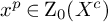 $x^p \in \mathrm {Z}_0(X^c)$
, and a family
 $z_\Omega ^p = (z_v^p)_{v \in \Omega _k} \in \operatorname {Im}(\operatorname {rec}_{\lambda ,\Omega }^{\operatorname {Br}})$
such that
 $n_px_v$
and
 $\operatorname {loc}_v(x^p) + z^p_v$
have the same image in
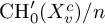 $\operatorname {CH}_0'(X^c_{v})/n$
for all
 $v \in S$
. The integers
 $n_p$
, together with n, are mutually coprime, hence there are integers
 $d,d_p$
such that
 $1 = dn + \sum _{p|n} d_pn_p$
. Let
 $x := \sum _{p|n} d_p x^p \in \mathrm {Z}_0(X^c)$
and
 $z_\Omega := (z_v)_{v \in \Omega _k} =\sum _{p|n} d_p z^p_\Omega \in \operatorname {Im}(\operatorname {rec}_{\lambda ,\Omega }^{\operatorname {Br}})$
. Then

have the same image in
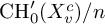 $\operatorname {CH}_0'(X^c_{v})/n$
for all
 $v \in S$
. This proves the proposition.
We can now combine Propositions 4.2 and 4.7 to obtain Theorem 4.1 (i.e., Theorem C).
Proof of Theorem 4.1.
Let
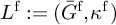 $L^{\mathrm {f}} := (\bar {G}^{\mathrm {f}},\kappa ^{\mathrm {f}})$
be the natural k-kernel (recall that
 $\bar {G}^{\mathrm {f}} = \pi _0(\bar {G}) = \bar {G}/\bar {G}^\circ $
), and let
 $\lambda ^{\mathrm {f}} := [\bar {Z}] \in \operatorname {DType}(X,L^{\mathrm {f}})$
be the pushforward of
 $\lambda $
along the morphism
 $L \to L^{\mathrm {f}}$
induced by the projection
 $\bar {G} \to \bar {G}^{\mathrm {f}}$
(hence
 $\bar {Z} = \bar {Y}/\bar {G}^\circ $
, cf. Lemma 2.2 (i)). For each
 $x_\Omega \in \mathrm {Z}_0(X)^{\operatorname {Br}_{\operatorname {nr}}(X)}$
, applying Proposition 4.7 to
 $\lambda ^{\mathrm {f}}$
yields a global zero-cycle
 $x \in \mathrm {Z}_0(X^c)$
, a finite set
 $\{(k_i, [g_i: Z_i \to X_{k_i}])\}_{i \in \mathcal {I}} \subseteq \mathscr {T}_{\lambda ^{\mathrm {f}}}$
, and a family
 $z_\Omega ^i \in \mathrm {Z}_0(Z_i)^{\operatorname {Br}_{\operatorname {nr}}(Z_i)}$
for each
 $i \in \mathcal {I}$
, such that
 $\operatorname {loc}_\Omega (x) + \sum _{i \in \mathcal {I}} \mathrm {N}_{k_i/k}^{\Omega }((g_i)_{\ast } z_\Omega ^i)$
is sufficiently close to
 $x_\Omega $
.
For
 $i \in \mathcal {I}$
, by Lemma 2.2 (ii), the torsor
 $Z_i \to X_{k_i}$
gives rise to a
 $k_i$
-kernel
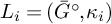 $L_i = (\bar {G}^\circ ,\kappa _i)$
and a descent type
 $\lambda _i = [\bar {Y},E_i] \in \operatorname {DType}(Z_i, L_i)$
. By Proposition 4.2, there exist a finite extension
 $K_i/k_i$
, a torsor
 $h_i: Y_i \to (Z_i)_{K_i}$
of descent type
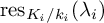 $\operatorname {res}_{K_i/k_i}(\lambda _i)$
, and a family
 ${P^i_\Omega \in Y_i((K_i)_\Omega )^{\operatorname {Br}_{\operatorname {nr}}(Y_i)}}$
such that
 $\mathrm {N}_{K_i/k_i}^{\Omega } ((h_i)_\ast [P^i_\Omega ])$
is sufficiently close to
 $z_\Omega ^i$
. The composite
 $f_i = (g_i)_{K_i} \circ h_i: Y_i \to X_{K_i}$
is a torsor of descent type
 $\mathbf {dtype}(Y_i) = \operatorname {res}_{K_i/k}(\lambda )$
by Lemma 2.2 (iii), and
 $\operatorname {loc}_\Omega (x) + \sum _{i \in \mathcal {I}} \mathrm {N}_{K_i/k}^{\Omega }((f_i)_\ast [P^i_\Omega ])$
is sufficiently close to
 $x_\Omega $
. The theorem is proved.
Theorem 4.1 is a generalization of the following result, proved in [Reference Harpaz and WittenbergHW20, Théorème A].
Corollary 4.8. Conjecture C holds for the smooth compactifications of homogeneous spaces of connected linear algebraic groups over number fields.
Proof. Let X be a homogeneous space of a connected linear algebraic group G over a number field k. As in the proof of Corollary 3.13, we have a descent type
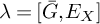 $\lambda = [\bar {G}, E_X]$
on X. For any finite extension
 $K/k$
, a torsor
 $Y \to X_{K}$
of type
 $\lambda _K$
is a left K-torsor under
 $G_K$
, hence satisfies
 $\mathbf {(BMHP)}$
and
 $\mathbf {(BMWA)}$
by [Reference SansucSan81, Corollaires 8.7 and 8.13] and [Reference ChernousovChe89]. It follows from Liang’s theorems [Reference LiangLia13, Theorems A and B] that Conjecture C holds for their smooth compactifications. By virtue of Theorem 4.1, Conjecture C also holds for the smooth compactifications of X.
Acknowledgments
This work is a part of the author’s Ph.D. thesis. I would like to express my sincerest thanks to my Ph.D. advisor, David Harari, for bringing up this problem and for his guidance. I am especially grateful to Olivier Wittenberg for his valuable comments and suggestions on the manuscript. I appreciate Cristian David González-Avilés for the interesting discussion on the abelianization map. I also thank the Laboratoire de Mathématiques d’Orsay, Université Paris-Saclay and the Institut de Mathématiques de Jussieu-Paris Rive Gauche, CNRS for the excellent working conditions. This research was funded by a ‘Contrat doctorant spécifique normalien’ from École normale supérieure de Paris and as well as by the postdoctoral program of the Fondation Sciences Mathématiques de Paris.
Competing interests
The author has no competing interests to declare.
Data availability statement
No new data were created or analyzed in this article.



