












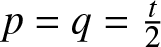


1. Introduction
For the classical gambler’s ruin problem, Peköz and Ross [Reference Peköz and Ross3] used a smart coupling method to prove that the duration of the game is stochastically maximized when the game is fair. Subsequently, Hsiau and Yao [Reference Hsiau and Yao1, Reference Hsiau and Yao2] established stochastic ordering and likelihood ratio ordering results for the duration of the gambler’s ruin game. Their results revealed a close connection between symmetry of the underlying random walk and the persistence of the game.
A natural extension of the simple random walk is the correlated random walk, in which successive increments form a two-state Markov chain. Pozdnyakov [Reference Pozdnyakov4] derived explicit expressions for the ruin probabilities and the expected stopping time of a correlated random walk by creating several clever martingales. These formulas provide a starting point for studying how the duration of the game depends on the transition parameters.
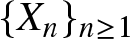
Above results naturally raise the question of whether the maximal-duration phenomenon observed in the classical gambler’s ruin problem persists in the correlated setting. As a first step toward understanding possible stochastic ordering properties in the correlated setting, we study the behavior of the expected stopping time. More precisely, consider a two-state Markov chain  $\{X_k\}_{k\ge1}$ with state space
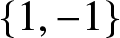
 $\{-1,1\}$ and transition probabilities
 \begin{equation*}
p=P(X_{k+1}=1\,\,|\,\, X_k=1),
\qquad
q=P(X_{k+1}=-1\,\,|\,\, X_k=-1).
\end{equation*}
Throughout the paper, we assume that the initial distribution is stationary:
 \begin{equation*}
P(X_1=1)=\frac{1-q}{2-p-q},
\qquad
P(X_1=-1)=\frac{1-p}{2-p-q}.
\end{equation*}
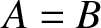
Let  $A$ and
 $B$ be positive integers. Define
 $S_0=0,\ S_k=\sum_{i=1}^{k}X_i,\ k\ge 1,$ and let
 \begin{equation*}
\tau
=
\inf\{k\ge 1:S_k=A \text{ or } S_k=-B\}.
\end{equation*}
The corresponding ruin probabilities are
 \begin{equation*}
\alpha=P(S_\tau=A),
\qquad
\beta=P(S_\tau=-B),
\end{equation*}
with
 \begin{equation*}
\alpha+\beta=1.
\end{equation*}
Recently, Pozdnyakov [Reference Pozdnyakov4] obtained explicit expressions for both the ruin probabilities and the expected stopping time of a correlated random walk by means of martingale techniques. When  $p=q$,
 \begin{align*}
\alpha
&=
\frac{
B-1+\dfrac{1}{2(1-p)}
}{
A+B-2+\dfrac{1}{1-p}
},
\\
E(\tau)
&=
AB\,\frac{1-p}{p}
+
(A+B)\,\frac{2p-1}{2p}.
\end{align*}
When  $p\neq q$ (after correcting a typographical error in the original formula),
 \begin{align*}
\alpha
&=
\frac{
\left(\frac{q}{p}\right)^{-B}
\sqrt{\frac{q(1-q)}{p(1-p)}}
-
\frac{\sqrt{(1-p)(1-q)}}{2-p-q}
\left(
\sqrt{\frac{q}{p}}
+
\sqrt{\frac{p}{q}}
\right)
}{
\left(\frac{q}{p}\right)^{-B}
\sqrt{\frac{q(1-q)}{p(1-p)}}
-
\left(\frac{q}{p}\right)^A
\sqrt{\frac{p(1-p)}{q(1-q)}}
},
\\
E(\tau)
&=
\frac{2-p-q}{p-q}(A\alpha-B\beta)
+
\frac{p+q-1}{p-q}(\alpha-\beta)
+
\frac{1-p-q}{2-p-q}.
\end{align*}
In this paper, we restrict attention to the symmetric boundary case  $A=B=n, n\ge2,$ and investigate the behavior of
 $E(\tau)$ along the line
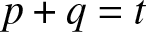
 $p+q=t,\ 0 \lt t \lt 2.$ For
 $p\neq t/2$, we rewrite the expression for
 $\alpha$ by multiplying its numerator and denominator by
 $(2-p-q)(pq)^{n-1}\sqrt{pq(1-p)(1-q)},$ and then the preceding formulas reduce to
 \begin{equation}
\alpha
=
\begin{cases}
\dfrac12,
&
p=\dfrac{t}{2},
\\
\displaystyle
\frac{
(2-t)(1-q)p^{2n-1}
+t(1-p)(1-q)(pq)^{n-1}
}{
(2-t)
\left[
p^{2n-1}(1-q)-q^{2n-1}(1-p)
\right]
},
&
p\neq\dfrac{t}{2}.
\end{cases}
\end{equation}
 \begin{equation}
E(\tau)
=
\begin{cases}
\displaystyle
\frac{n}{t}
\Bigl[
n(2-t)+2(t-1)
\Bigr],
&
p=\dfrac{t}{2},
\\
\displaystyle
\frac{2\alpha-1}{p-q}
\Bigl[
n(2-t)+(t-1)
\Bigr]
+
\frac{1-t}{2-t},
&
p\neq\dfrac{t}{2}.
\end{cases}
\end{equation}
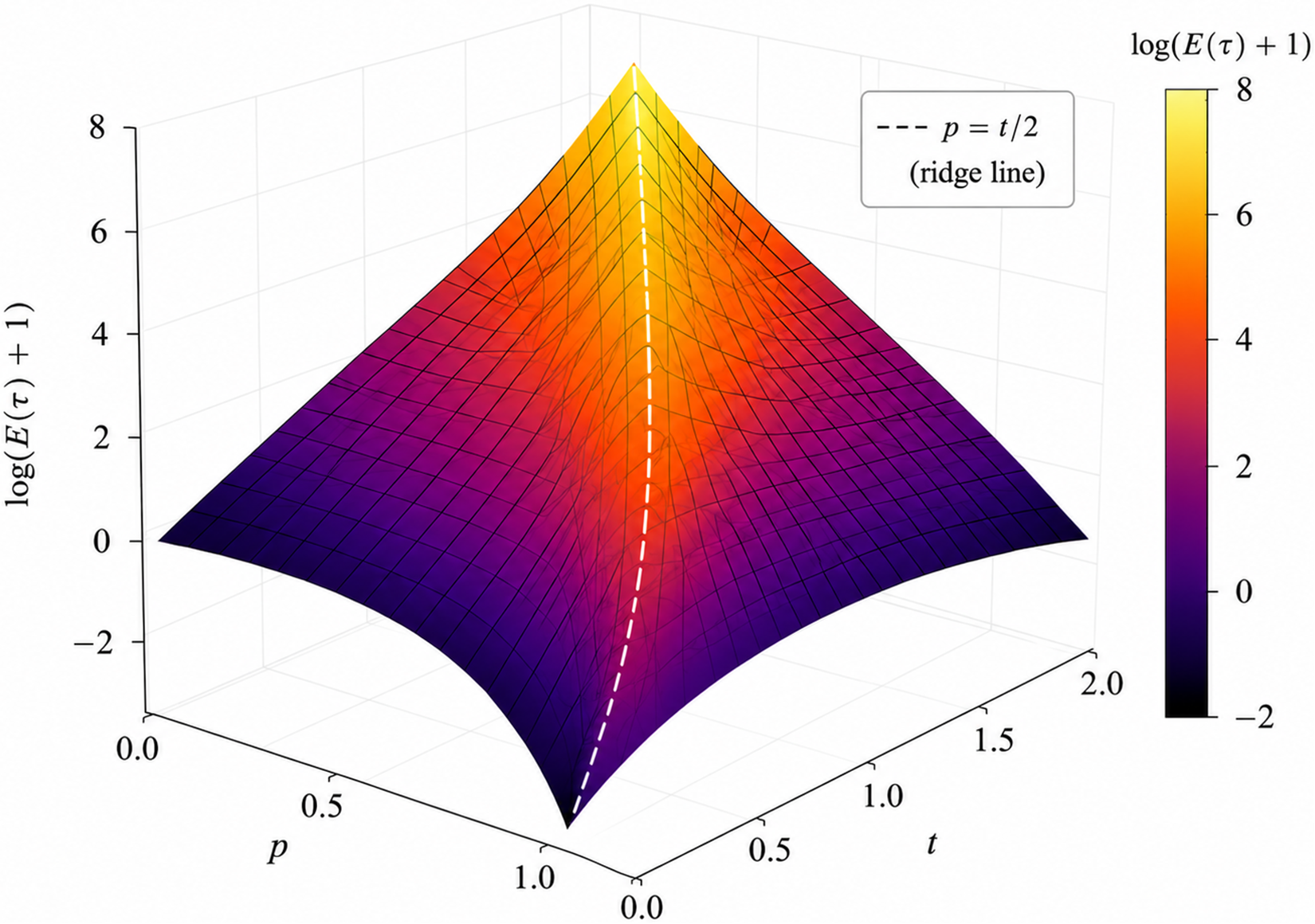
The following Figure 1 shows the behavior of  $E(\tau)$ respect to
 $p$ and
 $t$ for
 $n=3.$
The surface of  $\log(E(\tau)+1)$ for
 $n=3$.

Figure 1 Long description
The vertical axis is labeled, log of E of tau plus 1, with tick labels minus 2, 0, 2, 4, 6, 8. The left base axis is labeled, p, with tick labels 0, 0.5, 1.0. The right base axis is labeled, t, with tick labels 0, 0.5, 1.0, 1.5, 2.0. A surface with a grid mesh rises from lower values near the edges to a highest point near the middle. A dashed line runs along the surface and is identified in the legend as, p equals t over 2, ridge line. A vertical color scale at the right is labeled, log of E of tau plus 1, with tick labels minus 2, 0, 2, 4, 6, 8.
The main result of this paper is the following theorem.
Theorem 1. Let  $n \ge 2 ,\ 0 \lt t \lt 2$ be fixed. As
 $A=B=n, \ p+q=t$, the expected stopping time
 $E(\tau)$ is an increasing function of
 $p$ on the interval
 $0\le p \le \frac{t}{2}.$ Consequently,
 $E(\tau)$ attains its maximum at
 $p=q=\frac{t}{2}.$
To establish this result, we require the following lemma.
Lemma 1. For  $p\neq q$,
 \begin{equation*}
\frac{2\alpha-1}{p-q}
=
\frac{1+2f}{2-t},
\end{equation*}
where
 \begin{equation*}
f
=
\frac{1}{p-q}
\cdot
\frac{
(1-p)(1-q)
\bigl(p^n-q^n\bigr)
\bigl(p^{n-1}-q^{n-1}\bigr)
}{
p^{2n-1}(1-q)-q^{2n-1}(1-p)
}.
\end{equation*}
The proof of Lemma 1 is postponed to Section 3. Lemma 1 and (2) immediately imply that  $E(\tau)$ is continuous at
 $p=t/2$. Indeed,
 \begin{equation*}
\lim_{p\to t/2}E(\tau)
=
\frac{n}{t}
\Bigl[
n(2-t)+2(t-1)
\Bigr].
\end{equation*}
Therefore, to prove Theorem 1, it suffices to show that  $\frac{dE(\tau)}{dp} \gt 0$ for
 $ 0 \lt p \lt \frac{t}{2}.$ By (2) and Lemma 1,
 $\frac{dE(\tau)}{dp} \gt 0$ is equivalent to
 $\frac{df}{dp} \gt 0.$ Let
 $g=\frac1f.$ Then
 $\frac{df}{dp} \gt 0$ is equivalent to
 $g'=\frac{dg}{dp} \lt 0.$ Therefore, it remains to establish that
 $g'(p) \lt 0$ for
 $0 \lt p \lt \frac{t}{2}.$ To this end, we decompose
 $g$ into three components.
 \begin{equation*}
g
:=
\frac1f
=
\frac{q-p}{(1-p)(1-q)}
(g_1+g_2+g_3),
\end{equation*}
where
 \begin{equation*}
g_1
=
\frac12
\frac{q^{n-1}+p^{n-1}}
{q^{n-1}-p^{n-1}},
\qquad
g_2
=
\frac12
\frac{q^n+p^n}
{q^n-p^n},
\qquad
g_3
=
-
\frac{q^{n-1}+p^{n-1}}
{q^n-p^n}
\,pq.
\end{equation*}
Define
 \begin{equation*}
h_i
=
\frac{d}{dp}
\left(
\frac{q-p}{(1-p)(1-q)}\,g_i
\right),
\qquad
i=1,2,3.
\end{equation*}
A direct calculation yields  $g'
=
h_1+h_2+h_3, $ where
 \begin{equation}
\begin{split}
h_1 & = \frac{q-p}{(1-p)(1-q)}
\cdot
\frac{(n-1)(pq)^{n-2}(p+q)}
{(q^{n-1}-p^{n-1})^2} \\
& \quad {}- \frac12
\left[
\frac1{(1-p)^2}
+
\frac1{(1-q)^2}
\right]
\frac{q^{n-1}+p^{n-1}}
{q^{n-1}-p^{n-1}}
\end{split}
\end{equation}
 \begin{equation}
h_2
=
\frac{q-p}{(1-p)(1-q)}
\cdot
\frac{n(pq)^{n-1}(p+q)}
{(q^n-p^n)^2}
-
\frac12
\left[
\frac1{(1-p)^2}
+
\frac1{(1-q)^2}
\right]
\frac{q^n+p^n}
{q^n-p^n}
\end{equation}
 \begin{equation}
h_3
=
\left[
\frac1{(1-p)^2}
+
\frac1{(1-q)^2}
\right]
\frac{q^{n-1}+p^{n-1}}
{q^n-p^n}\,pq
-
\frac{q-p}{(1-p)(1-q)}
\left[
\frac{
n(pq)^{n-1}(p+q)^2
}{
(q^n-p^n)^2
}
+1
\right]
\end{equation}
2. Proof of Theorem 1
To complete the proof of Theorem 1, it suffices to show that
 \begin{equation*}
h_1+h_2+h_3 \lt 0.
\end{equation*}
For convenience, define
 \begin{align}
F&=
\frac{q-p}{(1-p)(1-q)}
\cdot
\frac{(n-1)(pq)^{n-2}(p+q)}
{(q^{n-1}-p^{n-1})^2},
\nonumber \\
G&=
\frac12
\left[
\frac1{(1-p)^2}
+
\frac1{(1-q)^2}
\right]
\frac{q^{n-1}+p^{n-1}}
{q^{n-1}-p^{n-1}},
\nonumber \\
H_1&=
\frac{
npq(1-p-q)(q^{n-1}-p^{n-1})^2
}
{
(n-1)(q^n-p^n)^2
},
\end{align}
 \begin{equation}
H_2=
\frac{
(q^{n-1}-p^{n-1})
\left[
q^n+p^n
-
2pq(q^{n-1}+p^{n-1})
\right]
}
{
(q^n-p^n)(q^{n-1}+p^{n-1})
}.
\end{equation}
By (3), we have  $h_1=F-G.$ Furthermore, combining (4) and (5) yields
 \begin{align*}
h_2+h_3
&=
\frac{q-p}{(1-p)(1-q)}
\left[
\frac{n(pq)^{n-1}(p+q)}
{(q^n-p^n)^2}
-
\frac{n(pq)^{n-1}(p+q)^2}
{(q^n-p^n)^2}
\right]
\\
&\quad
-
\left[
\frac1{(1-p)^2}
+
\frac1{(1-q)^2}
\right]
\left[
\frac12\frac{q^n+p^n}{q^n-p^n}
-
pq\frac{q^{n-1}+p^{n-1}}
{q^n-p^n}
\right]
\\
&\quad
-
\frac{q-p}{(1-p)(1-q)}
\\
&=
\frac{q-p}{(1-p)(1-q)}
\left[
\frac{
n(pq)^{n-1}(p+q)(1-p-q)
}
{
(q^n-p^n)^2
}
\right]
\\
&\quad
-
\left[
\frac1{(1-p)^2}
+
\frac1{(1-q)^2}
\right]
\left[
\frac{
q^n+p^n
-
2pq(q^{n-1}+p^{n-1})
}
{
2(q^n-p^n)
}
\right]
\\
&\quad
-
\frac{q-p}{(1-p)(1-q)}
\\
&=
FH_1-GH_2
-\frac{q-p}{(1-p)(1-q)}.
\end{align*}
Consequently,
 \begin{equation*}
h_1+h_2+h_3
=
F(1+H_1)
-
G(1+H_2)
-
\frac{q-p}{(1-p)(1-q)}.
\end{equation*}
The following two lemmas will be established in Section 3.
Lemma 2. For all  $0 \lt p \lt q,$ we have
 \begin{equation*}
0 \lt F \lt G.
\end{equation*}
Lemma 3. For all  $0 \lt p \lt q,$ we have
 \begin{equation*}
0 \lt 1+H_1 \lt 1+H_2.
\end{equation*}
Combining Lemmas 2 and 3, we obtain  $F(1+H_1)-G(1+H_2) \lt 0.$ Therefore,
 \begin{equation*}
h_1+h_2+h_3
=
F(1+H_1)
-
G(1+H_2)
-
\frac{q-p}{(1-p)(1-q)} \lt 0.
\end{equation*}
This proves Theorem 1.
3. Proofs of Lemmas 1–3
Proof of Lemma 1
Using the expression for  $\alpha$ given in (1),
 \begin{align*}
\frac{2\alpha-1}{p-q}
&=
\frac{
[(1-q)+(1-p)]
\bigl[p^{2n-1}(1-q)+q^{2n-1}(1-p)\bigr]
-
2(1-p)(1-q)(p+q)(pq)^{n-1}
}{
(2-p-q)(p-q)
\bigl[p^{2n-1}(1-q)-q^{2n-1}(1-p)\bigr]
}
\\
&=
\frac{
[(1-q)-(1-p)]
\bigl[p^{2n-1}(1-q)-q^{2n-1}(1-p)\bigr]
}{
(2-p-q)(p-q)
\bigl[p^{2n-1}(1-q)-q^{2n-1}(1-p)\bigr]
}
\\
&\quad+
\frac{
2(1-p)(1-q)
\bigl(p^{2n-1}+q^{2n-1}\bigr)
-
2(1-p)(1-q)(p+q)(pq)^{n-1}
}{
(2-p-q)(p-q)
\bigl[p^{2n-1}(1-q)-q^{2n-1}(1-p)\bigr]
}
\\
&=
\frac{
(p-q)
\bigl[p^{2n-1}(1-q)-q^{2n-1}(1-p)\bigr]
+
2(1-p)(1-q)
(p^{n}-q^{n})
(p^{n-1}-q^{n-1})
}{
(2-p-q)(p-q)
\bigl[p^{2n-1}(1-q)-q^{2n-1}(1-p)\bigr]
}
\\
&=
\frac{1}{2-p-q}
\left[
1+
2\,\frac{1}{p-q}
\frac{
(1-p)(1-q)
(p^{n}-q^{n})
(p^{n-1}-q^{n-1})
}{
p^{2n-1}(1-q)-q^{2n-1}(1-p)
}
\right]
\\
&=
\frac{1+2f}{2-t}.
\end{align*}
Proof of Lemma 2
For all  $p \lt q$, it is immediate that
 \begin{align*}
F
&=
\frac{q-p}{(1-p)(1-q)}
\cdot
\frac{(n-1)(pq)^{n-2}(p+q)}
{(q^{n-1}-p^{n-1})^2} \gt 0.
\end{align*}
By the arithmetic–geometric mean inequality,
 \begin{align*}
\frac12
\left[
\frac1{(1-p)^2}
+
\frac1{(1-q)^2}
\right]
&\ge
\frac1{(1-p)(1-q)}.
\end{align*}
Moreover,
 \begin{align*}
\frac{q^{2n-2}-p^{2n-2}}{q^2-p^2}
&=
\sum_{i=0}^{n-2}
q^{2(n-2-i)}p^{2i}
\\
&\ge
(n-1)
\left(
\prod_{i=0}^{n-2}
q^{2(n-2-i)}
p^{2i}
\right)^{\frac1{n-1}}
\\
&=
(n-1)
\left(
q^{(n-1)(n-2)}
p^{(n-1)(n-2)}
\right)^{\frac1{n-1}}
\\
&=
(n-1)(pq)^{n-2}.
\end{align*}
Therefore,
 \begin{equation*}
\frac12
\left[
\frac1{(1-p)^2}
+
\frac1{(1-q)^2}
\right]
\frac{q^{2n-2}-p^{2n-2}}{q^2-p^2}
\ge
\frac{(n-1)(pq)^{n-2}}
{(1-p)(1-q)}.
\end{equation*}
Since  $q \gt p$, it follows that
 \begin{equation*}
\frac12
\left[
\frac1{(1-p)^2}
+
\frac1{(1-q)^2}
\right]
\frac{q^{n-1}+p^{n-1}}
{q^{n-1}-p^{n-1}} \gt \frac{q-p}{(1-p)(1-q)}
\cdot
\frac{(n-1)(pq)^{n-2}(p+q)}
{(q^{n-1}-p^{n-1})^2}.
\end{equation*}
That is,
 \begin{equation*}
G \gt F.
\end{equation*}
Proof of Lemma 3
From (6),
 \begin{align*}
1+H_1
&=
\frac{
(n-1)(q^n-p^n)^2
+
npq(1-p-q)(q^{n-1}-p^{n-1})^2
}
{
(n-1)(q^n-p^n)^2
}.
\end{align*}
Its numerator is
 \begin{align*}
&(n-1)(q^n-p^n)^2+npq(1-p-q)(q^{n-1}-p^{n-1})^2\\
&\qquad \ge (n-1)(q^n-p^n)^2-np^2q(q^{n-1}-p^{n-1})^2 \\
&\qquad \ge (n-1)(q^n-p^n)^2-n(pq^{n-1}-p^n)^2\\
&\qquad \ge (n-1)(q^n-p^n)(pq^{n-1}-p^n)-n(pq^{n-1}-p^n)^2\\
&\qquad = (pq^{n-1}-p^n)\left[(n-1)(q^n-p^n)-n(pq^{n-1}-p^n)\right]\\
&\qquad = (pq^{n-1}-p^n)\left[(n-1)(q^n-pq^{n-1})-p(q^{n-1}-p^{n-1})\right]\\
&\qquad = (pq^{n-1}-p^n)(q-p)\left[(n-1)q^{n-1}-p\sum_{i=0}^{n-2}q^{n-2-i}p^i\right] \gt 0.
\end{align*}
Hence,  $1+H_1 \gt 0.$ It remains to show that
 $1+H_1 \lt 1+H_2.$
 \begin{align*}
& H_2-H_1 \\
&\quad = \frac{(q^{n-1} - p^{n-1})\left[q^n+p^n-2pq(q^{n-1} + p^{n-1})\right]}{(q^n-p^n)(q^{n-1} + p^{n-1})}-\frac{n p q (1-p-q)(p^{n-1}-q^{n-1})^2}{(n-1)(q^n-p^n)^2 }\\
&\quad = \frac{q^{\,n-1}-p^{\,n-1}}{(n-1)(q^n-p^n)^2\left(q^{\,n-1}+p^{\,n-1}\right)}\cdot\\
& \qquad\Bigg\{(n-1)(q^n-p^n)\Big[(q^n+p^n)-2pq\left(q^{\,n-1}+p^{\,n-1}\right)\Big]
-npq(1-p-q)\left(q^{2n-2}-p^{2n-2}\right)\Bigg\}\\
&\quad = \frac{q^{\,n-1}-p^{\,n-1}}{(n-1)(q^n-p^n)^2\left(q^{\,n-1}+p^{\,n-1}\right)}\cdot\\
& \qquad\Bigg\{\left[(n-1)(q^{2n}-p^{2n})-npq(q^{2n-2}-p^{2n-2})\right]\\
&\qquad-pq\Big[(n-2)(q^{2n-1}-p^{2n-1})+2(n-1)(pq)^{n-1}(q-p)-npq(q^{2n-3}-p^{2n-3})\Big]\Bigg\}.
\end{align*}
We first rewrite the first term as
 \begin{align*}
& (n-1)(q^{2n}-p^{2n})-npq(q^{2n-2}-p^{2n-2})\\
& \quad=(q-p)\Bigg[(n-1)\sum_{i=0}^{2n-1}q^{2n-1-i}p^i-npq\sum_{i=0}^{2n-3}q^{2n-3-i}p^i\Bigg]\\
& \quad=(q-p)\Bigg[(n-1)\bigl(q^{2n-1}+p^{2n-1}\bigr)-\sum_{i=1}^{2n-2}q^{2n-1-i}p^i\Bigg]\\
& \quad=(q-p)\Bigg[\sum_{i=1}^{n-1} \left(q^{2n-1}+p^{2n-1}-q^{2n-1-i}p^i-q^ip^{2n-1-i}\right)\Bigg]\\
& \quad=(q-p)\Bigg[\sum_{i=1}^{n-1}\bigl(q^{2n-1-i}-p^{2n-1-i}\bigr)\bigl(q^i-p^i\bigr)\Bigg].
\end{align*}
For the second term, we have
 \begin{align*}
&pq\Big[(n-2)(q^{2n-1}-p^{2n-1})+2(n-1)(pq)^{n-1}(q-p)-npq(q^{2n-3}-p^{2n-3})\Big]\\
&\quad=(q-p)pq\Bigg[(n-2)\sum_{i=0}^{2n-2}q^{2n-2-i}p^i+2(n-1)(pq)^{n-1}-npq\sum_{i=0}^{2n-4}q^{2n-4-i}p^i\Bigg]\\
&\quad=(q-p)pq\Bigg[(n-2)\bigl(q^{2n-2}+p^{2n-2}\bigr)-2\sum_{i=1}^{2n-3}q^{2n-2-i}p^i+2(n-1)(pq)^{n-1}\Bigg]\\
&\quad=(q-p)pq\Bigg[(n-2)\bigl(q^{2n-2}+p^{2n-2}\bigr)-2\sum_{i=1}^{n-2}\left(q^{2n-2-i}p^i+q^ip^{2n-2-i}\right)+2(n-2)(pq)^{n-1}
\Bigg]\\
&\quad=(q-p)pq\Bigg[\sum_{i=1}^{n-2}\left(q^{2n-2}+p^{2n-2}-q^{2n-2-i}p^i-q^ip^{2n-2-i}\right)\\
&\qquad\qquad\qquad\qquad-\sum_{i=1}^{n-2}\left(q^{2n-2-i}p^i-q^ip^{2n-2-i}-2(pq)^{n-1}\right)\Bigg]\\
&\quad=(q-p)pq\Bigg[\sum_{i=1}^{n-2}\bigl(q^{2n-2-i}-p^{2n-2-i}\bigr)\bigl(q^i-p^i\bigr)-\sum_{i=1}^{n-2}
\bigl(q^{n-1-\frac{i}{2}}p^{\frac{i}{2}}-q^{\frac{i}{2}}p^{n-1-\frac{i}{2}}\bigr)^2\Bigg]\\
&\quad \lt (q-p)pq\Bigg[\sum_{i=1}^{n-2}\bigl(q^{2n-2-i}-p^{2n-2-i}\bigr)\bigl(q^i-p^i\bigr)\Bigg]\\
& \quad \lt (q-p)\Bigg[\sum_{i=1}^{n-2}\bigl(q^{2n-1-i}-p^{2n-2-i}q\bigr)\bigl(q^i-p^i\bigr)\Bigg].
\end{align*}
Therefore,
 \begin{align*}
& H_2-H_1\\
&\quad \gt \frac{(q^{\,n-1}-p^{\,n-1})(q-p)}{(n-1)(q^n-p^n)^2\left(q^{\,n-1}+p^{\,n-1}\right)} \\
&\qquad \Bigg[\sum_{i=1}^{n-1}\bigl(q^{2n-1-i}-p^{2n-1-i}\bigr)\bigl(q^i-p^i\bigr)-\sum_{i=1}^{n-2}\bigl(q^{2n-1-i}-p^{2n-2-i}q\bigr)
\bigl(q^i-p^i\bigr)\Bigg] \gt 0.
\end{align*}
This completes the proof.
Competing interest
The authors declare no competing interests.


 Open access

