





1 Introduction
Toeplitz operators on Fock spaces constitute a fundamental class of non-selfadjoint operators in complex analysis and operator theory and have attracted a great deal of interest. The theory of Toeplitz operators on Fock spaces has been extensively developed in the Hilbert space setting. For the classical Fock space
$F_\alpha ^2$
 , Toeplitz operators with bounded or measure-valued symbols have been studied from various perspectives, including boundedness, compactness, and Schatten class membership (see references [Reference Bauer, Coburn and Isralowitz1–Reference Berger and Coburn3, Reference Fulsche7]). In particular, Isralowitz and Zhu [Reference Isralowitz and Zhu11] obtained complete characterizations of boundedness, compactness, and Schatten class properties of Toeplitz operators with positive Borel measure symbols.
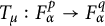
Beyond the Hilbert space situation, Hu and Lv [Reference Hu and Lv9, Reference Hu and Lv10] systematically investigated Toeplitz operators acting between different Fock spaces
$F_{\alpha }^{p}$
 and
$F_{\alpha }^{q}$
 for
$0< p,q < \infty $
 . They characterized bounded and compact Toeplitz operators with positive Borel measure symbols in terms of averaging functions and Berezin-type transforms. A notable feature of their results is a rigidity phenomenon specific to Fock spaces: boundedness (or compactness) from
$F_{\alpha }^{p}$
 to
$F_{\alpha }^{q}$
 for some
$p \leq q$
 automatically implies boundedness (or compactness) for all such q. The groundbreaking work of Hu and Lv has stimulated extensive scholarly investigations into Toeplitz and Hankel operators across diverse weighted Fock spaces [Reference Lu and Lv13, Reference Mengestie14, Reference Zhu17].
In contrast to the well-developed theory of bounded and compact Toeplitz operators, considerably less is known about Toeplitz operators belonging to finer operator ideals on Fock spaces, especially in the non-Hilbertian case. Among these ideals, the class of nuclear operators plays a distinguished role in Banach space operator theory. The aim of this article is to study nuclear Toeplitz operators acting between Fock spaces. Our first main result is presented as follows.
Theorem 1.1 Let
$1\leq q\leq p<\infty , 1\leq s\leq \infty $
 , and let
$\mu \geq 0$
 satisfy (2.1); then the following statements are equivalent:
-
(1) $T_\mu \in \mathcal {N}(F_\alpha ^p,F_\alpha ^q)$
 ;
-
(2) $T_\mu \in \mathcal {N}(f_\alpha ^\infty ,F_\alpha ^s)$
; -
(3) $\mu (\mathbb {C})<\infty $
.


Moreover,

Since nuclear and trace-class operators coincide on Hilbert spaces, the case
${p=q=2}$
 in our results recovers Zhu’s characterization of trace-class Toeplitz operators in [Reference Isralowitz and Zhu11]. Notice that Zhu’s proof relies heavily on Hilbert space structure, including orthogonal decompositions, positivity, and the classical Schatten class theory. In contrast, when
$p \neq 2$
 , the Fock space
$F^p_\alpha $
 is a Banach space lacking Hilbert geometry. The standard techniques used in the Hilbert case do not extend directly. Thus, the characterization of nuclear Toeplitz operators between Banach Fock spaces requires a different approach based on operator ideals. We emphasize that our method provides a more constructive approach to approximating
$T_\mu $
 with nuclear operators compared to Zhu’s proof.
Our main results provide a detailed description of nuclear Toeplitz operators in different parameter regimes. When
$ 1\leq q\leq p<\infty $
 and
$ \mu \geq 0 $
 , we obtain necessary and sufficient conditions for
$ T_{\mu } $
 to be nuclear in terms of the integrability of the Berezin transform of
$ \mu $
 . As a consequence, we show that nuclearity in this range exhibits a rigidity property analogous to that observed for boundedness: if
$ T_{\mu } $
 is nuclear from
$ F_{\alpha }^{p} $
 to
$ F_{\alpha }^{q} $
 for some
$ q\leq p $
 , then it is nuclear for all such
$ q $
 .
When
$ p<q $
 , the situation becomes more subtle. In this case, we establish separate necessary and sufficient conditions for nuclearity, showing that the Berezin transform alone does not yield a complete characterization. This reflects an inherent asymmetry between the domain and target spaces in the nuclear setting and distinguishes the nuclear theory from previously studied mapping properties of Toeplitz operators on Fock spaces. We will discuss this problem in Section 3.
Berger and Coburn [Reference Berger and Coburn3] showed that the set of all Toeplitz operators
$T_\varphi $
 with compact support continuous symbol is trace-norm dense in the trace ideal of
$F_\alpha ^2$
 and is operator-norm dense in
$\mathcal {K}(F_\alpha ^2)$
 . Our second main result generalizes the aforementioned finding.
Theorem 1.2 Let C denote the set of all Toeplitz operators
$T_{\varphi }$
 with continuous, compactly supported symbols
$\varphi $
 on
$\mathbb {C}$
 , and let
$1<p,q<\infty $
 . Then:
-
(1) C is dense in $\mathcal {N}(F^{p}_{\alpha },F^{q}_{\alpha })$
with respect to the nuclear norm. -
(2) C is norm-dense in $\mathcal {K}(F^{p}_{\alpha },F^{q}_{\alpha })$
.


The proofs rely on tools from Banach space operator theory, including the duality properties of nuclear operators and the approximation and Radon–Nikodým properties of Fock spaces, which we will present in Section 2.
The article is organized as follows. In Section 2, we recall basic definitions and preliminary results concerning nuclear operators and Fock spaces. Section 3 is devoted to the characterization of nuclear Toeplitz operators between Fock spaces and contains our main results. In Section 4, we present several trace formulas and establish the density theorem.
2 Preliminary
2.1 Fock space
Let
$ \alpha>0 $
 and
$ p>0 $
 , the notation
$ L^{p}_{\alpha } $
 refers to the space of all Lebesgue measurable functions
$ f $
 on
$ \mathbb {C} $
 for which
$ f(z)e^{-\alpha |z|^{2}/2}\in L^{p}(\mathbb {C},\mathrm {d}A) $
 , where
$ \mathrm {d}A $
 is the Lebesgue area measure on
$ \mathbb {C} $
 . For
$ f\in L^{p}_{\alpha } $
 , its norm is given by

Correspondingly, for
$ \alpha>0 $
 and
$ p=\infty $
 , we denote by
$ L_{\alpha }^{\infty } $
 the space of measurable functions
$ f $
 such that

The Fock space
$ F_{\alpha }^{p} $
 is defined as the subspace of
$ L_{\alpha }^{p} $
 consisting of entire functions. It is straightforward to verify that
$ F_{\alpha }^{p} $
 becomes a Banach space when
$ 1\leq p\leq \infty $
 . Let
$ f_{\alpha }^{\infty } $
 be the closed subspace of
$ F_{\alpha }^{\infty } $
 consisting of f satisfying

When
$ p=2 $
 , the space
$ F_{\alpha }^{2} $
 is a Hilbert space equipped with the inner product

As a reproducing kernel Hilbert space, its reproducing kernel is
$ K_{\alpha }(z,w)=e^{\alpha z\overline {w}} $
 . The normalized reproducing kernel at z is denoted by
$ k_{z}(w)=e^{\alpha \overline {z}w-\frac {\alpha }{2}|z|^{2}} $
 , which is a unit vector in
$ F_{\alpha }^{p} $
 for every
$ 0<p\leq \infty $
 . For
$ 1\leq p<\infty $
 , let
$ p^{\prime } $
 be the conjugate exponent satisfying
$ \frac {1}{p}+\frac {1}{p^{\prime }}=1 $
 . We can identify the dual of
$ F_{\alpha }^{p} $
 with
$ F_{\alpha }^{p^{\prime }} $
 , and the dual of
$ f_{\alpha }^{\infty } $
 with
$ F_{\alpha }^{1} $
 , via the integral pairing

and under this identification, the norms on the dual spaces and the Fock spaces are equivalent (see [Reference Zhu17, Corollary 2.25 and Theorem 2.26]).
Given
$ \alpha>0 $
 , consider the Gaussian measure

Define the integral operator
$ P_{\alpha } $
 on
$ L_{\alpha }^{p} $
 by

It is known that
$ P_{\alpha }:L_{\alpha }^{p}\to F_{\alpha }^{p} $
 is bounded for all
$ p $
 , and it acts as the identity on
$ F_{\alpha }^{p} $
 , that is,
$ P_{\alpha }f=f $
 for
$ f\in F_{\alpha }^{p} $
 (see [Reference Zhu17, Corollary 2.22]).
For a function
$ \varphi \in L^{\infty }(\mathbb {C})$
 , the associated Toeplitz operator
$ T_{\varphi }:F_{\alpha }^{2}\to F_{\alpha }^{2} $
 is defined by

More generally, if
$ \mu $
 is a complex Borel measure on
$ \mathbb {C} $
 , the Toeplitz operator
$ T_{\mu } $
 is given by

provided that the integrability condition

holds for every
$ z\in \mathbb {C} $
 . Let

The set K is dense in
$ F_{\alpha }^{p} $
 for every
$ 1\leq p<\infty $
 and also in
$ f_{\alpha }^{\infty } $
 . Under assumption (2.1), the operator
$ T_{\mu } $
 is well-defined on K. For a measure
$ \mu $
 satisfying (2.1), its Berezin transform is defined as

2.2 Nuclear operator
Let X and Y be complex Banach spaces. The Banach space consisting of all bounded linear operators from X to Y is represented by
$\mathcal {L}(X,Y)$
 . The dual space of a Banach space X is denoted by
$X'$
 . For
$x\in X$
 and
$x'\in X'$
 , we write
$\langle x,x'\rangle $
 for the dual pairing
$x'(x)$
 . We say that an operator
$T\in \mathcal {L}(X,Y)$
 is nuclear provided that it admits a representation of the form

for sequences
$(x_{j}')\subset X'$
 and
$(y_{j})\subset Y$
 satisfying
$\sum _{j=1}^{\infty }\|x_{j}'\|_{X'}\|y_{j}\|_{Y}<\infty .$
 For
$x'\in X'$
 and
$y\in Y$
 , we denote by
$x'\otimes y$
 the rank-one operator from X to Y defined by

The nuclear norm of T is given by

where the infimum in this definition is taken over all representations of the type (2.4). We write
$\mathcal {N}(X,Y)$
 for the class of all nuclear operators mapping X into Y. Equipped with the norm
$\|\cdot \|_{N}$
 , it becomes a Banach space. In the case where E and F coincide, we write
$\mathcal {N}(E)$
 for
$\mathcal {N}(E,E)$
 .
A Banach space E is said to have the approximation property if for every compact set
$K\subset E$
 and every
$\varepsilon>0$
 , there exists a finite-rank operator
$L: E\to E$
 such that

For a Banach space E with the approximation property, the nuclear trace of an operator
$T\in \mathcal {N}(E)$
 can be defined by

where
$T=\sum _{j=1}^{\infty }x_{j}^{\prime }\otimes x_{j}$
 is any representation as in (2.4). It follows from [Reference Gohberg, Goldberg and Krupnik8, Theorem V.1.2] that the value of the trace does not depend on the particular representation chosen. Standard references for the general theory of operator ideals include [Reference Defant and Floret4, Reference Diestel, Jarchow and Tonge5, Reference Gohberg, Goldberg and Krupnik8, Reference Pietsch15].
Definition 2.1 Let X be a Banach space, and let
$(\Omega ,\Sigma ,\mu )$
 be any finite measure space, if for every
$\mu $
 -continuous vector measure
$G:\Sigma \to X$
 of bounded variation, we can find a function
$g\in L^{1}(\mu ,X)$
 for which

we say that X has the Radon–Nikodým property.
Proposition 2.2 For
$1<p<\infty $
 , the Fock space
$F_{\alpha }^{p}$
 is a Banach space that enjoys both the approximation property and the Radon–Nikodým property.
Proof The approximation property follows from [Reference Fulsche7, Proposition 2.1]. The Radon–Nikodým property holds because
$F_\alpha ^p$
 is reflexive (see [Reference Diestel and Uhl6, Corollary 3.13]).
Let X be a Banach space, if
$x\in X$
 , define
$x^{\prime \prime }: X^\prime \rightarrow \mathbb {C}$
 by

for every
$x^\prime \in X^\prime $
 . The map
$\tau : X\rightarrow X^{\prime \prime }$
 defined by
$\tau (x)=x^{\prime \prime }$
 for all
$x\in X$
 is called the canonical map. Recall that
$\tau $
 is an isometry from X onto
$X^{\prime \prime }$
 when X is reflexive.
Theorem 2.3 Let X and Y be Banach spaces such that Y is reflexive. The adjoint map
$T\rightarrow T^{*}$
 is an isometry from
$\mathcal {N}(X,Y)$
 onto
$\mathcal {N}(Y^{\prime },X ^{\prime })$
 .
Proof Let
$T=\sum _{j=1}^{\infty }x_{j}^\prime \otimes y_{j} \in \mathcal {N}(X,Y)$
 , where
$(x_{j}^\prime )\in X^\prime , (y_j)\in Y$
 . For any
$y^\prime \in Y^{'}, x \in X$
 , we have

Then
$T^{*}=\sum _{j=1}^{\infty }y_{j}^{\prime \prime }\otimes x_{j}^\prime $
 , and
$\|T^{*}\|_{\mathcal {N}}\leq \sum _{j=1}^{\infty }\|y_{j}^{\prime \prime }\|_{Y^{\prime \prime }}\|x_{j}^\prime \|_{X^{\prime }}=\sum _{j=1}^{\infty }\|y_{j}\|_{Y}\|x_{j}^\prime \|_{X^{\prime }}$
 . Taking the infimum over all possible representations (2.4), we obtain
$\|T^{*}\|_{\mathcal {N}}\leq \|T\|_{\mathcal {N}}$
 . On the other hand, let
$K\in \mathcal {N}(Y^{\prime },X^{\prime })$
 . Since Y is reflexive, there exist sequences
$(a_j^\prime )\in X^\prime $
 and
$(b_j)\in Y$
 such that
$K=\sum _{j=1}^{\infty }b_{j}^{\prime \prime }\otimes a_{j}^\prime $
 . Let
$L=\sum _{j=1}^{\infty }a_{j}^\prime \otimes b_j\in \mathcal {N}(X,Y)$
 . It is easy to check that
$L^*=K$
 and
$\|L\|_{\mathcal {N}}\leq \|K\|_{\mathcal {N}}$
 . This proves the desired result.
For the dual space of compact operators and nuclear operators, we have the following characterization.
Proposition 2.4 [Reference Defant and Floret4, Proposition 16.7]
Let
$ E $
 and
$ F $
 be Banach spaces such that
$ E^{\prime \prime } $
 or
$ F^{\prime } $
 has the approximation property and
$ E^{\prime \prime } $
 or
$ F^{\prime } $
 has the Radon–Nikodým property. Then

The duality brackets are given by

if
$ T = \sum _{n=1}^{\infty } x_{n}^{\prime \prime } \otimes y_{n}^{\prime } \in \mathcal {N}\left (E^{\prime }, F^{\prime }\right ) $
 .
Proposition 2.5 Let
$1<p,q<\infty $
 , then

where the duality is induced by the trace map:

where
$S\in \mathcal {N}(F_{\alpha }^p,F_{\alpha }^{q}) $
 ,
$T\in \mathcal {L}(F_{\alpha }^{q},F_{\alpha }^{p})$
 ,
$A\in \mathcal {K}(F_{\alpha }^{p},F_{\alpha }^{q})$
 , and
$B\in \mathcal {N}(F_{\alpha }^{q},F_{\alpha }^{p})$
 .
Proof We use
$E\cong F$
 to denote that the two Banach spaces E and F are isometrically isomorphic. Then, we have

The first step is obtained from Theorem 2.3; the second step from Proposition 2.4; and the last step follows from reflexivity.
Let
$S=\sum _{j=1}^{\infty } y_{j} \otimes x_{j} \in \mathcal {N}(F_{\alpha }^{p},F_{\alpha }^{q})$
 and
$T\in \mathcal {L}(F_{\alpha }^{q},F_{\alpha }^{p}) $
 ; applying Proposition 2.4, we obtain that the duality bracket is given by

The other proof is similar.
For convenience, in the following sections, we write
$A \lesssim B$
 to mean that
$A \leq CB$
 for some positive constant C, whose exact value is insignificant. The relation
$A \simeq B$
 signifies that
$A \lesssim B \lesssim A$
 .
3 Nuclear Toeplitz operator
In this section, given a complex Borel measure
$\mu $
 , we are going to characterize when the Toeplitz operator
$T_\mu $
 belongs to the nuclear class.
Let
$1\leq p\leq \infty $
 and
$p^\prime $
 be the conjugate exponent of p. For
$f\in F_\alpha ^{p^\prime }$
 , we regard f as an element of
$(F_\alpha ^p)^\prime $
 under the pairing
$\langle \cdot ,\cdot \rangle _{F_\alpha ^2}$
 , that is,

for all
$g\in F_\alpha ^p$
 . Then we have
$\|f\|_{(F_\alpha ^p)^\prime }\simeq \|f\|_{\alpha ,p^\prime }$
 .
Definition 3.1 Let
$T: F_\alpha ^p\xrightarrow {}F_\alpha ^q$
 be a linear operator, where
$1\leq p,q\leq \infty $
 , we define the Berezin transform of T as

Theorem 3.2 Let
$1\leq p<\infty $
 and
$1\leq q,s\leq \infty $
 . We have:
-
(1) If $T\in \mathcal {N}(f_\alpha ^\infty ,F_\alpha ^s)$
, then
$\widetilde {T}(z)\in L^r(dA)$
for all
$1\leq r\leq \infty $
. -
(2) If $T\in \mathcal {N}(F_\alpha ^p,F_\alpha ^q)$
and
$p\leq q$
, then
$\widetilde {T}(z)\in L^r(dA)$
for all
$(\frac {1}{p^\prime }+\frac {1}{q})^{-1}\leq r\leq \infty $
. -
(3) If $T\in \mathcal {N}(F_\alpha ^p,F_\alpha ^q)$
and
$p>q$
, then
$\widetilde {T}(z)\in L^r(dA)$
for all
$1\leq r\leq \infty $
.


Moreover,

Proof To prove (1), let
$T=\sum _{j=1}^{\infty } f_{j} \otimes g_{j}$
 , where
$\left (g_{j}\right ) \subset F_\alpha ^s, \left (f_{j}\right ) \subset F_\alpha ^1 $
 be a nuclear representation. Hence,

Let
$1\leq r\leq \infty $
 , we can find
$m\geq 1, n\geq s$
 such that
$\frac {1}{m}+\frac {1}{n}=\frac {1}{r}$
 . It follows from [Reference Zhu17, Theorem 2.10], we have
$f_j\in F_\alpha ^1\subset F_\alpha ^m$
 ,
$g_j\in F_\alpha ^s\subset F_\alpha ^n$
 , and

Then, by Hölder’s inequality, we have

Now, taking the infimum over all possible representations (2.4) yields

The proof of (2) and (3) is similar.
Lemma 3.3 Let
$1\leq p\leq \infty $
 ,
$z\rightarrow k_z$
 is norm-continuous on
$F_\alpha ^p$
 .
Proof Fix
$z_0\in \mathbb {C}$
 , suppose
$|z-z_0|<1$
 and
$1\leq p<\infty $
 . Then

Since
$|z-z_0|<1$
 , there exists a constant
$C>0$
 such that
$|(k_z(w)-k_{z_0}(w))e^{-\frac {\alpha }{2}|w|^2}|\leq Ce^{-\frac {\alpha }{4}|w|^2}$
 . According to the dominated convergence theorem, the conclusion holds for
$1\leq p < \infty $
 . When
$p=\infty $
 , the conclusion follows from the fact
$\|f\|_{\alpha ,\infty }\leq \|f\|_{\alpha ,p}$
 for any
$1\leq p < \infty $
 .
For a fixed positive number r, let

Then, we define

Clearly, we have the disjoint decomposition for
$\mathbb {C}$
 :

Finally, let
$\{a_{n}\}$
 denote any fixed enumeration of the square lattice
$r\mathbb {Z}^{2}$
 as a sequence.
Theorem 3.4 Let
$\mu $
 be a complex Borel measure on
$\mathbb {C}$
 with
$|\mu |(\mathbb {C})<\infty $
 . Then
$T_\mu $
 belongs to both
$\mathcal {N}(f_\alpha ^\infty , F_\alpha ^s)$
 and
$\mathcal {N}(F_\alpha ^p, F_\alpha ^q)$
 for
$1\leq p<\infty $
 and
$1\leq q,s\leq \infty $
 . Moreover,

Proof We first prove
$T_\mu \in \mathcal {N}(f_\alpha ^\infty , F_\alpha ^1)$
 . Let
$z\in \mathbb {C}$
 , we consider the operator
$k_z\otimes k_z\in \mathcal {N}(f_\alpha ^\infty ,F_\alpha ^1) $
 , that is,

It is obvious that
$\|k_z\otimes k_z\|_{\mathcal {N}}\leq 1$
 for all
$z\in \mathbb {C}$
 . For every
$r>0$
 , note that

thus we can define

Let
$r_n=\frac {1}{2^n}$
 , fix any
$\epsilon>0$
 , since
$|\mu |(\mathbb {C})<\infty $
 , there exists
$R>0$
 such that

According to Lemma 3.3, there exists a
$\delta>0$
 such that

whenever
$|z-w|<\delta $
 , and
$z,w\in \overline {B(0,R+1)}$
 .
Since
$ \{r_n\}$
 is a monotonically decreasing sequence tending to zero, there exists an integer
$N_0$
 such that for all
$ N> N_0 $
 , the set
${\{(S_{r_N}+a_k^{(N)})}\}$
 satisfies the following property: if
$S_{r_N}+a_k^{(N)} \cap \overline { B(0, R)} \neq \emptyset $
 , then
$\overline {(S_{r_N}+a_k^{(N)})}$
 is contained in
$\overline {B(0, R+1)}$
 .
On the one hand, there exists an integer
$N_1$
 such that
$r_N < \sqrt {2} \delta $
 for all
$N> N_1$
 . Fix an
$N> \max (N_0, N_1)$
 . For any
$N'> N$
 , recall that in a Banach space, any absolutely summable sequence is unconditionally summable [Reference Diestel, Jarchow and Tonge5, Proposition 1.1]. We have

where

Let

It is easy to see that if
$(S_{r_N}+a_k^{(N)})\cap (S_{r_{N^{\prime }}}+a_j^{(N^\prime )})\neq \emptyset ,$
 then we have
$a_k^{(N)},\, a_j^{(N^\prime )}\in \overline {(S_{r_N}+a_k^{(N)})}$
 , and
$ |a_k^{(N)}-a_j^{(N^\prime )}|<\delta $
 . Thus,

On the other hand,

Therefore, we have
$\|I_2\|_{\mathcal {N}}\leq (2+|\mu |{(\mathbb {C}}))\epsilon $
 . Similarly, we have
$\|I_1\|_{\mathcal {N}}\leq C\epsilon $
 .
Then, for any
$N^\prime>N$
 , we have

Thus,
$T_{r_n}$
 is a Cauchy sequence in
$\mathcal {N}({f_\alpha ^\infty ,F_\alpha ^1})$
 . Then there is a
$T\in \mathcal {N}(f_\alpha ^\infty , F_\alpha ^1)$
 , such that
$T_{r_n}\rightarrow T$
 with
$\|\cdot \|_{\mathcal {N}}$
 . Therefore,
$T_{r_n}\rightarrow T$
 with
$\|\cdot \|_{op}$
 (operator norm), since
$\|A\|_{op}\leq \|A\|_{\mathcal {N}}$
 for all
$A\in \mathcal {N}( f_\alpha ^\infty ,F_\alpha ^1 )$
 . Then it implies that
$\widetilde {T_{r_n}}\rightarrow {\widetilde {T}}$
 pointwise.
Recall that
$\widetilde {\mu }(z)=\frac {\alpha }{\pi }\int _{\mathbb {C}}e^{-\alpha |z-w|^2} d\mu (w)$
 , we have

Since
$e^{-\alpha |z|^2}$
 is uniformly continuous on
$\mathbb {C}$
 , for any
$\epsilon>0$
 , there exists an
$r_0>0$
 , if
$r<r_0$
 , we have

for every
$w\in S_r+a_k$
 . Hence, if
$r<r_0$
 , we have

This implies
$\lim \limits _{r\rightarrow 0}\widetilde {T_r}(z)=\frac {\pi }{\alpha }\widetilde {\mu }(z)$
 , hence
$\widetilde {T}(z)=\frac {\pi }{\alpha }\widetilde {\mu }(z)$
 .
Set
$F(z,w)=T_\mu K_z(w)$
 and
$G(z,w)=TK_z(w)$
 . These functions are analytic with respect to w and are anti-holomorphic with respect to z. Furthermore, we have

A standard polarization theorem in several complex variables (see [Reference Krantz12]) yields
$F(z,w)=\frac {\alpha }{\pi }G(z,w)$
 for all
$z,w\in \mathbb {C}$
 . Then we have
$T_\mu K_z=\frac {\alpha }{\pi }TK_z$
 for all
$z\in \mathbb {C}$
 . By the density of the finite linear span of kernel functions in
$f_\alpha ^{\infty }$
 , we have
${T_\mu =\frac {\alpha }{\pi }T\in \mathcal {N}(f_\alpha ^{\infty },F_\alpha ^{1})}$
 .
The above proof shows that
$\frac {\alpha }{\pi }T_{r_n}\stackrel {\|\cdot \|_{\mathcal {N}}}{\longrightarrow }T_\mu $
 . Then we have

Recall that the normalized reproducing kernel
$k_z$
 is a unit vector in
$F_\alpha ^p$
 for all
$1\leq p\leq \infty $
 , hence the operator
$T_r$
 defined above belongs to both
$\mathcal {N}(f_\alpha ^\infty , F_\alpha ^s)$
 and
$\mathcal {N}(F_\alpha ^p, F_\alpha ^q)$
 for the indices under consideration. Repeating this argument completes the proof for all cases.
From the proof of Theorem 3.4, let

viewed as a subset of
$\mathcal {N}(F_{\alpha }^p, F_{\alpha }^q)$
 . Then we have the inclusion

In 2020, Fulsche proved that
$T_{f}\in \mathcal {N}(F_{\alpha }^{p})$
 if
$f\in L^{1}(\mathbb {C})$
 (see [Reference Fulsche7, Lemma 2.11], thus the above theorem can be viewed as a generalization of this result. Moreover, if
$\mu $
 is a positive measure, Theorem 1.1 shows that the condition
$\mu (\mathbb {C})<\infty $
 is also sufficient for
$T_{\mu }\in \mathcal {N}(F_{\alpha }^{p},F_{\alpha }^{q})$
 when
$q\leq p$
 . Next, we give the proof of Theorem 1.1.
Proof of Theorem 1.1
A direct calculation shows that
$\widetilde {T_\mu }(z)=\widetilde {\mu }(z)$
 . Since
$\mu \geq 0$
 , we can use Fubini’s theorem to obtain

$ (1) \Rightarrow (3) $
 : If
$1\leq q\leq p<\infty $
 , by Theorem 3.2(3), we have
$\widetilde {T_\mu }(z)=\widetilde {\mu }(z)\in L^1(\mathbb {C},dA)$
 , which implies
$\mu (\mathbb {C})<\infty $
 .
$(3) \Rightarrow (1)$
 follows from Theorem 3.4. The proof of
${(2)\Leftrightarrow (3)}$
 is similar.
Estimate (1.1) follows from the equation
$\|\widetilde {\mu }\|_{L^1}=\mu (\mathbb {C})$
 and Theorems 3.2 and 3.4.
Remark 3.5 Suppose
$1\leq p<q,$
 and
$\mu \geq 0$
 . If
$\mu (\mathbb {C})<\infty $
 , by Theorem 3.4, we have
$T_\mu \in \mathcal {N}(F_\alpha ^p,F_\alpha ^q)$
 . However, we cannot use Theorem 3.2 to prove the equivalence between
$T_\mu \in \mathcal {N}(F_\alpha ^p,F_\alpha ^q)$
 and
$\mu (\mathbb {C})<\infty $
 , since in this case
$(\frac {1}{p^\prime }+\frac {1}{q})^{-1}>1$
 . In fact, we will show that there exists
$T\in \mathcal {N}(F_\alpha ^p,F_\alpha ^q)$
 such that
$\widetilde {T}(z)\notin L^1$
 .
Theorem 3.6 Let
$1\leq p<\infty $
 , and let g be an entire function. Then

for all
$f\in F_\alpha ^p$
 if and only if
$g\in F_\alpha ^{p^\prime }$
 .
Proof
$\Rightarrow :$
 For any
$n\in \mathbb {N}^{+}$
 , define the truncated function

so that

for all
$z\in \mathbb {C}$
 . For any measurable function h, define
$\varphi _{h}: F_\alpha ^p\rightarrow \mathbb {C}$
 by

Then we have
$\varphi _{g_n}\in (F_\alpha ^p)^\prime $
 . Fix
$f\in F_\alpha ^p$
 , since
$|g_n(z)|\leq |g(z)|$
 , we can use the dominated convergence theorem to obtain

Hence,
$\sup _n|\varphi _{g_n}(f)|<\infty $
 . It follows from the principle of uniform boundedness that we have

Then

for all
$f\in F_\alpha ^p$
 . It implies that
$\varphi _g\in (F_\alpha ^p)^\prime $
 . Since
$(F_\alpha ^p)^\prime $
 can be identified with
$F_\alpha ^{p^\prime }$
 under the integral pairing
$\langle \cdot ,\cdot \rangle _{F_\alpha ^2}$
 , we can find
$g^\prime \in F_\alpha ^{p^\prime }$
 such that

Suppose
$(g-g^\prime )(z)=\sum \limits _{k=0}^\infty a_kz^k$
 . For any
$n\in \mathbb {N}$
 , we have

Then we can use the dominated convergence theorem to obtain

It implies that
$a_n=0$
 for all
$n\in \mathbb {N}$
 . Then we have
$g=g^\prime \in F_\alpha ^{p^\prime }$
 .
The other direction follows from Hölder’s inequality.
Example 3.7 It is well-known that for
$1\leq p<q\leq \infty $
 , we have the (proper) inclusion
$F_\alpha ^p\subset F_\alpha ^q$
 , and the inclusion is proper. Theorem 3.6 tells us: We can find
$f\in F_\alpha ^{p^\prime }$
 and
$g\in F_\alpha ^q$
 such that

In other words, if we define
$T=f\otimes g\in \mathcal {N}(F_\alpha ^p,F_\alpha ^q)$
 , then we have
$\|\widetilde {T}\|_{L^1}=\infty .$
 Subsequently, we give an explicit construction of f and g.
If
$1 < p < q < \infty $
 , we have
$1 < q' < p' < \infty $
 . Let
$a = \frac {1}{q} - \frac {1}{p} = \frac {1}{p'} - \frac {1}{q'}$
 and define
${\epsilon _{n} = n^{\frac {a}{2}}}$
 . A sequence of indices
$n_{1} < n_{2} < \cdots $
 can be chosen so that
$3^{-k} \leq \epsilon _{n_{k}} \leq 2^{-k}$
 for all
$k \in \mathbb {N}$
 . Fix a constant b with
$\sqrt {3} < b < 2$
 . We consider the function defined by
$f(z) = \sum a_{n}z^{n}$
 , where its coefficients are given by

The membership of f in
$F_{\alpha }^{p'}$
 is verified by computing two sums. For
$1 < p' \leq 2$
 ,

If
$2 \leqslant p' < \infty $
 , then

The convergence of these series, together with Theorems 1 and 4 in [Reference Tung16], implies that
$ f \in F_{\alpha }^{p'} $
 . Since
$a_{n}\neq o\left (\sqrt {\frac {\alpha ^{n}}{n!}}n^{\frac {1}{4}-\frac {1}{2q^{\prime }}}\right )\quad (n\rightarrow \infty ), $
 it follows from Corollary 5 of [Reference Tung16] that
$ f\in F_{\alpha }^{p^{\prime }}\setminus F_{\alpha }^{q^{\prime }} $
 .
A function g is constructed analogously. Let

and define
$ g(z)=\sum b_{m}z^{m}. $
 It then follows that
$ g\in F_{\alpha }^{q}\setminus F_{\alpha }^{p}. $

If
$ \int _{\mathbb {C}}|f(z)g(z)|e^{-\alpha |z|^{2}}\mathrm {d}A(z)<\infty , $
 then by the dominated convergence theorem, we obtain

From the construction above, we have
$ a_{n}\overline {b_{n}}\geq 0 $
 and
$ \int _{|z|<R}|z|^{2n}e^{-\alpha |z|^{2}}\mathrm {d}A(z) $
 is monotonically increasing in R. The monotone convergence theorem yields:

But
$\int _{\mathbb {C}}f(z)\overline {g(z)}\mathrm {e}^{-\alpha |z|^2}dA(z){\kern-1pt}\leq{\kern-1pt} \int _{\mathbb {C}}|f(z){g(z)}|\mathrm {e}^{-\alpha |z|^2}dA(z)$
 . We obtain a contradiction.
Finally, we conclude this section with an open problem.
Question 3.8 For
$1\leq p<q\leq \infty $
 and
$\mu \geq 0$
 , what is the necessary and sufficient condition for
$T_\mu \in \mathcal {N}(F_\alpha ^p,F_\alpha ^q)$
 ?
4 Trace formula and density theorem
In this section, for an operator
$T\in \mathcal {N}(F_\alpha ^p)$
 ,
$ (1<p<\infty )$
 , we will provide some formulas for calculating its trace. Finally, we will establish a density theorem.
Lemma 4.1 Let
$1<p<\infty $
 and
$T\in \mathcal {N}(F^p_\alpha )$
 , then we have

Proof Let
$T=\sum _{j=1}^{\infty } f_{j} \otimes g_{j}$
 be a nuclear representation of T, where
$\left (g_{j}\right ) \subset F_\alpha ^p, \left (f_{j}\right ) \subset F_\alpha ^{p^\prime }$
 . Then we have
$\mathrm {Tr}(T)=\sum _{j=1}^{\infty }\langle g_j,f_j\rangle =\sum _{j=1}^{\infty }\langle g_j,f_j\rangle _{F_\alpha ^2}$
 . And the trace is independent of the choice of representation. Then we have

Notice that the case
$p=q=2$
 of the following theorem appears in [Reference Berger and Coburn3, Theorem 6], but we adopt a different approach here.
Theorem 4.2 Suppose
$\varphi $
 is Lebesgue measurable on
$\mathbb {C}$
 and
$S\in \mathcal {L}(F_\alpha ^q,F_\alpha ^p)$
 , where
${1<p,q<\infty }$
 . If
-
(1) $\varphi K_z \in L_\alpha ^{p^{\prime }}$
for every
$z\in \mathbb {C}$
; -
(2) $T_\varphi \in \mathcal {L}(F_\alpha ^p,F_\alpha ^q)$
; -
(3) $T_\varphi S \in \mathcal {N}(F_\alpha ^q)$
; -
(4) $\int _{\mathbb {C}}\int _{\mathbb {C}}|\varphi (w)||K(z,w)||SK_z(w)|d\lambda _\alpha (z)d\lambda _\alpha (w)<\infty $
.


Then we have

Proof Let
$f\in F_\alpha ^p $
 , we can find a sequence
$f_n\in K$
 such that
$f_n$
 converges to f with
$\|\|_{\alpha ,p}$
 . The set K is defined as (2.2). By assumption (2), we have
$T_\varphi f_n \stackrel {\|\cdot \|_{\alpha ,q}}{\longrightarrow }T_\varphi f$
 , hence
$T_\varphi f_n(z)\rightarrow T_\varphi f(z)$
 for every
$z\in \mathbb {C}$
 .
Since
$f_n\in K$
 , we have

for all
$n\in \mathbb {N}$
 and
$z\in \mathbb {C}$
 . Then fix
$z\in \mathbb {C}$
 , by assumption (1), we have

Hence,

for every
$f\in F_\alpha ^p$
 . Then we can use Fubini’s theorem to obtain

Let
$S^\prime \in \mathcal {L}(F_\alpha ^{p^\prime },F_\alpha ^{q^\prime })$
 be the adjoint operator of S under the pairing
$\langle \cdot ,\cdot \rangle _{F_\alpha ^2}$
 . Then we have

for all
$f\in F_\alpha ^q, g\in F_\alpha ^{p^\prime }$
 . Hence,

It follows from (4.1), we have

We can now prove the following lemma.
Lemma 4.3 Let
$1<p, q<\infty $
 , and let
$\varphi $
 be a bounded, compactly supported function on
$\mathbb {C} $
 . Then
$T_\varphi \in \mathcal {N}(F_\alpha ^p,F_\alpha ^q)$
 . Furthermore, for any
$S\in \mathcal {L}(F_\alpha ^q,F_\alpha ^p)$
 , we have

Proof
$T_\varphi \in \mathcal {N}(F_\alpha ^p,F_\alpha ^q)$
 follows from Theorem 3.4. Applying the pointwise estimates on the Fock space, we have

Hence,

Then the conclusion follows from Theorem 4.2.
We now present the proof of Theorem 1.2.
Proof of Theorem 1.2
We first prove (2). Assume, for contradiction, that C is not norm-dense in
$\mathcal {K}(F_{\alpha }^{p},F_{\alpha }^{q})$
 . An application of the Hahn–Banach theorem combined with Proposition 2.5 implies the existence of a nonzero operator
$S\in \mathcal {N}(F_{\alpha }^{q},F_{\alpha }^{p})$
 satisfying

By Lemma 4.3, this trace can be written as

Since the equality holds for every continuous, compactly supported
$\varphi $
 , it follows that
$\widetilde {S}(z)=0$
 . Consequently,
$S=0$
 , which contradicts the fact that S is nonzero. This establishes statement (2).
The proof of (1) follows by a similar argument.



