FirstView articles
Contents
Article
A note on the varieties of the nonnegative Kodaira dimension with polarized self-maps
- Part of:
-
- Published online by Cambridge University Press:
- 04 November 2026, pp. 1-10
-
- Article
-
- You have access
- HTML
- Export citation
Discrete harmonic extensions and a discrete Hilbert transform
- Part of:
-
- Published online by Cambridge University Press:
- 27 October 2026, pp. 1-16
-
- Article
-
- You have access
- Open access
- HTML
- Export citation
-
The classical Hilbert transform of a function on the real line arises as the boundary value of the function’s conjugate-harmonic extension. In this article, harmonic extensions to the upper half-integer lattice $\mathbb {Z} \times \mathbb {N}$
 are constructed for a given boundary sequence on the integers; these serve as discrete analogs of the Poisson and conjugate-Poisson integrals. The construction is characterized by: (i) discrete harmonicity with respect to a two-dimensional Laplacian, (ii) a Cauchy–Riemann system, and (iii) boundary values involving a discrete Hilbert transform. This new discrete Hilbert transform is compared to the Riesz–Titchmarsh transform, and Lebesgue bounds are proved. The construction is also extended to the higher dimensional case. These results provide a discrete harmonic-analytic model analogous to the classical theory.

Zelevinsky segment and strongly positive representations
- Part of:
-
- Published online by Cambridge University Press:
- 27 October 2026, pp. 1-11
-
- Article
-
- You have access
- HTML
- Export citation
-
Let $G_n$
 denote either the group $SO(2n+1, F)$
 or $Sp(2n, F)$
 over a non-Archimedean local field of characteristic zero. We determine all composition factors of a parabolically induced representation of the form $\langle [ \nu ^{a} \rho , \nu ^{b} \rho ] \rangle \rtimes \sigma $
 , where $\langle [ \nu ^{a} \rho , \nu ^{b} \rho ] \rangle $
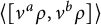 denotes the Zelevinsky segment representation of the general linear group attached to the segment $[ \nu ^{a} \rho , \nu ^{b} \rho ]$
 , and $\sigma $
 denotes a strongly positive discrete series of $G_n$
 .


Balancing the 2-systoles of some Kähler manifolds with positive scalar curvature
- Part of:
-
- Published online by Cambridge University Press:
- 26 October 2026, pp. 1-10
-
- Article
-
- You have access
- HTML
- Export citation
-
Theorems by Bray–Brendle–Neves and Zhu about positive scalar curvature metrics on products of a $2$
 -sphere and an n-torus suggest that positive scalar curvature and appropriate topological assumptions should lead to the existence of topologically nontrivial 2-spheres of small area, which can be stated as an upper bound on the 2-systole of such manifolds. Recent progress has been made in this direction by Sha and Tsiamis under the additional Kähler assumption while Cecchini–Hirsh–Zeidler, Stryker, and Tsiamis showed similar upper bounds on the stable 2-systole using index theoretic methods. We prove here similar inequalities for some Kähler manifolds which control the relative sizes of the representatives of a well-chosen set of homology classes. For instance, on $(\mathbb {CP}^1\times \mathbb {CP}^1,\omega )$
 with a positive scalar curvature Kähler metric, we quantitatively show that largeness of one factor imposes smallness of the other.

Epimorphism classes and relatively maximal metrics in large-scale geometry
- Part of:
-
- Published online by Cambridge University Press:
- 26 October 2026, pp. 1-23
-
- Article
-
- You have access
- HTML
- Export citation
Berezin range and norm of Volterra-type integral operators on the Fock space
- Part of:
-
- Published online by Cambridge University Press:
- 23 October 2026, pp. 1-19
-
- Article
-
- You have access
- HTML
- Export citation
-
In this article, we investigate several properties of the Volterra-type integral operator $V_g$
 on the Fock space. We give an explicit description of its Berezin range, prove that this range is path connected, and establish several results concerning its convexity. We compute the operator norm, essential norm, Berezin norm, and Berezin number of $V_g$
 . We also derive an exact coefficient representation of its numerical range and obtain a spectral characterization of its numerical radius. In particular, we prove that the operator norm, Berezin norm, Berezin number, and numerical radius coincide if and only if the polynomial expansion of the symbol g contains no linear term. This extremal identity holds even though the operator is non-normal.


Cyclicity in Poletsky–Stessin weighted Bergman spaces
- Part of:
-
- Published online by Cambridge University Press:
- 23 October 2026, pp. 1-28
-
- Article
-
- You have access
- HTML
- Export citation
-
We study the cyclicity of polynomials in Poletsky–Stessin weighted Bergman spaces on various domains in $\mathbb {C}^2$
 , including the unit ball, the bidisk, and the complex ellipsoid. To this end, we introduce a natural extension of the parameter range for Poletsky–Stessin weighted Bergman spaces on complete Reinhardt domains, yielding a family of spaces that resemble Dirichlet-type spaces on the unit ball. We highlight the differences in the cyclicity behavior of polynomials in these spaces on the bidisk compared to those studied by Bénéteau et al. Finally, we propose several open problems concerning the structure of cyclic polynomials in these spaces.

Model sets with precompact Borel windows
- Part of:
-
- Published online by Cambridge University Press:
- 23 October 2026, pp. 1-20
-
- Article
-
- You have access
- Open access
- HTML
- Export citation
Nontrivial automorphisms of $\mathcal P(\omega )/\mathrm {Fin}$
 in Cohen models
- Part of:
-
- Published online by Cambridge University Press:
- 23 October 2026, pp. 1-14
-
- Article
-
- You have access
- Open access
- HTML
- Export citation
-
We show that if $\kappa < \aleph _\omega $
 Cohen reals are added to a model of $\textsf {CH}$
 , then there are nontrivial automorphisms of $\mathcal{P}(\omega )/\mathrm {Fin}$
 in the extension. Under some further hypotheses on the ground model, namely, the existence of long enough sage Davies trees (which follows from $\textsf {SCH}$
 plus $\square _\lambda $
 for every $\lambda $
 with $\mathrm {cf}(\lambda ) = \omega $
 ), we prove the same result for cardinals $\kappa \geq \aleph _\omega $
 as well. This extends a result by Shelah and Steprāns, who proved the result for $\kappa = \aleph _2$
 .


Some remarks on reduced $C^*$
 -algebras of semigroup dynamical systems and product systems
- Part of:
-
- Published online by Cambridge University Press:
- 19 October 2026, pp. 1-20
-
- Article
-
- You have access
- HTML
- Export citation
-
We study the exactness of the reduced crossed product of a semigroup dynamical system and the reduced $C^{*}$
 -algebra of a product system. We show that for a semigroup dynamical system $(A, P,\alpha )$
 , under reasonable hypotheses (e.g., P is abelian and finitely generated), the reduced crossed product $A \rtimes _{\mathrm {red}} P$
 is exact if and only if A is exact. This strengthens our earlier result (Hossain and Sundar, 2026, J. Noncommut. Geom.), where it was assumed that the action of P on A is by injective endomorphisms. We also compare the groupoid crossed product described in Hossain and Sundar (2026) and the Fell bundle constructed in Rennie et al. (2017, Math. Proc. Cambridge Philos. Soc., 163, 561–580) for a product system, and show that they are equivalent as Fell bundles.


Corrigendum: Regularities and multiplicities of Veronese type algebras
- Part of:
-
- Published online by Cambridge University Press:
- 15 October 2026, pp. 1-4
-
- Article
-
- You have access
- Open access
- HTML
- Export citation
Deterministic and stochastic inverse problems for the fractional Schrödinger equation
- Part of:
-
- Published online by Cambridge University Press:
- 15 October 2026, pp. 1-20
-
- Article
-
- You have access
- HTML
- Export citation
-
We are interested in an inverse problem for the fractional Schrödinger equation with a time-independent potential on closed Riemannian manifolds. The model is given by
$$\begin{align*}i\partial_t^\alpha u+\big((-\Delta_g)^\beta+V\big)u=f, \end{align*}$$
with $\alpha ,\beta \in (0,1)$
 and $V\in L^\infty (M)$
 real-valued. Our main goal is to determine the fractional powers $\alpha ,\beta $
 , the Riemannian metric g (up to an isometry), and the potential V simultaneously from the knowledge of the associated source-to-solution map. For disjoint source and observation regions, the map determines $\alpha $
 , $\beta $
 , and the complete cross-spectral data of $(-\Delta _g)^\beta +V$
 relative to these regions. For coinciding regions, if the potentials vanish there and the geometric and regularity hypotheses of Feizmohammadi et al. (2026, Invent. Math.) hold, the map determines $\alpha $
 , $\beta $
 , the metric (up to an isometry), and the potential simultaneously. Our argument builds on the work of Li (2026, Canad. Math. Bull., 1–15) by combining the high-frequency behavior of the resolvent, Weyl’s law for the eigenvalues of the operator $(-\Delta _g)^\beta +V$
 , the unique continuation property of fractional operators with potentials, and the fractional Calderón theorem of Feizmohammadi et al. (2026). A probabilistic formulation of the inverse problem is also provided, and we prove that the corresponding uniqueness conclusions hold when the equation is driven by additive temporal white noise with a prescribed spatial profile.


Monomial ideals whose all matching powers are Cohen–Macaulay
- Part of:
-
- Published online by Cambridge University Press:
- 15 October 2026, pp. 1-19
-
- Article
-
- You have access
- HTML
- Export citation
On the converse of the Shimorin–Peláez–Rättyä–Wick theorem
- Part of:
-
- Published online by Cambridge University Press:
- 15 October 2026, pp. 1-15
-
- Article
-
- You have access
- HTML
- Export citation
On the invariant sphere theorem with emphasis in the round sphere $\mathbb S^n$

- Part of:
-
- Published online by Cambridge University Press:
- 15 October 2026, pp. 1-12
-
- Article
-
- You have access
- HTML
- Export citation
-
This article discusses vector fields in $\mathbb R^n$
 , $n \geq 3$
 , that can be written as the sum of a radial repelling vector field and an attracting nonlinear homogeneous vector field of odd degree. The nontrivial dynamics for such vector fields is restricted to an invariant topological sphere. A necessary and sufficient condition for this invariant topological sphere to be the unit sphere centered at the origin of coordinates is given. Examples exhibiting distinct dynamics on these invariant spheres are presented.


Hedgehog reconstruction of polygons: Non-central sections and slabs
- Part of:
-
- Published online by Cambridge University Press:
- 30 September 2026, pp. 1-13
-
- Article
-
- You have access
- Open access
- HTML
- Export citation
Disproofs of two conjectures concerning nondeficient numbers
- Part of:
-
- Published online by Cambridge University Press:
- 25 September 2026, pp. 1-11
-
- Article
-
- You have access
- HTML
- Export citation
-
A positive integer n is said to be nondeficient if $\sigma (n) \geq 2n$
 . Letting the positive divisors of an integer $n> 1$
 be written as $1 = d_0 < d_1 < \cdots < d_k < d_{k+1} = n$
 , and letting $\mathcal {S}$
 denote a set of integers, if there exist values $\lambda _j \in \mathcal {S}$
 such that $1 + \sum _{j=1}^{k} \lambda _j d_j = n$
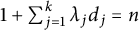 , then n is said to be an $\mathcal {S}$
 -perfect number. Ross, in 2024, introduced the study of $\mathcal {S}$
 -perfect numbers and concluded with two conjectures that each concern both $\{ -1, 1 \}$
 -perfect numbers and nondeficient numbers. We disprove both of these conjectures.


Groups with fast-growing conjugator length functions
- Part of:
-
- Published online by Cambridge University Press:
- 25 September 2026, pp. 1-23
-
- Article
-
- You have access
- Open access
- HTML
- Export citation
-
We construct the first examples of finitely presented groups whose conjugator length function is exponential; these are central extensions of groups of the form $F_m\rtimes F_2$
 . Further, we use a fiber product construction to exhibit a family of finitely presented groups $\Gamma _k$
 , where for each k, the conjugator length function of $\Gamma _k$
 grows like functions lying in the k-th level of the Grzegorczyk hierarchy of primitive recursive functions.


An inverse problem for the magnetic fractional Schrödinger equation with nonlinear potential
- Part of:
-
- Published online by Cambridge University Press:
- 22 September 2026, pp. 1-10
-
- Article
-
- You have access
- HTML
- Export citation
-
We study an inverse problem for a magnetic fractional Schrödinger equation with both a linear potential $q(x)$
 and a nonlinear potential $a(x,u)$
 analytic in u. The magnetic potential $A(x)$
 is assumed to be known. We show that the exterior Dirichlet-to-Neumann map uniquely determines both the linear potential q and the full nonlinearity a. The proof relies on higher-order linearization and the Runge approximation property for the magnetic fractional Laplacian. Our work extends the linear magnetic Calderón problem to the nonlinear setting and provides a uniqueness result for recovering multiple unknown coefficients simultaneously.


Connected fundamental domains for congruence subgroups
- Part of:
-
- Published online by Cambridge University Press:
- 22 September 2026, pp. 1-11
-
- Article
-
- You have access
- Open access
- HTML
- Export citation
-
We give explicit sets of right coset representatives for the congruence subgroups $\Gamma _0(N)$
 , $\Gamma _1(N),$
 and $\Gamma (N)$
 , and prove that the corresponding unions of standard modular triangles are connected fundamental domains. The construction is based on a study of the projective line ${\mathbb P}^1({\mathbb Z}/N{\mathbb Z})$
 . For every residue class $j\in {\mathbb Z}/N{\mathbb Z}$
 , the number of representatives above j is governed by the simple function $$\begin{align*}W_j=\min\{m\in{\mathbb{Z}}_{>0}\mid mj-1\in ({\mathbb Z}/N{\mathbb Z})^*\}.\end{align*}$$

We also include examples illustrating how the connected domains make cusp and boundary data visible.


