FirstView articles
Contents
Article
$B_h[g]$
 -vectors and finite families of linear forms
- Part of:
-
- Published online by Cambridge University Press:
- 13 July 2026, pp. 1-6
-
- Article
-
- You have access
- HTML
- Export citation
-
In a recent work, Nathanson proved that, for $K=\mathbb {R}$
 or $\mathbb {C}$
 , the set of $B_h$
 -vectors in $K^n$
 is open and dense. Leonetti later extended this to $B_h[g]$
 -vectors. In this note, we isolate a finite linear functional principle behind these results. Namely, if $\mathcal F$
 is a finite family of pairwise distinct linear functionals on $K^n$
 , then the set of points at which no value is assumed by more than g members of $\mathcal F$
 is open and dense in $K^n$
 . As consequences, we recover the theorems of Nathanson and Leonetti for $B_h[g]$
 -vectors and obtain the following variant: for every linear form $L(x_1,\ldots ,x_h)=c_1x_1+\cdots +c_hx_h$
 , with nonzero integer coefficients, the corresponding set of $L[g]$
 -vectors, evaluated on distinct variables, is open and dense in $K^n$
 .


Finiteness of homological dimensions of Ext modules
- Part of:
-
- Published online by Cambridge University Press:
- 13 July 2026, pp. 1-17
-
- Article
-
- You have access
- HTML
- Export citation
On an analogue of BRK-type sets in finite fields
- Part of:
-
- Published online by Cambridge University Press:
- 13 July 2026, pp. 1-14
-
- Article
-
- You have access
- Open access
- HTML
- Export citation
-
A Besicovitch–Rado–Kinney (BRK) set in $\mathbb {R}^n$
 contains a hypersphere of every radius. In $\mathbb {F}_q^n$
 , BRK-type sets of degree $\ell $
 analogously contain a family of $(n-1)$
 -dimensional surfaces, parameterized by a dilation factor and determined by a fixed homogeneous polynomial of degree $\ell $
 . We define $(n,d)$
 -BRK-type sets of degree $\ell $
 , which contain a family of d-dimensional sets parameterized by an $(n-d)$
 -dimensional dilation factor and determined by fixed homogeneous polynomials of degree $\ell $
 . We use the polynomial method to obtain a lower bound $|S| \gtrsim _{n, \ell } q^n$
 on $(n,d)$
 -BRK-type sets S of degree $\ell $
 . We obtain an improved lower bound $|S| \geq \frac {(q-1)^n}{(\ell + 1 - 2\ell /q)^n}$
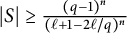 by implementing the method of multiplicities; this is the same bound obtained by Trainor on BRK-type sets of degree $\ell $
 , and we obtain this bound independently of d.


On medial Latin quandles and affine modules
- Part of:
-
- Published online by Cambridge University Press:
- 13 July 2026, pp. 1-13
-
- Article
-
- You have access
- Open access
- HTML
- Export citation
Hyper-algebraic invariants of p-adic algebraic numbers
- Part of:
-
- Published online by Cambridge University Press:
- 10 July 2026, pp. 1-20
-
- Article
-
- You have access
- HTML
- Export citation
-
Let $p\geq 3$
 be a prime. The hyper-algebraic elements in the p-adic Mal’cev–Neumann field ${\mathbb{L}} _p$
 form an algebraically closed subfield ${\mathbb{L}} _p^{\text {ha}}$
 . In this article, we clarify the relations among the fields ${\mathbb{L}} _p^{\text {ha}}$
 , $\overline {{\mathbb{Q}} }_p$
 , and ${\mathbb{C}} _p$
 . We introduce two arithmetic invariants (hyper-tame index and hyper-inertia index) of hyper-algebraic elements and study the relation between these invariants and classical arithmetic invariants of p-adic algebraic numbers. Finally, we give a criterion for hyper-algebraic elements to be tamely ramified over ${\mathbb{Q}} _p$
 .


GCD-closed sets and divisibility among power LCM matrices
- Part of:
-
- Published online by Cambridge University Press:
- 09 July 2026, pp. 1-15
-
- Article
-
- You have access
- HTML
- Export citation
-
Let $a,b,$
 and n be positive integers and let $S=\{x_1, \cdots, x_n\}$
 be a set of n distinct positive integers. We denote by $[S^a]$
 the $n\times n$
 matrix having the ath power of the least common multiple of $x_i$
 and $x_j$
 as its $(i,j)$
 -entry. For $x\in S$
 , let ${G_{S}(x)=\{d\in S: d < x, d|x \ {\rm and} \ (d|y|x, y\in S)\Rightarrow y\in \{d,x\}\}}$
 . In this article, we show that $[S^a]$
 divides $[S^b]$
 in the ring of $n\times n$
 matrices over the integers if $a|b$
 and S is gcd closed (i.e., $\gcd(x_i, x_j)\in S$
 for all integers i and j with $1\le i,j\le n$
 ) and satisfies the condition $\mathcal G$
 (That is, for any $x\in S$
 , either $G_S(x)$
 contains at most one element, or $G_S(x)$
 contains at least two elements and satisfies that ${\rm lcm}(y_1,y_2)=x$
 and $\gcd(y_1,y_2)\in G_S(y_1)\cap G_S(y_2)$
 for any $\{y_1,y_2\}\subseteq G_S(x)$
 ). This confirms a conjecture of Hong proposed in (2026, Bull. Aust. Math. Soc., 113, 231–243).


Horospherical subgroups in positive characteristic
- Part of:
-
- Published online by Cambridge University Press:
- 09 July 2026, pp. 1-28
-
- Article
-
- You have access
- HTML
- Export citation
-
We investigate horospherical homogeneous spaces – a class of spherical homogeneous spaces encompassing both flag varieties and algebraic tori – over algebraically closed fields of characteristic $p>0$
 , and establish their complete classification for $p> 2$
 .


Nuclear Toeplitz operators between Fock spaces
- Part of:
-
- Published online by Cambridge University Press:
- 07 July 2026, pp. 1-18
-
- Article
-
- You have access
- HTML
- Export citation
-
We characterize the nuclearity of Toeplitz operators $T_\mu : F_\alpha ^p \to F_\alpha ^q$
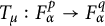 with Borel measure symbols for $1\leq p,q\leq \infty $
 . For positive measures $\mu $
 and $q\leq p$
 , we provide necessary and sufficient conditions in terms of the Berezin transform and establish a rigidity property for nuclearity across this range. In the case $p<q$
 , we obtain separate necessary and sufficient conditions, indicating that the Berezin transform alone is insufficient for a complete characterization. Our results extend to Fock spaces on $\mathbb {C}^n$
 .


On the quantitative simultaneous sign changes of Fourier coefficients attached to Hecke–Maass forms over certain quadratic forms
- Part of:
-
- Published online by Cambridge University Press:
- 26 June 2026, pp. 1-20
-
- Article
-
- You have access
- HTML
- Export citation
-
Let f and g be two distinct Hecke–Maass cusp forms of weight zero for the full modular group $SL(2,\mathbb {Z})$
 with Laplacian eigenvalues $\frac {1}{4}+t_{1}^{2}$
 and $\frac {1}{4}+t_{2}^{2}$
 , and denote by $\lambda _{f}(n)$
 and $\lambda _{g}(n)$
 the n-th normalized Fourier coefficients attached to f and g, respectively. In the present article, we establish a quantitative result regarding the sign changes of the sequence $\{\lambda _{f}(n)\lambda _{g}(n)\}_{n\geqslant 1}$
 in the interval $(x,2x]$
 , supported at a certain primitive integral binary quadratic form with fixed negative discriminant $D<0$
 , for sufficiently large x.


Studying links via book links: A Markov theorem
-
- Published online by Cambridge University Press:
- 26 June 2026, pp. 1-17
-
- Article
-
- You have access
- Open access
- HTML
- Export citation
Multi-observable uncertainty bounds via matrix inequalities
- Part of:
-
- Published online by Cambridge University Press:
- 24 June 2026, pp. 1-19
-
- Article
-
- You have access
- HTML
- Export citation
On slice-quaternionic wavelet sets
- Part of:
-
- Published online by Cambridge University Press:
- 16 June 2026, pp. 1-22
-
- Article
-
- You have access
- Open access
- HTML
- Export citation
-
We introduce a slice-based quaternionic analog of wavelet sets in the right- quaternionic Hilbert space $L^{2}(\mathbb {R}^{d},\mathbb {H})$
 . Using a slice-quaternionic Fourier transform, we characterize boundedness and Parseval tightness of affine systems generated by $\widehat {\psi }=(2\pi )^{-d/2}\chi _{E}q$
 via translation and dilation multiplicity conditions on E. These results extend the classical frame wavelet-set theory of Dai et al. (2003, J. Comput. Appl. Math. 155, 69–82) to the quaternionic setting under a natural slice-phase restriction. Several dyadic, directional, and multiwavelet examples illustrate the framework and provide the first systematic construction of quaternionic wavelet sets.

Cusps and boundaries of connected fundamental domains for $\Gamma _0(N)$

- Part of:
-
- Published online by Cambridge University Press:
- 09 June 2026, pp. 1-14
-
- Article
-
- You have access
- Open access
- HTML
- Export citation
-
For $N>1$
 , we constructed a canonical connected fundamental domain for $\Gamma _0(N)$
 in Nie and Parent (2024, Connected fundamental domains for congruence subgroups), utilizing an interesting function $W: {\mathbb Z}/N\to {{\mathbb N}}$
 . In this article, we further study the function W, prove some identities, and use it to match the cusps, with widths, produced by our connected fundamental domain with the known cusp classes of $\Gamma _0(N)$
 . Furthermore, we list the boundary arcs and the gluing patterns of our connected fundamental domain, a key step in understanding the modular curve $X_0(N)$
 by this approach.


Well-posedness of second-order integro-differential equations
- Part of:
-
- Published online by Cambridge University Press:
- 08 June 2026, pp. 1-23
-
- Article
-
- You have access
- HTML
- Export citation
-
In this article, we study well-posedness of the second-order integro-differential equations ($P_5$
 ): $ \mu * (Mu)"(t) + \nu * {(Mu)}'(t) + \eta *(Mu)(t) = \tau * Au(t) + f(t), \ (t\in {\mathbb T}:=[0,2\pi ])$
 with periodic boundary conditions $ Mu(0)=Mu(2\pi ), (Mu)'(0)=(Mu)'(2\pi )$
 , where $A,M$
 are closed operators in a Banach space X such that $D(A)\subset D(M)$
 , $\mu , \nu , \eta ,$
 and $\tau $
 are finite scalar measures on ${\mathbb R}$
 . Using known results on Fourier multipliers, we find necessary and sufficient conditions on the measures $\mu , \nu , \eta , \tau $
 and the operators $A,M$
 to ensure well-posedness of ($P_5$
 ) in $L^p({\mathbb T}; X)$
 , periodic Besov spaces $B_{p,q}^s({\mathbb T}; X),$
 and Triebel–Lizorkin spaces $F_{p,q}^s({\mathbb T}; X)$
 .


An inverse problem for the space–time fractional Schrödinger equation on closed manifolds
- Part of:
-
- Published online by Cambridge University Press:
- 04 June 2026, pp. 1-15
-
- Article
-
- You have access
- HTML
- Export citation
Counting primitive integral solutions to spherical generalized Fermat equations
- Part of:
-
- Published online by Cambridge University Press:
- 04 June 2026, pp. 1-17
-
- Article
-
- You have access
- Open access
- HTML
- Export citation
-
A solution $(x,y,z) \in \mathbb {Z}^3-\left \{ (0,0,0) \right \}$
 to a generalized Fermat equation (1)$$ \begin{align} A\textsf{x}^{a} + B\textsf{y}^{b} + C\textsf{z}^{c} = 0 \end{align} $$is called primitive if $\gcd (x,y,z) = 1$

 . By work of Beukers (1998, Duke Math. J., 91, 61–88), we know that in the spherical regime (i.e., when the Euler characteristic $\chi = \tfrac {1}{a} + \tfrac {1}{b} + \tfrac {1}{c} - 1$
 is positive), if Equation (1) has one primitive solution, then it has infinitely many. In this work, we use the method of Fermat descent, as employed by Poonen et al. (2007, Duke Math. J., 137, 103–158), to refine Beukers’ result to an asymptotic count of the number of primitive integral solutions of bounded height.
The calculus of Duistermaat’s triple index
- Part of:
-
- Published online by Cambridge University Press:
- 02 June 2026, pp. 1-20
-
- Article
-
- You have access
- Open access
- HTML
- Export citation
Non-computability of K-theory for computably presented $\mathrm {C}^*$
 -algebras
- Part of:
-
- Published online by Cambridge University Press:
- 29 May 2026, pp. 1-6
-
- Article
-
- You have access
- Open access
- HTML
- Export citation
-
We give an example of a unital $\mathrm {C}^*$
 -algebra $\mathbf {A}$
 with a computable presentation and for which neither $K_0(\mathbf {A})$
 nor $K_1(\mathbf {A})$
 has a computable presentation.


Note on Robins’ conjecture in dimension four and higher
- Part of:
-
- Published online by Cambridge University Press:
- 29 May 2026, pp. 1-6
-
- Article
-
- You have access
- HTML
- Export citation
-
This article is motivated by a conjecture proposed by Sinai Robins in 2024. The conjecture asserts that two convex, centrally symmetric sets of positive measure that are not multi-tilers must coincide up to rigid motions if and only if their Fourier transforms agree on the lattice $\mathbb {Z}^d$
 . In this article, we disprove the conjecture by constructing explicit counterexamples in dimensions $d \geq 4$
 .


Translates of completely normal elements and the Morgan–Mullen conjecture
- Part of:
-
- Published online by Cambridge University Press:
- 28 May 2026, pp. 1-21
-
- Article
-
- You have access
- Open access
- HTML
- Export citation
-
Denote by $\mathbb F_q$
 the finite field of order q and by $\mathbb F_{q^n}$
 its extension of degree n. Some $a\in \mathbb F_{q^n}$
 is called primitive if it generates the multiplicative group $\mathbb F_{q^n}^*$
 , and it is called $q^n/q$
 -normal if its $\mathbb F_q$
 -conjugates form an $\mathbb F_q$
 -basis of $\mathbb F_{q^n}$
 if the latter is viewed as an $\mathbb F_q$
 -vector space. Furthermore, some $a\in \mathbb F_{q^n}$
 is called $q^n/q$
 -completely normal if it is $q^n/q^d$
 -normal for all $d\mid n$
 . In this work, we prove a new construction of sets of completely normal elements and we establish, under conditions, the existence of elements that are simultaneously primitive and $q^n/q$
 -completely normal, covering some yet unresolved cases of a 30-year-old conjecture by Morgan and Mullen.


