







1 Introduction
Let
 $\mathbb {N}$
denote the set of all the positive integers. For a set
 $A\subset \mathbb {N}$
, the counting function
 $A(n)=|\{a : 1\leq a\leq n, \,a\in A\}|$
is the number of elements of A not exceeding n. For
 $n=1, 2,\ldots ,$
define the additive representation functions:
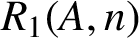
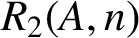
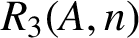
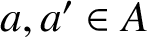
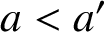
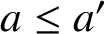
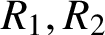
 $$ \begin{align*} R_{1}(A,n) &= |\{a+a^{\prime }=n, \,a \mbox{ and } a^{\prime }\in A\}|, \\ R_{2}(A,n) &= |\{a+a^{\prime }=n, \,a \mbox{ and } a^{\prime }\in A, \,a<a^{\prime}\}|, \\ R_{3}(A,n) &= |\{a+a^{\prime }=n, \,a \mbox{ and } a^{\prime }\in A , \,a\leq a^{\prime}\}|. \end{align*} $$
In a series of papers [Reference Erdős and Sárközy4, Reference Erdős and Sárközy5, Reference Erdős, Sárközy and Sós6], Erdős, Sárközy and Sós investigated the behaviour of these functions. Erdős et al. [Reference Erdős, Sárközy, Sós and Alladi7, Reference Erdős, Sárközy and Sós8] and Balasubramanian [Reference Balasubramanian1] studied the monotonicity properties of the functions
 $ R_{1}(n), R_{2}(n)$
and
 $R_{3}(n).$
For other related problems, see [Reference Balasubramanian and Giri2, Reference Chen, Sárközy, Sós and Tang3, Reference Tang and Chen12].
In 1994, Erdős et al. posed the following problem [Reference Erdős, Sárközy and Sós9, Problem 6] (see also [Reference Sárközy10, Problem 6] and [Reference Sárközy, Győri, Katona and Lovasz11, Problem 8]).
Problem 1.1. What condition (on A) is needed to ensure that the function
 $R_{i}(A,n) (i=1,2,3)$
assumes infinitely many ‘locally small’ or ‘locally large’ values, that is,
 $$ \begin{align*} R_{i}(A,n) & <\min \{R_{i}(A,n-1),R_{i}(A,n+1) \} \quad\mbox{for infinitely many }\textit{n}, \textrm{or} \\[3pt] R_{i}(A,n) &>\max \{R_{i}(A,n-1),R_{i}(A,n+1) \} \quad\mbox{for infinitely many }\textit{n}? \end{align*} $$
Throughout this paper, the characteristic function of the set B is denoted by
 $$ \begin{align*} \chi_{B} (i) =\left\{\begin{array}{@{}ll} 1 & \text{if }i\in B, \\ 0 & \text{otherwise. }\end{array} \right. \end{align*} $$
We obtain the following results related to the problem of Erdős, Sárközy and Sós.
Theorem 1.2. Let
 $A, B$
be infinite sets such that
 $\mathbb {N}=A\cup B$
and
 $A\cap B=\emptyset $
. Then for all
 $n\geq 2$
:
-
(i)
 $R_{1}(A,n)<\min \{R_{1}(A,n-1),R_{1}(A,n+1) \}$
if and only if
$$ \begin{align*} R_{1}(B,n)-R_{1}(B,n-1)\leq 2\chi_{B}(n-1)-2, \quad R_{1}(B,n+1)-R_{1}(B,n)\geq 2\chi_{B}(n);\end{align*} $$
-
(ii)
$R_{1}(A,n)>\max \{R_{1}(A,n-1), R_{1}(A,n+1) \}$
if and only if
$$ \begin{align*} R_{1}(B,n)-R_{1}(B,n-1)\geq 2\chi_{B}(n-1), \quad R_{1}(B,n)-R_{1}(B,n+1)\geq 2-2\chi_{B}(n).\end{align*} $$


Corollary 1.3. Let
 $A=\{n\in \mathbb {N}: n\equiv 1,2,3\pmod 4\}.$
Then for all
 $k\geq 2$
,
 $$ \begin{align*} R_{1}(A,4k+1) & <\min \{R_{1}(A,4k), R_{1}(A,4k+2) \}, \\[3pt] R_{1}(A,4k) &>\max \{R_{1}(A,4k-1), R_{1}(A,4k+1) \}. \end{align*} $$
Theorem 1.4. Let
 $A, B$
be infinite sets such that
 $\mathbb {N}=A\cup B$
and
 $A\cap B=\emptyset $
. Then for all
 $n\geq 1$
:
-
(i) if n is even, then
$R_{2}(A,n)>\max \{R_{2}(A,n-1), R_{2}(A,n+1) \}$
if and only if
$$ \begin{align*}\left\{\begin{array}{@{}ll} R_{2}(B,n)-R_{2}(B,n-1)\geq 1+\chi_{B}(n-1)-\chi_{B}(n/2),& \quad \\[3pt] R_{2}(B,n)-R_{2}(B,n+1)\geq 2-\chi_{B}(n)-\chi_{B}(n/2); \end{array}\right.\end{align*} $$
-
(ii) if n is even, then
$R_{2}(A,n)<\min \{R_{2}(A,n-1), R_{2}(A,n+1) \}$
if and only if
$$ \begin{align*} \left\{\begin{array}{@{}ll} R_{2}(B,n+1)-R_{2}(B,n)\geq \chi_{B}(n)+\chi_{B}(n/2),& \quad \\[3pt] R_{2}(B,n-1)-R_{2}(B,n)\leq 1-\chi_{B}(n-1)+\chi_{B}(n/2); \end{array}\right.\end{align*} $$
-
(iii) if n is odd, then
$R_{2}(A,n)>\max \{R_{2}(A,n-1), R_{2}(A,n+1) \}$
if and only if
$$ \begin{align*} \left\{\begin{array}{@{}ll} R_{2}(B,n)-R_{2}(B,n+1)\geq 1+\chi_{B}({(n+1)}/{2})-\chi_{B}(n),& \quad \\[3pt] R_{2}(B,n)-R_{2}(B,n-1)\geq \chi_{B}(n-1)+\chi_{B}({(n-1)}/{2}); \end{array}\right.\end{align*} $$
-
(iv) if n is odd, then
$R_{2}(A,n)<\min \{R_{2}(A,n-1), R_{2}(A,n+1) \}$
if and only if
$$ \begin{align*} \left\{\begin{array}{@{}ll} R_{2}(B,n+1)-R_{2}(B,n)\geq 1+\chi_{B}(n)-\chi_{B}({(n+1)}/{2}),& \quad \\[3pt] R_{2}(B,n)-R_{2}(B,n-1)\leq \chi_{B}(n-1)+\chi_{B}({(n-1)}/{2})-2. \end{array}\right.\end{align*} $$


Corollary 1.5. Let
 $A=\{n\in \mathbb {N}: n\equiv 1,2,3\pmod 4\}.$
By Theorem 1.4(i),
 $$ \begin{align*}R_{2}(A,8k)>\max \{R_{2}(A,8k-1),R_{2}(A,8k+1) \} \quad\mbox{for all } k\geq 1.\end{align*} $$
Let
 $A=\{n\in \mathbb {N}: n\equiv 0,2,3\pmod 4\}.$
By Theorem 1.4(ii), for all
 $k\geq 1$
,
 $$ \begin{align*}R_{2}(A,4k)<\min \{R_{2}(A,4k-1), R_{2}(A,4k+1) \}.\end{align*} $$
Theorem 1.6. Let
 $A, B$
be infinite sets such that
 $\mathbb {N}=A\cup B$
and
 $A\cap B=\emptyset $
. Then for all
 $n\geq 1$
:
-
(i) if n is even, then
$R_{3}(A,n)>\max \{R_{3}(A,n-1), R_{3}(A,n+1) \}$
if and only if
$$ \begin{align*} \left\{ \begin{array}{@{}ll} R_{3}(B,n)-R_{3}(B,n-1)\geq \chi_{B}(n-1)+\chi_{B}(n/2),& \quad \\[4pt] R_{3}(B,n)-R_{3}(B,n+1)\geq 1-\chi_{B}(n)+\chi_{B}(n/2); \end{array}\right.\end{align*} $$
-
(ii) if n is even, then
$R_{3}(A,n)<\min \{R_{3}(A,n-1), R_{3}(A,n+1) \}$
if and only if
$$ \begin{align*} \left\{ \begin{array}{@{}ll} R_{3}(B,n+1)-R_{3}(B,n)\geq 1+\chi_{B}(n)-\chi_{B}(n/2),& \quad \\[4pt] R_{3}(B,n-1)-R_{3}(B,n)\geq 2-\chi_{B}(n-1)-\chi_{B}(n/2); \end{array}\right.\end{align*} $$
-
(iii) if n is odd, then
$R_{3}(A,n)>\max \{R_{3}(A,n-1), R_{3}(A,n+1) \}$
if and only if
$$ \begin{align*} \left\{ \begin{array}{@{}ll} R_{3}(B,n)-R_{3}(B,n+1)\geq 2-\chi_{B}({(n+1)}/{2})-\chi_{B}(n),& \quad \\[4pt] R_{3}(B,n)-R_{3}(B,n-1)\geq 1+\chi_{B}(n-1)-\chi_{B}({(n-1)}/{2}); \end{array}\right.\end{align*} $$
-
(iv) if n is odd, then
$R_{3}(A,n)<\min \{R_{3}(A,n-1), R_{3}(A,n+1) \}$
if and only if
$$ \begin{align*} \left\{ \begin{array}{@{}ll} R_{3}(B,n+1)-R_{3}(B,n)\geq \chi_{B}(n)+\chi_{B}({(n+1)}/{2}),& \quad \\[4pt] R_{3}(B,n)-R_{3}(B,n-1)\leq \chi_{B}(n-1)-\chi_{B}({(n-1)}/{2})-1. \end{array}\right.\end{align*} $$


Corollary 1.7. Let
 $A=\{n\in \mathbb {N}: n\equiv 1,2,3\pmod 4\}.$
Then for all
 $k\geq 1$
, by Theorem 1.6(i) and (iv),
 $$ \begin{align*} R_{3}(A,8k)>\max \{R_{3}(A,8k-1),R_{3}(A,8k+1) \} & \quad \text{for all }k\geq 1, \\[4pt] R_{3}(A,8k+1) <\min \{R_{3}(A,8k),R_{3}(A,8k+2) \} & \quad \text{for all }k\geq 1. \end{align*} $$
2 Proof of Theorem 1.2
Write
 $f(z)=\sum _{a\in A}z^{a}$
and
 $g(z)=\sum _{b\in B}z^{b}.$
Then,
 $$ \begin{align*}f(z)+g(z)=z+z^{2}+\cdots=\frac{z}{1-z}, \quad g^{2}(z)=\sum\limits_{n=1}^{\infty} R_{1}(B,n)z^{n}.\end{align*} $$
Thus,
 $$ \begin{align} \sum\limits_{n=1}^{\infty}(R_{1}(A,n)-R_{1}(A,n-1))z^{n} & =\sum\limits_{n=1}^{\infty}\bigg(\sum\limits_{\substack{a_{i}+a_{j}=n\\a_{i},a_{j}\in A}}1-\sum\limits_{\substack{a_{i}+a_{j}=n-1\\a_{i},a_{j}\in A}}1\bigg)z^{n}\nonumber\\ &=\sum\limits_{a_{i},a_{j}\in A}z^{a_{i}+a_{j}}-\sum\limits_{a_{i},a_{j}\in A}z^{a_{i}+a_{j}+1}\nonumber\\ &=(1-z)\bigg(\frac{z}{1-z}-g(z)\bigg)^{2} =\frac{z^{2}}{1-z}-2zg(z)+(1-z)g^{2}(z)\nonumber\\ &=z^{2}\sum\limits_{n=0}^{\infty} z^{n}-2z\sum_{b\in B}z^{b}+(1-z)\sum\limits_{n=1}^{\infty} R_{1}(B,n)z^{n}. \end{align} $$
Comparing the coefficients of
 $z^{n} (n\geq 2)$
on both sides of (2.1), we see that
 $$ \begin{align*}R_{1}(A,n)-R_{1}(A,n-1)=1-2\chi_{B}(n-1)+R_{1}(B,n)-R_{1}(B,n-1).\end{align*} $$
Thus,
 $$ \begin{align*}R_{1}(A,n)-R_{1}(A,n+1)=-1+2\chi_{B}(n)+R_{1}(B,n)-R_{1}(B,n+1)\end{align*} $$
and, for all
 $n\geq 2$
,
 $$ \begin{align*}R_{1}(A,n)<\min \{R_{1}(A,n-1),R_{1}(A,n+1) \}\end{align*} $$
if and only if
 $$ \begin{align*} R_{1}(B,n)-R_{1}(B,n-1)\leq 2\chi_{B}(n-1)-2, \quad R_{1}(B,n+1)-R_{1}(B,n)\geq 2\chi_{B}(n).\end{align*} $$
Moreover,
 $$ \begin{align*}R_{1}(A,n)>\max \{R_{1}(A,n-1), R_{1}(A,n+1) \}\end{align*} $$
if and only if
 $$ \begin{align*} R_{1}(B,n)-R_{1}(B,n-1)\geq 2\chi_{B}(n-1), \quad R_{1}(B,n)-R_{1}(B,n+1)\geq 2-2\chi_{B}(n).\end{align*} $$
This completes the proof of Theorem 1.2.
3 Proof of Theorem 1.4
We have
 $$ \begin{align} R_{2}( A,n)&=\sum\limits_{\substack{n=i+j \\i,j\in A,i<j}}1=\underset{1\leq i<n/2}{\sum } ( 1-\chi_{B} ( i) ) ( 1-\chi_{B} ( n-i) ) \nonumber\\ &=\underset{1\leq i<n/2}{\sum }1-\vert\{i: 1\leq i\leq n-1,i\in B\}\vert+\chi_{B}({n}/{2}) \nonumber \\ &\qquad+\vert\{(b,b^{\prime}): b,b^{\prime}\in A,b<b^{\prime},b+b^{\prime}=n\}\vert\nonumber\\ &=\underset{1\leq i<n/2}{\sum }1-B(n-1)+\chi_{B}({n}/{2})+R_{2}(B,n). \end{align} $$
If n is even, then (3.1) gives
 $$ \begin{align*} R_{2}(A,n) & =\sum\limits_{1\leq i\leq {n}{/2}-1}1-B(n-1)+\chi_{B}({n}/{2})+R_{2}(B,n), \\ R_{2}(A,n+1) & =\sum\limits_{1\leq i\leq {n}/{2}}1-B(n)+R_{2}(B,n+1), \\ R_{2}(A,n-1) & =\sum\limits_{1\leq i\leq {n}/{2}-1}1-B(n-2)+R_{2}(B,n-1). \end{align*} $$
Thus,
 $$ \begin{align} R_{2}(A,n)-R_{2}(A,n+1)=-1+\chi_{B}(n) + \chi_{B}({n}/{2})+R_{2}(B,n)-R_{2}(B,n+1),\end{align} $$
 $$ \begin{align}R_{2}(A,n)-R_{2}(A,n-1)=-\chi_{B}(n-1)+ \chi_{B}({n}/{2})+R_{2}(B,n)-R_{2}(B,n-1).\end{align} $$
 $$ \begin{align*}R_{2}(A,n)>\max \{R_{2}(A,n-1), R_{2}(A,n+1) \}\end{align*} $$
if and only if
 $$ \begin{align*} \left\{ \begin{array}{@{}ll} R_{2}(B,n)-R_{2}(B,n-1)\geq 1+\chi_{B}(n-1)-\chi_{B}(n/2),& \quad \\[4pt] R_{2}(B,n)-R_{2}(B,n+1)\geq 2-\chi_{B}(n)-\chi_{B}(n/2). \end{array}\right.\end{align*} $$
 $$ \begin{align*}R_{2}(A,n)<\min \{R_{2}(A,n-1), R_{2}(A,n+1) \}\end{align*} $$
if and only if
 $$ \begin{align*} \left\{ \begin{array}{@{}ll} R_{2}(B,n+1)-R_{2}(B,n)\geq \chi_{B}(n)+\chi_{B}(n/2),& \quad \\[4pt] R_{2}(B,n-1)-R_{2}(B,n)\leq 1-\chi_{B}(n-1)+\chi_{B}(n/2). \end{array}\right.\end{align*} $$
If n is odd, then (3.1) gives
 $$ \begin{align*} R_{2}(A,n) & =\sum\limits_{1\leq i\leq {(n-1)}{/2}}1-B(n-1)+R_{2}(B,n), \\ R_{2}(A,n+1) & =\sum\limits_{1\leq i\leq {(n-1)}/{2}}1-B(n)+\chi_{B}({(n+1)}/{2})+R_{2}(B,n+1), \\ R_{2}(A,n-1) & =\sum\limits_{1\leq i\leq {(n-1)}/{2}-1}1-B(n-2)+\chi_{B}({(n-1)}/{2})+R_{2}(B,n-1). \end{align*} $$
The remainder of the proof is similar to that for even n.
This completes the proof of Theorem 1.4.
4 Proof of Theorem 1.6
We have
 $$ \begin{align} R_{3}( A,n)&=\sum\limits_{\substack{n=i+j\\i,j\in A,i\leq j}}1=\underset{1\leq i\leq n/2}{\sum } ( 1-\chi_{B} ( i) ) ( 1-\chi_{B} ( n-i) ) \nonumber\\ &=\underset{1\leq i\leq n/2}{\sum }1-\vert\{i: 1\leq i\leq n-1,i\in B\}\vert-\chi_{B}({n}/{2}) \nonumber \\ &\qquad+\vert\{(b,b^{\prime}): b,b^{\prime}\in B,b\leq b^{\prime},b+b^{\prime}=n\}\vert\nonumber\\ &=\underset{1\leq i\leq n/2}{\sum }1-B(n-1)-\chi_{B}({n}/{2})+R_{3}(B,n). \end{align} $$
If n is even, then by (4.1),
 $$ \begin{align*} R_{3}(A,n) & =\sum\limits_{1\leq i\leq {n}/{2}}1-B(n-1)-\chi_{B}(n/2)+R_{3}(B,n), \\ R_{3}(A,n+1) & =\sum\limits_{1\leq i\leq {n}/{2}}1-B(n)+R_{3}(B,n+1), \\ R_{3}(A,n-1) & =\sum\limits_{1\leq i\leq {n}/{2}-1}1-B(n-2)+R_{3}(B,n-1). \end{align*} $$
If n is odd, then by (4.1),
 $$ \begin{align*} R_{3}(A,n) & =\sum\limits_{1\leq i\leq {(n-1)}/{2}}1-B(n-1)+R_{3}(B,n), \\ R_{3}(A,n+1) & =\sum\limits_{1\leq i\leq {(n+1)}/{2}}1-B(n)-\chi_{B}\bigg(\frac{n+1}{2}\bigg)+R_{3}(B,n+1), \\ R_{3}(A,n-1) & =\sum\limits_{1\leq i\leq {(n-1)}/{2}}1-B(n-2)-\chi_{B}\bigg(\frac{n-1}{2}\bigg)+R_{3}(B,n-1). \end{align*} $$
The remainder of the proof is similar to the proof of Theorem 1.4.
This completes the proof of Theorem 1.6.


