










1. Introduction
Let R be a ring or field. A polynomial Pell equation over
$R[x]$
 is an equation of the form

where D is a fixed polynomial in
$R[x]$
 . A nontrivial solution
$(P,Q)$
 of (1.1) is a solution with
$P,Q\in R[x]$
 and
$Q\neq 0$
 . The study of (1.1) over
${\mathbb {C}}[x]$
 dates back to Abel [Reference Abel1] in 1826. In contrast, the study of (1.1) over
${\mathbb {Z}}[x]$
 began much later, in 1976, with the seminal paper of Nathanson [Reference Nathanson11], which answered a question of Chowla and proved that the equation
$P^2-(x^2+d)Q^2=1, d\in {\mathbb {Z}}$
 , has a nontrivial solution in
${\mathbb {Z}}[x]$
 if and only if
$d\in \{\pm 1,\pm 2\}$
 . Classifying those
$D\in {\mathbb {Z}}[x]$
 for which (1.1) admits a nontrivial solution in
${\mathbb {Z}}[x]$
 remains an open problem. Since Nathanson’s work, several authors have studied (1.1) for other classes of polynomials D.
-
• Gaunet [Reference Gaunet4] extended Nathanson’s result to the equation
$$ \begin{align*}P^2-(x^2+ax+b)Q^2=\pm 1,\quad a,b\in {\mathbb{Z}}.\end{align*} $$
-
• Dubickas and Steuding [Reference Dubickas and Steuding3] extended Nathanson’s result to the equation
$$ \begin{align*}P^2-(x^{2k}+d)Q^2=1,\quad k \in {\mathbb{Z}}_{>0},\, d\in {\mathbb{Z}}.\end{align*} $$
-
• Webb and Yokota [Reference Webb and Yokota15–Reference Yokota17] studied the case where D is a monic quartic polynomial in ${\mathbb {Z}}[x]$
. -
• Jedrzejak [Reference Jedrzejak7] investigated the equation $P^2-(x^{2m}+ax+b)Q^2=1,\, m\in {\mathbb {Z}}_{>0}$
,
$a,b\in {\mathbb {Z}}$
. -
• Murru [Reference Murru10] generalised Nathanson’s work to the equation
(1.2) $$ \begin{align}P^2-(f^2+d)Q^2=1,\quad d \in {\mathbb{Z}},\, f\in {\mathbb{Z}}[x].\end{align} $$





Murru [Reference Murru10, Theorem 2] proved that (1.2) has a nontrivial solution in
${\mathbb {Z}}[x]$
 for any nonconstant polynomial f if and only if
$d=\pm 1,\pm 2$
 . Unfortunately, this is false: when
$d=4\not \in \{\pm 1,\pm 2\}$
 , (1.2) admits the nontrivial solution
$(P,Q)= {(2f^2+1,f)}$
 . A corrected version of Murru’s theorem is given in Remark 1.4. See also the works of Hazama [Reference Hazama6], McLaughlin [Reference McLaughlin8], Mollin [Reference Mollin9] and Schinzel [Reference Schinzel13, Reference Schinzel14]. More recently, Gupta and Saha [Reference Gupta and Saha5] generalised Nathanson’s result to the equation

where n is a nonzero integer and
$a,b\in {\mathbb {Z}}$
 .
For the rest of this paper,
$\Delta $
 denotes
$a^2-4b$
 and
$v_p(x)$
 for a prime number p and nonzero integer x denotes the highest integer k such that
$p^k\mid x$
 and
$p^{k+1}\nmid x$
 .
Theorem 1.1 [Reference Gupta and Saha5, Theorems 1, 2].
Let n be a nonzero integer. Equation (1.3) has a nontrivial solution in
${\mathbb {Z}}[x]$
 if and only if one of the following holds:
-
(i) n, $\Delta $
are both nonzero squares in
${\mathbb {Z}}$
and
$\Delta \mid 4n$
; -
(ii) n is a nonzero square in ${\mathbb {Z}}$
,
$\Delta $
is not a square in
${\mathbb {Z}}$
and
$\Delta \mid 8\sqrt {n}$
; -
(iii) n is not a square in ${\mathbb {Z}}$
and
$4n/\Delta $
is a square in
${\mathbb {Z}}$
.


In this paper, we shall further generalise Gupta and Saha’s work to the equation

where f is a fixed polynomial in
${\mathbb {Z}}[x]$
 and n is a nonzero integer. Our main results are the following theorems.
Theorem 1.2. Let n be a positive integer and
$f\in {\mathbb {Z}}[x]$
 be a nonconstant polynomial with leading coefficient
$\alpha $
 , where
$\alpha $
 is a square-free positive integer coprime to
$2n$
 . The equation

has a nontrivial solution in
${\mathbb {Z}}[x]$
 if and only if one of the following holds:
-
(i) $\Delta $
is a nonzero square in
${\mathbb {Z}}$
and
$\Delta \mid 4n^2$
; -
(ii) $\Delta $
is not a square in
${\mathbb {Z}}$
,
$\Delta \mid 8n\alpha $
and
$f+a/2=0$
in
${\mathbb {F}}_p[x]$
for any prime p dividing both
$\Delta $
and
$\alpha $
.





Theorem 1.3. Let n be a nonsquare integer and
$f\in {\mathbb {Z}}[x]$
 be a nonconstant polynomial in
${\mathbb {Z}}[x]$
 with leading coefficient
$\alpha $
 , where
$\alpha $
 is a square-free positive integer coprime to
$2n$
 . The equation

has a nontrivial solution in
${\mathbb {Z}}[x]$
 if and only if
$4n/\Delta $
 is a nonzero square in
${\mathbb {Z}}$
 .
Remark 1.4. In Theorems 1.2 and 1.3, if
$f(x)=x$
 , we recover Theorem 1.1; if
${f(x)=x^k}$
 and
$n=1$
 , we recover the result of Dubickas and Steuding [Reference Dubickas and Steuding3]; and if
$f(x)\in {\mathbb {Z}}[x]$
 is monic and
$n=1$
 , we obtain a corrected version of Murru [Reference Murru10, Theorem 2].
As an application, we will prove two theorems which generalise a recent result of Scherr and Thompson [Reference Scherr and Thompson12, Theorem 1.4] on quartic polynomial Pell equations.
Theorem 1.5. Let n be a positive integer and
$f\in {\mathbb {Z}}[x]$
 be a nonconstant polynomial with leading coefficient
$\alpha $
 , where
$\alpha $
 is a square-free positive integer coprime to
$2n$
 . Let
$D\in {\mathbb {Z}}[x]$
 be monic, quartic and non square-free. The equation

has a nontrivial solution in
${\mathbb {Z}}[x]$
 if and only if, up to a
${\mathbb {Z}}$
 -linear change of variables
$x\mapsto x+d$
 , D is one of:
-
(i) $x^2(x^2-c^2)$
, where
$c\in {\mathbb {Z}}$
and
$c\mid n$
; -
(ii) $x^2(x^2+2cx-3c^2)$
, where
$c\in {\mathbb {Z}}$
and
$2c^3\mid n$
; -
(iii) $x^2(x^2+b)$
, where
$b\in {\mathbb {Z}}$
,
$b\mid 2n\alpha $
and
$f=0$
in
${\mathbb {F}}_p[x]$
for any prime number p dividing both b and
$\alpha $
; -
(iv) $x^2(x^2-6cx-3c^2)$
, where
$c\in {\mathbb {Z}}$
and
$54c^6\mid n$
; -
(v) $x^2(x^2+2cx-c^2)$
, where
$c\in {\mathbb {Z}}$
and
$c^4\mid 2n$
.











Theorem 1.6. Let n be a nonsquare integer and
$f\in {\mathbb {Z}}[x]$
 be a nonconstant polynomial with leading coefficient
$\alpha $
 , where
$\alpha $
 is a square-free positive integer coprime to
$2n$
 . Let
$D\in {\mathbb {Z}}[x]$
 be monic, quartic and non square-free. Then, the equation

has no solutions in
${\mathbb {Z}}[x]$
 .
Remark 1.7. In Theorem 1.5, if
$f(x)=x$
 and
$n=1$
 , we recover [Reference Scherr and Thompson12, Theorem 1.4]. In Theorem 1.6, if
$f(x)=x$
 and n is a nonsquare integer, we obtain the following result.
Corollary 1.8. Let n be a nonsquare integer. Then, for any monic, quartic and non square-free polynomial
$D\in {\mathbb {Z}}[x]$
 , the equation

has no solutions in
${\mathbb {Z}}[x]$
 .
The next theorem is the fundamental tool in our paper.
Theorem 1.9 (Gupta and Saha [Reference Gupta and Saha5, Propositions 1, 2]).
Let n be a nonzero integer, R a subring of
$\mathbb {C}$
 containing
$\sqrt {n}$
 and its inverse, and D a nonconstant polynomial in
$R[x]$
 . If the equation

has a nontrivial solution in
$R[x]$
 , then it has precisely four minimal nontrivial solutions. If
$(p,q)$
 is one of these minimal solutions, then all nontrivial solutions of (1.6) in
$R[x]$
 are obtained as
$(\pm P_k, \pm Q_k)$
 , where

Suppose that the leading coefficients of p and q are a and b, respectively. Then, the leading coefficients of
$P_k$
 and
$Q_k$
 are respectively

2. Proofs of the main theorems
Proof of Theorem 1.2.
A minimal solution of (1.4) in
${\mathbb {C}}[x]$
 is

By Theorem 1.9, all nontrivial solutions of (1.4) in
${\mathbb {C}}[x]$
 are
$(\pm P_k,\pm Q_k)$
 , where

Since
$\alpha $
 is the leading coefficient of f, by Theorem 1.9, the leading coefficients of
$P_k$
 and
$Q_k$
 are
$n2^{k-1}{(2\alpha )^k}/{\sqrt {\Delta }^k}$
 and
$n2^{k-1}{(2\alpha )^{k-1}}/{\sqrt {\Delta }^{k}}$
 , respectively. Suppose (1.4) has a nontrivial solution in
${\mathbb {Z}}[x]$
 . Then, there exists a positive integer k such that
$P_k, Q_k\in {\mathbb {Z}}[x]$
 . Therefore,

Case 1:
$\sqrt {\Delta }\in {\mathbb {Z}}$
 . Then,
$x^2+ax+b$
 can be factorised as
$x^2+ax+b=(x-u)(x-v)$
 , with
$u,v\in {\mathbb {Z}}$
 and
$\sqrt {\Delta }=u-v>0$
 . By (2.2),

We claim that
$(u-v)\mid 2n$
 . The case
$u-v=1$
 is immediate. Consider the case
${u-v\geq 2}$
 . Let p be a prime factor of
$u-v$
 . We consider three subcases.
Subcase (i):
$p=2$
 . Because
$2\nmid \alpha $
 , it follows from (2.3) that

Hence,

Subcase (ii):
$p>2$
 and
$p\mid n$
 . Then,
$p\nmid \alpha $
 and it follows from (2.3) that

Subcase (iii):
$p>2$
 and
$p\mid \alpha $
 . Since
$\alpha $
 is square-free and
$\gcd (n,\alpha )=1$
 , we have
$v_p(\alpha )=1$
 and
$v_p(n)=0$
 . It follows from (2.3) that

which is impossible.
Inequalities (2.4) and (2.5) show that
$(u-v)\mid 2n$
 . Conversely, assume
${\sqrt {\Delta }=(u-v)\mid 2n}$
 . Then, (1.4) has a nontrivial solution in
${\mathbb {Q}}[x]$
 with
$Q\in {\mathbb {Z}}[x]$
 :

If
$2\mid a$
 , then
$P\in {\mathbb {Z}}[x]$
 . If
$2\nmid a$
 , then since
$a^2-4b=\Delta =(u-v)^2\mid 4n^2$
 , we have
${u-v\mid {n}}$
 . Thus,
$P\in {\mathbb {Z}}[x]$
 .
Case 2:
$\sqrt {\Delta }\not \in {\mathbb {Z}}$
 . It follows from (2.2) that k is even. Let
$k=2m$
 , with
$m\in {\mathbb {Z}}_{>0}$
 . Then,

Let p be a prime divisor of
$\Delta $
 . We claim that

Subcase (i):
$p=2$
 . Then,
$p\nmid \alpha $
 . By (2.6), we have
$mv_2(\Delta )\leq v_2(n)+(4m-1)$
 . Hence,
$v_2(\Delta )<4+v_2(n)$
 and it follows that

Subcase (ii):
$p>2$
 and
$p\nmid \alpha $
 . Then,
$p\mid n$
 . By (2.6),

Subcase (iii):
$p>2$
 and
$p\mid \alpha $
 . Then,
$p\nmid 2n$
 . Since
$\alpha $
 is square-free,
$v_p(\alpha )=1$
 . By (2.6),
$mv_p(\Delta )\leq (2m-1)v_p(\alpha )=2m-1$
 . Hence,

Inequalities (2.8), (2.9) and (2.10) show that (2.7) holds. Hence,

In
${\mathbb {F}}_p[x]$
 , we have
$f^2+af+b= (f+{a}/{2})^2$
 . Note that
$P_{2m}\in {\mathbb {Z}}[x]$
 and
$p\nmid 2n$
 . We use (2.1) and work in
${\mathbb {F}}_p[x]$
 :

Hence,

Conversely, assume that both (2.11) and (2.12) hold. In (2.1), let
$k=2$
 . Then, (1.4) has a nontrivial solution in
${\mathbb {Q}}[x]$
 :

To show
$P_2,Q_2\in {\mathbb {Z}}[x]$
 , it suffices to show that

for all prime divisors p of
$\Delta $
 , where
${\mathbb {Z}}_p$
 is the ring of p-adic integers.
Case (i):
$p=2$
 . Then,
$p\nmid \alpha $
 . By (2.8),
$v_2(\Delta )\leq 3+v_2(n)$
 . If a is even, then

Case (ii):
$p>2$
 and
$p\nmid \alpha $
 . By (2.9),
$v_p(\Delta )\leq v_p(n)$
 . Thus,
$P_2,Q_2\in {\mathbb {Z}}_p[x]$
 .
Case (iii):
$p>2$
 and
$p\mid \alpha $
 . We use (2.12) and work in
${\mathbb {F}}_p[x]$
 :

By (2.10),
$v_p(\Delta )=1$
 . It follows that
$P_2,Q_2\in {\mathbb {Z}}_p[x]$
 . Thus, (2.13) holds.
Theorem 1.2 is proved.
Proof of Theorem 1.3.
Equation (1.5) has a minimal solution in
${\mathbb {C}}[x]$
 :

Hence, all nontrivial solutions of (1.5) in
${\mathbb {C}}[x]$
 are
$(\pm P_k,\pm Q_k)$
 , where

Since
$\alpha $
 is the leading coefficient of f, by Theorem 1.9, the leading coefficients of
$P_k$
 and
$Q_k$
 in (2.14) are
$\sqrt {n}2^{k-1}{(2\alpha )^k}/{\sqrt {\Delta }^k}$
 and
$\sqrt {n}2^{k}{(2\alpha )^{k-1}}/{\sqrt {\Delta }^{k}}$
 , respectively. Assume that (1.5) has a nontrivial solution in
${\mathbb {Z}}[x]$
 . Then, there exists a positive integer k such that
$P_k,Q_k\in {\mathbb {Z}}[x]$
 . Therefore,

Since
$\sqrt {n}\not \in {\mathbb {Z}}$
 , we must have k odd. Let
$k=2m+1$
 , with
$m\in {\mathbb {Z}}_{\geq 0}$
 . Then,

Let
${\sqrt {n}}/{\sqrt {\Delta }}={r}/{s}$
 , where
$r,s\in {\mathbb {Z}}_{>0}$
 and
$\gcd (r,s)=1$
 . By (2.15),

We claim that

If
$s=1$
 , then (2.17) is obvious. Assume that
$s>1$
 . Let p be a prime factor of s.
Case (i):
$p=2$
 . Let
$v_2(s)=t\in {\mathbb {Z}}_{>0}$
 . If
$t\geq 2$
 , then
$v_2(\Delta )\geq 2t\geq 4$
 . Thus,

Hence, (2.16) is impossible. Therefore,

Case (ii):
$p>2$
 . Since
$p\nmid r$
 , by (2.16), we must have
$p\mid \alpha $
 . Since
$\alpha $
 is square-free, we have
$v_p(\alpha )=1$
 . Since
$p\mid s$
 ,
$p^2\mid \Delta $
 . Thus,

Hence, (2.16) is impossible. Therefore,

Now (2.17) follows from (2.18) and (2.19), which shows that
$4n/\Delta $
 is a nonzero integer square. Conversely, assume that
$4n/\Delta $
 is a nonzero integer square. Then, (1.5) has a nontrivial solution in
${\mathbb {Q}}[x]$
 with
$Q\in {\mathbb {Z}}[x]$
 :

If a is even, then
$P\in {\mathbb {Z}}[x]$
 . If a is odd, since
$4n/\Delta $
 is an integer square,
$n/\Delta $
 is also an integer square. Hence,
$P\in {\mathbb {Z}}[x]$
 .
Theorem 1.3 is proved.
3. Proofs of Theorems 1.5 and 1.6
Lemma 3.1. Consider the Pell equation

where n is a nonzero integer and
$a,b$
 are integers with
$a^2-4b\neq 0$
 . Let
$P_k,Q_k$
 be polynomials in
${\mathbb {C}}[x]$
 defined by

Assume that there exists a positive integer k such that
$f\mid Q_k$
 . Then,
$(a,b)$
 is one of:
-
• $(0,b)$
, with
$b\in {\mathbb {Z}}-\{0\}$
and
$2\mid k$
; -
• $(2c,-c^2)$
, with
$c\in {\mathbb {Z}}-\{0\}$
and
$4\mid k$
; -
• $(6c,-3c^2)$
, with
$c\in {\mathbb {Z}}-\{0\}$
and
$6\mid k$
; -
• $(2c,-3c^2)$
, with
$c\in {\mathbb {Z}}-\{0\}$
and
$3\mid k$
.


Proof. By (3.1),

If
$b=0$
 , then
$a\neq 0$
 because
$a^2-4b\neq 0$
 . Reducing (3.2) mod f gives

If
$b\neq 0$
 , reducing (3.2) mod f gives

Suppose there exists a positive integer k such that
$f\mid Q_k$
 . Then, (3.3) yields

If
$a=0$
 , then (3.4) forces
$2\mid k$
 . Consider now
$a\neq 0$
 .
Case 1:
$b>0$
 . In this case, both
$a+2\sqrt {b}$
 and
$a-2\sqrt {b}$
 are real numbers. Since
$ab\neq 0$
 ,
$|a+2\sqrt {b}| \neq |a-2\sqrt {b}|$
 . Hence, (3.4) is impossible.
Case 2:
$b<0$
 . Let
$\omega = {(a+2\sqrt {b})}/{(a-2\sqrt {b})}$
 . Then,

Hence,
$\omega $
 is a root of unity of degree
$2$
 over
${\mathbb {Q}}$
 . Therefore,
$\omega \in \{\pm i, \tfrac 12(\pm 1\pm \sqrt {-3})\}$
 .
Subcase (i):
$\omega =\pm i$
 . Then, (3.5) forces
$4\mid k$
 and
$a^2+4b=0$
 . Thus,
$a=2c$
 and
${b=-c^2}$
 , where
$c\in {\mathbb {Z}}-\{0\}$
 .
Subcase (ii):
$\omega =\tfrac 12 (1\pm \sqrt {-3})$
 . Then, (3.5) forces
$6\mid k$
 and

Hence,
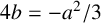
$4b=-a^2/3$
 . Thus,
$a=6c$
 and
$b=-3c^2$
 , where
$c\in {\mathbb {Z}}-\{0\}$
 .
Subcase (iii):
$\omega =\tfrac 12 (-1\pm \sqrt {-3})$
 . Then, (3.5) forces
$3\mid k$
 and

Hence,
$4b=-3a^2$
 . Thus,
$a=2c$
 and
$b=-3c^2$
 , where
$c\in {\mathbb {Z}}-\{0\}$
 .
The next lemma is the same as [Reference Scherr and Thompson12, Lemma 3.1].
Lemma 3.2. Let n be a nonzero integer and
$f\in {\mathbb {Z}}[x]$
 be a nonconstant polynomial. Let
$D(x)=(x-c)^2(x^2+ax+b)\in {\mathbb {Z}}[x]$
 . Then,
$P^2-D(f)Q^2=n$
 has a nontrivial solution in
${\mathbb {Z}}[x]$
 if and only if
$P^2-(f^2+af+b)Q^2=n$
 has a nontrivial solution in
${\mathbb {Z}}[x]$
 with
$(f-c)\mid Q$
 .
Proof of Theorem 1.5.
By Lemma 3.2 and a
${\mathbb {Z}}$
 -linear change of variable, it suffices to consider nontrivial solutions in
${\mathbb {Z}}[x]$
 of

with
$f\mid Q$
 . Equation (3.6) has a minimal solution in
${\mathbb {C}}[x]$
 :

Hence, all nontrivial solutions in
${\mathbb {C}}[x]$
 of (3.6) are
$(\pm P_k,\pm Q_k)$
 , where

Assume that there exists a positive integer k such that
$P_k,Q_k\in {\mathbb {Z}}[x]$
 and
$f\mid Q_k$
 .
Case 1:
$\sqrt {\Delta }\in {\mathbb {Z}}$
 . By Theorem 1.2,
$\sqrt {\Delta }\mid 2n$
 .
Case 1.1:
$a=0$
 . Then,
$b=-c^2$
 , where c is an integer divisor of n. Lemma 3.1 shows that
$2\mid k$
 . Let
$k=2m$
 , where
$m\in {\mathbb {Z}}_{>0}$
 . The leading coefficient of
$P_{2m}$
 is
$n2^{2m-1}(\alpha /c)^{2m}$
 . Since
$c\mid n$
 and
$\gcd (n,\alpha )=1$
 , it follows that

We claim
$c^2\mid 2n$
 . This is obvious if
$m=1$
 . Assume
$m\geq 2$
 . Let p be a prime divisor of c.
Subcase (i):
$p=2$
 . From (3.7),

Subcase (ii):
$p>2$
 . From (3.7),

Inequalities (3.8) and (3.9) show that
$c^2\mid 2n$
 . Conversely, if
$(a,b)=(0,-c^2)$
 , where
$c\in {\mathbb {Z}}-\{0\}$
 and
$c^2\mid 2n$
 , then (3.6) has a nontrivial solution in
${\mathbb {Z}}[x]$
 :

Case 1.2:
$a\neq 0$
 . Since
$\sqrt {\Delta }\in {\mathbb {Z}}$
 , by Lemma 3.1,
$(a,b)=(2c,-3c^2)$
 and
$3\mid k$
 , where
$c\in {\mathbb {Z}}-\{0\}$
 and
$2c\mid n$
 . Let
$k=3m$
 , where
$m\in {\mathbb {Z}}_{>0}$
 . The leading coefficient of
$P_{3m}$
 is
$n2^{3m-1}(\alpha /2c)^{3m}$
 . Since
$2c\mid n$
 and
$(n,\alpha )=1$
 , it follows that
$2c^{3m}\mid n$
 . Hence,
$2c^{3}\mid n$
 . Conversely, if
$(a,b)=(2c,-3c^2)$
 , where
$c\in {\mathbb {Z}}-\{0\}$
 and
$2c^3\mid n$
 , we verify in MAGMA [Reference Bosma, Cannon and Playoust2] that (3.6) has a nontrivial solution in
${\mathbb {Z}}[x]$
 :

Case 2:
$\sqrt {\Delta }\not \in {\mathbb {Z}}$
 . By Theorem 1.2,
$\Delta \mid 8n\alpha $
 and for any prime divisor p dividing both
$\Delta $
 and
$\alpha $
 ,
$f+a/2=0$
 in
${\mathbb {F}}_p[x]$
 .
Case 2.1:
$a=0$
 . Then,
$b\mid 2n\alpha $
 and
$-b$
 is not a square in
${\mathbb {Z}}$
 , and
$f=0$
 in
${\mathbb {F}}_p[x]$
 for any prime p dividing both b and
$\alpha $
 . Conversely, in this case, (3.6) has a nontrivial solution in
${\mathbb {Z}}[x]$
 :

Case 2.2:
$a\neq 0$
 . By Lemma 3.1,
$(a,b)$
 is
$(6c,-3c^2)$
 and
$6\mid k$
 or
$(2c,-c^2)$
 and
$4\mid k$
 , where c is a nonzero integer.
Subcase (i):
$(a,b)=(6c,-3c^2)$
 and
$6\mid k$
 . Since
$48c^2=\Delta \mid 8n\alpha $
 and
$\alpha $
 is square-free, we have
$6c^2\mid n$
 . Let
$k=6m$
 , where
$m\in {\mathbb {Z}}_{>0}$
 . The leading coefficient of
$P_{6m}$
 is

Since
$6c^2\mid n$
 and
$\gcd (n,\alpha )=1$
 , we have
$\gcd (2\cdot 3^{3m}\cdot c^{6m},\alpha )=1$
 . It then follows that
$2\cdot 3^{3m}\cdot c^{6m}\mid n$
 . Hence,
$54c^6\mid n$
 . Conversely, if
$(a,b)=(6c,-3c^2)$
 , where
$c\in {\mathbb {Z}}-\{0\}$
 and
$54c^6\mid n$
 , we verify in MAGMA [Reference Bosma, Cannon and Playoust2] that (3.6) has a nontrivial solution in
${\mathbb {Z}}[x]$
 :

Subcase (ii):
$(a,b)=(2c,-c^2)$
 and
$3\mid k$
 . Since
$8c^2=\Delta \mid 8n\alpha $
 and
$\alpha $
 is square-free, we have
$c^2\mid n$
 . Let
$k=4m$
 , where
$m\in {\mathbb {Z}}_{>0}$
 . The leading coefficient of
$P_{4m}$
 is

Since
$c^2\mid n$
 and
$\gcd (n,\alpha )=1$
 , we have
$\gcd (c^{4m},\alpha )=1$
 . It follows that

We claim
$c^4\mid 2n$
 . This is obvious if
$m=1$
 , so we assume
$m\geq 2$
 . Let p be a prime divisor of c.
Subcase (ii)(a):
$p=2$
 . From (3.10),

Subcase (ii)(b):
$p>2$
 . From (3.10),

Inequalities (3.11) and (3.12) show that
$c^4\mid 2n$
 . Conversely, if
$(a,b)=(2c,-c^2)$
 , where
$c\in {\mathbb {Z}}-\{0\}$
 and
$c^4\mid 2n$
 , we verify in MAGMA [Reference Bosma, Cannon and Playoust2] that (3.6) has a nontrivial solution in
${\mathbb {Z}}[x]$
 :

Proof of Theorem 1.6.
By Lemma 3.2 and a
${\mathbb {Z}}$
 -linear change of variable, it suffices to consider nontrivial solutions in
${\mathbb {Z}}[x]$
 of

with
$f\mid Q$
 . Equation (3.13) has a minimal solution in
${\mathbb {C}}[x]$
 :

Hence, all nontrivial solutions in
${\mathbb {C}}[x]$
 of (3.13) are
$(\pm P_k,\pm Q_k)$
 , where

Assume that there exists a positive integer k such that
$P_k,Q_k\in {\mathbb {Z}}[x]$
 and
$f\mid Q_k$
 .
Case 1:
$a=0$
 . Lemma 3.1 shows that
$2\mid k$
 . Let
$k=2m$
 , where
$m\in {\mathbb {Z}}_{>0}$
 . The leading coefficient of
$P_{2m}$
 is
$\sqrt {n}2^{2m-1}(\alpha /\sqrt {-b})^{2m}$
 , which is an irrational number. Hence,
${P_{k}\not \in {\mathbb {Z}}[x]}$
 .
Case 2:
$a\neq 0$
 . By Lemma 3.1,
$(a,b)$
 is one of:
-
• $(2c,-c^2)$
, where
$c\in {\mathbb {Z}}$
,
$c\neq 0$
and
$4\mid k$
; -
• $(6c,-3c^2)$
, where
$c\in {\mathbb {Z}}$
,
$c\neq 0$
and
$6\mid k$
; -
• $(2c,-3c^2)$
, where
$c\in {\mathbb {Z}}$
,
$c\neq 0$
and
$3\mid k$
.


Case 2.1:
$(2c,-c^2)$
 and
$4\mid k$
 . Let
$k=4m$
 , where
$m\in {\mathbb {Z}}_{>0}$
 . The leading coefficient of
$P_{4m}$
 is
$\sqrt {n}2^{4m-1}(\alpha /\sqrt {2}c)^{4m}$
 , an irrational number. Hence,
$P_{k}\not \in {\mathbb {Z}}[x]$
 .
Case 2.2:
$(6c,-3c^2)$
 and
$6\mid k$
 . Let
$k=6m$
 , where
$m\in {\mathbb {Z}}_{>0}$
 . The leading coefficient of
$P_{6m}$
 is
$\sqrt {n}2^{6m-1}(\alpha /2\sqrt {3}c)^{6m}$
 , an irrational number. Hence,
$P_{k}\not \in {\mathbb {Z}}[x]$
 .
Case 2.3:
$(2c,-3c^2)$
 and
$3\mid k$
 . Let
$k=3m$
 , where
$m\in {\mathbb {Z}}_{>0}$
 . The leading coefficient of
$P_{3m}$
 is
$\sqrt {n}2^{3m-1}(\alpha /2c)^{3m}$
 , an irrational number. Hence,
$P_{k}\not \in {\mathbb {Z}}[x]$
 .
In all cases,
$P_k\not \in {\mathbb {Z}}[x]$
 . Hence, (3.13) has no nontrivial solutions in
${\mathbb {Z}}[x]$
 . Theorem 1.9 is proved.



