





1. Introduction
This paper is concerned with the study of the basic locus of certain Shimura varieties. Specifically, we consider Shimura varieties associated to the group of spinor similitudes of a quadratic space over
 ${{\mathbb{Q}}}$
whose level structure at an odd prime p is given by the stabilizer of a vertex lattice. In this setting, good integral models were constructed in [Reference Kisin and PappasKP18, Reference Kisin, Pappas and ZhouKPZ26], and our main result gives a decomposition of the basic locus in its special fiber into a union of classical Deligne–Lusztig varieties, generalizing work of Howard and Pappas [Reference Howard and PappasHP17] and Oki [Reference OkiOki20b] in the special case of self-dual, and almost self-dual, level structure.
To give some background, the basic locus of Shimura varieties is a generalization of the supersingular locus in the special fiber of modular curves. Its study has a long history and has led to many important arithmetic applications. For example, the computation of intersection numbers of cycles in the basic locus forms a crucial input to various arithmetic intersection problems, such as the Kudla–Rapoport conjecture; we refer to [Reference Li and ZhangLZ22a, Reference He, Li, Shi and YangHLS+23, Reference Li and ZhangLZ22b] and [Reference Li and ZhuLZ18] for applications along these lines. The description of the basic locus is also an essential ingredient for proving ‘arithmetic level raising’-type results, which in turn are important pieces for the proof of cases of the Beilinson–Bloch–Kato conjecture and the Iwasawa main conjecture; see, for example, [Reference Liu and TianLT20, Reference ZhouZho23, Reference Liu, Tian, Xiao, Zhang and ZhuLTX+22, Reference Liu, Tian and XiaoLTX24]. Moreover, as another striking application, the cycle classes coming from the basic locus often serve as natural candidates to prove cases of the Tate conjecture; see [Reference Tian and XiaoTX19, Reference Helm, Tian and XiaoHTX17].
In many of the above applications, a key point is to have an explicit description of the basic locus in terms of more familiar arithmetic objects, such as Deligne–Lusztig varieties. Such a description was first discovered by Vollaard [Reference VollaardVol10] and Vollaard and Wedhorn [Reference Vollaard and WedhornVW11] in the case of Shimura varieties for the general unitary group
 ${\rm GU}(n-1,1)$
at an inert prime with hyperspecial level. The situation was later clarified by [Reference Görtz, He and NieGHN19], who gave a group-theoretic criterion of when the basic locus is a union of classical Deligne–Lusztig varieties, but only after perfection. For many arithmetic applications, it is crucial to have this description before taking perfection, and moreover to have a more explicit description of the isomorphism with the Deligne–Lusztig variety. In the case of Shimura varieties associated to unitary groups such as those considered in [Reference Vollaard and WedhornVW11, Reference ChoCho18], this is achieved by leveraging the interpretation of the integral models as a moduli space of abelian varieties with extra structure. See also [Reference Rapoport, Terstiege and WilsonRTW14, Reference WuWu16, Reference He, Luo and ShiHLS25] for ramified unitary cases.
The Shimura varieties associated to spinor similitude groups that we consider in this paper no longer admit such a moduli interpretation, and so this causes difficulties when trying to prove the corresponding result in this setting. Howard and Pappas [Reference Howard and PappasHP17] were able to overcome this in the case of hyperspecial level, but a crucial result they used concerning the triviality of torsors for reductive group schemes (cf. [Reference NisnevichNis82, Theorem 5.2]) breaks down in our setting. We are thus required to introduce some new methods along the way, which we hope can be applied in more general non-moduli-theoretic settings to study problems of this kind.
1.1 Main results
We now discuss our main theorems in more detail. We aim to characterize the irreducible components of the basic locus as the reduced subscheme of certain special cycles and establish isomorphisms between them and certain generalized Deligne–Lusztig varieties without passing to perfection. As in previous works, we approach this problem by investigating the corresponding Rapoport–Zink (RZ) space. The analogous results for the Shimura variety are then deduced from this via the Rapoport–Zink uniformization; cf. Proposition 6.6.
Let p be an odd prime and let V be a vector space over
 ${{\mathbb{Q}}}_p$
equipped with a symmetric bilinear form
 $({\kern2pt}, )$
. We call a
 $\mathbb{Z}_p$
-lattice
 $L\subset V$
a vertex lattice of type t if
 $p L^\vee \subset L \subset L^{\vee}$
with
 $[L^\vee:L]=t$
.Footnote
1
Here,
 \begin{align*}L^{\vee}=\{x\in L\otimes_{\mathbb{Z}_p}\mathbb{Q}_p\mid (x,y) \in \mathbb{Z}_p, \, \forall y \in L\}\end{align*}
is the dual lattice. We use n to denote the rank of L and assume
 $n\geqslant 3$
. From now on, we will fix a vertex lattice L over
 $\mathbb{Z}_p$
of type h.
We let
 $G={\rm GSpin}(V)$
be the group of spinor similitudes attached to V and
 $\mathcal{G}$
the parahoric of G corresponding to L.Footnote
2
Let
 $\breve{\mathbb{Q}}_p$
be the completion of the maximal unramified extension of
 ${{\mathbb{Q}}}_p$
,
 $\breve{\mathbb{Z}}_p$
its ring of integers and k the residue field of
 $\breve{\mathbb{Z}}_p$
. Let
 $\mu$
be the cocharacter of G defined as in § 4.1 and
 $b\in G(\breve{\mathbb{Q}}_p)$
a representative of the basic element in the neutral acceptable set
 $B(G,\mu)$
. Then, according to [Reference Howard and PappasHP17, Reference Hamacher and KimHK19, Reference Pappas and RapoportPR24b], we have a corresponding RZ space
 $\mathcal{N}_L$
, which is a formal scheme defined over
 ${\rm Spf}\breve{\mathbb{Z}}_p$
. The choice of L gives rise to a choice of the framing object
 $\mathbb{X}$
(see § 6.2.1), and hence the level structure of
 $\mathcal{N}_L$
.
1.1.1 Special cycles.
In the global setting, one can define special cycles on GSpin Shimura varieties which are of great arithmetic interest. As a local analogue of Shimura variety, we can also define special cycles on
 $\mathcal{N}_L$
. Let
 ${{\mathbb{V}}}$
be the
 ${{\mathbb{Q}}}_p$
-vector space given by taking the
 $\Phi$
-invariants
 $V_{\breve{\mathbb{Q}}_p}^\Phi$
of
 $V_{\breve{\mathbb{Q}}_p}$
, where
 $\Phi$
is the Frobenius given via twisting by the basic element b. Then, by considering
 ${{\mathbb{V}}}$
as a space of quasi-endomorphisms of the framing object
 ${{\mathbb{X}}}$
, we may define, for any lattice
 $\mathbb{L}\subset \mathbb{V}$
, formal subschemes
 $\mathcal{Z}(\mathbb{L})$
and
 ${{\mathcal{Y}}}(\mathbb{L})$
of
 ${{\mathcal{N}}}_L$
(see § 7.2.1); we call these
 ${{\mathcal{Z}}}$
-cycles and
 ${{\mathcal{Y}}}$
-cycles, respectively.
We have a natural decomposition of
 $\mathcal{N}_L$
into a disjoint union
 $\bigsqcup_{\ell \in \mathbb{Z}}\mathcal{N}_L^{(\ell)}$
, where
 $\ell$
is related to the degree of the universal quasi-isogeny. We use
 $\mathcal{N}_{L,{\rm red}}$
(respectively
 $ \mathcal{N}_{L,{\rm red}}^{(\ell)}$
) to denote the reduced locus of
 $\mathcal{N}_L$
(respectively
 $ \mathcal{N}_L^{(\ell)}$
). The first main result of the current work is the following description of
 $\mathcal{N}_{L,{\rm red}}^{(\ell)}$
in terms of the reduced locus of special cycles. To describe the results, we let
 $\mathcal{V}^{\geqslant h}$
(respectively
 $\mathcal{V}^{\leqslant h}$
) denote the set of vertex lattices in
 $\mathbb{V}$
of type
 $t\geqslant h$
(respectively
 $t\leqslant h$
), and for
 $\Lambda\in {{\mathcal{V}}}^{\geqslant h}\cup {{\mathcal{V}}}^{\leqslant h}$
, we write
 $t_\Lambda$
for the type of
 $\Lambda.$
Theorem 1.1.
-
(i) We have that
 $\mathcal{N}_L^{(\ell)}$
is connected.
-
(ii) We have the following bijections:
Here, M is a special lattice if
\begin{align*} &\begin{cases} \mathcal{N}_L^{(0)}(k)\sqcup \mathcal{N}_L^{(1)}(k) \stackrel{\sim}{\rightarrow} \{\text{special lattices } M \subset V_{\breve{\mathbb{Q}}_p}: M\stackrel{h}{\subset}M^\vee\} & \text{if $h=0$ or }\textit{n},\\[3pt] \mathcal{N}_L^{(0)}(k) \stackrel{\sim}{\rightarrow} \{\text{special lattices } M \subset V_{\breve{\mathbb{Q}}_p}: M\stackrel{h}{\subset}M^\vee\} & \text{otherwise.}\end{cases} \end{align*}
$[M+\Phi(M):M]\leqslant 1$
when
$h\neq 0,n$
and
$[M+\Phi(M):M]= 1$
when
$h= 0,n$
.
-
(iii) We have a decomposition
Moreover, if we use
\begin{align*} \mathcal{N}_{L,{\rm red}}^{(\ell)} = \bigg(\bigcup_{\Lambda \in \mathcal{V}^{\geqslant h}} \mathcal{Z}_{\rm red}^{(\ell)}(\Lambda)\! \bigg) \cup \bigg(\bigcup_{\Lambda \in \mathcal{V}^{\leqslant h}} \mathcal{Y}_{\rm red}^{(\ell)}(\Lambda^\vee) \!\bigg). \end{align*}
$t_{\rm max}$
(respectively
$t_{\rm min})$
to denote the maximal type (respectively minimal type) of a vertex lattice, then
$\mathcal{Z}_{\rm red}^{(\ell)}(\Lambda_{t_{\rm max}})$
and
$\mathcal{Y}_{\rm red}^{(\ell)}(\Lambda_{t_{\rm min}}^\vee)$
are irreducible generalized Deligne–Lusztig varieties of dimensions
$({t_{{\rm max}}+h})/{2}-1$
and
$n-({t_{{\rm min}}+h})/{2}-1$
, respectively.







When
 $h=0$
or n (L is self-dual or p-modular), this was proved in [Reference Howard and PappasHP17].Footnote
3
Note that in these cases, we have
 $\mathcal{Y}(\Lambda)=\emptyset$
(respectively
 $\mathcal{Z}(\Lambda)=\emptyset$
) when
 $h=0$
(respectively
 $h=n$
) so that there is only a single family of Deligne–Lusztig varieties appearing.
Now we give more details. First, for a vertex lattice
 $\Lambda\subset {{\mathbb{V}}}$
of type
 $t_\Lambda$
with quadratic form
 $q(\,)$
, we set
 \begin{align*} V_{\Lambda^\vee} := \Lambda/p \Lambda^\vee \quad \text{and} \quad V_{\Lambda }:= \Lambda^\vee/ \Lambda\end{align*}
with quadratic form induced from
 $q(\,)$
and
 $p\cdot q(\,)$
, respectively. Note that
 $\dim_{\mathbb{F}_p}V_{\Lambda^\vee}=n-t_\Lambda$
and
 $\dim_{\mathbb{F}_p}V_{\Lambda}=t_\Lambda$
. Set
 \begin{align*} \Omega_{\Lambda }&:= V_{\Lambda } \otimes_{\mathbb{F}_p} k \stackrel{\sim}{\rightarrow} \Lambda_{\breve{\mathbb{Z}}_p}^\vee / \Lambda_{\breve{\mathbb{Z}}_p},\\ \Omega_{\Lambda^\vee}&:= V_{\Lambda^\vee} \otimes_{\mathbb{F}_p} k \stackrel{\sim}{\rightarrow} \Lambda_{\breve{\mathbb{Z}}_p} /p \Lambda_{\breve{\mathbb{Z}}_p}^{\vee}, \end{align*}
with Frobenius operator induced by
 $\Phi$
.
For a quadratic space
 $\Omega$
over k, we let
 ${\rm OGr}(i,\Omega)$
be the orthogonal Grassmannian that parametrizes i-dimensional isotropic subspaces of
 $\Omega$
. Let
 $S_{\Lambda}^{[h]}$
be the reduced closed subscheme of
 ${\rm OGr}(({t_\Lambda-h})/{2},\Omega_\Lambda)$
whose k-points are described as follows:
 \begin{align*} S_{\Lambda}^{[h]}(k) & = \bigg\{ \mathscr{V} \in {\rm OGr}\bigg(\frac{t_\Lambda-h}{2},\Omega_\Lambda\!\bigg)(k)\mid \operatorname{dim}_k (\mathscr{V}+\Phi(\mathscr{V}))\leqslant \operatorname{dim}_k (\mathscr{V})+1 \bigg\} \\ & \stackrel{\sim}{\rightarrow} \{\text{special lattices } M \subset V_{\breve{\mathbb{Q}}_p}: \Lambda_{\breve{\mathbb{Z}}_p} \subset M \subset M^\vee \subset \Lambda_{\breve{\mathbb{Z}}_p}^\vee\}. \end{align*}
Similarly, let
 $R_{\Lambda}^{[h]} $
be the reduced closed subscheme of
 ${\rm OGr}(({h-t_\Lambda})/{2},\Omega_{\Lambda^\vee})$
with k-points
 \begin{align*} R_{\Lambda}^{[h]}(k) & = \bigg\{ \mathscr{V} \in {\rm OGr}\bigg(\frac{h-t_\Lambda}{2},\Omega_{\Lambda^\vee}\!\bigg)(k) \mid \operatorname{dim}_k (\mathscr{V}+\Phi(\mathscr{V}))\leqslant \operatorname{dim}_k (\mathscr{V})+1 \bigg\} \\ & \stackrel{\sim}{\rightarrow} \{\text{special lattices } M \subset V_{\breve{\mathbb{Q}}_p}: p\Lambda_{\breve{\mathbb{Z}}_p}^\vee \subset p M^\vee \subset M \subset \Lambda_{\breve{\mathbb{Z}}_p}\}. \end{align*}
We drop the superscript when there is no confusion about the implicit h.
Theorem 1.2.
For
 $\Lambda \in \mathcal{V}^{\geqslant h}$
, we have the following isomorphism between k-schemes:
 \begin{align*} \mathcal{Z}_{{\rm red}}^{(\ell)}(\Lambda)\cong S_\Lambda. \end{align*}
Similarly, for
 $\Lambda \in \mathcal{V}^{\leqslant h}$
, we have
 \begin{align*} \mathcal{Y}_{{\rm red}}^{(\ell)}(\Lambda^\vee)\cong R_\Lambda. \end{align*}
Here,
 $S_\Lambda$
and
 $R_\Lambda$
are irreducible of dimension
 $({t_\Lambda+h})/{2}-1$
and
 $n-({t_\Lambda+h})/{2}-1$
, respectively. Moreover,
 $S_\Lambda$
and
 $R_\Lambda$
are unions of certain generalized Deligne–Lusztig varieties.
We refer to Theorem 5.6 for the details about the identification between
 $S_\Lambda$
and generalized Deligne–Lusztig varieties. In fact, we only need to prove the first statement concerning
 $S_\Lambda$
in the above theorem, since the second statement will follow from the first as follows.
Let
 $L^\sharp$
denote the quadratic lattice
 $(L^\vee)$
with quadratic form
 $q(\,)_{L^\sharp}=p\cdot q(\,)$
. Note that if L is a vertex lattice of type h, then
 $L^\sharp$
is a vertex lattice of type
 $n-h$
. In particular, one can consider the corresponding RZ space
 $\mathcal{N}_{L^\sharp}$
and the corresponding special cycles on
 $\mathcal{N}_{L^\sharp}$
. Let
 $\widetilde{\pi}=\sqrt{p}$
and set
 $E={{\mathbb{Q}}}_{p^2}(\widetilde{\pi})$
. Then, we may identify the corresponding space of quasi-endormorphisms
 ${{\mathbb{V}}}^\sharp$
with the subspace
 $\widetilde{\pi}{{\mathbb{V}}}\subset{{\mathbb{V}}}_E$
. Thus, for
 $\Lambda\subset \mathbb{V}$
a vertex lattice of type t,
 $\Lambda^\sharp:=\widetilde{\pi}\Lambda$
is a vertex lattice in
 ${{\mathbb{V}}}^\sharp$
of type
 $n-t$
, and we have the associated special cycle
 $\mathcal{Z}_{L^\sharp}(\Lambda^\sharp)$
of
 $\mathcal{N}_{L^\sharp}$
. Here, the subscript is used to emphasize that we regard
 $\mathcal{Z}_{L^\sharp}(\Lambda^{\sharp})$
as a
 $\mathcal{Z}$
-cycle of
 $\mathcal{N}_{L^\sharp}$
.
Motivated by some group-theoretic considerations and the unitary case considered in [Reference ChoCho18], we have the following (see Proposition 7.5).
Proposition 1.3. There is a natural isomorphism
 \begin{align*}\Upsilon_{L,L^\sharp}:{{\mathcal{N}}}_L\xrightarrow{\sim}{{\mathcal{N}}}_{L^\sharp}\end{align*}
such that, for any non-degenerate lattice
 $\Lambda\subset\mathbb{V}$
,
 $\Upsilon_{L,L^\sharp}$
induces an isomorphism
 \begin{align*} \mathcal{Y}_L(\Lambda^\vee)= \mathcal{Z}_{L^\sharp}(\Lambda^\sharp). \end{align*}
Similarly, one can show that there is a natural isomorphism between
 $R_\Lambda^{[h]}$
and
 $S_{\Lambda^\sharp}^{[n-h]}$
. Combining this with the above proposition, one can deduce the description of the
 ${{\mathcal{Y}}}$
-cycles on
 ${{\mathcal{N}}}_L$
from the description of the
 ${{\mathcal{Z}}}$
-cycles on
 ${{\mathcal{N}}}_{L^\sharp}.$
We believe that Proposition 1.3 should be of independent interest and have further applications. For example, it should be useful for formulating the general Kudla–Rapoport conjecture for the RZ space considered here (cf. [Reference ChoCho22]). It also manifests a particular symmetry that should play a vital role in many arithmetic geometry problems (cf. [Reference ZhangZha25, Reference Cho, He and ZhangCHZ23]).
In our setting, the formulation of this duality isomorphism is complicated by the lack of a moduli interpretation. It should be possible to show the existence of
 $\Upsilon_{L,L^\sharp}$
by showing that
 $\mathcal{N}_L$
and
 $\mathcal{N}_{L^\sharp}$
represent the same v-sheaf following the method in [Reference Pappas and RapoportPR26]. However, it seems difficult to prove the compatibility with special cycles in this approach. Instead, we use a more direct approach for which the compatibility with special cycles follows essentially from the construction. A key observation to make this work is that, in the construction of
 ${{\mathcal{N}}}_L$
, we need to use the local Hodge embedding given by the composition
 \begin{align*} {\rm GSpin}(V)\rightarrow {\rm {\rm GL}}(C(V))\rightarrow \operatorname{Res}_{E/{{\mathbb{Q}}}_p}{\rm GL}(C(V)_E)\rightarrow {\rm GL}(W).\end{align*}
Here, C(V) is the Clifford algebra associated to V,
 $C(V)_E$
its base change to E and W is the
 ${{\mathbb{Q}}}_p$
-vector space underlying
 $C(V)_E$
, with the last map being induced by the forgetful functor from E-vector spaces to
 ${{\mathbb{Q}}}_p$
-vector spaces. It is interesting to note that this enlarged Hodge embedding also appears in relation to the notion of very good Hodge embedding in the sense of [Reference Kisin, Pappas and ZhouKPZ26, Definition 5.2.5], which is needed to apply the deformation-theoretic results of [Reference Kisin and PappasKP18] and [Reference Kisin, Pappas and ZhouKPZ26] for our proof of Theorem 1.2.
For the reader’s convenience, we summarize all the main results in Theorem 7.25.
In the following table, we list some previously studied cases and some polarization, endomorphism and level (PEL)-type Shimura varieties that our results specialize to.

Here,
 $H_i$
denotes a self-dual quadratic lattice over
 $\mathbb{Z}_p$
of rank i. When i is even,
 $H_i^+$
denotes the quadratic lattice that contains a rank
 ${i}/{2}$
totally isotropic sublattice and
 $H_i^-$
denotes the one which does not contain such sublattice. Similarly,
 $\Lambda_i$
denotes a p-modular quadratic lattice over
 $\mathbb{Z}_p$
. When i is even,
 $\Lambda_i^+$
(respectively
 $\Lambda_i^-$
) is the one which contains (does not contain) a totally isotropic sublattice of rank
 ${i}/{2}$
. See § 2 for background about quadratic lattices.
1.1.2 Proof strategy and organization of the paper.
We now discuss the proof of the main theorem. The starting point is to obtain an explicit description of
 $\mathcal{N}_L(k)$
. In the unitary case, one can describe the k-points of the RZ space as a set of lattices satisfying certain properties via Dieudonné theory. In our non-moduli setting, we use a more indirect approach by leveraging the relation between RZ spaces and affine Deligne–Lusztig varieties. More precisely, we identify
 $\mathcal{N}_L^{(\ell)}(k)$
with the k-points of a relevant affine Deligne–Lusztig variety parametrized by the corresponding (parahoric)
 $\mu$
-admissible set
 ${{\operatorname{Adm}}}(\mu)_J$
. The description of the k-points then boils down to obtaining an explicit description of
 ${{\operatorname{Adm}}}(\mu)_J$
in terms of relative positions of lattices.
The key to showing the decomposition in part (iii) of Theorem 1.1 is Proposition 4.8, which is an analogue of the ‘crucial lemma’ in many previously studied cases. More precisely, we show that, given a special lattice M of type h, then either
 $\Lambda \subset M$
for a vertex lattice
 $\Lambda\subset \mathbb{V}$
of type
 $\geqslant h$
or
 $\Lambda^\vee \subset M^\vee$
for a vertex lattice
 $\Lambda\subset \mathbb{V}$
of type
 $\leqslant h$
. In fact, this notion of special lattice also applies to the lattices used to describe the k-points of many other RZ spaces, including the unramified/ramified unitary RZ spaces with maximal parahoric level structures. Since our argument is a general argument that works for any special lattices, it can be applied to obtain the crucial lemmas for these cases too (see [Reference He, Luo and ShiHLS25] for an application in the ramified unitary case with vertex level).
The geometric properties of
 $\mathcal{Z}_{{\rm red}}^{(\ell)}(\Lambda)$
and
 $\mathcal{Y}_{{\rm red}}^{(\ell)}(\Lambda^\vee)$
, including dimension and irreducibility, can often be reduced to those of a generalized Deligne–Lusztig variety once we can prove the isomorphism
 $ \mathcal{Z}_{{\rm red}}^{(\ell)}(\Lambda)\cong S_\Lambda$
(equivalently
 $\mathcal{Y}_{{\rm red}}^{(\ell)}(\Lambda^\vee)\cong R_\Lambda$
) as in Theorem 1.2. First, we construct a morphism
 $\Psi_{\mathcal{Z},\Lambda}$
(see Proposition 7.12) from
 $\mathcal{Z}_{{\rm red}}^{(\ell)}(\Lambda)$
to
 $S_\Lambda$
that induces a bijection on k-points. When L is a self-dual lattice, [Reference Howard and PappasHP17] proves
 $\Psi_{{{\mathcal{Z}}},\Lambda}$
is an isomorphism using a result of Nisnevich [Reference NisnevichNis82, Theorem 5.2] on a special case of a conjecture of Grothendieck. The analogue of this result is not known for parahorics, so instead we use a different method inspired by an alternative proof in the unitary case (see [Reference Liu, Tian, Xiao, Zhang and ZhuLTX+22]). The idea is to show that, in addition to being a bijection on k-points,
 $\Psi_{Z,\Lambda}$
also induces isomorphisms on tangent spaces at closed points. In order to carry this out, we need to have an explicit description of the tangent space to the Shimura variety at closed points in the special fiber. This seems difficult to prove in general, since the Hodge embedding has a very large dimension. Nevertheless, it turns out that using the deformation-theoretic methods developed in [Reference Kisin and PappasKP18] and [Reference Kisin, Pappas and ZhouKPZ26] (in particular, the notion of very good Hodge embedding mentioned above), we can obtain such a description, at least over the smooth locus of the Shimura variety. Applying the argument for this smooth locus shows that the restriction of
 $\Psi_{{{\mathcal{Z}}},\Lambda}$
to an open dense subspace
 ${{\mathcal{Z}}}^\circ_{{\rm red}}(\Lambda$
) is an isomorphism. An abstract argument using the normality of
 $S_\Lambda$
then implies that
 $\Psi_{{{\mathcal{Z}}},\Lambda}$
is an isomorphism.
We now explain the organization of the paper. Section 2 contains mainly background and recollections on quadratic spaces and vertex lattices. In § 3, we describe the admissible set in our setting in terms of relative positions of lattices, which is then used in § 4 to study the k-points of the relevant affine Deligne–Lusztig variety. In § 5, we introduce the varieties
 $S_\Lambda$
and
 $R_\Lambda$
and relate them to classical Deligne–Lusztig varieties. In § 6, we introduce integral models of GSpin Shimura varieties and the associated RZ space, and recall the deformation-theoretic results from [Reference Kisin and PappasKP18] and [Reference Kisin, Pappas and ZhouKPZ26] needed in the following. Finally, in § 7, we introduce special cycles on the RZ space, and prove the relationship with the varieties
 $S_\Lambda$
and
 $R_\Lambda$
using the approach outlined above. In the last subsection § 7.6, we summarize the main results and give the application to the basic locus of Shimura varieties.
2. Collection of background on quadratic lattice and vertex lattices
In this section, we collect some results about quadratic lattices and vertex lattices that will be needed later.
2.1 Notation on quadratic lattices
2.1.1.
Let p be an odd prime and F be a local field over
 $\mathbb{Q}_p$
. We use
 $O_F$
to denote the ring of integers of F and
 $k_F$
its residue field. Let
 $\breve F$
denote the completion of the maximal unramified extension
 $F^{{\rm ur}}$
of F,
 $W=O_{\breve{F}}$
its ring of integers and k the residue field of W. We always fix a uniformizer
 $\pi$
of F. We let V be a quadratic space over F of dimension n with non-degenerate symmetric form
 $({\kern2pt}, )$
and quadratic form
 $q(\,)$
.
We define the determinant of V to be
 \begin{align*}\operatorname{det}(V):=\operatorname{det}((x_i, x_j)_{1\leqslant i, j\leqslant n}) \in F^{\times} /(F^{\times})^2,\end{align*}
where
 $\{x_1, \ldots, x_n\}$
is a basis of V, and the discriminant of V to be
 \begin{align*}\operatorname{disc}(V):=(-1)^{\binom{n}{2}} \cdot \operatorname{det}(V) \in F^{\times} /(F^{\times})^2.\end{align*}
Let
 $\operatorname{val}(V)=\operatorname{val}(\operatorname{det}(V))\in \mathbb{Z}/2\mathbb{Z}$
and
 $\chi=(\cdot/\pi)_{F}: F^{\times} /(F^{\times})^2 \rightarrow\{ \pm 1,0\}$
be the quadratic residue symbol. Thus,
 $\chi(\alpha)=0$
if
 ${{\rm val}}(\alpha)$
is odd and
 $\chi(\alpha)$
is identified with the image of
 $\alpha/\pi^{{{\rm val}}(\alpha)}$
under the isomorphism
 $O_F^\times/ (O_F^\times)^2 \cong \{\pm\}$
if
 ${{\rm val}}(\alpha)$
is even. Define
 \begin{align*}\chi(V):=\chi(\operatorname{disc}(V)) \in\{ \pm 1,0\},\quad\chi'(V):=\chi(\pi \operatorname{disc}(V)) \in\{ \pm 1,0\}.\end{align*}
Then,
 ${{\rm disc}}(V)$
is determined by
 $\chi(V)$
and
 $\chi'(V)$
. Note that only one of
 $\chi(V)$
and
 $\chi'(V)$
is nontrivial.
Let
 $\{v_1,\ldots,v_n\}$
be an orthogonal basis of V. We define the Hasse invariant of V to be
 \begin{align*} \epsilon(V):= \prod_{1\leqslant i\lt j\leqslant n} (q(v_i),q(v_j))_{F}\in \{\pm 1\}.\end{align*}
Here,
 $({\kern2pt}, )_{F}$
is the Hilbert symbol. It is well known that quadratic spaces over F are classified by its dimension, discriminant and Hasse invariant.
For a quadratic lattice
 $L\subset V$
of rank n, we define
 $\chi(L)=\chi(V),\chi'(L)=\chi'(V)$
and
 $\epsilon(L)=\epsilon(V)$
.
2.2 An explicit classification of quadratic spaces over F
In this subsection, we discuss all the possible isomorphism classes of vertex lattices.
2.2.1.
Let V be a quadratic space over F. Consider the following decomposition of V:

where
 $(e_i,e_j)=(f_i,f_j)=0$
,
 $(e_i,f_j)=\delta_{ij}$
,
 $V_{{{{\rm an}}}}$
is anisotropic and
 denotes the orthogonal sum. Note that
 $\dim_{F}(V_{{{{\rm an}}}})\leqslant 4$
, since any quadratic space over F of dimension at least 5 contains an isotropic vector.
Let
 $L\subset V$
be a lattice. We let
 $L^\vee=\{x\in L\otimes_{O_F} F\mid (x,y) \in O_F, \, \forall y \in L\}$
denote the dual lattice. We say that L is a vertex lattice if we have
 $\pi L \subset L \subset L^{\vee}$
. If L is a vertex lattice, its type
 $t=t(L)$
is defined to be the dimension of the
 $k_F$
-vector space
 $L^\vee/L$
. Note that our convention of vertex lattice is different with the one used in [Reference Howard and PappasHP17]. The dual lattice of a vertex lattice in [Reference Howard and PappasHP17] is our vertex lattice.
We will describe all the possible
 $V_{{{{\rm an}}}}$
and the vertex lattices in
 $V_{{{{\rm an}}}}$
following [Reference Howard and PappasHP17, § 5.1].
2.2.2.
If
 $\operatorname{dim}(V_{{{{\rm an}}}})=1$
, then it is isomorphic to F with the quadratic form
 $q(x)=d x^2$
for some
 $d \in F^{\times} /(F^{\times})^2$
. So there are four cases. Then, V contains a self-dual lattice if and only if
 ${{\rm val}}(d)$
is even. If we write
 $d=u\pi^{{{\rm val}}(d)}$
, then
 $\chi(V)=\chi(u)$
. The vertex lattice in
 $V_{{{{\rm an}}}}$
is
 ${\rm Span}_{O_F}\{x\}$
for
 ${{\rm val}}(q(x))=0$
(respectively 1) if
 ${{\rm val}}(d)$
is even (respectively odd).
If
 $\operatorname{dim}(V_{{{{\rm an}}}})=2$
, then we can identify
 $V_{{{{\rm an}}}}$
with a quadratic extension
 $E/F$
whose quadratic form is given by
 $q(x)=d\cdot {\rm Nm}(x)$
for some
 $d \in E^{\times} / {\rm Nm}(E^{\times})$
. Without loss of generality, we can choose d such that
 ${{\rm val}}(d)=0$
or 1 when E is unramified and
 $d\in (O_F^\times)^2$
or
 $d\in O_F^\times \setminus (O_F^\times)^2$
when E is ramified. If E is an unramified extension, then the vertex lattice in
 $V_{{{{\rm an}}}}$
has moment matrix
 ${\rm Diag}(u_1 d, u_2 d)$
such that
 $\chi(-u_1u_2)=-1$
. If E is a ramified extension, then the vertex lattice in
 $V_{{{{\rm an}}}}$
has moment matrix
 ${\rm Diag}(d , -d \pi )$
.
If
 $\operatorname{dim}(V_{{{{\rm an}}}})=3$
, there are exactly four anisotropic quadratic spaces over F of dimension 3. Let B denote the quaternion division algebra over F and
 $\bar{x}$
denote the main involution of B. Then the subspace of elements
 $B^0=\{x \in B: x+\bar{x}=0\}$
is a three-dimensional quadratic space with quadratic form given by the reduced norm on
 $B^0$
. More explicitly,
 \begin{eqnarray} (B^0, {\rm Nrd}) \stackrel{\sim}{\rightarrow}(F^3,-u x_1^2-\pi x_2^2+u \pi x_3^2)\end{eqnarray}
for any nonsquare
 $u \in O_F^{\times}$
. Now the four possible
 $V_{{{{\rm an}}}}$
of dimension 3 are the spaces
 $(B_0, d\cdot {\rm Nrd})$
with
 $d \in F^{\times} /(F^{\times})^2$
. Again, we assume
 ${{\rm val}}(d)=0$
or 1 without loss of generality. Then, according to (2.1), when
 ${{\rm val}}(d)$
is even, a vertex lattice has moment matrix given by
 ${\rm Diag}(-ud,-d\pi,ud\pi )$
. When
 ${{\rm val}}(d)$
is odd, a vertex lattice has moment matrix given by
 ${\rm Diag}(-ud,-\pi^{-1}d,u\pi^{-1}d)$
. In particular,
 $V_{{{{\rm an}}}}$
can never contain self-dual lattices when
 $\dim(V_{{{{\rm an}}}})=3$
.
If
 $\operatorname{dim}(V_{{{{\rm an}}}})=4$
, then
 $V\stackrel{\sim}{\to} B $
with quadratic form given by the reduced norm. In this case, a vertex lattice has
 ${\rm Diag}(u_1,u_2,u_3\pi,u_4\pi)$
as moment matrix, where
 $u_i \in O_F^\times$
and
 $\chi(-u_1u_2)=\chi(-u_3u_4)=-1$
.
2.2.3.
Combining the above discussion, we summarize all the possible vertex lattices of maximal type and minimal type up to isomorphism in the following proposition. We set
 \begin{align*} H_{n}^{\pm}:= \text{a self-dual lattice of rank} n \text{with} \chi(H_{n}^\pm)=\pm 1.\end{align*}
We also use the same notation to denote the corresponding moment matrix. We set
 \begin{align*} \Lambda_n^{\pm}:= \text{a} \pi\text{-modular lattice with moment matrix} \pi\cdot H_{n}^\pm.\end{align*}
Proposition 2.1.
Let V be a quadratic space over F of rank n. Let
 $\Lambda_{\rm max}\subset V$
and
 $\Lambda_{\rm min}\subset V$
be the vertex lattices of maximal and minimal type. Then
 $\Lambda_{\rm max}\subset V$
and
 $\Lambda_{\rm min}\subset V$
are of the following forms.
-
(i) If
$\operatorname{dim}(V_{{{{\rm an}}}})=0$
, then
\begin{align*} \Lambda_{\rm max}=\Lambda_{n}^+ \quad \text{and} \quad \Lambda_{\rm min}=H_{n}^+. \end{align*}
-
(ii) If
$\operatorname{dim}(V_{{{{\rm an}}}})=1$
, then -
(iii) If
$\operatorname{dim}(V_{{{{\rm an}}}})=2$
, then -
(iv) If
$\operatorname{dim}(V_{{{{\rm an}}}})=3$
, then -
(v) If
$\operatorname{dim}(V_{{{{\rm an}}}})=4$
, then




Here, if
 , then
 \begin{eqnarray}\notag \chi(V)&=&\begin{cases} \chi_0\chi_1 & \text{if }\textit{t}\text{ is even},\\ 0 & \text{if }\textit{t}\text{ is odd}, \end{cases}\\ \notag \chi'(V)&=& \chi(-1)^{n-1}\cdot\begin{cases} 0 & \text{if }\textit{t}\text{ is even},\\ \chi_0\chi_1 & \text{if }\textit{t}\text{ is odd}, \end{cases}\\ \epsilon(V)&=&\begin{cases}\chi_1& \text{if }\textit{t}\text{ is even},\\ \chi((-1)^{{(n-1)(n-2)}/{2}}) \chi_0 & \text{if }\textit{t}\text{ is odd}. \end{cases}\end{eqnarray}
2.3 An explicit classification of quadratic spaces over
$\breve{F}$

2.3.1.
Note that
 $O_{{{\breve{F}}}}^\times=(O_{{{\breve{F}}}}^\times)^2$
. In particular, if
 $V=E$
with
 $q(x)={\rm Nm}(x)$
, where
 $E/F$
is an unramified quadratic extension, then
 ${{\breve{V}}}=V\otimes_{F}{{\breve{F}}}$
becomes isotropic. Combining this with the discussion in the previous section, we have the following classification of quadratic spaces over
 ${{\breve{F}}}$
.
Let
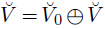 be a quadratic space over
 ${{\breve{F}}}$
, where
 \begin{align*}{{\breve{V}}}_0=\langle e_1,\dotsc,e_n,f_1,\dotsc,f_n\rangle\end{align*}
with
 $(e_i,e_j)=(f_i,f_j)=0$
,
 $(e_i,f_j)=\delta_{ij}$
and
 ${{\breve{V}}}_{{{{\rm an}}}}$
is anisotropic. Then
 ${{\breve{V}}}_{{{{\rm an}}}}$
is of the following form:
-
(1)
${{\breve{V}}}_{{{{\rm an}}}}=0$
; -
(2a)
${{\breve{V}}}_{{{{\rm an}}}}={{\breve{F}}} u$
, with
$(u,u)=1$
; -
(2b)
${{\breve{V}}}_{{{{\rm an}}}}={{\breve{F}}} u$
, with
$(u,u)=\pi$
; -
(3)
${{\breve{V}}}_{{{{\rm an}}}}={{\breve{F}}} u\oplus {{\breve{F}}} v$
, with
$(u,u)=\pi$
,
$(v,v)=1$
.


3. Relative positions of vertex lattices
3.1 The
$\mu$
-admissible set

3.1.1.
Let G be a reductive group over F. We set
 $\Gamma=\operatorname{Gal}(\bar{F} /F)$
and let
 $\sigma\in \Gamma$
denote a lift of the Frobenius of k over
 $k_F$
. Let S be a maximal
 ${{\breve{F}}}$
-split torus of G and T its centralizer (cf. [Reference TitsTit79, 1.10] for the existence of S). By Steinberg’s theorem, G is quasi-split over
 ${{\breve{F}}}$
and T is a maximal torus of G. The relative Weyl group over
 ${{\breve{F}}}$
and the Iwahori Weyl group of G are defined as
 \begin{align*}{{\widetilde{W}}}_0=N({{\breve{F}}})/T({{\breve{F}}}),\quad {{\widetilde{W}}}=N({{\breve{F}}})/{{\mathcal{T}}}_0({{\mathcal{O}}}_{{{\breve{F}}}}),\end{align*}
where N is the normalizer of T and
 ${{\mathcal{T}}}_0$
is the connected Néron model for T. We have the following exact sequence.

Here,
 $I = {\rm Gal}(\bar{F}/F^{{\rm ur}})$
denotes the inertia subgroup of the absolute Galois group of F, and
 $X_*(T)_I$
represents the group of coinvariants of the cocharacter lattice
 $X_*(T)$
under the action of I. For an element
 $\lambda\in X_*(T)_I$
, we write
 $t^\lambda$
for the corresponding element in
 ${{\widetilde{W}}}$
; such elements are called translation elements.
Let
 ${{\mathcal{B}}}(G,F)$
(respectively
 ${{\mathcal{B}}}(G,{{\breve{F}}})$
) be the (extended) Bruhat–Tits building for G over F (respectively
 ${{\breve{F}}}$
), and fix
 ${{\mathfrak{a}}}\subset {{\mathcal{B}}}(G,F)$
a
 $\sigma$
-stable alcove; this determines an Iwahori group scheme
 ${{\mathcal{I}}}$
defined over F. Fix also a special vertex
 ${{\mathfrak{s}}}\in {{\mathcal{B}}}(G,{{\breve{F}}})$
lying in the closure of
 ${{\mathfrak{a}}}$
, which determines a splitting of the exact sequence (3.1) and gives an identification
 \begin{align*} A:=X_*(T)_I\otimes_{{{\mathbb{Z}}}}{{\mathbb{R}}}\cong {{\mathcal{A}}}(G,S,{{\breve{F}}}),\end{align*}
where
 ${{\mathcal{A}}}(G,S,{{\breve{F}}})\subset {{\mathcal{B}}}(G,{{\breve{F}}})$
is the apartment corresponding to S. This identification determines a chamber
 $C^+\subset X_*(T)_I\otimes_{{{\mathbb{Z}}}}{{\mathbb{R}}}$
, namely the one containing
 ${{\mathfrak{a}}}$
. We write B for the corresponding Borel subgroup defined over
 ${{\breve{F}}}$
.
Let
 ${{\mathbb{S}}}$
denote the set of simple reflections about the walls of
 ${{\mathfrak{a}}}$
. We let
 ${{\widetilde{W}}}_a$
denote the affine Weyl group; it is the subgroup of
 ${{\widetilde{W}}}$
generated by the reflections in
 ${{\mathbb{S}}}$
. Then we have an exact sequence

where
 $T_{{\rm sc}}$
is the preimage of T in the simply connected cover of the derived group of G. The group
 $({{\widetilde{W}}}_a,{{\mathbb{S}}})$
has the structure of a Coxeter group, and hence we have a notion of length and Bruhat order. The Iwahori Weyl group and affine Weyl group are related by the following exact sequence.

The choice of
 ${{\mathfrak{a}}}$
induces a splitting of this exact sequence and
 $\pi_1(G)_I$
can be identified with the subgroup
 $\Omega\subset {{\widetilde{W}}}$
consisting of elements which map
 ${{\mathfrak{a}}}$
to itself. The length function
 $\ell$
and Bruhat order extend to
 ${{\widetilde{W}}}$
via the splitting.
By [Reference He and RapoportHR17], there is a reduced root system
 $\Sigma$
such that
 \begin{align*}{{\widetilde{W}}}_a\cong Q^\vee(\Sigma)\rtimes {{\widetilde{W}}}(\Sigma),\end{align*}
where
 $Q^\vee(\Sigma) $
and
 ${{\widetilde{W}}}(\Sigma)$
denote the coroot lattice and Weyl group of
 $\Sigma$
, respectively. The root system
 $\Sigma$
is known as the échelonnage root system.
3.1.2.
Let
 $X_*(T)_I^+$
denote the set of dominant elements with respect to B. For
 $\mu\in X_*(T)^+_I$
, we have the
 $\mu$
-admissible set, which is defined as follows:
 \begin{align*}{{\operatorname{Adm}}}(\mu):=\{w \in \widetilde{W} \mid w \leqslant t^{\mu^{\prime}} \text { for some } \mu^{\prime} \in {{\widetilde{W}}}_0 \mu\}.\end{align*}
This set has a minimal element
 $\tau_\mu$
, which is the unique length-zero element of
 ${{\operatorname{Adm}}}(\mu).$
Let
 $J\subset {{\mathbb{S}}}$
be a subset. We write
 ${{\widetilde{W}}}_J\subset {{\widetilde{W}}}$
for the subgroup generated by the reflections in J. If
 ${{\widetilde{W}}}_J$
is finite, then J determines a facet
 ${{\mathfrak{f}}}_J$
lying in the closure of
 ${{\mathfrak{a}}}$
and hence corresponds to a parahoric group scheme
 ${{\mathcal{G}}}^\circ_J$
. The corresponding parahoric
 $\mu$
-admissible set
 \begin{align*}{{\operatorname{Adm}}}(\mu)_J\subset {{\widetilde{W}}}_J\backslash {{\widetilde{W}}}/{{\widetilde{W}}}_J\end{align*}
is defined to be the image of
 ${{\operatorname{Adm}}}(\mu)$
under the map
 ${{\widetilde{W}}}\rightarrow {{\widetilde{W}}}_J\backslash{{\widetilde{W}}}/{{\widetilde{W}}}_J$
. We also set
 \begin{align*}{{\operatorname{Adm}}}(\mu)^J:={{\widetilde{W}}}_J\operatorname{Adm}(\mu){{\widetilde{W}}}_J\subset {{\widetilde{W}}}.\end{align*}
3.2 Relative position of vertex lattices
3.2.1.
Let V be a quadratic space over F. We now specialize to the case
 $G={\rm SO}(V).$
We let
 ${{\breve{V}}}=V\otimes_{F}{{\breve{F}}}$
. Then we can write
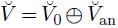 , where
 \begin{align*}{{\breve{V}}}_0=\langle e_1,\dotsc,e_n,f_1,\dotsc,f_n\rangle\end{align*}
with
 $(e_i,e_j)=(f_i,f_j)=0$
,
 $(e_i,f_j)=\delta_{ij}$
and
 ${{\breve{V}}}_{{{{\rm an}}}}$
is of the following form:
-
(1)
${{\breve{V}}}_{{{{\rm an}}}}=0$
; -
(2a)
${{\breve{V}}}_{{{{\rm an}}}}={{\breve{F}}} u$
, with
$(u,u)=1$
; -
(2b)
${{\breve{V}}}_{{{{\rm an}}}}={{\breve{F}}} u$
, with
$(u,u)=\pi$
; -
(3)
${{\breve{V}}}_{{{{\rm an}}}}={{\breve{F}}} u\oplus {{\breve{F}}} v$
, with
$(u,u)=\pi$
,
$(v,v)=1$
.





The local Dynkin diagram is of type
 $D_n$
in case (1), type
 $B_n$
in case (2) and type C-
 $B_n$
in case (3); here we use the notation of Tits’ table [Reference TitsTit79, § 4].
Let
 $L_{{{{\rm an}}}}\subset {{\breve{V}}}_{{{{\rm an}}}}$
denote the
 ${{\mathcal{O}}}_{{{\breve{F}}}}$
-submodule
 \begin{align*}L_{{{{\rm an}}}}=\begin{cases}0 &\text{in case (1)},\\{{\mathcal{O}}}_{{{\breve{F}}}}u& \text{in case (2)},\\{{\mathcal{O}}}_{{{\breve{F}}}}u+{{\mathcal{O}}}_{{{\breve{F}}}}v& \text{in case (3)}.\end{cases}\end{align*}
For
 $s=0,\dotsc,n$
, we let
 $L_0^{(s)}\subset{{\breve{V}}}_0$
be the
 ${{\mathcal{O}}}_{{{\breve{F}}}}$
-module given by
 \begin{align*}L_0^{(s)}={{{\rm Span}}}_{{{\mathcal{O}}}_{{{\breve{F}}}}}(\pi e_1,\dotsc,\pi e_s,e_{s+1},\dotsc,e_n,f_1,\dotsc,f_n)\end{align*}
and set

Then,
 $L^{(s)}$
is a vertex lattice of type
 \begin{align*}t(s):=\begin{cases} 2s & \text{in case (1) and (2a)},\\2s+1 &\text{in case (2b) and (3)}.\end{cases}\end{align*}
We also set

which are vertex lattices of type t(0) and t(n), respectively.
3.2.2.
We take S to be the maximal
 ${{\breve{F}}}$
-split torus of
 ${\rm SO}({{\breve{V}}})$
given by
 ${{\mathbb{G}}}_m^n\subset{\rm SO}({{\breve{V}}})$
such that, for
 $t=(t_1,\dotsc,t_n)\in {{\mathbb{G}}}_m^n$
, we have
 \begin{align*}t:{{\breve{V}}} \mapsto {{\breve{V}}} \text{ is given by } e_i\mapsto t_ie_i,\ f_i\mapsto t_i^{-1}f_i.\end{align*}
Let
 $\nu:{{\mathbb{G}}}_m\rightarrow {{\mathbb{G}}}_m^n$
be the cocharacter
 $t\mapsto (t,1,\dotsc,1)$
and let
 $\mu:{{\mathbb{G}}}_m\rightarrow {\rm SO}({{\breve{V}}})$
denote the composition of
 $\nu$
and the above inclusion. Then
 $\mu$
is a minuscule cocharacter of
 ${\rm SO}({{\breve{V}}})$
. We then have the associated
 $\mu$
-admissible set
 ${{\operatorname{Adm}}}(\mu)$
and its parahoric analogues. Our goal is to give a more explicit description of the set
 ${{\operatorname{Adm}}}(\mu)_J$
, where J corresponds to a vertex lattice in
 ${{\breve{V}}}$
. For this, we use the description of the building of
 ${\rm SO}({{\breve{V}}})$
in [Reference GarrettGar97, § 20.3]; we translate the necessary results to our setting. We first describe the base alcove, and facets corresponding to vertex lattices.
In each case, we have
 $X_*(T)_I\otimes_{{{\mathbb{Z}}}}{{\mathbb{R}}}\cong X_*(S)\otimes_{{{\mathbb{Z}}}}{{\mathbb{R}}}$
, which we identify with
 ${{\mathcal{A}}}(G,S,{{\breve{F}}})$
by sending 0 to the vertex
 ${{\mathbf{x}}}^{(0)}$
corresponding to the stabilizer of
 $L^{(0)}$
. We let
 $\epsilon_1,\dotsc,\epsilon_n$
denote the standard basis for
 ${{\mathbb{Z}}}^n$
.
Case (1). We have
 $S=T$
and
 $X_*(T)_I=X_*(S)$
, which we identify with
 ${{\mathbb{Z}}}^n$
so that the roots are given by
 $\pm\epsilon_i\pm\epsilon_j$
,
 $1\leqslant i\lt j\leqslant n$
. We take the n roots
 \begin{align*} \epsilon_i-\epsilon_{i+1}, 1\leqslant i\leqslant n-1\quad \text{and}\quad \epsilon_{n-1}+\epsilon_n\end{align*}
as simple roots.
The base alcove in
 ${{\mathbb{R}}}^n$
is given by
 \begin{align*}{{\mathfrak{a}}}=\{(a_1,\dotsc,a_n)\in {{\mathbb{R}}}^n\mid a_1\gt a_2\gt \cdots \gt\pm a_n, a_1+a_2\lt 1\}.\end{align*}
Let
 \begin{align*}{{\mathbf{x}}}^{(0)} &=(0,\dotsc,0){,}\quad{{\mathbf{x}}}^{\prime (0)}=(1,0\dotsc,0),\\{{\mathbf{x}}}^{(s)}&=\sum_{i=1}^s\frac{\epsilon_i}{2}\quad \text{for } 1 \leqslant s \leqslant n-1,\\{{\mathbf{x}}}^{(n)}&=(\tfrac{1}{2},\dotsc,\tfrac{1}{2}){,}\quad{{\mathbf{x}}}^{\prime (n)}=(\tfrac{1}{2},\dotsc,\tfrac{1}{2},-\tfrac{1}{2}),\end{align*}
which lie in the closure of
 ${{\mathfrak{a}}}$
, with
 ${{\mathbf{x}}}^{(0)}$
a special vertex. The points
 ${{\mathbf{x}}}^{(0)},{{\mathbf{x}}}^{\prime (0)},{{\mathbf{x}}}^{(n)},{{\mathbf{x}}}^{\prime (n)}$
and
 ${{\mathbf{x}}}^{(s)}$
for
 $2\leqslant s\leqslant n-2$
are zero-dimensional facets, while
 ${{\mathbf{x}}}^{(1)}$
and
 ${{\mathbf{x}}}^{(n-1)}$
lie on one-dimensional facets given by the line segments between
 ${{\mathbf{x}}}^{(0)},{{\mathbf{x}}}^{\prime (0)}$
and
 ${{\mathbf{x}}}^{(n)},{{\mathbf{x}}}^{\prime (n)}$
, respectively. The parahoric corresponding to
 ${{\mathbf{x}}}^{(s)}, 0\leqslant s\leqslant n$
, is the connected stabilizer of
 $L^{(s)}$
; similarly,
 ${{\mathbf{x}}}^{\prime (0)}$
corresponds to
 $L^{\prime (0)}$
and
 ${{\mathbf{x}}}^{\prime (n)}$
corresponds to
 $L^{\prime (n)}$
.
Case (2). We have
 $S=T$
and
 $X_*(T)_I=X_*(S)$
, which we identify with
 ${{\mathbb{Z}}}^n$
so that the roots are given by
 $\pm\epsilon_i\pm\epsilon_j, 1\leqslant i\lt j\leqslant n$
,
 $\pm\epsilon_i, 1\leqslant i \leqslant n$
. We take the n roots
 \begin{align*} \epsilon_i-\epsilon_{i+1}, 1\leqslant i\leqslant n-1\quad \text{and}\quad \epsilon_n\end{align*}
as simple roots.
We first assume we are in case (2a). The base alcove in
 ${{\mathbb{R}}}^n$
is given by
 \begin{align*}{{\mathfrak{a}}}=\{(a_1,\dotsc,a_n)\in {{\mathbb{R}}}^n \mid a_1\gt a_2\gt\cdots\gt a_n\gt 0, a_1+a_2\lt 1\}.\end{align*}
Let
 \begin{align*}{{\mathbf{x}}}^{(0)}&=(0,\dotsc,0),\quad{{\mathbf{x}}}^{\prime (0)}=(1,0\dotsc,0),\\{{\mathbf{x}}}^{(s)}&=\sum_{i=1}^s\frac{\epsilon_i}{2}\quad \text{for } 1 \leqslant s \leqslant n,\end{align*}
which lie in the closure of
 ${{\mathfrak{a}}}$
, with
 ${{\mathbf{x}}}^{(0)}$
a special vertex. The points
 ${{\mathbf{x}}}^{(0)},{{\mathbf{x}}}^{\prime (0)}$
,
 ${{\mathbf{x}}}^{(s)},2\leqslant s\leqslant n$
, are zero-dimensional facets, while
 ${{\mathbf{x}}}^{(1)}$
lies on the one-dimensional facet given by the line segment between
 ${{\mathbf{x}}}^{(0)}$
and
 ${{\mathbf{x}}}^{\prime (0)}$
. The parahoric corresponding to
 ${{\mathbf{x}}}^{(s)}, 0\leqslant s\leqslant n$
, is the connected stabilizer of
 $L^{(s)}$
, and similarly
 ${{\mathbf{x}}}^{\prime (0)}$
corresponds to
 $L^{\prime (0)}$
.
Now assume we are in case (2b); in this case, the point
 ${{\mathbf{x}}}^{(0)}={(0,\dotsc,0)}$
is not a special vertex. The base alcove in
 ${{\mathbb{R}}}^n$
is given by
 \begin{align*}{{\mathfrak{a}}}=\{(a_1,\dotsc,a_n)\in {{\mathbb{R}}}^n \mid \tfrac{1}{2}\gt a_1\gt a_2\gt\cdots\gt a_n, a_{n-1}+a_n\gt 0\}.\end{align*}
Let
 \begin{align*}{{\mathbf{x}}}^{(s)}&=\sum_{i=1}^s\frac{\epsilon_i}{2}\quad \text{for }1 \leqslant s \leqslant n-1,\\{{\mathbf{x}}}^{(n)}&=(\tfrac{1}{2},\dotsc,\tfrac{1}{2},\tfrac{1}{2}),\quad {{\mathbf{x}}}^{\prime (n)}=(\tfrac{1}{2},\dotsc,\tfrac{1}{2},-\tfrac{1}{2}),\end{align*}
which lie in the closure of
 ${{\mathfrak{a}}}$
, with
 ${{\mathbf{x}}}^{(n)}$
a special vertex. The points
 ${{\mathbf{x}}}^{(n)}, {{\mathbf{x}}}^{\prime (n)}$
,
 ${{\mathbf{x}}}^{(s)}, 1\leqslant s \leqslant n-2$
, are zero-dimensional facets, while
 ${{\mathbf{x}}}^{(n-1)}$
lies on the one-dimensional facet given by the line segment between
 ${{\mathbf{x}}}^{(n)}$
and
 ${{\mathbf{x}}}^{\prime (n)}.$
Case (3). In this case, we have
 $T=S\times({\rm Res}_{{{\breve{F}}}'/{{\breve{F}}}}{{\mathbb{G}}}_m)^{{\rm Nm}=1}$
, where
 ${{\breve{F}}}'/{{\breve{F}}}$
is a degree-2 ramified extension, and hence
 $X_*(T)_I=X_*(S)\oplus{{\mathbb{Z}}}/2{{\mathbb{Z}}}$
. The échelonnage root system is of type
 $C_n$
(cf. [Reference TitsTit79, Example 1.16]), so we fix an identification
 $X_*(S)\cong {{\mathbb{Z}}}^n$
so that the roots are given by
 $\pm\epsilon_i\pm \epsilon_j, 1 \leqslant i\lt j\leqslant n$
,
 $\pm2\epsilon_i, i=1,\dotsc,n$
. We take the n roots
 \begin{align*} \epsilon_i-\epsilon_{i+1}, 1\leqslant i\leqslant n-1\quad \text{and}\quad 2\epsilon_n\end{align*}
as simple roots.
The base alcove in
 ${{\mathbb{R}}}^n$
is given by
 \begin{align*}\{{{\mathfrak{a}}}=\{(a_1,\dotsc,a_n)\mid\tfrac{1}{2}\gt a_1\gt\cdots\gt a_n\gt0\}.\end{align*}
Let
 \begin{align*}{{\mathbf{x}}}^{(s)}=\sum_{i=1}^s\frac{\epsilon_i}{2}\quad \text{for } 0 \leqslant s \leqslant n,\end{align*}
which lie in the closure of
 ${{\mathfrak{a}}}$
; these are all zero-dimensional facets. The parahoric corresponding to
 ${{\mathbf{x}}}^{(s)}$
is the connected stabilizer of
 $L^{(s)}$
.
Remark 3.1.
-
(i) From the description above, we see that the parahoric corresponding to the lattices
$L^{(1)}, L^{(n-1)}$
in case (1),
$L^{(1)}$
in case (2a) and
$L^{(n-2)}$
in case (2b) are not maximal parahorics. -
(ii) In case (2), the automorphism
of
\begin{align*}\theta(a_1,\dotsc,a_n)\mapsto (\tfrac{1}{2},\dotsc,\tfrac{1}{2})-(a_n,\dotsc,a_1)\end{align*}
${{\mathbb{Z}}}^n$
maps the alcove in case (2a) to case (2b), and is equivariant for the actions of the respective Iwahori Weyl groups. This automorphism is induced by the isomorphism of group schemes
${\rm SO}(V)\cong {\rm SO}(V^{(\pi)})$
, where
$V^{(\pi)}$
is the quadratic space whose underlying vector space is V, but with quadratic form given by
$\pi({\kern2pt}, ).$





3.2.3.
The relative Weyl group
 $W_0$
has the following description:
 \begin{align*}W_0\cong\begin{cases}(({{\mathbb{Z}}}/2{{\mathbb{Z}}})^n\rtimes S_n)^\circ &\text{in case (1)},\\({{\mathbb{Z}}}/2{{\mathbb{Z}}})^n\rtimes S_n &\text{in case (2) and (3)}.\end{cases}\end{align*}
Here,
 $(({{\mathbb{Z}}}/2{{\mathbb{Z}}})^n\rtimes S_n)^\circ $
denotes the kernel of the homomorphism
 \begin{align*}({{\mathbb{Z}}}/2{{\mathbb{Z}}})^n\rtimes S_n&\rightarrow {{\mathbb{Z}}}/2{{\mathbb{Z}}}\\((z_1,\dotsc,z_n),\sigma)&\mapsto \sum_{i=1}^n z_i.\end{align*}
In case (1), (2a) and (3), the groups
 $({{\mathbb{Z}}}/2{{\mathbb{Z}}})^n\cong \{\pm1\}^n$
and
 $S_n$
act on
 ${{\mathbb{Z}}}^n$
via factorwise multiplication and permutation of coordinates. In case (2b), they act via the same linear transformations, but centered at
 ${{\mathbf{x}}}^{(n)}$
. Thus, we see in each case that the
 ${{\widetilde{W}}}$
-orbit of
 ${{\mathbf{x}}}^{(s)}$
in
 ${{\mathcal{A}}}(G,S,{{\breve{F}}})\cong {{\mathbb{R}}}^n$
is given by
 \begin{eqnarray}{{\widetilde{W}}} {{\mathbf{x}}}^{(s)}=\{(a_1,\dotsc, a_n)\in {{\mathbb{Z}}}[1/2]^n \mid \text{ exactly} {s} \text{ of the } a_i \text{ are in} \tfrac{1}{2}+{{\mathbb{Z}}}\}.\end{eqnarray}
For
 $y=(a_1,\dotsc,a_n)\in {{\widetilde{W}}} {{\mathbf{x}}}^{(s)}$
, define
 \begin{align*}L_0(y)={{{\rm Span}}}_{{{\mathcal{O}}}_F}(\pi^{\lceil a_1\rceil} e_1,\dotsc,\pi^{\lceil a_n\rceil} e_n, \pi^{\lceil -a_1\rceil}f_1,\dotsc, \pi^{\lceil -a_n\rceil}f_n)\subset {{\breve{V}}}_0\end{align*}
and set
 . Then, in each case, the parahoric associated to y is the connected stabilizer of L(y), and the association
 $y\mapsto L(y)$
induces a
 ${{\widetilde{W}}}$
-equivariant bijection between the
 ${{\widetilde{W}}}$
-orbit of
 ${{\mathbf{x}}}^{(s)}$
and the
 ${{\widetilde{W}}}$
-orbit of
 $L^{(s)}$
. Here,
 ${{\widetilde{W}}}$
acts on vertex lattices of the form L(y) via
 $w:L(y)\mapsto \dot{w}L(y)$
, where
 $\dot{w}\in N({{\breve{F}}})$
is a lift of w, noting that
 $\dot{w}L(y)$
does not depend on the choice of lift
 $\dot{w}$
.
3.2.4.
Under the identification
 \begin{align*}X_*(T)_I\cong\begin{cases} {{\mathbb{Z}}}^n & \text{ in case (1) and (2)},\\ {{\mathbb{Z}}}^n\times {{\mathbb{Z}}}/2{{\mathbb{Z}}} &\text{ in case (3),}\end{cases}\end{align*}
the element
 $\mu$
corresponds to the element
 $(1,0,\dotsc,0)$
. In particular, its image in
 $X_*(T)_I\otimes_{{{\mathbb{Z}}}}{{\mathbb{R}}}\cong{{\mathbb{R}}}^n$
is
 $\epsilon_1.$
Lemma 3.2.
Let
 $s\in\{0,\dotsc,n\}$
and let
 $y\in {{\widetilde{W}}} {{\mathbf{x}}}^{(s)}$
with
 $\dim_{k}(L(y)+L^{(s)})/L^{(s)}= 1$
.
-
(I) We have
or
\begin{align*}y={{\mathbf{x}}}^{(s)}\pm \epsilon_i,\quad i=1,\dotsc,n\end{align*}
\begin{align*}y={{\mathbf{x}}}^{(s)}\pm\tfrac{1}{2}\epsilon_j\pm \tfrac{1}{2}\epsilon _i,\quad 1\leqslant j\leqslant s,\ s+1\leqslant i\leqslant n.\end{align*}
-
(ii) Let
$J^{(s)}\subset {{\mathbb{S}}}$
be the subset of simple reflections corresponding to the facet containing
${{\mathbf{x}}}^{(s)}$
. Then there exists
$w\in {{\operatorname{Adm}}}(\mu)^{J^{(s)}}$
such that
$wx^{(s)}=y$
.




Proof. Using the automorphism
 $\theta$
from Remark 3.1(ii), case (2b) can be reduced to case (2a). So, we may assume we are in case (1), (2a) or (3), and hence that
 ${{\mathbf{x}}}^{(0)}$
is a special point.
(i) Let
 $y=(a_1,\dotsc,a_n)$
. Then, using the description of L(y) above, we see that exactly one of the integers
 \begin{align*}\lceil a_1\rceil-1,\dotsc, \lceil a_s\rceil-1, \lceil a_{s+1}\rceil , \dotsc, \lceil a_n\rceil, \lceil -a_1\rceil,\dotsc, \lceil -a_n\rceil \end{align*}
is equal to 1, and the others are all
 $\leqslant 0$
.
Now, let use write
 ${{\mathbf{x}}}_k^{(s)}$
for the kth coordinate in
 ${{\mathbf{x}}}^{(s)}$
. Suppose first that
 $\lceil a_i\rceil-1 =1$
for some
 $i\in \{1,\dotsc,s\}$
, then
 $a_i=\frac{3}{2}$
or
 $a_i=2$
. If
 $a_i=2$
, then, since
 $y\in {{\widetilde{W}}} {{\mathbf{x}}}^{(s)}$
, there exists
 $j\in \{s+1,\dotsc,n\}$
with
 $a_j\in \frac{1}{2}+{{\mathbb{Z}}}$
. But then either
 $\lceil a_j\rceil\gt0$
or
 $\lceil -a_j\rceil\gt0$
, which is a contradiction, and hence
 $a_i=\frac{3}{2}$
. Suppose there exists
 $k\neq i$
with
 $a_k\neq {{\mathbf{x}}}^{(s)}_k$
. If
 $k\leqslant s$
, then we must have
 $a_k=0$
or 1, otherwise
 $\lceil a_k\rceil\gt0$
or
 $\lceil -a_k\rceil\gt0$
. Then, as before, there exists
 $j\in \{s+1,\dotsc,n\}$
with
 $a_j\in \frac{1}{2}+{{\mathbb{Z}}}$
. Thus, upon replacing k by j, we may assume
 $k\gt s+1$
. In this case, we have
 $\lceil a_k\rceil\gt0$
or
 $\lceil -a_k\rceil \lt0$
, which is a contradiction. Therefore,
 $y={{\mathbf{x}}}^{(s)}+\epsilon_i$
.
Now, suppose
 $\lceil a_i\rceil=1$
for some
 $i\in \{s+1,\dotsc,n\}$
. Then,
 $a_i=\frac{1}{2}$
or
 $a_i=1$
. If
 $a_i=\frac{1}{2}$
then, since
 $y\in {{\widetilde{W}}} {{\mathbf{x}}}^{(s)}$
, there exists
 $j\in \{1,\dotsc,s\}$
such that
 $a_j\in{{\mathbb{Z}}}$
and, since
 $\lceil a_j\rceil-1,\lceil -a_j\rceil \leqslant 0$
, we must have
 $a_j=0$
or 1. The same argument as in the previous paragraph shows that
 $a_k={{\mathbf{x}}}_k^{(s)}$
for
 $k\neq i,j$
, and hence
 $y={{\mathbf{x}}}^{(s)}\pm\frac{1}{2}\epsilon_j+\frac{1}{2}\epsilon_i$
. If
 $a_i=1$
, then similarly we have
 $a_k={{\mathbf{x}}}^{(s)}_k$
for
 $k\neq i$
, and hence
 $y={{\mathbf{x}}}^{(s)}+\epsilon_i$
.
The cases when
 $\lceil -a_i\rceil=1$
for
 $i\in \{1,\dotsc,s\}$
and
 $i\in \{s+1,\dotsc,n\}$
can be handled analogously to the previous two cases. When
 $\lceil -a_i\rceil=1$
for
 $i\in \{1,\dotsc,s\}$
, we have
 $y={{\mathbf{x}}}^{(s)}-\epsilon_i$
, and when
 $\lceil -a_i\rceil=1$
for
 $i\in \{s+1,\dotsc,n\}$
, we have
 $y={{\mathbf{x}}}^{(s)}-\epsilon_i$
or
 $y={{\mathbf{x}}}^{(s)}\pm\frac{1}{2}\epsilon_j-\frac{1}{2}\epsilon_i$
.
(ii) It suffices to consider the two cases from (i). Let
 $y={{\mathbf{x}}}^{(s)}\pm\epsilon_i$
. Then there is
 $u\in {{\widetilde{W}}}_0$
with
 $u(\epsilon_1)=\pm \epsilon_i$
. Set
 $\lambda=u(\mu)$
. Then
 $t^\lambda {{\mathbf{x}}}^{(s)}=y$
and we have
 $t^\lambda\in {{\operatorname{Adm}}}(\mu)$
, so the result follows in this case.
Now let
 $y={{\mathbf{x}}}^{(s)}\pm\frac{1}{2}\epsilon_j\pm \frac{1}{2}\epsilon _i, 1\leqslant j\leqslant s, s+1\leqslant i\leqslant n$
; note that this case occurs only if
 $1\leqslant s\leqslant n-1$
. Let
 $u\in {{\widetilde{W}}}_{J^{(s)}}$
be the element which switches the
 $j{{\rm th}}$
and
 $s{{\rm th}}$
coordinates, and switches the
 $i{{\rm th}}$
and
 $(s+1){{\rm th}}$
coordinates. Then, upon replacing y by u(y), we may assume
 $y={{\mathbf{x}}}^{(s)}\pm\frac{1}{2}\epsilon_s\pm \frac{1}{2}\epsilon _{s+1}.$
Let
 $w^+\in S_n\subset {{\widetilde{W}}}_0$
denote the reflection switching
 $\epsilon_i$
and
 $\epsilon_j$
, and let
 $w^-\in {{\widetilde{W}}}_0$
be the composition of
 $w^+$
with multiplication by
 $-1$
in the
 $s{{\rm th}}$
and
 $(s+1){{\rm th}}$
factors; thus,
 $w^-:\epsilon_s\mapsto -\epsilon_{s+1}, \epsilon_{s+1}\mapsto -\epsilon_s$
. Let
 $\lambda_s,\lambda_{s+1}\in X_*(T)_I$
be the
 ${{\widetilde{W}}}_0$
conjugates of
 $\mu$
whose images in
 ${{\mathbb{R}}}^n$
are
 $\epsilon_s,\epsilon_{s+1}$
, respectively.
We define a pair
 $(u',\lambda)\in {{\widetilde{W}}}_0\times X_*(T)_I$
as follows:
 \begin{align*}(u',\lambda)=\begin{cases} (w^+_{s,s+1},{\lambda_{s+1}})& \text{if }y={{\mathbf{x}}}^{(s)}+\tfrac{1}{2}\epsilon_s+\tfrac{1}{2}\epsilon_{s+1},\\[4pt](w^-_{s,s+1},{-\lambda_{s+1}}) &\text{if }y={{\mathbf{x}}}^{(s)}+\tfrac{1}{2}\epsilon_s-\tfrac{1}{2}\epsilon _{s+1},\\[4pt](w^-_{s,s+1},{-\lambda_{s}})&\text{if }y={{\mathbf{x}}}^{(s)}-\tfrac{1}{2}\epsilon_s+\tfrac{1}{2}\epsilon _{s+1},\\[4pt](w^+_{s,s+1},{-\lambda_{s}}) &\text{if } y={{\mathbf{x}}}^{(s)}-\tfrac{1}{2}\epsilon_s-\tfrac{1}{2}\epsilon _{s+1}, \end{cases}\end{align*}
and we set
 $w=u't^\lambda\in {{\widetilde{W}}}$
. Then, we have
 $w({{\mathbf{x}}}^{(s)})=y$
. Moreover, we have
 $w\leqslant t^\lambda$
in the Bruhat order, since
 ${{\mathfrak{a}}}$
and
 $t^\lambda{{\mathfrak{a}}}$
lie on different sides of the hyperplane corresponding to the reflection u’. Since
 $\lambda\in{{\widetilde{W}}}_0(\mu)$
it follows that
 $t^\lambda$
, and hence w, lie in
 ${{\operatorname{Adm}}}(\mu).$
Lemma 3.3.
Let
 $s\in \{0,\dotsc,n\}$
and assume
 $t(s)\neq 0,\dim V$
. Then the element
 $\tau_\mu\in{{\operatorname{Adm}}}(\mu)$
satisfies
 $\tau_\mu {{\mathbf{x}}}^{(s)}={{\mathbf{x}}}^{(s)}$
.
Proof. Again, using Remark 3.1, we may assume we are in case (1), (2a) or (3). We compute that
 $\tau_\mu:{{\mathbb{Z}}}^{n}\rightarrow {{\mathbb{Z}}}^n$
has the following form:
 \begin{align*}w:(a_1,a_2,\dotsc,a_{n-1},a_n)\mapsto\begin{cases} (1-a_1,a_2,\dotsc,a_{n-1},-a_n) &\text{in case (1)},\\ (1-a_1,a_2,\dotsc,a_{n-1},a_n) & \text{in case (2a)},\\(a_1,a_2,\dotsc,a_{n-1},a_n) &\text{in case (3)}.\end{cases}\end{align*}
It is then clear that
 $\tau_\mu$
fixes
 ${{\mathbf{x}}}^{(s)}$
if
 $t(s)\neq 0,\dim V$
.
Remark 3.4. The assumption
 $t(s)\neq 0,\dim V$
is equivalent to the condition that
 ${{\mathbf{x}}}^{(s)}$
is not a hyperspecial vertex for
 $G_{\breve{\mathbb{Q}}_p}.$
3.2.5.
We now prove the main result of this subsection, which gives an explicit description of
 ${{\operatorname{Adm}}}(\mu)_{J^{(s)}}$
in terms of relative positions of lattices in
 ${{\breve{V}}}$
.
Lemma 3.5.
Let
 $s\in \{0,1,\dotsc,n-1\}$
and
 $L\subset {{\breve{V}}}$
be a vertex lattice of type t(s). Then there exists
 $g\in G({{\breve{F}}})$
such that
 $gL^{(s)}=L$
.
Proof. By the classification of quadratic lattices over local fields, every vertex lattice L can be written as
 , where
 $L_1$
is unimodular and
 $L_2^{\vee}=\pi^{-1}L_2$
. Similarly, we can write
 $L^{(s)}$
as
 . Since
 $L_1\cong L_1^{(s)}$
and
 $L_2\cong L_2^{(s)}$
, we can find a g as desired.
Proposition 3.6.
Let L,L’ be vertex lattices of type
 $t=t(s)$
with
 $t(s)\neq 0,\dim V$
. The following two conditions are equivalent:
-
(i)
$\dim_{k}(L+L')/L\leqslant1$
; -
(ii) there exists
$g\in G({{\breve{F}}}), w\in {{\operatorname{Adm}}}(\mu)_{J^{(s)}}$
, such that where
\begin{align*}gL^{(s)}=L,\quad g\dot{w} L^{(s)}=L',\end{align*}
$\dot{w}\in N({{\breve{F}}})$
is a lift of w.


Proof. (i)
 $\Rightarrow$
(ii): For simplicity, we write
 ${{\mathcal{G}}}_s^\circ$
for the parahoric
 ${{\mathcal{G}}}_{J^{(s)}}^\circ$
. By Lemma 3.5, there exists
 $g,g'\in G({{\breve{F}}})$
such that
 $gL^{(s)}=L$
and
 $g'L^{(s)}=L'$
. By the Bruhat decomposition, upon right multiplying g and g’ by
 ${{\mathcal{G}}}_s^\circ({{\mathcal{O}}}_{{{\breve{F}}}})$
, we may assume
 $g'=g\dot{w}'$
for some
 $w'\in {{\widetilde{W}}}$
.
If
 $\dim (w' L^{(s)}+L^{(s)})/ L^{(s)}\leqslant 1$
, then by Lemmas 3.2 and 3.3, there exists
 $w\in {{\operatorname{Adm}}}(\mu)^{J^{(s)}}$
such that
 $wL^{(s)}=w'L^{(s)}$
and the result follows since
 ${{\operatorname{Adm}}}(\mu)^{J^{(s)}}$
is the preimage of
 ${{\operatorname{Adm}}}(\mu)_{J^{(s)}}$
in
 ${{\widetilde{W}}}$
.
(ii)
 $\Rightarrow$
(i): It suffices to show, for
 $w\in {{\operatorname{Adm}}}(\mu)_{J^{(s)}}$
,
 $\dim(L^{(s)}+wL^{(s)})/L^{(s)}\leqslant 1$
. We first consider
 $w=t^{w_0(\mu)}$
for
 $w_0\in {{\widetilde{W}}}_0$
. Then
 $w_0(\mu)$
is of the form
 $\pm \epsilon_i$
, and hence L’ is of the form

which satisfies
 $\dim_{k}(L+L')/L\leqslant 1$
.
Let
 ${\rm Fl}_{{{\mathcal{G}}}^\circ_s}$
denote the Witt-vector affine partial flag variety over k associated to the parahoric
 ${{\mathcal{G}}}^\circ_s$
(see [Reference Bhatt and ScholzeBS17], [Reference ZhuZhu17]). For
 $g\in {\rm Fl}_{{{\mathcal{G}}}^\circ_s}(k)=G({{\breve{F}}})/{{\mathcal{G}}}^\circ_s({{\mathcal{O}}}_{{{\breve{F}}}})$
, we associate to it the vertex lattice
 $gL^{(s)}$
of type t(s) (this association is not a bijection in case (3) as the parahoric is not equal to the stabilizer group in this case). The orbits of the positive loop group
 $L^+{{\mathcal{G}}}^\circ_{s}$
on
 ${\rm Fl}_{{{\mathcal{G}}}^\circ_s}\times {\rm Fl}_{{{\mathcal{G}}}^\circ_s}$
are indexed by
 ${{\widetilde{W}}}_{J^{(s)}}\backslash {{\widetilde{W}}}/{{\widetilde{W}}}_{J^{(s)}}$
, and the closure relations are given by the Bruhat order.
Now, for
 $(g,g')\in {\rm Fl}_{{{\mathcal{G}}}_s^\circ}\times {\rm Fl}_{{{\mathcal{G}}}_s^\circ}(k)$
, the condition that
 \begin{align*}\dim (gL^{(s)}+g'L^{(s)})/gL^{(s)}\leqslant 1\end{align*}
defines a closed subscheme of
 ${\rm Fl}_{{{\mathcal{G}}}_s^\circ}\times {\rm Fl}_{{{\mathcal{G}}}_s^\circ}$
. Indeed, it is the preimage of the quasi-minuscule Schubert variety in the Witt-vector affine Grassmannian
 ${\rm Gr}(L^{(s)})$
for
 ${\rm GL}(L^{(s)})$
under the natural map
 ${\rm Fl}_{{{\mathcal{G}}}^\circ_s}\rightarrow {\rm Gr}(L^{(s)})$
induced by the locally closed immersion
 ${{\mathcal{G}}}_s^\circ\rightarrow {\rm GL}(L^{(s)})$
. Since the elements
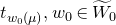 $t_{w_0(\mu)}, w_0\in {{\widetilde{W}}}_0$
are the maximal elements of
 ${{\operatorname{Adm}}}(\mu)_{J^{(s)}}$
, it follows that for any
 $w\in {{\operatorname{Adm}}}(\mu)_{J^{(s)}}$
, we have
 $\dim(L^{(s)}+wL^{(s)})/L^{(s)}\leqslant 1$
.
4. Affine Deligne–Lusztig varieties and special lattices
4.1 Clifford algebra and GSpin local Shimura datum
4.1.1.
We now specialize to the case
 $F={{\mathbb{Q}}}_p$
, so let V be a quadratic space over
 ${{\mathbb{Q}}}_p$
of dimension n. For a
 $\mathbb{Q}_p$
-algebra R, the tensor product
 $V_R=V \otimes_{\mathbb{Q}_p} R$
is a quadratic space over R; let
 $C(V_R )=C(V) \otimes_{\mathbb{Q}_p} R$
denote the Clifford algebra of
 $V_R$
. Then
 $C(V_R)$
is a semisimple algebra over R of rank
 $2^{\dim_{{{\mathbb{Q}}}_p} V}$
, and is equipped with a
 ${{\mathbb{Z}}}/2{{\mathbb{Z}}}$
-grading
 $C(V_R)=C^+(V_R)\oplus C^-(V_R)$
. We define
 $G=\operatorname{GSpin}(V)$
to be the group scheme over
 $\mathbb{Q}_p$
with R-points
 \begin{align*}G(R)=\{g \in C^{+}(V_R)^{\times}: g V_R g^{-1}=V_R,\, g^* g \in R^{\times}\}.\end{align*}
We use
 $g \bullet v=g v g^{-1}$
to denote the conjugation action of G on V. Then there is a short exact sequence of group schemes
 \begin{align*}1 \rightarrow \mathbb{G}_m \rightarrow G \stackrel{g \mapsto g \bullet}{\longrightarrow} {\rm SO}(V) \rightarrow 1\end{align*}
over
 ${{\mathbb{Q}}}_p$
. When V is clear in the context, we simply denote
 $C(V_R)$
as
 $C_R$
.
4.1.2.
Let
 $\{x_1,\ldots, x_n \}$
be a basis of
 $V_{\breve{\mathbb{Q}}_p}$
with moment matrix
 \begin{align*} \left(\begin{array}{cccccc} 0\;\;\; & 1\;\;\; & & & & \\ 1\;\;\; & 0\;\;\; & & & & \\[-2pt] & & *\;\;\; & & & \\[-2pt] & & & \ddots\;\;\; & & \\[-2pt] & & & & * \end{array}\!\right)\!. \end{align*}
Given this choice of basis, we define a cocharacter
 $\mu: \mathbb{G}_m \rightarrow G$
by
 \begin{eqnarray} \mu(t)=t^{-1} x_1 x_2+x_2 x_1, \end{eqnarray}
where we regard the right-hand side of the above as an element in
 $C(V_{\breve{\mathbb{Q}}_p})$
.
We remark that the reflex field of
 $\mu$
is always
 $\mathbb{Q}_p$
. Indeed, when V has a split subspace of rank 2, then we can choose
 $\{x_1,x_2\}$
to be the basis of this subspace and
 $\mu$
is even defined over
 $\mathbb{Q}_p$
. Now we assume V does not have a split subspace of rank 2. Then V contains a subspace generated by
 $\{v_1,v_2\}$
with moment matrix
 $(\begin{smallmatrix} 1\;&0\\[1pt] 0\;&\nu \end{smallmatrix}{\kern-1pt})$
or
 $(\begin{smallmatrix} p\;&0\\[1pt] 0\;&p\nu \end{smallmatrix}{\kern-1pt})$
, where
 $\chi(-\nu)=-1$
. Assume
 $\{v_1,v_2\}$
has moment matrix
 $(\begin{smallmatrix} 1\;&0\\[1pt] 0\;&\nu \end{smallmatrix}{\kern-1pt})$
. Let
 $\alpha\in \mathbb{Q}_{p^2}^\times$
such that
 $\alpha^2=-\nu$
. Then we may choose
 $x_1=\alpha v_1+v_2$
and
 $x_2={-1}/{2\nu} (\alpha v_1-v_2)$
so that the moment matrix of
 $\{x_1,x_2\}$
is
 $(\begin{smallmatrix} 0\;&1\\[1pt] 1\;&0 \end{smallmatrix}{\kern-1pt})$
. Therefore, in terms of
 $v_1,v_2$
, we have
 \begin{align*} \mu(t)=t^{-1}(\alpha v_1+v_2)\bigg(\frac{-1}{2\nu} (\alpha v_1-v_2)\!\bigg)+\frac{-1}{2\nu} (\alpha v_1-v_2)(\alpha v_1+v_2). \end{align*}
Let
 $\tau$
denote the nontrivial element in
 $\operatorname{Gal}(\mathbb{Q}_{p^2}/\mathbb{Q}_p)$
such that
 $\tau(\alpha)=-\alpha$
.
Although
 $\mu$
is only defined over
 $\mathbb{Q}_{p^2}$
, we claim that
 \begin{align*} \tau\cdot \mu(t)= t^{-1}(-\alpha v_1+v_2)\bigg(\frac{-1}{2\nu} (-\alpha v_1-v_2)\!\bigg)+\frac{-1}{2\nu} (-\alpha v_1-v_2)(-\alpha v_1+v_2)\end{align*}
lies in the
 $G(\bar{\mathbb{Q}}_p)$
-conjugacy class of
 $\mu$
. Indeed, note that the moment matrix of
 $\{-\alpha v_1+v_2, -\alpha v_1-v_2\}$
is still
 $(\begin{smallmatrix} 0\;&1\\[1pt] 1\;&0 \end{smallmatrix}{\kern-1pt})$
. Therefore, we can find
 $h\in{\rm O}(V)(\bar{\mathbb{Q}}_p)$
so that
 $\rho(\mu)=h\circ \rho(\tau\cdot \mu) \circ h^{-1}$
by Witt’s theorem, where
 $\rho$
denotes the morphism from G to
 ${\rm SO}(V)$
. If
 $\det(h)=-1$
, we can consider
 $h'\in {\rm O}(V)(\bar{\mathbb{Q}}_p)$
such that
 $h'(x_3)=-x_3$
and fixes
 $x_i$
for
 $i\neq 3$
. Then
 $h'h\in {\rm SO}(V)(\bar{\mathbb{Q}}_p)$
and
 $\rho(\mu)=(h'h)\circ \rho(\tau \cdot \mu) \circ (h'h)^{-1}$
. Therefore, we can assume h lies in
 ${\rm SO}(V)(\bar{\mathbb{Q}}_p)$
without loss of generality. Now let
 $g\in G(\bar{\mathbb{Q}}_p)$
be a lifting of h. Since
 $\ker(\rho)=\mathbb{G}_m$
is central and
 $\rho(g\circ (\tau\cdot \mu)\circ g^{-1})=\rho(\mu)$
, we have
 $g\circ (\tau\cdot \mu(t))\circ g^{-1}=\mu(t) \circ t^m$
for some
 $m\in \mathbb{Z}$
. Since
 \begin{align*}(g\circ (\tau\cdot \mu(t))\circ g^{-1})(g\circ (\tau\cdot \mu(t))\circ g^{-1})^*=t^{-1}\end{align*}
is equal to
 \begin{align*}(\mu(t) \circ t^m)(\mu(t) \circ t^m)^*=t^{2m-1},\end{align*}
we have
 $m=0$
and our claim is proved.
The case
 $\{v_1,v_2\}$
has moment matrix
 $(\begin{smallmatrix} p\;&0\\[1pt] 0\;&p\nu \end{smallmatrix}{\kern-1pt})$
and is the same, so we omit the details.
4.1.3.
Recall that
 $\breve{\mathbb{Q}}_p$
denotes the completion of the maximal unramified extension of
 ${{\mathbb{Q}}}_p$
, and we let
 $\sigma\in {\rm Aut}(\breve{\mathbb{Q}}_p/{{\mathbb{Q}}}_p)$
be the Frobenius element. For an element
 $b\in G(\breve{\mathbb{Q}}_p)$
, we consider the following isocrystals:
 \begin{align*} (V_{\breve{\mathbb{Q}}_p}, \Phi=b\circ \sigma) \quad \text{and} \quad (C_{\breve{\mathbb{Q}}_p}, F=b\circ \sigma).\end{align*}
Here,
 $\Phi$
and F are related by
 $\Phi x=F\circ x \circ F^{-1}$
. According to [Reference KottwitzKot85], we can associate to every
 $b\in G(\breve{\mathbb{Q}}_p)$
its Newton cocharacter
 \begin{align*}\nu_b: \mathbb{{{\mathbb{D}}}} \rightarrow G,\end{align*}
which is characterized by the following condition. For any representation
 $\rho: G \rightarrow {\rm GL}(N)$
on a
 $\mathbb{Q}_p$
-vector space N, we require that the decomposition
 \begin{align*}N_{\breve{\mathbb{Q}}_p}=\bigoplus_{s / t \in \mathbb{Q}} N^{s / t}\end{align*}
induced by
 $\rho\circ \nu_b$
is identified with the slope decomposition of the isocrystal
 $(N_{\breve{\mathbb{Q}}_p},\rho(b)\circ \sigma)$
. We call an element of
 $b\in G(\breve{\mathbb{Q}}_p)$
basic if
 $\nu_b$
factors through the center of G.
Let B(G) denote the set of
 $\sigma$
-conjugacy classes of
 $G(\breve{\mathbb{Q}}_p)$
. Given
 $\mu$
, Kottwitz introduced a subset
 $B(G,\mu)\subset B(G)$
in [Reference KottwitzKot97]:
 \begin{align*} B(G, \mu)=\{[b] \in B(G) ; \kappa([b])=\kappa(\mu), \bar{\nu}_b \leqslant \mu^{\diamond}\},\end{align*}
where
 $\kappa([b])\in \pi_1(G)_{\Gamma}$
is the Kottwitz invariant of b,
 $\kappa(\mu)$
is the image of
 $\mu$
in
 $\pi_1(G)_{\Gamma}$
,
 $\bar{\nu}(b)$
is the dominant Newton cocharacter of [b] and
 $\mu^{\diamond}$
is the Galois average of
 $\mu$
. We refer the reader to [Reference KottwitzKot97] and [Reference HeHe16] for details. From now on, b will always denote the unique basic element of
 $B(G,\mu).$
Later on, we will need to consider
 $\mathbb{V}:= V_{\breve{\mathbb{Q}}_p}^{\Phi}$
, which will be regarded as the space of special endomorphisms of the framing object of the GSpin RZ space in later sections (see § 7.2). The following description of
 $\mathbb{V}$
is a generalization of [Reference Howard and PappasHP17, Proposition 4.2.5]. We also determine the vertex lattices of maximal and minimal types in
 $\mathbb{V}$
. The description of a general vertex lattice follows from this easily.
To simplify the notation, we use
 $U_n^{+}$
(respectively
 $U_n^-$
) to denote the split (respectively non-split) non-degenerate quadratic space over
 $\mathbb{F}_p$
of dimension n.
Proposition 4.1.
Assume V is a quadratic space over
 $\mathbb{Q}_p$
with Frobenius
 $\Phi$
as in § 2. Then the
 $\mathbb{Q}_p$
-quadratic space
 \begin{align*} \mathbb{V}:= V_{\breve{\mathbb{Q}}_p}^{\Phi}=\{x \in V_{\breve{\mathbb{Q}}_p}: \Phi x=x\} \end{align*}
has the same dimension and discriminant as V, and has Hasse invariant
 $\epsilon(\mathbb{V})=-\epsilon(V)$
.
More precisely, if we let
 $\Lambda_{\rm max}\subset \mathbb{V}$
(respectively
 $\Lambda_{\rm min}$
) denote the vertex lattice in
 $\mathbb{V}$
of maximal (respectively minimal) type, then we have the following.
-
(i) If
$\operatorname{dim}(V_{{{{\rm an}}}})=0$
, then -
(ii) If
$\operatorname{dim}(V_{{{{\rm an}}}})=1$
, then -
(iii) If
$\operatorname{dim}(V_{{{{\rm an}}}})=2$
, then -
(iv) If
$\operatorname{dim}(V_{{{{\rm an}}}})=3$
, then -
(v) If
$\operatorname{dim}(V_{{{{\rm an}}}})=4$
, then
\begin{align*} \Lambda_{\rm max}=\Lambda_{n}^+ \quad \text{and} \quad \Lambda_{\rm min}=H_{n}^+. \end{align*}


Proof. If V contains a self-dual lattice, then this is implied by [Reference Howard and PappasHP17, Proposition 4.2.5].
Now we assume V does not contain a self-dual lattice. In particular, since
 $n\geqslant 3$
, we may assume V has a basis
 $\{x_1,\ldots,x_n\}$
with diagonal moment matrix such that
 $q(x_1)=u_1 p$
and
 $q(x_2)=u_2$
, where
 $u_1, u_2\in \mathbb{Z}_p^\times$
. Then we can choose
 $b=x_2x_1$
so that
 $b^2=-u_2u_1p\in p\mathbb{Z}_p^\times$
. We can check that, for
 $\Phi=b\circ \sigma$
, we have
 \begin{align*} \Phi \bullet x_1=-x_1, \quad \Phi\bullet x_2=-x_2, \quad \Phi\bullet x_i=x_i \quad \text{for $3\leqslant i\leqslant n$.} \end{align*}
Choose
 $\eta \in \mathbb{Z}_{p^2}^\times\setminus \mathbb{Z}_p^\times$
such that
 $\sigma(\eta)=-\eta$
and
 $\eta^2=\delta$
, where
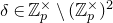 $\delta\in \mathbb{Z}_p^\times\setminus (\mathbb{Z}_p^{\times})^2$
. Set
 \begin{align*} v_1=\eta x_1, \quad v_2=\eta x_2, \quad v_i =x_i \quad \text{for $3\leqslant i\leqslant n$.}\end{align*}
Then we can easily check that
 $\Phi\bullet v_i=v_i$
for any
 $i\in\{1,\ldots,n\}$
. Hence,
 $\{v_1,\ldots,v_n\}$
is a set of basis vectors of
 $\mathbb{V}$
. Moreover, we have
 \begin{align*} q(v_1)=\delta q(x_1), \quad q(v_2)=\delta q(x_2).\end{align*}
Therefore, we have
 $\chi_0(V)=-\chi_0(\mathbb{V})$
and
 $\chi_1(V)=-\chi_1(\mathbb{V})$
. In particular, V and
 ${{\mathbb{V}}}$
have the same discriminant. Moreover, one can check that
 $\epsilon(V)=-\epsilon(\mathbb{V})$
by (2.2).
Then, applying Proposition 2.1, the proposition follows.
4.2 Affine Deligne–Lusztig varieties
4.2.1.
Let
 $G={\rm GSpin}(V)$
and
 $\mu$
be as above. We now fix a vertex lattice
 $L\subset V$
of type h. This determines a parahoric group scheme
 ${{\mathcal{G}}}^\circ$
of G. We fix S a maximal
 $\breve{\mathbb{Q}}_p$
-split torus of G which is in good relative position with respect to
 ${{\mathcal{G}}}^\circ$
, so that L corresponds to a facet
 ${{\mathfrak{f}}}$
in the apartment
 $A(G,S,\breve{\mathbb{Q}}_p)$
corresponding to S, and we fix an alcove
 ${{\mathfrak{a}}}\subset A(G,S,\breve{\mathbb{Q}}_p)$
whose closure contains
 ${{\mathfrak{f}}}$
. Then L corresponds to a subset
 $J\subset{{\mathbb{S}}}$
of the set of simple reflections in
 ${{\mathfrak{a}}}$
. We then have the associated admissible set
 ${{\operatorname{Adm}}}(\mu)_J.$
Recall that we have fixed an element
 $b\in G(\breve{\mathbb{Q}}_p)$
whose image
 $[b]\in B(G)$
is the unique basic element of
 $B(G,\mu)$
. We let
 $K={{\mathcal{G}}}^\circ(\mathbb{Z}_p)$
, and we set
 \begin{align*}X(\mu^\sigma,b)_{K}(k):=\bigg\{g \cdot K \in G(\breve{\mathbb{Q}}_p) / K \mid g^{-1} b \sigma(g) \in \bigcup_{w \in \operatorname{Adm}(\mu)_J} K \sigma(\dot{w}) K\bigg\},\end{align*}
where k is the residue field of
 $\breve{\mathbb{Z}}_p$
. Then
 $X(\mu^\sigma,b)_K(k)$
arises as the k-points of a closed subscheme
 $X(\mu^\sigma,b)_K$
of the Witt-vector affine Grassmannian constructed in [Reference ZhuZhu17, Reference Bhatt and ScholzeBS17], and
 $X(\mu^\sigma,b)_K$
is locally of perfectly finite type. By [Reference HeHe16, Theorem A], we have
 $X(\mu^\sigma,b)_K(k)\neq \emptyset$
.
Definition 4.2. A special lattice
 $M\subset V_{\breve{\mathbb{Q}}_p}$
of type h is a
 $\breve{\mathbb{Z}}_p$
-lattice such that
 \begin{align*} p M^\vee \subset M \stackrel{h}{\subset}M^\vee \end{align*}
and
 \begin{align*}\begin{cases} [M+\Phi(M):M]=1 & \text{if $h= 0,n$,}\\ [M+\Phi(M):M]\leqslant 1 & \text{if $h\neq 0,n$.} \end{cases} \end{align*}
Here, the notation
 $M \stackrel{h}\subset M^\vee$
means that
 $M^\vee/M$
is an h-dimensional vector space over the residue field
 ${{\mathbb{F}}}_p$
.
4.2.2.
For any
 $g\in X(\mu^\sigma,b)_K(k)$
, we define the following vertex lattices:
 \begin{align*}L_g:= \sigma^{-1}(b^{-1}g)\bullet L \quad \text {and} \quad L_g':= g\bullet L.\end{align*}
We have
 \begin{align*} \Phi(L_g)=(bb^{-1}g)\bullet L =L_g'.\end{align*}
In addition, note that
 $L_g$
and
 $L_g'$
determine each other. Indeed, if
 $L_g = L_{g'} $
for a different g’, then one can directly check
 $L_g'=L_{g'}'$
and vice versa.
Proposition 4.3.
The map
 $g \mapsto L_g$
induces a bijection between
 $p ^{\mathbb{Z}} \backslash X(\mu^\sigma,b)_K(k) $
and
 \begin{align*}\begin{cases} \text {\{special lattices of type }\textit{h}\text { in } V_{\breve{\mathbb{Q}}_p}\} & \text{if} h= 0,n,\\[2pt] \text {two copies of \{special lattices of type }\textit{h}\text { in } V_{\breve{\mathbb{Q}}_p}\} & \text{if $h\neq 0,n$.} \end{cases} \end{align*}
Proof. The case
 $h=0,n$
is [Reference Howard and PappasHP17, Proposition 6.2.2]. So we assume
 $h\neq 0,n$
from now on.
First, we check
 $L_g$
is indeed a special lattice. We have
 \begin{align*} [L_g+\Phi(L_g):L_g]=[L_g+L_g':L_g]&=[g\bullet L+\sigma^{-1}(b^{-1}g)\bullet L:\sigma^{-1}(b^{-1}g)\bullet L]\\{} &=[(\sigma^{-1}(g^{-1}b)g)\bullet L+L:L]. \end{align*}
Note that the map
 $G\rightarrow {\rm SO}(V)$
induces a bijection
 \begin{align*}{{\operatorname{Adm}}}(\mu)_J\cong {{\operatorname{Adm}}}(\mu')_{J'},\end{align*}
where
 $\mu'$
is the cocharacter of
 ${\rm SO}(V)$
induced by
 $\mu$
, and
 ${{\operatorname{Adm}}}(\mu')_{J'}$
is the corresponding admissible set of
 ${\rm SO}(V)$
. Thus, since
 $g^{-1}b\sigma(g) \in K\sigma(\dot{w})K$
,
 $w\in {{\operatorname{Adm}}}(\mu)_J$
, we have
 $[L_g+\Phi(L_g):L_g]\leqslant 1$
by Proposition 3.6.
Now we show that the map
 $g\mapsto L_g$
is surjective. Let L’ be any special lattice. Then, by Proposition 3.6, there exists
 $g\in G(\breve{\mathbb{Q}}_p)$
and
 $w\in {{\operatorname{Adm}}}(\mu)_{J}$
such that
 \begin{align*}(\Phi(L'),L')=(g\bullet L,g\dot{w}^{-1}\bullet L).\end{align*}
It follows that
 $g^{-1}b\sigma(g)\sigma(\dot{w}^{-1})$
fixes L, and hence lies in
 $p^{{\mathbb{Z}}} K$
. Since
 $\kappa([b])=\kappa(\dot{w})=\kappa(\mu)\in \pi_1(G)_\Gamma$
, it follows that
 $g^{-1}b\sigma(g)\sigma(\dot{w}^{-1})\in K$
, and hence
 $g\in X(\mu^\sigma,b)_K(k).$
The stabilizer of L in
 $G(\breve{\mathbb{Q}}_p)$
is
 $p^\mathbb{Z} K \sqcup \delta p^\mathbb{Z} K$
, where the induced actions of
 $\delta\in G({{\breve{F}}})$
on
 $L^\vee/L$
and
 $L/p L^\vee$
have determinant
 $-1$
(see [Reference Pappas and ZachosPZ22, § 2.5]). Hence, the map
 $g\to L_g$
is a two-to-one map.
4.3 The crucial proposition
4.3.1.
Let
 $M\subset V_{\breve{\mathbb{Q}}_p}$
denote a special lattice of type h. Let
 \begin{align*} S_i(M):= M+\Phi(M)+\cdots + \Phi^i(M).\end{align*}
From now on, we always assume c (respectively d) is the smallest non-negative integer such that
 $S_c(M)$
(respectively
 $S_d(M^\vee)$
) is
 $\Phi$
-invariant (c and d are finite by a standard argument). It is not hard to show that
 \begin{eqnarray} M\stackrel{1}{\subset}S_1(M) \stackrel{1}{\subset} S_2(M) \cdots \stackrel{1}{\subset} S_c(M)=S_{c+1}(M).\end{eqnarray}
In addition, M is
 $\Phi$
-invariant if and only if
 $M^\vee$
is
 $\Phi$
-invariant by the following lemma.
Lemma 4.4.
 $[M+\Phi (M):M]=[M^\vee +\Phi(M^\vee) : M^\vee]$
.
Proof. First of all, note that
 $[M^\vee +\Phi(M^\vee) : M^\vee]=[M: M\cap \Phi(M)]$
. Since
 $S_c(M)$
is
 $\Phi$
-invariant, we have
 $[S_c(M):M]=[S_c(M):\Phi(M)]$
. Hence, we have
 $[M:M\cap \Phi(M)]=[\Phi(M):M\cap \Phi(M)]$
. Since
 $[\Phi(M)+M:M]=[\Phi(M):\Phi(M)\cap M]$
, the proof is finished.
We also remark that the equality
 $[S_c(M):M]=[S_c(M):\Phi(M)]$
combined with (4.2) implies that
 $[M+\Phi(M):M]=[M+\Phi(M):\Phi(M)]$
, which further implies that
 \begin{align*} \Phi(M)\stackrel{1}{\subset} S_1(M) \stackrel{1}{\subset} S_2(M)\cdots \stackrel{1}{\subset} S_c(M).\end{align*}
Lemma 4.5. We have:
-
(i)
$S_c(M)\subset \bigcap_{i\in \mathbb{Z}_{\geqslant 0}}\Phi^i(p^{-1} M)$
and
$ S_d(M^\vee)\subset \bigcap_{i\in \mathbb{Z}_{\geqslant 0}}\Phi^i(p^{-1} M^\vee)$
; -
(ii) if
$\Phi(M)\subset M^\vee$
and
$c\leqslant d$
, then
\begin{align*} S_c(M)\subset \bigcap_{i\in \mathbb{Z}_{\geqslant 0}}\Phi^i(M^\vee ); \end{align*}
-
(iii) if
$\Phi(p M^\vee)\subset M$
and
$d\leqslant c$
, then
\begin{align*} S_d(p M^\vee)\subset \bigcap_{i\in \mathbb{Z}_{\geqslant 0}}\Phi^i(M ). \end{align*}


Proof. For (i), we only prove the statement for
 $S_c(M)$
since the proof for
 $S_d(M^\vee)$
is literally the same.
First, note that
 \begin{align*} \Phi(M)\subset p^{-1} M. \end{align*}
Hence,
 \begin{align*} S_c(M)\subset p^{-1} S_{c-1}(M). \end{align*}
Since
 $S_c(M)$
is
 $\Phi$
-invariant, we have
 \begin{align*} S_c(M)\subset \bigcap_{i\in \mathbb{Z}_{\geqslant 0}}p^{-1}\Phi^i(S_{c-1}(M)). \end{align*}
Note that
 \begin{align*} S_c(M)\subset p^{-1} \Phi(S_{c-1}(M))\cap p^{-1} S_{c-1}(M)=p^{-1}\Phi(S_{c-2}(M)). \end{align*}
Here, for the last equality, we use the fact that
 \begin{align*}\Phi(S_{c-1}(M))&\neq S_{c-1}(M),\\\Phi(S_{c-2}(M))&\subset \Phi(S_{c-1}(M))\cap S_{c-1}(M)\end{align*}
and
 \begin{align*}[S_{c-1}(M):S_{c-2}(M)]=[\Phi(S_{c-1}(M)):\Phi(S_{c-2}(M))]=1.\end{align*}
Since
 $S_c(M)$
is
 $\Phi$
-invariant,
 \begin{align*} S_c(M)\subset p^{-1}S_{c-2}(M). \end{align*}
Then, by an induction argument, we have
 $S_c(M)\subset p^{-1} M$
. Since
 $S_c(M)$
is
 $\Phi$
-invariant, we have
 \begin{align*} S_c(M)\subset p^{-1} \bigcap_{i\in \mathbb{Z}_{\geqslant 0}}\Phi^i(M)\subset p^{-1} \bigcap_{0\leqslant i\leqslant f}\Phi^i(M) \end{align*}
for any
 $f\in \mathbb{Z}_{\geqslant 0}$
.
Parts (ii) and (iii) are essentially the same as (i) once we observe that the assumption
 $c\leqslant d$
(respectively
 $d\leqslant c$
) implies that
 $\Phi(S_{c-1}(M^\vee))\cap S_{c-1}(M^\vee)=\Phi(S_{c-2}(M^\vee))$
(respectively
 $\Phi(S_{d-1}(M))\cap S_{c-1}(M)=\Phi(S_{c-2}(M))$
).
The following is a first classification of special lattices.
Proposition 4.6.
Assume M is a special lattice. We have either
 $\Phi(M)\subset M^\vee$
or
 $\Phi(pM^\vee)\subset M$
.
Proof. If
 $\Phi(M)\not\subset M^\vee$
, then
 $\Phi(M)+M^\vee=M^\vee+\Phi(M^\vee)$
. Moreover, if
 $\Phi(pM^\vee)\not\subset M$
, then
 $p^{-1}M+p^{-1}\Phi(M)=\Phi(M^\vee)+p^{-1}M=\Phi(M)+p^{-1}M=p^{-1}M$
, which is a contradiction.
Remark 4.7. One can check that the conditions
 $\Phi(M)\subset M^\vee$
and
 $\Phi(pM^\vee)\subset M$
actually correspond to the conditions for cutting out Kudla–Rapoport (KR) strata. See § 7.4 and Lemma 7.17 for more details. See also Remark 5.7.
The main result of this subsection is the following crucial proposition.
Proposition 4.8. Assume M is a special lattice. Then, one of the following will happen:
-
(i)
$p (S_c(M))^\vee \subset p M^\vee \subset M\subset S_c(M) \subset (S_c(M))^\vee \subset M^\vee$
. In particular,
$S_c(M)$
is a vertex lattice of type
$t\leqslant h$
; -
(ii)
$p M^\vee \subset p S_d(M^\vee)\subset S_d(M^\vee)^\vee \subset M\subset M^\vee\subset S_d(M^\vee)$
. In particular,
$S_d(M^\vee)^\vee$
is a vertex lattice of type
$t\geqslant h$
.



More precisely, we have the following.
-
(a) If
$\Phi(p M^\vee)\not\subset M$
, then M satisfies (i).
-
(b) If
$\Phi(M)\not\subset M^\vee$
, then M satisfies (ii). -
(c) If
$\Phi(p M^\vee) \subset M$
and
$\Phi(M) \subset M^\vee$
, then M satisfies (i) if
$c\leqslant d$
. -
(d) If
$\Phi(p M^\vee) \subset M$
and
$\Phi(M) \subset M^\vee$
, then M satisfies (ii) if
$d\leqslant c$
.





Proof.
 ${\rm (a)}$
Assume
 $\Phi( M^\vee)\not\subset p^{-1} M$
. Since
 $M\subset S_c(M)$
, it suffices to show
 $ S_c(M)\subset S_c(M)^\vee$
.
Since
 $ M \stackrel{\leqslant 1}{\subset} M + \Phi(M)$
,
 $\Phi(p M^\vee)\not\subset M $
and
 $\Phi(p M^\vee)\subset \Phi(M)$
, we have
 $M+\Phi(M)= M+\Phi(p M^\vee)$
. In fact, an inductive argument shows that
 \begin{eqnarray} S_c(M)=M+\Phi(p M^\vee)+\cdots +\Phi^c(p M^\vee). \end{eqnarray}
Equivalently,
 \begin{eqnarray} S_c(M)^\vee=M^\vee\cap \bigg(\bigcap_{1\leqslant i\leqslant c} \Phi^i(p^{-1} M)\!\bigg) . \end{eqnarray}
According to Lemma 4.5, we have
 \begin{eqnarray}\begin{split} S_c(p M^\vee)&\subset \bigcap_{0\leqslant i\leqslant c}\Phi^i(M^\vee) \subset M^\vee\cap \bigg(\bigcap_{1\leqslant i\leqslant c}\Phi^i(p^{-1}M)\!\bigg),\\ M&\subset M^\vee\cap \bigg( \bigcap_{1\leqslant i\leqslant c}\Phi^i(p^{-1}M)\!\bigg). \end{split} \end{eqnarray}
Therefore,

 ${\rm (b)}$
Now we assume
 $\Phi(M)\not\subset M^\vee$
. By construction, we have
 $S_d(M^\vee)^\vee\subset M\subset M^\vee\subset S_d(M^\vee)$
. Therefore, we only need to show
 $p S_d(M^\vee)\subset S_d(M^\vee)^\vee$
.
Since
 $M^\vee \stackrel{\leqslant 1}{\subset} M^\vee +\Phi(M^\vee)$
and
 $\Phi(M)\not\subset M^\vee$
, we have
 $M^\vee +\Phi(M^\vee)=M^\vee +\Phi(M)$
. In fact, an inductive argument shows that
 \begin{eqnarray} S_d(M^\vee)=M^\vee+\Phi(M)+\cdots +\Phi^d(M). \end{eqnarray}
Equivalently,
 \begin{eqnarray} S_d(M^\vee)^\vee=M\cap \bigg(\bigcap_{1\leqslant i\leqslant d}\Phi^i(M^\vee)\!\bigg). \end{eqnarray}
According to Lemma 4.5, we have
 \begin{eqnarray}\begin{split} S_d(p M)&\subset \bigcap_{0\leqslant i\leqslant d}\Phi^i(M) \subset M \cap \bigg(\bigcap_{1\leqslant i\leqslant d}\Phi^i( M^\vee)\!\bigg),\\ p M^\vee &\subset M \cap \bigg( \bigcap_{1\leqslant i\leqslant d}\Phi^i( M^\vee)\!\bigg). \end{split} \end{eqnarray}
Therefore,

 ${\rm (c)}$
Assuming
 $\Phi(M) \subset M^\vee$
and
 $c\leqslant d$
, we will show that M satisfies (i) (a stronger statement than (c)). Note that
 $M+\Phi(M)\subset M^\vee$
. Inductively, we see that
 $S_c(M)\subset S_{c-1}(M^\vee)$
. Since
 $S_c(M)$
is
 $\Phi$
-invariant, we have
 $S_c(M) \subset \bigcap_{0\leqslant i\leqslant c} \Phi^i(M^\vee) \subset (S_c(M))^\vee $
by Lemma 4.5. Hence, we have
 \begin{align*} M\subset S_c(M) \subset (S_c(M))^\vee \subset M^\vee. \end{align*}
Since
 $p M^\vee \subset M \subset M^\vee$
, we have
 \begin{align*} p (S_c(M))^\vee \subset p M^\vee \subset M\subset S_c(M) \subset (S_c(M))^\vee \subset M^\vee. \end{align*}
 ${\rm (d)}$
Assuming
 $\Phi(p M^\vee) \subset M$
and
 $d\leqslant c$
, we will show that M satisfies (ii). Note that
 $p M^\vee+\Phi(p M^\vee)\subset M$
. Inductively, we see that
 $S_d(p M^\vee)\subset S_{d-1}(M)$
. Since
 $S_d(p M^\vee)$
is
 $\Phi$
-invariant, we have
 $S_d(p M^\vee) \subset \bigcap_{0\leqslant i\leqslant d} \Phi^i(M) \subset p^{-1}(S_d(p M^\vee))^\vee $
by Lemma 4.5. Hence, we have
 \begin{align*} p M^\vee \subset p S_d(M^\vee) \subset S_d(M^\vee)^\vee \subset M. \end{align*}
Since
 $p M^\vee \subset M \subset M^\vee$
, we have
 \begin{align*} p M^\vee \subset p S_d(M^\vee)\subset S_d(M^\vee)^\vee \subset M\subset M^\vee\subset S_d(M^\vee). \end{align*}
5. Deligne–Lusztig varieties
We let V be a quadratic space over
 ${{\mathbb{Q}}}_p$
and let
 $G={\rm GSpin}(V)$
, b,
 $\mu$
be as in the last section. In particular, we have an associated quadratic space
 ${{\mathbb{V}}}$
given by Proposition 4.1. We fix
 $L\subset V$
a vertex lattice of type h. Let
 $\mathcal{V}^{\geqslant h}(\mathbb{V})$
(respectively
 $\mathcal{V}^{\leqslant h}(\mathbb{V})$
) denote the set of vertex lattices in
 $\mathbb{V}$
of type
 $t\geqslant h$
(respectively
 $t\leqslant h$
). If the quadratic space is clear in the context, then we simply denote it as
 $\mathcal{V}^{\geqslant h} $
(respectively
 $\mathcal{V}^{\leqslant h} $
). In this section, we attach to a vertex lattice
 $\Lambda \in \mathcal{V}({{\mathbb{V}}})^{\geqslant h}$
(respectively
 $\Lambda \in \mathcal{V}({{\mathbb{V}}})^{\leqslant h}$
) a k-scheme
 $S_{\Lambda}$
(respectively
 $R_{\Lambda}$
) parametrizing certain special lattices. Then we relate
 $S_{\Lambda}$
and
 $R_\Lambda$
with certain Deligne–Lusztig varieties and study their geometry.
5.1 The variety
$S_{\Lambda}$
and
$R_\Lambda$


5.1.1.
First, we can associate to a vertex lattice certain quadratic spaces defined over
 $\mathbb{F}_p$
as follows. Let
 $\Lambda\subset {{\mathbb{V}}}$
be a vertex lattice of type
 $t_\Lambda$
and rank n over
 $O_F$
with quadratic form
 $({\kern2pt}, )$
. We set
 \begin{align*} V_{\Lambda}:= \Lambda^\vee/ \Lambda \quad \text{and} \quad V_{\Lambda^\vee} := \Lambda/p \Lambda^\vee\end{align*}
with quadratic form induced from
 $p(\, , \, )$
and
 $ (\, , \, )$
, respectively. Note that
 $\dim_{\mathbb{F}_p}V_{\Lambda}=t_\Lambda$
and
 $\dim_{\mathbb{F}_p}V_{\Lambda^\vee}=n-t_\Lambda$
.
Set
 \begin{align*} \Omega_{\Lambda}&:= V_{\Lambda} \otimes_{\mathbb{F}_p} k \stackrel{\sim}{\rightarrow} \Lambda_{\breve{\mathbb{Z}}_p}^\vee / \Lambda_{\breve{\mathbb{Z}}_p},\\ \Omega_{\Lambda^\vee}&:= V_{\Lambda^\vee} \otimes_{\mathbb{F}_p} k \stackrel{\sim}{\rightarrow} \Lambda_{\breve{\mathbb{Z}}_p} /p \Lambda_{\breve{\mathbb{Z}}_p}^{\vee}, \end{align*}
with its Frobenius operator
 ${\rm Id}\otimes \sigma=\Phi$
.
5.1.2.
For a quadratic space
 $\Omega$
over k, we let
 ${\rm OGr}(i,\Omega)$
be the orthogonal Grassmannian that parametrizes i-dimensional isotropic subspaces of
 $\Omega$
. For
 $\Lambda\in \mathcal{V}^{\geqslant h}$
, let
 $S_{\Lambda}$
be the reduced closed subscheme of
 ${\rm OGr}(({t_\Lambda-h})/{2},\Omega_\Lambda)$
whose k-points are described as follows:
 \begin{align*} S_{\Lambda}(k) & = \bigg\{ \mathscr{V} \in {\rm OGr}\bigg(\frac{t_\Lambda-h}{2},\Omega_\Lambda\!\bigg)(k)\mid \operatorname{dim}_k (\mathscr{V}+\Phi(\mathscr{V}))\leqslant \operatorname{dim}_k (\mathscr{V})+1 \bigg\} \\ & \stackrel{\sim}{\rightarrow} \{\text{special lattices } M \subset V_{\breve{\mathbb{Q}}_p}: \Lambda_{\breve{\mathbb{Z}}_p} \subset M \subset M^\vee \subset \Lambda_{\breve{\mathbb{Z}}_p}^\vee\}. \end{align*}
Similarly, for
 $\Lambda \in\mathcal{V}^{\leqslant h}$
, let
 $R_{\Lambda} $
be the reduced closed subscheme of
 ${\rm OGr}({h-t_\Lambda}/{2},\Omega_{\Lambda^\vee})$
with k-points
 \begin{align*} R_{\Lambda}(k) & = \bigg\{ \mathscr{V} \in {\rm OGr}\bigg(\frac{h-t_\Lambda}{2},\Omega_{\Lambda^\vee}\!\bigg)(k) \mid \operatorname{dim}_k (\mathscr{V}+\Phi(\mathscr{V}))\leqslant \operatorname{dim}_k (\mathscr{V})+1 \bigg\} \\ & \stackrel{\sim}{\rightarrow} \{\text{special lattices } M \subset V_{\breve{\mathbb{Q}}_p}: p\Lambda_{\breve{\mathbb{Z}}_p}^\vee \subset p M^\vee \subset M \subset \Lambda_{\breve{\mathbb{Z}}_p}\}. \end{align*}
Note that when
 $h=0$
,
 $S_\Lambda$
has two connected components (see [Reference Howard and PappasHP17, Proposition 5.3.2]). In this case, we write
 $S_\Lambda$
as
 $S_\Lambda=S_\Lambda^+\cup S_\Lambda^-$
. Note that the definition of
 $S_\Lambda$
and
 $R_\Lambda$
also depends on the fixed h. We will denote it as
 $S_\Lambda^{[h]}$
and
 $R_\Lambda^{[h]}$
if we want to emphasize the h here.
Moreover, for certain
 $\mathbb{V}$
and h,
 $\mathcal{V}^{\geqslant h}$
(respectively
 $\mathcal{V}^{\leqslant h}$
) might only contain vertex lattices of type h so that
 $S_\Lambda$
(respectively
 $R_\Lambda$
) is simply a point. For example, when
 $h=2$
and
 $\epsilon(\mathbb{V})=-1$
,
 $\mathcal{V}^{\leqslant h}$
is the set of vertex lattices of type 2 since there is no self-dual lattice in
 ${{\mathbb{V}}}$
by
 $\epsilon(\mathbb{V})=-1$
.
For a quadratic lattice
 $\Lambda$
, we use
 $\Lambda^{(p)}$
to denote the same lattice with quadratic form
 $q(\,)=p\cdot q(\,)_\Lambda$
. We use
 $\Lambda^\sharp$
to denote
 $(\Lambda^\vee)^{(p)}$
.
Lemma 5.1.
Assume
 $\Lambda $
is a vertex lattice of type
 $ t_\Lambda\leqslant h$
in
 $\mathbb{V}^\sharp$
so that
 $\Lambda^\sharp \subset \mathbb{V}$
is a vertex lattice of type
 $t_{\Lambda^\sharp}=n-t_\Lambda\geqslant n- h$
. Then we have
 \begin{align*} R_{\Lambda}^{[h]} \cong S_{\Lambda^\sharp}^{[n-h]}. \end{align*}
Proof. Note that we have the following natural identification of quadratic spaces that preserves the quadratic forms:
 \begin{align*}\Lambda/p\Lambda^\vee \cong (p^{-1}\Lambda )/\Lambda^\vee\cong (p^{-1}\Lambda )^{(p)}/(\Lambda^\vee)^{(p)}= (\Lambda^\sharp)^\vee/\Lambda^\sharp.\end{align*}
This identification induces an identification of
 \begin{align*} {\rm OGr}\bigg(\frac{h-t_\Lambda}{2},\Omega_{\Lambda^\vee}\!\bigg) \quad \text{and} \quad {\rm OGr}\bigg(\frac{t_{\Lambda^\sharp}-(n-h)}{2},\Omega_{\Lambda^\sharp}\!\bigg) , \end{align*}
which restricts to an identification between
 $R_\Lambda^{[h]}$
and
 $S_{\Lambda^\sharp}^{n-h}$
.
Because of the above lemma, we will focus on
 $S_\Lambda$
from now on. First, we consider a stratification of
 $S_\Lambda$
. Assume
 $\Lambda\subset \Lambda'$
and
 $t(\Lambda')\geqslant h$
, then we may regard
 $S_{\Lambda'}$
as a closed subscheme of
 $S_{\Lambda}$
as follows. Let
 $\pi: \Lambda_{\breve{\mathbb{Z}}_p}^\vee/\Lambda_{\breve{\mathbb{Z}}_p}\to \Lambda_{\breve{\mathbb{Z}}_p}^\vee/\Lambda_{\breve{\mathbb{Z}}_p}'$
be the natural quotient map. Then, for
 ${{\mathscr{V}}}'\in S_{\Lambda'}$
, one can check that
 $\pi^{-1}({{\mathscr{V}}}')\in S_{\Lambda}$
. Now let
 \begin{align*} S_\Lambda^\circ := S_\Lambda \setminus \bigcup_{\Lambda \subsetneq\Lambda'}S_{\Lambda'}.\end{align*}
By construction, we have
 \begin{align*} S_\Lambda = \bigcup_{\Lambda\subset\Lambda'}S_{\Lambda'}^\circ.\end{align*}
5.1.3.
We need to consider the following natural decomposition of
 $S_{\Lambda}$
later:

where
 is the open subvariety of
 $S_\Lambda$
whose k-points are

 is the subvariety of
 $S_\Lambda$
such that

and
 $S_\Lambda^\Phi$
is the subvariety of
 $S_\Lambda$
such that
 \begin{align*} S_\Lambda^\Phi(k)=\{{{\mathscr{V}}} \in S_{\Lambda}(k) \mid \Phi({{\mathscr{V}}})={{\mathscr{V}}} \}.\end{align*}
Let

 $:= \bigcap_{\ell=0}^i\Phi^\ell({{\mathscr{V}}})$
and

 $:= \sum_{\ell=0}^i\Phi^\ell({{\mathscr{V}}})$
for
 $i\geqslant 0$
. Let
 $S_\Lambda^0$
be the subvariety of
 such that
 \begin{align*} S_\Lambda^0(k)=\{{{\mathscr{V}}} \in S_{\Lambda}(k) \mid F_i^{{\dagger}} \text{ is totally isotropic for all} i \}.\end{align*}
Assume
 $\Lambda'$
is another vertex lattice that contains
 $\Lambda$
and set
 $\Omega_{\Lambda'/\Lambda}:=\Lambda'/\Lambda\otimes_{{{\mathbb{F}}}_p}k$
. Let
 $S_{\Lambda',\Lambda}$
denote the subvariety of
 $S_{\Lambda}$
such that
 \begin{align*} S_{\Lambda',\Lambda}(k)=\{{{\mathscr{V}}} \in S_{\Lambda}\mid {{\mathscr{V}}} \subset \Omega_{\Lambda'/\Lambda}\}.\end{align*}
The subvariety of the form
 $S_{\Lambda',\Lambda}$
will naturally show up later. Note that if
 ${{\mathscr{V}}} \in S_{\Lambda',\Lambda}$
, then
 $\Phi^i({{\mathscr{V}}})\subset \Omega_{\Lambda'/\Lambda}$
for any
 $i\geqslant 0$
. In fact, since
 $\Omega_{\Lambda'/\Lambda}$
is already totally isotropic, any subspace of it is automatically totally isotropic. So we can simply define
 $S_{\Lambda',\Lambda}$
as a subvariety of the usual Grassmannian
 ${\rm Gr}(({t_{\Lambda}-h})/{2},\Omega_{\Lambda'/\Lambda})$
such that
 \begin{align*} S_{\Lambda',\Lambda}(k)=\bigg\{{{\mathscr{V}}} \in {\rm Gr}\bigg(\frac{t_{\Lambda}-h}{2},\Omega_{\Lambda'/\Lambda}\!\bigg)(k) \mid \operatorname{dim}_k (\mathscr{V}+\Phi(\mathscr{V}))\leqslant \operatorname{dim}_k (\mathscr{V})+1 \bigg\}.\end{align*}
Since, for each
 ${{\mathscr{V}}}\in S_\Lambda^0(k)$
,

 $({{\mathscr{V}}})$
will eventually stabilize to the base change of some rational subspace of
 $\Omega_{\Lambda}$
, we have the following decomposition:
 \begin{align*} S_\Lambda^0=\bigcup_{\substack{\Lambda\subset \Lambda',\\ t(\Lambda')\leqslant h}} S_{\Lambda',\Lambda}.\end{align*}
5.1.4.
We will need the following description of tangent spaces of
 in § 7.
Proposition 5.2.
Assume
 , and let
 $T_z{S_{\Lambda}}$
denote the tangent space of
 $S_\Lambda$
at z. Then we have
 \begin{align*} T_{z}S_{\Lambda}\cong \operatorname{Hom}( {{\mathscr{V}}}+\Phi({{\mathscr{V}}})/\Phi({{\mathscr{V}}}),\Omega_{\Lambda}/({{\mathscr{V}}}+\Phi({{\mathscr{V}}}))). \end{align*}
Proof. Let
 $\widetilde{{{\mathscr{V}}}}\in T_zS_\Lambda$
, which we consider as an element of
 with
 $\widetilde{{{\mathscr{V}}}}\otimes_{k[\epsilon]} k = {{\mathscr{V}}}$
; here
 $k[\epsilon]$
is the ring of dual numbers. Then
 $\widetilde{{{\mathscr{V}}}}+\Phi(\widetilde{{{\mathscr{V}}}})$
is finite free of rank
 $({t_\Lambda-h})/{2}+1$
over
 $k[\epsilon]$
and lifts
 ${{\mathscr{V}}}+\Phi({{\mathscr{V}}})$
, hence gives us an element of the tangent space of the usual Grassmannian
 ${\rm Gr}(({t_\Lambda-h})/{2}+1,\Omega_\Lambda)$
at the point
 ${{\mathscr{V}}}+\Phi({{\mathscr{V}}})$
. It follows that we obtain a map of vector spaces
 \begin{eqnarray} T_z S_\Lambda\rightarrow\operatorname{Hom}_k({{\mathscr{V}}}+\Phi({{\mathscr{V}}}), \Omega_\Lambda/({{\mathscr{V}}}+\Phi({{\mathscr{V}}}))).\end{eqnarray}
Note that since
 $\epsilon^p=0$
, we have
 $\Phi(\widetilde{{{\mathscr{V}}}})=\Phi({{\mathscr{V}}})\otimes_kk[\epsilon]$
. Thus, (5.2) factors through a map
 \begin{eqnarray}T_zS_\Lambda\rightarrow \operatorname{Hom}_k( {{\mathscr{V}}}+\Phi({{\mathscr{V}}})/\Phi({{\mathscr{V}}}),\Omega_{\Lambda}/({{\mathscr{V}}}+\Phi({{\mathscr{V}}}))).\end{eqnarray}
We claim that this map is injective. Let
 $\widetilde{{{\mathscr{V}}}}$
be an element of
 $T_zS_\Lambda$
, which we identify with a homomorphism
 $\lambda:{{\mathscr{V}}}\rightarrow \Omega_\Lambda/{{\mathscr{V}}}$
by considering
 $\widetilde{{{\mathscr{V}}}}$
as a
 $k[\epsilon]$
-point of
 ${\rm Gr}(({t_\Lambda-h})/{2},\Omega_\Lambda)$
. Then,
 $\lambda$
factors through
 ${{\mathscr{V}}}/{{\mathscr{V}}}\cap\Phi({{\mathscr{V}}})$
, and its image
 $\gamma$
under (5.3) is given by composing with the natural isomorphism
 ${{\mathscr{V}}}/{{\mathscr{V}}}\cap\Phi({{\mathscr{V}}})\cong {{\mathscr{V}}}+\Phi({{\mathscr{V}}})/\Phi({{\mathscr{V}}})$
and the projection
 $\Omega_\Lambda/{{\mathscr{V}}}\rightarrow\Omega_\Lambda/({{\mathscr{V}}}+\Phi({{\mathscr{V}}}))$
. We will show that
 $\lambda$
is determined by
 $\gamma.$
Let
 $v\in {{\mathscr{V}}}$
be a generator of the one-dimensional vector space
 ${{\mathscr{V}}}/{{\mathscr{V}}}\cap\Phi({{\mathscr{V}}})\cong {{\mathscr{V}}}+\Phi({{\mathscr{V}}})/\Phi({{\mathscr{V}}})$
and fix a lifting
 $\tilde{\gamma}:{{\mathscr{V}}}+\Phi({{\mathscr{V}}})/\Phi({{\mathscr{V}}})\rightarrow \Omega_\Lambda/{{\mathscr{V}}}$
of
 $\gamma$
. Then
 ${{\mathscr{V}}}+\Phi({{\mathscr{V}}})$
is generated by
 ${{\mathscr{V}}}$
and
 $\Phi(v)$
, and for any
 $u\in {{\mathscr{V}}}$
, we have
 $\lambda(u)=c_u\Phi(v)+\tilde{\gamma}(u)$
for some
 $c_u\in k$
. By assumption,
 ${{\mathscr{V}}}+\Phi({{\mathscr{V}}})$
is not isotropic, and hence
 $(\Phi(v),v)\neq 0$
. Since
 $\widetilde{{{\mathscr{V}}}}$
is isotropic, we have
 $(u+\epsilon\lambda(u),v+\epsilon\lambda(v))=0$
for all
 $u\in {{\mathscr{V}}}$
, or equivalently
 \begin{align*}(u,c_v\Phi(v)+\tilde{\gamma}(v))+(c_u\Phi(v)+\tilde{\gamma}(u),v)=0.\end{align*}
Taking
 $u=v$
, we find that
 $c_v=-{(v,\tilde{\gamma}(v))}/{(\Phi(v),v)}$
, and for general
 $u\in {{\mathscr{V}}}$
, we have
 \begin{align*}c_u=-\frac{(u,c_v\Phi(v)+\tilde{\gamma}(v))+(\tilde{\gamma}(u),v)}{(\Phi(v),v)}.\end{align*}
This shows that (5.3) is injective. By Theorem 5.6, we have
 $\dim_kS_\Lambda=({t_\Lambda+h})/{2}-1$
and hence
 \begin{align*}\dim_kT_zS_\Lambda\geqslant \dim_k\operatorname{Hom}_k({{\mathscr{V}}}+\Phi({{\mathscr{V}}})/\Phi({{\mathscr{V}}}),\Omega_\Lambda/({{\mathscr{V}}}+\Phi({{\mathscr{V}}})))=\frac{t_\Lambda+h}{2}-1.\end{align*}
It follows that (5.3) is an isomorphism.
5.2 Deligne–Lusztig varieties
We relate the
 $S_\Lambda$
and
 $R_\Lambda$
introduced in the last subsection with certain Deligne–Lusztig varieties in this subsection. It suffices to study
 $S_\Lambda$
by Lemma 5.1. Recall that
 . We will relate
 and
 with certain Deligne–Lusztig varieties.
5.2.1 The even-dimensional orthogonal case.
Let
 $\Lambda\subset \mathbb{V}$
be a vertex lattice of even type
 $t=2d\geqslant h$
. In particular, according to Proposition 4.1, h is also even. Recall that
 $\Omega_\Lambda=V_{\Lambda}\otimes_{\mathbb{F}_p} k$
is a quadratic space over k, and we fix a basis
 $\{e_1, \ldots, e_d, f_1, \ldots, f_d\}$
of
 $\Omega_\Lambda$
such that
 $\operatorname{Span}_k\{e_1, \ldots, e_d\}$
and
 $\operatorname{Span}_k\{f_1, \ldots, f_d\}$
are totally isotropic,
 $(e_i, f_j)=\delta_{i, j}$
. If
 $V_{\Lambda}$
is split, then we may choose this basis so that Frobenius
 $\Phi$
fixes
 $e_1, \ldots, e_{d}, f_1, \ldots, f_{d}$
. If
 $V_{\Lambda}$
is non-split, then
 $\Phi$
fixes
 $e_1, \ldots, e_{d-1}, f_1, \ldots, f_{d-1}$
but interchanges
 $e_d \leftrightarrow f_d$
.
Consider the isotropic flags
 $\mathscr{F}_{\bullet}^{+}$
and
 $\mathscr{F}_{\bullet}^{-}$
in
 $\Omega$
defined by
 \begin{align*}\begin{aligned}\mathscr{F}_i^{ \pm} & =\operatorname{Span}_k\{e_1, \ldots, e_i\} \text { for } 1 \leqslant i \leqslant d-1, \\\mathscr{F}_d^{+} & =\operatorname{Span}_k\{e_1, \ldots, e_{d-1}, e_d\}, \\\mathscr{F}_d^{-} & =\operatorname{Span}_k\{e_1, \ldots, e_{d-1}, f_d\} .\end{aligned}\end{align*}
Hence, when
 $V_{\Lambda}$
is split, we have
 $\Phi(\mathscr{F})_{\bullet}^{ \pm}= \mathscr{F}_{\bullet}^{\pm }$
. When
 $V_{\Lambda}$
is non-split, we have
 $\Phi(\mathscr{F})_{\bullet}^{ \pm}= \mathscr{F}_{\bullet}^{\mp }$
. The stabilizers of
 $\Phi(\mathscr{F})_{\bullet}^{\pm}$
are the same, which we denote as
 $B \subset H={\rm SO}(\Omega_\Lambda)$
. Then B is a
 $\Phi$
-stable Borel subgroup containing T, where T is a maximal
 $\Phi$
-stable torus
 $T \subset {\rm SO}(\Omega_\Lambda)$
.
We use
 $\Delta^*=\{s_1, \ldots, s_{d-2}, t^{+}, t^{-}\}$
to denote the set of corresponding simple reflections in the Weyl group
 $W=N(T) / T$
, where:
-
(i)
$s_i$
interchanges
$e_i \leftrightarrow e_{i+1}$
and
$f_i \leftrightarrow f_{i+1}$
, and fixes the other basis elements; -
(ii)
$t^{+}$
interchanges
$e_{d-1} \leftrightarrow e_d$
and
$f_{d-1} \leftrightarrow f_d$
, and fixes the other basis elements; -
(iii)
$t^{-}$
interchanges
$e_{d-1} \leftrightarrow f_d$
and
$f_{d-1} \leftrightarrow e_d$
, and fixes the other basis elements.


For
 $0\leqslant r\leqslant ({t-h})/{2}-1$
, let
 \begin{align*} I_{r}:=\begin{cases} \{s_1,\ldots,s_{d-2-r}\} & \text{if $h\leqslant 2$},\\ \{s_1,\ldots,s_{(t-h)/2 -1-r}, s_{(t-h)/2 +1},\ldots,s_{d-2},t^+,t^-\} & \text{if $h\gt2$}, \end{cases}\end{align*}
and
 $P_{r}$
be the corresponding parabolic subgroup. Here, when
 $r= ({t-h})/{2}-1$
, we mean
 $I_r$
is empty and
 $P_{r}=B$
.
For
 $1\leqslant r\leqslant ({t-h})/{2}$
(
 $r\leqslant d-1$
when
 $h=0$
), let
 \begin{align} &\begin{cases} w_r^{\pm}= t^{\mp} s_{d-2} \cdots s_{d-r} & \text{if $h=0$},\\ w_r= t^{-}t^{+} s_{d-2} \cdots s_{(t-h)/2 -r+1} & \text{if $h=2$},\\ w_r= s_{(t-h)/2 }\cdots s_{d-2}t^{-}t^{+}s_{d-2} \cdots s_{(t-h)/2 -r+1} & \text{if $h\gt2$,} \end{cases} \end{align}
 \begin{align} &\begin{cases} w_r^{\prime\pm}=t^\pm s_{(t-h)/2 -1}\cdots s_{(t-h)/2 -r+1} & \text{if $h=2$},\\ w_r'=s_{(t-h)/2 }\cdots s_{(t-h)/2 -r+1} & \text{if $h\gt2$}. \end{cases}\end{align}
Here, we interpret
 $w_{1}^{\pm}$
as
 $t^\mp$
when
 $h=0$
and
 $w_{1}$
as
 $t^{-}t^+=t^+t^-$
when
 $h=2$
. Moreover, we define
 $w_0$
and
 $w_0^\pm$
as the identity. In addition, note that
 $w_1^{\prime \pm}=t^{\pm}$
if
 $h=2$
and
 $w_1'=s_{({t-h})/{2}}$
when
 $h\gt2$
.
5.2.2 The odd-dimensional orthogonal case
In this subsection, we let
 $\Lambda\subset \mathbb{V}$
be a vertex lattice of odd type
 $t=2d+1\geqslant h$
. In particular, according to Proposition 4.1, h is also odd. Let
 $\Omega_\Lambda=V_{\Lambda}\otimes_{\mathbb{F}_p} k$
be the associated quadratic space over k. Since
 $V_{\Lambda}$
is of odd dimension, we can choose a basis
 $\{e_1, \ldots, e_d, f_1, \ldots, f_d, e_{2d+1}\}$
of
 $\Omega_\Lambda$
such that
 $\operatorname{Span}_k\{e_1, \ldots, e_d\}$
and
 $\operatorname{Span}_k\{f_1, \ldots, f_d\}$
are totally isotropic,
 $(e_i, f_j)=\delta_{i, j}$
,
 $(e_{2d+1},e_{2d+1})=1$
,
 $e_{2d+1}$
is orthogonal to all the other basis vectors and
 $\Phi$
fixes all the basis vectors.
Consider the isotropic flags
 $\mathscr{F}_{\bullet}$
in
 $\Omega_\Lambda$
defined by
 \[\mathscr{F}_i =\operatorname{Span}_k\{e_1, \ldots, e_i\} \quad \text{for } 1 \leqslant i \leqslant d.\]
The stabilizer of
 $\mathscr{F}_{\bullet}$
is denoted as
 $B \subset H={\rm SO}(\Omega_\Lambda)$
. Hence, B is a
 $\Phi$
-stable Borel subgroup containing T, where T is a maximal
 $\Phi$
-stable torus
 $T \subset {\rm SO}(\Omega_\Lambda)$
.
We use
 $\Delta^*=\{s_1, \ldots, s_{d}\}$
to denote the set of corresponding simple reflections in the Weyl group
 $W=N(T) / T$
, where:
-
(i) for
$i=1,\dotsc,d-1$
,
$s_i$
interchanges
$e_i \leftrightarrow e_{i+1}$
and
$f_i \leftrightarrow f_{i+1}$
, and fixes the other basis elements; -
(ii)
$s_d$
interchanges
$e_{d} \leftrightarrow f_d$
, sends
$e_{2d+1}$
to
$-e_{2d+1}$
and fixes the other basis elements.


For
 $0\leqslant r \leqslant ({t-h})/{2}-1$
, let
 \begin{align*} I_{r}:= \{s_1,\ldots,s_{(t-h)/2 -1-r}, s_{(t-h)/2 +1},\ldots,s_{d-2},s_{d-1},s_{d}\}\end{align*}
and
 $P_{r}$
be the corresponding parabolic subgroup. Here, when
 $r\geqslant d-1$
, we mean
 $I_r$
is empty and
 $P_{r}=B$
.
For
 $1\leqslant r\leqslant ({t-h})/{2}$
, let
 \begin{align} w_r&=\begin{cases} s_d \cdots s_{d-r+1} & \text{if $h=1$},\\ s_{(t-h)/2 }\cdots s_{d-1}s_ds_{d-1} \cdots s_{(t-h)/2 -r+1} & \text{if $h\gt1$,} \end{cases} \end{align}
 \begin{align} w_r'&=s_{(t-h)/2 }\cdots s_{(t-h)/2 -r+1} \quad \text{if $h\gt1$.}\end{align}
Here, we interpret
 $w_{1}$
as
 $s_{d}$
when
 $h=1$
and
 $w_{1} $
as
 $s_{d-1}s_{d}s_{d-1}$
when
 $h=3$
. Moreover, we define
 $w_0$
as the identity. In addition, note that
 $w_1'=s({t-h})/{2}$
when
 $h\gt1$
.
5.2.3 Special linear case.
Assume
 $\Lambda\subset \Lambda'$
is a pair of vertex lattices in
 $\mathbb{V}$
of types t,t’, respectively. Set
 $V_{\Lambda'/\Lambda}:=\Lambda'/\Lambda\subset \Lambda^\vee/\Lambda=V_{\Lambda}$
and
 $\Omega_{\Lambda'/\Lambda}:= V_{\Lambda'/\Lambda}\otimes_{\mathbb{F}_p}k $
. Note that, since
 $\Lambda'\subset \Lambda'^\vee$
,
 $\Omega_{\Lambda'/\Lambda}$
is an isotropic subspace of
 $V_{\Lambda}$
. Moreover, each rational isotropic subspace of
 $\Omega_{\Lambda}$
is realized in this way.
Let
 $\{e_1, \ldots, e_{({t-t'})/{2}}\}$
be a basis of
 $\Omega_{\Lambda'/\Lambda}$
such that
 $\Phi(e_i)=e_i$
. Consider the standard flag
 \begin{align*}\mathscr{F}_i& =\operatorname{Span}_k \{e_1, \ldots, e_i\} \quad \text{for } 1 \leqslant i \leqslant \frac{t-t'}{2}.\end{align*}
The stabilizer of
 $\mathscr{F}_{\bullet}$
is a
 $\Phi$
-stable Borel subgroup
 $B \subset H={\rm SL}(\Omega_{\Lambda'/\Lambda})$
, which contains a maximal
 $\Phi$
-stable torus
 $T \subset {\rm SL}(\Omega_{\Lambda'/\Lambda})$
.
We use
 $\{s_1, \ldots, s_{({t-t'})/{2}-1}\}$
to denote the set of corresponding simple reflections in the Weyl group
 $W=N(T)/T$
, where
 $s_i$
exchanges
 $e_i$
and
 $e_{i+1}$
.
For
 $0\leqslant r\leqslant ({t-h})/{2}$
and
 $0\leqslant s\leqslant ({h-t'})/{2}$
, let
 \begin{align*} I_{r,s}:= \{s_1,\ldots,s_{(t-h)/2 -1-r},s_{(t-h)/2 +1+s},\ldots, s_{({t-t'})/{2}} \}\end{align*}
and
 $P_{r,s}$
be the corresponding parabolic subgroup.
For
 $0\leqslant r\leqslant ({t-h})/{2}-1$
and
 $1\leqslant s\leqslant ({h-t'})/{2}+1$
, let
 \begin{eqnarray} w_{r,s}:=\begin{cases} (s_{(t-h)/2 }\cdots s_{(t-h)/2 +s-1}) (s_{(t-h)/2 -1}\cdots s_{(t-h)/2 -r}) & \text{if $r\neq 0$},\\ s_{(t-h)/2 }\cdots s_{(t-h)/2 +s-1} & \text{if $r=0$.} \end{cases}\end{eqnarray}
Then
 $w_{r,s}$
sends
 $e_{({t-h})/{2}-r}$
to
 $e_{({t-h})/{2}+1}$
,
 $e_{({t-h})/{2}-i}$
to
 $e_{({t-h})/{2}-i-1}$
if
 $0\leqslant i\leqslant r-1$
,
 $e_{({t-h})/{2}+i}$
to
 $e_{({t-h})/{2}+i+1}$
if
 $1\leqslant i\leqslant s-1$
,
 $e_{({t-h})/{2}+s}$
to
 $e_{({t-h})/{2}}$
and fixes all the other
 $e_i$
. Moreover, we set
 $w_{0,0}$
as the identity.
5.2.4 Deligne–Lusztig varieties.
In general, for any subset
 $I\subset \Delta^*$
, we let
 $W_I\subset W$
be the subgroup generated by simple reflections in I and
 $P_I$
be the corresponding parabolic subgroup. The Bruhat decomposition implies that we have a bijection
 \begin{align*}{\rm inv}:P_I(k)\backslash G(k)/P_{\Phi(I)}(k)\cong W_I\backslash W/W_{\Phi(I)}.\end{align*}
Definition 5.3. For
 $w \in W_I \backslash W / W_{\Phi(I)}$
, we define the Deligne–Lusztig variety
 $X_{P_I}(w)$
to be the locally closed reduced subscheme of
 $G / P_I$
whose k-points are
 \begin{align*}X_{P_I}(w)=\{g P_I \in G / P_I: \operatorname{inv}(g,\Phi(g))=w\}._{\vphantom{\big(}}\end{align*}
First, we collect two theorems that will be used later.
Theorem 5.4 [Reference Ramanan and RamanathanRR85, Theorem 3]. Let k be a field of arbitrary characteristic. Let G be a reductive group over k and P a parabolic subgroup. Then any Schubert variety X in
 $G/P $
is normal. Moreover, the linear system on X given by an ample line bundle on
 $G/P $
embeds X as a projectively normal variety.
Theorem 5.5 [Reference Bonnafé and RouquierBR06, Theorem 2]. Let
 $I\subset S$
and let
 $w\in W$
. Then
 $X_{P_I}(w)$
is irreducible if and only if
 $W_I w$
is not contained in a proper
 $\Phi$
-stable standard parabolic subgroup of W.
Theorem 5.6.
For a vertex lattice
 $\Lambda$
of type
 $t\geqslant h$
, we have

where

Moreover, if
 $t=h$
, then
 $S_\Lambda$
is a point. If
 $t\gt h$
, then it is an irreducible normal variety of dimension
 $(t+h)/2-1$
. For a vertex lattice
 $\Lambda$
of type
 $t\leqslant h$
, similar results hold for
 $R_\Lambda$
by Lemma 5.1.
Proof. By Lemma 5.1, it suffices to study
 $S_\Lambda$
. The case
 $h=0$
is [Reference Howard and PappasHP14, Lemma 3.7]. So we assume
 $h\gt0$
. To simplify notation, we let
 $m=({t-h})/{2}$
.
First, we prove
 \begin{align*} S_\Lambda\cong\begin{cases} X_{P_0}(1)\cup X_{P_0}(w_1) & \text{if $h=1$},\\ X_{P_0}(1)\cup X_{P_0}(t^+)\cup X_{P_0}(t^-) \cup X_{P_0}(w_1) & \text{if $h=2$},\\ X_{P_0}(1)\cup X_{P_0}(s_{(t-h)/2 }) \cup X_{P_0}(w_1) & \text{if $h\gt2$}. \end{cases} \end{align*}
We assume t is even first and let
 $d={t}/{2}$
. Recall that we have
 \begin{align*} S_{\Lambda}(k) & = \bigg\{\text {isotropic subspace}\, \mathscr{V} \subset \Omega_{\Lambda }: \operatorname{dim}_k (\mathscr{V} )=\frac{t-h}{2},\, \operatorname{dim}_k (\mathscr{V}+\Phi(\mathscr{V}))\leqslant \frac{t-h}{2}+1 \bigg\}.\end{align*}
In order to relate
 $S_{\Lambda}$
and Deligne–Lusztig varieties in the flag variety
 $H/P_0$
, we consider the map
 $g\mapsto g \mathscr{F}_{({t-h})/{2}}$
. This reduces the problem to a description of
 $[w]\in W_{I_0}\backslash W/ W_{\Phi(I_0)}$
such that
 \begin{align*}|\{w(e_1),\ldots,w(e_m)\}\cup \{e_1,\ldots,e_m\}|-|\{e_1,\ldots,e_m\}|\leqslant 1.\end{align*}
It suffices to show that such a double coset is represented by
 $w_1$
,
 $w_1'$
or 1.
Assume
 $h\gt2$
first. If
 $\{w(e_1),\ldots,w(e_m)\}=\{e_1,\ldots,e_m\}$
, then
 $[w]=1$
in
 $ W_{I_0}\backslash W/ W_{\Phi(I_0)}$
obviously.
Now we assume
 $\{w(e_1),\ldots,w(e_m)\}\neq \{e_1,\ldots,e_m\}$
. Assume
 $w(e_j)\not \in \{e_1,\ldots,e_m\}$
for some
 $1\leqslant j\leqslant m$
. In particular,
 $w(e_i)\in \{e_1,\ldots,e_m\}$
for
 $i\neq j$
. If
 $j\lt m$
, then we can replace w by another element as follows. Let
 $w_{jm}\in W_{I_0}$
be the element that switches
 $e_j$
and
 $e_m$
. Then
 $w w_{jm}(e_m)=w(e_j)$
and
 $ww_{jm}(e_\ell)\in \{e_1,\ldots,e_m\}$
for
 $\ell\lt m$
. Now we can find
 $w_1,w_2 \in W_{I_0}$
such that
 $w_1ww_{jm}w_2$
sends
 $e_m$
to
 $w(e_j)$
and fixes
 $e_{\ell}$
for
 $\ell \lt m$
. Since
 $[w_1ww_{jm}w_2]=[w] \in W_{I_0}\backslash W/W_{I_0}$
, we assume
 $w(e_m)\not \in \{e_1,\ldots,e_m\}$
and
 $w(e_{\ell})=e_{\ell}$
for
 $\ell \lt m$
from now on.
If
 $w(e_m)=f_m$
, then
 $w(f_m)=e_m$
. In this case, we claim
 $[w]=[w_1]$
. Note that
 $w(e_\ell)$
and
 $w(f_\ell)$
lie in
 $\{e_{m+1},\ldots,e_d,f_{m+1},\ldots,f_d\}$
for
 $\ell \gt m$
. So we can obviously find
 $w_1,w_2\in W_{I_0}$
such that
 $w_1ww_2\in [w_1]$
, where
 $w_1$
switches
 $e_m$
with
 $f_m$
and
 $e_d$
with
 $f_d$
and fixes all the other elements. Therefore, we have
 $[w]=[w_1]$
.
If
 $w(e_m)\neq f_m$
, we claim that
 $[w]=[s_m]$
. In this case,
 $w(e_m)=e_{\ell}$
or
 $f_\ell$
for
 $\ell \gt m$
. We can find
 $w'\in W_{I_0}$
such that w’w sends
 $e_m$
to
 $e_{m+1}$
and fixes
 $e_i$
for
 $1\leqslant i\leqslant m-1$
. Assume
 $w(e_k)=e_m$
or
 $w(f_k)=e_m$
. Note that, since
 $w(e_m)\neq f_m$
, we have
 $k\gt m$
. Let w” be the element in
 $W_{I_0}$
that switches
 $e_{m+1}$
and
 $e_k$
(respectively
 $f_k$
) if
 $w(e_k)=e_m$
(respectively
 $w(f_k)=e_m)$
. Then w’ww” fixes
 $e_i$
for
 $1\leqslant i\leqslant m-1$
and switches
 $e_m$
and
 $e_{m+1}$
. Now it is clear that we can find
 $w_1,w_2\in W_{I_0}$
such that
 $w_1w'ww'' w_2=s_m$
. Since
 $[w_1w'ww'' w_2]=[w]$
, we are done.
When
 $h=2$
,
 $I_0=\{s_1,\ldots,s_{d-2}\}$
. In particular, one can check that
 $[t^+]\neq [t^-]$
. If
 $[w]\neq 1$
, we claim that
 $[w]=[t^+]$
or
 $[w]=[t^-]$
or
 $[w]=[t^-t^+]$
. Since the proof is essentially the same as before, we leave the details to the reader.
Now we assume t is odd, so that h is also odd. When
 $h=1$
and
 $[w]\neq 1$
, a similar argument as before shows that
 $[w]=[t^-]$
. When
 $h\gt1$
, we have
 $t^\pm \in I_0$
. Then, a similar argument as before shows that for
 $[w]\neq 1$
, we have
 $[w]=[s_m]$
or
 $[w]=[w_1]$
.
Now we show
 $X_{P_0}(w_1)$
and
 $X_{P_0}(w_1')$
(respectively
 $X_{P_0}(w_1^{\prime +})\cup X_{P_0}(w_1^{\prime -})$
when
 $h=2$
) parametrizes
 and
 , respectively. Assume
 $g\in X_{P_0}(w_1)$
, then
 $\Phi(g)=gp_0w_1p_0'$
, where
 $p_0,p_0'\in P_0$
. Let
 $g'=gp_0$
. Then
 $g'{{\mathscr{F}}}_{({t-h})/{2}}=g{{\mathscr{F}}}_{({t-h})/{2}}={{\mathscr{V}}}$
and
 $\Phi(g')=g'w_1p_0'p_0$
. So
 $\Phi(g'){{\mathscr{F}}}_{({t-h})/{2}}=g'w_1 {{\mathscr{F}}}_{({t-h})/{2}}$
. Since
 $w_1 {{\mathscr{F}}}_{({t-h})/{2}}+{{\mathscr{F}}}_{({t-h})/{2}}$
is not totally isotropic, we know
 ${{\mathscr{V}}}+\Phi({{\mathscr{V}}})=g'{{\mathscr{F}}}_{({t-h})/{2}}+g'w_1{{\mathscr{F}}}_{({t-h})/{2}}$
is not totally isotropic. Hence, we know
 . Similarly, since
 $w_1' {{\mathscr{F}}}_{({t-h})/{2}}+{{\mathscr{F}}}_{({t-h})/{2}}$
(respectively
 $w_1^{\prime \pm} {{\mathscr{F}}}_{({t-h})/{2}}+{{\mathscr{F}}}_{({t-h})/{2}}$
) is totally isotropic when
 $h\gt2$
(respectively when
 $h=2)$
, the same argument as before shows that
 (respectively
 ).
The decomposition of
 $X_{P_0}(w_1)$
and
 $X_{P_0}(w_1')$
into finer DL varieties follows from the same proof of [Reference Rapoport, Terstiege and WilsonRTW14, Proposition 5.5] (see also [Reference Howard and PappasHP14, Proposition 3.8]), so we omit the details here.Footnote
4
Now,
 $S_\Lambda$
is irreducible of dimension
 $({t+h})/{2}-1$
. When
 $t=h$
, we can see that
 $S_\Lambda$
is a point by definition. So we assume
 $t\gt h$
. Combining Görtz’s local model diagram [Reference Görtz and YuGY10, § 5.2] with Theorem 5.4, we obtain the normality of
 $S_\Lambda$
. By Theorem 5.5 and Proposition 5.12,
 $X_{P_{({t-h})/{2}}}(w_{({t-h})/{2}})$
is irreducible of dimension
 $({t+h})/{2}-1$
. Since
 $X_{P_{({t-h})/{2}}}(w_{({t-h})/{2}})$
is an open dense subscheme of
 $S_\Lambda$
, we know
 $S_\Lambda$
is irreducible of dimension
 $({t+h})/{2}-1$
.
Remark 5.7. Later on, we will identify a special lattice M containing
 $\Lambda$
with a point
 $M/\Lambda \in S_\Lambda$
. Under this identification,
 exactly when M satisfies the condition
 $\Phi(M)\subset M^\vee$
in Proposition 4.6. A comparison with § 7.4.1 shows that this implies that M lies in two types of KR strata. See § 5.3 and Remark 7.12 of [Reference He, Luo and ShiHLS25] for a similar phenomenon in the unitary RZ space over ramified primes.
Remark 5.8. The decomposition of
 $S_\Lambda$
in Theorem 5.6 is based on the behavior of the filtration:
 $F_{({t-h})/{2}-i}:= \bigcap_{\ell=0}^i\Phi^\ell({{\mathscr{V}}})$
induced by
 $\mathscr{V}$
. By modifying [Reference Rapoport, Terstiege and WilsonRTW14, Proposition 5.5], one can obtain a decomposition of
 into finer Deligne–Lusztig varieties by considering a longer filtration:
 , where

 $:= \bigcap_{\ell=0}^i\Phi^\ell({{\mathscr{V}}})$
and

 $:= \sum_{\ell=0}^i\Phi^\ell({{\mathscr{V}}})$
for
 $i\geqslant 0$
. Note that
 $\mathscr{V}+\Phi(\mathscr{V})$
is not totally isotropic for any
 , so

 $=F_{\bullet}$
in this case. See [Reference He, Luo and ShiHLS25, § 5] for such a decomposition via a different approach to the one given here.
By a similar argument as above, the map
 induces the following isomorphism.
Proposition 5.9.
Assume
 $\Lambda $
is a vertex lattice with
 $ h\leqslant t(\Lambda)$
. Then we have
 \begin{align*} S_\Lambda^0=\bigcup_{\substack{\Lambda\subset \Lambda',\\ t(\Lambda')\leqslant h}} S_{\Lambda',\Lambda},\end{align*}
where
 \begin{align*} S_{\Lambda',\Lambda} \cong\begin{cases} \emptyset & \text{if $h\leqslant 1$},\\ \displaystyle\bigsqcup_{\substack{0\leqslant r\leqslant \frac{t-h}{2},\\ 0\leqslant s\leqslant \frac{h-t'}{2}}} X_{P_{r,s}}(w_{r,s}) & \text{if $h\gt 1$}. \end{cases} \end{align*}
5.2.5.
In fact, we have a further decomposition of
 $X_{P_{i-1}}(w_i)$
and
 $X_{P_{r,s}}(w_{r,s})$
. When we want to emphasize that the parabolic subgroup
 $P_i$
(respectively
 $w_i$
) is associated to
 $\Omega_{\Lambda}$
, we denote it as
 $P_{\Lambda,i}$
(respectively
 $w_{\Lambda,i}$
). When the i in
 $P_{\Lambda,i}$
(respectively
 $w_{\Lambda,i}$
) is the largest possible value, we simply denote it as
 $P_{\Lambda}$
(respectively
 $w_\Lambda$
). We define
 $P_{\Lambda,\Lambda'}$
and
 $w_{\Lambda,\Lambda'}$
similarly.
Proposition 5.10.
Assume
 $\Lambda'$
is a vertex lattice such that
 $\Lambda\stackrel{i}{\subset }\Lambda'$
. Let
 $P_{\Lambda',i}$
denote the parabolic subgroup of
 ${\rm SO}(\Omega_{\Lambda'})$
defined as before and
 $w_{\Lambda'}$
denote the Weyl element of
 ${\rm SO}(\Omega_{\Lambda'})$
induced from
 $w_i$
. Then we have the following:
-
(i)
$X_{P_{\Lambda,i}}(w_{\Lambda,i})=\bigsqcup_{\Lambda\stackrel{i}{\subset} \Lambda'} X_{P_{\Lambda'}}(w_{\Lambda'})$
; -
(ii)
$X_{P_{\Lambda,\Lambda',r,s}}(w_{r,s})\cong \bigsqcup_{\substack{\Lambda \stackrel{r}{\subset} \Lambda_1\subset \Lambda_2\stackrel{s}{\subset} \Lambda'\\ t(\Lambda_2)\leqslant h \leqslant t(\Lambda_1)}} X_{P_{\Lambda_1,\Lambda_2}}(w_{\Lambda_1,\Lambda_2}).$


Proof. For (i), note that a k-point of
 $X_{P_{\Lambda,i}}(w_i)$
(respectively
 $X_{P_{\Lambda,i}}(w_i')$
) corresponds to a flag of isotropic subspaces
 $F_{({t-h})/{2}-i}\subset\cdots \subset F_{({t-h})/{2}}$
such that
 $F_{({t-h})/{2}-i}=\Phi(F_{({t-h})/{2}-i})$
. In particular,
 $F_{({t-h})/{2}-i}$
is the base change of a rational subspace that corresponds to a vertex lattice
 $\Lambda'$
such that
 $\Lambda\stackrel{i}{\subset} \Lambda'$
. Now we regard
 $F_{({t-h})/{2}-i}\subset\cdots \subset F_{({t-h})/{2}}$
as a flag in the subspace
 $\Omega_{\Lambda'}$
. This gives the decomposition.
(ii) is similar and we omit the details.
5.3 Dimension of Deligne–Lusztig varieties
We compute the dimension of the relevant Deligne–Lusztig varieties in this subsection.
Proposition 5.11 [Reference HoeveHoe10, Lemma 2.1.3]. Assume
 $I=\Phi(I)$
. We have
 $\operatorname{dim} X_{P_I}(w)=\ell_I(w)-\ell(w_I)$
, where
 $w_I$
is the longest element in
 $W_I$
and
 $\ell_I(w)$
is the maximal length of an element in
 $W_I w W_I$
.
Moreover, if w is the representative of the double coset
 $W_IwW_I$
with minimal length, then
 \begin{align*} \operatorname{dim} X_{P_I}(w)=\ell_I(w)-\ell(w_I)= \ell(w)+\ell(W_{I})-\ell(W_{I\cap wIw^{-1}}).\end{align*}
Here, to make sense of
 $wIw^{-1}$
, we identify I with the corresponding set of simple reflections
 $\{s_i \mid i \in I\}$
.
Proposition 5.12.
Assume
 $\Lambda\subset \Lambda'$
are vertex lattices of types
 $t\gt h$
and
 $t'\lt h$
, respectively. Then we have:
-
(i)
$\dim X_{\Lambda}(w_{\Lambda})=({t+h})/{2}-1$
; -
(ii)
$\dim X_{\Lambda}(w_{\Lambda}')=({t+h})/{2}-2$
; -
(iii)
$\dim X_{\Lambda,\Lambda'}(w_{\Lambda,\Lambda'})=({t-t'})/{2}$
.


Proof. We use Proposition 5.11 to calculate the dimension. We only give the details for the case h is even, since the case h is odd is completely analogous. First of all,
 $w_{\Lambda},w_{\Lambda}'$
and
 $w_{\Lambda,\Lambda'}$
are the minimal representatives of the corresponding double cosets by Lemma 5.15.
We prove (i) first. Recall that
 \begin{align*} I_\Lambda=I_{(t-h)/2 }=\{ s_{(t-h)/2 +1},\ldots,s_{d-2},t^+,t^-\}.\end{align*}
We claim that
 $w_\Lambda I_\Lambda w_\Lambda^{-1}=I_\Lambda$
. Assuming this, (i) follows from Proposition 5.11 and the fact that
 $\ell(w_\Lambda)=({t-h})/{2}$
by Lemma 5.14.
Now we show the claim. Let
 $w_\Lambda=w_1 w_2$
, where
 $w_1=s_{({t-h})/{2}}\cdots s_{d-2}t^+t^-s_{d-2}\cdots s_{({t-h})/{2}}$
and
 $w_2=s_{({t-h})/{2}-1}\cdots s_{1}$
. Since
 $w_2$
commutes with an element in
 $W_I$
, it suffices to show that
 $ w_1I_\Lambda w_1^{-1}=I_\Lambda$
. One can check that
 \begin{align*}w_1\cdot e_{(t-h)/2 }=f_{(t-h)/2 },\quad w_1\cdot e_d=f_d, \quad w_1\cdot e_i=e_i,\quad w_1\cdot f_i=f_i \quad \text{for }i\neq \frac{t-h}{2},d.\end{align*}
For
 $s_i\in W_{I_\Lambda}$
, we have
 $i\geqslant ({t-h})/{2}+1$
. Since w’ fixes
 $e_i$
and
 $f_i$
for
 $ ({t-h})/{2}+1\leqslant i \leqslant d-1$
, we clearly have
 $s_iw_1=w_1s_i$
for
 $1\leqslant i\leqslant d-2$
. Similarly, a direct calculation shows that
 $t^\pm w_1=w_1t^\mp$
. The claim is proved.
To prove (ii), note that
 $w_\Lambda'I_\Lambda w_\Lambda^{\prime -1}\cap I_\Lambda=\{s_{({t-h})/{2}+2},\ldots,t^+,t^-\}$
. Moreover,
 $w_\Lambda'$
is clearly reduced to
 $\ell(w_\Lambda')=({t-h})/{2}$
. Then, according to Proposition 5.11 and Lemma 5.16, we have
 \begin{align*} \dim X_{\Lambda}(w_{\Lambda}')= \ell(w_\Lambda')+\ell(W_{I_\Lambda})-\ell(W_{ w_{\Lambda}'I_{\Lambda}w_{\Lambda}^{\prime -1}\cap I_{\Lambda}})=\ell(w_\Lambda')+h-2=\frac{t+h}{2}-2.\end{align*}
For (iii), the corresponding I is empty. So
 $\dim X_{\Lambda,\Lambda'}(w_{\Lambda,\Lambda'})=\ell(w_{\Lambda,\Lambda'})=({t-t'})/{2}$
.
5.3.1.
We compute the length of the Weyl element by the combinatorial method, as in [Reference Björner and BrentiBB05], which we briefly recall here. From now on, we set
 $e_{-i}:= f_i$
for
 $1\leqslant i\leqslant d$
,
 $s_{d-1}:= t^+$
and
 $s_{d}:= t^-$
for convenience. We use the bijections
 \begin{align} \{e_{1},\ldots,e_{d}\}&\to \{1,\ldots,d\},\nonumber\\ e_i&\mapsto d+1-i\end{align}
and
 \begin{align} \{e_{-d},\ldots,e_{-1} \}&\to \{-d,\ldots,-1 \},\nonumber\\ e_{-i}&\mapsto -d-1+i\end{align}
to identify
 $\{e_{-d},\ldots,e_{-1},e_{1},\ldots,e_{d}\}$
with
 $\{-d,\ldots,-1,1,\ldots,d\}$
. We denote the latter set as
 $[\pm d]$
.
Under these bijections, we may and will identify W as a subgroup of
 $S_{[\pm d]}$
. When
 $\Omega$
is of odd dimension, we denote the corresponding subgroup of
 $S_{2d}$
as
 $S_{d}^B$
. When
 $\Omega$
is of even dimension, we denote the corresponding subgroup of
 $S_{2d}$
as
 $S_{d}^D$
. More precisely,
 \begin{align*} \text{$\sigma \in S_{d}^B\subset S_{[\pm d]}$ if and only if $\sigma(-i)=-\sigma(i)$ for all $i\in [\pm d]$}\end{align*}
and
 \begin{align*} S_d^D \stackrel{\text{def }}{=}\{\sigma \in S_d^B: \operatorname{neg}(\sigma(1), \ldots, \sigma(d)) \equiv 0(\bmod 2)\}.\end{align*}
Here,
 $\operatorname{neg}(\sigma(1), \ldots, \sigma(d)) $
is the number of negative entries.
Let
 $\sigma\in S_{d}^B$
. Since
 $\sigma(-i)=-\sigma(i)$
for all
 $i\in [\pm d]$
, to determine
 $\sigma$
it suffices to describe the action of
 $\sigma \in S_{[d]}^B$
on
 $\{1,\ldots,d\}$
. As a result, we can write
 \begin{eqnarray} \sigma=[\sigma(1),\ldots,\sigma(d)],\end{eqnarray}
which is called window notation in [Reference Björner and BrentiBB05]. For example,
 \begin{align*}s_{d-i}=[1, \ldots, i-1, i+1, i, i+2, \ldots, d]\end{align*}
for
 $1\leqslant i\leqslant d-1$
, and
 \begin{align*}s_{d}=[-2,-1,3,\ldots,d]\end{align*}
when
 $s_d\in S_d^D.$
5.3.2.
In order to determine the length of
 $\sigma\in W$
, we define the set of inversions of
 $\sigma$
. We define the invariant function on
 $ S_{d}^B$
to be
 \begin{align*}\operatorname{Inv}_B(\sigma)&:= {\rm Inv}_B^+(\sigma)\cup {\rm Inv}_B^-(\sigma) \\& := \{(i, j) \in \{1,\ldots,d\}^2: i\lt j,\, \sigma(i)\gt\sigma(j)\} \\ &\quad\;\; \cup \{(i, j) \in \{1,\ldots,d\}^2: i \leqslant j,\, \sigma(-i)\gt\sigma(j)\}.\end{align*}
We define the invariant function on
 $S_{d}^D$
to be
 \begin{align*} {\rm Inv}_D(\sigma)&:= {\rm Inv}_D^+(\sigma)\cup {\rm Inv}_D^-(\sigma) \\ &:= \{(i, j)\in \{1,\ldots,d\}^2: i\lt j,\, \sigma(i)\gt\sigma(j) \}\\ &\quad\;\;\cup \{(i, j)\in \{1,\ldots,d\}^2: i\lt j,\, \sigma(-i)\gt\sigma(j) \}.\end{align*}
When the underlying group is clear, we will drop the subscript and simply write it as
 ${\rm Inv}(\sigma)$
. Let
 ${\rm inv}(\sigma)=|{\rm Inv}(\sigma)|$
. Then
 ${\rm inv}(s_i)=1$
for
 $1\leqslant i\leqslant d$
. Moreover, one can directly check that for any
 $\sigma \in W$
, we have
 ${\rm inv}(s_i\sigma)={\rm inv}(\sigma)\pm 1$
.
Proposition 5.13.
Given
 $\sigma\in W$
, we have
 $\ell(w)={\rm inv}(w)$
.
Proof. This is [Reference Björner and BrentiBB05, Proposition 8.1.1] for
 $S_{d}^B$
and [Reference Björner and BrentiBB05, Proposition 8.2.1] for
 $S_{d}^D.$
5.3.3.
Now we are ready to compute
 $\ell(w_r)$
by computing
 ${\rm inv}(w_r)$
.
Lemma 5.14.
We have
 $\ell(w_r)=r+h-1$
. In particular, for a vertex lattice
 $\Lambda_t$
of type
 $t=2d$
or
 $2d+1$
,
 $\ell(w_{\Lambda_t})=\ell(w_{d-\lfloor{h}/{2}\rfloor-1})=(t+h)/2-1$
.
Proof. First, assume h and hence t are even. Note that
 $w_r\cdot e_{({t-h})/{2}-r+1}=f_{({t-h})/{2}}=e_{-d+h/2}$
,
 $w_r\cdot e_i=e_{i-1}$
for
 $({t-h})/{2}-r+1\lt i\leqslant ({t-h})/{2}$
,
 $w_r\cdot e_d=f_d=e_{-d}$
and
 $w_r$
fixes all the other
 $e_i$
. By the identification (5.9) and (5.10),
 \begin{eqnarray} w_r=[-1,2,\ldots,h/2, h/2+2,\ldots, h/2+r,-(h/2+1),h/2+r+1,\ldots,d] \end{eqnarray}
under the notation (5.11). Here,
 $[h/2+1]\mapsto [h/2+2]$
,
 $[h/2+r-1]\mapsto[h/2+r]$
,
 $[h/2+r]\mapsto [-(h/2+1)]$
. Then
 \begin{align*} {\rm Inv}^+(w)=\{(i,h/2+r): i \in \{1,\ldots,h/2+r-1\}\}\end{align*}
and
 \begin{align*} {\rm Inv}^-(w)=\{(i,h/2+r): i \in \{1,\ldots,h/2\}\}.\end{align*}
Hence,
 $\ell(w)={\rm inv}(w)=({h}/{2}+r-1)+({h}/{2})=r+h-1.$
Now we assume h and hence t are odd. For
 $h\gt1$
, we have
 $w\cdot e_{({t-h})/{2}-r+1}=f_{({t-h})/{2}}=e_{-d+({t-h})/{2}}$
,
 $w\cdot e_i=e_{i-1}$
for
 $({t-h})/{2}-r+1\lt i\leqslant ({t-h})/{2}/2$
and
 $w_r$
fixes all the other
 $e_i$
. By the identification (5.9) and (5.10),
 \begin{align*} w=\bigg[1,\ldots,\frac{h-1}{2}, \frac{h-1}{2}+2,\ldots, \frac{h-1}{2}+r,-\frac{h+1}{2},\frac{h+1}{2}+r,\ldots,d\bigg]. \end{align*}
Then
 \begin{align*} {\rm Inv}^+(w)=\{(i,(h-1)/2+r): i \in \{1,\ldots,(h-1)/2+r-1\}\}\end{align*}
and
 \begin{align*} {\rm Inv}^-(w)=\bigg\{\bigg(i,\frac{h-1}{2}+r\!\bigg): i \in \bigg\{1,\ldots,\frac{h+1}{2}\bigg\}\cup \bigg\{\frac{h-1}{2}+r,\frac{h-1}{2}+r)) \bigg\}.\end{align*}
Hence,
 $\ell(w)={\rm inv}(w)=(({h-1})/{2}+r-1)+(({h-1})/{2}+1)=r+h-1$
.
Lemma 5.15.
-
(i) First,
$w_r$
and
$w_r'$
are the minimal representative elements in the double cosets
$W_{I_r}w_r W_{I_r}$
and
$W_{I_r}w_r' W_{I_r}$
. -
(ii) Second,
$w_{r,s}$
is the minimal representative element in the double coset
$W_{I_{r,s}}w_{r,s} W_{I_{r,s}}$


Proof. The expressions of
 $w_r'$
and
 $w_{r,s}$
given in (5.5), (5.7) and (5.8) are clearly reduced. One can check that the expressions of
 $w_r$
given in (5.4) and (5.6) are also reduced by comparing the length of
 $w_r$
given in Lemma 5.14 and the number of letters in the word expression of
 $w_r$
.
To show that an element w is a minimal representative element in
 $W_IwW_I$
, it suffices to show that
 $\ell(s_iw)\gt\ell(w)$
and
 $\ell(ws_i)\gt\ell(w)$
for any
 $i\in I$
. This is clearly the case for
 $w_r'$
in
 $W_{I_r}w_r' W_{I_r}$
and
 $w_{r,s}$
in
 $W_{I_{r,s}}w_{r,s} W_{I_{r,s}}$
. For
 $w_r$
, one can show this by checking that multiplying with
 $s_i$
for
 $i\in I_r$
will increase the number of inversions of (5.12).
5.3.4.
The following is a well-known fact. We sketch a proof for completeness.
Lemma 5.16.
Let
 $\Lambda$
be a vertex lattice of type
 $t\geqslant h$
. Let
 $I_\Lambda=I_{({t-h})/{2}}$
. We have
 \begin{align*} \ell(w_{I_\Lambda})=\begin{cases} \displaystyle \frac{h}{2}\bigg(\frac{h}{2}-1\bigg) & \text{if }\textit{h}\text{ is even},\\[12pt] \displaystyle \bigg(\frac{(h-1)}{2}\bigg)^2 & \text{if }\textit{h}\text{ is odd}. \end{cases}\end{align*}
Proof. First, we assume h and t are even. Using Proposition 5.13, one can check that
 \begin{align*} w_I= [(-1)^{h/2-1},-2,\ldots,-h/2,h/2+1,\ldots,d] \end{align*}
is the longest element in
 $W_I$
with
 $\ell(w_I)={h}/{2}({h}/{2}-1)$
. More precisely, we have
 \begin{align*} {\rm Inv}(w_I)&={\rm Inv}^+(w_I)\cup {\rm Inv}^-(w_I) \end{align*}
and
 \begin{align*} {\rm Inv}^+(w_I)={\rm Inv}^-(w_I)= \{(i,j) \in \{1,\ldots,d\}^2: i\lt j, j\leqslant h/2\}.\end{align*}
Now we assume h and t are odd. Using Proposition 5.13 again, one can check that
 \begin{align*} w_I=[-1,\ldots,-(h-1)/2,(h-1)/2+1,\ldots,d] \end{align*}
is the longest element in
 $W_I$
with
 $\ell(w_I)=({(h-1)}/{2})^2$
. More precisely, we have
 \begin{align*} {\rm Inv}^+(w_I)&= \{(i,j) \in \{1,\ldots,d\}^2: i\lt j, j\leqslant (h-1)/2\},\\ {\rm Inv}^-(w_I)&= \{(i,j) \in \{1,\ldots,d\}^2: i\leqslant j, j\leqslant (h-1)/2\}.\end{align*}
6. Rapoport–Zink spaces for spinor similitudes
6.1 Integral models of Shimura varieties
6.1.1.
Let V be a quadratic space over
 ${{\mathbb{Q}}}_p$
of dimension n and fix
 $L\subset V$
a vertex lattice of type h. Then L corresponds to a point
 ${{\mathbf{x}}}'\in {{\mathcal{B}}}({\rm SO}(V),{{\mathbb{Q}}}_p)$
. We set
 $G={\rm GSpin}(V)$
. We let
 ${{\mathbf{x}}}\in {{\mathcal{B}}}(G,{{\mathbb{Q}}}_p)$
be a point lifting
 ${{\mathbf{x}}}'$
and let
 ${{\mathcal{G}}}$
be the Bruhat–Tits stabilizer group scheme of G corresponding to
 ${{\mathbf{x}}}$
. We obtain a local model triple
 $(G,\mu,{{\mathcal{G}}})$
, where
 $\mu$
is the cocharacter defined in § 4.1.2. We let
 $\mathbb{M}^{{\rm loc}}_{{{\mathcal{G}}},\mu}$
denote the associated local model. By definition,
 $\mathbb{M}^{{\rm loc}}_{\mathcal{G},\mu}$
is the unique, up to unique isomorphism, flat
 ${{\mathbb{Z}}}_p$
-scheme with generic fiber
 $G/P_\mu$
and reduced special fiber which represents the v-sheaf
 ${{{\rm M}}}^v_{{{\mathcal{G}}},\mu}$
over
 ${\rm Spd}({{\mathbb{Z}}}_p)$
defined in [Reference Scholze and WeinsteinSW20]. By [Reference He, Pappas and RapoportHPR20], this is isomorphic to the local model constructed by Pappas and Zhu [Reference Pappas and ZhuPZ13].
Lemma 6.1.
-
(i) First,
$\pi_1(G)={{\mathbb{Z}}}$
and I acts trivially on
${{\mathbb{Z}}}$
. -
(ii) Let
$E={{\mathbb{Q}}}_{p^2}(\sqrt{p})$
. Then G splits over E.


Proof. We have the following exact sequence.

Now
 $G^{{\rm der}}$
is simply connected, and
 $G^{{\rm ab}}\cong {{\mathbb{G}}}_m$
. It follows that
 $\pi_1(G)\cong {{\mathbb{Z}}}$
with trivial I action and hence we obtain (i).
We can choose a basis of V such that the form
 $({\kern2pt}, ) $
is given by
 ${\rm Diag}(u_1,\dotsc,u_n)$
. The extension E is the unique
 ${{\mathbb{Z}}}/2{{\mathbb{Z}}}\times {{\mathbb{Z}}}/2{{\mathbb{Z}}}$
extension of
 ${{\mathbb{Q}}}_p$
and hence contains
 $\sqrt{u_i}$
for each i. It follows that there is a basis of
 $V_E$
such that the form
 $({\kern2pt}, )_E$
is given by
 ${\rm Diag}(1,\dotsc,1)$
. Thus,
 ${\rm SO}(V)$
and hence G splits over E.
Part (i) implies that
 ${{\mathcal{G}}}$
has connected special fiber, and hence is equal to the parahoric group scheme
 ${{\mathcal{G}}}^\circ$
associated to x; see [Reference Haines and RapoportHR08].
6.1.2.
We fix a choice of basis
 $\{e_1,\dotsc,e_n\}$
for L so that the form
 $({\kern2pt}, )$
is given by
 ${\rm Diag}(u_1,\dotsc,u_n)$
with
 $1= v_p(u_1)=\cdots= v_p(u_h) $
and
 $0=v_p(u_{h+1})=\cdots= v_p(u_n)$
. Let
 $E={{\mathbb{Q}}}_{p^2}(\sqrt{p})$
and
 $\Gamma=\operatorname{Gal}(E/{{\mathbb{Q}}}_p)$
. Then the image of
 ${{\mathbf{x}}}$
in
 ${{\mathcal{B}}}({\rm SO}(V),E)$
is a hyperspecial vertex (cf. the proofs of [Reference Pappas and RapoportPR24a, Proposition 2.7 and Proposition 2.8]), and hence corresponds to a self-dual lattice
 $\widetilde{L}$
in
 $V_E$
. In the basis
 $\{e_1,\dotsc,e_n\}$
above,
 $\widetilde{L}$
is given by
 \begin{align*}\widetilde{L}={\rm Span}_{O_E}\langle \sqrt{u_1}^{-1}e_1,\dotsc,\sqrt{u_n}^{-1}e_n\rangle.\end{align*}
Proposition 6.2.
-
(i) The morphism
$(G,\mu)\rightarrow ({\rm GL}(C(V_E),\mu_d))$
extends to a good integral local Hodge embedding see [Reference Kisin, Pappas and ZhouKPZ26, Definition 3.4.4]. Explicitly, we have closed immersions
\begin{align*}\iota:({{\mathcal{G}}},\mu)\rightarrow({\rm GL}(C(\widetilde{L})),\mu_d);\end{align*}
which extend
\begin{align*}{{\mathcal{G}}}\rightarrow {\rm GL}(C(\widetilde{L})), \quad \mathbb{M}^{{\rm loc}}_{{{\mathcal{G}}},\mu}\rightarrow {\rm Gr}(C(\widetilde{L}),d)\end{align*}
$G\rightarrow {\rm GL}(V)$
and the natural map
$G/P_\mu\rightarrow {\rm Gr}(C(\widetilde{L}),d)_E$
, respectively.
-
(ii) The integral local Hodge embedding
$\iota:({{\mathcal{G}}},\mu)\rightarrow ({\rm GL}(C(\widetilde{L})),\mu_d)$
is very good at all points of
$\mathbb{M}^{{\rm loc}}_{{{\mathcal{G}}},\mu}(k)$
in the sense of [Reference Kisin, Pappas and ZhouKPZ26, Definition 5.2.5].


Proof. This can be deduced from the proof [Reference Kisin, Pappas and ZhouKPZ26, Theorem 6.1.1]; we recall the argument for the convenience of the reader. Let
 ${{\mathcal{G}}}'$
be hyperspecial parahoric of
 $G_E$
corresponding to the image of x in
 ${{\mathcal{B}}}(G,E)$
, and set
 $\widetilde{{{\mathcal{G}}}}=\operatorname{Res}_{{{\mathcal{O}}}_E/{{\mathbb{Z}}}_p}{{\mathcal{G}}}'$
. Then we obtain morphisms
 \begin{align*}{{\mathcal{G}}}\rightarrow\widetilde{{{\mathcal{G}}}}\rightarrow {\rm GL}(C(\widetilde{L}));\end{align*}
the first is a closed immersion by [Reference Kisin and ZhouKZ, Proposition 2.4.10] and the second is a closed immersion by [Reference Prasad and YuPY06, 1.3] and the fact that Weil restriction preserves closed immersions.
Similarly, we have closed immersions
 \begin{align*} \mathbb{M}^{{\rm loc}}_{{{\mathcal{G}}},\mu}\rightarrow \mathbb{M}^{{\rm loc}}_{\widetilde{{{\mathcal{G}}}},\widetilde{\mu}}\rightarrow {\rm Gr}(C(\widetilde{L})),d),\end{align*}
where
 $\widetilde{\mu}$
is the conjugacy class of cocharacters of
 $\widetilde{G}$
induced by
 $\mu$
and
 $\mathbb{M}^{{\rm loc}}_{\widetilde{{{\mathcal{G}}}},\widetilde{\mu}}$
is the local model associated to the local model triple
 $(\widetilde{G},\widetilde{\mu},\widetilde{{{\mathcal{G}}}})$
. The fact that these are closed immersions follows from [Reference Kisin, Pappas and ZhouKPZ26, Proposition 3.3.7] and [Reference Kisin, Pappas and ZhouKPZ26, Proposition 3.3.14]; we thus obtain (i).
For (ii), note that
 ${{\mathcal{G}}}$
can be cut out inside
 $\widetilde{G}\hookrightarrow {\rm GL}(C(\widetilde{L}))$
by a set of endomorphisms. It follows that
 $({{\mathcal{G}}},\mu)\rightarrow ({\rm GL}(C(\widetilde{L})),\mu_d)$
is very good at all points of
 $\mathbb{M}^{{\rm loc}}_{{{\mathcal{G}}},\mu}(k) $
by [Reference Kisin, Pappas and ZhouKPZ26, Corollary 5.3.4] and [Reference Kisin, Pappas and ZhouKPZ26, Proposition 5.3.10]; cf. [Reference Kisin, Pappas and ZhouKPZ26, Proof of Theorem 6.1.1].
6.1.3.
Now let
 $V_\mathbb{Q}$
be a rational quadratic space of signature
 $(n-2,2)$
with
 $n\geqslant 3$
, and we let Q denote the associated quadratic form. As in the local setting, we associate to
 $V_{{{\mathbb{Q}}}}$
the Clifford algebra
 $C(V_{{{\mathbb{Q}}}})$
which is endowed with a
 $\mathbb{Z}/2\mathbb{Z}$
-grading
 $C(V_{{{\mathbb{Q}}}})=C(V_{{{\mathbb{Q}}}})^+\oplus C(V_{{{\mathbb{Q}}}})^-$
and a canonical involution
 $c\mapsto c^*$
. We let
 ${{{\rm G}}}={\rm GSpin}(V_{{{\mathbb{Q}}}})$
be the group of spinor similitudes whose points valued in a
 ${{\mathbb{Q}}}$
-algebra R are given by
 \begin{align*}{{{\rm G}}}(R)=\{g\in C^+(V_{R})^\times\mid gV_Rg^{-1}=V_R, g^*g\in R^\times\}.\end{align*}
We let X be the space of oriented negative 2-planes in
 $V_\mathbb{Q} \otimes_{\mathbb{Q}} \mathbb{R}$
. As explained in [Reference Howard and PappasHP17, § 7.1.2], we can realize X as a
 ${{{\rm G}}}({{\mathbb{R}}})$
-conjugacy class of homomorphisms
 $h:{{\mathbb{S}}}\rightarrow {{{\rm G}}}_{{{\mathbb{R}}}}$
, where
 ${{\mathbb{S}}}$
is the Deligne torus
 $\operatorname{Res}_{{{\mathbb{C}}}/{{\mathbb{R}}}}{{\mathbb{G}}}_m$
and the pair
 $({{{\rm G}}},X)$
forms a Shimura datum with reflex field
 $\mathbb{Q}$
. We let
 $\mu=\mu_h^{-1}$
denote the inverse of the Hodge cocharacter
 $\mu_h$
associated to h. Then, the conjugacy class of
 $\mu$
coincides with that of the cocharacter constructed in § 4.1.2.
Let F be a totally real field with degree
 $r=[E,\mathbb{Q}_p]$
and
 $\mathfrak{p}$
be a place of
 ${{{\rm F}}}$
above p such that
 ${{{\rm F}}}_\mathfrak{p}=E$
, where E is the local field we chose in § 6.1.1. Let
 $V_{{{\rm F}}}$
be the quadratic space over
 ${{{\rm F}}}$
induced from
 $V_\mathbb{Q}$
. Let
 $\widetilde{{{{\rm G}}}}={\rm Res}_{{{{\rm F}}}/\mathbb{Q}}{\rm GSpin}(V_{{{\rm F}}})$
. We have a natural embedding
 $\iota_{{{\rm G}}}: {{{\rm G}}} \hookrightarrow \widetilde{{{{\rm G}}}}$
.
Fix
 $L\subset V:=V_{{{\mathbb{Q}}}_p}$
a vertex lattice of type h and let
 ${{\mathcal{G}}}$
be the corresponding parahoric of G; we set
 ${{{\rm K}}}_p={{\mathcal{G}}}({{\mathbb{Z}}}_p)$
. We let
 $\widetilde{L}\subset V_E$
be the self-dual
 ${{\mathcal{O}}}_E$
-lattice constructed in 6.1.2 and
 $C(\widetilde{L})\subset C(V_E)$
the associated integral Clifford algebra. The canonical involution
 $c\mapsto c^*$
preserves the integral structure
 $C(\widetilde{L})$
, and hence we obtain a decomposition
 \begin{align*}C(\widetilde{L})\cong C(\widetilde{L})^+\oplus C(\widetilde{L})^-.\end{align*}
6.1.4.
Fix an element
 $c\in C(\widetilde{L})^\times\cap C(V_{{{\rm F}}})$
with
 $c=-c^*$
; for example, we may choose e,f elements of an orthogonal
 ${{\mathcal{O}}}_{{{{\rm F}}}_{({{\mathfrak{p}}})}}$
-basis for
 $\widetilde{L}\cap V_{{{{\rm F}}}}$
with
 $Q(e),Q(f)\in {{\mathcal{O}}}_{K_{({{\mathfrak{p}}})}}$
and set
 $c=ef$
. We define a
 ${{\mathbb{Q}}}$
-linear alternating form
 \begin{align*}\psi: C(V_{{{\rm F}}})\times C(V_{{{\rm F}}})\rightarrow {{\mathbb{Q}}}\end{align*}
by the formula
 \begin{align*}\psi(x,y)=\operatorname{Tr}_{{{{\rm F}}}/\mathbb{Q}}(\delta_{{{{\rm F}}}/\mathbb{Q}}^{-1}{\rm Trd}(xc y^*)),\end{align*}
where
 ${\rm Trd}:V_{{{\rm F}}}\rightarrow {{{\rm F}}}$
is the reduced trace and
 $\delta_{{{{\rm F}}}/\mathbb{Q}}$
is the difference of the extension
 ${{{\rm F}}}/\mathbb{Q}$
. Then,
 $C(\widetilde{L})$
is a self-dual lattice in
 $C(V_E)$
for the base change of this form to
 ${{\mathbb{Q}}}_p$
. We then obtain a Hodge embedding
 \begin{align*}({{{\rm G}}},X)\rightarrow ({\rm GSp}(C(V_{{{\rm F}}}),\psi),S^\pm)\end{align*}
where
 $S^\pm$
is the Siegel double space.
6.1.5.
Let
 ${{\mathbb{A}}}_f^p$
be the ring of prime-to-p adeles and fix
 ${{{\rm K}}}^p\subset {{{\rm G}}}({{\mathbb{A}}}_f^p)$
a compact open subgroup. Setting
 ${{{\rm K}}}={{{\rm K}}}_p{{{\rm K}}}^p\subset {{{\rm G}}}({{\mathbb{A}}}_f)$
, we obtain the associated Shimura variety
 ${\rm Sh}_{{{{\rm K}}}}({{{\rm G}}},X)$
over
 ${{\mathbb{Q}}}$
whose complex points are given by
 \begin{align*}{\rm Sh}_{{{{\rm K}}}}({{{\rm G}}},X)({{\mathbb{C}}})={{{\rm G}}}({{\mathbb{Q}}})\backslash X\times {{{\rm G}}}({{\mathbb{A}}}_f)/{{{\rm K}}}.\end{align*}
Let
 ${{{\rm K}}}'_p\subset {\rm GSp}(C(V_{{{{\rm F}}}}))({{\mathbb{Q}}}_p)$
be the stabilizer of
 $C(\widetilde{L})$
. Then, for
 ${{{\rm K}}}'^p$
a sufficiently small compact open subgroup of
 ${\rm GSp}(C(V_{{{\rm F}}}))({{\mathbb{A}}}_f^p)$
and setting
 ${{{\rm K}}}'={{{\rm K}}}'_p{{{\rm K}}}'^p$
, we obtain a closed immersion of Shimura varieties
 \begin{align*}{\rm Sh}_{{{{\rm K}}}}({{{\rm G}}},X)\rightarrow {\rm Sh}_{{{{\rm K}}}'}({\rm GSp}(C(V_{{{\rm F}}})),S^\pm).\end{align*}
The
 ${{\mathbb{Z}}}_p$
-lattice
 $C(\widetilde{L})\subset C(V_{E})$
gives rise to a moduli interpretation of the Shimura variety
 ${\rm Sh}_{{{{\rm K}}}'}({\rm GSp}(C(V_{{{\rm F}}})),S^\pm)$
as a moduli space of polarized abelian varieties up to prime-to-p isogeny, and hence to an integral model
 ${{\mathscr{S}}}_{{{{\rm K}}}'}({\rm GSp}(C(V_{{{\rm F}}})),S^\pm)$
over
 ${{\mathbb{Z}}}_{(p)}$
; see [Reference Kisin and PappasKP18, § 4]. Note that since
 $C(\widetilde{L})$
is self-dual, the polarization has degree coprime to p. We define
 ${{\mathscr{S}}}_{{{{\rm K}}}}({{{\rm G}}},X)$
to be the normalization of the Zariski closure of
 ${\rm Sh}_{{{{\rm K}}}}({{{\rm G}}},X)$
inside
 ${{\mathscr{S}}}_{{{{\rm K}}}'}({\rm GSp}(C(V_{{{\rm F}}})),S^\pm)$
(by the main result of [Reference XuXu26], the normalization is not necessary). For notational simplicity, we will simply denote
 $ \mathscr{S}_{{\rm K}}({{{\rm G}}}, {{{\rm X}}})$
and
 $ \mathscr{S}_{{\rm K}^{\prime}}({\rm GSp}(C(V_{{{\rm F}}})), S^{ \pm})$
as
 $ \mathscr{S}_{{{{\rm K}}}}$
and
 $ \mathscr{S}_{{{{\rm K}}}'}$
.
6.1.6.
For a module M over a ring R, we let
 $M^\otimes$
denote the direct sum of all R-modules obtained from M by taking duals, tensor products, symmetric and exterior products. We set
 $C(\widetilde{L})_{{{\mathbb{Z}}}_{(p)}}:=C(\widetilde{L})\cap C(V_{{{{\rm F}}}})$
, which we regard as a
 ${{\mathbb{Z}}}_{(p)}$
-module, and we fix a set of tensors
 $t_\alpha\in C(\widetilde{L})_{{{\mathbb{Z}}}_{(p)}}^\otimes$
whose stabilizer is
 ${{\mathcal{G}}}_{{{\mathbb{Z}}}_{(p)}}$
; here,
 ${{\mathcal{G}}}_{{{\mathbb{Z}}}_{(p)}}$
is the Zariski closure of
 ${{{\rm G}}}$
in
 ${\rm GL}(C(\widetilde{L})_{{{\mathbb{Z}}}_{(p)}})$
. We let
 ${{\mathcal{A}}}\rightarrow{{\mathscr{S}}}_{{{{\rm K}}}}$
be the pullback of the universal abelian variety on
 ${{\mathscr{S}}}_{{{{\rm K}}}'}$
.
Let
 $x_0\in {{\mathscr{S}}}_{{{{\rm K}}}}(k)$
. We let
 ${{\mathcal{A}}}_{x_0}$
be the corresponding abelian variety over k and
 ${{\mathscr{G}}}_{x_0}$
its p-divisible group. Then, as explained in [Reference ZhouZho20, § 6.6], we obtain Frobenius-invariant tensors
 $t_{\alpha,0,{x_0}}\in{{\mathbb{D}}}^\otimes$
, where
 ${{\mathbb{D}}}:={{\mathbb{D}}}({{\mathscr{G}}}_{x_0})$
is the contravariant Dieudonné module associated to
 ${{\mathscr{G}}}_{x_0}$
. The
 $t_{\alpha,0,{x_0}}$
are obtained via the p-adic comparison isomorphism from corresponding tensors in
 $t_{\alpha,p,\tilde{x}}\in T_p{{\mathcal{A}}}_{\tilde{x}}^{\vee,\otimes}$
, where
 $\tilde{x}\in {{\mathscr{S}}}_{{{{\rm K}}}}(K)$
is a lift of
 ${x_0}$
for some
 $K/\breve{\mathbb{Q}}_p$
finite; the
 $t_{\alpha,0,{x_0}}$
are independent of the choice of
 $\tilde{x}$
. Moreover, we have a
 $\breve{\mathbb{Z}}_p$
-linear isomorphism
 \begin{align*}D_{{{\mathbb{Z}}}_{(p)}}\otimes_{{{\mathbb{Z}}}_{(p)}}\breve{\mathbb{Z}}_p\cong {{\mathbb{D}}}\end{align*}
which takes
 $t_{\alpha}$
to
 $t_{\alpha,0,x_0}$
; here,
 $D_{{{\mathbb{Z}}}_{(p)}}=\operatorname{Hom}_{\mathbb{Z}_{(p)}}(C(\widetilde{L})_{\mathbb{Z}_{(p)}},\mathbb{Z}_{(p)})$
. Under this identification, the Frobenius on
 ${{\mathbb{D}}}$
is given by
 $\varphi= b_{x_0}\sigma$
for some
 $b_{x_0}\in G(\breve{\mathbb{Q}}_p)$
which is
 $\mu$
-admissible (i.e.
 $b_{x_0}\in {{\mathcal{G}}}(\breve{\mathbb{Z}}_p)\sigma(\dot{w}){{\mathcal{G}}}(\breve{\mathbb{Z}}_p)$
for some
 $w\in {{\operatorname{Adm}}}(\mu)_{{{\mathcal{G}}}}$
). We obtain a map
 \begin{align*}\delta:{{\mathscr{S}}}_{{{{\rm K}}}}(k)\rightarrow B(G,\mu)\end{align*}
sending x to
 $[b_x]\in B(G,\mu)$
which induces the Newton stratification on
 ${{\mathscr{S}}}_{{{{\rm K}}}}({{{\rm G}}},X)$
. For
 $[b]\in B(G,\mu)$
,
 $\delta^{-1}([b])$
is the set of k-points of a locally closed subscheme of
 ${{\mathscr{S}}}_{{{{\rm K}}}}\otimes k$
, which we denote by
 ${{\mathscr{S}}}^{[b]}_{{{{\rm K}}}}$
. By [Reference Kisin, Madapusi Pera and ShinKMS22, Theorem 1], if [b] is the unique basic element of
 $B(G,\mu)$
, then
 ${{\mathscr{S}}}^{[b]}_{{{{\rm K}}}}$
is non-empty and closed.
6.2 Rapoport–Zink spaces for spinor similitudes
6.2.1.
We keep the notation of the previous subsection, so that
 $V_{{{\mathbb{Q}}}}$
is a rational quadratic space of signature
 $(n-2,2)$
, and
 $L\subset V:=V_{{{\mathbb{Q}}}_p}$
a vertex lattice with corresponding parahoric
 ${{\mathcal{G}}}$
. We have a Shimura datum
 $({{{\rm G}}},X)$
associated to the group
 ${{{\rm G}}}={\rm GSpin}(V_{{{\mathbb{Q}}}})$
and we let
 $\mu=\mu_h^{-1}$
denote the inverse of the Hodge cocharacter. We obtain a local Shimura pair
 $(G,\mu)$
with
 $\mu$
of the form given in § 4.1, and we let
 $b\in G(\breve{\mathbb{Q}}_p)$
be a representative of the unique basic conjugacy class in
 $B(G,\mu)$
. Let
 $x_0\in {{\mathscr{S}}}^{[b]}_{{{{\rm K}}}}(k)$
and
 $b_{x_0}\in G(\breve{\mathbb{Q}}_p)$
the element giving the Frobenius on
 ${{\mathbb{D}}}({{\mathscr{G}}}_{x_0})$
as in § 6.1.6, so that
 $b_{x_0}\in [b]$
. Upon replacing b by a
 $\sigma$
-conjugate, we may assume
 $b=b_{x_0}.$
We recall the construction of RZ spaces associated to the local Shimura datum
 $(G,b,\mu)$
in [Reference Hamacher and KimHK19, Reference Pappas and RapoportPR24b]. First, we define a symplectic RZ space associated to
 $\mathscr{S}_{{\rm K}^{\prime}}({\rm GSp}(C(V_{{{{\rm F}}}})), S^{ \pm} )$
. We set
 ${{\mathbb{X}}}={{\mathscr{G}}}_{x_0}$
. Then, we have an isomorphism
 $D_{\breve{\mathbb{Z}}_p}\cong {{\mathbb{D}}}({{\mathbb{X}}})$
taking
 $t_\alpha$
to
 $t_{{{\mathbb{X}}},\alpha}:=t_{\alpha,0,x_0}$
such that the Frobenius on
 ${{\mathbb{D}}}({{\mathbb{X}}})$
is given by
 $b\sigma$
, and
 ${{\mathbb{X}}}$
is equipped with a principal polarization
 $\lambda_{{{\mathbb{X}}}}:{{\mathbb{X}}}\rightarrow {{\mathbb{X}}}^\vee$
.
We let
 ${\rm Nilp}\, _{\breve{\mathbb{Z}}_p}$
denote the category of
 $\breve{\mathbb{Z}}_p$
-schemes S such that p is Zariski locally nilpotent in
 ${{\mathcal{O}}}_S$
. The symplectic RZ space
 $\mathcal{N}_{C(\widetilde{L})}$
is the following functor: for each S in
 $\operatorname{Nilp}_{\breve{\mathbb{Z}}_p}$
,
 $\mathcal{N}_{C(\widetilde{L})}(S)$
is the set of isomorphism classes of triples
 $(X, \lambda, \rho)$
where:
-
(i) X is a p-divisible group over S;
-
(ii)
$\lambda: X \rightarrow X^{\vee}$
is a principal polarization; and -
(iii)
$\rho: \mathbb{X} \times_k S/pS \rightarrow X \times_S S/pS$
is a quasi-isogeny such that Zariski locally on
$S/pS$
, we have for some
\begin{align*}\rho^{\vee} \circ \lambda \circ \rho=c(\rho) \cdot \lambda_{\mathbb{X}},\end{align*}
$c(\rho) \in \mathbb{Q}_p^{\times}$
.


6.2.2.
Let
 $\widehat{{{\mathscr{S}}}_{{{{\rm K}}}}}$
,
 $\widehat{{{\mathscr{S}}}_{{{{\rm K}}}'}}$
denote the p-adic completion of
 ${{\mathscr{S}}}_{{{{\rm K}}}}\otimes_{{{\mathbb{Z}}}_p}\breve{\mathbb{Z}}_p$
,
 ${{\mathscr{S}}}_{{{{\rm K}}}'}\otimes_{{{\mathbb{Z}}}_p}\breve{\mathbb{Z}}_p$
, respectively. As in [Reference Rapoport and ZinkRZ96, Theorem 6.21], there is a uniformization morphism
 \begin{align*}\Theta: \mathcal{N}_{C(\widetilde{L})}\rightarrow \widehat{\mathscr{S}_{{{{\rm K}}}'}}.\end{align*}
Then, we define
 $\mathcal{N}_L^\diamond$
to be the following fiber product.

The Dieudonné isocrystal of the universal p-divisible group over
 $({{\mathcal{N}}}_{L}^\diamond\otimes_{\breve{\mathbb{Z}}_p}k)^{{\rm perf}}$
is equipped with two families of Frobenius-invariant tensors. One of them is the family of tensors induced from
 $(t_{\mathbb{X},\alpha})$
via the universal quasi-isogeny
 $\rho$
, which we denote as
 $t_\alpha^\diamond$
. Another family of tensors is the one induced by pullback along
 $\Theta^\diamond$
, which we denote as
 $u_{\alpha, y}^{\diamond}:=\Theta^{\diamond}{ }^*(t_{\alpha, 0,\Theta^{\diamond}(y)})$
for any geometric point
 $y \in \mathcal{N}_L^\diamond(k)$
.
According to [Reference Hamacher and KimHK19, Lemma 5.8], the condition
 $t_{\alpha,y}^{\diamond}=u_{\alpha, y}^{\diamond}$
holds over a union of connected components of
 $\mathcal{N}_L^\diamond$
.
Definition 6.3. We define
 $\mathcal{N}_L$
as the union of connected components of
 $\mathcal{N}_L^\diamond$
, where
 $t_{\alpha, y}^{\diamond}=u_{\alpha, y}^{\diamond}$
.
The following proposition is [Reference Hamacher and KimHK19, Proposition 5.10]. Note that Axiom A of [Reference Hamacher and KimHK19] is satisfied by [Reference ZhouZho20, Proposition 7.8 and Proposition 6.5], since b is basic.
Proposition 6.4 [Reference Hamacher and KimHK19, Proposition 5.10]. We have a natural bijection
 \begin{align*} \varphi: \mathcal{N}_{L}(k) \xrightarrow{\sim} X(\mu^\sigma,b)_K(k). \end{align*}
6.2.3.
Let
 $y\in {{\mathcal{N}}}_L(k)$
with corresponding triple
 $(X_y,\lambda_y,\rho_y)$
. Via the framing quasi-isogeny
 $\rho_y$
, y determines a
 $\breve{\mathbb{Z}}_p$
-lattice
 \begin{align*}M_y:=\mathbb{D}(X_y)(\breve{\mathbb{Z}}_p) \subset D_{\breve{\mathbb{Q}}_p}\end{align*}
and a
 $\breve{\mathbb{Z}}_p$
-submodule
 $M_{y,1}=VM_y=F^{-1}(p M_y)$
. Then,
 $M_y=gD_{\breve{\mathbb{Z}}_p}$
for
 $g=\varphi(y)\in X(\mu^\sigma,b)_K$
(recall we have fixed a tensor-preserving isomorphism
 $D_{\breve{\mathbb{Z}}_p}\cong {{\mathbb{D}}}({{\mathbb{X}}})$
). For S an object of
 ${\rm Nilp}\, _{\breve{\mathbb{Z}}_p}$
and X a p-divisible group over S, we let
 ${{\mathbb{D}}}(X)$
denote the contravariant Dieudonné crystal associated to X; see [Reference MessingMes72, Reference de JongdJ95] for the construction and properties of this functor. Let
 $\widehat{{{\mathcal{N}}}}_{L,y}$
denote the formal neighborhood of
 $y\in {{\mathcal{N}}}_L(k)$
and
 $\widehat{{{\mathscr{X}}}}$
the universal p-divisible group on
 $\widehat{{{\mathcal{N}}}}_{L,y}$
. We recall the description of
 $\widehat{{{\mathcal{N}}}}_L$
and
 $\widehat{{{\mathscr{X}}}}$
given in [Reference Kisin and PappasKP18, Reference Kisin, Pappas and ZhouKPZ26].
Upon fixing a representative of g in
 $G(\breve{\mathbb{Q}}_p)$
, multiplication by g induces a tensor-preserving identification
 $D_{\breve{\mathbb{Z}}_p}\cong M_y$
, and hence allows us to identify
 $\mathbb{M}^{{\rm loc}}_{{{\mathcal{G}}},\mu,\breve{\mathbb{Z}}_p}$
as a subscheme of
 ${\rm Gr}(M_y,d)$
. The filtration on
 $\overline{M}_{y}:=M_y/pM_y$
is then given by the image of
 $M_{y,1}$
and corresponds to a point
 $x\in \mathbb{M}^{{\rm loc}}_{{{\mathcal{G}}},\mu}(k)$
.
For any complete local ring S with maximal ideal
 ${{\mathfrak{n}}}$
and residue field k, let
 $ \widehat{W}(S)\subset W(S)$
denote Zink’s subring
 $\widehat{W}(S)=W(k)\oplus {{\mathbb{W}}}({{\mathfrak{n}}})$
, where
 ${{\mathbb{W}}}({{\mathfrak{n}}})\subset W(S)$
consists of Witt vectors
 $(w_i)_{i\geqslant 1}$
such that
 $w_i$
tends to 0
 ${{\mathfrak{n}}}$
-adically. Let R be the complete local ring of
 $\mathbb{M}^{{\rm loc}}_{{{\mathcal{G}}},\mu,\breve{\mathbb{Z}}_p}$
at x and
 ${{\mathfrak{m}}}$
its maximal ideal. We set
 $N:=M_y\otimes_{\breve{\mathbb{Z}}_p}\widehat{W}(R)$
and let
 $N_1\subset N$
denote the preimage of the universal filtration on
 $M_y\otimes_{\breve{\mathbb{Z}}_p}R$
coming from the embedding
 $\mathbb{M}^{{\rm loc}}_{{{\mathcal{G}}},\mu,\breve{\mathbb{Z}}_p}\rightarrow {\rm Gr}(M_y,d)$
. The following proposition summarizes the main results from [Reference Kisin and PappasKP18, §§ 3 and 4] that we will need in the next section.
Proposition 6.5.
-
(i) There is an identification
(6.2)such that, if we consider
\begin{eqnarray}\widehat{{{\mathcal{N}}}}_{L,y}\cong {\rm Spf}\, R \end{eqnarray}
$\widehat{{{\mathscr{X}}}}$
as a p-divisible group over
${\rm Spf}\, R$
, there is a
$\widehat{W}(R)$
-linear bijection which identifies
\begin{align*} \gamma:{{\mathbb{D}}}(\widehat{{{\mathscr{X}}}})(\widehat{W}(R))\cong N \end{align*}
${\rm Fil}^1{{\mathbb{D}}}(\widehat{{{\mathscr{X}}}})(\widehat{W}(R))$
with
$N_1$
.
-
(ii) Let
${{\mathfrak{a}}}=({{\mathfrak{m}}}^2,p)$
. Then the identification induced by
\begin{align*}{{\mathbb{D}}}(\widehat{{{\mathscr{X}}}})(\widehat{W}(R/{{\mathfrak{a}}}))\cong M_y\otimes_{\breve{\mathbb{Z}}_p}\widehat{W}(R/{{\mathfrak{a}}})\end{align*}
$\gamma$
is equal to the canonical identification arising from the crystal structure on
${{\mathbb{D}}}(\widehat{{{\mathscr{X}}}})$
, where we consider
$R/{{\mathfrak{a}}}\rightarrow k$
as being equipped with the trivial divided power structure.


Proof. Part (i) follows from [Reference Kisin and PappasKP18,§§ 3 and 4] (cf. [Reference Kisin, Pappas and ZhouKPZ26]) and the global construction of the RZ space
 ${{\mathcal{N}}}_L$
. More precisely, the closed immersion of formal schemes
 ${{\mathcal{N}}}_L\rightarrow \widehat{{{\mathscr{S}}}}_{{{{\rm K}}}}$
induces an identification of formal neighborhoods
 $\widehat{{{\mathcal{N}}}}_{L,y'}\cong \widehat{{{\mathscr{S}}}}_{{{{\rm K}}},y'}$
, where
 $y'\in \widehat{{{\mathscr{S}}}}_{{{{\rm K}}}}(k)$
is the image of y, and
 $\widehat{{{\mathscr{X}}}}$
corresponds to the pullback of the universal p-divisible group
 $\widehat{{{\mathscr{X}}}}'$
on
 $\widehat{{{\mathscr{S}}}}_{{{{\rm K}}},y'}$
.
In [Reference Kisin and PappasKP18, § 3], it is shown that we can upgrade the pair
 $(N,N_1)$
to a versal display over
 $\widehat{W}(R)$
, and hence gives rise to a p-divisible group over R such that the induced closed immersion to the universal deformation space of
 ${{\mathscr{G}}}_{y'}$
identifies
 ${\rm Spf}\, R$
with
 $ \widehat{{{\mathscr{S}}}}_{{{{\rm K}}},y'}$
. This proves (i). Note that the constructions in [Reference Kisin and PappasKP18] can be applied by Proposition 6.2 (see [Reference Kisin, Pappas and ZhouKPZ26]).
For part (ii), let
 $\beta:{{\mathbb{D}}}(\widehat{{{\mathscr{X}}}})(\widehat{W}(R/{{\mathfrak{a}}}))\cong M_y\otimes_{\breve{\mathbb{Z}}_p}\widehat{W}(R/{{\mathfrak{a}}})$
denote the identification arising from the crystal structure. The composition
 \begin{align*}\gamma \circ\beta^{-1}:M_y\otimes _{\breve{\mathbb{Z}}_p}\widehat{W}(R/{{\mathfrak{a}}})\rightarrow M_y\otimes _{\breve{\mathbb{Z}}_p}\widehat{W}(R/{{\mathfrak{a}}})\end{align*}
lifts the identity on
 $M_y$
. We have two different display structures on these modules; on the left, we have the trivial display structure coming from base change
 $k\rightarrow R/{{\mathfrak{a}}}$
, and on the right, the display structure arises from the base change
 $R\rightarrow R/{{\mathfrak{a}}}$
. We write
 $\Phi_{1}, \Phi_{1,0}$
for the corresponding ‘inverse Verschiebung’ morphisms for these display structures. Let
 $\hat{M}_{y,1}\subset M_y\otimes_{\breve{\mathbb{Z}}_p}\widehat{W}(R/{{\mathfrak{a}}})$
denote the preimage of
 $M_{y,1}$
under the projection
 $M_y\otimes_{\breve{\mathbb{Z}}_p}\widehat{W}(R/{{\mathfrak{a}}})\rightarrow M_y$
. Then
 $\Phi_1$
and
 $\Phi_{1,0}$
extend to
 $\varphi$
-semilinear morphisms
 \begin{align*} \hat{\Phi}_1,\hat{\Phi}_{1,0}:\hat{M}_{y,1} \rightarrow M_y\otimes_{\breve{\mathbb{Z}}_p}\widehat{W}(R/{{\mathfrak{a}}}), \end{align*}
and we have
 $\hat{\Phi}_1=\hat{\Phi}_{1,0}$
by [Reference Kisin and PappasKP18, Lemma 3.1.12]. It follows from the uniqueness part of [Reference ZinkZin02, Theorem 3] that
 $\gamma\circ\beta^{-1}$
is the identity.
6.2.4.
We conclude this section by recalling the Rapoport–Zink uniformization of the basic locus. Let
 $V_{{{\mathbb{Q}}}}'$
denote the unique positive-definite quadratic space over
 ${{\mathbb{Q}}}$
with
 \begin{align*}\epsilon(V'_{{{\mathbb{Q}}}_\ell})=\begin{cases} \epsilon(V_{{{\mathbb{Q}}}_\ell}) & \text{if $\ell\neq p$,}\\ - \epsilon(V_{{{\mathbb{Q}}}_\ell}) & \text{if $\ell= p$.}\end{cases}\end{align*}
We set
 ${{{\rm I}}}:={{\operatorname{GSpin}}}(V_{{{\mathbb{Q}}}}')$
. Recall that we have fixed
 $b\in G(\breve{\mathbb{Q}}_p)$
corresponding to the basic element of
 $B(G,\mu)$
and
 ${{\mathscr{S}}}_{{{{\rm K}}}}^{[b]}$
denotes the basic locus of
 ${{\mathscr{S}}}_{{{{\rm K}}}}\otimes k$
. We let
 $(\widehat{{{\mathscr{S}}}_{{{{\rm K}}}}})_{{{\mathscr{S}}}_{{{{\rm K}}}}^{[b]}}$
denote the formal completion of
 ${{\mathscr{S}}}_{{{{\rm K}}}}$
along the closed subscheme
 ${{\mathscr{S}}}^{[b]}_{{{{\rm K}}}}.$
Proposition 6.6.
There exists an isomorphism of formal
 $\breve{\mathbb{Z}}_p$
-schemes
 \begin{align*}{{{\rm I}}}({{\mathbb{Q}}})\backslash {{\mathcal{N}}}_L\times {{{\rm G}}}({{\mathbb{A}}}_f^p)/{{{\rm K}}}^p\xrightarrow{\sim}(\widehat{{{\mathscr{S}}}_{{{{\rm K}}}}})_{{{\mathscr{S}}}_{{{{\rm K}}}}^{[b]}}.\end{align*}
Proof. This follows from the argument of [Reference Howard and PappasHP17, Theorem 3.3.2 and 7.2.4]; cf. [Reference OkiOki20a, Theorem 6.1], [Reference He, Zhou and ZhuHZZ25, § 5].
7. The Bruhat–Tits stratification
7.1 The k-points of
$\mathcal{N}_L$

7.1.1.
We keep the notation of the previous subsection, so that
 $V_{{{\mathbb{Q}}}}$
is a quadratic space over
 ${{\mathbb{Q}}}$
of signature
 $(n-2,2)$
and
 $L\subset V= V_{{{\mathbb{Q}}}_p}$
is a vertex lattice of type h. Then, we have the RZ space
 ${{\mathcal{N}}}_L$
associated to
 $(G,b,\mu)$
and L, where
 $b=b_{x_0}$
corresponds to the Frobenius on the framing object
 ${{\mathbb{X}}}={{\mathscr{G}}}_{x_0}.$
Recall that
 $\widetilde{L}$
is a self-dual lattice in
 $V_E$
corresponding to the image of
 ${{\mathbf{x}}}$
in
 ${{\mathcal{B}}}(G,E)$
, which we regard as a
 $\mathbb{Z}_p$
-lattice of rank 4n. We also let
 $\widetilde{V}=\widetilde{L}\otimes_{\mathbb{Z}_p}\breve{\mathbb{Q}}_p$
. Then we have the corresponding Clifford algebra
 $C(\widetilde{L})$
and GSpin group
 $\tilde{G}={\rm Res}_{E/\mathbb{Q}_p}{\rm GSpin}(V_E)$
. Note that we have a natural embedding
 $\iota_G: G\hookrightarrow \tilde{G}$
which induces a basic element
 $\tilde{b}=\iota(b)$
of
 $\tilde{G}$
. It also induces a Hodge cocharacter
 $\tilde{\mu}=\iota\circ \mu$
of
 $\tilde{G}$
.
7.1.2.
First, we consider a decomposition of
 $\mathcal{N}_L$
following [Reference Howard and PappasHP17]. Since we construct
 $\mathcal{N}_L$
as a closed formal subscheme of the Siegel RZ space, the universal p-divisible group
 ${{\mathscr{X}}}$
has a polarization
 $\lambda: {{\mathscr{X}}} \to {{\mathscr{X}}}^\vee$
. The universal quasi-isogeny preserves the polarizations
 $\lambda$
and
 $\lambda_{{{\mathbb{X}}}}$
up to scaling. More precisely, Zariski locally on
 $\mathcal{N}_L$
, we have
 $\rho^{\vee} \circ \lambda \circ \rho=c(\rho) \cdot \lambda_{\mathbb{X}}$
for some
 $c(\rho) \in \mathbb{Q}_p^{\times}$
(see § 6.2.1). For each
 $\ell \in \mathbb{Z}$
, let
 $\mathcal{N}_L^{(\ell)} \subset \mathcal{N}_L$
be the open and closed formal subscheme on which
 $\operatorname{ord}_p(c(\rho))=\ell$
, so that
 \begin{eqnarray}\mathcal{N}_L=\bigsqcup_{\ell \in \mathbb{Z}} \mathcal{N}_L^{(\ell)}.\end{eqnarray}
We let
 $J_b$
denote the
 $\sigma$
-centralizer group scheme over
 $\mathbb{Q}_p$
, i.e. for any
 $\mathbb{Q}_p$
-algebra R, we have
 \begin{align*}J_b(R)=\{g \in G(R \otimes_{\mathbb{Q}_p} \breve{\mathbb{Q}}_p): g^{-1} b \sigma(g)=b\}.\end{align*}
Then
 $J_b\cong {\rm GSpin}({{\mathbb{V}}})$
and we have an action of
 $J_b(\mathbb{Q}_p)$
on
 $\mathcal{N}_L$
(see [Reference Howard and PappasHP17, § 2.3.7]). Moreover, each
 $g\in J_b(\mathbb{Q}_p)$
induces an isomorphism
 \begin{align*}g: \mathcal{N}_L^{(\ell)} \rightarrow \mathcal{N}_L^{(\ell+\operatorname{val}_p(\eta_b(g)))},\end{align*}
where
 $\eta_b$
is the spinor similitude
 $\eta_b: J_b(\mathbb{Q}_p) \rightarrow \mathbb{Q}_p^{\times}$
. In particular,
 $p^\mathbb{Z}$
acts on
 $\mathcal{N}_L$
and
 \begin{align*} p^\mathbb{Z} \backslash \mathcal{N}_L \cong \mathcal{N}_L^{(0)} \sqcup \mathcal{N}_L^{(1)}.\end{align*}
Since
 $\eta_b$
is surjective, we know
 $\mathcal{N}_L^{(\ell)}$
are isomorphic for each
 $\ell$
.
7.1.3.
Recall by Proposition 6.4 that there is a natural bijection
 \begin{eqnarray} \varphi:{{\mathcal{N}}}_L(k)\xrightarrow{\sim} X(\mu^\sigma,b)_K(k),\end{eqnarray}
and we have
 $\breve{\mathbb{Z}}_p$
-submodules
 \begin{align*} M_y=gD_{\breve{\mathbb{Z}}_p}\subset D_{\breve{\mathbb{Q}}_p},\quad M_{y,1}=F^{-1}(pM_y)=p \sigma^{-1}(b^{-1}g)D_{\breve{\mathbb{Z}}_p}\subset D_{\breve{\mathbb{Q}}_p},\end{align*}
where
 $g=\varphi(y).$
Using the inclusion
 $L_{\breve{\mathbb{Q}}_p} \subset \operatorname{End}_{\breve{\mathbb{Q}}_p}(D_{\breve{\mathbb{Q}}_p})$
, we define
 $\breve{\mathbb{Z}}_p$
-lattices
 \begin{align*}\begin{aligned}L_y & =\{x \in V_{\breve{\mathbb{Q}}_p}: x M_{y,1} \subset M_{y,1}\}, \\L_y' & =\{x \in V_{\breve{\mathbb{Q}}_p}: x M_y \subset M_y\}.\end{aligned}\end{align*}
Note that the action of
 $p^{\mathbb{Z}}$
on
 $\mathcal{N}_{L}(k)$
rescales the lattices
 $M_y$
and
 $M_{y,1}$
, and therefore the three lattices defined above depend only on the image of y in
 $p^{\mathbb{Z}} \backslash \mathcal{N}_{L}(k)$
.
Lemma 7.1.
 \begin{align*} L_{\breve{\mathbb{Z}}_p}&=\{x\in V_{\breve{\mathbb{Q}}_p}\mid x C(\widetilde{L}_{\breve{\mathbb{Z}}_p})\subset C(\widetilde{L}_{\breve{\mathbb{Z}}_p})\},\\ L_{\breve{\mathbb{Z}}_p}^\vee&=\{x\in V_{\breve{\mathbb{Q}}_p}\mid \widetilde{\pi} x C(\widetilde{L}_{\breve{\mathbb{Z}}_p})\subset C(\widetilde{L}_{\breve{\mathbb{Z}}_p})\}. \end{align*}
Equivalently, we have
 \begin{align} L_{\breve{\mathbb{Z}}_p}&=\{x\in V_{\breve{\mathbb{Q}}_p}\mid x D(\widetilde{L}_{\breve{\mathbb{Z}}_p})\subset D(\widetilde{L}_{\breve{\mathbb{Z}}_p})\},\end{align}
 \begin{align} L_{\breve{\mathbb{Z}}_p}^\vee&=\{x\in V_{\breve{\mathbb{Q}}_p}\mid \widetilde{\pi} x D(\widetilde{L}_{\breve{\mathbb{Z}}_p})\subset D(\widetilde{L}_{\breve{\mathbb{Z}}_p})\}. \end{align}
Proof. We fix a choice of basis
 $\{e_1,\dotsc,e_n\}$
for
 $L_{\breve{\mathbb{Z}}_p}$
so that the symmetric bilinear form
 $({\kern2pt}, )$
is given by
 ${\rm Diag}(u_1,\dotsc,u_n)$
with
 $1= v_p(u_1)=\cdots= v_p(u_h) $
and
 $0=v_p(u_{h+1})=\cdots= v_p(u_n)$
. Then,
 $\{ \tilde{e}_1,\ldots,\tilde{e}_n\}=\{\widetilde{\pi}^{-1}e_1,\ldots,\widetilde{\pi}^{-1}e_h,e_{h+1},\ldots,e_n\}$
is an
 ${{\mathcal{O}}}_E\otimes_{{{\mathbb{Z}}}_p}\breve{\mathbb{Z}}_p$
-basis of
 $\widetilde{L}_{\breve{\mathbb{Z}}_p}$
.
We clearly have
 $L_{\breve{\mathbb{Z}}_p} \subset\{x\in V_{\breve{\mathbb{Q}}_p}\mid x C(\widetilde{L}_{\breve{\mathbb{Z}}_p})\subset C(\widetilde{L}_{\breve{\mathbb{Z}}_p})\}$
. Now we assume
 $x\in V_{\breve{\mathbb{Z}}_p}$
such that
 $x C(\widetilde{L}_{\breve{\mathbb{Z}}_p})\subset C(\widetilde{L}_{\breve{\mathbb{Z}}_p})$
. In particular, we have
 $x \cdot 1=x \in C(\widetilde{L}_{\breve{\mathbb{Z}}_p})$
. Write
 $x=\sum_{\ell=1}^n a_\ell e_\ell$
. Since
 $e_1 ,\ldots,e_n $
are linearly independent, we have
 $x \in C(\widetilde{L}_{\breve{\mathbb{Z}}_p})$
if and only if
 $a_\ell \in \breve{\mathbb{Z}}_p$
. Therefore,
 $x\in L_{\breve{\mathbb{Z}}_p}$
.
To prove the second claim, we choose
 $\{p^{-1}e_1,\ldots,p^{-1}e_h,e_{h+1},\ldots,e_n\}$
as a basis of
 $L_{\breve{\mathbb{Z}}_p}^\vee$
. Then
 $\widetilde{\pi}L_{\breve{\mathbb{Z}}_p}^\vee={{{\rm Span}}}_{\breve{\mathbb{Z}}_p}\{ \widetilde{\pi}^{-1}e_1,\ldots,\widetilde{\pi}^{-1}e_h,\widetilde{\pi} e_{h+1},\ldots,\widetilde{\pi} e_n\}\subset \widetilde{L}_{\breve{\mathbb{Z}}_p}$
. So
 $L_{\breve{\mathbb{Z}}_p}^\vee\subset \{x\in V_{\breve{\mathbb{Q}}_p}\mid \widetilde{\pi} x C(\widetilde{L}_{\breve{\mathbb{Z}}_p})\subset C(\widetilde{L}_{\breve{\mathbb{Z}}_p})\}$
. Now we assume
 $x=\sum_{\ell=1}^n a_\ell e_\ell $
and
 $ \widetilde{\pi} x C(\widetilde{L}_{\breve{\mathbb{Z}}_p})\subset C(\widetilde{L}_{\breve{\mathbb{Z}}_p})$
. In particular,
 $\widetilde{\pi}x\cdot 1=\widetilde{\pi}x \in C(\widetilde{L}_{\breve{\mathbb{Z}}_p})$
. Then
 $\widetilde{\pi} a_\ell \in \widetilde{\pi}^{-1}\breve{\mathbb{Z}}_p$
for
 $\ell \leqslant h$
and
 $\widetilde{\pi} a_\ell \in \breve{\mathbb{Z}}_p$
for
 $\ell \gt h$
. Hence, we have
 $a_\ell \in p^{-1}\breve{\mathbb{Z}}_p$
for
 $\ell \leqslant h$
and
 $a_\ell \in \breve{\mathbb{Z}}_p$
for
 $\ell \gt h$
. Therefore,
 $x\in L_{\breve{\mathbb{Z}}_p}^\vee$
.
7.1.4.
Proposition 7.2.
For every
 $y \in \mathcal{N}_{L}(k)$
, the lattice
 $L_y$
is special and satisfies
 $\Phi(L_y)=L_y'$
. Moreover,
 $y \mapsto L_y$
establishes the following bijection:
 \begin{align*}\begin{cases} \mathcal{N}_L^{(0)}(k)\sqcup \mathcal{N}_L^{(1)}(k) \stackrel{\sim}{\rightarrow} \{\text{special lattices } M \subset V_{\breve{\mathbb{Q}}_p}: M\stackrel{h}{\subset}M^\vee\} & \text{if $h=0$ or }\textit{n},\\ \mathcal{N}_L^{(0)}(k) \stackrel{\sim}{\rightarrow} \{\text{special lattices } M \subset V_{\breve{\mathbb{Q}}_p}: M\stackrel{h}{\subset}M^\vee\} & \text{otherwise.}\end{cases}\end{align*}
Proof. The case
 $h=0$
or n is covered in [Reference Howard and PappasHP17], so we assume
 $h\neq 0$
and n. Let
 $y \in \mathcal{N}_{L}(k)$
. Recall that we have a bijection
 $\varphi$
as in (7.2) that sends a point
 $y \in \mathcal{N}_L(k)$
to the unique
 $\varphi(y)\in X(\mu^\sigma,b))_K(k)$
such that
 $M_y=g\cdot D_{\breve{\mathbb{Z}}_p}$
. Moreover,
 $VD_{\breve{\mathbb{Z}}_p}=F^{-1}p g\cdot D_{\breve{\mathbb{Z}}_p}=p \sigma^{-1}(b^{-1}g)\cdot D_{\breve{\mathbb{Z}}_p}$
. Now
 $p ^{\mathbb{Z}} \backslash X(\mu^\sigma,b)_K(k) $
is identified with two copies of special lattices in
 $V_{\breve{\mathbb{Q}}_p}$
by Proposition 4.3.
We claim that
 $\mathcal{N}_L^{(0)}$
is identified with one of the copies under this identification. Write the stabilizer of L in
 $G(\breve{\mathbb{Q}}_p)$
as
 $K\sqcup \delta K$
, as in the proof of Proposition 4.3. Then it suffices to find an element j in
 $J_b(\mathbb{Q}_p)\cap \delta p^\mathbb{Z} K$
, since
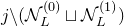 $j \backslash (\mathcal{N}_L^{(0)}\sqcup \mathcal{N}_L^{(1)})$
will be identified with the set of special lattices and
 $\delta$
also induces an isomorphism between
 $\mathcal{N}_L^{(0)}$
and
 $\mathcal{N}_L^{(1)}$
. To find such j, note that we have a surjection of
 $J_b(\mathbb{Q}_p)$
to
 $\pi_1({\rm SO}(V))_I\cong \mathbb{Z}/2\mathbb{Z}$
, which we regard as the stabilizer of the base alcove of
 ${\rm SO}(V)$
. Then an inverse image of the nontrivial element of
 $\mathbb{Z}/2\mathbb{Z}$
will work.
7.2 Special cycles on
$\mathcal{N}_L$

7.2.1.
Recall that
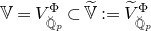 $\mathbb{V}=V_{\breve{\mathbb{Q}}_p}^{\Phi}\subset\widetilde{\mathbb{V}}:=\widetilde{V}_{\breve{\mathbb{Q}}_p}^{\Phi}$
, where
 $\Phi=b\sigma$
. We let
 $\tilde{\pi}=\sqrt{p}\in E$
and consider
 $\widetilde{\pi} \mathbb{V} \subset \widetilde{\mathbb{V}}$
. Then, as in [Reference Howard and PappasHP17, § 4.3], we may consider
 $\widetilde{\mathbb{V}}$
as a subspace of
 $\operatorname{End}(\mathbb{X})_{\mathbb{Q}}$
; this is the space of special quasi-endomorphisms. Let
 ${{\mathscr{X}}}$
denote the universal p-divisible group over
 $\mathcal{N}_{L}$
and we let
 $\overline{\mathcal{N}}_L$
denote the special fiber of
 ${{\mathcal{N}}}_L$
. We have the universal quasi-isogeny
 \begin{align*}\rho: \mathbb{X} \times_{{\rm Spf}(k)} \overline{\mathcal{N}}_L \rightarrow {{\mathscr{X}}} \times_{\mathcal{N}_L} \overline{\mathcal{N}}_L.\end{align*}
Definition 7.3. Let
 ${{\mathbb{L}}}\subset \mathbb{V}$
be a non-degenerate lattice.
-
(i) We define
$\mathcal{Z}_L({{\mathbb{L}}})$
to be the closed formal subscheme of
$\mathcal{N}_{L}$
where
$\rho \circ x\circ \rho^{-1}\in \operatorname{End}(\overline{{{\mathscr{X}}}})_{\mathbb{Q}}$
lifts to an integral endomorphism of
${{\mathscr{X}}}$
, for all
$x\in {{\mathbb{L}}}$
. -
(ii) We define
$\mathcal{Y}_L({{\mathbb{L}}})$
to be the closed formal subscheme of
$\mathcal{N}_{L}$
where
$\rho \circ \widetilde{\pi} \circ x\circ \rho^{-1}\in \operatorname{End}(\overline{{{\mathscr{X}}}})_{\mathbb{Q}}$
lifts to an element of
$\operatorname{End}({{\mathscr{X}}})$
, for all
$x\in {{\mathbb{L}}}$
.


Note that both the framing object
 $\mathbb{X}$
and the universal p-divisible group
 $\mathscr{X}$
carry actions of
 $O_E$
, and that the universal quasi-isogeny
 $\rho$
is
 $\mathcal{O}_E$
-linear. In particular, we have
 $\mathcal{Z}_L(\mathbb{L}) \subset \mathcal{Y}_L(\mathbb{L})$
, which is analogous to the unitary case [Reference ChoCho22].
7.2.2.
We now introduce a duality isomorphism which will allow us to reduce the study of
 ${{\mathcal{Y}}}$
-cycles to that of
 ${{\mathcal{Z}}}$
-cycles.
Definition 7.4. For a quadratic lattice L, we use
 $L^{(p)}$
to denote the lattice L with quadratic form
 $p\cdot q(\,)_L$
, where
 $q(\,)_L$
is the quadratic form of L. Now, for a vertex lattice
 $L\subset V$
of type h, we let
 $L^\sharp:= (L^\vee)^{(p)}$
. Moreover, we set
 $V^\sharp=L^\sharp\otimes_{\mathbb{Z}}\mathbb{Q}$
. In particular,
 $\widetilde{\pi}V\subset \widetilde{V}$
(respectively
 $\widetilde{\pi} L^\vee\subset \widetilde{V}$
) is a specific realization of
 $V^\sharp$
(respectively
 $L^\sharp$
) in
 $\widetilde{V}$
.
Proposition 7.5. There is a natural isomorphism
 \begin{align*}\Upsilon_{L,L^\sharp}:{{\mathcal{N}}}_L\xrightarrow{\sim}{{\mathcal{N}}}_{L^\sharp}\end{align*}
such that, for any non-degenerate lattice
 $\mathbb{L}\subset \mathbb{V}_L$
,
 $\Upsilon_{L,L^\sharp}$
induces an isomorphism
 \begin{align*} \mathcal{Y}_L({{\mathbb{L}}})= \mathcal{Z}_{L^\sharp}(\widetilde{\pi} \mathbb{L}). \end{align*}
Proof. We use
 ${{\mathcal{G}}}_L$
to denote the parahoric group scheme corresponding to L. Since we have a perfect pairing between L and
 $L^\vee$
,
 ${{\mathcal{G}}}_L$
is isomorphic to the stabilizer
 ${{\mathcal{G}}}_{L^\vee}$
of
 $L^\vee$
. Moreover, we have
 ${{\mathcal{G}}}_{L^\vee}\cong {{\mathcal{G}}}_{L^\sharp}$
since the quadratic form of
 $L^\sharp$
only differs with the quadratic form of
 $L^\vee$
by a scalar p. In particular, we have
 $G^\sharp := {\rm GSpin}(V^\sharp)\cong {\rm GSpin}(V)= G$
.
In fact, we can choose an isomorphism
 $\phi: G\xrightarrow{\sim}G^\sharp$
and choose
 $(G^\sharp,\phi(b),\phi\circ \mu)$
as a local Shimura datum of
 $\mathcal{N}_{L^\sharp}$
. Moreover, we choose a basis
 $\{e_1,\ldots,e_n\}$
of L as in § 6.1.2 so that
 $\{p^{-1}e_1,\ldots,p^{-1}e_{h},e_{h+1},\ldots,e_n\}$
is a basis of
 $L^\vee$
. Then, we can identify
 $\widetilde{\pi} L^\vee$
with
 $L^\sharp$
, which induces an identification
 \begin{align*} \widetilde{L}=\widetilde{L^\sharp} \quad \text{and} \quad C(\widetilde{L})\stackrel{\varphi}{=}C(\widetilde{L^\sharp}).\end{align*}
Under this identification,
 $\widetilde{\pi} L^\vee=L^\sharp$
can be regarded as the same endomorphisms of
 $C(\widetilde{L})=C(\widetilde{L}^\sharp)$
via Lemma 7.1. Moreover, we may define alternating forms
 $\psi$
and
 $\psi^{\sharp}$
on
 $C(\widetilde{L})$
and
 $C(\widetilde{L^\sharp})$
as in § 6.1.4 such that
 $\psi$
and
 $\psi^{\sharp}$
are the same under this identification. For example, if we choose c as in § 6.1.4 to define
 $\psi$
, then we can choose
 $\phi(c)$
to define
 $\psi^\sharp.$
Using these identifications, we have
 $\mathbb{X} = \mathbb{X}^\sharp\in \mathcal{N}_{C(\widetilde{L})}(k)$
, where
 $\mathbb{X}^\sharp$
is the framing object of
 $\mathcal{N}_{L^\sharp}$
. In particular, we can choose the same
 $\iota$
and
 $\Theta$
as in (6.1) to construct
 $\mathcal{N}_{L^\sharp}$
so that
 $\mathcal{N}_{L}\stackrel{\Upsilon_{L,L^\sharp}}{\cong}\mathcal{N}_{L^\sharp}$
in
 $\mathcal{N}_{C(\widetilde{L})}$
. Moreover, by the identification
 $\widetilde{\pi} L^\vee=(L^\vee)^{(p)}$
, we regard
 $\widetilde{\pi} \mathbb{L}$
and
 $\mathbb{L}^{(p)}$
as the same special endomorphisms of
 $\mathbb{X}=\mathbb{X}^\sharp$
for any
 $\mathbb{L}\subset \mathbb{V}$
and
 $\mathbb{L}^{(p)} \subset \mathbb{V}^{(p)}=\mathbb{V}^\sharp$
. Then the proposition follows from the definition of
 ${{\mathcal{Z}}}$
and
 ${{\mathcal{Y}}}$
-cycles.
7.3
k-points of
${{\mathcal{Z}}}_L(\Lambda)$
and
${{\mathcal{Y}}}_L(\Lambda)$


7.3.1.
We now study the k-points of special cycles on
 ${{\mathcal{N}}}_L$
. In what follows, for notational simplicity we will often omit the subscript L in
 ${{\mathcal{Z}}}_L(\Lambda)$
and
 ${{\mathcal{Y}}}_L(\Lambda)$
. For a lattice
 $\mathbb{L}\subset \mathbb{V}$
, we use
 $\mathcal{Z}^{(0)}({{\mathbb{L}}})$
and
 $\mathcal{Y}^{(0)}({{\mathbb{L}}})$
to denote the special cycles on
 $\mathcal{N}_L^{(0)}$
(respectively
 $\mathcal{N}_L^{(0)}\sqcup \mathcal{N}_L^{(1)}$
) if
 $h\neq 0,n$
(respectively
 $h=0,n$
).
Recall that
 $\mathcal{V}^{\geqslant h}(\mathbb{V})$
(respectively
 $\mathcal{V}^{\leqslant h}(\mathbb{V})$
) denote the set of vertex lattices in
 $\mathbb{V}$
of type
 $t\geqslant h$
(respectively
 $t\leqslant h$
). If the quadratic space is clear in the context, we simply denote it as
 $\mathcal{V}^{\geqslant h} $
(respectively
 $\mathcal{V}^{\leqslant h} $
).
Proposition 7.6.
-
(i) For
$\Lambda \in \mathcal{V}^{\geqslant h}$
, we have
\begin{align*}\mathcal{Z}^{(0)}(\Lambda)(k) & \cong \{\text{special lattices } M \subset V_{\breve{\mathbb{Q}}_p}: \Lambda_{\breve{\mathbb{Z}}_p} \subset M \subset M^\vee \subset \Lambda_{\breve{\mathbb{Z}}_p}^\vee \}\cong S_\Lambda(k).\end{align*}
-
(ii) For
$\Lambda \in \mathcal{V}^{\geqslant h}$
, we have
\begin{align*}\mathcal{Y}^{(0)}(\Lambda^\vee)(k) & \cong \{\text{special lattices } M \subset V_{\breve{\mathbb{Q}}_p}: p\Lambda_{\breve{\mathbb{Z}}_p}^\vee \subset p M^\vee \subset M \subset \Lambda_{\breve{\mathbb{Z}}_p} \}\cong R_\Lambda(k).\end{align*}


Proof. Recall that previously we have defined
 \begin{align*}L_g:= \sigma^{-1}(\tilde{b}^{-1}g)\bullet L_{\breve{\mathbb{Z}}_p} \quad \text{and} \quad L_g':= g \bullet L_{\breve{\mathbb{Z}}_p}.\end{align*}
We claim that
 \begin{align*} (L_y,L_y')=(L_g,L_g').\end{align*}
First, when
 $g=1$
and y is the point corresponding to
 $g=1$
, the claim follows from (7.3) and the definition of
 $L_y'$
. Applying
 $\sigma^{-1}(\tilde{b}^{-1}g)\bullet$
to both sides, we have
 $L_y=L_g$
. Similarly, applying
 $g\bullet $
to both sides, we obtain
 $L_y' =L_g'$
.
Now, for
 $y\in \mathcal{N}_L(k)$
, we have
 $y \in \mathcal{Z}^{(0)}(\Lambda)(k) $
if and only if
 $\Lambda$
preserves both lattices
 $M_{y,1} \subset M_y$
, which is equivalent to
 $\Lambda\subset L_y \cap L_y'$
. However, since
 $\Lambda$
is
 $\Phi$
-invariant,
 $\Lambda\subset L_y \cap L_y'$
is equivalent to
 $\Lambda\subset L_y$
. Therefore,
 \begin{align*}\begin{aligned}\mathcal{Z}^{(0)}(\Lambda)(k) & \cong \{ \text{special lattices } L_y \subset V_{{{\breve{F}}}}: \Lambda \subset L_y\} \\& =\{ \text{special lattices } L_y \subset V_{{{\breve{F}}}}: \Lambda \subset L_y \subset L_y^\vee \subset \Lambda^\vee \}.\end{aligned}\end{align*}
The description for
 $ \mathcal{Y}^{(0)}(\Lambda^\vee)(k)$
follows from the same argument once we replace (7.3) by (7.4).
Finally, we can easily verify the following identifications by definition of
 $S_\Lambda$
and
 $R_\Lambda$
:
 \begin{align*} \{\text{special lattices } M \subset V_{\breve{\mathbb{Q}}_p}: \Lambda_{\breve{\mathbb{Z}}_p} \subset M \subset M^\vee \subset \Lambda_{\breve{\mathbb{Z}}_p}^\vee \}&\stackrel{\sim}{\to} S_\Lambda(k),\\ M&\mapsto M/\Lambda_{\breve{\mathbb{Z}}_p};\\ \{\text{special lattices } M \subset V_{\breve{\mathbb{Q}}_p}: p\Lambda_{\breve{\mathbb{Z}}_p}^\vee \subset p M^\vee \subset M \subset \Lambda_{\breve{\mathbb{Z}}_p} \}&\stackrel{\sim}{\to} R_\Lambda(k),\\ p M^\vee&\mapsto pM^\vee/p\Lambda_{\breve{\mathbb{Z}}_p}^\vee. \end{align*}
7.3.2.
The following two propositions explain the intersection behavior between special cycles associated to different choices of vertex lattice
 $\Lambda.$
Proposition 7.7.
Assume
 $\Lambda$
and
 $\Lambda'$
are both vertex lattices in
 ${{\mathbb{V}}}$
.
-
(i) If
$\Lambda\subset \Lambda'$
, then
$\mathcal{Z}^{(0)}(\Lambda')(k)\subset \mathcal{Z}^{(0)}(\Lambda)(k)$
. -
(ii) We have
\begin{align*} \mathcal{Z}^{(0)}(\Lambda)(k) \cap \mathcal{Z}^{(0)}(\Lambda^{\prime})(k)=\begin{cases}\mathcal{Z}^{(0)}(\Lambda + \Lambda^{\prime})(k) & \text{if } \Lambda+ \Lambda^{\prime} \in \mathcal{V}^{\geqslant h} , \\ \emptyset & \text{otherwise. }\end{cases} \end{align*}



Proof. (i) Follows directly from Proposition 7.6. According to Proposition 7.6, we have
 \begin{align*} \mathcal{Z}^{(0)}(\Lambda)(k) \cap \mathcal{Z}^{(0)}(\Lambda^{\prime})(k)=\{\text{special lattices } L_y \subset V_{{{\breve{F}}}}: \Lambda+\Lambda' \subset L_y \subset L_y^\vee \subset (\Lambda+\Lambda')^\vee\}. \end{align*}
In particular, if
 $\Lambda+ \Lambda^{\prime}$
is not a vertex lattice, then we obtain an empty set.
Proposition 7.8.
Assume
 $\Lambda$
and
 $\Lambda'$
are both vertex lattices in
 ${{\mathbb{V}}}$
.
-
(i) If
$\Lambda\subset \Lambda'$
, then
$\mathcal{Y}^{(0)}((\Lambda')^\vee)(k)\subset \mathcal{Y}^{(0)}(\Lambda^\vee)(k)$
. -
(ii) We have
\begin{align*} \mathcal{Y}^{(0)}(\Lambda^\vee)(k) \cap \mathcal{Y}^{(0)}((\Lambda^{\prime})^\vee)(k)=\begin{cases}\mathcal{Y}^{(0)}(\Lambda^\vee + (\Lambda^{\prime})^\vee)(k) & \text{if } \Lambda+ \Lambda^{\prime} \in \mathcal{V}^{\leqslant h}, \\ \emptyset & \text{otherwise. }\end{cases} \end{align*}


7.3.3.
Let
 $\mathcal{N}_{L,{\rm red}}^{(0)}$
denote the reduced k-scheme underlying
 $\mathcal{N}_L^{(0)}$
. Similarly, let
 $\mathcal{Z}_{\rm red}^{(0)}(\Lambda)$
and
 $\mathcal{Y}_{\rm red}^{(0)}(\Lambda^\vee)$
be the reduced k-scheme underlying
 $\mathcal{Z}^{(0)}(\Lambda)$
and
 $\mathcal{Y}^{(0)}(\Lambda^\vee)$
.
The following is one of our main results, which states that
 $\mathcal{N}_{L,{\rm red}}^{(0)}$
is a union of two types of strata given by
 $\mathcal{Z}_{\rm red}^{(0)}(\Lambda)$
and
 $\mathcal{Y}_{\rm red}^{(0)}(\Lambda^\vee)$
, respectively.
Theorem 7.9.
Assume
 $h\neq 0,n$
. We have
 \begin{align*} \mathcal{N}_{L,{\rm red}}^{(0)} = \bigg(\bigcup_{\Lambda \in \mathcal{V}^{\geqslant h}} \mathcal{Z}_{{\rm red}}^{(0)}(\Lambda) \!\bigg) \cup \bigg(\bigcup_{\Lambda \in \mathcal{V}^{\leqslant h}} \mathcal{Y}_{{\rm red}}^{(0)}(\Lambda^\vee) \!\bigg). \end{align*}
Proof. Proposition 7.2 identifies the
 $\mathcal{N}_{L,{\rm red}}^{(0)}(k)$
with special lattices
 $M\subset V_{\breve{\mathbb{Q}}_p}$
such that
 $M\stackrel{h}{\subset}M^\vee$
. Proposition 4.8 combined with Proposition 7.6 implies that a point
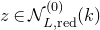 $z\in \mathcal{N}_{L,{\rm red}}^{(0)}(k)$
lies either in
 $\mathcal{Z}_{{\rm red}}^{(0)}(\Lambda)(k)$
for a
 $\Lambda \in \mathcal{V}^{\geqslant h}$
or in
 $\mathcal{Y}_{{\rm red}}^{(0)}(\Lambda^\vee)(k)$
for a
 $\Lambda \in \mathcal{V}^{\leqslant h}$
.
The following shows that
 $\mathcal{N}_{L,{\rm red}}^{(0)}$
is connected as in many previously studied cases.
Proposition 7.10.
We have that
 $\mathcal{N}_{L,{\rm red}}^{(0)}$
is connected.
Proof. The case
 $h=0,n$
is [Reference Howard and PappasHP17, Proposition 5.1.5]. So we assume
 $h\neq 0,n$
. We say two vertex lattices
 $\Lambda,\Lambda'\subset {{\mathbb{V}}}$
are adjacent if
 $\Lambda \subset \Lambda'$
or
 $\Lambda'\subset \Lambda$
. We write
 $\Lambda\sim \Lambda'$
if
 $\Lambda$
and
 $\Lambda'$
are adjacent. The proof of [Reference Howard and PappasHP17, Proposition 5.1.5] shows that any
 $\Lambda$
with type
 $t_\Lambda\geqslant h$
(respectively
 $t_\Lambda\leqslant h$
) can be connected with a fixed vertex lattice
 $\Lambda_h$
with type h via adjacent vertex lattices with type at least h (respectively at most h). In particular,
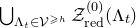 $\bigcup_{\Lambda_t \in \mathcal{V}^{\geqslant h}} \mathcal{Z}_{{\rm red}}^{(0)}(\Lambda_t)$
(respectively
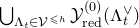 $\bigcup_{\Lambda_t \in \mathcal{V}^{\leqslant h}} \mathcal{Y}_{{\rm red}}^{(0)}(\Lambda_t^\vee)$
) is connected by Proposition 7.7 (respectively Proposition 7.8). Moreover,
 $\mathcal{Z}_{\rm red}^{(0)}(\Lambda_h)$
is the worst point associated to
 $\Lambda_h$
and
 $\mathcal{Z}_{\rm red}^{(0)}(\Lambda_h)\subset \mathcal{Y}_{{\rm red}}^{(0)}(\Lambda^\vee)$
if
 $p\Lambda^\vee \subset \Lambda_h$
. In particular,
 \begin{align*}\mathcal{Z}_{\rm red}^{(0)}(\Lambda_h)\subset \bigg(\bigcup_{\Lambda_t \in \mathcal{V}^{\geqslant h}} \mathcal{Z}_{{\rm red}}^{(0)}(\Lambda_t)\!\bigg)\cap \bigg(\bigcup_{\Lambda_t \in \mathcal{V}^{\geqslant h}} \mathcal{Y}_{{\rm red}}^{(0)}(\Lambda_t^\vee)\!\bigg).\end{align*}
So
 $\mathcal{N}_{L,{\rm red}}^{(0)}$
is connected.
7.3.4.
Given Theorem 7.9, to understand
 $\mathcal{N}_{L,{\rm red}}^{(0)}$
, it suffices to describe
 $\mathcal{Z}_{\rm red}^{(0)}(\Lambda)$
and
 $\mathcal{Y}_{\rm red}^{(0)}(\Lambda^\vee)$
. It turns out that
 $\mathcal{Z}_{\rm red}^{(0)}(\Lambda)$
and
 $\mathcal{Y}_{\rm red}^{(0)}(\Lambda^\vee)$
are isomorphic to
 $S_\Lambda$
and
 $R_\Lambda$
introduced in § 5.2.4, respectively. The rest of the paper is devoted to the proof of this statement.
First, we will construct a proper morphism from
 $\mathcal{Z}_{\rm red}^{(0)}(\Lambda)$
and
 $\mathcal{Y}_{\rm red}^{(0)}(\Lambda^\vee)$
to
 $S_\Lambda$
and
 $R_\Lambda$
, respectively. We will need the following proposition, whose proof is the same as the proof of [Reference Howard and PappasHP17, Proposition 6.1.2].
Proposition 7.11.
Assume
 $\Lambda$
is a vertex lattice of type
 $t\geqslant h$
(respectively
 $t\leqslant h$
). Then
 $\mathcal{Z}_{\rm red}^{(0)}(\Lambda)$
(respectively
 $\mathcal{Y}_{\rm red}^{(0)}(\Lambda^\vee)$
) is projective.
Proposition 7.12. There are natural proper morphisms between k-schemes
 \begin{align*}\Psi_{{{\mathcal{Z}}},\Lambda}: \mathcal{Z}_{\rm red}^{(0)}(\Lambda) \rightarrow S_{\Lambda} \end{align*}
and
 \begin{align*}\Psi_{{{\mathcal{Y}}},\Lambda}: \mathcal{Y}_{\rm red}^{(0)}(\Lambda^\vee) \rightarrow R_{\Lambda} \end{align*}
inducing the bijections from Proposition 7.6 on k-points.
Proof. We consider the case of
 ${{\mathcal{Z}}}(\Lambda)$
; the case of
 ${{\mathcal{Y}}}(\Lambda)$
is completely analogous.
Let R be a reduced k-algebra of finite type and
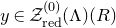 $y\in \mathcal{Z}_{\rm red}^{(0)}(\Lambda)(R)$
corresponding to a triple
 $(X_y,\lambda_y, \rho_y )$
as in § 6.2.1. Let
 ${{\mathcal{R}}}$
be a p-torsion free, p-adically complete and separated
 $\breve{\mathbb{Z}}_p$
-algebra which is equipped with an isomorphism
 ${{\mathcal{R}}}/p{{\mathcal{R}}}\cong R$
and a lift (also denoted as
 $\sigma$
) of the Frobenius
 $\sigma$
on R. We set
 ${{\mathcal{M}}}_y:={{\mathbb{D}}}(X_y)({{\mathcal{R}}})$
and let
 ${{\mathcal{M}}}_{y,1}\subset {{\mathcal{M}}}_{y}$
denote the preimage of the filtration on
 ${{\mathbb{D}}}(X_y)(R)$
. Using the quasi-isogeny
 $\rho_y:{{\mathbb{X}}}\times_k R\rightarrow X_y$
, we may consider
 ${{\mathcal{M}}}_y$
as an
 ${{\mathcal{R}}}$
-submodule of
 $D_{\breve{\mathbb{Z}}_p}\otimes_{\breve{\mathbb{Z}}_p} {{\mathcal{R}}}[1/p]$
. We define
 \begin{align*} {{\mathcal{L}}}_y=\{x\in V\otimes_{{{\mathbb{Q}}}_p}{{\mathcal{R}}}[1/p]\mid x{{\mathcal{M}}}_{y,1}\subset {{\mathcal{M}}}_{y,1}\},\end{align*}
which is an
 ${{\mathcal{R}}}$
-submodule of
 $V\otimes_{{{\mathbb{Q}}}_p}{{\mathcal{R}}}[1/p]$
. Then we claim that
 \begin{align*}\Lambda\otimes_{{{\mathbb{Z}}}_p}{{\mathcal{R}}} \subset{{\mathcal{L}}}_y\subset \Lambda^\vee\otimes_{{{\mathbb{Z}}}_p}{{\mathcal{R}}}, \end{align*}
and the image
 $\overline{{{\mathcal{L}}}}_y$
of
 ${{\mathcal{L}}}_y$
in
 $\Lambda^\vee\otimes_{{{\mathbb{Z}}}_p}{{\mathcal{R}}}/\Lambda\otimes_{{{\mathbb{Z}}}_p}{{\mathcal{R}}}=\Lambda^\vee/\Lambda \otimes_{{{\mathbb{F}}}_p}R$
is a locally free direct summand of rank
 $({t_\Lambda-h})/{2}$
. Indeed, since R is reduced, it suffices by [Reference LangLan02, Exercise X.16] to check this on k-points. For
 $R\rightarrow k$
corresponding to
 $x\in {{\mathcal{Z}}}(\Lambda)(k)$
, it follows from Lemma 7.1 that the specialization of
 ${{\mathcal{L}}}_y$
is the sublattice
 $L_x\subset \breve V$
, and hence its image in
 $\Lambda^\vee/\Lambda\otimes_{{{\mathbb{Z}}}_p} k$
lies in
 $S(\Lambda)$
. Thus,
 $\overline{{{\mathcal{L}}}}_y$
is an element of
 $S_\Lambda(R)$
, and it is easy to see that it does not depend on the choice of
 ${{\mathcal{R}}}$
. Indeed, since R is reduced,
 $\overline{{{\mathcal{L}}}}_y$
is determined by its restriction along all
 $R\rightarrow k$
. We obtain a morphism
 $\mathcal{Z}_{\rm red}^{(0)}(\Lambda) \rightarrow S_{\Lambda}$
as desired.
Finally,
 $\mathcal{Z}_{\rm red}^{(0)}(\Lambda)$
is projective over k by Proposition 7.11 and
 $S_\Lambda$
is projective over k as a generalized Deligne–Lusztig variety. The properness of the morphism follows.
7.4 Orthogonal local models
Our goal in the rest of the paper is to show that the morphisms in Proposition 7.12 are isomorphisms. In order to do this, we will give a description of the tangent space of
 ${{\mathcal{Z}}}_{{\rm red}}^{(0)}(\Lambda)$
at certain k-points generalizing [Reference Li and ZhuLZ18, Corollary 4.2.7]. We begin with some preparations concerning orthogonal local models.
We keep the notation of the previous subsection, so that
 $L\subset V$
is a vertex lattice of type h and
 $\mathcal{G}$
is the parahoric of
 $G={\rm GSpin}(V)$
corresponding to L. We recall the some properties of the local models
 $\mathbb{M}^{{\rm loc}}_{{{\mathcal{G}}},\mu}$
from [Reference Anschütz, Gleason, Lourenço and RicharzAGL+22] that we will need.
We let
 $\mathcal{FL}_{{{\mathcal{G}}}}$
denote the Witt-vector partial affine flag variety for
 ${{\mathcal{G}}}$
constructed in [Reference Bhatt and ScholzeBS17], [Reference ZhuZhu17]. We write
 ${{\mathcal{M}}}$
for the geometric special fiber of
 $\mathbb{M}^{{\rm loc}}_{{{\mathcal{G}}},\mu}$
. Then, by [Reference Anschütz, Gleason, Lourenço and RicharzAGL+22, Theorem 7.23],
 ${{\mathcal{M}}}$
can be identified with the canonical deperfection
 ${{\mathcal{A}}}_{{{\mathcal{G}}},\mu}^{{\rm can}}$
of the
 $\mu$
-admissible locus inside
 $\mathcal{FL}_{{{\mathcal{G}}}}$
. In particular,
 ${{\mathcal{M}}}$
has a stratification indexed by
 $w\in {{\operatorname{Adm}}}(\mu)_K$
whose closure relations are given by the Bruhat order on
 ${{\widetilde{W}}}$
. We write
 ${{\mathcal{M}}}^w$
for the strata corresponding to
 $w\in {{\operatorname{Adm}}}(\mu)_K$
.
On the level of k-points, we may identify
 ${{\mathcal{M}}}(k)$
with a subset of
 $G(\breve{\mathbb{Q}}_p)/{{\mathcal{G}}}(\breve{\mathbb{Z}}_p)$
corresponding to the elements of
 $h\dot{w}$
, where
 $h\in {{\mathcal{G}}}(\breve{\mathbb{Z}}_p)$
and
 $w\in {{\operatorname{Adm}}}(\mu)_K$
. Let
 $\iota^{{\rm loc}}:\mathbb{M}^{{\rm loc}}_{{{\mathcal{G}}},\mu}\rightarrow {\rm Gr}(C(\widetilde{L}),d)$
denote the map of local models constructed in Proposition 6.2. Then, for
 $g\in G(\breve{\mathbb{Q}}_p)/{{\mathcal{G}}}(\breve{\mathbb{Z}}_p)$
lying in the image of
 ${{\mathcal{M}}}(k)$
, the filtration on
 $C(\widetilde{L})$
corresponding to its image in
 $ {\rm Gr}(C(\widetilde{L}),d)(k)$
is induced by the reduction mod p of
 $gC(\widetilde{L})\subset C(\widetilde{L})$
.
7.4.1.
Let
 ${{\operatorname{Adm}}}(\mu)_K^{\rm max}\subset {{\operatorname{Adm}}}(\mu)_K$
denote the subset of maximal elements for the Bruhat order; explicitly these are given by
 ${^K{{\widetilde{W}}}}\cap t^{W_0(\mu)}$
. In what follows, we give an explicit description of
 ${{\operatorname{Adm}}}(\mu)^{\rm max}_K$
, together with a distinguished subset
 $Z_K\subset{{\operatorname{Adm}}}(\mu)_K$
; this subset corresponds to the KR-strata whose closure contains the
 ${{\mathcal{Z}}}$
-cycles (see § 7.5.1). We identify
 $X_*(T^{{\rm ad}})$
with
 ${{\mathbb{Z}}}^n$
, with standard basis
 $\epsilon_1,\dotsc,\epsilon_n$
. Then,
 $\mu=\epsilon_1$
and the Weyl orbit
 $W_0(\mu)$
is the set
 $\{\pm\epsilon_i\mid i=1,\dotsc,n\}$
. We write
 \begin{align*}h=\begin{cases} 2s & \text{in case (1) and (2a)},\\2s+1 &\text{in case (2b) and (3)}.\end{cases}\end{align*}
Here, we label the cases as in § 3.2.1.
Case (1) (Type
 $D_n$
).
 \begin{align*}{{\operatorname{Adm}}}(\mu)_K^{\rm max}=\begin{cases}\{t^{\epsilon_1}\} &\text{if $s=0$},\\\{t^{\pm\epsilon_1},t^{\epsilon_2}\} &\text{if $s=1$},\\\{t^{-\epsilon_{s}},t^{\epsilon_{s+1}}\} &\text{$1\lt s\lt n-1$},\\\{t^{-\epsilon_{n-1}},t^{\pm\epsilon_n}\} &\text{if} s=n-1,\\\{t^{-\epsilon_n}\} &\text{if $s=n$}.\end{cases}\end{align*}
We set
 \begin{align*}Z_K=\begin{cases}\{t^{\epsilon_{s+1}}\} &\text{if} 0\leqslant s\lt n-1,\\\{t^{\pm\epsilon_n}\} &\text{if} s=n-1,\\\emptyset&\text{if $s=n$}.\end{cases}\end{align*}
Case (2a) (Type
 $B_n$
).
 \begin{align*}{{\operatorname{Adm}}}(\mu)_K^{\rm max}=\begin{cases} \{t^{\epsilon_1}\} &\text{if $s=0$},\\ \{t^{\pm\epsilon_1},t^{\epsilon_2}\} &\text{if $s=1$},\\ \{t^{-\epsilon_{s}},t^{\epsilon_{s+1}}\} &\text{if $1\lt s\leqslant n-1$},\\ \{t^{-\epsilon_n}\} &\text{if $s=n$}.\end{cases}\end{align*}
We set
 \begin{align*}Z_K=\begin{cases} \{t^{\epsilon_{s+1}}\} &\text{if $0\leqslant s\lt n$},\\ \emptyset&\text{if $s=n$}. \end{cases}\end{align*}
Case (2b) (Type
 $B_n$
).
 \begin{align*}{{\operatorname{Adm}}}(\mu)_K^{\rm max}=\begin{cases} \{t^{\epsilon_1}\} &\text{if $s=0$},\\ \{t^{-\epsilon_{s}},t^{\epsilon_{s+1}}\} &\text{if $1\leqslant s\lt n-1$},\\ \{t^{\pm\epsilon_{n}},t^{-\epsilon_{n-1}}\} &\text{if} s=n-1,\\ \{t^{-\epsilon_n}\} &\text{if $s=n$}.\end{cases}\end{align*}
We set
 \begin{align*}Z_K=\begin{cases} \{t^{\epsilon_{s+1}}\} &\text{if} 0\leqslant s\lt n-1,\\ \{t^{\pm\epsilon_{n}}\} &\text{if} s=n-1,\\ \emptyset&\text{if $s=n$}. \end{cases}\end{align*}
Case (3) (Type
 $C-B_n$
).
 \begin{align*}{{\operatorname{Adm}}}(\mu)_K^{\rm max}=\begin{cases} \{t^{\epsilon_1}\} &\text{if $s=0$},\\ \{t^{-\epsilon_{s}},t^{\epsilon_{s+1}}\} &\text{if $1\leqslant s\leqslant n-1$},\\ \{t^{-\epsilon_n}\} &\text{if $s=n$}. \end{cases}\end{align*}
We set
 \begin{align*}Z_K=\begin{cases}\{t^{\epsilon_{s+1}}\} &\text{if} 0\leqslant s\lt n,\\\emptyset&\text{if } s=n.\end{cases}\end{align*}
7.4.2.
We set
 ${{\mathcal{M}}}_Z=\bigcup_{w\in Z_K}{{\mathcal{M}}}^w$
. Let
 ${{\mathcal{M}}}^{{{{\rm sm}}}}$
denote the smooth locus of
 ${{\mathcal{M}}}$
.
Lemma 7.13.
-
(i) Each
${{\mathcal{M}}}^w$
is an orbit for the action of
${{\mathcal{G}}}_k$
on
${{\mathcal{M}}}$
. -
(ii) We have
$\bigcup_{w\in Z_K}{{\mathcal{M}}}^w\subset {{\mathcal{M}}}^{{{{\rm sm}}}}$
, where
${{\mathcal{M}}}^{{{{\rm sm}}}}$
is the smooth locus of
${{\mathcal{M}}}$
.


Proof.
-
(i) By [Reference Anschütz, Gleason, Lourenço and RicharzAGL+22, Lemma 3.15],
${{\mathcal{M}}}$
may be identified with a certain union of Schubert varieties in the partial affine flag variety
$\mathcal{FL}_{\underline{{{\mathcal{G}}}}}$
for an equicharacteristic group
$\underline{{{\mathcal{G}}}}$
over k[[t]] which is equipped with an identification
$\underline{{{\mathcal{G}}}}_k\cong {{\mathcal{G}}}_k$
. The action of the positive loop group
$L^+\underline{{{\mathcal{G}}}}$
on
${{\mathcal{M}}}$
factors through
$\underline{{{\mathcal{G}}}}_k$
(cf. [Reference Anschütz, Gleason, Lourenço and RicharzAGL+22, Theorem 3.16]), and the corresponding action of
$\underline{{{\mathcal{G}}}}_k$
can be identified with the action of
${{\mathcal{G}}}_k$
under the isomorphism
$\underline{{{\mathcal{G}}}}_k\cong {{\mathcal{G}}}_k$
above. -
(ii) The smooth locus of
${{\mathcal{M}}}$
is open dense, and is a union of
${{\mathcal{G}}}_{k}$
-orbits. Thus,
${{\mathcal{M}}}^{{{{\rm sm}}}}$
contains all the strata
${{\mathcal{M}}}^w$
corresponding to
$w\in{{\operatorname{Adm}}}(\mu)_K^{\rm max}$
.


7.4.3.
For notational simplicity, we write
 $\breve V$
for
 $V_{\breve{\mathbb{Q}}_p}$
,
 $\breve L$
for
 $L_{\breve{\mathbb{Z}}_p}$
and
 ${{\breve{D}}}$
for
 $D_{\breve{\mathbb{Z}}_p}$
. Let
 $x\in {{\mathcal{M}}}^w(k)$
for some
 $w\in Z_K$
. This corresponds to a subspace
 $\overline{D}_{1}\subset \overline{D}:={{\breve{D}}}/p {{\breve{D}}}$
, and we let
 $\breve D_1\subset \breve D$
denote the preimage of
 $\overline{D}_1$
. By Lemma 7.1, we have
 \begin{align*}{{\breve{L}}}=\{v\in {{\breve{V}}}\mid vD\subset D\}.\end{align*}
We equip
 $\overline L:={{\breve{L}}}/p {{\breve{L}}}$
with the structure of a (possibly degenerate) quadratic space over k and set
 ${{\breve{L}}}_1:=\{v\in {{\breve{V}}}\mid v{{\breve{D}}}_1\subset {{\breve{D}}}_1\}$
. This is equipped with an action of
 ${{\mathcal{G}}}_k$
via the
 $\bullet$
action which preserves the quadratic form.
Lemma 7.14.
-
(i) We show that
$\dim({{\breve{L}}}+{{\breve{L}}}_1)/{{\breve{L}}}=1$
. -
(ii) In addition, the one-dimensional isotropic line
$\overline{L}_1$
in
$\overline{L}$
spanned by the image of
$p{{\breve{L}}}_1$
does not lie in the radical of
$\overline{L}$
.


Proof. We write
 $\breve V=\breve V_0\oplus \breve V_{{{{\rm an}}}}$
and choose a basis
 $e_1\dotsc e_n,f_1,\dotsc,f_n$
for
 $\breve V_{0}$
as in § 2.3. Then,
 \begin{align*}{{\breve{L}}}={{{\rm Span}}}(pe_1,\dotsc,pe_s,e_{s+1},\dotsc,e_n,f_1,\dotsc,f_n)\oplus {{\breve{L}}}_{{{{\rm an}}}}\end{align*}
with s as above.
Let
 $g\in G(\breve{\mathbb{Q}})/{{\mathcal{G}}}(\breve{\mathbb{Z}}_p)$
be the image of x under the map
 ${{\mathcal{M}}}(k)\rightarrow G(\breve{\mathbb{Q}})/{{\mathcal{G}}}(\breve{\mathbb{Z}}_p)$
. Then
 $ {{\breve{D}}}_1=g {{\breve{D}}}$
, and hence
 ${{\breve{L}}}_1=g\bullet {{\breve{L}}}$
.
We write
 $g= \dot t^{v(\mu)}k$
with
 $k\in {{\mathcal{G}}}(\breve{\mathbb{Z}}_p)$
and
 $t^{v(\mu)}\in Z_K$
. Then, k induces an automorphism of
 $\overline{L}$
which preserves the associated quadratic form. Thus we may replace
 ${{\breve{L}}}_1$
by
 $k^{-1}\cdot {{\breve{L}}}_1$
and assume
 $g=\dot t^{v(\mu)}$
. Then (i) is clear.
For (ii), we have the following description of
 ${\rm rad}(\overline{L})$
. We let
 $\overline L'$
be the radical of the quadratic space
 ${{\breve{L}}}_{{{{\rm an}}}}/p{{\breve{L}}}_{{{{\rm an}}}}$
. Then we have
 \begin{align*}{\rm rad}(\overline{L})={{{\rm Span}}}(\overline{pe}_1,\dotsc,\overline{pe}_s,\overline{f}_1,\dotsc,\overline{f}_s)\oplus \overline{L}'\end{align*}
where, for
 $v\in {{\breve{L}}}$
, we wrote
 $\overline{v}$
for its image in
 $\overline{L}$
.
From the description of
 $Z_K$
above, we see that the image of
 $p{{\breve{L}}}_1$
in
 $\overline{L}$
is generated by either
 $\overline{e}_{s+1}$
or
 $\overline{f}_{s+1}$
. The result follows.
7.4.4.
The group
 ${{\mathcal{G}}}_k$
acts on
 $\overline{L}$
, and so we have a map of Lie algebras
 \begin{align*}\operatorname{Lie}{{\mathcal{G}}}_k\rightarrow \operatorname{End}_k(\overline{L}),\ h\mapsto \overline h.\end{align*}
We write
 $k[\epsilon] $
for the ring of dual numbers
 $k[t]/t^2$
over k. Then we can identify
 $\operatorname{Lie} {{\mathcal{G}}}_k$
with elements of
 ${{\mathcal{G}}}_k(k[\epsilon])$
lifting the identity. Thus, for
 $h \in \operatorname{Lie} {{\mathcal{G}}}_k$
, we obtain an automorphism of
 $\overline{L}_{k[\epsilon]}$
given by
 $1+\overline{h}\epsilon$
. We write
 ${{\mathscr{D}}}$
for the set of isotropic rank-1
 $k[\epsilon]$
-submodules of
 $\overline{L}_{k[\epsilon]}$
lifting
 $\overline{L}_1$
, i.e.
 ${{\mathscr{D}}}$
is the tangent space of
 ${{{\rm OGr}}}(\overline{L},1)$
at
 $\overline{L}_1$
. Then
 $\operatorname{Lie}{{\mathcal{G}}}_k$
acts on
 ${{\mathscr{D}}}$
and we have a canonical isomorphism
 \begin{align*}\phi:{{\mathscr{D}}}\rightarrow \operatorname{Hom}_k(\overline{L}_1,\overline{L}_1^\perp/\overline{L}_1),\end{align*}
where
 $\overline{L}_1^\perp$
denotes the orthogonal complement of
 $\overline{L}_1$
in
 $\overline{L}$
. Here,
 $\phi$
is defined as follows. For
 $F\in {{\mathscr{D}}}$
and
 $m\in \overline{L}_1$
, we write
 $F=\langle m+v\epsilon\rangle$
for some
 $v\in \overline{L}$
well-defined up to addition by an element of
 $\overline{L}_1$
. Since F is isotropic, we have
 $(m,v)=0$
, and we define
 $\phi(F)(m)=v$
.
Lemma 7.15. The map
 \begin{align*}\Theta:\operatorname{Lie}{{\mathcal{G}}}_k\rightarrow \operatorname{Hom}_k(\overline{L}_1,\overline{L}_1^\perp/\overline{L}_1)\end{align*}
given by
 $h\mapsto \phi((1+\overline h\epsilon)\overline{L}_{1,k[\epsilon]})$
is a surjective homomorphism of vector spaces.
Proof. Note that
 $\Theta$
is induced by the map
 $h\mapsto (m\mapsto \overline{h}m\mod \overline{L}_1)$
for
 $h\in \operatorname{Lie}{{\mathcal{G}}}_k$
. Here, as above,
 $\overline{h}\in \operatorname{End}(\overline{L})$
is the image of h; it is an endomorphism of
 $\overline{L}$
which preserves
 $\overline{L}_1^\perp$
. Since the map
 $\operatorname{Lie}{{\mathcal{G}}}_k\rightarrow \operatorname{End}_k(\overline{L}),\ h\mapsto \overline{h}$
, is a morphism of vector spaces, it follows that
 $\Theta$
is a morphism of vector spaces.
To see that
 $\Theta$
is surjective, it suffices to show that
 $\operatorname{Im}(\Theta)$
contains a basis for
 $\operatorname{Hom}_k(\overline{L}_1,\overline{L}_1^\perp/\overline{L}_1)$
. As in Lemma 7.14, we may assume
 $\overline{L}_1=\langle \overline{e}_{s+1}\rangle$
or
 $\langle \overline{f}_{s+1}\rangle$
. We consider the case
 $\overline{L}_1=\langle \overline{e}_{s+1}\rangle$
; the other case is analogous. A basis of the vector space
 $\operatorname{Hom}_k(\overline{L}_1,\overline{L}_1^\perp/\overline{L}_1)$
is then given by the maps which send
 $\overline{e}_{s+1}$
to the images of
 \begin{align*}\overline{pe}_1,\dotsc,\overline{pe}_s,\overline{e}_{s+2},\dotsc,\overline{e}_n,\overline{f}_1,\dotsc,\overline{f}_s, \overline{f}_{s+2},\dotsc,\overline{f}_n\end{align*}
in
 $\overline{L}_1^\perp$
.
For
 $i\lt j$
, let
 $U_{\pm i,\pm j}$
denote the root subgroup of G corresponding to the root
 $\pm \epsilon_i\pm\epsilon_j$
. We fix an isomorphism
 $u_{\pm i,\pm j}:{{\mathbb{G}}}_a\rightarrow U_{\pm i,\pm j}$
so that
 \begin{align*}\begin{aligned}u_{i, -j}(x)e_\ell&=e_\ell+x\delta_{i\ell}e_j,& u_{i,- j}(x) f_\ell&=f_\ell+x\delta_{i\ell}f_j,\\u_{-i, j}(x) e_\ell&=e_\ell+x\delta_{j\ell}e_i,& u_{-i, j}(x)f_\ell&=f_\ell+x\delta_{j\ell}f_i, \\u_{i, j}(x) e_\ell&=e_\ell+x\delta_{i\ell}f_j,& u_{i, j}(x)f_\ell&=f_\ell+x\delta_{i\ell}e_j,\\u_{-i,- j}(x) e_\ell&=e_\ell+x\delta_{j\ell}f_i,& u_{-i,- j}(x)f_\ell&=f_\ell+x\delta_{j\ell}e_i,\end{aligned}\end{align*}
for
 $1\leqslant \ell\leqslant n$
.
Now let
 $\ell\gt s+1$
. The image of
 $u_{s+1,-\ell}({{\mathcal{O}}}_{\breve F})$
(respectively
 $u_{s+1,\ell}({{\mathcal{O}}}_{\breve F})$
) modulo p gives a unipotent subgroup of
 ${{\mathcal{G}}}_k$
isomorphic to
 ${{\mathbb{G}}}_a$
over k and the corresponding element of
 $\operatorname{Lie}{{\mathcal{G}}}_k$
maps
 $\overline{e}_{s+1}$
to
 $\overline{e}_\ell$
(respectively
 $\overline{f}_\ell$
).
Now let
 $\ell\lt s+1$
. In this case, the image of
 $u_{s+1,-\ell}(p{{\mathcal{O}}}_F)$
(respectively
 $u_{s+1,\ell}({{\mathcal{O}}}_F)$
) modulo p gives a unipotent subgroup of
 ${{\mathcal{G}}}_k$
isomorphic to
 ${{\mathbb{G}}}_a$
over k and the corresponding element of
 $\operatorname{Lie}{{\mathcal{G}}}_k$
maps
 $\overline{e}_{s+1}$
to
 $\overline{pe}_\ell$
(respectively
 $\overline{f}_\ell$
).
Thus, the image of
 $\Theta$
contains a basis for
 $\operatorname{Hom}_k(\overline{L}_1,\overline{L}_1^\perp/\overline{L}_1)$
and hence
 $\Theta$
is surjective.
7.4.5.
We continue to assume
 $x\in {{\mathcal{M}}}^w(k)$
for some
 $w\in Z_K$
, and let
 $v\in T_x{{\mathcal{M}}}$
; thus, v corresponds to an element
 $v\in {{\mathcal{M}}}(k[\epsilon])$
extending x. We write
 $m_x\in \overline{L}$
for a generator of the one-dimensional line given by the image of
 ${{\breve{L}}}_1$
. Via the embedding
 $\iota^{{\rm loc}}$
, we obtain a submodule
 $\overline{D}_{1,v}\subset \overline{D}_{k[\epsilon]}$
. Note that
 $\overline{D}_{k[\epsilon]}$
is equipped with an action of
 $\overline{L}_{k[\epsilon]}$
, and we set
 \begin{align*}\overline{L}_{1,v}=\{m\in \overline{L}_{k[\epsilon]}\mid m\overline{D}_{1,v}\subset \overline{D}_{1,v}\}.\end{align*}
Proposition 7.16.
-
(i) First,
$\overline{L}_{1,v}$
is an isotropic rank-1
$k[\epsilon]$
-submodule in
$\overline{L}_{k[\epsilon]}$
lifting
$\overline{L}_1$
, i.e.
$\overline{L}_{1,v}\in {{\mathscr{D}}}$
. -
(ii) Then, the association
$v\mapsto \phi(\overline{L}_{1,v})$
defines an isomorphism
\begin{align*}T_x{{\mathcal{M}}}\rightarrow \operatorname{Hom}_k(\overline{L}_1,\overline{L}_1^\perp/\overline{L}_1).\end{align*}


Proof. Note that since
 $w\in Z_K\subset {{\operatorname{Adm}}}(\mu)_K^{\rm max}$
, we have
 $T_x{{\mathcal{M}}}=T_x{{\mathcal{M}}}^w$
. We consider x as an element of
 ${{\mathcal{M}}}_x(k[\epsilon])$
via
 $\epsilon\mapsto0 $
. Then, we have
 $\overline{L}_{x,1}= \overline{L}_{1,k}\otimes_k k[\epsilon]$
, which is isotropic and free of rank 1 over
 $k[\epsilon]/\epsilon^2$
. By Lemma 7.13(2),
 ${{\mathcal{M}}}^w$
is an orbit of the action of
 ${{\mathcal{G}}}_k$
. Therefore, there exists
 $g\in {{\mathcal{G}}}_k(k[\epsilon])$
such that
 \begin{align*}g\equiv 1\mod v\quad\text{and}\quad gx=v.\end{align*}
Then we have
 $\overline{L}_{1,v}=g\bullet \overline{L}_{x,1}$
, which is therefore isotropic and free of rank 1 over
 $k[\epsilon]/\epsilon^2$
, and hence we obtain (i).
For (ii), note that the association
 $T_x{{\mathcal{M}}}\rightarrow {{\mathscr{D}}}$
defined in (i) is equivariant for the action of
 $\operatorname{Lie}{{\mathcal{G}}}_k$
. We define a map
 $\operatorname{Lie}{{\mathcal{G}}}_k\rightarrow T_x{{\mathcal{M}}}$
by considering the action of
 $\operatorname{Lie}{{\mathcal{G}}}_k$
on x. Then, we have the following commutative diagram, where the diagonal map is given by
 $h\mapsto (1+\overline h\epsilon)\overline{L}_{1,k[\epsilon]}$
.

It follows that the composition
 \begin{align*}\operatorname{Lie}{{\mathcal{G}}}_k\rightarrow T_x {{\mathcal{M}}}\rightarrow {{\mathscr{D}}}\xrightarrow{\phi}\operatorname{Hom}_k(\overline{L}_1,\overline{L}_1^\perp/\overline{L}_1)\end{align*}
is equal to the map
 $\Theta$
, and hence
 $T_x{{\mathcal{M}}}\rightarrow \overline{L}_1^\perp/\overline{L}_1$
is surjective.
By Lemma 7.13, we have
 \begin{align*}\dim T_x{{\mathcal{M}}}&=\dim \mathbb{M}^{{\rm loc}}_{{{\mathcal{G}}}}\\&=\langle \mu,2\rho\rangle\\&=\begin{cases} 2n-2 & \text{in case (1)}\\2n-1 & \text{in case (2)}\\2n &\text{in case (3)}\end{cases}\\&=\dim\overline{L}_1^\perp/\overline{L}_1.\end{align*}
Here,
 $\rho$
is the half-sum of positive roots, and the last equality follows from Lemma 7.14. Thus,
 $T_x{{\mathcal{M}}}\rightarrow \overline{L}_1^\perp/\overline{L}_1$
is an isomorphism by comparing dimensions.
7.5 Description of
${{\mathcal{Z}}}_L(\Lambda)$
and
${{\mathcal{Y}}}_L(\Lambda)$


7.5.1.
We now apply the above to compare
 ${{\mathcal{Z}}}^{(0)}(\Lambda)$
to the Deligne–Lusztig variety
 $S_\Lambda$
. This will immediately imply the corresponding description of
 ${{\mathcal{Y}}}^{(0)}(\Lambda)$
via the duality isomorphism in § 7.2.2.
By construction, there is a morphism
 ${{\mathcal{N}}}_L\rightarrow \widehat{{{\mathscr{S}}}}_{{{{\rm K}}}}$
where we recall that
 $\widehat{{{\mathscr{S}}}}_{{{{\rm K}}}}$
denotes the completion of
 ${{\mathscr{S}}}_{{{{\rm K}}}}\otimes\breve{\mathbb{Z}}_p$
along its special fiber. Pulling back the local model diagram from
 $\widehat{{{\mathscr{S}}}}_{{{{\rm K}}}}$
(see [Reference Kisin and PappasKP18, Theorem 0.4], [Reference Kisin, Pappas and ZhouKPZ26, Theorem 1.1.2]), we obtain the following local model diagram for
 ${{\mathcal{N}}}_L$
, where
 $\pi$
is a
 $\widehat{{{\mathcal{G}}}}$
-torsor and q is
 $\widehat{{{\mathcal{G}}}}$
-equivariant.

Here,
 $\widehat{{{\mathcal{G}}}}$
(respectively
 $\widehat{{{\mathbb{M}}}}^{{\rm loc}}_{{{\mathcal{G}}},\mu}$
) denotes the completion of
 ${{\mathcal{G}}}$
(respectively
 $\mathbb{M}^{{\rm loc}}_{{{\mathcal{G}}},\mu,\breve{\mathbb{Z}}_p}$
) along its special fiber. This induces a stratification on
 ${{\mathcal{N}}}_{L,{\rm red}}$
indexed by
 ${{\operatorname{Adm}}}(\mu)_K$
; in particular, we obtain a map
 \begin{align*}\pi_{KR}:{{\mathcal{N}}}_L(k)\rightarrow {{\operatorname{Adm}}}(\mu)_K.\end{align*}
We have the following description of the map
 $\pi_{KR}$
. Let
 $y\in {{\mathcal{N}}}_{L,{\rm red}}(k)$
, and let
 $L'_y\subset \breve V$
denote the associated special lattice. Then
 $L'_y=g\bullet \breve L$
for some
 $g\in X(\mu^\sigma,b)$
, so that
 $g^{-1}b\sigma(g)\in {{\mathcal{G}}} \sigma(\dot{w}){{\mathcal{G}}}$
for some
 $w\in {{\operatorname{Adm}}}(\mu)_K$
. Then we have
 $\pi_{KR}(y)=w$
.
Lemma 7.17.
We have
 $L'_y\nsubseteq L_y^{\vee}$
if and only if
 $\pi_{KR}(y)\in Z_K$
.
Proof. It suffices to show that, for
 $w\in{{\operatorname{Adm}}}(\mu)_K$
, we have
 $\dot{w}{{\breve{L}}}\nsubseteq {{\breve{L}}}^\vee$
if and only if
 $w\in Z_K$
. Recall that
 \begin{align*}{{\breve{L}}}&={{{\rm Span}}}(pe_1,\dotsc,pe_s,e_{s+1},\dotsc,e_n,f_1,\dotsc,f_n)\oplus{{\breve{L}}}_{{{{\rm an}}}},\\{{\breve{L}}}^\vee&={{{\rm Span}}}(e_1,\dotsc,e_n,p^{-1}f_1,\dotsc,p^{-1}f_s,f_{s+1},\dotsm,f_n)\oplus {{\breve{L}}}_{{{{\rm an}}}},\end{align*}
so that
 ${{\breve{L}}}^\vee/{{\breve{L}}}$
is spanned by
 $e_1,\dotsc,e_s,p^{-1}f_1,\dotsc,p^{-1}f_s$
. Thus, we have
 $\dot{w}{{\breve{L}}}\nsubseteq {{\breve{L}}}^\vee$
if and only if
 $\dim({{\breve{L}}}+\dot{w}{{\breve{L}}})/{{\breve{L}}}=1$
and the image of
 $\dot{w}{{\breve{L}}}$
in
 $p^{-1}{{\breve{L}}}/{{\breve{L}}}$
is not contained in
 ${{{\rm Span}}}(e_1,\dotsc,e_s,p^{-1}f_1,\dotsc,p^{-1}f_s)\mod {{\breve{L}}}$
. By inspecting the possibilities for
 $\dot{w}x^{(s)}$
in Lemma 3.2, we find that this occurs if and only if
 $\dot{w}x^{(s)}=x^{(s)}\pm \epsilon_i$
for
 $i=s+1,\dotsc,n$
, or equivalently
 $w\in Z_K$
.
7.5.2.
Let
 $\Psi_{{{\mathcal{Z}}},\Lambda}: \mathcal{Z}^{(0)}(\Lambda)_{{\rm red}}\rightarrow S_{\Lambda}$
denote the morphism of schemes constructed in Proposition 7.12. Let
 denote the subscheme consisting of subspaces
 ${{\mathscr{V}}}\subset \Omega_{\Lambda}$
with
 $\Phi({{\mathscr{V}}}) \nsubseteq {{\mathscr{V}}}^\vee$
(equivalently,
 ${{\mathscr{V}}}+\Phi({{\mathscr{V}}})$
is not totally isotropic). We write
 for the preimage of
 under the map induced by
 $\psi$
.
Lemma 7.18.
Assume
 $S_\Lambda$
(respectively
 $\mathcal{Z}_{\rm red}^{(0)}(\Lambda)$
) has positive dimension. Then
 (respectively
 ) is a Zariski open and dense subscheme of
 $S_\Lambda$
(respectively
 $\mathcal{Z}_{{\rm red}}^{(0)}(\Lambda)$
).
Proof. Since the morphism
 $\mathcal{Z}_{{\rm red}}(\Lambda)^{(0)}\rightarrow S_\Lambda$
is a universal homeomorphism, it suffices to prove this for
 $S_\Lambda$
. By Theorem 5.6, we have
 \begin{align*}S_\Lambda\cong\begin{cases} S_\Lambda^{\pm} \cong X_{P_0}(1)\cup X_{P_0}(t^{\mp}) & \text{if $h=0$},\\ S_\Lambda \cong X_{P_0}(1)\cup X_{P_0}(s_{(t-h)/2 }) & \text{if $h=1$},\\ S_\Lambda \cong X_{P_0}(1)\cup X_{P_0}(t^+)\cup X_{P_0}(t^-) \cup X_{P_0}(w_1) & \text{if $h=2$},\\ S_\Lambda \cong X_{P_0}(1)\cup X_{P_0}(s_{(t-h)/2 }) \cup X_{P_0}(w_1) & \text{if $h\gt2$}. \end{cases} \end{align*}
Then, under this isomorphism, we find that

which is open and dense in
 $S_\Lambda.$
7.5.3.
Now let
 . Recall that we have the associated
 $\breve{\mathbb{Z}}_p$
-submodules
 \begin{align*}M_{y,1},M_y\subset D_{\breve {{\mathbb{Q}}}_p}\end{align*}
(see § 7.1.3) and
 $L_y',L_y\subset V_{\breve{\mathbb{Q}}}$
, where
 $M_y\cong {{\mathbb{D}}}({{\mathscr{G}}}_y)$
,
 $M_{y,1}=V{{\mathbb{D}}}({{\mathscr{G}}}_y)$
and we have
 \begin{align*}L_y'=\Phi L_y=\{v\in V_{\breve{\mathbb{Q}}_p}:vM_y\subset M_y\}.\end{align*}
There is a unique
 $g\in X(\mu^\sigma,b)$
such that
 $g{{\breve{D}}}=M_y$
; then
 $\Phi L_y=g\bullet{{\breve{L}}}$
and hence
 $\Phi L_y$
is a vertex lattice of type h in
 $\breve V$
.
We set
 $\overline{M}_y=M_y/pM_y$
. We also set
 $\overline{\Phi L}_y=\Phi L_y/p\Phi L_y$
, which is a possibly degenerate quadratic space over k, and let
 $\overline{\Phi L}_{y,1}$
denote the one-dimensional subspace given by the image of
 $p(L_y+\Phi L_y)$
. Since
 $y\in \mathcal{Z}^\circ(\Lambda)$
,
 $\overline{\Phi L}_{y,1}$
does not lie in the radical of the quadratic space
 $\overline{\Phi L}_{y}$
.
Now let
 $u\in T_y{{\mathcal{N}}}_{L,k}$
, which we consider as a point of
 ${{\mathcal{N}}}_L(k[\epsilon])$
lifting y. By the Grothendieck–Messing theory, u corresponds to a filtration
 $\overline{M}_{u,1}$
on
 $\overline{M}_y\otimes_k k[\epsilon]$
lifting the image of
 $M_{y,1}$
, and we set
 \begin{align*}\overline{\Phi L}_{u,1}=\{ v\in \overline{\Phi L}_y\mid v\overline{M}_{u,1}\subset \overline{M}_{u,1}\}.\end{align*}
As in § 7.4.4, we let
 ${{\mathscr{D}}}_y$
denote the set of rank-1
 $k[\epsilon]$
submodules of
 $\overline{\Phi L}_y\otimes_k k[\epsilon]$
lifting
 $\overline{\Phi L}_{y,1}$
, and
 \begin{align*}\phi_y:{{\mathscr{D}}}_y\rightarrow \operatorname{Hom}_k(\overline{\Phi L}_{y,1}, \overline{\Phi L}_{y,1}^\perp/\overline{\Phi L}_{y,1})\end{align*}
is the map characterized by
 $F=\langle m+\phi_y(F)(m)\epsilon\rangle$
for
 $F\in {{\mathscr{D}}}_y$
. The following key proposition gives a description of the tangent spaces of
 ${{\mathcal{N}}}_{L,{\rm red}}$
and its Bruhat–Tits strata.
Proposition 7.19 (Cf. [Reference Li and ZhuLZ18, Corollary 4.2.7]).
-
(i) We have
$\overline{\Phi L}_{1,u}\in {{\mathscr{D}}}_y$
, and the map given by
\begin{align*}\Theta_y: T_y{{\mathcal{N}}}_{L,k}\rightarrow \operatorname{Hom}_k(\overline{\Phi L}_{y,1}, \overline{\Phi L}_{y,1}^\perp/\overline{\Phi L}_{y,1})\end{align*}
$u\mapsto \phi_y(\overline{\Phi L}_{1,u})$
is an isomorphism.
-
(ii) Then,
$\Theta_y$
restricts to an isomorphism where
\begin{align*}T_y{{\mathcal{Z}}}(\Lambda)_{k}\rightarrow \operatorname{Hom}_k(\overline{\Phi L}_{y,1},\langle \overline{\Phi L}_{y,1},\overline{\Lambda}\rangle^{\perp}/\overline{\Phi L}_{y,1})\end{align*}
$\overline{\Lambda}$
denotes the image of
$\Lambda$
in
$\overline{\Phi L}_{y}$
. In particular, we have where t is the type of
\begin{align*}\dim T_y{{\mathcal{Z}}}(\Lambda)_k=(t+h)/2-1\end{align*}
$\Lambda$
.


7.5.4.
We will need the following preparatory lemmas. For R a
 ${{\mathbb{Z}}}_p$
-algebra, we have a morphism
 $L_R\rightarrow \widetilde{L}_R\rightarrow \operatorname{End}_R(D_R)$
, where we consider
 $\widetilde{L}$
as a
 ${{\mathbb{Z}}}_p$
-module by restriction of structure from
 ${{\mathcal{O}}}_E$
, and we recall that
 $D_R=\operatorname{Hom}_{{{\mathbb{Z}}}_p}(C(\widetilde{L}),{{\mathbb{Z}}}_p)_R$
. For an element
 $\xi\in L_R$
, we let
 $\ker(\xi)\subset D_R$
denote the kernel of the endomorphism corresponding to
 $\xi$
.
Lemma 7.20.
Let
 $\xi\in L_R$
be the generator of an isotropic line in
 $L_R$
and assume there exists
 $\zeta\in L$
such that
 $(\zeta,\xi)=1$
. Then, for any
 $v\in L_R$
, left multiplication by v preserves
 $\ker(\xi)\subset D_R$
if and only if v is orthogonal to
 $\xi$
.
Proof. Under our assumptions, this follows using a similar proof to [Reference Li and ZhuLZ18, Lemma 4.1.2]; we recall the argument for the convenience of the reader.
We let
 ${\rm im}_C(\xi)\subset C(\widetilde{L})_R$
denote the image
 $\xi$
. Then, by duality, it suffices to show that v preserves
 ${\rm im}_C(\xi)$
if and only if v is orthogonal to
 $\xi$
.
If v is orthogonal to
 $\xi$
, then
 $v\xi=-\xi v$
, so v preserves
 ${\rm im}_C(\xi)$
. Conversely, assume
 $\xi$
preserves
 $\operatorname{im}_C(\xi)$
; then, our assumption that
 $(\zeta,\xi)=1$
implies that
 $L_R=\xi^\perp\oplus R\zeta$
. Upon replacing
 $\zeta$
by
 $\zeta-{q(\zeta)\xi}/{2}$
, we may assume that
 $\zeta$
is isotropic. Then, in
 $C(\widetilde L)$
we have
 \begin{eqnarray}2=q(\zeta+\xi)=\zeta\xi+\xi\zeta.\end{eqnarray}
Suppose
 $\lambda\zeta$
preserves
 $\operatorname{im}_C(\xi)$
,
 $\lambda\in R$
. Then, in
 $C(\widetilde L)$
, we have
 \begin{align*} 0&=\xi(\lambda\zeta)\xi\\ &=\lambda(2-\zeta\xi)\xi\\ &=2\lambda\xi. \end{align*}
Here, the first equality follows from the fact that
 $\xi\xi=0$
and
 $\lambda\zeta$
preserves
 $\operatorname{im}_C(\xi)$
, the second follows from (7.5) and the third follows from
 $q(\xi)=0$
. Thus,
 $\lambda=0$
; hence, no non-zero multiple of
 $\zeta$
preserves
 $\operatorname{im}_C(\xi).$
Now write
 $v=v_1+\lambda \zeta$
with
 $v_1\in \xi^\perp$
,
 $\lambda\in R$
. Then,
 $v_1$
preserves
 $\operatorname{im}_C(\xi)$
by the first part of the proof, and hence
 $\lambda\zeta$
preserves
 $\operatorname{im}_C(\xi)$
. Thus,
 $\lambda=0$
and
 $v=v_1$
as desired.
Lemma 7.21.
Let
 $x\in {{\mathcal{M}}}^w(k), w\in Z_K$
and
 $v\in T_x{{\mathcal{M}}}$
, and let
 $\xi$
be a generator of
 $\overline{L}_{1,v}$
. We have
 $\ker(\xi)=\overline{D}_{1,v}$
.
Proof. We have
 $\overline{D}_{1,v}=g\overline{D}_{x,1}:=g\overline{D}_{1,k}\otimes_kk[\epsilon]$
and
 $\overline{L}_{1,v}=g\bullet\overline{L}_{x,1}:=g\bullet\overline{L}_{1,k}\otimes_kk[\epsilon]$
for some
 $g\in {{\mathcal{G}}}(k[\epsilon]).$
Thus, it suffices to show that
 $\overline{D}_{1,k}=\ker(\xi_1)$
, where
 $\xi_1$
is a generator of the isotropic line
 $\overline{L}_{1,k}$
. By definition of
 $\overline{L}_{1,k}$
, we have an inclusion
 $\overline{D}_{1,k}\subset \ker(\xi_1)$
. Note that
 \begin{align*}\dim \ker(\xi_1)= \tfrac{1}{2}\dim \overline{D}=\overline{D}_{1,k}.\end{align*}
Thus we have equality by a dimension count.
Proof of Proposition 7.19. As above, the identification
 $M_y\cong \breve D$
induced by
 $g\in X(\mu^\sigma,b)$
gives rise to an embedding
 $\mathbb{M}^{{\rm loc}}_{{{\mathcal{G}}},\mu}\rightarrow {\rm Gr}(M_y,d)$
such that
 $\overline{M}_{y,1}$
corresponds to some
 $x\in \mathbb{M}^{{\rm loc}}_{{{\mathcal{G}}},\mu}(k)$
. We fix an identification
 $\widehat{{{\mathcal{N}}}}_{L,y}\cong {\rm Spf}\, R$
as in Proposition 6.5, where R is the complete local ring of
 $\mathbb{M}^{{\rm loc}}_{{{\mathcal{G}}},\mu}$
at x. This induces an isomorphism
 \begin{align*}T_y{{\mathcal{N}}}_{L,k}\cong T_x{{\mathcal{M}}},\end{align*}
and we write
 $v\in T_x{{\mathcal{M}}}$
for the image of u. Then, by Proposition 6.5(ii), the filtration on
 $\overline{M}_y\otimes k[\epsilon]$
corresponding to u is equal to the filtration corresponding to v under the embedding
 $\mathbb{M}^{{\rm loc}}_{{{\mathcal{G}}},\mu}\rightarrow {\rm Gr}(M_y,d)$
. Thus,
 $\overline{\Phi L}_{1,u}\in {{\mathscr{D}}}_y$
by Proposition 7.16(i), and we have the following commutative diagram, where the vertical maps are isomorphisms.

Part (i) follows from this.
For part (ii), let
 $u \in T_y{{\mathcal{N}}}_{L,k}$
. Then, by the Grothendieck–Messing theory,
 $u\in T_y{{\mathcal{Z}}}(\Lambda)_{k}$
if and only if
 $\Lambda$
preserves
 $\overline{M}_{1,u}$
. Under the identifications above and by Lemma 7.21, we have
 $\overline{M}_{1,u}=\ker(\xi)$
, where
 $\xi$
is a generator of
 $\overline{\Phi L}_{1,u}$
. By Lemma 7.20 and the identifications above,
 $u\in T_y{{\mathcal{Z}}}(\Lambda)_{k}$
if and only if
 $\overline{\Lambda}$
is orthogonal to
 $\overline{\Phi L}_{1,u}$
, or equivalently
 $\Theta_y(u)$
has image in
 $\overline{\Lambda}^\perp$
. Note that the assumptions of Lemma 7.20 are satisfied since
 $\overline{\Phi L}_{y,1}$
does not lie in the radical of
 $\overline{\Phi L}_y$
. Then, in particular part (ii) follows from the fact that
 $\langle \overline{\Phi L}_{y,1},\overline{\Lambda}\rangle^{\perp}$
is isomorphic to
 $\Lambda^\vee/\Phi L_y$
, which has dimension
 $t-h$
.
7.5.5.
We apply the above to describe the strata
 ${{\mathcal{Z}}}_{\rm red}^{(0)}(\Lambda).$
Proposition 7.22.
Let
 and let
 . The map
 $\Psi_{{{\mathcal{Z}}},\Lambda}$
induces an isomorphism of tangent spaces

Proof. First, note that the inclusion

is in fact an isomorphism. Indeed, we have

Here, the first equality follows since
 $\Psi_{{{\mathcal{Z}}},\Lambda}$
is a universal homeomorphism, the second equality is Theorem 5.6 and the last equality is Proposition 7.19(ii). The equality
 then follows by a dimension count.
Now let
 ${{\mathscr{V}}}\subset \Omega_{\Lambda}$
denote the image of
 $L_x$
so that
 ${{\mathscr{V}}}$
corresponds to the point
 . Recall, by Proposition 5.2, that we have an isomorphism

Now, multiplication by
 $p^{-1}$
induces isomorphisms
 \begin{align*}\overline{\Phi L}_{x,1}\cong({{\mathscr{V}}}+\Phi({{\mathscr{V}}}))/\Phi({{\mathscr{V}}}),\end{align*}
 \begin{align*}\langle\overline{\Phi L}_{x,1},\overline{\Lambda}\rangle^\perp/\overline{\Phi L}_{x,1}\cong \Omega_{\Lambda}/({{\mathscr{V}}}+\Phi({{\mathscr{V}}})),\end{align*}
where the second isomorphism follows from the isomorphism
 $\langle\overline{\Phi L}_{x,1},\overline{\Lambda}\rangle^\perp\cong p\Lambda^\vee/p\Phi L_x$
. It follows that we have an isomorphism
 \begin{align*}\operatorname{Hom}_k({{\mathscr{V}}}+\Phi({{\mathscr{V}}})/\Phi({{\mathscr{V}}}),\Omega_{\Lambda}/({{\mathscr{V}}}+\Phi({{\mathscr{V}}})))\cong \operatorname{Hom}_k(\overline{\Phi L}_{x,1},\langle \overline{\Phi L}_{x,1},\overline{\Lambda}\rangle^{\perp}/\overline{\Phi L}_{x,1}).\end{align*}
It follows from the definitions that the following diagram commutes.

Here, the top arrow is induced by
 $\Psi_{{{\mathcal{Z}}},\Lambda}$
and the vertical arrows are the isomorphisms given by Propositions 7.19 and 5.2. Since the bottom arrow is an isomorphism, so is the top arrow and the result follows.
Theorem 7.23.
The map
 $\Psi_{{{\mathcal{Z}}},\Lambda}:{{\mathcal{Z}}}_{\rm red}^{(0)}({\Lambda})\rightarrow S_\Lambda$
is an isomorphism.
Proof. Let
 denote the restriction of
 $\Psi_{{{\mathcal{Z}}},\Lambda}$
. We first show that
 is an isomorphism. Indeed, it is a proper morphism and induces a bijection on k-points. Moreover, by Proposition 7.22,
 induces an isomorphism of tangent spaces at closed points. Thus,
 is a closed immersion, hence an isomorphism since both schemes are reduced. It follows that
 $\Psi_{{{\mathcal{Z}}},\Lambda}$
is a birational morphism.
Now,
 $\Psi_{{{\mathcal{Z}}},\Lambda}$
itself is also proper and induces a bijection on closed points. Thus,
 $\Psi_{{{\mathcal{Z}}},\Lambda}$
is a finite birational morphism and
 $S_\Lambda$
is normal by Theorem 5.6. It follows that
 $\Psi_{{{\mathcal{Z}}},\Lambda}$
is an isomorphism.
Theorem 7.24.
The map
 $\Psi_{{{\mathcal{Y}}},\Lambda}:{{\mathcal{Y}}}_{\rm red}^{(0)}({\Lambda}^\vee)\rightarrow R_\Lambda$
is an isomorphism.
Proof. Recall that
 $V^{(p)}$
denotes the quadratic space
 $(V,p({\kern2pt}, ))$
and
 $L^\sharp$
the lattice
 $L^\vee$
considered as a lattice in
 $V^{(p)}$
, see Definition 7.4. Then, we have the associated RZ space
 ${{\mathcal{N}}}_{L^\sharp}$
, which is equipped with an isomorphism
 $\Upsilon:{{\mathcal{N}}}_L\cong {{\mathcal{N}}}_{L^\sharp}$
by the discussion in 6.2.1. For
 $\Lambda\in \mathcal{V}^{\leqslant h}$
, we have
 $\Lambda^\sharp\in \mathcal{V}^{\geqslant n-h}(\mathbb{V}^\sharp)$
. Then, we claim that the following diagram is commutative, where the top map is induced by the duality morphism
 $\Upsilon$
and the bottom map is given by Lemma 5.1.

Indeed, since all schemes are reduced, it suffices to check this on k-points. Assume M is a special lattice corresponding to a k-point of
 $\mathcal{Y}_{L,{\rm red}}^{(0)}$
via Propositions 7.2 and 7.6. In particular,
 $\Lambda^\vee \subset M^\vee$
. By the proof of Propositions 7.5 and 7.2,
 $\Upsilon(M)=\widetilde{\pi}M^\vee$
. Note that
 $\Lambda^\sharp=\widetilde{\pi}\Lambda^\vee \subset \Upsilon(M)$
. So
 $\Upsilon(M)\in \mathcal{Z}_{L^\sharp,{\rm red}}^{(0)}(k)$
indeed. Moreover,
 $\Psi_{\mathcal{Y},\Lambda}(M)=pM^\vee/p\Lambda^\vee $
and
 $\Psi_{\mathcal{Z},\Lambda}(\Upsilon(M))= M^\sharp/\Lambda^\sharp$
. The claim follows from the fact that the map sending
 $\Psi_{\mathcal{Y},\Lambda}(M)=pM^\vee/p\Lambda^\vee $
to
 $ M^\sharp/\Lambda^\sharp$
is exactly the map given by Lemma 5.1.
7.6 The Bruhat–Tits stratification
In this last subsection, we summarize the main results.
Recall that
 $L\subset V$
is a vertex lattice of type h and we use
 $\mathcal{V}^{\geqslant h}$
(respectively
 $\mathcal{V}^{\leqslant h}$
) to denote the set of vertex lattices in
 $\mathbb{V}$
of rank n and type
 $t \geqslant h$
(respectively
 $\leqslant h$
). We refer the reader to § 5.2 for notations about Deligne–Lusztig varieties.
Recall that we have a natural decomposition
 \begin{align*}\mathcal{N}_L=\bigsqcup_{\ell \in \mathbb{Z}} \mathcal{N}_L^{(\ell)},\end{align*}
where
 $\mathcal{N}_L^{(\ell)} \subset \mathcal{N}_L$
is the open and closed formal subscheme on which
 $\operatorname{ord}_p(c(\rho))=\ell$
.
Theorem 7.25.
-
(i) For each
$\ell \in \mathbb{Z}$
, we have
\begin{align*} \mathcal{N}_{L,{\rm red}}^{(\ell)} = \bigg(\bigcup_{\Lambda \in \mathcal{V}^{\geqslant h}} \mathcal{Z}_{\rm red}^{(\ell)}(\Lambda) \!\bigg) \cup \bigg(\bigcup_{\Lambda \in \mathcal{V}^{\leqslant h}} \mathcal{Y}_{\rm red}^{(\ell)}(\Lambda^\vee) \!\bigg). \end{align*}
-
(ii) For
$\Lambda \in \mathcal{V}^{\geqslant h}$
and
$\Lambda \in \mathcal{V}^{\leqslant h}$
, respectively, we have where
\begin{align*} \Psi: \mathcal{Z}_{\rm red}^{(\ell)}(\Lambda)\cong S_{\Lambda }\quad \text{and}\quad \Psi: \mathcal{Y}_{\rm red}^{(\ell)}(\Lambda ^\vee)\cong R_{\Lambda },\end{align*}
$S_{\Lambda}$
and
$ R_{\Lambda}$
are irreducible normal generalized Deligne–Lusztig varieties of dimension
$({t_\Lambda+h})/{2}-1$
and
$n-({t_\Lambda+h})/{2}-1$
, respectively.
-
(iii) Assume
$\Lambda \in \mathcal{V}^{\geqslant h}$
. Let Then:
\begin{align*}\mathcal{Z}_{\rm red}^\circ(\Lambda)&:= \mathcal{Z}_{\rm red}^{(\ell)}(\Lambda)\setminus \bigcup_{\Lambda'\in \mathcal{V}^{\lt t}}\mathcal{Z}_{\rm red}^{(\ell)}(\Lambda'). \end{align*}
-
(i)
$\mathcal{Z}_{\rm red}^{(\ell)}(\Lambda)=\overline{\mathcal{Z}_{\rm red}^\circ}(\Lambda)=\bigsqcup_{\Lambda\subset \Lambda'}\mathcal{Z}_{\rm red}^\circ(\Lambda')$
; -
(ii)
$\Psi_{{{\mathcal{Z}}},\Lambda}: \mathcal{Z}_{\rm red}^{(\ell)}(\Lambda)\stackrel{\sim}{\to}$
$S_{\Lambda}$
induces the isomorphism where
-
-
(iv) Assume
$\Lambda \in \mathcal{V}^{\geqslant h}$
. Let Then:
\begin{align*}\mathcal{Z}_{\rm red}^{0}(\Lambda)&:= \mathcal{Z}_{\rm red}^{(\ell)}(\Lambda)\cap \bigg(\bigcup_{\Lambda \in \mathcal{V}^{\leqslant h}} \mathcal{Y}_{\rm red}^{(\ell)}(\Lambda^\vee) \!\bigg). \end{align*}
-
(a)
$\mathcal{Z}_{\rm red}^{0}(\Lambda)\cong S_\Lambda^0=\bigcup_{\substack{\Lambda\subset \Lambda',\\ t(\Lambda')\leqslant h}} S_{\Lambda',\Lambda}$
; -
(b)
$ \mathcal{Z}_{\rm red}^{(\ell)}(\Lambda)\cap \mathcal{Y}_{\rm red}^{(\ell)}((\Lambda')^\vee)\cong S_{\Lambda',\Lambda} \cong \bigsqcup_{\substack{\Lambda \subset \Lambda_1\subset \Lambda_2\subset \Lambda'\\ t(\Lambda_2)\leqslant h \leqslant t(\Lambda_1)}} X_{I_{\Lambda_1,\Lambda_2}}(w_{\Lambda_1,\Lambda_2}). $
-
(v) Let
$L^\sharp$
be
$L^\vee$
with quadratic form
$q(\,)_{L^\sharp}=p q(\,)_{L^\vee}$
. We have a natural isomorphism
$\Upsilon_{L,L^\sharp}:\mathcal{N}_L\cong \mathcal{N}_{L^\sharp}$
so that it induces an isomorphism which becomes
\begin{align*} \mathcal{Y}_{L,{\rm red}}^{(\ell)}(\Lambda^\vee) \cong \mathcal{Z}_{L^\sharp,{\rm red}}^{(\ell)}(\Lambda^\sharp),\end{align*}
in Lemma 5.1 under the isomorphisms
\begin{align*} R_{\Lambda}^{[h]} \cong S_{\Lambda^\sharp}^{[n-h]}\end{align*}
$\Psi$
. Then, similar results of (iii) and (iv) for
$\mathcal{Y}_{\rm red}^{(\ell)}(\Lambda^\vee)$
follow via the above isomorphisms.
-


Proof.
-
(i) This is Theorem 7.9.
-
(ii) Follows from Theorems 7.23 and 7.24 when
$\ell=0$
. The isomorphism between
$\mathcal{N}_L^{(0)}$
and
$\mathcal{N}_L^{(\ell)}$
induces an isomorphism between
$\mathcal{Z}_{\rm red}^{(0)}$
and
$\mathcal{Z}_{\rm red}^{(\ell)}$
so that the general case follows from the case when
$\ell=0$
. The irreducibility, normality and dimension of
$S_\Lambda$
and
$R_\Lambda$
are Theorem 5.6. -
(iv) Follows from Propositions 5.9 and 5.10 and the definitions of
$\mathcal{Z}_{\rm red}^{0}(\Lambda)$
and
$ S_\Lambda^0$
. -
(v) Follows from Proposition 7.5 and the proof of Theorem 7.24.


Acknowledgements
The authors would like to thank Xuhua He, Chao Li, Yifeng Liu, Yu Luo, Andreas Mihatsch, Yousheng Shi, Qingchao Yu, Wei Zhang and Baiqing Zhu for helpful discussion and comments.
Conflicts of interest
None.
Financial support
QH was supported by the AMS-Simons Travel Grant Program. RZ was supported by the Engineering and Physical Sciences Research Council grant no. EP/Y030648/1.
Journal information
Compositio Mathematica is owned by the Foundation Compositio Mathematica and published by the London Mathematical Society in partnership with Cambridge University Press. All surplus income from the publication of Compositio Mathematica is returned to mathematics and higher education through the charitable activities of the Foundation, the London Mathematical Society and Cambridge University Press.


 Open access

