





1. Introduction
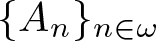
A classical theorem of Balcerzyk states that if  $\{A_n\}_{n \in \omega}$ is a sequence of abelian groups, indexed by the set ω of natural numbers, then the quotient
 \begin{equation*}\prod_{n \in \omega} A_n/\bigoplus_{n\in \omega} A_n\end{equation*}
is algebraically compact [Reference Fuchs6, Corollary 6.1.12]. It is unsurprising to learn that the isomorphism class of this quotient can alter as one varies the collection  $\{A_n\}_{n\in \omega}$. For example, if each An contains an involution (i.e. an element of order 2), then so does the quotient. If all An are torsion-free, then so is the quotient. But even when all An are torsion-free (or even more particularly of rank 1), one can obtain various non-isomorphic groups as quotient. If
 $A_n \simeq \mathbb{Q}$ for all n, the quotient is abstractly isomorphic to
 $\mathbb{R}$. In case,
 $A_n \simeq \mathbb{Z}$ for all n, the quotient is abstractly isomorphic to
 $\mathbb{R} \oplus J$, where J is reduced and uncountable [Reference Fuchs6, Exercise 6.3.9]. We show that in the analogous nonabelian context, there is less variation.
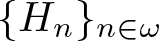
The natural nonabelian replacement for the product operation is the topologist’s product [Reference Eda4]. The topologist’s product  $\operatorname{\circledast}_{n \in \omega} H_n$ is an infinitary extension of the free product, with the essential difference being that infinite words (not just finite ones) are considered. While
 $\bigoplus_{n \in \omega} A_n$ is the set of elements of finite support in
 $\prod_{n \in \omega}A_n$, the subgroup of finite words (i.e. words having a finite domain) in
 $\operatorname{\circledast}_{n \in \omega} H_n$ is precisely the free product
 $*_{n \in \omega} H_n$. As the free product
 $*_{n \in \omega} H_n$ is not a normal subgroup, we will be considering the quotient
 $\operatorname{\circledast}_{n \in \omega} H_n/\langle\langle *_{n \in \omega}H_n\rangle\rangle$, where
 $\langle\langle \cdot \rangle\rangle$ denotes the normal closure. For economy, we denote this quotient by
 $\mathcal{A}(\{H_n\}_{n\in \omega})$, or simply
 $\mathcal{A}$ in case all Hn are infinite cyclic. The upshot is the following.
Main Theorem. If  $\{H_n\}_{n \in \omega}$ is a sequence of groups without involutions such that
 $1 \lt |H_n| \leq 2^{\aleph_0}$ for all n, then
 $\mathcal{A}(\{H_n\}_{n \in \omega}) \simeq \mathcal{A}$.
For example, some of the Hn could be the group of cardinality 3, or the additive group on the reals, or Thompson’s group F. Despite the generality of the theorem, it is reasonably sharp. One can also allow finitely many of the Hn to have cardinality greater than  $2^{\aleph_0}$ and still obtain the same conclusion since the operation
 $\mathcal{A}(\cdot)$ does not change isomorphism type if finitely many groups in the sequence
 $\{H_n\}_{n \in \omega}$ are deleted (see Lemma 2.11). However if
 $|H_n| \leq 2^{\aleph_0}$ is violated at infinitely many n, then
 $|\mathcal{A}(\{H_n\}_{n \in \omega})| \gt 2^{\aleph_0}$ [Reference Conner, Hojka and Meilstrup2, Theorem 9] and so one obtains a group of cardinality strictly greater than
 $2^{\aleph_0} = |\mathcal{A}|$.
The isomorphism produced is nonconstructive; a transfinite induction of length  $2^{\aleph_0}$ involving various arbitrary choices along the way is utilized (a back-and-forth argument over larger and larger subgroups). Possibly one can allow elements of order 2 in the Hn, but the attack would require serious modification (see Example 6.2). We note that such elements also create difficulties in classical word combinatorics (e.g. the Burnside problem, see [Reference Ol’shanskii9, p. 139]).
The theorem has as corollaries the first claim of [Reference Conner, Hojka and Meilstrup2, Theorem A] (the proof was incorrect in that paper) and an affirmative answer to [Reference Conner, Hojka and Meilstrup2, Question 2]. The reason that their proof was incorrect is that their homomorphism is not injective (see [Reference Conner, Hojka and Meilstrup2, Corollary 16]). The referee has pointed out that their approach does in fact give an isomorphism between the subgroups of  $\mathcal{A}$ and
 $\mathcal{A}(\{H_n\}_{n \in \omega})$ consisting of those words the Dedekind completion of whose domain is scattered. Our approach is a careful transfinite induction over the continuum, extending isomorphisms between larger and larger subgroups via a back-and-forth argument. The key is to analyse words of infinite length and show that if fewer than a continuum of certain choices have been made in producing the partial isomorphisms then it is always possible to make one more choice in a way which is consistent with the previous ones. This will in particular ensure that no unforeseen cancellations will arise.
Group  $\mathcal{A}$ is isomorphic to the fundamental group of the harmonic archipelago mentioned in [Reference Bogley and Sieradski1], which is now known to be isomorphic to the fundamental group of the Griffiths space constructed in [Reference Griffiths7] (see [Reference Corson3]). Another consequence of our main result is that, for
 $\{H_n\}_{n\in \omega}$ as in the theorem,
 $\mathcal{A}(\{H_n\}_{n \in \omega})$ is locally free and every countable locally free group embeds into it (see [Reference Hojka8, Theorem 2]).
We give the layout of the paper. In  $\S$ 2, we establish some background results and definitions for the topologist’s product. In
 $\S$ 3, 4, and 5, we adapt machinery from [Reference Corson3] to construct partial isomorphisms with larger and larger domain and codomain. In
 $\S$ 6, the proof of the main theorem is finished.
2. The topologist’s product
In this section, we concern ourselves with an exposition of the topologist’s product (also known as the σ-product [Reference Eda4]). We will begin by establishing some notation for total orders. Given two totally ordered sets Λ0, Λ1 we will write  $\Lambda_0 \equiv \Lambda_1$ if there exists an order isomorphism between them. The concatenation of totally ordered sets Λ0 and Λ1 will be written
 $\Lambda_0\Lambda_1$ and is the disjoint union
 $\Lambda_0 \sqcup \Lambda_1$ ordered by the unique order which extends that of Λ0 and that of Λ1 and places elements of Λ0 below those of Λ1. More generally, if
 $\{\Lambda_{\lambda}\}_{\lambda \in \Lambda}$ is a collection of totally ordered sets which is indexed by a totally ordered set, we let
 $\prod_{\lambda \in \Lambda} \Lambda_{\lambda}$ denote the disjoint union
 $\bigsqcup_{\lambda \in \Lambda} \Lambda_{\lambda}$ ordered under the unique order which extends all the orders
 $\Lambda_{\lambda}$ and places elements in
 $\Lambda_{\lambda}$ below those in
 $\Lambda_{\lambda^{\prime}}$ whenever
 $\lambda \lt \lambda^{\prime}$. We say an interval
 $I \subseteq \Lambda$ is initial, provided every element in I is below all elements in
 $\Lambda \setminus I$, and a terminal interval is defined analogously. For a totally ordered set Λ we will let Λ−1 denote the set Λ under the reverse order.
Many of the word concepts which will be defined here will also apply to a collection of groups which is uncountable (see [Reference Eda4]), but in our paper, we are only concerned with a collection indexed by the set ω of natural numbers. Let  $\{G_n\}_{n\in \omega}$ be a collection of groups, and we will regard them as having the same identity element 1 and not having any other elements in common:
 $G_{n_0} \cap G_{n_1} = \{1\}$ for
 $n_0 \neq n_1$. A word is a function
 $W: \overline{W} \rightarrow \bigcup_{n \in \omega} G_n$ such that the domain
 $\overline{W}$ is a totally ordered set, and for each n, the set
 $\{i \in \overline{W} : W(i) \in G_n\}$ is finite (it follows immediately that
 $\overline{W}$ is countable since the collection of groups
 $\{G_n\}_{n\in \omega}$ is countable). We point out that
 $\overline{W}$ could be of any countable order type, including
 $\mathbb{Q}$.
We shall sometimes refer to the set  $\bigcup_{n \in \omega} G_n$ as the set of letters. We will use some of the notation defined above for totally ordered sets in this setting as well. We will consider two words W 0 and W 1 to be the same, writing
 $W_0 \equiv W_1$, provided that there exists an order isomorphism
 $\iota: \overline{W_0} \rightarrow \overline{W_1}$ such that
 $W_0(i) = W_1(\iota(i))$ for all
 $i \in \overline{W_0}$. Let
 $\mathcal{W}(\{G_n\}_{n \in \omega})$ denote the set of words, regarding two words as being the same if they are ≡ equivalent.
Given two words  $W_0, W_1 \in \mathcal{W}(\{G_n\}_{n \in \omega})$, we form the concatenation, denoted
 $W_0W_1$, by endowing
 $W_0W_1$ with domain which is the totally ordered set
 $\overline{W_0}$
 $\overline{W_1}$ and letting
 $(W_0W_1)(i) = W_j(i)$, where
 $i \in \overline{W_j}$. More generally, given a collection
 $\{W_{\lambda}\}_{\lambda \in \Lambda}$ of words indexed by a totally ordered set Λ, we form a function
 $\prod_{\lambda \in \Lambda} W_{\lambda}$ whose domain is the concatenation
 $\prod_{\lambda \in \Lambda} \overline{W_{\lambda}}$ and letting
 $(\prod_{\lambda \in \Lambda} W_{\lambda})(i) = W_{\lambda^{\prime}}(i)$, where
 $i \in \overline{W_{\lambda^{\prime}}}$. This function
 $\prod_{\lambda \in \Lambda} W_{\lambda}$ might or might not be a word. Given a word W, we form the inverse, W −1, by letting W −1 have domain equal to
 $\overline{W}$ under the reverse order,
 $\overline{W}^{-1}$, and letting
 $W^{-1}(i) = (W(i))^{-1}$.
For a word W and  $N \in \omega$, we define
 $p_N(W)$ to be the finite word given by the restriction
 $p_N(W) = W \upharpoonright \{i \in \overline{W} : W(i) \in \bigcup_{n = 0}^N G_n\}$. Define an equivalence relation ∼ by letting
 $W_0 \sim W_1$ if for every
 $N \in \omega$, the words
 $p_N(W_0)$ and
 $p_N(W_1)$ are equal as elements in the free product
 $*_{n = 0}^N G_n$. The group
 $\operatorname{\circledast}_{n \in \omega} G_n$ is the set of words modulo ∼, the binary operation is given by concatenation
 $(W_0/\sim)(W_1/\sim) = (W_0W_1)/\sim$, inverses are given by
 $(W/\sim)^{-1} = W^{-1}/\sim$, and the identity element is
 $E/\sim$, where E denotes the empty word. The identity element is also represented by
 $W/\sim$, where W is of length one and has output equal to 1, recalling that
 $G_{n_0} \cap G_{n_1} = \{1\}$ when
 $n_0, n_1 \in \omega$ are distinct. The free product
 $*_{n \in \omega} G_n$ is a subgroup of
 $\operatorname{\circledast}_{n\in \omega}G_n$ consisting of those equivalence classes which include a finite word. Each word operation pN defines a homomorphic retraction from
 $\operatorname{\circledast}_{n \in \omega} G_n$ to
 $*_{n = 0}^N G_n$. When each of the groups Gn is isomorphic to the integers, the group
 $\operatorname{\circledast}_{n \in \omega} G_n$ is isomorphic to the fundamental group of the shrinking wedge of circles.
We will say that W 1 is a subword of W provided we can write  $W \equiv W_0W_1W_2$ for some words W 0 and W 2 [Reference Eda4]. A subword is initial if in the writing we can have
 $W_0 \equiv E$ and is terminal if we can have
 $W_2 \equiv E$. A word W is reduced if
 $W \equiv W_0W_1W_2$ and
 $W_1 \sim E$ implies
 $W_1 \equiv E$, and for any neighbouring
 $i_0, i_1 \in \overline{W}$, the letters
 $W(i_0)$ and
 $W(i_1)$ lie in distinct Gn. Furthermore W is quasi-reduced if
 $W \equiv W_0W_1W_2$ and
 $W_1 \sim E$ implies that
 $\operatorname{im}(W_1) \subseteq G_n$ for some
 $n \in \omega$, and there exists
 $i\in \overline{W}$, with either
 $i = \max(W_0)$ or
 $i = \min(W_2)$, and
 $W(i) \in G_n \setminus \{1\}$. Quasi-reduced means that one obtains a reduced word by multiplying all neighbouring letters which belong to a common Gn. For the following, see Theorem 1.4 and Corollaries 1.5 and 1.7 of [Reference Eda4].
Lemma 2.1. Each ∼ class includes a reduced word, and this word is unique up to ≡. If W 0 and W 1 are reduced and  $W_0W_1 \sim E$, then
 $W_1 \equiv W_0^{-1}$. If W and W′ are reduced, then there exist reduced words W 0, W 1,
 $W_0^{\prime}$ and
 $W_1^{\prime}$ such that
(1)
 $W \equiv W_0W_1$;
(2)
$W^{\prime} \equiv W_0^{\prime}W_1^{\prime}$;(3)
$W_0^{\prime} \equiv (W_1)^{-1}$; and(4)
$W_0W_1^{\prime}$ is quasi-reduced.


Given a word W, we will let  $\operatorname{Red}(W)$ denote the reduced word such that
 $W \sim \operatorname{Red}(W)$.
Observation 2.2. In the notation of Lemma 2.1, since the words W 0 and  $W_1^{\prime}$ are reduced and
 $W_0W_1^{\prime}$ is quasi-reduced, there exists an initial interval
 $I \subseteq \overline{W_0}$ and a terminal interval
 $I^{\prime} \subseteq \overline{W_1^{\prime}}$ such that either
(a)
$|\overline{W_0} \setminus I| = 0 = |\overline{W_1^{\prime}} \setminus I^{\prime}|$ (in case
$W_0W_1^{\prime}$ is reduced) or(b)
$|\overline{W_0} \setminus I| = 1 = |\overline{W_1^{\prime}} \setminus I^{\prime}|$ (in case
$W_0W_1^{\prime}$ is not reduced).


In case (b) one obtains  $\operatorname{Red}(W_0W_1^{\prime})$ by performing the multiplication
 \begin{equation*}W_0(\max(\overline{W_0}))W_1^{\prime}(\min(\overline{W_1^{\prime}}))\end{equation*}
in the common group where they lie.
Let  $\operatorname{Red}(\{G_n\}_{n \in \omega})$ denote the set of reduced words associated with the sequence
 $\{G_n\}_{n \in \omega}$. We see by the above that
 $\operatorname{\circledast}_{n \in \omega} G_n$ is isomorphic to
 $\operatorname{Red}(\{G_n\}_{n \in \omega})$ via the function
 $\operatorname{Red}(\cdot)$, the binary operation in
 $\operatorname{Red}(\{G_n\}_{n \in \omega})$ is given by
 $W_0 \circledcirc W_1 = \operatorname{Red}(W_0W_1)$ and the computation of
 $\operatorname{Red}(W_0W_1)$ is straightforward. Since the combinatorics of reduced words are so clean, we generally work with
 $\operatorname{Red}(\{G_n\}_{n \in \omega})$ instead of the isomorphic group
 $\operatorname{\circledast}_{n \in \omega} G_n$. Under this isomorphism, the free product
 $*_{n \in \omega}G_n$ is identified with the freely reduced finite words.
Definition 2.3. Given a letter  $g \in \bigcup_{n \in \omega} G_n \setminus \{1\}$, we let
 $d(g) = m$, where
 $g\in G_m \setminus \{1\}$ and more generally given a word
 $W \in \mathcal{W}(\{G_n\}_{n \in \omega})$ which is not constantly 1 we let
 $d(W)=
\min\{d(W(i)): i \in \overline{W}, W(i) \neq 1\}$. Notice that if
 $W \equiv g$ is of length 1 with
 $g \in G_m \setminus \{1\}$ then
 $d(W) = d(g)$.
Definitions 2.4.
We say that  $W \in \mathcal{W}(\{G_n\}_{n \in \omega})$ is proper if
 $W(i) \neq 1$ for all
 $i \in \overline{W}$. For a proper word W, a finite ordered list
 $C = (i_0; \ldots; i_k)$ is a reduction component on W if
 $i_0, \ldots, i_k \in \overline{W}$ with
 $i_0 \lt i_1 \lt \cdots \lt i_k$, there exists
 $M_C \in \omega$ with
 $W(i_0), \ldots, W(i_k) \in G_{M_C}$ and the list C has at least two elements. We further abuse notation, and let
 $d(C) = M_C$. If
 $C = (i_0; \ldots; i_k)$ is a reduction component on word W, we let
 $\pi(W, C)$ be the word of length 1 obtained by taking the product
 $W(i_0)\cdots W(i_k)$ in
 $G_{d(C)}$ in case this product is not identity, and if the product is identity, we let
 $\pi(W, C)$ be the empty word E. We also let
 $\operatorname{set}(C) = \{i_0, \ldots, i_k\}$ be the set of elements appearing in the list C.
Definition 2.5. Given a word  $W \in \mathcal{W}(\{G_n\}_{n\in \omega})$, a collection
 $\mathcal{S}$ of reduction components is a reduction scheme on W if
• for distinct reduction components
$C_0, C_1 \in \mathcal{S}$ we have
$\operatorname{set}(C_0) \cap \operatorname{set}(C_1) = \emptyset$ and• for
$C = (i_0; \ldots; i_k) \in \mathcal{S}$,
$0 \leq j \lt k$, and i in the open interval
$(i_j, i_{j+1}) \subseteq \overline{W}$, there exists a
$C_0 \in \mathcal{S}$ with
$i \in \operatorname{set}(C_0) \subseteq (i_j, i_{j+1})$ and
$\pi(W, C_0) \equiv E$.


Proposition 2.6. Let  $W \in \mathcal{W}(\{G_n\}_{n \in \omega})$ be proper.
(1)
$W \sim E$ if and only if there is a reduction scheme
$\mathcal{S}$ on W such that
$\bigcup_{C \in \mathcal{S}} \operatorname{set}(C) = \overline{W}$ and
$\pi(W, C) \equiv E$ for all
$C \in \mathcal{S}$.(2) W is reduced if and only if the only reduction scheme on W is the empty reduction scheme
$\mathcal{S} = \emptyset$.


Proof. (1) ( $\Rightarrow$) Suppose that
 $W \in \mathcal{W}(\{G_n\}_{n \in \omega})$ is such that
 $W(i) \neq 1$ for all
 $i \in \overline{W}$ and that
 $W \sim E$. We will define a reduction scheme on W. For each
 $n \in \omega$ let
 $X_n = \{i \in \overline{W}: d(W(i)) = n\}$. As
 $W(i) \neq 1$ for all
 $i \in \overline{W}$, we have
 $\overline{W} = \bigsqcup_{n \in \omega} X_n$ and as W is a word, we know that each Xn is finite. We have
 $p_N(W) = W \upharpoonright \bigsqcup_{n = 0}^N X_n$ for each
 $N \in \omega$, and as
 $W \sim E$, we know
 $p_N(W)$ is equal in
 $*_{n = 0}^N G_n$ to E. From combinatorics in free products, for every
 $N \in \omega$ we have a finite reduction scheme
 $\mathcal{S}_N$ such that
 $\pi(W, C) \equiv E$ for all
 $C \in \mathcal{S}_N$ and
 $\bigcup_{C \in \mathcal{S_N}}\operatorname{set}(C) = \overline{p_N(W)} = \bigsqcup_{n = 0}^N X_n$. Let
 $Y_{-1} = \omega$. If
 $X_0 = \emptyset$ then we let
 $Y_0 = Y_{-1}$. Else we know, since X 0 is finite, that there is an infinite
 $Y_0 \subseteq Y_{-1}$ such that for all
 $m, m^{\prime} \in Y_0$ we have
 $\{C \in \mathcal{S}_m: d(C) = 0\} = \{C \in \mathcal{S}_{m^{\prime}}: d(C) = 0\}$. Supposing that we have defined infinite
 $Y_N \subseteq \omega$, if
 $X_{N+1} = \emptyset$ then let
 $Y_{N+1} = Y_N$, else we select infinite
 $Y_{N+1} \subseteq Y_N$ such that
 $m, m^{\prime} \in Y_{N+1}$ we have
 $\{C \in \mathcal{S}_m: d(C) = N+1\} = \{C \in \mathcal{S}_{m^{\prime}}: d(C) = N+1\}$. Let
 \begin{equation*}
\mathcal{S} = \{C: (\exists m, N \in \omega)m \in Y_N \wedge d(C) = N \wedge C \in \mathcal{S}_{m}\}.
\end{equation*}
Letting  $C_0, C_1 \in \mathcal{S}$ be distinct, we let
 $N = \max\{d(C_0), d(C_1)\}$. Pick
 $m \in Y_N$ and we have
 $C_0, C_1 \in \mathcal{S}_m$, and so
 $\operatorname{set}(C_0) \cap \operatorname{set}(C_1) = \emptyset$. Next, we let
 $C = (i_0; \ldots; i_k) \in \mathcal{S}$ be given,
 $0 \leq j \lt k$ and i in the interval
 $(i_j, i_{j+1}) \subseteq \overline{W}$. Let
 $N = \max\{d(W(i)), d(C)\}$ and select
 $m \in Y_N$. There is a unique
 $C_0 \in \mathcal{S}_m$ such that
 $i \in \operatorname{set}(C_0) \subseteq (i_j, i_{j+1})$, and
 $C_0 \in \mathcal{S}$. Also,
 $\pi(W, C_0) \equiv E$, as indeed
 $\pi(W, C_1) \equiv E$ for every
 $C_1 \in \mathcal{S}$. Thus
 $\mathcal{S}$ is a reduction scheme on W and it is clear that
 $\bigcup_{C \in \mathcal{S}} \operatorname{set}(C) = \overline{W}$ and
 $\pi(W, C) = E$ for all
 $C \in \mathcal{S}$.
(1) ( $\Leftarrow$) Suppose that
 $W \in \mathcal{W}(\{G_n\}_{n \in \omega})$ is such that
 $W(i) \neq 1$ for all
 $i \in \overline{W}$. Suppose that there is a reduction scheme
 $\mathcal{S}$ on W such that
 $\bigcup_{C \in \mathcal{S}} \operatorname{set}(C) = \overline{W}$ and
 $\pi(W, C) \equiv E$ for all
 $C \in \mathcal{S}$. For a given
 $N \in \omega$ we let
 $\mathcal{S}_N = \{C \in \mathcal{S}: d(C) \leq N\}$, and notice that
 $\mathcal{S}_N$ witnesses that
 $p_N(W)$ is equal to identity in
 $*_{n = 0}^N G_n$, and therefore
 $W \sim E$.
(2) ( $\Rightarrow$) Suppose that
 $W \in \mathcal{W}(\{G_n\}_{n \in \omega})$ has
 $W(i) \neq 1$ for all
 $i \in \overline{W}$. Suppose that there exists a nonempty reduction scheme
 $\mathcal{S}$ on W. Let
 $C = (i_0; \ldots; i_k) \in \mathcal{S}$. If i 0 and i 1 are neighbouring then we know that W was not reduced, since
 $W(i_0)$ and
 $W(i_1)$ are in the group
 $G_{d(C)}$, and if i 0 and i 1 are not neighbouring then the reduction scheme
 $\mathcal{S}^{\prime} = \{C \in \mathcal{S}: \operatorname{set}(C) \cap (i_0, i_1) \neq \emptyset\}$ witnesses that the nonempty subword
 $W \upharpoonright (i_0, i_1)$ is
 $\sim E$, by part (1). Thus in either case, W is not reduced.
(2) ( $\Leftarrow$) Suppose that
 $W \in \mathcal{W}(\{G_n\}_{n \in \omega})$ has
 $W(i) \neq 1$ for all
 $i \in \overline{W}$. Suppose that the only reduction scheme on W is the empty scheme. If there are neighboring
 $i_0, i_1 \in \overline{W}$ such that
 $W(i_0)$ and
 $W(i_1)$ are in the same Gn, then
 $\mathcal{S} = \{C\}$ where
 $C = (i_0; i_1)$ is a nonempty reduction scheme, contradiction. If there is a nonempty interval
 $I \subseteq \overline{W}$ such that
 $W \upharpoonright I \sim E$ then by part (1) we have a reduction scheme
 $\mathcal{S}$ on
 $W \upharpoonright I$ such that
 $\bigcup_{C \in \mathcal{S}} \operatorname{set}(C) = I$, so in particular
 $\mathcal{S}$ is a nonempty reduction scheme on W itself, contradiction.
Definition 2.7. For  $W \in \operatorname{Red}(\{G_n\}_{n \in \omega})$ we let
 $\operatorname{Sub}(W)$ be the set of subwords of W, and more generally for a collection
 $\{W_x\}_{x \in X} \subseteq \operatorname{Red}(\{G_n\}_{n \in \omega})$ we let
 $\operatorname{Sub}(\{W_x\}_{x \in X}) = \bigcup_{x \in X}\operatorname{Sub}(W_x)$. For
 $W \in \operatorname{Red}(\{G_n\}_{n \in \omega})$ we let
 $\operatorname{Let}(W)$ be the set of letters used in W (this is the image of the function W), and more generally for a collection
 $\{W_x\}_{x \in X} \subseteq \operatorname{Red}(\{G_n\}_{n \in \omega})$ we let
 $\operatorname{Let}(\{W_x\}_{x \in X}) = \bigcup_{x \in X} \operatorname{Let}(W_x)$.
Lemma 2.8. Suppose  $\{W_x\}_{x \in X} \subseteq \operatorname{Red}(\{G_n\}_{n \in \omega})$. The following are equivalent for a word
 $W \in \operatorname{Red}(\{G_n\}_{n \in \omega})$:
(1)
$W \in \langle \operatorname{Sub}(\{W_x\}_{x \in X}) \rangle \leq \operatorname{Red}(\{G_n\}_{n \in \omega})$(2) W can be expressed (not necessarily uniquely) as a finite concatenation
\begin{equation*}
W \equiv W_0W_1 \cdots W_k
\end{equation*}and for each
$0 \leq j \leq k$ at least one of the following holds:•
$W_j \in \operatorname{Sub}(\{W_x\}_{x \in X} \cup \{W_x^{-1}\}_{x \in X})$ is nonempty;•
$|\overline{W_j}| = 1$ with
$\operatorname{Let}(W_j) = \{g\}$ such that
$g \in G_{d(g)}\setminus \{1\}$ and g is a product of elements in
$G_{d(g)} \cap \operatorname{Let}(\{W_x\}_{x \in X} \cup \{W_x^{-1}\}_{x \in X})$.


Proof. Certainly if W may be expressed as a finite concatenation as in (2) then  $W \in \langle \operatorname{Sub}(\{W_x\}_{x \in X}) \rangle$ because each
 $W_j \in \operatorname{Sub}(\{W_x\}_{x \in X}) \rangle$, so that condition (2) implies condition (1). But by Lemma 2.1 and Observation 2.2 it is clear that the set of all words satisfying condition (2) forms a subgroup of
 $\operatorname{Red}(\{G_n\}_{n \in \omega})$ which includes the set
 $\operatorname{Sub}(\{W_x\}_{x \in X})$. Thus condition (1) implies condition (2).
Definition 2.9. Given a collection  $\{W_x\}_{x \in X} \subseteq \operatorname{Red}(\{G_n\}_{n \in \omega})$ we let
 \begin{equation*}\operatorname{Fine}(\{W_x\}_{x \in X}) = \langle \operatorname{Sub}(\{W_x\}_{x \in X}) \rangle \leq \operatorname{Red}(\{G_n\}_{n \in \omega})\end{equation*}
(compare [Reference Eda5, p. 600]). It is clear by condition (2) of Lemma 2.8 that
 \begin{equation*}\operatorname{Sub}(\operatorname{Fine}(\{W_x\}_{x \in X})) = \operatorname{Fine}(\{W_x\}_{x \in X}).\end{equation*}
Definition 2.10. Define  $\mathcal{A}(\{G_n\}_{n \in \omega})$ to be the quotient group
 \begin{equation*}\operatorname{Red}(\{G_n\}_{n \in \omega})/\langle\langle *_{n \in \omega}G_n\rangle\rangle.\end{equation*}
Let  $\beth: \operatorname{\circledast}_{n \in \omega} G_n \rightarrow \mathcal{A}(\{G_n\}_{n \in \omega})$ denote the quotient homomorphism, and for a word
 $W \in \operatorname{\circledast}_{n \in \omega} G_n$ we use
 $[[W]]$ to denote the equivalence class of W in the quotient
 $\mathcal{A}(\{G_n\}_{n \in \omega})$, i.e.
 $\beth(W) = [[W]]$.
It turns out that one can make slight modifications to the sequence  $\{G_n\}_{n \in \omega}$ without changing the isomorphism type of
 $\mathcal{A}(\{G_n)\}_{n\in \omega})$ (see [Reference Conner, Hojka and Meilstrup2, Lemma 17]):
Lemma 2.11. For a sequence  $\{G_n\}_{n \in \omega}$ of groups the following assertions hold.
(1) If
$f: \omega \rightarrow \omega$ is a bijection then
$\mathcal{A}(\{G_n\}_{n\in \omega}) \simeq \mathcal{A}(\{G_{f(n)}\}_{n\in \omega})$.(2) For each
$k \in \omega$ we have an isomorphism
$\mathcal{A}(\{G_n\}_{n \in \omega}) \simeq \mathcal{A}(\{G_{n + k}\}_{n\in \omega})$.(3) We have an isomorphism
$\mathcal{A}(\{G_n\}_{n \in \omega}) \simeq \mathcal{A}(\{G_{2n} * G_{2n + 1}\}_{n \in \omega})$.


Observation 2.12. For  $W \in \operatorname{Red}(\{G_n\}_{n \in \omega})$ expressed as a finite concatenation
 $W \equiv W_0W_1 \cdots W_k$ and
 $J \subseteq \{0, \ldots, k\}$ such that
 $\overline{W_j}$ is finite for each
 $j \in J$, we may write
 $[[W]] = \prod_{0 \leq j \leq k, j \notin J}[[W_i]]$, since
 $\overline{W_j}$ finite implies that
 $W_j \in *_{n \in \omega}G_n$ and more particularly
 $[[W_j]]=[[E]]$.
3. COI collections
We recall some notions introduced in [Reference Corson3]. The straightforward proofs of the lemmas are given in that paper.
Definitions 3.1.
Recall that if Λ is a totally ordered set we say  $I \subseteq \Lambda$ is an interval in Λ if it is a convex subset (that is— if
 $\lambda_0, \lambda_1 \in \Lambda$ and
 $\lambda_0 \lt \lambda_2 \lt \lambda_1$ then
 $\lambda_2 \in I$). In particular an interval in Λ can be unbounded. We will use standard conventions [Reference Rosenstein10] for interval notation, so for example
 $[\lambda_0, \lambda_1] = \{\lambda_2 \in \Lambda \mid \lambda_0 \leq \lambda_2 \leq \lambda_1\}$,
 $(\lambda_0, \lambda_1] = \{\lambda_2 \in \Lambda \mid \lambda_0 \lt \lambda_2 \leq \lambda_1\}$ and
 $[\lambda_0, \infty) = \{\lambda_1 \in \Lambda \mid \lambda_0 \leq \lambda_1\}$. If Λ is a totally ordered set we will say that
 $\Lambda_0 \subseteq \Lambda$ is close in Λ, writing
 $\operatorname{Close}(\Lambda_0, \Lambda)$, provided that every infinite interval in Λ has nonempty intersection with Λ0.
Lemma 3.2. The following statements hold:
(i) If
$\operatorname{Close}(\Lambda_0, \Lambda)$, then for any infinite interval
$I \subseteq \Lambda$ the set
$I \cap \Lambda_0$ is infinite.(ii) If
$\Lambda_2 \subseteq \Lambda_1 \subseteq \Lambda_0$ with
$\operatorname{Close}(\Lambda_{j+1}, \Lambda_j)$ for
$j = 0, 1$, then
$\operatorname{Close}(\Lambda_2, \Lambda_0)$.(iii) If
$\Lambda \equiv \prod_{\theta \in \Theta} \Lambda_{\theta}$,
$\operatorname{Close}(\{\theta \in \Theta \mid \Lambda_{\theta, 0} \neq \emptyset\}, \Theta)$, and
$\operatorname{Close}(\Lambda_{\theta, 0}, \Lambda_{\theta})$ for each
$\theta \in \Theta$ then
$\operatorname{Close}(\bigcup_{\theta \in \Theta} \Lambda_{\theta, 0}, \Lambda)$.(iv) If I 0 is an interval in Λ and
$\operatorname{Close}(\Lambda_0, \Lambda)$, then
$\operatorname{Close}(\Lambda_0 \cap I_0, I_0)$.


Definition 3.3. If  $\operatorname{Close}(\Lambda_0, \Lambda)$ then for each interval
 $I \subseteq \Lambda$ we let
 $\alpha(I, \Lambda_0)$ denote the smallest interval in Λ which includes the set
 $I \cap \Lambda_0$. In other words
 $\alpha(I, \Lambda_0) = \bigcup_{\lambda_0, \lambda_1 \in I \cap \Lambda_0, \lambda_0 \leq \lambda_1} [\lambda_0, \lambda_1]$ where the intervals
 $[\lambda_0, \lambda_1]$ are being considered in Λ.
Lemma 3.4. Let  $\operatorname{Close}(\Lambda_0, \Lambda)$ and
 $I \subseteq \Lambda$ be an interval.
(i) The inclusion
$I \supseteq \alpha(I, \Lambda_0)$ holds and
$\alpha(I, \Lambda_0) = \alpha(\alpha(I, \Lambda_0), \Lambda_0)$.(ii) The set
$I \setminus \alpha(I, \Lambda_0)$ is the disjoint union of an initial and terminal subinterval
$I_0, I_1 \subseteq I$ (either subinterval could be empty) with
$|I_0|, |I_1| \lt \infty$.


Definition 3.5. Two totally ordered sets Λ and Θ are close-isomorphic if there exist  $\Lambda_0 \subseteq \Lambda$ and
 $\Theta_0 \subseteq \Theta$ with
 $\operatorname{Close}(\Lambda_0, \Lambda)$,
 $\operatorname{Close}(\Theta_0, \Theta)$ and Λ0 order isomorphic to Θ0. If ι is an order isomorphism between such a Λ0 and Θ0 then we will call ι a close order isomorphism from Λ to Θ.
Clearly the inverse of a close order isomorphism (abbreviated coi) from Λ to Θ is a close order isomorphism from Θ to Λ. Also, a coi between Λ and Θ induces a coi between the reversed orders Λ−1 and Θ−1 in the obvious way.
Definition 3.6. Given coi  $\iota: \Lambda_0 \rightarrow \Theta_0$ between Λ and Θ and an interval
 $I \subseteq \Lambda$ we let
 $\alpha(I, \iota)$ denote the smallest interval in Θ which includes the set
 $\iota(I \cap \Lambda_0)$. Thus
 $\alpha(I, \iota) = \bigcup_{\theta_0, \theta_1 \in \iota(I \cap \Lambda_0), \theta_0 \leq \theta_1} [\theta_0, \theta_1]$, where each interval
 $[\theta_0, \theta_1]$ is being considered in Θ.
Lemma 3.7. If  $\iota: \Lambda_0 \rightarrow \Theta_0$ is a coi between Λ and Θ and
 $I \subseteq \Lambda$ is an interval then
 $\alpha(\alpha(I, \iota), \iota^{-1}) = \alpha(I, \Lambda_0)$.
Lemma 3.8. Let  $I \subseteq \Lambda$ be an interval,
 $I \equiv I_0 \cdots I_k$ where each Ij is an interval, and
 $\iota: \Lambda_0 \rightarrow \Theta_0$ a coi from Λ to Θ. Then there exist (possibly empty) finite subintervals
 $I_0^{\prime}, \ldots, I_{k+1}^{\prime}$ of
 $\alpha(I, \iota)$ such that
 \begin{equation*}
\alpha(I, \iota) \equiv I_0^{\prime}\alpha(I_0, \iota) I_1^{\prime} \alpha(I_1, \iota) I_2^{\prime} \cdots \alpha(I_k, \iota) I_{k+1}^{\prime}.
\end{equation*}
Lemma 3.9. Let  $\iota: \Lambda_0 \rightarrow \Theta_0$ be a coi from Λ to Θ. If
 $I_0 \subseteq \Lambda$ is a finite interval then
 $\alpha(I_0, \iota)$ is finite.
Definition 3.10. Let  $\{G_n\}_{n\in \omega}$ and
 $\{K_n\}_{n \in \omega}$ be sequences of groups. For words
 $W \in \operatorname{Red}(\{G_n\}_{n\in \omega})$ and
 $U \in \operatorname{Red}(\{K_n\}_{n \in \omega})$ we let
 $\operatorname{coi}(W, \iota, U)$ denote that ι is a coi from
 $\overline{W}$ to
 $\overline{U}$. We will call such an ordered triple a coi triple from
 $\operatorname{Red}(\{G_n\}_{n\in \omega})$ to
 $\operatorname{Red}(\{K_n\}_{n \in \omega})$.
Definition 3.11. A collection  $\{\operatorname{coi}(W_x, \iota_x, U_x)\}_{x\in X}$ of coi triples from
 $\operatorname{Red}(\{G_n\}_{n\in \omega})$ to
 $\operatorname{Red}(\{K_n\}_{n \in \omega})$ is coherent if for any choice of
 $x_0, x_1 \in X$, intervals
 $I_0 \subseteq \overline{W_{x_0}}$ and
 $I_1 \subseteq \overline{W_{x_1}}$ and
 $\delta \in \{-1, 1\}$ such that
 $W_{x_0} \upharpoonright I_0 \equiv (W_{x_1} \upharpoonright I_1)^{\delta}$ we get
 \begin{equation*}
[[U_{x_0} \upharpoonright \alpha(I_0, \iota_{x_0})]] = [[(U_{x_1}\upharpoonright \alpha(I_1, \iota_{x_1}))^{\delta}]]
\end{equation*}
and similarly for any choice of  $x_2, x_3 \in X$, intervals
 $I_2 \subseteq \overline{U_{x_2}}$ and
 $I_3 \subseteq \overline{U_{x_3}}$ and
 $\epsilon \in \{-1, 1\}$ such that
 $U_{x_2} \upharpoonright I_2 \equiv (U_{x_3} \upharpoonright I_3)^{\epsilon}$ we get
 \begin{equation*}
[[W_{x_2} \upharpoonright \alpha(I_2, \iota_{x_2}^{-1})]] = [[(W_{x_3} \upharpoonright \alpha(I_3, \iota_{x_3}^{-1}))^{\epsilon}]].
\end{equation*}
If collection of coi triples  $\{\operatorname{coi}(W_x, \iota_x, U_x)\}_{x\in X}$ from
 $\operatorname{Red}(\{G_n\}_{n\in \omega})$ to
 $\operatorname{Red}(\{K_n\}_{n \in \omega})$ is coherent then the collection of coi triples
 $\{\operatorname{coi}(U_x, \iota_x^{-1}, W_x)\}_{x\in X}$ from
 $\operatorname{Red}(\{K_n\}_{n \in \omega})$ to
 $\operatorname{Red}(\{G_n\}_{n\in \omega})$ is also coherent.
A coherent collection need not be a one-to-one pairing of a subset of elements in  $\operatorname{Red}(\{G_n\}_{n\in \omega})$ with elements in
 $\operatorname{Red}(\{K_n\}_{n\in \omega})$. If, for example, each element of
 $\{W_x\}_{x \in X}$ has
 $|\overline{W_x}| = 1$ then the collection
 $\{(W_x, \iota_x, E)\}_{x \in X}$ is coherent (each ιx is the empty function). The proof of the following is clear (for example, see the corresponding result in [Reference Corson3]).
Lemma 3.12. Suppose that Θ is a totally ordered set and that  $\{\mathcal{T}_{\theta}\}_{\theta \in \Theta}$ is a collection of coherent collections of coi triples from
 $\operatorname{Red}(\{G_n\}_{n \in \omega})$ to
 $\operatorname{Red}(\{K_n\}_{n \in \omega})$ such that
 $\theta \leq \theta^{\prime}$ implies
 $\mathcal{T}_{\theta} \subseteq \mathcal{T}_{\theta^{\prime}}$. Then
 $\bigcup_{\theta \in \Theta} \mathcal{T}_{\theta}$ is coherent.
The proof of the following follows closely that of a comparable claim in [Reference Corson3]; we include the proof here since it is technical and also for the sake of completeness.
Proposition 3.13. From a coherent collection  $\{\operatorname{coi}(W_x, \iota_x, U_x)\}_{x \in X}$ of coi triples from
 $\operatorname{Red}(\{G_n\}_{n \in \omega})$ to
 $\operatorname{Red}(\{K_n\}_{n \in \omega})$ we obtain a well-defined function
 \begin{equation*}\phi_0 : \operatorname{Fine}(\{W_x\}_{x \in X}) \rightarrow \mathcal{A}(\{K_n\}_{n \in \omega})\end{equation*}
given by
 \begin{equation*}
W \mapsto [[(U_{x_{r_0}} \upharpoonright \alpha(I_0, \iota_{x_{r_0}}))^{\delta_0}]][[(U_{x_{r_1}} \upharpoonright \alpha(I_1, \iota_{x_{r_1}}))^{\delta_1}]]\cdots[[(U_{x_{r_s}}\upharpoonright \alpha(I_s, \iota_{x_{r_s}}))^{\delta_s}]],
\end{equation*}
where
•
$W \equiv W_0W_1 \cdots W_k$ is a decomposition as in Lemma 2.8;•
$0 \leq r_0 \lt r_1 \lt \cdots \lt r_s \leq k$ are such that
$\{r_0, \ldots, r_s\} = \{r \in \{0, 1, \ldots, k\}\mid |\overline{W_r}| \geq 2\}$; and•
$W_{r_j} \equiv (W_{x_{r_j}} \upharpoonright I_j)^{\delta_j}$ with
$I_j \subseteq \overline{W_{x_{r_j}}}$ an interval and
$\delta_j \in \{-1, 1\}$ for each
$0 \leq j \leq s$.


There is also a comparable well-defined function
 \begin{equation*}\phi_1: \operatorname{Fine}(\{U_x\}_{x \in X}) \rightarrow \mathcal{A}(\{G_n\}_{n \in \omega})\end{equation*}
given by
 \begin{equation*}
U \mapsto [[(W_{x_{r_0}} \upharpoonright \alpha(I_0, \iota_{x_{r_0}}^{-1}))^{\delta_0}]][[(W_{x_{r_1}} \upharpoonright \alpha(I_1, \iota_{x_{r_1}}^{-1}))^{\delta_1}]]\cdots[[(W_{x_{r_s}}\upharpoonright \alpha(I_s, \iota_{x_{r_s}}^{-1}))^{\delta_s}]]
\end{equation*}
where
•
$U \equiv U_0U_1 \cdots U_k$ is a decomposition as in Lemma 2.8;•
$0 \leq r_0 \lt r_1 \lt \cdots \lt r_s \leq k$ are such that
$\{r_0, \ldots, r_s\} = \{r \in \{0, 1, \ldots, k\}\mid |\overline{U_r}| \geq 2\}$; and•
$U_{r_j} \equiv (U_{x_{r_j}} \upharpoonright I_j)^{\delta_j}$ with
$I_j \subseteq \overline{U_{x_{r_j}}}$ an interval and
$\delta_j \in \{-1, 1\}$ for each
$0 \leq j \leq s$.


Proof. We must show that the described function is well-defined; in other words the function is independent of all the choices made in the description. Therefore, suppose that we can write
•
$\overline{W} \equiv J_0J_1 \cdots J_k$, where
$W \equiv (W \upharpoonright J_0) \cdots (W \upharpoonright J_k)$ is a decomposition as in Lemma 2.8;•
$0 \leq r_0 \lt r_1 \lt \cdots \lt r_s \leq k$ are such that
$\{r_0, \ldots, r_s\} = \{r \in \{0, 1, \ldots, k\}\mid |J_r| \geq 2\}$; and•
$W \upharpoonright J_{r_j} \equiv (W_{x_{r_j}} \upharpoonright I_j)^{\delta_j}$ with
$I_j \subseteq \overline{W_{x_{r_j}}}$ an interval and
$\delta_j \in \{-1, 1\}$ for each
$0 \leq j \leq s$;


and also we may write
•
$\overline{W} \equiv L_0L_1 \cdots L_p$, where
$W \equiv (W \upharpoonright L_0) \cdots (W \upharpoonright L_p)$ is a decomposition as in Lemma 2.8;•
$0 \leq q_0 \lt q_1 \lt \cdots \lt q_t \leq p$ are such that
$\{q_0, \ldots, q_t\} = \{q \in \{0, 1, \ldots, p\}\mid |L_q| \geq 2\}$; and•
$W \upharpoonright L_{q_l} \equiv (W_{x_{q_l}^{\prime}} \upharpoonright E_l)^{\epsilon_l}$, with
$E_l being \subseteq \overline{W_{x_{q_l}^{\prime}}}$ an interval and
$\epsilon_l \in \{-1, 1\}$ for each
$0 \leq l \leq t$.


We must show that the elements
 \begin{equation*}
[[(U_{x_{r_0}} \upharpoonright \alpha(I_0, \iota_{x_{r_0}}))^{\delta_0}]]\cdots[[(U_{x_{r_s}}, \alpha(I_s, \iota_{x_{r_s}}))^{\delta_s}]]
\end{equation*}
and
 \begin{equation*}
[[(U_{x_{q_0}^{\prime}} \upharpoonright \alpha(E_0, \iota_{x_{q_0}^{\prime}}))^{\epsilon_0}]]\cdots[[(U_{x_{q_t}^{\prime}} \upharpoonright \alpha(E_t, \iota_{x_{q_t}^{\prime}}))^{\epsilon_t}]]
\end{equation*}
are equal in  $\mathcal{A}(\{K_n\}_{n \in \omega})$.
First, we will let  $f_{j}: J_{r_j} \rightarrow I_j^{\delta_j}$ be the order isomorphism witnessing
 $W \upharpoonright J_{r_j} \equiv (W_{x_{r_j}} \upharpoonright I_j)^{\delta_j}$ for each
 $0 \leq j \leq s$. Let
 $g_l: L_{q_l} \rightarrow E_l^{\epsilon_l}$ be the order isomorphism witnessing
 $W \upharpoonright L_{q_l} \equiv (W_{x_{q_l}} \upharpoonright E_l)^{\epsilon_l}$ for each
 $0 \leq l \leq t$.
We will take  $\mathbb{J}$ to be the set of intervals consisting of nonempty intersections of one of the Jr with one of the Lq, where
 $0 \leq r \leq k$ and
 $0 \leq q \leq p$. The elements of
 $\mathbb{J}$ are pairwise disjoint intervals in
 $\overline{W}$, ordered in the natural way, such that
 $\overline{W} \equiv \prod_{M \in \mathbb{J}} M$. For each
 $0 \leq r \leq k$ we let
 $\mathbb{J}_{r}$ be the set of those elements of
 $\mathbb{J}$ which are subsets of Jr, and for each
 $0 \leq q \leq p$ we let
 $\mathbb{J}_{(q)}$ be the set of those elements of
 $\mathbb{J}$ which are subsets of Lq. Let
 $\overline{\mathbb{J}} \subseteq \mathbb{J}$ be the subset in
 $\mathbb{J}$ consisting of those intervals which are of cardinality greater than 1, and
 $\overline{\mathbb{J}_{r}} = \mathbb{J}_{r} \cap \overline{\mathbb{J}}$ for each
 $0 \leq r \leq k$ and
 $\overline{\mathbb{J}_{(q)}} = \mathbb{J}_{(q)} \cap \overline{\mathbb{J}}$ and
 $0 \leq q \leq p$.
Define  $f_{-}: \overline{\mathbb{J}} \rightarrow \{0, \ldots, s\}$ by
 $f_{-}(M) = j$, where
 $M \subseteq J_{r_j}$ and
 $f^{-}: \overline{\mathbb{J}} \rightarrow \{0, \ldots, t\}$ by
 $f^{-}(M) = l$, where
 $M \subseteq L_{q_l}$. Notice that for each
 $M \in \overline{\mathbb{J}}$, we have
 $f_{f_{-}(M)}(M) \subseteq (\overline{W_{x_{r_{f_{-}(M)}}}})^{\delta_{f_{-}(M)}}$, and so
 $(f_{f_{-}(M)}(M))^{\delta_{f_{-}(M)}} \subseteq \overline{W_{x_{r_{f_{-}(M)}}}}$. Similarly
 $(f_{f^{-}(M)}(M))^{\epsilon_{f^{-}(M)}} \subseteq \overline{W_{x_{q_{f^{-}(M)}}^{\prime}}}$ and also
 \begin{equation*}
\begin{aligned}
(W_{x_{r_{f_{-}(M)}}} \upharpoonright (f_{f_{-}(M)}(M))^{\delta_{f_{-}(M)}})^{\delta_{f_{-}(M)}} & \equiv W \upharpoonright M\\
& \equiv (W_{x_{q_{f^{-}(M)}}^{\prime}} \upharpoonright (f_{f^{-}(M)}(M))^{\epsilon_{f^{-}(M)}})^{\epsilon_{f^{-}(M)}}.
\end{aligned}
\end{equation*}
Therefore, by the coherence of the collection of coi triples, we see for each  $M \in \overline{\mathbb{J}}$ that
 \begin{equation*}[[(U_{x_{r_{f_{-}(M)}}} \upharpoonright \alpha((f_{f_{-}(M)}(M))^{\delta_{f_{-}(M)}} , \iota_{x_{r_{f_{-}(M)}}}))^{\delta_{f_{-}(M)}}]]\end{equation*}
 \begin{equation}= [[(U_{x_{q_{f^{-}(M)}}^{\prime}} \upharpoonright \alpha((g_{f^{-}(M)}(M))^{\epsilon_{f^{-}(M)}} , \iota_{x_{q_{f^{-}(M)}}^{\prime}}))^{\epsilon_{f^{-}(M)}}]].
\end{equation}
Next, we claim that for each  $0 \leq j \leq s$, we have
 \begin{equation}
\begin{array}{ll}
[[(U_{x_{r_j}}\upharpoonright \alpha(I_j, \iota_{x_{r_j}}))^{\delta_j}]] & = \prod_{M \in \overline{\mathbb{J}_{r_j}}} [[(U_{x_{r_j}}\upharpoonright \alpha((f_j(M))^{\delta_j}, \iota_{x_{r_j}}))^{\delta_j}]].
\end{array}
\end{equation}
To see why this is true, we recall that for each  $M \in \mathbb{J}_{r_j}$ the set
 $f_j(M)$ is an interval in
 $I_j^{\delta_j}$, and so
 $(f_j(M))^{\delta_j}$ is an interval in Ij. Then
 $I_j \equiv \prod_{M \in \mathbb{J}_{r_j}^{\delta_j}} (f_j(M))^{\delta_j}$. Then we may write
 \begin{equation*}
\alpha(I_j, \iota_{x_{r_j}}) \equiv (\prod_{M \in \mathbb{J}_{r_j}^{\delta_j}} Q_M\alpha((f_j(M))^{\delta_j}, \iota_{x_{r_j}}))Q_f,
\end{equation*}
where each element of  $\{Q_M\}_{M \in \mathbb{J}_{r_j}^{\delta_j}} \cup \{Q_f\}$ is a finite interval, by Lemma 3.8. Also, whenever
 $|M| = 1$ (that is, when
 $M \in \mathbb{J}_{r_j} \setminus \overline{\mathbb{J}_{r_j}}$), we have by Lemma 3.9 that
 $\alpha(f_j(M), \iota_{x_{r_j}})$ is finite. Now
 \begin{equation*}
\begin{array}{ll}
U_{x_{r_k}}\upharpoonright \alpha(I_k, \iota_{x_{r_j}}) & \equiv (\prod_{M \in \mathbb{J}_{r_j}^{\delta_j}} (U_{x_{r_j}}\upharpoonright Q_M)(U_{x_{r_j}}\upharpoonright\alpha((f_j(M))^{\delta_j}, \iota_{x_{r_j}})))\\
& \cdot (U_{x_{r_j}}\upharpoonright Q_f)
\end{array}
\end{equation*}
and by taking the  $[[\cdot]]$ class of both sides and deleting
 $[[U_{x_{r_j}}\upharpoonright Q_f]]$, and all
 $[[U_{x_{r_j}}\upharpoonright Q_M]]$, and all
 $U_{x_{r_j}}\upharpoonright\alpha((f_j(M))^{\delta_j}, \iota_{x_{r_j}})$ for
 $M \in \mathbb{J}_{r_j} \setminus \overline{\mathbb{J}_{r_j}}$, we see that
 \begin{equation*}
\begin{array}{ll}
[[U_{x_{r_j}}\upharpoonright \alpha(I_j, \iota_{x_{r_j}})]] & = \prod_{M \in \overline{\mathbb{J}_{r_j}}^{\delta_j}} [[U_{x_{r_j}}\upharpoonright\alpha((f_j(M))^{\delta_j}, \iota_{x_{r_j}})]],
\end{array}
\end{equation*}
and by taking the δj power of both sides, we obtain the desired equality. By the same reasoning, we have for each  $0 \leq l \leq t$ that
 \begin{equation*}
\begin{array}{ll}
[[(U_{x_{q_l}^{\prime}} \upharpoonright \alpha(E_l, \iota_{x_{q_l}^{\prime}}))^{\epsilon_l}]] & = \prod_{M \in \overline{\mathbb{J}_{(q_l)}}}[[(U_{x_{q_l}^{\prime}} \upharpoonright \alpha((g_l(M))^{\epsilon_l} , \iota_{x_{q_l}^{\prime}}))^{\epsilon_l}]].
\end{array}
\end{equation*}
Thus
 \begin{equation*}
\begin{array}{ll}
\prod_{j = 0}^s[[(U_{x_{r_j}}\upharpoonright \alpha(I_j, \iota_{x_{r_j}}))^{\delta_j}]]\\
= \prod_{j = 0}^s \prod_{M \in \overline{\mathbb{J}_{r_j}}} [[(U_{x_{r_j}}\upharpoonright \alpha((f_j(M))^{\delta_j}, \iota_{x_{r_j}}))^{\delta_j}]]\\
= \prod_{j = 0}^s\prod_{M \in \overline{\mathbb{J}_{r_j}}}[[(U_{x_{r_{f_{-}(M)}}}\upharpoonright \alpha((f_{f_{-}(M)}(M))^{\delta_{f_{-}(M)}} , \iota_{x_{r_{f_{-}(M)}}}))^{\delta_{f_{-}(M)}}]]\\
= \prod_{j = 0}^s\prod_{M \in \overline{\mathbb{J}_{r_j}}}[[(U_{x_{q_{f^{-}(M)}}^{\prime}} \upharpoonright \alpha((g_{f^{-}(M)}(M))^{\epsilon_{f^{-}(M)}} , \iota_{x_{q_{f^{-}(M)}}^{\prime}}))^{\epsilon_{f^{-}(M)}}]]\\
= \prod_{M \in \overline{\mathbb{J}}}[[(U_{x_{q_{f^{-}(M)}}^{\prime}} \upharpoonright \alpha((g_{f^{-}(M)}(M))^{\epsilon_{f^{-}(M)}} , \iota_{x_{q_{f^{-}(M)}}^{\prime}}))^{\epsilon_{f^{-}(M)}}]]\\
= \prod_{l = 0}^t \prod_{M \in \overline{\mathbb{J}_{(q_l)}}}[[(U_{x_{q_{f^{-}(M)}}^{\prime}} \upharpoonright \alpha((g_{f^{-}(M)}(M))^{\epsilon_{f^{-}(M)}} , \iota_{x_{q_{f^{-}(M)}}^{\prime}}))^{\epsilon_{f^{-}(M)}}]]\\
= \prod_{l = 0}^t \prod_{M \in \overline{\mathbb{J}_{(q_l)}}}[[(U_{x_{q_l}^{\prime}} \upharpoonright \alpha((g_l(M))^{\epsilon_l} , \iota_{x_{q_l}^{\prime}}))^{\epsilon_l}]]\\
= \prod_{l = 0}^t[[(U_{x_{q_l}^{\prime}} \upharpoonright \alpha(E_l, \iota_{x_{q_l}^{\prime}}))^{\epsilon_l}]],
\end{array}
\end{equation*}
where the first equality was established in (**), the second equality is an obvious relabelling, the third equality is a finite term-by-term replacement using (*), the fourth and fifth equalities are each a re-indexing, the sixth equality is an obvious relabelling and the seventh equality was established in the analogue of (**). The proof for the well-definedness of the comparably defined ϕ 1 is symmetric.
Now we are approaching the main utility of coi triples. We recall that  $\beth: \operatorname{\circledast}_{n \in \omega} H_n \rightarrow \mathcal{A}(\{H_n\}_{n \in \omega})$ is the quotient map.
Theorem 3.14. Suppose we have a coherent collection  $\{\operatorname{coi}(W_x, \iota_x, U_x)\}_{x \in X}$ of coi triples from
 $\operatorname{Red}(\{G_n\}_{n \in \omega})$ to
 $\operatorname{Red}(\{K_n\}_{n \in \omega})$. The functions
 $\phi_0 : \operatorname{Fine}(\{W_x\}_{x \in X}) \rightarrow \mathcal{A}(\{K_n\}_{n \in \omega})$ and
 $\phi_1: \operatorname{Fine}(\{U_x\}_{x \in X}) \rightarrow \mathcal{A}(\{G_n\}_{n \in \omega})$ defined in Lemma 3.13 are homomorphisms. Moreover these descend to isomorphisms
 \begin{equation*}
\Phi_0: \beth(\operatorname{Fine}(\{W_x\}_{x \in X})) \rightarrow \beth(\operatorname{Fine}(\{U_x\}_{x \in X}))
\end{equation*}
and
 \begin{equation*}
\Phi_1: \beth(\operatorname{Fine}(\{U_x\}_{x \in X})) \rightarrow \beth(\operatorname{Fine}(\{W_x\}_{x \in X})),
\end{equation*}
with  $\Phi_1 = \Phi_0^{-1}$.
Proof. We first point out that for  $W \in \operatorname{Fine}(\{W_x\}_{x \in X})$ we have
 $\phi_0(W^{-1}) = (\phi_0(W))^{-1}$. To see this, we let
•
$\overline{W} \equiv J_0J_1 \cdots J_k$, where
$W \equiv (W \upharpoonright J_0) \cdots (W \upharpoonright J_k)$ is a decomposition as in Lemma 2.8;•
$0 \leq r_0 \lt r_1 \lt \cdots \lt r_s \leq k$ are such that
$\{r_0, \ldots, r_s\} = \{r \in \{0, 1, \ldots, k\}\mid |J_r| \geq 2\}$; and•
$W \upharpoonright J_{r_j} \equiv (W_{x_{r_j}} \upharpoonright I_j)^{\delta_j}$ with
$I_j \subseteq \overline{W_{x_{r_j}}}$ an interval;


and as
•
$\overline{W^{-1}} \equiv J_k^{-1} \cdots J_1^{-1}J_0^{-1}$, where
$W^{-1} \equiv (W^{-1} \upharpoonright J_k^{-1}) \cdots (W^{-1} \upharpoonright J_0^{-1})$ is a decomposition as in Lemma 2.8;•
$0 \leq r_0 \lt r_1 \lt \cdots \lt r_s \leq k$ are such that
$\{r_0, \ldots, r_s\} = \{r \in \{0, 1, \ldots, k\}\mid |J_r^{-1}| \geq 2\}$; and•
$W^{-1} \upharpoonright J_{r_j}^{-1} \equiv (W_{x_{r_j}} \upharpoonright I_j)^{-\delta_j}$ with
$I_j \subseteq \overline{W_{x_{r_j}}}$ an interval;


we get
 \begin{equation*}
\begin{array}{ll}
(\phi_0(W))^{-1} & = (\prod_{j = 0}^s[[(U_{x_{r_j}}\upharpoonright \alpha(I_j, \iota_{x_{r_j}}))^{\delta_j}]])^{-1}\\
& = \prod_{j = s}^0[[(U_{x_{r_j}}\upharpoonright \alpha(I_j, \iota_{x_{r_j}}))^{-\delta_j}]]\\
& = \phi_0(W^{-1}).
\end{array}
\end{equation*}
Also, if  $W \in \operatorname{Fine}(\{W_x\}_{x \in X})$ is finite (i.e.
 $|\overline{W}| \lt \infty$), then
 $\phi_0(W) = [[E]]$. This is seen by writing
 $\overline{W} \equiv J_0J_1 \cdots J_k$ as in Lemma 2.8, and letting
 $0 \leq r_0 \lt r_1 \lt \cdots \lt r_s \leq k$ be such that
 $\{r_0, \ldots, r_s\} = \{r \in \{0, 1, \ldots, j\}\mid |J_r| \geq 2\}$, and
 $W \upharpoonright J_{r_j} \equiv (W_{x_{r_j}} \upharpoonright I_j)^{\delta_j}$. Since each
 $J_{r_j}$ is finite, we see that
 $(W_{x_{r_j}} \upharpoonright I_j)^{\delta_j}$ is a finite word, and so
 $(U_{x_{r_j}}\upharpoonright \alpha(I_j, \iota_{x_{r_j}}))^{\delta_j}$ will be finite by Lemma 3.9. Then
 $\phi_0(W) = \prod_{j = 0}^s[[(U_{x_{r_j}}\upharpoonright \alpha(I_j, \iota_{x_{r_j}}))^{\delta_j}]] = [[E]]$.
Next we notice that when  $W \in \operatorname{Fine}(\{W_x\}_{x \in X})$ and
 $\overline{W} \equiv E_aE_b$ we get
 $\phi_0(W) = \phi_0(W \upharpoonright E_a)\phi_0(W \upharpoonright E_b)$. To see this, we let
 $J_0, J_1, \ldots, J_k \subseteq \overline{W}$,
 $0 \leq r_0 \lt \cdots \lt r_s \leq k$, etc. be as before. The claim obviously holds if either Ea or Eb is empty, so without loss of generality, we assume that
 $E_a \neq \emptyset \neq E_b$. Let
 $0 \leq r \leq k$ be maximal such that
 $J_r \cap E_a \neq \emptyset$. If
 $E_a \equiv J_0 \cdots J_r$ and
 $E_b \equiv J_{r + 1} \cdots J_k$, then these decompositions are as in Lemma 2.8 and it is easily seen that
 \begin{equation*}
\begin{array}{ll}
\phi_0(W) & = \prod_{j = 0}^s[[(U_{x_{r_j}}\upharpoonright \alpha(I_j, \iota_{x_{r_j}}))^{\delta_j}]]\\
& = (\prod_{0\leq j \leq s, r_j \leq r}[[(U_{x_{r_j}}\upharpoonright \alpha(I_j, \iota_{x_{r_j}}))^{\delta_j}]])\\
& \cdot (\prod_{0\leq j \leq s, r_j \gt r}[[(U_{x_{r_j}}\upharpoonright \alpha(I_j, \iota_{x_{r_j}}))^{i\delta_j}]]))\\
& = \phi_0(W \upharpoonright E_a)\phi_0(W \upharpoonright E_b).
\end{array}
\end{equation*}
Otherwise we have  $J_r \cap E_a \neq \emptyset \neq J_r \cap E_b$, which implies in particular that
 $|J_r| \geq 2$ and therefore
 $r = r_{k^{\prime}}$ for some
 $0 \leq k^{\prime} \leq s$. Let
 $J_r^{\prime} = J_r \cap E_a$ and
 $J_r^{\prime\prime} = J_r \cap E_b$. If, for example,
 $|J_r^{\prime}| = 1$ and
 $|J_r^{\prime\prime}| \geq 2$, then we let
 $f: J_{r_{k^{\prime}}} \rightarrow I_{k^{\prime}}^{\delta_{k^{\prime}}}$ be an order isomorphism witnessing
 $W \upharpoonright J_{r_{k^{\prime}}} \equiv (W_{x_{r_{k^{\prime}}}} \upharpoonright I_{k^{\prime}})^{\delta_{k^{\prime}}}$. We get
 \begin{equation*}[[(U_{x_{r_{k^{\prime}}}}\upharpoonright \alpha(I_{k^{\prime}}, \iota_{x_{r_{k^{\prime}}}}))^{\delta_{k^{\prime}}}]] = [[(U_{x_{r_{k^{\prime}}}}\upharpoonright \alpha((f(J_r^{\prime\prime}))^{\delta_{k^{\prime}}}, \iota_{x_{r_{k^{\prime}}}}))^{\delta_{k^{\prime}}}]]\end{equation*}
because  $|I_{k^{\prime}} \setminus f(J_r^{\prime\prime})^{\delta_{k^{\prime}}}| = 1$ (by applying Lemmas 3.8 and 3.9). Thus
 \begin{equation*}
\begin{array}{ll}
\phi_0(W) & = \prod_{j = 0}^s[[(U_{x_{r_j}}\upharpoonright \alpha(I_j, \iota_{x_{r_j}}))^{\delta_j}]]\\
& = (\prod_{0\leq j \leq k^{\prime}}[[(U_{x_{r_j}}\upharpoonright \alpha(I_k, \iota_{x_{r_j}}))^{\delta_j}]])\\
& \cdot (\prod_{k^{\prime} \lt j \leq s}[[(U_{x_{r_j}}\upharpoonright \alpha(I_j, \iota_{x_{r_j}}))^{\delta_j}]]))\\
& = (\prod_{0\leq j \lt k^{\prime}}[[(U_{x_{r_j}}\upharpoonright \alpha(I_j, \iota_{x_{r_j}}))^{\delta_j}]])\\
& \cdot [[(U_{x_{r_{k^{\prime}}}}\upharpoonright \alpha(I_{k^{\prime}}, \iota_{x_{r_{k^{\prime}}}}))^{\delta_{k^{\prime}}}]])\\
& \cdot (\prod_{k^{\prime} \lt j \leq s}[[(U_{x_{r_j}}\upharpoonright \alpha(I_j, \iota_{x_{r_j}}))^{\delta_j}]]))\\
& = \phi_0(W \upharpoonright E_a)\phi_0(W \upharpoonright E_b).
\end{array}
\end{equation*}
If  $|J_r^{\prime}| \geq 2$ and
 $|J_r^{\prime\prime}| = 1$, or
 $|J_r^{\prime}| = 1 = |J_r^{\prime\prime}|$, the proof is similar. If
 $|J_r^{\prime}|, |J_r^{\prime\prime}| \geq 2$, then
 \begin{equation*}
\begin{array}{ll}
[[(U_{x_{r_{k^{\prime}}}}\upharpoonright \alpha(I_{k^{\prime}}, \iota_{x_{r_{k^{\prime}}}}))^{\delta_{k^{\prime}}}]] & = [[(U_{x_{r_{k^{\prime}}}}\upharpoonright \alpha((f(J_r^{\prime}))^{\delta_{k^{\prime}}}, \iota_{x_{r_{k^{\prime}}}}))^{\delta_{k^{\prime}}}]]\\
& \cdot [[(U_{x_{r_{k^{\prime}}}}\upharpoonright \alpha((f(J_r^{\prime\prime}))^{\delta_{k^{\prime}}}, \iota_{x_{r_{k^{\prime}}}}))^{\delta_{k^{\prime}}}]]
\end{array}
\end{equation*}
by using Lemmas 3.8 and 3.9 as was done in establishing (**) in Lemma 3.13 (if, say,  $\delta_{k^{\prime}} = -1$ then one has
 $I_{k^{\prime}} \equiv (f(J_r^{\prime\prime}))^{-1}(f(J_r^{\prime}))^{-1}$, write
 \begin{equation*}\alpha(I_{k^{\prime}}, \iota_{x_{r_{k^{\prime}}}}) \equiv Q_0\alpha(f(J_r^{\prime}), \iota_{x_{r_{k^{\prime}}}})Q_1\alpha(f(J_r^{\prime\prime}), \iota_{x_{r_{k^{\prime}}}})Q_2\end{equation*}
where each of Q 0, Q 1, Q 2 is a finite interval, etc.) Thus  $\phi_0(W) = \phi_0(W \upharpoonright E_a)\phi_0(W \upharpoonright E_b)$, as required.
Now we let  $W, W^{\prime} \in \operatorname{Fine}(\{W_x\}_{x \in X})$ be given. Suppose we can write, as in Lemma 2.1,
 $W \equiv W_0W_aW_1$ and
 $W^{\prime} \equiv W_0^{\prime}W_bW_1^{\prime}$ so that
 $|\overline{W_a}| = 1 = |\overline{W_b}|$,
 $\operatorname{Let}(W_a)= \{g\}$,
 $\operatorname{Let}(W_b) = \{g^{\prime}\}$,
 $\{g, g^{\prime}\} \subseteq G_n$ and
 $gg^{\prime} = g^{\prime\prime} \neq 1$ in Gn and further that
(1)
$W \equiv W_0W_aW_1$;(2)
$W^{\prime} \equiv W_0^{\prime}W_bW_1^{\prime}$;(3)
$W_0^{\prime} \equiv (W_1)^{-1}$; and(4)
$W_0g^{\prime\prime}W_1^{\prime}$ is reduced.


Then we have
 \begin{equation*}
\begin{array}{ll}
\phi_0(W \circledcirc W^{\prime}) & = \phi_0(W_0g^{\prime\prime}W_1^{\prime})\\
& = \phi_0(W_0)\phi_0(g^{\prime\prime})\phi_0(W_1^{\prime})\\
& = \phi_0(W_0)\phi_0(W_1^{\prime})\\
& = \phi_0(W_0)\phi_0(W_1)(\phi_0(W_1))^{-1}\phi_0(W_1^{\prime})\\
& = \phi_0(W_0)\phi_0(W_a)\phi_0(W_1)\phi_0(W_0^{\prime})\phi_0(W_b)\phi_0(W_1^{\prime})\\
& = \phi_0(W)\phi_0(W^{\prime}).
\end{array}
\end{equation*}
In the case where  $W \circledcirc W^{\prime} \equiv W_0W_1^{\prime}$, Wa and Wb are not necessary and the proof is even easier.
Thus, we have established that ϕ 0 is a homomorphism, and the symmetric argument shows that ϕ 1 is also a homomorphism. Moreover, all finite words are in the kernel of ϕ 0, and also that of ϕ 1, and so the homomorphisms descend to homomorphisms
 \begin{equation*}
\Phi_0: \beth(\operatorname{Fine}(\{W_x\}_{x \in X})) \rightarrow \beth(\operatorname{Fine}(\{U_x\}_{x \in X}))
\end{equation*}
and
 \begin{equation*}
\Phi_1: \beth(\operatorname{Fine}(\{U_x\}_{x \in X})) \rightarrow \beth(\operatorname{Fine}(\{W_x\}_{x \in X})).
\end{equation*}
It remains to see that Φ0 and Φ1 are isomorphisms such that  $\Phi_0^{-1} = \Phi_1$. By applying Lemma 2.8, we can write any element of
 $\beth(\operatorname{Fine}(\{W_x\}_{x \in X}))$ as a product
 $[[W_0]]\cdots[[W_s]]$, where
 $W_j \in \operatorname{Sub}(\{W_x\}_{x\in X} \cup \{W_x^{-1}\}_{x \in X})$ for each
 $0 \leq j \leq s$. For each
 $0 \leq j \leq s$ we therefore select
 $x_j \in X$,
 $\delta_j \in \{1, -1\}$, and interval
 $I_j \subseteq \overline{W_{x_j}}$ so that
 $W_j \equiv (W_{x_j} \upharpoonright I_j)^{\delta_j}$. Then
 \begin{equation*}
\begin{array}{ll}
\Phi_1 \circ \Phi_0(\prod_{j = 0}^s[[W_j]]) & = \prod_{j = 0}^s\Phi_1([[(U_{x_j}\upharpoonright \alpha (I_j, \iota_{x_j}))^{\delta_j}]])\\
& = \prod_{j = 0}^s (\Phi_1([[U_{x_j}\upharpoonright \alpha (I_j, \iota_{x_j}))]]))^{\delta_j}\\
& = \prod_{j = 0}^s[[W_{x_j}\upharpoonright \alpha(\alpha (I_j, \iota_{x_j})), \iota_{x_j}^{-1})]]^{\delta_j}\\
& = \prod_{j = 0}^s[[W_{x_j}\upharpoonright I_j]]^{i_j}\\
& = \prod_{j = 0}^s[[W_j]],
\end{array}
\end{equation*}
where the fourth equality uses the fact that  $I_j \equiv I\alpha(\alpha (I_j, \iota_{x_j})), \iota_{x_j}^{-1})I^{\prime}$, where I and I′ are finite intervals (Lemma 3.4). Thus,
 $\Phi_1 \circ \Phi_0$ is the identity map, and by the same argument, we get
 $\Phi_0 \circ \Phi_1$ as the identity map. The theorem is proved.
Armed with this theorem, it is clear that for producing an isomorphism between  $\mathcal{A}(\{G_n\}_{n \in \omega})$ and
 $\mathcal{A}(\{K_n\}_{n \in \omega})$, it would be sufficient to find a coherent collection
 $\{\operatorname{coi}(W_x, \iota_x, U_x)\}_{x \in X}$ of coi triples from
 $\operatorname{Red}(\{G_n\}_{n \in \omega})$ to
 $\operatorname{Red}(\{K_n\}_{n \in \omega})$ such that
 $\beth(\operatorname{Fine}(\{W_x\}_{x \in X})) = \mathcal{A}(\{G_n\}_{n \in \omega})$ and
 $\beth(\operatorname{Fine}(\{U_x\}_{x \in X})) = \mathcal{A}(\{K_n\}_{n \in \omega})$. We do this by induction, using a back-and-forth argument which ensures that the isomorphism is complete, and not only defined on a proper subgroup of the domain or of the codomain.
4. Some straightforward coi extensions
Our task is now to give lemmas which will allow us to create the sufficiently large coherent coi collection in order to prove the main theorem.
Lemma 4.1. Suppose that  $\{G_n\}_{n \in \omega}$ and
 $\{K_n\}_{n \in \omega}$ are sequences of nontrivial groups and that
 $\{\operatorname{coi}(W_x, \iota_x, U_x)\}_{x\in X}$ is a coherent collection of coi triples from
 $\operatorname{Red}(\{G_n\}_{n \in \omega})$ to
 $\operatorname{Red}(\{K_n\}_{n \in \omega})$.
(1) If
$W \in \operatorname{Fine}(\{W_x\}_{x\in X})$ then there exists a
$U \in \operatorname{Red}(\{K_n\}_{n \in \omega})$ and coi ι from W to U such that
$\{\operatorname{coi}(W_x, \iota_x, U_x)\}_{x\in X} \cup \{\operatorname{coi}(W, \iota, U)\}$ is coherent. Moreover if W is nonempty the domain and range of ι can be made to be nonempty.(2) If
$U \in \operatorname{Fine}(\{U_x\}_{x \in X})$ then there exists a
$W \in \operatorname{Red}(\{G_n\}_{n \in \omega})$ and coi
$\iota^{\prime}$ from W to U such that
$\{\operatorname{coi}(W_x, \iota_x, U_x)\}_{x\in X} \cup \{\operatorname{coi}(W, \iota^{\prime}, U)\}$ is coherent, with
$\iota^{\prime}$ having a nonempty domain and range if U is nonempty.


Proof. We prove claim (1), and claim (2) follows in precisely the same way as the first claim, given the symmetric nature of the definition of coi triples.
If W is empty then we let U and ι be empty, the check that the larger coi collection is coherent is easy. Else we write
 \begin{equation*}
W \equiv W_0 \cdots W_k
\end{equation*}
so that for each  $0 \leq r \leq k$ we have Wr a subword of an element in
 $\{W_x\}_{x\in X} \cup \{W_x^{-1}\}_{x \in X}$, or
 $|\overline{W_r}| = 1$, as in Lemma 2.8. Let
 $J = \{r_0, \ldots, r_s\}$ be the set of those elements in
 $0 \leq r \leq k$ such that
 $W_{r_j}$ is infinite, with
 $r_0 \lt r_1 \lt \cdots \lt r_s$. Select
 $x_j \in X$ and
 $\delta_j \in \{-1, 1\}$ and intervals
 $I_j \subseteq \overline{W_{x_j}}$ such that
 $W_{r_j} \equiv (W_{x_j} \upharpoonright I_j)^{\delta_j}$. For each
 $r_j \in J$ we let
 $U_j^{\prime} \equiv (U_{x_j} \upharpoonright \alpha(I_j, \iota_{x_j}))^{\delta_j}$. By Lemma 3.9 we know that for each
 $0 \leq j \leq s$ the word
 $U_j^{\prime}$ is infinite.
If  $J = \emptyset$ then the word W is finite, and we select
 $h \in K_0\setminus \{1\}$, let
 $U \equiv h$, select
 $\lambda \in \overline{W}$ and let
 $\iota: \{\lambda\} \rightarrow \overline{U}$ be the unique bijection. Again, the check that the extended coi collection is coherent is straightforward.
Now we may assume that  $J \neq \emptyset$. For each
 $0 \leq j \lt s$, if both
 $\max\overline{U_j^{\prime}}$ and
 $\min\overline{U_{j+1}^{\prime}}$ exist and
 $d(U_j^{\prime}(\max\overline{U_j^{\prime}})) = d(U_{j+1}(\min\overline{U_{j+1}^{\prime}}))$ then we select
 \begin{equation*}h_j \in K_{d(U_j^{\prime}\max\overline{U_j^{\prime}}) + 1} \setminus \{1\}\end{equation*}
and let  $U_j \equiv U_j^{\prime}h_j$, otherwise we let
 $U_j \equiv U_j^{\prime}$. By Lemma 2.1 it is clear that the word U 0 is reduced, that
 $U_0U_1$ is reduced, that
 $U_0U_1U_2$ is reduced, etc., and that
 $U_0\cdots U_s$ is reduced. We let
 $U \equiv U_0 \cdots U_s$.
We define a coi ι from W to U. For each  $0 \leq j \leq s$ we let
 $f_j: \overline{W_{r_j}} \rightarrow I_j^{\delta_j}$ be the order isomorphism witnessing
 $W_{r_j} \equiv (W_{x_j} \upharpoonright I_j)^{\delta_j}$ and
 $k_j: \overline{U_j^{\prime}} \rightarrow \alpha(I_j, \iota_{x_j})^{\delta_j}$ be the order isomorphism witnessing
 $U_j^{\prime} \equiv (U_{x_j} \upharpoonright \alpha(I_j, \iota_{x_j}))^{\delta_j}$. Let the domain of ι be given by
 $\operatorname{dom}(\iota) = \bigcup_{j=0}^s f_j^{-1}(\operatorname{dom}(\iota_{x_j}) \cap I_j)$, the range of ι be given by
 $\bigcup_{j=0}^s k_j^{-1} \circ \iota_{x_j}(\operatorname{dom}(\iota_{x_j}) \cap I_j)$ and ι be the unique function which extends
 $ k_j^{-1} \circ \iota_{x_j} \circ f_j$ for each
 $0 \leq j \leq s$. By Lemma 3.2 (iii) we have that the domain (respectively range) of ι is close in
 $\overline{W}$ (respectively,
 $\overline{U}$).
We check that  $\{\operatorname{coi}(W_x, \iota_x, U_x)\}_{x\in X} \cup \{\operatorname{coi}(W, \iota, U)\}$ is coherent. Suppose that
 $y\in X$ and intervals
 $I \subseteq \overline{W}$ and
 $I^{\prime} \subseteq \overline{W_y}$ and
 $\delta \in \{-1, 1\}$ are such that
 $W \upharpoonright I \equiv (W_y \upharpoonright I^{\prime})^{\delta}$. Let
 $L \subseteq J$ denote the set of those rj such that
 $\overline{W_{r_j}} \cap I \neq \emptyset$. For each
 $r_j \in L \cap J$ we have
 $W\upharpoonright (\overline{W_{r_j}} \cap I) \equiv (W_{x_j}\upharpoonright \Lambda_j^*)^{\delta_j}$ for the obvious choice of interval
 $\Lambda_j^* \subseteq I_j \subseteq \overline{W_{x_j}}$. Thus
 $(W_{x_j}\upharpoonright \Lambda_j^*)^{\delta \cdot \delta_j} \equiv W_y \upharpoonright I_j^{\prime}$ for the obvious choice of interval
 $I_j^{\prime} \subseteq I^{\prime}$. By the coherence of
 $\{\operatorname{coi}(W_x, \iota_x, U_x)\}_{x\in X}$ we therefore have
 \begin{equation*}
\begin{array}{ll}
[[U \upharpoonright \alpha(I, \iota)]] & = \prod_{r_j\in L} [[U \upharpoonright \alpha(\overline{W_{r_j}} \cap I, \iota)]]\\
& = \prod_{r_j \in L} [[U_{x_j} \upharpoonright \alpha(\Lambda_j^*, \iota_{x_j})]]^{\delta_j}\\
& = \prod_{r_j \in L^{\epsilon}} [[U_{y}\upharpoonright \alpha(I_j^{\prime}, \iota_y)]]^{\delta}\\
& = [[(U_y \upharpoonright \alpha(I^{\prime}, \iota_y))^{\delta}]],
\end{array}
\end{equation*}
where the first and last equalities hold by Lemma 3.9.
If we select intervals  $I, I^{\prime} \subseteq \overline{W}$ and
 $\delta \in \{-1, 1\}$ such that
 $W \upharpoonright I \equiv (W \upharpoonright I^{\prime})^{\delta}$, then a similar strategy of finitely decomposing I and I′ is employed to show
 $[[U\upharpoonright \alpha(I, \iota)]] = [[(U\upharpoonright \alpha(I^{\prime}, \iota))^{\delta}]]$.
The check that if  $U \upharpoonright Q \equiv (U_z \upharpoonright Q^{\prime})^{\epsilon}$, where
 $z\in X$, then the appropriate elements of
 $\mathcal{A}(\{G_n\}_{n \in \omega})$ are equal is similar to that above, with slight modifications (although
 $U \notin \operatorname{Fine}(\{U_x\}_{x\in X})$ is possible, the word U is a finite concatenation of words in
 $\operatorname{Fine}(\{U_x\}_{x \in X})$ and words of length 1). Similarly modifications apply for intervals
 $Q, Q^{\prime} \subseteq \overline{U}$, and the proof is complete.
Lemma 4.2. Suppose that  $\{G_n\}_{n \in \omega}$ and
 $\{K_n\}_{n \in \omega}$ are sequences of nontrivial groups and that
 $\{\operatorname{coi}(W_x, \iota_x, U_x)\}_{x\in X}$ be a coherent collection of coi triples from
 $\operatorname{Red}(\{G_n\}_{n \in \omega})$ to
 $\operatorname{Red}(\{K_n\}_{n \in \omega})$.
(1) If
$y \in X$ and
$N\in \omega$, then there exists
$U \in \operatorname{Red}(\{K_n\}_{n \in \omega})$, with
$d(U) \gt N$ and coi ι from Wy to U such that
$\{\operatorname{coi}(W_x, \iota_x, U_x)\}_{x\in X} \cup \{\operatorname{coi}(W_y, \iota, U)\}$ is coherent. Also, the domain and codomain of ι may be chosen to be nonempty, provided ιy satisfies this property.(2) If
$z \in X$ and
$M \in \omega$, then there exists
$W \in \operatorname{Red}(\{G_n\}_{n \in \omega})$ and coi
$\iota^{\prime\prime}$ from W to Uz such that
$d(W) \gt M$ and
$\{\operatorname{coi}(W_x, \iota_x, U_x)\}_{x\in X} \cup \{\operatorname{coi}(W_z, \iota^{\prime\prime}, U)\}$ is coherent, with the domain of
$\iota^{\prime\prime}$ being nonempty provided ιz is.


Proof. Once again we will prove (1), and the proof of (2) follows the symmetric approach. Assume the hypotheses. Select  $h \in K_{N+1} \setminus \{1\}$. If Uy is finite, then so is Wx by Lemma 3.9. In this case we let
 $U \equiv h$, and if Wy is nonempty we select
 $\lambda \in \overline{W_y}$ and let
 $\iota: \{\lambda\} \rightarrow \overline{U}$ be the unique function. That
 $\{\operatorname{coi}(W_x, \iota_x, U_x)\}_{x\in X} \cup \{\operatorname{coi}(W_y, \iota, U)\}$ is coherent is straightforward. Now we suppose that Uy (and also Wy) is infinite. If
 $i \in \overline{U_y}$ with
 $d(U_y(i)) \leq N + 2$, then there exists a maximal interval
 $i \in I \subseteq \overline{U_y}$ such that
 $d(U_y(i^{\prime})) \leq N+2$ for all
 $i^{\prime} \in I$, and as Uy is a word we know that I is finite. If
 $i \in \overline{U_y}$ with
 $d(U_y(i)) \gt N + 2$, then there exists a maximal interval
 $i \in I \subseteq \overline{U_y}$ such that
 $d(U_y(i^{\prime})) \gt N + 2$ for all
 $i^{\prime} \in I$ (one can argue this by Zorn’s lemma). Thus we may write Uy as a finite concatenation
 \begin{equation*}
U_y \equiv U_0^{\prime} \cdots U_k^{\prime}
\end{equation*}
where for each  $0 \leq r \leq k$, we have either all letters in
 $U_r^{\prime}$ having
 $d(\cdot) \leq N + 2$ or all letters having
 $d(\cdot) \gt N + 2$, and moreover if all letters of
 $U_r^{\prime}$ have
 $d(\cdot) \leq N + 2$, then all letters in
 $U_{r + 1}^{\prime}$ have
 $d(\cdot) \gt N + 2$ and vice versa. Now we let
 \begin{equation*}
U_r = \left\{
\begin{array}{ll}
h
& \text{if } d(U_r^{\prime}) \leq N+2, \\
U_r^{\prime} & \text{if }d(U_r^{\prime}) \gt N + 2.
\end{array}
\right.
\end{equation*}
and  $U \equiv U_0U_1\cdots U_k$. By Lemma 2.1 it is clear that U is reduced, for if
 $U_1, U_3, \ldots, U_{2p+1}$ are all
 $\equiv h$ then we have U 0 reduced,
 $U_0U_1 \equiv U_0h$ is reduced,
 $U_0U_1U_2 \equiv U_0hU_2$ is reduced, etc., and in case
 $U_0, U_2, \ldots$ are
 $\equiv h$ then the reasoning is similar.
Let J be the set of those  $0 \leq r \leq k$ such that
 $U_r \not\equiv h$, so that J consists either of all even or all odd natural numbers which are at least 0 and at most k. For each
 $r \in J$ we have Ur as a subword of the original word Uy, so
 $\overline{U_r}$ is an interval in
 $\overline{U_y}$. Let
 $\mathbb{J} \subseteq J$ be those
 $0 \leq r \leq k$ such that Ur is infinite. The word U is obtained from Uy by deleting finitely many finite words and inserting finitely many finite words, and as Uy was infinite we know
 $\mathbb{J} \neq \emptyset$. As Ur is an infinite word for each
 $r \in \mathbb{J}$, by Lemma 3.2 (i) we know
 $\operatorname{Close}(\operatorname{im}(\iota_y) \cap \overline{U_r}, \overline{U_r})$ for such an r, and by Lemma 3.2 (iii), we have
 $\operatorname{Close}(\bigcup_{r \in J} (\operatorname{im}(\iota_y) \cap \overline{U_r}), \overline{U})$. Now we define a coi ι from Wy to U by letting
 $\operatorname{im}(\iota) = \bigcup_{r \in J} \operatorname{im}(\iota_y) \cap \overline{U_r}$,
 $\operatorname{dom}(\iota) = \iota_y^{-1}(\bigcup_{r \in J} \operatorname{im}(\iota_y) \cap \overline{U_r})$ and
 $\iota(i) = \iota_y(i)$ for all
 $i \in \operatorname{dom}(\iota)$. We have that
 $\operatorname{dom}(\iota_y) \setminus \operatorname{dom}(\iota)$ is finite by Lemma 3.9, so by Lemma 3.2 (i) we have
 $\operatorname{Close}(\operatorname{dom}(\iota), \overline{W_y})$. Also, it is clear that ι is a bijection.
So, ι is a coi from Wy to U, and  $d(U) \gt N$. If I is an interval in
 $\overline{W_y}$, then one can obtain
 $U_y \upharpoonright \alpha(I, \iota_y)$ from
 $U \upharpoonright \alpha(I, \iota)$ by deleting finitely many finite subwords and inserting finitely many finite subwords, so
 $[[U_y \upharpoonright \alpha(I, \iota_y)]] = [[U \upharpoonright \alpha(I, \iota)]]$. Thus, if we let
 $z \in X$ and intervals
 $I \subseteq \overline{W_y}$ and
 $I^{\prime} \subseteq \overline{W_z}$ and
 $\delta \in \{-1, 1\}$ are such that
 $W_y \upharpoonright I \equiv (W_z \upharpoonright I^{\prime})^{\delta}$, we have
 \begin{equation*}\begin{array}{c}
[[U \upharpoonright \alpha(I, \iota)]] = [[U_y \upharpoonright \alpha(I, \iota_y)]]\\
= [[(U_z \upharpoonright \alpha(I^{\prime}, \iota_z))^{\delta}]], \end{array}
\end{equation*}
where the second equality comes from the fact that the original coi collection  $\{\operatorname{coi}(W_x, \iota_x, U_x)\}_{x\in X}$ is coherent. The comparable proof shows that if
 $I, I^{\prime}$ are intervals in
 $\overline{W_y}$ and
 $\delta \in \{-1, 1\}$ with
 $W_y \upharpoonright I \equiv (W_y \upharpoonright I^{\prime})^{\delta}$ then we have
 \begin{equation*}
[[U \upharpoonright \alpha(I, \iota)]] = [[(U \upharpoonright \alpha(I^{\prime}, \iota))^{\delta}]].
\end{equation*}
Now we suppose that  $z\in X$ and I is an interval in
 $\overline{U}$, I′ is an interval in
 $\overline{U_z}$, and
 $\epsilon \in \{-1, 1\}$ are such that
 $U \upharpoonright I \equiv (U_z \upharpoonright I^{\prime})^{\epsilon}$. Let
 $L = \{0 \leq r \leq k: \overline{U_r} \cap I \neq \emptyset\}$ and notice that
 \begin{equation*}
\begin{array}{ll}
[[W_y \upharpoonright \alpha(I, \iota^{-1})]] & = \prod_{r \in L} [[W_y \upharpoonright \alpha(\overline{U_r} \cap I, \iota^{-1})]]\\
& = \prod_{r \in L \cap J} [[W_y \upharpoonright \alpha(\overline{U_r} \cap I, \iota^{-1})]]\\
& = \prod_{r \in L \cap J} [[W_y \upharpoonright \alpha(\overline{U_r} \cap I, \iota_y^{-1})]]\\
& = \prod_{r \in (L \cap J)^{\epsilon}} [[(W_z \upharpoonright \alpha(K_r,\iota_z^{-1}))^{\epsilon}]]\\
& = [[(W_z \upharpoonright \alpha(I^{\prime}, \iota_z^{-1}))^{\epsilon}]],
\end{array}
\end{equation*}
where Kr is the subinterval in  $I^{\prime} \subseteq \overline{W_z}$ obtained from
 $\overline{U_r} \cap I$ via the order isomorphism witnessing
 $U \upharpoonright I \equiv (U_z \upharpoonright I^{\prime})^{\epsilon}$. The first equality is clear, the second follows from Lemma 3.9 and the third is because
 $\iota_y^{-1}$ and ι −1 coincide on
 $\overline{U_r} \cap I$ for each
 $r \in L \cap J$, the fourth is from the fact that
 $\{\operatorname{coi}(W_x, \iota_x, U_x)\}_{x\in X}$ is coherent and the fifth is by Lemma 3.9. The similar claim when
 $I, I^{\prime}$ are intervals in
 $\overline{U}$ and
 $\epsilon \in \{-1, 1\}$ are such that
 $U\upharpoonright I \equiv (U \upharpoonright I^{\prime})^{\epsilon}$ follows via similar reasoning. Thus
 $\{\operatorname{coi}(W_x, \iota_x, U_x)\}_{x\in X} \cup \{\operatorname{coi}(W_y, \iota, U)\}$ is coherent, and also in this case
 $\operatorname{dom}(\iota)$ is nonempty (as
 $\overline{W_y}$ is infinite).
The following lemmas will be useful later.
Lemma 4.3. Suppose that  $\{H_n\}_{n \in \omega}$ is a sequence of nontrivial groups. Let Λ be a totally ordered set,
 $f: \Lambda \rightarrow \omega$ a function and
 $V \in \mathcal{W}(\{H_n\}_{n \in \omega})$. There are only finitely many order embeddings
 $p: \Lambda \rightarrow \overline{V}$ such that
 $p(\Lambda)$ is an interval, and for all
 $\lambda \in \Lambda$ the equality
 $f(\lambda) = d(V(p(\lambda)))$ holds.
Proof. If Λ is empty, then the claim is obvious. Thus, we may assume  $\Lambda \neq \emptyset$. If there exists such an order embedding p, then we know that for each
 $n \in \omega$ the preimage
 $f^{-1}(\{n\})$ in Λ is finite. Thus suppose that
 $\Lambda \neq \emptyset$ and that such an order embedding exists. Select
 $\lambda^{\prime} \in \Lambda$. We claim that if
 $p: \Lambda \rightarrow \overline{V}$ is an order embedding with
 $p(\Lambda)$ an interval in
 $\overline{V}$ and
 $f(\lambda) = d(V(p(\lambda)))$ for all
 $\lambda \in \Lambda$, then p is totally determined by
 $p(\lambda^{\prime})$. To see this, we let
 $\lambda \in \Lambda$ be given. Letting
 $n = d(V(p(\lambda))) = f(\lambda)$ we have that
 $f^{-1}(\{n\})$ is finite. If
 $\lambda^{\prime} \leq \lambda$ in Λ, then we let
 $\lambda_0 \lt \lambda_1 \lt \cdots \lt \lambda_k$ be the set of all those elements in
 $f^{-1}(\{n\})$, which are
 $\geq \lambda^{\prime}$. As
 $p(\Lambda)$ is an interval in
 $\overline{V}$, we know that
 $p(\lambda_0) \in \overline{V}$ is the minimal element greater than or equal to
 $p(\lambda^{\prime})$ with
 $d(p(\lambda_0)) = n$, and
 $p(\lambda_1) \in \overline{V}$ is the minimal element above
 $p(\lambda_0)$ with
 $d(p(\lambda_1)) = n$, etc. Thus if
 $\lambda = \lambda_i$, then we see that
 $p(\lambda)$ is uniquely determined by
 $p(\lambda^{\prime})$, and the argument in case
 $\lambda \lt \lambda^{\prime}$ is entirely analogous.
Now, since  $\lambda^{\prime}$ must be assigned to one of the finitely many elements
 $i \in \overline{V}$ such that
 $f(\lambda^{\prime}) = d(V(i))$, there are only finitely many order embeddings p of Λ, as an interval, into
 $\overline{V}$ with
 $f(\lambda) = d(V(p(\lambda)))$ for all
 $\lambda \in \Lambda$.
Lemma 4.4. Let  $\{H_n\}_{n \in \omega}$ be a collection of nontrivial groups. Suppose that
 $\{V_x\}_{x \in X} \subseteq \operatorname{Red}(\{H_n\}_{n \in \omega})$, with
 $|X| \lt 2^{\aleph_0}$, Λ is a totally ordered set and
 $f_0: \Lambda \rightarrow \omega$ is a function. Let
 $f_1: \omega \rightarrow \Lambda$ be an injective function,
 $f_2: f_1(\omega) \rightarrow \{-1, 1\}$ and
 $f_3: f_1(\omega) \rightarrow \bigcup_{n \in \omega} H_n$ be such that
 $f_3(\lambda)$ is an element of infinite order in
 $H_{f_0(\lambda)}$. Then there exists a function
 $q: f_1(\omega) \rightarrow \omega \setminus \{0\}$ such that there exists no
 $V \in \operatorname{Sub}(\{V_x\}_{x \in X} \cup \{V_x^{-1}\}_{x\in X})$ and order isomorphism
 $\iota: \Lambda \rightarrow \overline{V}$ such that
(a)
$d \circ V \circ \iota = f_0$ and(b)
$V(\iota(\lambda)) = f_3(\lambda)^{f_2(\lambda)q(\lambda)}$ for all
$\lambda \in f_1(\omega)$.


Proof. We let  $\{\iota_y\}_{y \in Y}$ be the collection of all order embeddings with domain Λ and codomain an element
 $\overline{V_y} \in \{\overline{V_x}\}_{x \in X} \cup \{\overline{V_x}^{-1}\}_{x \in X}$ such that
 $f_0 = d \circ V_y \circ \iota_y$ and also
 $\iota_y(\Lambda)$ is an interval in
 $\overline{V_y}$. We also assume that the indexing Y does not include any duplicates, so
 $y_0 \neq y_1$ implies that
 $\iota_{y_0} \neq \iota_{y_1}$. By Lemma 4.3, we know that for a fixed
 $x\in X$, there can be only finitely many ιy with codomain
 $\overline{V_x}$ or with codomain
 $\overline{V_x^{-1}}$. Thus, in particular, we know that
 $|Y| \lt 2^{\aleph_0}$. As the set of functions
 $q: f_1(\omega) \rightarrow \omega \setminus \{0\}$ is of cardinality
 $2^{\aleph_0}$, we select a q such that
 $(\forall y \in Y)(\exists \lambda_y \in f_1(\omega))$
 $V_y(\iota_y(\lambda_y)) \neq f_3(\lambda_y)^{f_2(\lambda_y)q(\lambda_y)}$. It is clear that this q satisfies the conclusion.
Lemma 4.5. Let  $\{H_n\}_{n \in \omega}$ be a collection of groups such that each Hn has an element of infinite order. If
 $\{V_x\}_{x \in X} \subseteq \operatorname{Red}(\{H_n\}_{n \in \omega})$ is a collection with
 $|X| \lt 2^{\aleph_0}$, then there exists a word
 $V^{\prime} \in \operatorname{Red}(\{H_n\}_{n \in \omega}) \setminus \operatorname{Fine}(\{V_x\}_{x \in X})$.
Proof. Assume the hypotheses. For each  $n \in \omega$, select
 $h_n \in H_n$ of infinite order. Write
 $\omega = \bigsqcup_{m \in \omega} Z_m$ where each Zm is infinite and define
 $z: \omega \rightarrow \omega$ by
 $n \in Z_{z(n)}$. Let
 $f_{0, m}: \omega \cap [\min Z_m, \infty) \rightarrow \omega$ be the identity map. For each
 $m \in \omega$, we let
 $f_{1, m}: \omega \rightarrow Z_m$ be a bijection. For each
 $m \in \omega$, we let
 $f_{2, m}$ be the constant function with domain
 $Z_m = f_{1, m}(\omega)$ and output 1. For each
 $m \in \omega$, we let
 $f_{3, m}$ be the function with domain
 $Z_m = f_{1, m}(\omega)$ given by
 $f_{3, m}(n) = h_n$.
By Lemma 4.4 (letting  $\Lambda = \omega \cap [\min Z_m, \infty)$ for each m), we select for each
 $m \in \omega$ a function
 $q_m: f_{1, m}(\omega) \rightarrow \omega \setminus \{0\}$ such that there exist no
 $V \in \operatorname{Sub}(\{V_x\}_{x \in X} \cup \{V_x^{-1}\}_{x\in X})$ and order isomorphism
 $\iota: \omega \cap [\min Z_m, \infty) \rightarrow \overline{V}$ such that
(a)
$d \circ V \circ \iota = f_{0, m}$ on
$\omega \cap [\min Z_m, \infty)$ and(b)
$V(\iota(n)) = f_{3, m}(n)^{f_{2, m}(n)q_m(n)}$ for all
$n \in f_{1, m}(\omega)$.


Now we let
 \begin{equation*}V^{\prime} \equiv h_0^{q_{z(0)}(0)}h_1^{q_{z(1)}(1)} \cdots .\end{equation*}
It is easy to see that V′ is reduced (each finite initial word  $h_0^{q_{z(0)}(0)}h_1^{q_{z(1)}(1)} \cdots h_k^{q_{z(k)}(k)}$ is reduced, and if V′ were not reduced there would exist a nonempty reduction scheme on V′ by Proposition 2.6, but then a finite initial word would have a nonempty reduction scheme, contradiction).
Were it the case that  $V^{\prime} \in \operatorname{Fine}(\{V_x\}_{x \in X})$, we know by Lemma 2.8 that we can decompose V′ as a finite concatenation
 \begin{equation*}
V^{\prime} \equiv V_0^{\prime}V_1^{\prime} \cdots V_k^{\prime},
\end{equation*}
and for each  $0 \leq j \leq k$ at least one of the following holds:
•
$V_j^{\prime} \in \operatorname{Sub}(\{V_x\}_{x \in X} \cup \{V_x^{-1}\}_{x \in X})$ is nonempty;•
$|\overline{V_j^{\prime}}| = 1$ with
$\operatorname{Let}(V_j^{\prime}) = \{h\}$ such that
$g \in H_{n_j}\setminus \{1\}$ and h is a product of elements in
$H_{n_j} \cap \operatorname{Let}(\{V_x\}_{x \in X} \cup \{(V_x^{\prime})^{-1}\}_{x \in X})$.


As  $\overline{V^{\prime}} = \omega$, we know
 $\overline{V_k^{\prime}}$ is a nonempty terminal interval in ω (and therefore of order type ω) and
 $V_0^{\prime}\cdots V_{k-1}^{\prime}$ is a finite word. Therefore,
 $V_k^{\prime} \in \operatorname{Sub}(\{V_x\}_{x \in X} \cup \{V_x^{-1}\}_{x \in X})$, say
 $V_k^{\prime} \in \operatorname{Sub}(V_{\underline{x}}^{\epsilon})$, with
 $\epsilon \in \{-1,1\}$. As
 $\overline{V_k^{\prime}}$ is a nonempty terminal interval in ω, we can select some
 $m \in \omega$ so that
 $[\min Z_m, \infty)\cap \omega \subseteq \overline{V_k^{\prime}}$. As
 $V_k^{\prime} \in \operatorname{Sub}(V_{\underline{x}}^{\epsilon})$, we know that
 $V = V_k^{\prime} \upharpoonright ([\min Z_m, \infty) \cap \omega) \in \operatorname{Sub}(V_{\underline{x}}^{\epsilon})$, which contradicts the conditions for our selection of
 $h_m \in H_m$.
Proposition 4.6. Suppose that  $\{G_n\}_{n \in \omega}$ and
 $\{K_n\}_{n \in \omega}$ are sequences of groups, with each group having an element of infinite order. Suppose that
 $\{\operatorname{coi}(W_x, \iota_x, U_x)\}_{x \in X}$ is a coherent collection of coi from
 $\operatorname{Red}(\{G_n\}_{n \in \omega})$ to
 $\operatorname{Red}(\{K_n\}_{n \in \omega})$ with
 $|X| \lt 2^{\aleph_0}$.
(1) If
$W \equiv \prod_{m \in \omega} W_m$ with
$W_m \not\equiv E$ and
$W_m \in\operatorname{Fine}(\{W_x\}_{x \in X})$ for each
$m \in \omega$, and
$W \notin \operatorname{Fine}(\{W_x\}_{x \in X})$ then there exist
$U \in \operatorname{Red}(\{K_n\}_{n \in \omega})$ and coi ι from W to U with
$\{\operatorname{coi}(W_x, \iota_x, U_x)\}_{x \in X} \cup \{\operatorname{coi}(W, \iota, U)\}$ being coherent.(2) If
$U \equiv \prod_{n \in \omega} U_n$ with
$U_m \not\equiv E$ and
$U_m \in \operatorname{Fine}(\{U_x\}_{x \in X})$ for each
$m \in \omega$, and
$U \notin \operatorname{Fine}(\{U_x\}_{x \in X})$, then there exist
$W \in \operatorname{Red}(\{W_x\}_{x \in X})$ and coi ι from W to U with
$\{\operatorname{coi}(W_x, \iota_x, U_x)\}_{x \in X} \cup \{\operatorname{coi}(W, \iota, U)\}$ coherent.


Proof. As usual, we will prove only (1) since (2) is analogous. Select, by Lemmas 4.1 and 4.2, a nonempty word  $U_0^{\prime} \in \operatorname{Red}(\{K_n\}_{n \in \omega})$ with
 $d(U_0^{\prime}) \gt 1$ and a coi ι 0 from W 0 to
 $U_0^{\prime}$ such that
 $\{\operatorname{coi}(W_x, \iota_x, U_x)\}_{x \in X} \cup \{\operatorname{coi}(W_0, \iota_0, U_0^{\prime})\}$ is coherent and ι 0 has nonempty domain. Suppose that we have already selected nonempty words
 $U_0^{\prime}, \ldots, U_k^{\prime} \in \operatorname{Red}(\{K_n\}_{n \in \omega})$ with
 $d(U_j) \gt j + 1$ and
 $\iota_0, \ldots, \iota_k$, ιj a coi from Wj to
 $U_j^{\prime}$, ιj having nonempty domain and
 $\{\operatorname{coi}(W_x, \iota_x, U_x)\}_{x \in X} \cup \{\operatorname{coi}(W_0, \iota_0, U_0^{\prime}), \ldots, \operatorname{coi}(W_k, \iota_k, U_k^{\prime})\}$ coherent. Then by Lemmas 4.1 and 4.2 select a nonempty word
 $U_{k+1}^{\prime} \in \operatorname{Red}(\{K_n\}_{n \in \omega})$ with
 $d(U_{k+1}^{\prime}) \gt k + 1$ and a coi
 $\iota_{k+1}$ from
 $W_{k+1}$ to
 $U_{k+1}^{\prime}$ with
 $\iota_{k+1}$ having nonempty domain and
 $\{\operatorname{coi}(W_x, \iota_x, U_x)\}_{x \in X} \cup \{\operatorname{coi}(W_0, \iota_0, U_0^{\prime}), \ldots, \operatorname{coi}(W_{k+1}, \iota_{k+1}, U_{k+1}^{\prime})\}$ coherent. By Lemma 3.12 we have that
 $\{\operatorname{coi}(W_x, \iota_x, U_x)\}_{x \in X} \cup \{\operatorname{coi}(W_n, \iota_n, U_n^{\prime})\}_{n \in \omega}$ is coherent. For each
 $n \in \omega$, select an element
 $k_n \in K_n$ of infinite order.
As in Lemma 4.5, we write  $\omega = \bigsqcup_{m \in \omega} Z_m$, where each Zm is infinite and define
 $z: \omega \rightarrow \omega$ by
 $n \in Z_{z(n)}$. Consider a word of form
 \begin{equation*}
U \equiv U_0^{\prime}k_0^{q_{z(0)}(0)} U_1^{\prime}k_1^{q_{z(1)}(1)}U_2^{\prime}k_2^{q_{z(2)}(2)} \cdots,
\end{equation*}
where  $\{q_m\}_{m\in \omega}$ is a sequence of functions with
 $q_m: Z_m \rightarrow \omega \setminus\{0\}$. It is easy to see that
 $U_0^{\prime}k_0^{q_{z(0)}(0)}$ is reduced, since
 $d(U_0^{\prime}) \gt 0$, and similarly that
 $U_0^{\prime}k_0^{q_{z(0)}(0)} U_1^{\prime}$,
 $U_0^{\prime}k_0^{q_{z(0)}(0)} U_1^{\prime}k_1^{q_{z(1)}(1)}$, etc. are all reduced. Therefore, by applying Proposition 2.6, it is clear that such a U is reduced (if U is not reduced, there is a nonempty reduction scheme
 $\mathcal{S}$, from which we can find a nonempty reduction scheme
 $\mathcal{S}^{\prime} \subseteq \mathcal{S}$ on an initial
 $U_0^{\prime}k_0^{q_{z(0)}(0)}\cdots U_m^{\prime}k_m^{q_{z(m)}(0)})$. Let
 $\mathcal{F}$ denote the group of reduced words generated by
 $\{k_0, k_1, \ldots\}$. Now by Lemma 4.4 for each
 $m\in \omega$ we select the function
 $q_m: Z_m \rightarrow \omega \setminus \{0\}$ so that a word of form
 \begin{align*}& k_{\min Z_m}^{q_m(\min Z_m)}U_{(\min Z_m) + 1}^{\prime}k_{(\min Z_m) + 1}^{q_{z((\min Z_m) +1)}((\min Z_m) + 1)}U_{(\min Z_m) + 2}^{\prime}\\ &\quad\times k_{(\min Z_m) + 2}^{q_{z((\min Z_m) + 2)}((\min Z_m) + 2)}\cdots\end{align*}
does not occur in  $\operatorname{Sub}(\{U_x\}_{x \in X} \cup \{U_x^{-1}\}_{x \in X} \cup \{U_n^{\prime}\}_{n \in \omega} \cup \{(U_n^{\prime})^{-1}\}_{n \in \omega} \cup \mathcal{F})$.
Now we have produced a concrete word U and to simplify notation we set  $q_{z(n)}(n) = r_n$, so that
 $U \equiv U_0^{\prime}k_0^{r_0}U_1^{\prime}k_1^{r_1}\cdots$. By arguing as in Lemma 4.5, we get that no nonempty terminal subword of U is an element in
 $\operatorname{Fine}(\{U_x\}_{x\in X} \cup \{U_n^{\prime}\}_{n \in \omega} \cup \mathcal{F})$. Define ι to be the union
 $\iota = \bigcup_{m \in \omega}\iota_m$, so
 $\operatorname{dom}(\iota) = \bigcup_{m \in \omega}\operatorname{dom}(\iota_m)$ and
 $\operatorname{im}(\iota) = \bigcup_{m \in \omega}\operatorname{im}(\iota_m)$. It is easy to see that ι is an order isomorphism. We get by Lemma 3.2 (iii) that
 $\operatorname{Close}(\operatorname{dom}(\iota), \overline{W})$ and
 $\operatorname{Close}(\operatorname{im}(\iota), \overline{U})$, and so ι is a coi from W to U. We will prove that the collection
 $\{\operatorname{coi}(W_x, \iota_x, U_x)\}_{x \in X} \cup \{\operatorname{coi}(W_n, \iota_n, U_n^{\prime})\}_{n \in \omega} \cup \{\operatorname{coi}(W, \iota, U)\}$ is coherent, from which the coherence of
 $\{\operatorname{coi}(W_x, \iota_x, U_x)\}_{x \in X} \cup \{\operatorname{coi}(W, \iota, U)\}$ is immediate.
We point out that every proper initial subword of W is an element in the subgroup  $\operatorname{Fine}(\{W_x\}_{x \in X})$, for if
 $W \equiv V_0V_1$ with V 1 nonempty, we can select
 $\lambda \in \overline{V_1}$, and
 $\lambda \in \overline{W_N}$ for some
 $N \in \omega$, so
 $\overline{V_0} \subseteq \bigcup_{n = 0}^{N-1}\overline{W_n}$, so V 0 is a subword of
 $\prod_{n = 0}^{N-1}W_n$, so V 0 is in
 $\operatorname{Fine}(\{W_x\}_{x \in X})$, since
 $W_0, \ldots, W_{N-1} \in \operatorname{Fine}(\{W_x\}_{x \in X})$. Next, every nonempty terminal subword of W is not in
 $\operatorname{Fine}(\{W_x\}_{x \in X})$, for if
 $W \equiv V_0V_1$ with
 $V_1 \not\equiv E$, we have
 $V_0 \in \operatorname{Fine}(\{W_x\}_{x \in X})$, so that if
 $V_1 \in \operatorname{Fine}(\{W_x\}_{x \in X})$ we get
 $W \in \operatorname{Fine}(\{W_x\}_{x \in X})$, contradiction. Thus, any nonempty subword V of W which is an element in
 $\operatorname{Fine}(\{W_x\}_{x \in X})$ has
 $\overline{V} \subseteq \bigcup_{n = 0}^{N-1}\overline{W_n}$, for otherwise we get that V is a nonempty terminal subword.
Let  $y \in X \cup \omega$ and intervals
 $I \subseteq \overline{W}$ and
 $I^{\prime} \subseteq \overline{W_y}$ and
 $\delta \in \{-1, 1\}$ such that
 $W\upharpoonright I \equiv (W_y \upharpoonright I^{\prime})^{\delta}$. Then in particular
 $W \upharpoonright I \in \operatorname{Fine}(\{W_x\}_{x \in X} \cup \{W_n\}_{n \in \omega}) = \operatorname{Fine}(\{W_x\}_{x \in X})$ (this latter equality holds because each
 $W_n \in \operatorname{Fine}(\{W_x\}_{x \in X})$). Then I is not a terminal interval in
 $\overline{W}$, and so
 $I \subseteq \bigcup_{n = 0}^{N-1}\overline{W_n}$. Then
 $[[U \upharpoonright \alpha(I, \iota)]] = [[(U_y \upharpoonright \alpha(I^{\prime}, \iota_y))^{\delta}]]$, as by the proof of Lemma 4.1, we know that the collection
 \begin{equation*}\begin{array}{c}
\{\operatorname{coi}(W_x, \iota_x, U_x)\}_{x \in X} \cup \{\operatorname{coi}(W_n, \iota_n, U_n^{\prime})\}_{n \in \omega}\\
\cup \{\operatorname{coi}(\prod_{n = 0}^NW_n, \bigcup_{n}^N \iota_n, U_0^{\prime}k_0^{r_0}\cdots U_N^{\prime}k_N^{r_N})\}
\end{array}\end{equation*}
is coherent and
 \begin{equation*}
\begin{array}{ll}
[[U \upharpoonright \alpha(I, \iota)]] & = [[U_0^{\prime}k_0^{r_0}\cdots U_N^{\prime}k_N^{r_N} \upharpoonright \alpha(I, \bigcup_{n}^N \iota_n)]]\\
& = [[(U_y \upharpoonright \alpha(I^{\prime}, \iota_y))^{\delta}]]
\end{array}
\end{equation*}
where the first equality holds because  $U \upharpoonright \alpha(I, \iota) \equiv U_0^{\prime}k_0^{r_0}\cdots U_N^{\prime}k_N^{r_N} \upharpoonright \alpha(I, \bigcup_{n}^N \iota_n)$.
Suppose now that I and I′ are intervals in  $\overline{W}$ and
 $\delta \in \{-1, 1\}$ such that
 $W \upharpoonright I \equiv (W \upharpoonright I^{\prime})^{\delta}$. Then
 $W \upharpoonright I \in \operatorname{Fine}(\{W_x\}_{x \in X})$ if and only if I is not a nonempty terminal interval. If
 $W \upharpoonright I \in \operatorname{Fine}(\{W_x\}_{x \in X})$ then of course
 $(W \upharpoonright I)^{\delta} \equiv W \upharpoonright I^{\prime} \in \operatorname{Fine}(\{W_x\}_{x \in X})$ as well, so that I′ is also not a nonempty terminal interval. Then we may select
 $N \in \omega$ which is large enough that
 $I, I^{\prime} \subseteq \bigcup_{n = 0}^N\overline{W_n}$ and argue as in Lemma 4.1 that
 $[[U \upharpoonright \alpha(I, \iota)]] = [[(U \upharpoonright \alpha(I^{\prime}, \iota))^{\delta}]]$ since the collection
 \begin{equation*}
\{\operatorname{coi}(W_x, \iota_x, U_x)\}_{x \in X} \cup \{\operatorname{coi}(W_n, \iota_n, U_n^{\prime})\}_{n \in \omega}\\
\cup \{\operatorname{coi}(\prod_{n = 0}^NW_n, \bigcup_{n = 0}^N \iota_n, U_0^{\prime}k_0^{r_0}\cdots U_N^{\prime}k_N^{r_N})\}
\end{equation*}
is coherent. Thus, we suppose that I and I′ are nonempty terminal intervals. If it were the case that  $\delta = -1$, then select
 $\lambda_0 \in I$ and we have on one hand that
 $W \upharpoonright \{\lambda \in I: \lambda \leq \lambda_0\} \in \operatorname{Fine}(\{W_x\}_{x \in X})$ since
 $\{\lambda \in I: \lambda \leq \lambda_0\}$ is not a terminal interval in
 $\overline{W}$, but on the other hand
 $W \upharpoonright \{\lambda \in I: \lambda \leq \lambda_0\} \notin \operatorname{Fine}(\{W_x\}_{x \in X})$ since
 $(W \upharpoonright \{\lambda \in I: \lambda \leq \lambda_0\})^{-1}$ is a nonempty terminal subword of the terminal subword
 $W \upharpoonright I^{\prime}$ of
 $\overline{W}$. That is a contradiction. Thus we know δ = 1. So I and I′ are each nonempty terminal intervals in
 $\overline{W}$, and hence either
 $I \subseteq I'$ or
 $I'\subseteq I$. If without loss of generality we have
 $I' \subsetneq I$ we select
 $\lambda \in I \setminus I'$. Let
 $\underline{\iota}: I \rightarrow I'$ be an order isomorphism witnessing
 $W\upharpoonright I \equiv W \upharpoonright I'$. Then we have
 $\lambda \lt \underline{\iota}(\lambda) \lt \underline{\iota}(\underline{\iota}(\lambda)) \lt \cdots$ and
 $W(\lambda) = W(\underline{\iota}(\lambda)) = W(\underline{\iota}(\underline{\iota}(\lambda))) = \cdots$. Either
 $W(\lambda) = 1$, which is impossible since W is reduced, or
 $W(\lambda) \neq 1$, say
 $W(\lambda) = g \in G_p \setminus \{1\}$, which is impossible since W is a word and cannot attain infinitely many outputs in Gp. Thus we know
 $I = I'$, from which we have
 $U\upharpoonright \alpha(I, \iota) \equiv U\upharpoonright \alpha(I', \iota)$ and
 $[[U\upharpoonright \alpha(I, \iota)]] = [[U\upharpoonright \alpha(I', \iota)]]$.
Next, we know that no nonempty terminal subword of U is an element of
 \begin{equation*}\operatorname{Fine}(\{U_x\}_{x \in X} \cup \{U_n'\}_{n \in \omega} \cup \mathcal{F}),\end{equation*}
and therefore if interval  $I \subseteq \overline{U}$ is such that
 $U \upharpoonright I \in \operatorname{Fine}(\{U_x\}_{x \in X} \cup \{U_n'\}_{n \in \omega} \cup \mathcal{F})$ there exists some
 $N \in \omega$ such that
 $I \subseteq \overline{\prod_{n = 0}^N U_n'k_n^{r_n}}$. Thus, if
 $y \in X \cup \omega$, I and I′ are intervals in
 $\overline{U}$ and
 $\overline{U_y}$ respectively, and
 $\epsilon \in \{-1, 1\}$ with
 $U \upharpoonright I \equiv (U_y \upharpoonright I')^{\epsilon}$, we have
 $U \upharpoonright I \in \operatorname{Fine}(\{U_x\}_{x \in X})$, so
 $I \subseteq \overline{\prod_{n = 0}^N U_n'k_n^{r_n}}$ for some N. Then
 $[[W \upharpoonright \alpha(I, \iota^{-1})]] = [[(W_y\upharpoonright \alpha(I', \iota_y^{-1}))^{\epsilon}]]$ follows as in the proof of Lemma 4.1 as the collection
 \begin{equation*}
\{\operatorname{coi}(W_x, \iota_x, U_x)\}_{x \in X} \cup \{\operatorname{coi}(W_n, \iota_n, U_n')\}_{n \in \omega}\\
\cup \{\operatorname{coi}(\prod_{n = 0}^NW_n, \bigcup_{n = 0}^N \iota_n , U_0'k_0^{r_0}\cdots U_N'k_N^{r_N})\}
\end{equation*}
is coherent.
Finally, we know that all nonempty terminal subwords of U are not elements of  $\operatorname{Fine}(\{U_x\}_{x \in X} \cup \{U_n'\}_{n \in \omega} \cup \mathcal{F})$, but it is also clear that any proper initial subword of U is an element of
 $\operatorname{Fine}(\{U_x\}_{x \in X} \cup \{U_n'\}_{n \in \omega} \cup \mathcal{F})$, so for any nonempty interval
 $I \subseteq \overline{U}$ we have
 $U \upharpoonright I \in \operatorname{Fine}(\{U_x\}_{x \in X} \cup \{U_n'\}_{n \in \omega} \cup \mathcal{F})$ if and only if I is not terminal.
Suppose that  $I, I'$ are intervals in
 $\overline{U}$ and
 $\epsilon \in \{-1, 1\}$ is such that
 $U \upharpoonright I \equiv (U \upharpoonright I')^{\epsilon}$. If
 $U \upharpoonright I \in \operatorname{Fine}(\{U_x\}_{x \in X} \cup \{U_n'\}_{n \in \omega} \cup \mathcal{F})$ then both I and I are empty or nonterminal, and we argue as before that
 $[[W \upharpoonright \alpha(I, \iota^{-1})]] = [[(W \upharpoonright \alpha(I', \iota^{-1}))^{\epsilon}]]$ using the fact that
 \begin{equation*}
\{\operatorname{coi}(W_x, \iota_x, U_x)\}_{x \in X} \cup \{\operatorname{coi}(W_n, \iota_n, U_n')\}_{n \in \omega}\\
\cup \{\operatorname{coi}(\prod_{n = 0}^NW_n, \bigcup_{n = 0}^N \iota_n , U_0'k_0^{r_0}\cdots U_N'k_N^{r_N})\}
\end{equation*}
is coherent for an appropriate value of N. If  $U \upharpoonright I \notin \operatorname{Fine}(\{U_x\}_{x \in X} \cup \{U_n'\}_{n \in \omega} \cup \mathcal{F})$ then both I and I′ are nonempty terminal and as before we argue that ϵ = 1 and in fact
 $I = I'$, so that
 $[[W \upharpoonright \alpha(I, \iota^{-1})]] = [[(W \upharpoonright \alpha(I', \iota^{-1}))^{\epsilon}]]$ is immediate. The lemma is proved.
5. Extension to a
$\mathbb{Q}$-type concatenation

In this section, we shall prove only the following.
Proposition 5.1. Suppose that  $\{G_n\}_{n \in \omega}$ and
 $\{K_n\}_{n \in \omega}$ are collections of groups without elements of order 2 such that each group has an element of infinite order. Suppose also that
 $\{\operatorname{coi}(W_x, \iota_x, U_x)\}_{x \in X}$ is a coherent collection of coi triples from
 $\operatorname{Red}(\{G_n\}_{n \in \omega})$ to
 $\operatorname{Red}(\{K_n\}_{n \in \omega})$ with
 $|X| \lt 2^{\aleph_0}$.
(1) Let
$W \in \operatorname{Red}(\{G_n\}_{n \in \omega})$ be such that
$\overline{W} \equiv \prod_{s \in \mathbb{Q}} I_s$ with each
$I_s \neq \emptyset$,
$W \upharpoonright I_s \in \operatorname{Fine}(\{W_x\}_{x\in X})$ for each
$s \in \mathbb{Q}$, and
$W \upharpoonright \bigcup_{s \in \Lambda} I_s \notin \operatorname{Fine}(\{W_x\}_{x\in X})$ for each interval
$\Lambda \subseteq \mathbb{Q}$ with more than one point. Then there exists
$U \in \operatorname{Red}(\{K_n\}_{n \in \omega})$ and coi ι from W to U such that
$\{\operatorname{coi}(W_x, \iota_x, U_x)\}_{x\in X} \cup \{\operatorname{coi}(W, \iota, U)\}$ is coherent.(2) Let
$U \in \operatorname{Red}(\{K_n\}_{n \in \omega})$ be such that
$\overline{U} \equiv \prod_{s \in \mathbb{Q}} I_s$ with each
$I_s \neq \emptyset$,
$U \upharpoonright I_s \in \operatorname{Fine}(\{U_x\}_{x\in X})$ for each
$s \in \mathbb{Q}$, and
$U \upharpoonright \bigcup_{s \in \Lambda} I_s \notin \operatorname{Fine}(\{U_x\}_{x\in X})$ for each interval
$\Lambda \subseteq \mathbb{Q}$ with more than one point. Then there exists
$W \in \operatorname{Red}(\{G_n\}_{n \in \omega})$ and coi ι from W to U such that
$\{\operatorname{coi}(W_x, \iota_x, U_x)\}_{x\in X} \cup \{\operatorname{coi}(W, \iota, U)\}$ is coherent.


We let  $\{W_m\}_{m \in \omega}$ be an enumeration such that for each
 $s \in \mathbb{Q}$, we have some
 $m\in \omega$ for which
 $W \upharpoonright I_s \equiv W_m$ or
 $W \upharpoonright I_s \equiv W_m^{-1}$ (and notice that both cannot hold as there are no elements of order 2 in the groups, by [Reference Eda4, Corollary 1.6]), and for distinct
 $m_0 \neq m_1$ in ω, we have
 $W_{m_0} \not\equiv W_{m_1} \not\equiv W_{m_0}^{-1}$. Such a list
 $\{W_m\}_{m \in \omega}$ must be infinite, otherwise by the pidgeonhole principle, there is some
 $q' \in \mathbb{Q}$ such that
 $\{q \in \mathbb{Q} \mid W \upharpoonright I_q \equiv W \upharpoonright I_{q'}\}$ is infinite, which means W is not a reduced word. Now we define a function
 $P: \mathbb{Q} \rightarrow \omega$ be given by
 $P(s) = m$, where
 $W \upharpoonright I_s \in \{W_m, W_m^{-1}\}$ and function
 $A: \mathbb{Q} \rightarrow \{-1, 1\}$ by
 \begin{equation*}
A(s) = \left\{
\begin{array}{ll}
1
& \text{if } W \upharpoonright I_s \equiv W_{P(s)}, \\
-1 & \text{if }W \upharpoonright I_s \equiv W_{P(s)}^{-1}.
\end{array}
\right.
\end{equation*}
Thus, we may write  $W \equiv \prod_{s \in \mathbb{Q}} (W_{P(s)})^{A(s)}$.
Select nonempty  $U_0' \in \operatorname{Red}(\{K_n\}_{n \in \omega})$ with
 $d(U_0') \gt 0$ and coi ι 0 from W 0 to
 $U_0'$ with nonempty domain such that
 $\{\operatorname{coi}(W_x, \iota_x, U_x)\}_{x\in X} \cup \{\operatorname{coi}(W_0, \iota_0, U_0')\}$ is coherent by Lemmas 4.1 and 4.2. Assuming we have chosen
 $U_m'$ and ιm we select nonempty
 $U_{m + 1}' \in \operatorname{Red}(\{K_n\}_{n \in \omega})$ with
 $d(U_{m+1}') \gt m+1$ and coi
 $\iota_{m + 1}$ from
 $W_{m+1}$ to
 $U_{m+1}'$, the domain of
 $\iota_{m + 1}$ nonempty and
 $\{\operatorname{coi}(W_x, \iota_x, U_x)\}_{x\in X} \cup \{\operatorname{coi}(W_j, \iota_j, U_j')\}_{j = 0}^{m+1}$ coherent by Lemmas 4.1 and 4.2. By Lemma 3.12 the collection
 \begin{equation*}\{\operatorname{coi}(W_x, \iota_x, U_x)\}_{x\in X} \cup \{\operatorname{coi}(W_m, \iota_m, U_m')\}_{m \in \omega}\end{equation*}
is coherent.
For each  $m \in \omega$, select
 $h_m \in K_m$ of infinite order. For
 $s\in \mathbb{Q}$ write
 $U_s \equiv h_{P(s)}^{A(s)r_s}(U_{P(s)}')^{A(s)}h_{P(s)}^{A(s)r_s}$, where the number
 $r_s \in \omega \setminus \{0\}$ is yet to be determined. We consider a word of form
 \begin{equation*}
U \equiv \prod_{s \in \mathbb{Q}} U_s.
\end{equation*}
Thus, the totally ordered set  $\overline{U}$ is known, the function
 $d \circ U$ is known, many values of U are known and such a U will be totally defined once we have determined the values of the rs.
The set of nonempty open intervals in  $\mathbb{Q}$ with rational end points is countable, so let
 $\{J_j\}_{j \in \omega}$ be an enumeration of this set. Let
 $L: \omega \rightarrow \omega \times \omega$ be a bijection, with
 $L(k) = (L_0(k), L_1(k))$, and inductively define
 $\delta(k) = \min (\{P(s):s \in J_{L_0(k)}\} \setminus \{\delta(0), \ldots, \delta(k-1)\})$. For each
 $j \in \omega$ we let
 $Z_j = \delta(L^{-1}(\{j\} \times \omega))$. Then for every
 $m \in Z_j$ there exists
 $s \in J_j$ with
 $P(s) = m$. Also,
 $\omega = \bigsqcup_{j \in \omega} Z_j$, and
 $|Z_j| = \aleph_0$ for each
 $j \in \omega$.
For a fixed  $j \in \omega$, we let
 $v_{0, j}: \omega \rightarrow Z_j$ be a bijection, and let
 $v_{1, j}: \omega \rightarrow J_j$ be a function such that
 $P(v_{1, j}(k)) = v_{0, j}(k)$ (and we note that
 $v_{1, j}$ is an injection). Let
 $f_{1, j}: \omega \rightarrow \bigcup_{s \in J_j} \overline{U_{s}} \subseteq \overline{U}$ be the function given by
 $f_{1, j}(k) = \min \overline{U_{v_{1, j}(k)}}$, so
 $f_{1, j}$ is also an injection. Now by Lemma 4.4 we select a function
 $q_j: f_{1, j}(\omega) \rightarrow \omega \setminus \{0\}$ so that there is no word
 $V \in \operatorname{Sub}(\{U_x\}_{x \in X} \cup \{U_x^{-1}\}_{x \in X} \cup \{U_m'\}_{m \in \omega} \cup \{(U_m')^{-1}\}_{m \in \omega})$ with domain
 $\overline{V}$ which is order isomorphic, via some ι, to
 $\overline{\prod_{s \in J_j} U_s}$ with
 $d \circ V \circ \iota = d \circ U\upharpoonright \overline{\prod_{s \in J_j} U_s}$ and such that
 $V(\iota(f_{1, j}(k))) = h_{v_{0, j}(k)}^{A(v_{1, j}(k))q_j(k)}$ for all
 $k \in \omega$. Note that for arbitrary
 $s \in \mathbb{Q}$ there is a unique
 $j \in \omega$ such that
 $P(s) \in J_j$ and unique
 $k \in \omega$ such that
 $v_{0, j}(k) = P(s)$, and we let
 $r_s = q_j(k)$. For convenience, we let
 $R: \omega \rightarrow \omega$ be the function such that for each
 $s \in \mathbb{Q}$ we have
 \begin{equation*}U_s \equiv h_{P(s)}^{A(s)R(P(s))}(U_{P(s)}')^{A(s)}h_{P(s)}^{A(s)R(P(s))}.\end{equation*}
Now we have fully determined the function U.
Notice that U is indeed a word, for it is a concatenation  $U \equiv \prod_{s \in \mathbb{Q}} U_s$ such that for each
 $N \in \omega$, the set
 $\{s \in \mathbb{Q}: d(U_s) \leq N\}$ is finite. We prove that U is reduced. We give some observations. We have for each
 $s \in \mathbb{Q}$ that
 $U_s \equiv h_{P(s)}^{A(s)R(P(s))}(U_{P(s)}')^{A(s)}h_{P(s)}^{A(s)R(P(s))}$ is reduced, since
 $d(U_{P(s)}') \gt d(h_{P(s)}^{A(s)R(P(s))}) = P(s)$, using Lemma 2.1. Also,
 $d(U_s) = P(s)$ for each
 $s \in \mathbb{Q}$. We also point out that
 $U_s \equiv (U_{s'})^{-1}$ if and only if
 $W_s \equiv (W_{s'})^{-1}$. Also,
 $U_s \equiv (U_{s'})^{-1}$ if and only if
 $P(s) = P(s')$ and
 $A(s) = -A(s')$. Furthermore we know that for
 $i, i' \in \overline{U}$, if i is adjacent to i′, then there is some
 $s \in \mathbb{Q}$ such that
 $i, i' \in \overline{U_s}$. This is clear since if
 $i \in \overline{U_s}$ and
 $i' \in \overline{U_{s'}}$ and without loss of generality
 $s \lt s'$ then the open interval
 $(s, s') \subseteq \mathbb{Q}$ is infinite and so we select
 $s^{\prime\prime} \in (s, s')$; note that
 $U_{s^{\prime\prime}}$ is not an empty word, so letting
 $i^{\prime\prime} \in \overline{U_{s^{\prime\prime}}}$ we have
 $i \lt i^{\prime\prime} \lt i'$.
Now we must check that our word U is indeed reduced. In the Appendix we prove a more general fact (Theorem 6.3) which allows involutions in the groups. The proof is kinder because the statements are more general and there are fewer exponents floating around.
Lemma 5.2. The word U is reduced.
Proof. Suppose for contradiction that U is not reduced. We point out that there cannot be adjacent elements  $i_0, i_1 \in \overline{U}$ such that
 $U(i_0)$ and
 $U(i_1)$ are in the same group KN, since each of the words Us is nonempty reduced and
 $\mathbb{Q}$ is order dense. Then as U is not reduced, there exists a nonempty interval
 $I \subseteq \overline{U}$ such that
 $U \upharpoonright I \sim E$. Then by Proposition 2.6 (1) we have a reduction scheme
 $\mathcal{S}$ on
 $U \upharpoonright I$ such that
 $\bigcup_{C \in \mathcal{S}} \operatorname{set}(C) = I$ and
 $\pi(U \upharpoonright I, C) \equiv E$ for all
 $C \in \mathcal{S}$.
Let  $N_0' = \min\{P(s):(\exists s \in \mathbb{Q}) \overline{U_s} \cap I \neq \emptyset\}$. We claim that there exists a component
 $C = (i_0; \ldots; i_k) \in \mathcal{S}$ such that
 $d(C) = N_0'$ and for each
 $0 \leq j \leq k$ we have
 $U(i_j) \in \{h_{N_0'}^{R(N_0')}, h_{N_0'}^{-R(N_0')}\}$. To see this, take
 $s' \in \mathbb{Q}$ such that
 $\overline{U_{s'}} \cap I \neq \emptyset$ and
 $P(s') = N_0'$. Take
 $C' = (i_0'; \ldots; i_m') \in \mathcal{S}$ such that
 $\operatorname{set}(C') \cap \overline{U_{s'}} \neq \emptyset$, say
 $0 \leq j' \leq m$ has
 $i_{j'} \in \operatorname{set}(C') \cap \overline{U_{s'}}$. If
 $d(C') = N_0'$ we will take
 $C = C'$, so suppose that this is not the case. As
 $\pi(U \upharpoonright I, C) = E$ and the word U is simple, we know m > 0. Let without loss of generality
 $j' + 1 \leq m$ (otherwise
 $0 \leq j' - 1$ and the proof will be similar). As
 $U_{s'}$ is reduced, we know
 $i_{j' + 1} \notin \overline{U_{s'}}$, say
 $i_{j' + 1} \in \overline{U_{s^{\prime\prime}}}$ and
 $s' \lt s^{\prime\prime}$ in
 $\mathbb{Q}$. As
 $\mathcal{S}$ is a reduction scheme and
 $i_{j'} \lt \max(\overline{U_{s'}}) \lt i_{j' + 1}$ there exists
 $C = (i_0; \ldots; i_k) \in \mathcal{S}$ such that
 $\max(\overline{U_{s'}}) = i_j \in \operatorname{set}(C)$. As
 $P(s') = N_0'$ we know
 $U(i_j) \in \{h_{N_0'}^{R(N_0')}, h_{N_0'}^{-R(N_0')}\}$ so in particular
 $d(C) = N_0'$. Thus in either case we have found a component
 $C \in \mathcal{S}$ with
 $d(C) = N_0'$ and
 $\operatorname{set}(C) \cap \overline{U_{s'}} \neq \emptyset$. Letting
 $J = \{s \in \mathbb{Q} \mid \operatorname{set}(C) \cap \overline{U_s} \neq \emptyset\}$, by minimality of
 $N_0'$ we know that
 $P(s) = N_0'$ for each
 $s \in J$. Then as
 $d(C) = N_0'$, each element of
 $\operatorname{set}(C)$ is either a
 $\max(\overline{U_s})$ or a
 $\min(\overline{U_s})$ for some
 $s \in J$. Therefore
 $U(i_j) \in \{h_{N_0'}^{R(N_0')}, h_{N_0'}^{-R(N_0')}\}$ for each
 $i_j \in \operatorname{set}(C)$.
As  $\pi(U, C) \equiv E$ we have that there exist some
 $0 \leq j \leq k$ for which
 $U(i_j) = h_{N_0'}^{R(N_0')}$ and there also exists some
 $0 \leq j \leq k$ for which
 $U(i_j) = h_{N_0'}^{-R(N_0')}$. Then there exists some
 $0 \leq j' \leq k$ for which
 $U(i_{j'}) = (U(i_{j'+1}))^{-1}$. Then the reduction scheme
 $\{C' \in \mathcal{S}: \operatorname{set}(C') \cap (i_{j'}, i_{j'+1}) \neq \emptyset\}$ witnesses that
 $U \upharpoonright (i_{j'}, i_{j'+1}) \sim E$. Letting
 $i_{j'} \in \overline{U_{s_0'}}$ and
 $i_{j'+1} \in \overline{U_{s_1'}}$ we have
 $P(s_0') = P(s_1') = N_0'$ and
 $i_{j'} \in \{\min\overline{U_{s_0'}}, \max\overline{U_{s_0'}}\}$ and similarly
 $i_{j'+1} \in \{\min\overline{U_{s_1'}}, \max\overline{U_{s_1'}}\}$. If
 $i_{j'} = \min\overline{U_{s_0'}}$ then we claim that
 $i_{j'+1} = \max\overline{U_{s_1'}}$, for otherwise we have
 $(i_{j'}, i_{j'+1}) \cap \{i \in \overline{U}: d(U(i)) = N_0'\}$ is odd and so the word
 $p_{N_0'}(U \upharpoonright (i_{j'}, i_{j'+1}))$ does not represent the trivial element in
 $G_{N_0'}$, since
 $h_{N_0'}$ is of infinite order, a contradiction. By the same token, if
 $i_{j'} = \max\overline{U_{s_0'}}$ then
 $i_{j'+1} = \min\overline{U_{s_1'}}$. In either case, we see that
 $U \upharpoonright (\max\overline{U_{s_0'}}, \min\overline{U_{s_1'}}) \sim E$, for even if
 $i_{j'} = \min\overline{U_{s_0'}}$ and
 $i_{j'+1} = \max\overline{U_{s_1'}}$ we have that
 \begin{equation*}
E \sim (U_{s_0'}\upharpoonright (\overline{U_{s_0'}} \setminus \{\min\overline{U_{s_0'}}\}))^{-1} E (U_{s_0'}\upharpoonright (\overline{U_{s_0'}} \setminus \{\min\overline{U_{s_0'}}\}))
\end{equation*}
 \begin{equation*}
\equiv (U_{s_0'}\upharpoonright \overline{U_{s_0'}} \setminus \{\min\overline{U_{s_0'}}\})^{-1} E (U_{s_1'}\upharpoonright( \overline{U_{s_1'}} \setminus \{\max\overline{U_{s_1'}}\}))^{-1}
\end{equation*}
 \begin{equation*}
\sim (U_{s_0'}\upharpoonright \overline{U_{s_0'}} \setminus \{\min\overline{U_{s_0'}}\})^{-1} (U\upharpoonright (i_{j'}, i_{j'+1})) (U_{s_1'}\upharpoonright( \overline{U_{s_1'}} \setminus \{\max\overline{U_{s_1'}}\}))^{-1}
\end{equation*}
 \begin{equation*}
\sim U\upharpoonright (\max\overline{U_{s_0'}}, \min\overline{U_{s_1'}}).
\end{equation*}
In particular we may replace the interval I with the nonempty interval
 \begin{equation*}(\max\overline{U_{s_0'}}, \min\overline{U_{s_1'}})\end{equation*}
and thus get that I is an open interval such that  $I = \bigcup_{I \cap \overline{U_s} \neq \emptyset} \overline{U_s}$ and also replace the old reduction scheme
 $\mathcal{S}$ with
 $\{C' \in \mathcal{S}: \operatorname{set}(C) \cap (\max\overline{U_{s_0'}}, \min\overline{U_{s_1'}}) \neq \emptyset\}$. Henceforth in the proof we will therefore assume that
 $I = \bigcup_{I \cap \overline{U_s} \neq \emptyset} \overline{U_s}$ and that
 $\mathcal{S}$ is a reduction scheme on
 $U\upharpoonright I$ such that
 $\pi(U \upharpoonright I, C) \equiv E$ for all
 $C \in \mathcal{S}$ and
 $\bigcup_{C\in \mathcal{S}}\operatorname{set}(C) = I$. Let
 $\mathcal{I} \subseteq \mathbb{Q}$ be the open interval
 $\{s \in \mathbb{Q}: I \cap \overline{U_s} \neq \emptyset\}$. We let
 $Q: I \rightarrow \mathcal{I} \subseteq \mathbb{Q}$ be the surjective function defined by
 $Q(i)= s$, where
 $i \in \overline{U_s}$.
Let  $\{N_0, N_1, \ldots\} = \{P(s):(\exists s \in \mathbb{Q}) \overline{U_s} \cap I \neq \emptyset\}$, with
 $N_k \lt N_{k+1}$, so in particular
 $N_0 = \min\{P(s):(\exists s \in \mathbb{Q}) \overline{U_s} \cap I \neq \emptyset\}$. Suppose first that
 $C = (i_0; \ldots; i_k) \in \mathcal{S}$ and
 $s_0, s_1 \in \mathbb{Q}$ are such that
 $\overline{U_{s_0}} \cap \operatorname{set}(C) \neq \emptyset$ and
 $\overline{U_{s_1}} \cap \operatorname{set}(C) \neq \emptyset$ and
 $P(s_0) = N_0$. We will show that
 $P(s_1) = N_0$. If this is not the case, there exist
 $i_l, i_{l+1} \in \operatorname{set}(C)$ with
 $i_l \in \overline{U_{s_0'}}$ and
 $i_{l+1} \in \overline{U_{s_1'}}$ such that either
 $P(s_0') = N_0$ and
 $P(s_1') \gt N_0$ or
 $P(s_0') \gt N_0$ and
 $P(s_1') = N_0$. If without loss of generality
 $P(s_0') = N_0$ and
 $P(s_1') \gt N_0$, we know by Definition 2.5 condition (2) and Proposition 2.6 part (1) that
 $U \upharpoonright (i_l, i_{l+1}) \sim E$; however,
 $(i_l, i_{l+1}) \cap \{i \in \overline{U}: d(U(i)) = N_0\}$ is odd and so the word
 $p_{N_0}(U \upharpoonright (i_l, i_{l+1}))$ does not represent the trivial element in
 $G_{N_0}$, since
 $h_{N_0}$ is of infinite order, a contradiction. Now, suppose that it is the case that whenever
 $k \leq K$ and
 $C \in \mathcal{S}$ and
 $s_0, s_1 \in \mathbb{Q}$ are such that
 $\overline{U_{s_0}} \cap \operatorname{set}(C) \neq \emptyset$ and
 $\overline{U_{s_1}} \cap\operatorname{set}(C) \neq \emptyset$ and
 $P(s_0) = N_k$, then
 $P(s_1) = N_k$. Let
 $C = (i_0; \ldots; i_p) \in \mathcal{S}$ and
 $s_0, s_1 \in \mathbb{Q}$ be such that
 $\overline{U_{s_0}} \cap \operatorname{set}(C) \neq \emptyset$ and
 $\overline{U_{s_1}} \cap\operatorname{set}(C) \neq \emptyset$ and
 $P(s_0) = N_{K+1}$. We will show
 $P(s_1) = N_{K+1}$. If this is not the case then there exist
 $i_l, i_{l+1} \in \operatorname{set}(C)$ with
 $i_l \in \overline{U_{s_0'}}$ and
 $i_{l+1} \in \overline{U_{s_1'}}$ such that either
 $P(s_0') = N_{K+1}$ and
 $P(s_1') \gt N_{K+1}$ or
 $P(s_0') \gt N_{K+1}$ and
 $P(s_1') = N_{K+1}$. Without loss of generality
 $P(s_0') = N_{K+1}$ and
 $P(s_1') \gt N_{K+1}$. Letting Y be the finite set
 $\{s \in \mathbb{Q}: P(s) \leq K \wedge \overline{U_s} \subseteq (i_l, i_{l+1})\}$, we have
 $U \upharpoonright ((i_0, i_1) \setminus \bigcup_{s \in Y} \overline{U_s}) \sim E$ as witnessed by the reduction scheme
 $\mathcal{S}' = \{C' \in \mathcal{S}: \operatorname{set}(C') \cap (i_l, i_{l+1}) \neq \emptyset \wedge \operatorname{set}(C) \cap \bigcup_{s \in Y}\overline{U_s} = \emptyset\}$ (here we are using the fact that our induction hypothesis implies that
 $\bigcup_{s \in Y}\overline{U_s} = \bigcup_{C' \in \mathcal{S}, \operatorname{set}(C') \cap \bigcup_{s \in Y}\overline{U_s} \neq \emptyset} \operatorname{set}(C')$). However the set
 $M = (i_0, i_1) \cap \{i \in \overline{U}: d((U(i))) = N_{K+1}\} \setminus \bigcup_{s \in Y}\overline{U_s}$ is of odd cardinality, and we have
 $U(i) \in \{h_{N_{K+1}}^{R(N_{K+1})}, h_{N_{K+1}}^{-R(N_{K+1})}\}$ for each
 $i \in M$, and since
 $h_{N_{K+1}}$ is of infinite order we get, in particular, that
 $p_{N_{K+1}}(U \upharpoonright (i_0, i_1) \setminus \bigcup_{s \in Y} \overline{U_s}) = \sum_{i \in M} U(i)$ is not trivial, contradiction. What we have just shown is that for each
 $C \in \mathcal{S}$, the function
 $P\circ Q \upharpoonright \operatorname{set}(C)$ is constant. We also know that for each
 $C \in \mathcal{S}$, the function
 $Q \upharpoonright \operatorname{set}(C)$ is injective, since each Us is reduced.
Now, we make slight modifications to the scheme  $\mathcal{S}$. For
 $C = (i_0; \ldots; i_k) \in \mathcal{S}$ such that there exists
 $i \in \operatorname{set}(C)$ with
 $i \in \overline{U_s}$ and
 $d(C) = P(s)$, we have
 $i \in \{\min\overline{U_s}, \max\overline{U_s}\}$ and by the preceeding paragraph we have that each
 $i_j \in \operatorname{set}(C)$ has some
 $s_j \in \mathcal{I}$ with
 $i_j \in \{\min\overline{U_{s_j}}, \max\overline{U_{s_j}}\}$ and
 $d(C) = P(s_j)$. More particularly, we have that
 $U(i_j) \in \{h_{d(C)}^{R(d(C))}, h_{d(C)}^{-R(d(C))}\}$ for all
 $0 \leq j \leq k$. Since
 $\pi(U, C) = 0$ we know
 $U(i_j) = h_{d(C)}^{R(d(C))}$ for some j and
 $U(i_j) = h_{d(C)}^{-R(d(C))}$ for some other values of j. Then for some
 $0\leq j' \leq k$ we have
 $U(i_{j'}) = (U(i_{j' +1}))^{-1}$, and we can replace C in
 $\mathcal{S}$ with two components
 $(i_{j'}; i_{j' +1})$,
 $C' = (i_{0}; \ldots; i_{j'-1}; i_{j' + 2}; \ldots; i_{k})$. If
 $|\operatorname{set}(i_{0}, \ldots, i_{j'-1}, i_{j' + 2}, \ldots, i_{k})| \gt 2$ then performing the same analysis on the finite sequence
 $(i_{0}; \ldots; i_{j'-1}; i_{j' + 2}; \ldots; i_{k})$ we produce two components
 $C', C^{\prime\prime}$ with
 $|\operatorname{set}(C')| = 2$ and
 $|\operatorname{set}(C^{\prime\prime})|$ being of positive even cardinality. By performing finitely many steps, we determine that we can replace C with
 $|\operatorname{set}(C)|/2$ components. Thus, we can assume that for each
 $s \in \mathcal{I}$, we have that
 $\min \overline{U_s} \in \operatorname{set}(C)$ and
 $C \in \mathcal{S}$ implies that
 $|\operatorname{set}(C)| = 2$ and similarly for
 $\max \overline{U_s}$.
Now, if  $s \in \mathcal{I}$,
 $i = \min\overline{U_s}$,
 $i \in \operatorname{set}(C)$,
 $\{i'\} = \operatorname{set}(C) \setminus \{i\}$, with
 $i' \in \overline{U_{s'}}$ then
 $i' = \max\overline{U_{s'}}$. To see this, we know of course that
 $i' \in \{\min\overline{U_{s'}}, \max\overline{U_{s'}}\}$, and for contradiction if
 $i' = \min\overline{U_{s'}}$ and say
 $i \lt i'$, then the word
 $V \equiv U \upharpoonright ((i, i') \setminus\bigcup_{s \in \mathcal{I}, P(s) \lt d(C)} \overline{U_s})$ is not
 $\sim E$ since
 $p_{d(C)}(V)$ is
 $h_{d(C)}$ raised to an odd power, on the other hand
 $p_{d(C)}(V) \sim E$ by Proposition 2.6 part (1) (using the reduction scheme
 $\{C' \in \mathcal{S}: \operatorname{set}(C') \cap (i, i') \neq \emptyset \wedge d(C') \lt d(C)\}$), contradiction. A similar proof works when
 $i' \lt i$. By similar reasoning if
 $s \in \mathcal{I}$,
 $i = \max\overline{U_s}$,
 $i \in \operatorname{set}(C)$,
 $\{i'\} = \operatorname{set}(C) \setminus \{i\}$, with
 $i' \in \overline{U_{s'}}$ then
 $i' = \min\overline{U_{s'}}$.
We define a collection  $\mathcal{P}$ of ordered pairs of elements of
 $\mathcal{I}$. Consider a finite sequence
 $D = (s_0; \ldots; s_k)$ such that
 \begin{align*}
(\max\overline{U_{s_0}}, \min\overline{U_{s_1}}), (\max\overline{U_{s_1}}, \min\overline{U_{s_2}}), \ldots \\
(\max\overline{U_{s_{k-1}}}, \min\overline{U_{s_k}}), (\min\overline{U_{s_0}}, \max\overline{U_{s_k}}) \in \mathcal{S}.
\end{align*}
Since  $\bigcup_{s \in \mathcal{I}}\overline{U_s} = I$ and by the arguments above, we know that each element of
 $\mathcal{I}$ occurs in a unique such finite sequence. Also for such a D we have
 $P(s_0) = \cdots = P(s_k)$, and for each
 $0 \leq j \lt k$, we have
 $U_{s_j} \equiv U_{s_{j+1}}^{-1}$ and
 $A(s_j) = -A(s_{j+1})$, and also
 $U_{s_0} \equiv U_{s_k}^{-1}$. We take ordered pairs
 $(s_0; s_1), \ldots, (s_{k-1}; s_k)$, and let
 $\mathcal{P}$ be the set of all such ordered pairs for all such sequences D. We observe that
•
$(s; s') \in \mathcal{P}$ implies
$s \lt s'$ in
$\mathbb{Q}$;•
$(s; s') \in \mathcal{P}$ implies
$U_{s} \equiv U_{s'}^{-1}$;•
$(s; s') \in \mathcal{P}$ implies
$W_s \equiv W_{s'}^{-1}$;•
$(\forall s^{\prime\prime} \in \mathcal{I})(\exists ! (s; s') \in \mathcal{P}) s^{\prime\prime} = s \vee s^{\prime\prime} = s'$;• for
$(s; s'), (s^{\prime\prime}; s^{\prime\prime\prime}) \in \mathcal{P}$ such that the intervals
$(s, s'), (s^{\prime\prime}, s^{\prime\prime\prime}) \subseteq \mathcal{I}$ have nonempty intersection, we have that
$(s, s') \subseteq (s^{\prime\prime}, s^{\prime\prime\prime})$ or
$(s^{\prime\prime}, s^{\prime\prime\prime}) \subseteq (s, s')$.


Now, we see that the nonempty subword  $\prod_{s \in \mathcal{I}} W_s$ of W is
 $\sim E$, for we can define a reduction scheme
 $\mathcal{S}^{\prime\prime}$ on
 $\prod_{s \in \mathcal{I}} W_s$ by taking for each
 $(s; s') \in \mathcal{P}$ an order reversing
 $f_{(s; s')}: \overline{U_s} \rightarrow \overline{U_{s'}}$ such that
 $U_s(i) = (U_{s'}(f_{(s; s')}(i)))^{-1}$ and letting
 \begin{equation*}
\mathcal{S}^{\prime\prime} = \bigcup\nolimits_{(s; s') \in \mathcal{P}} \bigcup\nolimits_{i \in \overline{U_s}} \{(i, f_{(s; s')}(i))\}.
\end{equation*}
Thus, W is not reduced, contrary to assumption, a contradiction.
We next turn our attention to another important fact.
Lemma 5.3. If  $I \subseteq \overline{U}$ is an interval such that
 $U \upharpoonright I \in \operatorname{Fine}(\{U_x\}_{x \in X} \cup \{U_m'\}_{m \in \omega})$, then there exist some
 $s \in \mathbb{Q}$ for which
 $I \subseteq \overline{U_s}$.
Proof. If the hypothesis holds but the conclusion fails, then since  $\mathbb{Q}$ is order dense there exists an interval
 $I' \subseteq I$ and infinite interval
 $\mathcal{I}' \subseteq \mathbb{Q}$ such that
 $I' = \prod_{s \in \mathcal{I}'} \overline{U_s}$. Since
 $U \upharpoonright I \in \operatorname{Fine}(\{U_x\}_{x \in X} \cup \{U_m'\}_{m \in \omega})$, we also have
 $U \upharpoonright I' \in \operatorname{Fine}(\{U_x\}_{x \in X} \cup \{U_m'\}_{m \in \omega})$. By Lemma 2.8, we can write
 $U \upharpoonright I'$ as a finite concatenation
 \begin{equation*}
U \upharpoonright I' \equiv V_0V_1\cdots V_k,
\end{equation*}
where for  $0 \leq r \leq k$, we have
 $|\overline{V_r}| =1$ or
 \begin{equation*}
V_r \in \operatorname{Sub}(\{U_x\}_{x \in X} \cup \{U_x^{-1}\}_{x \in X} \cup \{U_m'\}_{m \in \omega} \cup \{(U_m')^{-1}\}_{m \in \omega}).
\end{equation*}
Then there exist  $0 \leq l \leq k$ and nonempty subinterval
 $\mathcal{I}^{\prime\prime} \subseteq \mathcal{I}'$, having rational end points
 $\mathcal{I}^{\prime\prime} = (s, s')$, such that
 $\overline{V_l} \supseteq I' \supseteq \overline{\prod_{s \in \mathcal{I}^{\prime\prime}} U_s}$, so in particular
 \begin{equation*}\prod_{s \in \mathcal{I}^{\prime\prime}} U_s \in \operatorname{Sub}(\{U_x\}_{x \in X} \cup \{U_x^{-1}\}_{x \in X} \cup \{U_m'\}_{m \in \omega} \cup \{(U_m')^{-1}\}_{m \in \omega}).\end{equation*}
However, letting  $(s, s') = J_j$, we have contradicted our selection criterion for the function qj.
Now, we define the coi from W to U and verify the various properties. For each  $s \in \mathbb{Q}$ we let
 $L_s: \overline{h_{P(s)}^{A(s)R(P(s))}U_{P(s)}^{A(s)}h_{P(s)}^{A(s)R(P(s))}} \rightarrow \overline{U_s}$ witness
 \begin{equation*}h_{P(s)}^{A(s)R(P(s))}U_{P(s)}^{A(s)}h_{P(s)}^{A(s)R(P(s))} \equiv U_s\end{equation*}
and let  $L_s': \overline{W_{P(s)}^{A(s)}}\rightarrow I_s$ witness
 $W_{P(s)}^{A(s)} \equiv W \upharpoonright I_s$. For each
 $s \in \mathbb{Q}$, define function ιs by having
 $\operatorname{dom}(\iota_s) = L_s'(\operatorname{dom}(\iota_{P(s)})) \subseteq I_s$,
 $\operatorname{im}(\iota_s) = L_s(\operatorname{im}(\iota_{P(s)})) \subseteq \overline{U_s} \setminus \{\min(\overline{U_s}), \max(\overline{U_s})\}$ and
 $\iota_s(i) = L_s \circ \iota_{P(s)}\circ (L_s')^{-1}(i)$. Thus, ιs is an order-preserving bijection (if
 $A(s) = -1$, then the definition of ιs is a composition of three functions, the first and the last are order-reversing and the middle is order-preserving). It is also clear that
 $\operatorname{Close}(\operatorname{dom}(\iota_s), I_s)$ and
 $\operatorname{Close}(\operatorname{im}(\iota_s), \overline{U_s})$. Define a function ι by letting
 $\iota = \bigcup_{s \in \mathbb{Q}} \iota_s$. We have that
 $\operatorname{dom}(\iota) = \bigcup_{s \in \mathbb{Q}} \operatorname{dom}(\iota_s)$ and
 $\operatorname{im}(\iota) = \bigcup_{s \in \mathbb{Q}}\operatorname{im}(\iota_s)$, and ι is an order isomorphism between its domain and range. Moreover, we have
 $\operatorname{Close}(\operatorname{dom}(\iota), \overline{W})$ and
 $\operatorname{Close}(\operatorname{im}(\iota), \overline{U})$ by Lemma 3.2 (iii). Therefore ι is a coi from W to U.
Lemma 5.4. The collection
 \begin{equation*}\{\operatorname{coi}(W_x, \iota_x, U_x)\}_{x \in X} \cup \{\operatorname{coi}(W_m, \iota_m, U_m')\}_{m \in \omega} \cup \{\operatorname{coi}(W, \iota, U)\}\end{equation*}
is coherent. Thus, more particularly  $\{\operatorname{coi}(W_x, \iota_x, U_x)\}_{x \in X} \cup \{\operatorname{coi}(W, \iota, U)\}$ is coherent.
Proof. Suppose that we have an  $x \in X \cup \omega$, intervals
 $I \subseteq \overline{W}$ and
 $I' \subseteq \overline{W_x}$ and
 $\delta \in \{-1, 1\}$ such that
 $W \upharpoonright I \equiv (W_x \upharpoonright I')^{\delta}$. We know that
 $W_x \in \operatorname{Fine}(\{W_x\}_{x \in X} \cup \{W_n\}_{n \in \omega}) = \operatorname{Fine}(\{W_x\}_{x \in X})$, and therefore also we know that
 $(W_x \upharpoonright I')^{\delta} \in \operatorname{Fine}(\{W_x\}_{x \in X})$. By our assumptions on the word W we therefore have some
 $s \in \mathbb{Q}$ such that
 $I \subseteq I_s$. Let
 $f: I_s \rightarrow \overline{(W_{P(s)})^{A(s)}}$ witness that
 $W \upharpoonright I_s \equiv W_{P(s)}^{A(s)}$. By the coherence of
 \begin{equation*}\{\operatorname{coi}(W_x, \iota_x, U_x)\}_{x \in X} \cup \{\operatorname{coi}(W_m, \iota_m, U_m')\}_{m \in \omega}\end{equation*}
we have that
 \begin{equation*}
\begin{array}{ll}
[[U \upharpoonright \alpha(I, \iota)]] & = [[U_s \upharpoonright \alpha(I, \iota_s)]]\\
& = [[(U_{P(s)} \upharpoonright \alpha(f(I), \iota_{P(s)}))^{A(s)}]]\\
& = [[(U_x \upharpoonright \alpha(I', \iota_x))^{\delta}]],
\end{array}
\end{equation*}
where the first equality holds because  $U \upharpoonright \alpha(I, \iota) \equiv U_s \upharpoonright \alpha(I, \iota_s)$, the second holds since
 $U_s \upharpoonright \alpha(I, \iota_s) \equiv (U_{P(s)} \upharpoonright \alpha(f(I), \iota_{P(s)}))^{A(s)}$ (because of how the function ιs is defined) and the third equality holds because the collection
 \begin{equation*}\{\operatorname{coi}(W_x, \iota_x, U_x)\}_{x \in X} \cup \{\operatorname{coi}(W_m, \iota_m, U_m')\}_{m \in \omega}\end{equation*}
is coherent.
Next, we suppose that  $I, I' \subseteq \overline{W}$ are intervals and
 $\delta \in \{-1, 1\}$ is such that
 $W \upharpoonright I \equiv (W \upharpoonright I')^{\delta}$. We will only consider the case where
 $\delta = -1$, as the other case is much more straightforward. Let
 $f: I \rightarrow I'$ be an order-reversing bijection witnessing that
 $W \upharpoonright I \equiv (W \upharpoonright I')^{-1}$, so that
 $W(i) = (W(f(i)))^{-1}$. Notice that f takes subintervals of I to subintervals of I′, while reversing the order of the points. However, for a subinterval
 $I^{\prime\prime} \subseteq I$, we consider
 $f(I^{\prime\prime}) \subseteq I'$ to have the order inherited from I′ and from
 $\overline{W}$, so we may make sense of the expression
 $W \upharpoonright f(I^{\prime\prime})$. Thus, for each subinterval
 $I^{\prime\prime} \subseteq I$, we have
 $W \upharpoonright I^{\prime\prime} \equiv (W \upharpoonright f(I^{\prime\prime}))^{-1}$. We notice that for each subinterval
 $I^{\prime\prime} \subseteq I$, we have
 $W \upharpoonright I^{\prime\prime} \in \operatorname{Fine}(\{W_x\}_{x \in X})$ if and only if
 $W \upharpoonright f(I^{\prime\prime})\in \operatorname{Fine}(\{W_x\}_{x \in X})$ if and only if
 $(W \upharpoonright f(I^{\prime\prime}))^{-1} \in \operatorname{Fine}(\{W_x\}_{x \in X})$.
Let  $\mathcal{I}$ be the interval in
 $\mathbb{Q}$ defined by
 $\mathcal{I} = \{s \in \mathbb{Q}: I_s \cap I \neq \emptyset\}$ and similarly define another interval
 $\mathcal{I}' = \{s \in \mathbb{Q}: I_s \cap I' \neq \emptyset\}$. By our assumptions on the intervals Is, we know that a subinterval
 $I^{\prime\prime} \subseteq I$ is a subinterval of one of the Is if and only if
 $W \upharpoonright I^{\prime\prime} \in \operatorname{Fine}(\{W_x\}_{x \in X})$, and so
 $f(I^{\prime\prime})$ is a subinterval of one of the Is if and only if
 $W \upharpoonright I^{\prime\prime} \in \operatorname{Fine}(\{W_x\}_{x \in X})$ if and only if
 $W \upharpoonright f(I^{\prime\prime}) \in \operatorname{Fine}(\{W_x\}_{x \in X})$. Thus, we have an order-reversing bijection
 $F: \mathcal{I} \rightarrow \mathcal{I}'$ given by
 $F(s) = s'$ where
 $f(I \cap I_s) \cap I_{s'} \neq \emptyset$. Therefore,
 $\mathcal{I}$ has a maximum if and only if
 $\mathcal{I}'$ has a minimum, and
 $\mathcal{I}$ has a minimum if and only if
 $\mathcal{I}'$ has a maximum.
Now, we consider various cases. If  $\mathcal{I} = \emptyset = \mathcal{I}'$ then both I and I′ are empty, and we have
 $[[U \upharpoonright\alpha(I, \iota)]] = [[E]] = [[(U \upharpoonright\alpha(I', \iota))^{-1}]]$. If both
 $\mathcal{I}$ and
 $\mathcal{I}'$ are of cardinality 1, then we let
 $\{s\} = \mathcal{I}$ and
 $\{s'\} = \mathcal{I}'$ and
 $L: I_s \rightarrow \overline{W_{(P(s))}^{A(s)}}$ and
 $L': I_{s'} \rightarrow \overline{W_{(P(s'))}^{A(s')}}$ witness that
 $W \upharpoonright I_s \equiv W_{(P(s))}^{A(s)}$ and
 $W\upharpoonright I_{s'} \equiv W_{(P(s'))}^{A(s')}$. We have
 \begin{equation*}
\begin{array}{ll}
[[U \upharpoonright \alpha(I, \iota)]] & = [[U_s \upharpoonright \alpha(I, \iota_s)]]\\
& = [[(U_{P(s)}' \upharpoonright \alpha(L(I), \iota_{P(s)}))^{A(s)}]]\\
& = [[(U_{P(s')}' \upharpoonright \alpha(L'(I'), \iota_{P(s')}))^{-A(s')}]]\\
& = [[(U \upharpoonright \alpha(I', \iota_{s'}))^{-1}]]\\
& = [[(U \upharpoonright \alpha(I', \iota))^{-1}]],
\end{array}
\end{equation*}
where the first and last equalities hold by the fact that  $\iota \upharpoonright (\operatorname{dom}(\iota) \cap \overline{U_s^{\prime\prime}}) = \iota_{s^{\prime\prime}}$ for all
 $s^{\prime\prime} \in \mathbb{Q}$, the second and fourth equalities hold by how the functions ιs and
 $\iota_{s'}$ are defined and the third equality holds by the fact that the subcollection
 $\{\operatorname{coi}(W_m, \iota_m, U_m')\}_{m \in \omega}$ is coherent.
If both  $\mathcal{I}$ and
 $\mathcal{I}'$ have at least two points, then they are infinite (since
 $\mathbb{Q}$ is order-dense). We will imagine that
 $\mathcal{I}$ contains a maximum (and so
 $\mathcal{I}'$ contains a minimum) and that
 $\mathcal{I}$ contains a minimum (and so
 $\mathcal{I}'$ contains a maximum), and in case a maximum or a minimum does not exist then the modifications are obvious. Let
 $s_0 = \min\mathcal{I}$,
 $s_1 = \max\mathcal{I}$ and
 $(\mathcal{I})^* = \mathcal{I} \setminus \{s_0, s_1\}$ and
 $(\mathcal{I}')^* = \mathcal{I}' \setminus \{F(s_1), F(s_0)\}$. We have that
 $W \upharpoonright I_s \equiv (W \upharpoonright I_{F(s)})^{-1}$ for each
 $s \in (\mathcal{I})^*$, as witnessed by f, but the equivalence may fail for
 $s = s_0$ and
 $s = s_1$. Let
•
$I_0 = I \cap I_{s_0}$•
$I_1 = I \cap I_{s_1}$•
$I_2 = \alpha(I, \iota) \cap \overline{U_{s_0}}$•
$I_3 = \alpha(I, \iota) \cap \overline{U_{s_1}}$•
$I_4 = I' \cap I_{F(s_1)}$•
$I_5 = I' \cap I_{F(s_0)}$•
$I_6 = \alpha(I', \iota) \cap \overline{U_{F(s_1)}}$•
$I_7 = \alpha(I', \iota) \cap \overline{U_{F(s_0)}}$.


We notice that  $\alpha(I_0, \iota)$ is obtained from I 2 by deleting a finite terminal subinterval, and possibly also a finite initial interval, so in particular
 $[[U_{s_0} \upharpoonright I_2]] = [[U_{s_0} \upharpoonright \alpha(I_0, \iota)]]$, and by similar reasoning we may write
 $[[U_{s_1} \upharpoonright I_3]] = [[U_{s_1} \upharpoonright \alpha(I_1, \iota)]]$,
 $[[U_{F(s_1)} \upharpoonright I_6]] = [[U_{F(s_1)} \upharpoonright \alpha(I_4, \iota)]]$,
 $[[U_{F(s_0)}\upharpoonright I_7]]=[[U_{F(s_0)}\upharpoonright \alpha(I_5, \iota)]]$. Moreover it is the case that
 \begin{equation*}[[U_{s_0} \upharpoonright \alpha(I_0, \iota)]] = [[(U_{F(s_0)} \upharpoonright \alpha(I_5, \iota))^{-1}]]\end{equation*}
and
 \begin{equation*}[[U_{s_1}\upharpoonright \alpha(I_1, \iota)]] = [[(U_{F(s_1)}\upharpoonright \alpha(I_4, \iota))^{-1}]]\end{equation*}
since  $\{\operatorname{coi}(W_m, \iota_m, U_m')\}_{m \in \omega}$ is coherent. Thus, we have
 \begin{equation*}
\begin{array}{ll}
[[U\upharpoonright \alpha(I, \iota)]] & = [[(U_{s_0} \upharpoonright I_2)(\prod_{s \in (\mathcal{I})^*}U_s)(U_{s_1}\upharpoonright I_3)]]\\
& = [[U_{s_0} \upharpoonright I_2]][[\prod_{s \in (\mathcal{I})^*}U_s]][[U_{s_1}\upharpoonright I_3]]\\
& = [[U_{s_0} \upharpoonright \alpha(I_0, \iota)]][[\prod_{s \in (\mathcal{I})^*}U_s]][[U_{s_1}\upharpoonright \alpha(I_1, \iota)]]\\
& = [[U_{s_0} \upharpoonright \alpha(I_0, \iota)]][[\prod_{s \in (\mathcal{I})^*}U_{F(s)}^{-1}]][[U_{s_1}\upharpoonright \alpha(I_1, \iota)]]\\
& = [[(U_{F(s_0)} \upharpoonright \alpha(I_5, \iota))^{-1}]][[(\prod_{s \in (\mathcal{I}')^*}U_s)^{-1}]][[(U_{F(s_1)}\upharpoonright \alpha(I_4, \iota))^{-1}]]\\
& = [[(U_{F(s_0)} \upharpoonright I_7)^{-1}]][[(\prod_{s \in (\mathcal{I}')^*}U_s)^{-1}]][[(U_{F(s_1)}\upharpoonright I_6)^{-1}]]\\
& = [[(U_{F(s_0)} \upharpoonright I_7)^{-1}(\prod_{s \in (\mathcal{I}')^*}U_s)^{-1}(U_{F(s_1)}\upharpoonright I_6)^{-1}]]\\
& = [[((U_{F(s_1)}\upharpoonright I_6)(\prod_{s \in (\mathcal{I}')^*}U_s)(U_{F(s_0)} \upharpoonright I_7))^{-1}]]\\
& = [[(U \upharpoonright \alpha(I', \iota))^{-1}]].
\end{array}
\end{equation*}
The cases where  $\min\mathcal{I}$ and/or
 $\max\mathcal{I}$ are considered using obvious modifications and where δ = 1 is even more straightforward.
Next, we suppose  $z \in X \cup \omega$ and
 $I \subseteq \overline{U}$,
 $I' \subseteq \overline{U_z}$ and
 $\epsilon \in \{-1, 1\}$ are such that
 $U \upharpoonright I \equiv (U_z \upharpoonright I')^{\epsilon}$. We must show that
 $[[W \alpha(I, \iota^{-1})]] = [[(W_z \alpha(I', \iota^{-1}))^{\epsilon}]]$. We know by Lemma 5.3 that there exists
 $s \in \mathbb{Q}$ such that
 $I \subseteq \overline{U_s}$. Define
 \begin{equation*}I^{\prime\prime} \subseteq \overline{h_{P(s)}^{A(s)R(P(s))}U_{P(s)}^{A(s)}h_{P(s)}^{A(s)R(P(s))}}\end{equation*}
by  $I^{\prime\prime} = L_s^{-1}(I)$. By how ι is defined, and as
 $I \subseteq \overline{U_s}$ we have
 \begin{equation*}
\begin{array}{ll}
W\upharpoonright \alpha(I, \iota^{-1}) & \equiv W\upharpoonright \alpha(I \cap \overline{U_s}, \iota^{-1})\\
& \equiv W_{P(s)}^{A(s)} \upharpoonright \alpha(I^{\prime\prime}, \iota_{P(s)}^{-1}),
\end{array}
\end{equation*}
and as  $\{\operatorname{coi}(W_x, \iota_x, U_x)\}_{x \in X} \cup \{\operatorname{coi}(W_n, \iota_m, U_m)\}_{m \in \omega}$ is coherent, we have
 $[[W_{P(s)}^{A(s)} \upharpoonright \alpha(I^{\prime\prime}, \iota_{P(s)}^{-1})]] = [[(W_z \upharpoonright \alpha(I', \iota_z^{-1}))^{\epsilon}]]$, so that in fact
 $[[W \upharpoonright \alpha(I, \iota^{-1})]] = [[(W \upharpoonright \alpha(I', \iota_z^{-1}))^{\epsilon}]]$ as required.
Finally, suppose that intervals  $I, I' \subseteq \overline{U}$ and
 $\epsilon \in \{-1, 1\}$ are such that
 $U \upharpoonright I \equiv (U \upharpoonright I')^{\epsilon}$. We prove the difficult case where
 $\epsilon = -1$, and the case ϵ = 1 is left to the reader. Take
 $f: I \rightarrow I'$ to be an order-reversing bijection witnessing
 $U \upharpoonright I \equiv (U \upharpoonright I')^{\epsilon}$, so
 $U(i) = (U(f(i)))^{-1}$. Such an f takes subintervals of I to subintervals of I′. As before, for a subinterval
 $I^{\prime\prime} \subseteq I$, we have
 $U \upharpoonright I^{\prime\prime} \in \operatorname{Fine}(\{U_x\}_{x \in X} \cup \{U_m\}_{m \in \omega})$ if and only if
 $U \upharpoonright f(I^{\prime\prime}) \in \operatorname{Fine}(\{U_x\}_{x \in X} \cup \{U_m\}_{m \in \omega})$.
Let  $\mathcal{I}$ be the interval in
 $\mathbb{Q}$ defined by
 $\mathcal{I} = \{s \in \mathbb{Q} \mid \overline{U_s} \cap I \neq \emptyset\}$ and similarly
 $\mathcal{I}' = \{s \in \mathbb{Q} \mid \overline{U_s} \cap I' \neq \emptyset\}$. Using Lemma 5.3, one can argue as before that f induces an order-reversing bijection
 $F: \mathcal{I} \rightarrow \mathcal{I}'$ (where
 $F(s) = s'$ means that
 $f(I \cap \overline{U_s}) \cap \overline{U_{s'}} \neq \emptyset$). If both
 $\mathcal{I}$ and
 $\mathcal{I}'$ are of cardinality 1, then
 $I \subseteq \overline{U_s}$ and
 $I' \subseteq \overline{U_{F(s)}}$ for some
 $s \in \mathbb{Q}$ and
 $[[W \upharpoonright \alpha(I, \iota^{-1})]] = [[(W \upharpoonright \alpha(I', \iota^{-1}))^{\epsilon}]]$ simply because
 $\{\operatorname{coi}(W_x, \iota_x, U_x)\}_{x \in X} \cup \{\operatorname{coi}(W_m, \iota_m, U_m)\}_{m \in \omega}$ is coherent. In case
 $\mathcal{I}$ and
 $\mathcal{I}'$ are both empty, we have
 $I = \emptyset = I'$ and
 $[[W \upharpoonright \alpha(I, \iota^{-1})]] = [[E]] = [[(W \upharpoonright \alpha(I', \iota^{-1}))^{\epsilon}]]$. If both
 $\mathcal{I}$ and
 $\mathcal{I}'$ have at least 2 points, then they are infinite. Defining
 $(\mathcal{I})^*$ to be
 $\mathcal{I}$ minus any minimum or maximum, and define
 $(\mathcal{I}')^*$ similarly. Then
 $U_s \equiv (U_{F(s)})^{-1}$ for
 $s \in (\mathcal{I})^*$ and
 $U \upharpoonright (\overline{U_{\min(\mathcal{I})}} \cap I) \equiv (U \upharpoonright (\overline{U_{\max(\mathcal{I}')}} \cap I'))^{\epsilon}$ (provided that
 $\min(\mathcal{I})$ exists) and
 $U \upharpoonright (\overline{U_{\max(\mathcal{I})}} \cap I) \equiv (U \upharpoonright (\overline{U_{\min(\mathcal{I}')}} \cap I'))^{\epsilon}$ (provided
 $\max(\mathcal{I})$ exists).
If, for example, both  $\max(\mathcal{I})$ and
 $\min(\mathcal{I})$ exist, we get that
 $[[W \upharpoonright \alpha(\overline{U_{\min(\mathcal{I})}} \cap I, \iota^{-1})]] = [[(W \upharpoonright \alpha(\overline{U_{\max(\mathcal{I}')}} \cap I', \iota^{-1}))^{\epsilon}]]$ and
 $[[W \upharpoonright \alpha(\overline{U_{\max(\mathcal{I})}} \cap I, \iota^{-1})]] = [[(W \upharpoonright \alpha(\overline{U_{\min(\mathcal{I}')}} \cap I', \iota^{-1}))^{\epsilon}]]$ since
 $\{\operatorname{coi}(W_x, \iota_x, U_x)\}_{x \in X} \cup \{\operatorname{coi}(W_m, \iota_m, U_m)\}_{m \in \omega}$ is coherent. Moreover,
 $W \upharpoonright I_s \equiv (W \upharpoonright I_{F(s)})^{-1}$ for each
 $s \in (\mathcal{I})^*$ by how U was constructed, and so
 \begin{equation*}
\begin{array}{ll}
[[W \upharpoonright \alpha(I, \iota^{-1})]] & = [[W \upharpoonright \alpha(\overline{U_{\min(\mathcal{I})}} \cap I, \iota^{-1})]] \\
& \cdot [[W \upharpoonright \alpha(\bigcup_{s \in (\mathcal{I})^*}\overline{U_s}, \iota^{-1})]][[W \upharpoonright \alpha(\overline{U_{\max(\mathcal{I})}} \cap I, \iota^{-1})]]\\
& = [[(W \upharpoonright \alpha(\overline{U_{\max(\mathcal{I}')}} \cap I', \iota^{-1}))^{\epsilon}]][[(W \upharpoonright \alpha(\bigcup_{s \in (\mathcal{I}')^*}\overline{U_s}, \iota^{-1}))^{\epsilon}]]\\
& \cdot[[(W \upharpoonright \alpha(\overline{U_{\min(\mathcal{I}')}} \cap I', \iota^{-1}))^{\epsilon}]]\\
& = [[(W \upharpoonright \alpha(I', \iota^{-1}))^{\epsilon}]],
\end{array}
\end{equation*}
where the first and last equalities are by Lemmas 3.8 and 3.9. If  $\max(\mathcal{I})$ or
 $\min(\mathcal{I})$ do not exist, then the modifications are obvious. The proof of this lemma is finished.
Claim (1) is now seen to be true from Lemma 5.4. The proof of claim (2) is totally analogous, and so the proof of the proposition is complete.
6. Conclusion of the proof
We are now armed to give the finishing arguments of the proof. We begin with the following.
Proposition 6.1. Let  $\{G_n\}_{n \in \omega}$ and
 $\{K_n\}_{n \in \omega}$ be sequences of groups, each having an element of infinite order and no elements of order 2. Suppose that
 $\{\operatorname{coi}(W_x, \iota, U_x)\}_{x \in X}$ is a coherent collection of coi from
 $\operatorname{Red}(\{G_n\}_{n \omega})$ to
 $\operatorname{Red}(\{K_n\}_{n \omega})$ such that
 $|X| \lt 2^{\aleph_0}$.
(1) If
$W \in \operatorname{Red}(\{G_n\}_{n \omega})$, then there exists a
$U \in \operatorname{Red}(\{K_n\}_{n \omega})$ and coi ι from W to U such that
$\{\operatorname{coi}(W_x, \iota, U_x)\}_{x \in X} \cup \{\operatorname{coi}(W, \iota, U)\}$ is coherent.(2) If
$U \in \operatorname{Red}(\{K_n\}_{n \omega})$, then there exists a
$W \in \operatorname{Red}(\{G_n\}_{n \omega})$ and coi ι from W to U such that
$\{\operatorname{coi}(W_x, \iota, U_x)\}_{x \in X} \cup \{\operatorname{coi}(W, \iota, U)\}$ is coherent.


Proof. As usual, we will only prove (1). If  $W \equiv E$, then we let
 $U \equiv E$ and ι be the empty function, and it is obvious that
 $\{\operatorname{coi}(W_x, \iota, U_x)\}_{x \in X} \cup \{\operatorname{coi}(W, \iota, U)\}$ is coherent. If
 $W \not\equiv E$ then we begin by extending the original collection by letting ιi be the empty function and noticing that
 $\{\operatorname{coi}(W_x, \iota, U_x)\}_{x \in X} \cup \{\operatorname{coi}(W\upharpoonright \{i\}, \iota_i, E)\}_{i \in \overline{W}}$ is coherent. Let
 $\mathcal{T}_0 = \{\operatorname{coi}(W_x, \iota, U_x)\}_{x \in X} \cup \{\operatorname{coi}(W\upharpoonright \{i\}, \iota_i, E)\}_{i \in \overline{W}}$. Notice that
 $|\mathcal{T}_0| \lt 2^{\aleph_0}$, since
 $|X \cup \overline{W}| \lt 2^{\aleph_0}$. For any collection
 $\mathcal{T} = \{\operatorname{coi}(W_z, \iota_z, U_z)\}_{z \in Z}$ of coi triples, we let
 $h(\mathcal{T}) = \{W_z\}_{z \in Z}$. Let
 $\prec$ be a well-order on the countable set
 $\overline{W}$. We detail a procedure which we will carry through until termination.
Suppose that we have defined coherent  $\mathcal{T}_{\beta}$ for all
 $\beta \lt \gamma \lt \aleph_1$, where γ > 0, so that
 $\mathcal{T}_{\beta_0} \subseteq \mathcal{T}_{\beta_1}$ when
 $\beta_0 \leq \beta_1 \lt \gamma$, and
 $|\mathcal{T}_{\zeta} \setminus \bigcup_{\beta \lt \zeta}\mathcal{T}_{\beta}| \leq 1$ for all
 $0 \lt \zeta \lt \gamma$. We have that
 $\bigcup_{\beta \lt \gamma} \mathcal{T}_{\beta}$ is coherent by Lemma 3.12. Also,
 $|\bigcup_{\beta \lt \gamma} \mathcal{T}_{\beta}| \leq |X|\cdot\aleph_0 + |\gamma| \lt 2^{\aleph_0}$. Notice also that for every
 $i \in \overline{W}$ there exists an interval
 $i \in I \subseteq W$ such that
 $W \upharpoonright I \in \operatorname{Fine}(\bigcup_{\beta \lt \gamma} \mathcal{T}_{\beta})$, as indeed one can simply take
 $I = \{i\}$, since
 $\mathcal{T}_0 \subseteq \bigcup_{\beta \lt \gamma} \mathcal{T}_{\beta}$.
(a) If it is the case that for every
$i \in \overline{W}$, there exists an interval
$i \in I \subseteq \overline{W}$ such that
$W \upharpoonright I \in \operatorname{Fine}(h(\bigcup_{\beta \lt \gamma} \mathcal{T}_{\beta}))$, and for any larger interval
$I \subsetneq I' \subseteq \overline{W}$, we get
$W \upharpoonright I' \notin \operatorname{Fine}(h(\bigcup_{\beta \lt \gamma} \mathcal{T}_{\beta}))$, then we terminate the procedure and let
$\mathcal{T}_{\gamma} = \bigcup_{\beta \lt \gamma} \mathcal{T}_{\beta}$.(b) If (a) does not hold, then select
$i \in \overline{W}$, minimal under
$\prec$, such that such a maximal interval I does not exist. Suppose further that it is the case that there exist intervals
$\{I_m\}_{m \in \omega}$ such that
$i = \min I_m$ for all
$m \in \omega$, with
$W \upharpoonright I_m \in \operatorname{Fine}(h(\bigcup_{\beta \lt \gamma} \mathcal{T}_{\beta}))$ for all
$m \in \omega$,
$I_m \subsetneq I_{m+1}$ and with
$W \upharpoonright \bigcup_{m \in \omega} I_m \notin \operatorname{Fine}(h(\bigcup_{\beta \lt \gamma} \mathcal{T}_{\beta}))$. Then, by Proposition 4.6, there exist a
$U \in \operatorname{Red}(\{K_n\}_{n \in \omega})$ and coi ι from
$W\upharpoonright \bigcup_{m \in \omega} I_m$ to U such that
$\mathcal{T}_{\beta} = \bigcup_{\beta \lt \gamma} \mathcal{T}_{\beta} \cup \{\operatorname{coi}(W \upharpoonright \bigcup_{m \in \omega} I_m, \iota, U)\}$ is coherent. If such sequence
$\{I_m\}_{m \in \omega}$ as above does not exist, then there exist intervals
$\{I_m\}_{m \in \omega}$ such that
$i = \max I_m$ for all
$m \in \omega$, with
$W \upharpoonright I_m \in \operatorname{Fine}(h(\bigcup_{\beta \lt \gamma} \mathcal{T}_{\beta}))$ for all
$m \in \omega$,
$I_m \subsetneq I_{m+1}$, and with
$W \upharpoonright \bigcup_{m \in \omega} I_m \notin \operatorname{Fine}(h(\bigcup_{\beta \lt \gamma} \mathcal{T}_{\beta}))$. We apply Proposition 4.6 to
$(W \upharpoonright \bigcup_{m \in \omega} I_m)^{-1}$ to obtain ι and U such that
$\mathcal{T}_{\gamma} = \bigcup_{\beta \lt \gamma} \mathcal{T}_{\beta} \cup \{(\operatorname{coi}(W \upharpoonright \bigcup_{m \in \omega} I_m)^{-1}, \iota, U)\}$ is coherent.


We claim that the process terminates after countably many steps. Supposing that this is not the case, the process is carried out for all  $0 \lt \gamma \lt \aleph_1$. Then, there is some
 $i \in \overline{W}$ which is considered in Case (b) uncountably often, and without loss of generality, it is uncountably often the case that i is the minimum of all elements of the sequence of intervals
 $\{I_m\}_{m \in \omega}$ considered. Let
 $T \subseteq \aleph_1$ be the set of those
 $\gamma \lt \aleph_1$ on which this holds, so for every
 $\gamma \in T$, we have
 $\mathcal{T}_{\gamma} \setminus \bigcup_{\beta \lt \gamma} \mathcal{T}_{\beta} = \{\operatorname{coi}(W \upharpoonright I, \iota, U)\}$ for some I (we will label
 $I = I_{\gamma}$ as it is uniquely determined by γ) and U, where
 $i = \min I_{\gamma}$. But now
 $I_{\gamma} \subsetneq I_{\gamma'}$ when
 $\gamma \lt \gamma'$ and
 $\gamma, \gamma' \in T$, and this is impossible for intervals in a countable totally ordered set
 $\overline{W}$, a contradiction.
This process terminates and produces  $\mathcal{T}_{\gamma} \supseteq \mathcal{T}_0$, with
 $\gamma \lt \aleph_1$ and
 $|\mathcal{T}_{\gamma}| \lt 2^{\aleph_0}$, such that for every
 $i \in \overline{W}$, there exists an interval
 $i \in I \subseteq \overline{W}$ such that
 $W \upharpoonright I \in \operatorname{Fine}(h(\mathcal{T}_{\gamma}))$ and there is not a larger interval
 $I \subsetneq I' \subseteq \overline{W}$ with
 $W \upharpoonright I' \in \operatorname{Fine}(h(\mathcal{T}_{\gamma}))$. Take
 $\{I_{\lambda}\}_{\lambda \in \Lambda}$ to be the set of all intervals in
 $\overline{W}$ such that for any
 $\lambda \in \Lambda$, and we have
 $W\upharpoonright I_{\lambda} \in \operatorname{Fine}(h(\mathcal{T}_{\gamma}))$; for any larger interval
 $I_{\lambda} \subsetneq I' \subseteq \overline{W}$, we have
 $W \upharpoonright I' \notin \operatorname{Fine}(h(\mathcal{T}_{\gamma}))$. We make the indexing injective, so that
 $I_{\lambda} \neq I_{\lambda'}$ whenever
 $\lambda \neq \lambda'$. All Iλ are nonempty since otherwise we could simply select
 $i \in \overline{W}$ and note that
 $W\upharpoonright \{i\} \in \operatorname{Fine}(h(\mathcal{T}_0)) \subseteq \operatorname{Fine}(h(\mathcal{T}_{\gamma}))$. Also, we know that the Iλ are pairwise disjoint, for if
 $I_{\lambda} \cap I_{\lambda'} \neq \emptyset$ for
 $\lambda \neq \lambda'$ we have
 $W \upharpoonright I_{\lambda} \cup I_{\lambda'} \in \operatorname{Fine}(h(\mathcal{T}_{\gamma}))$. Thus, we endow Λ with the natural order which places
 $\lambda \lt \lambda'$ if all elements of Iλ are below all elements in
 $I_{\lambda'}$. Note that Λ cannot have two elements
 $\lambda \lt \lambda'$ which are immediately adjacent, for then
 $W \upharpoonright I_{\lambda} \cup I_{\lambda'} \in \operatorname{Fine}(h(\mathcal{T}_{\gamma}))$.
Certainly, Λ has at least one element as  $W \not\equiv E$. If Λ has exactly one element, then by Lemma 4.1, we can select
 $U \in \operatorname{Red}(\{K_n\}_{n \in \omega})$ and coi ι such that
 $\mathcal{T}_{\gamma} \cup \{\operatorname{coi}(W, \iota, U)\}$ is coherent, so in particular
 $\{\operatorname{coi}(W_x, \iota_x, U_x)\}_{x \in X} \cup \{\operatorname{coi}(W, \iota, U)\}$ is coherent and we are done. On the other hand, if Λ has at least two elements, then Λ is countably infinite and dense-in-itself since there are no adjacent elements. Let
 $\Lambda^*$ be subset of Λ obtained by removing
 $\max\Lambda$ and
 $\min\Lambda$, if either or both exist. Then
 $\Lambda^*$ is order isomorphic to
 $\mathbb{Q}$. We will assume that
 $\min\Lambda$ and
 $\max\Lambda$ each exist, and the modifications to the proof in the other cases are obvious. It is clear that for any interval
 $\Lambda' \subseteq \Lambda$ where
 $\Lambda'$ has at least two points, we have
 $W \upharpoonright \bigcup_{\lambda \in \Lambda'} I_{\lambda} \notin \operatorname{Fine}(h(\mathcal{T}_{\gamma}))$ (by the conditions defining the Iλ). Therefore, by Proposition 5.1, we can select a
 $V \in \operatorname{Red}(\{K_n\}_{n \in \omega})$ and coi
 $\iota_*$ such that
 $\mathcal{T}_{\beta} \cup \{\operatorname{coi}(W\upharpoonright \bigcup_{\lambda \in \Lambda^*} I_{\lambda}, \iota_*, V)\}$ is coherent. Then
 \begin{equation*}W \equiv (W\upharpoonright I_{\min\Lambda})(W\upharpoonright \bigcup_{\lambda \in \Lambda^*} I_{\lambda})(W\upharpoonright I_{\max\Lambda}) \in \operatorname{Fine}(h(\mathcal{T}_{\gamma} \cup \{W\upharpoonright \bigcup_{\lambda \in \Lambda^*} I_{\lambda}\})),\end{equation*}
so by Lemma 4.1, we can select  $U \in \operatorname{Red}(\{K_n\}_{n \in \omega})$ and coi ι such that
 \begin{equation*}\mathcal{T}_{\gamma} \cup \{\operatorname{coi}(W\upharpoonright \bigcup_{\lambda \in \Lambda^*} I_{\lambda}, \iota_*, V)\} \cup \{\operatorname{coi}(W, \iota, U)\}\end{equation*}
is coherent, so, in particular,  $\{\operatorname{coi}(W_x, \iota_x, U_x)\}_{x \in X} \cup \{\operatorname{coi}(W, \iota, U)\}$ is coherent.
Proof of Main Theorem
We let  $\{H_n\}_{n \in \omega}$ be a sequence of groups without elements of order 2 such that
 $1 \lt |H_n| \leq 2^{\aleph_0}$ for each
 $n \in \omega$. We let
 $G_n = H_{2n} * H_{2n+1}$ for each
 $n \in \omega$. Now each Gn is a group without elements of order 2 and has an element of infinite order (take
 $h \in H_{2n}\setminus \{1\}$ and
 $h' \in H_{2n+1} \setminus \{1\}$, and we have hh′ of infinite order). Furthermore,
 $1 \lt |G_n| \leq 2^{\aleph_0}$. By Lemma 2.11 (3), we know that
 $\mathcal{A}(\{G_n\}_{n \in \omega}) \simeq \mathcal{A}(\{H_n\}_{n \in \omega})$. Thus, it will be sufficient to prove that
 $\mathcal{A}(\{G_n\}_{n \in \omega}) \simeq \mathcal{A}$. By definition, we have
 $\mathcal{A} = \mathcal{A}(\{K_n\}_{n \in \omega})$ where each Kn is infinite cyclic.
We claim that  $|\operatorname{Red}(\{G_n\}_{n \in \omega})| = 2^{\aleph_0}$. To see this, we note that
 $\operatorname{Red}(\{G_n\}_{n \in \omega}) \simeq \operatorname{\circledast}_{n\in \omega} G_n$ has as quotient the group
 $\mathcal{A}(\{G_n\}_{n \in \omega})$, and as this latter group is of cardinality
 $2^{\aleph_0}$ (see [Reference Conner, Hojka and Meilstrup2, Theorem 9]), so
 $|\operatorname{Red}(\{G_n\}_{n \in \omega})| \geq 2^{\aleph_0}$. On the other hand, let Ω be a symbol such that
 $\Omega \notin \bigcup_{n \in \omega} G_n$ and notice that the set
 $\mathcal{J}$ of functions from
 $\mathbb{Q}$ to
 $(\bigcup_{n \in \omega} G_n) \cup\{\Omega\}$ has
 $|\mathcal{J}| = 2^{\aleph_0}$, as
 $\aleph_0 \leq |\bigcup_{n \in \omega} G_n| \leq 2^{\aleph_0}$. For a word
 $\overline{W} \in \mathcal{W}(\{G_n\}_{n \in \omega})$ we pick an order embedding
 $f_W: \overline{W} \rightarrow \mathbb{Q}$, and we let
 $F(W) \in \mathcal{J}$ be given by
 \begin{equation*}
F(W)(s) = \left\{
\begin{array}{ll}
W(i)
& \text{if } s = f_W(i), \\
\Omega & \text{if } s\notin f_W(\overline{W}).
\end{array}
\right.
\end{equation*}
This function F is easily seen to be an injection, so
 \begin{equation*}|\operatorname{Red}(\{G_n\}_{n \in \omega})| \leq |\mathcal{W}(\{G_n\}_{n \in \omega})| \leq 2^{\aleph_0}\end{equation*}
and  $|\operatorname{Red}(\{G_n\}_{n \in \omega})| = 2^{\aleph_0}$, and by the same argument
 $|\operatorname{Red}(\{K_n\}_{n \in \omega})| = 2^{\aleph_0}$.
We let  $\prec_G$ be a well order on
 $\operatorname{Red}(\{G_n\}_{n \in \omega})$ such that every element has fewer than
 $2^{\aleph_0}$ elements below it. Similarly, let
 $\prec_K$ be a well order on
 $\operatorname{Red}(\{K_n\}_{n \in \omega})$ such that every element has fewer than
 $2^{\aleph_0}$ elements below it. Each ordinal γ can be written as a sum
 $\gamma = \zeta + n$, where ζ is 0 or a limit ordinal and
 $n \in \omega$, and so we consider an ordinal even or odd according to the parity of n. We inductively define a sequence of length
 $2^{\aleph_0}$ (considering the cardinal
 $2^{\aleph_0}$ now as an ordinal) of coi triples. Let
 $W_0 \in \operatorname{Red}(\{G_n\}_{n \in \omega})$ be minimal under
 $\prec_G$, and by Proposition 6.1, select
 $U_0 \in \operatorname{Red}(\{K_n\}_{n \in \omega})$ and ι 0 so that
 $\{\operatorname{coi}(W_0, \iota_0, U_0)\}$ is coherent. Suppose that we have produced coi triples
 $\operatorname{coi}(W_{\beta}, \iota_{\beta}, U_{\beta})$ for all
 $\beta \lt \gamma \lt 2^{\aleph_0}$ so that
 $\{\operatorname{coi}(W_{\beta}, \iota_{\beta}, U_{\beta})\}_{\beta \leq \zeta}$ is coherent for each
 $\zeta \lt \gamma$. We know (by Lemma 3.12 in case γ is a limit) that
 $\{\operatorname{coi}(W_{\beta}, \iota_{\beta}, U_{\beta})\}_{\beta \lt \gamma}$ is coherent. If γ is even, then select by Lemma 4.5
 $W_{\gamma} \in \operatorname{Red}(\{G_n\}_{n \in \omega}) \setminus \operatorname{Fine}(\{G_n\}_{n \in \omega})$, with Wγ minimal such under the well-order
 $\prec_G$, and by Proposition 6.1 select
 $U_{\gamma} \in \operatorname{Red}(\{K_n\}_{n \in \omega})$ and ιγ so that
 $\{\operatorname{coi}(W_{\beta}, \iota_{\beta}, U_{\beta})\}_{\beta \lt \gamma} \cup \{\operatorname{coi}(W_{\gamma}, \iota_{\gamma}, U_{\gamma})\}$ is coherent. If γ is odd, then select by Lemma 4.5
 $U_{\gamma} \in \operatorname{Red}(\{K_n\}_{n \in \omega}) \setminus \operatorname{Fine}(\{K_n\}_{n \in \omega})$, with Uγ minimal such under the well-order
 $\prec_K$, and by Lemma 6.1 select
 $W_{\gamma} \in \operatorname{Red}(\{K_n\}_{n \in \omega})$ and ιγ so that
 $\{\operatorname{coi}(W_{\beta}, \iota_{\beta}, U_{\beta})\}_{\beta \lt \gamma} \cup \{\operatorname{coi}(W_{\gamma}, \iota_{\gamma}, U_{\gamma})\}$ is coherent. The collection
 $\{\operatorname{coi}(W_{\gamma}, \iota_{\gamma}, U_{\gamma})\}_{\gamma \lt 2^{\aleph_0}}$ is coherent by Lemma 3.12, and it is also clear that
 $\operatorname{Fine}(\{W_{\gamma}\}_{\gamma \lt 2^{\aleph_0}}) = \operatorname{Red}(\{G_n\}_{n \in \omega})$ and also
 $\operatorname{Fine}(\{U_{\gamma}\}_{\gamma \lt 2^{\aleph_0}}) = \operatorname{Red}(\{K_n\}_{n \in \omega})$. Therefore by Theorem 3.14 we obtain an isomorphism
 $\mathcal{A}(\{G_n\}_{n \in \omega}) \simeq \mathcal{A}(\{K_n\}_{n \in \omega})$ and the proof is complete.
We finish by illustrating some of the difficulty which arises with elements of order 2.
Example 6.2. Suppose that  $\{G_n\}_{n \in \omega}$ and
 $\{K_n\}_{n \in \omega}$ are collections of groups such that each Gn has an element of order 2 and none of the Kn has such an element. Select
 $g_n \in G_n$ of order 2 for each
 $n \in \omega$. Consider the word W given by the projections
 \begin{equation*}\begin{array}{c}
p_0(W) \equiv g_0\\
p_1(W) \equiv g_1 g_0 g_1\\
p_2(W) \equiv g_2 g_1 g_2 g_0 g_2 g_1 g_2\\
p_3(W) \equiv g_3 g_2 g_3 g_1 g_3 g_2 g_3 g_0 g_3 g_2 g_3 g_1 g_3 g_2 g_3\\
\vdots
\end{array}\end{equation*}
It is evident that W is reduced and that  $W \equiv W^{-1}$. Moreover, we can write W as
 $W \equiv W_1g_0W_1$ where W 1 is defined by
 \begin{equation*}\begin{array}{c}
p_0(W_1) \equiv E\\
p_1(W_1) \equiv g_1\\
p_2(W_1) \equiv g_2 g_1 g_2\\
p_3(W_1) \equiv g_3 g_2 g_3 g_1 g_3 g_2 g_3\\
\vdots
\end{array}\end{equation*}
and similarly  $W_1 \equiv W_1^{-1}$, and
 $W_1 \equiv W_2g_1W_2$, where
 \begin{equation*}\begin{array}{c}
p_0(W_2) \equiv E\\
p_1(W_2) \equiv E\\
p_2(W_2) \equiv g_2\\
p_3(W_2) \equiv g_3 g_2 g_3\\
\vdots
\end{array}\end{equation*}
and so forth. Each of these words  $W, W_1, W_2, \ldots$ is of order type
 $\mathbb{Q}$, and
 $[[E]] = [[W]] = [[W_1]] = [[W_2]] = \cdots$ since they are each conjugate in
 $\operatorname{Red}(\{G_n\}_{n \in \omega})$ to a finite word. Although these words are highly symmetric and trivial in
 $\mathcal{A}(\{G_n\}_{n \in \omega})$, there are subwords which are not, as for example
 \begin{equation*}g_0W_3g_2W_5g_4W_7g_6 \cdots.\end{equation*}
It is not obvious how to select  $U \in \operatorname{Red}(\{K_n\}_{n \in \omega})$ and coi ι so that
 $\{\operatorname{coi}(W, \iota, U)\}$ is coherent; the curious reader can look at how Proposition 5.1 uses the fact that the groups have no order 2 elements.
Acknowledgements
The authors thanks the referees for pointing out some clarifications and typos.
Appendix A
In this appendix, we shall state and prove a fact which is much more general than Lemma 5.2. The purpose is twofold. First, the reader can verify Lemma 5.2 in a setting where there are fewer distracting symbols. Second, the more general statement could be used towards an attack of a theorem involving involutions.
We begin with a word  $V: \mathbb{Q} \rightarrow \{a_n^{\pm 1}\}_{n \in \omega}$, which is in
 $\operatorname{Red}(\{\langle a_n \rangle_{\infty}\}_{n \in \omega})$, where
 $\langle a_n \rangle_{\infty}$ denotes the infinite cyclic group generated by the symbol an. Notice that such a V is a very special word- none of the outputs of the word V are, for example,
 $a_2^7$. The only group elements in the range of V are of form an or
 $a_n^{-1}$. We take a sequence of groups
 $\{K_n\}_{n \in \omega}$, each of which has an element of infinite order. We shall not assume that any of the Kn are free of involutions. We let sequence
 $\{U_m\}_{m \in \omega}$ of words in
 $\operatorname{Red}(\{K_n\}_{n \in \omega})$ have the following characteristics: both
 $\min\overline{U_m}$ and
 $\max\overline{U_m}$ exist, and
 $U_m(\max\overline{U_m}) = U_m(\min\overline{U_m}) = b_m$, where bm is of infinite order in Km. Also,
 $d(U_m \upharpoonright (\overline{U_m} \setminus \{\min\overline{U_m}, \max\overline{U_m}\})) \gt m = d(b_m)$. Thus, it could be the case, for example, that
 $\overline{U_m} \setminus \{\min\overline{U_m}, \max\overline{U_m}\} = \emptyset$. Define
 $U \equiv \prod_{s \in \mathbb{Q}} T_s$, where
 \begin{equation*}
T_s \equiv \left\{
\begin{array}{ll}
U_m
& \text{if } V(s) \equiv x_m, \\
U_m^{-1} & \text{if }V(s) \equiv x_m^{-1}.
\end{array}
\right.
\end{equation*}
Thus, U is obtained from the word V by replacing each instance of  $x_m^{\pm 1}$ with
 $U_m^{\pm 1}$.
Theorem 6.3. The function U defined above is an element in  $\operatorname{Red}(\{K_n\}_{n \in \omega})$.
Proof. First, it is clear that U is indeed a word since  $d(U_m) = m$ and for each
 $n \in \omega$ the set
 $\{s \in \mathbb{Q} \mid d(T_s) \leq n\} = \{s \in \mathbb{Q} \mid d(V(s)) \leq n\}$ is finite (because V is a word). Define
 $P:\mathbb{Q} \rightarrow \omega$ by
 $T_s \equiv U_{P(s)}$ or
 $T_s \equiv U_{P(s)}^{-1}$. Since each word Um begins and ends with the same letter, and the letter is not an involution, the definition of P is unambiguous.
We suppose for contradiction that U is not reduced. Since each subword Ts is reduced and nonempty and  $\mathbb{Q}$ is order dense, by Proposition 2.6 (1) we have a nonempty reduction scheme
 $\mathcal{S}$ on
 $U \upharpoonright I$ such that
 $\bigcup_{C \in \mathcal{S}} \operatorname{set}(C) = I$ and
 $\pi(U \upharpoonright I, C) \equiv E$ for all
 $C \in \mathcal{S}$. Our strategy will be to modify the scheme
 $\mathcal{S}$ into a new, cleaner reduction scheme in which for each
 $s \in \mathbb{Q}$ such that elements in
 $\overline{T_s}$ participate in the new scheme there exists an
 $s' \in \mathbb{Q}$ such that
 $T_s \equiv T_{s'}^{-1}$ and the reduction pairs off exactly one element of
 $\overline{T_s}$ with exactly one element of
 $\overline{T_{s'}}$. Thus, the scheme will naturally lift to a reduction on the word V, which gives a contradiction.
Of course, we will need to rely on our hypotheses in order to obtain such a nice reduction scheme. Specifically, the fact that each word Um is reduced and begins and ends with a ‘high wall’ makes it so that if  $T_s \equiv U_m^{\pm 1}$ is a subword having an element which participates in the reduction, and m is minimal for which such an s exists, then the beginning and/or the ending letter of Ts must also participate in the reduction as well (by the second point in the definition of a reduction scheme) and can only be in a component with first or last letters of a similar such
 $T_{s'}$ (by the minimality of m). This allows us to march through the reduction scheme and make appropriate adjustments towards our goal.
To begin our attack, we take
 \begin{equation*}N_0' = \min\{m \in \omega:(\exists s \in \mathbb{Q}) \overline{T_s} \cap I \neq \emptyset \wedge T_s \equiv U_m\text{or }T_s \equiv U_m^{-1}\}.\end{equation*}
We claim that there exists a component  $C = (i_0; \ldots; i_k) \in \mathcal{S}$ such that
 $d(C) = N_0'$, and for each
 $0 \leq j \leq k$, we have
 $U(i_j) \in \{b_{N_0'}^{\pm 1}\}$. To see this, take
 $s' \in \mathbb{Q}$ such that
 $\overline{T_{s'}} \cap I \neq \emptyset$ and
 $T_{s'} \equiv U_{N_0'}$ or
 $\equiv U_{N_0'}^{-1}$. Take
 $C' = (i_0'; \ldots; i_m') \in \mathcal{S}$ such that
 $\operatorname{set}(C') \cap \overline{T_{s'}} \neq \emptyset$, say
 $0 \leq j' \leq m$ has
 $i_{j'} \in \operatorname{set}(C') \cap \overline{T_{s'}}$. If
 $d(C') = N_0'$ we will take
 $C = C'$, so suppose that this is not the case. As
 $\pi(U \upharpoonright I, C) = E$ and the word U is simple, we know m > 0. Let without loss of generality
 $j' + 1 \leq m$ (otherwise
 $0 \leq j' - 1$ and the proof will be similar). As
 $T_{s'}$ is reduced, we know
 $i_{j' + 1} \notin \overline{T_{s'}}$, say
 $i_{j' + 1} \in \overline{T_{s^{\prime\prime}}}$ and
 $s' \lt s^{\prime\prime}$ in
 $\mathbb{Q}$. As
 $\mathcal{S}$ is a reduction scheme and
 $i_{j'} \lt \max(\overline{T_{s'}}) \lt i_{j' + 1}$, there exists
 $C = (i_0; \ldots; i_k) \in \mathcal{S}$ such that
 $\max(\overline{T_{s'}}) = i_j \in \operatorname{set}(C)$. As
 $T_{s'} \equiv U_{N_0'}$ or
 $\equiv U_{N_0'}^{-1}$ we know
 $U(i_j) \in \{b_{N_0'}^{\pm 1}\}$, so in particular
 $d(C) = N_0'$. In either case, we have found a component
 $C \in \mathcal{S}$ with
 $d(C) = N_0'$ and
 $\operatorname{set}(C) \cap \overline{T_{s'}} \neq \emptyset$. Letting
 $J = \{s \in \mathbb{Q} \mid \operatorname{set}(C) \cap \overline{T_s} \neq \emptyset\}$, by minimality of
 $N_0'$ we know that
 $T_s \equiv U_{N_0'}$ or
 $\equiv U_{N_0'}^{-1}$ for each
 $s \in J$. Then as
 $d(C) = N_0'$, each element of
 $\operatorname{set}(C)$ is either a
 $\max(\overline{T_s})$ or a
 $\min(\overline{T_s})$ for some
 $s \in J$. Therefore,
 $U(i_j) \in \{b_{N_0'}^{\pm 1}\}$ for each
 $i_j \in \operatorname{set}(C)$.
As  $\pi(U, C) \equiv E$, we have that there exist some
 $0 \leq j \leq k$ for which
 $U(i_j) = b_{N_0'}$ and there also exist some
 $0 \leq j \leq k$ for which
 $U(i_j) = b_{N_0'}^{-1}$ (we are using the fact that
 $b_{N_0'}$ has infinite order). Then, there exists some
 $0 \leq j' \leq k$ for which
 $U(i_{j'}) = (U(i_{j'+1}))^{-1}$. Then the reduction scheme
 $\{C' \in \mathcal{S}: \operatorname{set}(C') \cap (i_{j'}, i_{j'+1}) \neq \emptyset\}$ witnesses that
 $U \upharpoonright (i_{j'}, i_{j'+1}) \sim E$. Letting
 $i_{j'} \in \overline{T_{s_0'}}$ and
 $i_{j'+1} \in \overline{T_{s_1'}}$ we have
 $i_{j'} \in \{\min\overline{T_{s_0'}}, \max\overline{T_{s_0'}}\}$ and similarly
 $i_{j'+1} \in \{\min\overline{T_{s_1'}}, \max\overline{T_{s_1'}}\}$. If
 $i_{j'} = \min\overline{T_{s_0'}}$, then we claim that
 $i_{j'+1} = \max\overline{T_{s_1'}}$, for otherwise we have
 $(i_{j'}, i_{j'+1}) \cap \{i \in \overline{U}: d(U(i)) = N_0'\}$ is odd and so the word
 $p_{N_0'}(U \upharpoonright (i_{j'}, i_{j'+1}))$ does not represent the trivial element in
 $G_{N_0'}$, since
 $b_{N_0'}$ is of infinite order, a contradiction. By the same token, if
 $i_{j'} = \max\overline{T_{s_0'}}$ then
 $i_{j'+1} = \min\overline{T_{s_1'}}$. In either case, we see that
 $U \upharpoonright (\max\overline{T_{s_0'}}, \min\overline{T_{s_1'}}) \sim E$, for even if
 $i_{j'} = \min\overline{T_{s_0'}}$ and
 $i_{j'+1} = \max\overline{T_{s_1'}}$ we have that
 \begin{align*}
&E \sim (T_{s_0'}\upharpoonright (\overline{T_{s_0'}} \setminus \{\min\overline{T_{s_0'}}\}))^{-1} E (T_{s_0'}\upharpoonright (\overline{T_{s_0'}} \setminus \{\min\overline{T_{s_0'}}\}))\\
&\equiv (T_{s_0'}\upharpoonright \overline{T_{s_0'}} \setminus \{\min\overline{T_{s_0'}}\})^{-1} E (T_{s_1'}\upharpoonright( \overline{T_{s_1'}} \setminus \{\max\overline{T_{s_1'}}\}))^{-1}\\
&\sim (T_{s_0'}\upharpoonright \overline{T_{s_0'}} \setminus \{\min\overline{T_{s_0'}}\})^{-1} (U\upharpoonright (i_{j'}, i_{j'+1})) (T_{s_1'}\upharpoonright( \overline{T_{s_1'}} \setminus \{\max\overline{T_{s_1'}}\}))^{-1}\\
&\sim U\upharpoonright (\max\overline{T_{s_0'}}, \min\overline{T_{s_1'}}).
\end{align*}
Thus, we may replace the interval I with the nonempty interval
 \begin{equation*}(\max\overline{T_{s_0'}}, \min\overline{T_{s_1'}})\end{equation*}
and thus get that I is an open interval such that  $I = \bigcup_{I \cap \overline{T_s} \neq \emptyset} \overline{T_s}$ and also replace the old reduction scheme
 $\mathcal{S}$ with
 $\{C' \in \mathcal{S}: \operatorname{set}(C) \cap (\max\overline{T_{s_0'}}, \min\overline{T_{s_1'}}) \neq \emptyset\}$. Thus in our proof we will therefore assume that
 $I = \bigcup_{I \cap \overline{T_s} \neq \emptyset} \overline{T_s}$ and that
 $\mathcal{S}$ is a reduction scheme on
 $U\upharpoonright I$ such that
 $\pi(U \upharpoonright I, C) \equiv E$ for all
 $C \in \mathcal{S}$ and
 $\bigcup_{C\in \mathcal{S}}\operatorname{set}(C) = I$. Let
 $\mathcal{I} \subseteq \mathbb{Q}$ be the open interval
 $\{s \in \mathbb{Q}: I \cap \overline{T_s} \neq \emptyset\}$. We let
 $Q: I \rightarrow \mathcal{I} \subseteq \mathbb{Q}$ be the surjective function defined by
 $Q(i)= s$, where
 $i \in \overline{T_s}$.
Let  $\{N_0, N_1, \ldots\} = \{P(s):(\exists s \in \mathbb{Q}) \overline{T_s} \cap I \neq \emptyset\}$, with
 $N_k \lt N_{k+1}$, so in particular
 $N_0 = \min\{P(s):(\exists s \in \mathbb{Q}) \overline{T_s} \cap I \neq \emptyset\}$. Suppose first that
 $C = (i_0; \ldots; i_k) \in \mathcal{S}$ and
 $s_0, s_1 \in \mathbb{Q}$ are such that
 $\overline{T_{s_0}} \cap \operatorname{set}(C) \neq \emptyset$ and
 $\overline{T_{s_1}} \cap \operatorname{set}(C) \neq \emptyset$ and
 $P(s_0) = N_0$. We will show that
 $P(s_1) = N_0$. If this is not the case, there exist
 $i_l, i_{l+1} \in \operatorname{set}(C)$ with
 $i_l \in \overline{T_{s_0'}}$ and
 $i_{l+1} \in \overline{T_{s_1'}}$ such that either
 $P(s_0') = N_0$ and
 $P(s_1') \gt N_0$, or such that
 $P(s_0') \gt N_0$ and
 $P(s_1') = N_0$. If without loss of generality
 $P(s_0') = N_0$ and
 $P(s_1') \gt N_0$, we know by Definition 2.5 condition (2) and Proposition 2.6 part (1) that
 $U \upharpoonright (i_l, i_{l+1}) \sim E$; however
 $(i_l, i_{l+1}) \cap \{i \in \overline{U}: d(U(i)) = N_0\}$ is odd and so the word
 $p_{N_0}(U \upharpoonright (i_l, i_{l+1}))$ does not represent the trivial element in
 $G_{N_0}$, as
 $b_{N_0}$ is of infinite order, a contradiction. Now, suppose that it is the case that whenever
 $k \leq K$ and
 $C \in \mathcal{S}$ and
 $s_0, s_1 \in \mathbb{Q}$ are such that
 $\overline{T_{s_0}} \cap \operatorname{set}(C) \neq \emptyset$ and
 $\overline{T_{s_1}} \cap\operatorname{set}(C) \neq \emptyset$ and
 $P(s_0) = N_k$, then
 $P(s_1) = N_k$. Let
 $C = (i_0; \ldots; i_p) \in \mathcal{S}$ and
 $s_0, s_1 \in \mathbb{Q}$ be such that
 $\overline{T_{s_0}} \cap \operatorname{set}(C) \neq \emptyset$ and
 $\overline{T_{s_1}} \cap\operatorname{set}(C) \neq \emptyset$ and
 $P(s_0) = N_{K+1}$. We’ll show
 $P(s_1) = N_{K+1}$. If this is not the case, then there exist
 $i_l, i_{l+1} \in \operatorname{set}(C)$ with
 $i_l \in \overline{T_{s_0'}}$ and
 $i_{l+1} \in \overline{T_{s_1'}}$ such that either
 $P(s_0') = N_{K+1}$ and
 $P(s_1') \gt N_{K+1}$, or such that
 $P(s_0') \gt N_{K+1}$ and
 $P(s_1') = N_{K+1}$. Without loss of generality
 $P(s_0') = N_{K+1}$ and
 $P(s_1') \gt N_{K+1}$. Letting Y be the finite set
 $\{s \in \mathbb{Q}: P(s) \leq K \wedge \overline{T_s} \subseteq (i_l, i_{l+1})\}$ we have
 $U \upharpoonright ((i_0, i_1) \setminus \bigcup_{s \in Y} \overline{T_s}) \sim E$ as witnessed by the reduction scheme
 $\mathcal{S}' = \{C' \in \mathcal{S}: \operatorname{set}(C') \cap (i_l, i_{l+1}) \neq \emptyset \wedge \operatorname{set}(C) \cap \bigcup_{s \in Y}\overline{T_s} = \emptyset\}$ (here we are using the fact that our induction hypothesis implies that
 $\bigcup_{s \in Y}\overline{U_s} = \bigcup_{C' \in \mathcal{S}, \operatorname{set}(C') \cap \bigcup_{s \in Y}\overline{T_s} \neq \emptyset} \operatorname{set}(C')$). However, the set
 $M = (i_0, i_1) \cap \{i \in \overline{U}: d((U(i))) = N_{K+1}\} \setminus \bigcup_{s \in Y}\overline{T_s}$ is of odd cardinality, and we have
 $U(i) \in \{b_{N_{K+1}}, b_{N_{K+1}}^{-1}\}$ for each
 $i \in M$, and since
 $b_{N_{K+1}}$ is of infinite order we get in particular that
 $p_{N_{K+1}}(U \upharpoonright (i_0, i_1) \setminus \bigcup_{s \in Y} \overline{T_s}) = \sum_{i \in M} U(i)$ is not trivial, contradiction. What we have just shown is that for each
 $C \in \mathcal{S}$, the function
 $P\circ Q \upharpoonright \operatorname{set}(C)$ is constant. We also know that for each
 $C \in \mathcal{S}$, the function
 $Q \upharpoonright \operatorname{set}(C)$ is injective, since each Ts is reduced.
Now, we proceed with the modifications to the scheme  $\mathcal{S}$. For
 $C = (i_0; \ldots; i_k) \in \mathcal{S}$ such that there exists
 $i \in \operatorname{set}(C)$ with
 $i \in \overline{T_s}$ and
 $d(C) = P(s)$, we have
 $i \in \{\min\overline{T_s}, \max\overline{T_s}\}$ and by the preceeding paragraph we have that each
 $i_j \in \operatorname{set}(C)$ has some
 $s_j \in \mathcal{I}$ with
 $i_j \in \{\min\overline{T_{s_j}}, \max\overline{T_{s_j}}\}$ and
 $d(C) = P(s_j)$. More particularly, we have that
 $U(i_j) \in \{b_{d(C)}, b_{d(C)}^{-1}\}$ for all
 $0 \leq j \leq k$. Since
 $\pi(U, C) = 0$ we know
 $U(i_j) = b_{d(C)}$ for some j and
 $U(i_j) = b_{d(C)}^{-1}$ for some other values of j. Then for some
 $0\leq j' \leq k$ we have
 $U(i_{j'}) = (U(i_{j' +1}))^{-1}$, and we can replace C in
 $\mathcal{S}$ with two components
 $(i_{j'}; i_{j' +1})$,
 $C' = (i_{0}; \ldots; i_{j'-1}; i_{j' + 2}; \ldots; i_{k})$. If
 $|\operatorname{set}(i_{0}, \ldots, i_{j'-1}, i_{j' + 2}, \ldots, i_{k})| \gt 2$ then performing the same analysis on the finite sequence
 $(i_{0}; \ldots; i_{j'-1}; i_{j' + 2}; \ldots; i_{k})$ we produce two components
 $C', C^{\prime\prime}$, with
 $|\operatorname{set}(C')| = 2$ and
 $|\operatorname{set}(C^{\prime\prime})|$ being of positive even cardinality. By performing finitely many steps, we determine that we can replace C with
 $|\operatorname{set}(C)|/2$ components. Thus, we can assume that for each
 $s \in \mathcal{I}$, we have that
 $\min \overline{T_s} \in \operatorname{set}(C)$ and
 $C \in \mathcal{S}$ imply that
 $|\operatorname{set}(C)| = 2$ and similarly for
 $\max \overline{T_s}$.
Now, if  $s \in \mathcal{I}$,
 $i = \min\overline{T_s}$,
 $i \in \operatorname{set}(C)$,
 $\{i'\} = \operatorname{set}(C) \setminus \{i\}$, with
 $i' \in \overline{T_{s'}}$ then
 $i' = \max\overline{T_{s'}}$. To see this, we know of course that
 $i' \in \{\min\overline{T_{s'}}, \max\overline{T_{s'}}\}$, and for contradiction if
 $i' = \min\overline{T_{s'}}$ and say
 $i \lt i'$ then the word
 $V \equiv U \upharpoonright ((i, i') \setminus\bigcup_{s \in \mathcal{I}, P(s) \lt d(C)} \overline{T_s})$ is not
 $\sim E$ since
 $p_{d(C)}(V)$ is
 $b_{d(C)}$ raised to an odd power, on the other hand
 $p_{d(C)}(V) \sim E$ by Proposition 2.6 part (1) (using the reduction scheme
 $\{C' \in \mathcal{S}: \operatorname{set}(C') \cap (i, i') \neq \emptyset \wedge d(C') \lt d(C)\}$), contradiction. A similar proof works when
 $i' \lt i$. By similar reasoning if
 $s \in \mathcal{I}$,
 $i = \max\overline{T_s}$,
 $i \in \operatorname{set}(C)$,
 $\{i'\} = \operatorname{set}(C) \setminus \{i\}$, with
 $i' \in \overline{T_{s'}}$ then
 $i' = \min\overline{T_{s'}}$.
We define a collection  $\mathcal{P}$ of ordered pairs of elements of
 $\mathcal{I}$. Consider a finite sequence
 $D = (s_0; \ldots; s_k)$ such that
 \begin{equation*}
(\max\overline{T_{s_0}}, \min\overline{T_{s_1}}), (\max\overline{T_{s_1}}, \min\overline{T_{s_2}}), \ldots\\
(\max\overline{T_{s_{k-1}}}, \min\overline{T_{s_k}}), (\min\overline{T_{s_0}}, \max\overline{T_{s_k}}) \in \mathcal{S}.
\end{equation*}
Since  $\bigcup_{s \in \mathcal{I}}\overline{T_s} = I$ and by the arguments above, we know that each element of
 $\mathcal{I}$ occurs in a unique such finite sequence. Also, for such a D, we have
 $P(s_0) = \cdots = P(s_k)$, and for each
 $0 \leq j \lt k$, we have
 $T_{s_j} \equiv U_{s_{j+1}}^{-1}$ and
 $T_{s_j} = T_{s_{j + 1}}^{-1}$, and also
 $T_{s_0} \equiv T_{s_k}^{-1}$. We take ordered pairs
 $(s_0; s_1), \ldots, (s_{k-1}; s_k)$, and let
 $\mathcal{P}$ be the set of all such ordered pairs for all such sequences D. We observe that
•
$(s; s') \in \mathcal{P}$ implies
$s \lt s'$ in
$\mathbb{Q}$;•
$(s; s') \in \mathcal{P}$ implies
$T_{s} \equiv T_{s'}^{-1}$;•
$(s; s') \in \mathcal{P}$ implies
$V(s) \equiv V(s')^{-1}$;•
$(\forall s^{\prime\prime} \in \mathcal{I})(\exists ! (s; s') \in \mathcal{P}) s^{\prime\prime} = s \vee s^{\prime\prime} = s'$;• for
$(s; s'), (s^{\prime\prime}; s^{\prime\prime\prime}) \in \mathcal{P}$ such that the intervals
$(s, s'), (s^{\prime\prime}, s^{\prime\prime\prime}) \subseteq \mathcal{I}$ have nonempty intersection, we have that
$(s, s') \subseteq (s^{\prime\prime}, s^{\prime\prime\prime})$ or
$(s^{\prime\prime}, s^{\prime\prime\prime}) \subseteq (s, s')$.


Now, we see that the nonempty subword  $\prod_{s \in \mathcal{I}} V(s)$ of V is
 $\sim E$ via the reduction scheme
 $\mathcal{P}$. Thus, W is not reduced, contrary to assumption, a contradiction.
One can derive Lemma 5.2 as a corollary of Theorem 6.3 by defining the word  $V: \mathbb{Q} \rightarrow \{x_n^{\pm 1}\}_{n \in \omega}$ by
 $V(s) = x_m$ if
 $W \upharpoonright I_s \equiv W_m$ and
 $V(s) = x_m^{-1}$ if
 $W \upharpoonright I_s \equiv W_m^{-1}$. This definition of V is unambiguous since in the setting of Lemma 5.2 all groups are without involutions. The word V is reduced, as a reduction on V can be easily translated into a reduction on the reduced word W. Now, the word U of Lemma 5.2 is obtained precisely as in the setting of Theorem 6.3, so it is reduced.


