



1. Introduction
The New Intersection Theorem (NIT) of Peskine and Szpiro [Reference Peskine and Szpiro15], Hochster [Reference Hochster8] and Roberts [Reference Roberts17] is a central result in the homological theory of commutative noetherian rings, which has a variety of applications (see Foxby’s notes: Hyperhomological algebra and commutative algebra and [Reference Christensen, Foxby and Holm4, Reference Sharif and Yassemi18]), and was extended and polished by commutative algebra practitioners in several stages (see [Reference Avramov, Iyengar and Neeman1, Reference Dibaei and Yassemi5, Reference Foxby and Iyengar6, Reference Iyengar10, Reference Iyengar, Ma, Schwede and Walker11, Reference Piepmeyer and Walker16]).
Let  $A$ be a commutative noetherian local ring and
 $M,N$ two finitely generated
 $A$-modules with
 $\text{projdim}_AM \lt \infty$. The NIT yields an inequality, i.e., Intersection Theorem (IT)
 \begin{equation}
\text{dim}_AN\leq \text{dim}_A(M\otimes_AN)+\text{projdim}_AM.
\end{equation}
By applying the inequality  $(\dagger)$ with
 $N=A$, one has
 $\text{dim}A\leq \text{dim}_AM+\text{projdim}_AM$. By the Auslander–Buchsbaum formula, the inequality is equivalent to
 $\text{cmd}A\leq \text{cmd}_AM$, where
 $\text{cmd}_AM=\text{dim}_AM-\text{depth}_AM$ is the Cohen–Macaulay defect of
 $M$ which determines the failure of
 $M$ to be Cohen–Macaulay. Furthermore, Yassemi [Reference Yassemi28] showed the inequalities
 \begin{equation}
\text{dim}_AN\leq\text{dim}_A\text{RHom}_A(M,N)\leq\text{dim}_A(M\otimes_AN)+\text{projdim}_AM.
\end{equation}
By [Reference Christensen, Foxby and Holm4, Theorem 16.2.24],  $\text{depth}_A\text{RHom}_A(M,A)=\text{depth}A$, it follows by
 $(\ddagger)$ that
 $\text{cmd}A\leq\text{cmd}_A\text{RHom}_A(M,A)\leq\text{cmd}_AM$. Also
 $\text{grade}_AM+\text{dim}_AM\leq\text{dim}A$, so if
 $M$ is perfect (
 $\text{projdim}_AM=\text{grade}_AM$) then
 $\text{cmd}A=\text{cmd}_A\text{RHom}_A(M,A)=\text{cmd}_AM$, where the grade of
 $M$ is given by
 $\text{grade}_AM=\text{min}\{i\geq0|\text{Ext}^i_A(M,A)\neq0\}$.
On the other hand, Foxby generalized the NIT for complexes in his notes, for bounded complexes  $X,Y$ with finite cohomologies, showed the following IT for complexes
 \begin{equation*}
\text{dim}_AY\leq\text{dim}_A(X\otimes^\text{L}_AY)+\text{projdim}_A\,X
\end{equation*}
whenever  $\text{projdim}_A\,X \lt \infty$ (see [Reference Christensen, Foxby and Holm4, Theorem 18.5.3]). In 2005, Dibaei and Yassemi [Reference Dibaei and Yassemi5] continued to study the IT of complexes and proved the following inequalities
 \begin{equation*}
\text{dim}_AY-\text{sup}X\leq\text{dim}_A\text{RHom}_A(X,Y)
\leq\text{dim}_A(X\otimes^\text{L}_AY)+\text{projdim}_A\,X-\text{inf}X,
\end{equation*}
which generalizes the inequalities  $(\ddagger)$.
Despite the great success of the NIT and IT in classical commutative algebras, until now, it was completely missing from higher algebra. DG-rings (short for differential graded rings) allow us to use techniques of homological algebra of ordinary rings in a much wider context. The aim of this paper is to extend the IT to the setting of commutative noetherian local DG-rings.
An associative DG-ring  $A$ is a
 $\mathbb{Z}$-graded ring
 $A=\bigoplus_{i\in\mathbb{Z}}A^i$ with a diferential of degree 1, that satisfies the Leibniz rule. A DG-ring
 $A$ is called commutative if
 $b\cdot a=(-1)^{i\cdot j}a\cdot b$ for
 $a\in A^i$ and
 $b\in A^j$, and
 $a^2=0$ if
 $i$ is odd. A DG-ring
 $A$ is called non-positive if
 $A^i=0$ for all
 $i \gt 0$. A non-positive DG-ring
 $A$ is called noetherian if the ring
 $\text{H}^0(A)$ is noetherian and the
 $\text{H}^0(A)$-module
 $\text{H}^i(A)$ is finitely generated for all
 $i \lt 0$. If
 $A$ is a noetherian DG-ring and
 $(\text{H}^0(A),\bar{\mathfrak{m}},\bar{\kappa})$ is a local ring, then we say that
 $(A,\bar{\mathfrak{m}},\bar{\kappa})$ is local noetherian.
Unless stated to the contrary, we assume throughout this paper that  $A$ is a commutative and noetherian DG-ring.
The derived category of DG-modules over  $A$ will be denoted by
 $\text{D}(A)$, and write
 $-\otimes_A^\text{L}-$ for its monoidal product,
 $\text{RHom}_A(-,-)$ for the internal hom. The full subcategory which consists of DG-modules whose cohomology is bounded above (resp. bounded below, bounded) is denoted by
 $\text{D}^-(A)$ (resp.
 $\text{D}^+(A)$,
 $\text{D}^\text{b}(A)$), denote by
 $\text{D}_\text{f}(A)$ the full subcategory of
 $\text{D}(A)$ consisting of DG-modules with finite cohomology, and set
 $\text{D}^-_\text{f}(A)=\text{D}^-(A)\cap \text{D}_\text{f}(A)$,
 $\text{D}^+_\text{f}(A)=\text{D}^+(A)\cap \text{D}_\text{f}(A)$,
 $\text{D}^\text{b}_\text{f}(A)=\text{D}^\text{b}(A)\cap \text{D}_\text{f}(A)$. For a DG-module
 $X$, we set
 $\text{inf}X:=\text{inf}\{n\in\mathbb{Z}|\text{H}^n(X)\neq0\}$,
 $\text{sup}X:=\text{sup}\{n\in\mathbb{Z}|\text{H}^n(X)\neq0\}$ and
 $\text{amp}X:=\text{sup}X-\text{inf}X$. The
 $n$-th shift of
 $X$ is denoted by
 $X[n]$ for
 $n\in\mathbb{Z}$.
Let  $(A,\bar{\mathfrak{m}},\bar{\kappa})$ be a local DG-ring. Shaul [Reference Shaul22] extended the definitions of Krull dimensions and depth of complexes to the DG-setting. The local cohomology Krull dimension of a DG-module
 $X\in\text{D}^-(A)$ is the number
 \begin{equation*}\text{lc.dim}_A\,X:=
\text{sup}\{\text{dim}_{\text{H}^0(A)}\text{H}^\ell(X)+\ell|\ell\in\mathbb{Z}\},\end{equation*}
where  $\text{dim}_{\text{H}^0(A)}\text{H}^\ell(X)$ is the usual Krull dimension of the
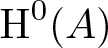 $\text{H}^0(A)$-module
 $\text{H}^\ell(X)$. The depth of a DG-module
 $Y\in\text{D}^+(A)$ is the number
 \begin{equation*}
\text{depth}_AY:=\text{inf}\text{RHom}_A(\bar{\kappa},Y).
\end{equation*}
The theory of classical Cohen–Macaulay rings, Cohen–Macaulay modules, and Gorenstein rings has also been extended to the DG-version in [Reference Shaul22, Reference Shaul23]. This paper focuses on the local cohomological Krull dimension of the DG-modules  $\text{RHom}_A(X,Y)$ and
 $X\otimes_A^\text{L}Y$ for appropriate
 $X$ and
 $Y$ in
 $\text{D}(A)$. We wish to extend the IT to local DG-rings and obtain some characterizations about local Cohen–Macaulay and local Gorenstein DG-rings.
The paper is organized as follows.
In Section 2, we gather some preliminaries and results about the local cohomological Krull dimension of DG-modules. The preparatory work in Section 2 allows us to establish the IT over a local DG-ring A with bounded cohomology in Section 3 (see Theorem 3.1), a bit more generally, for  $0\not\simeq Y\in\text{D}^{-}_{\text{f}}(A)$ and
 $X\in\text{D}^-(A)$ with
 $\text{flatdim}_A\,X \lt \infty$ and
 $\text{depth}_AX \lt \infty$, we show the following inequality:
 \begin{equation}
\text{lc.dim}_AY\leq\text{lc.dim}_A(X\otimes^\text{L}_AY)+\text{flatdim}_A\,X.
\end{equation}
Moreover, some upper and lower bounds of  $\text{lc.dim}_{A}(X\otimes_A^\text{L}Y)$ and
 $\text{lc.dim}_{A}\text{RHom}_A(X,Y)$ are provided (see Theorem 3.5). When the DG-ring
 $A$ is sequence-regular and
 $X,Y\in\text{D}^{\text{b}}_\text{f}(A)$, we improve the inequality
 $(\dagger^{\prime})$ in Proposition 3.7, and prove the stronger inequalities:
 \begin{equation*}
\text{lc.dim}_A\,X+\text{lc.dim}_AY\leq\text{lc.dim}A+\text{lc.dim}_A(X\otimes^\text{L}_AY).
\end{equation*}
In view of the inequalities  $(\dagger^{\prime})$, we extend in Section 4 some classical results about amplitude inequality, Cohen–Macaulay rings, and Gorenstein rings to local DG-rings with bounded cohomology. For
 $0\not\simeq X,Y\in\text{D}^{\text{b}}_{\text{f}}(A)$ with
 $\text{projdim}_A\,X \lt \infty$, Jørgensen [Reference Jorgensen12, Theorem 3.1] showed the amplitude inequality
 $\text{amp}(X\otimes^\text{L}_AY)\geq\text{amp}X$ when
 $A$ is a sufficiently nice local DG-ring with
 $\text{amp}A \lt \infty$. The first application of our results is to eliminate the hypothesis on
 $A$, and improve Jørgensen’s result (see Proposition 4.1). Bass [Reference Bass2] raised the question of whether the existence of a finitely generated module of finite injective dimension would imply the Cohen–Macaulayness of the ring, the question that later became known as the Bass conjecture. For
 $0\not\simeq X\in\text{D}^{\text{b}}_\text{f}(A)$ with
 $\text{injdim}_A\,X \lt \infty$, Minamoto [Reference Minamoto13, Conjecture 2.36] conjectured that
 $\text{amp}X\geq \text{amp}A$. Shaul [Reference Shaul22, Theorem 5.22(2)] showed the DG-version of Bass Conjecture and solved this conjecture under the noetherian model assumption, and conjectured in [Reference Shaul22, Remark 5.25] that this assumption is redundant. As the second application, Minamoto’s Conjecture or Shaul’s Conjecture is proved (see Proposition 4.5). Vasconcelos [Reference Vasconcelos25] conjectured that rings of type one are Gorenstein. The last application is to get the DG-version of the Vasconcelos conjecture (see Proposition 4.7).
2. Preliminaries and some facts
This section is devoted to recalling some notions and basic facts.
Projective, injective, and flat dimensions. For a DG-module  $X\in \text{D}(A)$, we recall the definition of the projective, injective, and flat dimensions of
 $X$ introduced by Bird, Shaul, Sridhar and Williamson in [Reference Bird, Shaul, Sridhar and Williamson3], which are different from the definition,
 $\text{pd}X$,
 $\text{id}X$, and
 $\text{fd}X$, introduced by Yekutieli [Reference Yekutieli29] (also see [Reference Minamoto14]).
The projective dimension of  $X$ is defined by
 \begin{equation*}
\text{projdim}_A\,X=\text{inf}\{n\in\mathbb{Z}|\text{H}^i(\text{RHom}_A(X,Y))=0\ \textrm{for\ any}\ Y\in\text{D}^\text{b}(A)\ \textrm{and}\ i \gt n+\text{sup}Y\}.
\end{equation*}
The injective dimension of  $X$ is defined by
 \begin{equation*}\text{injdim}_A\,X=\text{inf}\{n\in\mathbb{Z}|\text{H}^i(\text{RHom}_A(Y,X))=0\ \textrm{for\ any}\ Y\in\text{D}^\text{b}(A)\ \textrm{and}\ i \gt n-\text{inf}Y\}.
\end{equation*}
The flat dimension of  $X$ is defined by
 \begin{equation*}\text{flatdim}_A\,X=\text{inf}\{n\in\mathbb{Z}|\text{H}^{-i}(Y\otimes_A^\text{L}X)=0\ \textrm{for\ any}\ Y\in\text{D}^\text{b}(A)\ \textrm{and}\ i \gt n-\text{inf}Y\}.
\end{equation*}
We denote by  $\mathcal{P}\subseteq \text{D}(A)$ the full subcategory of direct summands of a direct sums of
 $A$. For
 $X\in\text{D}^-(A)$ and
 $Y\in\text{D}^+(A)$, it follows by [Reference Minamoto14, Theorems 2.22, 3.21, 4.13] that
 \begin{align*}
&\text{projdim}_{\text{H}^0(A)}(\text{H}^0(A)\otimes^\text{L}_AX)=\text{projdim}_A\,X=\text{pd}X-\text{sup}X,\\
&\text{injdim}_{\text{H}^0(A)}\text{RHom}_A(\text{H}^0(A),Y)=\text{injdim}_AY=\text{id}Y+\text{inf}Y,\\
&\text{flatdim}_{\text{H}^0(A)}(\text{H}^0(A)\otimes^\text{L}_AX)=\text{flatdim}_A\,X=\text{fd}X-\text{sup}X.
\end{align*}
Lemma 2.1. Let  $A$ be a DG-ring with
 $\text{amp}A \lt \infty$,
 $X\in\text{D}^{-}(A)$ and
 $Y\in\text{D}^{+}(A)$.
 $(1)$ If
 $\text{projdim}_A\,X \lt \infty$, then
 $\text{inf}X\geq\text{inf}A-\text{projdim}_A\,X$, i.e.,
 $X\in\text{D}^{\text{b}}(A)$.
 $(2)$ If
 $\text{injdim}_AY \lt \infty$, then
 $\text{sup}Y\leq-\text{inf}A+\text{injdim}_AY$, i.e.,
 $Y\in\text{D}^{\text{b}}(A)$.
 $(3)$ If
 $\text{flatdim}_A\,X \lt \infty$, then
 $\text{inf}X\geq\text{inf}A-\text{flatdim}_A\,X$, i.e.,
 $X\in\text{D}^{\text{b}}(A)$.
Proof. We just prove (1) since (2) follows dually.
(1) We use induction on  $n=\text{projdim}_A\,X+\text{sup}X$. If
 $n=0$, then
 $X\in\mathcal{P}[-\text{sup}X]$ by [Reference Minamoto14, Lemma 2.14] and so
 $\text{inf}X\geq\text{inf}A-\text{projdim}_A\,X$. Assume that
 $n\geq1$. By [Reference Minamoto14, Lemma 2.13], there is an exact triangle
 $Z\rightarrow P\rightarrow X\rightsquigarrow$ so that
 $P\in\mathcal{P}[-\text{sup}X]$ and
 $\text{projdim}_AZ+\text{sup}Z\leq\text{projdim}_AZ+\text{sup}X=n-1$, it follows by the induction that
 $\text{inf}X\geq\text{inf}A-\text{projdim}_A\,X$.
(3) For the  $\text{H}^0(A)$-module
 $\text{Hom}_{\mathbb{Z}}(\text{H}^0(A),\mathbb{Q}/\mathbb{Z})$, it follows by [Reference Shaul20, Theorem 5.7] that there is a DG-module
 $E$ so that
 $\text{H}^0(E)=\text{Hom}_{\mathbb{Z}}(\text{H}^0(A),\mathbb{Q}/\mathbb{Z})$. Hence, [Reference Shaul20, Theorem 4.10] and (2) imply that
 $\text{inf}X=-\text{sup}\text{RHom}_A(X,E)\geq\text{inf}A-\text{injdim}_A\text{RHom}_A(X,E)=\text{inf}A-\text{flatdim}_A\,X$ as
 $\text{injdim}_A\text{RHom}_A(X,E)=\text{flatdim}_A\,X$ by [Reference Bird, Shaul, Sridhar and Williamson3, Lemma 7.12].
Lemma 2.2. ([Reference Bird, Shaul, Sridhar and Williamson3]). Let  $A$ be a DG-ring with
 $\text{amp}A \lt \infty$ and
 $X,Y,Z\in\text{D}(A)$.
 $(1)$ If either
 $X\in\text{D}^{-}_{\text{f}}(A),\ Y\in\text{D}^{+}(A)$ and
 $\text{injdim}_AZ \lt \infty$, or
 $X\in\text{D}^{\text{b}}_{\text{f}}(A)$ and
 $\text{projdim}_A\,X \lt \infty$, then the natural map
 \begin{equation*}X\otimes^\text{L}_A\text{RHom}_A(Y,Z)\rightarrow\text{RHom}_A(\text{RHom}_A(X,Y),Z)\end{equation*}
is an isomorphism in  $\text{D}(A)$.
 $(2)$ If either
 $X\in\text{D}^{-}_{\text{f}}(A),\ Y\in\text{D}^{+}(A)$ and
 $\text{flatdim}_AZ \lt \infty$, or
 $X\in\text{D}^{\text{b}}_{\text{f}}(A)$ and
 $\text{projdim}_A\,X \lt \infty$, then the natural map
 \begin{equation*}\text{RHom}_A(X,Y)\otimes^\text{L}_AZ\rightarrow\text{RHom}_A(X,Y\otimes^\text{L}_AZ)\end{equation*}
is an isomorphism in  $\text{D}(A)$.
Derived torsion. Let  $\bar{\mathfrak{a}}\subseteq\text{H}^0(A)$ be an ideal. An
 $\text{H}^0(A)$-module
 $\bar{X}$ is called
 $\bar{\mathfrak{a}}$-torsion if for any
 $\bar{x}\in\bar{X}$ there is
 $n\in\mathbb{N}$ such that
 $\bar{\mathfrak{a}}^n\bar{x}=0$. The category
 $\text{D}_{\bar{\mathfrak{a}}\textrm{-tor}}(A)$ consisting of DG-modules
 $X$ such that the
 $\text{H}^0(A)$-module
 $\text{H}^n(X)$ is
 $\bar{\mathfrak{a}}$-torsion for every
 $n$, is a triangulated subcategory of
 $\text{D}(A)$. Following [Reference Shaul21], the inclusion functor
 $\text{D}_{\bar{\mathfrak{a}}\textrm{-tor}}(A)\hookrightarrow\text{D}(A)$ has a right adjoint, and composing this right adjoint with the inclusion, one has a triangulated functor
 $\text{R}\Gamma_{\bar{\mathfrak{a}}}:\text{D}(A)\rightarrow\text{D}(A)$, which is called the derived
 $\bar{\mathfrak{a}}$-torsion functor. The derived
 $\bar{\mathfrak{a}}$-adic completion
 $\text{RHom}_A(\text{R}\Gamma_{\bar{\mathfrak{a}}}(A),A)$, denoted by
 $\text{L}\Lambda(A,\bar{\mathfrak{a}})$, is a commutative DG-ring.
Let  $(A,\bar{\mathfrak{m}})$ be a local DG-ring. For
 $X\in\text{D}^-_\text{f}(A)$ and
 $Y\in\text{D}^+(A)$, it follows by [Reference Shaul22, Theorem 2.15] and [Reference Shaul22, Proposition 3.3] that
 \begin{equation*}\text{lc.dim}_A\,X=\text{supR}\Gamma_{\bar{\mathfrak{m}}}(X),\ \text{depth}_AY=\text{infR}\Gamma_{\bar{\mathfrak{m}}}(Y).\end{equation*}
Localization. Let  $\pi_A:A\rightarrow\text{H}^0(A)$ be the canonical surjection and
 $\pi^0_A: A^0\rightarrow\text{H}^0(A)$ be its degree 0 component. Given a prime ideal
 $\bar{\mathfrak{p}}\in \text{Spec}\text{H}^0(A)$, let
 $\mathfrak{p}=(\pi^0_A)^{-1}(\bar{\mathfrak{p}})\in\text{Spec}A^0$, and define
 $A_{\bar{\mathfrak{p}}}:=A\otimes_{A^0}A^0_\mathfrak{p}$. More generally, given
 $X\in\text{D}(A)$, we define
 \begin{equation*}
X_{\bar{\mathfrak{p}}}:=X\otimes_{A}A_{\bar{\mathfrak{p}}}=X\otimes_{A^0}A^0_\mathfrak{p}\in\text{D}(A_{\bar{\mathfrak{p}}}).
\end{equation*}
A prime ideal  $\bar{\mathfrak{p}}\in\text{Spec}\text{H}^0(A)$ is called an associated prime of
 $X$ if
 $\text{depth}_{A_{\bar{\mathfrak{p}}}}X_{\bar{\mathfrak{p}}}=\text{inf}X_{\bar{\mathfrak{p}}}$. The set of associated primes of
 $X$ is denoted by
 $\text{Ass}_AX$. The support of
 $X$ is the set
 \begin{equation*}
\text{Supp}_AX:=\{\bar{\mathfrak{p}}\in \text{Spec}\text{H}^0(A)|X_{\bar{\mathfrak{p}}}\not\simeq0\}.
\end{equation*}
For  $\bar{\mathfrak{p}}\in \text{Spec}\text{H}^0(A)$, denote by
 $E(A,\bar{\mathfrak{p}})$ the DG-module corresponding to the injective hull
 $E(\text{H}^{0}(A),\bar{\mathfrak{p}})$ of the residue field
 $\text{H}^{0}(A)_{\bar{\mathfrak{p}}}/\bar{\mathfrak{p}}\text{H}^{0}(A)_{\bar{\mathfrak{p}}}$.
Next, we bring several necessary lemmas and their proofs.
Lemma 2.3.  $(1)$ For
 $X\in \text{D}^{-}_{\text{f}}(A)$ and
 $Y\in\text{D}^{+}(A)$, one has
 \begin{equation*}\text{inf}\text{RHom}_A(X,Y)=\text{inf}\{\text{inf}\text{RHom}_{A}(\text{H}^\ell(X),Y)-\ell
|\ell\in\mathbb{Z}\}.\end{equation*}
 $(2)$ For
 $X\in \text{D}^{-}_{\text{f}}(A)$ and
 $Z\in \text{D}^{-}(A)$, one has
 \begin{equation*}
\text{sup}(X\otimes_A^\text{L}Z)=\text{sup}\{\text{sup}(\text{H}^\ell(X)\otimes_A^\text{L}Z)+\ell
|\ell\in\mathbb{Z}\}.
\end{equation*}
 $(3)$ Let
 $(A,\bar{\mathfrak{m}},\bar{\kappa})$ be a local DG-ring. For
 $X,Y\in\text{D}^-_\text{f}(A)$, one has
 \begin{equation*}\text{sup}(X\otimes^\text{L}_AY)=\text{sup}X+\text{sup}Y.\end{equation*}
Proof. (1) We first show that  $\text{inf}\text{RHom}_A(X,Y)=\text{inf}\{\text{depth}_{A_{\bar{\mathfrak{p}}}}Y_{\bar{\mathfrak{p}}}
-\text{sup}X_{\bar{\mathfrak{p}}}|\bar{\mathfrak{p}}\in\text{Spec}\text{H}^0(A)\}$. For each
 $\bar{\mathfrak{p}}\in\text{Spec}\text{H}^0(A)$ one has the next (in)equalities
 \begin{equation*}\begin{aligned}r:=\text{inf}\text{RHom}_A(X,Y)
&\leq\text{inf}\text{RHom}_{A_{\bar{\mathfrak{p}}}}(X_{\bar{\mathfrak{p}}},Y_{\bar{\mathfrak{p}}})\\
&\leq\text{depth}_{A_{\bar{\mathfrak{p}}}}\text{RHom}_{A_{\bar{\mathfrak{p}}}}(X_{\bar{\mathfrak{p}}},Y_{\bar{\mathfrak{p}}})\\
&=\text{depth}_{A_{\bar{\mathfrak{p}}}}Y_{\bar{\mathfrak{p}}}
-\text{sup}X_{\bar{\mathfrak{p}}},\end{aligned}
\end{equation*}
where the first inequality is by [Reference Minamoto13, Proposition 2.4], the second inequality is by [Reference Shaul22, Proposition 3.3] and the equality is by [Reference Yang and Wang27, Proposition 4.9] and Nakayama’s lemma. If  $\bar{\mathfrak{p}}\in\text{Ass}_{\text{H}^0(A)}\text{H}^r(\text{RHom}_A(X,Y))$, then the claimed equality holds by [Reference Shaul22, Proposition 3.3].
Set  $i=\text{inf}\text{RHom}_A(X,Y)$ and
 $j=\text{inf}\{\text{inf}\text{RHom}_{A}(\text{H}^\ell(X),Y)-\ell
|\ell\in\mathbb{Z}\}$. For
 $\bar{\mathfrak{p}}\in\text{Spec}\text{H}^0(A)$, set
 $s=\text{sup}X_{\bar{\mathfrak{p}}}$. By the preceding proof, we have
 \begin{equation*}\text{depth}_{A_{\bar{\mathfrak{p}}}}Y_{\bar{\mathfrak{p}}}
-\text{sup}X_{\bar{\mathfrak{p}}}=\text{depth}_{A_{\bar{\mathfrak{p}}}}Y_{\bar{\mathfrak{p}}}
-s\geq\text{inf}\text{RHom}_{A}(\text{H}^s(X),Y)-s\geq j,\end{equation*}
and hence  $i\geq j$. On the other hand, let
 $\ell\in\mathbb{Z}$ and
 $\text{H}(\text{RHom}_{A}(\text{H}^\ell(X),Y))\not\simeq0$. Choose
 $\bar{\mathfrak{p}}\in\text{Spec}\text{H}^0(A)$ such that
 $\text{inf}\text{RHom}_{A}(\text{H}^\ell(X),Y)=\text{depth}_{A_{\bar{\mathfrak{p}}}}Y_{\bar{\mathfrak{p}}}$. Then
 \begin{equation*}\text{RHom}_{A}(\text{H}^\ell(X),Y)-\ell\geq\text{depth}_{A_{\bar{\mathfrak{p}}}}Y_{\bar{\mathfrak{p}}}
-\text{sup}X_{\bar{\mathfrak{p}}}\geq i.\end{equation*}
Therefore, the equality holds.
(2) Set  $E=\oplus_{\bar{\mathfrak{m}}\in\text{Max}\text{H}^0(A)}E(A,\bar{\mathfrak{m}})$. We have the following equalities
 \begin{equation*}\begin{aligned}\text{sup}(X\otimes_A^\text{L}Z)
&=-\text{inf}\text{RHom}_{A}(X,\text{RHom}_{A}(Z,E))\\
&=-\text{inf}\{\text{inf}\text{RHom}_{A}(\text{H}^\ell(X),\text{RHom}_{A}(Z,E))-\ell
|\ell\in\mathbb{Z}\}\\
&=\text{sup}\{\ell-\text{inf}\text{RHom}_{A}(\text{H}^\ell(X)\otimes_A^\text{L}Z,E)
|\ell\in\mathbb{Z}\}\\
&=\text{sup}\{\ell+\text{sup}(\text{H}^\ell(X)\otimes_A^\text{L}Z)
|\ell\in\mathbb{Z}\},\end{aligned}
\end{equation*}
where the first and the last ones are by [Reference Shaul20, Theorem 4.10], the second one is by (1).
(3) As  $\text{H}^{\text{sup}X}(X)$ and
 $\text{H}^{\text{sup}Y}(Y)$ are finitely generated
 $\text{H}^0(A)$-modules, one has
 \begin{equation*}
\text{H}^{\text{sup}X+\text{sup}Y}(\bar{\kappa}\otimes^\text{L}_AX
\otimes^\text{L}_AY)\cong\bar{\kappa}\otimes_{\text{H}^0(A)}\text{H}^{\text{sup}X}(X)\otimes_{\bar{\kappa}} \bar{\kappa}\otimes_{\text{H}^0(A)}\text{H}^{\text{sup}Y}(Y)\neq0,
\end{equation*}
which implies the desired equality.
By the equality (2.14) of [Reference Shaul22, Proposition 2.13], for  $X\in\text{D}^{-}(A)$, one has
 \begin{equation}{\text{lc.dim}}_A\,X={\text{sup}}\{\text{dim}{\text{H}^0}(A)/{\overline{\mathfrak p}}+\text{sup}X_{\overline{\mathfrak p}}\vert\overline{\mathfrak p}\in\text{Spec}{\text{H}^0}(A)\}.\end{equation}
The following lemma is useful in the proof of the main results.
Lemma 2.4. For  $X\in \text{D}^{-}_{\text{f}}(A)$ and
 $Y\in \text{D}^{-}(A)$, there exists an equality
 \begin{equation*}\text{lc.dim}_A(X\otimes_A^\text{L}Y)=\text{sup}\{\text{lc.dim}_A(\text{H}^\ell(X)\otimes_A^\text{L}Y)+\ell
|\ell\in\mathbb{Z}\}.\end{equation*}
Proof. We have the following computations
 \begin{equation*}\begin{aligned}\text{lc.dim}(X\otimes_A^\text{L}Y)
&=\text{sup}\{\text{dim}\text{H}^0(A)/\bar{\mathfrak{p}}+\text{sup}(X\otimes_A^\text{L}Y)_{\bar{\mathfrak{p}}}
|\bar{\mathfrak{p}}\in\text{Spec}\text{H}^0(A)\}\\
&=\text{sup}\{\text{dim}\text{H}^0(A)/\bar{\mathfrak{p}}\\
&\quad+ \text{sup}\{\text{sup}(\text{H}^\ell(X_{\bar{\mathfrak{p}}})\otimes_{A_{\bar{\mathfrak{p}}}}^\text{L}Y_{\bar{\mathfrak{p}}})+\ell
|\ell\in\mathbb{Z}\}
|\bar{\mathfrak{p}}\in\text{Spec}\text{H}^0(A)\}\\
&=\text{sup}\{\text{dim}\text{H}^0(A)/\bar{\mathfrak{p}}+
\text{sup}(\text{H}^\ell(X)\otimes_{A}^\text{L}Y)_{\bar{\mathfrak{p}}}\\
&\quad+\ell
|\bar{\mathfrak{p}}\in\text{Spec}\text{H}^0(A),\ell\in\mathbb{Z}\}\\
&=\text{sup}\{\text{lc.dim}_A(\text{H}^\ell(X)\otimes_{A}^\text{L}Y)+\ell
|\ell\in\mathbb{Z}\},\end{aligned}
\end{equation*}
where the second equality follows by Lemma 2.3(2), as desired.
Lemma 2.5. Let  $X\in\text{D}^+(A)$ and
 $Y\in\text{D}^-(A)$. If
 $\text{flatdim}_AY \lt \infty$, then
 \begin{equation*}\text{depth}_A(X\otimes^\text{L}_AY)=\text{depth}_AX+\text{depth}_AY-\text{depth}A.\end{equation*}
Proof. As  $\text{flatdim}_{\text{H}^0(A)}(\text{H}^0(A)\otimes^\text{L}_AY) \lt \infty$ and
 $\textrm{RHom}_A(\text{H}^0(A),X)\in\text{D}^+(\text{H}^0(A)),$
 $\text{H}^0(A)\otimes^\text{L}_AY\in\text{D}^\text{b}(\text{H}^0(A))$, one has the following equalities
 \begin{equation*}\begin{aligned}\text{depth}_A(X\otimes^\text{L}_AY)
&=\text{depth}_{\text{H}^0(A)}\text{RHom}_{A}(\text{H}^0(A),X\otimes^\text{L}_AY)\\
&=\text{depth}_{\text{H}^0(A)}(\text{RHom}_{A}(\text{H}^0(A),X)\otimes^\text{L}_{A}Y)\\
&=\text{depth}_{\text{H}^0(A)}(\text{RHom}_{A}(\text{H}^0(A),X)\otimes^\text{L}_{\text{H}^0(A)}\text{H}^0(A)\otimes^\text{L}_AY)\\
&=\text{depth}_{\text{H}^0(A)}\text{RHom}_{A}(\text{H}^0(A),X)+\text{inf}(\bar{\kappa}\otimes^\text{L}_{\text{H}^0(A)}\text{H}^0(A)\otimes^\text{L}_AY)\\
&=\text{depth}_{A}X+\text{inf}(\bar{\kappa}\otimes^\text{L}_AY),
\end{aligned}
\end{equation*}
where the first and the last ones are by [Reference Yang and Wang27, Remark 4.3(1)], the second one is by Lemma 2.2(2), the fourth one is by [Reference Christensen, Foxby and Holm4, Theorem 16.3.1]. Applied to  $X=A$, we obtain the desired equality.
3. Intersection Theorem for DG-modules
In this section, we examine the IT for DG-modules and study the local cohomology Krull dimension of the DG-modules  $\text{RHom}_A(X,Y)$ and
 $X\otimes_A^\text{L}Y$, which extends some classical results proved by Christensen and Foxby and Holm in [Reference Christensen, Foxby and Holm4].
We begin with the following main theorem of this section, which is an extension of the IT in [Reference Dibaei and Yassemi5, Theorem 2.6] in the DG-setting.
Theorem 3.1 Let  $(A,\bar{\mathfrak{m}},\bar{\kappa})$ be a local DG-ring with
 $\text{amp}A \lt \infty$.
 $(1)$ Let
 $X\in\text{D}^-(A)$ with
 $\text{flatdim}_A\,X \lt \infty$ and
 $0\not\simeq Y\in\text{D}^{-}_{\text{f}}(A)$. If
 $\text{depth}_AX \lt \infty$, then
 \begin{equation*}\text{lc.dim}_AY\leq\text{lc.dim}_A(X\otimes^\text{L}_AY)+\text{flatdim}_A\,X.\end{equation*}
 $(2)$ For
 $0\not\simeq X,Y\in\text{D}^{-}_{\text{f}}(A)$ with
 $\text{projdim}_A\,X \lt \infty$, one has an inequality
 \begin{equation*}\text{lc.dim}_AY\leq\text{lc.dim}_A(X\otimes^\text{L}_AY)+\text{projdim}_A\,X.\end{equation*}
Proof. (1) As  $\text{depth}_AX \lt \infty$,
 $\text{depth}_{\text{H}^0(A)}(X\otimes^\text{L}_A\text{H}^0(A)) \lt \infty$. One has
 \begin{equation*}\begin{aligned}\text{lc.dim}_A(X\otimes^\text{L}_AY)
&=\text{sup}\{\text{lc.dim}_{A}(X\otimes^\text{L}_A\text{H}^\ell(Y))+\ell|\ell\in\mathbb{Z}\}\\
&=\text{sup}\{\text{lc.dim}_{\text{H}^0(A)}(X\otimes^\text{L}_A\text{H}^0(A)\otimes^\text{L}_{\text{H}^0(A)}\text{H}^\ell(Y))+\ell|\ell\in\mathbb{Z}\}\\
&\geq\text{sup}\{\text{dim}_{\text{H}^0(A)}\text{H}^\ell(Y))+\ell|\ell\in\mathbb{Z}\}-
\text{flatdim}_{\text{H}^0(A)}(X\otimes^\text{L}_A\text{H}^0(A))\\
&=\text{lc.dim}_AY-\text{flatdim}_A\,X,\end{aligned}
\end{equation*}
where the first equality is by Lemma 2.4, the inequality follows by [Reference Christensen, Foxby and Holm4, Theorem 18.5.3] and local duality, the last equality follows by [Reference Bird, Shaul, Sridhar and Williamson3, Corollary 2.3].
(2) As  $\text{projdim}_A\,X \lt \infty$, it follows by [Reference Minamoto13, Theorem 2.16] that
 $\text{depth}_AX \lt \infty$. Hence, (1) yields the desired inequality.
Corollary 3.2. Let  $(A,\bar{\mathfrak{m}},\bar{\kappa})$ be a local DG-ring with
 $\text{amp}A \lt \infty$ and
 $Y\in\text{D}^{-}(A)$ with
 $\text{depth}_AY \lt \infty$. If either
 $0\not\simeq X\in\text{D}^{\text{b}}_{\text{f}}(A)$ or
 $\text{depth}_AX \lt \infty$, then there is an inequality,
 \begin{equation*}{\textrm{flatdim}}_AY\geq{\textrm{depth}}_AX-{\textrm{lc.dim}}_A(Y\otimes_A^\text{L}X).\end{equation*}
Proof. One can assume that  $\text{flatdim}_AY \lt \infty$. If
 $0\not\simeq X\in\text{D}^{\text{b}}_{\text{f}}(A)$, then
 \begin{equation*}\text{flatdim}_AY
\geq\text{lc.dim}_A\,X-\text{lc.dim}_A(Y\otimes_A^\text{L}X)
\geq\text{depth}_AX-\text{lc.dim}_A(Y\otimes_A^\text{L}X)\end{equation*}
by Theorem 3.1(1) and [Reference Shaul22, Proposition 3.5]. As  $\text{flatdim}_AY \lt \infty$,
 $Y\otimes_A^\text{L}X\in\text{D}^{\text{b}}(A)$. If
 $\text{depth}_AX \lt \infty$, then
 $\text{depth}_A(Y\otimes_A^\text{L}X) \lt \infty$ and so
 $\text{depth}_A(Y\otimes_A^\text{L}X)=\text{infR}\Gamma_{\bar{\mathfrak{m}}}(Y\otimes_A^\text{L}X)\leq\text{supR}\Gamma_{\bar{\mathfrak{m}}}(Y\otimes_A^\text{L}X)\leq\text{lc.dim}_A(Y\otimes_A^\text{L}X)$ by [Reference Shaul22, Theorem 2.15 and Proposition 3.3]. Thus,
 $\text{flatdim}_AY
\geq-\text{inf}(\bar{\kappa}\otimes^\text{L}_AY)=\text{depth}_AX-\text{depth}_A(Y\otimes_A^\text{L}X)$ by the equality in the proof of Lemma 2.5, as desired.
Corollary 3.3. Let  $(A,\bar{\mathfrak{m}},\bar{\kappa})$ be a local DG-ring with
 $\text{amp}A \lt \infty$, and let
 $X\in\text{D}^{-}_\text{f}(A)$ with
 $\text{flatdim}_A\,X \lt \infty$ and
 $0\not\simeq Y\in\text{D}^{-}_{\text{f}}(A)$. There exists an inequality,
 \begin{equation*}{\textrm{lc.dim}}_A(X\otimes_A^\text{L}Y)-{\textrm{depth}}_A(X\otimes_A^\text{L}Y)
\geq{\textrm{lc.dim}}_AY-{\textrm{depth}}_AY.\end{equation*}
In particular,  ${\textrm{lc.dim}}_A\,X-{\textrm{depth}}_AX\geq{\textrm{lc.dim}}A-{\textrm{depth}}A$.
Proof. As  $X\in\text{D}^{-}_{\text{f}}(A)$,
 $\text{projdim}_A\,X=\text{flatdim}_A\,X$ by [Reference Minamoto13, Proposition 2.2] and
 $X\in\text{D}^{\text{b}}_{\text{f}}(A)$ by Lemma 2.1, it follows by [Reference Minamoto13, Corollary 2.31] and [Reference Bird, Shaul, Sridhar and Williamson3, Lemma 7.12] and Lemma 2.5 that
 \begin{equation*}\text{flatdim}_A\,X=-\text{inf}(\bar{\kappa}\otimes^\text{L}_AX)=\text{depth}_AX-\text{depth}A.\end{equation*}
Hence, Theorem 3.1 implies that
 \begin{align*}
&\text{lc.dim}_A(X\otimes_A^\text{L}Y)-\text{depth}_A(X\otimes_A^\text{L}Y)
\geq\text{lc.dim}_AY-\text{flatdim}_A\,X\\
&\quad +\text{depth}A-\text{depth}_AX-\text{depth}_AY,\end{align*}
we obtain the desired inequality.
Following [Reference Shaul22], a local DG-ring  $(A,\bar{\mathfrak{m}})$ with
 $\text{amp}A \lt \infty$ is called local Cohen–Macaulay if
 $\text{amp}\text{R}\Gamma_{\bar{\mathfrak{m}}}(A)=\text{amp}A$. A DG-module
 $X\in\text{D}^{\text{b}}_{\text{f}}(A)$ is called local Cohen–Macaulay if
 \begin{equation*}\text{amp}X=\text{amp}A=\text{amp}\text{R}\Gamma_{\bar{\mathfrak{m}}}(X).\end{equation*}
A local DG-ring  $(A,\bar{\mathfrak{m}})$ with
 $\text{amp}A \lt \infty$ is called Gorenstein if
 $\text{injdim}_AA \lt \infty$.
Remark 3.4. Let  $(A,\bar{\mathfrak{m}},\bar{\kappa})$ be a local DG-ring with
 $\text{amp}A \lt \infty$.
(1) The next example shows that the condition  $\text{depth}_AX \lt \infty$ or
 $X\in\text{D}^{\text{b}}_{\text{f}}(A)$ cannot be dropped in Corollaries 3.2 and 3.3. Set
 $(A,\bar{\mathfrak{m}})=(R,\mathfrak{m})$ be a local ring,
 $\mathbf{\mathit{x}}=x_1,\cdots,x_n$ an
 $R$-regular sequence in
 $\mathfrak{m}$ and
 $\mathfrak{p}$ a prime ideal such that
 $\mathbf{\mathit{x}}\not\in\mathfrak{p}$. Set
 $X=E(R/\mathfrak{p})$ and
 $Y=R/\mathbf{\mathit{x}}$. Then
 $X\not\in\text{D}^{\text{b}}_{\text{f}}(R)$ and
 $\text{depth}_RX=\infty$. Thus,
 $\text{flatdim}_RY=n \lt \text{depth}_RX-\text{lc.dim}_R(Y\otimes_R^\text{L}X)$ and
 $\text{lc.dim}_RX-\text{depth}_RX=-\infty \lt \text{lc.dim}R-\text{depth}R$.
(2) Let  $X\in\text{D}^{-}_{\text{f}}(A)$. Then
 $\text{depth}_AX \lt \infty$ by [Reference Shaul22, Proposition 3.5]. One can assume that
 $\text{flatdim}_A\,X \lt \infty$. Then
 $\text{flatdim}_A\,X=\text{depth}A-\text{depth}_AX$, it follows by Corollary 3.3 that
 \begin{equation*}\text{flatdim}_A\,X\geq\text{lc.dim}A-\text{lc.dim}_A\,X.\end{equation*}
(3) If there is a local Cohen–Macaulay DG-module  $X\in\text{D}^{\text{b}}_{\text{f}}(A)$ with
 $\text{projdim}_A\,X \lt \infty$, then
 $\text{amp}\text{R}\Gamma_{\bar{\mathfrak{m}}}(X)=\text{lc.dim}_A\,X-\text{depth}_AX
\geq\text{lc.dim}A-\text{depth}A=\text{amp}\text{R}\Gamma_{\bar{\mathfrak{m}}}(A)$ by Corollary 3.3. As
 $\text{amp}\text{R}\Gamma_{\bar{\mathfrak{m}}}(A)\geq\text{amp}A$ by [Reference Shaul22, Theorem 4.1(1)], it implies that
 $\text{amp}\text{R}\Gamma_{\bar{\mathfrak{m}}}(A)=\text{amp}A$ and
 $A$ is local Cohen–Macaulay.
(4) Let  $\bar{x}_1,\cdots,\bar{x}_n$ be a sequence in
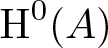 $\text{H}^{0}(A)$ and
 $\bar{\mathfrak{p}}$ be minimal among the prime ideals containing
 $(\bar{x}_1,\cdots,\bar{x}_n)$. Set
 $X=A_{\bar{\mathfrak{p}}}//(\bar{x}_1/1,\cdots,\bar{x}_n/1)$. Then
 $\text{projdim}_{A_{\bar{\mathfrak{p}}}}X\leq n$ by [Reference Minamoto14, Theorem 2.19]. Also
 $\text{lc.dim}_{A_{\bar{\mathfrak{p}}}}X=0$, so
 $\text{lc.dim}A_{\bar{\mathfrak{p}}}\leq n$ by Theorem 3.1(2). Here,
 $Y//\bar{x}Y$ is the cone of the map
 $\bar{x}:Y\rightarrow Y$ in
 $\text{D}(A)$ for
 $Y\in\text{D}(A)$.
The next result is a generalization of [Reference Yassemi28, Theorem 3.7] and [Reference Dibaei and Yassemi5, Theorems 2.1 and 2.6].
Theorem 3.5 Let  $(A,\bar{\mathfrak{m}},\bar{\kappa})$ be a local DG-ring with
 $\text{amp}A \lt \infty$, and let
 $X,Y\in \text{D}(A)$ such that
 $\text{RHom}_A(X,Y)\not\simeq0$.
 $(i)$ If
 $X,Y\in \text{D}^{\text{b}}_{\text{f}}(A)$ with either
 ${\textrm{projdim}}_A\,X \lt \infty$ or
 ${\textrm{injdim}}_AY \lt \infty$, then
 \begin{equation*}{\textrm{lc.dim}}_{A}{\textrm{RHom}}_A(X,Y)\leq{\textrm{lc.dim}}A-{\textrm{inf}}X+{\textrm{sup}}Y.\end{equation*}
 $(ii)$ If
 $X\in \text{D}^{-}_{\text{f}}(A)$ with
 ${\textrm{projdim}}_A\,X \lt \infty$ and
 $Y\in \text{D}^{\text{b}}(A)$, then there is an inequality
 \begin{equation*}{\textrm{lc.dim}}_{A}{\textrm{RHom}}_A(X,Y)\leq{\textrm{lc.dim}}_{A}Y+{\textrm{projdim}}_A\,X.\end{equation*}
 $(iii)$ If
 $X,Y\in \text{D}^{\text{b}}_{\text{f}}(A)$ with
 ${\textrm{projdim}}_A\,X \lt \infty$, then there are inequalities
 \begin{equation*}{\textrm{lc.dim}}_{A}Y-{\textrm{sup}}X\leq{\textrm{lc.dim}}_{A}{\textrm{RHom}}_A(X,Y)
\leq{\textrm{lc.dim}}_{A}(X\otimes_A^\text{L}Y)+{\textrm{projdim}}_A\,X-{\textrm{inf}}X.\end{equation*}
Proof. (i) Fix a point  $\bar{\mathfrak{p}}\in\text{Spec}\text{H}^0(A)$. Assume that
 $\text{projdim}_A\,X \lt \infty$. Then
 \begin{equation*}\begin{aligned}
&\text{dim}\text{H}^{0}(A)/\bar{\mathfrak{p}}+\text{sup}\text{RHom}_{A_{\bar{\mathfrak{p}}}}(X_{\bar{\mathfrak{p}}},Y_{\bar{\mathfrak{p}}})\\
&\quad \leq\text{dim}\text{H}^{0}(A)/\bar{\mathfrak{p}}+\text{projdim}_{A_{\bar{\mathfrak{p}}}}X_{\bar{\mathfrak{p}}}+\text{sup}Y_{\bar{\mathfrak{p}}}\\
&\quad=\text{dim}\text{H}^{0}(A)/\bar{\mathfrak{p}}+\text{depth}A_{\bar{\mathfrak{p}}}-\text{depth}_{A_{\bar{\mathfrak{p}}}}X_{\bar{\mathfrak{p}}}+\text{sup}Y_{\bar{\mathfrak{p}}}\\
&\quad\leq\text{dim}\text{H}^{0}(A)/\bar{\mathfrak{p}}+\text{dim}\text{H}^0(A)_{\bar{\mathfrak{p}}}+\text{inf}A_{\bar{\mathfrak{p}}}-\text{depth}_{A_{\bar{\mathfrak{p}}}}X_{\bar{\mathfrak{p}}}+\text{sup}Y_{\bar{\mathfrak{p}}}\\
&\quad\leq\text{dim}\text{H}^{0}(A)-\text{inf}X_{\bar{\mathfrak{p}}}+\text{sup}Y_{\bar{\mathfrak{p}}}\\
&\quad\leq\text{lc.dim}A-\text{inf}X+\text{sup}Y,\end{aligned}
\end{equation*}
where the equality is by [Reference Minamoto13, Theorem 2.16], the second inequality is by [Reference Shaul22, Corollary 3.6] and the third one is by [Reference Shaul22, Proposition 3.3]. Assume that  $\text{injdim}_AY \lt \infty$. One has
 \begin{equation*}\begin{aligned}
&\text{dim}\text{H}^{0}(A)/\bar{\mathfrak{p}}+\text{sup}\text{RHom}_{A_{\bar{\mathfrak{p}}}}(X_{\bar{\mathfrak{p}}},Y_{\bar{\mathfrak{p}}})\\
&\quad\leq\text{dim}\text{H}^{0}(A)/\bar{\mathfrak{p}}+\text{injdim}_{A_{\bar{\mathfrak{p}}}}Y_{\bar{\mathfrak{p}}}-\text{inf}X_{\bar{\mathfrak{p}}}\\
&\quad=\text{dim}\text{H}^{0}(A)/\bar{\mathfrak{p}}+\text{depth}A_{\bar{\mathfrak{p}}}+\text{sup}Y_{\bar{\mathfrak{p}}}-\text{inf}X_{\bar{\mathfrak{p}}}\\
&\quad\leq\text{dim}\text{H}^{0}(A)/\bar{\mathfrak{p}}+\text{dim}\text{H}^0(A)_{\bar{\mathfrak{p}}}+\text{inf}A_{\bar{\mathfrak{p}}}+\text{sup}Y_{\bar{\mathfrak{p}}}-\text{inf}X_{\bar{\mathfrak{p}}}\\
&\quad\leq\text{dim}\text{H}^{0}(A)+\text{sup}Y_{\bar{\mathfrak{p}}}-\text{inf}X_{\bar{\mathfrak{p}}}\\
&\quad\leq\text{lc.dim}A+\text{sup}Y-\text{inf}X,\end{aligned}
\end{equation*}
where the equality is by [Reference Minamoto13, Theorem 2.33]. Therefore, we obtain the desired inequality.
(ii) By [Reference Shaul22, Remark 2.3],  $\text{lc.dim}_{A}\text{RHom}_A(X,Y)\leq\text{dim}\text{H}^{0}(A)+\text{sup}\text{RHom}_A(X,Y) \lt \infty$. By the equality
 $(\ast)$ or [Reference Shaul22, (2.14)], one can choose
 $\bar{\mathfrak{p}}\in\text{Supp}_AX\cap\text{Supp}_AY$ so that
 \begin{equation*}\text{lc.dim}_{A}\text{RHom}_A(X,Y)
=\text{dim}\text{H}^{0}(A)/\bar{\mathfrak{p}}+\text{sup}\text{RHom}_A(X,Y)_{\bar{\mathfrak{p}}}.\end{equation*}
By Lemmas 2.1(1) and 2.2(2), we have  $\text{RHom}_A(X,Y)_{\bar{\mathfrak{p}}}\simeq\text{RHom}_{A_{\bar{\mathfrak{p}}}}(X_{\bar{\mathfrak{p}}},A_{\bar{\mathfrak{p}}})
\otimes^\text{L}_{A_{\bar{\mathfrak{p}}}}Y_{\bar{\mathfrak{p}}}$ and
 $\text{sup}\text{RHom}_{A_{\bar{\mathfrak{p}}}}(X_{\bar{\mathfrak{p}}},A_{\bar{\mathfrak{p}}})
\leq\text{sup}\text{RHom}_{A}(X,A)=\text{projdim}_A\,X$. Hence
 \begin{equation*}\begin{aligned}\text{dim}\text{H}^{0}(A)/\bar{\mathfrak{p}}+\text{sup}\text{RHom}_A(X,Y)_{\bar{\mathfrak{p}}}
&\leq\text{dim}\text{H}^{0}(A)/\bar{\mathfrak{p}}+\text{sup}Y_{\bar{\mathfrak{p}}}+\text{sup}\text{RHom}_{A_{\bar{\mathfrak{p}}}}(X_{\bar{\mathfrak{p}}},A_{\bar{\mathfrak{p}}})\\
&\leq\text{lc.dim}_AY+\text{projdim}_A\,X.\end{aligned}
\end{equation*}
(iii) By the proof of (ii), one has  $\text{lc.dim}_{A}\text{RHom}_A(X,Y)\leq\text{dim}\text{H}^{0}(A)/\bar{\mathfrak{p}}+\text{sup}Y_{\bar{\mathfrak{p}}}+\text{projdim}_A\,X$ for some
 $\bar{\mathfrak{p}}\in\text{Supp}_AX\cap\text{Supp}_AY$. By Lemma 2.3(3), we have
 \begin{equation*}\begin{aligned}\text{lc.dim}_{A}\text{RHom}_A(X,Y)
&\leq\text{dim}\text{H}^{0}(A)/\bar{\mathfrak{p}}+\text{sup}(X\otimes^\text{L}_AY)_{\bar{\mathfrak{p}}}-\text{sup}X_{\bar{\mathfrak{p}}}+\text{projdim}_A\,X\\
&\leq\text{lc.dim}_A(X\otimes^\text{L}_AY)+\text{projdim}_A\,X-\text{inf}X.\end{aligned}
\end{equation*}
For the left-hand side of (iii), as  $\text{RHom}_A(X,A)\in\text{D}^{\text{b}}_{\text{f}}(A)$ and
 $\text{projdim}_A\text{RHom}_A(X,A) \lt \infty$, it follows by Theorem 3.1(2) that
 \begin{equation*}\begin{aligned}\text{lc.dim}_AY
&\leq\text{lc.dim}_{A}(\text{RHom}_A(X,A)\otimes_A^\text{L}Y)+\text{projdim}_A\text{RHom}_A(X,A)\\
&=\text{lc.dim}_{A}\text{RHom}_A(X,Y)+\text{sup}\text{RHom}_A(\text{RHom}_A(X,A),A)\\
&=\text{lc.dim}_{A}\text{RHom}_A(X,Y)+\text{sup}X,\end{aligned}
\end{equation*}
where the first equality is by [Reference Yang and Wang27, Proposition 4.4(3)] and the second one follows from the isomorphism  $X\simeq\text{RHom}_A(\text{RHom}_A(X,A),A)$, as claimed.
The following characterization of Gorenstein DG-rings is a DG-version of Auslander–Bridger characterization of classical Gorenstein rings.
Corollary 3.6. Let  $(A,\bar{\mathfrak{m}},\bar{\kappa})$ be a local DG-ring with
 $\text{amp}A \lt \infty$. The next are equivalent:
 $\textrm{(}1\textrm{)}$
 $A$ is local Gorenstein;
 $\textrm{(}2\textrm{)}$
 ${\textrm{lc.dim}}_{A}{{\textrm{RHom}}}_A\textrm{(}X,A\textrm{)} \lt \infty$ for all
 $X\in\text{D}^{\text{b}}_{\text{f}}(A)$;
 $\textrm{(}3\textrm{)}$
 $\textrm{lc.dim}_{A}\textrm{RHom}_A\textrm{(}T,A\textrm{)} \lt \infty$ for all finitely generated
 $\textrm{H}^{0}(A)$-modules
 $T$;
 $\textrm{(}4\textrm{)}$
 $\textrm{lc.dim}_{A}\textrm{RHom}_A\textrm{(}\bar{\kappa},A\textrm{)} \lt \infty$.
Proof. (1)  $\Rightarrow$ (2) follows from Theorem 3.5(i) and (2)
 $\Rightarrow$ (3)
 $\Rightarrow$ (4) are trivial.
(4)  $\Rightarrow$ (1) One has the following equalities
 \begin{equation*}\text{sup}\text{RHom}_A(\bar{\kappa},A)=
\text{sup}\text{RHom}_A(\bar{\kappa},A)_{\bar{\mathfrak{m}}}=\text{lc.dim}_{A}\text{RHom}_A(\bar{\kappa},A) \lt \infty.\end{equation*}
Hence, [Reference Minamoto13, Corollary 2.31] implies that  $\text{injdim}_AA \lt \infty$ and
 $A$ is local Gorenstein.
Let  $(A,\bar{\mathfrak{m}},\bar{\kappa})$ be a local DG-ring and
 $X\in\text{D}^+(A)$. An element
 $\bar{x}\in\bar{\mathfrak{m}}$ is called
 $X$-regular if it is
 $\text{H}^{\text{inf}X}(X)$-regular, that is, if the multiplication map
 \begin{equation*}\bar{x}:\text{H}^{\text{inf}X}(X)\rightarrow\text{H}^{\text{inf}X}(X)\end{equation*}
is injective. Inductively, we say that a sequence  $\bar{x}_1,\cdots,\bar{x}_n\in\bar{\mathfrak{m}}$ is
 $X$-regular if
 $\bar{x}_1$ is
 $X$-regular and the sequence
 $\bar{x}_2,\cdots,\bar{x}_n$ is
 $X//\bar{x}_1X$-regular. Following [Reference Shaul24], a local DG-ring
 $(A,\bar{\mathfrak{m}},\bar{\kappa})$ with
 $\text{amp}A \lt \infty$ is called sequence-regular if
 $\bar{\mathfrak{m}}$ is generated by an
 $A$-regular sequence. If
 $A$ is a regular local ring and
 $M,N$ finitely generated
 $A$-modules, then there is an inequality
 \begin{equation*}\text{dim}_{A}M+\text{dim}_{A}N\leq\text{dim}A+\text{dim}_{A}(M\otimes_AN),\end{equation*}
which is due to Serre and is called strong IT (see Foxby’s notes or [Reference Christensen, Foxby and Holm4, Lemma 20.1.32]). We next provide the DG-version of this theorem.
Proposition 3.7. Let  $(A,\bar{\mathfrak{m}},\bar{\kappa})$ be a sequence-regular DG-ring and
 $X,Y\in{\textrm{D}}^{\textrm{b}}_{\textrm{f}}\textrm{(}A\textrm{)}$. One has
 \begin{equation*}{\textrm{lc.dim}}_{A}X+{\textrm{lc.dim}}_{A}Y\leq{\textrm{lc.dim}}A+{\textrm{lc.dim}}_{A}(X\otimes_A^\text{L}Y).\end{equation*}
Proof. For  $s,t\in\mathbb{Z}$ and
 $\bar{\mathfrak{p}}\in\text{Spec}\text{H}^{0}(A)$, as
 $\text{sup}(\text{H}^s(X)\otimes^\text{L}_{A}\text{H}^t(Y))_{\bar{\mathfrak{p}}}=\text{sup}(\text{H}^s(X)\otimes^\text{L}_{\text{H}^{0}(A)}\text{H}^t(Y))_{\bar{\mathfrak{p}}}$ by Lemma 2.3(3), it follows by the equality
 $(\ast)$ and [Reference Christensen, Foxby and Holm4, Proposition 17.6.20] that
 $\text{lc.dim}_{A}(\text{H}^s(X)\otimes^\text{L}_{A}\text{H}^t(Y))=
\text{dim}_{\text{H}^{0}(A)}(\text{H}^s(X)\otimes_{\text{H}^{0}(A)}\text{H}^t(Y))$. We have the next (in)equalities
 \begin{equation*}\begin{aligned}\text{lc.dim}_{A}(X\otimes_A^\text{L}Y)
&=\text{sup}_{s,t\in\mathbb{Z}}\{\text{lc.dim}_{A}(\text{H}^s(X)\otimes^\text{L}_{A}\text{H}^t(Y))+s+t\}\\
&=\text{sup}_{s,t\in\mathbb{Z}}\{\text{dim}_{\text{H}^{0}(A)}(\text{H}^s(X)\otimes_{\text{H}^{0}(A)}\text{H}^t(Y))+s+t\}\\
&\geq\text{sup}_{s,t\in\mathbb{Z}}\{\text{dim}_{\text{H}^{0}(A)}\text{H}^s(X)+s+
\text{dim}_{\text{H}^{0}(A)}\text{H}^t(Y)+t\}-\text{dim}\text{H}^{0}(A)\\
&=\text{lc.dim}_{A}X+\text{lc.dim}_{A}Y-\text{lc.dim}A,\end{aligned}
\end{equation*}
where the first equality is by Lemma 2.4, the inequality is by the above strong IT as the ring  $\text{H}^{0}(A)$ is regular by [Reference Shaul24, Theorem 3.4].
Following [Reference Shaul20], a dualizing DG-module  $R$ over
 $A$ is a DG-module
 $R\in\text{D}^{+}_{\text{f}}(A)$ such that
 $\text{injdim}_AR \lt \infty$ and the natural map
 $A\rightarrow\text{RHom}_A(R,R)$ is an isomorphism in
 $\text{D}(A)$. If
 $A$ is local then dualizing DG-module over
 $A$ is unique up to shift. We say that
 $R$ is normalized if
 $\text{inf}R=-\text{dim}\text{H}^{0}(A)$. The next corollary is an extension of the sharper amplitude inequality, see [Reference Iversen9, Theorem 5.1] or [Reference Christensen, Foxby and Holm4, Theorem 20.1.36].
Corollary 3.8. Let  $(A,\bar{\mathfrak{m}})$ be a sequence-regular DG-ring with a normalized dualizing DG-module
 $R$ and
 $X,Y\in\text{D}^{\text{b}}_{\text{f}}(A)$ with
 $\text{projdim}_A\,X \lt \infty$. One has
 \begin{equation*}\textrm{amp}(X\otimes^\text{L}_AY)\geq{\textrm{amp}}(R\otimes_A^\text{L}X)+{\textrm{amp}}Y+{\textrm{inf}}A.\end{equation*}
Proof. By [Reference Shaul24, Remark 7.4],  $A$ is local Cohen–Macaulay, so
 $-\text{inf}A=\text{amp}A=\text{amp}R$ by [Reference Shaul22, Proposition 4.4]. Write
 $L^\ast:=\text{RHom}_A(L,A)$ and
 $L^\dagger:=\text{RHom}_A(L,R)$ for
 $L\in\text{D}(A)$. As
 $\text{projdim}_A\,X \lt \infty$ and
 $\text{projdim}_A\,X^\ast \lt \infty$, it follows by Lemma 2.2(1) that
 $X\simeq X^{\ast\ast}$ and
 $(X\otimes^\text{L}_AY)^\dagger\simeq\text{RHom}_A(X,Y^\dagger)\simeq\text{RHom}_A(X^{\ast\ast},Y^\dagger)\simeq X^\ast\otimes^\text{L}_AY^\dagger$. By [Reference Shaul20, Theorem 7.26] and [Reference Shaul22, Theorem 2.15 and Proposition 3.3], one has
 $\text{lc.dim}_AL^\dagger=\text{supR}\Gamma_{\bar{\mathfrak{m}}}(L^\dagger)=-\text{inf}L$,
 $\text{depth}_AL^\dagger=\text{infR}\Gamma_{\bar{\mathfrak{m}}}(L^\dagger)=-\text{sup}L$ for
 $L\in\text{D}^{\text{b}}_{\text{f}}(A)$. As
 $\text{projdim}_A\,X \lt \infty$,
 $X\otimes^\text{L}_AY\in\text{D}^{\text{b}}_{\text{f}}(A)$. Also
 $X^\ast\simeq\text{RHom}_A(X,\text{RHom}_A(R,R))\simeq(R\otimes^\text{L}_AX)^\dagger$ and
 $\text{sup}(R\otimes_A^\text{L}X)=\text{sup}X+\text{sup}R$ by Lemma 2.3(3), we have the next (in)equalities
 \begin{equation*}\begin{aligned}\text{amp}(X\otimes^\text{L}_AY)
&=\text{ampR}\Gamma_{\bar{\mathfrak{m}}}(X\otimes^\text{L}_AY)^\dagger\\
&=\text{lc.dim}_A(X\otimes^\text{L}_AY)^\dagger-\text{depth}_A(X\otimes^\text{L}_AY)^\dagger\\
&=\text{lc.dim}_A(X^\ast\otimes^\text{L}_AY^\dagger)-
\text{depth}_A\text{RHom}_A(X,Y^\dagger)\\
&\geq\text{lc.dim}_A\,X^\ast+\text{lc.dim}_AY^\dagger-\text{lc.dim}A
-\text{depth}_AY^\dagger+\text{sup}X\\
&=\text{lc.dim}_A(R\otimes_A^\text{L}X)^\dagger+\text{lc.dim}_AY^\dagger-\text{lc.dim}A
-\text{depth}_AY^\dagger+\text{sup}X\\
&=-\text{inf}(R\otimes_A^\text{L}X)-\text{inf}Y-\text{lc.dim}A
+\text{sup}Y+\text{sup}X\\
&=-\text{inf}(R\otimes_A^\text{L}X)-\text{lc.dim}A+\text{sup}(R\otimes_A^\text{L}X)
-\text{sup}R+\text{amp}Y\\
&=\text{amp}(R\otimes_A^\text{L}X)+\text{amp}Y+\text{inf}A,\end{aligned}
\end{equation*}
where the inequality is by Proposition 3.7 and [Reference Yang and Wang27, Proposition 4.9], and the last equality is by  $-\text{lc.dim}A=-\text{dim}\text{H}^{0}(A)=\text{inf}R$.
4. Some applications of the Intersection Theorem
In this section, we explore some implications of our previous results. More precisely, the amplitude inequality of DG-modules is improved; Minamoto’s conjecture is proved; the DG-version of the Vasconcelos conjecture about Gorenstein rings is obtained.
The next proposition improves Jørgensen’s results, that is to say, eliminates the hypothesis on local DG-rings in [Reference Jorgensen12, Theorem 3.1].
Proposition 4.1. Let  $(A,\bar{\mathfrak{m}},\bar{\kappa})$ be a local DG-ring with
 ${\textrm{amp}}A \lt \infty$ and
 $0\not\simeq X,Y\in\text{D}^{\text{b}}_{\text{f}}(A)$ with
 ${\textrm{projdim}}_A\,X \lt \infty$. One has an inequality
 \begin{equation*}{\textrm{amp}}(X\otimes^\text{L}_AY)\geq{\textrm{amp}}Y.\end{equation*}
In particular, we have  ${\textrm{amp}}X\geq{\textrm{amp}}A$.
Proof. Let  $B=\text{L}\Lambda(A,\bar{\mathfrak{m}})$. Then
 $X\otimes^\text{L}_AB,Y\otimes^\text{L}_AB\in\text{D}^{\text{b}}_{\text{f}}(B)$ with
 $\text{projdim}_B(X\otimes^\text{L}_AB) \lt \infty$ by [Reference Bird, Shaul, Sridhar and Williamson3, Lemma 4.9] and
 $\text{amp}(X\otimes^\text{L}_AY)=\text{amp}((X\otimes^\text{L}_AB)\otimes^\text{L}_B(Y\otimes^\text{L}_AB))$,
 $\text{amp}Y=\text{amp}(Y\otimes^\text{L}_AB)$. Thus, we may assume that
 $A$ is derived
 $\bar{\mathfrak{m}}$-adic complete, and
 $A$ has a normalized dualizing DG-module
 $R$ by [Reference Shaul20, Proposition 7.21]. We have the following isomorphisms
 \begin{equation*}\begin{aligned}\text{RHom}_A(X\otimes^\text{L}_AY,R)
&\simeq\text{RHom}_A(X,\text{RHom}_A(Y,R))\\
&\simeq
\text{RHom}_A(\text{RHom}_A(\text{RHom}_A(X,A),A),\text{RHom}_A(Y,R))\\
&\simeq\text{RHom}_A(X,A)\otimes^\text{L}_A\text{RHom}_A(Y,R).\end{aligned}
\end{equation*}
where the second one is by  $X\simeq\text{RHom}_A(\text{RHom}_A(X,A),A)$ and the third one is by Lemma 2.2(1) as
 $\text{projdim}_A\text{RHom}_A(X,A) \lt \infty$. So we have the next (in)equalities
 \begin{equation*}\begin{aligned}\text{amp}(X\otimes^\text{L}_AY)
&=\text{lc.dim}_A\text{RHom}_A(X\otimes^\text{L}_AY,R)-\text{depth}_A\text{RHom}_A(X\otimes^\text{L}_AY,R)\\
&\geq\text{lc.dim}_A\text{RHom}_A(Y,R)-\text{depth}_A\text{RHom}_A(Y,R)\\
&=\text{amp}Y,\end{aligned}
\end{equation*}
where the equalities are by [Reference Shaul20, Theorem 7.26] and the inequality is by the above isomorphism and Corollary 3.3, as desired.
Remark 4.2. Let  $(A,\bar{\mathfrak{m}},\bar{\kappa})$ be a local DG-ring with
 $\text{amp}A \lt \infty$.
(1) If  $\text{amp}A \gt 0$, then
 $\bar{\kappa}$ never has finite projective dimension. Thus, there are DG-modules in
 $\text{D}_{\text{f}}(A)$ which are not compact.
(2) Let  $\bar{\mathbf{\mathit{x}}}$ be a sequence in
 $\bar{\mathfrak{m}}$ and
 $X\in\text{D}^{\text{b}}_{\text{f}}(A)$ with
 $\text{amp}X=\text{amp}A$. If
 $\text{projdim}_A\,X \lt \infty$, then
 $\text{amp}X//\bar{\mathit{\mathbf{x}}}=\text{amp}(A//\bar{\mathit{\mathbf{x}}}\otimes^\text{L}_AX)
\geq\text{amp}A//\bar{\mathit{\mathbf{x}}}\geq\text{amp}A$ by Proposition 4.1, it follows by [Reference Minamoto13, Lemma 2.13] that
 $\text{amp}A//\bar{\mathit{\mathbf{x}}}=\text{amp}A$ and
 $\bar{\mathit{\mathbf{x}}}$ is
 $A$-regular. This is the DG-version of Auslander’s zerodivisor conjecture.
(3) The example after [Reference Jorgensen12, Theorem 0.2] shows that the condition  $\text{amp}A \lt \infty$ is crucial.
The next result improves the amplitude inequality in Proposition 4.1.
Proposition 4.3. Let  $(A,\bar{\mathfrak{m}},\bar{\kappa})$ be a sequence-regular DG-ring and
 $X,Y\in\text{D}^{\text{b}}_{\text{f}}(A)$ with
 $\text{projdim}_A\,X \lt \infty$. One has an inequality
 \begin{equation*}{\textrm{amp}}(X\otimes^\text{L}_AY)\geq{\textrm{amp}}X+{\textrm{amp}}Y+{\textrm{inf}}A.\end{equation*}
Proof. Let  $B=\text{L}\Lambda(A,\bar{\mathfrak{m}})$. It follows by [Reference Shaul24, Corollary 4.5] that
 $A$ is sequence-regular if and only if
 $B$ is sequence-regular. Also
 $\text{projdim}_B(X\otimes^\text{L}_AB) \lt \infty$, we may assume that
 $A$ is derived
 $\bar{\mathfrak{m}}$-adic complete and has a normalized dualizing DG-module
 $R$. Note that
 $X\simeq\text{RHom}_A(R,R\otimes_A^\text{L}X)$, one has
 $\text{inf}X=\text{inf}\text{RHom}_A(R,R\otimes_A^\text{L}X)\geq\text{inf}(R\otimes_A^\text{L}X)-\text{sup}R$, so
 $\text{inf}(R\otimes_A^\text{L}X)\leq\text{inf}X+\text{sup}R$, and
 $\text{sup}(R\otimes_A^\text{L}X)=\text{sup}X+\text{sup}R$ by Lemma 2.3(3). We have the next inequalities
 \begin{equation*}\begin{aligned}\text{amp}(X\otimes^\text{L}_AY)
&\geq\text{amp}(X\otimes^\text{L}_AR)+\text{amp}Y+\text{inf}A\\
&\geq\text{amp}X+\text{amp}Y+\text{inf}A,\end{aligned}
\end{equation*}
where the first inequality is by Corollary 3.8, the second one is by the preceding proof.
We denote by  $X^\natural$ the graded
 $A^\natural$-module obtained by forgetting the differential of
 $X$ in
 $\text{D}(A)$. Let
 $A$ be a local Cohen–Macaulay DG-ring and
 $\bar{\mathbf{\mathit{x}}}$ a maximal
 $A$-regular sequence. Then the DG-module
 $X=A//\bar{\mathbf{\mathit{x}}}$ has finite projective dimension,
 $\text{H}(X)$ has finite length and
 $\text{amp}A=\text{amp}X$. The next corollary proves that its opposite is also true.
Corollary 4.4. Let  $(A,\bar{\mathfrak{m}},\bar{\kappa})$ be a local DG-ring with
 ${\textrm{amp}}A \lt \infty$ and
 $0\not\simeq X\in\text{D}^{\text{b}}(A)$. If
 ${\textrm{projdim}}_A\,X \lt \infty$ and
 $\text{H}(X)$ is finite length, then
 ${\textrm{lc.dim}}A\leq {\textrm{projdim}}_A\,X+{\textrm{sup}}X$. In addition, if
 ${\textrm{amp}}X={\textrm{amp}}A$ then
 $A$ is local Cohen–Macaulay.
Proof. Note that  $\text{projdim}_A\,X[\text{sup}X]=\text{projdim}_A\,X+\text{sup}X$ and
 $\text{sup}X[\text{sup}X]=0$, it follows that
 $X[\text{sup}X]$ has a minimal semi-free resolution
 $F$ with
 $F^\natural=\coprod_{-n\leq j\leq0}A^\natural[-j]^{(\beta_j)}$ by [Reference Frankild and Jøgensen7, Section 0.5], where
 $n=\text{projdim}_A\,X[\text{sup}X]$ and each
 $\beta_j$ is finite. As
 $\text{H}(F)\cong\text{H}(X)$ is finite length, it follows by Theorem 3.1(2) that
 $\text{lc.dim}A\leq n=\text{projdim}_A\,X+\text{sup}X$.
If  $\text{amp}X=\text{amp}A$, then
 $\text{lc.dim}A\leq \text{projdim}_A\,X+\text{sup}X=\text{depth}A-\text{depth}_AX-\text{inf}A+\text{inf}X=\text{depth}A-\text{inf}A$, and so
 $A$ is local Cohen–Macaulay.
Shaul [Reference Shaul22, Theorem 5.22(2)] showed the DG-version of Bass Conjecture under the noetherian model assumption, and proved the conjecture of Minamoto (see [Reference Minamoto13, Conjecture 2.36]). He also conjectured that this assumption is redundant (see [Reference Shaul22, Remark 5.25]). The affirmative answer to the DG-version of Bass conjecture is the special case of the following proposition, which answers Minamoto’s Conjecture or Shaul’s Conjecture.
Proposition 4.5. Let  $(A,\bar{\mathfrak{m}},\bar{\kappa})$ be a local DG-ring with
 ${\textrm{amp}}A \lt \infty$, and let
 $0\not\simeq X\in\text{D}^{+}_\text{f}(A)$ with
 ${\textrm{injdim}}_A\,X \lt \infty$ and
 $0\not\simeq Y\in\text{D}^{\text{b}}_{\text{f}}(A)$. One has an inequality,
 \begin{equation*}{\textrm{amp}}{\textrm{RHom}}_A(Y,X)
\geq{\textrm{lc.dim}}_AY-{\textrm{depth}}_AY.\end{equation*}
In particular,  $A$ is local Cohen–Macaulay if and only if there is such
 $X$ with
 $\textrm{amp}X=\textrm{amp}A$.
Proof. Let  $B=\text{L}\Lambda(A,\bar{\mathfrak{m}})$. As
 $\text{H}^0(B)=\text{H}^0(A)\otimes^\text{L}_AB$ by [Reference Shaul19, Lemma 6.3], we have
 \begin{equation*}\text{RHom}_B(\text{H}^0(B)/\bar{\mathfrak{m}}\text{H}^0(B),X\otimes^\text{L}_AB)
\simeq\text{RHom}_A(\text{H}^0(A)/\bar{\mathfrak{m}},X)\otimes^\text{L}_AB,\end{equation*}
it follows by [Reference Minamoto13, Corollary 2.31] that  $\text{injdim}_B(X\otimes^\text{L}_AB) \lt \infty$. By [Reference Shaul22, Propositions 2.10 and 3.3 and Theorem 2.15], one has
 $\text{depth}_AY=\text{depth}_B(Y\otimes^\text{L}_AB)$ and
 $\text{lc.dim}_AY=\text{lc.dim}_B(Y\otimes^\text{L}_AB)$. Also
 $\text{amp}\text{RHom}_A(Y,X)=\text{amp}(\text{RHom}_A(Y,X)\otimes^\text{L}_AB)$ by [Reference Bird, Shaul, Sridhar and Williamson3, Lemma 4.8]. Thus we may assume that
 $A$ is derived
 $\bar{\mathfrak{m}}$-adic complete, and
 $A$ has a normalized dualizing DG-module
 $R$. Then
 $\text{RHom}_A(X,R)\in\text{D}^{\text{b}}_{\text{f}}(A)$ by [Reference Yekutieli29, Proposition 7.2] and Lemma 2.1(2), and
 $\text{projdim}_A\text{RHom}_A(X,R) \lt \infty$. As
 $\text{injdim}_A\,X \lt \infty$ and
 $X,Y\in\text{D}^{\text{b}}_{\text{f}}(A)$,
 $\text{RHom}_A(Y,X)\in\text{D}^{\text{b}}_{\text{f}}(A)$ and
 $\text{RHom}_A(X,R)\otimes_A^\text{L}Y\simeq\text{RHom}_A(\text{RHom}_A(Y,X),R)$, it follows that
 \begin{equation*}\begin{aligned}\text{lc.dim}_AY-\text{depth}_AY
&\leq\text{lc.dim}_A(\text{RHom}_A(X,R)\otimes_A^\text{L}Y)\\
&\quad -
\text{depth}_A(\text{RHom}_A(X,R)\otimes_A^\text{L}Y)\\
&=\text{amp}\text{RHom}_A(Y,X).\end{aligned}
\end{equation*}
where the inequality is by Corollary 3.3 and the equality is by [Reference Shaul20, Theorem 7.26].
Let  $A$ be local Cohen–Macaulay and
 $\bar{\mathbf{\mathit{x}}}$ a maximal
 $A$-regular sequence. Then the DG-module
 $X=\text{Hom}_A(A//\bar{\mathbf{\mathit{x}}},E(A,\bar{\mathfrak{m}}))$ has finite injective dimension and
 $\text{amp}A=\text{amp}X$. Conversely, one has
 $\text{amp}A\leq\text{lc.dim}A-\text{depth}A\leq\text{amp}X=\text{amp}A$ by [Reference Shaul22, Theorem 4.1(1)]. Thus,
 $A$ is local Cohen–Macaulay.
The next corollary is a DG-setting of Bass characterization of Cohen–Macaulay rings.
Corollary 4.6. Let  $(A,\bar{\mathfrak{m}},\bar{\kappa})$ be a local DG-ring with
 $\text{amp}A \lt \infty$. The next are equivalent:
 $(1)$
 $A$ is local Cohen–Macaulay;
 $(2)$ There exists
 $0\not\simeq Y\in \text{D}^{\text{b}}_{\text{f}}(A)$ with
 $\text{amp}Y=\text{amp}A$ so that
 $\text{lc.dim}_{A}\text{RHom}_A(X,Y) \lt \infty$ for all
 $X\in \text{D}^{\text{b}}_{\text{f}}(A)$;
 $(3)$ There is
 $0\not\simeq Y\in \text{D}^{\text{b}}_{\text{f}}(A)$ with
 $\textrm{amp}Y=\textrm{amp}A$ so that
 $\textrm{lc.dim}_{A}\textrm{RHom}_A(\bar{\kappa},Y) \lt \infty$.
Proof. (1)  $\Rightarrow$ (2) By [Reference Shaul22, Theorem 5.22(1)], there exists
 $0\not\simeq Y\in \text{D}^{\text{b}}_{\text{f}}(A)$ such that
 $\text{amp}Y=\text{amp}A$ and
 $\text{injdim}_AY \lt \infty$. Hence Theorem 3.5(i) yields the statement (2).
(2)  $\Rightarrow$ (3) is trivial.
(3)  $\Rightarrow$ (1) Since
 $\text{sup}\text{RHom}_A(\bar{\kappa},Y)=\text{lc.dim}_{A}\text{RHom}_A(\bar{\kappa},Y) \lt \infty$ by [Reference Shaul22, (2.14)],
 $\text{injdim}_AY \lt \infty$ by [Reference Minamoto13, Corollary 2.31]. Hence, Proposition 4.5 implies that
 $A$ is local Cohen–Macaulay.
Let  $(A,\bar{\mathfrak{m}},\bar{\kappa})$ be a local DG-ring. For
 $X\in\text{D}(A)$, set
 \begin{equation*} \mu^n_A(X)=\text{rank}_{\bar{\kappa}}\text{H}^n(\text{RHom}_A(\bar{\kappa},X)).
\end{equation*}
Vasconcelos [Reference Vasconcelos25] conjectured the following result for a local ring.
Proposition 4.7. Let  $(A,\bar{\mathfrak{m}},\bar{\kappa})$ be a local DG-ring with
 $\textrm{amp}A \lt \infty$ and set
 $d=\textrm{dim}\textrm{H}^0(A)$. If
 $\mu^{d+\text{inf}A}_{A}(A)=1$, then
 $A$ is local Gorenstein.
Proof. We use induction on  $d$. If
 $d=0$, then
 $\text{inf}A=\text{depth}A$ by assumption and [Reference Shaul22, Propositions 3.3] and so
 $A$ is local Cohen–Macaulay. Consequently,
 $\text{injdim}_AA=\text{supRHom}_A(\bar{\kappa},A)=\text{inf}A$ by [Reference Yang and Li26, Propositions 4.7] and
 $A$ is local Gorenstein. Now assume that
 $d \gt 0$. By [Reference Shaul22, Theorem 5.18], there is an
 $A$-regular element
 $\bar{x}\in\bar{\mathfrak{m}}$ such that
 $\text{lc.dim}A//\bar{x}=\text{dim}\text{H}^0(A)/(\bar{x})=d-1$. Also by [Reference Minamoto13, Lemma 2.9], one has an isomorphism
 \begin{equation*}
\text{RHom}_{A//\bar{x}}(\bar{\kappa},A//\bar{x})[-1]\simeq\text{RHom}_{A}(\bar{\kappa},A),\end{equation*}
which implies that  $\mu^{d-1+\text{inf}A//\bar{x}}_{A//\bar{x}}(A//\bar{x})=1$ as
 $\text{inf}A//\bar{x}=\text{inf}A$. By induction,
 $A//\bar{x}$ is local Gorenstein, and so
 $\text{lc.dim}_{A}\text{RHom}_{A//\bar{x}}(\bar{\kappa},A//\bar{x})
=\text{lc.dim}_{A//\bar{x}}\text{RHom}_{A//\bar{x}}(\bar{\kappa},A//\bar{x}) \lt \infty$ by Corollary 3.6. Thus
 $\text{lc.dim}_{A}\text{RHom}_A(\bar{\kappa},A) \lt \infty$ and
 $A$ is local Gorenstein.
Corollary 4.8. Let  $(A,\bar{\mathfrak{m}},\bar{\kappa})$ be a local DG-ring with
 $\text{amp}A \lt \infty$ and set
 $d=\text{dim}\text{H}^0(A)$ and
 $E=E(A,\bar{\mathfrak{m}})$. Then the following are equivalent:
 $\textrm{(}1\textrm{)}$
 $A$ is local Gorenstein;
 $\textrm{(}2\textrm{)}$
 $\mu^{d+\text{inf}A}_{A}(A)=1$;
 $\textrm{(}3\textrm{)}$
 $\textrm{RHom}_A(E,\bar{\kappa})\simeq\bar{\kappa}[-d-\textrm{inf}A]$;
 $\textrm{(}4\textrm{)}$
 $\bar{\kappa}\otimes_A^\text{L}E\simeq\bar{\kappa}[d+\textrm{inf}A]$.
Proof. (1)  $\Leftrightarrow$ (2) follows from Proposition 4.7 and [Reference Minamoto13, Theorem 3.9].
(1)  $\Leftrightarrow$ (4) By [Reference Minamoto13, Theorem 3.9] and the isomorphism
 $\bar{\kappa}\otimes_A^\text{L}E\simeq\text{RHom}_A(\text{RHom}_A(\bar{\kappa},A),E)$.
(3)  $\Leftrightarrow$ (4) follows from the isomorphism
 $\text{RHom}_A(E,\bar{\kappa})\simeq\text{RHom}_A(\bar{\kappa}\otimes_A^\text{L}E,E)$.
Acknowledgements
The author would like to express sincere thanks to the referee for their valuable comments and suggestions. This research was partially supported by the National Natural Science Foundation of China (12571035).
Data availability statement
No data, models, or code were generated or used during the study.
Conflict of Interest
The authors declared no potential conflict of interest with respect to the research, authorship, and/or publication of this article.


