

Introduction
The role of casts in the study and teaching of ancient Greek and Roman sculpture is one that has generated considerable scholarly interest of late. This is in distinct contrast to the treatment of such casts through much of the twentieth century when collections were marginalised, reduced and sometimes destroyed: factors which have only now increased the appeal of the remaining examples. Why did they survive? How were they used and can we still learn from them? What brought about their downfall? Many recent conferences and publications have sought to answer some or all of these questions, and more. Typically, these focus on certain collections or aspects of their history. Donna Kurtz (Reference Kurtz2000a), for example, has examined the acquisition and use of Oxford's plaster casts, including their relationship with the rise of classical archaeology as an academic discipline at the university. Publications by other contemporary scholars similarly examine the casts of one institution: Mary Beard (Reference Beard1993 and Reference Beard2012) on Cambridge; Malcolm Baker (Reference Baker2007 [1982]) and Diane Bilbey and Holly Trusted (Reference Bilbey and Trusted2010) on the V&A; John Kenworthy-Browne (Reference Kenworthy-Browne2006) and Kate Nichols (Reference Nichols2015) on the Crystal Palace; and Ian Jenkins (Reference Jenkins1990, Reference Jenkins1991 and Reference Jenkins1992) on the British Museum.
Exploration of the ways in which casts were used as educational tools both for art students and in the development of the academic field of classical archaeology is well served by these publications. Similarly, the twentieth-century downfall of the casts has been investigated in the two Destroy the Copy conferences held in 2010 and 2015 at Cornell University and the Freie Universität Berlin respectively.Footnote 1 Various threads relating to plaster casts, their history and significance have also been brought together in a series of papers edited by Rune Frederiksen and Eckart Marchand (Reference Frederiksen and Marchand2010), based on a 2007 conference held in Oxford. These papers touch on issues regarding restoration and conservation treatments, but what remains underexplored is the materiality of the casts and, specifically, the relationship between the physical features of the casts, the concerns of those collecting them and the subsequent treatment of the casts. Casts of Greek and Roman sculpture had been made and displayed from the time of the Renaissance but were not widely acquired for the academic study of classical archaeology until the 1880s. By this point, they were already familiar to the public through the large courts established at the Crystal Palace, where they were considered to form arbiters of good taste. With their adoption by scholars of classical archaeology, the casts chosen for inclusion across museums and universities came to form a canon of the most important works for study. During this same period, encouraged by the availability of casts, the practice of Kopienkritik (the study of Roman ‘copies’ to discern the Greek ‘originals’ behind them) emerged, flourished and added weight to the importance for such casts to reproduce as closely as possible the sculptures from which they were moulded.Footnote 2 In this paper, therefore, I explore the impact of these shifts on the nature of casts and demonstrate how the clamour for particularly accurate casts of a selected set of Greek and Roman sculptures contributed to the later decline in their perceived value, as well as considering the significance of these casts in the present day.
Collecting casts 1850–1880: an overview
Through the nineteenth century, large collections of casts were obtained and made publicly accessible. The London architect John Soane (1753–1837) started his own eclectic private collection, including casts from the antique, which opened to the public as the Sir John Soane's Museum in Lincoln's Inn Fields following his death.Footnote 3 In 1836, the gallery of casts at the drawing school of the Trustees for Manufactures in Scotland (Edinburgh) was also made publicly accessible, and was the only dedicated classical cast gallery in Britain at the time.Footnote 4 The British Museum collected casts throughout the nineteenth century, beginning with the acquisition of the Parthenon sculptures in 1816, and large cast courts of classical sculpture were installed at the Crystal Palace in the 1850s.Footnote 5 In 1873, the Cast Courts of the South Kensington Museum opened, although some casts had already been obtained as early as 1864.Footnote 6 At its outset, this collection included few casts of classical sculpture, with the Trajan's Column a notable exception. The focus was on post-classical, mainly medieval and Renaissance, European sculpture.Footnote 7 Nevertheless, the South Kensington Museum was an important player within the nineteenth-century world of casts. Central to the aims of the museum was the idea of the public improvement of taste. In this respect, it built on the work of the Great Exhibition (1851), which fostered the notion that exposure to outstanding works of art and craft would refine public taste and stimulate a higher-quality British contribution to the arts and crafts, trade and industry.Footnote 8 The museum encouraged the use of casts as a means to communicate exemplary works, and in 1867 Henry Cole (1808–82), the first director of the museum, initiated the International Convention for Promoting Universal Reproductions of Works of Art to facilitate the exchange of casts and reproductions between museums across the world.Footnote 9
The desire to improve public taste, and to use casts to achieve this, became part of an internationally adopted narrative in the mid-late nineteenth century. In 1869, the influential philosopher John Stuart Mill (1806–73) wrote to a committee of the American Social Science Association, stating:
The multiplication of casts of the finest works of ancient sculpture, is very useful as one among many means of educating the public eye. Both in art and in nature, a certain degree of familiarity is necessary, not merely to the intellectual appreciation, but to the enjoyment of higher kinds of beauty. Every one who takes pleasure in a simple tune, has the capacity of fully enjoying Weber and Beethoven, but very often he derives little or no pleasure from a first hearing of them …Footnote 10
Institutions around the world were inspired by this argument for the acquisition of casts, and dedicated museums were established to house them. For instance, the Boston Athenaeum had long owned a small number of casts, but its benefactor and sculpture enthusiast Charles Callahan Perkins (1823–86) now encouraged the establishment of a dedicated museum of art for the purpose of education, moral refinement and improvement in trade:
… there exists a modicum of capacity for improvement in all men, which can be greatly developed by familiarity with such acknowledged masterpieces as are found in all great collections of works of art. Their humblest function is to give enjoyment to all classes; their highest, to elevate men by purifying the taste and acting upon the moral nature; their most practical, to lead by the creation of a standard of taste in the mind to improvement in all branches of industry, by the purifying of forms, and a more tasteful arrangement of colors in all objects made for daily use.Footnote 11
His exhortations resulted in the foundation of the Boston Museum of Fine Arts (MFA) in 1870, whose early collections were predominated by casts.Footnote 12 The art at the Boston Athenaeum had been lauded by Henry Frieze (classical scholar at the University of Michigan and later curator of its Museum of Art and Antiquities), who wrote that it was a ‘source of instruction and improvement’ as part of his lengthy argument for establishing museums to be connected with libraries.Footnote 13 It was taken for granted that such museums in America would necessarily rely on casts, but that this should not be viewed from a negative perspective:
… some of the most interesting museums in the world, some of those most valuable at once for the artist, the scholar, and the tourist, consist mainly of copies … As examples of such, I may point to the new museum of Berlin, the large museum of statuary and painting at the Sydenham Palace, and the fine gallery of copies of the old masters from every part of Europe gathered together in the Exposition building at Paris.Footnote 14
Frieze follows the typical narrative of the time that the display and appreciation of classical sculpture (through the medium of casts) would result in ‘improved tastes and manners’, ‘improved training … for the arts and trades’ (which he says is the ‘economical aspect’ of the argument) and ‘the educational advantage’.Footnote 15 Therefore, when casts became widely adopted for the study of classical archaeology, from the 1880s onwards, they had acquired significant baggage: only worthy objects were replicated many times over in the form of casts. Casts entering university collections embodied the purification of taste, marking out what were deemed the most important sculptures of classical antiquity.
Casts for the classical archaeology ‘laboratory’
The South Kensington Museum had continued to expand its cast collection through this period in the nineteenth century and included substantially more casts of antique sculpture from 1884 when Walter Copland Perry's collection of classical casts went on public display.Footnote 16 These were aimed explicitly at students of art, archaeology and ancient history, as well as the general public. The particular relevance of casts to students of archaeology had been well recognised in Germany from the eighteenth century; Christian Gottlob Heyne (1729–1812) assembled the first teaching collection of casts at the University of Göttingen after he started lecturing in archaeology there from 1767.Footnote 17 Britain was slower to act on the instrumental potential for casts in the tuition of classical archaeology. This changed rapidly in the nineteenth century, as the establishment of Perry's collection coincided with the acquisition of large numbers of casts by university institutions.
The later nineteenth century marked a turning point for classical archaeology in Britain, heralding its formal incorporation into university degree programmes and the establishment of professorships. Oxford University, for example, did not establish a professorship in classical archaeology until 1885; this was intricately bound with the accession of the casts. One year previously, a cast committee had managed to raise a subscription to purchase casts from the antique.Footnote 18 Now that they had the essential tools, they could begin a proper programme of scholarship. The university galleries already had some casts, mainly those bequeathed by the widow of the sculptor Sir Francis Chantrey in 1841, which included a number of classical casts of the typical Renaissance canon: the Apollo Belvedere, Laocoön and the Venus de Medici, but also several more recent archaeological discoveries such as Townley's Venus (1776), the Venus de Milo (1820) and the Ilissus of the Parthenon.Footnote 19 In 1880, Charles Newton had also become the first Yates Professor of Classical Archaeology at UCL.Footnote 20 These appointments were encouraged by the abundance of new archaeological discoveries and the further development of the means, some recently developed, through which knowledge of these findings could be spread: prints, casts and photographs. Johann Joachim Winckelmann (1717–68), frequently regarded as one of the early founders of the discipline, had first learnt of Greek and Roman sculpture purely through castsFootnote 21 and, later, the cast collection came to be considered as the required ‘laboratory’ for the study of classical archaeology.Footnote 22
Cambridge's Museum of Classical & General Archaeology opened in May 1884 with 633 casts.Footnote 23 The Fitzwilliam Museum had previously housed some casts, but these were now gathered together. Some had been part of a gift from John Kirkpatrick of Trinity College in 1850, and Sidney Colvin (1845–1927) was also responsible for their further proliferation. He was director of the museum between 1876 and 1883 and was for a time also Slade Professor of Art, lecturing specifically on subjects necessitating illustration by casts.Footnote 24 Beard argues that this was part of a deliberate campaign to acquire casts of the most recent discoveries in Greece.Footnote 25 Similarly, at Oxford, between 1883 and 1913, more than 500 casts were acquired.Footnote 26 As increasing numbers of sculptures were excavated and became scattered around the globe, casts were valued by archaeologists as a way to unite these in a multitude of different ways: to piece together fragments of the same object held by different collections, to display sculptures without removing them from their original contexts, to create casts using different parts of Roman copies in an attempt (often misguided) to get a clearer idea of a lost Greek original,Footnote 27 and casts of whole objects in separate institutions could be displayed together to show similarities, differences and progressions in style and technique. They could also be coloured to recreate a bronze or pigmented surface.Footnote 28
The establishment of classical archaeology as an academic discipline and the use of cast collections as its ‘laboratory’ for study and experimental work influenced the ways in which classical sculpture was treated and the demands placed on casts produced from them. After Winckelmann ‘brought systematization to the study of ancient art … restorers began to incorporate into their efforts a distinct move toward historical accuracy’Footnote 29 and this approach filtered through to the universities, which started to demand casts – and, specifically, accurate casts. Other developments in scholarship also affected the range of casts produced. As the idea grew that many of the sculptures discovered were Roman copies of Greek sculptures, the distinction between these copies and the plaster casts was perceived to be increasingly insignificant. Indeed, with the idealisation of much Greek art, inspired particularly by figures such as Winckelmann, the casts could even be viewed as superior to, and in some ways more authentic than, the Roman copies: ‘among these casts a number, bronzed and with their supports removed, were held to give a better idea of the Greek originals than the statues to be seen in Italy’.Footnote 30
A new canon: the casts of the ‘Chain of Art’
Early casts acquired by private collectors before the nineteenth century had largely adhered to the canon of the ‘most beautiful’ statues, explored by Haskell and Penny (Reference Haskell and Penny1981) and famed from the time of the Renaissance. They included pieces like the Sleeping Ariadne or Cleopatra, Apollo Belvedere, Laocoön, the Belvedere Antinous, the Wrestlers, the Borghese Gladiator, the Dancing Faun of the Uffizi, the Venus de Medici and the Spinario. The casts themselves were instrumental to the formation of this old canon. These works had become famous not just through first-hand observation of the originals, but through the widespread dissemination of casts, copies and illustrations. Through the nineteenth century, however, they generally came to be recognised as Roman versions of Hellenistic works. Moreover, following the early nineteenth-century removal of many of the Parthenon sculptures to London, there had been heightened appreciation of original Greek high classical works, which were now considered to represent the zenith of ancient sculpture.Footnote 31 This veneration of classical sculpture combined with the discovery of many pieces belonging to different periods, including archaic works, resulted in greater emphasis being placed on chronological development and lessened the appeal of this established canon.
Throughout the nineteenth century, large, important excavations were conducted to investigate the development of ancient civilisations, revealing a wealth of new material. In 1873, the French School at Athens began excavation at Delos and uncovered the sanctuary of Apollo; after receiving authorisation from the Greek government in 1875, the Germans started excavations at Olympia; in 1876, Heinrich Schliemann (1822–90) started his official excavations at Mycenae; and in 1892, the French School at Athens began digging at Delphi.Footnote 32 There were further investigations of the Athenian Acropolis, and the ancient cemetery of Kerameikos was discovered in 1863.Footnote 33 These excavations revealed many hugely important sculptural finds, which dramatically expanded the repertoire of known classical sculpture, particularly Greek sculpture, and extended its chronological reach to include many more archaic pieces. Casts of the archaic sculptures from Aegina and Selinus were widely distributed in the early nineteenth century, and important discoveries made later in the century include the Kritios Boy and Moschophorus (1864), and Kleobis and Biton (1894).Footnote 34
The new discoveries led to Charles Newton (1816–94) proposing his theory of the ‘Chain of Art’ at the British Museum, encouraging the study and classification of archaeological material according to chronological development, and suggesting alterations to the arrangements of museum displays to reflect this theory.Footnote 35 This contrasted with earlier exhibitions championed by figures such as Richard Westmacott, who focused on aesthetically driven, isolated groupings, rather than perceiving all sculptures, including the stiff, frontal forms of the archaic period, as part of a developmental sequence and all worthy of study.Footnote 36 Newton advocated the use of casts to illustrate this sequential development, which he explicitly connected to scientific classification.Footnote 37 These changes, therefore, influenced the range of casts that universities and museums sought in the later nineteenth century: they were less interested in the works of the old canon, but keen to acquire casts of a different, growing range of classical works, reflecting both new archaeological finds and developments in the study of classical sculpture. While the strictly classical forms were now favoured, the museums included a range of casts selected as the best examples reflecting the development from the Greek archaic period through to the works of the Roman Empire, illustrating the perceived improvement up to the peak of the Classical period and the following decline.
Excavations also revealed growing numbers of Roman sculptures of the same type. Scholarship developed accordingly through the nineteenth century, encouraging the classification of different works to an allotted period, and promoting the theory that the Romans had produced multiple ‘mechanical’ copies in marble of original Greek (mainly bronze) sculptural types.Footnote 38 The sculptures of the established canon were not only diluted among the new, exciting discoveries, but were now typically considered Roman copies of Hellenistic works. Their intrinsic appeal was reduced: not only were they ‘copies’, but they were copies of sculptures in the period of supposed decline following the classical. Nevertheless, since few original classical Greek sculptures remained extant, the predilection for works of this period meant that certain pieces considered to be copies of classical sculpture were brought to the fore: primarily those attributed to a particular Greek sculptor. Evidence of both of these changes: (1) casts of sculptures from a broader range of time periods, and (2) casts of sculptures connected with particular ancient sculptors, can be found by examining the collecting practices of museums and universities acquiring casts in the late nineteenth century, as well as the ways that they were displayed.
Haskell and Penny's canon, esteemed particularly through the sixteenth to eighteenth centuries as the pinnacle of classical art, was determined through material and literary evidence, including consideration of the sculptures most frequently found in cast or statuette form. The later departure from this canon within the new cast collections of the 1880s can similarly be demonstrated by examining lists drawn up by museums of casts desired for purchase. These confirm the diminishing value assigned to the works of the old canon. For example, Walter Copland Perry's cast collection, first established at the South Kensington Museum in the 1880s, failed to include a number of the famous canonical sculptures: the Sleeping Ariadne, the Hermaphrodite, the Dancing Faun, the Faun with Kid and the Farnese Hercules.Footnote 39 The lists kept in the V&A archives reveal an initial intention to purchase the Silenus with Infant Bacchus, but this was not received and was apparently not chased up.Footnote 40 This is a considerable chunk of the established canon not represented in this new, important collection. Similarly, in Oxford, Kurtz notes that of the twenty-nine casts ordered by the Cast Committee in 1884, ‘None of those statues long held to be the “Most Beautiful” (Haskell & Penny Reference Haskell and Penny1981) was included, except Borghese Gladiator …’Footnote 41
Such evolution can also be observed across the Atlantic. New York's Metropolitan Museum of Art was established in 1870 and obtained a number of casts. In 1891, the document was drawn up: ‘Tentative lists of objects desirable for a collection of casts, sculptural and architectural, intended to illustrate the history of plastic art’. This would expand upon the museum's existing casts (obtained 1870–90) to compete with the encyclopaedic collection in Berlin, which was considerably more comprehensive than Perry's group. While this list included most of the established canon, it was also marked to indicate those already owned by the museum. It is interesting to note that the casts the museums had acquired (and so, it might be assumed, those that it considered to be particularly important) omitted much of the canon, including the Sleeping Ariadne, the Dancing Faun, the Venus de Medici, the Apollo Belvedere and the Farnese Hercules.
This list also reveals the eagerness of contemporary scholarship to try to connect particular works to sculptors known to have been renowned in the ancient world. For example, in the Metropolitan Museum's lists devoted to 460–400 bc, casts are included of the Doryphoros (Naples), the Diadoumenos (Vatican) and the Marsyas (Vatican). All of these are considered to be Roman works of the first or second century AD that copied Greek classical works. They are listed alongside (without distinction) original Greek pieces such as the Nike of Paionios and grouped according to the Greek sculptor with whom they might be connected. Sculptures including the Diadoumenos and the Doryphoros are attributed to Polykleitos of the fifth century BC; the Discobolus and the Marsyas to Myron of the fifth century BC; the Olympia Hermes, the Aphrodite of Knidos (Vatican and Munich Glyptothek), the Apollo Sauroktonos (Louvre and Vatican) and the Leaning Satyr (‘The Marble Faun’) (Capitoline) to Praxiteles of the fourth century BC; and the Vatican Apoxyomenos and the Ludovisi Ares to Lysippos of the fourth century BC. Similarly, at the Ashmolean Museum, the largest room within the 1894 arrangements of casts was that of the room devoted to the art and master sculptors of the fourth century BC, with screens used to group casts assigned to different sculptors.Footnote 42
The emphasis on attribution to known ancient sculptors reflects the nineteenth-century development of the approaches of Meisterforschung and Kopienkritik. Respectively, these comprised the study of the so-called Greek ‘masterpieces’ behind apparent Roman ‘copies’ and close examination of the Roman copies to establish the precise nature of the lost Greek originals from which it was believed they were copied.Footnote 43 Heinrich Brunn was a particularly important figure in the development of Meisterforschung. His argument that only a genius could produce a fine work of art led to great importance being placed on individual ancient sculptors and their capacity to affect the development of art.Footnote 44 He was a principal figure in the collection of photographs and casts, which facilitated the close, comparative examination of sculpture required by Kopienkritik.Footnote 45
The casts, then, came to represent an interplay of (sometimes divergent) meanings and could fulfil several different functions. We have seen that as embodiments of worthy objects selected for reproduction and transmission, casts were supposed to exemplify the epitome of taste; yet they also came to form a key educational resource, illustrating not only the ‘best’ sculpture, but the best examples of its sequential development as theorised in Newton's ‘Chain of Art’. Moreover, a prominent subset of these casts reflected and reinforced the growing importance of Kopienkritik – again in a sometimes-contradictory fashion. In many cases, these casts of Roman copies were used as stand-ins for Greek originals; they were dealt with in cast catalogues as if they were from fourth- or fifth-century Greece with perhaps just a small note that in fact this particular sculpture was of Roman origin. This, of course, reflects the treatment of the Roman marbles themselves, but casts were also used for another purpose within Kopienkritik: hybrid composition for the supposition of lost Greek bronzes for which existing Roman sculptures were missing or considered inadequate. Brunn's student Adolf Furtwängler advanced the role of casts further in his 1893 study, using photographs of both casts and originals to illustrate his many claims relating to Greek ‘originals’ behind various Roman ‘copies’, including the creation of composite casts to show supposed Greek originals.Footnote 46
Casts were also used to explore ancient use of colour. Already in the eighteenth century, the archaeologist, architect and artist James Stuart, together with his colleague, the architect Nicholas Revett, had noted the presence of traces of pigment on ancient Greek temples.Footnote 47 This was similarly observed by Quatremère de Quincy (Reference Quatremère de Quincy1815). At the British Museum in 1836–7, a committee had been established to examine the Parthenon sculptures for such pigment traces.Footnote 48 The slight ochre tint to many of the sculpture, often connected with the supposed presence of polychromy and/or deliberate toning, was considered by this committee to have been caused by weathering. The formator (plaster moulder/caster) Pietro Angelo Sarti (also known as Peter Sarti) stated that he had never found any traces of colour and that should any pigment traces have been present, they would surely have been removed by the thorough cleaning of the sculptures.Footnote 49 The committee concluded that it was likely the sculptures had been coloured but that any physical evidence of this polychromy had long since been wiped out. It is only very recently that this has been proven wrong. The possibility that evidence of applied colour might remain on the sculptures was revived by Jenkins and Middleton in 1988 and has now been corroborated by Giovanni Verri (Reference Verri2009), who has successfully identified traces of Egyptian blue.Footnote 50
The recent revival of interest in the colour of sculpture is evident through the Tracking Colour project at the NY Carlsberg Glyptotek and the Bunte Götte (Gods in Colour) project and travelling exhibition, which has displayed the results of new scientific research into polychromy by colouring casts.Footnote 51 However, this use of casts was first pioneered in the nineteenth century, as a form of experimental archaeology similar to the bronzing of casts of marble ‘copies’. The untreated plain white plaster of the casts provided a blank canvas for simulation of both known and conjectured surface appearances. By the late nineteenth century, numerous exhibitions on this theme had been arranged. Following a smaller exhibition in Boston in the previous year, in 1892 the Art Institute of Chicago held a ‘Polychrome Exhibition Illustrating the Use of Colour Particularly in Graeco-Roman Sculpture’. It included plaster casts of the Hermes of Praxiteles and the Venus de Medici: ‘polychromed by Mr. R. E. Mills, of Boston, under the direction of Mr. Edward Robinson. Lent by the Boston Museum of Fine Arts.’Footnote 52 There were also ‘antique marbles from the Institute collection, temporarily colored in pastel’ and a ‘collection of original antiques showing vestiges of color, recently acquired by the Institute’.Footnote 53 These exhibitions were inspired by that organised several years earlier in Germany by Professor Georg Treu, following numerous discoveries of pigment traces on Greek sculptures found at excavations of the Athenian Acropolis, the Temple of Aphaia (Aegina), the temples at Selinus (Sicily), on Greek funerary sculptures such as the Stele of Aristion, and on Roman sculptures including the Augustus of Prima Porta discovered in 1863.Footnote 54
In London, a restored and painted cast of the Parthenon frieze was displayed in the Greek Court at the Crystal Palace, opened on 10 June 1854. The background of the frieze was coloured blue, with the figures displaying white flesh and golden hair, with pale pink and blue drapery, and red and grey horses. Owen Jones, the architect responsible for the Greek Court, went to great pains to underline that while experimental, there were clear archaeological precedents for this polychrome scheme, but it nonetheless gained a mixed reception.Footnote 55 There was a choice to be made between applying colour according to the best archaeological evidence to contribute to the scholarly exploration of the appearance of the original, and leaving the casts blank or limiting colour strictly to that still observable on the original. Except for those intended for the dedicated polychromy exhibitions, most casts were not painted. What was considered more important was their function as accurate stand-ins for the sculptures from which they were moulded: for the casts to reproduce the exact condition and details of the original, it would be inappropriate to apply any conjectured colour. At the British Museum, for example, paint is found on some of the casts of Charles Fellows,Footnote 56 but the only other cast belonging to the Greek and Roman Department and displaying polychromy is a kore from the Acropolis (1912,0321.2). Jenkins notes that in 1852, ‘[Edward] Hawkins was on principle opposed to the painting of only partially surviving pieces on the basis of uncertain evidence and objected on these grounds to the architect's suggestion that the casts in the Phigaleian Room of the pediment and cornice of the Aegina Temple should be coloured’.Footnote 57 There was wider acceptance of the application of a light ‘tint’, mentioned in both the V&A and the British Museum's records, to ‘warm up’ the casts.Footnote 58 This reduced their brilliant whiteness, enabling them more closely to resemble the appearance of the archaeological marble sculptures. A cast might similarly be ‘bronzed’ if the original from which the cast had been taken was a bronze rather than a marble statue. One such example in the British Museum's collection is the cast of the Charioteer of Delphi (1898,1116.1), an ancient Greek bronze statue excavated at Delphi in 1892.
The casts both reflected and directed scholarship. The driving forces of Meisterforschung, Kopienkritik and Newton's’ ‘Chain of Art’ were pivotal to the creation of this new canon of ancient sculpture, but these pieces became celebrated through their incorporation into cast collections across Europe and North America (and, indeed, further afield),Footnote 59 which themselves shaped the study of classical archaeology. Drawing upon the well-known public collections of casts, reflecting the shift away from the old canon and revealing the quasi-official sanctioning of the new canon are the 1917 lists of casts recommended for purchase for the teaching of classical art in schools and colleges, as published by the Bulletin of the College Art Association of America.Footnote 60 Three lists were designed to suit different budgets: a minimum list (A) for $1,500; an intermediary list (B) for $3,000; and a more comprehensive list (C) for $5,000. Of the twenty-four casts suggested for the minimum list (A), only two can be considered to have been part of the old canon: the Aphrodite of Knidos (Vatican) and the Borghese Warrior (Louvre). Furthermore, even this short list is divided according to the ‘Chain of Art’ and concentrates on pieces that can be attributed to the main master sculptors. In this way, the new canon spread around the world through the adoption of identikit sets of casts composed of selected examples of archaic works and then displaying the development of later Greek sculpture by moving through pieces attributed to the great sculptors of each age: Myron, Polykleitos, Praxiteles and so on.
The quest for accuracy
While casts were used for experimental purposes, whether through the creation of new hybrid sculptures or the application of polychromy, their function as archaeological tools required high quality and accuracy, particularly when used for the close analyses encouraged by Kopienkritik. By the mid-eighteenth century, the opening of numerous workshops had enabled the growing number of private collectors to buy casts at affordable prices. However, the quality of these objects was known to be variable. In 1734, James Ralph remarked:
Between Devonshire House [in Piccadilly] and Hyde-Park-Corner, there is nothing more remarkable, except the shops and yards of the [mostly lead] Statuaries; and sorry I am that they afford a judicious foreigner such flagrant opportunities to arraign and condemn our taste. Among a hundred statues, you shall not see one even tolerable, either in design or execution; nay, even the copies of the antique are so monstrously wretched, that one can hardly guess at their originals.Footnote 61
A new market developed through the nineteenth century, fostered by the requirements of newly established museums and university archaeology departments making large commissions for casts. Formatori di gesso (plaster moulding/casting firms) responded increasingly to this educational market, which demanded accurate casts, reliably reproducing the original sculptures. The records of the casts of classical sculpture acquired in the 1880s by Walter Copland Perry for the South Kensington Museum, for example, indicate a keen concern with obtaining high-quality, accurate casts that would reproduce even the smallest details of the originals. When expounding the difficulties of finding cost estimates for each proposed cast acquisition, Perry noted:
There are casts and casts. A mould will not furnish more than 25–30 first rate casts, and the earliest are the best. If I have therefore to give the approximate prices at once, I would have to visit the habitat of every work included in my list, in order to acquire on the spot into the age of the moulds and to make sure that a cast from an old, worn out mould, or still worse a cast from a cast was not palmed off on us. Of course, good casts will cost more than those which are offered to the general public.Footnote 62
There was, therefore, concern that the surface of the original sculptures should be accurately reproduced by casting from the best moulds, providing the finest level of detail. Many museums started to supply high-quality casts of their own objects. Workshops were established at museums including the Louvre, the National Archaeological Museum, Naples and the Staatliche Museen, and cast exchange between them was encouraged by Cole's 1867 Convention. At the same time, the most important external commercial firms included Brucciani of London, Martinelli of Athens, Malpieri of Rome, Geiler of Munich and Sturm of Vienna. These plaster shops adjusted to the new ideals exerted by clients in the growing field of archaeology. By the end of the nineteenth century, large commercial formatori di gesso firms across Europe and the United States were boasting of their high-quality workmanship and accuracy, as illustrated by the catalogue of the Caproni workshop (Fig. 1).
The claims made of the Caproni casts.*

P. P. Caproni and Brother was a commercial casting workshop based in Boston Massachussetts and established in the 1860s–1870s. And in their 1911 catalogue, it is stated:
The quality of a plaster cast reproduction is of the greatest importance. In an original art work of merit there is a subtleness of treatment, a certain feeling, which if lost in reproducing, places the reproduction outside of what can be classed as a work of art. Our casts are from imported models, made directly from the originals, which is the secret of their known excellence, apart from the perfection of workmanship in reproduction.Footnote 63
On the casts of L. Castelvecchi & Co. (established in New York City in 1857), the accuracy of the casts was similarly attested: ‘The reproductions are from the originals direct. The fine first hand molds which L. Castelvecchi & Co. have succeeded in obtaining, have put them at the head of this industry.’Footnote 64 Certain markers were also employed to identify high-quality casts. When removed from the piece mould, the surface of the cast would display a mesh of seam lines. In 1899, Frank F. Frederick noted that these ‘become large and unsightly’ after repeated handling and use of the mould.Footnote 65 Therefore, fine seam lines were often left in place rather than being gently chiselled and sandpapered away:
Great importance is well attached to the faultlessness of the execution of all these casts. The raised lines, which always show the union of different pieces of a mold, are never removed for fear of injury to the surface, but are kept as fine as possible, so that, in most cases, only close inspection will reveal the gossamer-like threads.Footnote 66
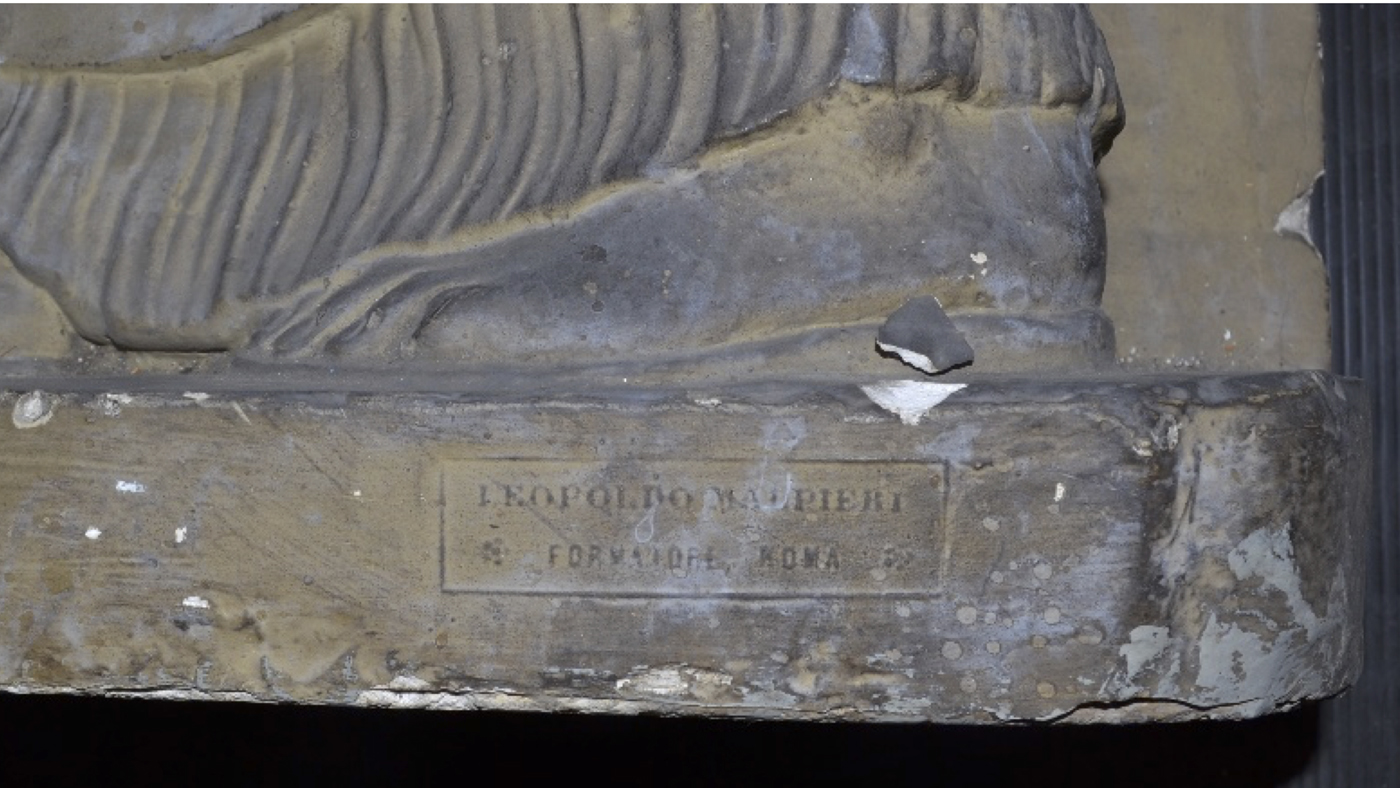
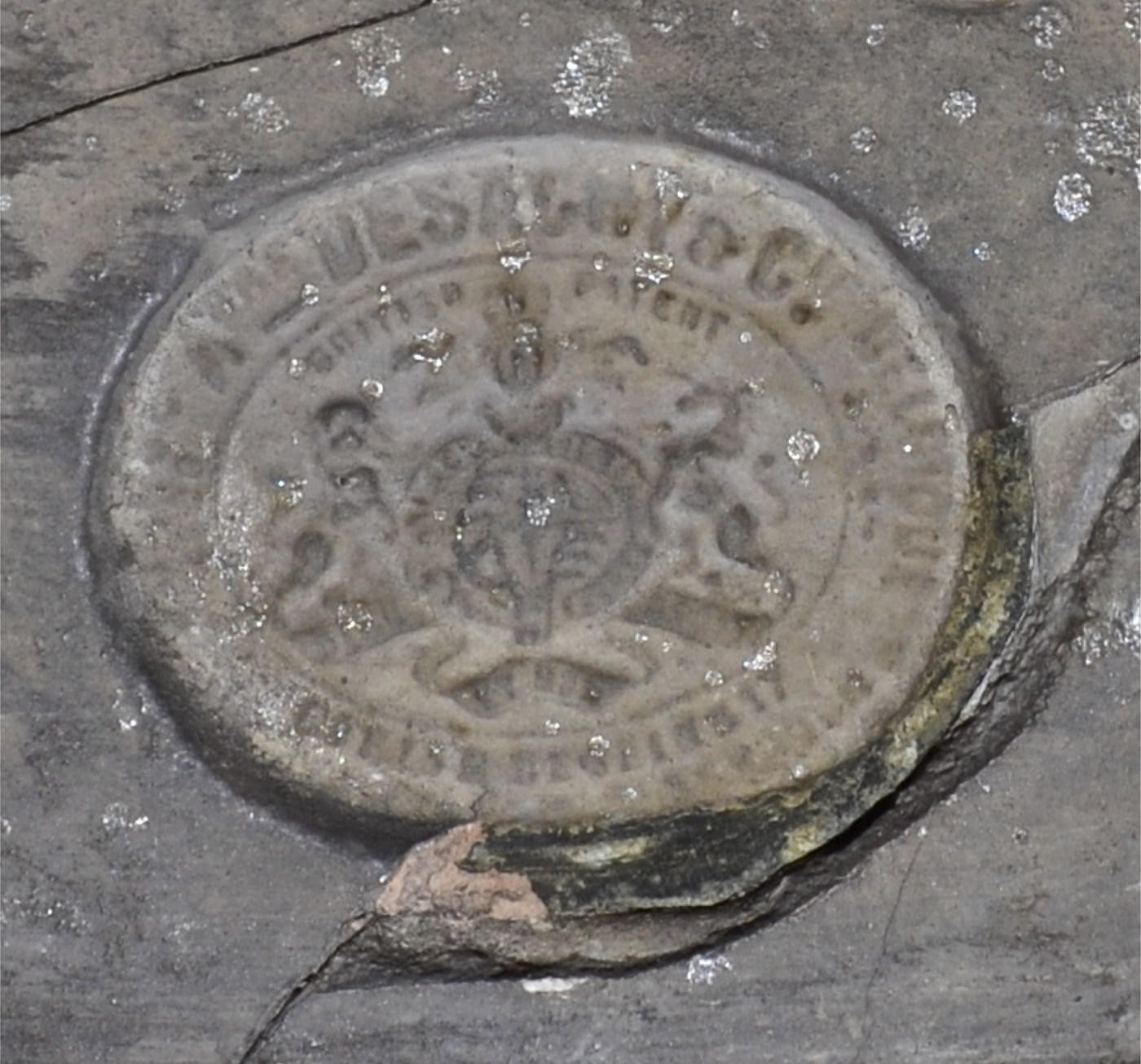
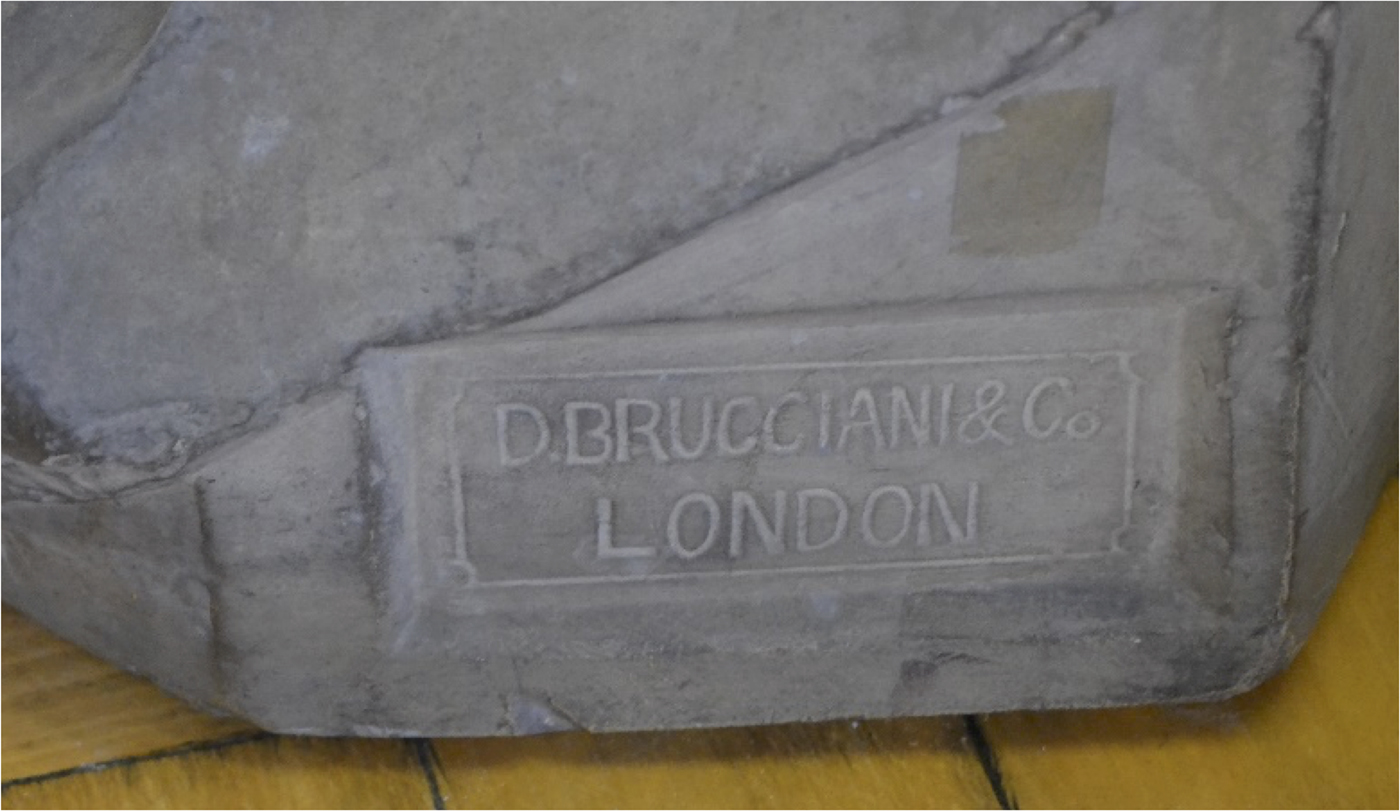
Well-known companies of formatori established stamps and name plates to be attached to these casts as a further mark of quality (Figs. 2–4). These branded casts had their own, legally recognised cachet. The foremost plaster casting company in nineteenth-century Britain was that of Domenico Brucciani (1815–80). Trading continued under the Brucciani name after his death and by 1891, the business was owned by a Joseph Louis Caproni (c. 1846–1900), who in the early years of the 1890s won a lawsuit concerning counterfeit Brucciani casts. These had been produced by a formator named Alberti working from Manchester and some had retained the Brucciani signature on the casts, while undercutting the Brucciani prices.Footnote 67
Malpieri stamp on British Museum cast of the Three Graces (2012,5024.26).

Desachy stamp on British Museum cast of the Eleusinian Relief (2012,5024.35).

Brucciani stamp on British Museum cast of the Venus de Milo (2012,5024.48).

That museums favoured branded, specialised suppliers with close connections to the originals is shown not only in Perry's meticulous research into where to source each cast for the South Kensington Museum, but also in the records relating to the cast acquisitions of the Metropolitan Museum. Its 1891 list of casts included not only the desired casts together with the location of the original, but also the preferred supplier from whom a cast might be purchased, and the price of the cast (Table 1). From this list, we can see that European firms were favoured. Numerically, the most significant suppliers are the firms of Brucciani and Martinelli, as well as the casting departments of the Louvre and the Staatliche Museen. And within these, specific workshops were recommended for casts of particular sculptures: generally, the workshop with the best access to the original and, therefore, the best chance of a high-quality, accurate cast moulded directly from the original (a ‘first generation’ cast). While suppliers like Brucciani also offered a more comprehensive range of casts, they were favoured by the Metropolitan Museum for sculptures at the British Museum (the Bruccianis having been involved with the casting of objects from the British Museum since the 1850s);Footnote 68 the Louvre workshop was used for those at the Louvre. There are some instances of these suppliers also being used when the original was in another collection, but they were known to have a good cast. For example, the Metropolitan Museum's list recommended Brucciani for the Centocelle Eros and the Belvedere Torso, although both originals are housed at the Vatican. Berlin had (and still has) both a large original collection and a vast repository of excellent moulds and casts, including those from the German excavations at Olympia. The Athens-based Martinelli had become well established following a commission to cast for these German excavations and was also used for casts of Greek works.Footnote 69
List of preferred suppliers of classical casts.

The same trend is found in the 1917 list of the Bulletin of the College Art Association of America, which references the makers suggested by the Metropolitan Museum's list and notes in particular: August Gerber (Cologne), Brucciani (London), Sabatino de Angelis (Naples), Gillieron & Son (Athens), Lelli (Florence) and Pierott (Milan). Once more, there is a preference for European makers with it here explicitly stated that American suppliers are employed only as a last resort, since it is presumed that they do not use moulds taken directly from the originals. ‘American Museums even make casts from casts [“second generation” casts], a great help under present conditions [WWI]. Caproni and Brothers, 1914 Washington St. Boston is the firm most accessible just now, when freight from abroad is so uncertain.’Footnote 70 The casts of the New York based L. Castelvecchi & Co. were claimed to have been ‘from the originals direct’ (cited above), but P. P. Caproni's were evidently second generation: ‘Our casts are from imported models, made directly from the originals’ (above). American makers like Caproni and Castelvecchi are again entirely absent from the overview of suppliers of casts and copies given by Frieze at the University of Michigan.Footnote 71 He mentions: the Royal Polytechnic School at Munich and the Moulage of the Louvre for full-sized plaster casts; bronze reductions by F. Barbedienne in Paris, reduced copies and life-sized busts from A. Desachy at the French National School of Fine Art, as well as full-sized statues; and terracotta reductions by Giovanni Mollica at Naples.
The museums and universities made a keen effort to update their casts following recent discoveries, and to ensure that their collections reflected the latest scholarship.Footnote 72 This concern is reflected in the catalogues of the favoured casting firms. The repertoire of Napoleone F. Martinelli, for example, dealt exclusively with Greek archaeological sculptures and sculptural fragments. Works were added on a regular basis as they were discovered or became available for casting. For example, the 1875 edition of the Martinelli catalogue contains four addenda: two in 1876, one in 1877, and one in 1879. Moreover, by the late nineteenth century, the Brucciani catalogues had been updated to include important new casts of the Berlin Adorante, the Victory of Samothrace, the Prima Porta Augustus and the Praxitelean Hermes.Footnote 73 Where casts from these firms were not forthcoming, institutions were sometimes known to take their own moulds and casts of particular objects of interest. For example, casts of the Arch of Trajan were acquired by the University of Michigan as part of a joint venture with Princeton, the Art Institute at Chicago and the museum of the University of Pennsylvania in Philadelphia.Footnote 74 Casters were also attached to excavations: Martinelli had been employed for the German excavations conducted at Olympia in the 1870s, and when the French School at Athens started major excavations at Delphi in 1892, their finds were recorded both by using photography and by establishing a workshop at Athens for the making of moulds to record and distribute discoveries.Footnote 75
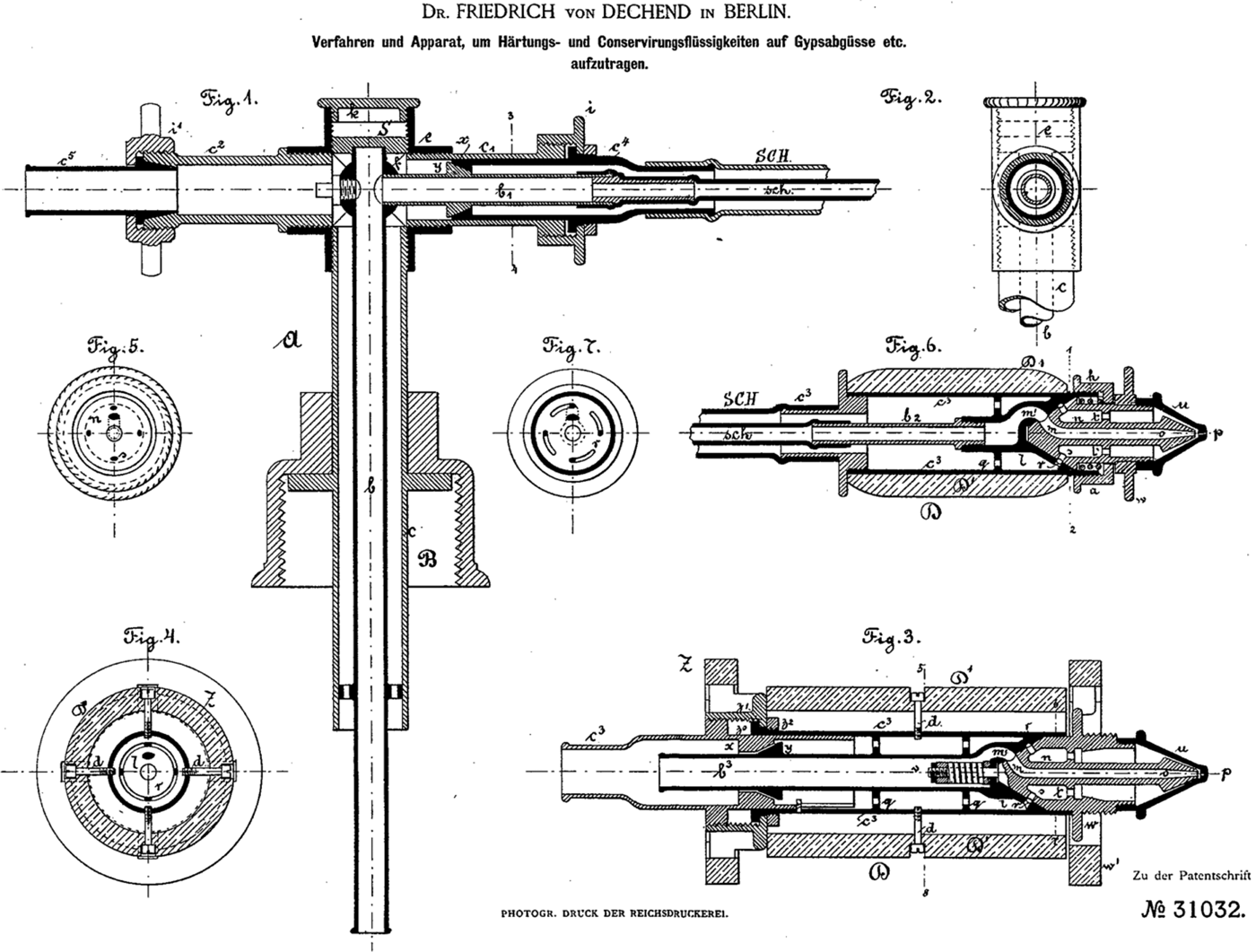
At the same time, scientists were working to perfect casting materials and techniques, with particular attention given to protecting their delicate surfaces, ensuring that they preserved all of the fine surface details captured during moulding and casting. In the mid-nineteenth century, the Prussian government awarded a prize to Dr Reissig for his development of a method for treating casts in such a way that they would become water-resistant. This involved converting the surface of the calcium sulphate casts into either barium sulphate or calcium silicate, both of which are insoluble compounds.Footnote 76 In the 1870s, the development of new casting materials and protective measures was further encouraged in Germany through the formation of the Commission for Consultation on the Treatment and Conservation of Plaster Casts, created on the instigation of the Royal Ministry for Education in Berlin.Footnote 77 In response to this, Von Dechend designed a machine both to clean plaster casts and to treat them with liquid hardening preparations to protect their surfaces (Fig. 5).Footnote 78 By 1885, Von Dechend's machine had been installed at the Royal Museum (now known as the Altes Museum: part of the Staatliche Museen), as well as at the Gewerbe Museum, and at the museum in Kassel.Footnote 79 By 1890 it was also in use at the Boston Museum of Fine Arts (MFA), and had been ordered by museums in Chicago, New York and Norwich (USA). Many of Perry's casts for the South Kensington Museum were ordered from Germany, where these surface treatments were being developed, and the V&A records indicate that they were applied to those casts.Footnote 80 The V&A records also state that this treatment had been applied to certain casts at the British Museum and that Dr Hodgkinson of the Science Museum was conducting experiments inspired by the work of Von Dechend. On 8 June 1882, it was agreed that Hodgkinson's hardening process would be trialled on Perry's casts, and after reviews on 7 June and 6 July 1883, it was determined that the process should be applied to all of the remaining casts.Footnote 81
Illustrations from Von Dechend's patent (Deutsches Patent- und Markenamt no. 31032).

The spread of Von Dechend's machine combined with the efforts of the formatori di gesso firms encouraged the notion that these new casts were pure, mechanical embodiments of form, exactly reproducing the sculptures from which they were moulded. This quest for accuracy tallies with changing attitudes to restoration in the same period. In the later nineteenth century, restoration was viewed with an increasingly critical eye. This practice had presented another nail in the coffin for the old canon, which was now deprioritised not only because they were considered Roman copies of Hellenistic originals, but because most of these sculptures had also been heavily restored. Very few sculptures are discovered in a complete, stable condition and prior to the nineteenth century, full restoration was typically viewed as a prerequisite to ensure suitability for display. As well as reattaching broken parts, ‘restoration’ might involve cleaning and resurfacing. Where significant parts were missing, they were often supplied from detached pieces of other ancient sculptures or new parts were created. The posture and composition of broken works was conjectured, and ambiguous subjects were given new attributes to reflect recognisable figures. In some cases, entire statues were constructed from unrelated fragments that were then coloured and textured to create the illusion of a homogeneous whole.Footnote 82 These highly interventive restoration processes were often well disguised in the originals, but even harder to spot in the casts of the sculptures, whose uniform plaster bodies obscured material differences. Yet renowned works of the old canon became famous in large part because of the widespread dissemination of casts, copies and illustrations.
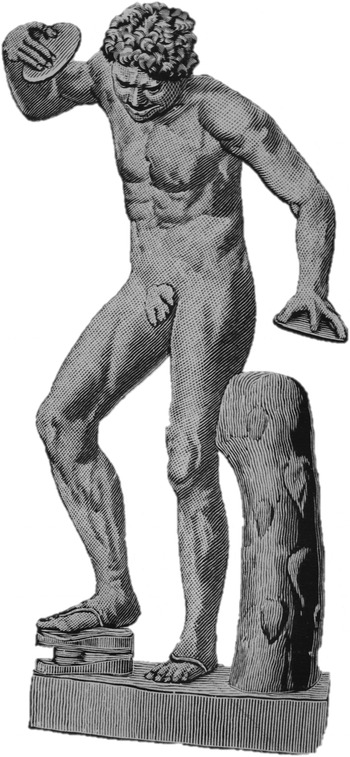
The spread of these forms without indication of the exact nature of the applied restorations and their relationship with the original has had significant repercussions. Not only did it lead to the misunderstanding of certain sculptural forms,Footnote 83 but it actively encouraged the restoration of other fragmentary original sculptures to follow these famed restorations, distorting the perception of the prevalence of particular types (and, thus, the spread and nature of Roman ‘copying’). Julia Habetzeder's (Reference Habetzeder2012) study of the Dancing Faun of the Uffizi is a prime example. This statue was known by the seventeenth century and contains high-quality restorations including the head, calves, arms and hands, which were probably executed in the sixteenth century.Footnote 84 The high quality of the restorations led to their attribution to Michelangelo and the idea expressed by August von Cohausen in 1888 that the head must have been original and reattached, while Michelangelo must have seen the original hands holding cymbals but chose not to use them.Footnote 85 The most prominent, recognisable, well-known elements of this sculpture are restorations, but it is not clear that they were correctly hypothesised. Recent interpretations suggest that the faun formed part of a group, together with a nymph, in The Invitation to the Dance, where the faun is more likely to be snapping his fingers than holding cymbals.Footnote 86 Habetzeder shows that the ‘satyr with cymbals’ motif was rarely attested in Roman sculpture but that examples of ancient sculptures with restored hands holding cymbals are relatively common: at least sixteen examples are found in the important sculpture compilations published by Charles Othon Frédéric Jean-Baptiste de Clarac (Reference de Clarac1826–53) and Salomon Reinach (Reference Reinach1897–1930).Footnote 87 The Dancing Faun of the Uffizi was therefore used as a prototype for other restorers of ancient statues; this was only encouraged by the spread of casts (Fig. 6). The Dancing Faun achieved fame early on, and there are countless examples of casts, copies, drawings and engravings of the statue. These influenced the way that other restorers approached their own sculptures, which they wanted to reflect this famous example.Footnote 88
Drawing of a cast of the Dancing Faun.*

By the late eighteenth century, as archaeology started to emerge as an academic discipline, these opaque, free-handed approaches to restoration were questioned. Bartolomeo Cavaceppi was the first to formulate explicitly how ideas of historical accuracy might be applied to restoration practice; he was probably influenced by his friendly association with Winckelmann, who himself had deplored contemporary restoration practices of ancient bronzes at Pompeii and Herculaneum.Footnote 89 Cavaceppi's late-eighteenth century essay on restoring ancient sculpture, Raccolta d'antiche statue, busti, testi cognate (3 vols., Reference Cavaceppi1768–72), described various techniques that he declared unsavoury, including:
– making insignificant fragments look like famous works;
– damaging modern or Renaissance copies and then restoring them to look like ancient works;
– combining unrelated heads, bodies and other parts to create more impressive compositions;
– stripping ancient surfaces with tools and abrasives.
He also recommended that restoration using marble of matching colour should only be completed if at least two thirds of the sculpture were original, including the most important parts.Footnote 90 The German classical scholar Adolf Michaelis wrote of his admiration of these proposed theories but pointed out that even Cavaceppi himself did not always abide by them.Footnote 91 Nevertheless, following Cavaceppi, extensive restoration treatments did decline through the nineteenth century, according with the growing appreciation of the ruin and of historical accuracy.Footnote 92 While restoration did not completely halt through the nineteenth century, and some cases of misleading reconstructions were widely disseminated via cast collections, the new, cautious approach generally prevailed. Orietta Rossi Pinelli (Reference Pinelli2003, 62–8) identifies the inception of the public museum, especially the Pio-Clementino Museum and the installation of the Parthenon marbles at the British Museum, as having been particularly pivotal. In these new settings, the sculptures became historical documents and masterpieces of aesthetics, not just decorative objects. The museum served as a physical environment in which new scholarly theories could be presented and tested. Canova's famous refusal to restore the Parthenon sculptures and their public display in London marked a particular turning point in the history of restoration, theorised by Cavaceppi, but now increasingly put to practice.
After visiting the Parthenon marbles in London in 1815, as the Vatican's General Inspector of Antiquities, Canova ruled that it was preferable for Vatican purchases to be from ‘those monuments that are still conserved without restoration (non tocchi) in their ancient originality’.Footnote 93 The Vatican continued to conduct restoration work on sculptures acquired, but it was easier to control the extent of this when completed internally.Footnote 94 Similar developments can be seen in Naples. In 1818, the Accademia Ercolanese formulated a royal decree forbidding integrative restoration practices for antiquities; restoration was completely halted until 1821, when new stricter rules were formulated.Footnote 95 Towards the latter part of the century, campaigns were begun actively to derestore sculptures now deemed to have been treated inappropriately. This trend was encouraged by Camillo Boito, an important Italian architect and art historian, who in 1884 called for the end of restoration during his lecture at the Turin Exhibition.Footnote 96 Systematic derestoration was taking place at the Dresden Museum by 1890, and this continued well into the twentieth century.Footnote 97 Most famous was the removal of Bertel Thorvaldsen's early nineteenth-century restorations of the Aegina pedimental sculptures at the Munich Glyptothek in the 1960s.Footnote 98 Other drastic derestorations took place at the Ny Carlsberg GlyptothekFootnote 99 and the Los Angeles County Museum, including the Hope Athena, the Hope Hygieia and the Statue of an Athlete.Footnote 100
Concerning the casts of the later nineteenth century, this much more cautious approach to restoration is reflected not only in the demand that they should be accurate reproductions of the sculptures moulded, but also in the scholarly treatment of those on display. As we have seen, restoration did not completely stop in this period and many of the cast collections continued to include at least some of the more heavily restored old canon. To counter this, for instance, Edward Robinson's Reference Robinson1887 Descriptive Catalogue of the Casts from Greek and Roman Sculpture at the Museum of Fine Arts, Boston, meticulously describes known restorations that have been transferred to the casts.Footnote 101 Equally, there were cases in which casts were used to test out different restorations. Ernest Arthur Gardner encouraged viewers to cast a critical eye over sculptures likely to have been restored, but wrote: ‘To restore a cast, or even the original in plaster, without cutting away its fractures, is of course harmless and often useful, and this plan is sometimes adopted.’Footnote 102 While fewer interventions were made to the original sculptures, the casts presented a medium through which different compositions could be tested without compromising the authenticity of the original. Robinson wrote in his later 1892 catalogue on the Eirene and Ploutos:
RESTORATIONS: Of the Eirene, the lower half of the nose, the right arm, the fingers of the left hand, with the vase, and pieces in the folds of the drapery. Of the child, both arms, the left foot, the fore part of the right foot, and the neck. The head, with restored end of nose, is ancient, but of Parian marble, and probably belonged to an Eros.Footnote 103
With the exception of the head of Ploutos, these restorations have since been removed from the original at the Munich Glyptothek. However, the cast of the same statue in the collection at Charlottenburg, Berlin, continues to include all restorations, but Eirene holds a cornucopia instead of a vase.Footnote 104 This group had first been considered to represent the infant Dionysos and his nurse, Ino-Leukothea (Queen of Thebes); however, Brunn identified it as a copy of the Eirene and Ploutos by Cephisodotos the Elder through a comparative study with Athenian coins. These coins show Eirene holding a small cornucopia (the attribute of Ploutos), rather than a vase and the texture of the plaster cornucopia of the Berlin cast suggests that it was modelled, rather than moulded from a marble restoration.
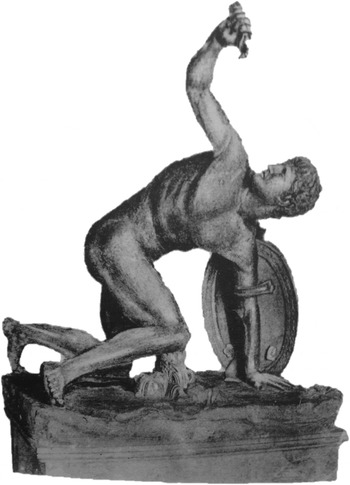
Publications such as Robinson's were all the more important for identifying restorations, since the commercial catalogues produced by the casting firms were not always reliable. The Fonderia Chiurazzi was a bronze art foundry established in Naples in 1870 and mentioned in Baedeker's Reference Baedeker1903 Italy: Handbook for Travellers as being ‘specially good’.Footnote 105 Universities and museums relied mostly upon casts of plaster, but sometimes bought bronze casts. The Field Museum of Chicago, for example, holds a collection of copies of small Roman bronzes produced by Sabatino de Angelis, another firm based in Naples. The University of Pennsylvania also holds a collection of 400 Chiurazzi bronze casts, purchased in 1904 by John Wanamaker; and in the 1970s, J. Paul Getty bought numerous Chiurazzi bronzes for the Getty Villa in Malibu, California.Footnote 106 The information contained within the 1900 Chiurazzi catalogue, however, presents a clear example of misinterpretation encouraged by early, highly interventive restoration practices. The cast in question is that of the Fallen Warrior of the Capitoline Museum (Fig. 7). This was created from a torso later recognised as the Discobolus type, attributed to the mid-fifth century BC classical Greek sculptor Myron. The torso was perhaps found in the early sixteenth century but is not securely recorded until it appeared in the workshop of the sculptor Pierre-Étienne Monnot (1657–1733), and was subsequently purchased by Clement XII (1652–1740) in 1734 for the Capitoline Museum, where it was given pride of place at the centre of its main salon.Footnote 107 Sandra Barr (Reference Barr2009) has argued that the transformation of this torso into a falling gladiator was prompted by the popularity of the highly celebrated Dying Gaul (Fig. 8). The Dying Gaul was probably discovered shortly before 1623 in the Gardens of Sallust during the building of the Villa Ludovisi, and also entered the Capitoline collections.Footnote 108 Barr contends that the torso would certainly have been recognisable to Monnot at least as a standing figure, if not specifically as a Discobolus, and that he deliberately ignored this fact, avoiding more suitable restoration, to create a composition that was visually reminiscent of the acclaimed Dying Gaul. The torso was transposed into a pyramidal form with the addition of a restored head and limbs, so that the figure appears to be a warrior falling to the ground. This form of dynamic composition was favoured by Hellenistic sculptors and is seen in the composition of the Dying Gaul, itself restored, less drastically, by Ippolito Buzzi. Recent research has suggested that it was also subject to a later programme of restoration, perhaps following a breakage of the earlier composition. This relates to the right arm, which in Buzzi's restoration and the original Roman composition is now thought to have been positioned at a steeper angle, closer to the body, as if in the act of falling.Footnote 109 Monnot's warrior, frozen as he breaks his fall with his left arm, would have been even more closely evocative of this earlier form of the Dying Gaul.Footnote 110 The attempt at connection was apparently successful, and the Dying Gaul and the Fallen Warrior were displayed together at the Capitoline Museum. Both remain exhibited at the museum to this day; however, they have been displayed in separate rooms since 1817. The restoration has long been recognised as inaccurate in academic literature, but the 1900 cast catalogue of the Fonderia Chiurazzi shows how easily it was for viewers to be misled. The Fallen Warrior is described as follows:
This famous statue was discovered in the Gardens of Sallust in 1600. From the character of the head it is evident that it is the same type as the other gladiator and has the same beauty in facial expression.Footnote 111
Drawing of a cast of the Fallen Warrior.*

Drawing of a cast of the Dying Gaul.*

The description links the find-spots of the Fallen Warrior and the Dying Gaul, stating that both were excavated from the Gardens of Sallust; however, it is far from clear that this is where the Fallen Warrior torso was discovered. The ‘beauty’ of the faces is also connected, but only the torso of the Fallen Warrior is original to the sculpture. The caption, therefore, supports Barr's notion that the restoration was deliberately designed to evoke the Dying Gaul – and that it was successful in doing so. The ‘other gladiator’ to which the description refers is the Dying Gaul: no. 386 in the catalogue and illustrated on the same page as the Fallen Warrior. The fact that the Fallen Warrior is an excellent example of one of the more fanciful early restorations is notably absent from the description, and was presumably not realised by the compiler of the catalogue. The case of the Fallen Warrior is, however, rare. In general, as demonstrated above, cast purchases and catalogues from the later nineteenth century reveal a growing emphasis placed on accurate and reliable casts, with greater focus on newly discovered sculptures not treated to the extensive restoration practices of earlier centuries.
By the early twentieth century, casts were being reproduced with greater and greater accuracy, and identikit sets of the same range of sculptures proliferated, sanctioned by publications such as Robinson's Reference Robinson1917 lists for schools and colleges. While sometimes used for experimental work, they were now generally considered objects of pure form: precise reproductions of ancient sculptures, disembodied from any of their own processes of making and with uniform white surfaces to eliminate any distraction. These factors led to the unquestioning acceptance of casts as unadulterated, ‘mechanical’ reproductions, but also contributed to their downfall. In the late 1870s, Wilhelm von Bode (later Director of the Berlin Museum) had asserted that even a small piece of original was much more valuable than a complete cast; following the explosion of cast acquisition in the next few decades, this was a perspective that started to take root.Footnote 112 The value of having nearly identical sets of casts in almost all museums and universities with classical archaeology departments was seriously questioned and casts increasingly sidelined. In 1898, John Charles Robinson (former curator and Art Referee at the South Kensington Museum) wrote for a Parliamentary Committee of Enquiry in Science and Art Administration that confusing decisions had been made regarding the acquisition of reproductions and, in particular, that the cast of Trajan's Column was ‘standing evidence of the monstrous perversion which even the most wisely conceived system may undergo when administered by aspiring incapacity’.Footnote 113 In 1905, the Art Gallery Committee of the City of Manchester examined the role of cast collections in museums across Europe and concluded:
In conversation with experts abroad, no subject seemed so controversial as that of the plaster cast. Opinions clashed as to their place in a museum of fine arts. Should they be shown in a separate building, or with original sculpture, or in a picture gallery? … One or two directors would exclude plaster casts entirely as they would copies of paintings, on the ground that they are misleading, being dull and mechanical in comparison with originals, and that they lack the individual touch of the artist, the plaster being cold and dead in effect, quite different from the tone, colour, surface texture, and play of light which give delight in the original marble or bronze.Footnote 114
The casts suffered particularly from this idea that they were ‘mechanical’ reproductions. While such objects were for a time considered essential tools in the new archaeological ‘laboratory’,Footnote 115 this definitively reduced their status to the functional rather than the aesthetic, and encouraged their removal from galleries and into storage rooms. It was no longer good enough for them to be accurate reproductions: they were not original and so to be worthy of continued museum display, they needed to be useful and explicitly instructive; yet for all of the laboratory analogies, not everyone remained convinced that they were quite as necessary as microscopes.Footnote 116 Many collections, therefore, were dismantled.Footnote 117 In the 1920s, the large collection at the Boston MFA, which had been so carefully described by Robinson, was broken up. Some of the casts were donated to local schools; in 1927, those not accepted were attacked with sledgehammers and dumped.Footnote 118 In Britain, the casts were marginalised, but some notion that they might present a useful resource for students persisted. In 1907, Perry's casts were moved from the V&A (formerly the South Kensington Museum) to the British Museum, where from 1909 they were exhibited in their own overcrowded ‘shed-like’ gallery.Footnote 119 In 1912, a considerable number of additional casts were ordered by the British Museum directly, including newly discovered korai from the Acropolis. Soon afterwards, Pryce's Reference Pryce1913 catalogue was published: A Guide to the Collection of Casts in British Museum. After only twenty years, however, the casts were moved into storage to make room for a new collection of early Cypriot sculptures; these were original archaeological pieces.Footnote 120 With the British Museum failing to find space for them, the casts were sent on long-term loan to University College London in 1934.Footnote 121 There they formed the nucleus of the college's new Museum of Classical Archaeology, where they lived until its closure in 1997, when they were returned to the stores of the British Museum.Footnote 122
During this period of twentieth-century decline, many collections of casts suffered from a lack of conservation attention. While nineteenth- and early twentieth-century methods and materials of conservation are not always now commended, the developments of Von Dechend and his contemporaries, together with their widespread adoption, reveal a keen concern for the careful preservation of the casts. The effort put into the acquisition and care of such casts has often now been forgotten, as approaches through the twentieth century were much more slapdash. Rather than attempting to clean the casts, ‘refreshing’ paint layers were applied; these would gradually blunt the surface details and obscure the original appearance of the cast. Analysis of the casts of the Farnese Hercules and Flora acquired in the seventeenth century for the Royal Alcázar by the Spanish court painter Diego Velázquez has revealed the presence of 8–9 layers of paint and varnish, none of which were original to the cast when first acquired. Altogether, these added an extra millimetre to the plaster substrate.Footnote 123 By the time that Perry's casts arrived at the British Museum in 1907, Cecil Smith had found that ‘the surface has … been coated with a preparation about 1/30 in. thick which destroys the sharpness of detail and generally blunts the impression, besides imparting an unpleasant tone of colour’.Footnote 124 Recent analysis of the Perry casts has shown that 2–3 ‘refreshing’ layers of paint were applied in most cases.Footnote 125 Even Bernard Ashmole, a proponent of the importance of casts, later remarked: ‘A collection of old plaster casts is one of the most depressing sights possible to imagine, and a powerful deterrent for any newcomer to the study of ancient sculpture.’Footnote 126 These perceptions permeated the popular imagination as some schools and universities continued to display a selection of poorly conserved casts. In the 1950s grammar school of her protagonist Frederica Potter, A. S. Byatt describes a plaster cast of the Venus de Milo: ‘Her texture was polished old cheese, the colour of Cheddar with a coat of thick varnish, which for many years had borne little relation to the marble it imitated and now seemed, seen critically, to be corpse-colour, opaque and turgid.’Footnote 127 The casts became stuck in a vicious circle of decline. Once neglected, they became dirty and discoloured, less accurately representing the surfaces of the originals when moulded and presenting an increasingly unappealing prospect for study and exhibition; thus, they become vulnerable to continued lack of conservation care and further decline.
In much more recent years, casts have been revaluated once again. One of the first works marking this new trend was Haskell and Penny's Reference Haskell and Penny1981 publication.Footnote 128 This provides a useful illustrated catalogue of sculptures held to have been the most important between 1500 and 1900, and, crucially, includes information relating to known instances of their moulding and casting. Haskell and Penny consider casts not just as decorative objects or didactic tools, but as a type of material evidence useful for illuminating contemporary attitudes towards classical sculpture and how knowledge and appreciation of such sculptures spread. Following this shift, casts are now considered historically significant artefacts representative of the society to which they originally belonged and invaluable to our understanding of classical reception, the mechanisms by which awareness of Greek and Roman sculptures spread, and the techniques used by the craftspeople involved in their creation. The final point means that the casts are significant not only in an abstract sense by virtue of the fact that they existed, but because their material characteristics can present important historical evidence. This feeds into newly conceived ideas of authenticity, as articulated by Jones:
Now a new concept of authenticity is emerging which encourages us to accept that objects have a continuing history, that they are damaged and repaired, cleaned and restored, and that their present state records not only the moment of creation but also a whole subsequent sequence of events.Footnote 129
This applies to both casts and originals: both represent a journey through time in which their physicality and theoretical interpretation is influenced not only by their original makers and commissioners but by all of those with whom they subsequently came into contact. The new sense of significance of the ‘journey’ of an object has led to another shift in restoration practices. In some cases, sculptures that were derestored in the late nineteenth or early twentieth century have now been rerestored. In the early years of the twenty-first century, for example, the Apollo Belvedere was rerestored: the restored right arm and hand and the left hand of the 1530s were reincorporated after having been removed in 1924.Footnote 130 The recent weight placed upon recognition of the historical significance of early restorations also adds fresh value to cast collections and historical cast catalogues, which can provide an archive of the sculptures in their various different forms. Velázquez's casts of the Farnese Hercules and Flora also, for instance, preserve the appearance of the marble originals in the middle of the seventeenth century, including Renaissance restorations that have now been removed.Footnote 131 The cast of the Orpheus Relief at the British Museum displays a head of Orpheus different from that now on the original relief at the National Archaeological Museum, Naples: this cast was made before rerestoration. Casts of the Laocoön group both at the Ashmolean Museum and the Museum of Classical Archaeology, Cambridge, display Laocoön with an outstretched right arm. These derive from the restorations of Giovanni Angelo Montorsoli (sixteenth century) and Agostino Cornacchini (eighteenth century), which were removed in 1942 to be replaced with an original bent arm that was discovered in Rome on the Via Labicana by Ludwig Pollak in 1905.Footnote 132
As both Robinson and Gardner emphasised, it is important to be aware of the potential presence of such restorations when using casts as archaeological tools, standing in for the original sculptures. We must also be mindful of their surfaces – often disfigured by ill-advised ‘refreshing’ layers of paint applied in the twentieth century. Their removal may now be considered, but conservators and curators will wish to be mindful of the intentions behind them and to preserve, where possible and appropriate, evidence of the earliest, carefully formulated, coatings.Footnote 133 This renewed care towards the casts only underlines the impact of perceived significance on their materiality. Therefore, with a sharp eye and some archival research into their history, casts can reveal a wealth of information through their embodied forms, whether for the accuracy of the details they preserve from the originals,Footnote 134 or as evidence of historical restorations, conjectural experiments or conservation treatments.