


Highlights
-
• The WEB device has revolutionized the management of wide-neck bifurcation aneurysms.
-
• Our multicenter study assessed the impact of ASA on key clinical endpoints.
-
• ASA use was associated with significantly lower retreatment rates, without compromising functional outcomes or mortality rates.
Introduction
The Woven EndoBridge (WEB) device, approved by the U.S. Food and Drug Administration in December 2018, has emerged as a pivotal tool for the management of wide-neck bifurcation aneurysms. Reference Ding, Lewis, Kadirvel, Dai and Kallmes1–Reference Dmytriw, Salem and Yang4 Unlike conventional endovascular techniques, the WEB is an intrasaccular flow disruptor, consisting of a self-expanding mesh sphere that promotes localized thrombosis within the aneurysm sac. Reference Goertz, Liebig and Siebert5 By isolating the aneurysm from the surrounding circulation, this mechanism reduces the risks associated with blood flow persistence, leading to favorable outcomes with minimal morbidity. Reference Gawlitza, Soize and Januel6,Reference Goertz, Liebig and Siebert7 The WEB device’s versatility has positioned it as a viable treatment for challenging wide-neck bifurcation aneurysm. Reference Gawlitza, Soize and Januel6,Reference Goertz, Liebig and Siebert7
Thromboembolic complications remain one of the most significant concerns in the postoperative period, often necessitating strategies to mitigate these events. Reference Lee, Gagnidze and Pan8–Reference Lu, Shi and Zhao10 Aspirin (ASA), as a single antiplatelet (AP) agent, has been widely recognized for its dual antithrombotic and anti-inflammatory properties, which can reduce the incidence of thromboembolic events and potentially confer neuroprotective benefits. Despite its widespread use in other neurosurgical and endovascular settings, the role of postoperative ASA following WEB treatment has yet to be clearly defined. Reference Dmytriw, Musmar and Salim11,Reference Feng, Chen, Chen and Sun12
Currently, practices regarding ASA administration after WEB deployment vary significantly across institutions. Reference Dmytriw, Musmar and Salim11 This inconsistency arises from concerns about balancing thromboembolic risk reduction with potential hemorrhagic complications. Reference Dmytriw, Musmar and Salim11 Furthermore, while some patients may already be on ASA for unrelated medical conditions, the true impact of this therapy on clinical outcomes following WEB treatment remains poorly understood. Therefore, in this multicenter study, we aim to evaluate the effect of postoperative ASA use on clinical outcomes in patients treated with the WEB device.
Methods
Patient sample and ethical approval
This study was conducted with the approval of the ethical standards committee at each participating institution, and the requirement for informed patient consent was waived. The underlying data for the study can be accessed through the corresponding author upon reasonable request.
The current study uses retrospective data from 10 academic institutions across the United States. A standardized data collection sheet was utilized to identify patients with ruptured or unruptured intracranial aneurysms treated using the WEB device. Aneurysms that did not fit the saccular shape, such as fusiform or blister aneurysms, were excluded from the study as they are not appropriate for WEB device treatment. The selection of aneurysms appropriate for WEB device placement, based on size and neck angle, was left to the discretion of the treating interventionalist.
The data collected included patient demographics (age, gender, smoking status, clinical presentation, Hunt and Hess grading scale, modified Rankin Scale (mRS) score, and AP and anticoagulant use), aneurysm characteristics (size, width, location, rupture status, presence of daughter sacs, branches arising from the aneurysm, and prior treatments), procedural details (procedure date, type of vascular access, procedure duration, and WEB device size), complications (including type, timing, location, symptoms, duration, and any additional treatments), angiographic outcomes (length of imaging follow-up, follow-up occlusion rates, device compaction, fate of branches originating from the aneurysm, and need for retreatment), and functional outcomes (length of clinical follow-up, mRS at last follow-up, and mortality).
Patients were categorized into two groups based on the postoperative use of ASA: those treated with ASA and those who were not.
ASA use was not standardized across centers; initiation or continuation was at the discretion of the treating physician, most often for pre-existing cardiovascular reasons rather than a uniform study protocol. Only patients taking ASA were included, and most patients took ASA for more than 6 months post-WEB. ASA ranged from 81–325 mg daily. Patients taking dual antiplatelet therapy or other AP were excluded (n = 187). 138 patients (63%) were on AP therapy prior to the procedure.
Angiographic outcomes, functional outcomes, and complications
Angiographic outcomes were evaluated using digital subtraction angiography, MR angiography, or CT angiography. Aneurysm occlusion was assessed using the Raymond-Roy (RR) occlusion classification: complete occlusion (RR1), neck remnant (RR2), and aneurysm remnant (RR3). Adequate occlusion was defined as either complete occlusion or a neck remnant without an aneurysm remnant.
Functional outcomes were measured using the mRS at the last follow-up, with mRS scores of 0–1 and 0–2 indicating excellent and good functional outcomes, respectively. Thromboembolic complications were recorded from the date of the procedure up to the last follow-up. Outcomes and complications were self-reported by the operators.
Statistical analysis
Statistical analyses were performed using R software version 4.2.2. Categorical variables were summarized as frequencies and percentages, compared using the χ 2 test and Fisher’s exact test where sample sizes were less than five. Continuous variables were reported as medians with interquartile ranges (IQRs) and compared using the Mann–Whitney U test. To control for potential confounders, propensity score matching (PSM) was employed. We estimated the propensity scores using logistic regression, and the optimal matching algorithm was used to match the cohort according to the estimated propensity. Selection of variables for PSM was informed by literature reviews, particularly focusing on factors likely to influence outcomes or complications. Reference Dmytriw, Musmar and Salim11,Reference Musmar, Adeeb and Gendreau13–Reference Diestro, Adeeb and Musmar17 These variables included age, sex, smoking status, aneurysm neck, width, maximum diameter, height, aneurysm shape (including the presence of daughter sacs and associated branches), aneurysm location, previous treatments, presence of multiple aneurysms, and clinical presentation. Results were considered statistically significant if the p-value was less than 0.05.
Results
Baseline characteristics
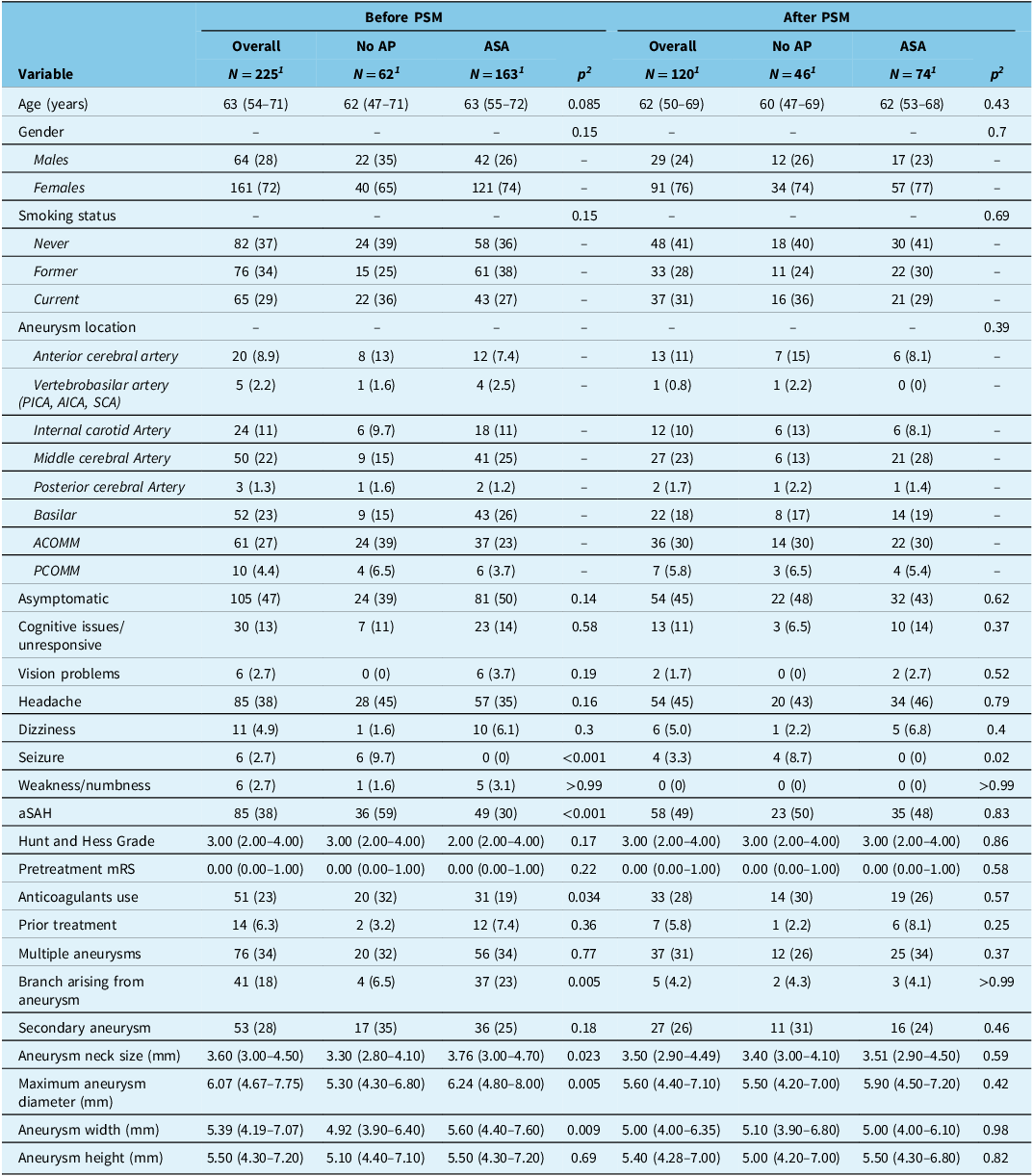
The study included 225 patients, of whom 62 (27.6%) did not receive postoperative ASA (No AP group), and 163 (72.4%) received ASA (ASA group). Before PSM, there were no significant differences in median age between the groups (62 years [IQR 47–71] in the No AP group vs. 63 years [IQR 55–72] in the ASA group, p = 0.085) (Table 1).
Baseline characteristics of patients included in the study

1 Median (IQR); n (%).
2 Wilcoxon rank sum test; Pearson’s Chi-squared test; Fisher’s exact test.
PSM= propensity score matching; ASA= aspirin; AP= antiplatelet; PICA= posterior inferior cerebellar artery; AICA= anterior inferior cerebellar artery; SCA= superior cerebellar artery; ACOMM= anterior communicating artery; PCOMM= posterior communicating artery; aSAH= aneurysmal subarachnoid hemorrhage; mRS= modified Rankin scale score.
Regarding aneurysm characteristics, the ASA group demonstrated larger median aneurysm neck sizes (3.76 mm [IQR 3.00-4.70] vs. 3.30 mm [IQR 2.80–4.10], p = 0.023) and greater maximum aneurysm diameters (6.24 mm [IQR 4.80–8.00] vs. 5.30 mm [IQR 4.30−6.80], p = 0.005). Asymptomatic cases were more prevalent in the ASA group (50% vs. 39%, p = 0.14), while aneurysmal subarachnoid hemorrhage (aSAH) was significantly higher in the No AP group (59% vs. 30%, p < 0.001).
Outcomes
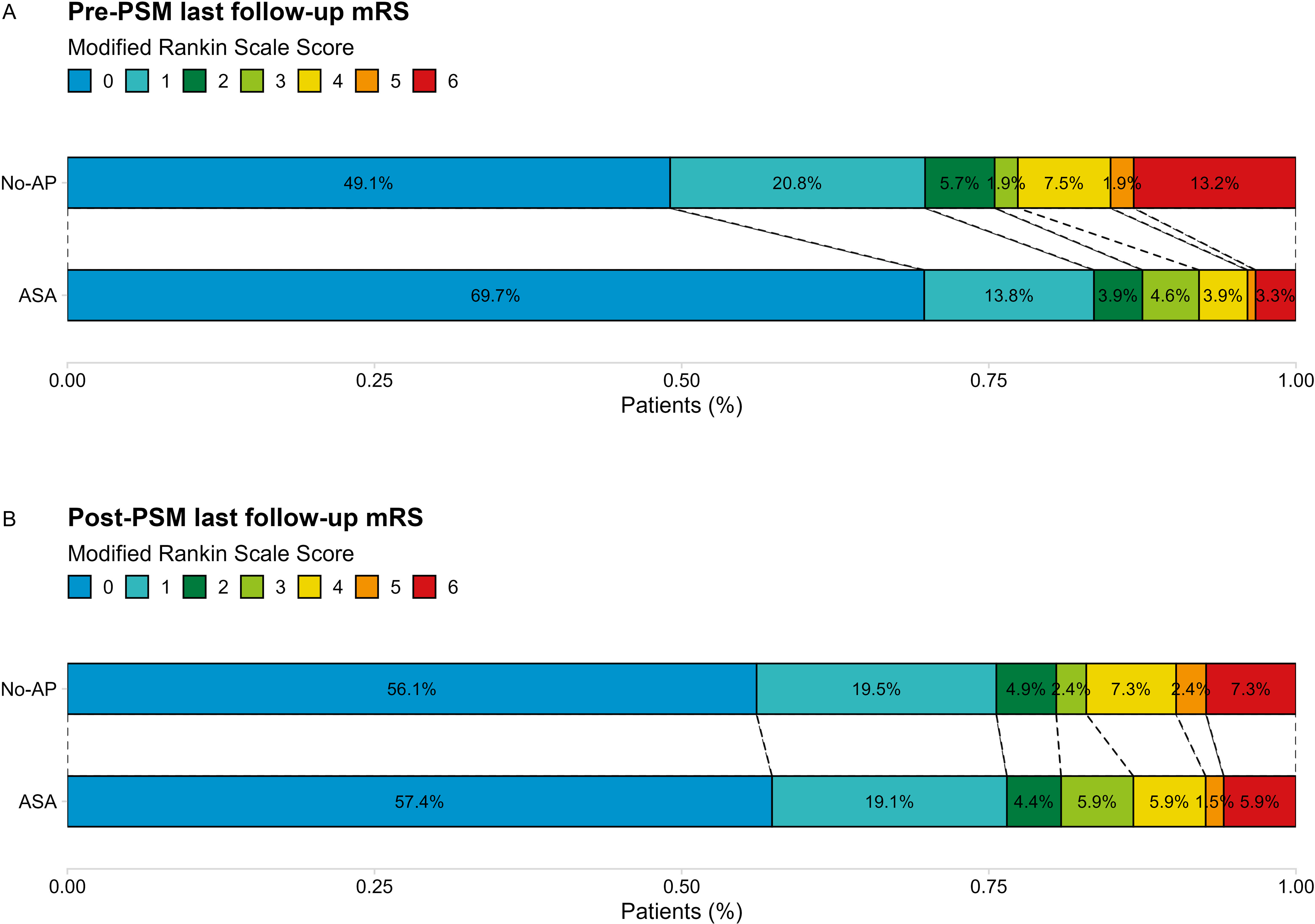
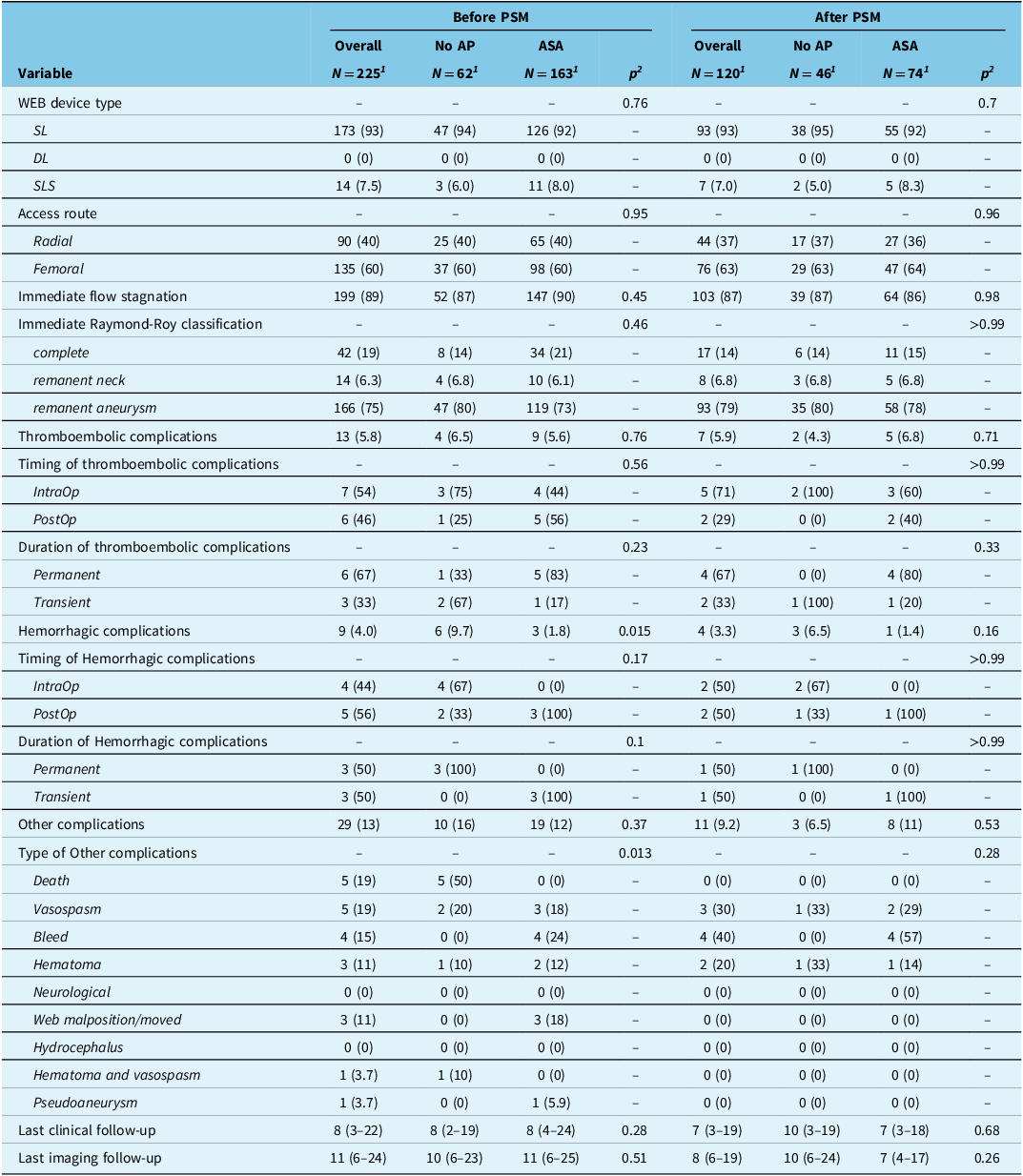
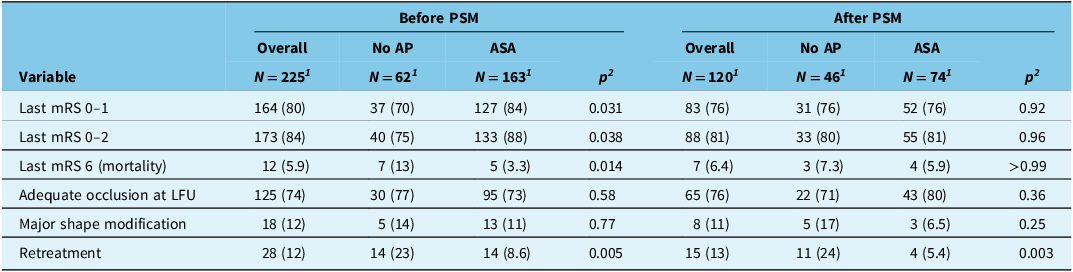
Femoral access was the predominant approach for aneurysm management, utilized in 60% of cases overall (Table 2). Prior to matching, excellent functional outcomes at last follow-up, defined as mRS 0−1, were significantly higher in the ASA group (84%) compared to the No AP group (70%) (p = 0.031). Similarly, mRS 0–2 rates were higher in the ASA group (88% vs. 75%, p = 0.038) (Table 3) (Figure 1). Mortality (mRS 6) was significantly greater in the No AP group (13% vs. 3.3%, p = 0.014).
Distribution of last follow-up modified Rankin scale (mRS) scores before and after propensity score matching (PSM). (A) Pre-PSM comparison of mRS scores between the aspirin (ASA) group and the No-antiplatelet (AP) group at last follow-up. Each colored segment corresponds to an mRS category (0 = no symptoms, 6 = death). Proportions (%) are shown within each segment. (B) Post-PSM comparison of mRS scores between the ASA and No-AP groups at last follow-up. Stratified percentages are shown for direct comparison of functional outcomes after matching.

Procedural characteristics of patients included in the study

1 Median (IQR); n (%).
2 Wilcoxon rank sum test; Pearson’s chi-squared test; Fisher’s exact test.
PSM= propensity score matching; ASA= aspirin; AP= antiplatelet; SL= single-layer; DL= dual-layer; SLS= single-layer sphere.
Outcomes of patients included in the study

1 Median (IQR); n (%).
2 Wilcoxon rank sum test; Pearson’s chi-squared test; Fisher’s exact test.
PSM= propensity score matching; ASA= aspirin; AP= antiplatelet; mRS= modified Rankin scale score; LFU= last follow-up.
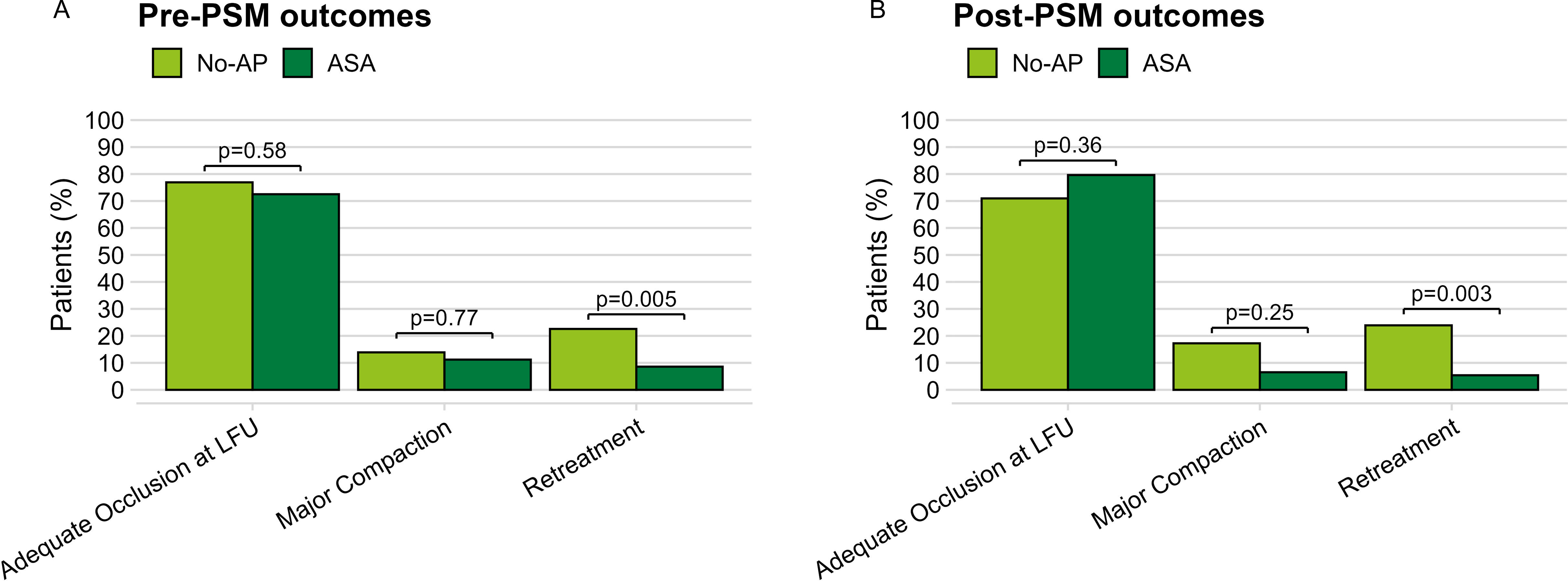
Retreatment was notably more frequent in the No AP group (23%) compared to the ASA group (8.6%) (p = 0.005) (Figure 2).
Angiographic and retreatment outcomes before and after propensity score matching (PSM). (A) Pre-PSM comparison of outcomes between the aspirin (ASA) group and No-antiplatelet (AP) group. Outcomes include adequate occlusion at last follow-up (LFU), major WEB device compaction, and retreatment rates. Percentages are displayed for each group, with p-values provided for between-group comparisons. (B) Post-PSM comparison of the same outcomes between ASA and No-AP groups, with p-values shown for each outcome.

Propensity score matching
After PSM, 120 patients remained in the analysis (46 in the No AP group and 74 in the ASA group). Mortality (mRS 6) remained slightly higher in the No AP group (7.3% vs. 5.9%), though this did not reach statistical significance (p > 0.99) (Table 3) (Figure 1).
Retreatment rates were significantly lower in the ASA group (5.4% vs. 24%, p = 0.003). Adequate aneurysm occlusion at last follow-up was higher in the ASA group (80%) compared to the No AP group (71%), but this difference was not statistically significant (p = 0.36) (Figure 2).
Sub-group analysis based on ruptured status
A subgroup analysis was performed stratifying patients by rupture status. No significant differences were observed in immediate or long-term angiographic outcomes, thromboembolic or hemorrhagic complications, functional outcomes (mRS 0–1, mRS 0–2, or mortality), or device-related events across rupture subgroups (all interaction p > 0.05) (Figure 3).
Subgroup analysis stratified by rupture status. Forest plot showing odds ratios with 95% confidence intervals for key outcomes in patients with ruptured and unruptured aneurysms treated with the WEB device, comparing postoperative aspirin (ASA) versus No-antiplatelet (AP) groups. Outcomes include immediate adequate occlusion, thromboembolic and hemorrhagic complications, other complications, functional outcomes at last follow-up (modified Rankin Scale (mRS) 0–1, mRS 0–2, and mortality), adequate occlusion at last follow-up (LFU), major WEB device shape modification, and retreatment rates. P values for each subgroup and interaction P values are displayed.

Discussion
This study evaluated the outcomes of postoperative ASA use compared to No AP therapy in patients treated with the WEB device for intracranial aneurysms. Before PSM, patients in the ASA group demonstrated significantly better functional outcomes, with higher rates of mRS 0–1 and mRS 0–2 at last follow-up, as well as a significantly lower mortality rate. Additionally, retreatment rates were markedly lower in the ASA group compared to the No AP group. After PSM, the ASA group showed lower retreatment rates with no significant differences in functional outcomes or mortality rates compared to No-AP.
The management of wide-neck bifurcation aneurysms has historically been challenging, often requiring intricate endovascular techniques such as balloon remodeling or stent-assisted coiling. Reference Pierot, Cognard, Anxionnat, Ricolfi and Investigators18–Reference Zaidat, Hanel and Sauvageau26 These approaches generally rely on AP therapy, particularly when stents are involved, to minimize the risk of thromboembolic complications. However, the use of antiplatelets, including ASA, carries an increased risk of hemorrhagic events, which can be especially concerning in the context of ruptured aneurysms. Reference Zhao, Tan and Yang27–Reference Feng, Wen, Feng, Fang, Liu and Huang31 The development of the WEB device as an intrasaccular flow disruptor was intended to address these issues by eliminating the need for stent placement. Reference Dmytriw, Musmar and Salim11 Because the device is fully contained within the aneurysm sac, it reduces reliance on AP therapy, such as ASA, and allows for safe treatment even in complex cases without the routine use of APs. Reference Dmytriw, Musmar and Salim11
Although there are no standardized guidelines for antiplatelet use with the WEB device, clinical practices differ among studies, particularly when distinguishing between ruptured and unruptured aneurysms. Reference van Rooij, Sprengers and Peluso32 For unruptured aneurysms, many operators initially use ASA or AP therapy as a precaution, providing flexibility if stent placement becomes necessary. Reference van Rooij, Sprengers and Peluso32 In cases where stenting is avoided, antiplatelet agents are often reduced or discontinued entirely. For ruptured aneurysms treated with the WEB device, especially the single-layer sphere model, evidence suggests that antiplatelet therapy may not be required. Reference Da Ros, Bozzi and Comelli33–Reference Harker, Regenhardt and Alotaibi36 Several studies have instead utilized systemic heparinization or heparin in flush bags during the procedure as an alternative, while others reported avoiding antithrombotic therapy altogether. Reference Da Ros, Bozzi and Comelli33–Reference van Rooij, van Rooij and Peluso35
Previous studies on the WEB device, such as the WEB-IT trial, demonstrated promising outcomes, with adequate occlusion rates around 85% and low complication rates. Reference Arthur, Molyneux and Coon37 In the WEB-IT trial, only 19/150 (12.7%) patients were not given antiplatelet medications 30 days after the procedure, 37/142 (26.1%) at 6 months, and 74/143 (51.7%) at 12 months. Reference Arthur, Molyneux and Coon37 In a multicenter study by Dmytriw et al., which is the only published study to date specifically investigating the impact of postoperative ASA use post-WEB, Reference Dmytriw, Musmar and Salim11 ASA was associated with better functional outcomes and lower mortality rates with higher retreatment rates. In the present study, ASA was associated with lower retreatment rates, without compromising functional outcomes or mortality rates. These findings can be explained by the fact that inflammation has increasingly been recognized as a key factor in the pathophysiology of intracranial aneurysms, Reference Aoki, Nishimura and Matsuoka38 and ASA, as an antiplatelet agent, is known to inhibit proinflammatory mediators such as matrix metalloproteinases (MMP-2 and MMP-9) and tumor necrosis factor-alpha (TNF-α). Reference Yiqin, Meilin, Jie and Keping39–Reference de Miguel, de Frutos and González-Fernández42 The ability of ASA to attenuate inflammation within the aneurysm wall may contribute to stabilizing the aneurysm after treatment, thereby reducing the need for retreatment. Reference Musmar, Spellicy, Abdelgadir, Kraljic, Zomorodi and Hasan43
Another explanation for the observed lower retreatment rates in the ASA group could be related to reduced major compaction rates of the intrasaccular WEB device. Concerns regarding WEB compaction, which can increase the risk of recanalization and the need for retreatment, were initially described by Cognard and Januel. Reference Cognard and Januel44 Subsequent small-scale studies further investigated this phenomenon. Reference Caroff, Cortese and Girot45–Reference Janot, Herbreteau and Amelot48 Intrasaccular WEB compaction is defined by a decrease in the device’s height, primarily due to the deepening of concave recesses at its proximal and distal ends over time. Reference Caroff, Cortese and Girot45 The gradual movement of the proximal marker (near the aneurysm neck) and the distal marker (toward the aneurysm apex) toward the center of the device suggests that this process may be linked to clot organization and retraction. Reference Pierot, Costalat and Moret49 Mechanical compaction of the WEB device is predominantly driven by physical forces such as blood flow dynamics and the elasticity of vessel walls. Reference Cognard and Januel44–Reference Janot, Herbreteau and Amelot48 These forces cause the device to compress or settle over time, resulting in compaction. While ASA does not directly influence these mechanical forces, its ability to reduce thrombus formation and suppress inflammation may contribute to a more stable biological environment surrounding the device. Reference Musmar, Spellicy, Abdelgadir, Kraljic, Zomorodi and Hasan43 By minimizing inflammatory responses and limiting excessive thrombus burden, ASA may promote improved healing, thereby decreasing the likelihood of major compaction and subsequent retreatment. Reference Musmar, Spellicy, Abdelgadir, Kraljic, Zomorodi and Hasan43
Limitations
This study has several limitations that must be acknowledged. The retrospective nature of the study introduces inherent biases related to patient selection and data collection. Although PSM was utilized to mitigate confounding factors, the possibility of residual confounding remains, particularly from unmeasured variables that could influence the observed outcomes. Furthermore, the relatively small sample size after PSM limits the statistical power to detect significant differences between groups. Additionally, follow-up in the matched cohort was relatively short, which may limit assessment of longer-term durability and late events. The variability in clinical practices across the 10 participating centers may have contributed to heterogeneity in treatment approaches, particularly regarding decisions on AP therapy. This variability is especially relevant for patients with ruptured versus unruptured aneurysms, where institutional protocols and individual clinician preferences may dictate the use of ASA. ASA dose, pre-procedure loading, and duration of therapy were also not standardized. Although aneurysm size variables were incorporated into matching, subgroup outcome analyses stratified by aneurysm size were underpowered. Finally, the reliance on operator-reported outcomes and complications introduces the risk of reporting bias, which may have influenced the accuracy of the recorded results.
Conclusion
In this multicenter study, postoperative ASA use following WEB treatment for intracranial aneurysms was associated with significantly lower retreatment rates, without compromising functional outcomes or mortality rates. These findings highlight ASA’s potential role in stabilizing the aneurysm after WEB deployment. Further studies are needed to confirm these results and guide postoperative management strategies.
Acknowledgements
None.
Author contributions
B.M, H.A.S, J.M.R, N.A, A.A.F, E.A, B.E, B.M.H, J.A.G, K.W.S, J.B, V.M.S, F.E, E.S, A.A, R.A.H, A.A, C.M, A.M, N.C, M.K, S.G, R.G, V.J, E.L, A.S, Y.K, A.Z.C, J.E.D, H.H, A.A, D.M.H, C.N, H.H.C, B.G, J.M., S.I.T, M.R.G, R.H.R, P.J contributed to the conception and design of the work.
B.M, H.A.S, J.M.R, N.A, A.A.F, E.A, B.E, B.M.H, J.A.G, K.W.S, J.B, V.M.S, F.E, E.S, A.A, R.A.H, A.A, C.M, A.M, N.C, M.K, S.G, R.G, V.J, E.L, A.S, Y.K, A.Z.C, J.E.D, H.H, A.A, D.M.H, C.N, H.H.C, B.G, J.M., S.I.T, M.R.G, R.H.R, P.J were involved in the acquisition of data, and data analysis and interpretation.
B.M, H.A.S, J.M.R, N.A, A.A.F, E.A, B.E, B.M.H, J.A.G, K.W.S, J.B, V.M.S, F.E, E.S, A.A, R.A.H, A.A, C.M, A.M, N.C, M.K, S.G, R.G, V.J, E.L, A.S, Y.K, A.Z.C, J.E.D, H.H, A.A, D.M.H, C.N, H.H.C, B.G, J.M., S.I.T, M.R.G, R.H.R, P.J drafted the work and revised it critically for important intellectual content.
All authors gave final approval of the version to be published and agree to be accountable for all aspects of the work.
Funding statement
This research received no grant from any funding agency in public, commercial, or not-for-profit sectors.
Competing interests
The authors have no personal, financial, or institutional interest in any of the drugs, materials, or devices described in this article.
Data availability statement
The relevant anonymized patient-level data are available on reasonable request from the authors.
Ethical standards
All procedures performed in the studies involving human participants were per the Institutional Review Board ethical standards, national research committee, the 1964 Helsinki Declaration, and its later amendments or comparable ethical standards.
Informed consent
The study protocol was reviewed and approved by the Institutional Review Board. Following institutional guidelines, all protected health information was removed, and individual patient consent was not required in the analysis of the case series.



Target article
The Effect of Aspirin Use Following Woven EndoBridge Treatment: A Multicenter Study with Propensity Score Matching
Related commentaries (2)
Reviewer Comment on Musmar et al. “The Effect of Aspirin Use Following Woven EndoBridge Treatment: A Multicenter Study with Propensity Score Matching”
Reviewer Comment on Musmar et al. “The Effect of Aspirin Use Following Woven EndoBridge Treatment: A Multicenter Study with Propensity Score-Matching”