


9.1 Conceptual Foundations
Over the past two decades, research on cognitive training has greatly expanded in a number of disciplines (e.g., experimental psychology, education, neuroscience). The burst of cognitive training studies in the literature has also created ongoing debates regarding the effectiveness of training. Some of the most challenging topics include individual differences in responsiveness to training, transfer effects, and measurement issues. The focus in this chapter is on the effects of training in children, with special attention to those with different language skills (e.g., second language learners, children with developmental language disorder). Therefore, leaving aside other widely targeted domains in the general training literature, our discussion centers around a few selected training domains most often associated with language acquisition and language processing.
9.1.1 Cognitive- and Neuroplasticity
The technical advances of the twenty-first century have had a great impact on brain studies, including research on plasticity. Advances in noninvasive imaging techniques have allowed researchers to examine functional and structural changes in the brain in response to environmental modifications. While earlier studies focused primarily on age-related changes in children, more recent research has also examined the functional and structural changes in response to training in both children and adults (for reviews see e.g., Erickson et al., Reference Erickson, Gildengers and Butters2013; Kolb et al., Reference Kolb, Gibb and Robinson2003; Mahncke et al., Reference Mahncke, Bronstone and Merzenich2006). Measures of functional brain plasticity, for instance, have predicted individual differences in response to training (Iuculano et al., Reference Iuculano, Rosenberg-Lee, Richardson, Tenison, Fuchs, Supekar and Menon2015).
Progress in neuroscience research has resulted in a greater understanding of brain functions during learning, brain lateralization, and sensitive periods of brain development when the neural system is most receptive to environmental influences. While these sensitive periods are typically associated with the first couple of years of life, sensitive periods of brain development for higher cognitive functions extend into adolescence. Moreover, there is evidence for brain plasticity beyond these periods and into adulthood (Rice & Barone, Reference Rice and Barone Jr2000; Shaw et al., Reference Shaw, Kabani, Lerch, Eckstrand, Lenroot, Gogtay and Wise2008). A number of studies found that activities, such as exercising, typing, juggling, playing video games, and mindfulness often culminate in changes in gray matter, even in adults (Driemeyer et al., Reference Driemeyer, Boyke, Gaser, Büchel and May2008; Hamzei et al., Reference Hamzei, Glauche, Schwarzwald and May2012; Hölzel et al., Reference Hölzel, Carmody, Vangel, Congleton, Yerramsetti, Gard and Lazar2011; Kühn et al., Reference Kühn, Gleich, Lorenz, Lindenberger and Gallinat2014).
Such changes in gray matter are dynamic in nature with overproduction and regression in different areas of the brain, peaking at varying ages. The developmental trajectories of gray matter in children also differ across those brain regions that support the development of various cognitive skills. These trajectories indicate a strong association with gender, intelligence, and overall functioning. For example, females typically reach peak gray matter volumes one to two years earlier than males (Giedd et al., Reference Giedd, Blumenthal, Jeffries, Castellanos, Liu, Zijdenbos and Rapoport1999), and children with higher IQs demonstrate a more dynamic pattern of brain plasticity than children with lower IQs within the average range of intelligence (Shaw et al., Reference Shaw, Greenstein, Lerch, Clasen, Lenroot, Gogtay and Giedd2006). In addition to these changes in gray matter, the white matter myelination process also continues beyond childhood and adolescence (Rapoport & Gogtay, Reference Rapoport and Gogtay2008). Thus, current findings show that besides age, many other factors influence changes in the brain, and this needs to be considered when interpreting and translating the outcomes from neuroscience research into educational practices.
The initial excitement over the new findings on cognitive and brain plasticity contributed to the rapid development of various brain training products that quickly became popular among educators and within the general public. This trend was in line with the increasing spread of new technologies within society. Unfortunately, a number of these brain training techniques were not rigorously studied prior to becoming commercially available and consequently led to the development of some questionable teaching strategies and inefficient educational methods in the past (Alferink & Farmer-Dougan, Reference Alferink and Farmer-Dougan2010). Despite the lack of evidence about these products’ effectiveness, a growing number of educators and clinicians started using them with different populations (Rossignoli-Palomeque et al., Reference Rossignoli-Palomeque, Perez-Hernandez and Gonzalez-Marques2018). During the last decade, however, researchers from both neuroscience and education have given increasing efforts to narrow the gap between basic research and theory and practice in education (Hruby, Reference Hruby2012). These interdisciplinary advances have offered great support to neuroscience-based approaches to educational and clinical practices. Nonetheless, it is essential that educators and clinicians work together with neuroscientists to avoid the oversimplification or misinterpretation of basic neuroscience outcomes within their practices.
9.1.2 Generalization – Transfer
One of the most critical features of training is generalization or transfer. “Transfer” is a term that has been widely used in the literature but with inconsistent meaning. Some scholars refer to three dimensions within this concept: tasks, contexts, and transfer across time, while others consider only one or two aspects of this notion (Klahr & Chen, Reference Klahr and Chen2011). Moreover, along these dimensions, we find a variety of combinations across studies. In some research, the target training tasks and contexts may be very similar to the testing conditions with only the time intervals varied, whereas in other studies, task features may differ, while the contexts remain the same. The temporal features may also vary to different degrees. The distance between the training task and the transfer battery can be minimal (near transfer) or rather large (far transfer).
Previous research has shown that improving one’s performance on specific tasks is relatively easy, regardless of domain (Green, Reference Green2020). Study participants get better on the skills they practice, and their improved performance may transfer to other contexts. This is considered near transfer, as long as the same skills are needed during practice and testing. Near transfer can be very useful in certain cases, such as dynamic assessment, which is a test-teach-retest situation. In other cases, such specific changes may indicate a limitation in generalizability. In superficial cases, the literature sometimes refers to the narrow specificity to training tasks and stimuli as the “curse of specificity” (Bavelier et al., Reference Bavelier, Green, Pouget and Schrater2012). Katz and Shah (Reference Katz, Shah, Novick, Bunting, Dougherty and Engle2020) distinguished between superficial versus real transfer instead of near and far transfer based on the notion that the ultimate goal of training is to find improvements in measures that are not explicitly targeted in the training paradigm (real transfer). This occurs, for example, when practicing some basic skills (e.g., sustained attention, working memory updating, etc.). Real transfer leads to improvements in more complex behaviors because of changes in the underlying mechanisms (e.g., academic achievement in children; Titz & Karbach, Reference Titz and Karbach2014).
However, studies that have examined the effect of training on various functions, including some nontargeted ones, have shown mixed results. Some researchers have found no evidence of transfer (Thompson et al., Reference Thompson, Waskom, Garel, Cardenas-Iniguez, Reynolds, Winter and Gabrieli2013), while others suggested robust transfer effects (Blacker et al., Reference Blacker, Negoita, Ewen and Courtney2017). This discrepancy in outcomes is, to some extent, related to the variability in design of the training and transfer tasks (Shipstead et al., Reference Shipstead, Redick and Engle2012). The following are examples of problems that have been identified in developmental studies with respect to methodological issues: (1) most studies used a pre-and post-test design that seems to be less sensitive to changes than time-series experiments (see Figure 9.1), and they do not allow for detection of effects that occur over time following training (Cepeda at al., Reference Cepeda, Pashler, Vul, Wixted and Rohrer2006; Glass et al., Reference Glass, Willson and Gottman2008); (2) they did not systematically vary the transfer distance (i.e., near and far) or type of training (Karbach & Kray, Reference Karbach and Kray2009); (3) the materials for intervention were not age appropriate (Diamond & Lee, Reference Diamond and Lee2011); (4) participants developed different strategies as a mechanism for transfer (Katz & Shah, Reference Katz, Shah, Novick, Bunting, Dougherty and Engle2020); and (5) researchers used a limited number of outcome measures, primarily accuracy and reaction time, without considering other outcomes, such as error detection and adjustment, strategy use, or switching and mixing costs in task switching paradigms.
Training designs
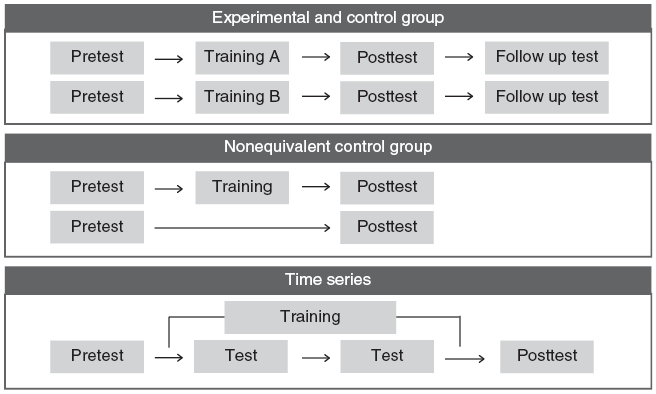
When some of the above variables were controlled, cognitive training, specifically task switching training, resulted in increased real transfer effects, including better interference control, improved working memory performance, and higher scores on fluid intelligence tasks (Kray et al., Reference Kray, Karbach, Haenig and Freitag2012). The findings of successful training studies have revealed that it is critical to have outcome measures that are more sensitive to changes in the underlying mechanisms than the most common methods (e.g., post-error slowing, post-error reduction of interference, mixing cost, strategy use, etc.). Accordingly, to increase learning and transfer, we need to facilitate different mechanisms that promote brain plasticity, such as multisensory facilitation, reinforcement, multi-stimulus practice, among others (Deveau et al., Reference Deveau, Jaeggi, Zordan, Phung and Seitz2015). Most recent findings suggest that we may also rephrase our research questions; instead of asking whether a training method works, we should identify the individuals who can benefit the most from the given training and focus on answering the question of why some individuals improve their skills significantly, while others show minimal change in response to the same training procedures (Jaeggi et al., Reference Jaeggi, Buschkuehl, Jonides and Shah2011).
9.1.3 Individual Differences: Age, Socioeconomic Status, Motivation, Baseline
Even though the outcomes from cognitive training studies are quite mixed, the variations in individual responses to training can be traced to a number of common factors, including age, socioeconomic status, motivation, and baseline performance, as well as the interactions of these variables (Katz et al., Reference Katz, Jones, Shah, Buschkuehl and Jaeggi2021). Individual differences in training studies have been noted since the earliest years of research, yet the literature on factors that contribute to these differences contains very few systematic analyses even today. Nevertheless, what follows are some examples demonstrating the contributions of these factors on outcomes in responsiveness to training.
In a large study involving over 600 adolescents and young adults, Knoll and colleagues (Reference Knoll, Fuhrmann, Sakhardande, Stamp, Speekenbrink and Blakemore2016) found that older adolescents benefited more from training than the younger ones. Training in this study involved complex cognitive tasks and procedures that are believed to support math education, including numerosity discrimination, relational reasoning, and face perception. While face perception did not show any age effect, older adolescents and young adults showed greater improvement in numerosity discrimination and relational reasoning than the younger participants (no one was younger than 11). The authors commented that these data suggest continued brain plasticity for certain cognitive skills, and that the older participants might have used more efficient strategies (Knoll et al., Reference Knoll, Fuhrmann, Sakhardande, Stamp, Speekenbrink and Blakemore2016). However, it is important to note when interpreting these findings that the underlying mechanisms for some of these complex cognitive skills continue to develop during adolescence. Neuroscientists consider adolescence as a transitional period of time that is full of transformations. Imaging (i.e., MRI) studies have revealed that neurocircuitry and myelinogenesis are still changing in response to hormonal fluctuations and environmental factors. As the neurocircuitry strengthens, complex cognitive skills, such as problem-solving, multitasking, and processing of complex information, show improvement during adolescence (Arain et al., Reference Arain, Haque, Johal, Mathur, Nel, Rais and Sharma2013). Further, the prefrontal cortex reaches maturation during this period; thus, a number of cognitive control skills that are needed to perform complex cognitive tasks, like relational reasoning, are still developing between the ages of ten and twenty-four years (Casey et al., Reference Casey, Getz and Galvan2008).
In addition to age, socioeconomic status (SES) has also been linked to neurocognitive functions that support language development, cognitive control, and social-emotional processes (Ursache & Noble, Reference Ursache and Noble2016). Following evidence showing that cognitive skills, such as attention, are more vulnerable in children from low-SES families, a number of training studies focused on families with low SES (Hackman & Farah, Reference Hackman and Farah2009; Stevens et al., Reference Stevens, Lauinger and Neville2009) to examine the direct effects of training and the associated engagement of the parents on participating children. The outcomes of these studies are inconsistent. While Neville and colleagues (Reference Neville, Stevens, Pakulak, Bell, Fanning, Klein and Isbell2013) reported that their family-based training had a positive effect on both children’s brain functions supporting selective attention and the parents’ behaviors, Romeo and colleagues (Reference Romeo, Leonard, Scherer, Robinson, Takada, Mackey and Gabrieli2021), who replicated this family-based training, did not find the same results. In the latter study, children’s performance in the experimental group differed from the control only in fluid reasoning, but the two groups performed similarly in a number of other outcome measures, including different cognitive control functions and additional aspects of nonverbal IQ. Thus, the training did not improve children’s performance in areas other than reasoning. Previous research also showed a positive effect for cognitive training on the reasoning skills of children from disadvantaged families (Mackey et al., Reference Mackey, Hill, Stone and Bunge2011). A possible explanation for these positive outcomes is that the training studies targeted problem-solving and encouraged children to choose from various alternatives. Thus, performance on these tasks required focused reasoning from the participants.
The difference in findings between the two similarly designed family-based training studies (Neville et al., Reference Neville, Stevens, Pakulak, Bell, Fanning, Klein and Isbell2013; Romeo et al., Reference Romeo, Leonard, Scherer, Robinson, Takada, Mackey and Gabrieli2021) is most likely related to distinctions in methodology. Even though they assessed similar skills (e.g., language, problem-solving), they used dissimilar tasks and therefore measured different underlying functions (e.g., receptive vocabulary vs. recall; interpreting verbal material; executing verbal directions). Further, Neville and colleagues (Reference Neville, Stevens, Pakulak, Bell, Fanning, Klein and Isbell2013) used more rigorous selection criteria, which created a relatively homogeneous group; participants were monolingual and ethnically and racially less diverse, in addition to being a year younger than participants studied by Romeo and colleagues (Reference Romeo, Leonard, Scherer, Robinson, Takada, Mackey and Gabrieli2021), who had an ethnically and linguistically more diverse sample, including children with developmental disorders, children on medication, and participants who were enrolled in individualized education plans. All of these variables might have contributed to the inconsistent results. These findings show that training studies using the current methodologies most likely produce divergent findings, given the number of distinctive factors that affect the outcomes. These data further support the idea that we need to better understand the factors that affect individual responsiveness to training, develop measures that are more sensitive to changes in the underlying mechanisms, and use multiple outcome measures to get an accurate and comprehensive picture of the training effects.
Children’s responsiveness to training is further influenced by motivational factors. A number of constructs have been highlighted in the literature through which extrinsic rewards and expectancy effects have been more widely studied. Although the findings regarding the impact of extrinsic rewards on children’s performance are mixed in the literature, there seems to be a consensus among scholars suggesting that frequent and tangible rewards may undermine intrinsic motivation (Deci et al., Reference Deci, Koestner and Ryan2001; Ulber et al., Reference Ulber, Hamann and Tomasello2016). In contrast, verbal rewards are generally seen to boost intrinsic motivation. While tangible rewards may create a feeling of outside control, verbal rewards are perceived to have an informational function. This is particularly so when rewards are used as incentives compared to behavioral consequences. In the latter case, the reward functions as reinforcement, which is not associated with a loss in intrinsic motivation (Cameron & Pierce, Reference Cameron and Pierce2002).
Children’s perception of rewards is also influenced by the expectancy factor, that is, whether the reward is expected or unexpected. In training studies, this is often determined by the initial information that participants receive. Specifically, whether they are told that the training may improve certain functions, such as cognition or whether they are promised a monetary reward prior to their participation in training. In these cases, participants expect the reward. When no reward is promised prior to participation but is given following completion of the study, that reward is unexpected. Lepper and colleagues’ early study has already shown that expected rewards diminish children’s intrinsic motivation, whereas unexpected rewards have no such effect (Lepper et al., Reference Lepper, Greene and Nisbett1973).
More recent theories of cognitive control, such as the Expected Value of Control model (Shenhav et al., Reference Shenhav, Botvinick and Cohen2013), provide a more nuanced analysis of reward-based decision-making. This theory suggests that when performing a task, motivational factors, such as performance‐contingent rewards, modulate how much effort participants will deploy. Exercising control during task performance is costly, and this cost affects how much effort a participant is willing to exert. According to this reward-based perspective, two distinct networks (reward value and control functions) are implicated in encoding those motivational signals to play an essential role in cognitive control (Botvinick & Braver, Reference Botvinick and Braver2015). During task performance, several competing control signals are compared, and the signal that simultaneously optimizes the potential rewards and benefits while reducing the associated costs is selected. This reward-based decision-making is a critical component of the individual differences detected (Shenhav et al., Reference Shenhav, Musslick, Lieder, Kool, Griffiths, Cohen and Botvinick2017), and contributes to variations in baseline performance.
The initial behavior prior to training, baseline performance has been widely studied to determine the effectiveness of training methods, and it has been demonstrated that baseline performance and general cognitive resources positively correlate with training gains (Lövdén et al., Reference Lövdén, Brehmer, Li and Lindenberger2012). Performance at baseline and gains in transfer following training are also linked, but the findings in the literature are mixed. Some outcomes suggest that lower performance at baseline correlates with larger transfer gains, that is, participants who start out with the lowest performance show the greatest improvement following strategy instruction (Johann & Karbach, Reference Johann and Karbach2021). Conversely, superior baseline performance associated with better outcomes has also been reported, implying that individuals with better initial cognitive skills show more efficient learning and experience greater gains (Katz et al., Reference Katz, Jones, Shah, Buschkuehl and Jaeggi2021). Although the explanations for these two scenarios differ, the role of baseline measures is emphasized in both of them. It is also possible that gains are primarily related to performance at the two ends of the accuracy continuum; participants with the lowest and highest baseline measures benefit most from training. The differences in outcomes might further be related to interactions between baseline performance and other contributing factors, such as SES and motivation.
Baseline behavior plays a critical role in evaluating the response following training and in distinguishing between plasticity and flexibility. An immediate change in performance strategy is viewed as an indication of flexibility rather than a manifestation of plasticity (Wenger et al., Reference Wenger, Fandakova and Shing2021). While flexibility is reflected in immediate changes in the targeted behavior, plasticity is exhibited in extended performance changes once conditions are altered. The latter case indicates overall improvement in performance. An accurate assessment at baseline is necessary to clarify the source of improvement. Individual differences in the above components have been explored across various training domains, including domain-specific (e.g., working memory) and multidomain (e.g., music) training that are the two most relevant training types to our topic on cognitive control and language.
9.2 Training to Improve Cognitive Control
9.2.1 Working Memory Training
Working memory training is the focus of a growing line of research with the overall aim of improving cognitive abilities through different brain training programs (Hicks & Engle, Reference Hicks and Engle2020). Although there is a debate in the literature about the effectiveness of working memory training, the discussion among scholars is theoretically important and clinically/practically relevant for education, rehabilitation, job training, and aging studies, among others. A critical question is whether transfer occurs due to enhancement in individual working memory capacity or to an increase in efficiency when using the existing capacity following training (Könen et al., Reference Könen, Strobach and Karbach2021). Enhancing working memory capacity is the goal for many training studies with the assumption that enhanced capacity reflects training-induced cognitive plasticity (Lövdén et al., Reference Lövdén, Bäckman, Lindenberger, Schaefer and Schmiedek2010). Several theoretical frameworks, such as that offered by Lövdén or the cognitive routine framework by Gathercole and colleagues (Reference Gathercole, Dunning, Holmes and Norris2019), suggest that working memory tasks must create challenges and require novel cognitive routines in order to foster plasticity. One way to achieve this goal is to design adaptive task conditions that keep the working memory demands near the individual’s limit. Such adaptive tasks could vary in trial types and testing modes (Könen et al., Reference Könen, Strobach and Karbach2021).
A number of meta-analyses have been performed showing a certain degree of consensus among scholars regarding transfers to other nontrained working memory tasks (near transfer), but there is no agreement about far transfer effects (Könen et al., Reference Könen, Strobach and Karbach2021; Melby-Lervag & Hulme, Reference Melby-Lervåg and Hulme2013; Sala et al., Reference Sala, Aksayli, Tatlidil, Tatsumi, Gondo and Gobet2019). Numerous explanations have been provided for the mixed results. Some are related to theoretical questions, others to methodological ones, such as task selection; matching target functions in training to post-test measures; the length and frequency of the training sessions; and the type of control group.
These critical problems may have contributed to the low percentage of positive findings across studies. In their systematic review, Diamond and Ling (Reference Diamond, Ling, Novick, Bunting, Dougherty and Engle2020) reported data from studies using the two most widely researched training methods: Cogmed and the N-back task. Only 33 percent of studies using the popular computerized Cogmed training found even suggestive evidence for far transfer. Similarly, only 30 percent of studies using the well-established N-back paradigm revealed far transfer following training. The near transfer rates were noticeably higher, particularly for the Cogmed data, but it is important to note that most outcome measures were very similar to the training tasks in the Cogmed studies, and very few N-back studies included children as participants (Diamond & Ling, Reference Diamond, Ling, Novick, Bunting, Dougherty and Engle2020).
Another criticized aspect of training research is the persistence of improvement. Many working memory training studies did not include long-term follow-up tests. For the ones that examined persistence of benefit, two distinct patterns were found in both behavioral and neurophysiological studies. Some findings showed that without practice, performance returned to baseline, which is the same as the fade-out phenomenon. Others revealed that at least near transfer effects persisted between three and eighteen months following training (Green, Reference Green2020; Kuchinsky & Haarmann, Reference Kuchinsky, Haarmann, Novick, Bunting, Dougherty and Engle2020). These outcomes are quite contrary. Therefore, a general suggestion for future research is to design behavioral booster training to see whether increased retraining performance could be achieved more consistently.
Despite these issues, Katz and Shah (Reference Katz, Shah, Novick, Bunting, Dougherty and Engle2020) argued that if the near transfer in these working memory training studies was real and not superficial, then there should be some far transfer as well, even if the evidence for it is elusive. They provided an example related to reading comprehension. If we assume that working memory is a critical component in reading comprehension, and our participants show significant gains in working memory performance following training, then we could expect improvement in reading comprehension as well. However, if the same participants have low vocabulary scores which persist over time, then despite their working memory gains, they may show no improvement in reading comprehension, due to the negative impact imposed by their limited lexical knowledge (Katz & Shah, Reference Katz, Shah, Novick, Bunting, Dougherty and Engle2020).
The results from our Cognition and Language laboratory call attention to a further issue. Following a working memory updating training using the N-back task with neutral and proactive interference conditions with college students who were second language learners of English, we found far transfer for certain language tasks but not for others. Specifically, the training that focused on working memory updating and resistance to interference resulted in far transfer to a sentence processing task with lexical ambiguity (adapted from Norbury, Reference Norbury2005). Participants showed significant improvement from pre-test to post-test in resolving interference caused by the sentences with multiple plausible meanings. In contrast, the same participants showed no improvement in reading comprehension. Even though working memory is implicated in reading comprehension, this was an expected outcome because the reading comprehension task was not demanding on updating and interference control where the effects of this particular training could have been manifested (Wadhera, Reference Wadhera2020; Wadhera et al., Reference Wadhera, Campanelli, Marton, Rogers, Rau, Zhu and Kalish2018).
Our findings are in line with other scholars’ arguments (e.g., Dahlin et al., Reference Dahnlin, Neely, Larsson, Backman and Nyberg2008), emphasizing that it is critical to determine the specific cognitive or linguistic skills that we intend to target with a given training method and with the specific tasks that are being used during training.
9.2.2 Music Training
While working memory training is a domain specific method, music training is a multidomain approach that has an effect on various nonmusical cognitive and speech-language functions, such as memory, cognitive control, and speech encoding (Bugos et al., Reference Bugos, DeMarie, Stokes and Power2022; Ho et al., Reference Ho, Cheung and Chan2003; Patel, Reference Patel2011). Moreover, music may serve as a motivator in any training study for its positive emotional effects. Music training may incorporate music comprehensively or with a focus on one or more elements, such as meter, rhythm, melody, harmony, pitch, tonality, or volume.
A number of studies have examined the specific aspects of musical activities that may affect changes in different cognitive control functions, including visuo-motor skills, focused attention, and memorization, among others (De Dreu et al., Reference De Dreu, Nijstad, Baas, Wolsink and Roskes2012; Pallesen et al., Reference Pallesen, Brattico, Bailey, Korvenoja, Koivisto, Gjedde and Carlson2010). Similar to other types of training, the findings on transfer following music training are mixed. However, more consistent benefits have been seen in studies that targeted cognitive functions associated with auditory information processing and verbal working memory (Moreno et al., Reference Moreno, Bialystok, Barac, Schellenberg, Cepeda and Chau2011; Roden et al., Reference Roden, Grube, Bongard and Kreutz2014). For several verbal working memory tasks, such as word span and nonword repetition, during natural science activities, Roden and colleagues (Reference Roden, Grube, Bongard and Kreutz2014) reported that children in the music training group outperformed the controls. In contrast, the two groups were equal in visuospatial working memory (Roden et al., Reference Roden, Grube, Bongard and Kreutz2014). Similarly, Ho and colleagues (Reference Ho, Cheung and Chan2003) studied both the short- and long-term effects of music training on verbal and visuospatial working memory. In their follow-up study, one year after their baseline measures, children who had continued their music training showed further improvement in verbal working memory but not in visuospatial working memory, whereas children who had stopped their training after three months, showed no gains in either area. The authors proposed that children’s improvement in verbal working memory following continued music training was related to the reorganization of the temporal lobe (Ho et al., Reference Ho, Cheung and Chan2003).
A related question has been examined in another longitudinal study, where the focus was on training induced structural changes in the brain that could not be attributed to pre-existing biological traits (Habibi et al., Reference Habibi, Damasio, Ilari, Veiga, Joshi, Leahy and Damasio2018). For two years, these authors studied the effects of music training on six-year-old children’s brain structures and compared the data to those from two control groups: children involved in physical training activities and children who did not participate in any extracurricular activities. The baseline measures showed no structural differences among the children in the different groups. Following two years of music training, they found a different rate of cortical thickness maturation in temporal areas of the brain, specifically an asymmetric reduction of cortical thickness and volume of the posterior segment of the superior temporal gyrus and higher fractional anisotropy in the corpus callosum. The implication is that music training resulted in both macro- and microstructural changes in the brain.
These findings have been supported by further neurophysiological outcomes suggesting a link between music training and brain structures that are also involved in language processing at both subcortical and cortical levels of the brain (Jentschke & Koelsch, Reference Jentschke and Koelsch2009; Wong et al., Reference Wong, Skoe, Russo, Dees and Kraus2007). For example, music to language neural transfer was found in four–six-year-old children, who benefited from music training in an electrophysiological study using an oddball paradigm with musical notes (piano tones) and French vowels (Carpentier et al., Reference Carpentier, Moreno and McIntosh2016). These outcomes are consistent with previous results that have suggested increased brain signal complexity in temporal regions which are involved in perceptual processing of both music and language following music training (Koelsch, Reference Koelsch, Haas and Brandes2009; Moreno, Reference Moreno2009). Moreover, the music training-related changes in auditory discrimination seem to be modulated by individual differences in cognitive control. In a mismatch negativity study examining event-related potentials induced by sound changes, Saarikivi and colleagues (Reference Saarikivi, Putkinen, Tervaniemi and Huotilainen2016) found larger mismatch negativity, indicating advanced sound discrimination, following music training in children with high cognitive flexibility scores, regardless of their age. In contrast, children with low cognitive flexibility scores showed increases in mismatch negativity amplitude as they aged. Thus, children with lower cognitive flexibility scores were less advanced in sound discrimination, despite their participation in music training. In the control group (no music training), children with high cognitive flexibility scores showed increases in mismatch negativity amplitude with age, similar to the children who received music training but exhibited low cognitive scores. Children with no music training and low cognitive flexibility scores showed small mismatch negativity amplitude, and that did not increase with age. Hence, these data suggest that cognitive flexibility may influence both age-related and training-related plasticity of neural sound discrimination in children (Saarikivi et al., Reference Saarikivi, Putkinen, Tervaniemi and Huotilainen2016). This is another example of the interaction among multiple factors that influence training outcomes.
In contrast to the findings of these studies (i.e., Ho et al., Reference Ho, Cheung and Chan2003; Roden et al., Reference Roden, Grube, Bongard and Kreutz2014), Degé and colleagues (Reference Degé, Wehrum, Stark and Schwarzer2011) reported improvement in both auditory and visual short-term memory in nine–eleven-year-old children following music training. Their study differed from the others in methods: specifically in the age distribution of the participants; in the tasks administered to measure the memory functions; as well as in the length of training. The results from the study by Degé and colleagues showed more consistencies with the adult literature than with other studies on children. The literature on adults suggests that music training may contribute to the enhancement of general cognitive abilities that are reflected in improved verbal and visual memory performance. A critical issue in the literature is that most of the data come from correlational studies which do not allow any analysis of causal relationships (Swaminathan & Schellenberg, Reference Swaminathan and Schellenberg2021). On the one hand, there are findings suggesting that children’s cognitive control skills may modulate the effect of music training (Saarikivi et al., Reference Saarikivi, Putkinen, Tervaniemi and Huotilainen2016); on the other hand, it has been proposed that music training may exaggerate individual differences in cognitive control and language (Swaminathan & Schellenberg, Reference Swaminathan and Schellenberg2021). It is important for future research to use designs and analyses that enable us to explore the direction of the relationship between music training and different cognitive-linguistic functions.
9.3 Training Effects in Children with Different Language Skills
Studies focusing on far transfer have frequently asked the question whether the benefits from working memory or music training could transfer to different spoken or written language skills. It has been well established in the literature that working memory plays an important role in various aspects of language development, such as vocabulary acquisition (de Abreu et al., Reference de Abreu, Baldassi, Puglisi and Befi-Lopes2013; Gathercole, Reference Gathercole2006), sentence processing (Marton et al., Reference Marton, Schwartz, Farkas and Katsnelson2006; Montgomery et al., Reference Montgomery, Magimairaj and O’Malley2008), reading comprehension (Loosli et al., Reference Loosli, Buschkuehl, Perrig and Jaeggi2012; Swanson & Jerman, Reference Swanson and Jerman2007), and second language proficiency (Van Den Noort et al., Reference Van Den Noort, Bosch and Hugdahl2006). The relationship between music and language processing has also received notable attention. At the neurophysiological level, Patel’s overlap, precision, emotion, repetition, attention (OPERA) hypothesis proposed overlapping networks for music and language (Reference Patel2011); a link has been suggested between auditory rapid spectrotemporal and language processing (Tallal & Gaab, Reference Tallal and Gaab2006); common underlying processes have been found between linguistic stress and musical meter (Gordon et al., Reference Gordon, Magne and Large2011); and interactive effects have been identified between a musical chord’s tonal function and syntactic processing (Hoch et al., Reference Hoch, Poulin-Charronnat and Tillmann2011). At the behavioral level, phonological and pitch awareness have been associated with the development of pre-literacy skills in children (Degé & Schwarzer, Reference Degé and Schwarzer2011; Flaugnacco et al., Reference Flaugnacco, Lopez, Terribili, Montico, Zoia and Schön2015), and music experience has been linked to vocabulary acquisition (DeHaan et al., Reference DeHaan, Reed and Kuwanda2010).
9.3.1 Training Effects in Second Language (L2) Learners
A direct approach to examining the effects of working memory or music training on language can be employed by studying L2 acquisition and proficiency in children. A series of studies within this line of research have focused on the relationship between working memory and L2 vocabulary acquisition. Interestingly, distinct working memory approaches have been used, from phonological working memory training to visual, nonverbal working memory training. For example, phonological working memory training has been employed to study the recognition, short-term retention, and recall of single words and nonwords in English-learning Greek children. The experimental group received phonological working memory training for thirty-three sessions over twelve weeks, while the control group received regular language instructions for the same amount of time. Unlike the control group, the experimental group showed significant gains in both nonword repetition accuracy and productive vocabulary. There was no transfer to receptive vocabulary though, a finding which was associated with the fact that the mapping process is different for productive and receptive vocabularies. While in comprehension, a given phonological form has to be mapped onto its meaning, in production, a concept and related semantic meaning has to be linked to a specific phonological form. It has been proposed that the latter process places higher cognitive demands on the system (Karousou & Nerantzaki, Reference Karousou and Nerantzaki2022).
Unlike most working memory and L2 studies, Opitz and colleagues (Reference Opitz, Schneiders, Krick and Mecklinger2014) focused on the effects of visual working memory training using the N-back paradigm with abstract shapes on Chinese vocabulary character learning in German students. Outcomes from visual working memory training had been compared to the results of two control groups. One group participated in an auditory working memory training using bird sounds, while the other control group was passive and received no training. To examine changes at the neurophysiological level, functional magnetic resonance imaging (fMRI) was used pre- and post-training. Only the visual working memory training group showed positive transfer effects on visual Chinese vocabulary learning, while the two control groups showed none. Furthermore, the fMRI data revealed sustained activation in the left infero-temporal cortex following the visual working memory training only, and this activation was associated with behavioral transfer. As a result of visual working memory training, higher order visual regions, specifically the left mid-fusiform gyrus and the precuneus were recruited for Chinese vocabulary learning. The findings from the study by Opitz and colleagues (Reference Opitz, Schneiders, Krick and Mecklinger2014), from Karousou and Nerantzaki (Reference Karousou and Nerantzaki2022), and from our Cognition and Language laboratory (Wadhera, Reference Wadhera2020), all provide support to the notion that real transfer occurs when overlapping processes and brain regions are engaged by the working memory training tasks and the untrained tasks. In Karousou’s study, phonological working memory training transferred to productive but not to receptive vocabulary, because the training enhanced phonological awareness, a key component underlying vocabulary production. In Wadhera’s study, working memory training with a focus on interference control in English-language learners transferred to sentence processing with ambiguous words but not to regular reading comprehension. Sentences including ambiguous words require the suppression of interference among competing meanings. Thus, it is important for researchers to determine the underlying mechanisms that are activated during working memory training and by the post-training tasks themselves. Unless there is an overlap between the relevant mechanisms underlying those different activities, no real transfer can be expected.
Similar concepts have been suggested by studies exploring the relationship between music training and L2 acquisition. A stronger relationship has been found between music training and auditory perception during dictation than between music training and grammatical knowledge in Italian children learning English as their L2 (Talamini et al., Reference Talamini, Grassi, Toffalini, Santoni and Carretti2018). Participants in the music training group outperformed the controls in dictation. Both music learning and dictation require auditory analysis with a transformation between auditory sounds and written symbols. Delogu and colleagues (Reference Delogu, Lampis and Belardinelli2010) also reported selective transfer effects in children and adults. Melodic proficiency and music experience predicted participants’ tonal but not phonological identification (in Mandarin Chinese). Work from the same laboratory a year later, however, showed that musical experience positively affected both phoneme processing and overall language segmentation (Marie et al., Reference Marie, Delogu, Lampis, Belardinelli and Besson2011). The electrophysiological data indicated that lexical pitch perception and discrimination were faster for participants with prior music experience. Moreover, those participants made fewer errors in lexical categorization and showed higher levels of confidence in their categorization decisions than those without music training. This finding indicates differences in cognitive processes between the two groups, in addition to perceptual differences.
A number of studies have also suggested that attention and memory drive perception of acoustic features (Strait et al., Reference Strait, Kraus, Parbery-Clark and Ashley2010). Although most of these studies focused on adults, outcomes from preschool-age children also revealed that the combination of phonological and music training was particularly effective in facilitating the development of pre-literacy skills, such as phonological awareness in L2 learning (Herrera et al., Reference Herrera, Lorenzo, Defior, Fernandez-Smith and Costa-Giomi2011). Although there is evidence in the literature about the relationship between working memory and language, specifically vocabulary, listening abilities, and reading in L2 (Kormos & Sáfár, Reference Kormos and Sáfár2008), as well as between music training and L2 listening and reading (Zeromskaite, Reference Zeromskaite2014), most music training studies have not taken the role of working memory in L2 acquisition into account. Given these preliminary findings, we may assume that studying the role of working memory on the relationship between music training and L2 acquisition may lead to a better understanding of the interactions between lower- and higher-level processes (e.g., perception, attention, and memory for acoustic features), as well as of specific training effects.
9.3.2 Training Effects in Children with Developmental Language Disorder (DLD)
Cognitive training has been more effective in children with developmental challenges (e.g., low socioeconomic status, ADHD) than in typically developing children (Scionti et al., Reference Scionti, Cavallero, Zogmaister and Marzocchi2020). Based on these findings, we could assume that children with DLD might benefit from training programs as well, yet there are only scarce data on this population in the literature. There are at least two major issues that contribute to these limitations. First, the terms training and intervention are often used interchangeably, even though the overall structure and timeline of these two procedures are distinct. Further, based on their meta-analysis, Gillam and colleagues (Reference Gillam, Holbrook, Mecham and Weller2018) suggested that clinicians should choose more traditional intervention methods with children with DLD until there is a better understanding of the mechanisms underlying the more recent working memory training programs. Second, a critical component of training is transfer. The weakness in generalization/transfer is well documented in children with DLD (Schwartz & Marton, Reference Schwartz, Marton, Anderson and Shames2011). Despite these challenges, there are a few promising reports about working memory and music training in children with language impairment.
Working memory training has been employed to achieve both near and far transfer in children with DLD. It is well established in the literature that children with DLD exhibit weaknesses in working memory (Marton & Eichorn, Reference Marton and Eichorn2014; Marton & Schwartz, Reference Marton and Schwartz2003; Montgomery et al., Reference Montgomery, Magimairaj and Finney2010), therefore direct improvement of working memory itself (near transfer) is an important goal. Far transfer to language was also expected, based on the relationship between working memory and specific language skills. Stanford and colleagues (Reference Stanford, Durrleman and Delage2019) developed a training program that was specifically designed to train particular working memory components which had previously been associated with the development of syntax. Following twenty-four sessions of working memory training (over 8 weeks), children with DLD in the experimental group performed better on both trained and untrained working memory tasks than the control children, who participated in a scholastic training program (general cognitive stimulation) but showed no improvement in performance on the same working memory tasks. Furthermore, the children with DLD in the working memory training group improved their production of accusative clitics pronouns, which is a construct that was not targeted during training but has been associated with working memory capacity (far transfer). Children in the scholastic training group did not improve in clitics production (Stanford et al., Reference Stanford, Durrleman and Delage2019). In more recent research from the same laboratory, Delage and colleagues (Reference Delage, Stanford and Durrleman2021) employed the same working memory training program as in the 2019 study to examine its effect on sentence repetition. The sentence repetition task included both syntactically simple and complex sentences with a focus on relative clauses. The control group participated in a scholastic training program again. In addition to showing improvement in untrained working memory tasks, children with DLD in the working memory training group also improved in sentence repetition, whereas the children in the scholastic training program did not show any changes in this area. Moreover, in the working memory training group, the changes were greater with the more difficult (object-relative) complex sentences than with the easier (subject-relative) sentences. In a follow-up study three months later with a subgroup of participants, the same effects were observed, indicating persistence of improved skills.
While Stanford and colleagues targeted verbal working memory in children with DLD, Vugs and colleagues (Reference Vugs, Knoors, Cuperus, Hendriks and Verhoeven2017) trained for visuospatial working memory and other cognitive skills. In addition to the immediate effects, these authors also examined persistence (performance six months later). Although this was only a pilot study with a small sample size, children with DLD showed improved performance in visuospatial storage and cognitive flexibility following training. There was no transfer to verbal working memory though. At the follow-up study six months later, children still exhibited increased attention control. These findings from Stanford and colleagues as well as from Vugs and colleagues further support the notion that successful training programs target underlying mechanisms that overlap with specific processes that are needed to perform the untrained tasks.
A music training method specifically targeting the development of cognitive-linguistic skills in children with DLD and other groups with neurodevelopmental disorders is the “Developmental speech and language training through music” program (Thaut & Hoemberg, Reference Thaut and Hoemberg2014). The overall idea is that training should be based on goal-oriented music with age-appropriate creative elements. Rhythm may be used as the primary facilitator of speech-language production, while melody may promote the development of prosody. Key components are motivation, the creation of multiple opportunities to practice the desired behavior, and the balance between novelty and repetition. This music program is a clinically oriented method that has been recommended to facilitate language comprehension in children with DLD (LaGasse, Reference LaGasse, Thaut and Hoemberg2014); however, there are no systematic studies examining its effectiveness in this population.
The SALTMusic training approach was developed for preschool-age children within an action research framework with the active involvement of all participants, including children with communication disorders and their families (Pitt, Reference Pitt2020). This method incorporated a number of qualitative research elements, such as the use of reflective journals, focus groups, and interviews. SALTMusic has been used by teams of early intervention specialists, speech therapists, music practitioners, and researchers. The musically playful, child-led, improvisatory approach has resulted in an increase in social interactions and spoken word production, as well as in enhanced self-confidence.
Although these few examples suggest positive outcomes in children with DLD, future research is needed to study the effects of training in this population with a particular focus on real transfer and persistence. Research with typically developing children has shown strong associations between cognitive flexibility and training outcomes. It is well known from the literature that children with DLD are less flexible than their peers (Marton, Reference Marton2008; Roello et al., Reference Roello, Ferretti, Colonnello and Levi2015), but the relationship between cognitive flexibility and working memory or music training has not been explored in these children.
9.4 Conclusions
We have seen a rise in the creation and use of different training methods during the past few decades. This increase in popularity has had both positive and negative consequences. On the one hand, we have gained a great deal of knowledge about the complexity of training methodologies and their effectiveness and about the multitude of variables that affect the outcomes. We have been able to identify multiple populations that could benefit from various types of cognitive training, and we have seen some very beneficial short- and long-term effects. On the other hand, we have also seen many inconsistencies and contradictions in findings because of the lack of well-controlled study designs. It is essential that researchers determine those specific cognitive and linguistic skills that they aim to target prior to the beginning of the training process. The selected pre- and post-training tasks, as well as the training methods must be able to assess and train specific aspects of these predetermined skills. Thus, it is imperative to identify the underlying mechanisms that are targeted by the training tasks and the post-training measures, even if the post-training tasks are in a different modality or domain than the training tasks themselves (see Figure 9.2). Many conflicting data in the literature reveal mismatches between the targeted underlying mechanisms and the training tasks and the post-training measures.
Cognitive control tasks and target functions in training
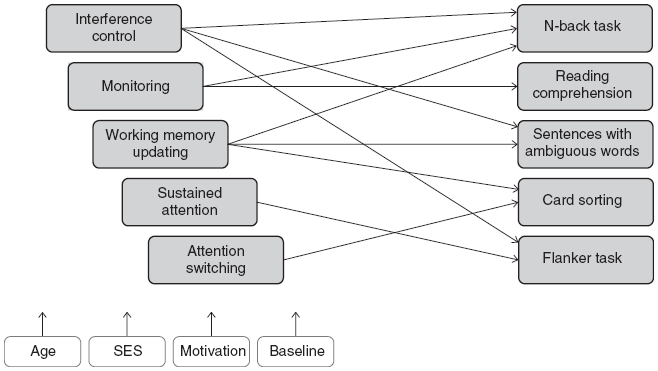
In addition to the overlapping processing components, the involvement of similar neural regions is also important in order to achieve transfer to untrained tasks (Jonides, Reference Jonides2004). Given the complexity of most cognitive tasks and the multifaceted nature of nearly all cognitive functions, it is highly likely that theoretical debates about the path to real, not just superficial improvements in behavior will continue in future training literature.

 Open access