



1. Introduction
The topological complexity of a space  $X$, denoted by
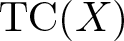 $\mathrm{TC}(X)$, is defined as the smallest positive integer
 $k$ such that the product space
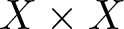
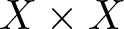 $X \times X$ can be covered by open sets
 $\{U_1,\dots, U_k\}$, where each
 $U_i$ admits a continuous section of the free path space fibration
 \begin{equation}
\pi \colon PX\to X\times X \quad \text{defined by} \quad \pi(\gamma)=(\gamma(0),\gamma(1)),
\end{equation}
where  $PX$ denotes the free path space of
 $X$ equipped with the compact-open topology. The concept of topological complexity was introduced by Farber in [Reference Farber21] to analyse the computational challenges associated with motion planning algorithms for the configuration space
 $X$ of a mechanical system. Over the past two decades, this invariant has attracted significant attention and has been a subject of extensive research.
1.1 Parameterized motion planning problem
Recently, a novel parametrized approach to the theory of motion planning algorithms was introduced in [Reference Cohen, Farber and Weinberger11, Reference Cohen, Farber and Weinberger12]. This approach provides enhanced universality and flexibility, allowing motion planning algorithms to operate effectively in diverse scenarios by incorporating external conditions. These external conditions are treated as parameters and form an integral part of the algorithm’s input. A parametrized motion planning algorithm takes as input a pair of configurations subject to the same external conditions and produces a continuous motion of the system that remains consistent with these external conditions.
We now briefly define the concept of parametrized topological complexity. For a fibration 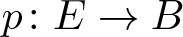 $p \colon E \to B$, let
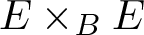 $E\times_B E$ denote the fibre product, which is the space of all pair of points in
 $E$ that lie in a common fibre of
 $p$. Let
 $E^I_B$ denote the space of all paths in
 $E$ whose images are contained within a single fibre. Define the parametrized endpoint map
 \begin{equation}
\Pi \colon E^I_B\to E\times_{B}E \quad \text{by} \quad \Pi(\gamma)=(\gamma(0),\gamma(1)).
\end{equation}
In [Reference Cohen, Farber and Weinberger11], it is shown that  $\Pi$ is a fibration. The parametrized topological complexity of a fibration
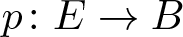 $p \colon E \to B$, denoted by
 $\mathrm{TC}[p \colon E\to B]$, is the smallest positive integer
 $k$ such that there is an open cover
 $\{U_1,\dots, U_k\}$ of
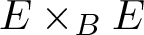 $E \times_B E$, where each
 $U_i$ admits a continuous section of
 $\Pi$. For further details and interesting computational results for parametrized topological complexity, see [Reference Cohen, Farber and Weinberger11], [Reference Cohen, Farber and Weinberger12], [Reference Farber and Weinberger24], and [Reference Minowa35]. Additionally, the concept has been extended to fibrewise spaces by García-Calcines in [Reference García-Calcines25]. On the other hand, Crabb [34] established some computational results in the fibrewise setting.
One of the key motivations for introducing this concept was to address the challenge of collision-free motion planning in environments where obstacles have unknown positions in advance. This can be described by the following scenario, as illustrated in [Reference Cohen, Farber and Weinberger11]: A military commander oversees a fleet of  $t$ submarines navigating waters with
 $s$ mines. The positions of these mines change every 24 hours. Each day, the commander must determine a motion plan for each submarine, ensuring that they travel from their current locations to their designated destinations without colliding with either the mines or other submarines. A parametrized motion planning algorithm will take as input the positions of the mines on the given day and the current and the desired positions of the submarines and will produce as output a collision-free motion of a fleet. Hence, the complexity of the universal motion planning algorithm in this setting can be described as the parametrized topological complexity of the Fadell–Neuwirth fibration
 \begin{equation*}
p \colon F(\mathbb{R}^d,s+t) \to F(\mathbb{R}^d, s), \quad (x_1,\dots,x_s,y_1,\dots,y_t) \mapsto (x_1,\dots,x_s)
\end{equation*}
where 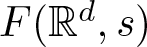 $F(\mathbb{R}^d,s)$ is the configuration space of
 $s$ distinct points lying in
 $\mathbb{R}^d$, see Section 5.
However, in a real-life scenario, the specific order in which the mines are placed should be irrelevant. For the two configurations of mines,
 \begin{equation*}
(x_1, \dots, x_s) \quad \text{and } \quad (x_{\sigma(1)},\dots,x_{\sigma(s)}),
\end{equation*}
for any  $\sigma$ in the permutation group
 $\Sigma_s$, the military commander should assign the same motion plan for the submarines. This is because both configurations describe the mines being placed at the same set of positions, regardless of their labelling. Thus, we should consider the unordered configuration space
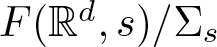 $
F(\mathbb{R}^d,s)/\Sigma_s
$ for the placement of mines. Hence, in this new perspective, the complexity of the universal motion planning algorithm should be described as the parametrized topological complexity of the fibration
 \begin{equation*}
\overline{p} \colon \overline{F(\mathbb{R}^d,s+t)} \to \overline{F(\mathbb{R}^d, s)},
\end{equation*}
which is induced from  $p$ by taking the quotient under the natural action of
 $\Sigma_s$ on the configuration spaces.
In this paper, we introduce the notion of invariant parametrized topological complexity for a  $G$-fibration
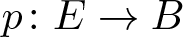 $p\colon E\to B$, denoted by
 $\mathrm{TC}^G[p \colon E\to B]$, which seems to provide a more suitable framework for analysing the impact of symmetries on parametrized motion planning algorithms. The invariant parametrized topological complexity is a parametrized analogue of the invariant topological complexity, which was introduced by Lubawski and Marzantowicz [Reference Lubawski and Marzantowicz31]. The invariant topological complexity for a
 $G$-space
 $X$, denoted by
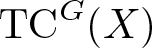 $\mathrm{TC}^G(X)$, behaves well with respect to quotients. In particular, if a compact Lie group
 $G$ acts freely on
 $X$, then the equality
 $\mathrm{TC}^G(X) = \mathrm{TC}(X/G)$ holds (see [Reference Lubawski and Marzantowicz31, Theorem 3.10]). Generalizing this to the parameterized setting, we establish the following theorem.
Theorem Suppose  $G$ is a compact Lie group. Let
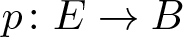 $p \colon E \to B$ be a
 $G$-fibration and let
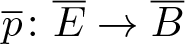 $\overline{p} \colon \overline{E} \to \overline{B}$ be the induced fibration between the orbit spaces. If the
 $G$-action on
 $E$ is free and
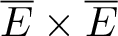 $\overline{E} \times \overline{E}$ is hereditary paracompact, then
 \begin{equation*}
\mathrm{TC}^{G}[p \colon E \rightarrow B]
= \mathrm{TC}[\overline{p} \colon \overline{E} \rightarrow \overline{B}].
\end{equation*}
1.2 Outline of the paper
The aim of this paper is twofold. Firstly, we examine various properties of the equivariant sectional category and equivariant parametrized topological complexity. Using these properties, we develop and analyse the new concept of invariant parametrized topological complexity, which we introduce in Section 4.
In Section 2.1, we introduce the concept of equivariant fibrations and present several examples, including equivariant covering maps.
In Section 2.2, we study the equivariant sectional category of a  $G$-fibration and establish multiple lower bounds in Theorem 2.7, Proposition 2.9, and Proposition 2.12. We also provide an equivariant homotopy dimension-connectivity upper bound in Theorem 2.16. Afterwards, we establish product inequalities in Proposition 2.18 and Corollary 2.19.
In Section 2.3, we recall the notion of the equivariant Lusternik–Schnirelmann (LS) category of a  $G$-space. In this section, we establish a lower bound in terms of fixed point sets and provide an equivariant homotopy dimension-connectivity upper bound, as stated in Proposition 2.24 and Theorem 2.26, respectively.
Subsequently, Section 2.4 devoted to the equivariant and invariant topological complexity of a  $G$-space, and we provide an equivariant homotopy dimension-connectivity upper bound for the former in Theorem 2.28.
In Section 3, we explore various properties of the equivariant parametrized topological complexity of  $G$-fibrations
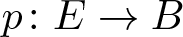 $p\colon E\to B$. Our main result, Theorem 3.2, characterizes the elements of a parametrized motion planning cover as the
 $G$-compressible subsets of the fibre product
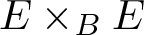 $E\times_B E$ into the diagonal
 $\Delta(E)$. Furthermore, we establish some lower bounds and the product inequalities in Proposition 3.4, Theorem 3.6, and Theorem 3.8, respectively.
In Section 4, we introduce the notion of invariant parametrized topological complexity for  $G$-fibrations. We establish the fibrewise
 $G$-homotopy invariance of this notion, and show that it generalizes both the parametrized and invariant topological complexity; see Theorem 4.3 and Proposition 4.4, respectively. For a
 $G$-fibration
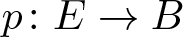 $p\colon E\to B$, in Theorem 4.6, we show that the elements of an invariant parametrized motion planning cover can be characterized as the
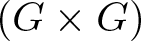
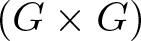
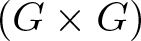
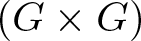 $(G\times G)$-compressible subsets of the fibre product
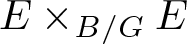 $E\times_{B/G} E$ into the saturated diagonal
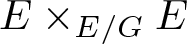
 $\daleth(E) = E \times_{E/G} E$. In Section 4.1, we investigate various properties and bounds for
 $\mathrm{TC}^G[p\colon E \to B]$. For example, we establish inequality under pullbacks (Proposition 4.8), dimensional upper bound (Proposition 4.9), lower bound (Proposition 4.12), cohomological lower bounds (Theorem 4.15 and Theorem 4.16), and product inequality (Theorem 4.17). Finally, we prove one of our main results, Theorem 4.26, which shows that the
 $\mathrm{TC}^G[p\colon E\to B]$ coincides with the parametrized topological complexity of the corresponding orbit fibration, when
 $G$ acts freely on
 $E$. We conclude the section with some examples illustrating the application of Theorem 4.26.
In Section 5, we compute the invariant parametrized topological complexity of the equivariant Fadell–Neuwirth fibrations. Specifically, in Theorem 5.6 and Theorem 5.10, we establish:
Theorem. Suppose  $s\geq 2$,
 $t\geq 1$ and
 $d \geq 3$. Then
 \begin{equation*}
\mathrm{TC}^{\Sigma_s}[p \colon F(\mathbb{R}^d,s+t)\to F(\mathbb{R}^d, s)]=
\begin{cases}
2t+s, & {if\,\,d\,\,is\,\,odd},\\
{either}\,\,2t\,\,+s\,\,-1\,\,{or}\,\,2t\,\,+s & {if\,\,d\,\,is\,\,even}.
\end{cases}
\end{equation*}
Theorem. Suppose  $s\geq 2$ and
 $t\geq 2$. Then
 \begin{equation*}
\mathrm{TC}^{\Sigma_s}[p \colon F(\mathbb{R}^2,s+t)\to F(\mathbb{R}^2, s)] = 2t+s-1.
\end{equation*}
1.3 Notations and conventions
Throughout the text,  $G$ denotes a general topological group acting on Hausdorff spaces, unless stated otherwise. We adopt standard terminology and notation from equivariant topology, such as
 $G$-spaces,
 $G$-maps,
 $G$-homotopies, and related notions. In this paper, all category-type invariants are taken to be un-normalized, that is, they equal the number of open sets in the cover. Thus, our definitions exceed by one those in [Reference Cohen, Farber and Weinberger11, Reference Cohen, Farber and Weinberger12], but agree with those used in [Reference Colman and Grant13, Reference Farber21, Reference Lubawski and Marzantowicz31].
2. Preliminaries
In this section, we systematically introduce and study various numerical invariants: equivariant sectional category, equivariant LS category, equivariant topological complexity,  $A$-LS
 $G$-category, and invariant topological complexity.
2.1.  $G$-fibrations

We begin by recalling the definition of a  $G$-fibration, followed by a few examples. For a more detailed discussion, we refer the reader to [Reference Gevorgyan37] and [Reference Grant27, Section 2].
Definition 2.1. A  $G$-map
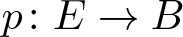 $p \colon E \to B$ is called a
 $G$-fibration if it has the
 $G$-homotopy lifting property with respect to any
 $G$-space
 $X$. More precisely, if
 $H \colon X \times I \to B$ is a
 $G$-homotopy and
 $h \colon X \to E$ is a
 $G$-map with
 $p \circ h = H_0$, then there exists a
 $G$-homotopy
 $\widetilde{H} \colon X \times I \to E$ that satisfies
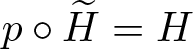 $p \circ \widetilde{H} = H$ and
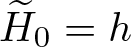 $\widetilde{H}_0 = h$.
Example 2.2. Here we list some examples of  $G$-fibrations.
(1) For any
$G$-spaces
$B$ and
$F$, the projection maps
$\pi_1 \colon B \times F \rightarrow B$ and
$\pi_2 \colon B \times F \to F$ are
$G$-fibrations.(2) If
$G$ is a compact Hausdorff topological group, then every principal
$G$-bundle over a paracompact space is a
$G$-fibration, where
$G$ acts trivially on the base. This can be shown using [Reference Gevorgyan37, Theorem 7]. In particular, the Hopf fibration
$S^1 \hookrightarrow S^3 \to S^2$ is an
$S^1$-fibration.(3) For any space
$X$, the free path space fibration
$\pi \colon PX \to X \times X$ is a
$\mathbb{Z}_2$-fibration, with
$\mathbb{Z}_2$-action on
$PX$ given by reversal of paths and on
$X \times X$ by transposition of factors, see [Reference Grant27, Example 2.6].(4) For any
$G$-space
$X$, the free path space fibration is a
$G$-fibration. Moreover, if
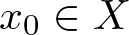
$x_0 \in X$ is a fixed point under
$G$-action, then the path space fibration is also a
$G$-fibration. See Section 2.4 and Section 2.3, respectively, for more details.
















The following theorem provides a sufficient condition for a fibration to be a  $G$-fibration. We note that although the proof is presented for compact Hausdorff groups, it remains valid for arbitrary topological groups.
Theorem 2.3. ([Reference Gevorgyan37, Lemma 5])
If 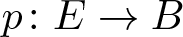 $p \colon E \to B$ is a
 $G$-map that is a fibration with the unique path-lifting property, then
 $p$ is a
 $G$-fibration.
The following is an immediate corollary of this theorem.
Corollary 2.4. If 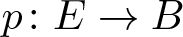 $p \colon E \to B$ is a
 $G$-map that is a covering map, then
 $p$ is a
 $G$-fibration. In particular, if
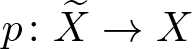 $p \colon \widetilde{X} \to X$ is a universal covering, then
 $p$ is a
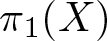 $\pi_1(X)$-fibration, where
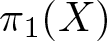 $\pi_1(X)$ acts on
 $\widetilde{X}$ via deck transformations and acts trivially on
 $X$.
Example 2.5. Here we list some non-trivial examples of  $G$-fibrations.
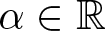
(1) Suppose
$\alpha \in \mathbb{R}$. Then the universal covering
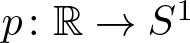
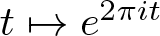
$p \colon \mathbb{R} \to S^1$, given by
$t \mapsto e^{2\pi i t}$, is a
$\mathbb{Z}$-fibration, where
$\mathbb{Z}$ acts on
$\mathbb{R}$ by
$n \cdot t = t + n \alpha$, and acts on
$S^1$ by
$n \cdot z = e^{2 \pi i n \alpha}z$.(2) The universal covering
$p \colon S^n \to \mathbb{R} P^n$ is a
$\Sigma_{n+1}$-fibration, where the symmetric group
$\Sigma_{n+1}$ acts on
$S^n$ by
$
\sigma \cdot (x_0 , \dots , x_n)
= (x_{\sigma(0)} , \dots , x_{\sigma(n)
}),
$ and acts on
$\mathbb{R} P^n$ by
$
\sigma \cdot [x_0 : \dots : x_n]
= [x_{\sigma(0)} : \dots : x_{\sigma(n)
}].
$











2.2. Equivariant sectional category
Schwarz [Reference Švarc41] introduced and studied the notion of sectional category of a fibration, and later by Berstein and Ganea in [Reference Berstein and Ganea5] for any map. The corresponding equivariant analogue was introduced by Colman and Grant in [Reference Colman and Grant13].
Definition 2.6. ([Reference Colman and Grant13, Definition 4.1])
Let 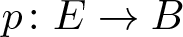 $p \colon E\to B$ be a
 $G$-map. The equivariant sectional category of
 $p$, denoted by
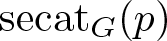 $\mathrm{secat}_G(p)$, is the least positive integer
 $k$ such that there is a
 $G$-invariant open cover
 $\{U_1, \ldots, U_k\}$ of
 $B$ and
 $G$-maps
 $s_i \colon U_i \to E$, for
 $i=1, \ldots, k$, such that
 $p \circ s_i \simeq_G i_{U_i}$, where
 $i_{U_i} \colon U_i \hookrightarrow B$ is the inclusion map.
Firstly, we establish a cohomological lower bound on the equivariant sectional category of a  $G$-map using Borel cohomology. This is based on Colman and Grant’s work [Reference Colman and Grant13, Theorem 5.15], which provides a similar cohomological lower bound on equivariant topological complexity. To the best of our knowledge, such a bound has not been documented in the literature. We believe that this result must already be known to experts in the field. Nevertheless, we provide a thorough proof of this result here.
Suppose  $EG \to BG$ is a universal principal
 $G$-bundle. For a
 $G$-space
 $X$, let
 $X^h_{G}$ be the homotopy orbit space of
 $X$ defined as
 \begin{equation*}
X^h_{G}
:= EG \times_{G} X
= \frac{EG \times X}{(e g, x)\sim (e,g^{-1} x)}, \quad \text{for }e \in EG, g \in G, x \in X
\end{equation*}
and the Borel  $G$-equivariant cohomology
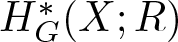 $H^{*}_{G}(X;R)$ of
 $X$ with coefficients in a commutative ring
 $R$ is defined as
 $H^{*}_{G}(X;R) := H^{*}(X^h_{G};R)$. We note that for a
 $G$-map
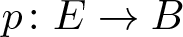 $p \colon E \to B$, there is an induced map
 $p^h_G \colon E^h_G \to B^h_G$.
Theorem 2.7. (Cohomological lower bound)
Suppose 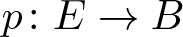 $p \colon E \to B$ is a
 $G$-map. If there are cohomology classes
 $u_1,\dots,u_k \in \widetilde{H}^{*}_{G}(B;R)$ (for any commutative ring
 $R$) with
 \begin{equation*}
(p^h_G)^*(u_1) = \cdots = (p^h_G)^{*}(u_k) = 0 \quad \text{and} \quad u_1 \smile \dots \smile u_k \neq 0,
\end{equation*}
then  $\mathrm{secat}_G(p) \gt k$.
Proof. Suppose  $\mathrm{secat}_G(p) \leq k$. Then there exists a
 $G$-invariant open cover
 $\{U_1, \dots, U_k\}$ of
 $B$ such that each
 $U_i$ admits a
 $G$-equivariant homotopy section
 $s_i$ of
 $p$. If
 $j_i \colon U_i \hookrightarrow B$ is the inclusion map, then
 $
((j_i)^{h}_G)^*(u_i) = ((s_i)^{h}_G)^*\left((p^{h}_G)^*(u_i)\right) = 0.
$ Hence, the long exact sequence in cohomology of the pair
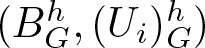 $(B^h_G,(U_i)^h_G)$ yields an element
 $v_i \in H^{*}(B^h_G,(U_i)^h_G;R)$ such that
 $((q_i)^{h}_G)^*(v_i)=u_i$, where
 $q_i \colon B \hookrightarrow (B,U_i)$ is the inclusion map. Consequently, we obtain
 \begin{equation*}
v_1 \smile \cdots \smile v_k
\in H^*(B^h_G,\cup_{i=1}(U_i)^h_G;R)
= H^*(B^h_G,B^h_G;R) = 0.
\end{equation*}
Therefore, by the naturality of the cup product, we have  $u_1 \smile \cdots \smile u_k = (q^h_G)^*(v_1 \smile \cdots \smile v_k) = 0$, where
 $q \colon B \hookrightarrow (B,B)$ is the inclusion map.
Remark 2.8. Observe that if  $G$ acts trivially on
 $X$, then the lower bound in Theorem 2.7 coincides with the cohomological lower bound given by Schwarz in [Reference Švarc41, Theorem 4]. Moreover, it generalizes the lower bounds for equivariant topological complexity and equivariant parametrized topological complexity previously established by Colman–Grant [Reference Colman and Grant13, Theorem 5.15] and Daundkar [Reference Daundkar14, Theorem 4.25], respectively.
In practice, however, the difficulty of computing cup products in Borel cohomology (or more generally, in any equivariant cohomology) makes the problem cumbersome. We can then ask whether non-equivariant cohomological bounds can be utilized in some way. When  $G$ is a compact Hausdorff topological group and
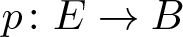 $p \colon E \to B$ is a
 $G$-fibration, we will show that the sectional category of
 $p$ and the sectional category of the induced fibration
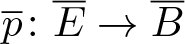 $\overline{p} \colon \overline{E} \to \overline{B}$ between the orbit spaces are lower bounds for the equivariant sectional category of
 $p$. Note that
 $\overline{p}$ fits into the commutative diagram

where  $\pi_B \colon B \to \overline{B}$ and
 $\pi_E \colon E \to \overline{E}$ are orbit maps.
Proposition 2.9. Let 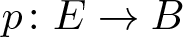 $p \colon E \to B$ be a
 $G$-fibration. Then
 $
\mathrm{secat}(\overline{p}) \leq \mathrm{secat}_G(p).
$
Proof. Suppose  $U$ is a
 $G$-invariant open subset of
 $B$ with a
 $G$-equivariant section
 $s$ of
 $p$ over
 $U$. As the orbit map
 $\pi_B \colon B \to \overline{B}$ is open, we have
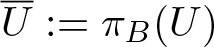 $\overline{U} := \pi_B(U)$ is an open subset of
 $\overline{B}$. As
 $U$ is
 $G$-invariant, it follows
 $U$ is saturated with respect to
 $\pi_B$. Hence,
 $\pi_B \colon U \to \overline{U}$ is a quotient map. Then, by the universal property of quotient maps, there exists a unique continuous map
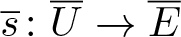 $\overline{s} \colon \overline{U} \to \overline{E}$ such that the following diagram

commutes. Then
 \begin{equation*}
\overline{p} ( \overline{s} (\overline{b}))
= \overline{p} (\overline{s} (\pi_B(b)))
= \overline{p}(\pi_E(s(b)))
= \pi_B (p(s(b)))
= \pi_B(b)
= \overline{b}
\end{equation*}
implies  $\overline{s}$ is a section of
 $\overline{p}$ over
 $\overline{U}$. Thus, the result follows since
 $\pi_B \colon B \to \overline{B}$ is surjective.
Theorem 2.10. Suppose  $G$ is a compact Hausdorff topological group and
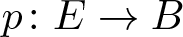 $p \colon E \to B$ is a
 $G$-fibration. Then
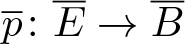 $\overline{p} \colon \overline{E} \to \overline{B}$ is a fibration. Furthermore, if
 $G$ acts freely on
 $B$, then
 \begin{equation*}
\mathrm{secat}(\overline{p}) = \mathrm{secat}_G(p).
\end{equation*}
Proof. By [Reference Gevorgyan37, Corollary 2], it follows that  $\overline{p}$ is a fibration. Note that the inequality
 $\mathrm{secat}(\overline{p}) \leq \mathrm{secat}_G(p)$ follows from Proposition 2.9. Now we will show the reverse inequality. Note that
 $G$ acts freely on
 $E$ as well, since
 $G$ acts freely on
 $B$ and
 $p$ is a
 $G$-map. If
 $\phi \colon E \to \overline{E} \times_{\overline{B}} B$ denotes the natural
 $G$-map induced by the universal property of the pullback, then
 $\phi$ preserves the orbit structure because
 $G$ acts freely on both
 $B$ and
 $E$. Hence, the diagram (3) is a pullback in the category of
 $G$-spaces, see the proof of [Reference Bredon9, Theorem II.7.3]. Suppose
 $\overline{U}$ is an open subset of
 $\overline{B}$ and
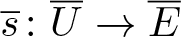 $\overline{s} \colon \overline{U} \to \overline{E}$ is a section of
 $\overline{p}$. Let
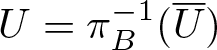 $U=\pi_B^{-1}(\overline{U})$. Then, by the universal property of pullbacks, there exists a unique
 $G$-map
 $s \colon U \to E$ such that
 $\pi_E \circ s = \overline{s} \circ \pi_B \colon U \to \overline{E}$ and
 $p \circ s = i_U \colon U \to B$. Hence,
 $\mathrm{secat}_G(p) \leq \mathrm{secat}(\overline{p})$.
Remark 2.11. As mentioned in Example 2.2 (3), the free path space fibration  $\pi \colon PX \to X \times X$ is a
 $\mathbb{Z}_2$-fibration for any space
 $X$. The
 $\mathbb{Z}_2$-action on
 $PX$ is given by reversal of paths, and on
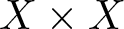 $X \times X$ it is given by transposition of factors. Hence, by Theorem 2.10, we get
 $\mathrm{secat}(\overline{\pi}) \leq \mathrm{secat}_{\mathbb{Z}_2}(\pi)$. Thus, we recover the cohomological lower bound on the symmetrized topological complexity
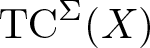 $\mathrm{TC}^{\Sigma}(X)$ in [Reference Grant27, Theorem 4.6], since the following commutative diagram

implies the nilpotency of the kernel of  $\overline{\Delta}$ and
 $\overline{\pi}$ are the same.
Suppose  $X$ is a
 $G$-space. For a subgroup
 $H$ of
 $G$, define the
 $H$-fixed subspace of
 $X$ as
 \begin{equation*}
X^H := \{x \in X \mid h \cdot x = x\,\,\text{for all } h \in H\}.
\end{equation*}
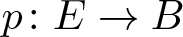
Proposition 2.12. Suppose 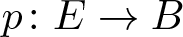 $p \colon E \to B$ is a
 $G$-fibration. If
 $H$ and
 $K$ are subgroups of
 $G$ such that
 $E^H$ and
 $B^H$ are
 $K$-invariant, and the fixed point map
 $p^H \colon E^H \to B^H$ is a
 $K$-map, then
 \begin{equation}
\mathrm{secat}_K(p^H) \leq \mathrm{secat}_G(p).
\end{equation}
In particular, if  $G$ is a compact Hausdorff topological group, then
(1) the fixed point map
$p^H \colon E^H \to B^H$ is a fibration for all closed subgroups
$H$ of
$G$, and
\begin{equation*}
\mathrm{secat}(p^H) \leq \mathrm{secat}_G(p).
\end{equation*}(2)
$p \colon E \to B$ is a
$K$-fibration for all closed subgroups
$K$ of
$G$, and
\begin{equation*}
\mathrm{secat}(p) \leq \mathrm{secat}_K(p) \leq \mathrm{secat}_G(p).
\end{equation*}





Proof. If  $s \colon U \to E$ is a
 $G$-equivariant section of
 $p$, then
 $\left.s\right |_{V} \colon V \to E^H$ is a
 $K$-equivariant section of
 $p^H$, where
 $V=U \cap B^H$. Hence, the inequality (4) follows.
If  $G$ is compact Hausdorff, then it follows from [Reference Gevorgyan37, Theorem 4 and Theorem 3] that
 $p^H \colon E^H \to B^H$ and
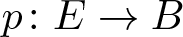 $p \colon E \to B$ are a fibration and a
 $K$-fibration, respectively. Hence, the following inequalities follow by taking
 $K$ and
 $H$ to be the trivial subgroup, respectively.
The following proposition states some basic properties of the equivariant sectional category. Proofs are left to the reader. For analogous results concerning the non-equivariant sectional category, we refer to [Reference Grant28, Lemma 2.1].
Proposition 2.13. Suppose 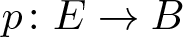 $p \colon E \to B$ is a
 $G$-map.
(1) If
$p' \colon E \to B$ is
$G$-homotopic to
$p$, then
$\mathrm{secat}_G(p') = \mathrm{secat}_G(p)$.(2) If
$h \colon E' \to E$ is
$G$-homotopy equivalence, then
$\mathrm{secat}_G(p \circ h) = \mathrm{secat}_G(p)$.(3) If
$f \colon B \to B'$ is a
$G$-homotopy equivalence, then
$\mathrm{secat}_G(f \circ p) = \mathrm{secat}_G(p)$.
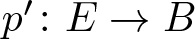






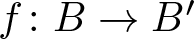


Corollary 2.14. Suppose 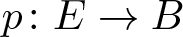 $p \colon E \to B$ is a
 $G$-fibration. If
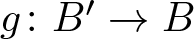 $g \colon B' \to B$ is a
 $G$-homotopy equivalence and
 $p' \colon E' \to B'$ is the pullback of
 $p$ along
 $g$, then
 \begin{equation*}
\mathrm{secat}_G(p') = \mathrm{secat}_G(p).
\end{equation*}
Proof. Suppose the following diagram is a pullback

Since  $g$ is a
 $G$-homotopy equivalence and
 $p$ is a
 $G$-fibration, it follows that
 $h$ is also a
 $G$-homotopy equivalence. Hence, we get
 \begin{equation*}
\mathrm{secat}_G(p') = \mathrm{secat}_G(g \circ p') = \mathrm{secat}_G(p \circ h) = \mathrm{secat}_G(p)
\end{equation*}
by Proposition 2.13.
Generalizing Schwarz’s dimension-connectivity upper bound on the sectional category, Grant established the corresponding equivariant analogue for the equivariant sectional category in [Reference Grant27, Theorem 3.5]. We extend this approach to derive an equivariant homotopy dimension-connectivity upper bound for the equivariant sectional category. To achieve this, we first introduce the notion of  $G$-homotopy dimension for
 $G$-
 $\mathrm{CW}$-complexes.
Definition 2.15. Suppose  $X$ is a
 $G$-
 $\mathrm{CW}$-complex. The
 $G$-homotopy dimension of
 $X$, denoted
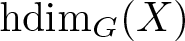 $\mathrm{hdim}_{G}(X)$, is defined to be
 \begin{equation*}{\mathrm{hdim}}_G(X):=\min\{\dim(X')\mid X'\text{ is a }G-\mathrm{CW}\text{-complex},X'\simeq_GX\}.\end{equation*}
Theorem 2.16. Suppose  $G$ is a compact Lie group. Suppose
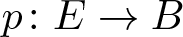 $p \colon E \to B$ is a
 $G$-fibration with fibre
 $F$, whose base
 $B$ is a
 $G$-
 $\mathrm{CW}$-complex of dimension at least
 $2$. If there exists
 $s \geq 0$ such that the fibre of
 $p^H \colon E^H \to B^H$ is
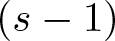 $(s-1)$-connected for all subgroups
 $H$ of
 $G$, then
 \begin{equation*}
\mathrm{secat}_{G}(p) \lt \frac{\mathrm{hdim_{G}(B)+1}}{s+1} + 1.
\end{equation*}
Proof. Suppose  $f \colon B' \to B$ is a
 $G$-homotopy between
 $G$-
 $\mathrm{CW}$-complexes
 $B'$ and
 $B$, and
 $p' \colon E' \to B'$ is the pullback of
 $p$ along
 $f$. Then, by Corollary 2.14, we have
 $\mathrm{secat}_{G}(p') = \mathrm{secat}_{G}(p)$. Since the fibre of
 $p'$ is also
 $F$, we get
 \begin{equation*}
\mathrm{secat}_{G}(p') \lt \frac{\mathrm{dim(B')+1}}{s+1}+1,
\end{equation*}
by [Reference Grant27, Theorem 3.5].
Our next aim is to establish product inequalities for the equivariant sectional category.
Definition 2.17. A  $G$-space
 $X$ is called
 $G$-completely normal if for any two
 $G$-invariant subsets
 $A$ and
 $B$ of
 $X$ with
 $\overline{A} \cap B = A \cap \overline{B} = \emptyset$, there exist disjoint
 $G$-invariant open subsets of
 $X$ containing
 $A$ and
 $B$, respectively.
Proposition 2.18. Suppose  $p_i \colon E_i \to B_i$ is a
 $G$-fibration for
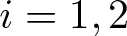 $i =1,2$. If
 $G$ is compact Hausdorff, then
 $p_1 \times p_2 \colon E_1 \times E_2 \to B_1 \times B_2$ is a
 $G$-fibration, where
 $G$ acts on
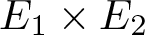 $E_1 \times E_2$ and
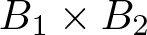 $B_1 \times B_2$ diagonally. Furthermore, if
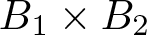 $B_1 \times B_2$ is completely normal, then
 \begin{equation*}
\mathrm{secat}_{G}(p_1\times p_2) \leq \mathrm{secat}_{G}(p_1) + \mathrm{secat}_{G}(p_2) - 1.
\end{equation*}
Proof. Identifying  $G$ with the diagonal subgroup of
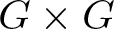 $G\times G$, we see that it is a closed subgroup of
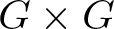 $G\times G$. Hence, by [Reference Gevorgyan37, Theorem 3], it follows that
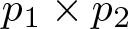 $p_1 \times p_2$ is a
 $G$-fibration. Furthermore, by [Reference Colman and Grant13, Lemma 3.12], it follows that
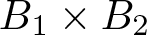 $B_1 \times B_2$ is
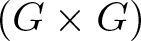 $(G \times G)$-completely normal. Hence, the desired inequality
 \begin{equation*}
\mathrm{secat}_{G}(p_1 \times p_2)
\leq \mathrm{secat}_{G\times G}(p_1 \times p_2)
\leq \mathrm{secat}_G(p_1) + \mathrm{secat}_G(p_2) - 1
\end{equation*}
follows from Proposition 2.12 (2) and [Reference Arora, Daundkar and Sarkar1, Proposition 3.7].
Corollary 2.19. Suppose  $p_i \colon E_i \to B$ is a
 $G$-fibration for
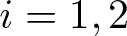 $i =1,2$. Let
 $E_1 \times_B E_2 = \{(e_1,e_2) \in E_1 \times E_2 \mid p_1(e_1) = p_2(e_2)\}$ and let
 $p\colon E_1 \times_B E_2 \to B$ be the
 $G$-map given by
 $p(e_1,e_2)=p_1(e_1)=p_2(e_2)$, where
 $G$ acts on
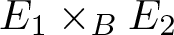 $E_1 \times_B E_2$ diagonally. If
 $G$ is compact Hausdorff, then
 $p$ is a
 $G$-fibration. Furthermore, if
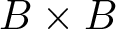 $B \times B$ is completely normal, then
 \begin{equation*}
\mathrm{secat}_G(p) \leq \mathrm{secat}_G(p_1) + \mathrm{secat}_G(p_2) -1.
\end{equation*}
Proof. Note that the following diagram

is a pullback in the category of  $G$-spaces, where
 $\Delta \colon B \to B \times B$ is the diagonal map. In Proposition 2.18, we showed that
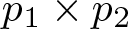 $p_1 \times p_2$ is a
 $G$-fibration if
 $G$ is compact Hausdorff. Hence,
 $p$ is a
 $G$-fibration. Thus, the desired inequality
 \begin{align*}
\mathrm{secat}_{G}(p)
\leq \mathrm{secat}_{G}(p_1 \times p_2)
\leq \mathrm{secat}_G(p_1) + \mathrm{secat}_G(p_2) - 1
\end{align*}
follows from [Reference Colman and Grant13, Proposition 4.3] and Proposition 2.18.
2.3. Equivariant LS category
The notion of LS category was introduced by Lusternik and Schnirelmann in [Reference Lyusternik and Šnirelmann32]. In this section, we recall the corresponding equivariant analogue.
Definition 2.20. A  $G$-invariant subset
 $U$ of a
 $G$-space
 $X$ is said to be
 $G$-categorical if the inclusion map
 $i_U \colon U \hookrightarrow X$ is
 $G$-homotopy equivalent to a map which takes values in a single orbit.
Definition 2.21. ([Reference Fadell18])
The equivariant LS category of a  $G$-space
 $X$, denoted by
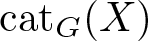 $\mathrm{cat}_G(X)$, is the least positive integer
 $k$ such that there exists a
 $G$-categorical open cover
 $\{U_1,\dots,U_k\}$ of
 $X$.
Definition 2.22. A  $G$-space
 $X$ is said to be
 $G$-connected if
 $X^H$ is path-connected for every closed subgroup
 $H$ of
 $G$.
Let  $X$ be a
 $G$-space, and
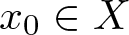 $x_0 \in X$. Define the path space of
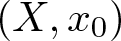 $(X,x_0)$ as
 \begin{equation*}
P_{x_0}X = \{\alpha \colon I \to X \mid \alpha(0) = x_0\}.
\end{equation*}
Then the map  $e_X \colon P_{x_0}X \to X$, given by
 $e_X(\alpha)=\alpha(1)$, is a fibration. Moreover, if the point
 $x_0$ is fixed under the
 $G$-action, then
 $e_X$ is a
 $G$-fibration, where
 $P_{x_0}X$ admits a
 $G$-action via
 $(g\cdot \alpha)(t) := g\cdot \alpha(t)$. We note that the fibre of
 $e_X$ is the based loop space
 $\Omega X = (e_X)^{-1}(x_0)$ of
 $X$, and the
 $G$-action on
 $P_{x_0}X$ restricts to a
 $G$-action on
 $\Omega X$. Furthermore, we have a commutative diagram of
 $G$-maps

where  $h$ is a
 $G$-homotopy equivalence and
 $i \colon \{x_0\} \hookrightarrow X$ is the inclusion map.
Lemma 2.23. ([Reference Colman and Grant13, Corollary 4.7])
Suppose  $G$ is a compact Hausdorff topological group. If
 $X$ is a
 $G$-space such that
 $X$ is
 $G$-connected and
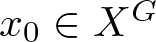 $x_0 \in X^G$, then
 $
\mathrm{cat}_G(X) = \mathrm{secat}_G(e_X).
$
We now present inequalities relating 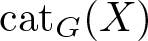 $\mathrm{cat}_G(X)$ to the non-equivariant category of fixed point sets and to the equivariant category of
 $X$ viewed as a
 $K$-space, for each closed subgroup
 $K$ of
 $G$.
Proposition 2.24. Let  $G$ be a compact Hausdorff topological group, and let
 $X$ be a
 $G$-connected space with
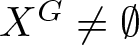 $X^G \neq \emptyset$. If
 $H$ and
 $K$ are closed subgroups of
 $G$ such that
 $X^H$ is
 $K$-invariant and
 $HK' = K'H$ for all closed subgroups
 $K'$ of
 $K$, then
 \begin{equation*}
\mathrm{cat}_K(X^H) \leq \mathrm{cat}_G(X).
\end{equation*}
Proof. Suppose  $K'$ is a closed subgroup of
 $K$. Then
 $HK' = K'H$ implies
 $HK'$ is a subgroup of
 $G$ and
 $\langle H, K' \rangle = HK'$, where
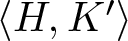 $\langle H, K' \rangle$ is the subgroup generated by
 $H$ and
 $K'$. We note that
 $HK'$ is closed, as it is the image of the compact space
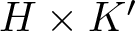 $H \times K'$ under the group operation
 $G \times G \to G$ into the Hausdorff space
 $G$. Hence,
 $X^H$ is
 $K$-connected, since
 \begin{equation*}
(X^H)^{K'}
= X^H \cap X^{K'}
= X^{\langle H, K' \rangle}
= X^{HK'},
\end{equation*}
and  $X$ is
 $G$-connected. Moreover, if
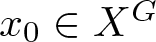 $x_0 \in X^G$, then
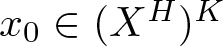 $x_0 \in (X^H)^K$. Hence, by Lemma 2.23, it is enough to show that
 $\mathrm{secat}_K(e_{X^H}) \leq \mathrm{secat}_G(e_X)$.
Suppose  $U$ is a
 $G$-invariant open subset of
 $X$ and
 $s \colon U \to P_{x_0}X$ is a
 $G$-equivariant section of
 $e_X$. Set
 $V := U \cap X^H$. Then
 $V$ is a
 $K$-invariant open subset of
 $X^H$. As
 $s$ is
 $G$-equivariant, it restricts to a
 $K$-equivariant map
 $\left.s\right|_{V} \colon V \to (P_{x_0}X)^H = P_{x_0}(X^H)$. Clearly,
 $\left.s\right|_{V}$ is a
 $K$-equivariant section of
 $e_{X^H} \colon P_{x_0}(X^H) \to X^H$.
Corollary 2.25. Let  $G$ be a compact Hausdorff topological group, and let
 $X$ be a
 $G$-connected space with
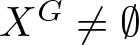 $X^G \neq \emptyset$. Then
(1)
$\mathrm{cat}(X^H) \leq \mathrm{cat}_G(X)$ for all closed subgroups
$H$ of
$G$.(2)
$\mathrm{cat}_K(X) \leq \mathrm{cat}_G(X)$ for all closed subgroups
$K$ of
$G$.






Now, as a consequence of Theorem 2.16, we obtain an equivariant homotopy dimension-connectivity upper bound for the equivariant LS category.
Theorem 2.26. Suppose  $G$ is a compact Lie group. Suppose
 $X$ is a
 $G$-
 $\mathrm{CW}$-complex of dimension at least
 $2$ such that
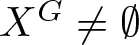 $X^G \neq \emptyset$. If there exists
 $s \geq 0$ such that
 $X^H$ is
 $s$-connected for all subgroups
 $H$ of
 $G$, then
 \begin{equation*}
\mathrm{cat}_G(X) \lt \frac{\mathrm{hdim}_G(X)+1}{s+1}+1.
\end{equation*}
Proof. If 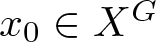 $x_0 \in X^G$, then
 $e_X \colon P_{x_0}X \to X$ is a
 $G$-fibration with fibre
 $\Omega X$, which also admits a
 $G$-action. Note that
 $(\Omega X)^H = \Omega(X^H)$. Since
 $X^H$ is
 $s$-connected, the loop space
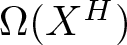 $\Omega (X^H)$ is
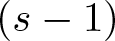 $(s-1)$-connected. Hence, by Theorem 2.16, we get
 \begin{equation*}
\mathrm{secat}_{G}(e_X) \lt \frac{\mathrm{hdim}_G(X)+1}{s+1}+1.
\end{equation*}
As  $X^H$ is
 $s$-connected, it follows that
 $X^H$ is path-connected. Hence,
 $X$ is
 $G$-connected, and the theorem follows by Lemma 2.23.
2.4. Equivariant and invariant topological complexity
We recall the concept of equivariant topological complexity introduced by Colman and Grant in [Reference Colman and Grant13]. Let  $X$ be a
 $G$-space. Observe that the free path space
 $PX$ admits a
 $G$-action via
 $(g\cdot \alpha)(t):=g\cdot \alpha(t)$. Similarly, the product space
 $X^k$ is a
 $G$-space with the diagonal action. The fibration
 \begin{equation*}
e_{k,X} \colon PX \to X^k, \quad \alpha \mapsto \left(\alpha(0), \alpha\left(\frac{1}{k-1}\right), \ldots, \alpha\left(\frac{i}{k-1}\right), \ldots, \alpha\left(\frac{k-2}{k-1}\right), \alpha(1)\right)
\end{equation*}
is a  $G$-fibration.
Definition 2.27. ([Reference Bayeh and Sarkar4])
The sequential equivariant topological complexity of a  $G$-space
 $X$ is defined as
 \begin{equation*}
\mathrm{TC}_{k,G}(X) := \mathrm{secat}_G(e_{k,X}).
\end{equation*}
In particular, when  $k=2$, we will denote
 $e_{2,X}$ by
 $\pi$ and
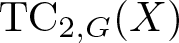 $\mathrm{TC}_{2,G}(X)$ by
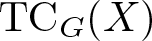 $\mathrm{TC}_G(X)$.
In [Reference Arora, Daundkar and Sarkar1, Proposition 3.40], Sarkar and the authors of this paper provided a dimension-connectivity upper bound on the sequential equivariant topological complexity. We improve their result by establishing an equivariant homotopy dimension-connectivity upper bound. We omit the proof, as it is similar to the original and follows from the homotopy dimension-connectivity upper bound on the equivariant sectional category in Theorem 2.16.
Theorem 2.28. Suppose  $G$ is a compact Lie group. If
 $X$ is a
 $G$-
 $\mathrm{CW}$-complex of dimension at least 1 such that
 $X^H$ is
 $s$-connected for all subgroups
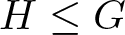 $H \leq G$, then
 \begin{equation*}
\mathrm{TC}_{k,G}(X) \lt \frac{k\ \mathrm{hdim}_G(X)+1}{s+1}+1.
\end{equation*}
Example 2.29. Consider 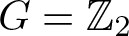 $G = \mathbb{Z}_2$ acting on
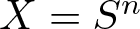 $X = S^n$ with
 $n \geq 1$, by reflection, given by multiplication by
 $-1$ in the last coordinate. Then
 $X^G = S^{n-1}$ and
 $X^{\{e\}} = S^n$ are
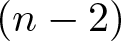 $(n-2)$-connected and
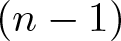 $(n-1)$-connected, respectively. Then, by Theorem 2.26, it follows that
 \begin{equation*}
\mathrm{cat}_G(S^n) \lt \frac{n+1}{n-1} + 1,
\quad \text{for }n \geq 2,
\end{equation*}
which implies  $\mathrm{cat}_G(S^n) \leq 2$ for
 $n \geq 3$. Hence,
 $\mathrm{cat}_G(S^n) = 2$ for
 $n \geq 3$, since
 $S^n$ is clearly not
 $G$-contractible. Moreover, by Theorem 2.28, it follows that
 \begin{equation*}
\mathrm{TC}_{k,G}(S^n) \lt \frac{k\cdot n+1}{n-1} + 1,
\quad \text{for }n \geq 2
\end{equation*}
which implies  $\mathrm{TC}_{k,G}(S^n) \leq k+1$ for
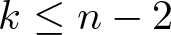 $k \leq n-2$. Hence, it follows that
 $\mathrm{TC}_{k,G}(S^n) = k+1$ for
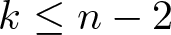 $k \leq n-2$, since
 \begin{equation*}
\mathrm{TC}_k(S^{n-1}) \leq \mathrm{TC}_{k,G}(S^n)
\quad \text{and} \quad
\mathrm{TC}_k(S^n) \leq \mathrm{TC}_{k,G}(S^n)
\end{equation*}
by [Reference Bayeh and Sarkar4, Proposition 3.14 (2)], and
 \begin{equation*}
\mathrm{TC}_k(S^n) =
\begin{cases}
k, & \text{if}\,\,k\,\,\text{is\,\,odd},\\
k+1, & \text{if}\,\,k\,\,\text{is\,\,even},
\end{cases}
\end{equation*}
by [Reference Rudyak38, Section 4].
We note that this computation can be carried out more directly and efficiently as follows. Observe that  $\mathrm{cat}_G(S^n) = 2$ for all
 $n \geq 2$, see [Reference Colman and Grant13, Example 5.9]. Hence, it follows from [Reference Bayeh and Sarkar4, Proposition 3.17] that
 $\mathrm{TC}_{k,G}(S^n) \leq k+1$ for all
 $n \geq 2$ and all
 $k \geq 2$. Moreover,
 $\mathrm{TC}_{k,G}(S^1) = \infty$, since
 $\mathrm{TC}_k(S^0) \leq \mathrm{TC}_{k,G}(S^1)$. Hence,
 \begin{equation*}
\mathrm{TC}_{k,G}(S^n) =
\begin{cases}
\infty, & \text{if } n=1,\\
k+1, & \text{if } n \geq 2.
\end{cases}
\end{equation*}
It is important to note that the equivariant topological complexity of  $G$-spaces does not necessarily relate to the topological complexity of their orbit spaces. However, Lubawski and Marzantowicz [Reference Lubawski and Marzantowicz31] introduced a new notion of topological complexity for
 $G$-spaces, designed to facilitate such a comparison. We now present their definition and recall the corresponding result.
Suppose  $X$ is a
 $G$-space. Let
 $\pi_X \colon X \to X/G$ denote the orbit map. Define
 \begin{equation*}
PX \times_{X/G} PX
:= \{(\gamma,\delta) \in PX \times PX \mid G\cdot \gamma(1) = G \cdot \delta(0)\}
\end{equation*}
Then the following diagram

is a pullback. Define the map
 \begin{equation}
\mathfrak{p} \colon PX \times_{X/G} PX \to X \times X, \quad (\gamma,\delta) \mapsto (\gamma(0),\delta(1)).
\end{equation}
It was shown in [Reference Lubawski and Marzantowicz31, Proposition 3.7] that the map  $\mathfrak{p}$ is a
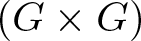 $(G \times G)$-fibration.
Definition 2.30. Let  $X$ be a
 $G$-space. The invariant topological complexity of
 $X$, denoted by
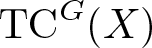 $\mathrm{TC}^G(X)$, is defined as
 \begin{equation*}
\mathrm{TC}^G(X):=\mathrm{secat}_{G\times G}(\mathfrak{p}).
\end{equation*}
The following theorem relates the invariant topological complexity of a free  $G$-space
 $X$ to that of the topological complexity of its corresponding orbit space.
Theorem 2.31. ([Reference Lubawski and Marzantowicz31, Theorem 3.9 and 3.10])
Let  $G$ be a compact Lie group and
 $X$ be a compact
 $G$-ANR. Then
 \begin{equation*}
\mathrm{TC}(X/G)\leq \mathrm{TC}^G(X).
\end{equation*}
Moreover, if  $X$ has only one orbit type, then
 \begin{equation*}
\mathrm{TC}^G(X)=\mathrm{TC}(X/G).
\end{equation*}
2.5. Clapp–Puppe invariant of LS type
In this section, we recall the equivariant version of Clapp–Puppe invariant [Reference Clapp and Puppe10], introduced by Lubawski and Marzantowicz in [Reference Lubawski and Marzantowicz31].
Definition 2.32. Let  $A$ be a
 $G$-invariant closed subset of a
 $G$-space
 $X$. A
 $G$-invariant open subset of
 $X$ is said to be
 $G$-compressible into
 $A$ if the inclusion map
 $i_{U} \colon U \rightarrow X$ is
 $G$-homotopic to a
 $G$-map
 $c \colon U \to X$ which takes values in
 $A$.
Definition 2.33. Let  $A$ be a
 $G$-invariant closed subset of a
 $G$-space
 $X$. The
 $A$-LS
 $G$-category of
 $X$, denoted
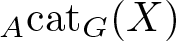 $~_{A}\mathrm{cat}_G(X)$, is the least positive integer
 $k$ such that there exists a
 $G$-invariant open cover
 $\{U_1,\dots,U_k\}$ of
 $X$ such that each
 $U_i$ is
 $G$-compressible into
 $A$.
Colman and Grant in [Reference Colman and Grant13, Lemma 5.14] showed that for a  $G$-invariant open subset
 $U$ of
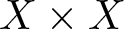 $X \times X$ the following are equivalent:
(1) there exists a
$G$-equivariant section of
$e_X \colon PX \to X \times X$ over
$U$,(2)
$U$ is
$G$-compressible into the diagonal
$\Delta(X) \subset X \times X$.





In particular,
 \begin{equation*}
\mathrm{TC}_G(X) = ~_{\Delta(X)}\mathrm{cat}_G(X \times X).
\end{equation*}
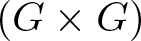
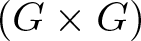
Later, Lubawski and Marzantowicz in [Reference Lubawski and Marzantowicz31, Lemma 3.8] showed a similar result for invariant topological complexity. More precisely, for a 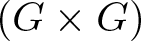 $(G \times G)$-invariant open subset of
 $U$ of
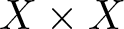 $X \times X$ the following are equivalent:
(1) there exists a
$(G \times G)$-equivariant section of
$\mathfrak{p} \colon PX \times_{X/G} X \to X \times X$ over
$U$,(2)
$U$ is
$(G \times G)$-compressible into the saturation of the diagonal
$\daleth(X) := (G \times G)\cdot \Delta(X) \subset X \times X$.




In particular,
 \begin{equation*}
\mathrm{TC}^G(X) = ~_{\daleth(X)}\mathrm{cat}_{G \times G}(X \times X).
\end{equation*}
In Section 3 and Section 4, we give analogous results for equivariant parametrized topological complexity and invariant parametrized topological complexity, respectively. We use these results to prove Theorem 4.26.
3. Equivariant parametrized topological complexity
For a  $G$-fibration
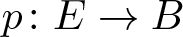 $p \colon E\to B$, consider the subspace
 $E^I_B$ of the free path space
 $E^I$ of
 $E$ defined by
 \begin{equation*}
E^I_B := \{\gamma\in E^I \mid \gamma(t) \in p^{-1}(b) ~\text{for some}~ b\in B ~\text{and for all}~ t\in[0,1] \}.
\end{equation*}
Consider the pullback corresponding to the fibration 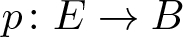 $p \colon E\to B$ defined by
 \begin{equation*}
E \times_B E = \{(e_1,e_2) \in E \times E \mid p(e_1)=p(e_2) \}.
\end{equation*}
It is clear that the  $G$-action on
 $E^I$ given by
 \begin{equation*}
(g \cdot \gamma)(t) := g \cdot \gamma(t) \quad \text{for all } g \in G, \gamma \in E^I, t \in I;
\end{equation*}
and the diagonal action of  $G$ on
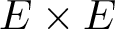 $E \times E$ restricts to
 $E^I_B$ and
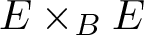 $E \times_B E$, respectively. Then the map
 \begin{equation}
\Pi \colon E^I_B \to E\times_B E, \quad \Pi(\gamma) = (\gamma(0),\gamma(1))
\end{equation}
is a  $G$-fibration, see [Reference Daundkar14, Corollary 4.3].
Definition 3.1. ([Reference Daundkar14, Definition 4.1])
The equivariant parametrized topological complexity of a  $G$-fibration
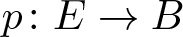 $p\colon E\to B$, denoted by
 $\mathrm{TC}_G[p\colon E\to B]$, is defined as
 \begin{equation*}
\mathrm{TC}_G[p\colon E \to B] := \mathrm{secat}_G\left( \Pi \right).
\end{equation*}
Suppose  $\Delta \colon E \to E \times E$ is the diagonal map. Then it is clear that the image
 $\Delta(E)$ is a
 $G$-invariant subset of
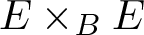 $E \times_B E$. In the next theorem, we prove the parametrized analogue of [Reference Colman and Grant13, Lemma 5.14] in the equivariant setting.
Theorem 3.2. Let 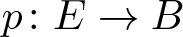 $p\colon E\to B$ be a
 $G$-fibration. For a
 $G$-invariant (not necessarily open) subset
 $U$ of
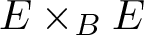 $E \times_B E$ the following are equivalent:
(1) there exists a
$G$-equivariant section of
$\Pi \colon E^I_B\to E\times_B E$ over
$U$.(2) there exists a
$G$-homotopy between the inclusion map
$i_U\colon U \hookrightarrow E \times_B E$ and a
$G$-map
$f\colon U \to E \times_B E$ which takes values in
$\Delta(E)$.








Proof.  $(1) \implies (2)$. Suppose
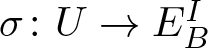 $\sigma \colon U \to E^{I}_B$ is a
 $G$-equivariant section of
 $\Pi$. Let
 $H \colon E^{I}_B \times I \to E^{I}_B$ be given by
 \begin{equation*}
H(\gamma,t)(s)
= \gamma(s(1-t)),
\quad \text{for }
\gamma \in E^{I}_B \text{and } s,t \in I.
\end{equation*}
Clearly,  $H$ is well-defined and
 $G$-equivariant, such that
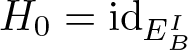 $H_0 = \mathrm{id}_{E^{I}_B}$ and
 $H(\gamma,1) = c_{\gamma(0)}$, where
 $c_{e}$ is the constant path in
 $E$ taking the value
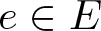 $e \in E$. Then
 \begin{equation*}
F := \Pi \circ H \circ (\sigma \times \mathrm{id}_I) \colon U \times I \to E \times_{B} E
\end{equation*}
is a  $G$-homotopy such that
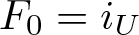 $F_0
= i_U$ and
 $F_1(u)
= (\sigma(u)(0),\sigma(u)(0)) \in \Delta(E)$. Hence,
 $F_1$ is the desired map.
 $(2) \implies (1)$. Suppose
 $H \colon U \times I \to E \times_{B} E$ is a
 $G$-homotopy between
 $f$ and
 $i_U$. Let
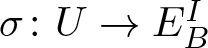 $\sigma \colon U \to E^{I}_B$ be the
 $G$-map given by
 $\sigma(u) = c_{\pi_1(f(u))} = c_{\pi_2(f(u))}$, where
 $\pi_i \colon E \times_B E \to E$ is the projection map onto the
 $i$-th factor. Since
 $\Pi$ is a
 $G$-fibration, there exists a
 $G$-homotopy
 $\widetilde{H} \colon U \times I \to E^{I}_B$ such that
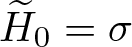 $\widetilde{H}_0 = \sigma$ and
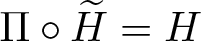 $\Pi \circ \widetilde{H} = H$. Then
 $\Pi \circ \widetilde{H}_1 = H_1 = i_U$ implies
 $\widetilde{H}_1$ is a
 $G$-equivariant section of
 $\Pi$ over
 $U$.
As a consequence of the previous theorem, we can now express the equivariant parametrized topological complexity as the equivariant  $\Delta(E)$-LS category of the fibre product.
Corollary 3.3. For a  $G$-fibration
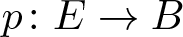 $p \colon E \to B$, we have
 \begin{equation*}
\mathrm{TC}_{G}[p \colon E \to B] = ~_{\Delta(E)}\mathrm{cat}_G(E\times_B E).
\end{equation*}
Proposition 3.4. Suppose 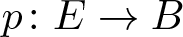 $p \colon E \to B$ is a
 $G$-fibration. If
 $H$ and
 $K$ are subgroups of
 $G$ such that
 $E^H$ and
 $B^H$ are
 $K$-invariant, and the fixed point map
 $p^H \colon E^H \to B^H$ is a
 $K$-fibration, then
 \begin{equation*}
\mathrm{TC}_K[p^H \colon E^H \to B^H] \leq \mathrm{TC}_G[p \colon E \to B].
\end{equation*}
Proof. Suppose  $\Pi \colon E^I_B \to E \times_B E$ is the
 $G$-equivariant parametrized fibration corresponding to
 $p$. Then it is easily checked that
 \begin{equation*}
(E^I_B)^H = (E^H)^I_{B^H} \quad \text{and} \quad (E \times_B E)^H = E^H \times_{B^H} E^H,
\end{equation*}
and the  $K$-equivariant parameterized fibration corresponding to
 $p^H$ is given by
 $\Pi^H$. Hence, it follows that
 \begin{equation*}
\mathrm{TC}_K[p^H \colon E^H \to B^H]
= \mathrm{secat}_K(\Pi^H)
\leq \mathrm{secat}_G(\Pi)
= \mathrm{TC}_G[p \colon E \to B]
\end{equation*}
by Proposition 2.12.
Applying Proposition 3.4 and Proposition 2.12, we obtain the following corollary.
Corollary 3.5. Suppose  $G$ is a compact Hausdorff topological group and
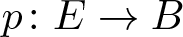 $p \colon E \to B$ is a
 $G$-fibration. Then
(1) the fixed point map
$p^H \colon E^H \to B^H$ is a fibration for all closed subgroups
$H$ of
$G$, and
\begin{equation*}
\mathrm{TC}[p^H \colon E^H \to B^H] \leq \mathrm{TC}_G[p \colon E \to B].
\end{equation*}(2)
$p \colon E \to B$ is a
$K$-fibration for all closed subgroups
$K$ of
$G$, and
\begin{equation*}
\mathrm{TC}[p \colon E \to B] \leq \mathrm{TC}_K[p \colon E \to B] \leq \mathrm{TC}_G[p \colon E \to B].
\end{equation*}



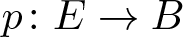


A cohomological lower bound for the equivariant parametrized topological complexity was established by the second author in [Reference Daundkar14, Theorem 4.5] using Borel cohomology. In the following theorem, we provide an alternative cohomological lower bound based on ordinary cohomology, which should, in principle, be easier to compute. The proof follows arguments similar to those in [Reference Grant27, Theorem 4.6].
Let  $E_{B,G} := (E \times_B E)/G$ and let
 $d_GE \subseteq E_{B,G}$ denote the image of the diagonal subspace
 $\Delta(E) \subseteq E \times_B E$ under the orbit map
 $\rho \colon E \times_B E \to E_{B,G}$.
Theorem 3.6. Suppose 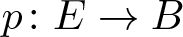 $p \colon E \to B$ is a
 $G$-fibration. If there exists cohomology classes
 $u_1,\dots,u_k \in H^*(E_{B,G};R)$ (for any commutative ring
 $R$) such that
(1)
$u_i$ restricts to zero in
$H^*(d_GE;R)$ for
$i=1,\dots,k$;(2)
$u_1 \smile \dots \smile u_k \neq 0$ in
$H^*(E_{B,G};R)$,





then  $\mathrm{TC}_G[p \colon E \to B] \gt k$.
Proof. Suppose  $\mathrm{TC}_G[p \colon E \to B] \leq k$. Then there exists a
 $G$-invariant open cover
 $\{U_1,\dots,U_k\}$ of
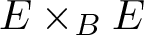 $E \times_B E$ such that each
 $U_i$ admits a
 $G$-equivariant section of
 $\Pi$. By Theorem 3.2, for each
 $i =1, \dots, k$, there exists a
 $G$-homotopy
 $H_i \colon U_i \times I \to E \times_B E$ from the inclusion map
 $j_{U_i} \colon U_i \hookrightarrow E \times_B E$ to a
 $G$-map
 $f_i \colon U_i \to E \times_B E$ which takes values in
 $\Delta(E)$. Let
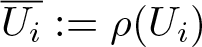 $\overline{U_i} := \rho(U_i)$. As
 $I$ is locally compact,
 $H_i$ induces a homotopy
 $\overline{H_i} \colon \overline{U_i} \times I \to E_{B,G}$ from the inclusion map
 $j_{\overline{U_i}} \colon \overline{U_i} \hookrightarrow E_{B,G}$ to a map
 $\overline{f_i} \colon \overline{U_i} \to E_{B,G}$ which takes values in
 $d_GE$. Thus, the following diagram

is commutative. Hence, by hypothesis (1), each  $u_i$ restricts to zero in
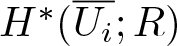 $H^{*}(\overline{U_i};R)$. By the long exact sequence of the pair
 $(E_{B,G},d_GE)$, there exist classes
 $v_i \in H^{*}(E_{B,G},\overline{U_i};R)$ such that
 $v_i$ maps to
 $u_i$ under the coboundary map
 $H^{*}(E_{B,G},\overline{U_i};R) \to H^{*}(E_{B,G};R)$. Hence, we get
 \begin{equation*}
v_1 \smile \dots \smile v_k
\in H^{*}(E_{B,G},\cup_{i=1}^{k} \overline{U_i};R)
= H^{*}(E_{B,G},E_{B,G};R)
= 0.
\end{equation*}
Thus, by the naturality of cup products, we get  $u_1 \smile \dots \smile u_k = 0 \in H^{*}(E_{B,G};R)$, contradicting the hypothesis (2).
When  $B$ is a point, the above theorem yields a cohomological lower bound for
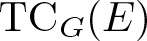 $\mathrm{TC}_G(E)$, as illustrated in the example below.
Example 3.7. Let 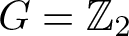 $G = \mathbb{Z}_2$ act on
 $S^{n}$ via the antipodal action. Then
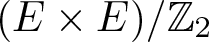 $(E \times E)/\mathbb{Z}_2$ is the projective product space in the sense of Davis [Reference Davis16]. If
 $n$ is odd, the mod-2 cohomology ring of
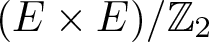 $(E \times E)/\mathbb{Z}_2$ is given by
 \begin{equation*}
\frac{\mathbb{Z}_2[y]}{\langle y^{n+1} \rangle} \otimes \Lambda_{\mathbb{Z}_2}[x],
\quad \text{with } |y|=1,\,|x|=n \text{(cohomological degrees)},
\end{equation*}
where 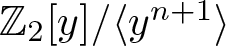 $\mathbb{Z}_2[y]/\langle y^{n+1} \rangle$ is the mod-2 cohomology ring of
 $d_{\mathbb{Z}_2}(S^n) = \mathbb{R} P^n$. If
 $n$ is even, the mod-2 cohomology ring of
 $(E \times_B E)/\mathbb{Z}_2$ is the same as above with the additional relation
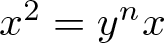 $x^2 = y^n x$, see [Reference Davis16, Theorem 2.1]. Hence, the cohomology classes of
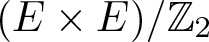 $(E \times E)/\mathbb{Z}_2$ that restrict to zero on
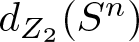 $d_{Z_2}(S^n)$ are precisely those in
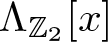 $\Lambda_{\mathbb{Z}_2}[x]$. We note that:
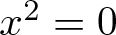
• If
$n$ is odd, then
$x^2 = 0$; see Equation (2.5) in [Reference Davis16, Theorem 2.1].• If
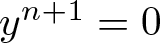
$n$ is even, then
$x^3 = (y^nx)x = y^n x^2 = y^n (y^n x) = y^{2n}x = 0$, since
$y^{n+1} = 0$.



Hence, by Theorem 3.6, the lower bound on 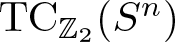 $\mathrm{TC}_{\mathbb{Z}_2}(S^n)$ is 2 if
 $n$ is odd and 3 if
 $n$ is even. We note that
 \begin{equation*}
\mathrm{TC}_{\mathbb{Z}_2}(S^n) =
\begin{cases}
2, & \text{for }n\,\,\text{odd},\\
3, & \text{for }n,\,\text{even},
\end{cases}
\end{equation*}
see [Reference González, Grant, Torres-Giese and Xicoténcatl26, Corollary 4.4]. Hence, the lower bound we obtain is optimal. We note that we can obtain the same lower bounds using the inequality  $\mathrm{TC}(S^n) \leq \mathrm{TC}_{\mathbb{Z}_2}(S^n)$.
The product inequality for parametrized topological complexity was proved in [Reference Cohen, Farber and Weinberger11, Proposition 6.1]. We now establish the corresponding equivariant analogue.
Theorem 3.8. Let  $p_1 \colon E_1 \to B_1$ be a
 $G_1$-fibration and
 $p_2 \colon E_2 \to B_2$ be a
 $G_2$-fibration. If
 $(E_1 \times E_1) \times (E_2 \times E_2)$ is
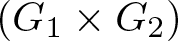 $(G_1 \times G_2)$-completely normal, then
 \begin{equation*}
\mathrm{TC}_{G_1 \times G_2}[p_1 \times p_2 \colon E_1 \times E_2 \to B_1 \times B_2]
\leq \mathrm{TC}_{G_1}[p_1 \colon E_1 \to B_1]+\mathrm{TC}_{G_2}[p_2 \colon E_2\to B_2] - 1,
\end{equation*}
where  $G_i$ acts on
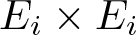 $E_i \times E_i$ diagonally for
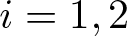 $i=1,2$; and
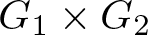 $G_1 \times G_2$ acts on
 $(E_1 \times E_1) \times (E_2 \times E_2)$ componentwise.
Proof. Let  $\Pi_1$ and
 $\Pi_2$ denote the equivariant parametrized fibrations corresponding to
 $p_1$ and
 $p_2$, respectively. Then the equivariant parametrized fibration corresponding to the
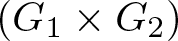 $(G_1 \times G_2)$-fibration
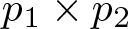 $p_1 \times p_2$ is equivalent to the product
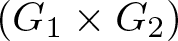 $(G_1 \times G_2)$-fibration
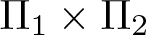 $\Pi_1 \times \Pi_2$, see [Reference Cohen, Farber and Weinberger11, Proposition 6.1] for this identification. Since a subspace of a
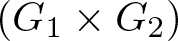 $(G_1 \times G_2)$-completely normal space is itself
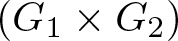 $(G_1 \times G_2)$-completely normal, it follows that
 $(E_1 \times_{B_1} E_1) \times (E_2 \times_{B_2} E_2)$ is
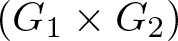 $(G_1 \times G_2)$-completely normal. Hence,
 \begin{align*}
\mathrm{TC}_{G_1 \times G_2}[p_1 \times p_2 \colon E_1 \times E_2 \to B_1 \times B_2]
& = \mathrm{secat}_{G_1 \times G_2}(\Pi_1 \times \Pi_2) \\
& \leq \mathrm{secat}_{G_1}(\Pi_1) + \mathrm{secat}_{G_2}(\Pi_2) - 1\\
& = \mathrm{TC}_{G_1}[p_1 \colon E_1 \to B_1]\\
&\quad +\mathrm{TC}_{G_2}[p_2 \colon E_2\to B_2] -1,
\end{align*}
by [Reference Arora, Daundkar and Sarkar1, Proposition 3.7].
Corollary 3.9. Suppose  $p_i \colon E_i \to B_i$ is a
 $G$-fibration for
 $i =1,2$. If
 $G$ is compact Hausdorff, then
 $p_1 \times p_2 \colon E_1 \times E_2 \to B_1 \times B_2$ is a
 $G$-fibration, where
 $G$ acts diagonally on the spaces
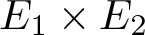 $E_1 \times E_2$ and
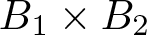 $B_1 \times B_2$. Furthermore, if
 $E_1\times E_1 \times E_2 \times E_2$ is completely normal, then
 \begin{equation*}
\mathrm{TC}_{G}[p_1 \times p_2 \colon E_1 \times E_2 \to B_1 \times B_2]
\leq \mathrm{TC}_{G}[p_1 \colon E_1 \to B_1] + \mathrm{TC}_{G}[p_2 \colon E_2\to B_2]-1.
\end{equation*}
Proof. In Proposition 2.18, we showed that 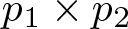 $p_1 \times p_2$ is a
 $G$-fibration. Moreover, by [Reference Colman and Grant13, Lemma 3.12], it follows that
 $(E_1\times E_1) \times (E_2 \times E_2)$ is
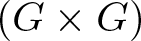 $(G \times G)$-completely normal. Hence, the desired inequality
 \begin{align*}
\mathrm{TC}_{G}[p_1 \times p_2 \colon E_1 \times E_2 \to B_1 \times B_2]
& \leq \mathrm{TC}_{G \times G}[p_1 \times p_2 \colon E_1 \times E_2 \to B_1 \times B_2] \\
& \leq \mathrm{TC}_{G}[p_1 \colon E_1 \to B_1]+\mathrm{TC}_{G}[p_2 \colon E_2\to B_2]-1
\end{align*}
follows from Corollary 3.5 (2) and Theorem 3.8.
Corollary 3.10. Suppose  $p_i \colon E_i \to B$ is a
 $G$-fibration for
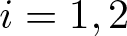 $i =1,2$. Let
 $E_1 \times_B E_2 = \{(e_1,e_2) \in E_1 \times E_2 \mid p_1(e_1) = p_2(e_2)\}$ and let
 $p\colon E_1 \times_B E_2 \to B$ be the
 $G$-map given by
 $p(e_1,e_2)=p_1(e_1)=p_2(e_2)$, where
 $G$ acts on
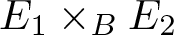 $E_1 \times_B E_2$ diagonally. If
 $G$ is compact Hausdorff, then
 $p$ is a
 $G$-fibration. Furthermore, if
 $E_1 \times E_1 \times E_2 \times E_2$ is completely normal, then
 \begin{equation*}
\mathrm{TC}_{G}[p \colon E_1 \times_B E_2 \to B]
\leq \mathrm{TC}_{G}[p_1 \colon E_1 \to B]+\mathrm{TC}_{G}[p_2 \colon E_2\to B]-1.
\end{equation*}
Proof. In Corollary 2.19, we established that  $p$ is a
 $G$-fibration. Then, by identifying
 $B$ with its image under the diagonal map
 $\Delta \colon B \to B \times B$ in the base of the fibration
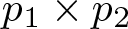 $p_1 \times p_2$ (see (5)), the desired inequality follows from [Reference Daundkar14, Proposition 4.6] and Corollary 3.9.
4. Invariant parametrized topological complexity
In this section, we introduce the main object of our study, the invariant parametrized topological complexity.
Suppose 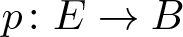 $p \colon E \to B$ is a
 $G$-fibration. Define the space
 \begin{equation*}
E^{I}_B \times_{E/G} E^{I}_B
:= \{(\gamma,\delta) \in E^{I}_B \times E^I_B \mid G\cdot \gamma(1) = G \cdot \delta(0)\}.
\end{equation*}
Then the following diagram

is a pullback. For each path 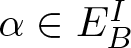 $\alpha \in E^{I}_B$, let
 $b_{\alpha}$ denote the element in
 $B$ such that
 $\alpha$ takes values in the fibre
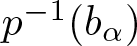 $p^{-1}(b_{\alpha})$. Define the map
 \begin{equation}
\Psi \colon E^{I}_B \times_{E/G} E^{I}_B \to E \times_{B/G} E, \quad \text{by} \quad \Psi(\gamma,\delta) = (\gamma(0),\delta(1)).
\end{equation}
The map  $\Psi$ is well-defined as
 $\gamma(1) = g \cdot \delta(0)$ for some
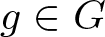 $g \in G$ and
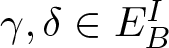 $\gamma,\delta \in E^{I}_B$ implies that
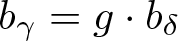 $b_{\gamma} = g \cdot b_{\delta}$. Hence,
 $p(\gamma(0)) = b_{\gamma} = g \cdot b_\delta = g \cdot p(\delta(1))$ implies
 $(\gamma(0),\delta(1)) \in E \times_{B/G} E$.
As 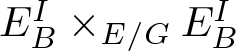 $E^{I}_B \times_{E/G} E^{I}_B$ and
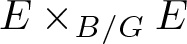 $E \times_{B/G} E$ are
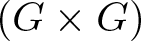 $(G \times G)$-invariant subsets of
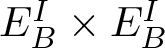 $E^{I}_B \times E^{I}_B$ and
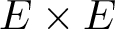 $E \times E$ respectively, we get a
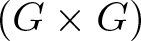 $(G \times G)$-action on
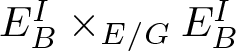 $E^{I}_B \times_{E/G} E^{I}_B$ and
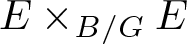 $E \times_{B/G} E$, and
 $\Psi$ becomes a
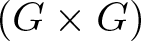 $(G \times G)$-equivariant map.
Proposition 4.1. If 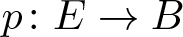 $p \colon E \to B$ is a
 $G$-fibration, then the map
 $\Psi \colon E^{I}_B \times_{E/G} E^I_B \to E \times_{B/G} E$ is a
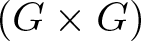 $(G \times G)$-fibration.
Proof. Suppose  $E^I_B \to E \times_B E$ is the equivariant parametrized fibration corresponding to
 $p$. Suppose
 $\widehat{p} \colon E^{I}_B \times E^{I}_B \to (E \times_B E) \times (E \times_B E)$ is the product
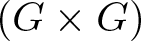 $(G \times G)$-fibration. Define
 \begin{equation*}
S := \{(e_1,e_2,e_3,e_4) \in (E \times_B E) \times (E \times_B E) \mid (e_2, e_3) \in E \times_{E/G} E\}.
\end{equation*}
It is readily checked that  $(\gamma,\delta) \in E^I_B \times_{E/G} E^{I}_B$ if and only if
 $(\gamma,\delta) \in (\widehat{p})^{-1}(S)$. Since
 $S$ is
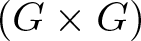 $(G \times G)$-invariant, it follows that the restriction
 \begin{equation*}
\left.\widehat{p}\right|_{E^I_B \times_{E/G} E^{I}_B} \colon
E^I_B \times_{E/G} E^{I}_B \to S
\end{equation*}
is a 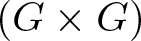 $(G \times G)$-fibration.
Now consider the pullback diagram

As  $p$ is a
 $G$-fibration, it follows that
 $\pi_1$ and
 $\pi_2$ are
 $G$-fibrations. Hence, the projection map
 $\pi_{1,4} := \pi_1 \times \pi_4 \colon (E \times_B E) \times (E \times_B E) \to E \times E$, given by
 $(e_1,e_2,e_3,e_4) \mapsto (e_1,e_4)$, is a
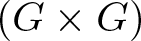 $(G \times G)$-fibration. It is readily checked that
 $(e_1,e_2,e_3,e_4) \in S$ if and only if
 $(e_1,e_2,e_3,e_4) \in (\pi_{1,4})^{-1}(E \times_{B/G} E)$. Since
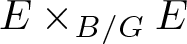 $E \times_{B/G} E$ is
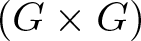 $(G \times G)$-invariant, it follows that
 \begin{equation*}
\left.\pi_{1,4}\right|_{S} \colon S \to E \times_{B/G} E
\end{equation*}
is a 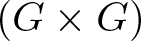 $(G \times G)$-fibration. Hence,
 $\Psi = \left.\pi_{1,4}\right|_{S} \circ \left.\widehat{p}\right|_{E^I_B \times_{E/G} E^{I}_B}$ is a
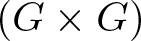 $(G \times G)$-fibration.
We now introduce the main object of our study, which is a parametrized analogue of invariant topological complexity introduced by Lubawski and Marzantowicz in [Reference Lubawski and Marzantowicz31].
Definition 4.2. Suppose 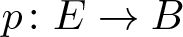 $p\colon E \to B$ is a
 $G$-fibration. The invariant parametrized topological complexity, denoted by
 $\mathrm{TC}^G[p \colon E \to B]$ is defined as
 \begin{equation*}
\mathrm{TC}^{G}[p \colon E \rightarrow B] := \mathrm{secat}_{G\times G} \left(\Psi \right).
\end{equation*}
The  $G$-homotopy invariance of the invariant topological complexity was established by Lubawski and Marzantowicz in [Reference Lubawski and Marzantowicz31, Proposition 2.4 and Lemma 3.8]. We will now establish the corresponding parametrized analogue. In particular, we establish the equivariant fibrewise homotopy invariance of invariant parametrized topological complexity. We refer the reader to [Reference Daundkar14, Section 4.1] for basic information about fibrewise equivariant homotopy equivalence.
Theorem 4.3. If 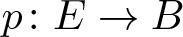 $p \colon E \to B$ and
 $p' \colon E' \to B$ are
 $G$-fibrations which are fibrewise
 $G$-homotopy equivalent, then
 \begin{equation*}
\mathrm{TC}^{G}[p \colon E \to B] = \mathrm{TC}^{G}[p' \colon E' \to B].
\end{equation*}
Proof. Suppose we have a fibrewise  $G$-homotopy equivalence given by the following commutative diagram:

Suppose 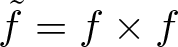 $\tilde{f} = f\times f$,
 $\tilde{f}^I(\gamma,\delta) = (f\circ \gamma,f\circ \delta)$ and
 $\tilde{f'}$,
 $(\tilde{f'})^I$ are defined similarly. Note that
 $\tilde{f}$ and
 $\tilde{f'}$ are
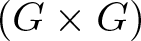 $(G\times G)$-maps. Then we have the following commutative diagram.

Since the maps  $f'\circ f$ and
 $\mathrm{id}_E$ are fibrewise
 $G$-homotopy equivalent, it follows that the maps
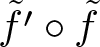 $\tilde{f'}\circ \tilde{f}$ and
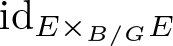 $\mathrm{id}_{E\times_{B/G} E}$ are
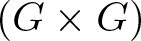 $(G \times G)$-homotopy equivalent. Then, using [Reference Daundkar14, Lemma 4.10 (2)], we obtain the inequality
 \begin{equation*}
\mathrm{TC}^G[p \colon E\to B]
= \mathrm{secat}_{G\times G}(\Psi)
\leq \mathrm{secat}_{G\times G}(\Psi')
= \mathrm{TC}^G[p' \colon E'\to B].
\end{equation*}
Similarly, we can derive the reverse inequality, which completes the proof.
The next proposition shows that the invariant parametrized topological complexity of a  $G$-fibration is a generalization of both the parametrized topological complexity of a fibration [Reference Cohen, Farber and Weinberger11] and the invariant topological complexity of a
 $G$-space [Reference Lubawski and Marzantowicz31].
Proposition 4.4. Suppose 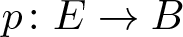 $p \colon E \to B$ is a
 $G$-fibration.
(1) If
$G$ acts trivially on
$E$ and
$B$, then
$\mathrm{TC}^{G}[p \colon E \rightarrow B] = \mathrm{TC}[p \colon E \rightarrow B]$.(2) If
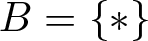
$B=\{*\}$, then
$\mathrm{TC}^{G}[p \colon E \rightarrow \{*\}] = \mathrm{TC}^{G}(E)$.




Proof. (1) If  $G$ acts trivially on
 $E$, then
 $E^{I}_B \times_{E/G} E^{I}_B = E^{I}_B \times_{E} E^{I}_B$. We note that the map
 \begin{equation*}
E^{I}_B \to E^{I}_B \times_{E} E^{I}_B,
\quad
\alpha \mapsto \left(\left.\alpha\right|_{\left[0,\frac{1}{2}\right]},\left.\alpha\right|_{\left[\frac{1}{2},1\right]}\right) ,
\end{equation*}
is a homeomorphism, whose inverse is given by the concatenation of paths. If  $G$ acts trivially on
 $B$, then
 $E \times_{B/G} E = E \times_B E$. Therefore, the corresponding fibration
 $\Psi$ is given by (8). Hence, we get
 $\mathrm{TC}^{G}[p \colon E \rightarrow B] = \mathrm{TC}[p \colon E \rightarrow B]$.
(2) If 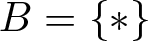 $B=\{*\}$, then
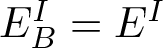 $E^{I}_B = E^{I}$ and
 $E \times_{B/G} E = E \times E$. Hence, the corresponding fibration
 $\Psi$ is given by (7). Therefore,
 $\mathrm{TC}^{G}[p \colon E \rightarrow \{*\}] = \mathrm{TC}^{G}(E)$.
Proposition 4.5. Let  $p \colon B \times F \to B$ be the trivial
 $G$-fibration with
 $G$ acting trivially on
 $F$. Then
 \begin{equation*}
\mathrm{TC}^G[p \colon B \times F \to B] = \mathrm{TC}(F).
\end{equation*}
Proof. Let  $E = B \times F$. Then We note that
 $E^I_B = B \times F^I$ and
 $E \times_{B/G} E = (B \times_{B/G} B) \times (F \times F)$. Since
 $E/G = (B \times F)/G = (B/G) \times F$, it follows that
 \begin{equation*}
E^I_B \times_{E/G} E^I_B
= (B \times_{B/G} B) \times (F^I \times_{F} F^I)
\cong_G (B \times_{B/G} B) \times F^I,
\end{equation*}
where the last  $G$-homeomorphism is induced by
 $(\gamma,\delta) \in F^{I} \times_F F^{I} \mapsto \gamma*\delta \in F^{I}$. Consequently, the corresponding fibration
 $\Psi$ is given by
 $\Psi = \mathrm{id}_{B \times_{B/G} B} \times e_F$, where
 $e_F \colon F^I \to F\times F$ denotes the free path space fibration of
 $F$. Hence,
 \begin{equation*}
\mathrm{TC}^G[p \colon E\to B]
= \mathrm{secat}_{G\times G}(\Psi)
= \mathrm{secat}_{G\times G}(\mathrm{id} \times e_F)
= \mathrm{secat}(e_F)
= \mathrm{TC}(F),
\end{equation*}
since  $G$ acts trivially on
 $F$.
Suppose  $\daleth(E)$ is the saturation of the diagonal
 $\Delta(E)$ with respect to the
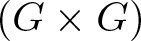 $(G \times G)$-action on
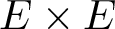 $E \times E$, i.e.,
 \begin{equation*}
\daleth(E) := (G \times G)\cdot \Delta(E) \subseteq E \times E.
\end{equation*}
If 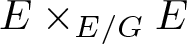 $E \times_{E/G} E$ is the pullback corresponding to
 $\pi_E \colon E \to E/G$, i.e.,
 \begin{equation*}
E \times_{E/G} E := \{(e_1,e_2) \in E \times E \mid \pi_E(e_1) = \pi_E(e_2)\},
\end{equation*}
then it is readily checked that  $\daleth(E) = E \times_{E/G} E \subseteq E \times_{B/G} E$. Hence, we will use the notation
 $\daleth(E)$ and
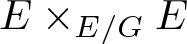 $E \times_{E/G} E$ interchangeably.
In the next theorem, we establish the parametrized analogue of [Reference Lubawski and Marzantowicz31, Lemma 3.8].
Theorem 4.6. Suppose 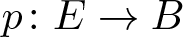 $p\colon E \to B$ is a
 $G$-fibration. For a
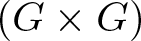 $(G\times G)$-invariant (not necessarily open) subset
 $U$ of
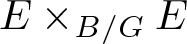 $E \times_{B/G} E$, the following are equivalent:
(1) there exists a
$(G \times G)$-equivariant section of
$\Psi \colon E^{I}_B \times_{E/G} E^{I}_B \to E \times_{B/G} E$ over
$U$.(2) there exists a
$(G \times G)$-homotopy between the inclusion map
$i_U \colon U \hookrightarrow E \times_{B/G} E$ and a
$(G \times G)$-map
$f \colon U \to E \times_{B/G} E$ which takes values in
$E \times_{E/G} E$.





Proof.  $(1) \implies (2)$. Suppose
 $\sigma = (\sigma_1,\sigma_2) \colon U \to E^{I}_B \times_{E/G} E^{I}_B$ is a
 $(G \times G)$-equivariant section of
 $\Psi$. Let
 $H \colon (E^{I}_B \times_{E/G} E^{I}_B) \times I \to E^{I}_B \times_{E/G} E^{I}_B$ be given by
 \begin{equation*}
H(\gamma,\delta,t) = (\gamma_t',\delta_t'), \quad \text{for } (\gamma,\delta) \in E^{I}_B\times_{E/G} E^{I}_B, \text{and } t \in I,
\end{equation*}
where  $\gamma_t'(s) = \gamma(s+t(1-s))$ and
 $\delta_t'(s) = \delta(s(1-t))$. It is clear that
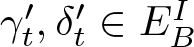 $\gamma_t', \delta_t' \in E^{I}_B$, and
 $\gamma_t'(1) = \gamma(1)$ and
 $\delta_t'(0) = \delta(0)$ for all
 $(\gamma,\delta) \in E^{I}_B\times_{E/G} E^{I}_B$ and for all
 $t \in I$. Hence,
 $H$ is well-defined. Clearly,
 $H$ is
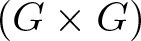 $(G\times G)$-equivariant such that
 $H(\gamma,\delta,0) = (\gamma, \delta)$ and
 $H(\gamma,\delta,1) = (c_{\gamma(1)},c_{\delta(0)})$, where
 $c_{e}$ is the constant path in
 $E$ taking the value
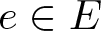 $e \in E$. Then
 \begin{equation*}
F := \Psi \circ H \circ (\sigma \times \mathrm{id}_I) \colon U \times I \to E \times_{B/G} E
\end{equation*}
is a 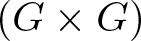 $(G \times G)$-homotopy such that
 $F_0 = \Psi \circ \mathrm{id}_{E^{I}_B \times_{E/G} E^{I}_B} \circ \sigma = i_U$ and
 $F_1(u) = \Psi(H_1(\sigma(u))) = ((\sigma_1(u))(1),(\sigma_2(u))(0))$. As
 $\sigma(u) = (\sigma_1(u), \sigma_2(u)) \in E^{I}_B \times_{E/G} E^{I}_B$ for all
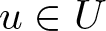 $u \in U$, it follows
 $F_1(u) = ((\sigma_1(u))(1),(\sigma_2(u))(0)) \in E \times_{E/G} E$. Hence,
 $F_1$ is the desired
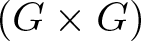 $(G\times G)$-homotopy.
 $(2) \implies (1)$. Suppose
 $H \colon U \times I \to E \times_{B/G} E$ is a
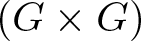 $(G \times G)$-homotopy between
 $f$ and
 $i_U$. Let
 $\sigma \colon U \to E^{I}_B \times_{E/G} E^{I}_B$ be the
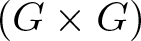 $(G \times G)$-map given by
 $\sigma(u)=(c_{\pi_1(f(u))},c_{\pi_2(f(u))})$, where
 $\pi_i \colon E \times_{B/G} E \to E$ is the projection map onto the
 $i$-th factor. The map
 $\sigma$ is well-defined, since
 $f$ takes values in
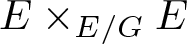 $E \times_{E/G} E$. By the
 $G$-homotopy lifting property of
 $\Psi$, there exists a
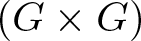 $(G \times G)$-homotopy
 $\widetilde{H} \colon U \times I \to E^{I}_B \times_{E/G} E^{I}_B$ such that the following diagram

commutes. Then  $\Psi \circ \widetilde{H}_1 = H_1 = i_U$ implies
 $\widetilde{H}_1$ is a
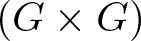 $(G\times G)$-equivariant section of
 $\Psi$ over
 $U$.
Corollary 4.7. For a  $G$-fibration
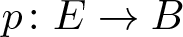 $p \colon E \to B$, we have
 \begin{equation*}
\mathrm{TC}^{G}[p \colon E \to B] = ~_{\daleth(E)}\mathrm{cat}_{G \times G}(E \times_{B/G} E).
\end{equation*}
4.1. Properties and bounds
Proposition 4.8. Suppose 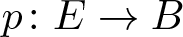 $p \colon E \to B$ is a
 $G$-fibration and
 $B'$ is a
 $G$-invariant subset of
 $B$. If
 $E' = p^{-1}(B')$ and
 $p' \colon E' \to B'$ is the
 $G$-fibration obtained by restriction of
 $p$, then
 \begin{equation*}
\mathrm{TC}^{G}[p' \colon E' \to B'] \leq \mathrm{TC}^{G}[p \colon E \to B].
\end{equation*}
In particular, if 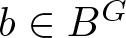 $b \in B^G$, then the fibre
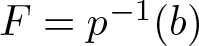 $F=p^{-1}(b)$ is a
 $G$-space and
 \begin{equation*}
\mathrm{TC}^{G}(F) \leq \mathrm{TC}^{G}[p \colon E \to B].
\end{equation*}
Proof. Note that we have the following commutative diagram

where  $\Psi'$ and
 $\Psi$ are the fibrations corresponding to
 $p'$ and
 $p$, respectively. We will now show that this diagram is a pullback.
Suppose  $Z$ is a topological space with
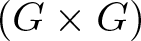 $(G \times G)$-maps
 $k=(k_1,k_2) \colon Z \to E^I_B \times_{E/G} E^I_B$ and
 $h = (h_1,h_2) \colon Z \to E' \times_{B'/G} E'$ such that
 $\Psi \circ k = h$. Then we have
 \begin{equation*}
k_1(z)(0) = h_1(z) \in E' \quad \text{and} \quad k_2(z)(1) = h_2(z) \in E'.
\end{equation*}
As  $k(z) = (k_1(z),k_2(z)) \in E^I_B \times_{E/G} E^I_B$, we have
 \begin{equation*}
p(k_1(z)(t))=b_{k_1(z)},\quad p(k_2(z)(t))=b_{k_2(z)}\quad \text{and} \quad k_1(z)(1) = g_{k(z)} \cdot k_2(z)(0)
\end{equation*}
for some  $b_{k_1(z)}, b_{k_2(z)} \in B$,
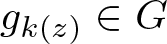 $g_{k(z)} \in G$ and for all
 $t\in I$.
Note that  $b_{k_1(z)} = p(k_1(z)(t)) = p(k_1(z)(0)) = p(h_1(z))$ implies
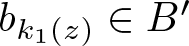 $b_{k_1(z)} \in B'$ since
 $h_1(z) \in E' = p^{-1}(B')$. Hence,
 $k_1(z) \in (E')^{I}_{B'}$ since
 $k_1(z)(t) \in p^{-1}(b_{k_1(z)}) \subset p^{-1}(B') = E'$ for all
 $t \in I$. Similarly,
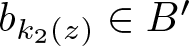 $b_{k_2(z)} \in B'$ and
 $k_2(z) \in (E')^{I}_{B'}$. Hence,
 $k_1(z)(1) = g_{k(z)} \cdot k_2(z)(0)$ implies
 $\mathrm{Im}(k) \subseteq (E')^I_{B'} \times_{E'/G} (E')^I_{B'}$. Hence, the diagram above is a pullback. Then the required inequality
 \begin{equation*}
\mathrm{TC}^{G}[p' \colon E' \to B']
= \mathrm{secat}_{G\times G}(\Psi')
\leq \mathrm{secat}_{G \times G}(\Psi)
= \mathrm{TC}^{G}[p \colon E \to B]
\end{equation*}
follows from [Reference Colman and Grant13, Proposition 4.3].
Proposition 4.9. Suppose  $G$ is a compact Hausdorff topological group, and let
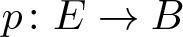 $p \colon E \to B$ be a
 $G$-fibration. If
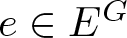 $e \in E^G$, then the fibre
 $F = p^{-1}(p(e))$ is a
 $G$-space, and
 \begin{equation*}
\mathrm{cat}_G(F) \leq \mathrm{TC}^G(F) \leq \mathrm{TC}^G[p \colon E\to B].
\end{equation*}
Furthermore,
(1) if
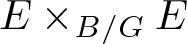
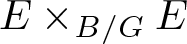
$E\times_{B/G}E$ is
$(G\times G)$-connected, then
\begin{equation*}
\mathrm{TC}^G[p \colon E\to B]
\leq \mathrm{cat}_{G\times G}(E\times_{B/G} E),
\end{equation*}(2) if
$G$ is a compact Lie group and
$E \times_{B/G} E$ is a connected
$(G\times G)$-
$\mathrm{CW}$-complex, then
\begin{equation*}
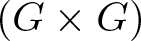
\mathrm{cat}_{G\times G}(E\times_{B/G} E) \leq \mathrm{dim} \left(\frac{E \times_{B/G} E}{G \times G}\right)+1.
\end{equation*}




Consequently, if 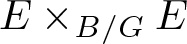 $E \times_{B/G} E$ is
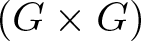 $(G\times G)$-connected
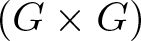 $(G\times G)$-
 $\mathrm{CW}$-complex, then
 \begin{equation*}
\mathrm{TC}^G[p \colon E\to B] \leq \mathrm{dim} \left(\frac{E \times_{B/G} E}{G \times G}\right)+1.
\end{equation*}
Proof. If 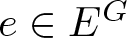 $e \in E^G$, then
 $b = p(e) \in B^G$. Hence, by Proposition 4.8,
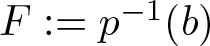 $F := p^{-1}(b)$ admits a
 $G$-action and
 $
\mathrm{TC}^G(F) \leq \mathrm{TC}^G[p \colon E\to B].
$ Observe that
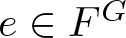 $e \in F^G$. Therefore, the inequality
 $\mathrm{cat}_G(F)\leq \mathrm{TC}^G(F)$ follows from [Reference Bł aszczyk and Kaluba7, Proposition 2.7].
(1) Note that if  $c_e$ is the constant path in
 $E$ which takes the value
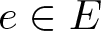 $e \in E$, then
 $(c_e,c_e) \in (E^I_B \times_{E/G} E^I_B)^{(G\times G)}$. Moreover, since
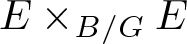 $E\times_{B/G}E$ is
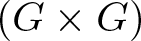 $(G\times G)$-connected, it follows that
 \begin{equation*}
\mathrm{TC}^G[p \colon E\to B]
= \mathrm{secat}_{G \times G}(\Psi)
\leq \mathrm{cat}_{G\times G}(E\times_{B/G} E),
\end{equation*}
by [Reference Colman and Grant13, Proposition 4.4].
(2) Since 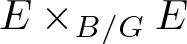 $E \times_{B/G} E$ is connected and
 $(e, e) \in (E \times_{B/G} E)^{(G \times G)}$, it follows that
 \begin{equation*}
\mathrm{cat}_{G\times G}(E\times_{B/G} E)
\leq \mathrm{dim} \left(\frac{E \times_B E}{G \times G}\right) + 1,
\end{equation*}
by [Reference Marzantowicz33, Corollary 1.12]. Now the last inequality follows from  $(1)$ and
 $(2)$.
Corollary 4.10. Suppose  $G$ is a compact Hausdorff topological group, and let
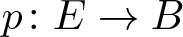 $p \colon E\to B$ be a
 $G$-fibration such that
 $\mathrm{TC}^G[p \colon E \to B] = 1$. If
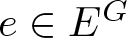 $e \in E^G$, then the fibre
 $F = p^{-1}(p(e))$ is a
 $G$-contractible space.
Proof. By Proposition 4.9, we have  $\mathrm{cat}_G(F)=1$, i.e.,
 $F$ is
 $G$-contractible.
We now establish sufficient conditions for  $\mathrm{TC}^G[p\colon E\to B]$ to be
 $1$. This serves as a converse of Corollary 4.10.
Theorem 4.11. Suppose  $G$ is a compact Hausdorff topological group. Suppose
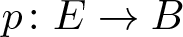 $p \colon E\to B$ is a
 $G$-fibration such that
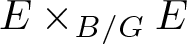 $E \times_{B/G} E$ is a
 $G$-
 $\mathrm{CW}$-complex. Let
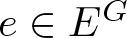 $e \in E^G$. If the fibre
 $F = p^{-1}(p(e))$ satisfies either
•
$F$ is
$G$-connected,
$G$-contractible, and
$F^G = \{e\}$, or•
$F$ strongly
$G$-deformation retracts to the point
$e$,


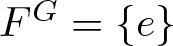


then  $\mathrm{TC}^G[p \colon E \to B] = 1$.
Proof. Note that
 \begin{equation*}
\Psi^{-1}(e,e)
= \{(\alpha,\beta) \in E^I_B \times E^I_B \mid \alpha(0) = \beta(1) = e, \alpha(1) = g \cdot \beta(0) \text{for some } g \in G\}.
\end{equation*}
Since  $\alpha(0) = \beta(1) = e$ and
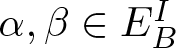 $\alpha,\beta \in E^I_B$, it follows that the fibre
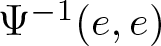 $\Psi^{-1}(e,e)$ is
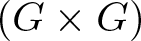 $(G \times G)$-homeomorphic to
 \begin{equation*}
\mathcal{F} = \{\gamma \in F^I \mid \gamma(1/2) = e, \gamma(0) = g \cdot \gamma(1) \},
\end{equation*}
where 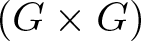 $(G\times G)$-action on
 $\mathcal{F}$ is given by
 \begin{equation*}
((g_1,g_2)\cdot \gamma)(t)
= \begin{cases}
g_1 \cdot \gamma(t) & 0 \leq t \leq 1/2,\\
g_2 \cdot \gamma(t) & 1/2 \leq t \leq 1.
\end{cases}
\end{equation*}
This action is well-defined since  $\gamma(1/2) = e \in E^G$.
Suppose  $F$ is
 $G$-connected,
 $G$-contractible and
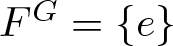 $F^G = \{e\}$. Since
 $F$ is
 $G$-connected, we have
 $_{\{e\}}\mathrm{cat}_G(F) = \mathrm{cat}_G(F)$, see [Reference Lubawski and Marzantowicz31, Remark 2.3] and [Reference Colman and Grant13, Lemma 3.14]. Hence,
 $_{\{e\}}\mathrm{cat}_G(F) = 1$ as
 $F$ is
 $G$-contractible. Thus, there exists a
 $G$-homotopy
 $H \colon F \times I \to F$ such that
 $H(f,0)=f$ and
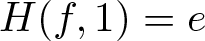 $H(f,1)=e$ for all
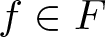 $f\in F$. Let
 $K \colon F^I \times I \to F^I$ be the homotopy given by
 $K(\delta,t)(s) = H(\delta(s),t)$ for all
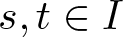 $s,t \in I$ and
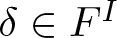 $\delta \in F^I$. Note that
 $K$ is a
 $G$-homotopy. If
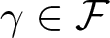 $\gamma \in \mathcal{F}$, then
 \begin{equation*}
g \cdot K(\gamma,t)(1/2) = g \cdot H(\gamma(1/2),t) = g \cdot H(e,t) = H(g \cdot e, t) = H(e,t)
\end{equation*}
for all 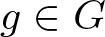 $g \in G$, i.e.,
 $K(\gamma,t)(1/2) \in F^G$. Since
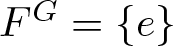 $F^G = \{e\}$, we get
 $K(\gamma,t)(1/2) = e$ for all
 $t\in I$.
Suppose  $F$ strongly
 $G$-deformation retracts to the point
 $e$, then there exists a
 $G$-homotopy
 $H \colon F \times I \to F$ such that
 $H(f,0)=f$ and
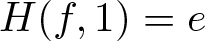 $H(f,1)=e$ and
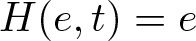 $H(e,t)=e$ for all
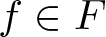 $f\in F$ and
 $t\in I$. Then the homotopy
 $K$ defined on
 $F^I$ as above satisfies
 $K(\gamma,t)(1/2) =e$ due to the condition
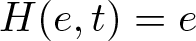 $H(e,t) =e$ for all
 $t \in I$.
Moreover,
 \begin{equation*}
K(\gamma,t)(0) = H(\gamma(0),t) = H(g \cdot \gamma(1),t) = g \cdot H(\gamma(1),t) = g \cdot K(\gamma,t)(1)
\end{equation*}
where  $\gamma(0) = g \cdot \gamma(1)$. Hence, if
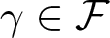 $\gamma \in \mathcal{F}$, we have
 $K(\gamma,t) \in \mathcal{F}$.
Hence, in both cases,  $K$ restricts to a
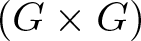 $(G \times G)$-homotopy on
 $K \colon \mathcal{F} \times I \to \mathcal{F}$ such that
 $K(\gamma,0) = \gamma$ and
 $K(\gamma,1) = c_e$, where
 $c_e$ is the constant path in
 $E$ taking the value
 $e$. In particular,
 $\mathcal{F}$ is
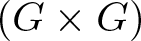 $(G\times G)$-contractible. Hence, by equivariant obstruction theory,
 $\Psi$ admits a
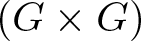 $(G \times G)$-section.
Later, we will also provide sufficient conditions for  $\mathrm{TC}^G[p \colon E \to B] = 1$ and its converse when the group action on the base is free, as stated in Corollary 4.28 and Corollary 4.13, respectively.
Proposition 4.12. Suppose 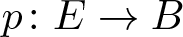 $p \colon E \to B$ is a
 $G$-fibration such that
 $G$ acts freely on
 $B$. If
 $K$ is a subgroup of
 $G$ such that
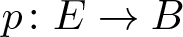 $p \colon E \to B$ is also a
 $K$-fibration, then
 \begin{equation*}
\mathrm{TC}^{K}[p \colon E \to B] \leq \mathrm{TC}^{G}[p \colon E \to B].
\end{equation*}
Proof. Suppose  $\Psi_K \colon E^I_{B} \times_{E/K} E^I_{B} \to E \times_{B/K} E$ is the invariant parametrized fibration corresponding to
 $K$-fibration
 $p$. Then the following diagram

is commutative. Suppose  $U$ is a
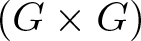 $(G \times G)$-invariant open subset of
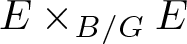 $E \times_{B/G} E$ with a
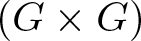 $(G \times G)$-equivariant section
 $s \colon U \to E^I_B \times_{E/G} E^I_B$ of
 $\Psi$.
Define  $V := U \cap \left(E \times_{B/K} E\right)$. Then
 $V$ is
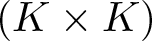 $(K \times K)$-invariant open subset of
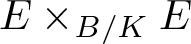 $E \times_{B/K} E$. Suppose
 $(e_1,e_2) \in V$ and
 $s(e_1,e_2) = (\gamma,\delta) \in E^I_B \times_{E/G} E^I_B$. We claim that
 $s(e_1,e_2) = (\gamma,\delta)$ lies in
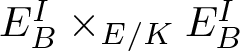 $E^I_{B} \times_{E/K} E^I_{B}$. Note that
 $p(e_1) = k \cdot p(e_2)$ for some
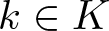 $k \in K$, as
 $(e_1,e_2) \in E \times_{B/K} E$. Since
 $s$ is a section of
 $\Psi$, we have
 \begin{equation*}
b_\gamma = p(\gamma(0)) = p(e_1) = k \cdot p(e_2) = k \cdot p(\delta(1)) = k \cdot b_\delta,
\end{equation*}
where  $\gamma(t) \in p^{-1}(b_\gamma)$ and
 $\delta(t) \in p^{-1}(b_\delta)$ for some
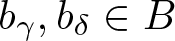 $b_\gamma, b_\delta \in B$ and for all
 $t \in I$. Since
 $(\gamma,\delta) \in E^I_B \times_{E/G} E^I_B$, we have
 $\gamma(1) = g \cdot \delta(0)$ for some
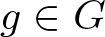 $g \in G$. Hence,
 \begin{equation*}
b_\gamma = p(\gamma(1)) = p(g \cdot \delta(0)) = g \cdot p(\delta(0)) = g \cdot b_\delta.
\end{equation*}
Thus, we get  $g \cdot b_\delta = k \cdot b_\delta$. It follows that
 $g=k$ since
 $G$ acts freely on
 $B$. Thus,
 $\gamma(1) = k \cdot \delta(0)$ implies
 $(\gamma,\delta) \in E^I_{B} \times_{E/K} E^I_{B}$. Hence, the restriction
 $\left.s\right|_{V} \colon V \to E^I_{B} \times_{E/K} E^I_{B}$ is a
 $(K \times K)$-equivariant section of
 $\Psi_K$.
Corollary 4.13. Suppose  $G$ is a compact Hausdorff topological group. If
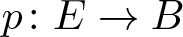 $p \colon E \to B$ is a
 $G$-fibration such that
 $G$ acts freely on
 $B$, then
 \begin{equation*}
\mathrm{TC}^{K}[p \colon E \to B] \leq \mathrm{TC}^{G}[p \colon E \to B]
\end{equation*}
for all closed subgroups  $K$ of
 $G$. In particular,
 \begin{equation*}
\mathrm{TC}(F)
\leq \mathrm{TC}[p \colon E \to B]
\leq \mathrm{TC}^{G}[p \colon E \to B],
\end{equation*}
where  $F$ denotes the fibre of
 $p$. Moreover, if
 $\mathrm{TC}^{G}[p \colon E \to B] = 1$, then
 $F$ is contractible.
Proof. Note that, by [Reference Gevorgyan37, Theorem 3], the map 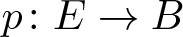 $p \colon E \to B$ is a
 $K$-fibration. Hence, the desired inequalities follow from Proposition 4.12 and [Reference Cohen, Farber and Weinberger11, Page 235]. The last statement follows from
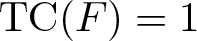 $\mathrm{TC}(F) = 1$ if and only if
 $F$ is contractible, see [Reference Farber21, Theorem 1].
4.1.1. Cohomological lower bounds
Lemma 4.14. Suppose 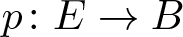 $p \colon E \to B$ is a
 $G$-fibration. Then the map
 $c \colon E \times_{E/G} E \to E^{I}_B \times_{E/G} E^{I}_B$, given by
 $c(e_1,e_2)=(c_{e_1},c_{e_2})$ where
 $c_{e_i}$ is the constant path in
 $E$ taking the value
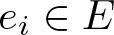 $e_i \in E$, is a
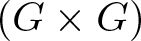 $(G \times G)$-homotopy equivalence.
Proof. Let  $f \colon E^{I}_B \times_{E/G} E^{I}_B \to E \times_{E/G} E$ be the map given by
 $f(\gamma,\delta) = (\gamma(1),\delta(0))$. Then
 $f$ is
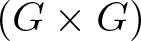 $(G \times G)$-equivariant such that
 $(c \circ f) (\gamma,\delta) = (c_{\gamma(1)},c_{\delta(0)})$ and
 $f \circ c$ is the identity map of
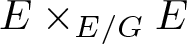 $E \times_{E/G} E$. Let
 $H \colon (E^{I}_B \times_{E/G} E^{I}_B) \times I \to E^{I}_B \times_{E/G} E^{I}_B$ be the homotopy given by
 \begin{equation*}
H(\gamma,\delta,t) = (\gamma'_t, \delta'_t),
\end{equation*}
where  $\gamma'_t(s) = \gamma(s + t(1-s))$ and
 $\delta'_t(s) = \delta(s(1-t))$. Then, following the proof of Theorem 4.6, we see that
 $H$ is well-defined,
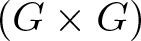 $(G\times G)$-equivariant,
 $H(\gamma,\delta,0)=(\gamma,\delta)$, and
 $H(\gamma,\delta,1)=(c_{\gamma(1)},c_{\delta(0)})$. Hence,
 $c \circ f$ is
 $(G \times G)$-homotopic to the identity map of
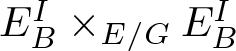 $E^{I}_B \times_{E/G} E^{I}_B$.
Note that the following diagram

is commutative, where  $i \colon E \times_{E/G} E \hookrightarrow E \times_{B/G} E$ is the inclusion map. In other words,
 $\Psi$ is a
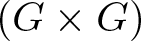 $(G \times G)$-fibrational substitute for the
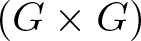 $(G \times G)$-map
 $i$.
For ease of notation in the upcoming theorem, let  $G^2$ denote the product
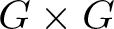 $G \times G$.
Theorem 4.15. Suppose 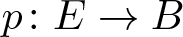 $p \colon E \to B$ is a
 $G$-fibration. Suppose there exist cohomology classes
 $u_1,\dots,u_k \in \widetilde{H}^{*}_{G^2}(E \times_{B/G} E;R)$ (for any commutative ring R) such that
 \begin{equation*}
(i^h_{G^2})^*(u_1) = \cdots = (i^h_{G^2})^*(u_k) = 0 \quad \text{and} \quad u_1 \smile \cdots \smile u_k \neq 0,
\end{equation*}
then  $\mathrm{TC}^G[p \colon E \to B] \gt k$.
Proof. Note that  $\Psi \circ c = i$ implies
 $(c^h_{G^2})^* \circ (\Psi^h_{G^2})^* = (i^h_{G^2})^*$. Since
 $c$ is a
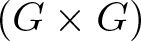 $(G \times G)$-homotopy equivalence (see Lemma 4.14), it follows that
 $c^h_{G^2}$ is a homotopy equivalence. Hence,
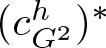 $(c^h_{G^2})^*$ is an isomorphism. Thus, the result follows from Theorem 2.7.
Now we give a non-equivariant cohomological lower bound for the invariant parametrized topological complexity. Let  $E_{B,G^2} := (E \times_{B/G} E)/(G \times G)$ and let
 $\daleth_{G^2}E \subseteq E_{B,G^2}$ denote the image of the saturated diagonal subspace
 $ \daleth(E) = E \times_{E/G} E \subseteq E \times_{B/G} E$ under the orbit map
 $\rho \colon E \times_{B/G} E \to E_{B,G^2}$. By using Theorem 4.6 and following the arguments in Theorem 3.6, one can establish the following theorem. The proof is left to the reader.
Theorem 4.16. Suppose 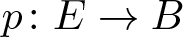 $p \colon E \to B$ is a
 $G$-fibration. If there exists cohomology classes
 $u_1,\dots,u_k \in H^*(E_{B,G^2};R)$ (for any commutative ring
 $R$) such that
(1)
$u_i$ restricts to zero in
$H^*(\daleth_{G^2}E;R)$ for
$i=1,\dots,k$;(2)
$u_1 \smile \dots \smile u_k \neq 0$ in
$H^*(E_{B,G^2};R)$,





then  $\mathrm{TC}^G[p \colon E \to B] \gt k$.
4.1.2. Product inequalities
Theorem 4.17 Let  $p_1 \colon E_1 \to B_1$ be a
 $G_1$-fibration and
 $p_2 \colon E_2 \to B_2$ be a
 $G_2$-fibration. If
 $E_1 \times E_1 \times E_2 \times E_2$ is
 $(G_1 \times G_1 \times G_2 \times G_2)$-completely normal, then
 \begin{equation*}
\mathrm{TC}^{G_1 \times G_2}[p_1\times p_2 \colon E_1\times E_2\to B_1\times B_2]
\leq \mathrm{TC}^{G_1}[p_1 \colon E_1 \to B_1] + \mathrm{TC}^{G_2}[p_2 \colon E_2\to B_2]-1.
\end{equation*}
Proof. Let  $\Psi_1 \colon (E_1)^I_{B_1} \times_{E_1/G_1} (E_1)^I_{B_1} \to E_1 \times_{B_1/G_1} E_1$ and
 $\Psi_2 \colon (E_2)^{I}_{B_2} \times_{E_2/G_2} (E_2)^I_{B_2} \to E_2 \times_{B_2/G_2} E_2$ be the invariant parametrized fibrations corresponding to
 $p_1$ and
 $p_2$, respectively. If
 $E := E_1 \times E_2$,
 $B := B_1 \times B_2$,
 $G := G_1 \times G_2$, and
 $p := p_1 \times p_2$ is the product
 $G$-fibration, then it easily checked that
 \begin{equation*}
E^I_B \times_{E/G} E^I_B
= \left((E_1)^I_{B_1} \times_{E_1/G_1} (E_1)^I_{B_1}\right) \times \left((E_2)^{I}_{B_2} \times_{E_2/G_2} (E_2)^I_{B_2}\right),
\end{equation*}
and
 \begin{equation*}
E \times_{B/G} E = \left(E_1 \times_{B_1/G_1} E_1 \right) \times \left(E_2 \times_{B_2/G_2} E_2\right),
\end{equation*}
and the invariant parametrized fibration  $\Psi \colon E^I_B \times_{E/G} E^I_B \to E \times_{B/G} E$ corresponding to
 $p$ is equivalent to the product fibration
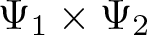 $\Psi_1 \times \Psi_2$. Hence,
 \begin{align*}
& \mathrm{TC}^{G_1 \times G_2}[p_1 \times p_2 \colon E_1 \times E_2 \to B_1 \times B_2]\\
& \quad = \mathrm{secat}_{(G_1 \times G_2) \times (G_1 \times G_2)}(\Psi) \\
& \quad = \mathrm{secat}_{(G_1 \times G_1) \times (G_2 \times G_2)}(\Psi_1 \times \Psi_2) \\
& \quad \leq \mathrm{secat}_{G_1 \times G_1}(\Psi_1) + \mathrm{secat}_{G_2 \times G_2}(\Psi_2) - 1\\
& \quad = \mathrm{TC}^{G_1}[p_1 \colon E_1 \to B_1]+\mathrm{TC}^{G_2}[p_2 \colon E_2\to B_2] -1,
\end{align*}
by [Reference Arora, Daundkar and Sarkar1, Proposition 3.7].
The product inequality for invariant topological complexity was proved in [Reference Lubawski and Marzantowicz31, Theorem 3.18]. In the following corollary, we show that the cofibration hypothesis assumed in [Reference Lubawski and Marzantowicz31, Theorem 3.18] can be removed by using Theorem 4.17.
Corollary 4.18. Suppose  $X$ is a
 $G$-space and
 $Y$ is an
 $H$-space. If
 $X \times X \times Y \times Y$ is
 $(G \times G \times H \times H)$-completely normal, then
 \begin{equation*}
\mathrm{TC}^{G \times H}(X \times Y) \leq \mathrm{TC}^{G}(X) + \mathrm{TC}^H(Y) - 1.
\end{equation*}
Proof. Note that 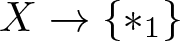 $X \to \{*_1\}$ is a
 $G$-fibration and
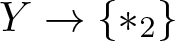 $Y \to \{*_2\}$ is an
 $H$-fibration. Hence,
 \begin{align*}
\mathrm{TC}^{G \times H}(X \times Y)
& = \mathrm{TC}^{G \times H}[X\times Y \to \{*_1\} \times \{*_2\}] \\
& \leq \mathrm{TC}^{G}[X \to \{*_1\}] + \mathrm{TC}^H[Y \to \{*_2\}] - 1 \\
& = \mathrm{TC}^{G}(X) + \mathrm{TC}^H(Y) - 1,
\end{align*}
by Proposition 4.4 and Theorem 4.17.
The proof of the following corollary is similar to Corollary 3.9 and can be shown using Corollary 4.13 and Theorem 4.17.
Corollary 4.19. Suppose  $p_i \colon E_i \to B_i$ is a
 $G$-fibration such that
 $G$ acts on
 $B_i$ freely for
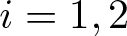 $i = 1,2$. If
 $G$ is compact Hausdorff, then
 $p_1\times p_2 \colon E_1\times E_2\to B_1\times B_2$ is a
 $G$-fibration, where
 $G$ acts diagonally on the spaces
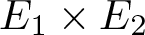 $E_1 \times E_2$ and
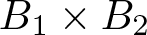 $B_1 \times B_2$. Furthermore, if
 $E_1 \times E_1 \times E_2 \times E_2$ is completely normal, then
 \begin{equation*}
\mathrm{TC}^{G}[p_1\times p_2 \colon E_1\times E_2\to B_1\times B_2]
\leq \mathrm{TC}^{G}[p_1 \colon E_1 \to B_1] + \mathrm{TC}^{G}[p_2 \colon E_2\to B_2]-1.
\end{equation*}
The proof of the following corollary is similar to that of Corollary 3.10 and follows from Proposition 4.8 and Corollary 4.19.
Corollary 4.20. Suppose  $p_i \colon E_i \to B$ is a
 $G$-fibration, for
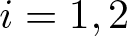 $i =1,2$, such that
 $G$ acts on
 $B$ freely. Let
 $E_1 \times_B E_2 = \{(e_1,e_2) \in E_1 \times E_2 \mid p_1(e_1) = p_2(e_2)\}$ and let
 $p\colon E_1 \times_B E_2 \to B$ be the
 $G$-map given by
 $p(e_1,e_2)=p_1(e_1)=p_2(e_2)$, where
 $G$ acts on
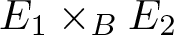 $E_1 \times_B E_2$ diagonally. If
 $G$ is compact Hausdorff, then
 $p$ is a
 $G$-fibration. Furthermore, if
 $E_1 \times E_1 \times E_2 \times E_2$ is completely normal, then
 \begin{equation*}
\mathrm{TC}^{G}[p \colon E_1 \times_B E_2 \to B]
\leq \mathrm{TC}^G[p_1 \colon E_1 \to B]+\mathrm{TC}^G[p_2 \colon E_2\to B]-1.
\end{equation*}
4.2. Some technical results
In this subsection, we establish two technical results which will help us compute the invariant parametrized topological complexity of Fadell–Neuwirth fibrations in Section 5.
Definition 4.21. Suppose 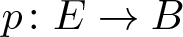 $p\colon E \to B$ is a
 $G$-map and
 $F$ is a
 $G$-space. We say that
 $p$ is a locally trivial
 $G$-fibration with fibre
 $F$ if for each point
 $b \in B$ there exists a
 $G$-invariant open subset
 $U$ containing
 $b$ and a
 $G$-equivariant homeomorphism
 $\phi: p^{-1}(U) \to U \times F$ such that the following diagram

commutes, where  $G$ acts on
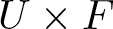 $U \times F$ diagonally. The map
 $\phi$ is called a
 $G$-trivialization of
 $p$.
Proposition 4.22. Suppose 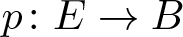 $p \colon E \to B$ is a locally trivial
 $G$-fibration with fibre
 $F$. If
 $G$ acts trivially on
 $F$, then the induced map
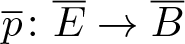 $\overline{p} \colon \overline{E} \to \overline{B}$ between the orbit spaces is locally trivial with fibre
 $F$.
Proof. Suppose  $\phi \colon p^{-1}(U) \to U \times F$ is a
 $G$-trivialization of
 $p$ over
 $U$. As the quotient map
 $\pi_B \colon B \to \overline{B}$ is open, it follows
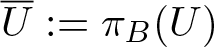 $\overline{U} := \pi_B(U)$ is an open subset of
 $\overline{B}$. Further,
 $U$ is
 $G$-invariant implies
 $U$ is saturated with respect to
 $\pi_B$. Hence, the restriction
 $\left.\pi_B\right|_{U} \colon U \to \overline{U}$ is an open quotient map and so is the product map
 $\left(\left.\pi_E\right|_{U}\right) \times \mathrm{id}_F \colon U \times F \to \overline{U} \times F$. Hence, the induced natural map
 $(U \times F)/G \to \overline{U} \times F$ is a homeomorphism. If
 $(\overline{p^{-1}(U)}) := \pi_E(p^{-1}(U))$, then
 $(\overline{p^{-1}(U)}) = (\overline{p})^{-1}(\overline{U})$ since
 $U$ is
 $G$-invariant. Similarly,
 $\left.\pi_E\right|_{p^{-1}(U)} \colon p^{-1}(U) \to (\overline{p})^{-1}(\overline{U})$ is an open quotient map, and the induced natural map
 $p^{-1}(U)/G \to (\overline{p})^{-1}(\overline{U})$ is a homeomorphism. Hence, the homeomorphism
 $\phi/G \colon p^{-1}(U)/G \to (U \times F)/G$ induced by
 $\phi$ gives a trivialization
 \begin{equation*}
\overline{\phi} \colon (\overline{p})^{-1}(\overline{U}) \to \overline{U} \times F
\end{equation*}
for  $\overline{p}$ over
 $\overline{U}$. As
 $p$ is surjective, it follows
 $\overline{p}$ is locally trivial with fibre
 $F$.
As noted in Theorem 2.10, the induced map 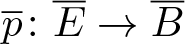 $\overline{p} \colon \overline{E} \to \overline{B}$ is a
 $G$-fibration when
 $G$ is a compact Hausdorff topological group. However, to compute the invariant parametrized topological complexity of the equivariant Fadell–Neuwirth fibration, defined in [Reference Daundkar14], we require Proposition 4.22, which says
 $\overline{p}$ is also locally trivial. We will introduce equivariant Fadell–Neuwirth fibrations and calculate their invariant parametrized topological complexity in Section 5. Now, we present one more result, which will be required in Section 5.
Proposition 4.23. Suppose 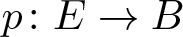 $p \colon E \to B$ is a fibre bundle with fibre
 $F$, where the spaces
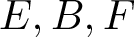 $E,B,F$ are
 $\mathrm{CW}$-complexes. Then
 \begin{equation*}
\mathrm{hdim}(E) \leq \mathrm{hdim}(B) + \dim(F).
\end{equation*}
Proof. Since  $p$ is locally trivial, it follows that
 $\dim(E) \leq \dim(B) + \dim(F)$. In particular,
 $\mathrm{hdim}(E) \leq \dim(B) + \dim(F)$. If
 $h \colon B' \to B$ is a homotopy equivalence and
 $E'$ is the pullback of
 $E$ along
 $h$, then
 $E'$ is a fibre bundle over
 $B'$ with fibre
 $F$. Thus, we have
 $\dim(E') \leq \dim(B') + \dim(F)$. Note that
 $E'$ is homotopy equivalent to
 $E$ as
 $h$ is a homotopy equivalence. Hence, we get
 $\mathrm{hdim}(E) \leq \dim(B') + \dim(F)$ and the result follows.
4.3. Invariance theorem
Suppose 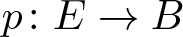 $p\colon E \to B$ is a
 $G$-fibration such that the induced map
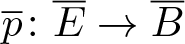 $\overline{p} \colon \overline{E} \to \overline{B}$ between the orbit spaces is a fibration. If
 $\overline{\Pi} \colon (\overline{E})^{I}_{\overline{B}} \to \overline{E} \times_{\overline{B}} \overline{E}$ is the parametrized fibration induced by
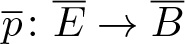 $\overline{p} \colon \overline{E} \to \overline{B}$, then we have a commutative diagram

where  $f(\gamma,\delta) = \overline{\gamma}*\overline{\delta}$, where
 $\overline{\gamma} = \pi_E \circ \gamma$.
Lemma 4.24. The restriction  $\pi_E \times \pi_E \colon E \times_{B/G} E \to \overline{E} \times_{\overline{B}} \overline{E}$ is an open quotient map.
Proof. As  $\pi_E \colon E \to \overline{E}$ is an open quotient map, it follows
 $\pi_E \times \pi_E \colon E \times E \to \overline{E} \times \overline{E}$ is also an open quotient map. The subset
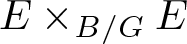 $E \times_{B/G} E$ of
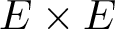 $E \times E$ is saturated with respect to
 $\pi_E \times \pi_E$, since
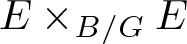 $E \times_{B/G} E$ is
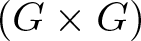 $(G \times G)$-invariant. Thus,
 $\pi_E \times \pi_E \colon E \times_{B/G} E \to (\pi_E \times \pi_E)(E \times_{B/G} E)$ is an open quotient map. Note that
 \begin{align*}
(\overline{e_1},\overline{e_2}) \in \overline{E} \times_{\overline{B}} \overline{E}
& \iff \overline{p} (\overline{e_1}) = \overline{p} (\overline{e_2}) \in \overline{B} \\
& \iff \overline{p(e_1)} = \overline{p(e_2)} \in \overline{B} \\
& \iff p(e_1) = g \cdot p(e_2)~\text{for some } g \in G\\
& \iff (e_1,e_2) \in E \times_{B/G} E.
\end{align*}
Hence, the result follows.
Proposition 4.25. Suppose 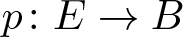 $p \colon E \to B$ is a
 $G$-fibration such that
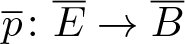 $\overline{p} \colon \overline{E} \to \overline{B}$ is a fibration. Then
 \begin{equation*}
\mathrm{TC}[\overline{p} \colon \overline{E} \rightarrow \overline{B}]
\leq \mathrm{TC}^{G}[p \colon E \rightarrow B].
\end{equation*}
Proof. Suppose  $U$ is a
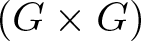 $(G \times G)$-invariant open subset of
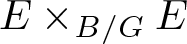 $E \times_{B/G} E$ with a
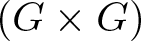 $(G \times G)$-equivariant section
 $s$ of
 $\Psi$ over
 $U$. Then
 $\overline{U} := (\pi_E \times \pi_E)(U)$ is an open subset of
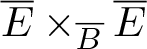 $\overline{E} \times_{\overline{B}} \overline{E}$, by Lemma 4.24. As
 $U$ is
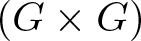 $(G \times G)$-invariant, it follows that
 $U$ is saturated with respect to
 $\pi_E \times \pi_E$. Hence,
 $\pi_E \times \pi_E \colon U \to \overline{U}$ is a quotient map. Then, by the universal property of quotient maps, there exists a unique continuous map
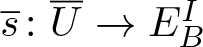 $\overline{s} \colon \overline{U} \to E^{I}_B$ such that the following diagram

commutes. Then
 \begin{equation*}
\overline{\Pi} ( \overline{s} (\overline{e_1},\overline{e_2}))
= \overline{\Pi}(f(s(e_1,e_2)))
= (\pi_E \times \pi_E) (\Psi(s(e_1,e_2)))
= (\pi_E \times \pi_E)(e_1,e_2)
= (\overline{e_1},\overline{e_2})
\end{equation*}
implies  $\overline{s}$ is a section of
 $\overline{\Pi}$ over
 $\overline{U}$. Thus, the result follows since
 $\pi_E \times \pi_E \colon E \times_{B/G} E \to \overline{E} \times_{\overline{B}} \overline{E}$ is surjective.
Recall that a space  $X$ is called hereditary paracompact if every subspace of
 $X$ is paracompact. Equivalently, every open subspace of
 $X$ is paracompact.
Theorem 4.26. Suppose  $G$ is a compact Lie group. Let
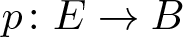 $p \colon E \to B$ be a
 $G$-fibration and let
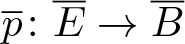 $\overline{p} \colon \overline{E} \to \overline{B}$ be the induced fibration between the orbit spaces. If the
 $G$-action on
 $E$ is free and
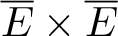 $\overline{E} \times \overline{E}$ is hereditary paracompact, then
 \begin{equation*}
\mathrm{TC}^{G}[p \colon E \rightarrow B]
= \mathrm{TC}[\overline{p} \colon \overline{E} \rightarrow \overline{B}].
\end{equation*}
Proof. We note that, in Theorem 2.10, it was established that  $\overline{p}$ is a fibration. Suppose
 $\overline{U}$ is an open subset of
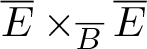 $\overline{E} \times_{\overline{B}} \overline{E}$ with section
 $\overline{s}$ of
 $\overline{\Pi}$ over
 $\overline{U}$. Then, by Theorem 3.2 for the trivial group action, there exists a homotopy
 $\overline{H} \colon \overline{U} \times I \to \overline{E} \times_{\overline{B}} \overline{E}$ such that
 $\overline{H}_0$ is the inclusion map of
 $i_{\overline{U}} \colon \overline{U} \hookrightarrow \overline{E} \times_{\overline{B}} \overline{E}$ and
 $\overline{H}_1$ takes values in
 $\Delta(\overline{E})$.
Let  $U = (\pi_E \times \pi_E)^{-1}(\overline{U})$. Then
 $U$ is
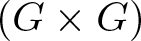 $(G \times G)$-invariant and
 $\overline{U}$ is hereditary paracompact. Note that the following diagram

commutes. As the  $G$-action on
 $E$ is free, it follows the action of
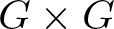 $G \times G$ on
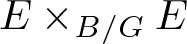 $E \times_{B/G} E$ and
 $U$ is free. Hence, the homotopy
 $\overline{H}$ preserves the orbit structure. Since
 $G$ is a compact Lie group, by the Covering Homotopy Theorem of Palais [Reference Bredon9, Theorem II.7.3] and Lemma 4.24, it follows that there exists a
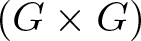 $(G \times G)$-homotopy
 $H \colon U \times I \to E \times_{B/G} E$ such that
 $H_0 = i_{U} \colon U \hookrightarrow E \times_{B/G} E$ and
 $(\pi_E \times \pi_E) \circ H = \overline{H} \circ ((\pi_E \times \pi_E) \times \mathrm{id}_I)$. As
 $\overline{H}_1$ takes value in
 $\Delta(\overline{E})$, it follows
 $H_1$ takes values in
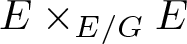 $E \times_{E/G} E$. Hence, by Theorem 4.6, we get a
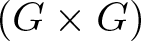 $(G \times G)$-equivariant section of
 $\Psi$ over
 $U$. Thus,
 $\mathrm{TC}^{G}[p \colon E \rightarrow B] \leq \mathrm{TC}[\overline{p} \colon \overline{E} \rightarrow \overline{B}]$.
We note that the main theorem in Lubawski and Marzantowicz’s paper, as stated in Theorem 2.31, can be recovered from Theorem 4.26 by taking the base space  $B$ to be a point. Now, we state some corollaries of this theorem.
Corollary 4.27. Suppose  $G$ is a compact Lie group. Let
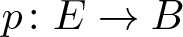 $p \colon E \to B$ be a
 $G$-fibration and let
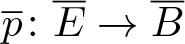 $\overline{p} \colon \overline{E} \to \overline{B}$ be the induced fibration between the orbit spaces. If the
 $G$-action on
 $B$ is free and
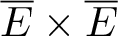 $\overline{E} \times \overline{E}$ is hereditary paracompact, then
 \begin{equation*}
\mathrm{TC}(F)
\leq \mathrm{TC}[p \colon E \rightarrow B]
\leq \mathrm{TC}^{G}[p \colon E \rightarrow B]
= \mathrm{TC}[\overline{p} \colon \overline{E} \rightarrow \overline{B}],
\end{equation*}
where  $F$ is the fibre of
 $p$.
Proof. Observe that  $G$ acts freely on
 $E$ as well. Hence, the result follows from Corollary 4.13 and Theorem 4.26.
Corollary 4.28. Suppose  $G$ is a compact Lie group and
 $p$ is a locally trivial
 $G$-fibration with fibre
 $F$, such that
 $G$ acts trivially on
 $F$,
 $G$ acts freely on
 $B$ and
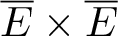 $\overline{E} \times \overline{E}$ is hereditary paracompact. If
 $F$ is contractible and
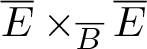 $\overline{E} \times_{\overline{B}} \overline{E}$ is homotopy equivalent to a
 $\mathrm{CW}$-complex, then
 $\mathrm{TC}^G[p \colon E \to B] =1$.
Proof. By Proposition 4.22, we have 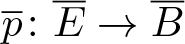 $\overline{p} \colon \overline{E} \rightarrow \overline{B}$ is a locally trivial fibration with fibre
 $F$. We note that the fibre of the parametrized fibration
 $\overline{\Pi} \colon (\overline{E})^{I}_{\overline{B}} \to \overline{E} \times_{\overline{B}} \overline{E}$ induced by
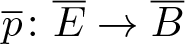 $\overline{p} \colon \overline{E} \to \overline{B}$ is the loop space
 $\Omega F$, which is contractible since
 $F$ is contractible. Hence,
 $\mathrm{TC}[\overline{p} \colon \overline{E} \rightarrow \overline{B}] = 1$ by obstruction theory. Thus, the result follows from the Invariance Theorem 4.26.
Remark 4.29. Suppose  $p \colon B \times F \to B$ is the trivial
 $G$-fibration. If
 $G$ acts trivially on
 $F$, then in Proposition 4.5, we showed that
 \begin{equation*}
\mathrm{TC}^G[p \colon B \times F \to B] = \mathrm{TC}(F).
\end{equation*}
In general, however, if  $G$ acts non-trivially on
 $F$, then the following inequality need not hold:
 \begin{equation*}
\mathrm{TC}^G[p \colon B \times F \to B] = \mathrm{TC}^G(F).
\end{equation*}
For example, let  $E=S^1 \times S^1$ and
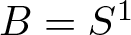 $B=S^1$. If
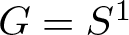 $G=S^1$ acts on
 $B$ by left multiplication and diagonally on
 $E$, then
 \begin{align*}
\mathrm{TC}^{S^1}[p \colon S^1 \times S^1 \to S^1]
& = \mathrm{TC}[p/S^1 \colon (S^1 \times S^1)/S^1 \to S^1/S^1] & \text{by Theorem 4.26} \\
& = \mathrm{TC}[S^1 \to \{*\}] \\
& = \mathrm{TC}(S^1) \\
& = 2.
\end{align*}
But  $\mathrm{TC}^{S^1}(S^1) = \mathrm{TC}(\{*\}) = 1$ by Theorem 2.31.
Example 4.30. Suppose  $G$ is a compact Lie group. Let
 $\tau \colon P \to B$ be a principal
 $G$-bundle such that
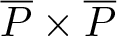 $\overline{P} \times \overline{P}$ is hereditary paracompact and
 $B$ is paracompact. Let
 $X$ be a path-connected
 $G$-space, and
 $q \colon P \times_G X \to B$ be the associated fibre bundle with fibre
 $X$ and structure group
 $G$. Then, by [Reference Farber and Oprea23, Theorem 3.4], it follows that
 \begin{equation*}
\mathrm{TC}(X) \leq \mathrm{TC}[q \colon P \times_G X \to B] \leq \mathrm{TC}_G(X),
\end{equation*}
where  $p \colon P \times X \to P$ is the trivial
 $G$-fibration. Moreover, we have
 \begin{equation*}
\mathrm{TC}^G[p \colon P \times X \to P] = \mathrm{TC}[q \colon P \times_G X \to B]
\end{equation*}
by Theorem 4.26.
Example 4.31. Now we list some examples of  $G$-spaces
 $X$ for which
 $\mathrm{TC}(X) = \mathrm{TC}_G(X)$. Consequently, for each of these examples and for any principal
 $G$-bundles
 $\tau \colon P \to B$, one has
 \begin{equation*}
\mathrm{TC}^G[p \colon P \times X \to P] = \mathrm{TC}(X),
\end{equation*}
where  $p \colon P \times X \to P$ is the trivial
 $G$-fibration.
(1) Suppose
$n_1,\dots,n_m$ are positive integers. Let
$G = \mathbb{Z}_2$ act on each
$S^{n_i}$ via the antipodal action. If
$G$ acts diagonally on the product
$\prod_{i=1}^{m} S^{n_i}$, then by [Reference González, Grant, Torres-Giese and Xicoténcatl26, Corollary 4.4] we have
where
\begin{align*}
\mathrm{TC}_G\left(\prod_{i=1}^{m} S^{n_i}\right)
= \mathrm{TC}\left(\prod_{i=1}^{m} S^{n_i}\right)
= m + l + 1,
\end{align*}
$l$ denotes the number of even-dimensional spheres among the factors.(2) Suppose
$n_1,\dots,n_m$ are integers with
$n_i \geq 2$ for each
$i$. Let
$G=\mathbb{Z}_2$ act on
$S^{n_i}$ by reflection, defined as multiplication by
$-1$ in one of the coordinates. If
$G$ acts diagonally on the
$\prod_{i=1}^{m} S^{n_i}$, then
\begin{align*}
\mathrm{TC}_G\left(\prod_{i=1}^{m} S^{n_i}\right)
& \leq \sum_{i=1}^{m} \mathrm{TC}_G(S^{n_i}) - (m-1) & \text{[28, Theorem 4.2]} \\
& = 3m - (m-1) & \text{[13, Example 5.9]}\\
& = 2m+1.
\end{align*}Moreover, it follows from [Reference Basabe, González, Rudyak and Tamaki2, Corollary 3.12] that
where
\begin{equation*}
\mathrm{TC}\left(\prod_{i=1}^{m} S^{n_i}\right) = m + l + 1,
\end{equation*}
$l$ denotes the number of even-dimensional spheres among the factors. Hence, if
$X = \prod_{i=1}^{m} S^{n_i}$ with all
$n_i$ even, then
$\mathrm{TC}_G(X) = \mathrm{TC}(X) = 2m+1$.(3) Let
$F$ be a
$2n$-dimensional quasitoric manifold. The
$\mathbb{Z}_2$-action on
$F$ is described in [Reference Bayeh, Daundkar and Sarkar3, Equation 3.2], and it is shown in [Reference Bayeh, Daundkar and Sarkar3, Corollary 2.10 and Proposition 3.11] that
$\mathrm{TC}_{\mathbb{Z}_2}(F) = \mathrm{TC}(F) = 2n + 1$. We refer the reader to [Reference Bayeh, Daundkar and Sarkar3] for further details.(4) Let
$F = \mathrm{Gr}_d(\mathbb{C}^n)$ be the complex Grassmannian manifold of complex dimension
$d(n - d)$. Then
$F$ admits a
$\mathbb{Z}_2$-action induced by complex conjugation. It follows from [Reference Daundkar and Sarkar15, Example 6.6] that
$\mathrm{TC}_{\mathbb{Z}_2}(F) = 2d(n - d) + 1 = \mathrm{TC}(F)$. In particular, for complex projective space
$\mathbb{C} P^n$, we have
$\mathrm{TC}_{\mathbb{Z}_2}(\mathbb{C} P^n) = 2n + 1 = \mathrm{TC}(F)$. We refer the reader to [Reference Daundkar and Sarkar15, Section 5] for further details.

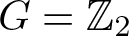



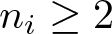

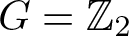


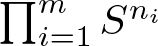







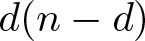





Example 4.32. Here we list some examples in which the invariant topological complexity of  $G$-fibration is trivial.
(1) Suppose
$G$ is a compact Lie group. Let
$\tau \colon P \to B$ be a principal
$G$-bundle such that
$\overline{P} \times \overline{P}$ is hereditary paracompact and
$B$ is paracompact. Then
since
\begin{equation*}
\mathrm{TC}^{G}[p \colon P \to B]
= \mathrm{TC}[\overline{p} \colon \overline{P} \to B]
= 1,
\end{equation*}
$\overline{p}$ is a homeomorphism.(2) Let
$E$ and
$B$ be path-connected and locally path-connected spaces such that
$\overline{E} \times \overline{E}$ is hereditary paracompact. Suppose
$p \colon E \to B$ is a regular covering map and
$G$ is its group of covering transformations. If
$G$ is a compact Lie group, then
since
\begin{equation*}
\mathrm{TC}^{G}[p \colon E \to B]
= \mathrm{TC}[\overline{p} \colon \overline{E} \to B]
= 1,
\end{equation*}
$\overline{p}$ is a homeomorphism by [Reference Munkres36, Theorem 81.6].




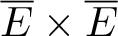
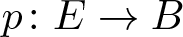


5. Computations for equivariant Fadell–Neuwirth fibrations
In this section, we provide estimates for the invariant parametrized topological complexity of equivariant Fadell–Neuwirth fibrations. The ordered configuration space of  $s$ points on
 $\mathbb{R}^d$, denoted by
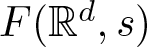 $F(\mathbb{R}^d,s)$, is defined as
 \begin{equation*}
F(\mathbb{R}^d,s):=\{(x_1,\dots,x_s)\in (\mathbb{R}^d)^s \mid x_i\neq x_j ~\text{for }~ i\neq j\}.
\end{equation*}
Definition 5.1. ([Reference Fadell and Neuwirth19])
The maps
 \begin{equation*}
p \colon F(\mathbb{R}^d,s+t)\to F(\mathbb{R}^d,s) \quad \text{defined by} \quad p(x_1,\dots,x_{s},y_1,\dots,y_t)=(x_1,\dots,x_s)
\end{equation*}
are called Fadell–Neuwirth fibrations.
The space 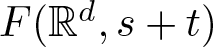 $F(\mathbb{R}^d,s+t)$ admits a free action of the permutation group
 $\Sigma_s$, defined as follows. For
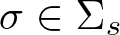 $\sigma\in \Sigma_s$, let
 \begin{equation*}
\sigma\cdot (x_1,\dots,x_s,y_1,\dots,y_t)=(x_{\sigma(1)},\dots,x_{\sigma(s)},y_1,\dots,y_t).
\end{equation*}
Similarly,  $\Sigma_s$ acts freely on
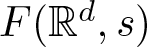 $F(\mathbb{R}^d,s)$ by permuting the coordinates
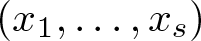 $(x_1,\dots,x_s)$. Notice that the map
 $p$ in Definition 5.1 is
 $\Sigma_s$-equivariant. In fact, in [Reference Daundkar14], it was demonstrated that this map is a
 $\Sigma_s$-fibration.
For the rest of the section, we will use the notation 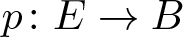 $p \colon E \to B$ for the equivariant Fadell–Neuwirth fibration. The fibre
 $F$ of
 $p$ is the configuration space of
 $t$ points on
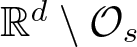 $\mathbb{R}^d \setminus \mathcal{O}_s$, where
 $\mathcal{O}_s$ denotes a set of
 $s$ distinct points in
 $\mathbb{R}^d$. More precisely,
 $F = F(\mathbb{R}^d \setminus \mathcal{O}_s, t)$.
Remark 5.2. If  $t = 0$, then
 $p$ is the identity map. In particular,
 $p$ is a trivial
 $\Sigma_s$-fibration with fibre a point
 $\{*\}$. Hence, by Proposition 4.5, it follows that
 \begin{equation*}
\mathrm{TC}^{\Sigma_s}[p \colon F(\mathbb{R}^d,s)\to F(\mathbb{R}^d, s)]
= \mathrm{TC}(\{*\}).
\end{equation*}
Thus, we will assume that  $t \geq 1$.
If  $s=1$, then the permutation group
 $\Sigma_1$ is trivial and
 $F(\mathbb{R}^d,1) = \mathbb{R}^d$. In particular, the fibration
 $p$ is trivial. Hence, it follows that
 \begin{align*}
& \mathrm{TC}^{\Sigma_1}[p \colon F(\mathbb{R}^d,1+t)\to F(\mathbb{R}^d, 1)]\\
& \quad = \mathrm{TC}[p \colon F(\mathbb{R}^d,1+t)\to F(\mathbb{R}^d, 1)] & \text{by Proposition 4.4 (1)} \\
& \quad = \mathrm{TC}(F(\mathbb{R}^d \setminus \mathcal{O}_1, t)) & \text{by [11, Example 4.2]} \\
& \quad = \mathrm{TC}(F(\mathbb{R}^d,t+1)),
\end{align*}
since 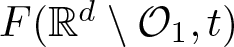 $F(\mathbb{R}^d \setminus \mathcal{O}_1, t)$ is homotopy equivalent to
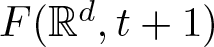 $F(\mathbb{R}^d,t+1)$, see [Reference Fadell and Husseini20, Page 15]. We note that the topological complexity of configuration spaces was computed by Farber and Grant in [Reference Farber and Grant22]. Thus, we will assume that
 $s \geq 2$.
If  $d = 1$, then the fibre
 $F(\mathbb{R}\setminus \mathcal{O}_s,t)$ of
 $p$ is not path-connected. Hence, by Corollary 4.13, it follows that
 \begin{equation*}
\infty
= \mathrm{TC}(F(\mathbb{R}\setminus \mathcal{O}_s,t))
\leq \mathrm{TC}^{\Sigma_s}[p \colon F(\mathbb{R},s+t) \to F(\mathbb{R}, s)].
\end{equation*}
Thus, we will assume that  $d \geq 2$.
The parametrized topological complexity of these fibrations was computed in [Reference Cohen, Farber and Weinberger11] and [Reference Cohen, Farber and Weinberger12]. In particular, they proved the following result:
Theorem 5.3. ([Reference Cohen, Farber and Weinberger11, Theorem 9.1] and [Reference Cohen, Farber and Weinberger12, Theorem 4.1])
Suppose  $s\geq 2$,
 $t\geq 1$ and
 $d \geq 2$. Then
 \begin{equation*}
\mathrm{TC}[p \colon F(\mathbb{R}^d,s+t)\to F(\mathbb{R}^d, s)] =
\begin{cases}
2t+s, & \text{if $d$ is odd},\\
2t+s-1 & \text{if $d$ is even}.
\end{cases}
\end{equation*}
We will now demonstrate that the invariant parametrized topological complexity of the Fadell–Neuwirth fibrations coincides with that of the corresponding orbit fibrations. Furthermore, it is bounded below by the parametrized topological complexity of the Fadell–Neuwirth fibrations. Interpreting the parametrized topological complexity of the Fadell–Neuwirth fibration as describing the motion planning problem of  $t$ submarines navigating in the presence of
 $s$ mines whose positions are unknown, and that of the orbit Fadell–Neuwirth fibration as describing the corresponding problem when the order of the mines is irrelevant, the resulting increase in complexity is entirely consistent with intuition. When the order of the mines is irrelevant, the motion planners must satisfy an additional constraint: they are required to remain invariant under any reordering of the mines. In other words, the planner must yield the same motion plan regardless of how the mines are permuted. This symmetry condition imposes additional structural restrictions on the class of admissible planners, thereby increasing the overall complexity of constructing such a universal algorithm.
Theorem 5.4. The induced map  $\overline{p} \colon \overline{F(\mathbb{R}^d,s+t)} \to \overline{F(\mathbb{R}^d, s)}$ is a locally trivial fibration with fibre
 $F$. Moreover,
 \begin{align*}
\mathrm{TC}[p \colon F(\mathbb{R}^d,s+t) \to F(\mathbb{R}^d, s)]
& \leq \mathrm{TC}^{\Sigma_s}[p \colon F(\mathbb{R}^d,s+t)\to F(\mathbb{R}^d, s)] \\
& = \mathrm{TC}[\overline{p} \colon \overline{F(\mathbb{R}^d,s+t)} \to \overline{F(\mathbb{R}^d, s)}]
\end{align*}
Proof. We note that the equivariant Fadell–Neuwirth fibrations are locally  $\Sigma_s$-trivial with
 $\Sigma_s$ acting trivially on the fibre
 $F$, see [Reference Daundkar14, Section 5.1]. Since
 $F(\mathbb{R}^d, s)$ is a manifold, it is paracompact Hausdorff. Hence, by Proposition 4.22, it follows that the induced map
 $\overline{p}$ is a locally trivial fibration with fibre
 $F$.
As the action of  $\Sigma_s$ on
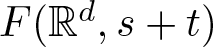 $F(\mathbb{R}^d,s+t)$ and
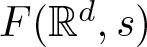 $F(\mathbb{R}^d,s)$ is free, and since
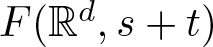 $F(\mathbb{R}^d,s+t)$ and
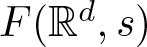 $F(\mathbb{R}^d,s)$ are manifolds, it follows that
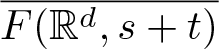 $\overline{F(\mathbb{R}^d,s+t)}$ and
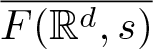 $\overline{F(\mathbb{R}^d,s)}$ are also manifolds. Thus, the result follows from Corollary 4.27.
Proposition 5.5. Suppose 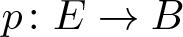 $p \colon E \to B$ denotes the equivariant Fadell–Neuwirth fibration with fibre
 $F$. Then
 $\mathrm{hdim}(\overline{E} \times_{\overline{B}} \overline{E})
\leq (d-1)(s-1) + 2dt$.
Proof. Since 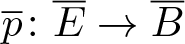 $\overline{p} \colon \overline{E} \to \overline{B}$ is a locally trivial fibration with fibre
 $F$, it follows that the natural map
 $\overline{E} \times_{\overline{B}} \overline{E} \to \overline{B}$ is also a locally trivial fibration with fibre
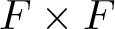 $F \times F$. The homotopy dimension of the unordered configuration space
 $\overline{B}$ is
 $(d-1)(s-1)$ (see [Reference Blagojević and Ziegler8, Theorem 3.13]). Hence, by Proposition 4.23, the desired claim follows.
We are now ready to present our computations for the invariant parametrized topological complexity of the Fadell–Neuwirth fibrations for the case  $d \geq 3$.
Theorem 5.6. Suppose  $s\geq 2$,
 $t\geq 1$, and
 $d \geq 3$. Then
 \begin{equation}
\mathrm{TC}^{\Sigma_s}[p \colon F(\mathbb{R}^d,s+t)\to F(\mathbb{R}^d, s)]=
\begin{cases}
2t+s, &\!{if\,\,d\,\,is\,\,odd},\\
{either}\,\,2t\,\,+\,\,s\,\,-1\,\,{or}\,\,2t\,+\,\,s\!&{if\,\,d\,\,is\,\,even}.
\end{cases}
\end{equation}
Proof. It suffices to show that  $\mathrm{TC}^{\Sigma_s}[p \colon F(\mathbb{R}^d,s+t)\to F(\mathbb{R}^d, s)] \leq 2t+s$, since the inequality
 \begin{equation*}
\mathrm{TC}[p \colon F(\mathbb{R}^d,s+t)\to F(\mathbb{R}^d, s)]
\leq \mathrm{TC}[\overline{p} \colon \overline{F(\mathbb{R}^d,s+t)} \to \overline{F(\mathbb{R}^d, s)}]
\end{equation*}
established in Theorem 5.4, together with Theorem 5.3 yields the desired lower bound.
Observe that
 \begin{equation*}
\mathrm{TC}^{\Sigma_s}[p \colon F(\mathbb{R}^d,s+t)\to F(\mathbb{R}^d, s)]
= \mathrm{TC}[\overline{p} \colon \overline{F(\mathbb{R}^d,s+t)} \to \overline{F(\mathbb{R}^d, s)}]
\leq 2t+s
\end{equation*}
if and only if 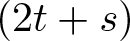 $(2t+s)$-fold fibrewise join
 \begin{equation*}
\overline{\Pi}_{2t+s} \colon *_{2t+s} (\overline{E}^I_{\overline{B}}) \to \overline{E} \times_{\overline{B}} \overline{E}
\end{equation*}
of the fibration  $\overline{\Pi}$ admits a global section, see [Reference Švarc41, Theorem 3]. Note that the loop space
 $\Omega F$, which is the fibre of
 $\Pi$, is path-connected because
 $\Omega F$ is
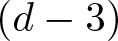 $(d-3)$-connected and
 $d \geq 3$. Therefore, the fibre
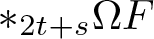 $*_{2t+s}\Omega F$ of
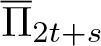 $\overline{\Pi}_{2t+s}$ is simply connected, and hence
 $k$-simple for all
 $k$. Thus, the obstructions to a global section of
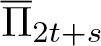 $\overline{\Pi}_{2t+s}$ lie in the cohomology groups
 \begin{equation*}
H^{k+1}(\overline{E} \times_{\overline{B}} \overline{E}; \pi_{k}(*_{2t+s}\Omega F)),
\end{equation*}
see [Reference Steenrod40, Theorem 34.2]. Since 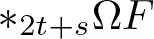 $*_{2t+s}\Omega F$ is
 $((2t+s)(d-1)-2)$-connected (see [Reference Švarc41, Theorem 5] or [Reference Grant27, Theorem 3.5] for the homotopy connectivity of joins), it follows that
 $H^{k+1}(\overline{E} \times_{\overline{B}} \overline{E}; \pi_{k}(*_{2t+s}\Omega F)) = 0$ for
 $k \leq (2t+s)(d-1)-2$.
Suppose  $\mathcal{N}$ is any local coefficient system on
 $\overline{B}$. Let
 $\mathcal{M}$ be the local coefficient system on
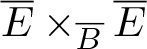 $\overline{E} \times_{\overline{B}} \overline{E}$ obtained as the pullback of
 $\mathcal{N}$ under the fibration
 \begin{equation}
F \times F \hookrightarrow \overline{E} \times_{\overline{B}} \overline{E} \to \overline{B}.
\end{equation}
Consider the Serre spectral sequence  $E^{p,q}_r$ with local coefficients for the fibration (11), see [Reference Siegel39, Theorem 2.9]. Then
 $E_2^{p,q} = H^p(\overline{B}, H^{q}(F \times F, \mathcal{M}))$, and the spectral sequence converges to
 $H^{p+q}(\overline{E} \times_{\overline{B}} \overline{E},\mathcal{M})$. If
 $p \gt \mathrm{hdim}(\overline{B})$ or
 $q \gt \mathrm{hdim}(F \times F)$, then
 $H^p(\overline{B}, H^{q}(F \times F, \mathcal{M})) = 0$. Hence,
 \begin{align*}
H^{p+q}(\overline{E} \times_{\overline{B}} \overline{E},\mathcal{M}) = 0\,\,\text{if } p+q & \gt \mathrm{hdim}(\overline{B}) + \mathrm{hdim}(F \times F)\\
& = (d-1)(s-1)+2(d-1)t\\
& = (2t+s-1)(d-1),
\end{align*}
see [Reference Cohen, Farber and Weinberger12, Equation 4.1] for the homotopy dimension of  $F$. Since
 $d \geq 3$, the space
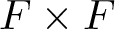 $F \times F$ is simply connected. Consequently, the induced map
 $\pi_1(\overline{E} \times_{\overline{B}} \overline{E}) \to \pi_1(\overline{B})$ is an isomorphism. This can be deduced from the long exact sequence of homotopy groups corresponding to fibration (11). This implies that every local coefficient on
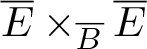 $\overline{E} \times_{\overline{B}} \overline{E}$ is a pullback of a local coefficient system on
 $\overline{B}$. As a result, we have
 $
H^{k+1}(\overline{E} \times_{\overline{B}} \overline{E}; \pi_{k}(*_{2t+s}\Omega F)) = 0
$ for
 $k \gt (2t+s-1)(d-1)-1 = (2t+s)(d-1)-d$. Thus, the obstruction classes vanish for all
 $k$.
We now turn our attention to the case  $d=2$. For
 $d=2$, we note that the spaces
 $E$ and
 $B$ are aspherical, see [Reference Grant and Recio-Mitter29, Lemma 3.4]. Since the maps
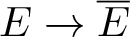 $E \to \overline{E}$ and
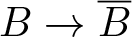 $B \to \overline{B}$ are covering maps, it follows that
 $\overline{E}$ and
 $\overline{B}$ are also aspherical, as
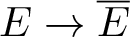 $E \to \overline{E}$ and
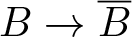 $B \to \overline{B}$ are covering maps. Therefore, we can apply the techniques developed by Grant in [Reference Grant28] to compute
 $\mathrm{TC}[\overline{p} \colon \overline{E} \to \overline{B}]$, as the map
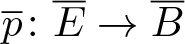 $\overline{p} \colon \overline{E} \to \overline{B}$ is a fibration of aspherical spaces with path-connected fibre
 $F$. More precisely, this is equivalent to computing the topological complexity of the group epimorphism
 $\overline{p}_* \colon \pi_1(\overline{E}) \to \pi_1(\overline{B})$. We begin by recalling some definitions that will be useful in the discussion. Recall that a pointed map
 $f \colon X \to Y$ is said to realize a group homomorphism
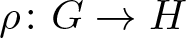 $\rho \colon G \to H$ if
 $X$ is a
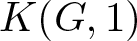 $K(G, 1)$ space,
 $Y$ is a
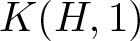 $K(H, 1)$ space, and
 $f$ induces the homomorphism
 $\rho$ on fundamental groups.
Definition 5.7. ([Reference Davis17])
Suppose  $G$ is a group and
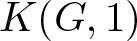 $K(G,1)$ is the corresponding Eilenberg–MacLane space.
• Then
$G$ is said to be of type
$F$ if
$K(G,1)$ is homotopy equivalent to a finite
$\mathrm{CW}$-complex.• Then
$G$ is said to be of type
$FP$ if there exists a finite length resolution of
$\mathbb{Z}$ by finitely generated projective
$\mathbb{Z} G$-modules.


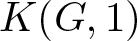


We note that a group of type  $F$ is of type
 $FP$, see [Reference Davis17, Page 171].
Definition 5.8. ([Reference Davis17, Theorem 3.6])
A group  $G$ is said to be a duality group of cohomological dimension
 $n$ if
 $G$ is of type
 $FP$, and there exists a
 $\mathbb{Z} G$-module
 $D$ such that
 \begin{equation*}
H^{i}(G,\mathbb{Z} G) \cong
\begin{cases}
0 & \text{for }i \neq n,\\
D & \text{for }i = n.
\end{cases}
\end{equation*}
If  $D$ can be chosen to have an underlying abelian group
 $\mathbb{Z}$, then
 $G$ is said to be a Poincaré duality group of cohomological dimension
 $n$.
We now use arguments presented in [Reference Johnson and Wall30, Theorem 3] to prove the following lemma. This lemma, in a certain sense, generalizes part of [Reference Davis17, Theorem 4.3] from Poincaré duality groups to duality groups.
Lemma 5.9. Suppose  $1 \to H \to G \to K \to 1$ is a short exact sequence of groups, where
 $H$ is a Poincaré duality group of cohomological dimension
 $h$. Then
 $H^{p}(K,\mathbb{Z} K) = 0$ if and only if
 $H^{p+h}(G,\mathbb{Z} G) = 0$. In particular, if
 $K$ is of type
 $FP$ and
 $G$ is a duality group of cohomological dimension
 $h+k$, then
 $K$ is a duality group of cohomological dimension
 $k$.
Proof. Consider the Lyndon–Hochschild–Serre spectral sequence corresponding to the extension  $1 \to H \to G \to K \to 1$ with coefficients in
 $\mathbb{Z} G$. Then
 $E_2^{p,q} = H^p(K;H^q(H;\mathbb{Z} G))$, and the spectral sequence converges to
 $H^{p+q}(G;\mathbb{Z} G)$. As
 $\mathbb{Z} G$ is a free
 $\mathbb{Z} H$-module and
 $H$ is a Poincaré duality group of dimension
 $h$, it follows that
 \begin{equation*}
H^{q}(H;\mathbb{Z} G)
\cong H^{q}(H;\mathbb{Z} H) \otimes_{\mathbb{Z} H} \mathbb{Z} G
\cong
\begin{cases}
0 & \text{if } q \neq h,\\
\mathbb{Z} \otimes_{\mathbb{Z} H} \mathbb{Z} G \cong \mathbb{Z} K & \text{if } q = h,
\end{cases}
\end{equation*}
as  $K$-modules. This implies
 \begin{equation*}
E_2^{p,q}
= H^{p}(K;H^{q}(H;\mathbb{Z} G))
\cong
\begin{cases}
0 & \text{if } q \neq h,\\
H^{p}(K; \mathbb{Z} K) & \text{if } q = h.
\end{cases}
\end{equation*}
Since the differential  $d_r$ maps
 $E_r^{p,q}$ to
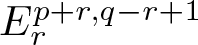 $E_r^{p+r,q-r+1}$, it follows that
 $H^{p}(K;H^{q}(H;\mathbb{Z} G)) = E_2^{p,q} = E_{\infty}^{p,q} = H^{p+q}(G;\mathbb{Z} G)$. In particular,
 $H^p(K;\mathbb{Z} K)=0$ if and only if
 $H^{p+h}(G, \mathbb{Z} G) = 0$.
Theorem 5.10. Suppose  $s\geq 2$ and
 $t\geq 2$. Then
 \begin{equation}
\mathrm{TC}^{\Sigma_s}[p \colon F(\mathbb{R}^2,s+t)\to F(\mathbb{R}^2, s)]
= 2t+s-1.
\end{equation}
Proof. Suppose  $B_{s+t}$ is the braid group on
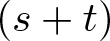 $(s+t)$-strands. Then, by [Reference Grant and Recio-Mitter29, Lemma 3.4], the fundamental group of
 $F(\mathbb{R}^2,s+t)/\Sigma_s$ is
 \begin{equation*}
B_{s+t}^{\Sigma_s} := \pi^{-1}(\Sigma_s \times \{1\}^t),
\end{equation*}
where  $\pi \colon B_{s+t} \to \Sigma_{s+t}$ is the canonical map. Moreover, by [Reference Grant and Recio-Mitter29, Lemma 3.6], we have
 $B_{s+t}^{\Sigma_s}$ is a duality group of cohomological dimension
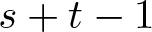 $s+t-1$.
We note that the fibration  $\overline{p} \colon \overline{F(\mathbb{R}^2,s+t)} \to \overline{F(\mathbb{R}^2, s)}$ realizes the group epimorphism
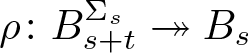 $\rho \colon B_{s+t}^{\Sigma_s} \twoheadrightarrow B_s$, which forgets the last
 $t$ strands. Hence, it follows that
 \begin{align*}
\mathrm{TC}^{\Sigma_s}[p \colon F(\mathbb{R}^2,s+t)\to F(\mathbb{R}^2, s)]
& = \mathrm{TC}[\overline{p} \colon \overline{F(\mathbb{R}^2,s+t)} \to \overline{F(\mathbb{R}^2, s)}] \\
& = \mathrm{TC}[\rho \colon B_{s+t}^{\Sigma_s} \twoheadrightarrow B_{s}],
\end{align*}
by Theorem 4.26 and [Reference Grant28, Proposition 3.5].
If  $Z$ is the centre of
 $B_{s+t}$, then
 $Z$ is infinite cyclic and the centre of
 $B_{s+t}^{\Sigma_s}$ is
 $Z$ as well, see [Reference Grant and Recio-Mitter29, Lemma 3.7]. Hence, by [Reference Grant28, Theorem 3.5], it follows that
 \begin{equation*}
\mathrm{TC}[\rho \colon B_{s+t}^{\Sigma_s} \twoheadrightarrow B_{s}]
\leq \mathrm{cd}\left(\frac{B_{s+t}^{\Sigma_s} \times_{B_s} B_{s+t}^{\Sigma_s}}{\Delta(Z)}\right)+1,
\end{equation*}
where  $\mathrm{cd}$ denotes the cohomological dimension of a group.
Suppose 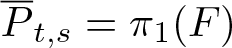 $\overline{P}_{t,s} = \pi_1(F)$. Then we have an extension
 \begin{equation*}
1 \to \overline{P}_{t,s} \to B_{s+t}^{\Sigma_s} \xrightarrow{\rho} B_{s} \to 1
\end{equation*}
corresponding to the fibration  $F \hookrightarrow \overline{E} \xrightarrow{\overline{p}} \overline{B}$. Pulling back this extension by
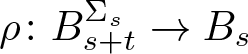 $\rho \colon B_{s+t}^{\Sigma_s} \to B_s$ we get an extension
 \begin{equation*}
1 \to \overline{P}_{t,s} \to B_{s+t}^{\Sigma_s} \times_{B_s} B_{s+t}^{\Sigma_s} \to B_{s+t}^{\Sigma_s} \to 1.
\end{equation*}
Taking the quotient of  $B_{s+t}^{\Sigma_s}$ by
 $Z$ gives an extension
 \begin{equation}
1 \to \overline{P}_{t,s} \to \frac{B_{s+t}^{\Sigma_s} \times_{B_s} B_{s+t}^{\Sigma_s}}{\Delta(Z)} \to \frac{B_{s+t}^{\Sigma_s}}{Z} \to 1.
\end{equation}
We note that  $\overline{P}_{t,s}$ and
 $P_{s+t}$ are duality groups with
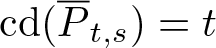 $\mathrm{cd}(\overline{P}_{t,s}) = t$ and
 $\mathrm{cd}(P_{s+t}) = s+t-1$, see [Reference Grant and Recio-Mitter29, Lemma 3.6].
We will now show that 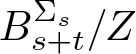 $B_{s+t}^{\Sigma_s}/Z$ is a duality group with
 $\mathrm{cd}(B_{s+t}^{\Sigma_s}/Z) = s+t-2$. As
 $t \geq 2$, the inclusion
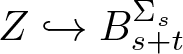 $Z \hookrightarrow B_{s+t}^{\Sigma_s}$ splits. This can be seen geometrically by the projection
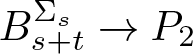 $B_{s+t}^{\Sigma_s} \to P_2$ obtained by forgetting the first
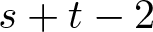 $s+t-2$ strands, where
 $P_2$ is the pure braid group on
 $2$ strands. Hence,
 \begin{equation*}
B_{s+t}^{\Sigma_s} \simeq Z \times \left(B_{s+t}^{\Sigma_s}/Z\right).
\end{equation*}
Note that the space 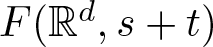 $F(\mathbb{R}^d,s+t)$ contains a finite
 $\mathrm{CW}$-complex
 $C$ which is a
 $\Sigma_{s+t}$-equivariant strong deformation retract, see [Reference Blagojević and Ziegler8, Theorem 3.13]. Hence,
 $C$ is also a
 $\Sigma_{s}$-equivariant strong deformation retract of
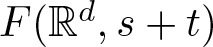 $F(\mathbb{R}^d,s+t)$. Hence, the homotopy equivalence
 $K(B_{s+t}^{\Sigma_s},1)\simeq_hF(\mathbb{R}^2,s+t)/\Sigma_s\simeq_hC/\Sigma_s$ implies
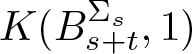 $K(B_{s+t}^{\Sigma_s},1)$ is homotopy equivalent to a finite
 $\mathrm{CW}$-complex. Therefore, the homotopy equivalence
 \begin{equation*}
K(B_{s+t}^{\Sigma_s},1) \simeq_h K(Z,1) \times K(B_{s+t}^{\Sigma_s}/Z,1)
\end{equation*}
implies 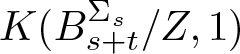 $K(B_{s+t}^{\Sigma_s}/Z,1)$ is homotopy equivalent to a finite
 $\mathrm{CW}$-complex, i.e.,
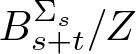 $B_{s+t}^{\Sigma_s}/Z$ is a group of type
 $F$. Then Lemma 5.9 applied to the extension
 $1 \to Z \hookrightarrow B_{s+t}^{\Sigma_s} \to B_{s+t}^{\Sigma_s}/Z \to 1$ implies that
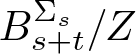 $B_{s+t}^{\Sigma_s}/Z$ is a duality group of cohomological dimension
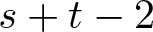 $s+t-2$. Hence, by [Reference Bieri and Eckmann6, Theorem 3.5], it follows that the middle group in (13) has cohomological dimension
 $s+2t-2$.
Remark 5.11. Note that when  $t=1$, the group
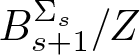 $B_{s+1}^{\Sigma_s}/Z$ is not torsion-free, as shown in [Reference Grant and Recio-Mitter29, Proposition 4.2]. Consequently, every
 $\mathrm{CW}$-complex of type
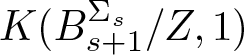 $K(B_{s+1}^{\Sigma_s}/Z,1)$ is infinite-dimensional. Therefore, the argument used in the preceding theorem fails for the case
 $t=1$.
Conjecture 5.12.  $
\mathrm{TC}^{\Sigma_s}[F(\mathbb{R}^2,s+1) \to F(\mathbb{R}^2, s)] \leq 3+s.
$
We expect the above conjecture to be true, since the motion planning problem for two submarines constrained by the unknown positions of  $s$ mines (where the order in which the mines are placed does not matter) should be more complex than that for a single submarine. Hence,
 \begin{equation*}
\mathrm{TC}[\overline{F(\mathbb{R}^2,s+1)} \to \overline{F(\mathbb{R}^2, s)}]
\leq \mathrm{TC}[\overline{F(\mathbb{R}^2,s+2)} \to \overline{F(\mathbb{R}^2, s)}]
= 3+s,
\end{equation*}
Conjecture 5.12 is true if  $s=1$, see Remark 5.2 and [Reference Farber and Grant22, Theorem 1].
We note that we can get  $\mathrm{TC}[\overline{F(\mathbb{R}^2,s+1)} \to \overline{F(\mathbb{R}^2, s)}] \leq 4+s$, using [Reference Cohen, Farber and Weinberger11, Proposition 7.2] and Proposition 5.5. Moreover,
 $\mathrm{TC}[\overline{F(\mathbb{R}^2,s+1)} \to \overline{F(\mathbb{R}^2, s)}] \geq 1+s$, by Theorem 5.3.
Acknowledgements
The authors thank Professor Mark Grant for his valuable feedback on an earlier version of this article, which significantly improved the paper in various aspects. In particular, the authors are grateful to him for suggesting an approach to establish a cohomological lower bound via the cohomology of orbit spaces, for recommending the use of obstruction theory in Theorem 5.6 to improve our earlier bound, and for clearly explaining how to apply the cohomological dimension of the unordered configuration space in the Serre spectral sequence to show that the obstructions vanish. The authors also thank Professor Jesus Gonzalez for pointing us to an appropriate reference on the equivariant  $\mathrm{CW}$-complex structure on the ordered configuration space, from which they can determine the homotopy dimension of the unordered configuration space. The first author would like to acknowledge the IISER Pune—IDeaS Scholarship and Siemens-IISER Ph.D. fellowship for economical support. The second author acknowledges the support of NBHM through grant 0204/10/(16)/2023/R&D-II/2789 and DST–INSPIRE Faculty Fellowship (Faculty Registration No. IFA24-MA218), Department of Science and Technology, Government of India, as well as support from the Industrial Consultancy and Sponsored Research (IC&SR), Indian Institute of Technology Madras for the New Faculty Initiation Grant (RF25261395MANFIG009294).



