1 Introduction
A main objective of the ergodic theory of smooth dynamical systems is to understand long-term behavior of typical orbits for a majority of systems. Much effort has been dedicated to constructing physically relevant invariant measures which statistically predict typical asymptotic behaviors. A refined description of the dynamics requires the analysis of atypical or transient behaviors before orbits settle down to equilibrium. The theory of large deviations is concerned with such rare events. The large deviation principle (LDP) asserts the existence of the rate function which controls probabilities of rare events on an exponential scale.
It is now classical that a transitive uniformly hyperbolic (Axiom A) attractor supports a unique Sinaĭ–Ruelle–Bowen measure [Reference Bowen2, Reference Bowen and Ruelle3, Reference Sinaĭ31], and Lebesgue almost every orbit in the basin of attraction is asymptotically distributed with respect to this measure. The LDP for Axiom A attractors was established by Kifer [Reference Kifer19], Orey and Pelikan [Reference Orey and Pelikan24] and Takahashi [Reference Takahashi32]. For one-dimensional non-hyperbolic systems, after much progress [Reference Chung6, Reference Pollicott and Sharp26, Reference Pollicott, Sharp and Yuri27], a major advance was made in [Reference Chung, Rivera-Letelier and Takahasi7] which establishes the LDP for an arbitrary
$C^{1+\alpha }$
 multimodal map with non-flat critical points that is topologically exact. The aim of this paper is to treat what is left out in [Reference Chung, Rivera-Letelier and Takahasi7]: the LDP for renormalizable unimodal maps, including infinitely renormalizable ones. The conclusion is that the LDP holds for an arbitrary S-unimodal map with a non-flat critical point.
We introduce our setting and results in more precise terms. Let
$X\subset \mathbb R$
 be a compact non-degenerate interval. A
$C^1$
 map
$f\colon X\to X$
 is called unimodal if it has a unique critical point c, which is contained in
$\mathrm {int}(X)$
 and is an extremum, and satisfies
${f(\partial X)\subset \partial X}$
 . An S-unimodal map f is a unimodal map of class
$C^3$
 on
$X\setminus \{c\}$
 with negative Schwarzian derivative
$f"'/f'-\tfrac {3}{2}(f"/f')^2<0$
 such that if
$x\in \partial X$
 is a fixed point of f then
${|f'(x)|>1}$
 . We say that the critical point c is non-flat if there exist
$l>1$
 and
$C^3$
 diffeomorphisms
$\varphi $
 and
$\psi $
 defined on a neighborhood of c and
$f(c)$
 respectively such that
$\varphi (c)=0=\psi (f(c))$
 and
$|\varphi (x)|^l=|\psi (f(x))|$
 for any x near c.
Let
$\mathcal M$
 denote the space of Borel probability measures on X endowed with the weak* topology. The empirical measure at time n with initial point
$x\in X$
 is the uniform probability distribution on the orbit
$\{x,f(x),\ldots ,f^{n-1}(x)\}$
 , denoted by

where
$\delta _{f^k(x)}$
 denotes the unit point mass at
$f^k(x)$
 . For a Borel set
$A\subset X$
 , we write
$|A|$
 for its Lebesgue measure. Our main result is stated as follows.
Theorem A. (Level-2 LDP)
For an arbitrary S-unimodal map
$f\colon X\to X$
 with a non-flat critical point, the level-2 LDP holds, namely, there exists a convex lower semicontinuous function
$I\colon \mathcal M\to [0,\infty ]$
 such that

for any open set
$\mathcal G\subset \mathcal M$
 , and

for any closed set
$\mathcal C\subset \mathcal M$
 .
Hereafter we follow the convention that
$\sup \emptyset =-\infty $
 ,
$\inf \emptyset =\infty $
 ,
$\log 0=-\infty $
 . The function I is called the rate function. Since
$\mathcal M$
 is a metrizable space, the LDP determines the rate function uniquely [Reference Rassoul-Agha and Seppäläinen28, Theorem 2.13].
In order to explain the meaning of Theorem A, let us recall that an S-unimodal map f with a non-flat critical point is classified into the following mutually exclusive cases [Reference de Melo and van Strien10, Reference Guckenheimer14]:
-
(I) f has an attracting periodic orbit;
-
(II) f is infinitely renormalizable;
-
(III) f is at most finitely renormalizable and has no attracting periodic orbit.
Guckenheimer [Reference Guckenheimer14] proved this classification for negative Schwarzian
$C^3$
 unimodal maps with non-degenerate critical points. The same holds in our slightly more general setting. For details, see [Reference de Melo and van Strien10, Ch. III,
$\S$
 4]. The dynamics is relatively simple in cases (I) and (II): the empirical measure along the orbit of Lebesgue almost every initial point converges in the weak* topology to the measure supported on the attracting periodic orbit or the attracting Cantor set. The dynamics in case (III) is much more complicated and displays a rich array of different statistical behaviors (see, for example, [Reference Bruin, Keller, Nowicki and van Strien5, Reference Hofbauer and Keller15, Reference Jakobson17, Reference Johnson18]). As a prototypical example, consider the quadratic map
$x\in [0,1]\mapsto a x(1-x)$
 with
$1< a\leq 4$
 . It is well known that:
-
• the set of a-values corresponding to case (I) is open and dense in the parameter space [Reference Graczyk and Świa̧tek.13];
-
• the set of a-values corresponding to case (II) is non-empty [Reference Feigenbaum11, Reference Feigenbaum12], and has zero Lebesgue measure [Reference Lyubich22];
-
• the set of a-values corresponding to case (III) has positive Lebesgue measure [Reference Benedicks and Carleson1, Reference Jakobson17].
Irrespective of rich bifurcations, Theorem A states that the LDP continues to hold for an arbitrary parameter a.
The rate function I in Theorem A is given as follows. Let
$\mathcal M(f)$
 denote the set of elements of
$\mathcal M$
 which are f-invariant. For each
$\mu \in \mathcal M(f)$
 , the limit

exists for
$\mu $
 -almost every
$x\in X$
 and belongs to
$\mathbb {R}\cup \{-\infty \}$
 , because
$\log |f'|$
 is uniformly bounded from above. We set

and define a (non-negative) Lyapunov exponent of
$\mu $
 by

Let
$h(\mu )$
 denote the measure-theoretic entropy of
$\mu $
 with respect to f. Define a free energy
$F\colon \mathcal M\to [-\infty ,0]$
 by

The rate function I in Theorem A is defined to be the negative of the upper semicontinuous regularization of F:

Here, the infimum is taken over all open sets
$\mathcal G$
 in
$\mathcal M$
 containing
$\mu $
 . Note that the entropy and the Lyapunov exponent are upper semicontinuous as functions of measures. In cases (I) and (II), the Lyapunov exponent is in fact continuous (see Lemma 2.10) and thus
$I=-F.$
 In case (III), the Lyapunov exponent may fail to be lower semicontinuous [Reference Bruin and Keller4,
$\S$
 2], which implies
$I\neq -F$
 .
The next theorem asserts that Theorem A cannot be extended to maps with multiple critical points.
Theorem B. (The breakdown of the LDP)
There exists a
$C^3$
 interval map with exactly two non-degenerate critical points for which the level-2 LDP does not hold.
The rest of this paper consists of four sections. In §2 we introduce several basic definitions and results on S-unimodal maps. In §3 we prove the lower bound for open sets in Theorem A. In §4 we prove the upper bound for closed sets in Theorem A. In §5 we prove Theorem B.
For only finitely renormalizable maps, the dynamics of typical orbits consist of two stages: transition to the deepest renormalization cycle, and circulation within that cycle. The LDP restricted to the deepest renormalization cycle mostly follows from the known result [Reference Chung, Rivera-Letelier and Takahasi7]. For infinitely renormalizable maps, orbits contained in sufficiently deep cycles are approximated by the post-critical measure supported on the attracting Cantor set. Therefore, all we have to do is to analyze the transitions between renormalization cycles. The main point of §3 is to prove that any f-invariant measure supported on a hyperbolic set is approximated with orbit segments from finitely many subintervals of X (see Proposition 3.1). This claim is standard if the measure is ergodic, and if non-ergodic then we glue orbit segments together which approximate its ergodic components.
The main technique used in §4 to derive the upper bound is a ‘coarse graining approach’. Here the set of orbits with prescribed time averages of continuous functions are coarse grained (see §4.3), and estimates on the resultant ‘clusters’ are transferred to the large deviations upper bound on empirical measures (see Propositions 4.1 and 4.6). The estimate on each cluster consists of contributions from the uniformly hyperbolic dynamics on each renormalization cycle and the transitions between them.
A counterexample of a bimodal map we construct in the proof of Theorem B is non-transitive and has two non-degenerate critical points, one of which is non-recurrent. With a slight modification of our construction, one can find a counterexample in polynomial maps of degree
$3$
 (see Remark 5.5). It is plausible that there is an S-unimodal map with a non-recurrent flat critical point for which the level-2 LDP fails. For a transitive S-unimodal map with a non-recurrent flat critical point and all periodic orbits hyperbolic repelling, the level-2 LDP was shown in [Reference Chung and Takahasi8] under an assumption that the criticality increases at some specific rates.
2 Preliminaries
This section introduces several basic definitions and results on the dynamics of S-unimodal maps and its renormalization. In §2.1 we classify attracting periodic orbits. In §2.2 we prove a lemma on the Lyapunov exponent of invariant measures. In §2.3 we define renormalization of S-unimodal maps. In §2.4 we introduce basic structures associated with the renormalization. In §2.5–§2.7 we are concerned with the dynamics on each renormalization cycle. In §2.8 we introduce some notation which will be frequently used later. In §2.9 we summarize a few results on infinitely renormalizable maps.
2.1 Classification of attracting periodic orbits
Let
$f\colon X\to X$
 be a unimodal map, and let
$\{f^k(x)\}_{k=0}^{p-1}$
 be a periodic orbit of f with prime period p. We say that
$\{f^k(x)\}_{k=0}^{p-1}$
 is:
-
• hyperbolic attracting if $|(f^p)'(x)|<1$
 ;
-
• neutral if $|(f^p)'(x)|=1$
; -
• hyperbolic repelling if $|(f^p)'(x)|>1$
.



The basin of the periodic orbit
$\{f^k(x)\}_{k=0}^{p-1}$
 is the set of points in X whose omega-limit set is contained in the set
$\{f^k(x)\}_{k=0}^{p-1}$
 . We say that
$\{f^k(x)\}_{k=0}^{p-1}$
 is attracting if its basin contains an open set. In this case, the union of the connected components of the basin containing a point from
$\{f^k(x)\}_{k=0}^{p-1}$
 is called the immediate basin of
$\{f^k(x)\}_{k=0}^{p-1}$
 . Each connected component of the immediate basin contains exactly one point from
$\{f^k(x)\}_{k=0}^{p-1}$
 .
If
$f\colon X\to X$
 is S-unimodal, a neutral periodic point x with prime period p satisfies either
-
(a) $(f^p)"(x)\neq 0$
, or -
(b) $(f^p)"(x)= 0$
and
$(f^p)"'(x)/ (f^p)'(x)<0$
.



In case (a), the periodic point x is locally attracting from only one side and in case (b) it is attracting from both sides. Hence, a periodic point is attracting if and only if it is hyperbolic attracting or neutral. The immediate basin of an attracting periodic orbit contains the critical point [Reference de Melo and van Strien10, Ch. II, Lemma 6.1, Theorem 6.1]. Therefore, there is at most one attracting periodic orbit, denoted by
$O(f)$
 . Let
$B(f)$
 denote the immediate basin of
$O(f)$
 . If f has no attracting periodic orbit, we put
$B(f)=\emptyset $
 for convenience. Let
$\delta _{O(f)}$
 denote the element of
$\mathcal M(f)$
 that is supported on
$O(f)$
 . The attracting periodic orbit
$O(f)$
 is called two-sided attracting if it is hyperbolic attracting or neutral in case (b). Otherwise (i.e., if it is neutral in case (a)), an attracting periodic orbit
$\{f^k(x)\}_{k=0}^{p-1}$
 is called one-sided attracting.
2.2 Lyapunov exponents
Since our definition of the Lyapunov exponent in (1.1) is a little non-standard, we will use the next lemma in §3.
Lemma 2.1. Let
$f\colon X\to X$
 be an S-unimodal map with a non-flat critical point. Then the map
$\mu \in \mathcal M(f)\mapsto \chi ^+(\mu )$
 is affine. Moreover, the following assertions hold.
-
(a) If f has no hyperbolic attracting periodic orbit, then $\chi ^+(\mu )=\int \log |f'|\,d\mu $
for any
$\mu \in \mathcal M(f)$
. -
(b) If f has a hyperbolic attracting periodic orbit, then $\chi ^+(\mu )=\int \log |f'|\,d\mu $
for any
$\mu \in \mathcal M(f)$
satisfying
$\mu (O(f))=0.$





Proof. Assertion (a) follows from [Reference Rivera-Letelier29, Proposition A.1]. Hence,
$\chi ^+(\cdot )$
 is affine if f has no hyperbolic attracting periodic orbit. Assertion (b) follows from Mañé’s theorem [Reference Mañé23, Theorem A] which asserts that the complement of
$O(f)$
 is a hyperbolic set. Then
$\chi ^+(\cdot )$
 is affine on the subspace of measures in
$\mathcal M(f)$
 not charging
$O(f)$
 . Since every element of
$\mathcal M(f)$
 can be written uniquely as a convex combination of
$\delta _{O(f)}$
 and a measure not charging
$O(f)$
 ,
$\chi ^+(\cdot )$
 is also affine in this case.
2.3 Renormalization of S-unimodal maps
Let
$f\colon X\to X$
 be a unimodal map with a non-flat critical point c. A proper closed subinterval J of X is restrictive of period
$p\geq 2$
 if the following conditions hold (cf. [Reference de Melo and van Strien10, pp. 139]):
-
• the interiors of $J,\ldots ,f^{p-1}(J)$
are pairwise disjoint; -
• $f^p(J)\subset J$
and
$f^p(\partial J)\subset \partial J$
; -
• one of the intervals $J,\ldots ,f^{p-1}(J)$
contains c in its interior; -
• J is maximal with respect to these properties—if $J'\supset J$
is a closed interval which is strictly contained in X and satisfies the previous three properties with the same integer p, then
$J'=J$
.






We define a strictly decreasing sequence of closed intervals

which contain the critical point c, and a strictly increasing sequence of integers

so that
$J_m$
 is restrictive of period
$p_m$
 for
$m\ge 1$
 , inductively as follows. Given
$J_m$
 and
$p_m$
 for some
$m\geq 0$
 , note that
$f^{p_{m}}|_{J_m}\colon J_m\to J_m$
 is a unimodal map. If
$f^{p_{m}}|_{J_m}$
 has a restrictive interval, then define
$J_{m+1}$
 to be the restrictive interval of
$f^{p_{m}}|_{J_m}$
 containing c and with the smallest period
$r_m$
 . We define
$p_{m+1}=p_{m}r_m$
 . If
$f^{p_{m}}|_{J_m}$
 has no restrictive interval, then we do not define
$J_{m+1}$
 and stop the definition setting
$\bar m(f)=m$
 . If this inductive definition continues for arbitrarily large m, we set
$\bar m(f)=\infty $
 . We say that f is:
-
• non-renormalizable if $\bar m(f)=0$
; -
• renormalizable if $\bar m(f)\geq 1$
; -
• only finitely renormalizable if $\bar m(f)<\infty $
; -
• infinitely renormalizable if $\bar m(f)=\infty $
.


We assume that f has negative Schwarzian derivative, and review the dynamics of the unimodal map
$f^{p_m}|_{J_m}$
 ,
$m\geq 0$
 . We classify such dynamics into the following cases:
-
(A) $f^{p_m}|_{J_m}$
is non-renormalizable and has no attracting fixed point; -
(B) $f^{p_m}|_{J_m}$
is renormalizable; -
(C) $f^{p_m}|_{J_m}$
is non-renormalizable and has an attracting fixed point.


For each
$m\geq 0$
 , let
$L_m$
 denote the closed interval in
$J_m$
 bordered by
$f^{p_m}(c)$
 and
$f^{2p_m}(c)$
 . Note that
$L_m$
 is possibly a singleton, that is, a degenerate closed interval.
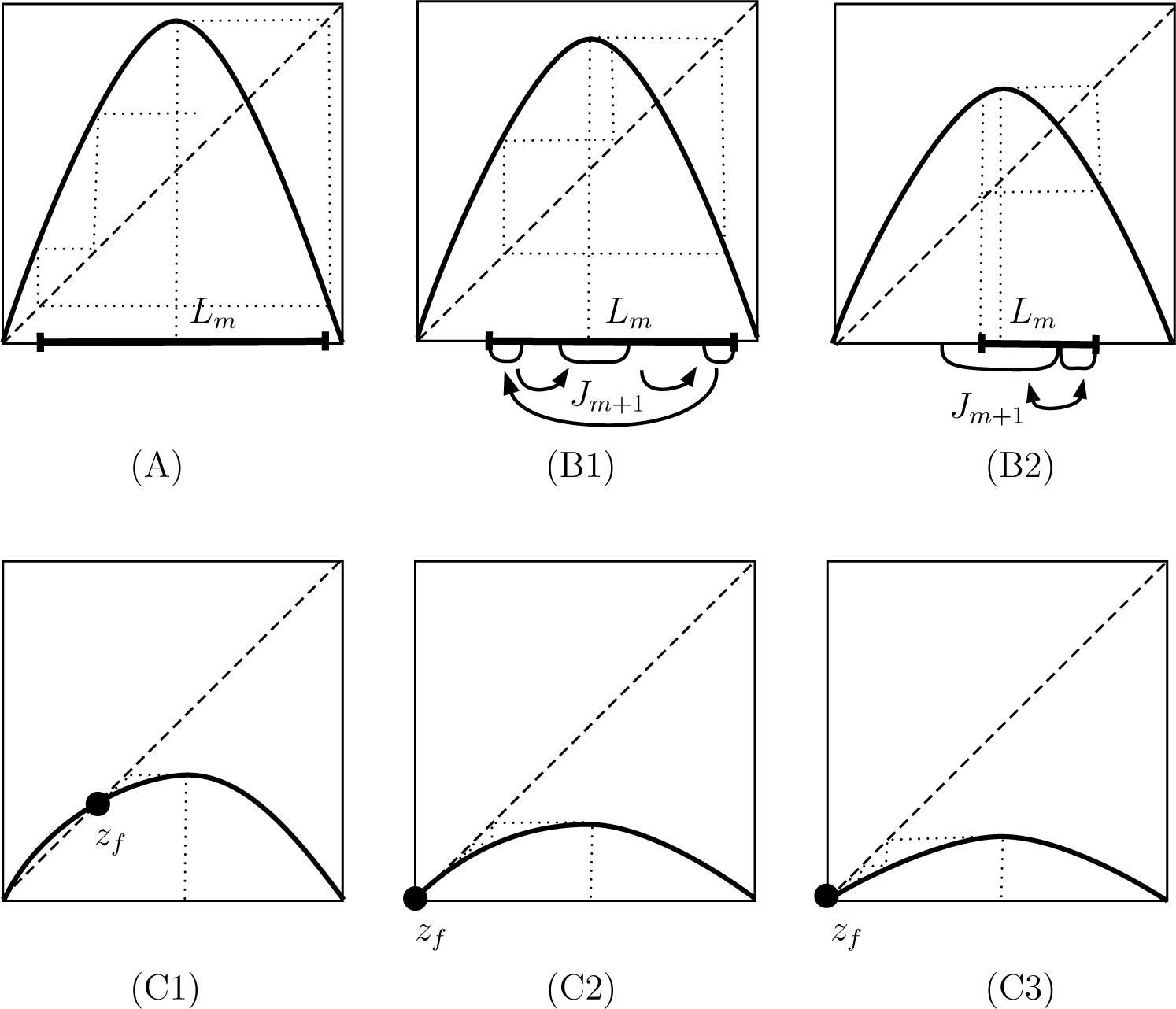
In case (A), we have
$f^{p_m}(L_m)= L_m$
 and
$f^{p_m}|_{L_m}$
 is topologically exact: for any relatively open subset U of
$L_{m}$
 there is an integer multiple
$n\geq 1$
 of
$p_m$
 such that
${f^{n}(U)=L_{m}}$
 . One can check this by combining [Reference de Melo and van Strien10, Theorem V.1.3] and [Reference Ruette30, Theorem 2.19 and Proposition 2.34], for example.
In case (B), we have
$c\in \mathrm {int}(L_m)$
 and
$f^{p_m}(L_m)\subset L_m$
 , and the orbit of any point in
$\mathrm {int}(J_m)$
 eventually falls into
$L_m$
 . There exists a restrictive interval
$J_{m+1}$
 that contains the critical point c and the set
$\bigcup _{k=0}^{p_{m+1}/p_m}f^{kp_m}(J_{m+1})$
 is forward invariant with respect to
$f^{p_m}$
 . We will consider two subcases:
-
(B1) $p_{m+1}/p_m\neq 2$
; -
(B2) $p_{m+1}/p_m=2$
.


Compare these in Figure 1. In case (B2) we have
$L_{m}=f^{p_m}(J_{m+1})\cup f^{2p_m}(J_{m+1})$
 and
$L_m\subset \bigcup _{k=0}^{p_{m+1}-1} f^k(J_{m+1})$
 .
The graphs of the renormalized unimodal maps
$f^{p_{m}}|_{J_{m}}\colon J_m\to J_m$
 .

Figure 1 Long description
A multi-panel figure containing six line graphs labeled A, B 1, B 2, C 1, C 2, and C 3. Each graph is contained within a square frame and features a dashed diagonal line from the bottom-left to the top-right corner.
Panel A: Shows a high-arched unimodal curve. A thick horizontal line segment on the x-axis is labeled L sub m. Dotted lines indicate cobwebbing or iterative paths within the curve.
Panel B 1: Similar to A, but the x-axis features three distinct sub-intervals marked with brackets. Curved arrows point between these intervals, and the central region is labeled J sub m plus 1. The overall interval is labeled L sub m.
Panel B 2: Shows a slightly lower unimodal curve. The x-axis is divided into two main sub-intervals with a double-headed arrow between them, labeled J sub m plus 1 and L sub m.
Panel C 1: Features a much lower unimodal curve that intersects the dashed diagonal line at a point labeled z sub f. The curve peaks well below the top of the frame.
Panel C 2: Shows the curve from C 1 shifted so that the intersection point z sub f is located at the origin (bottom-left corner). The curve is flatter.
Panel C 3: Similar to C 2, showing a further flattened unimodal curve starting from the origin point z sub f, illustrating the progression of the renormalization process.
In case (C),
$m=\bar m(f)$
 and
$J_m$
 contains a unique point
$z_f$
 from
$O(f)$
 . Indeed, if
$J_m$
 contained two points from
$O(f)$
 , then one would find a restrictive interval for
$f^{p_m}|_{J_m}$
 as an immediate basin of
$O(f)$
 . In particular, the point
$z_f\in O(f)\cap J_m$
 is a fixed point of the unimodal map
$f^{p_m}|_{J_m}$
 . We will consider three subcases:
-
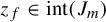
(C1) $z_f\in \mathrm {int}(J_m)$
; -
(C2) $z_f\in \partial J_{m}$
and
$O(f)$
is neutral; -
(C3) $z_f\in \partial J_{m}$
and
$O(f)$
is hyperbolic attracting.


Compare these in Figure 1. In case (C1),
$O(f)$
 is hyperbolic attracting and
$\mathrm {int}(J_{m})$
 is the connected component of
$B(f)$
 containing
$z_f$
 . For any closed interval J contained in
$\mathrm {int}(J_{m})$
 , the following uniform convergence holds:

In cases (C2) and (C3), since f has negative Schwarzian derivative,
$f^{p_{m}}(c)$
 lies in between
$z_f$
 and c and the following uniform convergence on
$J_m$
 holds:

If, moreover,
$z_f$
 is two-sided attracting and
$m\geq 1$
 , the dynamics of the previous renormalization
$f^{p_{m-1}}|_{J_{m-1}}$
 is similar to that in case (C1) from Lemma 2.2 below. For this reason, if
$1\leq \bar m(f)<\infty $
 and
$\partial J_{\bar m(f)}$
 contains a two-sided attracting fixed point of
$f^{p_{\bar m(f)}}|_{J_{\bar m(f)}}$
 , then we zoom out to the previous renormalization by setting

In all other cases, we set

Lemma 2.2. Let
$f\colon X\to X$
 be a renormalizable S-unimodal map, and let J be a restrictive interval with period p containing c and not contained in any other restrictive interval with period smaller than p. If
$z_f\in \partial J$
 is periodic and two-sided attracting, then
$z_f$
 is a fixed point of f,
$p=2$
 and its immediate basin coincides with
$\mathrm {int}(X)$
 . Further, for any closed interval J contained in
$\mathrm {int}(X)$
 , we have the uniform convergence (2.1) on J with
$p_m=1$
 .
Proof. Let B denote the connected component of the immediate basin of the periodic orbit of
$z_f$
 that contains
$z_f$
 . Then we have
$f^p(B)\subset B$
 . Since the renormalized map
$f^p|_J$
 belongs to case (C2) or (C3) and since
$z_f$
 is two-sided attracting, the interval J is strictly contained in B.
We claim that
$f(B)\subset B$
 . Suppose that this is not the case. Then, by the definition of immediate basin, we have that
$f(B)\cap B= \emptyset $
 . This implies that
$\mathrm {cl}(B)$
 is a restrictive interval and contradicts the assumption of the lemma.
Since the immediate basin B contains only one point in the orbit of
$z_f$
 , the point
$z_f$
 is a fixed point of f. Then it follows that
$p=2$
 . Since
$f(\partial B)\subset \partial B$
 , it is immediate to see that B coincides with
$\mathrm {int}(X)$
 .
Remark 2.3. To summarize, in the case
$m(f)<\infty $
 the dynamics of the renormalization
$f^{p_{m(f)}}|_{J_{m(f)}}$
 is either in case (A), or one of the following:
-
(C-I) there is a two-sided attracting fixed point in $\mathrm {int}(J_{m(f)})$
whose immediate basin contains
$\mathrm {int}(J_{m(f)})$
; -
(C-II) there is a one-sided attracting fixed point in $\partial J_{m(f)}$
whose immediate basin contains
$J_{m(f)}$
.


2.4 Structures associated with renormalization
Let
$f\colon X\to X$
 be an S-unimodal map with a non-flat critical point c such that
$m(f)\geq 1$
 . For each integer m with
$0\leq m< m(f)$
 , we define the mth renormalization cycle
$K_m$
 by

For each integer m with
$0\leq m<m(f)-1$
 , we denote by
$\tilde {\mathscr {P}}_{m}$
 the collection of the connected components of
$K_m\setminus \bigcup _{k=0}^{p_{m+1}-1}\mathrm {int}(f^k(J_{m+1}))$
 .
In the case
$m(f)<\infty $
 , we set

Moreover, we define
$\tilde {\mathscr {P}}_{m(f)-1}$
 to be the collection of the connected components of the following sets:
$K_{m(f)-1}\setminus \bigcup _{k=0}^{p_{m(f)}-1}\mathrm {int}(f^k(J_{m(f)}))$
 if f has an attracting periodic orbit;
$K_{m(f)-1}\setminus \bigcup _{k=0}^{p_{m(f)}-1}\mathrm {int}(f^k(L_{m(f)}))$
 if f has no attracting periodic orbit.
The elements of
$\tilde {\mathscr {P}}_m$
 with
$0\leq m<m(f)$
 are closed intervals in
$K_m$
 , possibly singletons, and
$\tilde {\mathscr {P}}_m$
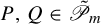
 has the Markov property: if
$P,Q\in \tilde {\mathscr {P}}_m$
 and
$f(P)\cap Q\neq \emptyset $
 then
${f(P)\supset Q}$
 . Let
$\mathscr {P}_m$
 denote the set of elements of
$\tilde {\mathscr {P}}_m$
 that are contained in
$\bigcup _{k=0}^{p_m-1}f^k(L_m)$
 . Note that
$\mathscr {P}_m$
 is non-empty.
Remark 2.4. Case (B2) is rather exceptional. The set
$\mathscr {P}_m$
 consists of the singletons
$f^{k}(J_{m+1})\cap f^{p_m+k}(J_{m+1})$
 ,
$0\leq k\leq p_m-1$
 , which form a hyperbolic repelling periodic orbit of prime period
$p_m$
 .
For each integer m with
$0\leq m< m(f)$
 , we define

and

Note that
$\Gamma _m$
 for
$0\leq m< m(f)$
 contains an attracting periodic orbit only if
${m=m(f)-1}$
 , and this periodic orbit is one-sided attracting. In this case,
$K_{m,m+1}$
 is disjoint from the interior of the immediate basin of the attracting periodic orbit. For convenience we set
$\Gamma _{-1}=\partial X.$
 In the case
$m(f)<\infty $
 we further define

The sets
$\Gamma _m$
 ,
$-1\leq m\leq m(f)$
 are non-empty closed sets, and
$\Gamma _m\cap \Gamma _{m'}=\emptyset $
 holds for all distinct integers
$m,m'$
 in
$\{-1,\ldots ,m(f)-1\}$
 . Note that
$\Gamma _{m(f)-1}$
 intersects
$\Gamma _{m(f)}$
 if and only if
$L_{m(f)}=J_{m(f)}$
 .
For each integer m with
$-1\leq m\leq m(f)$
 we set

where
$\mathrm {supp}(\mu )$
 denotes the smallest closed subset of X with full
$\mu $
 -measure. The sets
$\mathcal M_m(f)$
 are pairwise disjoint, and if
$m(f)<\infty $
 then
$\mathcal M(f)$
 is the convex hull of
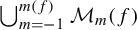
$\bigcup _{m=-1}^{m(f)}\mathcal M_m(f)$
 . If
$m(f)<\infty $
 and f has a one-sided attracting periodic orbit, then
$L_{m(f)}$
 is contained in the basin of this attracting periodic orbit, and so
$\mathcal M_{m(f)}(f)=\emptyset $
 . The set
$\mathcal M_{-1}(f)$
 is a singleton that is supported on the fixed point in
$\partial X$
 .
2.5 Symbolic dynamics on each cycle
Let
$f\colon X\to X$
 be an S-unimodal map such that
$m(f)\geq 1$
 . For each integer m with
$0\leq m< m(f)$
 , there is a topological Markov chain over the finite alphabet
$\tilde {\mathscr {P}}_m$
 determined by the transition matrix

Let
$n\geq 2$
 be an integer and let
$P_0,P_1,\ldots ,P_{n-1}\in \tilde {\mathscr {P}}_m$
 . The word
$P_0P_1\cdots P_{n-1}$
 of length n is admissible if
$M_{P_kP_{k+1}}=1$
 holds for
$0\leq k\leq n-2$
 . Let
$E^n_m$
 denote the set of admissible words of elements of
$\tilde {\mathscr {P}}_m$
 of length n. Let
$\Sigma _m$
 denote the set of one-sided infinite sequences
$\{P_k\}_{k=0}^\infty $
 of elements of
$\tilde {\mathscr {P}}_m$
 such that
$P_0\cdots P_{n-1}\in E_m^n$
 holds for every
$n\geq 2$
 . We endow
$\Sigma _m$
 with the restriction of the product topology of the discrete topology of
$\tilde {\mathscr {P}}_m$
 . Let
$\sigma _m\colon \Sigma _m\to \Sigma _m$
 denote the left shift:
$\sigma _m(\{P_k\}_{k=0}^\infty )=\{P_k\}_{k=1}^\infty $
 . For each
$P_0P_1\cdots P_{n-1}\in E^n_m$
 , we set
$I_{P_0P_1\cdots P_{n-1}}=\bigcap _{k=0}^{n-1}f^{-k}(P_k)$
 , and define

by

By [Reference Lyubich21, Main Theorem], f has no wandering interval, and so any homterval is contained in the basin of an attracting periodic orbit. Since
$\bigcap _{n=1}^\infty I_{P_0\cdots P_{n-1}}$
 is not contained in the basin of an attracting periodic orbit, it is not a homterval, namely, a singleton. Hence,
$\pi _m$
 is well defined.
Proposition 2.5. Let
$f\colon X\to X$
 be an S-unimodal map with a non-flat critical point such that
$m(f)\geq 1$
 . For each integer m with
$0\leq m< m(f)$
 , the restriction of f to
$\bigcap _{n=0}^{\infty } f^{-n}(\bigcup _{P\in \tilde {\mathscr {P}}_m}P)$
 is topologically conjugate by the conjugacy map
$\pi _m$
 to the topological Markov chain
$\sigma _m\colon \Sigma _m\to \Sigma _m$
 .
Proof. By definition,
$\pi _m$
 is continuous and surjective. Since the elements of
$\tilde {\mathscr {P}}_m$
 are pairwise disjoint,
$\pi _m$
 is injective and has a continuous inverse. For each
${P_0P_1\cdots P_{n-1}\in E^n_{m}}$
 , the Markov property of
$\tilde {\mathscr {P}}_m$
 implies
$f^{k-1}(I_{P_0\cdots P_{n-1}})=I_{P_{k-1}\cdots P_{n-1}}$
 for every
$1\leq k\leq n$
 . Hence,
$f\circ \pi _m=\pi _m\circ \sigma _m$
 holds. We have verified that the restriction of f to
$\bigcap _{n=0}^{\infty } f^{-n}(\bigcup _{P\in \tilde {\mathscr {P}}_m}P)$
 is topologically conjugate to
$\sigma _m$
 by
$\pi _m$
 .
We will use the following lemma a few times.
Lemma 2.6. Let
$f\colon X\to X$
 be an S-unimodal map with a non-flat critical point such that
$m(f)\geq 1$
 . For each integer m with
$0\leq m< m(f)$
 , we have

Proof. Suppose there exist
$\varepsilon>0$
 and an infinite subset F of
$\bigcup _{n=1}^\infty E^n_{m}$
 such that
${|I_{\omega }\hspace {-1pt}|>\varepsilon }$
 for all
$\omega \in F$
 . Since X has a finite diameter, we can choose a sequence
$\{\omega ^{(n)}\}_{n=1}^\infty $
 in F such that
$\{I_{\omega ^{(n)}}\}_{n=1}^\infty $
 is a nested sequence. Since
$\bigcap _{n=1}^\infty I_{\omega ^{(n)}}$
 is not a singleton, it is a homterval. However, it is not contained in the basin of an attracting periodic orbit. We obtain a contradiction to [Reference Lyubich21, Main Theorem].
2.6 Distortion estimate on each cycle
Let Y be a non-degenerate compact interval in X and let
$g\colon Y\to X$
 be a
$C^1$
 map. Let J be a subinterval of Y such that the restriction of g to J is a diffeomorphism onto its image. By a distortion of g on J we mean the quantity

We will frequently use the following distortion estimates on each cycle.
Proposition 2.7. Let
$f\colon X\to X$
 be an S-unimodal map with a non-flat critical point such that
$m(f)\geq 1$
 . For each integer m with
$0\leq m< m(f)$
 the following assertions hold.
-
(a) If $\Gamma _m$
does not contain a neutral periodic orbit, then there exists a constant
${\gamma _m\geq 1}$
such that if
$n\geq 1$
then the distortion of
$f^n$
on any connected component of
$\bigcap _{k=0}^{n-1}f^{-k}(K_{m,m+1})$
is bounded by
$\gamma _m$
. -
(b) If $\Gamma _{m}$
contains a neutral periodic orbit, then for any
$\varepsilon>0$
there exists
$N\geq 1$
such that if
$n\geq N$
then the distortion of
$f^n$
on every connected component of
$\bigcap _{k=0}^{n-1}f^{-k}(K_{m,m+1})$
is bounded by
$e^{\varepsilon n}$
.







Proof. Since f is
$C^2$
 , the restriction of
$\log |f'|$
 to the union of the elements of
$\tilde {\mathscr {P}}_m$
 not containing a point from an attracting periodic orbit is Lipschitz continuous. Moreover, by Mañé’s theorem [Reference Mañé23, Theorem A], the maximal f-invariant set in this union is a hyperbolic set. Hence, (a) holds.
As for (b), if
$\Gamma _m$
 contains a neutral periodic orbit, then
$m=m(f)-1$
 and
$\partial J_{m(f)}$
 contains a point from the neutral periodic orbit. Let
$\varepsilon>0$
 , let
$n\geq 2$
 and let W be a connected component of
$\bigcap _{k=0}^{n-1}f^{-k}(K_{m,m+1})$
 . There exists
$\omega \in E^n_{m}$
 such that
$W=I_\omega $
 . Since
$K_{m,m+1}$
 does not contain the critical point of f, the infimum of
$|f'|$
 over this set is positive. For all
$x,y\in I_\omega $
 we have

By Lemma 2.6, the last number is bounded by
$\varepsilon n$
 for a sufficiently large n. The proof of Proposition 2.7 is complete.
2.7 Topological exactness on each cycle
Let Y be a non-degenerate interval in X and
$g\colon Y\to Y$
 be a continuous map. Let U be a non-degenerate subinterval of Y and let
$n\in \mathbb N$
 . Each connected component of
$g^{-n}(U)$
 is called a pullback of U by
$g^n$
 . If V is a pullback of U by
$g^n$
 and
$g^n|_V$
 is a diffeomorphism, then V is called a diffeomorphic pullback of U by
$g^n$
 .
The next lemma will be used later in §3.2 for the proof of the lower bound in Theorem A, in order to glue different orbits in different cycles together to form one orbit with required properties. It will also be used later in §4.2 for the proof of the upper bound in Theorem A.
Lemma 2.8. Let
$f\colon X\to X$
 be an S-unimodal map with a non-flat critical point such that
$m(f)\geq 1$
 . Let
$0\leq m<m(f)$
 and suppose
$p_{m+1}/p_m\neq 2$
 . For any open interval
$J\subset L_m$
 that intersects
$\Gamma _m$
 , there exists an integer
$n\geq 1$
 such that
$f^{p_m n}(J)=L_m$
 , and for any
$n'\ge n$
 there exists a diffeomorphic pullback of
$\mathrm {int}(L_m)$
 by
$f^{p_m n'}$
 that is contained in J.
Proof. We assume
$m=0$
 in the proof below. In the case
$m>0$
 , we can apply the same argument to the renormalized map
$f^{p_m}\colon J_m \to J_m$
 to obtain the conclusion of the lemma.
Without loss of generality we may assume
$X=[0,1]$
 and the critical point c is the maxima of f. We claim that the topological entropy
$h_{\mathrm {top}}(f)$
 of
$f\colon X\to X$
 is greater than or equal to
$\log \sqrt {2}$
 . Indeed, the assumption
$p_1=p_1/p_0>2$
 implies that if we take an interval
$[x',x]$
 such that
$x'<c<x$
 and
$f(x)=x=f(x')$
 , then
$f^2(x)=x$
 ,
$f^2(c)<x'$
 and
$[x',x]\subset f^2([x',x])$
 . Since
$[x',x]$
 contains an
$f^2$
 -invariant set on which
$f^2$
 is topologically conjugate to the full shift on two symbols, we obtain
$h_{\mathrm {top}}(f)= h_{\mathrm {top}}(f^2)/2\ge \log \sqrt {2}$
 .
By the Milnor–Thurston kneading theory (see [Reference de Melo and van Strien10, Ch. 2, Theorem 8.1]), there exists a semiconjugacy from
$f\colon X\to X$
 to a piecewise linear map with slopes
$\pm s$
 where
$s=e^{h_{\mathrm {top}}(f)}\ge \sqrt {2}$
 . More precisely, there exists a continuous and surjective monotone map
$\unicode{x3bb} \colon X\to X$
 satisfying
$T\circ \unicode{x3bb} =\unicode{x3bb} \circ f$
 for the tent map

The map
$\unicode{x3bb} $
 sends a non-trivial interval in X to a point only if it is eventually mapped by f into the restrictive interval
$J_1$
 . (For this, we use the non-existence of wandering intervals; see [Reference de Melo and van Strien10, III.4, Proposition 4.3].) Hence,
$\unicode{x3bb} $
 maps an open interval
$J\subset L_0$
 that intersects the Cantor set
$\Gamma _0$
 onto a non-trivial interval
$J'$
 .
If
$s=\sqrt {2}$
 , then T is renormalizable with period
$2$
 and so is f, contradicting the assumption
$p_1>2$
 . So we may suppose
$s> \sqrt {2}$
 . Then there is
$n\ge 0$
 such that both
$T^n(J')$
 and
$T^{n+1}(J')$
 contain the turning point
$1/2$
 of T in their interiors (see [Reference de Melo and van Strien10, III.4, Proposition 4.4 and Exercise 4.1]). Consequently,
$f^n(J)$
 and
$f^{n+1}(J)$
 contain c in their interiors and therefore
$f^{n+2}(J)\supset L_0=[f^{2}(c),f(c)]$
 . Then we have
${f^{n'}(J)\supset f^{n'-n-2}(L_0)=L_0}$
 for
$n'\ge n+2$
 .
Since f is unimodal, for any non-degenerate subinterval I of X we can take a subinterval
$I'\subset I$
 such that
$f\colon I' \to f(I)$
 is a homeomorphism. Applying this procedure to the sequence of maps

we find an interval
$J'\subset J$
 such that
$f^{n'}\colon J' \to L_0$
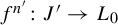 is a homeomorphism. Then
$\mathrm {int}(J')$
 is a diffeomorphic pullback of
$\mathrm {int}(L_0)$
 by
$f^{n'}$
 , as required in the lemma.
Let
$f\colon X\to X$
 be an S-unimodal map with a non-flat critical point such that
$m(f)\geq 1$
 . Suppose
$p_{m+1}/p_m\neq 2$
 for some
$0\leq m<m(f)$
 . In view of Lemma 2.8, for each
${P\in \mathscr {P}_m}$
 that is contained in
$L_m$
 we fix
$q(P)\in \mathbb N$
 such that
$f^{p_m q(P)}(P)=L_m$
 , and for any
${n\ge q(P)}$
 there exists a diffeomorphic pullback of
$\mathrm {int}(L_m)$
 by
$f^{p_m n}$
 that is contained in P. For later uses and convenience we set

2.8 Notation
Let
$C(X)$
 denote the set of real-valued continuous functions on X. For
$\phi \in C(X)$
 and
$n\in \mathbb N$
 , write
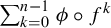
$S_n\phi $
 for the sum
$\sum _{k=0}^{n-1}\phi \circ f^k$
 . For
$\ell \in \mathbb N$
 define

For
$\vec {\phi }=(\phi _1,\ldots ,\phi _\ell )\in C(X)^{\ell }$
 ,
$\vec {\alpha }=(\alpha _1,\ldots ,\alpha _\ell )\in \mathbb R^{\ell }$
 and a measure
$\mu \in \mathcal M$
 , the expression
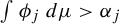
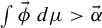
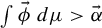
$\int \vec {\phi } \,d\mu>\vec {\alpha }$
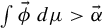 indicates that
$\int \phi _j \,d\mu>\alpha _j$
 holds for
$1\leq j\leq \ell $
 . We set

and

For
$a\in \mathbb R$
 and
$\vec v=(v_1,\ldots ,v_\ell )\in \mathbb R^{\ell }$
 , we write

For
$\vec v,\vec w\in \mathbb R^{\ell }$
 , the expression
$\vec v\geq \vec w$
 indicates that
$v_j\geq w_j$
 holds for
$1\leq j\leq \ell $
 .
2.9 Infinitely renormalizable maps
Let
$f\colon X\to X$
 be an infinitely renormalizable S-unimodal map with a non-flat critical point. The omega-limit set of Lebesgue almost every initial point
$x\in X$
 coincides with the closed invariant set

and the empirical measure
$\delta _x^n$
 converges to the post-critical measure
$\mu _\infty $
 supported on
$\Lambda $
 . The restriction of f to
$\Lambda $
 is uniquely ergodic and the post-critical measure
$\mu _\infty $
 is the unique invariant measure on
$\Lambda $
 . Moreover,
$h(\mu _\infty )=\chi ^+(\mu _\infty )=0$
 holds (see [Reference Bruin and Keller4, Theorem 3.4(b)]).
In order to ‘approximate’
$\mu _\infty $
 , we will use the following lemma, which in particular asserts that the post-critical measure is approximated by empirical measures along sufficiently long orbit segments in sufficiently deep cycles.
Lemma 2.9. [Reference Takahasi33, Lemma 2.3]
Let
$f\colon X\to X$
 be an S-unimodal map with a non-flat critical point such that
$m(f)=\infty $
 . Let
$\ell \in \mathbb N$
 ,
$\vec {\phi }\in C(X)^{ \ell }$
 ,
$\vec {\alpha }\in \mathbb R^{\ell }$
 . For any
$\varepsilon>0$
 there exist
$m_*$
 ,
$N_*\in \mathbb N$
 such that the following assertions hold.
-
(a) If $n\geq N_*$
and
$ A_{n}(\vec {\phi },\vec {\alpha })\cap K_{m_*}\neq \emptyset $
then $$ \begin{align*}\int\vec\phi \,d\mu_\infty>\vec\alpha-\vec\varepsilon.\end{align*} $$
-
(b) If $n\geq N_*$
then $$ \begin{align*} \sup_{K_{m_*}}\bigg\|\dfrac{1}{n}S_n\vec\phi-\int\vec\phi \,d\mu_\infty\bigg\|<\varepsilon.\end{align*} $$




For infinitely renormalizable maps, the Lyapunov exponent depends continuously on invariant measures.
Lemma 2.10. [Reference Takahasi33, Lemma 2.6]
Let
$f\colon X\to X$
 be an S-unimodal map with a non-flat critical point such that
$m(f)=\infty $
 . Then
$\mu \in \mathcal M(f)\mapsto \chi ^+(\mu )$
 is continuous.
3 Large deviations lower bound
In this section we complete the proof of the lower bound in Theorem A. In §3.1 we show that this follows from a key lower bound stated in Proposition 3.1. The rest of this section is dedicated to the proof of Proposition 3.1.
3.1 Key lower bound
The next proposition allows us to approximate a given invariant measure with finitely many intervals in a particular sense.
Proposition 3.1. Let
$f\colon X\to X$
 be an S-unimodal map with a non-flat critical point. Let
$\ell \in \mathbb N$
 ,
$\vec {\phi }\in C(X)^{ \ell }$
 ,
$\vec {\alpha }\in \mathbb R^{\ell }$
 and let
$\mu \in \mathcal M(f)$
 satisfy
$\int \vec \phi \,d\mu>\vec {\alpha }$
 . For any
$\varepsilon>0$
 there exists
$N\geq 1$
 such that for each integer
$n\geq N$
 , there exists a finite collection
$\mathscr {A}_{n}$
 of closed intervals in
$A_{n}(\vec {\phi },\vec {\alpha })$
 with pairwise disjoint interiors such that


In order to prove Proposition 3.1, we approximate the given measure
$\mu $
 with a finite convex combination of measures each supported on some
$\Gamma _m$
 or
$\Lambda $
 , and then for each of these measures construct a collection of finitely many intervals. We then glue orbits from these intervals together to construct a collection intervals with the desired properties.
The proof of Proposition 3.1 is given in §3.4. Below we deduce a corollary to Proposition 3.1 and complete the proof of the lower bound in Theorem A.
Corollary 3.2. Let
$f\colon X\to X$
 be an S-unimodal map with a non-flat critical point. Let
$\ell \in \mathbb N$
 ,
$\vec {\phi }\in C(X)^{\ell }$
 ,
$\vec {\alpha }\in \mathbb R^{\ell }$
 and let
$\mu \in \mathcal M(f)$
 satisfy
$\int \vec {\phi } \,d\mu>\vec {\alpha }$
 . Then

Proof. From Proposition 3.1 and (1.2), for any
$\varepsilon>0$
 there exists
$N\geq 1$
 such that
$|A_{n}(\vec {\phi },\vec {\alpha })|> e^{(F(\mu )-2\varepsilon )n}$
 holds for every
$n\geq N$
 . Taking logarithms of both sides, dividing by n and letting
$n\to \infty $
 and then
$\varepsilon \to 0$
 , we obtain the desired inequality.
Proof of the lower bound in Theorem A
Note that subsets of
$\mathcal M$
 of the form
${\{\mu \in \mathcal M\colon \int \vec \phi \,d\mu>\vec \alpha \}}$
 with
$\ell \in \mathbb N$
 ,
$\vec {\phi }\in C(X)^{ \ell }$
 ,
$\vec {\alpha }\in \mathbb R^{\ell }$
 constitute a base of the weak* topology of
$\mathcal M$
 . So, any non-empty open subset
$\mathcal G$
 of
$\mathcal M$
 is written as the union
$\mathcal G=\bigcup _{\unicode{x3bb} }\mathcal G_\unicode{x3bb} $
 of sets
$\mathcal G_\unicode{x3bb} $
 of this form. For each
$\mathcal G_\unicode{x3bb} $
 , Corollary 3.2 gives

Hence, we obtain

as required in Theorem A.
3.2 Approximation of a measure on each cycle
The rest of this section is entirely dedicated to a proof of Proposition 3.1. We fix
$\ell \in \mathbb N$
 ,
$\vec {\phi }\in C(X)^{\ell }$
 ,
$\vec {\alpha }\in \mathbb R^{\ell }$
 in the statement of Proposition 3.1 until the end of §3.4, and assume
$f\colon X\to X$
 is an S-unimodal map with a non-flat critical point c.
The next lemma allows us to approximate an invariant measure on each single cycle with a finite collection of intervals.
Lemma 3.3. Let
$f\colon X\to X$
 satisfy
$m(f)\geq 1$
 . Let
$0\leq m< m(f)$
 and suppose
$p_{m+1}/p_m\neq 2$
 . Let
$\mu \in \mathcal M_m(f)$
 ,
$P\in \mathscr {P}_m$
 satisfy
$P\subset L_m$
 and
$\mu (P)>0$
 , and let
$P'$
 be a non-degenerate closed interval in
$L_{m}$
 . For any
$\varepsilon>0$
 , there exists
$N\geq 1$
 such that for each integer
$q\geq N$
 , there exists a finite collection
$\mathscr {B}_{p_mq}(P,P')$
 of pullbacks of
$P'$
 by
$f^{p_mq}$
 that are contained in P such that


If, moreover,
$P'\cap \{f(c),\ldots ,f^{M_m-1}(c)\}=\emptyset $
 for the integer
$M_m\geq 1$
 in (2.5), then every pullback
$B\in \mathscr {B}_{p_mq}(P,P')$
 is diffeomorphic and satisfies

Proof. From the definition of
$\pi _m$
 in (2.4) and Proposition 2.5,
$f|_{\Gamma _m}$
 is topologically conjugate to a topological Markov chain via the finite Markov partition
$\mathscr {P}_m$
 . For
$q\in \mathbb N$
 let
$\tilde {\mathscr {B}}_{p_m q}(P)$
 denote the collection of the pullbacks of elements of
$\mathscr {P}_m$
 by
$f^{p_m q}$
 that are contained in P. Lemma 2.6 gives
$\lim _{q\to \infty }\sup _{B\in \tilde {\mathscr {B}}_{p_mq}(P)}|B|=0$
 , and so for any continuous function
$\varphi \colon K_{m,m+1}\to \mathbb R$
 we have

The proof of Lemma 3.3 divides into two cases. We first treat the case where
$\mu $
 is ergodic. Since
$m<m(f)$
 ,
$\mu $
 is not supported on the orbit of a hyperbolic attracting periodic orbit (see §2.4). Let
$\varepsilon>0$
 . Since
$\mu (L_m)=1/p_m$
 , the normalized restriction of
$\mu $
 to
$L_m$
 is an
$f^{p_m}|_{L_m}$
 -invariant Borel probability measure with entropy
$p_mh(\mu )$
 . For
$q\in \mathbb N$
 , we set
$r=q-M_m /p_m$
 . Since
$P\in \mathscr {P}_m$
 ,
$\tilde {\mathscr {B}}_{p_m r}(P)$
 coincides with the collection of the pullbacks of elements of
$\mathscr {P}_m$
 by
$f^{p_m r}$
 that are contained in P. We claim that for all sufficiently large q there exists a subset
$\mathscr {B}_{p_m r}(P)$
 of
$\tilde {\mathscr {B}}_{p_m r}(P)$
 for which the following inequalities hold:

Indeed, the first inequality follows from Shannon, McMillan and Breiman’s theorem [Reference Cornfeld, Fomin and Sinaĭ9] for the normalized restriction. The second one follows from (3.1) and Birkhoff’s ergodic theorem. The third one follows from Proposition 2.7, Birkhoff’s ergodic theorem and
$\chi ^+(\mu )=\int \log |f'|\,d\mu $
 by Lemma 2.1.
By the definition of
$M_m$
 in (2.5), if
$Q\in \mathscr {P}_m$
 and
$Q\subset L_m$
 then
$f^{M_m}(Q)=L_m$
 . For each
$ B\in \mathscr {B}_{p_m r}(P)$
 , the interval
$f^{p_m r}(B)$
 is an element of
$\mathscr {P}_m$
 that is contained in
$L_m$
 . We fix a connected component
$W_B$
 of
$f^{p_m r}(B)\cap f^{-M_m}(P')$
 . Let
$B'$
 denote the diffeomorphic pullback of
$W_B$
 by
$f^{p_m r}$
 that is contained in B. We define

Clearly we have
$\#\mathscr {B}_{p_mq}(P,P')=\#\mathscr {B}_{p_m r}(P)$
 , and the elements of
$\mathscr {B}_{p_mq}(P,P')$
 are pullbacks of
$P'$
 by
$f^{p_m q}$
 . If
$P'\cap \{f(c),\ldots ,f^{M_m-1}(c)\}=\emptyset $
 then for every
$ B\in \mathscr {B}_{p_m r}(P)$
 ,
$W_B$
 is a diffeomorphic pullback of
$P'$
 by
$f^{M_m}$
 . So, every element of
$\mathscr {B}_{p_mq}(P,P')$
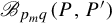 is a diffeomorphic pullback of
$P'$
 by
$f^{p_m q}$
 . Therefore, for all sufficiently large
$q\geq 1$
 we obtain inequalities (a), (b), (c) of Lemma 3.3 from the corresponding three estimates for
$\mathscr {B}_{p_m r}(P)$
 as above. To deduce (c) we have noted that the orbits of points in elements of
$\mathscr {B}_{p_mq}(P,P')$
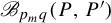 up to time
$p_mq$
 are uniformly bounded away from the critical point c by a distance independent of q.
It remains to treat the case where
$\mu $
 is non-ergodic. By Lemma 2.1, the map
${\nu \in \mathcal {M}_m(f)\mapsto \chi ^+(\nu )\in \mathbb {R}}$
 is affine. By virtue of the ergodic decomposition theorem and Jacobs’s theorem on the decomposition of entropy [Reference Jacobs16], for any
$\varepsilon>0$
 there exist a finite number of ergodic measures
$\mu _1,\ldots ,\mu _s$
 in
$\mathcal M_m(f)$
 and constants
$\rho _1,\ldots ,\rho _s$
 in
$(0,1)$
 adding up to
$1$
 such that the measure
$\mu '=\sum _{i=1}^s\rho _i\cdot \mu _i$
 in
$\mathcal M_m(f)$
 satisfies

and
$\mu '(P)$
 is sufficiently close to
$\mu (P)$
 so that
$\mu '(P)>0$
 . With no loss of generality we may assume that
$\mu $
 is written as a convex combination of ergodic measures
$\mu _i\in \mathcal M_m(f)$
 :

with
$\mu _1(P)>0$
 and
$\rho _1,\ldots ,\rho _s$
 adding up to
$1$
 . We fix
$P_1,\ldots ,P_s\in \mathscr {P}_m$
 so that
$P_1=P$
 ,
$P_i\subset L_m$
 and
$\mu _i(P_i)>0$
 for
$1\leq i\leq s$
 . We set
$P_{s+1}=P'$
 .
Let
$\varepsilon>0$
 . Let
$q\ge s$
 be a large integer, and write it as a sum of positive integers

with
$|p_mq_i-p_m\rho _i q|\leq p_m$
 for
$1\leq i\leq s.$
 From the previous argument in the ergodic case, if q is sufficiently large then for each i there is a finite collection
$\mathscr {B}_{p_mq_i}(P_i,P_{i+1})$
 of diffeomorphic pullbacks of
$P_{i+1}$
 by
$f^{p_m q_i}$
 that is contained in
$P_i$
 for which the following three inequalities hold:


We now define
$\mathscr {B}_{p_mq}(P,P')$
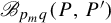 to be the collection of the diffeomorphic pullbacks of
$P'$
 by the composition
$g_s\circ g_{s-1}\circ \cdots \circ g_1$
 of diffeomorphisms
$g_i$
 of the form
$f^{p_m q_i}|_{B}$
 with
$B\in \mathscr {B}_{p_mq_i}(P_i,P_{i+1})$
 . If q is sufficiently large, then by (3.2) we have

where
$h_{\mathrm {top}}(f)$
 denotes the topological entropy of f. Moreover, for each
$B\in \mathscr {B}_{p_mq}(P,P')$
 , using (3.3) for
$1\leq i\leq s$
 , we have

Since
$\varepsilon>0$
 is arbitrary, the above two estimates respectively imply (a) and (b) in Lemma 3.3. We can prove (c) in the same way as (b), using (3.4) and noting that the orbits of points in elements of
$\mathscr {B}_{p_mq}(P,P')$
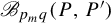 up to time
$p_mq$
 are uniformly bounded away from the critical point c by a distance independent of q. This completes the proof of Lemma 3.3.
3.3 The initial transition
Let
$\mu _{-1}$
 denote the element of the singleton
$\mathcal M_{-1}(f)$
 . Recall that
$\mu _{-1}$
 is the unit point mass at the fixed point in
$\partial X$
 (see §2.4). Put
$p_{-1}=1$
 . Recall that
$L_0$
 is the closed interval in X bordered by
$f(c)$
 and
$f^{2}(c)$
 (see §2.3). Let
$x_f$
 denote the fixed point of f in
$\partial X$
 . If
$L_0$
 is strictly contained in X, let
$P_{-1}$
 denote the connected component of
$X\setminus L_0$
 that contains
$x_f$
 .
Lemma 3.4. Let
$f\colon X\to X$
 be S-unimodal such that
$L_0$
 is strictly contained in X and is not a singleton. Let P be a non-degenerate closed interval in
$\mathrm {int}(X)$
 . Suppose that either
-
(i) f is renormalizable and $P\subset L_0$
, or -
(ii) f is non-renormalizable and P is contained in the open interval bordered by $x_f$
and the unique fixed point
$z_f$
of f in
$\mathrm {int}(X)$
(see (C1) in Figure 1).


For any
$\varepsilon>0$
 , there exists
$N\geq 1$
 such that for each integer
$n\geq N$
 , there exists a pullback B of P by
$f^{n}$
 that is contained in
$P_{-1}$
 such that

If, moreover,
$f(c)\notin P$
 , then the pullback B is diffeomorphic and satisfies

Proof. In case (i),
$f(c)$
 is not contained in the closed interval bordered by
$x_f$
 and c. Without loss of generality we may assume
$x_f<c$
 . We define a sequence
$\{x_n\}_{n=2}^\infty $
 in
$(x_f,c)$
 inductively by
$x_2\in f^{-1}(c)$
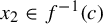 and
$x_{n+1}\in f^{-1}(x_n)$
 for every
$n\geq 2$
 . From the minimum principle for negative Schwarzian unimodal maps [Reference de Melo and van Strien10], this sequence is well defined and satisfies
$\lim _{n\to \infty }x_n= x_f$
 . The interval
$[x_f,x_n]$
 is mapped by
$f^{n}$
 homeomorphically onto
$[x_f,f(c)]$
 . Let B denote the pullback of P by
$f^{n}$
 that is contained in
$[x_f, x_n]$
 . If
$f(c)\notin P$
 , then B is a diffeomorphic pullback. If n is sufficiently large, then (a) and (b) follow from the bounded distortion near
$x_f$
 .
The proof for case (ii) is analogous, with c replaced by
$z_f$
 . The proof of Lemma 3.4 is complete.
3.4 Proof of Proposition 3.1
If
$L_0=X$
 then f is non-renormalizable, and the conclusion of Proposition 3.1 was already shown in the proof of [Reference Chung, Rivera-Letelier and Takahasi7, Proposition 2.1]. If
$L_0$
 is a singleton, then
$f(c)=c$
 and any element of
$\mathcal M(f)$
 is a convex combination of
$\mu _{-1}$
 and the unit point mass at c. Hence, it is not difficult to show the conclusion of Proposition 3.1 by slightly modifying the argument in Case 2 below.
We assume
$L_0$
 is strictly contained in X and not a singleton. Let
$\mu \in \mathcal M(f)$
 satisfy
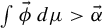
$\int \vec {\phi } \,d\mu>\vec \alpha $
 . Let
$\varepsilon>0$
 be small enough so that

In what follows we treat four cases separately. We start with the case where f is infinitely renormalizable. Arguments for the remaining cases will proceed pretty much in parallel to the infinitely renormalizable case.
Case 1:
$m(f)=\infty $
 . Let
$m_*$
 ,
$N_*$
 be positive integers for which the conclusion of Lemma 2.9 holds with
$\varepsilon $
 replaced by
$\varepsilon /3$
 . By the continuity of the Lyapunov exponent in Lemma 2.10, we may assume with no loss of generality that there exist constants
${\rho _{-1},\ldots ,\rho _{m_*}\in (0,1)}$
 that add up to
$1$
 , and for each
$m\in \{-1,\ldots ,m_*-1\}$
 a measure
$\mu _m\in \mathcal M_{m}(f)$
 such that

For each
$m\in \{0,\ldots ,m_*-1\}$
 we take a non-degenerate closed interval
$P_m$
 so that the following statements hold: if
$p_{m+1}/p_{m}\neq 2$
 then
$P_m\in \mathscr {P}_{m}$
 ,
$P_m\subset L_{m}$
 and
$\mu _m(P_m)>0$
 ; if
$p_{m+1}/p_{m}= 2$
 then
$P_m\subset L_{m}$
 ,
$P_m$
 contains the periodic point in
$\partial J_{m+1}$
 in its interior and satisfies
$P_{m}\cap \{f(c),\ldots ,f^{M_{m-1}-1}(c)\}=\emptyset $
 (recall (2.5)). We set
$P_{m_*}=J_{m_*}$
 .
For each
$m\in \{-1,\ldots , m_*-1\}$
 and for sufficiently large
$q\in \mathbb N$
 , we define a collection
$\mathscr {B}_{p_{m}q}(P_m,P_{m+1})$
 of non-degenerate closed subintervals of
$P_m$
 as follows.
-
• $m=-1$
:
$\mathscr {B}_{p_{-1}q}(P_{-1},P_{0})$
is the singleton consisting of the pullback of
$P_0$
by
$f^{p_{-1}q}$
that is obtained by applying Lemma 3.4 with
$P=P_0$
. Since
$f(c)\notin P_0$
by the choice of
$P_0$
, this pullback is diffeomorphic by Lemma 3.4. -
• $m\geq 0$
: if
$p_{m+1}/p_{m}\neq 2$
then
$\mathscr {B}_{p_{m}q}(P_m,P_{m+1})$
is the collection of the diffeomorphic pullbacks of
$P_{m+1}$
by
$f^{p_{m}q}$
contained in
$P_m$
that are obtained by applying Lemma 3.3 with
$\mu =\mu _m$
,
$P=P_m$
,
$P'=P_{m+1}$
and
$\varepsilon $
replaced by
$\varepsilon /2$
; if
$p_{m+1}/p_{m}=2$
then
$\mathscr {B}_{p_{m}q}(P_m,P_{m+1})$
is the singleton consisting of the diffeomorphic pullback of
$P_{m+1}$
by
$f^{p_{m}q}$
that is contained in
$P_m$
and closest to the periodic point in
$\partial J_{m+1}$
among all such diffeomorphic pullbacks.











We claim that for every
$-1\leq m\leq m_*-1$
 the following inequalities hold provided q is sufficiently large:


Indeed, for
$m=-1$
 , (3.6) is trivial since
$\mu _{-1}$
 is the unit point mass at the fixed point of f in
$\partial X$
 , and (3.7) and (3.8) are consequences of Lemma 3.4. Let
$m\geq 0$
 . If
$p_{m+1}/p_{m}=2$
 then
$\mu _m$
 is the empirical measure on the orbit of the hyperbolic repelling periodic point in
$\partial J_{m+1}$
 . Therefore, (3.6), (3.7) and (3.8) hold in these two cases. If
$p_{m+1}/p_{m}\neq 2$
 then (3.6), (3.7) and (3.8) are consequences of Lemma 3.3.
We write
$n\in \mathbb N$
 as a linear combination of non-negative integers
$q_{-1},\ldots ,q_{m_*-1},r$
 in the form

with
$|p_{m}q_m- \rho _m n|\le 1$
 for
$-1\leq m\leq m_*-1$
 and
$|r- \rho _{m_*} n|\le 1.$
 In what follows we assume n is sufficiently large so that
$r\geq N_*$
 , and for each
$-1\leq m\leq m_*-1$
 ,
$\mathscr {B}_{p_{m}q_m}(P_m,P_{m+1})$
 satisfies (3.6), (3.7) and (3.8). Lemma 2.9(b) gives

Let
$\mathscr {A}_n$
 denote the collection of the pullbacks of
$P_{m_*}$
 by maps
$h_{m_*-1}\circ \cdots \circ h_{-1}$
 , where each
$h_m$
 is a diffeomorphism of the form
$f^{p_{m}q_m}|_{B}$
 with
$B\in \mathscr {B}_{p_{m}q_m}(P_m,P_{m+1})$
 . By
$\#\mathscr {A}_n=\prod _{m=-1}^{m_*-1}\#\mathscr {B}_{p_{m}q_m}(P_m,P_{m+1})$
 , (3.6) and
$h(\mu _{\infty })=0$
 , we have

A similar argument to the proofs of (b) and (c) in Lemma 3.3 based on (3.7) and (3.9) shows that

From
$\chi ^+(\mu _\infty )=0$
 ,
$\chi ^+(\mu )=\sum _{m=-1}^{m_*-1}\rho _m \chi ^+(\mu _m)$
 by Lemma 2.1 and (3.8), we obtain

The inequality in Proposition 3.1(a) follows from (3.10). From (3.5) and (3.11), the elements of
$\mathscr {A}_n$
 are contained in
$A_{n}(\vec {\phi },\vec {\alpha })$
 . The inequality in Proposition 3.1(b) follows from (3.12).
Case 2:
$m(f)<\infty $
 and
$\mathrm {int}(J_{m(f)})$
 contains a two-sided attracting periodic point (Remark 2.3(C-I)). Recall that
$\delta _{O(f)}$
 denotes the element of
$\mathcal M(f)$
 supported on
$O(f)$
 . With no loss of generality we may assume there exist constants
$\rho _{-1},\ldots ,\rho _{m(f)}\in (0,1)$
 adding up to
$1$
 and for each
$m\in \{-1,\ldots ,m(f)-1\}$
 a measure
$\mu _m\in \mathcal M_{m}(f)$
 such that

For each
$m\in \{0,\ldots ,m(f)\}$
 we take a non-degenerate closed interval
$P_m$
 so that the following assertions hold: if
$m<m(f)$
 and
$p_{m+1}/p_{m}\neq 2$
 then
$P_m\in \mathscr {P}_{m}$
 ,
$P_m\subset L_{m}$
 and
$\mu _m(P_m)>0$
 ; if
$m<m(f)$
 and
$p_{m+1}/p_{m}= 2$
 then
$P_m\subset L_m$
 ,
$P_m$
 contains the periodic point in
$\partial J_{m+1}$
 in its interior and satisfies
$P_{m}\cap \{f(c),\ldots ,f^{M_{m-1}-1}(c)\}=\emptyset $
 ;
$P_{m(f)}$
 is contained in the connected component of the immediate basin of the attracting periodic orbit that contains c. In the case of
$m(f)=0$
 , we take
$P_{m(f)}$
 to be a closed interval contained in the open interval bordered by
$x_f$
 and the unique fixed point in
$z_f$
 .
For each
$m\in \{-1,\ldots , m(f)-1\}$
 and for sufficiently large
$q\in \mathbb N$
 , we define a collection
$\mathscr {B}_{p_{m}q}(P_m,P_{m+1})$
 of non-degenerate closed subintervals of
$P_m$
 as follows.
-
• $m=-1$
:
$\mathscr {B}_{p_{-1}q}(P_{-1},P_{0})$
is the singleton consisting of the pullback of
$P_0$
by
$f^{p_{-1}q}$
that is obtained by applying Lemma 3.4 with
$P=P_0$
. Since
$f(c)\notin P_0$
by the choice of
$P_0$
, this pullback is diffeomorphic by Lemma 3.4. -
• $m\geq 0$
: if
$p_{m+1}/p_{m}\neq 2$
then
$\mathscr {B}_{p_{m}q}(P_m,P_{m+1})$
is the collection of the diffeomorphic pullbacks of
$P_{m+1}$
by
$f^{p_{m}q}$
contained in
$P_m$
that are obtained by applying Lemma 3.3 with
$\mu =\mu _m$
,
$P=P_m$
,
$P'=P_{m+1}$
and
$\varepsilon $
replaced by
$\varepsilon /2$
; if
$p_{m+1}/p_{m}=2$
then
$\mathscr {B}_{p_{m}q}(P_m,P_{m+1})$
is the singleton consisting of the diffeomorphic pullback of
$P_{m+1}$
by
$f^{p_{m}q}$
that is contained in
$P_m$
and closest to the periodic point in
$\partial J_{m+1}$
among all such diffeomorphic pullbacks.









Note that the second case
$m\geq 0$
 occurs only if
$m(f)\geq 1$
 .
Let
$n\geq 1$
 be an integer, and write it as a linear combination of positive integers
$q_1,\ldots ,q_{m(f)-1}$
 in the form

with
$|p_{m}q_m- \rho _m n|\le 1$
 for
$-1\leq m\leq m(f)-1$
 and
$|r- \rho _{m(f)} n|\le 1.$
 In what follows we assume n is sufficiently large so that for each
$m\in \{-1,\ldots ,m(f)-1\}$
 ,
$\mathscr {B}_{p_{m}q_m}(P_m,P_{m+1})$
 satisfies (3.6)
$^{\prime }$
 , (3.7)
$^{\prime }$
 and (3.8)
$^{\prime }$
 which are exactly the same as (3.6), (3.7) and (3.8) respectively under the different assumption on f, and

Let
$\mathscr {A}_n$
 denote the collection of the pullbacks of
$P_{m(f)}$
 by maps
$h_{m(f)-1}\circ \cdots \circ h_0\circ h_{-1}$
 where
$h_m$
 for
$-1\leq m\leq m(f)-1$
 is a diffeomorphism of the form
$f^{p_{m}q}|_{B}$
 with
$B\in \mathscr {B}_{p_{m}q}(P_m,P_{m+1})$
 . From
$\#\mathscr {A}_n=\prod _{m=-1}^{m(f)-1}\#\mathscr {B}_{p_{m}q_m}(P_{m},P_{m+1})$
 and (3.6)
$^{\prime }$
 we obtain Proposition 3.1(a). From (3.5), (3.7)
$^{\prime }$
 and (3.13), the elements of
$\mathscr {A}_n$
 are contained in
$A_{n}(\vec {\phi },\vec {\alpha })$
 . Since the measure
$\delta _{O(f)}$
 is supported on
$O(f)$
 , we have
$\chi ^+(\delta _{O(f)})=0$
 from the definition (1.1) of the Lyapunov exponent and
$\chi ^+(\mu )=\sum _{m=-1}^{m(f)-1}\rho _m\chi ^+(\mu _m)$
 by Lemma 2.1. Hence, (3.8)
$^{\prime }$
 implies Proposition 3.1(b).
Case 3:
$m(f)<\infty $
 and
$\partial J_{m(f)}$
 contains a one-sided attracting periodic point (Remark 2.3(C-II)). This case is treated by a slight modification of the argument for Case 2.
Case 4:
$m(f)<\infty $
 and f has no attracting periodic orbit. We may assume there exist constants
$\rho _{-1},\ldots ,\rho _{m(f)}\in (0,1)$
 adding up to
$1$
 , and for each
$m\in \{-1,\ldots ,m(f)\}$
 a measure
$\mu _m\in \mathcal M_{m}(f)$
 such that

Set
$g=f^{p_{m(f)}}|_{L_{m(f)}}$
 , and let
$\nu $
 denote the normalized restriction of
$\mu _{m(f)}$
 to
$L_{m(f)}$
 . Let
$h(g,\nu )$
 ,
$\chi ^+(g,\nu )$
 denote the entropy and Lyapunov exponent of the measure
$\nu $
 with respect to g. By Lemma 2.1 we have
$\chi ^+(g,\nu )=\int \log |Dg|d\nu $
 . As in §2.3, g is topologically exact. From the proof of [Reference Chung, Rivera-Letelier and Takahasi7, Proposition 2.1], for all sufficiently large
$q\geq 1$
 there exist a closed interval
$P_{m(f)}$
 in
$L_{m(f)}$
 and a finite collection
$\mathscr {B}_{p_{m(f)}q}(P_{m(f)},P_{m(f)})$
 of diffeomorphic pullbacks of
$P_{m(f)}$
 by
$g^q$
 that are contained in
$P_{m(f)}$
 such that

and for every
$B\in \mathscr {B}_{p_{m(f)}q}(P_{m(f)},P_{m(f)})$
 ,

and

For each
$m\in \{0,\ldots , m(f)-1\}$
 , we take a non-degenerate closed interval
$P_m$
 such that the following assertions hold: if
$p_{m+1}/p_{m}\neq 2$
 then
$P_m\in \mathscr {P}_{m}$
 ,
$P_m\subset L_{m}$
 and
$\mu _m(P_m)>0$
 : if
$p_{m+1}/p_{m}= 2$
 then
$P_m\subset L_m$
 ,
$P_m$
 contains the periodic point in
$\partial J_{m+1}$
 in its interior and satisfies
$P_{m}\cap \{f(c),\ldots ,f^{M_{m-1}-1}(c)\}=\emptyset $
 .
For each
$m\in \{-1,\ldots , m(f)-1\}$
 and for sufficiently large
$q\in \mathbb N$
 , we define a collection
$\mathscr {B}_{p_{m}q}(P_m,P_{m+1})$
 of non-degenerate closed subintervals of
$P_m$
 as follows.
-
• $m=-1$
:
$\mathscr {B}_{p_{-1}q}(P_{-1},P_{0})$
is the singleton consisting of the pullback of
$P_0$
by
$f^{p_{-1}q}$
that is obtained by applying Lemma 3.4 with
$P=P_0$
. Since
$f(c)\notin P_0$
by the choice of
$P_0$
, this pullback is diffeomorphic by Lemma 3.4. -
• $m\geq 0$
: if
$p_{m+1}/p_{m}\neq 2$
then
$\mathscr {B}_{p_{m}q}(P_m,P_{m+1})$
is the collection of the diffeomorphic pullbacks of
$P_{m+1}$
by
$f^{p_{m}q}$
contained in
$P_m$
obtained by applying Lemma 3.3 with
$\mu =\mu _m$
,
$P=P_m$
,
$P'=P_{m+1}$
and
$\varepsilon $
replaced by
$\varepsilon /2$
; if
$p_{m+1}/p_{m}=2$
then
$\mathscr {B}_{p_{m}q}(P_m,P_{m+1})$
is the singleton consisting of the diffeomorphic pullback of
$P_{m+1}$
by
$f^{p_{m}q}$
that is contained in
$P_m$
and closest to the periodic point in
$\partial J_{m+1}$
among all such diffeomorphic pullbacks.









Note that the second case
$m\geq 0$
 occurs only if
$m(f)\geq 1$
 .
Let
$n\geq 1$
 be an integer that is written as a linear combination of non-negative integers
$q_{-1},\ldots ,q_{m(f)},r$
 in the form

with
$|p_{m}q_m- \rho _m n|\le 1$
 for
$-1\leq m\leq m(f)$
 and
$0\leq r<p_{m(f)}$
 . We assume n is sufficiently large so that for each m,
$\mathscr {B}_{p_{m}q_m}(P_{m},P_{m+1})$
 satisfies (3.6)
$^{\prime \prime }$
 , (3.7)
$^{\prime \prime }$
 and (3.8)
$^{\prime \prime }$
 which are exactly the same as (3.6), (3.7) and (3.8) respectively under the different assumption on f, and
$\mathscr {B}_{p_{m(f)}q_{m(f)}}(P_{m(f)},P_{m(f)})$
 satisfying (3.14), (3.15) and (3.16) exists. We set
$P_{m(f)+1}=P_{m(f)}$
 for convenience. Define
$\mathscr {A}_n$
 to be the collection of the pullbacks of
$P_{m(f)}$
 by maps
$ h_{m(f)}\circ \cdots \circ h_0\circ h_{-1}$
 , where each
$h_m$
 ,
$-1\leq m\leq m(f)$
 is a diffeomorphism of the form
$f^{p_{m} q_m}|_{B}$
 with
$B\in \mathscr {B}_{p_{m}q_m}(P_{m},P_{m+1})$
 . From
$\#\mathscr {A}_n=\prod _{m=-1}^{m(f)}\#\mathscr {B}_{p_{m}q_m}(P_{m},P_{m+1})$
 , (3.6)
$^{\prime \prime }$
 and (3.14) we obtain the inequality in Proposition 3.1(a). From (3.5), (3.7)
$^{\prime \prime }$
 and (3.15), the elements of
$\mathscr {A}_n$
 are contained in
$A_{n}(\vec {\phi },\vec {\alpha })$
 . By Lemma 2.1 we have
$\chi ^+(\mu )=\sum _{m=-1}^{m(f)}\rho _m\chi ^+(\mu _m)$
 . From (3.8)
$^{\prime \prime }$
 and (3.16) we obtain the inequality in Proposition 3.1(b). The proof of Proposition 3.1 is complete.
4 Large deviations upper bound
In this section we complete the proof of the upper bound in Theorem A. In §4.1 we show that this follows from a key upper bound stated in Proposition 4.1. The rest of this section is dedicated to a proof of Proposition 4.1.
4.1 Key upper bound
Let
$\ell \in \mathbb N$
 ,
$\vec {\phi }\in C(X)^{ \ell }$
 ,
$\vec {\alpha }\in \mathbb R^{\ell }$
 . Define

Proposition 4.1. Let
$f\colon X\to X$
 be an S-unimodal map with a non-flat critical point. Let
$\ell \in \mathbb N$
 ,
$\vec {\phi }\in C(X)^{ \ell }$
 ,
$\vec {\alpha }\in \mathbb R^{\ell }$
 . For any
$\varepsilon>0$
 there exists
$N\in \mathbb N$
 such that if
$n\geq N$
 and
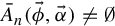
$\bar {A}_n(\vec {\phi },\vec {\alpha })\neq \emptyset $
 , then there exists a measure
$\mu \in \mathcal M(f)$
 such that


We finish the proof of the upper bound in Theorem A assuming Proposition 4.1.
Proof of the upper bound in Theorem A
Let
$\mathcal C$
 be a non-empty closed subset of
$\mathcal M$
 . Let
$\mathcal G$
 be an arbitrary open set containing
$\mathcal C$
 . Since
$\mathcal M$
 is metrizable and
$\mathcal C$
 is compact, we can choose
$\varepsilon>0$
 and finitely many closed sets
$\mathcal {C}_1,\ldots ,\mathcal C_s$
 of the form
$\mathcal C_i=\{\mu \in \mathcal M\colon \int \vec \phi _i \,d\mu \geq \vec \alpha _i\}$
 with
$\ell _i\in \mathbb N$
 ,
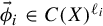
$\vec \phi _i\in C(X)^{ \ell _i}$
 ,
$\vec \alpha _i\in \mathbb R^{\ell _i}$
 for
$1\leq i\leq s$
 so that

where
$\mathcal C_i(\varepsilon )=\{\mu \in \mathcal M\colon \int \vec \phi _i \,d\mu>\vec \alpha _i-\vec {\varepsilon }\}$
 . Since
$F(\mu )\leq -I(\mu )$
 for
$\mu \in \mathcal M$
 , Proposition 4.1 implies

These inequalities and (4.1) give

Since
$\varepsilon>0$
 is arbitrary and
$\mathcal G$
 is an arbitrary open set containing
$\mathcal C$
 , it follows that

as required. The last equality is due to the lower semicontinuity of I.
Standing hypotheses from §4.2 to §4.4
The rest of this section is entirely dedicated to the proof of Proposition 4.1. We assume
$f\colon X\to X$
 is an S-unimodal map with a non-flat critical point c, and
$\ell \in \mathbb N$
 ,
$\vec {\phi }\in C(X)^{\ell }$
 ,
$\vec {\alpha }\in \mathbb R^{\ell }$
 in the statement of Proposition 4.1 are fixed till the end of §4.4.
4.2 Escape estimate in a single renormalization cycle
Suppose
$m(f)\geq 1$
 , and let m be an integer with
$0\leq m\leq m(f)-1$
 . For
$\vec \beta \in \mathbb R^{\ell }$
 ,
$P\subset K_{m,m+1}$
 and
$n\in \mathbb N$
 , define

This subsection is dedicated to proving of the following lemma.
Lemma 4.2. Suppose
$m(f)\geq 1$
 and let
$0\leq m\leq m(f)-1$
 be an integer. For any
$\varepsilon>0$
 there exists
$N\geq 1$
 such that if
$\vec \beta \in \mathbb R^{\ell }$
 ,
$P\in \tilde {\mathscr {P}}_m$
 ,
$n\geq N$
 satisfy
$P\subset K_{m,m+1}$
 and
$A_{n}(\vec {\phi },\vec {\beta },P)\neq \emptyset $
 , then there exists a measure
$\mu \in \mathcal M(f)$
 such that


Proof. Let
$\varepsilon>0$
 and let
$P\in \tilde {\mathscr {P}}_m$
 . Since
$P\subset K_{m,m+1}$
 , if
$p_{m+1}/p_m= 2$
 then
$f(P)$
 contains a point from the orbit of the periodic point in
$\partial J_m$
 . Then we can verify (a) and (b) easily, taking the measure
$\mu $
 to be the equidistribution on this periodic orbit. For the rest of this proof, we suppose
$p_{m+1}/p_m\neq 2$
 , and split the proof into two cases, in which either
$P\in \mathscr {P}_m$
 or
$P\in \tilde {\mathscr {P}}_m\setminus \mathscr {P}_m$
 .
Case 1:
$P\in \mathscr {P}_m$
 . We perform an escape estimate relative to P. Let
$n\in \mathbb N$
 and suppose
$A_{n}(\vec {\phi },\vec {\beta },P)\neq \emptyset $
 . Let
$\mathscr {P}_{m,n}(P)$
 denote the collection of the diffeomorphic pullbacks of elements of
$\mathscr {P}_m$
 by
$f^{n}$
 that are contained in P and intersect
$\bar {A}_{n}(\vec {\phi },\vec {\beta })$
 . Note that every element of
$\mathscr {P}_{m,n}(P)$
 is contained in
$\bigcap _{k=0}^{n-1} f^{-k}(K_{m,m+1})$
 , and the union of elements of
$\mathscr {P}_{m,n}(P)$
 contains
$A_{n}(\vec {\phi },\vec {\beta },P)$
 .
Sublemma 4.3. For any
$\varepsilon>0$
 there exists
$N\geq 1$
 such that for every
${Q\in \mathscr {P}_m}$
 , every
${n\geq N}$
 and every diffeomorphic pullback W of Q by
$f^{n}$
 contained in P, there exist
$k\in \mathbb Z$
 with
$|k|\leq p_m-1$
 and a diffeomorphic pullback Y of P by
$f^{n+k+M_m }$
 that is contained in W and satisfies

Proof. Since P,
$Q\in \mathscr {P}_m$
 , there exist
$k_P$
 ,
$k_Q\in \{0,\ldots ,p_m-1\}$
 such that
$f^{k_P}(P)$
 and
$f^{k_Q}(Q)$
 are elements of
$\mathscr {P}_m$
 contained in
$L_m$
 . By the definition of
$M_m$
 in (2.5), there exists a diffeomorphic pullback
$W_P$
 of
$f^{k_P}(P)$
 by
$f^{M_m }$
 that is contained in
$f^{k_Q}(Q)$
 . Let
$W^{\prime }_P$
 be the diffeomorphic pullback of
$W_P$
 by
$f^{k_Q}$
 contained in Q. This is a diffeomorphic pullback of P by
$f^{M_m+k_Q-k_P}$
 . Let Y be the pullback of
$W^{\prime }_P$
 by
$f^n|_{W}$
 . Then Y is a diffeomorphic pullback of P by
$f^{n+M_m+k_Q-k_P}$
 .
By Proposition 2.7 with
$\varepsilon $
 replaced by
$\varepsilon /2$
 , if n is sufficiently large we have

as required, where
$C>0$
 is a constant independent of P and Q.
In view of Sublemma 4.3, for each
$W\in \mathscr {P}_{m,n}(P)$
 we fix an integer
$k(W)$
 with
$|k(W)|\leq p_m-1$
 and a diffeomorphic pullback
$Y_W$
 of P by
$f^{n+k(W)+M_m}$
 that is contained in W and satisfies
$|Y_W\hspace{-1pt}|\geq \exp (-\varepsilon n/3)|W|.$
 Set

If n is sufficiently large, then for all
$-p_m+1\leq k\leq p_m-1$
 we have

and

Choose
$\underline {k}\in \{-p_m+1,\ldots ,p_m-1\}$
 such that

and set
$\tilde n=n+\underline {k}+M_m$
 . The restriction of
$f^{\tilde n}$
 to
$\bigcup _{W\in \mathscr {P}_{m,n,\underline {k}}(P)} Y_W$
 induces a fully branched expanding Markov map onto P with finitely many branches. Let
$\Delta \subset \Gamma _m$
 denote its maximal invariant set, namely

The map
$f^{\tilde n}|_{\Delta }\colon \Delta \to \Delta $
 is topologically conjugate to the full shift
$\sigma \colon \Sigma \to \Sigma $
 over the finite alphabet
$\mathscr {P}_{m,n,\underline {k}}(P)$
 . We write
$\pi \colon \Sigma \to \Delta $
 for the conjugacy map, and define the induced potential
$\Phi \colon \Sigma \to \mathbb R$
 by
$\Phi (\omega )=-\log |(f^{\tilde n})'(\pi (\omega ))|$
 . From Lemma 2.6,
$\Phi $
 is continuous with respect to the shift metric. The variational principle [Reference Bowen2, pp. 40, 2.17] gives

for any fixed
$\omega '\in \Sigma $
 , where
$\mathcal M(\sigma )$
 denotes the space of
$\sigma $
 -invariant Borel probability measures endowed with the weak* topology, and
$h(\sigma ,\tilde \nu )$
 denotes the measure-theoretic entropy of
$\tilde \nu $
 with respect to
$\sigma $
 . By the distortion estimates in Proposition 2.7, if
$n\geq 1$
 is sufficiently large then for any
$W\in \mathscr {P}_{m,n,\underline {k}}(P)$
 and any
$\omega \in \Sigma $
 such that
$\pi (\omega )\in Y_W$
 we have

Hence, the series inside the logarithm in (4.5) is bounded from below as follows:

Taking logarithms of both sides, dividing by j and letting
$j\to \infty $
 , we have

Plugging this inequality into (4.5) yields

Since
$\mathcal M(\sigma )$
 is compact in the weak* topology and the entropy function on it is upper semicontinuous, there exists a measure
$\tilde \mu \in \mathcal M(\sigma )$
 that attains the supremum in (4.6). The measure
$\tilde \mu \circ \pi ^{-1}$
 on
$\Delta $
 is
$f^{\tilde n}$
 -invariant and its spread

belongs to
$\mathcal M_m(f)$
 . Although
$f^{\tilde n}$
 may not be the first return map to
$\Delta $
 , Abramov’s formula, connecting the entropies of
$\mu $
 and
$\tilde \mu \circ \pi ^{-1}$
 , and Kac’s formula, connecting the integrals of
$-\log |f|$
 and
$\Phi $
 , still hold [Reference Pesin and Senti25, Theorem 2.3] and we have


From this inequality, (4.3) and (4.4), for all sufficiently large
$n\geq 1$
 we obtain

as required in Lemma 4.2(a). The inequality in Lemma 4.2(b) follows from (4.2).
Case 2:
$P\in \tilde {\mathscr {P}}_m\setminus \mathscr {P}_m$
 . Let z denote the periodic point of period
$p_m$
 in
$\partial J_m$
 . Then z is hyperbolic repelling, and
$f^{p_m}$
 maps the point in
$\partial J_m\setminus \{z\}$
 to z. For simplicity we assume
$z\in P$
 . Otherwise,
$z\in f^{p_m}(P)$
 holds and so the argument is analogous.
Let
$n\in \mathbb N$
 satisfy
$A_n(\vec {\phi },\vec {\beta },P)\neq \emptyset $
 . Our strategy is to use the simplest version of the coarse graining to be formally introduced in §4.3: we begin by splitting
$A_{n}(\vec {\phi },\vec {\beta },P)$
 into two subsets, one consisting of points which remain in
$\bigcup _{k=0}^{p_m-1}f^k(P)$
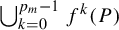 almost until time n, and the complement of this set. For the first set, the influence of the dynamics near the set
$\Gamma _m$
 is negligible, and a local analysis near the orbit of z suffices for the estimate of its Lebesgue measure. The second set is influenced by the dynamics near the orbit of z and the dynamics near
$\Gamma _m$
 . We estimate the Lebesgue measure of each set separately, and unify the estimates at the end to obtain the desired one in Lemma 4.2.
For each
$t\in \mathbb N$
 , we put

and split
$|A_{n}(\vec {\phi },\vec {\beta },P) |=I+II$
 where

The set
$V_t$
 is non-empty if and only if t is an integer multiple of
$p_m$
 . If
$V_t\neq \emptyset $
 then
$f^t(V_t)$
 contains some element of
$\mathscr {P}_m$
 , and thus

Since the restriction of
$f^t$
 to the smallest closed interval that contains
$V_t$
 and z extends to a diffeomorphism on an open interval, the distortion of
$f^{t}$
 on the former interval is bounded by a constant
$C>0$
 that depends only on f. Then we have

By (4.9) we obtain

In order to estimate the sum I, for each
$t\in \{1,\ldots , n\}$
 let
$M_{2,\ell }(t,\mathbb Z_\varepsilon )$
 denote the set of
$2\times \ell $
 matrices
$(\beta _{ij})_{i=0,1,1\leq j\leq \ell }$
 with entries in
$\{(\varepsilon /3) a\colon a\in \mathbb Z\}$
 for which the following inequalities hold:


For
$\mathbf B=(\beta _{ij})\in M_{2,\ell }(t,\mathbb Z_\varepsilon )$
 and
$i=0,1$
 , put
$\vec {\beta }_i=(\beta _{i1},\ldots ,\beta _{i\ell })$
 and define

We claim that

Indeed, for each
$x\in A_n(\vec {\phi },\vec {\beta },V_t)$
 there exists
$\mathbf B=(\beta _{ij})\in M_{2,\ell }(t,\mathbb Z_\varepsilon )$
 such that for
$1\leq j\leq \ell $
 we have

This implies (4.11) and (4.12), and hence
$x\in A_n(t,\mathbf B)$
 , which verifies (4.13).
Let
$\delta>0$
 be such that

In view of what was proved in Case 1 and Lemma 2.6, for the rest of the proof in Case 2 we assume
$N\geq 1$
 is a sufficiently large integer for which the following assertions hold.
-
(D1) If $n\geq N$
then the inequalities in (a) and (b) of Lemma 4.2 hold for every element of
$\mathscr {P}_m$
with
$\varepsilon $
replaced by
$\varepsilon /4$
. -
(D2) For every connected component W of $\bigcap _{k=0}^{N-1}f^{-k}(K_{m,m+1})$
we have
$|W|<\delta $
.


To finish the proof in Case 2, for all sufficiently large n we establish the inequalities in (a) and (b) of Lemma 4.2 for every element of
$\tilde {\mathscr {P}}_m\setminus \mathscr {P}_m$
 .
Let
$n\geq N$
 and let
$t\in \{1,\ldots ,n-N+1\}$
 . For each matrix
$\mathbf B=(\beta _{ij})\in M_{2,\ell }(t,\mathbb Z_\varepsilon )$
 with
$A_n(t,\mathbf B)\neq \emptyset $
 , we estimate the Lebesgue measure
$|A_n(t,\mathbf B)|$
 from above. Let
$\mathscr {P}_m(t,\mathbf B)$
 denote the collection of the diffeomorphic pullbacks of elements of
$\mathscr {P}_m$
 by
$f^{n-t}$
 that intersect
$f^{t}(A_n(t,\mathbf B))$
 . The elements of
$\mathscr {P}_m(t,\mathbf B)$
 intersect
$\bar {A}_{n-t}(\vec {\phi },\vec \beta _1)$
 and their union contains
$f^{t}(A_n(t,\mathbf B))$
 , because

By (D1), for each
$Q\in \mathscr {P}_m(t,\mathbf B)$
 there exists
$\mu _{t,Q}\in \mathcal M_m(f)$
 such that


Pick a measure
$\mu _{t,\mathbf B}$
 in the finite set
$\{\mu _{t,Q}\colon Q\in \mathscr {P}_m(t,\mathbf B)\}$
 that maximizes the free energy within this finite set. By (4.15) and
$\sum _{Q\in \mathscr {P}_m(t,\mathbf B)}|Q|\leq |X|$
 we have

Combining this inequality with (4.8), we obtain

For the first inequality we have used the bounded distortion.
Sublemma 4.4. If n is sufficiently large, then we have

Proof. Take
$x\in A_{n}(\vec {\phi },\vec {\beta },P)$
 . Since x,
$z\in P$
 , the same argument as the deduction of (3.1) yields

provided n is sufficiently large.
Write
$n=p_mq+r$
 , with non-negative integers q, r satisfying
$0\leq r\leq q-1$
 . Using (4.18), we have

provided n is sufficiently large.
Define a measure
$\nu _{t,\mathbf B}\in \mathcal M(f)$
 by

Sublemma 4.5. If n is sufficiently large, then we have

Proof. From (4.16) we have

We first treat the case
$t\sup \Vert \vec \phi \Vert <\varepsilon n/30$
 . Clearly we have

From (4.12) we have
$\|\vec \beta _{0}\|\leq \sup \|\vec \phi \|+\varepsilon /3$
 , which gives

Combining (4.19), (4.20), (4.21) and then using (4.11), we obtain

as required.
It remains to treat the case
$t\sup \Vert \vec \phi \Vert \geq \varepsilon n/30$
 . We assume n is large enough so that
$t\geq N$
 . Let
$x\in A_{n}(t,\mathbf B)$
 . There exists
$k\in \{0,\ldots ,p_m-1\}$
 such that for every
$0\leq s\leq t-1$
 ,
$f^s(x)$
 and
$f^s(f^k(z))$
 belong to the same connected component of
$K_{m,m+1}$
 . Hence, if
$s\leq t-N$
 then
$f^s(x)$
 and
$f^s(f^k(z))$
 belong to the same connected component of
$\bigcap _{\ell =0}^{t-s-1}f^{-\ell }(K_{m,m+1})$
 , and so
$|f^s(x)-f^s(f^k(z))|<\delta $
 by (D2). From (4.14) we have

provided n is sufficiently large, and thus

Since z is of period
$p_m$
 , we have

provided n is sufficiently large, and thus

Combining (4.22) and (4.23), we have

Combining (4.19), (4.24) and then using (4.11), we obtain

as required.
From (4.8) (4.9) and (4.17) we have

Let
$\mu $
 be a measure in the finite set
$\{\nu _{t,\mathbf B}\colon \mathbf B\in M_{2,\ell }(t,\mathbb Z_\varepsilon )\}\cup \{\delta _z^{p_m}\}$
 that maximizes the free energy within this finite set. By (4.12), clearly we have

By (4.13), if n is sufficiently large then (4.25) and (4.26) together imply

To finish, from (4.9) and (4.27) we have

Combining this estimate with that of the sum
$II$
 in (4.10), we obtain

for all sufficiently large n, as required in Lemma 4.2(a). The inequality in Lemma 4.2(b) is a consequence of Sublemmas 4.4 and 4.5. The proof of Lemma 4.2 is complete.
4.3 Coarse graining decomposition into clusters
In this subsection, for all sufficiently large
$n\geq 1$
 we decompose the set
$\bar {A}_n(\vec {\phi },\vec {\alpha })$
 into a finite number of clusters consisting of points that share the same ‘itinerary’ up to time n, and share almost the same average values of
$\vec {\phi }$
 along the segments of orbits each contained in a single cycle.
Suppose
$m(f)\geq 1$
 . Let
$\varepsilon>0$
 and write
$\mathbb Z_\varepsilon =\{(\varepsilon /3) a\colon a\in \mathbb Z\}$
 . If
$m(f)=\infty $
 , then let
$m_*$
 ,
$N_*\in \mathbb N$
 satisfy the conclusion of Lemma 2.9 with
$\varepsilon $
 replaced by
$\varepsilon /2$
 , for any
${\vec {\beta }=(\beta _{1},\ldots ,\beta _{\ell })\in \mathbb Z_\varepsilon ^\ell }$
 satisfying
$\inf \phi _j-\varepsilon /3<\beta _{j}\leq \sup \phi _j$
 for
$1\leq j\leq \ell .$
 We set

For each
$x\in X$
 , we define by induction two (possibly infinite) increasing sequences
$\{\hat n_i(x)\}_{i=0}^{\hat q(x)}$
 ,
$\{\hat m_i(x)\}_{i=0}^{\hat q(x)}$
 of non-negative integers that successively record the time and position at which the orbit of x falls into deeper renormalization cycles. Start with

Let
$i\geq 0$
 and suppose
$\hat n_i(x)$
 ,
$\hat m_i(x)$
 are defined. If
$\hat m_{i}(x)=M$
 , or if
$\hat m_i(x)<M$
 and
$f^k(x)\in K_{\hat m_i(x),\hat m_i(x)+1}$
 for every
$k>\hat n_i(x)$
 , then we stop the inductive definition by setting
$\hat q(x)=i$
 . Otherwise, we define

If
$\hat m_i(x)$
 ,
$\hat n_i(x)$
 are defined for all
$i\geq 1$
 , then we set
$\hat q(x)=\infty $
 .
For integers
$n>M$
 and
$0\leq q\leq M$
 , we define

Let
$\mathbf t=((n_0,m_0),\ldots ,(n_q,m_q))\in I_n(q).$
 For convenience we set

and call
$n_0,n_1,\ldots ,n_{q+1}$
 transition times. Further, we set

Define

We have

We decompose the set
$\bar {A}_{n}(\vec {\phi },\vec {\alpha })\cap R(\mathbf {t})$
 with respect to coarse-grained values at scale
$\varepsilon $
 of time averages of
$\vec \phi $
 between two consecutive transition times. For each
$\mathbf {t}\in I_n(q)$
 , let
$M_{q+1,\ell }(\mathbf t,\mathbb Z_\varepsilon )$
 denote the set of
$(q+1)\times \ell $
 matrices
$\mathbf A=(\alpha _{ij})_{0\leq i\leq q, 1\leq j\leq \ell }$
 with entries in
$\mathbb Z_\varepsilon $
 such that the following inequalities hold:


For a matrix
$\mathbf A=(\alpha _{ij})\in M_{q+1,\ell }(\mathbf t,\mathbb Z_\varepsilon )$
 , let
$\vec {\alpha }_i=(\alpha _{i1},\ldots ,\alpha _{i\ell })$
 denote the ith row of
$\mathbf A$
 . Define

We claim that

Indeed, for each
$x\in \bar {A}_n(\vec {\phi },\vec {\alpha })\cap R(\mathbf {t})$
 there exists
$\mathbf A\in M_{q+1,\ell }(\mathbf t,\mathbb Z_\varepsilon )$
 such that for every entry
$\alpha _{ij}$
 of
$\mathbf A$
 we have

4.4 Lebesgue measures of clusters
We are in a position to state and prove a main technical estimate on the Lebesgue measure of each cluster
$R(\mathbf {t},\mathbf A)$
 .
Proposition 4.6. Suppose
$m(f)\geq 1$
 . For any
$\varepsilon>0$
 there exists an integer
$N>M$
 such that if
$n\geq N$
 and
$0\leq q\leq M$
 , then for every
$\mathbf {t}\in I_n(q)$
 and every
$\mathbf A\in M_{q+1,\ell }(\mathbf t,\mathbb Z_\varepsilon )$
 satisfying
$R(\mathbf {t},\mathbf A)\neq \emptyset $
 , there exists a measure
$\mu \in \mathcal M(f)$
 satisfying


Proof. Let
$\varepsilon>0$
 , and let
$\delta>0$
 be such that

We first point out that the following three exceptional cases with no transition between renormalization cycles can be treated by much simpler versions of later arguments.
Case E1:
$q=0$
 ,
$m_0=M$
 ,
$m(f)<\infty $
 and
$\mathrm {int}(J_{m(f)})$
 contains a two-sided attracting periodic point (Remark 2.3(C-I)). This case is treated by a much simpler version of the argument in Case 2 in Step 2 below.
Case E2:
$q=0$
 ,
$m_0=M$
 ,
$m(f)<\infty $
 and
$\partial J_{m(f)}$
 contains a one-sided attracting periodic point (Remark 2.3(C-II)). This case is treated by a much simpler version of the argument in Case 3 in Step 2 below.
Case E3:
$q=0$
 ,
$m_0=M$
 ,
$m(f)<\infty $
 and f has no attracting periodic point ((A) in §2.3). This case is treated by a much simpler version of the argument in Case 4 in Step 2 below.
Hence, we refer the reader to Step 2 below, for details regarding proofs in cases E1, E2, E3.
We now move on to all the remaining cases with transitions between renormalization cycles. We are concerned with sufficiently large integers
$N_0$
 ,
$N_1$
 the purposes of which are as follows.
-
• $N_0$
concerns the number of iterations in one renormalization cycle, chosen depending only on
$\delta $
in (4.34). In view of Lemma 2.6, we take
$N_0$
such that for every integer
${0\leq m\leq M-1}$
and every connected component W of
$\bigcap _{k=0}^{N_0-1}f^{-k}(K_{m,m+1})$
,
${|W|<\delta }$
holds. -
• $N_1$
is a lower bound on consecutive transition times such that some estimates go through (see Lemmas 4.8 and 4.9), which is chosen depending only on
$\vec \phi $
,
$\varepsilon $
,
$\delta $
,
$N_0$
, f and satisfies (4.35) $$ \begin{align}N_1\geq N_0.\end{align} $$





The rest of the proof of Proposition 4.6 divides into three steps.
Step 1: Estimate of error bound in transition. Let
$n>M$
 ,
$0\leq q\leq M$
 and let
$\mathbf {t}\in I_n(q)$
 ,
$\mathbf A\in M_{q+1,\ell }(\mathbf t,\mathbb Z_\varepsilon )$
 satisfy
$R(\mathbf {t},\mathbf A)\neq \emptyset $
 . Since we have excluded cases E1, E2, E3, we have
$m_0+1\leq M$
 and so
$K_{m_0,m_0+1}$
 is defined. Let
$\mathscr {R}_0(\mathbf A)$
 denote the collection of the connected components of
$K_{m_0,m_0+1}$
 . Let
$R_0(\mathbf A)$
 denote the union of elements of
$\mathscr {R}_0(\mathbf A)$
 . We have
$R_0(\mathbf A)=K_{m_0,m_0+1}$
 . For
$i=1,\ldots ,q+1$
 we define a collection
$\mathscr {R}_i(\mathbf A)$
 of non-degenerate closed subintervals of
$R_0(\mathbf A)$
 as follows.
-
• $\mathscr {R}_i(\mathbf A)$
for
$1\leq i\leq q$
is the collection of the diffeomorphic pullbacks of
$f^k(J_{m_i})$
for some
$k\in \{0,\ldots , p_{m_i}-1\}$
by
$f^{n_{i}}$
that are contained in
$R_0(\mathbf A)$
and intersect
$R(\mathbf {t},\mathbf A)$
. -
• If $m_q< M$
, then
$\mathscr {R}_{q+1}(\mathbf A)$
is the collection of the diffeomorphic pullbacks of
$f^k(J_{M})$
for some
$k\in \{0,\ldots , p_{M}-1\}$
by
$f^n$
that are contained in
$R_0(\mathbf A)$
and intersect
$R(\mathbf {t},\mathbf A)$
. -
• If $m_q=M$
and
$m(f)=\infty $
, or if
$m_q=M$
,
$m(f)<\infty $
and f has an attracting periodic point, then let
$\mathscr {R}_{q+1}(\mathbf A)$
denote the collection of the pullbacks of
$f^k(J_{M})$
for some
$k\in \{0,\ldots , p_{M}-1\}$
by
$f^n$
that are contained in
$R_0(\mathbf A)$
and intersect
$R(\mathbf {t},\mathbf A)$
. If
$m_q=M$
,
$m(f)<\infty $
and f has no attracting periodic point, then let
$\mathscr {R}_{q+1}'(\mathbf A)$
denote the collection of the pullbacks of
$f^k(L_{M})$
for some
$k\in \{0,\ldots , p_{M}-1\}$
by
$f^n$
that are contained in
$R_0(\mathbf A)$
and intersect
$R(\mathbf {t},\mathbf A)$
. Then
$\mathscr {R}_{q+1}(\mathbf A)$
is the refinement of
$\mathscr {R}_{q+1}'(\mathbf A)$
by points in
$\bigcup _{k=n_q}^{n-1} f^{-k}(c)$
.


Remark 4.7. Recall that
$n>n_q$
 , and see (2.3) to motivate the definition of
$\mathscr {R}_{q+1}(\mathbf A)$
 in the case
$m_q=M$
 . In this case, for
$R\in \mathscr {R}_{q+1}(\mathbf A)$
 ,
$f^n|_{R}$
 is may not be a diffeomorphism. However, for every
$R\in \mathscr {R}_{q+1}(\mathbf A)$
 ,
$f^{n_q}|_R$
 is a diffeomorphism. The latter will suffice for bounded distortion arguments to be developed later in the proof of Proposition 4.6: see Cases 2 and 4 in Step 2.
For
$1\leq i\leq q+1$
 let
$R_i(\mathbf A)$
 denote the union of elements of
$\mathscr {R}_i(\mathbf A)$
 . Note that

Among all transition times, for our purpose it suffices to concentrate on consecutive ones that are separated by
$N_1$
 .
Lemma 4.8. If
$N_1$
 is sufficiently large then the following statements hold.
-
(a) For every $0\leq i\leq q$
with
$t_i>N_1$
and
$m_i<M$
, $$ \begin{align*} f^{n_i}(R_{i+1}(\mathbf A))\subset \bar {A}_{t_i }(\vec{\phi},\vec{\alpha}_{i} - \tfrac{1}{2}\vec{\varepsilon})\cap K_{m_i}. \end{align*} $$
-
(b) If $t_q>N_1$
,
$m_q=M$
and-
(i) $m(f)=\infty $
, or -
(ii) $m(f)<\infty $
and
$J_{m(f)}$
contains a one-sided attracting periodic point, or -
(iii) f has no attracting periodic point,
then
$$ \begin{align*} f^{n_q}(R_{q+1}(\mathbf A))\subset \bar {A}_{t_q }(\vec{\phi},\vec{\alpha}_{q} - \tfrac{1}{2}\vec{\varepsilon})\cap K_{m_q}. \end{align*} $$
-


Proof. Let
$0\leq i\leq q$
 and suppose
$t_i>N_1$
 . Since the definition of
$\mathscr {R}_{i+1}(\mathbf A)$
 yields
$f^{n_i}(R_{i+1}(\mathbf A))\subset K_{m_i}$
 , it suffices to show that

To this end, for each
$R\in \mathscr {R}_{i+1}( \mathbf A)$
 we fix
$x_R\in f^{n_i}(R\cap R(\mathbf t,\mathbf A))$
 . The definition of
$\mathscr {R}_{i+1}(\mathbf A)$
 and that of
$R(\mathbf t,\mathbf A)$
 give

Suppose
$m_i<M$
 . By (4.35),
$t_i>N_1$
 and (4.29), we have

and so for every
$R\in \mathscr {R}_{i+1}( \mathbf A)$
 ,

Moreover, the choice of
$N_0$
 yields
$|f^{n_i+k}(R)|<\delta $
 for
$0\leq k\leq t_i-N_0-1$
 . For any
${x\in f^{n_i}(R)}$
 , (4.34) gives

For the remaining
$N_0$
 iterations, clearly we have

Combining (4.38), (4.39), and (4.40) and dividing the result by
$t_i$
 , we obtain

provided
$N_1$
 is sufficiently large depending only on
$\vec \phi $
 ,
$\varepsilon $
 ,
$N_0$
 . Since
$R\in \mathscr {R}_{i+1}(\mathbf A)$
 and
$x\in f^{n_i}(R)$
 are arbitrary, (4.37) follows. We have verified Lemma 4.8(a).
To prove Lemma 4.8(b), suppose
$t_q>N_1$
 and
$m_q=M$
 . In case (i), the same argument as in the proof of Lemma 4.8(a) remains valid to show (4.37) with
$i=q$
 . In case (ii), since
$n-n_q=t_q>N_1$
 , if
$N_1$
 is sufficiently large then the uniform convergence in (2.2) and equation (4.34) together imply

From (4.38) and (4.41) we obtain (4.37) with
$i=q$
 .
In case (iii),
$M=m(f)$
 and
$f^{p_M}|_{L_M}$
 is topologically exact. Recall that we have chosen
$\delta>0$
 so that (4.34) holds. There is
$n(\delta )\in \mathbb N$
 such that for any integer
$0\leq j\leq p_M-1$
 and any interval J such that
$J\subset f^j(L_M)$
 and
$|J|\geq \delta $
 , there is
$r\in \{0,\ldots ,p_M-1\}$
 such that
$f^{p_Mn(\delta )+r}(J)=L_M$
 . We choose
$N_1$
 so that

Then we have
$n-n_q-p_M(n(\delta )+1)>t_q-N_1>0$
 . We claim that if
$R\in \mathscr {R}_{q+1}(\mathbf A)$
 and
$k\in \{0,\ldots ,n-n_q-p_M(n(\delta )+1)\}$
 then
$|f^{k}(f^{n_q}(R))|<\delta $
 , for otherwise
$f^{p_Mn(\delta )+r+k}(f^{n_q}(R))=L_M$
 would hold for some
$r\in \{0,\ldots ,p_M-1\}$
 and
$p_Mn(\delta )+r+k\leq n-n_q-1$
 , and as a result
$f^n|_R$
 would not be injective, a contradiction.
The rest of the argument is similar to the proof of Lemma 4.8(a). By the above claim and (4.34), for every
$R\in \mathscr {R}_{q+1}( \mathbf A)$
 and any
$x\in f^{n_q}(R)$
 we have

For the remaining
$p_M(n(\delta )+1)$
 iterations, clearly we have

Combining (4.38), (4.42), and (4.43) and dividing the result by
$t_q$
 , we obtain

provided
$N_1$
 is sufficiently large. Since
$R\in \mathscr {R}_{q+1}(\mathbf A)$
 and
$x\in f^{n_q}(R)$
 are arbitrary, (4.37) with
$i=q$
 follows. The proof of Lemma 4.8 is complete.
Step 2: Estimate of
$\boldsymbol {i}$
 -step conditional probability. The next lemma provides estimates of conditional probabilities at consecutive transition times separated by
$N_1$
 .
Lemma 4.9. If
$N_1$
 is sufficiently large, then for every
$0\leq i\leq q$
 with
$t_i>N_1$
 , there exists a measure
$\mu _i\in \mathcal M(f)$
 such that


Proof. Let
$0\leq i\leq q$
 and suppose
$t_i>N_1$
 . In view of the definition of
$\mathscr {R}_i(\mathbf A)$
 in Step 1, we treat the case
$m_i<M$
 and the case
$m_i=M$
 (hence
$i=q$
 ) separately.
In the former case, let
$R\in \mathscr {R}_i(\mathbf A)$
 and suppose
$R\cap R_{i+1}(\mathbf A)\neq \emptyset $
 . Let
$\mathscr {P}_{m_i}(\mathbf A,R)$
 denote the collection of the diffeomorphic pullbacks of
$f^k(J_{m_{i+1}})$
 for some
$k\in \{0,\ldots, p_{m_{i+1}}-1\}$
 by
$f^{t_i}$
 that are contained in
$f^{n_i}(R\cap R_{i+1}(\mathbf A) )$
 . The union of elements of
$\mathscr {P}_{m_i}(\mathbf A,R)$
 equals
$f^{n_i}(R\cap R_{i+1}(\mathbf A) )$
 . By Lemma 4.8(a), every element of
$\mathscr {P}_{m_i}(\mathbf A,R)$
 is contained in
$\bar {A}_{t_i }(\vec {\phi },\vec {\alpha }_{i} -(1/2)\vec {\varepsilon })\cap K_{m_i}$
 provided
$N_1$
 is sufficiently large. Moreover, for every
$Q\in \mathscr {P}_{m_i}(\mathbf A,R)$
 there exists
$P\in \tilde {\mathscr {P}}_{m_i}$
 such that
$P\subset K_{m_i,m_i+1}$
 and
${Q\subset P\subset f^{n_i}(R)}$
 . Let
$\tilde {\mathscr {P}}_{m_i}(\mathbf A,R)$
 denote the collection of elements of
$\tilde {\mathscr {P}}_{m_i}$
 that is contained in
$f^{n_i}(R)$
 and contains an element of
$\mathscr {P}_{m_i}(\mathbf A,R)$
 . For each
$P\in \tilde {\mathscr {P}}_{m_i}(\mathbf A,R)$
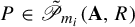 we have

By Lemma 4.2, there exists
$\nu _{R,P}\in \mathcal M(f)$
 such that

and

Let
$\mu _i\in \mathcal M(f)$
 be a measure in the finite set

that maximizes the free energy within this finite set. By (4.44) we have

If
$i\geq 1$
 , then we have
$\bigcup _{k=n_j}^{n_{j+1}-1}f^k(R)\subset K_{n_j,n_j+1}$
 for
$0\leq j\leq i-1$
 . By Proposition 2.7(a), the distortion of the composition
$f^{n_i}=f^{t_{i-1}}\circ \cdots \circ f^{t_1}\circ f^{t_0}$
 on R is bounded by the constant

Hence, from (4.46) we obtain

provided
$N_1$
 is sufficiently large. Since
$n_0=0$
 , the same upper bound remains valid for
$i=0$
 . Since R is an arbitrary element of
$\mathscr {R}_i(\mathbf A)$
 intersecting
$R_{i+1}(\mathbf A)$
 , we obtain

as required in Lemma 4.9(a). The inequality in Lemma 4.9(b) is a consequence of (4.45).
To complete the proof of Lemma 4.9, it remains to treat the case
$m_i=M$
 . In this case we have
$i=q$
 , and there are four subcases.
Case 1:
$m(f)=\infty $
 . We have
$M=m_*$
 by (4.28). Set
$\mu _q=\mu _\infty $
 , which is the post-critical measure. The inequality in Lemma 4.9(a) with
$i=q$
 follows from
${R_{q+1}(\mathbf A)\subset R_q(\mathbf A)}$
 and
$F(\mu _q)=0$
 . Since
$t_q>N_1$
 and
$f^{n_q}(R_{q+1}(\mathbf A))$
 is contained in
$\bar {A}_{t_q } (\vec \phi ,\vec \alpha _q-\tfrac {1}{2}\vec \varepsilon )\cap K_M$
 by Lemma 4.8(b)(i), the inequality in Lemma 4.9(b) with
$i=q$
 follows from Lemma 2.9(a) provided
$N_1\geq N_*$
 and
$N_1$
 is sufficiently large.
Case 2:
$m(f)=M$
 and
$\mathrm {int}(J_{m(f)})$
 contains a two-sided attracting periodic point (Remark 2.3(C-I)). We have
$K_{M}=\mathrm {cl}(B(f))$
 by (2.3) and Lemma 2.2. Fix a closed subinterval J of
$J_M$
 such that
$c,z_f\in \mathrm {int}(J)$
 ,
$f^{p_{M}}(J)\subset J$
 and
$|K_M\setminus K_{M+1}|<\delta $
 where
$K_{M+1}=\bigcup _{k=0}^{p_{M}-1}f^k(J).$

Recall that
$\nu $
 denotes the element of
$\mathcal M_{M-1}(f)$
 supported on the orbit of the hyperbolic repelling periodic point in
$\partial J_{M}$
 . The rest of the proof is similar in spirit to the argument in Case 2 in the proof of Lemma 4.2. For each
$R\in \mathscr {R}_{q}(\mathbf A)$
 and each integer t with
$0\leq t\leq t_q$
 , define

Notice that
$f^{n_q}(R)= \bigcup _{t=0}^{t_q} V_{R,t}$
 . Then
$V_{R,t}$
 has at most two connected components, which are non-degenerate intervals. Let
$W_{R,t}$
 denote union of the diffeomorphic pullbacks of the connected components of
$V_{R,t}$
 by
$f^{n_q}$
 that are contained in R. Define
$\nu _{R,t}\in \mathcal M(f)$
 by

There exists a constant
$C\geq 1$
 depending only f,
$\delta $
 such that if
$x\in X$
 and
$k\in \mathbb N$
 satisfy
$x,\ldots ,f^{k-1}(x)\in K_M\setminus K_{M+1}$
 then
$|(f^k)'x|\geq C^{-1}e^{\chi ^+(\nu )k}$
 . Hence,

Since
$F(\delta _{O(f)})=0$
 by the definition of the Lyapunov exponent (1.1), we have
${F(\nu )t\leq F(\nu _{R,t})t_q}$
 . By Proposition 2.7, the distortion of
$f^{n_q}$
 on R is bounded by the constant
$D_q$
 in (4.47) so that (4.48) yields

Let
$\mu _{q}$
 be a measure in the finite set

that maximizes the free energy within this finite set. Since
$t_q>N_1$
 , from (4.49) we obtain

provided
$N_1$
 is sufficiently large. This yields the inequality in Lemma 4.9(a) with
$i=q$
 .
Since
$t_q>N_1$
 , similarly to the proof of Sublemma 4.5 one can show that if
${R\in \mathscr {R}_q(\mathbf A)}$
 ,
$0\leq t\leq t_q$
 and
$W_{R,t}\cap R_{q+1}(\mathbf A)\neq \emptyset $
 then
$\int \vec {\phi }d\nu _{R,t}>\vec {\alpha }_q-\vec \varepsilon $
 holds, provided
$N_1$
 is sufficiently large. This yields the desired inequality in Lemma 4.9(b) with
$i=q$
 .
Case 3:
$m(f)=M$
 and
$\partial J_{m(f)}$
 contains a one-sided attracting periodic point (Remark 2.3(C-II)). Set
$\mu _q=\delta _{O(f)}$
 . The inequality in Lemma 4.9(a) with
$i=q$
 follows from
$R_{q+1}(\mathbf A)\subset R_q(\mathbf A)$
 and
$F(\mu _q)=0$
 . By Lemma 4.8(b)(ii),
$ f^{n_q}(R_{q+1}(\mathbf A))$
 is contained in
$\bar {A}_{t_q }(\vec {\phi },\vec {\alpha }_{q} -\tfrac {1}{2}\vec {\varepsilon })\cap K_M.$
 Since
$t_q>N_1$
 , if
$N_1$
 is sufficiently large then the uniform convergence in (2.2) implies the inequality in Lemma 4.9(b) with
$i=q$
 .
Case 4:
$m(f)=M$
 and f has no attracting periodic point. Recall that
$K_{M }=\bigcup _{k=0}^{p_{M }-1}f^k(L_{M })$
 by (2.3). Let
$R\in \mathscr {R}_q(\mathbf A)$
 . Lemma 4.8(b)(iii) gives

Since the unimodal map
$f^{p_{M}}|_{L_{M }}$
 is topologically exact, the Lebesgue measure of the right set is estimated as follows by [Reference Chung, Rivera-Letelier and Takahasi7, Proposition 4.4]: if
$N_1$
 is sufficiently large, then there exists a measure
$\nu _R\in \mathcal M(f)$
 such that


For all sufficiently large
$N_1$
 we deduce that

The first inequality is because the distortion of
$f^{n_q}$
 on R is bounded by the constant
$D_q$
 in (4.47) by Proposition 2.7. Since
$t_q>N_1$
 , the last inequality follows from (4.50) and the next uniform lower bound

Let
$\mu _q$
 be a measure in the finite set
$\{\nu _{R}\colon R\in \mathscr {R}_q(\mathbf A)\}$
 that maximizes the free energy within this finite set. By (4.52) we have

as required in Lemma 4.9(a) with
$i=q$
 . The inequality in Lemma 4.9(b) with
$i=q$
 is a consequence of (4.51). The proof of Lemma 4.9 is complete.
Step 3: Overall estimates. Let
$N_1$
 be sufficiently large so that the conclusions of Lemma 4.8 and 4.9 hold with
$\varepsilon $
 replaced by
$\varepsilon /3$
 . Let
$n>\max \{M,(q+1)N_1\}.$
 Put

By (4.29) we have
$n=\sum _{i=0}^q t_i$
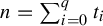 , and so
$s(N_1)\neq \emptyset $
 . For each
$i\in s(N_1)$
 , let
$\mu _i$
 be a measure in
$\mathcal M(f)$
 for which the conclusion of Lemma 4.9 holds with
$\varepsilon $
 replaced by
$\varepsilon /3$
 . Define a measure
$\mu \in \mathcal M(f)$
 by

Since
$R_{i+1}(\mathbf A)\subset R_{i}(\mathbf A)$
 for
$0\leq i\leq q$
 as in (4.36) and
$(1/n)\sum _{i\in s(N_1)}t_i\to 1$
 as
$n\to \infty $
 , for all sufficiently large n we have

The desired inequality in Proposition 4.6(a) follows from this estimate and the first inclusion in (4.36). By (4.31) we have

This yields the desired inequality in Proposition 4.6(b) for all sufficiently large n. The proof of Proposition 4.6 is complete.
4.5 Proof of Proposition 4.1
Let
$f\colon X\to X$
 be an S-unimodal map with a non-flat critical point. We first treat the case
$m(f)\geq 1$
 . Let
$\varepsilon>0$
 . Let
$N>M$
 be an integer for which the conclusion of Proposition 4.6 holds with
$\varepsilon $
 replaced by
$\varepsilon /4$
 . Let
$n\geq N$
 satisfy
$\bar {A}_n(\vec {\phi },\vec {\alpha })\neq \emptyset $
 . From (4.30) and (4.33) we have

Let
$0\leq q\leq M$
 . By Proposition 4.6, for every
$\mathbf {t}\in I_n(q)$
 and every
$\mathbf A\in M_{q+1,\ell }(\mathbf t,\mathbb Z_\varepsilon )$
 with
$R(\mathbf {t},\mathbf A)\neq \emptyset $
 , there exists a measure
$\mu _{\mathbf {t},\mathbf A}\in \mathcal M(f)$
 such that


If n is sufficiently large, then by (4.32) we have

Moreover, we have
$\#I_n(0)= M+1$
 , and for
$q\geq 1$
 ,

Let
$\mu \in \mathcal M(f)$
 be a measure in the finite set

that maximizes the free energy within this finite set. Combining (4.53) with the upper bound on the number of all itineraries yields

as required in Proposition 4.1(a) provided n is sufficiently large. The inequality in Proposition 4.1(b) is a consequence of (4.54).
It remains to treat the case
$m(f)=0$
 . If
$\bar m(f)=1$
 , then f has a two-sided attracting fixed point in
$\mathrm {int}(X)$
 . The desired upper bound follows from the argument of Case 2 in the proof of Lemma 4.9. If
$\bar m(f)=0$
 , then
$f|_{L_0}\colon L_0\to L_0$
 is topologically exact. The desired upper bound follows from the argument of Case 4 in the proof of Lemma 4.9. The proof of Proposition 4.1 is complete.
5 Bimodal maps for which the level-2 LDP does not hold
In this final section we prove Theorem B. We start with a post-critically finite map with two critical points, one periodic and the other not. After a small perturbation we obtain a map for which the level-2 LDP does not hold.
5.1 A one-parameter family of bimodal maps
Let
$X=[0,1]$
 and
$K=[1/2,1]$
 . Let
$f\colon X\to X$
 be a
$C^3$
 map with negative Schwarzian derivative having only two critical points
$c_0$
 and
$c_1$
 with
$0<c_0<\tfrac {1}{2}<c_1<1$
 , which are assumed to be non-degenerate:
$f"(c_0)f"(c_1)\neq 0$
 . We assume the following conditions on f.
-
(F1) $f(X)\subset K$
and
$c_1$
is a local maximal point of f. -
(F2) $c_1$
is periodic with prime period
$3$
.


See Figure 2. Condition (F2) implies that the complement of the basin of the super-attracting periodic orbit of
$c_1$
 in
$[f^2(c_1), f(c_1)]$
 is a non-trivial hyperbolic basic set
$\Lambda $
 . Set
$p=f(c_0)$
 . Fix a periodic point
$q\in \Lambda $
 . Further, we make the following assumption.
-
(F3) p is a periodic point in $\Lambda $
, and not contained in the periodic orbit of q.

Remark 5.1. From (F1), we have
$f^2(X)\subset [\tfrac {1}{2}, f(c_1)]$
 and so
$ f^3(X)\subset [f^2(c_1),f(c_1)]$
 .
We consider a
$C^3$
 parametrized family of maps
$f_a\colon X\to X$
 ,
$a\in [-1,1]$
 , such that
$f_0=f$
 and the following conditions hold.
-
(F4) $f_a|_K$
does not depend on
$a\in [-1,1]$
. -
(F5) The critical point $c_0$
of f remains a non-degenerate critical point of
$f_a$
for
${a\in [-1,1]}$
, and
$({d}/{da}) (f_a(c_0))|_{a=0}\neq 0$
.


Let
$\mu _{p}$
 and
$\mu _{q}$
 denote the uniform probability distributions on the periodic orbits of p and q for f, respectively. Let
$\chi _p$
 and
$\chi _q$
 denote their Lyapunov exponents. From (F4), these do not depend on the parameter a. For
$x\in X$
 ,
$n\in \mathbb N$
 and
$a\in [-1,1]$
 , let
$\delta _{a,x}^n$
 denote the uniform probability distribution on the orbit
$\{f_a^{j}(x)\}_{j=0}^{n-1}$
 . Theorem B follows from the next proposition.
The graph of the bimodal map
$f_a$
 in §5.1.

Figure 2 Long description
A square plot with axes ranging from 0 to 1. A solid diagonal line y equals x bisects the square from the bottom-left origin to the top-right corner. Dashed lines intersect at the center point 1 over 2, 1 over 2.
A thick, continuous black curve represents the bimodal map. Starting from the top-left at 0, 1, the curve descends to a local minimum at c sub 0, then rises to a local maximum at c sub 1, and finally descends to the point 1, 1 over 2.
On the horizontal axis, several points are labeled from left to right:
* c sub 0 is located to the left of the center 1 over 2.
* f super 2 (c sub 1) is located just to the right of the center 1 over 2.
* c sub 1 is the x-coordinate of the local maximum.
* f (c sub 1) is the rightmost labeled point.
Dotted lines create a rectangular cobwebbing or mapping structure. A vertical dotted line rises from c sub 0 to the curve. Another vertical dotted line rises from c sub 1 to the peak of the curve, with a horizontal dotted line extending from that peak to the right edge and another horizontal dotted line connecting the peak back toward the diagonal line.
Proposition 5.2. There exists a parameter
$a\in [-1,1]$
 arbitrarily close to
$0$
 such that for any
$\varepsilon>0$
 , there exist open sets
$\mathcal {G}_1$
 and
$\mathcal {G}_2$
 in
$\mathcal M$
 such that:


Proof of Theorem B
Let
$a\in [-1,1]$
 be a parameter for which the conclusion of Proposition 5.2 holds. If there were a rate function
$I\colon \mathcal M\to [0,\infty ]$
 for
$f_a$
 , we would have

This contradicts the conclusion of Proposition 5.2 for sufficiently small
$\varepsilon>0$
 . Therefore, the level-2 LDP does not hold for
$f_a$
 .
5.2 Abnormal and normal large deviations rates
For
$\delta \in (0,1)$
 , let
$O_{\delta }(p)$
 denote the open
$\delta $
 -neighborhood of the periodic orbit of p and put

This is an open neighborhood of
$\mu _p$
 and we have
$\mathrm {cl} (\mathcal {G}_{\delta '})\subset \mathcal {G}_\delta $
 for
$0<\delta '<\delta <1$
 .
The next two lemmas provide large deviations rates for neighborhoods of
$\mu _p$
 . For many a, we observe an abnormal rate as in Lemma 5.3. For many other a, we observe the normal rate as in Lemma 5.4.
Lemma 5.3. If
$|a|$
 is sufficiently small and
$f^m_a(c_0)=p$
 for some
$m\geq 1$
 , then for any
$\delta \in (0,1)$
 we have

Proof. Set
$\gamma =\sqrt {|f_a"(c_0)|^{-1}\delta },$
 and let
$\varepsilon>0$
 . The condition
$|x-c_0|\le \gamma e^{-n(\chi _p+\varepsilon )/2}$
 for
$x\in X$
 and sufficiently large
$n\geq 1$
 implies
$|f_a(x)-f_a(c_0)|\leq \delta e^{-n(\chi _{p}+\varepsilon )}$
 , and so
${\delta _{a,x}^n\in \mathcal {G}_\delta }$
 . Hence, we have

This implies that the lower limit in the lemma is bounded from below by
$-(\chi _p+\varepsilon )/2$
 . Since
$\varepsilon>0$
 is arbitrary, the desired inequality follows.
Lemma 5.4. For any
$\varepsilon>0$
 there exists
$\delta _*>0$
 such that for any
$\delta \in (0, \delta _*]$
 , if
$|a|$
 is sufficiently small and
$f^m_a(c_0)=q$
 for some
$m\geq 1$
 then

Proof. Let
$\varepsilon>0$
 . Since f coincides with
$f_a$
 on
$[f^2(c_1),f(c_1)]$
 , we have the large deviation estimate

for
$\delta>0$
 small enough. This is a simplest case in the proof of Theorem A, and basically a known result. Since f is locally diffeomorphic except at the two critical points, we see from Remark 5.1 that for any open interval U that contains
$c_0$
 ,

provided
$|a|$
 is sufficiently small. Below we fix a small neighborhood U of
$c_0$
 , and consider orbits starting from U.
Let
$\rho>0$
 . For an integer
$k\geq 0$
 , let

We assume
$\rho $
 is small enough so that
$J_0\subset K$
 , and the following properties hold for all
$k\geq 0$
 .
-
• The distortion of $f^k$
on
$J_k$
is bounded by a constant independent of k. -
• The Euclidean length of every connected component of $f^k(J_k\setminus J_{k+1})$
is bounded from below by a positive constant independent of k. -
• $O_\delta (p)\cap \bigcup _{\ell =0}^kf^\ell (J_k)=\emptyset $
.


Since q is a hyperbolic repelling periodic point, all these conditions can be checked by taking a
$C^2$
 linearization of f in a neighborhood of the orbit of q.
Below we suppose that
$|a|$
 is sufficiently small and
$m\ge 1$
 is the smallest integer with
$f^m_a(c_0)=q$
 . Recall that
$f_a|_K=f|_K$
 . The point
$c_0$
 is a non-degenerate critical point of
$f^{m}_a$
 because its orbit does not contain
$c_1$
 . For
$k\ge 0$
 , let
$U_k$
 be the connected component of
$f^{-m}_a(J_k)$
 that contains
$c_0$
 . If
$\rho>0$
 is sufficiently small, there exists a constant
${C_1>1}$
 depending on m such that
$C_1^{-1}e^{-\chi _q k/2}<|U_k\hspace {-1pt}|<C_1e^{-\chi _q k/2}$
 for
$k\ge 0$
 . The restriction of
$f^m_a$
 to each connected component of
$U_k\setminus U_{k+1}$
 for
$k\geq 0$
 is a diffeomorphism onto a connected component of
$J_k\setminus J_{k+1}$
 with distortion bounded uniformly over all
$k\ge 0$
 .
From the last property of
$J_k$
 , if
$x\in U_k$
 and
$m\le \ell \le m+k$
 then
$f^\ell _a(x)\notin O_{\delta }(p)$
 . Hence, if
$\delta _{a,x}^n$
 belongs to
$\mathcal {G}_{\delta }$
 for some
$x\in U_{k}$
 and
$n\ge 0$
 , we have

Since the left-hand side is bounded by
$n-k$
 , this happens only if
$0\le k\le \delta n$
 .
The length of the image
$f^{m+k}_a(U_k\setminus U_{k+1})=f^k_a(J_k)$
 is bounded from below by a constant independent of k. Hence, combining (5.1) with the uniform distortion estimates for
$f^{k}_a|_{J_k}$
 and
$f^m_a|_{U_k\setminus U_{k+1}}$
 , we conclude that there exists a constant
$C_2>1$
 depending on m such that the Lebesgue measure of the set of points in
$U_k\setminus U_{k+1}$
 for
$0\le k\le \delta n$
 satisfying (5.3) is bounded from above by
$ C_2\exp ((-\chi _p+\varepsilon /2)(1-\delta )n)$
 provided n is sufficiently large. Summing this bound over all integers k satisfying
$0\leq k\leq \delta n$
 yields

The last inequality holds if
$\delta>0$
 is sufficiently small. Since
$\varepsilon>0$
 is arbitrary, this together with (5.2) gives the conclusion.
5.3 Proof of Proposition 5.2
Let
$\varepsilon>0$
 . Let
$\delta _*>0$
 be as in Lemma 5.4 and let
${\delta ,\delta '\in (0,\delta _*)}$
 satisfy
$\delta>\delta '$
 . Recall that the periodic points p, q of
$f_0$
 are contained in its basic set
$\Lambda $
 . From (F4) and (F5), for
$n\geq 2$
 we have

provided that
$|a|$
 is sufficiently small and
$f^\ell (f_a(c_0))\neq c_1$
 for every
$0\leq \ell \leq n-2$
 . By the transitivity of
$\Lambda $
 , if
$|a|$
 is sufficiently small and
$f^m_a(c_0)=p$
 (respectively,
$f^m_a(c_0)=q$
 ) for some
$m\ge 1$
 , we can find a parameter
$a'$
 arbitrarily close to a such that
$f^{m'}_{a'}(c_0)=q$
 (respectively,
$f^{m'}_{a'}(c_0)=p$
 ) for some
$m'> m$
 .
We construct a sequence
$\{a(i)\}_{i=0}^\infty $
 of parameters in
$[-1,1]$
 converging to
$0$
 , a sequence
$\{\Delta (i)\}_{i=0}^\infty $
 of positive reals converging to
$0$
 , and strictly increasing sequences
$\{m(i)\}_{i=0}^\infty $
 ,
$\{n(i)\}_{i=0}^\infty $
 of positive integers with the following properties.
-
(a) $f_{a(i)}^{m(i)}(c_0)=p$
for i even, and
$f_{a(i)}^{m(i)}(c_0)=q$
for i odd. -
(b) If $a\in [-1,1]$
and
$|a-a(i)|\le \Delta (i)$
then $$ \begin{align*} &\frac{1}{n(i)} \log |\{x\in X: \delta_{a,x}^{n(i)}\in \mathcal{G}_{\delta'}\}|> -\frac{\chi_p}{2}-\dfrac{1}{i}\quad \text{for } i \text{even, }\\ &\frac{1}{n(i)} \log |\{x\in X: \delta_{a,x}^{n(i)}\in \mathcal{G}_{\delta}\}|< -\chi_p+\varepsilon \ \quad \text{for } i \text{ odd.} \end{align*} $$
-
(c) For all integers i, $i'$
with
$0\leq i'< i$
,
$|a(i')-a(i)|<\Delta (i')$
.


Then Proposition 5.2 holds for
$f_a$
 with
$a=\lim _{i\to \infty }a(i)$
 ,
$\mathcal {G}_1=\mathcal {G}_{\delta '}$
 and
$\mathcal {G}_2=\mathcal {G}_{\delta }$
 .
The construction is inductive. Start with
$a(0)=0$
 ,
$m(0)=n(0)=1$
 and a small number
$\Delta (0)>0$
 such that
$({d}/{da}) (f_a(c_0))\neq 0$
 when
$|a|<\Delta (0)$
 . Let
$j\ge 1$
 and suppose
$a(i)$
 ,
$m(i)$
 ,
$n(i)$
 ,
$\Delta (i)$
 have been constructed for
$i=0,\ldots ,j-1$
 . As in the remark after (5.4), we take a parameter
$a(j)$
 close to
$a(j-1)$
 and an integer
$m(j)>m(j-1)$
 so that (a) and (c) hold for
$i=j$
 . Further, we take a large integer
$n(j)>n(j-1)$
 so that one of the two conditions in (b) holds for
$i=j$
 and
$a=a(j)$
 , by Lemmas 5.3 or 5.4 depending on the parity of j. Finally, we take sufficiently small
$\Delta (j)>0$
 so that one of the two conditions in (b) holds for any
$a\in [-1,1]$
 with
$|a-a(j)|<\Delta (j)$
 . Iterating this construction yields the four sequences with the required properties.
Remark 5.5. The counterexample in Theorem B can be found in polynomial maps of degree
$3$
 , by considering an appropriate one-parameter family
$(f_a)$
 of polynomials of degree
$3$
 and applying the argument parallel to the proof of Proposition 5.2 above. Below we explain the construction of the one-parameter family
$(f_a)$
 , leaving the details to interested readers.
First, we take a polynomial f of degree
$3$
 so that there exist two non-degenerate critical points
$c_0<c_1$
 and non-empty compact intervals K and X with
$K\subsetneq X$
 ,
$c_0\in X\setminus K$
 and
$c_1\in K$
 , and a non-trivial hyperbolic basic set
$\Lambda \subset K$
 , and a hyperbolic repelling periodic point
$q\in \Lambda $
 for which (F1), (F2), (F3) hold with
$p=f(c_0)$
 . This is possible by the combinatorial argument on the dynamics of continuous piecewise monotone maps [Reference de Melo and van Strien10, Ch. II,
$\S$
 4–6].
Second, we consider a one-parameter family
$(f_a)$
 of polynomials of degree
$3$
 with
${f_0=f}$
 . Clearly (F4) is not true in general, but this is not essential as we put (F4) just to make computations easier. For
$a\in \mathbb R$
 sufficiently close to
$0$
 , let
$c_0(a)<c_1(a)$
 denote the critical points of
$f_a$
 and let
$p(a)$
 denote the continuation of the hyperbolic periodic point p of
$f_0$
 , respectively. Instead of (F5) we require

In order to verify (5.5), we exploit the theory of Douady, Hubbard and Thurston on the dynamics of complex polynomials. Consider the two-parameter family

and regard it as a family of complex dynamical systems with complex parameters
$(\alpha ,\beta )\in \mathbb {C}^2$
 . We apply [Reference van Strien34, Main Theorem 1.1] to this family, restricting
$(\alpha ,\beta )$
 to a small neighborhood V of
$(0,0)$
 in
$\mathbb C^2$
 . To this end, we have to check that the family
$(f_{\alpha ,\beta })$
 is a normalized family (see [Reference van Strien34]), that is, no affine transformation conjugates two maps in the family
$(f_{\alpha ,\beta })$
 with different parameters in V. This is not difficult: compute
$L^{-1}\circ f_{\alpha ,\beta }\circ L$
 for an affine map
$L(z)=Az+B$
 and use the fact that the coefficients of
$f_{\alpha ,\beta }$
 with degree
$2$
 and
$3$
 do not depend on the parameter
$(\alpha ,\beta )$
 . As a conclusion, we obtain that the differential of the map

at
$(0,0)$
 is injective, where
$c_0(\alpha ,\beta )$
 ,
$c_1(\alpha ,\beta )$
 denote the two non-degenerate critical points of
$f_{\alpha ,\beta }$
 and
$p(\alpha ,\beta )$
 denotes the hyperbolic periodic point of
$f_{\alpha ,\beta }$
 that are continuations of
$c_0$
 ,
$c_1$
 and p for
$f_{0,0}$
 , respectively. Clearly one can restrict
$\Psi $
 to
$V\cap \mathbb {R}^2$
 and see that
$D\Psi _{(0,0)}\colon \mathbb {R}^2\to \mathbb {R}^2$
 is injective. For all
$a\in \mathbb R$
 sufficiently close to
$0$
 , define
$f_a=f_{\alpha (a), \beta (a)}$
 by
$\Psi (\alpha (a),\beta (a))=(a,0)$
 . Then (5.5) holds for the family
$(f_a)$
 .
For the family
$f_a$
 constructed as above, we have

Since
$({d}/{da}) f^{n-1}_a(p(a))|_{a=0}$
 is uniformly bounded over all
$n\geq 1$
 , (5.5) implies that
$({d}/{da}) f^n_a(c_0(a))|_{a=0}$
 is comparable with
$(f_0^{n-1})'(f_0(c_0))$
 and grows exponentially in n. With this estimate and other conditions on
$f=f_{0}$
 discussed above, we can follow the argument in the proof of Proposition 5.2 to obtain the counterexample in Theorem B in the family
$(f_a)$
 .
Acknowledgements
We thank the referee for his or her very careful reading of the earlier versions of the paper and giving suggestions for improvements, which were indispensable for the completion of this paper. We thank Juan Rivera-Letelier for enlightening discussions throughout this project. We also thank Masayuki Asaoka and Miki U. Kobayashi for fruitful discussions. This paper was based on the authors’ discussion during their visits to the CIRM Luminy (Marseille) for participation in the ‘Dynamics Beyond Uniform Hyperbolicity’ conference in May 2019. HT was supported by the JSPS KAKENHI 25K21999, Grant-in-Aid for Challenging Research (Exploratory). MT was supported by the JSPS KAKENHI 23K20806, Grant-in-Aid for Scientific Research (B).