



Introduction
Let  $X$ be an
 $n$-dimensional compact complex manifold equipped with a positive-definite smooth
 $(1,1)$-form
 $\omega$. We also call
 $\omega$ a hermitian metric because such
 $\omega$ corresponds to a hermitian metric. A famous theorem of Gauduchon [Reference GauduchonGau77] says that there exists a metric
 $\omega _\mathrm {G}$ in the conformal class of
 $\omega$ such that
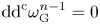
 $\mathrm {dd}^{\mathrm {c}} \omega _\mathrm {G}^{n-1} = 0$ and the metric
 $\omega _\mathrm {G}$ is unique up to a positive multiple. These kind of metrics are since then called Gauduchon metrics. The conformal factor
 $\rho$ satisfying
 $\omega _\mathrm {G}^{n-1} = \rho \omega ^{n-1}$ is called Gauduchon factor.
In complex geometry, finding canonical metrics on complex manifolds is a central problem. Two celebrated examples are Yau's solution of the Calabi conjecture [Reference YauYau78] and Uhlenbeck and Yau's characterization of the existence of hermitian–Einstein metrics on stable vector bundles [Reference Uhlenbeck and YauUY86]. These theorems are established on Kähler manifolds. When the manifold is non-Kähler, the analysis is more difficult because hermitian metrics are no longer closed. In such cases, Gauduchon metrics provide a useful substitute. For instance, Li and Yau [Reference Li and YauLY87] used Gauduchon metrics to define the slope stability of vector bundles on compact non-Kähler manifolds. As a consequence, they generalized the Uhlenbeck–Yau theorem to non-Kähler setting. For generalized Calabi–Yau type problem in non-Kähler context, Tosatti and Weinkove [Reference Tosatti and WeinkoveTW10] showed that for arbitrary representative  $\Psi \in c_1^{\mathrm {BC}}(X)$ of the first Bott–Chern class of
 $X$, there exists a hermitian metric
 $\omega$ such that
 $\operatorname {Ric}(\omega ) = \Psi$ by solving complex Monge–Ampère equations. In their proof, Gauduchon metrics play an important role to simplify calculations. Furthermore, Székelyhidi, Tosatti and Weinkove [Reference Székelyhidi, Tosatti and WeinkoveSTW17] proved that one can even find a Gauduchon metric with prescribed Chern–Ricci curvature. On the other hand, Angella, Calamai and Spotti [Reference Angella, Calamai and SpottiACS17] studied the Chern–Yamabe problem (i.e. finding constant Chern scalar curvature metrics in the conformal class of a given metric
 $\omega$). They used Gauduchon metrics to define a conformal invariant called the Gauduchon degree and showed that if a metric
 $\omega$ has non-positive Gauduchon degree then the Chern–Yamabe problem admits a solution. For more applications and results about Gauduchon metrics, the interested reader is referred to [Reference Fino and UgarteFU13, Reference Fu, Wang and WuFWW13, Reference LiLi21] and the references therein.
From an algebraic point of view, singularities are ubiquitous as they occur in various contexts, notably in the minimal model program and moduli theory. Ueno [Reference UenoUen75] found a birational class of three-dimensional complex manifolds which does not admit a smooth minimal model. In moduli theory, it is necessary to deal with singular varieties when compactifying moduli spaces of smooth manifolds. Already in dimension one, the fundamental domain of moduli space of elliptic curves is non-compact and nodal curves lie on its boundary. On the other hand, in non-Kähler geometry, investigating singular varieties admitting a non-Kähler smoothing is an essential issue due to close interactions of string theory and mathematics established over the past 40 years. In the 1980s, a large class of non-Kähler Calabi–Yau threefolds was built via conifold transitions introduced by Clemens [Reference ClemensCle83] and Friedman [Reference FriedmanFri86]. Roughly speaking, the process goes as follows: contracting a collection of disjoint  $(-1,-1)$-curves from a Kähler Calabi–Yau threefold
 $X$ to obtain a singular Calabi–Yau variety
 $X_0$ and then smoothing singularities of
 $X_0$, one obtains a family of Calabi–Yau threefolds
 $(X_t)_{t \neq 0}$ which are generally non-Kähler. Thus, it is important to understand the geometric structure on
 $X_t$ induced by the original Calabi–Yau manifold
 $X$. Experts believe that the Hull–Strominger system [Reference HullHul86, Reference StromingerStr86] provides a natural candidate. These models attracted a lot of attentions in recent years (cf. [Reference ReidRei87, Reference FriedmanFri91, Reference TianTia92, Reference RossiRos06, Reference Fu and YauFY08, Reference ChuanChu12, Reference Fu, Li and YauFLY12, Reference Phong, Picard and ZhangPPZ18, Reference Collins, Picard and YauCPY21] and the references therein).
Given these considerations, it is legitimate to look for canonical metrics or special metrics on singular hermitian varieties. In this note, we focus on Gauduchon metrics. A standard way to give a metric structure on a singular complex space is to restrict an ambient metric in local embeddings (see Definition 1.1 for the precise definition). Then we address the following question.
Question Suppose that  $X$ is an irreducible, reduced, compact complex space equipped with a hermitian metric
 $\omega$. Can one find a Gauduchon metric
 $\omega _\mathrm {G}$ in the conformal class of
 $\omega$?
The purpose of this note is to give partial answers in the setup of smoothable singularities. This means that the variety can be approximated by a family of smooth manifolds and the hermitian metric is the restriction of an ambient smooth metric. The precise statements are as follows.
Setup S Let  $\mathcal {X}$ be an
 $(n+1)$-dimensional, irreducible, reduced, complex analytic space. Suppose that
(i)
 $\pi : \mathcal {X} \rightarrow \mathbb {D}$ is a proper, surjective, holomorphic map with connected fibres;
(ii)
$\pi$ is smooth over the punctured disk $\mathbb {D}^{\ast }$;(iii) the central fibre
$X_0$ is an $n$-dimensional, irreducible, reduced, compact complex analytic space.


Let  $\omega$ be a hermitian metric on
 $\mathcal {X}$ in the sense of Definition 1.1. For each
 $t \in \mathbb {D}$, we define the hermitian metric
 $\omega _t$ on fibre
 $X_t$ by restriction (i.e.
 $\omega _t := {\omega } |_{X_t}$).
In Setup (S), on each smooth fibre  $X_t$, there exists a Gauduchon factor
 $\rho _t$ with respect to
 $\omega _t$ by Gauduchon's theorem. We may normalize these Gauduchon factors such that
 $\inf _{X_t} \rho _t =1$. Then we show the existence of a smooth Gauduchon factor on the smooth part of the central fibre.
Theorem A (Cf. Corollary 2.3 and Theorem 3.1)
In Setup (S), we have the following properties.
(i) There is a uniform constant
$C_G \geq 1$ such that the normalized Gauduchon factors $\rho _t$ are bounded between $1$ and $C_G$ on each smooth fibre $X_t$ for all $t \in \mathbb {D}^{\ast }_{1/2}$.(ii) There exists a smooth bounded Gauduchon factor
$\rho$ of $\omega _0$ on $X_0^{\mathrm{reg}}$.


Thus,  $X_0$ admits a bounded Gauduchon metric (see Definition 1.2) in the conformal class of
 $\omega _0$. The idea of proof is to approximate the Gauduchon factor on the singular fibre by the normalized Gauduchon factors on nearby smooth fibres.
Next, we assume that  $X$ is a variety endowed with a bounded Gauduchon metric
 $\omega _\mathrm {G}$. We show that the trivial extension of the
 $(n-1,n-1)$-form
 $\omega _\mathrm {G}^{n-1}$ through
 $X^{\mathrm{sing}}$ is a pluriclosed current on
 $X$. Moreover, we also prove the analogous uniqueness result of Gauduchon.
Theorem B Suppose that  $X$ is an
 $n$-dimensional, irreducible, reduced, compact complex space endowed with a bounded Gauduchon metric
 $\omega _\mathrm {G}$. Then we have the following uniqueness and extension properties.
(i) If
$\omega _\mathrm {G}'$ is another bounded Gauduchon metric in the conformal class of $\omega _\mathrm {G}$, then $\omega _\mathrm {G}'$ must be a positive multiple of $\omega _\mathrm {G}$;(ii) Let
$T$ be the positive $(n-1,n-1)$-current obtained as the trivial extension of $\omega _\mathrm {G}^{n-1}$. Then $T$ is a pluriclosed current.


The main strategy is to use ‘good’ cutoff functions. Complement of proper analytic subsets (e.g.  $X^{\mathrm{reg}} = X \setminus X^{\mathrm{sing}}$) admit exhaustion functions with small
 $L^{2}$-gradient. This enables us to show that the trivial extension of
 $\omega _\mathrm {G}^{n-1}$ as a current on
 $X$ satisfies
 $\mathrm {dd}^{\mathrm {c}} T = 0$ in the sense of currents globally on
 $X$. The uniqueness property follows similarly.
This note is organized as follows: § 1 provides some backgrounds. Section 2 contains sup-estimate of normalized Gauduchon factors in families (the first property in Theorem A). In § 3, we show the existence of bounded Gauduchon factors on the central fibre (the second part of Theorem A) and give the proof of Theorem B.
1. Preliminaries
In this section, we recall some notation and conventions which will be used in the sequel. We define the twisted exterior derivative by  $\mathrm {d}^{\mathrm {c}} = ({\mathrm {i}}/{2})(\bar {\partial } - \partial )$ and we then have
 $\mathrm {dd}^{\mathrm {c}} = \mathrm {i}\partial \bar {\partial }$. We say that a form is pluriclosed if it is
 $\mathrm {dd}^{\mathrm {c}}$-closed. We denote by:
(i)
$\mathbb {D}_r := \left \{ {z \in \mathbb {C}} \, \middle | \, {|z|< r} \right \}$ the open disk of radius $r$;(ii)
$\mathbb {D}^{\ast }_{r} := \left \{ {z \in \mathbb {C}} \, \middle | \, {0 < |z| < r} \right \}$ the punctured disk of radius $r$.


When  $r=1$, we simply write
 $\mathbb {D} := \mathbb {D}_1$ and
 $\mathbb {D}^{\ast } := \mathbb {D}^{\ast }_1$.
1.1 Metrics on singular spaces
Let  $X$ be a reduced complex analytic space of pure dimension
 $n \geq 1$. We denote by
 $X^{\mathrm{reg}}$ the complex manifold of regular points of
 $X$ and
 $X^{\mathrm{sing}} := X \setminus X^{\mathrm{reg}}$ the singular set of
 $X$. Now, we give the definition of hermitian metrics on reduced complex analytic space
 $X$.
Definition 1.1 A hermitian metric  $\omega$ on
 $X$ is the data of a hermitian metric
 $\omega$ on
 $X^{\mathrm{reg}}$ such that given any local embedding
 ,
 $\omega$ extends smoothly to a hermitian metric on
 $\mathbb {C}^{N}$.
Remark 1.1 The notion of smooth forms (and hermitian metrics) as above does not depend on the choice of local embeddings (see [Reference DemaillyDem85, p. 14]). Hermitian metrics always exist: one can use local embeddings and then glue local data of hermitian metrics by a partition of unity.
Note that in Definition 1.1 a hermitian metric on  $X$ is more than just a metric on
 $X^{\mathrm{reg}}$. Now, we define Gauduchon metrics in the following two different concepts.
Definition 1.2 We say that a hermitian metric  $\omega _\mathrm {G}$ on
 $X^{\mathrm{reg}}$ is:
(i) Gauduchon if it satisfies
$\mathrm {dd}^{\mathrm {c}} \omega ^{n-1}_\mathrm {G} = 0$ on $X^{\mathrm{reg}}$;(ii) bounded Gauduchon metric on
$X$ if there exist a hermitian metric $\omega$ and a positive bounded smooth function $\rho$ defined on $X^{\mathrm{reg}}$ such that $\omega _\mathrm {G} = \rho ^{ {1}/({n-1})} \omega$ and $\mathrm {dd}^{\mathrm {c}} \omega ^{n-1}_\mathrm {G} = 0$ on $X^{\mathrm{reg}}$.


We define the complex Laplacian and the norm of gradients with respect to  $\omega$ by
 \begin{align*} \Delta_\omega f &:= \operatorname{tr}_\omega (\mathrm{dd}^{\mathrm{c}} f) = \frac{n \mathrm{dd}^{\mathrm{c}} f \wedge \omega^{n-1}}{\omega^{n}}\\ \big\lvert {\mathrm{d} f} \big\rvert_\omega^{2} &:= \operatorname{tr}_\omega(\mathrm{d} f \wedge \mathrm{d}^{\mathrm{c}} f) = \frac{n \mathrm{d} f \wedge \mathrm{d}^{\mathrm{c}} f \wedge \omega^{n-1}}{\omega^{n}}. \end{align*}
1.2 Currents on singular spaces
Recall that smooth forms on  $X$ are defined as restriction of smooth forms in local embeddings. We denote by
(i)
$\mathcal {D}_{p,q}(X)$ the space of compactly supported smooth forms of bidegree $(p,q)$;(ii)
$\mathcal {D}_{p,p}(X)_\mathbb {R}$ the space of real smooth $(p,p)$-forms with compact support.


The notion of currents on  $X$,
 $\mathcal {D}'_{p,q}(X)$ and
 $\mathcal {D}'_{p,p}(X)_\mathbb {R}$, is defined by acting on compactly supported smooth forms on
 $X$. The operators
 $\mathrm {d}$,
 $\mathrm {d}^{\mathrm {c}}$ and
 $\mathrm {dd}^{\mathrm {c}}$ are well-defined by duality (see [Reference DemaillyDem85] for detail arguments).
1.3 Example
We give an example of a non-Kähler variety satisfying Setup (S) extracted from [Reference Lu and TianLT94]. The manifold  $M = (\Gamma _1 \times \Gamma _2) \cap H \subset \mathbb {CP}^{3} \times \mathbb {CP}^{3}$ is a simply connected Calabi–Yau threefold with
 $b_2 = 14$, where
 \begin{align*} \Gamma_1 &= \{x_0^{3} + x_1^{3} + x_2^{3} + x_3^{3} = 0\} \subset \mathbb{CP}^{3},\\ \Gamma_2 &= \{y_0^{3} + y_1^{3} + y_2^{3} + y_3^{3} = 0\} \subset \mathbb{CP}^{3},\\ H &= \{x_0 y_0 + x_1 y_1 + x_2 y_2 + x_3 y_3 = 0\} \subset \mathbb{CP}^{3} \times \mathbb{CP}^{3}. \end{align*}
There exists 15 disjoint rational curves  $\ell _1, \ldots, \ell _{15}$ with normal bundles
 $\mathcal {O}_{\mathbb {CP}^{1}}(-1)^{\oplus 2}$,
 $\ell _1, \ldots, \ell _{14}$ generate
 $H_2(M,\mathbb {Z})$, and there exists
 $a_j \neq 0$ for
 $j \in \{1,\ldots,15\}$ such that
 $\sum _{j=1}^{15} a_j [\ell _j] = 0$. Then one can contract these curves and obtain a singular space
 $X_0$ with
 $15$ ordinary double points. Moreover, there is a smoothing
 $\pi : \mathcal {X} \rightarrow \mathbb {D}$ of
 $X_0$ such that for all
 $t\neq 0$,
 $X_t$ is diffeomorphic to a connected sum of
 $\mathbb {S}^{3} \times \mathbb {S}^{3}$. This implies that
 $X_t$ does not admit a Kähler metric since
 $b_2(X_t) = 0$. One can check that
 $X_0$ is not Kähler.
1.4 Remarks on the family setting
Under Setup (S), the family of metrics  $(\omega _t)_{t}$ satisfies the following properties: For all
 $t \in \overline {\mathbb {D}}_{1/2}$, there is a constant
 $B \geq 0$ independent of
 $t$ such that
 \begin{equation} -B \omega_t^{n} \leq \mathrm{dd}^{\mathrm{c}}_t \omega_t^{n-1} \leq B \omega_t^{n}, \end{equation}
where  $\mathrm {d}^{\mathrm {c}}_t$ is the twisted exterior derivative with respect to the complex structure of
 $X_t$. Indeed, in a local embedding, we have
 $-B\omega ^{n} \leq \mathrm {dd}^{\mathrm {c}} \omega ^{n-1} \leq B \omega ^{n}$ on
 $\mathcal {X}$; hence (1.1) is just the restriction on each fibre
 $X_t$. On the other hand, the volume of
 $(X_t, \omega _t)$ is comparable to the volume of
 $(X_0, \omega _0)$ for all
 $t \in \overline {\mathbb {D}}_{1/2}$. Namely, we have a uniform constant
 $C_V \geq 1$ such that
 \begin{equation} C_V^{-1} \leq \operatorname{Vol}_{\omega_t}(X_t) \leq C_V, \quad \forall t \in \overline{\mathbb{D}}_{1/2}. \end{equation}
The lower bound is obvious. One can prove the upper bound by the continuity of the total mass of currents  $(\omega ^{n} \wedge [X_t])_{t \in \overline {\mathbb {D}}_{1/2}}$. The proof goes as follows: the current of integration
 $[X_t]$ can be written as
 $\mathrm {dd}^{\mathrm {c}} \log |\pi - t|$ by the Poincaré–Lelong formula. As
 $|\pi - t|$ converges to
 $|\pi |$ uniformly when
 $t \rightarrow 0$,
 $\log |\pi - t|$ converges to
 $\log |\pi |$ almost everywhere and, thus,
 $\log |\pi - t| \rightarrow \log |\pi |$ in
 $L^{1}$ when
 $t \rightarrow 0$ by Hartogs’ lemma. Therefore,
 $\omega ^{n} \wedge [X_t] \xrightarrow [t \rightarrow 0]{} \omega ^{n} \wedge [X_0]$ in the sense of currents and this implies
 $\operatorname {Vol}_{\omega _t}(X_t) \xrightarrow [t \rightarrow 0]{} \operatorname {Vol}_{\omega _0}(X_0)$. Thus, using the compactness of
 $X_0$, we obtain a uniform upper bound
 $C_V$ of
 $\operatorname {Vol}_{\omega _t}(X_t)$ for all
 $t \in \overline {\mathbb {D}}_{1/2}$.
Finally, we give a remark on non-smoothable singularities: The first non-smoothable example was given by Thom and reproduced by Hartshorne [Reference HartshorneHar74]. They considered a cone in  $\mathbb {C}^{6}$ over the Segre embedding of
 $\mathbb {CP}^{1} \times \mathbb {CP}^{2}$ into
 $\mathbb {CP}^{5}$ and they proved that the cone does not admit a smoothing because of a topological constraint.
2. Gauduchon metrics on smooth fibres
The aim of this section is to prove the uniform boundedness of normalized Gauduchon factors  $\rho _t$ with respect to
 $\omega _t$ on smooth fibres
 $X_t$ in Setup (S). First, we fix a compact hermitian manifold
 $(X, \omega )$. Suppose that
 $B \geq 0$ is a constant such that
 $-B \omega ^{n} \leq \mathrm {dd}^{\mathrm {c}}\omega ^{n-1} \leq B \omega ^{n}$. From Gauduchon's theorem [Reference GauduchonGau77], there exists a unique positive smooth function
 $\rho \in \ker \Delta _\omega ^{\ast }$ or, equivalently,
 \[ \mathrm{dd}^{\mathrm{c}}(\rho \omega^{n-1}) = \mathrm{dd}^{\mathrm{c}}\rho \wedge \omega^{n-1} + \mathrm{d}\rho \wedge \mathrm{d}^{\mathrm{c}}\omega^{n-1} - \mathrm{d}^{\mathrm{c}}\rho \wedge \mathrm{d}\omega^{n-1} + \rho\mathrm{dd}^{\mathrm{c}}\omega^{n-1} = 0 \]
such that  $\inf _X \rho = 1$ and
 $\omega _\mathrm {G} = \rho ^{ {1}/({n-1})} \omega$ is a Gauduchon metric. Then we prove that the Gauduchon factor is bounded by geometric quantities.
Theorem 2.1 Suppose that  $(X,\omega )$ is an
 $n$-dimensional compact hermitian manifold. If
 $\rho \in \ker \Delta _\omega ^{\ast }$ and
 $\inf _X \rho = 1$, then there is a constant
 $C_G$ depending only on
 $n, B, C_S, C_P$ and
 $\operatorname {Vol}_\omega (X)$ such that
 \[ \sup_X \rho \leq C_G, \]
where  $C_S$ and
 $C_P$ are Sobolev and Poincaré constants.
The proof of Theorem 2.1 is inspired by the paper of Tosatti and Weinkove [Reference Tosatti and WeinkoveTW10]. We apply Moser's iteration twice to obtain an upper bound of  $\rho$. On the other hand, under Setup (S), the Sobolev and Poincaré constants of the fibres
 $X_t$ are uniformly bounded independently of
 $t$. The uniform Sobolev constant in family comes from Wirtinger inequality and Michael and Simon's Sobolev inequality on minimal submanifolds [Reference Michael and SimonMS73]. The study of Poincaré constant in families goes back to Yoshikawa [Reference YoshikawaYos97] and Ruan and Zhang [Reference Ruan and ZhangRZ11]. For convenience, the reader is also referred to [Reference Di Nezza, Guedj and GuenanciaDGG20, Propositions 3.8 and 3.10]. Although they only stated the properties on a family of Kähler spaces, the proof does not rely on Kähler structures.
Proposition 2.2 Suppose that  $\pi : (\mathcal {X},\omega ) \rightarrow \mathbb {D}$ is a family of compact hermitian varieties in Setup (S). For all
 $t \in K \Subset \mathbb {D}$, there exists uniform Sobolev and Poincaré constants
 $C_S(K)$ and
 $C_P(K)$ such that
 \[ \forall f \in L^{2}_1(X^{\mathrm{reg}}_t),\quad \bigg( \int_{X_t} \big\lvert {f} \big\rvert^{{2n}/({n-1})} \omega_t^{n} \bigg)^{({n-1})/{n}} \leq C_S \bigg( \int_{X_t} \big\lvert {\mathrm{d} f} \big\rvert^{2}_{\omega_t} \omega_t^{n} + \int_{X_t} \big\lvert {f} \big\rvert^{2} \omega_t^{n} \bigg) \]
and
 \[ \forall f \in L^{2}_1(X^{\mathrm{reg}}_t)\quad \text{and}\quad \int_{X_t} f \omega_t^{n} = 0,\quad \int_{X_t} \big\lvert {f} \big\rvert^{2} \omega_t^{n} \leq C_P \int_{X_t} \big\lvert {\mathrm{d} f} \big\rvert_{\omega_t}^{2} \omega_t^{n}. \]
Remark 2.1 The irreducible condition is crucial in the proof of uniform Poincaré inequality. Assume that  $X_0$ has two irreducible components
 $X_0'$ and
 $X_0''$. Consider a function
 $f$ on
 $X_0^{\mathrm{reg}}$ and it is defined by
 \[ \begin{cases} f = 1/\operatorname{Vol}_{\omega_t}(X'_0) & \text{on } (X_0')^{\mathrm{reg}},\\ f = -1/\operatorname{Vol}_{\omega_t}(X''_0) & \text{on } (X_0'')^{\mathrm{reg}},\\ f = 0 & \text{otherwise.} \end{cases} \]
Then it is not hard to see that the right-hand side of Poincaré inequality is zero but the left-hand side is positive. This yields a contradiction. One can also construct a ‘quantitative’ version of that example. Namely, the Poincaré constant  $C_{P,t}$ on each smooth fibre
 $X_t$ blows up when
 $t \rightarrow 0$ (see, e.g., [Reference YoshikawaYos97, Reference Di Nezza, Guedj and GuenanciaDGG20]).
Combining Theorem 2.1, Proposition 2.2, (1.1) and (1.2), we obtain the following uniform estimate in the family setting.
Corollary 2.3 Let  $\pi : (\mathcal {X},\omega ) \rightarrow \mathbb {D}$ be a family of compact hermitian manifolds as in Setup (S). Then there exists a constant
 $C_G>0$ such that
 \[ \sup_{X_t} \rho_t \leq C_G, \quad \text{and}\quad \inf_{X_t} \rho_t = 1 \quad \text{for all } t \in \mathbb{D}_{1/2}^{\ast}, \]
where  $\rho _t$ is the Gauduchon factor with respect to
 $(X_t, \omega _t)$.
2.1 Proof of Theorem 2.1
In this subsection, we establish two gradient estimates ((2.1) and (2.3)) and then apply Moser's iteration argument to obtain an upper bound of  $\rho$. In order to check the dependence on each data, we formulate the dependence of given constants. For convenience, we write
 $V := \operatorname {Vol}_\omega (X)$. We start the proof with a useful formula.
Lemma 2.4 Suppose that  $\rho \in \ker \Delta ^{\ast }_\omega$. Then we have
 \[ \int_X F'(\rho) \mathrm{d}\rho \wedge \mathrm{d}^{\mathrm{c}}\rho \wedge \omega^{n-1} = \int_X G(\rho) \mathrm{dd}^{\mathrm{c}}\omega^{n-1}, \]
where  $F$ and
 $G$ are two real
 $\mathcal {C}^{1}$-functions defined on
 $\mathbb {R}_{>0}$ which satisfy
 $x F'(x) = G'(x)$.
Proof. As  $\rho \in \ker \Delta _\omega ^{\ast }$, we have
 $\mathrm {dd}^{\mathrm {c}}(\rho \omega ^{n-1}) = 0$ equivalently. From Stokes’ theorem, it follows that
 \begin{align*} 0 &= \int_X F(\rho) \mathrm{dd}^{\mathrm{c}}(\rho \omega^{n-1}) = - \int_X F'(\rho)\mathrm{d}\rho \wedge \mathrm{d}^{\mathrm{c}}(\rho \omega^{n-1})\\ &= - \int_X F'(\rho)\mathrm{d}\rho \wedge \mathrm{d}^{\mathrm{c}}\rho \wedge \omega^{n-1} - \int_X F'(\rho)\rho \mathrm{d}\rho \wedge \mathrm{d}^{\mathrm{c}}\omega^{n-1}. \end{align*}
By the assumption  $xF'(x) = G'(x)$, we obtain the desired formula
 \begin{align*} \int_X F'(\rho) \mathrm{d}\rho \wedge \mathrm{d}^{\mathrm{c}}\rho \wedge \omega^{n-1} &= -\int_X \rho F'(\rho)\mathrm{d}\rho \wedge \mathrm{d}^{\mathrm{c}}\omega^{n-1}\\ &= -\int_X \mathrm{d} G(\rho) \wedge \mathrm{d}^{\mathrm{c}} \omega^{n-1} = \int_X G(\rho) \mathrm{dd}^{\mathrm{c}} \omega^{n-1}. \end{align*}
Consider  $F'(x) = ( {np^{2}}/{4}) x^{-p-2}$ and
 $G(x) = - ({np}/{4})x^{-p}$ for
 $p \geq 1$. By Lemma 2.4, we have the following inequality
 \begin{align} \int_X \big\lvert {\mathrm{d}\big(\rho^{-{p}/{2}}\big)} \big\rvert_\omega^{2} \omega^{n} &= \int_X n \mathrm{d} \big(\rho^{-{p}/{2}}\big) \wedge \mathrm{d}^{\mathrm{c}} \big(\rho^{-{p}/{2}}\big) \wedge \omega^{n-1}\nonumber\\ &= \int_X F'(\rho) \mathrm{d}\rho \wedge \mathrm{d}^{\mathrm{c}}\rho \wedge \omega^{n-1} = \int_X G(\rho) \mathrm{dd}^{\mathrm{c}}\omega^{n-1}\nonumber\\ &= \frac{np}{4} \int_X \rho^{-p} \big(-\mathrm{dd}^{\mathrm{c}}\omega^{n-1}\big)\nonumber\\ &\leq p\frac{nB}{4} \int_X \rho^{-p} \omega^{n}. \end{align}
Put  $\beta = {n}/({n-1}) > 1$. Combining Sobolev inequality and (2.1), we obtain
 \begin{align*} \bigg(\int_X (\rho^{-1})^{p\beta} \omega^{n}\bigg)^{{1}/{\beta}} &\leq C_S \bigg( \int_X \big\lvert {\mathrm{d} \big(\rho^{-{p}/{2}}\big)} \big\rvert^{2}_\omega \omega^{n} + \int_X \big\lvert {\rho^{-{p}/{2}}} \big\rvert^{2} \omega^{n}\bigg)\\ &\leq C_S \bigg( p \frac{n B}{4} \int_X (\rho^{-1})^{p} \omega^{n} + \int_X (\rho^{-1})^{p} \omega^{n}\bigg)\\ &\leq p \bigg( \frac{nB}{4} + 1 \bigg) C_S \int_X \rho^{-p} \omega^{n}. \end{align*}
For all  $p \geq 1$, we have
 \[ \left\lVert {\rho^{-1}} \right\rVert_{L^{p\beta}(X,\omega)} \leq p^{{1}/{p}} C_1^{{1}/{p}} \left\lVert {\rho^{-1}} \right\rVert_{L^{p}(X,\omega)}, \]
where  $C_1$ is a constant depending only on
 $n, B, C_S$. Inductively, we obtain
 \begin{align*} \left\lVert {\rho^{-1}} \right\rVert_{L^{p\beta^{k}}(X,\omega)} &\leq p^{({1}/{p}) \sum_{j=0}^{k-1} {1}/{\beta^{j}}} \beta^{({1}/{p}) \sum_{j=0}^{k-1} {j}/{\beta^{j}}} C_1^{({1}/{p}) \sum_{j=0}^{k-1} {1}/{\beta^{j}}} \left\lVert {\rho^{-1}} \right\rVert_{L^{p}(X,\omega)}\\ &\leq p^{{n}/{p}} \beta^{{n(n-1)}/{p}} C_1^{{n}/{p}} \left\lVert {\rho^{-1}} \right\rVert_{L^{p}(X,\omega)}. \end{align*}
Let  $p=1$ and
 $k \rightarrow \infty$ and, thus, we obtain
 \[ 1 = \sup_X \rho^{-1} \leq \beta^{n(n-1)} C_1^{n} \int_X \rho^{-1} \omega^{n}. \]
Therefore, the  $L^{1}$-norm of
 $\rho ^{-1}$ is bounded away from zero by a constant
 $\delta$ which depends only on
 $n, B, C_S$:
 \[ \int_X \rho^{-1} \omega^{n} \geq \frac{1}{\beta^{n(n-1)} C_1^{n}} =:2\delta. \]
Choosing sufficiently small  $\delta$, we may assume
 $A := V/\delta \geq 1$. Then we have
 \[ 2\delta \leq \int_{\{\rho< A\}} \rho^{-1} \omega^{n} + \int_{\{\rho \geq A\}} \rho^{-1} \omega^{n} \leq \int_{\{\rho< A\}} \omega^{n} + \frac{1}{A} \int_X \omega^{n}. \]
Hence, the volume of  $\{\rho < A\}$ is bounded away from zero:
 \begin{equation} \int_{\{\rho < A\}} \omega^{n} \geq \delta. \end{equation}
Now, we consider
 \[ F'(x) = \frac{n(p+1)^{2}}{4} \frac{(\log x)^{p-1}}{x^{2}}\quad {\rm and}\quad G(x) = \frac{n(p+1)^{2}}{4p} (\log x)^{p} \quad {\rm for}\ p \geq 1. \]
From Lemma 2.4, we find the following estimate
 \begin{align} \int_X \big\lvert {\mathrm{d} (\log \rho)^{({p+1})/{2}}} \big\rvert_\omega^{2} \omega^{n} &= \frac{n(p+1)^{2}}{4} \int_X \frac{(\log \rho)^{p-1}}{\rho^{2}}\mathrm{d}\rho \wedge \mathrm{d}^{\mathrm{c}}\rho \wedge \omega^{n-1}\nonumber\\ &= \int_X F'(\rho) \mathrm{d}\rho \wedge \mathrm{d}^{\mathrm{c}}\rho \wedge \omega^{n-1} = \int_X G(\rho) \mathrm{dd}^{\mathrm{c}}\omega^{n-1}\nonumber\\ &= \frac{n(p+1)^{2}}{4p} \int_X (\log \rho)^{p} \mathrm{dd}^{\mathrm{c}} \omega^{n-1}\nonumber\\ &\leq p n B \int_X (\log\rho)^{p} \omega^{n}. \end{align}
Again, Sobolev inequality, (2.3) and Hölder inequality yield the following inequalities:
 \begin{align*} \bigg(\int_X (\log\rho)^{(p+1)\beta} \omega^{n} \bigg)^{{1}/{\beta}} &\leq C_S \bigg( \int_X \big\lvert {\mathrm{d} (\log \rho)^{({p+1})/{2}}} \big\rvert^{2}_\omega \omega^{n} + \int_X (\log\rho)^{p+1} \omega^{n} \bigg)\\ &\leq C_S\bigg( p n B \int_X (\log\rho)^{p} \omega^{n} + \int_X (\log\rho)^{p+1} \omega^{n}\bigg)\\ &\leq C_S\bigg( p n B V^{{1}/({p+1})} \bigg(\int_X (\log\rho)^{p+1} \omega^{n}\bigg)^{{p}/({p+1})} + \int_X (\log\rho)^{p+1} \omega^{n} \bigg)\\ &\leq (p+1) 2 n B C_S \max\{V,1\} \max\bigg\{\int_X (\log\rho)^{p+1} \omega^{n},1 \bigg\}. \end{align*}
Write  $q = p+1 \geq 2$. We have
 \[ \left\lVert {\log \rho} \right\rVert_{L^{q\beta}(X,\omega)} \leq q^{{1}/{q}} C_2^{{1}/{q}} \max\big\{\left\lVert {\log\rho} \right\rVert_{L^{q}(X,\omega)}, 1 \big\}, \]
where  $C_2 > 0$ is a constant depending only on
 $n, B, C_S, V$. Using the similar strategy of Moser's iteration again, we derive
 \begin{align*} \sup_X (\log\rho)&\leq 2^{{n}/{2}} \beta^{{n(n-1)}/{2}} C_2^{{n}/{2}} \max\{\left\lVert {\log\rho} \right\rVert_{L^{2}(X,\omega)},1\}\\ &\leq 2^{{n}/{2}} \beta^{{n(n-1)}/{2}}C_2^{{n}/{2}} \max \bigg\{\Big(\sup_X \log\rho\Big)^{{1}/{2}} \bigg(\int_X \log\rho \omega^{n}\bigg)^{{1}/{2}},1 \bigg\} \end{align*}
and, thus,
 \[ \sup_X (\log\rho) \leq C_3 \max\bigg\{\int_X \log\rho \omega^{n}, 1\bigg\} \]
for some constant  $C_3 = C_3(n,B,C_S,V)$.
Now, everything comes down to bounding  $\int _X \log \rho \omega ^{n}$ from above. Using Poincaré inequality and (2.3) with
 $p=1$, we obtain
 \begin{equation} \int_X \big\lvert {\log \rho - \underline{\log\rho}} \big\rvert^{2} \omega^{n} \leq C_P \int_X \big\lvert {\mathrm{d} \log\rho} \big\rvert^{2}_\omega \omega^{n} \leq C_4 \int_X \log\rho \omega^{n}, \end{equation}
where  $\underline {\log \rho } = ({1}/{V}) \int _X \log \rho \omega ^{n}$ is the average of
 $\log \rho$ and
 $C_4 = C_4(n, B, C_P)$. Then by (2.2), we can infer that
 \begin{align} \delta \int_X \log\rho \omega^{n} = V \delta \underline{\log\rho} &\leq V \int_{\{\rho < A\}} \underline{\log\rho} \omega^{n}\nonumber\\ &\leq V \int_{\{\rho < A\}} \big( \log A - \log\rho + \underline{\log\rho}\big) \omega^{n}\nonumber\\ &\leq V \int_X \big( \big\lvert {\log\rho - \underline{\log\rho}} \big\rvert + \log A\big) \omega^{n}. \end{align}
We use (2.4) and (2.5) to obtain
 \begin{align*} \int_X \log\rho \omega^{n} &\leq \frac{V}{\delta} \bigg( \int_X \big\lvert {\log\rho - \underline{\log\rho}} \big\rvert \omega^{n} + V \log A \bigg)\\ &\leq \frac{V}{\delta} \bigg( V^{{1}/{2}} \bigg(\int_X \big\lvert {\log\rho - \underline{\log\rho}} \big\rvert^{2} \omega^{n}\bigg)^{{1}/{2}} + V \log A \bigg)\\ &\leq \frac{V}{\delta} \bigg(V^{{1}/{2}} C_4^{{1}/{2}} \bigg(\int_X \log\rho \omega^{n}\bigg)^{{1}/{2}} + V \log A\bigg). \end{align*}
Note that if  $x^{2} \leq ax +b$ for
 $a, b >0$, then
 $x \leq {a}/{2}+(b+ {a^{2}}/{4})^{ {1}/{2}}$. Eventually, we obtain
 \[ \int_X \log\rho \omega^{n} \leq C_5(n,B,C_S,C_P,V) \]
and this completes the proof of Theorem 2.1.
3. Gauduchon current on the singular fibre
In this section, we construct a Gauduchon factor  $\rho _0$ on
 $X_0^{\mathrm{reg}}$ as the limit of the Gauduchon factors on the nearby fibres
 $X_t$. In particular, we derive that the limit
 $\rho$ is bounded and, thus,
 $\rho ^{ {1}/({n-1})} \omega _0$ is a bounded Gauduchon metric on
 $X_0^{\mathrm{reg}}$. On the other hand, for a fixed irreducible, reduced, compact complex analytic space
 $X$, we show that the
 $(n-1)$-power of a bounded Gauduchon metric can be extend trivially to a pluriclosed current on whole
 $X$ and also prove a uniqueness result.
3.1 Gauduchon metric on the central fibre
Theorem 3.1 Suppose that  $X_0$ is the central fibre in Setup (S). There exists a smooth function
 $1 \leq \rho \leq C_G$ on
 $X_0^{\mathrm{reg}}$ such that
 $\rho ^{ {1}/({n-1})} \omega _0$ is a bounded Gauduchon metric. Here
 $C_G$ is the constant introduced in Corollary 2.3.
Proof. We shall apply standard elliptic theory on some relatively compact subsets of  $X_0^{\mathrm{reg}}$ to get a smooth function
 $\rho$. This
 $\rho$ is the limit of
 $(\rho _{t_j})_{j \in \mathbb {N}}$ defined on the fibre
 $X_{t_j}$ for some sequence
 $t_j \rightarrow 0$ when
 $j \rightarrow + \infty$.
Recall that  $\pi : \mathcal {X} \rightarrow \mathbb {D}$ is submersive on
 $X_0^{\mathrm{reg}}$. By the tubular neighborhood theorem, there is an open neighborhood
 $\mathcal {M}$ of
 $X^{\mathrm{reg}}_0$ in
 $\mathcal {X}^{\mathrm{reg}}$ such that the following statements hold.
(i) For all
$U \Subset X_0^{\mathrm{reg}}$, there exists an open set $\mathcal {M}_U \subset \mathcal {X}^{\mathrm{reg}}$, a constant $\delta _U > 0$, and a diffeomorphism $\psi _U: U \times \mathbb {D}_{\delta _U} \xrightarrow {\sim } \mathcal {M}_U$ such that the diagram
commutes. In particular, for all$t \in \mathbb {D}_{\delta _U}$, $\psi _U(\cdot, t): U \rightarrow \mathcal {M}_U$ is a diffeomorphism onto its image $M_{U,t} = \psi _U(U,t) = \mathcal {M}_U \cap X_t$.(ii) If
$U \Subset V \Subset X_0^{\mathrm{reg}}$, we have $\delta _U \geq \delta _V > 0$ and $\psi _U(x, t) = \psi _V(x, t)$ for all $x \in U$ and $t \in \mathbb {D}_{\delta _V}$.


Now, we denote by  $P_t = \Delta _{\omega _t}^{\ast }$ and fix
 $U_1 \Subset U_2 \Subset X_0^{\mathrm{reg}}$ which are connected open subsets. Note that
 $U_i$ can be identified with
 $M_{U_i,t} = \psi _{U_2}(U_i,t)$ for
 $i \in \{1,2\}$ and for all
 $t \in \mathbb {D}_{\delta _{U_2}}$ and, hence,
 $P_t$ can act on smooth functions defined on
 $U_2$. In addition, on
 $U_2$, the Riemannian metric
 $g_0$ induced by
 $\omega _0$ is quasi-isometric to
 $g_t$ induced by
 $\omega _t$, and the volume form
 $\omega _0^{n}$ is comparable with
 $\omega _t^{n}$. In other words, we have a uniform constant
 $C_{U_2} > 0$ such that
 \begin{equation} C_{U_2}^{-1} \langle {\cdot}, {\cdot}\rangle_{\omega_0} \leq \langle {\cdot}, {\cdot}\rangle_{\omega_t} \leq C_{U_2} \langle {\cdot}, {\cdot}\rangle_{\omega_0} \quad\text{and}\quad C_{U_2}^{-1} \omega_0^{n} \leq \omega_t^{n} \leq C_{U_2} \omega_0^{n}. \end{equation}
By Gårding inequality, we have
 \[ \left\lVert {u} \right\rVert_{L^{2}_2(U_1,\omega_0)} \leq C_{U_1, U_2}\big(\left\lVert {P_t u} \right\rVert_{L^{2}(U_2,\omega_0)} + \left\lVert {u} \right\rVert_{L^{2}(U_2,\omega_0)} \big) \]
for all  $u \in \mathcal {C}^{\infty }_c(U_2)$. The constant
 $C_{U_1,U_2}$ can be chosen independent of
 $t$ because the coefficients of
 $P_t$ move smoothly in
 $t$. Choose a cutoff function
 $\chi$ such that
 $\operatorname {supp}(\chi ) \subset U_2$ and
 $\chi \equiv 1$ on
 $U_1$. From Gårding inequality, we obtain
 \begin{equation} \left\lVert {\rho_t} \right\rVert_{L^{2}_2(U_1,\omega_0)} \leq C_{U_1,U_2} \big(\left\lVert {P_t(\chi\rho_t)} \right\rVert_{L^{2}(U_2,\omega_0)} + \left\lVert {\chi\rho_t} \right\rVert_{L^{2}(U_2,\omega_0)} \big). \end{equation}
In (3.2), the second term  $\left \lVert {\chi \rho _t} \right \rVert _{L^{2}(U_2,\omega _0)}$ is uniformly bounded because of Corollary 2.3. Hence, we only need to estimate
 $\left \lVert {P_t(\chi \rho _t)} \right \rVert _{L^{2}(U_2,\omega _0)}$. Note that
 \begin{align} P_t(\chi \rho_t) &= \frac{n}{\omega_t^{n}} \mathrm{dd}^{\mathrm{c}}_t(\chi\rho_t \omega_t^{n-1})\nonumber\\ &= \frac{n}{\omega_t^{n}} \big( 2\mathrm{d}\rho_t\wedge\mathrm{d}^{\mathrm{c}}_t\chi\wedge\omega_t^{n-1} + \chi\mathrm{dd}^{\mathrm{c}}_t(\rho_t \omega_t^{n-1}) + \rho_t \mathrm{dd}^{\mathrm{c}}(\chi\omega_t^{n-1}) - \chi\rho_t\mathrm{dd}^{\mathrm{c}}_t\omega_t^{n-1}\big)\nonumber\\ &= 2 \langle {\mathrm{d}\rho_t}, {\mathrm{d}\chi}\rangle_{\omega_t} + \rho_t P_t(\chi) - \rho_t\chi\frac{\mathrm{dd}^{\mathrm{c}}_t\omega_t^{n}}{\omega_t^{n}}. \end{align}
Obviously,  $\rho _t P_t(\chi )$ and
 $\rho _t \chi ({\mathrm {dd}^{\mathrm {c}}_t\omega _t^{n-1}}/{\omega _t^{n}})$ are uniformly bounded, so we only need to control the
 $L^{2}$-norm of the first term
 $\langle {\mathrm {d}\rho _t}, {\mathrm {d}\chi }\rangle _{\omega _t}$:
 \begin{align*} \int_{U_2} \big\lvert {\langle {\mathrm{d}\rho_t}, {\mathrm{d}\chi}\rangle_{\omega_t}} \big\rvert^{2} \omega_0^{n} &\leq C_{U_2}^{2} \Big(\sup_{U_2} \big\lvert {\mathrm{d}\chi} \big\rvert^{2}_{\omega_0}\Big) \int_{U_2} \big\lvert {\mathrm{d}\rho_t} \big\rvert_{\omega_t}^{2} \omega_t^{n}\\ &= C_{U_2}^{2} \Big(\sup_{U_2} \big\lvert {\mathrm{d}\chi} \big\rvert^{2}_{\omega_0}\Big) \int_{M_{U_2,t}} \big\lvert {\mathrm{d}\rho_t} \big\rvert_{\omega_t}^{2} \omega_t^{n}\\ &\leq C_{U_2}^{2} \Big(\sup_{U_2} \big\lvert {\mathrm{d}\chi} \big\rvert^{2}_{\omega_0}\Big) \int_{X_t} \big\lvert {\mathrm{d}\rho_t} \big\rvert^{2}_{\omega_t} \omega_t^{n}\\ &\leq C_{U_2}^{2} \Big(\sup_{U_2} \big\lvert {\mathrm{d}\chi} \big\rvert^{2}_{\omega_0}\Big) \frac{nB}{2} \int_{X_t} \rho_t^{2} \omega_t^{n}. \end{align*}
Here the first line is by Cauchy–Schwarz inequality and (3.1). The fourth line follows from an argument similar to that used in (2.1) (just replace  $-p$ by
 $p$). As
 $1 \leq \rho _t \leq C_G$ and
 $\operatorname {Vol}_{\omega _t}(X_t) \leq C_V$, we find a uniform bound of
 $\left \lVert {P_t(\chi \rho _t)} \right \rVert _{L^{2}(U_2,\omega _0)}$. Hence,
 $\left \lVert {\rho _t} \right \rVert _{L^{2}_2(U_1,\omega _0)}$ is uniformly bounded by some uniform constant
 $C(U_1,U_2)$.
For higher-order estimates, we apply higher-order Gårding inequalities on the fixed domains  $U_1 \Subset U_2 \Subset X_0^{\mathrm{reg}}$:
 \[ \left\lVert {u} \right\rVert_{L^{2}_{s+2}(U_1,\omega_0)} \leq C_{s, U_1, U_2}\big(\left\lVert {P_t u} \right\rVert_{L^{2}_s(U_2,\omega_0)} + \left\lVert {u} \right\rVert_{L^{2}(U_2,\omega_0)} \big) \]
for all  $u \in \mathcal {C}^{\infty }_c(U_2)$. Let
 $\mathcal {U} = (U_i)_{i\in \mathbb {N}}$ be a relatively compact exhaustion of
 $X_0^{\mathrm{reg}}$. Differentiating (3.3) on both sides and using a bootstrapping argument, we obtain
 $\left \lVert {\rho _t} \right \rVert _{L^{2}_s(U_1,\omega _0)} < C(s,\mathcal {U})$ where
 $C(s,\mathcal {U})$ does not depend on
 $t$. By Rellich's theorem, there exists a subsequence
 $(\rho _{t_j})_{j \in \mathbb {N}}$ such that
 $\rho _{t_j}$ converges to
 $\rho$ in
 $\mathcal {C}^{k}(\overline {U_1})$ for all
 $k\in \mathbb {N}$ when
 $t_j \rightarrow 0$. Therefore,
 $\mathrm {dd}^{\mathrm {c}}_0(\rho \omega _0^{n-1}) = \lim _{j \rightarrow + \infty } \mathrm {dd}^{\mathrm {c}}_{t_j} (\rho _{t_j} \omega _{t_j}^{n-1}) = 0$ on
 $U_1$. Using a diagonal argument, we can infer that there is a smooth function
 $\rho$ on
 $X_0^{\mathrm{reg}}$ which is bounded between
 $1$ and
 $C_G$, and satisfies
 $\mathrm {dd}^{\mathrm {c}}_0(\rho \omega _0^{n-1}) = 0$ on
 $X_0^{\mathrm{reg}}$.
3.2 Proof of Theorem B
In this subsection, we always assume that  $X$ is an irreducible reduced compact complex space and
 $\omega _\mathrm {G}$ is a bounded Gauduchon metric on
 $X$. Before proving the uniqueness result and extension property, we recall the existence of cutoff functions with small
 $L^{2}$-gradients. From a classical property in Riemannian geometry, these cutoff functions do exist on so-called parabolic manifolds (see, e.g., [Reference GlasnerGla83, Reference Evans and GariepyEG92]). In our case, one can easily construct explicit cutoff functions by Hironaka's desingularization and
 $\log \log$-potentials (cf. [Reference BerndtssonBer12, Lemma 2.2] and [Reference Campana, Guenancia and PăunCGP13, § 9]):
Lemma 3.2 Suppose that  $(X,\omega )$ is a compact hermitian variety. There exist cutoff functions
 $(\chi _\varepsilon )_{\varepsilon > 0} \subset \mathcal {C}^{\infty }_c(X^{\mathrm{reg}})$ satisfying the following properties:
(i)
$\chi _\varepsilon$ is increasing to the characteristic function of $X^{\mathrm{reg}}$ when $\varepsilon$ decreases to zero;(ii)
$\int _X \big \lvert {\mathrm {dd}^{\mathrm {c}}\chi _\varepsilon \wedge \omega ^{n-1}} \big \rvert \rightarrow 0$ when $\varepsilon \rightarrow 0$;(iii)
$\int _X \mathrm {d}\chi _\varepsilon \wedge \mathrm {d}^{\mathrm {c}}\chi _\varepsilon \wedge \omega ^{n-1} \rightarrow 0$ when $\varepsilon \rightarrow 0$.


These functions allow us to perform integration by parts as on a compact manifold. Then we argue that the desired results hold when  $\varepsilon$ tends to zero. Now, we give a proof of Theorem B:
Proof of Theorem B We divide the proof in two parts.
Part 1: uniqueness of singular Gauduchon metrics. Assume that  $\omega _\mathrm {G}$ and
 $\omega _\mathrm {G}'$ are both bounded Gauduchon metrics in the same conformal class. We write
 $\rho$ to be the bounded Gauduchon factor satisfying
 $\rho ^{ {1}/({n-1})} \omega _\mathrm {G} = \omega _\mathrm {G}'$. Let
 $(\chi _\varepsilon )_{\varepsilon >0}$ be cutoff functions given in Lemma 3.2. From Stokes formula and direct computations, we derive
 \begin{equation} \int_{X^{\mathrm{reg}}} \chi_\varepsilon |\mathrm{d} \rho|^{2}_{\omega_\mathrm{G}} \omega_\mathrm{G}^{n} = \frac{1}{2} \int_{X^{\mathrm{reg}}} \rho^{2} \mathrm{dd}^{\mathrm{c}}\chi_\varepsilon \wedge \omega_\mathrm{G}^{n-1}. \end{equation}
Indeed,
 \begin{align*} \int_{X^{\mathrm{reg}}} \chi_\varepsilon |\mathrm{d} \rho|_{\omega_\mathrm{G}}^{2} \omega_\mathrm{G}^{n-1} &= \int_{X^{\mathrm{reg}}} \chi_\varepsilon \mathrm{d} \rho \wedge \mathrm{d}^{\mathrm{c}} \rho \wedge \omega_\mathrm{G}^{n-1} = - \int_{X^{\mathrm{reg}}} \rho \mathrm{d} \big(\chi_\varepsilon \mathrm{d}^{\mathrm{c}} \rho \wedge \omega_\mathrm{G}^{n-1} \big)\\ &= - \int_{X^{\mathrm{reg}}} \rho \big(\mathrm{d} \chi_\varepsilon \wedge \mathrm{d}^{\mathrm{c}} \rho \wedge \omega_\mathrm{G}^{n-1} + \chi_\varepsilon \mathrm{dd}^{\mathrm{c}} \rho \wedge \omega_\mathrm{G}^{n-1} - \chi_\varepsilon \mathrm{d}^{\mathrm{c}} \rho \wedge \mathrm{d} \omega_\mathrm{G}^{n-1}\big)\\ &= -\frac{1}{2} \int_{X^{\mathrm{reg}}} \mathrm{d} \rho^{2} \wedge \mathrm{d}^{\mathrm{c}} \chi_\varepsilon \wedge \omega_\mathrm{G}^{n-1} + \int_{X^{\mathrm{reg}}} \rho \chi_\varepsilon \mathrm{d} \rho \wedge \mathrm{d}^{\mathrm{c}} \omega_\mathrm{G}^{n-1}\\ &= \frac{1}{2} \int_{X^{\mathrm{reg}}} \rho^{2} \mathrm{d} \big( \mathrm{d}^{\mathrm{c}} \chi_\varepsilon \wedge \omega_\mathrm{G}^{n-1}\big) - \frac{1}{2} \int_{X^{\mathrm{reg}}} \rho^{2} \mathrm{d}\big(\chi_\varepsilon \mathrm{d}^{\mathrm{c}}\omega_\mathrm{G}^{n-1}\big)\\ &= \frac{1}{2} \int_{X^{\mathrm{reg}}} \rho^{2} \mathrm{dd}^{\mathrm{c}} \chi_\varepsilon \wedge \omega_\mathrm{G}^{n-1} - \frac{1}{2} \int_{X^{\mathrm{reg}}} \rho^{2} \mathrm{d}^{\mathrm{c}} \chi_\varepsilon \wedge \mathrm{d} \omega_\mathrm{G}^{n-1}\\ &\quad - \frac{1}{2} \int_{X^{\mathrm{reg}}} \rho^{2} \mathrm{d} \chi_\varepsilon \wedge \mathrm{d}^{\mathrm{c}} \omega_\mathrm{G}^{n-1}\\ &= \frac{1}{2} \int_{X^{\mathrm{reg}}} \rho^{2} \mathrm{dd}^{\mathrm{c}} \chi_\varepsilon \wedge \omega_\mathrm{G}^{n-1}. \end{align*}
By Lemma 3.2 and the boundedness of  $\omega _\mathrm {G}$, we can see that
 $\int _{X} |\mathrm {dd}^{\mathrm {c}} \chi _\varepsilon \wedge \omega _G^{n-1}|$ converges to zero when
 $\varepsilon$ tends to zero. As
 $\rho$ is bounded, the right-hand side of (3.4) goes to zero and, hence,
 \[ \int_{X^{\mathrm{reg}}} |\mathrm{d} \rho|^{2}_{\omega_\mathrm{G}} \omega_\mathrm{G}^{n} = 0. \]
Because  $X^{\mathrm{reg}}$ is connected by the irreducible assumption,
 $\rho$ is a constant.
Part 2: extension to a pluriclosed current. We already have a smooth pluriclosed bounded positive  $(n-1,n-1)$-form
 $\omega _\mathrm {G}^{n-1}$ on
 $X^{\mathrm{reg}}$. Note that
 $\omega _\mathrm {G}^{n-1}$ can extend trivially as a bounded positive
 $(n-1,n-1)$-current
 $T$ on
 $X$. If
 $\omega _G^{n-1}$ is closed, so would be
 $T$ by the Skoda–El Mir extension result [Reference SkodaSko82, Reference El MirEM84]. Some results for plurisubharmonic currents do exist in the literature (see, e.g., [Reference Alessandrini and BassanelliAB93, Reference Dabbek, Elkhadhra and El MirDEEM03]), but we could not find the one of interest for us here. Therefore, we provide a quick proof.
Again, we are going to use good cutoff functions  $(\chi _\varepsilon )_{\varepsilon > 0}$ in Lemma 3.2 to prove that
 $T$ is pluriclosed in the sense of currents. Fix a smooth function
 $f$ on
 $X$. We need to show that
 \[ \langle {f}, {\mathrm{dd}^{\mathrm{c}} T}\rangle := \int_{X} \mathrm{dd}^{\mathrm{c}} f \wedge T = 0. \]
Using the cutoff functions constructed in Lemma 3.2, we can write
 \[ \int_{X} \mathrm{dd}^{\mathrm{c}} f \wedge T = \underbrace{\int_{R_\varepsilon} \chi_\varepsilon \mathrm{dd}^{\mathrm{c}} f \wedge T}_{:= {\rm I}_\varepsilon} + \underbrace{\int_{S_\varepsilon} (1-\chi_\varepsilon) \mathrm{dd}^{\mathrm{c}} f \wedge T}_{:={\rm II}_\varepsilon}, \]
where  $R_\varepsilon$ is a small open neighborhood of the closure of
 $\{\chi _\varepsilon > 0\}$ contained in
 $X^{\mathrm{reg}}$ and similarly
 $S_\varepsilon$ is a small neighborhood of the closure of
 $\{\chi _\varepsilon < 1\}$. According to Lemma 3.2, as
 $\varepsilon \rightarrow 0$,
 $R_\varepsilon$ tends to
 $X^{\mathrm{reg}}$ and
 $S_\varepsilon$ shrinks to
 $X^{\mathrm{sing}}$. Therefore,
 ${\rm II}_\varepsilon$ converges to zero when
 $\varepsilon$ goes to zero. We compute the term
 ${\rm I}_\varepsilon$ by the Stokes formula:
 \begin{align*} {\rm I}_\varepsilon&= \int_{R_\varepsilon} f \mathrm{dd}^{\mathrm{c}}\big( \chi_\varepsilon \omega_\mathrm{G}^{n-1}\big) = \int_{R_\varepsilon} f \big(\mathrm{dd}^{\mathrm{c}} \chi_\varepsilon \wedge \omega_\mathrm{G}^{n-1} + 2 \mathrm{d} \omega_\mathrm{G}^{n-1} \wedge \mathrm{d}^{\mathrm{c}} \chi_\varepsilon\big)\\ &= -\underbrace{\int_{R_\varepsilon} f \mathrm{dd}^{\mathrm{c}} \chi_\varepsilon \wedge \omega_\mathrm{G}^{n-1}}_{:= {\rm III}_\varepsilon} - 2 \underbrace{\int_{R_\varepsilon} \mathrm{d} f \wedge \mathrm{d}^{\mathrm{c}} \chi_\varepsilon \wedge \omega_\mathrm{G}^{n-1}}_{:= {\rm IV}_\varepsilon}. \end{align*}
By Cauchy–Schwarz inequality, the term  ${\rm IV}_\varepsilon$ can be bounded by
 \[ |{\rm IV}_\varepsilon| \leq \underbrace{\int_{R_\varepsilon} \mathbb{1}_{\{\mathrm{d} \chi_\varepsilon \neq 0\}} \mathrm{d} f \wedge \mathrm{d}^{\mathrm{c}} f \wedge \omega_\mathrm{G}^{n-1}}_{:= {\rm V}_\varepsilon} + \underbrace{\int_{R_\varepsilon} \mathrm{d}\chi_\varepsilon \wedge \mathrm{d}^{\mathrm{c}}\chi_\varepsilon \wedge \omega_\mathrm{G}^{n-1}}_{:= {\rm VI}_\varepsilon}. \]
Using the dominated convergence theorem,  ${\rm V}_\varepsilon$ converges to zero when
 $\varepsilon$ goes to zero, because the set
 $\{\mathrm {d}\chi _\varepsilon \neq 0\}$ is contained in
 $S_\varepsilon$ and
 $S_\varepsilon$ shrinks to
 $X^{\mathrm{sing}}$. Applying Lemma 3.2,
 ${\rm III}_\varepsilon$ and
 ${\rm VI}_\varepsilon$ converge to zero as
 $\varepsilon$ tending to zero. These yield that
 ${\rm I}_\varepsilon \rightarrow 0$ as
 $\varepsilon \rightarrow 0$. All in all, we have
 $\int _{X} \mathrm {dd}^{\mathrm {c}} f \wedge T = 0$ for all
 $f \in \mathcal {C}^{\infty }(X)$; hence,
 $\mathrm {dd}^{\mathrm {c}} T = 0$ in the sense of currents.
Acknowledgements
The author is grateful to his thesis advisors Vincent Guedj and Henri Guenancia for their support, suggestions and encouragement. The author thanks Tat Dat Tô for pointing out the reference [Reference Angella, Calamai and SpottiACS17] and Tsung-Ju Lee for helpful comments. The author would like to thank the anonymous referees for useful comments and suggestions. This work has benefited from state aid managed by the ANR under the ‘PIA’ program bearing the reference ANR-11-LABX-0040 (research project HERMETIC). The author is also partially supported by the ANR project PARAPLUI and the EUR MINT project ANR-18-EURE-0023.



