





1 Introduction
Problem 1.1. Given a morphism
$f:X\to Y$
 of varieties over a field k, determine the image
$f(X(k))$
 as a subset of
$Y(k)$
 .
Versions of this problem are studied in [Reference SerreSer90, Reference SkorobogatovSko96, Reference Colliot-Thélène, Skorobogatov and Swinnerton-DyerCTSSD98, Reference Colliot-Thélène and SkorobogatovCTS00, Reference Harari and SkorobogatovHS03, Reference CampanaCam04, Reference CampanaCam05, Reference AbramovichAbr09, Reference Browning, Matthiesen and SkorobogatovBMS14, Reference Bright, Browning and LoughranBBL16, Reference Loughran and SmeetsLS16, Reference SofosSof16, Reference LoughranLou18, Reference DenefDen19, Reference Loughran, Skorobogatov and SmeetsLSS20, Reference Harpaz, Wei and WittenbergHWW22, Reference Browning, Lyczak and SmeetsBLS25, Reference Loughran and MatthiesenLM24]. See the end of this introduction for a historical overview.
Abramovich [Reference AbramovichAbr09] suggests that toroidal embeddings and log geometry can capture insights of Campana [Reference CampanaCam04, Reference CampanaCam05] on Problem 1.1, which is the goal of this paper. We conclude with applications to rational points on varieties and log stable maps.
1.1 Firm morphisms
We define a logarithmic and tropical condition for points in
$Y(k)$
 to be in the image
$f(X(k))$
 inspired by the “firmaments” of [Reference AbramovichAbr09, §2].
Definition 1.2. Let
$f \colon X \to Y$
 and
$p \colon S \to Y$
 be maps of fine and saturated log schemes. For any strict geometric point
$\bar s \to S$
 , we say that the morphism
$p \colon S \to Y$
 is f-firm at
$\bar s$
 , or firm along f at
$\bar s$
 if there exist a strict geometric point
$\bar w \to X \times _Y^{\mathsf {fs}} \bar s$
 and a morphism of monoids t which factors the identityFootnote
1

We say p is f-firm, or firm along f, if it is f-firm at every strict geometric point.
Let
$p : s \to Y$
 be a log point, that is, a morphism of log schemes such that the underlying scheme of the source is the spectrum of a field
$s^\circ = {\mathrm{Spec}} k$
 . We denote underlying schemes by
$X^\circ , Y^\circ $
 , etc.
For a morphism
$f : X \to Y$
 , the properties
-
1. $s \to Y$
 lifts to a log point
$s \to X$
, called a log lift,
-
2. $s \to Y$
is f-firm, -
3. $s^\circ \to Y^\circ $
lands in the set-theoretic image of
$f : X \to Y$
,


have evident implications (1)
$\Rightarrow$
 (2)
$\Rightarrow$
 (3).
Our results give partial converses (3)
$\Rightarrow$
 (2)
$\Rightarrow$
 (1) for nice f.
Theorem 1.3 (§2)
Let
$f \colon X \to Y$
 be log flat and locally of finite presentation and
$s \to Y$
 a log point of Y. There exist a strict morphism of log points
$s'\to s$
 corresponding to a finite field extension and a log lift
$s' \dashrightarrow X$
 if and only if
$s \to Y$
 is f-firm. If f is log smooth, one can take
${s'}^\circ \to s^\circ $
 to be separable.
Theorem 1.4 (§3)
Let
$f \colon X \to Y$
 be integral and saturated. A map
$p \colon S \to Y$
 is f-firm if and only if its set-theoretic image
$p(S) \subseteq Y$
 is contained in that of f:

In other words, the map p is f-firm if and only if the pullbackFootnote
2
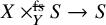 is surjective.
This theorem applies if f is strict, that is, f is just a morphism of schemes.
Lifting a log point
$s \to Y$
 to X is usually much stronger than lifting the point on underlying schemes.
Example 1.5. Let R be a complete discrete valuation ring and equip it with its natural log structure
$M_R = R \setminus \{0\}$
 so that
$\bar M_R = {\mathbb {N}}$
 . Write
$S = {\mathrm{Spec}} R$
 for the resulting log scheme and
$s \in S$
 for its closed point. Let
$S \to Y$
 and
$f : X \to Y$
 be morphisms of log schemes. If f is log smooth, the Log Hensel Lemma (cf. Lemma 4.12) shows that finding a log lift
$S \to X$
 is equivalent to finding a log lift of the closed point
$s \to X$
 .
The log structure also significantly constrains possible lifts.
Example 1.6. Suppose
$s = s^\circ $
 has trivial log structure and
$f : X \to Y$
 is the map
$X \to X^\circ $
 forgetting log structure. The forgetful map f is log flat if and only if
$X = X^\circ $
 has no log structure, so Theorem 1.3 likely does not apply. Indeed, scheme-theoretic points
$s \to X^\circ $
 with trivial log structure
$s = s^\circ $
 are all firm. Yet they will not lift to log points
$s \dashrightarrow X$
 unless they lie in the open, possibly empty locus
$X_0 \subseteq X$
 where the log structure is trivial.
For nice enough maps f, we show a log point
$s \to Y$
 lifts to X if and only if the point of the underlying scheme
$s^\circ \to Y^\circ $
 does.
Corollary 1.7. For
$f \colon X \to Y$
 integral, saturated, log smooth, and of finite presentation and
$s \to Y$
 a log geometric point, the log point lifts as
$s \dashrightarrow X$
 if and only if the point of the underlying schemes does as
$s^\circ \dashrightarrow X^\circ $
 .
Using our results, we can characterize which maps are firm.
Definition 1.8. View Y as a presheaf on fine saturated log schemes. Let
$Y(f) \subseteq Y$
 be the subpresheaf consisting of morphisms
$p \colon S \to Y$
 from fine saturated log schemes S which are f-firm, dubbed the firm locus.
The map
$f : X \to Y$
 factors through
$Y(f) \subseteq Y$
 . Firmness detects whether points log lift along a map f but has nothing to do with how many lifts there are.
Example 1.9. Let
$S = X$
 be a log geometric point with rank-one log structure
$\bar M_S = \bar M_X = {\mathbb {N}}$
 and take
$Y = X^\circ $
 with the natural map
$f : X \to Y$
 . Any map to Y is f-firm, so the firm locus is
$Y(f) = Y$
 . Indeed,
$S \to Y$
 lifts to
$S \dashrightarrow X$
 . In fact, there are infinitely many such lifts given by all maps
${\mathbb {N}} \to {\mathbb {N}}$
 .
Depending on f, we show the firm locus
$Y(f) \subseteq Y$
 is “representable” to various degrees.
Corollary 1.10. Let
$f \colon X \to Y$
 be a morphism.
-
○ If f is integral and saturated, the firm locus $Y(f) \subseteq Y$
is the set-theoretic image of f. In particular,-
– If f is flat and locally of finite presentation, then $Y(f) \subseteq Y$
is an open subscheme. -
– If f is proper, then $Y(f) \subseteq Y$
is an ind-closed subscheme.
-
-
○ If Y is quasicompact and f is both of finite presentation and either log flat or proper, there is a log alteration $W \to Y(f)$
of
$Y(f)$
with W a scheme or formal scheme, respectively.


In the latter case, the firm locus
$Y(f)$
 is a “weak (ind-)logarithmic space” – a functor on fine saturated log schemes which admits a log alteration by an (ind-)log scheme.
1.2 Application to rational points
In Section 4, we relate our work to that of Abramovich [Reference AbramovichAbr09]. We compare our notion of firmness (cf. Definition 1.2) with the one introduced in [Reference AbramovichAbr09, Definition 2.4.17], which we generalize to the logarithmic setting in Definition 4.2. To avoid confusion, we refer to the latter as lying in the firmament.
Under mild assumptions, we prove the two notions coincide.
Theorem 1.11 (Proposition 4.8, Theorem 4.9)
Let
$f : X \to Y$
 be a surjective, log flat, log reduced, finitely presented morphism of log schemes and consider a map
$p : S \to Y$
 . If S is
-
○ a log point with rank one log structure, or
-
○ the spectrum $S = {\mathrm{Spec}} R$
of a discrete valuation ring with log structure
$R\setminus \{0\}$
,


then p is f-firm if and only if p lies in the firmament of f.
This identification allows us, via Theorem 1.3, to establish the following claim – stated without proof in [Reference AbramovichAbr09, paragraph following Theorem 2.4.18]:
Theorem 1.12 (Theorem 4.15)
Let
$S=\mathrm {{Spec}\:} A$
 where A is a Dedekind domain with fraction field K of characteristic zero. Let
$f: X \to Y$
 be a proper, dominant map of integral proper K-varieties.
After replacing S by a sufficiently small nonempty open subset, there exist a proper log smooth K-birational model
$f':X' \to Y'$
 of f and a proper log smooth S-model
$g:\mathscr X'\to \mathscr Y'$
 of
$f'$
 such that every K-point on the locus
$X^{\prime }_0\subseteq X'$
 where the log structure is trivial induces an S-point on
$\mathscr {Y}'$
 that lies in the firmament of g (Definition 4.2).
Conversely, every S-point p on
$\mathscr {Y}'$
 that intersects the locus where the log structure of
$\mathscr Y'$
 is trivial and lies in the firmament of g lifts étale locally on S to a rational point on
$X'$
 .
Illustration of the setup in Theorem 1.12. For the direct implication take
$S'=S$
 .

The argument relies on the fact that dominant morphisms of varieties over a field of characteristic zero admit toroidal models as well as a known logarithmic Hensel’s Lemma 4.12. See Section 4.3.1 for myriad examples.
Theorem 1.12 describes explicitly the set of points that lift étale locally on a suitable (i.e., log smooth) birational model of the initial morphism f. See Corollary 4.17 for a statement without log structures. A local lifting criterion in the framework of Kato fans is given in [Reference Browning, Lyczak and SmeetsBLS25, Proposition 5.4].
Appendix A is a rapid introduction to necessary themes from log geometry and a comparison between
-
○ Log schemes and their Artin fans, and
-
○ Toroidal embeddings and their cone complexes.
In Appendix B, we explore Campana-type necessary conditions on images of points under morphisms of varieties with no regularity assumptions.
1.3 Context and state of the art
We recall the history of Problem 1.1 in the case where f is surjective. If the field k is separably closed, the induced map
$f:X(k)\to Y(k)$
 is surjective. If the field is not separably closed, in general f is not surjective on k-points, and determining the image of the set of rational points under f is a very difficult question in general.
Rational points on families of varieties have been studied extensively in the case where every fiber has at least one reduced irreducible component. Under additional assumptions on the number of fibers that are “split,” or “simple” in the sense of [Reference SkorobogatovSko96], or “pseudosplit” in the sense of [Reference Loughran, Skorobogatov and SmeetsLSS20], there are several results on the Brauer-Manin obstruction to the Hasse principle and weak approximation [Reference SkorobogatovSko96, Reference Colliot-Thélène, Skorobogatov and Swinnerton-DyerCTSSD98, Reference Colliot-Thélène and SkorobogatovCTS00, Reference Harari and SkorobogatovHS03, Reference Browning, Matthiesen and SkorobogatovBMS14, Reference Harpaz, Wei and WittenbergHWW22], there are quantitative studies on the density of
$f(X(k))$
 [Reference SerreSer90, Reference SofosSof16, Reference LoughranLou18, Reference Loughran and MatthiesenLM24], of fibers that satisfy weak approximation [Reference Bright, Browning and LoughranBBL16] or that are everywhere locally soluble [Reference Loughran and SmeetsLS16, Reference Loughran and MatthiesenLM24], and there are answers to Problem 1.1 over local fields [Reference DenefDen19, Reference Loughran, Skorobogatov and SmeetsLSS20].
The case where there are fibers with no reduced irreducible component has been investigated in [Reference AbramovichAbr09, Reference Loughran and MatthiesenLM24, Reference Browning, Lyczak and SmeetsBLS25] based on a geometric framework introduced by Campana [Reference CampanaCam04, Reference CampanaCam05]. In [Reference AbramovichAbr09], Problem 1.1 was implicitly raised in the context where f is a toroidal morphism of toroidal embeddings. Since such embeddings can naturally be equipped with a divisorial log structure, the same paper suggests that log geometry provides the appropriate framework to address the problem, with a promise to develop this perspective in future work. In this paper, we take up this direction and investigate the case of an arbitrary morphism of log schemes.
1.4 Further applications
Our firmness criterion is effectively computable in toroidal or logarithmic charts. In particular, for morphisms admitting toroidal structures, the firm locus can be described explicitly in terms of piecewise linear conditions on monoids. This gives an algorithmic way to determine whether a given local or global point lifts étale locally via a theory of tropical obstructions.
To study the distribution of rational points in families of varieties
$X/B$
 , one needs to understand which rational points on the base B lift to X. As we prove in Theorem 1.12, firmaments can encode all geometric obstructions to such lifts. They generalize coarser invariants, such as the orbifold base of the family and the corresponding set of Campana points described in Appendix B, which have been used to predict upper bounds for the number of everywhere locally soluble fibers for one-parameter families [Reference Browning, Lyczak and SmeetsBLS25]. Our notion of firm points applies equally well to higher dimensional bases and is expected to appear in the leading constant of asymptotic formulas.
Points lying in the firmament are, similarly to Campana points, rational points satisfying intersection conditions with the boundary divisor determined by the firmament. Classical conjectures concerning rational points admit natural analogues for Campana points, which have been extensively studied [Reference CampanaCam05, Reference Pieropan, Smeets, Tanimoto and Várilly-AlvaradoPSTVA21, Reference Kebekus, Vitório Pereira and SmeetsKPS22]. One can expect the same for our firm points. For example, Abramovich formulated a strong density conjecture
Conjecture 1.13 [Reference AbramovichAbr09, Conjecture 2.4.19]
Let
$(Y,\Delta )$
 be a smooth projective orbifold with a firmament
$\Gamma $
 . Then the set of points on Y lying in the firmament
$\Gamma $
 is potentially dense if and only if
$(Y,\Delta )$
 is special.
Here
$(Y,\Delta )$
 is a pair with boundary divisor
$\Delta $
 with standard coefficients determined by
$\Gamma $
 as in [Reference AbramovichAbr09, Definition 2.4.4]. If
$\Gamma $
 is induced by a morphism
$f:X\to Y$
 , then the coefficients of
$\Delta $
 depend on f and are defined by the orbifold base invariants described in Appendix B. The theory of special orbifolds is developed in [Reference CampanaCam04, Reference CampanaCam11]. Typical examples are log Fano orbifolds, log Calabi-Yau orbifolds and rationally connected orbifolds [Reference CampanaCam11, §§8, 10].
As stated in [Reference AbramovichAbr09], Conjecture 1.13 is particularly interesting, as it would imply the well-known Campana conjecture, which predicts that for a variety Y defined over a number field k, the set of rational points of Y is potentially dense if and only if Y is special.
Our firm morphisms are a functorial version of Abramovich’s firmaments that make sense for an arbitrary morphism of log schemes and generalize the classical case
$(Y, \Delta )$
 . They can be used to study Conjecture 1.13 and related problems. In fact, the “firm locus” we construct is a geometric moduli space object parameterizing firm maps.
Campana orbifolds also play a central role in birational geometry [Reference CampanaCam04, Reference CampanaCam11, Reference Campana and PăunCP15, Reference Kebekus and RousseauKR24]. However, they are not functorial in a naive sense: morphisms of orbifolds require pulling back boundary divisors, and such pullbacks do not make sense for morphisms that land in the boundary of the target. This obstruction disappears in logarithmic geometry, where the pullback of the boundary is built into the structure of a log morphism. Using the techniques developed in this paper, one can formulate a fully functorial notion that generalizes Campana orbifolds in the logarithmic category. The strength of this perspective is illustrated by the universality of our firm locus, which is therefore the canonical receptacle for lifting problems.
We found an unexpected connection also with the theory of logarithmic stable maps. The “type” of a log stable map
$C \to X$
 defined by Gross-Siebert [Reference Gross and SiebertGS13, Definition 1.10] is similar in spirit to the firm locus depicted in this paper. See Example 4.28 for a detailed comparison. As a result, we can state a new obstruction to lifting log stable maps along a morphism
$f : X \to Y$
 in terms of the firm locus of the map f.
Conventions
We assume all our schemes, algebraic spaces, and algebraic stacks are locally of finite type. We use fine saturated log structures exclusively except where noted otherwise, and we use the shorthand f.s. for fine and saturated. The algebraic stacks
$\mathsf {{Log}}$
 ,
$\mathsf {{Log}}_S$
 are M. Olsson’s stacks of f.s. log structures, denoted
${\mathscr T}or$
 ,
${\mathscr T}or_S$
 in [Reference OlssonOls03] and recalled in Definition A.9. The f.s. fiber product is denoted
$\times ^{\mathsf {fs}}$
 or
$\ulcorner \mathrm {fs}$
 if it appears in a pullback square in a diagram. We write
 or
 when it also happens to be a fiber product in the category of underlying stacks. By “localize,” we mean to work on a strict-étale cover.
We spell out our conventions concerning Artin fans, log alterations, log subalterations, log modifications, log submodifications, log blowups, root stacks, etc. in Appendix A. We write


for the affine toric variety corresponding to a monoid P and its Artin cone, the stack quotient by its dense torus. We also write
$\Theta _{X}$
 for the Artin fan of a log algebraic stack X (Definition A.8).
2 Firmness and log lifts
The goal of this section is to prove Theorem 1.3. We start with some basic properties of firmness.
Lemma 2.1. Consider maps
$f : X \to Y$
 and
$p : S \to Y$
 as in Definition 1.2. The map
$p : S \to Y$
 is firm along f if and only if, for some (equivalently any) strict surjection locally of finite type
$S' \to S$
 , there is a commutative diagram of log schemes

with the identity
 firm along
$W \to S'$
 . In particular,
-
(i) Firmness can be checked strict-étale locally on S and Y and after replacing X by a strict-étale cover.
-
(ii) The map p is f-firm if and only if the map from the strict reduced subscheme $S_{\mathrm {red}} \subseteq S \to Y$
is f-firm. -
(iii) The map p is f-firm if and only if the identity
is firm along the pullback
$X \times _Y^{\mathrm {fs}} S \to S$
. -
(iv) The map p is f-firm if and only if all strict geometric points $\bar s \to S$
are f-firm.


In addition,
-
(v) If p is f-firm and $X' := X \times ^{\mathrm {fs}}_Y S$
is the f.s. pullback, the map
$X' \to S$
is surjective. -
(vi) The map p is f-firm if and only if for all strict geometric points $y \to Y$
and
$s \to S\times _Y y$
, there exists a strict geometric point
$x \to X \times _Y y$
such that
$\bar {M}_{Y,y} \to \bar {M}_{S,s}$
factors through
$\bar {M}_{Y,y} \to \bar {M}_{X,x}$
. -
(vii) Given $t : Y' \to Y$
, let
$f' \colon X' \to Y', p' \colon S' \to Y'$
be the f.s. base changes of
$f, p$
along t. If p was f-firm, then
$p'$
is
$f'$
-firm. -
(viii) If p is f-firm, then any composite $S' \to S \to Y$
is also f-firm. That is, the set of
$S \to Y$
which are f-firm forms a sieve over Y. -
(ix) If S is a log point, $p : S \to Y$
is f-firm if and only if there exists a strict geometric point
$\bar s \to S$
which is f-firm.





Proof. We prove p is firm along f if and only if such a diagram (2) exists with
 firm along
$W \to S'$
 . Parts (i)-(iv) then follow directly. By [Sta25, Tag 0487], all geometric points
$\bar s \to S$
 lift to
$S'$
 . Consider the map between the fibers

As the identity
 is firm along
$W \to S'$
 , there are a strict geometric point
$\bar w \to W_{\bar s}$
 and a dashed retraction fitting in the sequence

Such a retraction witnesses firmness of
$\bar s \to S' \to S \to Y$
 along
$X \to Y$
 . The converse implication holds by properties of the fiber product.
Part (vi) follows from the universal property of the pushout and the fact that
$\bar M_{X\times _Y^{\mathsf {fs}}S,x}$
 is the pushout of
$\bar M_{Y,y}\to \bar M_{S,s}$
 and
$\bar M_{Y,y}\to \bar M_{X,x}$
 . For (vii), let
$\overline s'\to S'$
 be a geometric point and
$\overline s\to S$
 be the induced point. Then firmness of p along f gives

The dashed arrow exists because the solid square is a pushout coming from the fiber product of fs log schemes. The proof of (viii) is similar. For (ix) it suffices to argue that if a composite
$\bar s \to \bar t \to S$
 is firm, so is
$\bar t \to S$
 . For this, one can use the same geometric point
$\bar w \to X_{\bar s} \to X_{\bar t}$
 for the requisite splitting in each case.
The first part of Lemma 2.1 will routinely be used to assume Y is atomic (Definition A.11) and X is a disjoint union of atomics, as [Reference Molcho and WiseMW22, Proposition 2.2.2.5] shows any (locally of finite type) log scheme admits such a strict-étale cover.
We express the notion of firmness in terms of Artin fans, reviewed in Appendix A. Artin cones and Artin fans provide a geometric incarnation of log structures that has become ubiquitous since its introduction in [Reference Abramovich, Chen, Marcus, Ulirsch and WiseACM+16, Reference Abramovich, Chen, Marcus and WiseACMW17, Reference Abramovich and WiseAW18].
Let
$f : X \to Y$
 and
$p : S \to Y$
 be morphisms inducing compatible solid arrows of Artin fans

To be firm means approximately that there is a dashed lift
$\Theta _{S} \dashrightarrow \Theta _{X}$
 making the diagram commute. This is not literally true because the Artin fan of a pullback is not the pullback of the corresponding Artin fans, as we show in Example 2.3. But a version of this statement holds for geometric points. See the end of Section 3 for a general statement with the relative Artin fan.
Proposition 2.2. If
$S = Y$
 is a log geometric point, the identity
$S = Y$
 is firm along a map
$f : X \to Y$
 if and only if the map
$\Theta _{X} \to \Theta _{Y}$
 on Artin fans admits a section.
There exists such a map
$\Theta _{X} \to \Theta _{Y}$
 because
$\Theta _{Y} = \Theta _{\Gamma (Y, \bar M_Y)}$
 is an Artin cone by Lemma A.21. As we show in Example 2.3, the proposition is false if Y is not a log geometric point.
The Artin fan of X is the empty set
$\Theta _{X} = \varnothing $
 if and only if
$X = \varnothing $
 . The only morphism which is firm along the unique map
$f : \varnothing \to Y$
 is f itself.
Example 2.3. We give an example of a log scheme map
$f \colon X \to Y$
 and a log geometric point
$s \to Y$
 which is not f-firm, but such that
$\Theta _{s} \to \Theta _{Y}$
 factors through
$\Theta _{X}$
 . See Figure 2 for a picture. The map
$\Theta _{s} \to \Theta _{Y}$
 will be the identity, thereby also showing that the base change of Artin fans

is not the Artin fan of the base change
$X \times _Y s$
 .
The family of open curves X from Example 2.3. The generic fiber
$X_\eta \to \eta $
 admits a section which induces a section of the map
$\Theta _{X} \to \Theta _{Y}$
 of Artin fans, but there is no section over the closed point.

Let
$Y = \mathrm {{Spec}\:} R$
 where R is a discrete valuation ring, and give Y the constant log structure associated to the map

Let
$\eta , s$
 be respectively the generic point and special point of Y, both endowed with their Y-strict log structure. Let
$\bar {X} \to Y$
 be the constant curve

with log structure given by

mapping to
${\mathcal {O}}_{\bar {X}}$
 via
$t \mapsto 0, \log (x) \mapsto x,\log (y) \mapsto y$
 . Let
$D(x),D(y)$
 be the nonvanishing loci in
$\bar {X}$
 of x and y respectively. Let
$X \subset \bar {X}$
 be the union of
$D(x)$
 and of the generic fiber
$\bar {X}_\eta $
 . We equip the open subschemes
$D(x),D(y),X$
 of
$\bar {X}$
 with their
$\bar {X}$
 -strict log structures. The characteristic sheaf
$\bar {M}_{\bar {X}}$
 is constant on
$D(y)$
 with value
$\mathbb {N}\log (x) = \bar {M}_Y$
 , and constant on
$D(x)$
 with value
$\mathbb {N}\log (y)$
 . The map

is multiplication by
$3$
 , which does not have a cosection, so the point
$s \to Y$
 is not firm with respect to
$f \colon X \to Y$
 . However, the composite

is a section of the natural map
$\Theta _{X} \to \Theta _{Y}$
 .
We need a general lemma to prove Proposition 2.2.
Lemma 2.4 [Reference OgusOgu18, Remark II.1.2.8]
Let
$\mathscr {C}$
 be an Artin fan with a strict étale cover
$\{\Theta _{Q_i} \to \mathscr {C}\}_{i \in I}$
 by Artin cones. If P is a monoid, any map
$\Theta _{P} \to \mathscr {C}$
 from its Artin cone factors through some
$\Theta _{Q_i} \to \mathscr {C}$
 . Scilicet, the family

is jointly surjective.
Proof. The strict étale site of an Artin cone
$\Theta _{P}$
 is trivial in that every strict étale cover admits a section [Reference Abramovich and WiseAW18, Corollary 2.2.8]. Pull back the cover of
$\mathscr {C}$
 and find a section of the cover of
$\Theta _{P}$
 .
Proof of Proposition 2.2
By definition, firmness is equivalent to finding a geometric point
$\bar x \to X$
 and a retraction

We can replace X by a strict étale cover using Lemma 2.1, in particular by a disjoint union of atomics
$X = \bigsqcup X_i$
 [Reference Molcho and WiseMW22, Proposition 2.2.2.5]. The Artin fan of X is then a disjoint union of the Artin cones of each connected component
$\Theta _{X_i} = \Theta _{P_{i}}$
 . Write
$Q = \Gamma (Y, \bar M_Y)$
 .
Sections of the map
$\Theta _{X} = \bigsqcup \Theta _{P_{i}} \to \Theta _{Y} = \Theta _{Q}$
 are the disjoint union of the sections of each map
$\Theta _{P_{i}} \to \Theta _{Y}$
 as
$\Theta _{Y}$
 is a connected Artin cone. A section
$\Theta _{Y} \dashrightarrow \Theta _{P_{i}}$
 is dual to a morphism

such that the composite
$Q \to P_i \to Q$
 is the identity. As
$\Theta _{P_{i}}$
 is the Artin fan of
$X_i$
 , there exists a geometric point
$\bar x \to X_i$
 such that
$\bar M_{X_i, \bar x} = P_i$
 . This geometric point
$\bar x$
 necessarily maps to Y, so the proof is complete.
Remark 2.5. Consider the affine toric variety
${\mathbb {A}}_P$
 with dense torus
$T = {\mathrm{Spec}} \mathbb {Z}[P^{\mathrm {gp}}]$
 associated to a sharp (f.s.) monoid P. The ideal generated by
$P^+ = P \setminus \{0\}$
 in
$\mathbb {Z}[P]$
 cuts out a closed point
$\widetilde {v} \in {\mathbb {A}}_P$
 . We likewise get a closed stacky point
$v \in \Theta _{P}$
 as the quotient of
$\widetilde {v} \in {\mathbb {A}}_P$
 by T. Dub both the “origin.”
If
$P = {\mathbb {N}}^k$
 , for example,
$\widetilde {v} \in {\mathbb {A}}^k$
 is the origin and
$v \in \Theta _{{\mathbb {N}}^k} = \Theta ^k$
 is the stacky closed point
$B\mathbb {G}_m^k$
 with rank-k log structure. Every nonempty closed substack of
$\Theta _{P}$
 contains v, as
$P^+ \subseteq P$
 is the largest proper monoid ideal of P.
If X is a log scheme or log algebraic stack with Artin fan
$\Theta _{X} = \Theta _{P}$
 an Artin cone, the origin
$v \in \Theta _{P}$
 is always in the image of X. Otherwise, X would factor through its open complement
$\partial \Theta _{P} \subseteq \Theta _{P}$
 . But the Artin fan
$\Theta _{X}$
 of X is defined as the initial Artin fan factoring
$X \to \Theta _{X} \to \mathsf {{Log}}$
 . This is a contradiction because an open substack of an Artin fan is again an Artin fan.
Lemma 2.6. Suppose the map
$X \to \Theta _{X}$
 to its Artin fan factors through a closed substack
$Z \subseteq \Theta _{X}$
 and the factorization
$X \to Z$
 is open. Then the map
$X \to Z$
 is surjective.
Proof. The question is local in X, so assume X is atomic. Then
$\Theta _{X} = \Theta _{P}$
 is an Artin cone. We can assume
$X \neq \varnothing $
 , so
$Z \neq \varnothing $
 and Z must contain the origin
$v \in \Theta _{P}$
 of Remark 2.5.
The point
$v \in \Theta _{P}$
 is always in the image of
$X \to \Theta _{X}$
 as in Remark 2.5. We assumed the set-theoretic image
$\mathrm {Im}(X \to Z)$
 is an open and it contains v. The only open of
$\Theta _{P}$
 containing v is the whole stack
$\Theta _{P}$
 , so
$\mathrm {Im}(X \to Z)$
 must likewise be Z.
Proof of Theorem 1.3
A log lift clearly implies firmness. For the converse, f.s. base change to assume
$s = Y$
 . Étale localize to assume the map
$f : X \to Y$
 has a compatible map on Artin fans
$\Theta _{X} \to \Theta _{Y}$
 by Lemma A.19. Remark 2.5 shows the map
$Y \to \Theta _{Y}$
 factors through the origin
$v \in \Theta _{Y}$
 . Write
$v'$
 for the pullback of
$v \in \Theta _{Y}$
 to
$\Theta _{X}$
 :

The map
$X \to v'$
 is log flat and strict, hence flat. It is also finitely presented, so open [Sta25, Tag 01UA]. Lemma 2.6 ensures
$X \to v'$
 is surjective.
The point
 is f-firm if and only if there is a section
$\Theta _{Y} \dashrightarrow \Theta _{X}$
 by Proposition 2.2. Then by the universal property of the fiber product there is a logarithmic section

To come up with a logarithmic lift, it remains to find a section

or equivalently a section of the morphism of algebraic spaces with log structures
$X \times _{v'} s \to s$
 . This morphism is strict, surjective, and finitely presented, so finding such a section is equivalent to finding a lift on the level of underlying algebraic spaces. This is possible after a finite field extension
$s' \to s$
 [Sta25, Tag 0487].
If f was further assumed log smooth, then
$X \to v'$
 is smooth. Firmness ensures a lift
$s \to v'$
 as above. Log lifts
$s \dashrightarrow X$
 correspond to k-points of the variety
$X' = X \times _{v'} s$
 . Because
$X'$
 is smooth and nonempty, it has a
$k'$
 -point for a finite separable extension
$k'/k$
 .
With a similar proof, we can show the firm locus of a log flat map is closed under generization. We first illustrate how to reduce lifting to strictly henselian local rings.
Lemma 2.7 (Raynaud’s limit argument)
Let
$f : X \to Y$
 be a morphism of log schemes or log algebraic stacks locally of finite presentation and
$p : S \to Y$
 a morphism. Let
$\widehat {S}$
 be the strict henselization of S at a geometric point
$\bar s \to S$
 and endow
$\bar s, \widehat {S}$
 with log structure pulled back from S.
The set of lifts of the strict henselization
$\widehat {S} \dashrightarrow X$
 to X is the colimit under refinements of étale neighborhoods
$\bar s \to U \to S$
 of
$\bar s$
 of lifts
$U \dashrightarrow X$
 :

Proof. We can assume S is affine, and then
$\widehat {S}$
 is a cofiltered limit of affine log schemes given by the strict étale neighborhoods
$\bar s \to U \to S$
 [Sta25, Tag 04HX]. We are reduced to [Reference Molcho and WiseMW22, Lemma 2.2.3.4], which states that maps from cofiltered systems
$\{S_i\}$
 of affine log schemes to locally finite presentation morphisms
$X \to Y$
 are compatible with limits/colimits:

Proposition 2.8. Let
$f \colon X \to Y$
 be a log flat morphism of log schemes. Let
$\sigma \colon S \to Y$
 be a morphism and
$s \to S$
 a strict geometric point. If
$s \to S \to Y$
 is f-firm, then so are all generizations of s in S.
Proof. Replace S by the strict henselization at
$s \to S$
 , to which all generizations lift. Assume
$Y = S$
 by Lemma 2.1(iii). As
$s \to Y$
 is f-firm, there are a strict log geometric point
$x \to X = X \times _Y^{\mathrm { fs}} s$
 and a factorization

of the identity map
$id_{\bar M_{S, s}}$
 . We can replace X by its strict henselization at x as well. Write

and
$Q'$
 for the sharpening of the factorization
$Q \to P$
 , so that there is a factorization

of the identity. Locally near x and s, the morphism
$X \to S$
 is charted by the monoid map
$P \to Q$
 , that is, there exist strict étale neighborhoods U of x in X and V of s in S and a commutative square

with strict horizontal maps. Since X and S are local and strictly henselian with closed points
$x,s$
 , we may pick
$U=X$
 and
$V=S$
 . Write
$W := S \times _{{\mathbb {A}}_P} {\mathbb {A}}_Q$
 and expand the above chart:

By [Reference OgusOgu18, Theorem IV.4.1.7], the map
$X \to W$
 is flat.
Write

for the closed points, with underlying schemes
$ {\mathrm{Spec}} \mathbb {Z}$
 . These are the origins of Remark 2.5. The point
$(v, s) \in {\mathbb {A}}_Q \times s$
 is a specialization of the point
$(v', s) \in {\mathbb {A}}_{Q'} \times s \subseteq {\mathbb {A}}_Q \times s$
 . Both points map to the image of
$s \in {\mathbb {A}}_P \times S$
 , so they lie in the closed subscheme
$W_s = W \times _S s$
 . The point
$x \to X$
 maps to
$(v, s) \in {\mathbb {A}}_Q$
 . We can lift the specialization
$(v', s) \rightsquigarrow (v, s) \in W_s$
 to a specialization
$y \rightsquigarrow x$
 in X by flatness of
$X \to W$
 [Sta25, Tag 03HV].
Replace X by its strict henselization at
$y \in X$
 and x by y. The point
$s \to S$
 remains f-firm, as the same section

witnesses firmness of the point
$y \in X$
 with characteristic monoid
$\bar M_{X, y} = Q'$
 . After replacing X, our retraction
$Q \to P$
 is sharp and we have
$Q = Q'$
 and
$v = v'$
 .
Continue to use notation as above. Consider any geometric point
$t \to S$
 , necessarily a generization of the closed point
$s \to S$
 . The image
$t'$
 of the composite
$t \to {\mathbb {A}}_P \to {\mathbb {A}}_Q$
 with the section is a generization of the unique closed “point”
$v \in {\mathbb {A}}_Q$
 . So we have a specialization
$(t', t) \rightsquigarrow (v, s)$
 in
${\mathbb {A}}_Q \times S$
 . This specialization lies inside the closed subscheme W. As
$x \to X$
 maps to
$(v, s) \in {\mathbb {A}}_Q$
 , we can again lift this specialization
$(t', t) \rightsquigarrow (v, s)$
 to a specialization
$z \rightsquigarrow x$
 in X by flatness of
$X \to W$
 [Sta25, Tag 03HV].
We claim
$z \to X$
 witnesses the firmness of
$t \to S$
 . Write

As
$t' \in {\mathbb {A}}_Q$
 was the image of t under the section
${\mathbb {A}}_P \to {\mathbb {A}}_Q$
 , we have a commutative diagram

It follows that the bottom row composes to the identity, so
$t \to S$
 is firm.
Example 2.9. Proposition 2.8 is not saying that the firm locus is an open subscheme, but that it is a log subalteration with open image. Consider the map

for some positive integer
$r \in {\mathbb {N}}^+$
 . It factors through the stack quotient
$X = \left [{{\mathbb {A}}^1/\mu _r}\right ]$
 . The map
$X \to {\mathbb {A}}^1$
 is a root stack and it is a monomorphism in the category of (f.s.) log algebraic stacks, while
$\left [{r}\right ]$
 is a Kummer map.
We claim the firm locus of
$\left [{r}\right ]$
 is precisely
$X \to {\mathbb {A}}^1$
 . We claim a morphism
$S \to {\mathbb {A}}^1$
 of log schemes corresponding to
$t \in \Gamma (S, M_S)$
 lifts to X (uniquely) if and only if there is an rth root of t. A lift of S along
$\left [{r}\right ]$
 is a choice of an rth root of t. A map
$S \to {\mathbb {A}}^1$
 is firm along
$\left [{r}\right ]$
 if and only if it factors through X, so
$X = {\mathbb {A}}^1(\left [{r}\right ])$
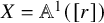 is the firm locus of
$\left [{r}\right ]$
 .
The next section systematically investigates the firm locus.
3 The firm locus
This section proves Theorem 1.4. As an application, we describe to what extent the firm locus
$Y(f) \subseteq Y$
 is representable.
Lemma 3.1. Let
$p : \mathscr {B} \to \tau $
 be an integral, saturated morphism from an Artin fan
$\mathscr {B}$
 to an Artin cone
$\tau $
 . Either p admits a section
$\tau \dashrightarrow \mathscr {B}$
 or p factors through the open complement
$\partial \tau $
 of the closed origin of
$\tau $
 .
Proof. We can assume
$\mathscr {B} = \sigma $
 is an Artin cone because Lemma 2.4 guarantees maps
$\tau \to \mathscr {B}$
 factor through Artin cones
$\sigma \to \mathscr {B}$
 in a strict étale cover. Write
$P = \Gamma (\tau , \bar M_\tau ), Q = \Gamma (\sigma , \bar M_\sigma )$
 so that
$\sigma \to \tau $
 comes from a map of sharp monoids
$\theta : P \to Q$
 . The map
$\theta $
 is sharp if and only if the map
$\sigma \to \tau $
 does not factor through
$\partial \tau \subseteq \tau $
 .
Assuming
$\theta $
 is sharp, we need to show p admits a section by producing a map
$Q \dashrightarrow P$
 such that the composite
$P \to Q \to P$
 is the identity. Note that
$P, Q$
 are “toric” monoids as they are sharp, f.s., with free associated groups
$P^{\mathrm {gp}}, Q^{\mathrm {gp}}$
 and that the integral map
$P \to Q$
 is locally exact by [Reference OgusOgu18, Theorem I.4.7.7]. So Theorem I.4.8.14 of [Reference OgusOgu18] provides an isomorphism
$P \times (Q \setminus \sqrt {K_\theta }) \simeq Q$
 for a certain monoid ideal
$\sqrt {K_\theta } \subseteq Q$
 . Projecting away from this ideal gives us our retraction
$Q \dashrightarrow P$
 .
Proof of Theorem 1.4
Consider a strict log geometric point
$\bar {y} \to Y$
 . Replace Y by its strict henselization at
$\bar {y}$
 and X by a strict étale cover by a disjoint union of atomics using Lemma 2.1.
Let
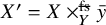 be the (f.s. and scheme-theoretic) fiber over
$\bar {y}$
 . There are compatible maps of Artin fans

by Lemmas A.18, A.19 because
$X, Y$
 are disjoint unions of atomics and
$X' \to X, \bar {y} \to Y$
 are strict. Because the rest of the morphisms in the square are compatible with maps of log schemes, there is a commutative square

The point
$\bar {y} \to Y$
 is in the set-theoretic image of f if and only if
$X'$
 is nonempty. In that case, the map
$\pi : \Theta _{X'} \to \Theta _{\bar {y}}$
 admits a section if and only if
$\bar {y} \to Y$
 is f-firm by Proposition 2.2. It is clear that firm points are in the set-theoretic image of f. So it suffices to show that if
$\pi $
 does not admit a section, then
$X'$
 is empty.
By Lemma 3.1,
$\pi $
 factors through
$\partial \Theta _{\bar {y}} \subseteq \Theta _{\bar {y}}$
 . Then we have a commutative rectangle

where
$v \in \Theta _{\bar {y}}$
 is the closed point as in Remark 2.5. But
$\partial \Theta _{\bar {y}}$
 is the complement
$\Theta _{\bar {y}} \setminus v$
 , so
$X' = \varnothing $
 .
Lemma 3.2. Let
$f : X \to Y$
 be a morphism of log schemes or log algebraic stacks and
$Y(f) \subseteq Y$
 the firm locus. Given a map
$Y' \to Y$
 , consider the base change
$f' : X' := X \times _Y^{\mathrm {fs}} Y' \to Y'$
 and its firm locus
$Y'(f')$
 . There is an f.s. pullback square

Proof. Suppose given a map
$S \to Y'$
 . The composite
$S \to Y' \to Y$
 factors through
$Y(f)$
 if and only if, for all log geometric points
$\bar s \to S$
 , the identity
 is firm along the pullback
$X_{\bar s} \to \bar s$
 by Lemma 2.1(iii)(iv). But this is the same as
 being firm along the pullback
$X^{\prime }_{\bar s}=X_{\bar s} \to \bar s$
 , so S equivalently factors through
$Y'(f')$
 .
We need a version of a well-known blowup lemma (see [Reference Abramovich and KaruAK00, Reference KatoKat22, Reference MolchoMol21]).
Lemma 3.3 [Reference KatoKat22, Theorem 1.1, Corollary 1.2], [Reference MolchoMol21, Theorem 1.0.1]
Let
$f : X \to Y$
 be a quasicompact map of (f.s.) log schemes with Y quasicompact. There are
-
○ a log blowup $Y_1 \to Y$
and -
○ a log alteration $Y_2 \to Y$


with f.s. pullbacks
$f_i : X_i := Y_i \times ^{\mathrm {fs}}_Y X \to Y_i$
 such that
$f_1$
 is integral and
$f_2$
 is integral and saturated.
Proof. F. Kato’s results [Reference KatoKat22, Theorem 1.1, Corollary 1.2] show that such a base change is possible after passing to a strict étale neighborhood of any point of Y. Instead of a log alteration, he takes a finite Kummer map. Molcho [Reference MolchoMol21, Theorem 1.0.1] instead provides a log alteration. To conclude, we need to find a global log blowup/alteration
$Y' \to Y$
 refining any local one.
One can define a special family
$Y^{\prime }_n \to Y$
 of log blowups/alterations indexed by
$n \in {\mathbb {N}}$
 . First, take a log blowup of
$\Theta _{Y}$
 to assume its cones are free as in the proof of [Reference Kempf, Knudsen, Mumford and Saint-DonatKKMSD73, Chapter 1, §2, Theorem 11]. Subdivide further to also assume
$\Theta _{Y}$
 is without monodromy in the sense that it admits a Zariski cover by free Artin cones
$\Theta ^r = \left [{{\mathbb {A}}^1/\mathbb {G}_m}\right ]^r$
 .
For each cone
$\sigma = \Theta ^r$
 of
$\Theta _{Y}$
 , we define a system of log blowups and log alterations and leave the reader to check that they glue along faces. See Figure 3.
The sequence
$\Sigma _n$
 of log blowups of
$\Theta ^2$
 for
$n = 1, 2, 3$
 . This sequence eventually refines all log blowups. The log alteration
$\Sigma ^{\prime }_n$
 also adds in an increasing sequence of root stacks to refine all log alterations.

Figure 3 Long description
The figure consists of three panels arranged horizontally, each showing a first-quadrant coordinate system with a vertical and horizontal axis.
* The first panel on the left shows the most refined state. It contains nine vectors originating from the bottom-left corner. Moving clockwise from the vertical axis, the vectors alternate in color between blue and black. There are five black vectors and four blue vectors interspersed between them, creating a dense fan of rays.
* The second panel in the middle shows a less refined state. It contains five vectors originating from the origin. Moving clockwise from the vertical axis, the sequence is blue, black, blue, black, and blue. The spacing between these vectors is wider than in the first panel.
* The third panel on the right shows the simplest state. It contains only one blue vector originating from the origin, bisecting the angle between the vertical and horizontal axes at exactly 45 degrees.
A log alteration
$\mathscr {B} \to \sigma $
 factors as

with
$\mathscr {B} \to \mathscr {B}'$
 a root stack and
$\mathscr {B}' \to \sigma $
 a log modification. By quasicompactness, there are a natural number
$N \in {\mathbb {N}}$
 and a factorization

of the multiplication by N map
$[N]$
 on
$\mathscr {B}'$
 . The log modification
$\mathscr {B}' \to \sigma $
 is refined by a log blowup, which can be refined by a stellar subdivision. So it suffices to construct a family of subdivisions that refines all stellar subdivisions and all roots to finite order
$N \in {\mathbb {N}}$
 .
Write
$e_1, \cdots , e_r \in {\mathbb {N}}^r$
 for the standard basis vectors. For each set of integers
$a_1, \cdots , a_r \in \{0, 1, 2, \cdots , n\}$
 bounded by n, we get a map
${\mathbb {N}}^r \to {\mathbb {N}}$
 defined by the
$(1 \times r)$
 -matrix
$[a_1 \cdots a_r]$
 .
Consider the star subdivision of
$\sigma $
 at the dual map of Artin cones
$\Theta \to \Theta ^r$
 . If we perform star subdivision at a finite set of vectors
$\Theta \to \Theta ^r$
 , the result depends on the order of the vectors. Nevertheless, there is a unique minimal subdivision
$\Sigma _n \to \Theta ^r$
 refining each of these star subdivisions given by taking their intersection as subfunctors of
$\Theta ^r$
 depicted in Figure 4.
Let
$\Sigma ^{\prime }_n \to \Sigma _n$
 be the root stack given by rescaling the lattice by
$n!$
 . For
$n \gg 0$
 ,
$\Sigma _n \to \sigma $
 refines any log blowup and
$\Sigma ^{\prime }_n \to \sigma $
 refines any log alteration. As we assumed
$\Theta _{Y}$
 was free, we get an induced log alteration of
$\Theta _{Y}$
 which pulls back to define
$Y^{\prime }_n \to Y$
 . Check that it refines every possible log alteration of Y or any
$Y_0 \to Y$
 .
We review formal schemes and logarithmic spaces to discuss representability of the firm locus.
Definition 3.4. Let X be a sheaf on the big strict étale site of (f.s.) log schemes. Recall that X is a
-
○ logarithmic space if it admits a log smooth cover $X' \to X$
by a log scheme [Reference Molcho and WiseMW22, Theorem C], and -
○ weak logarithmic space if it is a root stack of a logarithmic space.
Figure 4Left: The stellar subdivision at u, then v, then w. Middle: That at v, then u and w in either order. Right: The intersection of all stellar subdivisions at $u, v, w$
in any order.


Remark 3.5. A weak logarithmic space X need not be a logarithmic space – we are explicitly allowing roots divisible by the characteristic. However, locally in the log smooth topology near a point
$x \to X$
 of residue characteristic p, there must exist a covering
$f \colon X' \to X$
 by a log scheme such that f is a
$\mu _p^{\Lambda }$
 -torsor for some free commutative abelian group
$\Lambda $
 . A fortiori, X has a log flat cover by a log scheme.
Let
$T \subseteq Y$
 be a locally constructible subset of a scheme Y. View it as a functor on schemes by

We explain how to view this as a formal scheme.
Lemma 3.6. The functor T in (3) is representable by a formal scheme which is an ind-subscheme of Y.
Proof. The claim is Zariski-local in Y, so we can assume Y is affine and
$T \subseteq Y$
 is the intersection
$U \cap D$
 of an open U and a closed subset D of
$|Y|$
 . It suffices to handle the cases
$T = U$
 and
$T = D$
 separately, and
$T = U$
 is an open subscheme of Y. The functor
$T = D$
 is representable by the formal spectrum
$\mathrm {{Spf}\:} (\mathcal {O}_Y)^\wedge _{I_D}$
 of the completion of
$\mathcal {O}_Y$
 at the ideal
$I_D$
 of D, an ind-scheme. See [Sta25, Tag 0AIZ] for more details.
Corollary 3.7. Let
$f : X \to Y$
 be a finitely presented morphism of log schemes with Y quasicompact. There is a log alteration
$Y' \to Y$
 along which the firm locus pulls back to a locally constructible subset
$Y(f) \times _Y^{\mathrm {fs}} Y' \subseteq Y'$
 , interpreted as a formal scheme and an ind-subscheme as in (3). If f is log flat, the locally constructible subset of
$Y'$
 is an open subscheme.
In other words, the firm locus
$Y(f) \subseteq Y$
 in this corollary is an ind-weak logarithmic space as in Definition 3.4, where “ind-” refers to filtered colimits [Sta25, Tag 05PW]. It is a weak logarithmic space if f is log flat.
Proof. Lemma 3.3 provides a log alteration
$Y' \to Y$
 such that the pullback

of f is integral and saturated. By Lemma 3.2, the firm locus pulls back:

Replace f by the integral, saturated
$f'$
 . Theorem 1.4 identifies the set-theoretic image
$f(X) \subseteq Y$
 as the firm locus. By Chevalley’s theorem [Sta25, Tag 054K],
$f(X)$
 is locally constructible. If f is assumed log flat, it is flat (since it is also integral) by [Reference OgusOgu18, Theorem IV.4.3.5] and
$f(X) \subseteq Y$
 is open [Sta25, Tag 01UA].
Example 3.8. Let
$f : X \to Y$
 be the inclusion
$\vec 0 \in {\mathbb {A}}^1$
 of the origin. As f is strict, Theorem 1.4 shows a map
$S \to Y$
 is f-firm if and only if it set-theoretically factors through the origin
$\vec 0 \in {\mathbb {A}}^1$
 . But this includes all closed subschemes
$Z \subseteq {\mathbb {A}}^1$
 supported at the origin, for example,
$Z = V(x^n)$
 for any
$n \in {\mathbb {N}}$
 . Firmness is defined in terms of geometric points, and those of Z are the same as the geometric points of the origin
$\vec 0 \in {\mathbb {A}}^1$
 . As in Lemma 3.6, the f-firm locus is the formal scheme

Lemma 3.9. Let
$f : X \to Y$
 be a morphism locally of finite presentation which factors through a log alteration
$Y' \to Y$
 . The firm locus
$Y(f)$
 also factors uniquely through
$Y' \subseteq Y$
 .
Proof. Let
$S \to Y$
 be a map firm along f. The problem is local in
$S, Y, X$
 . Assume S is strictly henselian by Lemma 2.7 and then base change to assume
$Y = S$
 . Replace X by a strict étale cover to assume it is a disjoint union of atomics.
As Y is strictly henselian, we have a (f.s. and ordinary) pullback square

with
$\mathscr {B} \to \mathscr {C}$
 a log alteration of Artin fans by Definition A.22. We need to show that
$S \to Y$
 factors through
$Y'$
 .
The Artin fan is then the same as that of its closed point
$\bar s \to S$
 as in Example A.16:

By Lemma 2.1(iv), S being firm implies that the log geometric point
$\bar s \to S \to Y$
 is firm. By Proposition 2.2, the log geometric point
$\bar s \to S \to Y$
 is firm if and only if the map
$\Theta _{X_{\bar s}} \to \Theta _{\bar s}$
 admits a section. We may have
$\Theta _{X_{\bar s}} \neq \Theta _{X}$
 as in Example 2.3. The strict map
$X_{\bar s} \to X$
 nevertheless induces
$\Theta _{X_{\bar s}} \to \Theta _{X}$
 by Lemma A.18 and the factorization through
$\Theta _{X_{\bar s}}$
 induces a dashed arrow

where the map
$\Theta _{Y} \to \mathscr {C}$
 exists because
$Y \to \mathscr {C}$
 is strict, hence factors via
$\Theta _{Y}$
 . But then
$S \to Y \to \mathscr {C}$
 factors through
$\mathscr {B}$
 and so
$S \to Y$
 factors through
$Y' \to Y$
 .
Example 3.10 [Reference NakayamaNak17, Remark after Proposition 2.6]
We give an example due to C. Nakayama of a sequence
$X \to Y' \to Y$
 where both
$X \to Y'$
 and
$X \to Y$
 are log blowups but
$Y' \to Y$
 is not a log modification in our sense. Lemma 3.9 fails for the sequence
$X \to Y' \to Y$
 .
Let
$k = \bar k$
 be an algebraically closed field for simplicity. Let
$Y = \mathrm {{Spec}\:} k [x, y]/(x^2, y^2)$
 and endow it with the strict log structure from its natural inclusion in
${\mathbb {A}}^2$
 . Let
$X \to Y$
 be the blowup at
$(x, y)$
 . Then
$X \to Y$
 factors through the reduced closed point

because on X, the equations

on each chart of the blowup force
$xy = 0$
 . The sequence
$X \to Y' \to Y$
 fits the above description. The identity
 is firm along
$p : Y' \to Y$
 because
$Y', Y$
 have the same set of log geometric points, so the firm locus
$Y(p) = Y$
 does not factor through
$Y'$
 .
Recall that a morphism
$X \to Y$
 of log schemes is log reduced if
$X \to \mathsf {{Log}}_Y$
 has reduced geometric fibers.
Remark 3.11. Let
$f : X \to Y$
 be a log flat, log reduced morphism of finite presentation. By [Reference Herr, Molcho, Pandharipande and WiseHMPW27], there exists a relative Artin fan
$\Theta _{X/Y}$
 factoring
$X \to \Theta _{X/Y} \to Y$
 .
In good situations, the proof of Theorem 1.3 applies to show
$X \to \Theta _{X/Y}$
 is surjective. Then X and
$\Theta _{X/Y}$
 have the same images in Y. If f is integral and saturated, the firm locus can then equally be characterized as the image of
$\Theta _{X/Y} \to Y$
 by Theorem 1.4.
Using the idea of the relative Artin fan, we prove a technical lemma for later.
Lemma 3.12. Let
$X \to Y$
 be a log flat, log reduced morphism of finite presentation and
$\bar {y} \to Y$
 a strict geometric point. Write
$X_{\bar {y}} = X \times _Y^{\mathrm {fs}} \bar {y}$
 for the f.s. fiber. Then the fibers of the Artin fans
$\Theta _{X}$
 and
$\Theta _{X{}_{\bar {y}}}$
 over
$\bar {y}$
 coincide. That is, there exists an isomorphism
$\Theta _{X{}_{\bar {y}}} \times _{\Theta {}_{\bar {y}}} \bar {y} \overset {\sim }{\longrightarrow } \Theta _{X} \times _{\Theta _{Y}} \bar {y}$
 which makes the triangle

commute.
Proof. Any finitely presented, flat morphism
$W \to Z$
 with reduced geometric fibers admits an initial factorization through an étale Z-algebraic space by [Reference RomagnyRom11, Theorem 2.5.2]. The morphisms
$X_{\bar {y}} \to \mathsf {{Log}}_{\bar {y}}$
 ,
$X \to \mathsf {{Log}}_Y$
 meet these criteria. Write
$\mathscr {B}, \mathscr {C}$
 for their initial factorizations, which are the relative Artin fans [Reference Herr, Molcho, Pandharipande and WiseHMPW27] of
$X_{\bar {y}} \to \bar {y}$
 and
$X \to Y$
 .
The maps
$X_{\bar {y}} \to \mathscr {B}$
 ,
$X \to \mathscr {C}$
 have connected geometric fibers by loc. cit. We have a diagram

where the dashed arrow exists by the initialness of
$\mathscr {B}$
 and the fact that
$\mathscr {C}_{\bar {y}} := \mathscr {C} \times _{\mathsf {{Log}}_Y} \mathsf {{Log}}_{\bar {y}}$
 is étale and representable over
$\mathsf {{Log}}_{\bar {y}}$
 .
The morphisms
$X_{\bar {y}} \to \mathscr {B}$
 and
$X \to \mathscr {C}$
 are flat of finite presentation since
$X_{\bar {y}} \to \mathsf {{Log}}_{\bar {y}}$
 and
$X \to \mathsf {{Log}}_Y$
 are. In particular, they are open and we may write
$U \subseteq \mathscr {B}, W \subseteq \mathscr {C}$
 for their open, nonempty images. Since
$X \to \mathsf {{Log}}_{\bar {y}}$
 factors through the étale map
$U \to \mathsf {{Log}}_{\bar {y}}$
 , we have
$U=\mathscr {B}$
 by the initialness of
$\mathscr {B}$
 , so
$X_{\bar {y}} \to \mathscr {B}$
 is surjective. Likewise,
$X \to \mathscr {C}$
 is surjective. The maps

are surjective morphisms with connected geometric fibers. By [Reference Hablicsek, Herr and LeonardiHHL26, Proposition 3.13], the map
$\mathscr {B} \to \mathscr {C}_{\bar {y}}$
 is then an isomorphism.
4 Applications to finding rational points
This section connects our work with Abramovich’s theory of firmaments of toroidal morphisms in [Reference AbramovichAbr09, §2.4]. We give some background on toroidal embeddings in Section A.4, and review the cone complex
$\Sigma _X$
 associated to a toroidal embedding X in Section A.5.
A toroidal morphism of toroidal embeddings
$f : (X,U_X) \to (Y,U_Y)$
 induces functorially a compatible map of cone complexes
$\Sigma _X \to \Sigma _Y$
 . We equip toroidal embeddings with their natural log structures as in Section A.4.
In that case, Abramovich attaches to f a combinatorial object called the firmament
$\Gamma _f \subseteq \Sigma _Y({\mathbb {N}})$
 of f consisting of integral points of the cone complex
$\Sigma _Y$
 of Y (cf. Definition 4.2). Let
$\phi : {\mathrm{Spec}} R \to Y$
 be a morphism from a discrete valuation ring R that sends the open point of
$ {\mathrm{Spec}} R$
 to the dense open
$U_Y \subseteq Y$
 . Abramovich defines an element “
$n_\phi $
 ” in
$\Sigma _Y({\mathbb {N}})$
 (cf. Proposition 4.7). He then claims that to lift an R-point along f, it is necessary and sometimes sufficient that the contact order
$n_\phi $
 of
$\mathrm {{Spec}\:} R$
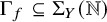
 in Y lies in the firmament
$\Gamma _f \subseteq \Sigma _Y({\mathbb {N}})$
 .Footnote
3
,
Footnote
4
This section is organized as follows. Section 4.1 introduces the firmament and compares it with the notion of Abramovich [Reference AbramovichAbr09]. We compare the firmament with our notion of firmness in Section 4.2. In Section 4.3, we prove the claim from [Reference AbramovichAbr09, §2.4.16] concerning the lifting of points lying in the firmament mentioned above using preliminary results established earlier in this paper. In Section 4.4 we compare the firmament and type for log stable maps.
The set
$\Sigma _X({\mathbb {N}})$
 of integral points of the cone complex
$\Sigma _X$
 can be defined (Definition A.31) for a general log scheme X as

Proposition A.35 shows this set
$\Sigma _X({\mathbb {N}})$
 is functorial in X for morphisms of log schemes
$f : X \to Y$
 in a way that reproduces the functoriality of cone complexes of toroidal embeddings. If
$f : X \to Y$
 is a log blowup, the sets of integral points of cone complexes are identified

in Corollary A.36.
Example 4.1. Let
$b : B = Bl_{\vec 0} {\mathbb {A}}^2 \to {\mathbb {A}}^2$
 be the blow-up of
${\mathbb {A}}^2$
 at the origin. The cone complex of
${\mathbb {A}}^2$
 consists of one cone
$\mathbb {R}_{\geq 0}^2$
 , with set of integral points
${\mathbb {N}}^2$
 . The morphism b is toric, and hence toroidal, corresponding to the subdivision of
$\mathbb {R}_{\geq 0}^2$
 into two cones along the diagonal. The map of cone complexes and the induced identification of sets of integral points are depicted in Figure 5.
The map on cone complexes corresponding to the log blowup of
${\mathbb {A}}^2$
 at the origin. Remark that source and target have the same set
${\mathbb {N}}^2$
 of integral points.

Regarding b as a morphism of log schemes, it is pulled back from the subdivision of Artin fans
$\Theta _{B} \to \Theta _{{\mathbb {A}}^2} = \Theta ^2$
 which may be obtained by quotienting b by
$\mathbb {G}_m^2$
 depicted in Figure 5. As
$\Theta _{B} \to \Theta ^2$
 is a subdivision, source and target have the same set of integral points

divided among a different set of cones.
4.1 The firmaments of Abramovich
Definition 4.2. For a morphism
$f : X \to Y$
 of log schemes (or log algebraic stacks), define the firmament
$\Gamma _f \subseteq \Sigma _Y({\mathbb {N}})$
 as the set-theoretic image
$\Gamma _f := \Sigma _f(\Sigma _X({\mathbb {N}}))$
 of the morphism of cone complexes

If
$p : S \to Y$
 ,
$f : X \to Y$
 are maps of log schemes and S has log structure of rank at most one everywhere, we say that p lies in the firmament of f if
$\Gamma _p \subseteq \Gamma _f$
 as subsets of
$\Sigma _Y({\mathbb {N}})$
 .
If
$f : X \to Y$
 is a flat morphism of toroidal embeddings, this is the definition of the “base (toroidal) firmament” in [Reference AbramovichAbr09, Definition 2.4.13]; this is shown to coincide with the valuative definition of firmaments in the next section [Reference AbramovichAbr09, §2.4.14].
If
$X' \to X$
 is a morphism inducing a surjection
$\Sigma _{X'}({\mathbb {N}}) \to \Sigma _X({\mathbb {N}})$
 on cone complexes, f and the composite
$X' \to X \to Y$
 have the same firmament. We can thus localize freely in the source and target (cf. Proposition 2.4). Firmaments are
${\mathbb {N}}$
 -sets (they are closed under scaling by
${\mathbb {N}}$
 ) but they need not be sublattices or submonoids in the cones of
$\Sigma _Y$
 .
Example 4.3. For each
$r \in {\mathbb {N}}$
 , we get a map

Let
$f : X \to Y$
 be the disjoint union of two of these maps, say for
$r = 2$
 and
$r = 3$
 :

The map on integral points of cone complexes is the disjoint union

of the maps defined by
$1 \mapsto 2$
 and
$1 \mapsto 3$
 . The resulting firmament is the union

which is closed under scaling by
${\mathbb {N}}$
 but lacks the element
$5$
 and so is not a submonoid of
${\mathbb {N}}$
 .
Example 4.4 [Reference AbramovichAbr09, Example (9), §2.4.15]
The inclusion of monoids

in Figure 6 leads to an equivariant morphism of affine toric varieties

Its firmament is simply
$Q_1 \subseteq {\mathbb {N}}^2$
 . More generally, root stacks and Kummer maps
$f : X \to Y$
 have associated inclusions
$\Sigma _X \subseteq \Sigma _Y$
 of cone complexes and their firmaments are precisely
$\Sigma _X \subseteq \Sigma _Y$
 .


The firmament
$\Gamma _f \subseteq \Sigma _Y$
 is “logarithmically birational.”
Corollary 4.5. Let
$f : X \to Y$
 be a map of log schemes. Given a commutative diagram

with vertical maps log blowups, the firmaments
$\Gamma _f = \Gamma _{\widetilde {f}}$
 are identified under the isomorphism
$\Sigma _{\widetilde {Y}}({\mathbb {N}}) = \Sigma _Y({\mathbb {N}})$
 of Corollary A.36.
Proof. Omitted.
Remark 4.6. We will mostly be interested in the case of maps
$p : S \to Y$
 from a log scheme S with log structure of rank at most one everywhere. Examples include:
-
○ The spectrum of a discrete valuation ring $S = {\mathrm{Spec}} R$
with log structure
$M_S := R \setminus \{0\}$
. This is the divisorial log structure at the closed point of S. -
○ Log points with rank-one log structure $S = {\mathrm{Spec}} k$
with
$\bar M_S = {\mathbb {N}}$
. -
○ The spectrum $S = {\mathrm{Spec}} R$
of a Dedekind ring R such as
$\mathbb {Z}$
with its divisorial log structure at a finite set of marked points.Footnote
5


Suppose
$p : S \to Y$
 is a morphism from a discrete valuation ring
$S = {\mathrm{Spec}} R$
 with the above log structure
$M_S = R \setminus \{0\}$
 . The inclusion of the closed point
$s \in S$
 induces an isomorphism of Artin fans
$\Theta _{s} = \Theta _{S}$
 . The firmaments of
$p : S \to Y$
 and of the composite
$s \subseteq S \to Y$
 are the same.
More generally, suppose S has a log structure of rank at most one everywhere and write
$S_{=1} \subseteq S$
 for the reduced closed subscheme on which the log structure is supported. The Artin fan
$\Theta _{S_{=1}} = \bigsqcup \Theta $
 is a disjoint union of copies of
$\Theta $
 indexed by
$\pi _0(S_{=1})$
 . The Artin fan
$\Theta _{S}$
 of S is the quotient of this disjoint union by identifying some of the open points, together with a disjoint summand
$\bigsqcup \mathrm {pt}$
 of points indexed by connected components of S with trivial log structure. Unless
$S_{=1} = \varnothing $
 is empty, the maps of cone complexes associated to
$p : S \to Y$
 and
$S_{=1} \subseteq S \to Y$
 have the same image and hence the same firmament.
As
$S_{=1}$
 supports a locally constant, rank-one characteristic monoid
$\bar M_{S_{=1}}$
 , the map
$S_{=1} \to Y$
 corresponds to a map to the evaluation stack
$\left ({S_{=1}}\right )^\circ \to \wedge Y$
 [Reference Abramovich, Chen, Gillam and MarcusACGM10]. By taking topological connected components
$\pi _0(-)$
 of the map

we obtain another equivalent definition of the firmament in this case. See Section 4.4 for the example of marked points on log prestable curves.
Let X be a toroidal embedding and R a discrete valuation ring with a map
$\phi : {\mathrm{Spec}} R \to X$
 which sends the generic point to the open interior
$U_X \subseteq X$
 . To these data, Abramovich associates a point
$n_\phi \in N_\sigma $
 in the monoid
$N_\sigma $
 dual to a local chart of X at the image of the closed point of
$ {\mathrm{Spec}} R$
 [Reference AbramovichAbr09, §2.4.9]. By composing with the map
$N_\sigma \to \Sigma _X$
 , we can view
$n_\phi $
 as an integral point in
$\Sigma _X({\mathbb {N}})$
 .
Such a morphism
$\phi $
 can be uniquely promoted to a morphism of log schemes
$\varphi : {\mathrm{Spec}} R \to X$
 with
$\varphi ^\circ = \phi $
 by giving
$ {\mathrm{Spec}} R$
 the log structure

This is because the log structure of X comes from a divisor which pulls back to the closed point of
$ {\mathrm{Spec}} R$
 by our assumption. (Any log map
$ {\mathrm{Spec}} R \to X$
 from a discrete valuation ring with log structure (4) must conversely send the generic point into the interior of X.)
Proposition 4.7. Use notation as above. The integral point
$n_\phi \in \Sigma _X({\mathbb {N}})$
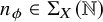 defined by Abramovich [Reference AbramovichAbr09, §2.4.9] is the unique generator of the firmament
$\Gamma _\varphi \subseteq \Sigma _X({\mathbb {N}})$
 as an
${\mathbb {N}}$
 -set. They determine each other uniquely.
Proof. Both can be defined étale locally in X and R. We can assume X is atomic and admits a strict étale morphism
$X \to V$
 to an affine toric variety
$V = {\mathrm{Spec}} \mathbb {Z}[P]$
 . The morphism
$P \to P' := \Gamma (X, \bar M_X)$
 is then localization at a face, so
$X \to V$
 factors through an open immersion
$ {\mathrm{Spec}} \mathbb {Z}[P'] \to V$
 . This factorization is also strict étale [Sta25, Tag 02GW], so we can replace P by
$P'$
 and assume
$\Theta _{X} = \Theta _{V}$
 so that
$\Sigma _X({\mathbb {N}}) = \Sigma _V({\mathbb {N}})$
 .
By the equality of cone complexes, it suffices to verify
$n_\phi $
 generates
$\Gamma _\varphi $
 for
$X = V$
 . As
$\phi $
 sends the generic point of
$ {\mathrm{Spec}} R$
 to the dense torus, the map
$\phi ^\sharp : \mathbb {Z}[P] \to R$
 is nonzero on elements
$p \in P$
 of the monoid:
$\phi ^\sharp (p) \in R \setminus \{0\}$
 . By definition,
$N_\sigma = \mathrm {Hom}(P, {\mathbb {N}})$
 and
$n_\phi : P \to {\mathbb {N}}$
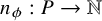 is the morphism sending
$p \in P$
 to the valuation of
$\phi ^\sharp (p) \in R \setminus \{0\}$
 in the discrete valuation ring R. This valuation is the quotient

So the element
$n_\phi \in \mathrm {Hom}(P, {\mathbb {N}})$
 is the composite of the top row in the diagram

This corresponds to the point
$\Theta \to \Theta _{P} \in \Sigma _V({\mathbb {N}})$
 given by functoriality of the Artin fan for the map of atomic log schemes
$ {\mathrm{Spec}} R \to V$
 , which was to be shown.
4.2 Firmaments vs firmness
Let
$f:X\to Y$
 be a toroidal morphism of toroidal embeddings, regarded, as always, as a morphism of log schemes.
Proposition 4.8. Let
$f : X \to Y$
 be a surjective, log flat morphism locally of finite presentation of log schemes and
$p : S \to Y$
 a log point with rank-one log structure. Then p is f-firm if and only if p lies in the firmament of f.
Proof. Because lying in the firmament and firmness are each local on S, we can replace S by one of its strict geometric points and
$X, Y$
 by strict-étale covers to assume Y is atomic with
$S \to Y$
 in its closed stratum and X a disjoint union of atomics.
Now there are compatible maps of Artin fans between them

Firmness is equivalent to finding a section
$\Theta _{S} \dashrightarrow \Theta _{X \times _Y^{\mathrm {fs}} S}$
 by Proposition 2.2. Such a map results in a lift
$\Theta _{S} \dashrightarrow \Theta _{X}$
 over
$\Theta _{Y}$
 , which means p lies in the firmament of f.
Now suppose p lies in the firmament of f. As in the proof of Theorem 1.3, write
$v \in \Theta _{Y}$
 for the origin and
$v' \in \Theta _{X}$
 for its pullback. The map
$X \to v'$
 is open and hence surjective by Lemma 2.6.
We assumed
$S \to Y$
 lay in the closed stratum, so
$S \to Y \to \Theta _{Y}$
 factors through v. Lying in the firmament means there is a lift of
$\Theta _{S} = \Theta \to \Theta _{Y}$
 to
$\Theta _{X}$
 , so there is a lift of
$S \to Y \to \Theta _{Y}$
 to
$\Theta _{X}$
 . This lift factors through the pullback
$v'$
 :

As
$X \to v'$
 is surjective and locally of finite presentation, the geometric point
$S \to v'$
 lifts to a point of
$X^\circ $
 [Sta25, Tag 0487]. As
$X \to v'$
 is strict, this also gives a log lift.
Theorem 4.9. Let
$f : X \to Y$
 be a log flat, log reduced, finitely presented morphism of log schemes and
$ {\mathrm{Spec}} R \to Y$
 a log morphism from a discrete valuation ring R equipped with its valuative log structure
$M_R = R \setminus \{0\}$
 . Let
$s \in \mathrm {{Spec}\:} R$
 be the closed point with induced log structure.
The following are equivalent:
-
○ The map $ {\mathrm{Spec}} R \to Y$
lies in the firmament
$\Gamma _f \subseteq \Sigma _Y$
. -
○ The map $ {\mathrm{Spec}} R \to Y$
is f-firm. -
○ The composite $s \to {\mathrm{Spec}} R \to Y$
is f-firm.


Proof. Because the firmament of
$ {\mathrm{Spec}} R$
 is the same after localizing, we can use Lemma A.12 and Lemma A.19 to étale localize and assume there are compatible morphisms of Artin fans fitting in a commutative diagram of solid arrows

and that Y is affine. The last two bullet points are equivalent by Proposition 2.8.
The map
$ {\mathrm{Spec}} R \to Y$
 lies in the firmament when there exists a dashed factorization. Equivalently, we need a dashed arrow
$s \dashrightarrow \Theta _{X}$
 .
Replace s by a strict geometric point. By Lemma 3.12, the two pullbacks give the same
$\mathscr {B}$
 in the diagram:

so finding the dashed lifts in the two squares is equivalent. But the dashed factorization in the left square is equivalent to firmness of
$s \to {\mathrm{Spec}} R \to Y$
 along f by Proposition 2.2.
Theorem 4.9 shows a rank-one log geometric point
$s \to Y$
 coming from a discrete valuation lies in the firmament of
$X \to Y$
 if and only if it is firm, that is, it lifts to a log point of X. Up to log alterations of Y, we now show that firmness can also be checked on log points.
Corollary 4.10. Let
$f : X \to Y$
 be a morphism of finite presentation with Y quasicompact. Suppose each log geometric point
$\bar s \to Y$
 with either
-
○ rank-one log structure $\bar M_{\bar s} = {\mathbb {N}}$
or -
○ divisible rank-one log structure $\bar M_{\bar s} = {\mathbb {Q}}_{\geq 0}$
Footnote
6


is f-firm. Then there is a log alteration
$Y' \to Y$
 which is f-firm.
Proof. If all rank-one log geometric points
$s \to Y$
 lift to X, so do all divisible rank-one log points
$t \to Y$
 . This is because any divisible rank-one log point
$t \to Y$
 factors through a rank-one log geometric point corresponding to some inclusion
$\frac{1}{n} {\mathbb {N}} \subseteq {\mathbb {Q}}_{\geq 0}$
 . So we have reduced to the divisible case.
All divisible rank-one log geometric points factor uniquely through any log alteration. So we can replace f by its f.s. pullback along a log alteration
$Y' \to Y$
 to assume f is integral and saturated by Lemma 3.3. Then Theorem 1.4 shows the firm locus is the set-theoretic image, but f is surjective by the lifting condition.
If all rank-one log geometric points
$\bar s \to Y$
 lift to X, we would like to find a log blowup of Y which makes f firm. Unfortunately, this is not the case.
Example 4.11. Let
$Q_1, Q_2, Q_3 \subseteq {\mathbb {N}}^2$
 be the submonoids

The monoid
$Q_1 \subseteq {\mathbb {N}}^2$
 is depicted in Figure 6. Then
${\mathbb {N}}^2 = Q_1 \cup Q_2 \cup Q_3$
 , as for
$(a, b) \in {\mathbb {N}}^2$
 , if either a or b is even, it lies in
$Q_2$
 or
$Q_3$
 . Otherwise, both a and b are odd, and it lies in
$Q_1$
 .
Let k be a geometric point. Define log schemes
$\bar x_i, Y$
 by

and

The inclusions
$Q_i \subseteq {\mathbb {N}}^2$
 dualize to give maps
$\bar M_Y \to \bar M_{\bar x_i}$
 inducing maps of log schemes
$\bar x_i \to Y$
 . Let
$X = \bar x_1 \sqcup \bar x_2\sqcup \bar x_3$
 be their disjoint union.
All rank-one log geometric points
$\bar s \to Y$
 lift to X, as
${\mathbb {N}}^2 = Q_1 \cup Q_2 \cup Q_3$
 . But no log blowup of Y will be f-firm. This is because no submonoid
$P \subseteq {\mathbb {N}}^2$
 with the same associated group
$P^{\mathrm {gp}} = \left ({{\mathbb {N}}^2}\right )^{\mathrm {gp}} = \mathbb {Z}^2$
 lifts to any of the
$Q_i$
 even though all elements
$p \in P$
 land in some
$Q_i$
 .
4.3 Application: lifting rational points
In [Reference AbramovichAbr09, paragraph following Theorem 2.4.18], a property of lifting rational points through toroidal dominant maps is stated without proof. We prove the claim in Theorem 4.15 using Theorem 1.3.
We use a log version of Hensel’s lemma which is known [Reference DenefDen16, Lemma 3.2], [Reference Loughran, Skorobogatov and SmeetsLSS20, Proposition 5.13]. We give a proof using Artin fans.
Lemma 4.12 (Log Hensel Lemma)
Let
$f \colon X \to Y$
 be a log smooth morphism of log schemes. Let
$p \colon s \to S$
 be a strict log point such that the residue field of s is algebraic over that of
$p(s)$
 and contains a separable closure of it, for example s a log geometric point. For any commutative square of log schemes

there exist a strict étale neighborhood
$V \to S$
 of s and a factorization

Proof. Let
$s'$
 be the separable closure of
$p(s)$
 in s. Replace X by
$X \times _Y^{\mathrm {fs}} S$
 to assume
$S = Y$
 . The claim is strict-étale local in
$S = Y$
 , so Lemma 2.7 lets us assume the underlying scheme
$S^\circ $
 is strictly henselian with closed point
$s'$
 . The statement is also strict-étale local in X, so we can assume X is a disjoint union of atomics using Lemma A.12.
The Artin fan is functorial for morphisms between disjoint unions of atomics, so we have a diagram

Because the Artin fans
$\Theta _{s} = \Theta _{S}$
 are the same, we have a dashed arrow in the diagram
$S \dashrightarrow Y \times _{\Theta _{Y}}^{\mathrm {fs}} \Theta _{X}$
 . Because
$X \to Y$
 is log smooth,
$X \to Y \times _{\Theta _{Y}}^{\mathrm {fs}} \Theta _{X}$
 is smooth. Pull back X along this dashed arrow to obtain a strict smooth morphism

Since
$W \to S$
 is a smooth morphism of algebraic spaces, the point
$s \to W$
 factors through a point
$s' \to W$
 and we are reduced to the classical Hensel’s lemma [Reference Atiyah and MacdonaldAM69, §10 Exercise 9], which concludes the proof.
Corollary 4.13. Let
$f \colon X \to Y$
 and
$p \colon S \to Y$
 be morphisms of log schemes and
$s \to S$
 a strict log geometric point. Suppose f is log smooth. Then,
-
1. There exists a strict étale neighborhood $V \to S$
of s factoring through X if and only if
$s \to Y$
is f-firm. -
2. There exists a strict étale cover $V \to S$
such that
$V \to Y$
factors through
$X \to Y$
if and only if p is f-firm.


Proof. (1) implies (2) since p is f-firm if and only if the composite

is f-firm for all strict log geometric points s of S. For (1), pick a strict geometric point
$p \colon s \to S$
 and let
$s'$
 be the algebraic closure of
$p(s)$
 in s. The corollary applied to
$s' \to S$
 implies the corollary applied to
$s \to S$
 , so we may assume
$s=s'$
 . By Theorem 1.3,
$p_s$
 is f-firm if and only if it factors through f. By Lemma 4.12,
$p_s$
 factors through f if and only if there is a strict étale neighborhood
$V \to S$
 of s in S such that
$V \to S \to Y$
 factors through f.
Remark 4.14. In the setting of Corollary 4.13, suppose that
$X \to Y$
 is set-theoretically surjective and that S has the divisorial log structure coming from a divisor D. Any strict geometric point of
$S \setminus D$
 has the trivial log structure, so it is automatically f-firm. Hence, p lifts étale-locally along f if and only if the strict geometric points of D are f-firm.
Let
$S= {\mathrm{Spec}} A$
 where A is a Dedekind domain with fraction field K of characteristic 0. For example, A could be the ring of integers of a number field K. If
$\mathscr Y$
 is an A-scheme endowed with a divisorial log structure given by a reduced divisor
$\mathscr D\subseteq \mathscr Y$
 , and
$\mathcal Q: S\to \mathscr Y^\circ $
 is a morphism of schemes such that the generic point of S maps to
$\mathscr Y^\circ \backslash \mathscr D$
 , we endow S with the divisorial log structure defined by the divisor
$\mathcal Q^{-1}(\mathscr D)$
 and we call it the divisorial log structure on S induced by
$\mathcal Q$
 .
Theorem 4.15. Let
$f: X \to Y$
 be a proper, dominant map of integral proper K-varieties and
$S = \mathrm {{Spec}\:} A$
 a Dedekind domain as above. After replacing S by a sufficiently small nonempty open subset, there exist a proper log smooth K-birational model
$f':X' \to Y'$
 of f and a proper log smooth S-model
$g:\mathscr X'\to \mathscr Y'$
 of
$f'$
 such that every K-point on the locus
$X^{\prime }_0\subseteq X'$
 where the log structure is trivial induces an S-point
$\mathcal Q$
 on
$\mathscr {Y}'$
 that lies in the firmament of g, and conversely, every S-point
$\mathcal Q$
 on
$\mathscr {Y}'$
 that intersects the locus where the log structure of
$\mathscr Y'$
 is trivial and lies in the firmament of g lifts étale locally on S to a rational point on
$X'$
 .
In the statement of Theorem 4.15, for each S-point
$\mathcal Q$
 , the log structure on S is the divisorial log structure induced by
$\mathcal Q$
 .
Proof. According to [Reference Abramovich, Denef and KaruADK13, Theorem 1.1], there exists a toroidal model
$f': X' \to Y'$
 of f such that
-
○ $X', Y'$
are smooth proper toroidal embeddings which admit charts Zariski-locally, -
○ $f'$
is proper and dominant, -
○ the toroidal boundary divisors of $X', Y'$
are strict normal crossings.


Endow
$X'$
 and
$Y'$
 with the divisorial log structures defined by the toroidal boundaries. As
$\mathrm {char}(K)=0$
 ,
$f'$
 is log smooth by Remark A.27, Lemma A.29 and Lemma A.30. (Alternatively, the existence of
$f'$
 can be deduced by [Reference Illusie and TemkinIT14, Theorem 3.9].)
After inverting finitely many primes of A, [Reference PoonenPoo17, Theorem 3.2.1] provides an S-model
$g:\mathscr {X}' \to \mathscr {Y}'$
 such that
-
○ $\mathscr {X}', \mathscr {Y}'$
are regular and proper over S, -
○ the closures of the s.n.c. divisors of $X', Y'$
are s.n.c. on
$\mathscr {X}', \mathscr {Y}'$
, -
○ g is log smooth with the divisorial log structures on $\mathscr {X}', \mathscr {Y}'$
.


The direct implication is immediate. For the converse, let
${\mathcal {Q}} : S \to \mathscr {Y}'$
 be such that the generic point of S lands in the locus where the log structure of
$\mathscr Y'$
 is trivial. Equip S with the divisorial log structure induced by
${\mathcal {Q}}$
 . This log structure is necessarily divisorial at finitely many points of S, as the generic point
$\mathrm {{Spec}\:} K \in S$
 does not map into the log structure of
$\mathscr {Y}'$
 .
Assume that
$\mathcal {Q}$
 lies in the firmament of g. Let
$\bar s\to S$
 be any strict geometric point with residue field that is algebraic over the residue field of its image in S. Then there exists a prime
$ \mathfrak {p} \in S$
 such that
$\bar s \to \mathrm {{Spec}\:} A$
 factors through the strict morphism
$\mathrm {{Spec}\:} A_{\mathfrak {p}} \to S$
 as a log map. The induced point
$\bar s \to \mathscr {Y}'$
 is g-firm. Indeed, if S has trivial log structure at
$\mathfrak p$
 , it follows directly from the definition of firmness (cf. Example 1.6), while if S has nontrivial log structure at
$\mathfrak p$
 , it follows from Theorem 4.9 and Lemma 2.1(ix), as
$\mathrm {{Spec}\:} A_{\mathfrak {p}} \to \mathscr {Y}'$
 lies in the firmament of g. In particular,
$\bar s$
 lifts to
$\mathscr X'$
 by Theorem 1.3, and by Lemma 4.12 there are a strict étale neighborhood
$V_{\bar s}\to S$
 of
$\bar s$
 and a lift
$V_{\bar s}\to \mathscr X'$
 of
$\bar s\to \mathscr X'$
 . Since S is Noetherian, finitely many such étale neighborhoods give a covering of S. Thus
$\mathcal Q: S\to \mathscr Y'$
 lifts étale locally on S to
$\mathscr X'$
 .
Remark 4.16.
-
(i) By shrinking S further, one can assume that $Y'$
and
$\mathscr Y'$
have the same cone complex and that
$f'$
and g define the same firmament as in Definition 4.2. -
(ii) A variant of Theorem 4.15 can be formulated without the assumption of dominance. If $f: X \to Z$
is a proper map of K-varieties, and
$Y \subseteq Z$
is the image of f with reduced scheme structure, then the same statement as above applies to
$f: X \to Y$
, which is now dominant. -
(iii) In the previous proof, many steps involve inverting primes in S to construct a log smooth model $\mathscr {X}' \to \mathscr {Y}'$
:-
(a) Choosing the models $\mathscr {X}'$
and
$\mathscr {Y}'$
of
$X'$
and
$Y'$
to be regular and proper. -
(b) After taking the Zariski closure of the snc toroidal divisor of $X'$
(resp.
$Y'$
) in
$\mathscr {X}'$
(resp.
$\mathscr {Y}'$
), we can assume that it is an snc divisor on
$\mathscr {X}'$
(resp.
$\mathscr {Y}'$
) after inverting enough primes in S. We endow both
$\mathscr {X}'$
(resp.
$\mathscr {Y}'$
) with the induced divisorial log structure, obtaining a map of log schemes
$\mathscr {X}' \to \mathscr {Y}'$
. -
(c) We can Zariski-locally obtain a chart
for the morphism $g : \mathscr {X}' \to \mathscr {Y}'$
. Finitely many such charts are needed as
$\mathscr {X}', \mathscr {Y}'$
are quasicompact. For each such chart, we need to invert primes of S to make
$U \to V \times _{\mathrm {{Spec}\:} A[P]} \mathrm {{Spec}\:} A[Q]$
smooth. The map
$g : \mathscr {X}' \to \mathscr {Y}'$
is then pseudo-toroidal (Definition A.26).
-
(d) Dominant pseudo-toroidal maps such as g become log smooth after inverting finitely many primes on S. The primes we must invert are those dividing the orders of the kernel and of the torsion part of the cokernel of the map $P^{\mathrm {gp}} \to Q^{\mathrm {gp}}$
.
-
-
(iv) By Corollary 4.13 a point $\mathcal Q:S\to \mathscr Y'$
lies in the firmament of g if and only if it lifts to
$\mathscr X'$
étale locally on S. Thus if the point does not lie in the firmament, there is at least one prime of S that ramifies in all finite extensions L of K such that
$X^{\prime }_{\mathcal Q}(L)\neq \varnothing $
.


Corollary 4.17. Let A be a Dedekind domain with fraction field K of characteristic 0. Let
$X\to Y$
 be a proper dominant morphism of integral proper K-varieties. Then up to inverting finitely many primes of A, there are a toroidal birational model
$f':X'\to Y'$
 , an open subset
$U\subseteq Y$
 where
$Y'\to Y$
 is an isomorphism, and a proper A-model
$\mathscr Y'$
 of
$Y'$
 such that for every
$y\in U(K)$
 the following are equivalent:
-
(i) y lies in the firmament of $f'$
; -
(ii) for every prime $\mathfrak p$
of A there is a finite extension L of K unramified at
$\mathfrak p$
such that
$X_y(L)\neq \varnothing $
; -
(iii) there are finitely many finite extensions $L_1,\dots ,L_r$
of K such that
$X_y(L_i)\neq \emptyset $
for all
$i\in \{1,\dots ,r\}$
and for every prime
$\mathfrak p$
of A there is
$i\in \{1,\dots ,r\}$
such that
$L_i/K$
is unramified at
$\mathfrak p$
.


Proof. Let
$U\subseteq Y$
 be an open subset where the birational morphism
$Y'\to Y$
 is an isomorphism. From Remark 4.16(i) and Corollary 4.13 it follows that a point
$y\in U(K)$
 lies in the firmament of
$f'$
 if and only if for every prime
$\mathfrak p$
 of A there is an étale neighborhood
$V\to \mathrm {{Spec}\:} A$
 of
$\mathfrak p$
 such that
$X^{\prime }_y(L)\neq \varnothing $
 where L is the function field of V. Since A is Noetherian, finitely many such V cover
$ {\mathrm{Spec}} A$
 .
4.3.1 Examples
To illustrate Theorem 4.15, we compute the étale local lift of a given firm point along a general toric morphism of affine spaces in Example 4.18, and provide concrete instances of this construction in Examples 4.20 and 4.21. Example 4.23 describes the firm locus in a case of a nondominant map (a diagonal map).
Example 4.18. When the toroidal embeddings are as simple as affine space, one can explicitly construct the étale base change giving the lift for a given firm point. Let R be a discrete valuation ring with uniformizer
$\pi $
 and fraction field K of characteristic
$0$
 . Consider a dominant toric mapFootnote
7

with
$a_{i,j}\in {\mathbb {N}}$
 for all i and j. Then, the firmament is given by

where
$f_{\Sigma }$
 is the induced map on fans. Assume that
$Q:\mathrm {{Spec}\:} R \to \mathbb {A}^n_R$
 lies in the firmament
$\Gamma _f$
 . If
$\alpha : R[y_1,\dots ,y_n] \to R, y_j \mapsto u_{y_j}\pi ^{e_{y_j}}$
 is the morphism defining Q, with
$u_{y_j} \in R^{*}$
 for all
$j \in \{1,...,n\}$
 , this implies that

In particular, there exists
$(e_{x_{1}},\dots ,e_{x_{m}}) \in \mathbb {N}^m$
 such that
$f_{\Sigma }(e_{x_{1}},\dots ,e_{x_{m}})=(e_{y_1},\dots ,e_{y_n})$
 . We have

To lift Q to
$\mathbb {A}^m_R$
 , it is enough to construct a map
$\beta : R[x_1,\dots ,x_m] \to R$
 such that
$\alpha =\beta \circ g$
 , where
$g:R[y_1,\dots ,y_n]\to R[x_1,\dots ,x_m]$
 is the morphism corresponding to f, that is,

for all
$j\in \{1,\dots ,n\}$
 . Comparing (7) and (8), if we solve the system

for
$u_{x_1}, \dots ,u_{x_m}$
 units in some extension
$R'$
 of R, and then set
$\beta (x_i):=u_{x_i}\pi ^{e_{x_i}}$
 , the point Q lifts to
$\mathbb {A}^m$
 over
$ {\mathrm{Spec}} R'$
 . Since f is dominant,
$m\geq n$
 and the map on coordinate rings of f is injective. In particular, the matrix

has full rank n, and therefore, the system (9) is consistent. Since
$m \geq n$
 , it has at least one solution in
$\overline {K}$
 . If
$(u_{x_1},...,u_{x_m})$
 is a solution of (9), we set
$R':=R[u_{x_1},\dots ,u_{x_m}]$
 . Therefore Q lifts locally on
$\mathrm {{Spec}\:} R$
 to
$\mathbb {A}^m$
 . The condition that
$R'$
 is étale over R depends only on the matrix
$(a_{i,j})_{1\leq i\leq m,1\leq j\leq n}$
 . We work out some concrete examples below.
Remark 4.19. A similar computation can be carried out when R is a principal ideal domain rather than a discrete valuation ring. In this case, the local lift can be chosen to be étale after possibly shrinking
$\mathrm {{Spec}\:} R$
 to a smaller open subset
$\mathrm {{Spec}\:} R'$
 , where
$R'$
 is obtained from R by inverting a suitable finite set of primes depending only on f. As a consequence, if
$f':X'\to Y'$
 is a toric morphism of split toric varieties, one can take
$r=1$
 in Corollary 4.17.
Example 4.20. Let R be a discrete valuation ring with uniformizer
$\pi $
 in which the prime
$3$
 is invertible. Then

has a global chart
$\mathbb {N}^2 \to \mathbb {N}^2, (a,b) \mapsto (2a+b,3a)$
 . The kernel of the induced map of groups
$\mathbb {Z}^2 \to \mathbb {Z}^2$
 is trivial, and its cokernel is computed through the Smith normal form to be
$\mathbb {Z}/3 \mathbb {Z}$
 . In particular f is log smooth if and only if
$3$
 is invertible in R. Let
$Q: \mathrm {{Spec}\:} R \to Y$
 be the point
$(u_s\pi ^{e_s},u_t\pi ^{e_t})$
 , with
$u_s,u_t$
 units in R. Then Q lies in the firmament of f if and only if
$(e_s,e_t)=(2a+3b,a)$
 for some
$(a,b) \in \mathbb {N}^2$
 . To lift Q étale locally to X, it is enough to solve

One of the possible solutions is
$u_x=u_t, u_y= \sqrt [3]{u_su_t^{-2}}$
 . We then have a lift
$ \mathrm {{Spec}\:} R[u_x,u_y]=\mathrm {{Spec}\:} R[u_y] \to X$
 given by the point
$(u_x\pi ^a,u_y \pi ^b)$
 , and
$\mathrm {{Spec}\:} R[u_x,u_y] \to \mathrm {{Spec}\:} R$
 is étale because
$3$
 is assumed to be invertible. In other words, Q lifts to X after an étale extension of R.
Example 4.21. Let R be a discrete valuation ring with uniformizer
$\pi $
 . Then

has a global chart
$\mathbb {N}^2 \to \mathbb {N}^2, (a,b) \mapsto (2a+b,a+2b)$
 . The kernel of the induced map of groups is trivial and its cokernel is
$\mathbb {Z}/3\mathbb {Z}$
 . Let
$Q: \mathrm {{Spec}\:} R \to Y, (s,t) \mapsto (u_s\pi ^{e_s},u_t\pi ^{e_t})$
 , with
$u_s,u_t$
 units in R. Then Q lies in the firmament of f if and only if
$(e_s,e_t)=(2a+b,a+2b)$
 for some
$(a,b) \in \mathbb {N}^2$
 . To lift Q étale locally to X, it is enough to solve

Note that all the solutions require taking a cube root of a unit. In particular, if f is log smooth, that is, if
$3$
 is invertible in R, then Q lifts étale locally to X (e.g., choosing
$(u_x,u_y)=(\sqrt [3]{u_s^2u_t^{-1}},\sqrt [3]{u_s^{-1}u_t^{2}})$
 ). As this example shows, the order of the torsion of the cokernel doesn’t have to be among the
$a_{i,j}$
 .
Example 4.22. In Example 4.3, given two distinct primes
$q_1$
 and
$q_2$
 , and a map
$\mathrm {{Spec}\:} \mathbb {Z} \to \mathbb {A}^1$
 given by
$t=q_1^2q_2^3$
 , the contact order of the restriction to
$\mathrm {{Spec}\:} \mathbb {Z}_{(p)} \to \mathbb {A}^1$
 is
$2$
 if
$p=q_1$
 ,
$3$
 if
$p=q_2$
 and
$0$
 otherwise. In particular, every such restriction lies in the firmament
$2\mathbb {N} \cup 3 \mathbb {N}$
 . Note that the point doesn’t lift under
$\left [{2}\right ] \sqcup \left [{3}\right ]: {\mathbb {A}}^1 \sqcup {\mathbb {A}}^1 \to {\mathbb {A}}^1$
 as a
$\mathbb {Z}$
 -point to
${\mathbb {A}}^1 \sqcup {\mathbb {A}}^1$
 , though it lifts locally.
Example 4.23. Consider the diagonal map
$\Delta : \mathbb {A}^1 \to \mathbb {A}^2$
 . It is toric but not dominant. For example, the point
$(\pi ,-\pi )$
 lies in the firmament, which is the diagonal in
$\mathbb {N} \times \mathbb {N}$
 , but doesn’t lift to
$\mathbb {A}^1$
 .
The map
$\Delta : X := {\mathbb {A}}^1 \to Y := {\mathbb {A}}^2$
 factors through the log blowup
$B := Bl_{\vec 0} {\mathbb {A}}^2$
 at the monoidal ideal
$(x, y)$
 . See Figures 5, 7.
The firm locus
$Y(\Delta )$
 for the map
$X \to Y$
 given by the diagonal
$\Delta : {\mathbb {A}}^1 \to {\mathbb {A}}^2$
 in Example 4.23 is the completion of the strict transform of the diagonal
$\Delta $
 in the blowup
$B = Bl_{\vec 0} {\mathbb {A}}^2$
 .

By Lemma 3.9, the firm locus
$Y(\Delta ) \subseteq Y$
 factors through B as well. As the factorization
$f: {\mathbb {A}}^1 \to B$
 is strict, the firm locus of f is the set-theoretic image by Theorem 1.4. The set theoretic image is represented by the formal scheme given by the completion of B at
${\mathbb {A}}^1$
 , which is
$Y(\Delta )$
 .
4.4 Stable maps
Our applications so far have mainly concerned lifting points valued in Dedekind rings like number fields or in discrete valuation rings. Nothing about the definition of firmness or our results requires us to work in the arithmetic or mixed characteristic setting.
We now consider firmness for maps
$f : X \to Y$
 of log smooth, projective schemes over
$\mathbb {C}$
 , and let S be a family of log smooth proper, connected curves over a base log scheme T. See the original [Reference KatoKat00, Reference Gross and SiebertGS13, Reference Abramovich and ChenAC14, Reference ChenChe14] or see [Reference Herr, Molcho, Pandharipande and WiseHMPW27] for an expository account.
Definition 4.24. A log prestable curve (over a base log scheme T) is a morphism
$\pi : C \to T$
 of log schemes which is integral, saturated, and log smooth and whose fibers are geometrically connected of dimension one. A log prestable map is a map
$f_C : C \to X$
 of log schemes with source a log prestable curve
$C \to T$
 . A log prestable map is stable if, for each geometric point
$\bar t \to T$
 , the map
$f_C$
 restricts to a stable map on underlying schemes on the fiber
$f_C : C_{\bar t} \to C \to X$
 . See [Reference KatoKat00] for discussion of the genera and number of marked points of such curves, which are locally constant functions on T.
Write
$\mathfrak M^{\mathrm {log}}_{{g, n}}(X)$
 for the log algebraic stack parameterizing all log prestable maps to X of genus g with n marked points. Let
$\overline {M}^{\mathrm {log}}_{{g, n}}(X) \subseteq \mathfrak M^{\mathrm {log}}_{{g, n}}(X)$
 be the strict open substack of log stable maps [Reference Gross and SiebertGS13]. These stacks are highly disconnected, with connected components indexed by “contact orders” of the marked points with the log structure of X.
The naïve “evaluation map” which restricts a log stable map
$f_C \colon C \to X$
 to its n marked points does not give a log map

Instead, there is an evaluation map to the log evaluation stack [Reference Abramovich, Chen, Gillam and MarcusACGM10]:

which we now recall.
Consider the quotient
$\Theta \to B\mathbb {G}_m$
 of the map
${\mathbb {A}}^1 \to \mathrm {pt}$
 by
$\mathbb {G}_m$
 . Write
$\mathscr {Q} \in \Theta $
 for the stacky origin of Remark 2.5, so that the composite

is an isomorphism on underlying stacks. This composite (10) is the universal “family of standard log points” as in [Reference Abramovich, Chen, Gillam and MarcusACGM10].
Definition 4.25 (The log evaluation stack [Reference Abramovich, Chen, Gillam and MarcusACGM10])
For a log scheme, log algebraic stack, or any (pseudo-)functor on f.s. log schemes Z, define its log evaluation stack
$\wedge Z$
 over
$B\mathbb {G}_m$
 by

The evaluation stack of an Artin cone
$\mathscr {B} = \Theta _{P}$
 splits into components indexed by the set
$\mathrm {Hom}(\Theta , \mathscr {B}) = \mathrm {Hom}(P, {\mathbb {N}})$
 [Reference HerrHer22, Example 2.47].
Given a map
$f : X \to Y$
 , there is an induced commutative diagram

In this way, the log evaluation map defined on log prestable maps is functorial.
Remark 4.26. Beware that the analogous diagram for log stable maps is not commutative:

This can be seen even when
$f : X \to Y$
 is a morphism of smooth, projective schemes with trivial log structures, in which case
$\overline {M}^{\mathrm {log}}_{{g, n}}(X) = \overline {M}_{{g, n}}(X)$
 and
$\overline {M}^{\mathrm {log}}_{{g, n}}(Y) = \overline {M}_{{g, n}}(Y)$
 . This is because each evaluation map
$\overline {M}_{{g, n}}(X) \to \wedge X$
 factors the
$\psi $
 -class map
$\overline {M}_{{g, n}}(X) \to B\mathbb {G}_m$
 encoding the cotangent line bundle at the corresponding marked point. These
$\psi $
 -classes are incompatible with stabilization.
If
$\pi : \overline {M}_{g, n + 1} \to \overline {M}_{{g, n}}$
 forgets the
$(n+1)$
 st marked point, for example, then [Reference KockKoc01, Lemma 1.3.1]

Here
$D \subseteq \overline {M}_{g, n+1}$
 is the divisor whose generic point has a single node joining a genus-g smooth curve and a rational component which contains the points i and
$n+1$
 . The map
$\pi $
 factors by first forgetting the
$(n+1)$
 st marked point and then stabilizing

and the first map identifies universal curves and hence
$\psi $
 -classes.
To see this arise in the context of a stabilization morphism, take
$X = \mathbb {P}^1$
 and consider degree-one maps
$\overline {M}_{{g, n}}(\mathbb {P}^1, 1)$
 . These all consist of a curve
$C = C' \cup \mathbb {P}^1$
 with a rational component mapping isomorphically onto X and the rest
$C'$
 being contracted. Take f to be the map
$X \to \mathrm {pt}$
 so that a stable map
$C \to X$
 is sent to the stabilization of C.
Let
$f : X \to Y$
 be a morphism of projective, log smooth log schemes and
$Y(f) \subseteq Y$
 be its firm locus. The factorization
$X \to Y(f) \subseteq Y$
 results in a factorization of log evaluation stacks

We define
$\wedge Y(f)$
 by the functor of points, though it may not be representable in a nice category. It still constrains the set of connected components of
$\wedge Y$
 in which the image of
$\wedge X$
 can lie.
Proposition 4.27. We have a commutative diagram

In order for a log prestable map
$C \to Y$
 to lift to X, it is necessary that each of the n marked points of C lands in the firm locus of the map f.
The following example shows that the type of a log prestable map doesn’t in general determine its firmament.
Example 4.28 [Reference Gross and SiebertGS13, Examples]
Let
$X=\mathbb {P}^1$
 endowed with the divisorial log structure induced by the boundary divisor
$D=\{0\}$
 . Consider two scheme-theoretic maps from smooth source curves
$f_i : C_i^\circ \to X^\circ $
 for
$i = 1, 2$
 . Suppose
$f_1^{-1}(D) = \{x_1, x_2, \cdots , x_n\}$
 is a finite, nonempty set of points and
$f_2^{-1}(D) = C_2^\circ $
 is the whole curve. We will promote
$f_1, f_2$
 to log prestable maps. By “type” below, we mean the type of the object in
$\underline {GS}(\overline {\mathcal {M}})$
 [Reference Gross and SiebertGS13, Definitions 1.7 and 1.10] that corresponds to a prestable log map.
Endow
$C_1$
 with the divisorial log structure at
$\{x_1, \cdots , x_n, y_1, \cdots , y_s\}$
 , where
$y_i \in C_1^\circ $
 are points mapping away from
$D \subseteq X$
 . Then
$f_1$
 is a log prestable map whose type consists of
$n + s$
 maps
$u_{x_i}, u_{y_j} : {\mathbb {N}} \to {\mathbb {N}}$
 of which only the
$u_{y_j}$
 ’s are the zero map. The firmament of
$f_1$
 is the union of the images of the
$u_{x_i}$
 , as taking the dual gives the same map
$u_{x_i}$
 . The type determines the firmament of
$f_1$
 and not conversely.
There is no way to promote
$f_2$
 to a log prestable map without generic log structure coming from a base log scheme, as points with trivial log structure cannot map to points in
$D \subseteq X$
 with nontrivial log structure. Let Q be a sharp, nonzero, f.s. monoid and
$S = {\mathrm{Spec}} k$
 the spectrum of a field with constant log structure
$\bar M_S = \underline {Q}$
 and
$M_S = k^* \times \bar M_S$
 .
Suppose
$C_2$
 has n marked points
$x_i$
 . Any choice of maps

with h nonzero promotes
$f_2$
 to a log prestable map
$C_2 \to X$
 over S, where
$C_2$
 has generic log structure Q. The firmament is the union of the duals
$h^\vee : Q^\vee \to {\mathbb {N}}$
 and
$u_{x_i}^\vee = u_{x_i} : {\mathbb {N}} \to {\mathbb {N}}$
 inside
${\mathbb {N}} = \Sigma _X({\mathbb {N}})$
 . The type of
$f_2$
 is merely the set
$\{u_{x_i}\}$
 of maps and does not include the information of the map h, so the type need not determine the firmament.
A Background
We give an idiosyncratic introduction to the circle of ideas surrounding log schemes, Artin fans, and toroidal embeddings designed for brevity and relevance. This should not be the introduction of any reader to log schemes, for which [Reference KatoKat89, Reference OgusOgu18, Reference Abramovich, Chen, Gillam, Huang, Olsson, Satriano and SunACG+13, Reference Herr, Molcho, Pandharipande and WiseHMPW27] are better-suited.
A.1 Basics on Artin fans
Any log scheme X admits a natural map to a combinatorial object, called the Artin fan of X and denoted by
$\Theta _{X}$
 , obtained by gluing local charts for X in an appropriate sense. Here, in A.2 and in A.5, we discuss Artin fans and show that they are equivalent to the cone complexes used in [Reference AbramovichAbr09].
Definition A.1. A monoid for us is an integral, saturated, finitely generated, commutative, unital semigroup. A monoid P is sharp if its group of units is zero
$P^* = 0$
 .
Define the category of cones Footnote 8 to be the opposite category of sharp monoids

Write
$\mathrm {Cone} \, P$
 ,
$\bar M_\sigma $
 for the cone and monoid corresponding to a monoid P and a cone
$\sigma $
 . We view cones as functors on monoids

Example A.2. For any integrally closed ring R, (normal) affine toric varieties over R are precisely the schemes of the form
$X = \mathrm {{Spec}\:} R[P]$
 for some torsion-free monoid P.
Let
$T \subseteq X$
 be the dense torus
$\mathrm {{Spec}\:} R [P^{\mathrm {gp}}]$
 . Toric varieties admit sheaves of monoids

Under the inclusion
$M_X \subseteq \mathcal {O}_X$
 , the units are identified:
$M_X^* = \mathcal {O}_X^*$
 . Set
$\bar M_X:= M_X/M_X^*$
 . All (f.s.) log structures are locally based on these sheaves.
Definition A.3. A face of a monoid P is a submonoid
$Q\subset P$
 such that for all
$a,b \in P$
 , if
$a+b\in Q$
 , then
$a, b \in Q$
 . They are exactly the kernels of maps between sharp f.s. monoids.
A face localization is a quotient
$P \to P/Q$
 under which the face Q is the preimage of
$0 \in P$
 . Face localizations are dual to face inclusions of cones under the identification
$\mathrm {Cone} \, P = \mathrm {Hom}(P, {\mathbb {N}})$
 .
An cone space is a “space obtained by gluing cones along faces,” that is, the colimit of a diagram whose objects are cones and whose arrows are face inclusions. This colimit is in the category of presheaves on cones.
Definition A.4. An Artin cone is the stack quotient of a (normal) affine toric variety over
$\mathbb {Z}$
 by the action of its dense torus. In other words, Artin cones are stacks on schemes of the form

where P is a cone. Write

An Artin fan
$\mathscr {B}$
 is a log algebraic stack which admits a strict étale cover by Artin cones
$\{\Theta _{P_{i}} \to \mathscr {B}\}$
 .
For example, the log algebraic stack
$\Theta \times B\mathbb {Z}/3$
 is an Artin fan in our sense. If
$\mathscr {B}$
 is an Artin fan, the map
$\mathscr {B} \to \mathsf {{Log}}$
 is étale and in particular of DM type.
If
$\mathscr {B} \to \mathsf {{Log}}$
 is an étale, representable map from an algebraic stack over a separably closed field, then
$\mathscr {B}$
 is conversely an Artin fan [Reference Abramovich and WiseAW18, Lemma 2.3.1]. The statement is false without representability [Reference Abramovich and WiseAW18, Remark 2.3.10].
Remark A.5. The sheaf of monoids
$\bar M_X$
 defined in Example A.2 descends to the stack quotient
$\left [{X/T}\right ]$
 . It also glues along faces to provide a sheaf
$\bar M_{\mathscr {B}}$
 on any Artin fan
$\mathscr {B}$
 .
Artin cones are equivalent to cones, which allows us to see cones and cone stacks as stacks on schemes.
Theorem A.6 [Reference Cavalieri, Chan, Ulirsch and WiseCCUW20, Theorem 6.11]
The functor

is an equivalence.
A.2 Log schemes
We assume all schemes and algebraic stacks are locally of finite type and all log structures are f.s. unless otherwise stated. As a result, a log scheme X is essentially the same as a scheme
$X^\circ $
 together with a map
$X \to \mathscr {B}$
 to an Artin fan, viewed as an algebraic stack. Different maps
$X \to \mathscr {B}_1$
 ,
$X \to \mathscr {B}_2$
 can result in the same log structure on X, but there is an initial one.
Theorem A.7. Let X be a (locally noetherian) algebraic stack. The following are equivalent:
-
1. A sheaf of monoids $M_X$
on the lisse-étale site of X with a map
$\varepsilon : M_X \to \mathcal {O}_X$
to the structure sheaf
$\mathcal {O}_X$
(viewed as a multiplicative monoid) which restricts to an isomorphism
$\varepsilon : \varepsilon ^{-1} \mathcal {O}^*_X \overset {\sim }{\longrightarrow } \mathcal {O}_X^*$
on the units and locally is pulled back from Example A.2. -
2. A sheaf of sharp monoids $\bar M_X$
on the lisse-étale site of X together with a monoidal map $$\begin{align*}\bar M_X \to \Theta|_X \end{align*}$$to the stack $\Theta = \left [{{\mathbb {A}}^1/\mathbb {G}_m}\right ]$
of pairs
$(L, s)$
of line bundles and sections restricted to the lisse-étale site of X.
-
3. A morphism $X \to \mathsf {{Log}}$
to M. Olsson’s stack of (f.s.) log structures [Reference OlssonOls03]. -
4. (over $\mathbb {C}$
) A morphism
$X \to \mathscr {B}$
to an Artin fan which is initial among all factorizations through Artin fans $$\begin{align*}X \to \mathscr{B} \to \mathsf{{Log}}\end{align*}$$with $\mathscr {B} \to \mathsf {{Log}}$
representable by algebraic spaces.


Proof. M. Olsson showed (1) is equivalent to (3) in [Reference OlssonOls03]. The second interpretation (2) is due to [Reference Borne and VistoliBV12]. The existence of an initial factorization
$X \to \mathscr {B} \to \mathsf {{Log}}$
 can be found in [Reference Abramovich, Chen, Marcus and WiseACMW17, Proposition 3.2.1].
Definition A.8. Any of the equivalent data in Theorem A.7 defines a log structure on the algebraic stack X. Log schemes and log algebraic stacks are schemes and algebraic stacks equipped with log structures. Write
$X^\circ $
 for the underlying algebraic stack of a log algebraic stack, forgetting the log structure.
The initial factorization in Theorem A.7.4 defined over
$\mathbb {C}$
 is called the Artin fan of X and written
$\Theta _{X} := \mathscr {B}$
 . We generalize this construction to mixed characteristic in Definition A.13 below.
We regard schemes and algebraic stacks as subcategories of the category of log algebraic stacks by endowing them with the initial log structure

Regarding the underlying stack
$X^\circ $
 as a log algebraic stack in this way, we have a canonical log morphism

forgetting all log structure.
Definition A.9. By Definition A.8, the algebraic stack
$\mathsf {{Log}}$
 of [Reference OlssonOls03] parameterizes log structures:

For any log algebraic stack Y, there is an algebraic stack
$\mathsf {{Log}}_Y$
 parameterizing log structures together with a log map to Y:

Definition A.10 [Reference OlssonOls03, Theorem 4.6]
A log algebraic stack X is log smooth, log flat, log étale, or log reduced if the map
$X \to \mathsf {{Log}}$
 is smooth, flat, étale, or has reduced geometric fibers.
These definitions can be made for a morphism
$f \colon X \to Y$
 of log schemes, using the map to the relative stack of log structures
$X \to \mathsf {{Log}}_Y$
 .
Unless specified otherwise, we assume all our schemes and algebraic stacks are locally of finite type. A log scheme or log algebraic stack X (locally of finite type) has a stratification
$X = \bigsqcup X_\alpha $
 into locally closed subsets
$X_\alpha \subseteq X$
 given by finite intersections and complements of closed subschemes defined by monoidal ideals
$I_X \subseteq M_X$
 of the log structure [Reference Molcho and WiseMW22, §2.2.2].
Definition A.11 [Reference Molcho and WiseMW22, Definition 2.2.2.2]
A log scheme X is atomic if it has a unique stratum
$X_\alpha \subseteq X$
 which is closed, connected and, for all geometric points
$\bar z \to X_\alpha $
 , the restriction map

is an isomorphism.
We very frequently localize log schemes and log algebraic stacks X to reduce to the case where they are atomic, implicitly using the next lemma.
Lemma A.12 [Reference Molcho and WiseMW22, Proposition 2.2.2.5]
Any locally Noetherian log scheme or log algebraic stack X admits a strict étale cover
$\{Y_i \to X\}$
 by atomic log schemes
$Y_i$
 .
We define the Artin fan
$\Theta _{X}$
 of a locally Noetherian log algebraic stack X in mixed characteristic. Let
$\{X_i \to X\}$
 be a strict smooth cover by atomic log schemes
$X_i$
 . Choose strict smooth covers
$X_{ij\alpha } \to X_i \times _X X_j$
 of their intersections by atomic log schemes
$X_{ij \alpha }$
 . Write
$Y_0 = \bigsqcup X_i$
 and
$Y_1 = \bigsqcup X_{ij\alpha }$
 , so we have maps

that form a truncated strict smooth hypercover. The Artin fans of each
$X_i, X_{ij\alpha }$
 are defined as the Artin cone of their characteristic monoids and similarly for
$Y_k$
 :


Definition A.13. Let X be a locally Noetherian log algebraic stack and construct
$X_i, X_{ij\alpha }, Y_0, Y_1$
 as above. The Artin fan of X is the coequalizer

computed in the category of étale sheaves on the stack
$\mathsf {{Log}}$
 .
We check that this construction of the Artin fan taken from [Reference Abramovich, Chen, Marcus and WiseACMW17, Proposition 3.2.1] is independent of the choice of hypercover
$X_i, X_{ij\alpha }, Y_0, Y_1$
 . It need not have the universal property of Theorem A.7.4 in mixed characteristic:
Example A.14. Let
$X = {\mathrm{Spec}} \mathbb {Z}[1/5]$
 have trivial log structure. As X is atomic, its Artin fan as constructed above is just
$\Theta _{\Gamma (X, \bar M_X)} = \mathrm {pt} = \mathrm {{Spec}\:} \mathbb {Z}$
 . As the map
$X \to \mathsf {{Log}}$
 is étale, it is its own initial étale factorization. But
$X \neq \mathrm {{Spec}\:} \mathbb {Z}$
 .
Remark A.15. The map
$\Theta _{X} \to \mathsf {{Log}}$
 is always representable by algebraic spaces, as it is the éspace étalé of an étale sheaf on
$\mathsf {{Log}}$
 . General Artin fans
$\mathscr {B}$
 need not be representable over
$\mathsf {Log}$
 .
Example A.16. Let R be a strictly henselian local ring and X a log scheme with underlying scheme
$X^\circ = {\mathrm{Spec}} R$
 and closed point
$x \in X$
 . Then
$\Theta _{X} = \Theta _{x}$
 because there are no nontrivial strict-étale covers of X.
Example A.17. Let R be a discrete valuation ring and equip it with log structure

Then
$\bar M_R = {\mathbb {N}}$
 and a section
$\bar M_R \to M_R$
 is a choice of uniformizer. It is atomic, with Artin fan
$\Theta _{ {\mathrm{Spec}} R} = \Theta $
 . If
$s \in {\mathrm{Spec}} R$
 is the closed point, then
$\Theta _{s} = \Theta $
 also.
The assignment
$X \mapsto \Theta _{X}$
 is not functorial in that there are morphisms
$f : X \to Y$
 for which there cannot exist a commutative square [Reference Abramovich, Chen, Marcus, Ulirsch and WiseACM+16, §5.4.1]:

For an exact description of when such a square is possible, see [Reference Herr, Molcho, Pandharipande and WiseHMPW27]. We will only need some weaker criteria.
Lemma A.18. If
$f : X \to Y$
 is strict, there is a commutative square

Proof. Over
$\mathbb {C}$
 , the universal property in Theorem A.7.4 gives functoriality in this case as the morphism
$X \to Y$
 lies over
$\mathsf {{Log}}$
 . In mixed characteristic, one can refine a hypercover of Y by a hypercover of X and use those to define the Artin fans.
The Artin fan is “locally functorial” in the following sense:
Lemma A.19. If
$X, Y$
 are atomic and
$f : X \to Y$
 is a morphism of log schemes, there is a commutative square

In particular, we can find such a commutative square after localizing any morphism
$f : X \to Y$
 by Lemma A.12.
Proof. Write
$P := \Gamma (X, \bar M_X)$
 ,
$Q := \Gamma (Y, \bar M_Y)$
 . As
$X, Y$
 are atomic, their Artin fans are Artin cones

The morphisms
$X \to \Theta _{X}, Y \to \Theta _{Y}$
 correspond to the identification of
$P, Q$
 with the global sections of
$\bar M_X, \bar M_Y$
 . The desired commutative square comes from functoriality of global sections and the map of sheaves
$\bar M_Y|_X \to \bar M_X$
 .
For functoriality of the Artin fan
$f : X \to Y$
 , it does not suffice that
$X, Y$
 have Zariski charts:
Example A.20 [Reference UlirschUli17, Example 4.8]
Let
$X = C_1 \cup C_2$
 be the union of two copies of
$C_i = \mathbb {P}^1$
 meeting at two nodes, p and q. Write
$U_p = X \setminus \{q\}$
 and
$U_q = X \setminus \{p\}$
 and order the two components of the intersection
$V_1 \sqcup V_2 = U_p \cap U_q = X \setminus \{p, q\}$
 .
Equip
$U_p$
 with the log structure associated to

and likewise for
$U_q$
 . Our convention is that
$0^0 := 1$
 and
$0^a := 0$
 if
$a \neq 0$
 .
Descend to X by making distinct identifications of

Then
$\bar M_X$
 is not a constant sheaf.
The Artin fan
$\Theta _{X}$
 is
$\left [{\Theta ^2/\mathbb {Z}/2}\right ]$
 . Then we have the same problem with functoriality as in the famous counterexample [Reference Abramovich, Chen, Marcus, Ulirsch and WiseACM+16, §5.4.1]. We spell this out.
Consider the subdivision
$\mathscr {B} \to \Theta _{X}$
 given by the
$\mathbb {Z}/2$
 -quotient of the subdivision at the ray
$(1, 1)$
 . That is,

The pullback to X is a log scheme Z which we describe.
Let E be the fiber over
$\vec 0 \in {\mathbb {A}}^2$
 of the log blowup
$Bl_{\vec 0} {\mathbb {A}}^2$
 . As a scheme,
$E^\circ = \mathbb {P}^1$
 . It has generic log structure
${\mathbb {N}}$
 and two points at which the log structure is
${\mathbb {N}}^2$
 .
Let
$C^{\prime }_i = C_i \times E$
 . Form Z as the pushout of
$C^{\prime }_1 \sqcup C^{\prime }_2$
 given by identifying the two fibers
$\{p\} \times E \subseteq C^{\prime }_i$
 and also, separately, the two fibers over q. Identify the fibers in two opposite ways, where one is via the identity
 and the other by the automorphism swapping the coordinates on
$\mathbb {P}^1$
 .
Claim. The Artin fan
$\Theta _{Z}$
 is not
$\mathscr {B}$
 , but
$\Theta ^2$
 . In fact, the Artin fan of
$\mathscr {B}$
 is
$\Theta ^2$
 .
This is shown the same way as in [Reference Abramovich, Chen, Marcus, Ulirsch and WiseACM+16, §5.4.1]. The stack
$\mathsf {{Log}}$
 has a stacky point
$B\mathbb {G}_m$
 parameterizing rank-one log structures, which is the image of the point
$[B\mathbb {G}_m/\mathbb {Z}/2] \in \mathscr {B}$
 corresponding to the ray
$\mathbb {Z}_{>0} \cdot (1, 1)$
 . But the
$\mathbb {Z}/2$
 in the stabilizer of the point of
$\mathscr {B}$
 maps to zero in the stabilizer of
$\mathsf {{Log}}$
 . So this map
$\mathscr {B} \to \mathsf {{Log}}$
 is not representable. By Remark A.15,
$\mathscr {B}$
 is not the Artin fan of any log scheme.
We need to show we can’t have a dashed arrow

making the diagram commute. If we restrict to the fiber over the closed point in
$\Theta _{X}$
 , we see the dashed arrow would imply that the
$\mathbb {Z}/2$
 -bundle over Z ordering the coordinates of
$\mathbb {P}^1 = E$
 is trivial on Z, which is false.
We need one more case of functoriality for the Artin fan.
Lemma A.21. Let P be a sharp f.s. monoid and X a log algebraic stack. Any morphism
$X \to \Theta _{P}$
 factors uniquely through
$X \to \Theta _{X}$
 .
Proof. Present P as a coequalizer

The diagram of Artin fans is then an equalizer

so we can reduce to the case
$P = {\mathbb {N}}$
 . We need to identify the sections of the characteristic monoids

Find a strict étale cover
$U = \bigsqcup _\alpha U_\alpha \to X$
 by a disjoint union of atomics
$U_\alpha $
 . Do the same for the fiber products
$V_{\alpha \beta \gamma } \to U_\alpha \times _X U_\beta $
 and write
$V := \bigsqcup _{\alpha , \beta , \gamma } \Theta _{V_{\alpha \beta \gamma }}$
 . We get a strict étale hypercover of the Artin fan of X

Because
$\bar M_X, \bar M_{\Theta _{X}}$
 are sheaves, their sections on
$X, \Theta _{X}$
 are the equalizers of the sequences


These sequences may be identified, and so can their equalizers.
A.3 Log alterations, modifications, and blowups
Definition A.22. A map of Artin fans
$\pi : {\mathscr {B}} \to {\mathscr {C}}$
 is a log alteration if it is of DM type, proper, and birational. A map of log algebraic stacks
$X \to Y$
 is a log alteration if, strict étale locally in Y, there is an f.s. pullback square

One can assume
$Y \to {\mathscr {C}}$
 is strict, making the square also an ordinary pullback square
 .
A log alteration
$f : X \to Y$
 of log algebraic stacks is a
-
○ Log modification if f is representable.
-
○ Log blowup if f is representable and projective.
-
○ Root stack if f is ${\mathbb {Q}}$
-integralFootnote
9
.

Log subalterations and submodifications are strict open substacks of log alterations and modifications.
See [Reference Abramovich and WiseAW18, §2.4, 2.6] for discussion of what we call log modifications and the forthcoming [Reference Herr, Molcho, Pandharipande and WiseHMPW27] for an expository account.
Remark A.23. A map
$f : X \to Y$
 of log algebraic stacks is a log alteration if, strict-étale locally in Y, there is an f.s. pullback square

for a proper, birational, equivariant morphism
$V_1 \to V_2$
 of T-toric varieties. Write
$\pi : \Sigma _1 \to \Sigma _2$
 for the map of fans associated to
$V_1 \to V_2$
 . Then f is a log modification if
$\pi $
 is a subdivision, a log blowup if
$\pi $
 is a subdivision which is the bend locus of a piecewise linear function, and a root stack if
$\pi $
 is the inclusion of a sublattice on each cone.
In particular, log alterations are log monomorphisms, or monomorphisms in the category of f.s. log schemes. This reduces to the case of
$\left [{V_1/T}\right ] \to \left [{V_2/T}\right ]$
 as above, which results because subdivisions and sublattices are subfunctors of the ambient fan.
A.4 Toroidal maps vs. log smoothness
Definition A.24. Let S be a scheme. We call a toroidal embedding
Footnote
10
over S a pair
$(f \colon X \to S,U_X)$
 where
-
○ $f \colon X \to S$
is a morphism of schemes. -
○ $X \setminus U_X$
is a Weil divisor on X. -
○ Any geometric point $x \to X$
has an étale neighborhood
$x \to V_x \to X$
such that
$V_x$
is étale over an affine toric variety
${\mathbb {A}}_P \times S$
over S, and
$V_x \times _X U_X$
is the preimage of the dense torus
${\mathbb {A}}_{P^{\mathrm {gp}}}$
of
${\mathbb {A}}_P$
. We call
$V_x \to {\mathbb {A}}_P \times S$
a toric chart of X at x.


We call
$D=X \setminus U_X$
 the boundary divisor of the toroidal embedding
$(f,U_X)$
 . When there is no ambiguity, we will denote
$(f,U_X)$
 by
$(X,U_X)$
 , or
$(X,D)$
 or even X.
A toroidal morphism
$f \colon X \to Y$
 between toroidal embeddings is a map of S-schemes such that, étale-locally on X and Y, there exist commutative diagrams

where the vertical maps are the toric charts and the bottom map is toric. This does not depend on the choice of toric charts since toric charts are unique modulo localization and the torus action.
Remark A.25. The category of toroidal embeddings with toroidal morphisms admits a natural faithful embedding into log schemes, by equipping them with the divisorial log structure given by their toroidal boundary divisor. In particular, a toroidal morphism of toroidal embeddings is a morphism of the corresponding log schemes. We consider toroidal embeddings as log schemes without further mention.
The following definition is designed to encompass both log smooth maps and toroidal maps.
Definition A.26. Let
$f \colon X \to Y$
 be a map of log schemes. We say f is pseudo-toroidal if, strict étale-locally on X and Y, there exists a global chart

such that the induced map
$X \to Y \times _{{\mathbb {A}}_P} {\mathbb {A}}_Q $
 is smooth.
Remark A.27. Toroidal morphisms are pseudo-toroidal. Indeed, given a diagram as in (A.1), both X and
$Y\times _{{\mathbb {A}}_P} {\mathbb {A}}_Q$
 are étale over
${\mathbb {A}}_Q \times S$
 (the first by definition, the second by base change), so the map
$X \to Y\times _{{\mathbb {A}}_P} {\mathbb {A}}_Q$
 is étale as well by [Sta25, Tag 02GW]. In particular, it is smooth.
Lemma A.28. Let K be a field. Any toroidal embedding over
$\mathrm {{Spec}\:} K$
 is a disjoint union of irreducible K-toroidal embeddings.
Proof. Let X be a toroidal embedding over
$\mathrm {{Spec}\:} K$
 . For all points
$x\in X$
 , pick a geometric point
$\bar {x} \to X$
 above x and a connected étale neighborhood
$j_x \colon U_x \to X$
 of
$\bar {x}$
 such that
$U_x$
 is étale over an affine toric K-variety, hence irreducible. As x varies, the images
$j_x(U_x)$
 form a Zariski open covering of X by irreducible schemes, so each connected component of X is irreducible.
Lemma A.29. Let
$f \colon X \to Y$
 be a toroidal map between connected K-toroidal embeddings and
$x \to X$
 a strict geometric point. Then, f is dominant if and only if the group homomorphism

is injective.
Proof. Let
$y=f(x)$
 ,
$P:=\bar {M}_{Y,f\!(x)}$
 ,
$Q:=\bar {M}_{X,x}$
 and
$N:= \mathrm{Ker}(P^{\mathrm {gp}} \to Q^{\mathrm {gp}})$
 . Since X is toroidal, there exist a connected étale neighborhood V of
$f(x)$
 in Y, a connected étale neighborhood U of x in
$X\times _Y V$
 , and a commutative diagram

as in (A.1). All four schemes in (A.2) are irreducible by Lemma A.28, and the vertical arrows are étale by definition, so
$U \to V$
 is dominant if and only if the toric map

is. This is in turn equivalent to the map of dense tori

being dominant. The cokernel of g is
$\mathrm {{Spec}\:} K[N]$
 , so g is dominant if and only if
$N=\{0\}$
 .
It remains to show that
$U \to V$
 is dominant if and only if
$X \to Y$
 is. This reduces to showing that
$U \to X$
 and
$V \to Y$
 are dominant, which is true since X and Y are irreducible by Lemma A.28.
Lemma A.30. Let
$f \colon X \to Y$
 be a log scheme map,
$x \to X$
 a strict geometric point of characteristic p and
$y=f(x)$
 . Then f is log smooth at x if and only if f is pseudo-toroidal at x and the kernel and torsion part of the cokernel of
$\bar {M}^{\mathrm {gp}}_{Y,y} \to \bar {M}^{\mathrm {gp}}_{X,x}$
 are finite groups whose orders are not multiples of p.
Proof. Working locally on X and Y in the strict étale topology, we may assume f is globally charted by
$\bar {M}^{\mathrm {gp}}_{Y,y} \to \bar {M}^{\mathrm {gp}}_{X,x}$
 . Then, this is [Reference KatoKat89, 3.5].
Conversely, varieties which admit log smooth maps to a field K of characteristic
$0$
 are toroidal over that field; see [Reference UlirschUli17, Corollary 4.10] or [Reference DenefDen21, Remark 3.2].
A.5 Artin fans and cone complexes
For the reader’s benefit, we compare Artin fans with the cone complexes used by Abramovich in [Reference AbramovichAbr09]. See [Reference Herr, Molcho, Pandharipande and WiseHMPW27] for a more thorough account.
Recall the (generalized) cone complex of a toroidal embedding or log scheme X. For each geometric point
$\bar x \to X$
 , consider the monoid
$\bar M_{X, \bar x}$
 . A specialization
$\bar x_1 \rightsquigarrow \bar x_2$
 yields a cospecialization map
$\bar M_{X, \bar x_2} \to \bar M_{X, \bar x_1}$
 , which dually gives

The colimit of these maps is the cone complex of X [Reference Kempf, Knudsen, Mumford and Saint-DonatKKMSD73, page 71], [Reference Gross and SiebertGS13, Appendix B], [Reference AbramovichAbr09, §2.4.8], [Reference Abramovich, Chen, Gross and SiebertACGS25, Appendix C]:

The cone complex
$\Sigma $
 is a union of real cones
$\sigma \subseteq \mathbb {R}^{\dim \sigma }$
 together with integral structures
$\sigma _{\mathbb {N}} \subseteq \mathbb {Z}^{\dim \sigma }$
 such that
$\sigma _{\mathbb {N}} \otimes \mathbb {R} = \sigma $
 [Reference Kempf, Knudsen, Mumford and Saint-DonatKKMSD73, Definitions II.1.5, II.1.6].
Definition A.31. We denote by
$\Sigma ({\mathbb {N}})$
 the union of the integral structures
$\sigma _{\mathbb {N}} \subseteq \sigma $
 of each cone
$\sigma \in \Sigma $
 , and we call its elements the integral points of
$\Sigma $
 .
If
$\Sigma = (\sigma , \sigma _{\mathbb {N}})$
 , for example,
$\Sigma ({\mathbb {N}}) = \sigma _{\mathbb {N}}$
 .
Lemma A.32. The set of maps
$\Theta \to \Theta _{X}$
 to the Artin fan of X coincides with the set of integral points of the cone complex
$\Sigma _X$
 of X

Proof. If X is atomic and
$\bar x \to X$
 lies in its deepest closed stratum, observe that

and conclude.
Now let X be arbitrary and let
$\bigsqcup U_i \to X$
 be a strict-étale cover by atomic log schemes, resulting in a strict-étale cover
$\Theta _{Q_i} \to \Theta _{X}$
 of Artin fans, with
$Q_i = \Gamma (U_i, \bar M_{U_i})$
 . Arguing as in Lemma 2.4, we recognize the hom-set as the colimit

The same is true for
$\Sigma _X({\mathbb {N}})$
 . Reduce to the above atomic case
$X = U_i$
 by checking that such an identification is functorial.
Definition A.33. Define the (integral points of the) cone complex of an arbitrary log scheme X admitting an Artin fan by

The set
$\Sigma _X({\mathbb {N}})$
 does not have a monoid structure, though one can scale its elements to view
$\Sigma _X({\mathbb {N}})$
 as an
${\mathbb {N}}$
 -set [Reference OgusOgu18, §I.1.2]. Unlike the Artin fan, this cone complex is functorial for all maps of log schemes.
Lemma A.34. A morphism
$f : X \to Y$
 of log schemes yields an associated map

on integral points of cone complexes. The assignment
$X \mapsto \Sigma _X({\mathbb {N}})$
 yields a functor

Proof. Choose strict-étale covers
$\{U_\alpha \to X\}$
 ,
$\{V_\beta \to Y\}$
 by affine, atomic log schemes
$U_\alpha , V_\beta $
 that form commutative squares

for each
$\alpha $
 and appropriately chosen
$\beta $
 . There result covers of Artin fans

By Lemma 2.4, each map
$r : \Theta \to \Theta _{X}$
 factors through some
$\Theta _{U_{\alpha }}$
 . We can therefore assume
$X, Y$
 are affine and atomic provided we check the assignment
$\Sigma _f(r)$
 is independent of the choice of lift to
$\Theta _{U_{\alpha }}$
 , which is left to the reader.
If
$X, Y$
 are atomic, there is a commutative square

Define
$\Sigma _f(r)$
 by composition
$\Theta \overset {r}{\to } \Theta _{X} \to \Theta _{Y}$
 and conclude.
Proposition A.35. Consider the fully faithful embedding

of toroidal embeddings as f.s. log schemes. The equality of Lemma A.32 makes the square of functors

2-commutative.
Proof. All that remains to check is that the functoriality defined in Lemma A.34 coincides with the usual functoriality of cone complexes for toroidal embeddings on integral points. Let
$f : X \to Y$
 be a morphism of toroidal embeddings and choose strict étale covers
$U \to X$
 ,
$V \to Y$
 by disjoint unions of atomics
$U, V$
 that fit into a commutative square

with resulting square of integral points of cone complexes

In fact, we have two such squares with potentially distinct arrows which we need to equate.
By Lemma 2.4 with
$P = {\mathbb {N}}$
 ,
$\Sigma _U({\mathbb {N}}) \to \Sigma _X({\mathbb {N}})$
 is surjective. So it suffices to check the functoriality maps are the same for all the maps in (A.3) besides the map
$\Sigma _X({\mathbb {N}}) \to \Sigma _Y({\mathbb {N}})$
 . But then this is by construction.
Corollary A.36. If
$b : \widetilde {X} \to X$
 is a log blowup, their cone complexes have the same set of integral points

Proof. The definition of the map
$\Sigma _b$
 is local in X, so we can assume X is atomic and
$\widetilde {X}$
 is pulled back from a log blowup
$\mathscr {B} \to \Theta _{X}$
 of the Artin fan of X. Then maps from
$\Theta $
 factor uniquely through any log blowup

so we are done.
B Points under dominant morphisms
The results of this section provide a generalization of [Reference CampanaCam05, Proposition 4.3] and [Reference AbramovichAbr09, Proposition 2.1.8] by relaxing all regularity assumptions. As in [Reference CampanaCam05, Reference AbramovichAbr09] we first introduce some invariants that capture properties of the fibers of the morphism, such as the orbifold base, and then we show that images of rational points under the morphism are Campana points with respect to these invariants.
B.1 The orbifold base invariants
In [Reference CampanaCam05] Campana introduces the concept of orbifold base of a dominant morphism to a smooth curve as a divisor on the curve whose coefficients are determined by the morphism. In [Reference AbramovichAbr09, §2.2], Abramovich extends the concept of orbifold base to higher dimensional base varieties in terms of b-divisors. Here, we introduce an invariant
$m_{f,\mathscr D}$
 for every integral closed subscheme
$\mathscr D$
 of the base, without passing to birational models.
Let R be a Noetherian ring. Let
$f:\mathscr X\to \mathscr Y$
 be a dominant morphism of integral proper R-schemes with reduced generic fiber. Let
$\mathscr D\subseteq \mathscr Y$
 be an integral closed subscheme. Let
$\mathscr U \subseteq \mathscr X$
 be an affine open subset
$\mathscr {U} = {\mathrm{Spec}} A$
 such that
$\mathscr U \cap f^{-1}(\mathscr D) \neq \varnothing $
 .
Let
$I\subseteq A$
 be the ideal that defines
$\mathscr D\times _{\mathscr Y} \mathscr U$
 . Let
$\mathfrak p_1,\dots ,\mathfrak p_r$
 be the isolated primes of I in A. Let

Then
$m_{f, \mathscr D,\mathscr U}$
 is the largest integer such that
$I\subseteq \bigcap _{i=1}^r\mathfrak p_i^{m_{f, \mathscr D,\mathscr U}}$
 . Let
$m_{f, \mathscr D}$
 be the smallest
$m_{f, \mathscr D,\mathscr U}$
 , where
$\mathscr U$
 runs over all affine open subsets of
$\mathscr X$
 intersecting
$f^{-1}(\mathscr D)$
 . The following example shows that there are in principle no relations between the orbifold base invariants
$m_{f,\mathscr D}$
 and
$m_{f,\mathscr D'}$
 for
$\mathscr D'\subseteq \mathscr D$
 integral closed subschemes of
$\mathscr Y$
 .
Example B.1. Consider
$f:\mathbb {A}^3\to \mathbb {A}^3$
 given by

Denote by
$(u,v,w)$
 the coordinates on the target affine space. If
$\mathscr D=V(u-v)$
 and
$\mathscr D'=V(u,v)$
 , then
$m_{f,\mathscr D}=1<m_{f,\mathscr D'}=2$
 . On the other hand, if
$\mathscr D=V(v)$
 and
$\mathscr D'=V(v,w)$
 , then
$m_{f,\mathscr D}=2>m_{f,\mathscr D'}=1$
 .
B.2 Campana points
The results [Reference CampanaCam05, Proposition 4.3] and [Reference AbramovichAbr09, Proposition 2.1.8] state that the images of rational points under a dominant morphism to a smooth curve defined over a number field k are contained in the set of
$\mathcal {O}_{k,M}$
 -Campana points determined by the orbifold base invariants for a suitable finite set of places M. We recall that notions of Campana points have been defined on curves by [Reference CampanaCam05, §3.4, §4.1] and [Reference CampanaCam11, §§13.5-13.6] as orbifold rational points, and on higher dimensional varieties by [Reference AbramovichAbr09, §2.2] as soft S-integral points and by [Reference Abramovich and Várilly-AlvaradoAVA18, Reference Pieropan, Smeets, Tanimoto and Várilly-AlvaradoPSTVA21, Reference Mitankin, Nakahara and StreeterMNS24] as Campana points. Here, we use the definition of intersection multiplicity as in [Reference Mitankin, Nakahara and StreeterMNS24] to define the local Campana condition with respect to the orbifold base invariants in the setting of Section B.1.
Assume that R is a discrete valuation ring. For each closed subscheme
$\mathscr {D}\subseteq \mathscr {Y}$
 and each R-point
$y\in \mathscr {Y}(R)$
 such that
$y\notin \mathscr {D}(R)$
 , let
$ {\mathrm{Spec}} R\times _{\mathscr {Y}} \mathscr {D}$
 be the fiber product of
$y: {\mathrm{Spec}} R\to \mathscr {Y}$
 with the inclusion
$\mathscr {D}\subseteq \mathscr {Y}$
 . Consider
$n_{y,\mathscr {D}} \in {\mathbb {N}}$
 such that
$ {\mathrm{Spec}} R\times _{\mathscr {Y}} \mathscr {D}= {\mathrm{Spec}} R/(\pi )^{n_{y,\mathscr {D}}}$
 , where
$\pi $
 is a uniformizer of R. For
$m\in \mathbb {Z}_{\geq 1}$
 , let
$(\mathscr {Y}, \mathscr {D}, m)(R)$
 be the set of points
$y\in \mathscr {Y}(R)$
 such that either
$y\in \mathscr {D}(R)$
 or
$n_{y,\mathscr {D}}=0$
 or
$n_{y,\mathscr {D}}\geq m$
 .
Remark B.2. If
$\mathscr {D}'\subseteq \mathscr {D}$
 and
$m'\leq m$
 , there is an inclusion
$(\mathscr {Y}, \mathscr {D}, m)(R)\subseteq (\mathscr {Y}, \mathscr {D}', m')(R)$
 .
B.3 Images of points
Theorem B.3. Let R be a discrete valuation ring and
$f:\mathscr X\to \mathscr Y$
 be a dominant morphism of integral proper R-schemes with reduced generic fiber. Let
$\mathscr D\subseteq \mathscr Y$
 be an integral closed subscheme. Then
$f(\mathscr X(R))\subseteq (\mathscr Y, \mathscr D, m_{f,\mathscr D})(R)$
 .
Proof. Let
$x\in \mathscr X(R)$
 . Let
$f(x)\in \mathscr Y(R)$
 be the point induced by x by composition with f. If
$f(x)\in \mathscr D(R)$
 , there is nothing to do. If
$f(x)\notin \mathscr D(R)$
 , consider the commutative diagram of fiber products

Commutativity of the diagram gives
$n_{f(x),\mathscr D}=n_{x,\mathscr X\times _{\mathscr Y}\mathscr D}$
 . Let
$\mathscr U= {\mathrm{Spec}} A$
 be an affine open subset of
$\mathscr X$
 that contains
$x( {\mathrm{Spec}} R/(\pi ))$
 . Let
$\psi :A\to R$
 be the ring homomorphism induced by x. Let
$I\subseteq A$
 be the ideal that defines
$\mathscr D\times _{\mathscr Y} \mathscr U$
 . Note that
$ {\mathrm{Spec}} R\times _{\mathscr Y}\mathscr D \cong {\mathrm{Spec}} (R/\psi (I)). $
 Thus
$\psi (I)=(\pi )^{n_{f(x),\mathscr D}}$
 .
If
$ f^{-1}(\mathscr D)\cap \mathscr U=\varnothing $
 , then
$n_{f(x),\mathscr D}=0$
 . Assume that
$ f^{-1}(\mathscr D)\cap \mathscr U\neq \varnothing $
 . Let
$\mathfrak p_1,\dots ,\mathfrak p_r$
 be the isolated primes of I in A. For each
$i\in \{1,\dots ,r\}$
 , there are inclusions

where the third inclusion holds by definition of
$m_{f, \mathscr D}$
 .
Let k be the fraction field of a DVR R, and let
$m_{f,\mathscr D_k}$
 be the multiplicity defined by the base change of f and
$\mathscr D$
 to k. Then
$m_{f,\mathscr D}\leq m_{f,\mathscr D_k}$
 , and hence
$(\mathscr Y, \mathscr D, m_{f,\mathscr D_k})(R)\subseteq (\mathscr Y, \mathscr D, m_{f,\mathscr D})(R)$
 . We show that if R is a Dedekind domain, this inclusion is strict at only a finite number of maximal ideals of R.
Theorem B.4. Let R be a Dedekind domain with fraction field k. Let
$f:X\to Y$
 be a dominant morphism of integral proper varieties over k with reduced generic fiber. Let
$\mathscr Y$
 be a proper R-model of Y. Let
$D\subseteq Y$
 be an integral closed subscheme and
$\mathscr D\subseteq \mathscr Y$
 an integral closed subscheme that is an R-model of D. Then
$f(X(k))\subseteq (\mathscr Y_{\mathfrak m}, \mathscr D_{\mathfrak m}, m_{f,D})(R_{\mathfrak m})$
 , for all but finitely many maximal ideals
$\mathfrak m$
 of R.
Proof. Let
$\mathscr X$
 be a proper R-model of X. Then f induces a birational map
$\mathscr X\dashrightarrow \mathscr Y$
 . By [Reference PoonenPoo17, Theorem 3.2.1] there is
$a\in R$
 such that the birational map induced by f on
$\mathscr X_{R_a}$
 is a morphism
$f_{R_a}:\mathscr X_{R_a}\to \mathscr Y_{R_a}$
 , where
$R_a=R[\frac 1a]$
 . Let
$\mathcal I$
 be the ideal sheaf of
$\mathscr D\times _{\mathscr Y}\mathscr X_{R_a}$
 as a closed subscheme of
$\mathscr X_{R_a}$
 , and let
$\mathcal J_1,\dots ,\mathcal J_s$
 be the ideal sheaves of the irreducible components of
$\mathscr D\times _{\mathscr Y}\mathscr X_{R_a}$
 endowed with reduced scheme structure. Let
$\mathcal I'$
 be the ideal sheaf of
$D\times _{Y}X$
 as a closed subscheme of X, and let
$\mathcal J^{\prime }_1,\dots ,\mathcal J^{\prime }_r$
 be the ideal sheaves of the irreducible components of
$D\times _{Y}X$
 endowed with reduced scheme structure. Note that
$r\leq s$
 . By [Reference Atiyah and MacdonaldAM69, Proposition 3.11] we can assume without loss of generality that
$\mathcal I'=\mathcal I\otimes _{R_a}k$
 and
$\mathcal J^{\prime }_i=\mathcal J_i\otimes _{R_a}k$
 for all
$i\in \{1,\dots ,r\}$
 . By definition of
$m_{f,D}$
 we have
$\mathcal I'\subseteq {\mathcal J_i'}^{m_{f,D}}$
 for all
$i\in \{1,\dots ,r\}$
 , where
${\mathcal J_i'}^{m_{f,D}}$
 is the sheaf associated to the
$m_{f,D}$
 -th power of
$\mathcal J_i'$
 . For
$i\in \{1,\dots ,s\}$
 , let
$\mathscr W_i\subseteq \mathscr X_{R_a}$
 be the closed subscheme defined by
$\mathcal J_i^{m_{f,D}}$
 . By [Reference PoonenPoo17, Theorem 3.2.1] there is
$b\in R$
 such that the rational map
$\mathscr W_{i,R_{ab}}\to \mathscr D\times _{\mathscr Y}\mathscr X_{R_{ab}}$
 induced by
$\mathcal I'\subseteq {\mathcal J^{\prime }_i}^{m_{f,D}}$
 is a closed immersion for all
$i\in \{1,\dots ,r\}$
 and
$\mathscr W_{i,R_{ab}}=\varnothing $
 for all
$i\in \{r+1,\dots ,s\}$
 . Since R is a Dedekind domain, the number of maximal ideals of R that contain
$ab$
 is finite. Let
$\mathfrak m$
 be a maximal ideal of R that does not contain
$ab$
 , and let
$f_{\mathfrak m}:\mathscr X_{\mathfrak m}\to \mathscr Y_{\mathfrak m}$
 be the morphism induced by f. Then
$\mathcal I_{\mathfrak m}\subseteq {\mathcal J_{i,\mathfrak m}}^{m_{f,D}}$
 , and hence,
$m_{f_{\mathfrak m},\mathscr D_{\mathfrak m}}\geq m_{f,D}$
 . Thus
$m_{f_{\mathfrak m},\mathscr D_{\mathfrak m}}=m_{f,D}$
 . Since
$\mathscr X_{\mathfrak m}$
 is proper over
$R_{\mathfrak m}$
 , we have
$X(k)=\mathscr X_{\mathfrak m}(R_{\mathfrak m})$
 . Hence,
$f(X(k))\subseteq (\mathscr Y_{\mathfrak m}, \mathscr D_{\mathfrak m}, m_{f_{\mathfrak m},\mathscr D_{\mathfrak m}})(R_{\mathfrak m})$
 by Theorem B.3.
Since the set of points of X where the fibers of f are reduced is open [Reference GrothendieckGro66, Corollaire 12.1.7], there is a proper closed subset
$\mathscr W$
 of
$\mathscr Y$
 that contains all integral closed subschemes
$\mathscr D$
 of
$\mathscr Y$
 such that
$m_{f, \mathscr D}>1$
 , and among those, there are only finitely many of codimension
$1$
 . These, or the irreducible components of
$\mathscr W$
 , give a first approximation of the set of images of k-rational points under f via Theorems B.3 and B.4. By Example B.1 it is unclear whether there are finitely many integral closed subschemes
$\mathscr D_1,\dots ,\mathscr D_n$
 of
$\mathscr {Y}$
 such that
$\bigcap _{\mathscr {D}}(\mathscr {Y},\mathscr {D},m_{f,\mathscr {D}})(R)=\bigcap _{i=1}^n(\mathscr {Y},\mathscr {D}_i,m_{f,\mathscr {D}_i})(R)$
 . By Remark B.2 this question is equivalent to asking whether each
$\mathscr {D}$
 contains a proper closed subscheme
$\mathscr {W}_{\mathscr {D}}\subsetneq \mathscr {D}$
 that contains every integral closed subscheme
$\mathscr {D}'\subseteq \mathscr {D}$
 such that
$m_{f,\mathscr {D}'}>m_{f,\mathscr {D}}$
 .
B.4 Alternative definitions
In the notation of Section B.1, let
$I=\bigcap _{i=1}^s \mathfrak q_i$
 be a minimal primary decomposition of the ideal I in the ring A. For
$i\in \{1,\dots ,s\}$
 , let
$\mathfrak p_i$
 be the radical of
$\mathfrak q_i$
 . Without loss of generality we can assume that there is
$r\leq s$
 such that
$\{\mathfrak p_i:1\leq i\leq r\}$
 is the set of isolated primes of I. There are several alternative possibilities to define the orbifold base invariants. For example,
-
(a) $m_a=\min _{\mathscr U}\min _{1\leq i\leq r}\max \{e:\mathfrak q_i\subseteq \mathfrak p_i^{e}\}$
, -
(b) $m_b=\min _{\mathscr U}\min _{1\leq i\leq r}\max \{e:\mathfrak q_i\subseteq \mathfrak p_i^{(e)}\}$
, where
$\mathfrak p_i^{(e)}=\mathfrak p_i^eA_{\mathfrak p_i}\cap A$
is the e-th symbolic power of
$\mathfrak p_i$
. -
(c) $m_c=\min _{\mathscr U}\max \{e: I\subseteq {\sqrt I}^e\}$
, -
(d) $m_d=\min _{\mathscr U}\max \{e:{\sqrt I}^e\subseteq I\}$
.


We observe that if
$\mathscr X$
 is regular and
$\mathscr D$
 has codimension
$1$
 , then
$m_a=m_b=m_c=m_d=m_{f,\mathscr D}$
 . In general, there are inequalities
-
1. $m_{f,\mathscr D}\geq m_a$
, as
$I\subseteq \mathfrak q_i$
for all
$i\in \{1,\dots ,r\}$
; -
2. $m_{f,\mathscr D}\geq m_c$
, as
$(\bigcap _{i=1}^r\mathfrak p_i)^e\subseteq \bigcap _{i=1}^r\mathfrak p_i^e$
for all
$e\geq 0$
; -
3. $m_b\geq m_a$
, as
$\mathfrak p_i^e\subseteq \mathfrak p_i^{(e)}$
for all
$i\in \{1,\dots ,r\}$
and all
$e\geq 0$
; -
4. $m_d\geq m_c$
, as
$\sqrt I^{m_d}\subseteq \sqrt I^{m_c}$
.


As a consequence of the first two inequalities, the statement of Theorem B.3 holds also replacing
$m_{f,\mathscr D}$
 by
$m_a$
 , or by
$m_c$
 . The same cannot be said about
$m_b$
 and
$m_d$
 . The following example shows that Theorem B.4 doesn’t hold replacing
$m_{f,\mathscr D}$
 with
$m_b$
 . This can be explained by the fact that using symbolic powers means restricting attention around the generic points of the irreducible components of
$f^{-1}\mathscr D$
 , which can lead to missing conditions around other points of
$\mathscr D$
 .
Example B.5. Let
$\mathscr X=V(a(x+y)^2-bz^2)\subseteq \mathbb P^2_{\mathbb {Z}}\times \mathbb P^1_{\mathbb {Z}}$
 with coordinates
$((x:y:z),(a:b))$
 . Let
$\mathscr Y=\mathbb P^1_{\mathbb {Z}}$
 , and let
$f:\mathscr X\to \mathscr Y$
 be the projection onto
$\mathbb P^1_{\mathbb {Z}}$
 . This example has a section given by
$x=-y, z=0$
 . Thus
$m_{f,\mathscr D}=1$
 for all
$\mathscr D\in \mathbb P^1(\mathbb {Z})$
 . Let
$\mathscr D=(0:1)\in \mathbb P^1(\mathbb {Z})$
 . In the affine open given by
$b=1,x=1$
 , the fiber over
$(0:1)$
 is given by the ideal
$(a,z^2)=(a, a(1+y)^2-z^2)$
 which is primary with radical
$(a,z)=(a,z,a(y+1)^2-z^2)$
 . Since
$y+1\in \mathbb Z[a,y,z]/(a(y+1)^2-z^2)\smallsetminus (a,z)$
 , it follows that
$(a,z^2)\subseteq (a,z)^{(2)}$
 , but
$(a,z^2)\not \subseteq (a,z)^2$
 .
Acknowledgments
The project began in the Seminar on Campana Points at Utrecht and D. Abramovich’s 2024 LMS Invited Lecture Series Logs and stacks in birational geometry and moduli. The authors were trying to translate the results of [Reference AbramovichAbr09] in terms of log geometry. We are grateful to D. Abramovich for his blessing to do so and helpful correspondence. L. Herr is grateful to Sebastian Casalaina-Martin for asking about the case of stable maps after a talk he gave at CU Boulder. S. Mehidi thanks A. M. Botero for valuable discussions on toroidal geometry. M. Pieropan thanks F. Bartsch for stimulating discussions about Appendix B and the organizers of the workshop “Diophantine and Rationality Problems” in Sofia for the opportunity to give a talk and the participants for asking stimulating questions afterwards. The authors thank the anonymous referee for their comments, which improved the exposition of this paper.
Competing interests
The authors have no competing interests to declare.
Financial support
L. Herr received partial support from the NWO grant VI.Vidi.193.006. S. Mehidi is supported by the NWO grant VI.Vidi.213.019. M. Pieropan is partially supported by the NWO grants OCENW.XL21.XL21.011 and VI.Vidi.213.019. T. Poiret is supported by EPSRC New Investigator award EP/X002004/1.
For the purpose of open access, a CC BY public copyright license is applied to any Author Accepted Manuscript version arising from this submission.


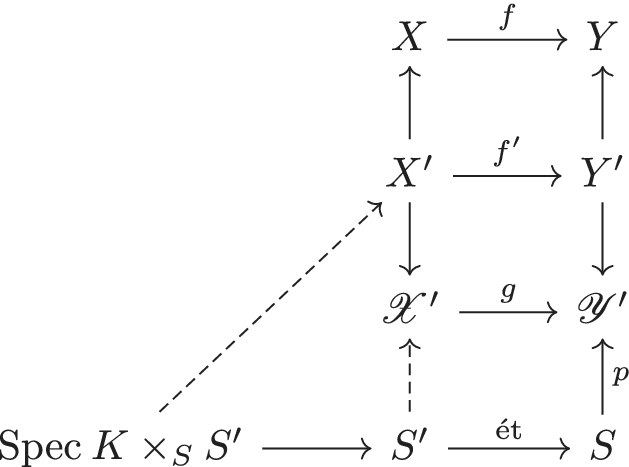

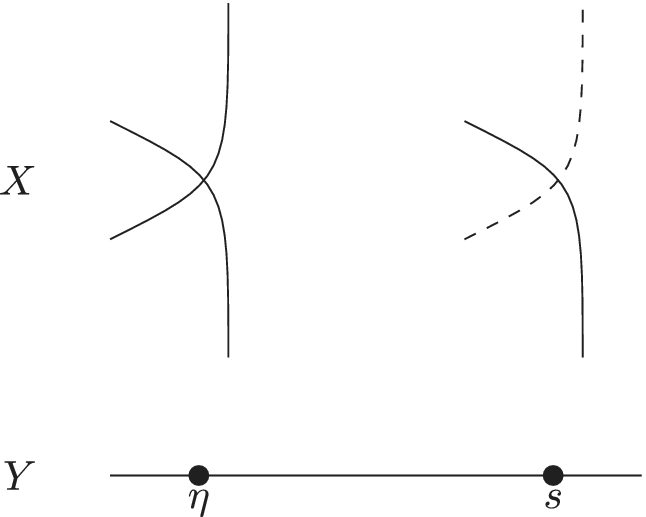


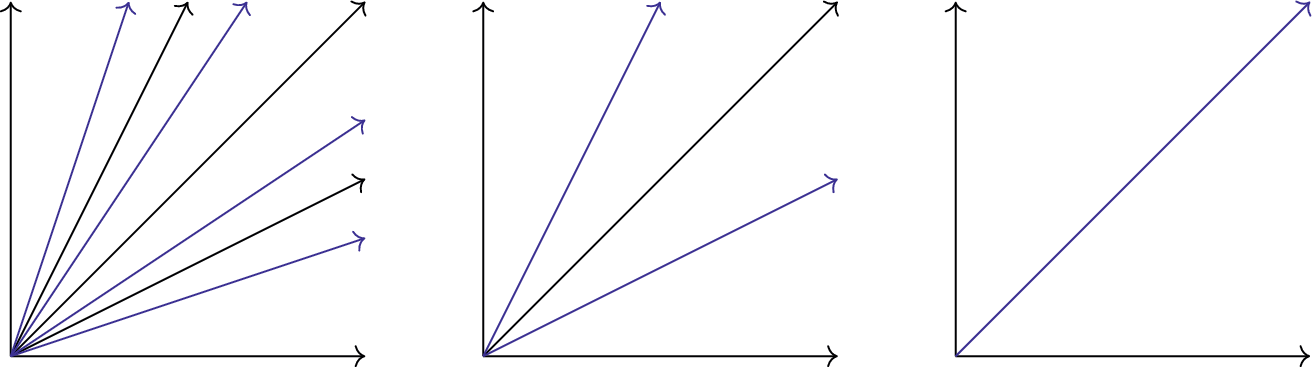


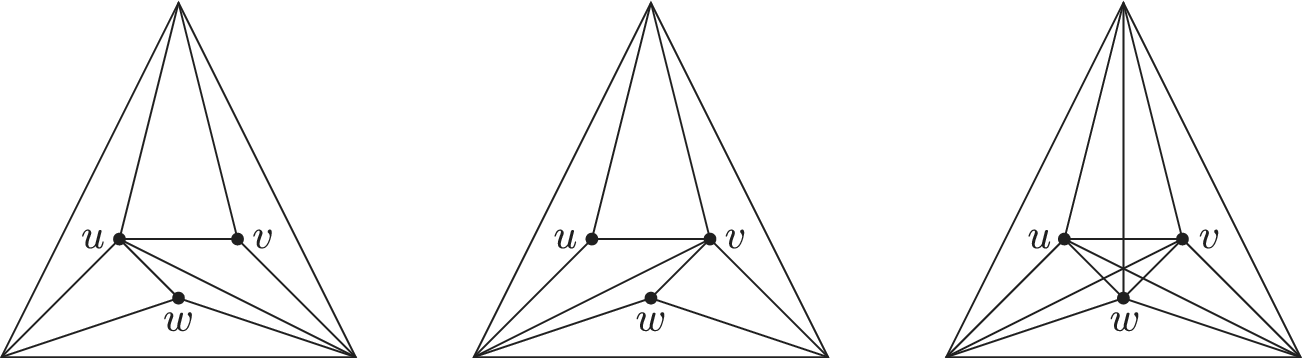

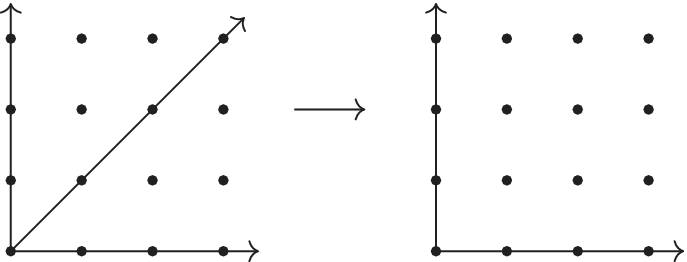


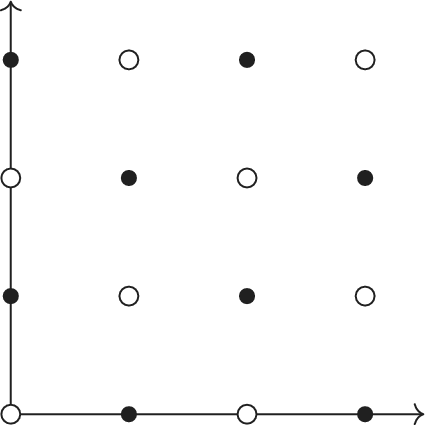


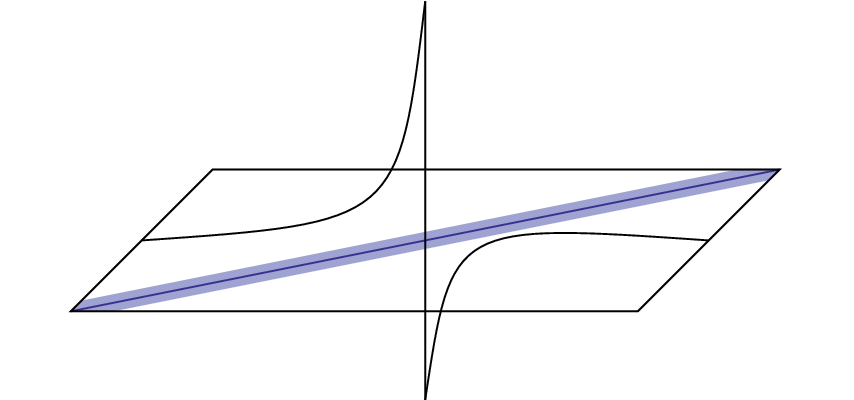


 Open access

