Refine search
Actions for selected content:
23 results
Iwasawa theory for branched
 $\mathbb{Z}_{p}$-towers of finite graphs and Ihara zeta and L-functions
- Part of
-
- Journal:
- Mathematical Proceedings of the Cambridge Philosophical Society / Volume 181 / Issue 3 / November 2026
- Published online by Cambridge University Press:
- 15 July 2026, pp. 1249-1301
- Print publication:
- November 2026
-
- Article
-
- You have access
- HTML
- Export citation
-
We revisit the theory of Ihara L-functions in the context initially studied by Bass and Hashimoto and more recently by Zakharov. In particular, we study whether the Artin formalism is satisfied by these L-functions. As an application, we give a proof of the analogue of Iwasawa’s asymptotic class number formula for the p-part of the number of spanning trees in branched
 $\mathbb{Z}_{p}$-towers of finite connected graphs using Ihara zeta and L-functions. Moreover, we relate a generator for the characteristic ideal of the finitely generated torsion Iwasawa module that governs the growth of the p-part of the number of spanning trees in such towers with Ihara L-functions.


IWASAWA THEORY AND THE REPRESENTATIONS OF FINITE GROUPS
- Part of
-
- Journal:
- Bulletin of the Australian Mathematical Society , First View
- Published online by Cambridge University Press:
- 20 May 2026, pp. 1-13
-
- Article
-
- You have access
- HTML
- Export citation
-
We develop a representation-theoretic refinement of the Iwasawa theory of finite Cayley graphs. Building on analogies between graph zeta functions and number-theoretic L-functions, we study
 $\mathbb {Z}_\ell $-towers of Cayley graphs and the asymptotic growth of their Jacobians. The main result establishes that the Iwasawa polynomial associated to such a tower admits a canonical factorisation indexed by the irreducible representations of the underlying group. This leads to the definition of representation-theoretic Iwasawa polynomials, whose properties are studied.

The Kromatic symmetric function: A K-theoretic analog of
 $X_G$
- Part of
-
- Journal:
- Canadian Mathematical Bulletin , First View
- Published online by Cambridge University Press:
- 16 February 2026, pp. 1-23
-
- Article
-
- You have access
- Open access
- HTML
- Export citation
-
Schur functions are a basis of the symmetric function ring that represent Schubert cohomology classes for Grassmannians. Replacing the cohomology ring with K-theory yields a rich combinatorial theory of inhomogeneous deformations, where Schur functions are replaced by their K-analogs, the symmetric Grothendieck functions. We initiate a theory of the Kromatic symmetric function
 $\overline {X}_G$, a K-theoretic analog of the chromatic symmetric function
 $X_G$ of a graph G. The Kromatic symmetric function is a generating series for graph colorings in which vertices receive any nonempty set of colors such that neighboring color sets are disjoint. Our main result lifts a theorem of Gasharov (1996), showing that when G is a claw-free incomparability graph,
 $\overline {X}_G$ is a positive sum of symmetric Grothendieck functions. This suggests a topological interpretation of Gasharov’s theorem. Kromatic symmetric functions of path graphs are not positive in any of several K-analogs of the e-basis, demonstrating that the Stanley–Stembridge conjecture (1993) does not have such a lift to K-theory and so is unlikely to be amenable to a topological perspective. We define a vertex-weighted extension of
 $\overline {X}_G$ which admits a deletion–contraction relation. Finally, we give a K-analog for
 $\overline {X}_G$ of the monomial-basis expansion of
 $X_G$.


Hoffman program of Laplacian matching polynomials of graphs
- Part of
-
- Journal:
- Proceedings of the Edinburgh Mathematical Society / Volume 69 / Issue 2 / May 2026
- Published online by Cambridge University Press:
- 10 November 2025, pp. 581-598
-
- Article
-
- You have access
- HTML
- Export citation
-
Let
 $\mathcal{G}$ be the class of all connected simple graphs. The Hoffman program of graphs with respect to a spectral invariant
 $\lambda(G)$ consists of determining all the limit points of the set
 $\{\lambda(G)\,\vert\, G\in\mathcal{G}\}$ and characterising all
 $G$’s such that
 $\lambda(G)$ does not exceed a fixed limit point. In this paper, we study the Hoffman program for Laplacian matching polynomials of graphs in regard to their largest Laplacian matching roots. Precisely, we determine all the limit points of the largest Laplacian matching roots of graphs less than
 $\tau = 2+\omega^{\frac{1}{2}}+\omega^{-\frac{1}{2}}(=4.38+)$, and then characterise the connected graphs with the largest Laplacian matching roots less than
 $2+\sqrt{5}$, where
 $\omega=\frac{1}{3}(\sqrt[3]{19+3\sqrt{33}}+\sqrt[3]{19-3\sqrt{33}}+1)$.


A Negami-type splitting formula for the Jones and Ribbon graph polynomials
- Part of
-
- Journal:
- Proceedings of the Edinburgh Mathematical Society / Volume 69 / Issue 1 / February 2026
- Published online by Cambridge University Press:
- 12 September 2025, pp. 284-303
-
- Article
-
- You have access
- Open access
- HTML
- Export citation
Hypergraph independence polynomials with a zero close to the origin
- Part of
-
- Journal:
- Combinatorics, Probability and Computing / Volume 34 / Issue 4 / July 2025
- Published online by Cambridge University Press:
- 22 January 2025, pp. 486-490
-
- Article
-
- You have access
- HTML
- Export citation
-
For each uniformity
 $k \geq 3$, we construct
 $k$ uniform linear hypergraphs
 $G$ with arbitrarily large maximum degree
 $\Delta$ whose independence polynomial
 $Z_G$ has a zero
 $\lambda$ with
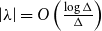 $\left \vert \lambda \right \vert = O\left (\frac {\log \Delta }{\Delta }\right )$. This disproves a recent conjecture of Galvin, McKinley, Perkins, Sarantis, and Tetali.


Zeros, chaotic ratios and the computational complexity of approximating the independence polynomial
- Part of
-
- Journal:
- Mathematical Proceedings of the Cambridge Philosophical Society / Volume 176 / Issue 2 / March 2024
- Published online by Cambridge University Press:
- 24 November 2023, pp. 459-494
- Print publication:
- March 2024
-
- Article
-
- You have access
- HTML
- Export citation
The blowup-polynomial of a metric space: connections to stable polynomials, graphs and their distance spectra
- Part of
-
- Journal:
- Canadian Journal of Mathematics / Volume 76 / Issue 6 / December 2024
- Published online by Cambridge University Press:
- 09 November 2023, pp. 2073-2114
- Print publication:
- December 2024
-
- Article
-
- You have access
- HTML
- Export citation
-
To every finite metric space X, including all connected unweighted graphs with the minimum edge-distance metric, we attach an invariant that we call its blowup-polynomial
 $p_X(\{ n_x : x \in X \})$. This is obtained from the blowup
 $X[\mathbf {n}]$ – which contains
 $n_x$ copies of each point x – by computing the determinant of the distance matrix of
 $X[\mathbf {n}]$ and removing an exponential factor. We prove that as a function of the sizes
 $n_x$,
 $p_X(\mathbf {n})$ is a polynomial, is multi-affine, and is real-stable. This naturally associates a hitherto unstudied delta-matroid to each metric space X; we produce another novel delta-matroid for each tree, which interestingly does not generalize to all graphs. We next specialize to the case of
 $X = G$ a connected unweighted graph – so
 $p_G$ is “partially symmetric” in
 $\{ n_v : v \in V(G) \}$ – and show three further results: (a) We show that the polynomial
 $p_G$ is indeed a graph invariant, in that
 $p_G$ and its symmetries recover the graph G and its isometries, respectively. (b) We show that the univariate specialization
 $u_G(x) := p_G(x,\dots ,x)$ is a transform of the characteristic polynomial of the distance matrix
 $D_G$; this connects the blowup-polynomial of G to the well-studied “distance spectrum” of G. (c) We obtain a novel characterization of complete multipartite graphs, as precisely those for which the “homogenization at
 $-1$” of
 $p_G(\mathbf { n})$ is real-stable (equivalently, Lorentzian, or strongly/completely log-concave), if and only if the normalization of
 $p_G(-\mathbf { n})$ is strongly Rayleigh.


On the zeroes of hypergraph independence polynomials
- Part of
-
- Journal:
- Combinatorics, Probability and Computing / Volume 33 / Issue 1 / January 2024
- Published online by Cambridge University Press:
- 21 September 2023, pp. 65-84
-
- Article
-
- You have access
- Open access
- HTML
- Export citation
-
We study the locations of complex zeroes of independence polynomials of bounded-degree hypergraphs. For graphs, this is a long-studied subject with applications to statistical physics, algorithms, and combinatorics. Results on zero-free regions for bounded-degree graphs include Shearer’s result on the optimal zero-free disc, along with several recent results on other zero-free regions. Much less is known for hypergraphs. We make some steps towards an understanding of zero-free regions for bounded-degree hypergaphs by proving that all hypergraphs of maximum degree
 $\Delta$ have a zero-free disc almost as large as the optimal disc for graphs of maximum degree
 $\Delta$ established by Shearer (of radius
 $\sim 1/(e \Delta )$). Up to logarithmic factors in
 $\Delta$ this is optimal, even for hypergraphs with all edge sizes strictly greater than
 $2$. We conjecture that for
 $k\ge 3$,
 $k$-uniform linear hypergraphs have a much larger zero-free disc of radius
 $\Omega (\Delta ^{- \frac{1}{k-1}} )$. We establish this in the case of linear hypertrees.


A result on the
 $c_2$ invariant for powers of primes
- Part of
-
- Journal:
- Canadian Mathematical Bulletin / Volume 66 / Issue 4 / December 2023
- Published online by Cambridge University Press:
- 24 April 2023, pp. 1164-1178
- Print publication:
- December 2023
-
- Article
-
- You have access
- Open access
- HTML
- Export citation
-
The
 $c_2$ invariant is an arithmetic graph invariant related to quantum field theory. We give a relation modulo p between the
 $c_2$ invariant at p and the
 $c_2$ invariant at
 $p^s$ by proving a relation modulo p between certain coefficients of powers of products of particularly nice polynomials. The relation at the level of the
 $c_2$ invariant provides evidence for a conjecture of Schnetz.


Girth, magnitude homology and phase transition of diagonality
- Part of
-
- Journal:
- Proceedings of the Royal Society of Edinburgh. Section A: Mathematics / Volume 154 / Issue 1 / February 2024
- Published online by Cambridge University Press:
- 09 February 2023, pp. 221-247
- Print publication:
- February 2024
-
- Article
-
- You have access
- HTML
- Export citation
ON THE SIZE, SPECTRAL RADIUS, DISTANCE SPECTRAL RADIUS AND FRACTIONAL MATCHINGS IN GRAPHS
- Part of
-
- Journal:
- Bulletin of the Australian Mathematical Society / Volume 108 / Issue 2 / October 2023
- Published online by Cambridge University Press:
- 13 January 2023, pp. 187-199
- Print publication:
- October 2023
-
- Article
-
- You have access
- HTML
- Export citation
Uniqueness of the Gibbs measure for the 4-state anti-ferromagnetic Potts model on the regular tree
- Part of
-
- Journal:
- Combinatorics, Probability and Computing / Volume 32 / Issue 1 / January 2023
- Published online by Cambridge University Press:
- 07 September 2022, pp. 158-182
-
- Article
-
- You have access
- Open access
- HTML
- Export citation
-
We show that the
 $4$-state anti-ferromagnetic Potts model with interaction parameter
 $w\in (0,1)$ on the infinite
 $(d+1)$-regular tree has a unique Gibbs measure if
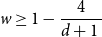 $w\geq 1-\dfrac{4}{d+1_{_{\;}}}$ for all
 $d\geq 4$. This is tight since it is known that there are multiple Gibbs measures when
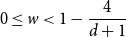 $0\leq w\lt 1-\dfrac{4}{d+1}$ and
 $d\geq 4$. We moreover give a new proof of the uniqueness of the Gibbs measure for the
 $3$-state Potts model on the
 $(d+1)$-regular tree for
 $w\geq 1-\dfrac{3}{d+1}$ when
 $d\geq 3$ and for
 $w\in (0,1)$ when
 $d=2$.


Partial-dual polynomials and signed intersection graphs
- Part of
-
- Journal:
- Forum of Mathematics, Sigma / Volume 10 / 2022
- Published online by Cambridge University Press:
- 25 August 2022, e69
-
- Article
-
- You have access
- Open access
- HTML
- Export citation
Lee–Yang zeros and the complexity of the ferromagnetic Ising model on bounded-degree graphs
- Part of
-
- Journal:
- Forum of Mathematics, Sigma / Volume 10 / 2022
- Published online by Cambridge University Press:
- 07 February 2022, e7
-
- Article
-
- You have access
- Open access
- HTML
- Export citation
-
We study the computational complexity of approximating the partition function of the ferromagnetic Ising model with the external field parameter
 $\lambda $ on the unit circle in the complex plane. Complex-valued parameters for the Ising model are relevant for quantum circuit computations and phase transitions in statistical physics but have also been key in the recent deterministic approximation scheme for all
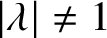 $|\lambda |\neq 1$ by Liu, Sinclair and Srivastava. Here, we focus on the unresolved complexity picture on the unit circle and on the tantalising question of what happens around
 $\lambda =1$, where, on one hand, the classical algorithm of Jerrum and Sinclair gives a randomised approximation scheme on the real axis suggesting tractability and, on the other hand, the presence of Lee–Yang zeros alludes to computational hardness. Our main result establishes a sharp computational transition at the point
 $\lambda =1$ and, more generally, on the entire unit circle. For an integer
 $\Delta \geq 3$ and edge interaction parameter
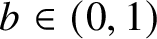 $b\in (0,1)$, we show
 $\mathsf {\#P}$-hardness for approximating the partition function on graphs of maximum degree
 $\Delta $ on the arc of the unit circle where the Lee–Yang zeros are dense. This result contrasts with known approximation algorithms when
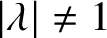 $|\lambda |\neq 1$ or when
 $\lambda $ is in the complementary arc around
 $1$ of the unit circle. Our work thus gives a direct connection between the presence/absence of Lee–Yang zeros and the tractability of efficiently approximating the partition function on bounded-degree graphs.


Lee-Yang zeros of the antiferromagnetic Ising model
- Part of
-
- Journal:
- Ergodic Theory and Dynamical Systems / Volume 42 / Issue 7 / July 2022
- Published online by Cambridge University Press:
- 08 April 2021, pp. 2172-2206
- Print publication:
- July 2022
-
- Article
-
- You have access
- Open access
- Export citation
Approximately counting bases of bicircular matroids
- Part of
-
- Journal:
- Combinatorics, Probability and Computing / Volume 30 / Issue 1 / January 2021
- Published online by Cambridge University Press:
- 06 August 2020, pp. 124-135
-
- Article
-
- You have access
- Export citation
GEOMETRIC BIJECTIONS FOR REGULAR MATROIDS, ZONOTOPES, AND EHRHART THEORY
- Part of
-
- Journal:
- Forum of Mathematics, Sigma / Volume 7 / 2019
- Published online by Cambridge University Press:
- 04 December 2019, e45
-
- Article
-
- You have access
- Open access
- Export citation
-
Let
 $M$ be a regular matroid. The Jacobian group
 $\text{Jac}(M)$ of
 $M$ is a finite abelian group whose cardinality is equal to the number of bases of
 $M$. This group generalizes the definition of the Jacobian group (also known as the critical group or sandpile group)
 $\operatorname{Jac}(G)$ of a graph
 $G$ (in which case bases of the corresponding regular matroid are spanning trees of
 $G$). There are many explicit combinatorial bijections in the literature between the Jacobian group of a graph
 $\text{Jac}(G)$ and spanning trees. However, most of the known bijections use vertices of
 $G$ in some essential way and are inherently ‘nonmatroidal’. In this paper, we construct a family of explicit and easy-to-describe bijections between the Jacobian group of a regular matroid
 $M$ and bases of
 $M$, many instances of which are new even in the case of graphs. We first describe our family of bijections in a purely combinatorial way in terms of orientations; more specifically, we prove that the Jacobian group of
 $M$ admits a canonical simply transitive action on the set
 ${\mathcal{G}}(M)$ of circuit–cocircuit reversal classes of
 $M$, and then define a family of combinatorial bijections
 $\unicode[STIX]{x1D6FD}_{\unicode[STIX]{x1D70E},\unicode[STIX]{x1D70E}^{\ast }}$ between
 ${\mathcal{G}}(M)$ and bases of
 $M$. (Here
 $\unicode[STIX]{x1D70E}$ (respectively
 $\unicode[STIX]{x1D70E}^{\ast }$) is an acyclic signature of the set of circuits (respectively cocircuits) of
 $M$.) We then give a geometric interpretation of each such map
 $\unicode[STIX]{x1D6FD}=\unicode[STIX]{x1D6FD}_{\unicode[STIX]{x1D70E},\unicode[STIX]{x1D70E}^{\ast }}$ in terms of zonotopal subdivisions which is used to verify that
 $\unicode[STIX]{x1D6FD}$ is indeed a bijection. Finally, we give a combinatorial interpretation of lattice points in the zonotope
 $Z$; by passing to dilations we obtain a new derivation of Stanley’s formula linking the Ehrhart polynomial of
 $Z$ to the Tutte polynomial of
 $M$.


Types of embedded graphs and their Tutte polynomials
- Part of
-
- Journal:
- Mathematical Proceedings of the Cambridge Philosophical Society / Volume 169 / Issue 2 / September 2020
- Published online by Cambridge University Press:
- 02 July 2019, pp. 255-297
- Print publication:
- September 2020
-
- Article
-
- You have access
- Export citation
A Special Case of Completion Invariance for the c 2 Invariant of a Graph
-
- Journal:
- Canadian Journal of Mathematics / Volume 70 / Issue 6 / 01 December 2018
- Published online by Cambridge University Press:
- 20 November 2018, pp. 1416-1435
- Print publication:
- 01 December 2018
-
- Article
-
- You have access
- Export citation
-
The
 ${{c}_{2}}$ invariant is an arithmetic graph invariant defined by Schnetz. It is useful for understanding Feynman periods. Brown and Schnetz conjectured that the ${{c}_{2}}$ invariant has a particular symmetry known as completion invariance. This paper will prove completion invariance of the ${{c}_{2}}$ invariant in the case where we are over the field with 2 elements and the completed graph has an odd number of vertices. The methods involve enumerating certain edge bipartitions of graphs; two different constructions are needed.

