Refine search
Actions for selected content:
80 results
AN EXPLICIT MATRIX UNIT REALISATION OF THE WEDDERBURN DECOMPOSITION
- Part of
-
- Journal:
- Bulletin of the Australian Mathematical Society , First View
- Published online by Cambridge University Press:
- 30 October 2026, pp. 1-11
-
- Article
-
- You have access
- HTML
- Export citation
Newton polytopes of immanants of some combinatorial matrices
- Part of
-
- Journal:
- Proceedings of the Edinburgh Mathematical Society / Volume 69 / Issue 4 / November 2026
- Published online by Cambridge University Press:
- 15 September 2026, pp. 1323-1339
-
- Article
-
- You have access
- HTML
- Export citation
-
The immanants of combinatorial matrices have many significant properties, including
 $m$-positivity and Schur positivity. While the immanants of Jacobi–Trudi matrices are known to be both
 $m$-positive and Schur positive, those of Giambelli matrices have only been proven to be
 $m$-positive, with Schur positivity remaining a conjecture. These positivity properties rely heavily on lattice path interpretations. In this paper, we study the Newton polytopes of immanants for these two classes of matrices. Using the lattice path method, we verify the saturation property for the Newton polytopes of Jacobi–Trudi matrices in special cases. For Giambelli matrices, we prove that this property holds for all immanants. To achieve this, we obtain the explicit coefficients of the largest monomial (in the dominance order) in the monomial expansion of the immanants of Giambelli matrices.


Measures and generalizations of dual Littlewood identities
- Part of
-
- Journal:
- Forum of Mathematics, Sigma / Volume 14 / 2026
- Published online by Cambridge University Press:
- 15 July 2026, e106
-
- Article
-
- You have access
- Open access
- HTML
- Export citation
-
We introduce three families of vectors $|\underline {\lambda }^{so}\rangle $
 , $|\underline {\lambda }^{sp}\rangle $
 and $|\underline {\lambda }^{o}\rangle $
 parametrized by partitions in the Fock space by using products of adjoint vertex operators. We show that the quotient space of the dual vacuum vector is spanned by the partition vectors indexed by a special family of partitions. The partition-indexed vectors also help us to derive the dual Littlewood identities of types B, C, and D in a new manner associated to the special family of partitions. As an application, we obtain a new free fermionic construction to show that the measures related to dual Littlewood identities introduced by Rains [33, Section 7] and Betea [6, Section 3] are determinantal with respect to some explicit correlation kernels.
Furthermore, we establish a number of generalized Littlewood identities summed over certain restricted partitions by computing the inner products with elements indexed by one-column partitions or generalized partitions $(0^m)$
 in the complete dual Fock space. In particular, for each positive integer n, we obtain generalized Littlewood identities for $(-n)$
 -asymmetric partitions. We show that these generalized Littlewood identities contain several well-known Littlewood-type identities as special cases. Consequently we also give a new proof of the generalized Littlewood identity [28, (5.25)] for Lie superalgebras.


The quasisymmetric flag variety: A toric complex on noncrossing partitions
- Part of
-
- Journal:
- Forum of Mathematics, Pi / Volume 14 / 2026
- Published online by Cambridge University Press:
- 10 July 2026, e18
-
- Article
-
- You have access
- Open access
- HTML
- Export citation
Falling stars: a fall-decorated rational shuffle theorem
- Part of
-
- Journal:
- Forum of Mathematics, Sigma / Volume 14 / 2026
- Published online by Cambridge University Press:
- 18 June 2026, e92
-
- Article
-
- You have access
- Open access
- HTML
- Export citation
-
In this paper, we formulate a rational analog of the fall Delta theorem and the Delta square conjecture. We find a new dinv statistic on fall-decorated paths on a $(m+k) \times (n+k)$
 rectangle that simultaneously extends the previously known dinv statistics on decorated square objects and nondecorated rectangular objects. We prove a symmetric function formula for the $q,t$
 -generating function of fall-decorated rectangular Dyck paths as a skewing operator applied to $e_{m,n+km}$
 and, conditionally on the rectangular paths conjecture, an analog formula for fall-decorated rectangular paths.


Subspace profiles over finite fields and q-Whittaker expansions of symmetric functions
- Part of
-
- Journal:
- Forum of Mathematics, Sigma / Volume 14 / 2026
- Published online by Cambridge University Press:
- 01 April 2026, e48
-
- Article
-
- You have access
- Open access
- HTML
- Export citation
The Kromatic symmetric function: A K-theoretic analog of
 $X_G$
- Part of
-
- Journal:
- Canadian Mathematical Bulletin , First View
- Published online by Cambridge University Press:
- 16 February 2026, pp. 1-23
-
- Article
-
- You have access
- Open access
- HTML
- Export citation
-
Schur functions are a basis of the symmetric function ring that represent Schubert cohomology classes for Grassmannians. Replacing the cohomology ring with K-theory yields a rich combinatorial theory of inhomogeneous deformations, where Schur functions are replaced by their K-analogs, the symmetric Grothendieck functions. We initiate a theory of the Kromatic symmetric function
 $\overline {X}_G$, a K-theoretic analog of the chromatic symmetric function
 $X_G$ of a graph G. The Kromatic symmetric function is a generating series for graph colorings in which vertices receive any nonempty set of colors such that neighboring color sets are disjoint. Our main result lifts a theorem of Gasharov (1996), showing that when G is a claw-free incomparability graph,
 $\overline {X}_G$ is a positive sum of symmetric Grothendieck functions. This suggests a topological interpretation of Gasharov’s theorem. Kromatic symmetric functions of path graphs are not positive in any of several K-analogs of the e-basis, demonstrating that the Stanley–Stembridge conjecture (1993) does not have such a lift to K-theory and so is unlikely to be amenable to a topological perspective. We define a vertex-weighted extension of
 $\overline {X}_G$ which admits a deletion–contraction relation. Finally, we give a K-analog for
 $\overline {X}_G$ of the monomial-basis expansion of
 $X_G$.


Random Fibonacci Words via Clone Schur Functions
- Part of
-
- Journal:
- Forum of Mathematics, Sigma / Volume 14 / 2026
- Published online by Cambridge University Press:
- 23 January 2026, e15
-
- Article
-
- You have access
- Open access
- HTML
- Export citation
-
We investigate positivity and probabilistic properties arising from the Young–Fibonacci lattice
 $\mathbb {YF}$, a 1-differential poset on words composed of 1’s and 2’s (Fibonacci words) and graded by the sum of the digits. Building on Okada’s theory of clone Schur functions, we introduce clone coherent measures on
 $\mathbb {YF}$ which give rise to random Fibonacci words of increasing length. Unlike coherent systems associated to classical Schur functions on the Young lattice of integer partitions, clone coherent measures are generally not extremal on
 $\mathbb {YF}$. Our first main result is a complete characterization of Fibonacci positive specializations – parameter sequences which yield positive clone Schur functions on
 $\mathbb {YF}$. Second, we establish a broad array of correspondences that connect Fibonacci positivity with: (i) the total positivity of tridiagonal matrices; (ii) Stieltjes moment sequences; (iii) the combinatorics of set partitions; and (iv) families of univariate orthogonal polynomials from the (q-)Askey scheme. We further link the moment sequences of broad classes of orthogonal polynomials to combinatorial structures on Fibonacci words, a connection that may be of independent interest. Our third family of results concerns the asymptotic behavior of random Fibonacci words derived from various Fibonacci positive specializations. We analyze several limiting regimes for specific examples, revealing stick-breaking-like processes (connected to GEM distributions), dependent stick-breaking processes of a new type, or limits supported on the discrete component of the Martin boundary of the Young–Fibonacci lattice. Our stick-breaking-like scaling limits significantly extend the result of Gnedin–Kerov on asymptotics of the Plancherel measure on
 $\mathbb {YF}$. We also establish Cauchy-like identities for clone Schur functions whose right-hand side is presented as a quadridiagonal determinant rather than a product, as in the case of classical Schur functions. We construct and analyze models of random permutations and involutions based on Fibonacci positive specializations along with a version of the Robinson–Schensted correspondence for
 $\mathbb {YF}$.


Degeneracy locus formulas for amenable Weyl group elements
- Part of
-
- Journal:
- Nagoya Mathematical Journal / Volume 261 / 2026
- Published online by Cambridge University Press:
- 22 January 2026, e13
-
- Article
-
- You have access
- Open access
- HTML
- Export citation
Free fermionic probability theory and k-theoretic schubert calculus
- Part of
-
- Journal:
- Forum of Mathematics, Sigma / Volume 13 / 2025
- Published online by Cambridge University Press:
- 09 December 2025, e197
-
- Article
-
- You have access
- Open access
- HTML
- Export citation
Probabilistic operators for non-attacking tableaux and a compact formula for the symmetric Macdonald polynomials
- Part of
-
- Journal:
- Forum of Mathematics, Sigma / Volume 13 / 2025
- Published online by Cambridge University Press:
- 15 September 2025, e146
-
- Article
-
- You have access
- Open access
- HTML
- Export citation
-
We prove a new tableaux formula for the symmetric Macdonald polynomials
 $P_{\lambda }(X;q,t)$ that has considerably fewer terms and simpler weights than previously existing formulas. Our formula is a sum over certain sorted non-attacking tableaux, weighted by the queue inversion statistic
 $\operatorname {\mathrm {\texttt {quinv}}}$. The
 $\operatorname {\mathrm {\texttt {quinv}}}$ statistic originates from a formula for the modified Macdonald polynomials
 $\widetilde {H}_{\lambda }(X;q,t)$ due to Ayyer, Martin, and the author (2022), and is naturally related to the dynamics of the asymmetric simple exclusion process (ASEP) on a circle.
We prove our results by introducing probabilistic operators that act on non-attacking tableaux to generate a set of tableaux whose weighted sum equals
 $P_{\lambda }(X;q,t)$. These operators are a modification of the inversion flip operators of Loehr and Niese (2012), which yield an involution on tableaux that preserves the major index statistic but fails to preserve the non-attacking condition. Our tableaux are in bijection with the multiline queues introduced by Martin (2020), allowing us to derive an alternative multiline queue formula for
 $P_{\lambda }(X;q,t)$. Finally, our formula recovers an alternative formula for the Jack polynomials
 $J_{\lambda }(X;\alpha )$ due to Knop and Sahi (1996) using the same queue inversion statistic.


Quantum K theory of Grassmannians, Wilson line operators and Schur bundles
- Part of
-
- Journal:
- Forum of Mathematics, Sigma / Volume 13 / 2025
- Published online by Cambridge University Press:
- 04 September 2025, e140
-
- Article
-
- You have access
- Open access
- HTML
- Export citation
-
We prove a ‘Whitney’ presentation, and a ‘Coulomb branch’ presentation, for the torus equivariant quantum K theory of the Grassmann manifold
 $\mathrm {Gr}(k;n)$, inspired from physics, and stated in an earlier paper. The first presentation is obtained by quantum deforming the product of the Hirzebruch
 $\lambda _y$ classes of the tautological bundles. In physics, the
 $\lambda _y$ classes arise as certain Wilson line operators. The second presentation is obtained from the Coulomb branch equations involving the partial derivatives of a twisted superpotential from supersymmetric gauge theory. This is closest to a presentation obtained by Gorbounov and Korff, utilizing integrable systems techniques. Algebraically, we relate the Coulomb and Whitney presentations utilizing transition matrices from the (equivariant) Grothendieck polynomials to the (equivariant) complete homogeneous symmetric polynomials. Along the way, we calculate K-theoretic Gromov-Witten invariants of wedge powers of the tautological bundles on
 $\mathrm {Gr}(k;n)$, using the ‘quantum=classical’ statement.


Colored interacting particle systems on the ring: Stationary measures from Yang–Baxter equations
- Part of
-
- Journal:
- Compositio Mathematica / Volume 161 / Issue 8 / August 2025
- Published online by Cambridge University Press:
- 03 October 2025, pp. 1855-1922
- Print publication:
- August 2025
-
- Article
-
- You have access
- HTML
- Export citation
-
Recently, there has been much progress in understanding stationary measures for colored (also called multi-species or multi-type) interacting particle systems, motivated by asymptotic phenomena and rich underlying algebraic and combinatorial structures (such as nonsymmetric Macdonald polynomials). In this paper, we present a unified approach to constructing stationary measures for most of the known colored particle systems on the ring and the line, including (1) the Asymmetric Simple Exclusion Process (multi-species ASEP, or mASEP); (2) the
 $q$-deformed Totally Asymmetric Zero Range Process (TAZRP) also known as the
 $q$-Boson particle system; (3) the
 $q$-deformed Pushing Totally Asymmetric Simple Exclusion Process (
 $q$-PushTASEP). Our method is based on integrable stochastic vertex models and the Yang–Baxter equation. We express the stationary measures as partition functions of new ‘queue vertex models’ on the cylinder. The stationarity property is a direct consequence of the Yang–Baxter equation. For the mASEP on the ring, a particular case of our vertex model is equivalent to the multiline queues of Martin (Stationary distributions of the multi-type ASEP, Electron. J. Probab. 25 (2020), 1–41). For the colored
 $q$-Boson process and the
 $q$-PushTASEP on the ring, we recover and generalize known stationary measures constructed using multiline queues or other methods by Ayyer, Mandelshtam and Martin (Modified Macdonald polynomials and the multispecies zero range process: II, Algebr. Comb. 6 (2022), 243–284; Modified Macdonald polynomials and the multispecies zero-range process: I, Algebr. Comb. 6 (2023), 243–284) and Bukh and Cox (Periodic words, common subsequences and frogs, Ann. Appl. Probab. 32 (2022), 1295–1332). Our proofs of stationarity use the Yang–Baxter equation and bypass the Matrix Product Ansatz (used for the mASEP by Prolhac, Evans and Mallick (The matrix product solution of the multispecies partially asymmetric exclusion process, J. Phys. A. 42 (2009), 165004)). On the line and in a quadrant, we use the Yang–Baxter equation to establish a general colored Burke’s theorem, which implies that suitable specializations of our queue vertex models produce stationary measures for particle systems on the line. We also compute the colored particle currents in stationarity.


Wreath Macdonald operators
- Part of
-
- Journal:
- Forum of Mathematics, Sigma / Volume 13 / 2025
- Published online by Cambridge University Press:
- 14 July 2025, e116
-
- Article
-
- You have access
- Open access
- HTML
- Export citation
Schubert polynomial expansions revisited
- Part of
-
- Journal:
- Forum of Mathematics, Sigma / Volume 13 / 2025
- Published online by Cambridge University Press:
- 03 July 2025, e106
-
- Article
-
- You have access
- Open access
- HTML
- Export citation
-
We give an elementary approach utilizing only the divided difference formalism for obtaining expansions of Schubert polynomials that are manifestly nonnegative, by studying solutions to the equation
 $\sum Y_i\partial _i=\operatorname {id}$ on polynomials with no constant term. This in particular recovers the pipe dream and slide polynomial expansions. We also show that slide polynomials satisfy an analogue of the divided difference formalisms for Schubert polynomials and forest polynomials, which gives a simple method for extracting the coefficients of slide polynomials in the slide polynomial decomposition of an arbitrary polynomial.

Splines on Cayley graphs of the symmetric group
- Part of
-
- Journal:
- Forum of Mathematics, Sigma / Volume 13 / 2025
- Published online by Cambridge University Press:
- 24 June 2025, e96
-
- Article
-
- You have access
- Open access
- HTML
- Export citation
-
A spline is an assignment of polynomials to the vertices of a graph whose edges are labeled by ideals, where the difference of two polynomials labeling adjacent vertices must belong to the corresponding ideal. The set of splines forms a ring. We consider spline rings where the underlying graph is the Cayley graph of a symmetric group generated by a collection of transpositions. These rings generalize the GKM construction for equivariant cohomology rings of flag, regular semisimple Hessenberg and permutohedral varieties. These cohomology rings carry two actions of the symmetric group
 $S_n$ whose graded characters are both of general interest in algebraic combinatorics. In this paper, we generalize the graded
 $S_n$-representations from the cohomologies of the above varieties to splines on Cayley graphs of
 $S_n$ and then (1) give explicit module and ring generators for whenever the
 $S_n$-generating set is minimal, (2) give a combinatorial characterization of when graded pieces of one
 $S_n$-representation is trivial, and (3) compute the first degree piece of both graded characters for all generating sets.


Shuffle formula in science fiction for Macdonald polynomials
- Part of
-
- Journal:
- Compositio Mathematica / Volume 161 / Issue 5 / May 2025
- Published online by Cambridge University Press:
- 28 August 2025, pp. 1075-1127
- Print publication:
- May 2025
-
- Article
-
- You have access
- HTML
- Export citation
-
We study the Macdonald intersection polynomials
 $\operatorname {I}_{\mu ^{(1)},\dots ,\mu ^{(k)}}[X;q,t]$, which are indexed by
 $k$-tuples of partitions
 $\mu ^{(1)},\dots ,\mu ^{(k)}$. These polynomials are conjectured to be equal to the bigraded Frobenius characteristic of the intersection of Garsia–Haiman modules, as proposed by the science fiction conjecture of Bergeron and Garsia. In this work, we establish the vanishing identity and the shape independence of the Macdonald intersection polynomials. Additionally, we unveil a remarkable connection between
 $\operatorname {I}_{\mu ^{(1)},\dots ,\mu ^{(k)}}$ and the character
 $\nabla e_{k-1}$ of diagonal coinvariant algebra by employing the plethystic formula for the Macdonald polynomials of Garsia, Haiman, and Tesler. Furthermore, we establish a connection between
 $\operatorname {I}_{\mu ^{(1)},\dots ,\mu ^{(k)}}$ and the shuffle formula
 $D_{k-1}[X;q,t]$, utilizing novel combinatorial tools such as the column exchange rule and the lightning bolt formula for Macdonald intersection polynomials. Notably, our findings provide a new proof for the shuffle theorem.


Newton–Maclaurin type inequalities for linear combinations of elementary symmetric functions
- Part of
-
- Journal:
- Proceedings of the Royal Society of Edinburgh. Section A: Mathematics , First View
- Published online by Cambridge University Press:
- 02 April 2025, pp. 1-18
-
- Article
-
- You have access
- HTML
- Export citation
Symmetric multiple zeta functions
- Part of
-
- Journal:
- Canadian Journal of Mathematics / Volume 78 / Issue 6 / December 2026
- Published online by Cambridge University Press:
- 24 March 2025, pp. 2049-2083
- Print publication:
- December 2026
-
- Article
-
- You have access
- Open access
- HTML
- Export citation
A raising operator formula for Macdonald polynomials
- Part of
-
- Journal:
- Forum of Mathematics, Sigma / Volume 13 / 2025
- Published online by Cambridge University Press:
- 19 February 2025, e47
-
- Article
-
- You have access
- Open access
- HTML
- Export citation
-
We give an explicit raising operator formula for the modified Macdonald polynomials
 $\tilde {H}_{\mu }(X;q,t)$, which follows from our recent formula for
 $\nabla $ on an LLT polynomial and the Haglund-Haiman-Loehr formula expressing modified Macdonald polynomials as sums of LLT polynomials. Our method just as easily yields a formula for a family of symmetric functions
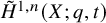 $\tilde {H}^{1,n}(X;q,t)$ that we call
 $1,n$-Macdonald polynomials, which reduce to a scalar multiple of
 $\tilde {H}_{\mu }(X;q,t)$ when
 $n=1$. We conjecture that the coefficients of
 $1,n$-Macdonald polynomials in terms of Schur functions belong to
 ${\mathbb N}[q,t]$, generalizing Macdonald positivity.


