Refine search
Actions for selected content:
27 results
DIRICHLET IMPROVABILITY FOR $S$
 -NUMBERS
- Part of
-
- Journal:
- Journal of the Australian Mathematical Society / Volume 121 / Issue 3 / December 2026
- Published online by Cambridge University Press:
- 21 September 2026, pp. 357-380
-
- Article
-
- You have access
- HTML
- Export citation
-
We study the problem of improving Dirichlet’s theorem of metric Diophantine approximation in the most general and multiplicative form in the $S$
 -adic setting. Our approach is based on translation of the problem related to Dirichlet improvability into a dynamical one, and the main technique of our proof is the $S$
 -adic version of quantitative nondivergence estimate due to Kleinbock and Tomanov. The main result of this paper can be regarded as the number field version of earlier works of Kleinbock and Weiss [‘Dirichlet’s theorem on Diophantine approximation and homogeneous flows’, J. Mod. Dyn. 4 (2008), 43–62], and of the second named author and Ghosh [‘Dirichlet’s theorem in function fields’, Canad. J. Math. 69(3) (2017), 532–547]. Also, this in turn generalizes a result of Datta and Radhika [‘Singular Vectors on Manifolds over Number Fields’, Monatsh. Math. 200(3) (2023), 545–568] on singularity of vectors to any number field $K$
 and $S$
 containing all Archimedian places.


Counting rational points close to p-adic integers and applications in Diophantine approximation
- Part of
-
- Journal:
- Glasgow Mathematical Journal , First View
- Published online by Cambridge University Press:
- 01 June 2026, pp. 1-21
-
- Article
-
- You have access
- HTML
- Export citation
-
We find upper and lower bounds on the number of rational points with bounded denominators that are contained in a rectangular neighbourhood of some
 $n$-dimensional
 $p$-adic integer. To find the upper bound, we use lattice point counting techniques on
 $p$-adic approximation lattices, and for the corresponding lower-bound statement, a classical pigeonhole principle-style argument is used. We apply this counting result to prove a statement in the setting of weighted simultaneous
 $p$-adic Diophantine approximation on coordinate hyperplanes. For the lower-bound Hausdorff dimension result, we construct a local ubiquitous system of rectangles and then apply the recent Mass Transference Principle result of Wang and Wu (Math. Ann., 2021).


A uniform metrical theorem in multiplicative Diophantine approximation
- Part of
-
- Journal:
- Forum of Mathematics, Sigma / Volume 14 / 2026
- Published online by Cambridge University Press:
- 05 March 2026, e39
-
- Article
-
- You have access
- Open access
- HTML
- Export citation
-
For Lebesgue generic
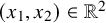 $({x}_1,x_2)\in \mathbb {R}^2$, we investigate the distribution of small values of products
 $q\cdot \|qx_1\| \cdot \|qx_2\|$ with
 $q\in \mathbb {N}$, where
 $\|\cdot \|$ denotes the distance to the closest integer. The main result gives an asymptotic formula for the number of
 $1\le q< T$ such that
 $$ \begin{align*}a <q\cdot \|qx_1\| \cdot \|qx_2\|\le b\quad \text{and} \quad \|qx_1\|, \|qx_2\|\le c \end{align*} $$
for given parameters
 $a,b, c$ satisfying certain growth conditions.


Singularity, weighted uniform approximation, intersections and rates
- Part of
-
- Journal:
- Compositio Mathematica / Volume 161 / Issue 11 / November 2025
- Published online by Cambridge University Press:
- 08 January 2026, pp. 2990-3016
- Print publication:
- November 2025
-
- Article
-
- You have access
- Open access
- HTML
- Export citation
-
A classical argument was introduced by Khintchine in 1926 in order to exhibit the existence of totally irrational singular linear forms in two variables. This argument was subsequently revisited and extended by many authors. For instance, in 1959 Jarník used it to show that for
 $n \geqslant 2$ and for any non-increasing positive f there are totally irrational matrices
 $A \in M_{m,n}(\mathbb{R})$ such that for all large enough t there are
 $\mathbf{p} \in \mathbb{Z}^m, \mathbf{q} \in \mathbb{Z}^n \smallsetminus \{0\}$ with
 $\|\mathbf{q}\| \leqslant t$ and
 $\|A \mathbf{q} - \mathbf{p}\| \leqslant f(t)$. We denote the collection of such matrices by
 $\operatorname{UA}^*_{m,n}(f)$. We adapt Khintchine’s argument to show that the sets
 $\operatorname{UA}^*_{m,n}(f)$, and their weighted analogues
 $\operatorname{UA}^*_{m,n}(f, {\boldsymbol{\omega}})$, intersect many manifolds and fractals, and have strong intersection properties. For example, we show that: (i) when
 $n \geqslant 2$, the set
 $\bigcap_{{\boldsymbol{\omega}}} \operatorname{UA}^*(f, {\boldsymbol{\omega}}) $, where the intersection is over all weights
 ${\boldsymbol{\omega}}$, is non-empty, and moreover intersects many manifolds and fractals; (ii) for
 $n \geqslant 2$, there are vectors in
 $\mathbb{R}^n$ which are simultaneously k-singular for every k, in the sense of Yu; and (iii) when
 $n \geqslant 3$,
 $\operatorname{UA}^*_{1,n}(f) + \operatorname{UA}^*_{1,n}(f) =\mathbb{R}^n$. We also obtain new bounds on the rate of singularity which can be attained by column vectors in analytic submanifolds of dimension at least 2 in
 $\mathbb{R}^n$.


The structure of Lonely Runner spectra
- Part of
-
- Journal:
- Mathematical Proceedings of the Cambridge Philosophical Society / Volume 180 / Issue 2 / March 2026
- Published online by Cambridge University Press:
- 24 October 2025, pp. 343-361
- Print publication:
- March 2026
-
- Article
-
- You have access
- Open access
- HTML
- Export citation
-
For each closed subtorus T of
 $(\mathbb{R}/\mathbb{Z})^n$, let D(T) denote the (infimal)
 $L^\infty$-distance from T to the point
 $(1/2,\ldots, 1/2)$. The nth Lonely Runner spectrum
 $\mathcal{S}(n)$ is defined to be the set of all values achieved by D(T) as T ranges over the 1-dimensional subtori of
 $(\mathbb{R}/\mathbb{Z})^n$ that are not contained in the coordinate hyperplanes. The Lonely Runner Conjecture predicts that
 $\mathcal{S}(n) \subseteq [0,1/2-1/(n+1)]$. Rather than attack this conjecture directly, we study the qualitative structure of the sets
 $\mathcal{S}(n)$ via their accumulation points. This project brings into the picture the analogues of
 $\mathcal{S}(n)$ where 1-dimensional subtori are replaced by k-dimensional subtori or k-dimensional subgroups.


MAILLET’S PROPERTY AND MAHLER’S CONJECTURE ON LIOUVILLE NUMBERS FAIL FOR MATRICES
- Part of
-
- Journal:
- Journal of the Australian Mathematical Society / Volume 119 / Issue 1 / August 2025
- Published online by Cambridge University Press:
- 10 March 2025, pp. 106-127
-
- Article
-
- You have access
- Open access
- HTML
- Export citation
-
In the early 1900s, Maillet [Introduction a la theorie des nombres transcendants et des proprietes arithmetiques des fonctions (Gauthier–Villars, Paris, 1906)] proved that the image of any Liouville number under a rational function with rational coefficients is again a Liouville number. The analogous result for quadratic Liouville matrices in higher dimensions turns out to fail. In fact, using a result by Kleinbock and Margulis [‘Flows on homogeneous spaces and Diophantine approximation on manifolds’, Ann. of Math. (2) 148(1) (1998), 339–360], we show that among analytic matrix functions in dimension
 $n\ge 2$, Maillet’s invariance property is only true for Möbius transformations with special coefficients. This implies that the analogue in higher dimensions of an open question of Mahler on the existence of transcendental entire functions with Maillet’s property has a negative answer. However, extending a topological argument of Erdős [‘Representations of real numbers as sums and products of Liouville numbers’, Michigan Math. J. 9 (1962), 59–60], we prove that for any injective continuous self-mapping on the space of rectangular matrices, many Liouville matrices are mapped to Liouville matrices. Dropping injectivity, we consider setups similar to Alniaçik and Saias [‘Une remarque sur les
 $G_{\delta }$-denses’, Arch. Math. (Basel) 62(5) (1994), 425–426], and show that the situation depends on the matrix dimensions
 $m,n$. Finally, we discuss extensions of a related result by Burger [‘Diophantine inequalities and irrationality measures for certain transcendental numbers’, Indian J. Pure Appl. Math. 32 (2001), 1591–1599] to quadratic matrices. We state several open problems along the way.


JARNÍK TYPE THEOREMS ON MANIFOLDS
- Part of
-
- Journal:
- Bulletin of the Australian Mathematical Society / Volume 108 / Issue 3 / December 2023
- Published online by Cambridge University Press:
- 25 April 2023, pp. 391-405
- Print publication:
- December 2023
-
- Article
-
- You have access
- Open access
- HTML
- Export citation
-
Let
 $\psi $ be a decreasing function. We prove zero-infinity Hausdorff measure criteria for the set of dual
 $\psi $-approximable points and for the set of inhomogeneous multiplicative
 $\psi $-approximable points on nondegenerate planar curves. Our results extend theorems of Huang [‘Hausdorff theory of dual approximation on planar curves’, J. reine angew. Math. 740 (2018), 63–76] and Beresnevich and Velani [‘A note on three problems in metric Diophantine approximation’, in: Recent Trends in Ergodic Theory and Dynamical Systems, Contemporary Mathematics, 631 (American Mathematical Society, Providence, RI, 2015), 211–229] from s-Hausdorff measure, where
 $s\in \mathbb R$, to the more general g-Hausdorff measure, where g is a suitable class of dimension functions.


Multiplicatively badly approximable matrices up to logarithmic factors
- Part of
-
- Journal:
- Mathematical Proceedings of the Cambridge Philosophical Society / Volume 172 / Issue 3 / May 2022
- Published online by Cambridge University Press:
- 17 May 2021, pp. 685-703
- Print publication:
- May 2022
-
- Article
-
- You have access
- Export citation
-
Let
 \[||x||\] denote the distance from
 \[x \in \mathbb{R}\] to the nearest integer. In this paper, we prove a new existence and density result for matrices
 \[A \in {\mathbb{R}^{m \times n}}\] satisfying the inequality
 \[\mathop {\lim \inf }\limits_{|q{|_\infty } \to+ \infty } \prod\limits_{j = 1}^n {\max } \{ 1,|{q_j}|\} \log {\left( {\prod\limits_{j = 1}^n {\max } \{ 1,|{q_j}|\} } \right)^{m + n - 1}}\prod\limits_{i = 1}^m {{A_i}q}> 0,\]
where q ranges in
 \[{\mathbb{Z}^n}\] and Ai denote the rows of the matrix A. This result extends previous work of Moshchevitin both to arbitrary dimension and to the inhomogeneous setting. The estimates needed to apply Moshchevitin’s method to the case m > 2 are not currently available. We therefore develop a substantially different method, based on Cantor-like set constructions of Badziahin and Velani. Matrices with the above property also appear to have very small sums of reciprocals of fractional parts. This fact helps us to shed light on a question raised by Lê and Vaaler on such sums, thereby proving some new estimates in higher dimension.


On simultaneous rational approximation to a p-adic number and its integral powers, II
- Part of
-
- Journal:
- Proceedings of the Edinburgh Mathematical Society / Volume 64 / Issue 2 / May 2021
- Published online by Cambridge University Press:
- 07 May 2021, pp. 317-337
-
- Article
-
- You have access
- Export citation
-
Let $p$
 be a prime number. For a positive integer $n$
 and a real number $\xi$
 , let $\lambda _n (\xi )$
 denote the supremum of the real numbers $\lambda$
 for which there are infinitely many integer tuples $(x_0, x_1, \ldots , x_n)$
 such that $| x_0 \xi - x_1|_p, \ldots , | x_0 \xi ^{n} - x_n|_p$
 are all less than $X^{-\lambda - 1}$
 , where $X$
 is the maximum of $|x_0|, |x_1|, \ldots , |x_n|$
 . We establish new results on the Hausdorff dimension of the set of real numbers $\xi$
 for which $\lambda _n (\xi )$
 is equal to (or greater than or equal to) a given value.


Divergent trajectories in arithmetic homogeneous spaces of rational rank two
- Part of
-
- Journal:
- Ergodic Theory and Dynamical Systems / Volume 41 / Issue 10 / October 2021
- Published online by Cambridge University Press:
- 05 November 2020, pp. 3116-3141
- Print publication:
- October 2021
-
- Article
-
- You have access
- Open access
- Export citation
-
Let G be a semisimple real algebraic group defined over
 ${\mathbb {Q}}$,
 $\Gamma $ be an arithmetic subgroup of G, and T be a maximal
 ${\mathbb {R}}$-split torus. A trajectory in
 $G/\Gamma $ is divergent if eventually it leaves every compact subset. In some cases there is a finite collection of explicit algebraic data which accounts for the divergence. If this is the case, the divergent trajectory is called obvious. Given a closed cone in T, we study the existence of non-obvious divergent trajectories under its action in
 $G\kern-1pt{/}\kern-1pt\Gamma $. We get a sufficient condition for the existence of a non-obvious divergence trajectory in the general case, and a full classification under the assumption that
 $\mathrm {rank}_{{\mathbb {Q}}}G=\mathrm {rank}_{{\mathbb {R}}}G=2$.


Extremality and dynamically defined measures, part II: Measures from conformal dynamical systems
- Part of
-
- Journal:
- Ergodic Theory and Dynamical Systems / Volume 41 / Issue 8 / August 2021
- Published online by Cambridge University Press:
- 30 June 2020, pp. 2311-2348
- Print publication:
- August 2021
-
- Article
-
- You have access
- Export citation
On intrinsic and extrinsic rational approximation to Cantor sets
- Part of
-
- Journal:
- Ergodic Theory and Dynamical Systems / Volume 41 / Issue 5 / May 2021
- Published online by Cambridge University Press:
- 10 February 2020, pp. 1560-1589
- Print publication:
- May 2021
-
- Article
-
- You have access
- Export citation
-
We establish various new results on a problem proposed by Mahler [Some suggestions for further research. Bull. Aust. Math. Soc.29 (1984), 101–108] concerning rational approximation to fractal sets by rational numbers inside and outside the set in question. Some of them provide a natural continuation and improvement of recent results of Broderick, Fishman and Reich, and Fishman and Simmons. A key feature is that many of our new results apply to more general, multi-dimensional fractal sets and require only mild assumptions on the iterated function system. Moreover, we provide a non-trivial lower bound for the distance of a rational number
 $p/q$ outside the Cantor middle-third set
 $C$ to the set
 $C$ , in terms of the denominator
 $q$ . We further discuss patterns of rational numbers in fractal sets. We highlight two of them: firstly, an upper bound for the number of rational (algebraic) numbers in a fractal set up to a given height (and degree) for a wide class of fractal sets; and secondly, we find properties of the denominator structure of rational points in ‘missing-digit’ Cantor sets, generalizing claims of Nagy and Bloshchitsyn.


An inhomogeneous Dirichlet theorem via shrinking targets
- Part of
-
- Journal:
- Compositio Mathematica / Volume 155 / Issue 7 / July 2019
- Published online by Cambridge University Press:
- 25 June 2019, pp. 1402-1423
- Print publication:
- July 2019
-
- Article
-
- You have access
- HTML
- Export citation
-
We give an integrability criterion on a real-valued non-increasing function
 $\unicode[STIX]{x1D713}$ guaranteeing that for almost all (or almost no) pairs
 $(A,\mathbf{b})$, where
 $A$ is a real
 $m\times n$ matrix and
 $\mathbf{b}\in \mathbb{R}^{m}$, the system is solvable in
 $$\begin{eqnarray}\Vert A\mathbf{q}+\mathbf{b}-\mathbf{p}\Vert ^{m}<\unicode[STIX]{x1D713}(T),\quad \Vert \mathbf{q}\Vert ^{n}<T,\end{eqnarray}$$
 $\mathbf{p}\in \mathbb{Z}^{m}$,
 $\mathbf{q}\in \mathbb{Z}^{n}$ for all sufficiently large
 $T$. The proof consists of a reduction to a shrinking target problem on the space of grids in
 $\mathbb{R}^{m+n}$. We also comment on the homogeneous counterpart to this problem, whose
 $m=n=1$ case was recently solved, but whose general case remains open.


Diophantine approximation on the parabola with non-monotonic approximation functions
- Part of
-
- Journal:
- Mathematical Proceedings of the Cambridge Philosophical Society / Volume 168 / Issue 3 / May 2020
- Published online by Cambridge University Press:
- 15 January 2019, pp. 535-542
- Print publication:
- May 2020
-
- Article
-
- You have access
- Export citation
On linear independence measures of the values of Mahler functions
- Part of
-
- Journal:
- Proceedings of the Royal Society of Edinburgh. Section A: Mathematics / Volume 148 / Issue 6 / December 2018
- Published online by Cambridge University Press:
- 22 June 2018, pp. 1297-1311
- Print publication:
- December 2018
-
- Article
-
- You have access
- Export citation
A mass transference principle for systems of linear forms and its applications
- Part of
-
- Journal:
- Compositio Mathematica / Volume 154 / Issue 5 / May 2018
- Published online by Cambridge University Press:
- 03 April 2018, pp. 1014-1047
- Print publication:
- May 2018
-
- Article
-
- You have access
- Open access
- HTML
- Export citation
A NOTE ON BADLY APPROXIMABLE LINEAR FORMS ON MANIFOLDS
- Part of
-
- Journal:
- Mathematika / Volume 63 / Issue 2 / 2017
- Published online by Cambridge University Press:
- 11 May 2017, pp. 587-601
- Print publication:
- 2017
-
- Article
-
- You have access
- HTML
- Export citation
-
This paper is motivated by Davenport’s problem and the subsequent work regarding badly approximable points in submanifolds of a Euclidean space. We study the problem in the area of twisted Diophantine approximation and present two different approaches. The first approach shows that, under a certain restriction, any countable intersection of the sets of weighted badly approximable points on any non-degenerate
 ${\mathcal{C}}^{1}$ submanifold of
 $\mathbb{R}^{n}$ has full dimension. In the second approach, we introduce the property of isotropically winning and show that the sets of weighted badly approximable points are isotropically winning under the same restriction as above.


ON THE SPECTRUM OF DIOPHANTINE APPROXIMATION CONSTANTS
- Part of
-
- Journal:
- Mathematika / Volume 62 / Issue 1 / 2016
- Published online by Cambridge University Press:
- 22 June 2015, pp. 79-100
- Print publication:
- 2016
-
- Article
-
- You have access
- Export citation
-
The approximation constant
 ${\it\lambda}_{k}({\it\zeta})$ is defined as the supremum of
 ${\it\eta}\in \mathbb{R}$ such that the estimate
 $\max _{1\leqslant j\leqslant k}\Vert {\it\zeta}^{j}x\Vert \leqslant x^{-{\it\eta}}$ has infinitely many integer solutions
 $x$. Here
 $\Vert .\Vert$ denotes the distance to the closest integer. We establish a connection on the joint spectrum
 $({\it\lambda}_{1}({\it\zeta}),{\it\lambda}_{2}({\it\zeta}),\ldots )$, which will lead to various improvements of known results on the individual spectrum of the approximation constants
 ${\it\lambda}_{k}({\it\zeta})$ as well. In particular, for given
 $k\geqslant 1$ and
 ${\it\lambda}\geqslant 1$, we construct
 ${\it\zeta}$ in the Cantor set with
 ${\it\lambda}_{k}({\it\zeta})={\it\lambda}$. Moreover, we establish an estimate for the uniform approximation constants
 $\widehat{{\it\lambda}}_{k}({\it\zeta})$, which enables us to determine classical approximation constants for Liouville numbers.


ON A PROBLEM OF BERNIK, KLEINBOCK AND MARGULIS
-
- Journal:
- Glasgow Mathematical Journal / Volume 53 / Issue 3 / September 2011
- Published online by Cambridge University Press:
- 01 August 2011, pp. 669-681
-
- Article
-
- You have access
- Export citation
The distribution of close conjugate algebraic numbers
- Part of
-
- Journal:
- Compositio Mathematica / Volume 146 / Issue 5 / September 2010
- Published online by Cambridge University Press:
- 22 June 2010, pp. 1165-1179
- Print publication:
- September 2010
-
- Article
-
- You have access
- Export citation
