Refine search
Actions for selected content:
25 results
Monomial ideals whose all matching powers are Cohen–Macaulay
- Part of
-
- Journal:
- Canadian Mathematical Bulletin , First View
- Published online by Cambridge University Press:
- 15 October 2026, pp. 1-19
-
- Article
-
- You have access
- HTML
- Export citation
COHEN–MACAULEYNESS OF THE ZERO-DIVISOR GRAPH OF A BOOLEAN POSET
- Part of
-
- Journal:
- Bulletin of the Australian Mathematical Society / Volume 114 / Issue 3 / December 2026
- Published online by Cambridge University Press:
- 20 May 2026, pp. 388-400
- Print publication:
- December 2026
-
- Article
-
- You have access
- HTML
- Export citation
-
We prove that the zero-divisor graph $\Gamma (P)$
 of a Boolean poset P is both well-covered and Cohen–Macaulay. Furthermore, for a poset $\mathbf {P} = \prod _{i=1}^{n} P_i \ (n \ge 3)$
 , where each $P_i$
 is a finite bounded poset satisfying $Z(P_i) = \{0\}$
 for all i and $2 \le |P_1| \le |P_2| \le \cdots \le |P_n|,$
 we show that the zero-divisor graph $\Gamma (\mathbf {P})$
 is Cohen–Macaulay if and only if $\mathbf {P}$
 is a Boolean lattice.


TENSOR PRODUCTS OF d-FOLD MATRIX FACTORIZATIONS
- Part of
-
- Journal:
- Nagoya Mathematical Journal / Volume 261 / 2026
- Published online by Cambridge University Press:
- 24 February 2025, e2
-
- Article
-
- You have access
- Open access
- HTML
- Export citation
-
Consider a pair of elements f and g in a commutative ring Q. Given a matrix factorization of f and another of g, the tensor product of matrix factorizations, which was first introduced by Knörrer and later generalized by Yoshino, produces a matrix factorization of the sum
 $f+g$. We will study the tensor product of d-fold matrix factorizations, with a particular emphasis on understanding when the construction has a non-trivial direct sum decomposition. As an application of our results, we construct indecomposable maximal Cohen–Macaulay and Ulrich modules over hypersurface domains of a certain form.

Equivalences of stable categories of Gorenstein local rings
- Part of
-
- Journal:
- Canadian Mathematical Bulletin / Volume 68 / Issue 1 / March 2025
- Published online by Cambridge University Press:
- 08 January 2025, pp. 338-348
- Print publication:
- March 2025
-
- Article
-
- You have access
- HTML
- Export citation
A sub-functor for Ext and Cohen–Macaulay associated graded modules with bounded multiplicity-II
- Part of
-
- Journal:
- Glasgow Mathematical Journal / Volume 67 / Issue 1 / January 2025
- Published online by Cambridge University Press:
- 30 October 2024, pp. 86-106
-
- Article
-
- You have access
- HTML
- Export citation
-
Let
 $(A,\mathfrak{m})$ be a Cohen–Macaulay local ring, and then the notion of a
 $T$-split sequence was introduced in the part-1 of this paper for the
 $\mathfrak{m}$-adic filtration with the help of the numerical function
 $e^T_A$. In this article, we explore the relation between Auslander–Reiten (AR)-sequences and
 $T$-split sequences. For a Gorenstein ring
 $(A,\mathfrak{m})$, we define a Hom-finite Krull–Remak–Schmidt category
 $\mathcal{D}_A$ as a quotient of the stable category
 $\underline{\mathrm{CM}}(A)$. This category preserves isomorphism, that is,
 $M\cong N$ in
 $\mathcal{D}_A$ if and only if
 $M\cong N$ in
 $\underline{\mathrm{CM}}(A)$.This article has two objectives: first objective is to extend the notion of
 $T$-split sequences, and second objective is to explore the function
 $e^T_A$ and
 $T$-split sequences. When
 $(A,\mathfrak{m})$ is an analytically unramified Cohen–Macaulay local ring and
 $I$ is an
 $\mathfrak{m}$-primary ideal, then we extend the techniques in part-1 of this paper to the integral closure filtration with respect to
 $I$ and prove a version of Brauer–Thrall-II for a class of such rings.


Annihilators and decompositions of singularity categories
- Part of
-
- Journal:
- Proceedings of the Edinburgh Mathematical Society / Volume 67 / Issue 3 / August 2024
- Published online by Cambridge University Press:
- 23 April 2024, pp. 699-713
-
- Article
-
- You have access
- Open access
- HTML
- Export citation
-
Given any commutative Noetherian ring R and an element x in R, we consider the full subcategory
 $\mathsf{C}(x)$ of its singularity category consisting of objects for which the morphism that is given by the multiplication by x is zero. Our main observation is that we can establish a relation between
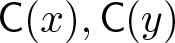 $\mathsf{C}(x), \mathsf{C}(y)$ and
 $\mathsf{C}(xy)$ for any two ring elements x and y. Utilizing this observation, we obtain a decomposition of the singularity category and consequently an upper bound on the dimension of the singularity category.


Lim Ulrich sequences and Boij-Söderberg cones
- Part of
-
- Journal:
- Forum of Mathematics, Sigma / Volume 11 / 2023
- Published online by Cambridge University Press:
- 18 December 2023, e115
-
- Article
-
- You have access
- Open access
- HTML
- Export citation
EXACT SUBCATEGORIES, SUBFUNCTORS OF
 ${\operatorname{EXT}}$, AND SOME APPLICATIONS
- Part of
-
- Journal:
- Nagoya Mathematical Journal / Volume 254 / June 2024
- Published online by Cambridge University Press:
- 27 September 2023, pp. 379-419
-
- Article
-
- You have access
- Open access
- HTML
- Export citation
-
Let
 $({\cal{A}},{\cal{E}})$ be an exact category. We establish basic results that allow one to identify sub(bi)functors of
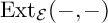 ${\operatorname{Ext}}_{\cal{E}}(-,-)$ using additivity of numerical functions and restriction to subcategories. We also study a small number of these new functors over commutative local rings in detail and find a range of applications from detecting regularity to understanding Ulrich modules.


Ulrich modules and weakly lim Ulrich sequences do not always exist
- Part of
-
- Journal:
- Forum of Mathematics, Sigma / Volume 11 / 2023
- Published online by Cambridge University Press:
- 10 August 2023, e71
-
- Article
-
- You have access
- Open access
- HTML
- Export citation
-
The existence of Ulrich modules for (complete) local domains has been a difficult and elusive open question. For over thirty years, it was unknown whether complete local domains always have Ulrich modules. In this paper, we answer the question of existence for both Ulrich modules and weakly lim Ulrich sequences – a weaker notion recently introduced by Ma – in the negative. We construct many local domains in all dimensions
 $d \geq 2$ that do not have any Ulrich modules. Moreover, we show that when
 $d = 2$, these local domains do not have weakly lim Ulrich sequences.


REGULARITY OF POWERS OF BIPARTITE GRAPHS
- Part of
-
- Journal:
- Bulletin of the Australian Mathematical Society / Volume 107 / Issue 1 / February 2023
- Published online by Cambridge University Press:
- 19 September 2022, pp. 1-9
- Print publication:
- February 2023
-
- Article
-
- You have access
- HTML
- Export citation
-
For a simple bipartite graph G, we give an upper bound for the regularity of powers of the edge ideal
 $I(G)$ in terms of its vertex domination number. Consequently, we explicitly compute the regularity of powers of the edge ideal of a bipartite Kneser graph. Further, we compute the induced matching number of a bipartite Kneser graph.

PRINCIPAL RADICAL SYSTEMS, LEFSCHETZ PROPERTIES, AND PERFECTION OF SPECHT IDEALS OF TWO-ROWED PARTITIONS
- Part of
-
- Journal:
- Nagoya Mathematical Journal / Volume 247 / September 2022
- Published online by Cambridge University Press:
- 09 December 2021, pp. 690-730
-
- Article
-
- You have access
- HTML
- Export citation
TILTING THEORY FOR GORENSTEIN RINGS IN DIMENSION ONE
- Part of
-
- Journal:
- Forum of Mathematics, Sigma / Volume 8 / 2020
- Published online by Cambridge University Press:
- 03 July 2020, e36
-
- Article
-
- You have access
- Open access
- Export citation
-
In representation theory, commutative algebra and algebraic geometry, it is an important problem to understand when the triangulated category
 $\mathsf{D}_{\operatorname{sg}}^{\mathbb{Z}}(R)=\text{}\underline{\mathsf{CM}}_{0}^{\mathbb{Z}}R$ admits a tilting (respectively, silting) object for a
 $\mathbb{Z}$-graded commutative Gorenstein ring
 $R=\bigoplus _{i\geqslant 0}R_{i}$. Here
 $\mathsf{D}_{\operatorname{sg}}^{\mathbb{Z}}(R)$ is the singularity category, and
 $\text{}\underline{\mathsf{CM}}_{0}^{\mathbb{Z}}R$ is the stable category of
 $\mathbb{Z}$-graded Cohen–Macaulay (CM)
 $R$-modules, which are locally free at all nonmaximal prime ideals of
 $R$.
In this paper, we give a complete answer to this problem in the case where
 $\dim R=1$ and
 $R_{0}$ is a field. We prove that
 $\text{}\underline{\mathsf{CM}}_{0}^{\mathbb{Z}}R$ always admits a silting object, and that
 $\text{}\underline{\mathsf{CM}}_{0}^{\mathbb{Z}}R$ admits a tilting object if and only if either
 $R$ is regular or the
 $a$-invariant of
 $R$ is nonnegative. Our silting/tilting object will be given explicitly. We also show that if
 $R$ is reduced and nonregular, then its
 $a$-invariant is nonnegative and the above tilting object gives a full strong exceptional collection in
 $\text{}\underline{\mathsf{CM}}_{0}^{\mathbb{Z}}R=\text{}\underline{\mathsf{CM}}^{\mathbb{Z}}R$.


Notes on linkage of modules
- Part of
-
- Journal:
- Proceedings of the Edinburgh Mathematical Society / Volume 62 / Issue 4 / November 2019
- Published online by Cambridge University Press:
- 13 June 2019, pp. 1045-1062
-
- Article
-
- You have access
- Export citation
On the Ideal Case of a Conjecture of Huneke and Wiegand
- Part of
-
- Journal:
- Proceedings of the Edinburgh Mathematical Society / Volume 62 / Issue 3 / August 2019
- Published online by Cambridge University Press:
- 11 February 2019, pp. 847-859
-
- Article
-
- You have access
- Export citation
Homaloidal nets and ideals of fat points I
- Part of
-
- Journal:
- LMS Journal of Computation and Mathematics / Volume 19 / Issue 1 / 2016
- Published online by Cambridge University Press:
- 01 March 2016, pp. 54-77
-
- Article
-
- You have access
- Export citation
Cohen-Macaulay binomial edge ideals
-
- Journal:
- Nagoya Mathematical Journal / Volume 204 / December 2011
- Published online by Cambridge University Press:
- 11 January 2016, pp. 57-68
-
- Article
-
- You have access
- Export citation
On Canonical Modules of Toric Face Rings
-
- Journal:
- Nagoya Mathematical Journal / Volume 194 / 2009
- Published online by Cambridge University Press:
- 11 January 2016, pp. 69-90
-
- Article
-
- You have access
- Export citation
An Uncountably Infinite Number of Indecomposable Totally Reflexive Modules
-
- Journal:
- Nagoya Mathematical Journal / Volume 187 / September 2007
- Published online by Cambridge University Press:
- 11 January 2016, pp. 35-48
-
- Article
-
- You have access
- Export citation
THE DIMENSION OF A SUBCATEGORY OF MODULES
- Part of
-
- Journal:
- Forum of Mathematics, Sigma / Volume 3 / 2015
- Published online by Cambridge University Press:
- 09 October 2015, e19
-
- Article
-
- You have access
- Open access
- Export citation
-
Let
 $R$ be a commutative noetherian local ring. As an analog of the notion of the dimension of a triangulated category defined by Rouquier, the notion of the dimension of a subcategory of finitely generated
 $R$-modules is introduced in this paper. We found evidence that certain categories over nice singularities have small dimensions. When
 $R$ is Cohen–Macaulay, under a mild assumption it is proved that finiteness of the dimension of the full subcategory consisting of maximal Cohen–Macaulay modules which are locally free on the punctured spectrum is equivalent to saying that
 $R$ is an isolated singularity. As an application, the celebrated theorem of Auslander, Huneke, Leuschke, and Wiegand is not only recovered but also improved. The dimensions of stable categories of maximal Cohen–Macaulay modules as triangulated categories are also investigated in the case where
 $R$ is Gorenstein, and special cases of the recent results of Aihara and Takahashi, and Oppermann and Št́ovíček are recovered and improved. Our key technique involves a careful study of annihilators and supports of
 $\mathsf{Tor}$,
 $\mathsf{Ext}$, and
 $\underline{\mathsf{Hom}}$ between two subcategories.


Frobenius categories, Gorenstein algebras and rational surface singularities
- Part of
-
- Journal:
- Compositio Mathematica / Volume 151 / Issue 3 / March 2015
- Published online by Cambridge University Press:
- 28 October 2014, pp. 502-534
- Print publication:
- March 2015
-
- Article
-
- You have access
- Export citation
