Refine search
Actions for selected content:
29 results
Symmetric modules over the infinite polynomial ring I: nilpotent quotients
- Part of
-
- Journal:
- Forum of Mathematics, Sigma / Volume 14 / 2026
- Published online by Cambridge University Press:
- 29 July 2026, e115
-
- Article
-
- You have access
- Open access
- HTML
- Export citation
-
Cohen proved that the infinite variable polynomial ring $R=k[x_1,x_2,\ldots ]$
 is noetherian with respect to the action of the infinite symmetric group $\mathfrak {S}$
 . The first two authors began a program to understand the $\mathfrak {S}$
 -equivariant algebra of R in detail. In previous work, they classified the $\mathfrak {S}$
 -prime ideals of R. An important example of an $\mathfrak {S}$
 -prime is the ideal $\mathfrak {h}_s$
 generated by $(s+1)$
 st powers of the variables. In this paper, we study the category of $R/\mathfrak {h}_s$
 -modules. We obtain a number of results, and mention just three here: (a) we determine the Grothendieck group of the category; (b) we show that the Krull–Gabriel dimension is s; and (c) we obtain generators for the derived category. This paper will play a key role in subsequent work where we study general modules.


Finiteness of homological dimensions of Ext modules
- Part of
-
- Journal:
- Canadian Mathematical Bulletin , First View
- Published online by Cambridge University Press:
- 13 July 2026, pp. 1-17
-
- Article
-
- You have access
- HTML
- Export citation
Uniform bounds on projective dimension and Castelnuovo–Mumford regularity
- Part of
-
- Journal:
- Nagoya Mathematical Journal / Volume 261 / 2026
- Published online by Cambridge University Press:
- 23 June 2026, e30
-
- Article
-
- You have access
- Open access
- HTML
- Export citation
Generation of singularity categories and infinite injective dimension locus via annihilation of cohomologies
- Part of
-
- Journal:
- Canadian Journal of Mathematics , First View
- Published online by Cambridge University Press:
- 08 June 2026, pp. 1-36
-
- Article
-
- You have access
- HTML
- Export citation
A sub-functor for Ext and Cohen–Macaulay associated graded modules with bounded multiplicity-II
- Part of
-
- Journal:
- Glasgow Mathematical Journal / Volume 67 / Issue 1 / January 2025
- Published online by Cambridge University Press:
- 30 October 2024, pp. 86-106
-
- Article
-
- You have access
- HTML
- Export citation
-
Let
 $(A,\mathfrak{m})$ be a Cohen–Macaulay local ring, and then the notion of a
 $T$-split sequence was introduced in the part-1 of this paper for the
 $\mathfrak{m}$-adic filtration with the help of the numerical function
 $e^T_A$. In this article, we explore the relation between Auslander–Reiten (AR)-sequences and
 $T$-split sequences. For a Gorenstein ring
 $(A,\mathfrak{m})$, we define a Hom-finite Krull–Remak–Schmidt category
 $\mathcal{D}_A$ as a quotient of the stable category
 $\underline{\mathrm{CM}}(A)$. This category preserves isomorphism, that is,
 $M\cong N$ in
 $\mathcal{D}_A$ if and only if
 $M\cong N$ in
 $\underline{\mathrm{CM}}(A)$.This article has two objectives: first objective is to extend the notion of
 $T$-split sequences, and second objective is to explore the function
 $e^T_A$ and
 $T$-split sequences. When
 $(A,\mathfrak{m})$ is an analytically unramified Cohen–Macaulay local ring and
 $I$ is an
 $\mathfrak{m}$-primary ideal, then we extend the techniques in part-1 of this paper to the integral closure filtration with respect to
 $I$ and prove a version of Brauer–Thrall-II for a class of such rings.


Derived functors and Hilbert polynomials over regular local rings
- Part of
-
- Journal:
- Proceedings of the Edinburgh Mathematical Society / Volume 67 / Issue 4 / November 2024
- Published online by Cambridge University Press:
- 23 October 2024, pp. 1137-1147
-
- Article
-
- You have access
- HTML
- Export citation
-
Let
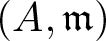 $(A,\mathfrak{m})$ be a regular local ring of dimension
 $d \geq 1$, I an
 $\mathfrak{m}$-primary ideal. Let N be a nonzero finitely generated A-module. Consider the functions
 \begin{equation*}t^I(N, n) = \sum_{i = 0}^{d}\ell(\text{Tor}^A_i(N, A/I^n)) \ \text{and}\ e^I(N, n) = \sum_{i = 0}^{d}\ell(\text{Ext}_A^i(N, A/I^n))\end{equation*}
of polynomial type and let their degrees be
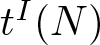 $t^I(N) $ and
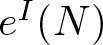 $e^I(N)$. We prove that
 $t^I(N) = e^I(N) = \max\{\dim N, d -1 \}$. A crucial ingredient in the proof is that
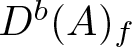 $D^b(A)_f$, the bounded derived category of A with finite length cohomology, has no proper thick subcategories.


Rigidity of Ext and Tor via flat–cotorsion theory
- Part of
-
- Journal:
- Proceedings of the Edinburgh Mathematical Society / Volume 66 / Issue 4 / November 2023
- Published online by Cambridge University Press:
- 03 November 2023, pp. 1142-1153
-
- Article
-
- You have access
- HTML
- Export citation
-
Let
 $\mathfrak{p}$ be a prime ideal in a commutative noetherian ring R and denote by
 $k(\mathfrak{p})$ the residue field of the local ring
 $R_\mathfrak{p}$. We prove that if an R-module M satisfies
 $\operatorname{Ext}_R^{n}(k(\mathfrak{p}),M)=0$ for some
 $n\geqslant\dim R$, then
 $\operatorname{Ext}_R^i(k(\mathfrak{p}),M)=0$ holds for all
 $i \geqslant n$. This improves a result of Christensen, Iyengar and Marley by lowering the bound on n. We also improve existing results on Tor-rigidity. This progress is driven by the existence of minimal semi-flat-cotorsion replacements in the derived category as recently proved by Nakamura and Thompson.


On the reducing projective dimension over local rings
- Part of
-
- Journal:
- Glasgow Mathematical Journal / Volume 66 / Issue 1 / January 2024
- Published online by Cambridge University Press:
- 31 October 2023, pp. 104-118
-
- Article
-
- You have access
- HTML
- Export citation
EXACT SUBCATEGORIES, SUBFUNCTORS OF
 ${\operatorname{EXT}}$, AND SOME APPLICATIONS
- Part of
-
- Journal:
- Nagoya Mathematical Journal / Volume 254 / June 2024
- Published online by Cambridge University Press:
- 27 September 2023, pp. 379-419
-
- Article
-
- You have access
- Open access
- HTML
- Export citation
-
Let
 $({\cal{A}},{\cal{E}})$ be an exact category. We establish basic results that allow one to identify sub(bi)functors of
 ${\operatorname{Ext}}_{\cal{E}}(-,-)$ using additivity of numerical functions and restriction to subcategories. We also study a small number of these new functors over commutative local rings in detail and find a range of applications from detecting regularity to understanding Ulrich modules.


ANNIHILATORS AND DIMENSIONS OF THE SINGULARITY CATEGORY
- Part of
-
- Journal:
- Nagoya Mathematical Journal / Volume 250 / June 2023
- Published online by Cambridge University Press:
- 06 January 2023, pp. 533-548
-
- Article
-
- You have access
- HTML
- Export citation
POWERS OF THE MAXIMAL IDEAL AND VANISHING OF (CO)HOMOLOGY
- Part of
-
- Journal:
- Glasgow Mathematical Journal / Volume 63 / Issue 1 / January 2021
- Published online by Cambridge University Press:
- 10 January 2020, pp. 1-5
-
- Article
-
- You have access
- Export citation
DETECTING KOSZULNESS AND RELATED HOMOLOGICAL PROPERTIES FROM THE ALGEBRA STRUCTURE OF KOSZUL HOMOLOGY
- Part of
-
- Journal:
- Nagoya Mathematical Journal / Volume 238 / June 2020
- Published online by Cambridge University Press:
- 18 June 2018, pp. 47-85
-
- Article
-
- You have access
- HTML
- Export citation
-
Let
 $k$ be a field and
 $R$ a standard graded
 $k$-algebra. We denote by
 $\operatorname{H}^{R}$ the homology algebra of the Koszul complex on a minimal set of generators of the irrelevant ideal of
 $R$. We discuss the relationship between the multiplicative structure of
 $\operatorname{H}^{R}$ and the property that
 $R$ is a Koszul algebra. More generally, we work in the setting of local rings and we show that certain conditions on the multiplicative structure of Koszul homology imply strong homological properties, such as existence of certain Golod homomorphisms, leading to explicit computations of Poincaré series. As an application, we show that the Poincaré series of all finitely generated modules over a stretched Cohen–Macaulay local ring are rational, sharing a common denominator.


Tilting subcategories with respect to cotorsion triples in abelian categories
- Part of
-
- Journal:
- Proceedings of the Royal Society of Edinburgh. Section A: Mathematics / Volume 147 / Issue 4 / August 2017
- Published online by Cambridge University Press:
- 28 June 2017, pp. 703-726
- Print publication:
- August 2017
-
- Article
-
- You have access
- Export citation
-
Given a non-negative integer n and a complete hereditary cotorsion triple
 , the notion of
 subcategories in an abelian category
 is introduced. It is proved that a virtually Gorenstein ring R is n-Gorenstein if and only if the subcategory
 of Gorenstein injective R-modules is
 with respect to the cotorsion triple
 , where
 stands for the subcategory of Gorenstein projectives. In the case when a subcategory
 of is closed under direct summands such that each object in
 admits a right -approximation, a Bazzoni characterization is given for to be . Finally, an Auslander–Reiten correspondence is established between the class of subcategories and that of certain subcategories of which are
 -coresolving covariantly finite and closed under direct summands.
 , the notion of
 subcategories in an abelian category
 is introduced. It is proved that a virtually Gorenstein ring R is n-Gorenstein if and only if the subcategory
 of Gorenstein injective R-modules is
 with respect to the cotorsion triple
 , where
 stands for the subcategory of Gorenstein projectives. In the case when a subcategory
 of
 admits a right
 -coresolving covariantly finite and closed under direct summands.
RELATIVE HILBERT CO-EFFICIENTS
- Part of
-
- Journal:
- Glasgow Mathematical Journal / Volume 59 / Issue 3 / September 2017
- Published online by Cambridge University Press:
- 01 March 2017, pp. 729-741
-
- Article
-
- You have access
- Export citation
-
Let (A,
 ${\mathfrak{m}$ ) be a Cohen–Macaulay local ring of dimension d and let I ⊆ J be two ${\mathfrak{m}$ -primary ideals with I a reduction of J. For i = 0,. . .,d, let e i J (A) (e i I (A)) be the ith Hilbert coefficient of J (I), respectively. We call the number c i (I, J) = e i J (A) − e i I (A) the ith relative Hilbert coefficient of J with respect to I. If G I (A) is Cohen–Macaulay, then c i (I, J) satisfy various constraints. We also show that vanishing of some c i (I, J) has strong implications on depth G J n (A) for n ≫ 0.

THE STRUCTURE OF BALANCED BIG COHEN–MACAULAY MODULES OVER COHEN–MACAULAY RINGS
- Part of
-
- Journal:
- Glasgow Mathematical Journal / Volume 59 / Issue 3 / September 2017
- Published online by Cambridge University Press:
- 10 June 2016, pp. 549-561
-
- Article
-
- You have access
- Export citation
PROGRESS ON THE AUSLANDER–REITEN CONJECTURE
- Part of
-
- Journal:
- Bulletin of the Australian Mathematical Society / Volume 93 / Issue 3 / June 2016
- Published online by Cambridge University Press:
- 16 March 2016, pp. 433-440
- Print publication:
- June 2016
-
- Article
-
- You have access
- Export citation
-
Let
 $R$ be a commutative Gorenstein ring. A result of Araya reduces the Auslander–Reiten conjecture on the vanishing of self-extensions to the case where
 $R$ has Krull dimension at most one. In this paper we extend Araya’s result to certain
 $R$-algebras. As a consequence of our argument, we obtain examples of bound quiver algebras that satisfy the Auslander–Reiten conjecture.


Hilbert-Samuel polynomials for the contravariant extension functor
-
- Journal:
- Nagoya Mathematical Journal / Volume 198 / June 2010
- Published online by Cambridge University Press:
- 11 January 2016, pp. 1-22
-
- Article
-
- You have access
- Export citation
On the Generalized Auslander–Reiten Conjecture under Certain Ring Extensions
-
- Journal:
- Canadian Mathematical Bulletin / Volume 58 / Issue 1 / 01 March 2015
- Published online by Cambridge University Press:
- 20 November 2018, pp. 134-143
- Print publication:
- 01 March 2015
-
- Article
-
- You have access
- Export citation
-
We show that under some conditions a Gorenstein ring
 $R$ satisfies the Generalized Auslander–Reiten conjecture if and only if
 $R\left[ x \right]$ does. When $R$ is a local ring we prove the same result for some localizations of $R\left[ x \right]$ .


REFLEXIVITY AND CONNECTEDNESS
-
- Journal:
- Glasgow Mathematical Journal / Volume 57 / Issue 1 / January 2015
- Published online by Cambridge University Press:
- 22 December 2014, pp. 231-240
-
- Article
-
- You have access
- Export citation
VANISHING OF COHOMOLOGY OVER COMPLETE INTERSECTION RINGS
- Part of
-
- Journal:
- Glasgow Mathematical Journal / Volume 57 / Issue 2 / May 2015
- Published online by Cambridge University Press:
- 18 December 2014, pp. 445-455
-
- Article
-
- You have access
- Export citation
