Refine search
Actions for selected content:
32 results
Genus two stable maps, local equations and modular resolutions
- Part of
-
- Article
-
- You have access
- Open access
- HTML
- Export citation
Corrigendum: The p-cyclic McKay correspondence via motivic integration (Compositio Math. 150 (2014), 1125–1168)
- Part of
-
- Journal:
- Compositio Mathematica / Volume 162 / Issue 8 / August 2026
- Published online by Cambridge University Press:
- 05 October 2026, pp. 1885-1886
- Print publication:
- August 2026
-
- Article
-
- You have access
- Open access
- HTML
- Export citation
The Briançon-Skoda theorem for pseudo-rational and Du Bois singularities and uniformity in excellent rings
- Part of
-
- Journal:
- Forum of Mathematics, Pi / Volume 14 / 2026
- Published online by Cambridge University Press:
- 15 July 2026, e19
-
- Article
-
- You have access
- Open access
- HTML
- Export citation
-
Suppose $J = (f_1, \dots , f_n)$
 is an n-generated ideal in any ring R. We prove a general Briançon-Skoda-type containment relating the integral closure $\overline {J^{n+k-1}}$
 with ordinary powers $J^k$
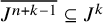
 . We prove that our result implies the full Briançon-Skoda containment $\overline {J^{n+k-1}} \subseteq J^k$
 for pseudo-rational singularities (for instance regular rings), and even for the weaker condition of birational derived splinters. Our methods also yield the containment $\overline {J^{n+k}} \subseteq J^k$
 for Du Bois singularities and even for a characteristic-free generalization. Our Briançon-Skoda-type theorem also implies well-known closure-based Briançon-Skoda results $\overline {J^{n+k-1}} \subseteq (J^k)^{\mathrm {cl}}$
 where, for instance, $\mathrm {cl}$
 is tight or plus closure in characteristic $p> 0$
 , or $\mathrm {ep}$
 closure or extension and contraction from $\widehat {R^+}$
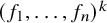
 in mixed characteristic. Our proof relies on a study of the tensor product of the derived image of the structure sheaf of a partially normalized blowup of J with the Buchsbaum-Eisenbud complex (equivalently the Eagon-Northcott complex) associated to $(f_1,\dots ,f_n)^k$
 .
As an application of our results and methods above, we prove the uniform Artin-Rees theorem and the uniform Briançon-Skoda theorem for quasi-excellent, respectively quasi-excellent reduced, rings of finite dimension, answering conjectures of Huneke.


How to make log structures
- Part of
-
- Article
-
- You have access
- Open access
- HTML
- Export citation
-
We introduce the concept of a viable generically Gorenstein toroidal crossing (ggtc) space
 $Y$. This generalizes the concept of Gorenstein toroidal crossing scheme, which in turn generalizes that of a simple normal crossing scheme. On such a space
 $Y$, we define a sheaf
 $\mathcal{LS}_Y$, intrinsic to
 $Y$, by means of an explicit construction. Our main theorem establishes a bijection between the set
 $\operatorname {LS}_{k^\dagger } (Y)$ of isomorphism classes of log structures on
 $Y$ over the log point
 $\operatorname {Spec} k^\dagger$ that are compatible with the ggtc structure and the set
 $\Gamma (Y,\mathcal{LS}_Y^\times )$ of nowhere-vanishing global sections of
 $\mathcal{LS}_Y$. The definition of
 $\mathcal{LS}_Y$ by explicit construction permits the effective construction of log structures on
 $Y$; it also enables logarithmic birational geometry, in particular the construction, in some cases, of resolutions of singular log structures. Our work generalizes [Gross and Siebert, J. Differential Geom. 72 (2006), 169–338, Theorem 3.22], adapting the original proof with techniques from the theory of
 $2$-groups and local line bundle systems.


Log canonical thresholds of high multiplicity reduced plane curves
- Part of
-
- Journal:
- Glasgow Mathematical Journal , First View
- Published online by Cambridge University Press:
- 17 April 2026, pp. 1-13
-
- Article
-
- You have access
- Open access
- HTML
- Export citation
-
We compute log canonical thresholds of reduced plane curves of degree
 $d$ at points of multiplicity
 $d-1$. As a consequence, we describe all possible values of log canonical threshold that are less than
 $2/(d-1)$ for reduced plane curves of degree
 $d$. In addition, we compute log canonical thresholds for all reduced plane curves of degree less than 6.


TRIANGULATED CHARACTERIZATIONS OF SINGULARITIES
- Part of
-
- Journal:
- Nagoya Mathematical Journal / Volume 261 / 2026
- Published online by Cambridge University Press:
- 24 February 2025, e3
-
- Article
-
- You have access
- Open access
- HTML
- Export citation
CONSTANCY OF THE HILBERT–SAMUEL FUNCTION
- Part of
-
- Journal:
- Nagoya Mathematical Journal / Volume 256 / December 2024
- Published online by Cambridge University Press:
- 24 May 2024, pp. 938-952
-
- Article
-
- You have access
- HTML
- Export citation
Global Asymptotics of the Sixth Painlevé Equation in Okamoto’s Space
- Part of
-
- Journal:
- Forum of Mathematics, Sigma / Volume 11 / 2023
- Published online by Cambridge University Press:
- 13 March 2023, e17
-
- Article
-
- You have access
- Open access
- HTML
- Export citation
Classification of singularities of cluster algebras of finite type: the case of trivial coefficients
- Part of
-
- Journal:
- Glasgow Mathematical Journal / Volume 65 / Issue 1 / January 2023
- Published online by Cambridge University Press:
- 04 July 2022, pp. 170-204
-
- Article
-
- You have access
- Open access
- HTML
- Export citation
Newton non-degenerate
 $\mu$-constant deformations admit simultaneous embedded resolutions
- Part of
-
- Journal:
- Compositio Mathematica / Volume 158 / Issue 6 / June 2022
- Published online by Cambridge University Press:
- 11 August 2022, pp. 1268-1297
- Print publication:
- June 2022
-
- Article
-
- You have access
- HTML
- Export citation
-
Let
 $ {\mathbb {C}}^{n+1}_o$ denote the germ of
 $ {\mathbb {C}}^{n+1}$ at the origin. Let
 $V$ be a hypersurface germ in
 $ {\mathbb {C}}^{n+1}_o$ and
 $W$ a deformation of
 $V$ over
 $ {\mathbb {C}}_{o}^{m}$. Under the hypothesis that
 $W$ is a Newton non-degenerate deformation, in this article we prove that
 $W$ is a
 $\mu$-constant deformation if and only if
 $W$ admits a simultaneous embedded resolution. This result gives a lot of information about
 $W$, for example, the topological triviality of the family
 $W$ and the fact that the natural morphism
 $(\operatorname {W( {\mathbb {C}}_{o})}_{m})_{{\rm red}}\rightarrow {\mathbb {C}}_{o}$ is flat, where
 $\operatorname {W( {\mathbb {C}}_{o})}_{m}$ is the relative space of
 $m$-jets. On the way to the proof of our main result, we give a complete answer to a question of Arnold on the monotonicity of Newton numbers in the case of convenient Newton polyhedra.


INTERSECTION COHOMOLOGY OF RANK 2 CHARACTER VARIETIES OF SURFACE GROUPS
- Part of
-
- Journal:
- Journal of the Institute of Mathematics of Jussieu / Volume 22 / Issue 4 / July 2023
- Published online by Cambridge University Press:
- 08 October 2021, pp. 1615-1654
- Print publication:
- July 2023
-
- Article
-
- You have access
- Open access
- HTML
- Export citation
-
For
 $G = \mathrm {GL}_2, \mathrm {SL}_2, \mathrm {PGL}_2$ we compute the intersection E-polynomials and the intersection Poincaré polynomials of the G-character variety of a compact Riemann surface C and of the moduli space of G-Higgs bundles on C of degree zero. We derive several results concerning the P=W conjectures for these singular moduli spaces.
SPACE OF INITIAL VALUES OF A MAP WITH A QUARTIC INVARIANT
- Part of
-
- Journal:
- Bulletin of the Australian Mathematical Society / Volume 103 / Issue 3 / June 2021
- Published online by Cambridge University Press:
- 05 October 2020, pp. 438-449
- Print publication:
- June 2021
-
- Article
-
- You have access
- Export citation
-
We compactify and regularise the space of initial values of a planar map with a quartic invariant and use this construction to prove its integrability in the sense of algebraic entropy. The system has certain unusual properties, including a sequence of points of indeterminacy in
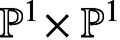 $\mathbb {P}^{1}\!\times \mathbb {P}^{1}$. These indeterminacy points lie on a singular fibre of the mapping to a corresponding QRT system and provide the existence of a one-parameter family of special solutions.
Constructibilité et modération uniformes en cohomologie étale
- Part of
-
- Journal:
- Compositio Mathematica / Volume 155 / Issue 4 / April 2019
- Published online by Cambridge University Press:
- 19 March 2019, pp. 711-757
- Print publication:
- April 2019
-
- Article
-
- You have access
- HTML
- Export citation
-
Soient
 $S$ un schéma nœthérien et
 $f:X\rightarrow S$ un morphisme propre. D’après SGA 4 XIV, pour tout faisceau constructible
 $\mathscr{F}$ de
 $\mathbb{Z}/n\mathbb{Z}$-modules sur
 $X$, les faisceaux de
 $\mathbb{Z}/n\mathbb{Z}$-modules
 $\mathtt{R}^{i}f_{\star }\mathscr{F}$, obtenus par image directe (pour la topologie étale), sont également constructibles : il existe une stratification
 $\mathfrak{S}$ de
 $S$ telle que ces faisceaux soient localement constants constructibles sur les strates. À la suite de travaux de N. Katz et G. Laumon, ou L. Illusie, dans le cas particulier où
 $S$ est génériquement de caractéristique nulle ou bien les faisceaux
 $\mathscr{F}$ sont constants (de torsion inversible sur
 $S$), on étudie ici la dépendance de
 $\mathfrak{S}$ en
 $\mathscr{F}$. On montre qu’une condition naturelle de constructibilité et modération « uniforme » satisfaite par les faisceaux constants, introduite par O. Gabber, est stable par les foncteurs
 $\mathtt{R}^{i}f_{\star }$. Si
 $f$ n’est pas supposé propre, ce résultat subsiste sous réserve de modération à l’infini, relativement à
 $S$. On démontre aussi l’existence de bornes uniformes sur les nombres de Betti, qui s’appliquent notamment pour les fibres des faisceaux
 $\mathtt{R}^{i}f_{\star }\mathbb{F}_{\ell }$, où
 $\ell$ parcourt les nombres premiers inversibles sur
 $S$.


Geometric determination of the Poles of Highest and second Highest order of Hodge And motivic Zeta functions
-
- Journal:
- Nagoya Mathematical Journal / Volume 176 / 2004
- Published online by Cambridge University Press:
- 22 January 2016, pp. 1-18
-
- Article
-
- You have access
- Export citation
Some Numerical Criteria for the Nash Problem on Arcs for Surfaces
-
- Journal:
- Nagoya Mathematical Journal / Volume 191 / 2008
- Published online by Cambridge University Press:
- 11 January 2016, pp. 1-19
-
- Article
-
- You have access
- Export citation
-
Let (X, O) be a germ of a normal surface singularity, π:
 → X be the minimal resolution of singularities and let A = (ai,j ) be the n × n symmetrical intersection matrix of the exceptional set of In an old preprint Nash proves that the set of arcs on a surface singularity is a scheme
 , and defines a map
 from the set of irreducible components of to the set of exceptional components of the minimal resolution of singularities of (X,O). He proved that this map is injective and ask if it is surjective. In this paper we consider the canonical decomposition

-
• For any couple (Ei,Ej) of distinct exceptional components, we define Numerical Nash condition (NN(i,j)). We have that (NN(i,j)) implies
 In this paper we prove that (NN(i,j)) is always true for at least the half of couples (i,j).
-
• The condition (NN(i,j)) is true for all couples (i,j) with i ≠ j, characterizes a certain class of negative definite matrices, that we call Nash matrices. If A is a Nash matrix then the Nash map N is bijective. In particular our results depend only on A and not on the topological type of the exceptional set.
-
• We recover and improve considerably almost all results known on this topic and our proofs are new and elementary.
-
• We give infinitely many other classes of singularities where Nash Conjecture is true.
The proofs are based on my old work [8] and in Plenat [10].
-
 → X be the minimal resolution of singularities and let A = (a
 , and defines a map
 from the set of irreducible components of

 In this paper we prove that (NN
COX RINGS OF MINIMAL RESOLUTIONS OF SURFACE QUOTIENT SINGULARITIES
- Part of
-
- Journal:
- Glasgow Mathematical Journal / Volume 58 / Issue 2 / May 2016
- Published online by Cambridge University Press:
- 21 July 2015, pp. 325-355
-
- Article
-
- You have access
- Export citation
Hodge Theory on Generalized Normal Crossing Varieties
-
- Journal:
- Proceedings of the Edinburgh Mathematical Society / Volume 57 / Issue 1 / February 2014
- Published online by Cambridge University Press:
- 17 December 2013, pp. 175-189
-
- Article
-
- You have access
- Export citation
G-GRAPHS AND SPECIAL REPRESENTATIONS FOR BINARY DIHEDRAL GROUPS IN GL(2,ℂ)
-
- Journal:
- Glasgow Mathematical Journal / Volume 55 / Issue 1 / January 2013
- Published online by Cambridge University Press:
- 06 August 2012, pp. 23-57
-
- Article
-
- You have access
- Export citation
-
Given a finite subgroup G⊂GL(2,ℂ), it is known that the minimal resolution of singularity ℂ2/G is the moduli space Y=G-Hilb(ℂ2) of G-clusters


ℤ[1/p]-motivic resolution of singularities
- Part of
-
- Journal:
- Compositio Mathematica / Volume 147 / Issue 5 / September 2011
- Published online by Cambridge University Press:
- 01 June 2011, pp. 1434-1446
- Print publication:
- September 2011
-
- Article
-
- You have access
- Export citation
Higher Nash blowups
- Part of
-
- Journal:
- Compositio Mathematica / Volume 143 / Issue 6 / November 2007
- Published online by Cambridge University Press:
- 01 November 2007, pp. 1493-1510
- Print publication:
- November 2007
-
- Article
-
- You have access
- Export citation
