Refine search
Actions for selected content:
25 results
Frobenius–Perron dimension via
 $\tau$-tilting theory
- Part of
-
- Journal:
- Proceedings of the Edinburgh Mathematical Society / Volume 69 / Issue 4 / November 2026
- Published online by Cambridge University Press:
- 22 September 2026, pp. 1431-1465
-
- Article
-
- You have access
- HTML
- Export citation
-
From the perspective of
 $\tau$-tilting theory, we study Frobenius–Perron dimensions of finite-dimensional algebras. First, we evaluate the Frobenius–Perron dimensions of
 $\tau$-tilting finite algebras by a combinatorial method in
 $\tau$-tilting theory. Second, we give an upper bound for the Frobenius–Perron dimension of
 $\tau$-tilting finite algebras of tame representation type. Third, we determine the Frobenius–Perron dimensions of Nakayama algebras and generalized preprojective algebras of Dynkin type in the sense of Geiß–Leclerc–Schröer.


PARTIAL ACTIONS OF FREE GROUPS AND GROUPOID HOMOLOGY
- Part of
-
- Journal:
- Journal of the Australian Mathematical Society , First View
- Published online by Cambridge University Press:
- 04 September 2026, pp. 1-16
-
- Article
-
- You have access
- Open access
- HTML
- Export citation
-
We give a length-one projective resolution of the trivial module for the groupoid of a semi-saturated partial action (in the sense of Exel) of a free group on a compact Hausdorff and totally disconnected space. As a consequence, we obtain an elementary computation of the homology of these groupoids, which include transformation groupoids of free group actions and Deaconu–Renault groupoids of systems $(X,T)$
 , where $X$
 is compact Hausdorff and totally disconnected, and $T$
 is a local homeomorphism with domain a clopen subset of $X$
 . We also show that algebra of such a partial action groupoid over a field has global dimension at most $2$
 when the space is second countable.


Homological dimensions via silting and tilting objects in triangulated categories
- Part of
-
- Journal:
- Canadian Journal of Mathematics , First View
- Published online by Cambridge University Press:
- 04 August 2026, pp. 1-23
-
- Article
-
- You have access
- HTML
- Export citation
-
This article investigates how classical homological invariants extend from module categories to a triangulated category $\mathcal {T}$
 with a compact silting generator M. We construct sup-projective, inf-injective, and sup-flat resolutions for objects in $\mathcal {T}$
 and use them to establish basic properties of the corresponding homological dimensions. We then introduce the global dimension $\mathrm {gldim}\mathcal {T}$
 and prove that it coincides with the global dimension of the heart $\mathcal {H}_M=M^{\bot _{\neq 0}}$
 and with the $\mathrm {Add}(M)$
 -dimension of $\mathcal {T}^{\mathrm {b}}$
 when M is tilting. These results provide a unified framework for homological dimension theory in triangulated categories and reveal how silting and tilting objects encode essential homological information. As applications, we study homological properties, such as Gorensteinness and regularity for $\mathcal {T}$
 with a focus on the derived category over rings and dg rings.


Model structures, n-Gorenstein flat modules and PGF dimensions
- Part of
-
- Journal:
- Proceedings of the Edinburgh Mathematical Society / Volume 67 / Issue 4 / November 2024
- Published online by Cambridge University Press:
- 22 November 2024, pp. 1241-1264
-
- Article
-
- You have access
- HTML
- Export citation
-
Given a non-negative integer n and a ring R with identity, we construct a hereditary abelian model structure on the category of left R-modules where the class of cofibrant objects coincides with
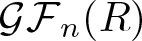 $\mathcal{GF}_n(R)$ the class of left R-modules with Gorenstein flat dimension at most n, the class of fibrant objects coincides with
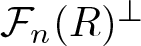 $\mathcal{F}_n(R)^\perp$ the right
 ${\rm Ext}$-orthogonal class of left R-modules with flat dimension at most n, and the class of trivial objects coincides with
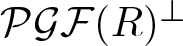 $\mathcal{PGF}(R)^\perp$ the right
 ${\rm Ext}$-orthogonal class of PGF left R-modules recently introduced by Šaroch and
 . The homotopy category of this model structure is triangulated equivalent to the stable category
 $\underline{\mathcal{GF}(R)\cap\mathcal{C}(R)}$ modulo flat-cotorsion modules and it is compactly generated when R has finite global Gorenstein projective dimension.
The second part of this paper deals with the PGF dimension of modules and rings. Our results suggest that this dimension could serve as an alternative definition of the Gorenstein projective dimension. We show, among other things, that (n-)perfect rings can be characterized in terms of Gorenstein homological dimensions, similar to the classical ones, and the global Gorenstein projective dimension coincides with the global PGF dimension.


 . The homotopy category of this model structure is triangulated equivalent to the stable category
Tachikawa's second conjecture, derived recollements, and gendo-symmetric algebras
- Part of
-
- Journal:
- Compositio Mathematica / Volume 160 / Issue 11 / November 2024
- Published online by Cambridge University Press:
- 27 December 2024, pp. 2704-2737
- Print publication:
- November 2024
-
- Article
-
- You have access
- HTML
- Export citation
-
Tachikawa's second conjecture for symmetric algebras is shown to be equivalent to indecomposable symmetric algebras not having any nontrivial stratifying ideals. The conjecture is also shown to be equivalent to the supremum of stratified ratios being less than
 $1$, when taken over all indecomposable symmetric algebras. An explicit construction provides a series of counterexamples to Tachikawa's second conjecture from each (potentially existing) gendo-symmetric algebra that is a counterexample to Nakayama's conjecture. The results are based on establishing recollements of derived categories and on constructing new series of algebras.

Quasi-hereditary covers of Temperley–Lieb algebras and relative dominant dimension
- Part of
-
- Journal:
- Proceedings of the Royal Society of Edinburgh. Section A: Mathematics / Volume 156 / Issue 1 / February 2026
- Published online by Cambridge University Press:
- 11 April 2024, pp. 1-38
- Print publication:
- February 2026
-
- Article
-
- You have access
- Open access
- HTML
- Export citation
-
Many connections and dualities in representation theory and Lie theory can be explained using quasi-hereditary covers in the sense of Rouquier. Recent work by the first-named author shows that relative dominant (and codominant) dimensions are natural tools to classify and distinguish distinct quasi-hereditary covers of a finite-dimensional algebra. In this paper, we prove that the relative dominant dimension of a quasi-hereditary algebra, possessing a simple preserving duality, with respect to a direct summand of the characteristic tilting module is always an even number or infinite and that this homological invariant controls the quality of quasi-hereditary covers that possess a simple preserving duality. To resolve the Temperley–Lieb algebras, we apply this result to the class of Schur algebras $S(2, d)$
 and their $q$
 -analogues. Our second main result completely determines the relative dominant dimension of $S(2, d)$
 with respect to $Q=V^{\otimes d}$
 , the $d$
 -th tensor power of the natural two-dimensional module. As a byproduct, we deduce that Ringel duals of $q$
 -Schur algebras $S(2,d)$
 give rise to quasi-hereditary covers of Temperley–Lieb algebras. Further, we obtain precisely when the Temperley–Lieb algebra is Morita equivalent to the Ringel dual of the $q$
 -Schur algebra $S(2, d)$
 and precisely how far these two algebras are from being Morita equivalent, when they are not. These results are compatible with the integral setup, and we use them to deduce that the Ringel dual of a $q$
 -Schur algebra over the ring of Laurent polynomials over the integers together with some projective module is the best quasi-hereditary cover of the integral Temperley–Lieb algebra.


THE FINITISTIC DIMENSION AND CHAIN CONDITIONS ON IDEALS
- Part of
-
- Journal:
- Glasgow Mathematical Journal / Volume 64 / Issue 1 / January 2022
- Published online by Cambridge University Press:
- 03 November 2020, pp. 37-44
-
- Article
-
- You have access
- Export citation
-
Let Λ be an artin algebra and
 $0=I_{0}\subseteq I_{1} \subseteq I_{2}\subseteq\cdots \subseteq I_{n}$ a chain of ideals of Λ such that
 $(I_{i+1}/I_{i})\rad(\Lambda/I_{i})=0$ for any
 $0\leq i\leq n-1$ and
 $\Lambda/I_{n}$ is semisimple. If either none or the direct sum of exactly two consecutive ideals has infinite projective dimension, then the finitistic dimension conjecture holds for Λ. As a consequence, we have that if either none or the direct sum of exactly two consecutive terms in the radical series of Λ has infinite projective dimension, then the finitistic dimension conjecture holds for Λ. Some known results are obtained as corollaries.

FLAT RING EPIMORPHISMS OF COUNTABLE TYPE
- Part of
-
- Journal:
- Glasgow Mathematical Journal / Volume 62 / Issue 2 / May 2020
- Published online by Cambridge University Press:
- 07 May 2019, pp. 383-439
-
- Article
-
- You have access
- Export citation
-
Let R→U be an associative ring epimorphism such that U is a flat left R-module. Assume that the related Gabriel topology
 $\mathbb{G}$ of right ideals in R has a countable base. Then we show that the left R-module U has projective dimension at most 1. Furthermore, the abelian category of left contramodules over the completion of R at
 $\mathbb{G}$ fully faithfully embeds into the Geigle–Lenzing right perpendicular subcategory to U in the category of left R-modules, and every object of the latter abelian category is an extension of two objects of the former one. We discuss conditions under which the two abelian categories are equivalent. Given a right linear topology on an associative ring R, we consider the induced topology on every left R-module and, for a perfect Gabriel topology
 $\mathbb{G}$, compare the completion of a module with an appropriate Ext module. Finally, we characterize the U-strongly flat left R-modules by the two conditions of left positive-degree Ext-orthogonality to all left U-modules and all
 $\mathbb{G}$-separated
 $\mathbb{G}$-complete left R-modules.


GORENSTEIN HOMOLOGICAL PROPERTIES OF TENSOR RINGS
- Part of
-
- Journal:
- Nagoya Mathematical Journal / Volume 237 / March 2020
- Published online by Cambridge University Press:
- 07 June 2018, pp. 188-208
-
- Article
-
- You have access
- HTML
- Export citation
-
Let
 $R$ be a two-sided Noetherian ring, and let
 $M$ be a nilpotent
 $R$-bimodule, which is finitely generated on both sides. We study Gorenstein homological properties of the tensor ring
 $T_{R}(M)$. Under certain conditions, the ring
 $R$ is Gorenstein if and only if so is
 $T_{R}(M)$. We characterize Gorenstein projective
 $T_{R}(M)$-modules in terms of
 $R$-modules.


Classification of Simple Weight Modules over the Schrödinger Algebra
-
- Journal:
- Canadian Mathematical Bulletin / Volume 61 / Issue 1 / 01 March 2018
- Published online by Cambridge University Press:
- 20 November 2018, pp. 16-39
- Print publication:
- 01 March 2018
-
- Article
-
- You have access
- Export citation
-
A classification of simple weight modules over the Schrödinger algebra is given. The Krull and the global dimensions are found for the centralizer
 ${{C}_{S}}(H)$ (and some of its prime factor algebras) of the Cartan element
 $H$ in the universal enveloping algebra
 $S$ of the Schrödinger (Lie) algebra. The simple ${{C}_{S}}(H)$ -modules are classified. The Krull and the global dimensions are found for some (prime) factor algebras of the algebra $S$ (over the centre). It is proved that some (prime) factor algebras of $S$ and ${{C}_{S}}(H)$ are tensor homological
 $/$ Krull minimal.


HOMOLOGICAL DIMENSIONS OF CROSSED PRODUCTS
- Part of
-
- Journal:
- Glasgow Mathematical Journal / Volume 59 / Issue 2 / May 2017
- Published online by Cambridge University Press:
- 10 June 2016, pp. 401-420
-
- Article
-
- You have access
- Export citation
Algebras of acyclic cluster type: Tree type and type Ã
-
- Journal:
- Nagoya Mathematical Journal / Volume 211 / September 2013
- Published online by Cambridge University Press:
- 11 January 2016, pp. 1-50
-
- Article
-
- You have access
- Export citation
Homological Properties Relative to Injectively Resolving Subcategories
-
- Journal:
- Canadian Mathematical Bulletin / Volume 58 / Issue 4 / 01 December 2015
- Published online by Cambridge University Press:
- 20 November 2018, pp. 741-756
- Print publication:
- 01 December 2015
-
- Article
-
- You have access
- Export citation
-
Let
 $\mathcal{E}$ be an injectively resolving subcategory of left
 $R$ -modules. A left $R$ -module
 $M$ (resp. right $R$ -module
 $N$ ) is called $\mathcal{E}$ -injective (resp. $\mathcal{E}$ -flat) if
 $\text{Ext}_{R}^{1}\left( G,\,M \right)\,=\,0$ (resp.
 $\text{Tor}_{1}^{R}\left( N,\,G \right)\,=\,0$ ) for any
 $G\,\in \,\mathcal{E}$ . Let $\mathcal{E}$ be a covering subcategory. We prove that a left $R$ -module $M$ is $\mathcal{E}$ -injective if and only if $M$ is a direct sum of an injective left $R$ -module and a reduced $\mathcal{E}$ -injective left $R$ -module. Suppose
 $\mathcal{F}$ is a preenveloping subcategory of right $R$ -modules such that
 ${{\mathcal{E}}^{+}}\,\subseteq \,\mathcal{F}$ and
 ${{\mathcal{F}}^{+}}\,\subseteq \,\mathcal{E}$ . It is shown that a finitely presented right $R$ -module $M$ is $\mathcal{E}$ -flat if and only if $M$ is a cokernel of an $\mathcal{F}$ -preenvelope of a right $R$ -module. In addition, we introduce and investigate the $\mathcal{E}$ -injective and $\mathcal{E}$ -flat dimensions of modules and rings. We also introduce $\mathcal{E}$ -(semi)hereditary rings and $\mathcal{E}$ -von Neumann regular rings and characterize them in terms of $\mathcal{E}$ -injective and $\mathcal{E}$ -flat modules.


FINITISTIC DIMENSIONS AND PIECEWISE HEREDITARY PROPERTY OF SKEW GROUP ALGEBRAS
- Part of
-
- Journal:
- Glasgow Mathematical Journal / Volume 57 / Issue 3 / September 2015
- Published online by Cambridge University Press:
- 18 December 2014, pp. 509-517
-
- Article
-
- You have access
- Export citation
On Global Dimensions of Tree Type Finite Dimensional Algebras
-
- Journal:
- Canadian Mathematical Bulletin / Volume 57 / Issue 4 / 01 December 2014
- Published online by Cambridge University Press:
- 20 November 2018, pp. 814-820
- Print publication:
- 01 December 2014
-
- Article
-
- You have access
- Export citation
-
A formula is provided to explicitly describe global dimensions of all kinds of tree type finite dimensional
 $k$ -algebras for $k$ an algebraic closed field. In particular, it is pointed out that if the underlying tree type quiver has
 $n$ vertices, then the maximum global dimension is
 $n\,-\,1$ .


Pro-
 $\lowercase p$ Iwahori–Hecke algebras are Gorenstein
- Part of
-
- Journal:
- Journal of the Institute of Mathematics of Jussieu / Volume 13 / Issue 4 / October 2014
- Published online by Cambridge University Press:
- 28 November 2013, pp. 753-809
- Print publication:
- October 2014
-
- Article
-
- You have access
- Export citation
-
Let
 $\mathfrak{F}$ be a locally compact nonarchimedean field with residue characteristic
 $p$, and let
 $\mathrm{G} $ be the group of
 $\mathfrak{F}$-rational points of a connected split reductive group over
 $\mathfrak{F}$. For
 $k$ an arbitrary field of any characteristic, we study the homological properties of the Iwahori–Hecke
 $k$-algebra
 ${\mathrm{H} }^{\prime } $ and of the pro-
 $p$ Iwahori–Hecke
 $k$-algebra
 $\mathrm{H} $ of
 $\mathrm{G} $. We prove that both of these algebras are Gorenstein rings with self-injective dimension bounded above by the rank of
 $\mathrm{G} $. If
 $\mathrm{G} $ is semisimple, we also show that this upper bound is sharp, that both
 $\mathrm{H} $ and
 ${\mathrm{H} }^{\prime } $ are Auslander–Gorenstein, and that there is a duality functor on the finite length modules of
 $\mathrm{H} $ (respectively
 ${\mathrm{H} }^{\prime } $). We obtain the analogous Gorenstein and Auslander–Gorenstein properties for the graded rings associated to
 $\mathrm{H} $ and
 ${\mathrm{H} }^{\prime } $.
When
 $k$ has characteristic
 $p$, we prove that in ‘most’ cases
 $\mathrm{H} $ and
 ${\mathrm{H} }^{\prime } $ have infinite global dimension. In particular, we deduce that the category of smooth
 $k$-representations of
 $\mathrm{G} = {\mathrm{PGL} }_{2} ({ \mathbb{Q} }_{p} )$ generated by their invariant vectors under the pro-
 $p$ Iwahori subgroup has infinite global dimension (at least if
 $k$ is algebraically closed).


AUSLANDER GENERATORS AND HOMOLOGICAL CONJECTURES
-
- Journal:
- Glasgow Mathematical Journal / Volume 56 / Issue 3 / September 2014
- Published online by Cambridge University Press:
- 30 August 2013, pp. 503-506
-
- Article
-
- You have access
- Export citation
STABILITY OF GORENSTEIN FLAT MODULES
-
- Journal:
- Glasgow Mathematical Journal / Volume 54 / Issue 1 / January 2012
- Published online by Cambridge University Press:
- 09 December 2011, pp. 169-175
-
- Article
-
- You have access
- Export citation
-
Sather-Wagstaff et al. proved in [8] (S. Sather-Wagsta, T. Sharif and D. White, Stability of Gorenstein categories, J. Lond. Math. Soc.(2), 77(2) (2008), 481–502) that iterating the process used to define Gorenstein projective modules exactly leads to the Gorenstein projective modules. Also, they established in [9] (S. Sather-Wagsta, T. Sharif and D. White, AB-contexts and stability for Goren-stein at modules with respect to semi-dualizing modules, Algebra Represent. Theory14(3) (2011), 403–428) a stability of the subcategory of Gorenstein flat modules under a procedure to build R-modules from complete resolutions. In this paper we are concerned with another kind of stability of the class of Gorenstein flat modules via-à-vis the very Gorenstein process used to define Gorenstein flat modules. We settle in affirmative the following natural question in the setting of a left GF-closed ring R: Given an exact sequence of Gorenstein flat R-modules G = ⋅⋅⋅


STABILITY OF GORENSTEIN FLAT CATEGORIES
-
- Journal:
- Glasgow Mathematical Journal / Volume 54 / Issue 1 / January 2012
- Published online by Cambridge University Press:
- 09 December 2011, pp. 177-191
-
- Article
-
- You have access
- Export citation
HOMOLOGICAL TRANSCENDENCE DEGREE
-
- Journal:
- Proceedings of the London Mathematical Society / Volume 93 / Issue 1 / July 2006
- Published online by Cambridge University Press:
- 09 June 2006, pp. 105-137
- Print publication:
- July 2006
-
- Article
- Export citation
