Refine search
Actions for selected content:
34 results
Conformal transformations of metric spaces and Lorentzian pre-length spaces
- Part of
-
- Journal:
- Proceedings of the Royal Society of Edinburgh. Section A: Mathematics , First View
- Published online by Cambridge University Press:
- 21 October 2026, pp. 1-60
-
- Article
-
- You have access
- Open access
- HTML
- Export citation
-
We introduce conformal transformations in the synthetic setting of metric spaces and Lorentzian (pre-)length spaces. Our main focus lies on the Lorentzian case, where, motivated by the need to extend classical notions to spaces of low regularity, we provide the first consistent notion of conformal length, and analyse its fundamental properties. We prove that the conformal time separation function
 $\tau_{\Omega}$ (and the causal structure it induces) yields a Lorentzian pre-length structure if the original space is intrinsic and strongly causal. This allows us to construct a notion of conformal transformation between spaces within this class, yielding an equivalence relation. As applications, we show that the conformal length functional agrees with the standard conformal length of (strongly causal) spacetimes. We also prove conformal invariance of angles and causality conditions, give a characterization of global hyperbolicity via finiteness of
 $\tau_{\Omega}$ for all conformal factors, and establish the behaviour of the Lorentzian Hausdorff measure defined by McCann and Sämann under conformal changes. Moreover, we apply the same methods to the metric case, which is of interest in its own right. This is exemplified by proving an analogue of the Nomizu–Ozeki theorem for metric length spaces, which has the advantage that the resulting complete space is conformally related to the original space.


Four-dimensional Lorentzian algebraic Ricci solitons
- Part of
-
- Journal:
- Proceedings of the Royal Society of Edinburgh. Section A: Mathematics , First View
- Published online by Cambridge University Press:
- 27 March 2026, pp. 1-56
-
- Article
-
- You have access
- Open access
- HTML
- Export citation
Concavity of spacetimes
- Part of
-
- Journal:
- Proceedings of the Royal Society of Edinburgh. Section A: Mathematics , First View
- Published online by Cambridge University Press:
- 18 February 2026, pp. 1-22
-
- Article
-
- You have access
- Open access
- HTML
- Export citation
LORENTZIAN BCV SPACES: PROPERTIES AND GEOMETRY OF THEIR SURFACES
- Part of
-
- Journal:
- Journal of the Australian Mathematical Society / Volume 119 / Issue 2 / October 2025
- Published online by Cambridge University Press:
- 25 July 2025, pp. 129-151
-
- Article
-
- You have access
- HTML
- Export citation
Minimal Lagrangian submanifolds of weighted Kim–McCann metrics
- Part of
-
- Journal:
- Canadian Mathematical Bulletin / Volume 68 / Issue 4 / December 2025
- Published online by Cambridge University Press:
- 21 April 2025, pp. 1223-1238
- Print publication:
- December 2025
-
- Article
-
- You have access
- HTML
- Export citation
A Bonnet–Myers rigidity theorem for globally hyperbolic Lorentzian length spaces
- Part of
-
- Journal:
- Proceedings of the Royal Society of Edinburgh. Section A: Mathematics / Volume 156 / Issue 5 / October 2026
- Published online by Cambridge University Press:
- 13 January 2025, pp. 2422-2463
- Print publication:
- October 2026
-
- Article
-
- You have access
- Open access
- HTML
- Export citation
-
We prove a synthetic Bonnet–Myers rigidity theorem for globally hyperbolic Lorentzian length spaces with global curvature bounded below by K < 0 and an open distance realizer of length
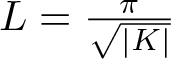 $L=\frac{\pi}{\sqrt{|K|}}$: It states that the space necessarily is a warped product with warping function
 $\cos: (-\frac{\pi}{2},\frac{\pi}{2})\to\mathbb{R}_+$. From this, one also sees that a globally hyperbolic spacetime with curvature bounded above by K < 0 and an open distance realizer of length
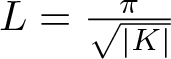 $L=\frac{\pi}{\sqrt{|K|}}$ is a warped product with warping function cos.
On almost quotient Yamabe solitons
- Part of
-
- Journal:
- Glasgow Mathematical Journal / Volume 66 / Issue 3 / September 2024
- Published online by Cambridge University Press:
- 11 April 2024, pp. 479-493
-
- Article
-
- You have access
- HTML
- Export citation
Length functions in Teichmüller and anti-de Sitter geometry
- Part of
-
- Journal:
- Forum of Mathematics, Sigma / Volume 11 / 2023
- Published online by Cambridge University Press:
- 17 November 2023, e101
-
- Article
-
- You have access
- Open access
- HTML
- Export citation
-
We establish a link between the behavior of length functions on Teichmüller space and the geometry of certain anti-de Sitter
 $3$-manifolds. As an application, we give new purely anti-de Sitter proofs of results of Teichmüller theory such as (strict) convexity of length functions along shear paths and geometric bounds on their second variation along earthquakes. Along the way, we provide shear-bend coordinates for GHMC anti-de Sitter
 $3$-manifolds.


Null hypersurfaces in 4-manifolds endowed with a product structure
- Part of
-
- Journal:
- Glasgow Mathematical Journal / Volume 66 / Issue 1 / January 2024
- Published online by Cambridge University Press:
- 28 September 2023, pp. 24-35
-
- Article
-
- You have access
- HTML
- Export citation
ON THE GEOMETRY OF SPACELIKE MEAN CURVATURE FLOW SOLITONS IMMERSED IN A GRW SPACETIME
- Part of
-
- Journal:
- Journal of the Australian Mathematical Society / Volume 116 / Issue 2 / April 2024
- Published online by Cambridge University Press:
- 15 September 2023, pp. 221-256
-
- Article
-
- You have access
- HTML
- Export citation
-
We investigate geometric aspects of complete spacelike mean curvature flow solitons of codimension one in a generalized Robertson–Walker (GRW) spacetime
 $-I\times _{f}M^n$, with base
 $I\subset \mathbb R$, Riemannian fiber
 $M^n$ and warping function
 $f\in C^\infty (I)$. For this, we apply suitable maximum principles to guarantee that such a mean curvature flow soliton is a slice of the ambient space and to obtain nonexistence results concerning these solitons. In particular, we deal with entire graphs constructed over the Riemannian fiber
 $M^n$, which are spacelike mean curvature flow solitons, and we also explore the geometry of a conformal vector field to establish topological and further rigidity results for compact (without boundary) mean curvature flow solitons in a GRW spacetime. Moreover, we study the stability of spacelike mean curvature flow solitons with respect to an appropriate stability operator. Standard examples of spacelike mean curvature flow solitons in GRW spacetimes are exhibited, and applications related to these examples are given.


The topology of compact rank-one ECS manifolds
- Part of
-
- Journal:
- Proceedings of the Edinburgh Mathematical Society / Volume 66 / Issue 3 / August 2023
- Published online by Cambridge University Press:
- 17 August 2023, pp. 789-809
-
- Article
-
- You have access
- Open access
- HTML
- Export citation
-
Pseudo-Riemannian manifolds with parallel Weyl tensor that are not conformally flat or locally symmetric, also known as essentially conformally symmetric (ECS) manifolds, have a natural local invariant, the rank, which equals 1 or 2, and is the rank of a certain distinguished null parallel distribution
 $\mathcal{D}$. All known examples of compact ECS manifolds are of rank one and have dimensions greater than 4. We prove that a compact rank-one ECS manifold, if not locally homogeneous, replaced when necessary by a twofold isometric covering, must be a bundle over the circle with leaves of
 $\mathcal{D}^\perp$ serving as the fibres. The same conclusion holds in the locally homogeneous case if one assumes that
 $\,\mathcal{D}^\perp$ has at least one compact leaf. We also show that in the pseudo-Riemannian universal covering space of any compact rank-one ECS manifold, the leaves of
 $\mathcal{D}^\perp$ are the factor manifolds of a global product decomposition.


Crofton formulas in pseudo-Riemannian space forms
- Part of
-
- Journal:
- Compositio Mathematica / Volume 158 / Issue 10 / October 2022
- Published online by Cambridge University Press:
- 28 October 2022, pp. 1935-1979
- Print publication:
- October 2022
-
- Article
-
- You have access
- HTML
- Export citation
Homogeneous and curvature homogeneous Lorentzian critical metrics
- Part of
-
- Journal:
- Proceedings of the Royal Society of Edinburgh. Section A: Mathematics / Volume 153 / Issue 4 / August 2023
- Published online by Cambridge University Press:
- 08 July 2022, pp. 1272-1296
- Print publication:
- August 2023
-
- Article
-
- You have access
- Open access
- HTML
- Export citation
-
We determine all three-dimensional homogeneous and $1$
 -curvature homogeneous Lorentzian metrics which are critical for a quadratic curvature functional. As a result, we show that any quadratic curvature functional admits different non-Einstein homogeneous critical metrics and that there exist homogeneous metrics which are critical for all quadratic curvature functionals without being Einstein.

On the first eigenvalue of the Laplace operator for compact spacelike submanifolds in Lorentz–Minkowski spacetime 𝕃m
- Part of
-
- Journal:
- Proceedings of the Royal Society of Edinburgh. Section A: Mathematics / Volume 152 / Issue 2 / April 2022
- Published online by Cambridge University Press:
- 11 February 2021, pp. 311-330
- Print publication:
- April 2022
-
- Article
-
- You have access
- Export citation
Prescribed k-symmetric curvature hypersurfaces in de Sitter space
- Part of
-
- Journal:
- Canadian Mathematical Bulletin / Volume 64 / Issue 4 / December 2021
- Published online by Cambridge University Press:
- 26 November 2020, pp. 886-901
- Print publication:
- December 2021
-
- Article
-
- You have access
- Export citation
ON COMPACT HOMOGENEOUS
 $\mathbf{\text{G}_{2(2)}}$-MANIFOLDS
- Part of
-
- Journal:
- Journal of the Australian Mathematical Society / Volume 110 / Issue 1 / February 2021
- Published online by Cambridge University Press:
- 04 September 2019, pp. 71-80
-
- Article
-
- You have access
- Export citation
-
We prove that among all compact homogeneous spaces for an effective transitive action of a Lie group whose Levi subgroup has no compact simple factors, the seven-dimensional flat torus is the only one that admits an invariant torsion-free
 $\text{G}_{2(2)}$-structure.


Codimension two spacelike submanifolds of the Lorentz-Minkowski spacetime into the light cone
- Part of
-
- Journal:
- Proceedings of the Royal Society of Edinburgh. Section A: Mathematics / Volume 149 / Issue 6 / December 2019
- Published online by Cambridge University Press:
- 17 January 2019, pp. 1523-1553
- Print publication:
- December 2019
-
- Article
-
- You have access
- Export citation
Gradient Estimates for Spacelike Mean Curvature Flow with Boundary Conditions
- Part of
-
- Journal:
- Proceedings of the Edinburgh Mathematical Society / Volume 62 / Issue 2 / May 2019
- Published online by Cambridge University Press:
- 29 November 2018, pp. 459-469
-
- Article
-
- You have access
- Export citation
Space-like hypersurfaces with functionally bounded mean curvature in Lorentzian warped products and generalized Calabi–Bernstein-type problems
- Part of
-
- Journal:
- Proceedings of the Royal Society of Edinburgh. Section A: Mathematics / Volume 149 / Issue 4 / August 2019
- Published online by Cambridge University Press:
- 22 June 2018, pp. 849-868
- Print publication:
- August 2019
-
- Article
-
- You have access
- Export citation
-
We study space-like hypersurfaces with functionally bounded mean curvature in Lorentzian warped products
 , where F is a (non-compact) complete Riemannian manifold whose universal covering is parabolic. In particular, we provide several rigidity results under appropriate mathematical and physical assumptions. As an application, several Calabi–Bernstein-type results are obtained which widely extend the previous ones in this setting.
 , where F is a (non-compact) complete Riemannian manifold whose universal covering is parabolic. In particular, we provide several rigidity results under appropriate mathematical and physical assumptions. As an application, several Calabi–Bernstein-type results are obtained which widely extend the previous ones in this setting.
Weingarten Type Surfaces in ℍ2 × ℝ and 𝕊2 × ℝ
-
- Journal:
- Canadian Journal of Mathematics / Volume 69 / Issue 6 / 01 December 2017
- Published online by Cambridge University Press:
- 20 November 2018, pp. 1292-1311
- Print publication:
- 01 December 2017
-
- Article
-
- You have access
- Export citation
-
In this article, we study complete surfaces
 $\sum $ , isometrically immersed in the product spaces
 ${{\mathbb{H}}^{2}}\,\times \,\mathbb{R}$ or
 ${{\mathbb{S}}^{2\,}}\times \,\mathbb{R}$ having positive extrinsic curvature
 ${{K}_{e}}$ . Let
 ${{K}_{i}}$ denote the intrinsic curvature of $\sum $ . Assume that the equation
 $a{{K}_{i\,}}\,+\,b{{K}_{e\,}}\,=\,c$ holds for some real constants
 $a\,\ne \,0$ ,
 $b\,>\,0$ , and
 $c$ . The main result of this article states that when such a surface is a topological sphere, it is rotational.


