Refine search
Actions for selected content:
29 results
Cohomological properties of the Vietoris–Rips complex of a hypercube graph
- Part of
-
- Journal:
- Proceedings of the Royal Society of Edinburgh. Section A: Mathematics , First View
- Published online by Cambridge University Press:
- 22 October 2026, pp. 1-31
-
- Article
-
- You have access
- Open access
- HTML
- Export citation
-
We develop a toric topological framework for studying the cohomology of Vietoris–Rips complexes
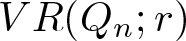 $VR(Q_n;r)$ of hypercube graphs. Using total domination invariants and spectral methods, we establish general lower bounds on connectivity, which lead to infinite families of counterexamples to Shukla’s conjecture, and derive first global upper bounds on coconnectivity. Our approach interprets Vietoris–Rips complexes via Stanley–Reisner rings, moment-angle complexes, and Tor algebras, allowing global topological information to be extracted from combinatorial data. In a second direction, we construct explicit cohomology classes using the Koszul resolution and show that they are decomposable products of
 $1$-dimensional classes, and that their representatives can be combinatorially realized as the boundary of cross polytopes, positively answering the question posed by Adams and Virk. We introduce ghost vertices as a new tool for detecting, extending, and proving linear independence of cohomology classes.

Strong discrete Morse theory
- Part of
-
- Journal:
- Proceedings of the Royal Society of Edinburgh. Section A: Mathematics , First View
- Published online by Cambridge University Press:
- 05 January 2026, pp. 1-26
-
- Article
-
- You have access
- Open access
- HTML
- Export citation
-
The purpose of this work is to develop a version of Forman’s discrete Morse theory for simplicial complexes, based on internal strong collapses. Classical discrete Morse theory can be viewed as a generalization of Whitehead’s collapses, where each Morse function on a simplicial complex
 $K$ defines a sequence of elementary internal collapses. This reduction guarantees the existence of a CW-complex that is homotopy equivalent to
 $K$, with cells corresponding to the critical simplices of the Morse function. However, this approach lacks an explicit combinatorial description of the attaching maps, which limits the reconstruction of the homotopy type of
 $K$. By restricting discrete Morse functions to those induced by total orders on the vertices, we develop a strong discrete Morse theory, generalizing the strong collapses introduced by Barmak and Minian. We show that, in this setting, the resulting reduced CW-complex is regular, enabling us to recover its homotopy type combinatorially. We also provide an algorithm to compute this reduction and apply it to obtain efficient structures for complexes in the library of triangulations by Benedetti and Lutz.


The asymptotics of the expected Betti numbers of preferential attachment clique complexes
- Part of
-
- Journal:
- Advances in Applied Probability / Volume 57 / Issue 3 / September 2025
- Published online by Cambridge University Press:
- 10 March 2025, pp. 940-968
- Print publication:
- September 2025
-
- Article
-
- You have access
- Open access
- HTML
- Export citation
Adams’ cobar construction as a monoidal
 $E_{\infty }$-coalgebra model of the based loop space
- Part of
-
- Journal:
- Forum of Mathematics, Sigma / Volume 12 / 2024
- Published online by Cambridge University Press:
- 15 May 2024, e62
-
- Article
-
- You have access
- Open access
- HTML
- Export citation
-
We prove that the classical map comparing Adams’ cobar construction on the singular chains of a pointed space and the singular cubical chains on its based loop space is a quasi-isomorphism preserving explicitly defined monoidal
 $E_\infty $-coalgebra structures. This contribution extends to its ultimate conclusion a result of Baues, stating that Adams’ map preserves monoidal coalgebra structures.


Extensions of the colorful Helly theorem for d-collapsible and d-Leray complexes
- Part of
-
- Journal:
- Forum of Mathematics, Sigma / Volume 12 / 2024
- Published online by Cambridge University Press:
- 02 April 2024, e44
-
- Article
-
- You have access
- Open access
- HTML
- Export citation
-
We present extensions of the colorful Helly theorem for d-collapsible and d-Leray complexes, providing a common generalization to the matroidal versions of the theorem due to Kalai and Meshulam, the ‘very colorful’ Helly theorem introduced by Arocha, Bárány, Bracho, Fabila and Montejano and the ‘semi-intersecting’ colorful Helly theorem proved by Montejano and Karasev.
As an application, we obtain the following extension of Tverberg’s theorem: Let A be a finite set of points in
 ${\mathbb R}^d$ with
 $|A|>(r-1)(d+1)$. Then, there exist a partition
 $A_1,\ldots ,A_r$ of A and a subset
 $B\subset A$ of size
 $(r-1)(d+1)$ such that
 $\cap _{i=1}^r \operatorname {\mathrm {\text {conv}}}( (B\cup \{p\})\cap A_i)\neq \emptyset $ for all
 $p\in A\setminus B$. That is, we obtain a partition of A into r parts that remains a Tverberg partition even after removing all but one arbitrary point from
 $A\setminus B$.


Cohomology of a real toric variety and shellability of posets arising from a graph
- Part of
-
- Journal:
- Proceedings of the Edinburgh Mathematical Society / Volume 66 / Issue 4 / November 2023
- Published online by Cambridge University Press:
- 03 November 2023, pp. 1044-1084
-
- Article
-
- You have access
- HTML
- Export citation
-
Given a graph G without loops, the pseudograph associahedron PG is a smooth polytope, so there is a projective smooth toric variety XG corresponding to PG. Taking the real locus of XG, we have the projective smooth real toric variety
 $X^{\mathbb{R}}_G$. The integral cohomology groups of
 $X^{\mathbb{R}}_G$ can be computed by studying the topology of certain posets of even subgraphs of G; such a poset is neither pure nor shellable in general. We completely characterize the graphs whose posets of even subgraphs are always shellable. It follows that we get a family of projective smooth real toric varieties whose integral cohomology groups are torsion-free or have only 2-torsion.


Categories of graphs for operadic structures
- Part of
-
- Journal:
- Mathematical Proceedings of the Cambridge Philosophical Society / Volume 176 / Issue 1 / January 2024
- Published online by Cambridge University Press:
- 28 September 2023, pp. 155-212
- Print publication:
- January 2024
-
- Article
-
- You have access
- HTML
- Export citation
Product decompositions of moment-angle manifolds and B-rigidity
- Part of
-
- Journal:
- Canadian Mathematical Bulletin / Volume 66 / Issue 4 / December 2023
- Published online by Cambridge University Press:
- 15 May 2023, pp. 1313-1325
- Print publication:
- December 2023
-
- Article
-
- You have access
- HTML
- Export citation
-
A simple polytope P is called B-rigid if its combinatorial type is determined by the cohomology ring of the moment-angle manifold
 $\mathcal {Z}_P$ over P. We show that any tensor product decomposition of this cohomology ring is geometrically realized by a product decomposition of the moment-angle manifold up to equivariant diffeomorphism. As an application, we find that B-rigid polytopes are closed under products, generalizing some recent results in the toric topology literature. Algebraically, our proof establishes that the Koszul homology of a Gorenstein Stanley–Reisner ring admits a nontrivial tensor product decomposition if and only if the underlying simplicial complex decomposes as a join of full subcomplexes.

Limit theory for U-statistics under geometric and topological constraints with rare events
- Part of
-
- Journal:
- Journal of Applied Probability / Volume 60 / Issue 1 / March 2023
- Published online by Cambridge University Press:
- 14 September 2022, pp. 314-340
- Print publication:
- March 2023
-
- Article
-
- You have access
- HTML
- Export citation
-
We study the geometric and topological features of U-statistics of order k when the k-tuples satisfying geometric and topological constraints do not occur frequently. Using appropriate scaling, we establish the convergence of U-statistics in vague topology, while the structure of a non-degenerate limit measure is also revealed. Our general result shows various limit theorems for geometric and topological statistics, including persistent Betti numbers of Čech complexes, the volume of simplices, a functional of the Morse critical points, and values of the min-type distance function. The required vague convergence can be obtained as a result of the limit theorem for point processes induced by U-statistics. The latter convergence particularly occurs in the
 $\mathcal M_0$-topology.

The effective model structure and
 $\infty $-groupoid objects
- Part of
-
- Journal:
- Forum of Mathematics, Sigma / Volume 10 / 2022
- Published online by Cambridge University Press:
- 09 June 2022, e34
-
- Article
-
- You have access
- Open access
- HTML
- Export citation
-
For a category
 $\mathcal {E}$ with finite limits and well-behaved countable coproducts, we construct a model structure, called the effective model structure, on the category of simplicial objects in
 $\mathcal {E}$, generalising the Kan–Quillen model structure on simplicial sets. We then prove that the effective model structure is left and right proper and satisfies descent in the sense of Rezk. As a consequence, we obtain that the associated
 $\infty $-category has finite limits, colimits satisfying descent, and is locally Cartesian closed when
 $\mathcal {E}$ is but is not a higher topos in general. We also characterise the
 $\infty $-category presented by the effective model structure, showing that it is the full sub-category of presheaves on
 $\mathcal {E}$ spanned by Kan complexes in
 $\mathcal {E}$, a result that suggests a close analogy with the theory of exact completions.


CLASSIFYING SPACES AND THE LASCAR GROUP
- Part of
-
- Journal:
- The Journal of Symbolic Logic / Volume 86 / Issue 4 / December 2021
- Published online by Cambridge University Press:
- 13 September 2021, pp. 1396-1431
- Print publication:
- December 2021
-
- Article
-
- You have access
- HTML
- Export citation
-
We show that the Lascar group
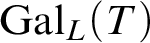 $\operatorname {Gal}_L(T)$ of a first-order theory T is naturally isomorphic to the fundamental group
 $\pi _1(|\mathrm {Mod}(T)|)$ of the classifying space of the category of models of T and elementary embeddings. We use this identification to compute the Lascar groups of several example theories via homotopy-theoretic methods, and in fact completely characterize the homotopy type of
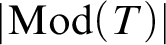 $|\mathrm {Mod}(T)|$ for these theories T. It turns out that in each of these cases,
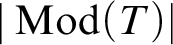 $|\operatorname {Mod}(T)|$ is aspherical, i.e., its higher homotopy groups vanish. This raises the question of which homotopy types are of the form
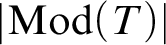 $|\mathrm {Mod}(T)|$ in general. As a preliminary step towards answering this question, we show that every homotopy type is of the form
 $|\mathcal {C}|$ where
 $\mathcal {C}$ is an Abstract Elementary Class with amalgamation for
 $\kappa $-small objects, where
 $\kappa $ may be taken arbitrarily large. This result is improved in another paper.


Functional limit theorems for the euler characteristic process in the critical regime
- Part of
-
- Journal:
- Advances in Applied Probability / Volume 53 / Issue 1 / March 2021
- Published online by Cambridge University Press:
- 17 March 2021, pp. 57-80
- Print publication:
- March 2021
-
- Article
-
- You have access
- HTML
- Export citation
-
This study presents functional limit theorems for the Euler characteristic of Vietoris–Rips complexes. The points are drawn from a nonhomogeneous Poisson process on
 $\mathbb{R}^d$, and the connectivity radius governing the formation of simplices is taken as a function of the time parameter t, which allows us to treat the Euler characteristic as a stochastic process. The setting in which this takes place is that of the critical regime, in which the simplicial complexes are highly connected and have nontrivial topology. We establish two ‘functional-level’ limit theorems, a strong law of large numbers and a central limit theorem, for the appropriately normalized Euler characteristic process.

HOMOTOPY MODEL THEORY
- Part of
-
- Journal:
- The Journal of Symbolic Logic / Volume 86 / Issue 4 / December 2021
- Published online by Cambridge University Press:
- 05 October 2020, pp. 1301-1323
- Print publication:
- December 2021
-
- Article
-
- You have access
- HTML
- Export citation
RIGIDIFIED TORSOR COCYCLES, HYPERCOVERINGS AND BUNDLE GERBES
- Part of
-
- Journal:
- Journal of the Australian Mathematical Society / Volume 112 / Issue 1 / February 2022
- Published online by Cambridge University Press:
- 07 April 2020, pp. 115-144
-
- Article
-
- You have access
- Export citation
-
We give a geometric interpretation of sheaf cohomology for higher degrees
 $n\geq 1$ in terms of torsors on the member of degree
 $d=n-1$ in hypercoverings of type
 $r=n-2$, endowed with an additional datum, the so-called rigidification. This generalizes the fact that cohomology in degree one is the group of isomorphism classes of torsors, where the rigidification becomes vacuous, and that cohomology in degree two can be expressed in terms of bundle gerbes, where the rigidification becomes an associativity constraint.


Limit theorems for process-level Betti numbers for sparse and critical regimes
- Part of
-
- Journal:
- Advances in Applied Probability / Volume 52 / Issue 1 / March 2020
- Published online by Cambridge University Press:
- 29 April 2020, pp. 1-31
- Print publication:
- March 2020
-
- Article
-
- You have access
- HTML
- Export citation
-
The objective of this study is to examine the asymptotic behavior of Betti numbers of Čech complexes treated as stochastic processes and formed from random points in the d-dimensional Euclidean space
 ${\mathbb{R}}^d$. We consider the case where the points of the Čech complex are generated by a Poisson process with intensity nf for a probability density f. We look at the cases where the behavior of the connectivity radius of the Čech complex causes simplices of dimension greater than
 $k+1$ to vanish in probability, the so-called sparse regime, as well when the connectivity radius is of the order of
 $n^{-1/d}$, the critical regime. We establish limit theorems in the aforementioned regimes: central limit theorems for the sparse and critical regimes, and a Poisson limit theorem for the sparse regime. When the connectivity radius of the Čech complex is
 $o(n^{-1/d})$, i.e. the sparse regime, we can decompose the limiting processes into a time-changed Brownian motion or a time-changed homogeneous Poisson process respectively. In the critical regime, the limiting process is a centered Gaussian process but has a much more complicated representation, because the Čech complex becomes highly connected with many topological holes of any dimension.


Stable Components and Layers
- Part of
-
- Journal:
- Canadian Mathematical Bulletin / Volume 63 / Issue 3 / September 2020
- Published online by Cambridge University Press:
- 23 October 2019, pp. 562-576
- Print publication:
- September 2020
-
- Article
-
- You have access
- Export citation
-
Component graphs
 $\unicode[STIX]{x1D6E4}_{0}(F)$ are defined for arrays of sets
 $F$, and, in particular, for arrays of path components for Vietoris–Rips complexes and Lesnick complexes. The path components of
 $\unicode[STIX]{x1D6E4}_{0}(F)$ are the stable components of the array
 $F$. The stable components for the system of Lesnick complexes
 $\{L_{s,k}(X)\}$ for a finite data set
 $X$ decompose into layers, which are themselves path components of a graph. Combinatorial scoring functions are defined for layers and stable components.


EQUIVARIANT ALGEBRAIC INDEX THEOREM
- Part of
-
- Journal:
- Journal of the Institute of Mathematics of Jussieu / Volume 20 / Issue 3 / May 2021
- Published online by Cambridge University Press:
- 27 August 2019, pp. 929-955
- Print publication:
- May 2021
-
- Article
-
- You have access
- Export citation
-
We prove a
 $\unicode[STIX]{x1D6E4}$-equivariant version of the algebraic index theorem, where
 $\unicode[STIX]{x1D6E4}$ is a discrete group of automorphisms of a formal deformation of a symplectic manifold. The particular cases of this result are the algebraic version of the transversal index theorem related to the theorem of A. Connes and H. Moscovici for hypo-elliptic operators and the index theorem for the extension of the algebra of pseudodifferential operators by a group of diffeomorphisms of the underlying manifold due to A. Savin, B. Sternin, E. Schrohe and D. Perrot.


Leibniz Rule on Higher Pages of Unstable Spectral Sequences
- Part of
-
- Journal:
- Proceedings of the Edinburgh Mathematical Society / Volume 61 / Issue 1 / February 2018
- Published online by Cambridge University Press:
- 01 February 2018, pp. 265-282
-
- Article
-
- You have access
- Export citation
On the evolution of topology in dynamic clique complexes
- Part of
-
- Journal:
- Advances in Applied Probability / Volume 48 / Issue 4 / December 2016
- Published online by Cambridge University Press:
- 11 January 2017, pp. 989-1014
- Print publication:
- December 2016
-
- Article
-
- You have access
- Export citation
CONSTRUCTING FREE RESOLUTIONS OF COHOMOLOGY ALGEBRAS
- Part of
-
- Journal:
- Bulletin of the Australian Mathematical Society / Volume 94 / Issue 2 / October 2016
- Published online by Cambridge University Press:
- 16 August 2016, p. 341
- Print publication:
- October 2016
-
- Article
-
- You have access
- Export citation
