Refine search
Actions for selected content:
10 results
The Willmore Energy Landscape of Spheres and Avoidable Singularities of the Willmore Flow
- Part of
-
- Journal:
- Forum of Mathematics, Sigma / Volume 14 / 2026
- Published online by Cambridge University Press:
- 08 October 2026, e134
-
- Article
-
- You have access
- Open access
- HTML
- Export citation
-
We study the sublevel sets of the Willmore energy on the space of smoothly immersed $ 2 $
 -spheres in Euclidean $ 3 $
 -space. We show that the subset of immersions with energy at most $ 12\pi $
 consists of four regular homotopy classes. Moreover, we show that, in certain regular homotopy classes, all singularities of the Willmore flow are avoidable – that is, the initial surface admits a regular homotopy to a round sphere whose Willmore energy does not exceed that of the initial surface. This yields a classification of initial surfaces with energy at most $ 12\pi $
 that lead to unavoidable singularities. As a further consequence, we obtain an extension of the Li–Yau inequality at $ 12\pi $
 for a large class of immersed spheres without triple points. To prove these results, we glue together different instances of the Willmore flow and employ an invariant for triple-point-free immersed spheres.


Goussarov-Polyak-Viro type formulas for
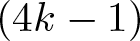 $(4k-1)$-dimensional knots and links in
 $\mathbb{R}^{6k}$
- Part of
-
- Journal:
- Proceedings of the Edinburgh Mathematical Society / Volume 69 / Issue 4 / November 2026
- Published online by Cambridge University Press:
- 25 September 2026, pp. 1466-1505
-
- Article
-
- You have access
- Open access
- HTML
- Export citation
-
We derive combinatorial formulas for invariants of smooth embeddings of
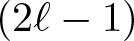 $(2\ell-1)$-spheres into
 $\mathbb{R}^{3\ell}$ for
 $\ell\geq 2$. In particular, we obtain such a formula for the Haefliger invariant, which classifies smooth knots
 $S^{4k-1}\hookrightarrow \mathbb{R}^{6k}$ up to isotopy. Our approach is similar in spirit to the work of Goussarov, Polyak, and Viro, who expressed finite-type invariants of classical knots in terms of Gauss diagrams. Analogously, we project higher-dimensional knots and links onto a hyperplane and study the preimages of the loci of double and singular points in the embedded spheres. As an auxiliary result, we show that the space of
 $n$-dimensional braids with
 $m$ strands in
 $\mathbb{R}^{n+q}$ is a homotopy retract of the space of string links
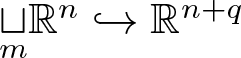 $\underset{m}{\sqcup}\mathbb{R}^n\hookrightarrow\mathbb{R}^{n+q}$ for
 $q\geq 3$, thereby providing a short proof to a conjecture of Komendarczyk, Koytcheff, and Volić.


Spaces of knotted circles and exotic smooth structures
- Part of
-
- Journal:
- Canadian Journal of Mathematics / Volume 74 / Issue 1 / February 2022
- Published online by Cambridge University Press:
- 24 August 2020, pp. 1-23
- Print publication:
- February 2022
-
- Article
-
- You have access
- Open access
- Export citation
-
Suppose that
 $N_1$ and
 $N_2$ are closed smooth manifolds of dimension n that are homeomorphic. We prove that the spaces of smooth knots,
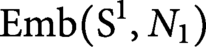 $ \operatorname {\mathrm {Emb}}(\mathrm {S}^1, N_1)$ and
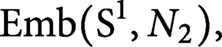 $ \operatorname {\mathrm {Emb}}(\mathrm {S}^1, N_2),$ have the same homotopy
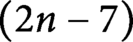 $(2n-7)$-type. In the four-dimensional case, this means that the spaces of smooth knots in homeomorphic
 $4$-manifolds have sets
 $\pi _0$ of components that are in bijection, and the corresponding path components have the same fundamental groups
 $\pi _1$. The result about
 $\pi _0$ is well-known and elementary, but the result about
 $\pi _1$ appears to be new. The result gives a negative partial answer to a question of Oleg Viro. Our proof uses the Goodwillie–Weiss embedding tower. We give a new model for the quadratic stage of the Goodwillie–Weiss tower, and prove that the homotopy type of the quadratic approximation of the space of knots in N does not depend on the smooth structure on N. Our results also give a lower bound on
 $\pi _2 \operatorname {\mathrm {Emb}}(\mathrm {S}^1, N)$. We use our model to show that for every choice of basepoint, each of the homotopy groups,
 $\pi _1$ and
 $\pi _2,$ of
 $ \operatorname {\mathrm {Emb}}(\mathrm {S}^1, \mathrm {S}^1\times \mathrm {S}^3)$ contains an infinitely generated free abelian group.


An n-dimensional Klein bottle
- Part of
-
- Journal:
- Proceedings of the Royal Society of Edinburgh. Section A: Mathematics / Volume 149 / Issue 5 / October 2019
- Published online by Cambridge University Press:
- 16 January 2019, pp. 1207-1221
- Print publication:
- October 2019
-
- Article
-
- You have access
- Export citation
GROEBNER BASES AND NONEMBEDDINGS OF SOME FLAG MANIFOLDS
- Part of
-
- Journal:
- Journal of the Australian Mathematical Society / Volume 96 / Issue 3 / June 2014
- Published online by Cambridge University Press:
- 31 March 2014, pp. 338-353
-
- Article
-
- You have access
- Export citation
-
Groebner bases for the ideals determining mod
 $\def \xmlpi #1{}\def \mathsfbi #1{\boldsymbol {\mathsf {#1}}}\let \le =\leqslant \let \leq =\leqslant \let \ge =\geqslant \let \geq =\geqslant \def \Pr {\mathit {Pr}}\def \Fr {\mathit {Fr}}\def \Rey {\mathit {Re}}2$ cohomology of the real flag manifolds
 $F(1,1,n)$ and
 $F(1,2,n)$ are obtained. These are used to compute appropriate Stiefel–Whitney classes in order to establish some new nonembedding and nonimmersion results for the manifolds
 $F(1,2,n)$.


Non-embeddings of the real flag manifolds RF (1, 1, n – 2)
- Part of
-
- Journal:
- Journal of the Australian Mathematical Society. Series A. Pure Mathematics and Statistics / Volume 66 / Issue 1 / February 1999
- Published online by Cambridge University Press:
- 09 April 2009, pp. 51-55
-
- Article
-
- You have access
- Export citation
THE GROUP OF IMMERSIONS OF HOMOTOPY $(4k-1)$-SPHERES
-
- Journal:
- Bulletin of the London Mathematical Society / Volume 38 / Issue 1 / February 2006
- Published online by Cambridge University Press:
- 30 January 2006, pp. 163-176
- Print publication:
- February 2006
-
- Article
- Export citation
Regular homotopy classes of singular maps
-
- Journal:
- Proceedings of the London Mathematical Society / Volume 90 / Issue 3 / May 2005
- Published online by Cambridge University Press:
- 22 April 2005, pp. 738-762
- Print publication:
- May 2005
-
- Article
- Export citation
AN INFINITE FAMILY OF NON-INVERTIBLE SURFACES IN 4-SPACE
-
- Journal:
- Bulletin of the London Mathematical Society / Volume 37 / Issue 2 / March 2005
- Published online by Cambridge University Press:
- 10 March 2005, pp. 285-296
- Print publication:
- March 2005
-
- Article
- Export citation
When are Immersions Diffeomorphisms?
-
- Journal:
- Canadian Mathematical Bulletin / Volume 24 / Issue 4 / 01 December 1981
- Published online by Cambridge University Press:
- 20 November 2018, pp. 491-492
- Print publication:
- 01 December 1981
-
- Article
-
- You have access
- Export citation
