Refine search
Actions for selected content:
25 results
Periodic symplectic and Hamiltonian diffeomorphisms on irrational ruled surfaces
- Part of
-
- Journal:
- Forum of Mathematics, Sigma / Volume 14 / 2026
- Published online by Cambridge University Press:
- 29 July 2026, e116
-
- Article
-
- You have access
- Open access
- HTML
- Export citation
-
We investigate when finite-order Hamiltonian diffeomorphisms extend to Hamiltonian circle actions, probing the transition from discrete to continuous symmetry in symplectic topology. Focusing on irrational ruled symplectic $4$
 -manifolds, we show that homologically trivial symplectic cyclic actions of order $k>2$
 always extend to Hamiltonian $S^1$
 -actions, possibly after modifying the symplectic form. In contrast, we construct explicit symplectic involutions that cannot be so extended, even on minimal irrational ruled surfaces. These examples reveal geometric obstructions to extending discrete symmetries and highlight new exotic symplectic actions not equivalent to holomorphic ones. Our results also apply to higher-dimensional and noncyclic group actions, and we establish several structural results on the isomorphism types of finite groups that can act on irrational ruled symplectic $4$
 -manifolds.


Circle actions and suspension operations on smooth manifolds
- Part of
-
- Journal:
- Mathematical Proceedings of the Cambridge Philosophical Society / Volume 180 / Issue 3 / May 2026
- Published online by Cambridge University Press:
- 19 January 2026, pp. 643-662
- Print publication:
- May 2026
-
- Article
-
- You have access
- HTML
- Export citation
-
Let M be a smooth manifold with
 $\dim M\geq 3$ and a base point
 $x_{0}$. Surgeries along the oriented circle
 $S^{1}\times \{x_{0}\}$ on the product
 $S^{1}\times M$ yield two manifolds
 $\Sigma _{0}M$ and
 $\Sigma _{1}M$, called the suspensions of M.
These suspension operations play a fundamental role in the construction and classification of smooth manifolds admitting free circle actions. This paper presents corresponding results and supporting evidence.


The Klein bottle has stably unbounded homeomorphism group
- Part of
-
- Journal:
- Glasgow Mathematical Journal / Volume 67 / Issue 3 / September 2025
- Published online by Cambridge University Press:
- 04 April 2025, pp. 494-499
-
- Article
-
- You have access
- Open access
- HTML
- Export citation
Discrete group actions on 3-manifolds and embeddable Cayley complexes
- Part of
-
- Journal:
- Canadian Journal of Mathematics / Volume 78 / Issue 4 / August 2026
- Published online by Cambridge University Press:
- 28 January 2025, pp. 1311-1336
- Print publication:
- August 2026
-
- Article
-
- You have access
- Open access
- HTML
- Export citation
-
We prove that a group $\Gamma $
 admits a discrete, topological (equivalently, smooth) action on some simply connected 3-manifold if and only if $\Gamma $
 has a Cayley complex embeddable—with certain natural restrictions—in one of the following four 3-manifolds: (i) $\mathbb {S}^3$
 , (ii) $\mathbb {R}^3$
 , (iii) $\mathbb {S}^2 \times \mathbb R$
 , and (iv) the complement of a tame Cantor set in $\mathbb {S}^3$
 . The fact that these are the only simply connected 3-manifolds that allow such actions is a consequence of the Thurston–Perelman geometrization theorem.


Generalized Ricci flow on aligned homogeneous spaces
- Part of
-
- Journal:
- Proceedings of the Edinburgh Mathematical Society / Volume 68 / Issue 1 / February 2025
- Published online by Cambridge University Press:
- 26 November 2024, pp. 226-246
-
- Article
-
- You have access
- HTML
- Export citation
-
The fixed points of the generalized Ricci flow are the Bismut Ricci flat (BRF) metrics, i.e., a generalized metric (g, H) on a manifold M, where g is a Riemannian metric and H a closed 3-form, such that H is g-harmonic and
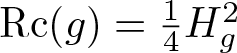 $\operatorname{Rc}(g)=\tfrac{1}{4} H_g^2$. Given two standard Einstein homogeneous spaces
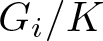 $G_i/K$, where each Gi is a compact simple Lie group and K is a closed subgroup of them holding some extra assumption, we consider
 $M=G_1\times G_2/\Delta K$. Recently, Lauret and Will proved the existence of a BRF metric on any of these spaces. We proved that this metric is always asymptotically stable for the generalized Ricci flow on M among a subset of G-invariant metrics and, if
 $G_1=G_2$, then it is globally stable.

Linear actions of $\mathbb {Z}/p\times \mathbb {Z}/p$
 on $S^{2n-1}\times S^{2n-1}$

- Part of
-
- Journal:
- Proceedings of the Royal Society of Edinburgh. Section A: Mathematics / Volume 154 / Issue 6 / December 2024
- Published online by Cambridge University Press:
- 16 April 2024, pp. 1699-1712
- Print publication:
- December 2024
-
- Article
-
- You have access
- HTML
- Export citation
-
For an odd prime $p$
 , we consider free actions of $(\mathbb {Z}_{/{p}})^2$
 on $S^{2n-1}\times S^{2n-1}$
 given by linear actions of $(\mathbb {Z}_{/{p}})^2$
 on $\mathbb {R}^{4n}$
 . Simple examples include a lens space cross a lens space, but $k$
 -invariant calculations show that other quotients exist. Using the tools of Postnikov towers and surgery theory, the quotients are classified up to homotopy by the $k$
 -invariants and up to homeomorphism by the Pontrjagin classes. We will present these results and demonstrate how to calculate the $k$
 -invariants and the Pontrjagin classes from the rotation numbers.


Fixed point sets and the fundamental group II: Euler characteristics
- Part of
-
- Journal:
- Proceedings of the Royal Society of Edinburgh. Section A: Mathematics / Volume 154 / Issue 6 / December 2024
- Published online by Cambridge University Press:
- 10 October 2023, pp. 1661-1680
- Print publication:
- December 2024
-
- Article
-
- You have access
- Open access
- HTML
- Export citation
-
For a finite group $G$
 of not prime power order, Oliver showed that the obstruction for a finite CW-complex $F$
 to be the fixed point set of a contractible finite $G$
 -CW-complex is determined by the Euler characteristic $\chi (F)$
 . (He also has similar results for compact Lie group actions.) We show that the analogous problem for $F$
 to be the fixed point set of a finite $G$
 -CW-complex of some given homotopy type is still determined by the Euler characteristic. Using trace maps on $K_0$
 [2, 7, 18], we also see that there are interesting roles for the fundamental group and the component structure of the fixed point set.


Stability for hyperbolic groups acting on boundary spheres
- Part of
-
- Journal:
- Forum of Mathematics, Sigma / Volume 11 / 2023
- Published online by Cambridge University Press:
- 21 September 2023, e83
-
- Article
-
- You have access
- Open access
- HTML
- Export citation
-
A hyperbolic group G acts by homeomorphisms on its Gromov boundary. We show that if
 $\partial G$ is a topological n–sphere, the action is topologically stable in the dynamical sense: any nearby action is semi-conjugate to the standard boundary action.

Free rank of symmetry of products of Dold manifolds
- Part of
-
- Journal:
- Proceedings of the Edinburgh Mathematical Society / Volume 66 / Issue 1 / February 2023
- Published online by Cambridge University Press:
- 30 March 2023, pp. 117-132
-
- Article
-
- You have access
- HTML
- Export citation
-
Dold manifolds
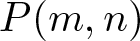 $P(m,n)$ are certain twisted complex projective space bundles over real projective spaces and serve as generators for the unoriented cobordism algebra of smooth manifolds. The paper investigates the structure of finite groups that act freely on products of Dold manifolds. It is proved that if a finite group G acts freely and
 $ \mathbb{Z}_2 $ cohomologically trivially on a finite CW-complex homotopy equivalent to
 ${\prod_{i=1}^{k} P(2m_i,n_i)}$, then
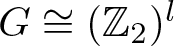 $G\cong (\mathbb{Z}_2)^l$ for some
 $l\leq k$ (see Theorem A for the exact bound). We also determine some bounds in the case when for each i, ni is even and mi is arbitrary. As a consequence, the free rank of symmetry of these manifolds is determined for cohomologically trivial actions.


Deformation of Dirac operators along orbits and quantization of noncompact Hamiltonian torus manifolds
- Part of
-
- Journal:
- Canadian Journal of Mathematics / Volume 74 / Issue 4 / August 2022
- Published online by Cambridge University Press:
- 09 March 2021, pp. 1062-1092
- Print publication:
- August 2022
-
- Article
-
- You have access
- HTML
- Export citation
Rank conditions for finite group actions on 4-manifolds
- Part of
-
- Journal:
- Canadian Journal of Mathematics / Volume 74 / Issue 2 / April 2022
- Published online by Cambridge University Press:
- 18 January 2021, pp. 550-572
- Print publication:
- April 2022
-
- Article
-
- You have access
- Export citation
-
Let M be a closed, connected, orientable topological
 $4$-manifold, and G be a finite group acting topologically and locally linearly on M. In this paper, we investigate the spectral sequence for the Borel cohomology
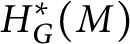 $H^*_G(M)$ and establish new bounds on the rank of G for homologically trivial actions with discrete singular set.

Continuity of the SRB entropy of convex projective structures
- Part of
-
- Journal:
- Ergodic Theory and Dynamical Systems / Volume 41 / Issue 8 / August 2021
- Published online by Cambridge University Press:
- 04 June 2020, pp. 2369-2381
- Print publication:
- August 2021
-
- Article
-
- You have access
- Export citation
2-chains and square roots of Thompson’s group
 $F$
- Part of
-
- Journal:
- Ergodic Theory and Dynamical Systems / Volume 40 / Issue 9 / September 2020
- Published online by Cambridge University Press:
- 25 March 2019, pp. 2515-2532
- Print publication:
- September 2020
-
- Article
-
- You have access
- Export citation
-
We study 2-generated subgroups
 $\langle f,g\rangle <\operatorname{Homeo}^{+}(I)$ such that
 $\langle f^{2},g^{2}\rangle$ is isomorphic to Thompson’s group
 $F$, and such that the supports of
 $f$ and
 $g$ form a chain of two intervals. We show that this class contains uncountably many isomorphism types. These include examples with non-abelian free subgroups, examples which do not admit faithful actions by
 $C^{2}$ diffeomorphisms on 1-manifolds, examples which do not admit faithful actions by
 $PL$ homeomorphisms on an interval, and examples which are not finitely presented. We thus answer questions due to Brin. We also show that many relatively uncomplicated groups of homeomorphisms can have very complicated square roots, thus establishing the behavior of square roots of
 $F$ as part of a general phenomenon among subgroups of
 $\operatorname{Homeo}^{+}(I)$.


A STRUCTURED DESCRIPTION OF THE GENUS SPECTRUM OF ABELIAN p-GROUPS
- Part of
-
- Journal:
- Glasgow Mathematical Journal / Volume 61 / Issue 2 / May 2019
- Published online by Cambridge University Press:
- 10 July 2018, pp. 381-423
-
- Article
-
- You have access
- Export citation
THE COHOMOLOGY RING OF ORBIT SPACES OF FREE
 $\mathbb{Z}_{2}$ -ACTIONS ON SOME DOLD MANIFOLDS
- Part of
-
- Journal:
- Bulletin of the Australian Mathematical Society / Volume 97 / Issue 2 / April 2018
- Published online by Cambridge University Press:
- 02 February 2018, pp. 340-348
- Print publication:
- April 2018
-
- Article
-
- You have access
- Export citation
-
We determine the possible
 $\mathbb{Z}_{2}$ -cohomology rings of orbit spaces of free actions of
 $\mathbb{Z}_{2}$ (or fixed point free involutions) on the Dold manifold
 $P(1,n)$ , where
 $n$ is an odd natural number.


Wedge Operations and Torus Symmetries II
-
- Journal:
- Canadian Journal of Mathematics / Volume 69 / Issue 4 / 01 August 2017
- Published online by Cambridge University Press:
- 20 November 2018, pp. 767-789
- Print publication:
- 01 August 2017
-
- Article
-
- You have access
- Export citation
-
A fundamental idea in toric topology is that classes of manifolds with well-behaved torus actions (simply, toric spaces) are classified by pairs of simplicial complexes and (non-singular) characteristic maps. In a previous paper, the authors provided a new way to find all characteristic maps on a simplicial complex
 $K(J)$ obtainable by a sequence of wedgings from
 $K$ .The main idea was that characteristic maps on $K$ theoretically determine all possible characteristic maps on a wedge of $K$ .
We further develop our previous work for classification of toric spaces. For a star-shaped simplicial sphere
$K$ of dimension  $n-1$ with
 $m$ vertices, the Picard number Pic
 $(K)$ of $K$ is
 $m-n$ . We call $K$ a seed if $K$ cannot be obtained by wedgings. First, we show that for a fixed positive integer
 $\ell $ , there are at most finitely many seeds of Picard number $\ell $ supporting characteristic maps. As a corollary, the conjecture proposed by V. V. Batyrev inis solved affirmatively.
Secondly, we investigate a systematicmethod to find all characteristic maps on
$K(J)$ using combinatorial objects called (realizable) puzzles that only depend on a seed $K$ . These two facts lead to a practical way to classify the toric spaces of fixed Picard number.


EQUIVARIANT ZETA FUNCTIONS FOR INVARIANT NASH GERMS
- Part of
-
- Journal:
- Nagoya Mathematical Journal / Volume 222 / Issue 1 / June 2016
- Published online by Cambridge University Press:
- 13 May 2016, pp. 100-136
-
- Article
-
- You have access
- HTML
- Export citation
The Laitinen Conjecture for finite non-solvable groups
- Part of
-
- Journal:
- Proceedings of the Edinburgh Mathematical Society / Volume 56 / Issue 1 / February 2013
- Published online by Cambridge University Press:
- 05 December 2012, pp. 303-336
-
- Article
-
- You have access
- Export citation
DEFORMATION OF 2-STEP NILMANIFOLDS WITH ABELIAN COMPLEX STRUCTURES
-
- Journal:
- Journal of the London Mathematical Society / Volume 73 / Issue 1 / February 2006
- Published online by Cambridge University Press:
- 22 February 2006, pp. 173-193
- Print publication:
- February 2006
-
- Article
-
- You have access
- Export citation
PERIODICITY IN GROUP COHOMOLOGY AND COMPLETE RESOLUTIONS
-
- Journal:
- Bulletin of the London Mathematical Society / Volume 37 / Issue 4 / August 2005
- Published online by Cambridge University Press:
- 02 August 2005, pp. 547-554
- Print publication:
- August 2005
-
- Article
- Export citation
