Refine search
Actions for selected content:
7 results
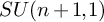
POISSON TRANSFORMS, THE BGG COMPLEX AND DISCRETE SERIES REPRESENTATIONS OF $SU(n+1,1)$
- Part of
-
- Journal:
- Journal of the Institute of Mathematics of Jussieu , First View
- Published online by Cambridge University Press:
- 06 November 2026, pp. 1-40
-
- Article
-
- You have access
- Open access
- HTML
- Export citation
-
The aim of this article is to construct specific Poisson transforms mapping differential forms on the sphere $S^{2n+1}$
 endowed with its natural CR structure to forms on complex hyperbolic space. These transforms have coclosed harmonic values, descend to the BGG (Rumin) complex, and intertwine the differential operators in that complex with the exterior derivative.
Passing to the Poincaré ball model, we analyze boundary asymptotics, proving that the values of our transforms admit a continuous extension to the boundary in degrees $\leq n$
 . Finally, we show that, composing the exterior derivative with the transform in degree n, one obtains an isomorphism between the kernel of the Rumin operator in degree n and a dense subspace of the $L^2$
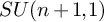
 -harmonic forms on complex hyperbolic space. This provides a realization of the discrete series representations of $SU(n+1,1)$
 with trivial infinitesimal character in spaces of differential forms on the compact manifold $S^{2n+1}$
 .
These developments are motivated by a programme of the third author to prove some instances of the Baum-Connes conjecture. The first part of the article is valid in a much more general setting; in particular, it is relevant for cases in which the conjecture is still open.


A CATEGORICAL APPROACH TO THE BAUM–CONNES CONJECTURE FOR ÉTALE GROUPOIDS
- Part of
-
- Journal:
- Journal of the Institute of Mathematics of Jussieu / Volume 23 / Issue 5 / September 2024
- Published online by Cambridge University Press:
- 02 January 2024, pp. 2319-2364
- Print publication:
- September 2024
-
- Article
-
- You have access
- Open access
- HTML
- Export citation
-
We consider the equivariant Kasparov category associated to an étale groupoid, and by leveraging its triangulated structure we study its localization at the ‘weakly contractible’ objects, extending previous work by R. Meyer and R. Nest. We prove the subcategory of weakly contractible objects is complementary to the localizing subcategory of projective objects, which are defined in terms of ‘compactly induced’ algebras with respect to certain proper subgroupoids related to isotropy. The resulting ‘strong’ Baum–Connes conjecture implies the classical one, and its formulation clarifies several permanence properties and other functorial statements. We present multiple applications, including consequences for the Universal Coefficient Theorem, a generalized ‘going-down’ principle, injectivity results for groupoids that are amenable at infinity, the Baum–Connes conjecture for group bundles, and a result about the invariance of K-groups of twisted groupoid
 $C^*$-algebras under homotopy of twists.

Higher Index Theory
-
- Published online:
- 11 June 2020
- Print publication:
- 02 July 2020
The Baum-Connes conjecture for KK-theory
-
- Journal:
- Journal of K-Theory / Volume 8 / Issue 1 / August 2011
- Published online by Cambridge University Press:
- 07 April 2010, pp. 3-29
- Print publication:
- August 2011
-
- Article
-
- You have access
- Export citation
Morphisme de Baum-Connes tordu par une représentation non unitaire
-
- Journal:
- Journal of K-Theory / Volume 6 / Issue 1 / August 2010
- Published online by Cambridge University Press:
- 08 December 2009, pp. 23-68
- Print publication:
- August 2010
-
- Article
- Export citation
The Bost conjecture, open subgroups and groups acting on trees
-
- Journal:
- Journal of K-Theory / Volume 4 / Issue 3 / December 2009
- Published online by Cambridge University Press:
- 23 October 2009, pp. 469-490
- Print publication:
- December 2009
-
- Article
- Export citation
Induction for Banach Algebras, Groupoids and KKban
-
- Journal:
- Journal of K-Theory / Volume 4 / Issue 3 / December 2009
- Published online by Cambridge University Press:
- 23 October 2009, pp. 405-468
- Print publication:
- December 2009
-
- Article
- Export citation
