To save content items to your account,
please confirm that you agree to abide by our usage policies.
If this is the first time you use this feature, you will be asked to authorise Cambridge Core to connect with your account.
Find out more about saving content to .
To save content items to your Kindle, first ensure no-reply@cambridge.org
is added to your Approved Personal Document E-mail List under your Personal Document Settings
on the Manage Your Content and Devices page of your Amazon account. Then enter the ‘name’ part
of your Kindle email address below.
Find out more about saving to your Kindle.
Note you can select to save to either the @free.kindle.com or @kindle.com variations.
‘@free.kindle.com’ emails are free but can only be saved to your device when it is connected to wi-fi.
‘@kindle.com’ emails can be delivered even when you are not connected to wi-fi, but note that service fees apply.
Appropriation, ‘making something one’s own’, is a modern way of thinking about social practices. This volume highlights the potential of this critical concept for the investigation of everyday religious practice – and more generally, everyday social practice – in Antiquity. Appropriation foregrounds the agency of the social actors against the strictures imposed by the dominant culture’s social order, whose ideas and practices they make their own, altering them in multiple, often subtle ways. How does appropriation transform pre-existing, traditional practices? What are the dominant structures against which the actors operate? Which tactics do they use? These are only some of the questions this volume seeks to address. The critical term ‘appropriation’ has yet to be fully discovered by Classicists; the case studies in this volume, ranging from classical Greece to Late Antique Egypt, endeavour to demonstrate its pertinence to the study of religion in Antiquity.
The conclusions discuss the significance of the WCC’s evolving agenda, emphasizing above all the distinctly Christian meaning the ecumenical movement sought to imbue human rights with. Against accounts that exaggerate the scope of the WCC’s commitment to human rights in the 1940s, the book shows the organization’s focus on religious freedom. Contrary to narratives that cast the WCC’s articulation of religious freedom as essentially universalizing and cosmopolitan, the book emphasizes how its advocacy was part of wider ideological contests against specific adversaries. The conclusions discuss the ramifications for our understanding of religious freedom today. With regard to the 1970s, the book demonstrates the significance of Protestantism to progressive Christianity and liberation theology. It also illuminates the difficulties liberation theology faced, and has continued to face. Scholars today debate the utility of human rights in the face of material inequality, exacerbated by neoliberalism. The WCC’s attempt to “radicalize” human rights shows the promise as well as the perils inherent in expanding our current understandings of human rights beyond liberal premises.
This introduction to Part I explains how the World Council of Churches (WCC) arrived at its 1948 embrace of human rights, based on its interwar “antisecularism,” the appeal of “personalism,” and the need to resist “totalitarian” state power. Protestant activism on behalf of missionaries and churches predated the turn to human rights, and as did ecumenists’ emphasis on the need to enable Christianity to “leaven” society and international affairs. The emergence of human rights as an foundational principle of the postwar order invited a reframing of these concerns in terms of human rights, even if concern for the corporate rights of churches remained part of the WCC’s approach to religious freedom. Representatives of the ecumenical movement, especially O. Frederick Nolde and Charles Malik, helped to enshrine the ecumenical conception of human rights in Article 18 of the Universal Declaration of Human Rights. The WCC, the International Missionary Council (IMC), and the Commission of the Churches on International Affairs (CCIA) advocated for this conception against what they identified as their three main opponents: Islam, “political” Roman-Catholicism, and Communism.
This introduction opens with the World Council’s foundation in 1948 in Amsterdam, where the organization embraced human rights as a pillar of the postwar international order. Its focus, however, was on safeguarding religious freedom, especially that of coreligionists and missionaries. Going beyond ecumenical lobbying at the United Nations as well as a traditional focus on communist countries, the book’s Part I focuses on the global advocacy of the ecumenical movement. Part II traces how, in the 1970s, the WCC self-consciously rejected liberalism, reoriented itself toward the Third World, and articulated a “liberationist” approach to human rights. Rooted in liberation theology and drawing first and foremost on the experience of Latin American Christians, this approach called attention to the political-economic “root causes” of human rights violations, called for the recognition of collective rights claims, and emphasized the agency of the “poor” and the “oppressed.” It also generated blinders with regard to postcolonial and socialist repression, however, which undermined the WCC’s legitimacy as a global voice for human rights.
Appropriation, 'making something one's own', is a modern way of thinking about social practices. This volume highlights the potential of this critical concept for the investigation of everyday religious practice – and more generally, everyday social practice – in Antiquity. Appropriation foregrounds the agency of the social actors against the strictures imposed by the dominant culture's social order, whose ideas and practices they make their own, altering them in multiple, often subtle ways. How does appropriation transform pre-existing, traditional practices? What are the dominant structures against which the actors operate? Which tactics do they use? These are only some of the questions this volume seeks to address. The critical term 'appropriation' has yet to be fully discovered by classicists; the case studies in this volume, ranging from classical Greece to Late Antique Egypt, endeavour to demonstrate its pertinence to the study of religion in Antiquity.
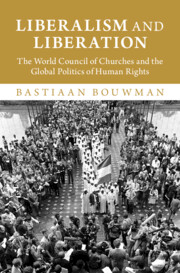
Founded in 1948, the World Council of Churches (WCC) was an important voice for human rights during the establishment of the postwar liberal international order. Bastiaan Bouwman demonstrates how its Christian human rights advocacy underwent a dramatic change over the following decades, from its initial focus on religious freedom to its later emphasis on social justice. By the 1970s, the WCC had moved to the left, focusing on causes such as the struggle against white minority rule in Southern Africa, right-wing repression in Latin America and Asia, and domestic and international inequalities. Drawing on extensive archival research, Bouwman sheds much needed light on a half century of contest over the concept of human rights. He challenges the notion that the rise of human rights was either a strictly secular or liberal phenomenon and shows how the WCC's advocacy interacted with major political developments such as decolonization and the Cold War.
The connection between Christianity and the development of Western welfare states is long-standing, albeit somewhat neglected by scholarship. Recent work has suggested the formative influence on the formation of different welfare "regimes" through different Christian ideas of work, need, poverty, and the family, as well as differnt ecclesiologies. The chapter outlines these and proceeds to examine the philsophical connection between social welfare and religion, through the work of Raymond Plant. Plant argues that welfare policy invariably draws on inherently "contestable" social concepts, such as ‘need’, ‘want’, ‘right’, ‘justice’, ‘equality’, and ‘community’. To know what kind of good social policy is pursuing, it is essential to clarify what meaning and weight we accord to such concepts. But doing this demands we have a clear idea of the kind of creatures whose goods we are pursuing. In essence, social welfare theory of this kind rests on anthropological commitments. The chapter illustrates this by reference to Richard Titmuss, Margaret Thatcher, and Frank Field, and in so doing, underlines how this entire debate is open to theological perspectives.
The Good Shepherd of Miseeda project investigates remains in a section of the Mahas region in northern Sudan. Centred on a church built around an ancient petroglyph, integrated archaeological survey and ethnographic research trace millennia of cultural interaction, continuity and transformation that shaped the sacred and social landscape.
Religion and politics ought not mix, we are often told. But they have always done so, and sometimes with great success, notably in the development of welfare states in the early 20th century, when Christian churches and theologians were constructively, if sometimes critically, in supportive of such initiatives. Today, however, economic and demographic pressures have conspired to place the state under immense pressure, with calls to 'rethink' the welfare state becoming more common. Rethinking, however, demands that we ask some big questions: What is welfare for? What kind of good are we trying to achieve? What kind of being is it whose good we are trying to serve? In this study, Nick Spencer steers the welfare debate away from technocratic concerns. Drawing on the work of four major, twentieth-century theologians, he offers a fresh, concrete, and realistic vision for the vision of welfare at a time when it is badly needed.
Following the trajectory of the church’s call to peacemaking amid the dystopia of capitalism, the Conclusion traces three vectors for the near future of such work: economic solidarity, restorative justice and abolition, and building radical democracy. In each, the church enacts a politics for renewal.
This chapter endeavors to make sense of Japanese religiosity and to unravel how it has formed an undercurrent in Japanese society. First, it focuses on the characteristics of traditional religions that took hold in premodern Japan: Shinto, Japan’s native religion, and two imported religions, Buddhism and Christianity. The chapter then analyzes newer religions founded in the twentieth century and scrutinizes the more recent emergence of a cultural trend in which individuals seek spirituality outside established religious spheres. It looks at this-worldly financial and political activities of these old and new religions, then sketches how the general trend of secularization faces the revitalization of religious practices.
This chapter identifies in George Saunders’s earlier critiques of neoliberalism in his short stories and his critique of a conservative American version of Christian hell in his first novel, Lincoln in the Bardo, a common project with a spiritual alternative in the Buddhist order of compassion. I offer a brief history of the Christian theology of hell and American neoliberalism to show how they share a common idea of a punitive, individualistic sense of natural order, one with a common origin point in the theology of Augustine on the divine will. First tracing the public spiritual commitments expressed by Saunders across a wide range of his interviews, I then show how his sense of the potential of literature to empower a spirituality of compassion informs Lincoln in the Bardo’s rejection of the Christian hell and the novel’s alternative vision of a world where compassion is the order of the universe.
Ideas drive economic growth by freeing us from the curse of diminishing returns. That is true today and was true when economic growth began in northwestern Europe in the 1700s. Back then, ideas such as Arkwright’s factory revolutionized the cotton textile industry and drastically cut the cost of spinning cotton. A torrent of such new ideas, in fact, began began to flow through northwestern Europe from the 1600s on. Some came from scientific discoveries, although the wholesale application of scientific theories had to wait until the 1800s. Others reflected the new belief that innovation was possible and a new epistemological standard for determining what was true and worth investigating. The ideas could not be put to work, though, without the mechanics and engineers who had the skills needed to put the new concepts into practice. Northwestern Europe had such skilled workers, along with institutions that encouraged the search for new ideas. Did Europe’s religion also spur economic growth? Max Weber believed that Protestantism did, though recent research belies his claim. Christianity as whole, however, did foster economic growth in northwestern Europe in a variety of ways.
Economic growth boosted living standards after it first surfaced in Britain in the 1700s. Why did it not arise earlier or somewhere else? Why did it spread quickly to northwestern Europe, but take longer to reach much of the rest of the world? The answer is not slavery, colonialism, or capitalism. Rather, it lies with advantages shared by much of northwestern Europe: institutions that secured property rights with benefits beyond a narrow elite; states that could rearrange property rights with credible compensation to improve transportation and agricultural productivity; cities made possible by productive agriculture that spawned agglomeration effects like those at work in Silicon Valley; skilled workers who could implement new ideas; and access to the ideas themselves from the Scientific Revolution and the Enlightenment. Northwestern Europe had these advantages for four reasons: its history, its religion, its intellectual heritage, and its distance from Eurasia’s steppes. Those four reasons are the ultimate causes for the onset of sustained economic growth in Britain in the 1700s and for its spread to northwestern Europe.
It is argued that war, conquest, and slavery fueled northwestern Europe’s precocious economic growth. But that argument is wrong. Slaves and colonies were not necessary for growing cotton or for industrialization. Rather than being prerequisites for economic growth, slaves and colonies were the results of northwestern Europe’s rising economic and military might. They did certainly harm economies in Africa and the Americas and thereby contributed to the great divergence. As for warfare, it damaged economies, including in northwestern Europe. But it brought indirect benefits to Europe. It created strong states and representative institutions. It encouraged urbanization and agglomeration effects as businesses sought shelter from the fighting inside walled cities. It stimulated technical change in war-related industries, such as metalworking. And it helped keep western Europe politically fragmented. That kept new ideas circulating and made it harder to stamp them out. What else kept northwestern Europe fragmented? Western Christianity’s popes and northwestern Europe’s distance from the Eurasian steppe nomads, who might otherwise have conquered and unified all of Europe.
Under Muslim rule of what they called al-Andalus, the caliphate of Córdoba became one of the premier centers of the Islamic world. Islam tolerated other People of the Book, as they called Christians and Jews, but with restrictions. Over the eight centuries in which Muslim forces held sway in Iberia, the various cultures and languages of the peninsula developed and blended to a certain extent, which came to be called convivencia (lit., living together). Nonetheless, Christian forces began a reconquest of the land from the Muslims, beginning in the north and moving in stages toward the south. They benefited from the fragmentation of rule in the Muslim areas and the frequent disruptions caused by successive invasions from North Africa. As Christian forces captured territory, they formed various kingdoms in Portugal, Castile-León, and Aragón. Loyal supporters received grants of land from grateful monarchs and thus became a landed aristocracy. By the end of the thirteenth century, what would be known as the Christian Reconquest was virtually complete.
Berlin’s essay begins with a standard question: Given the apparent lucidity and precision of Machiavelli’s work, why is there such enduring disagreement about its core meaning and significance? There is, however, nothing conventional about Berlin’s answer. He diverges fundamentally from the conflicting interpretations that have long dominated debate about what makes Machiavelli unique and notorious and argues that the deeper revolutionary character of his thought lies not in divorcing morality from politics but in favouring a politics that has its own ethic, albeit one fundamentally at odds with the prevailing Christian morality of his time. After giving a brief synopsis of Berlin’s account of Machiavelli’s originality, the chapter will delineate and explore how his interpretation operates on three distinct and related levels – historical, philosophical and political. It will then critically examine the questions of whether Berlin’s view of Machiavelli is historically accountable, philosophically coherent and, finally, politically plausible. My aim will be to show that whilst Berlin’s essay is by no means immune to criticism on all three fronts, it holds up remarkably well.
My sense of intimacy with the legend that was Ngugi came from the strong emotional response I had on first reading his A Grain of Wheat while studying English at the University of Ghana. Reading it gave me a sense of the immense emotional power of his writing. This piece uses A Grain of Wheat as a starting point to think through Ngugi’s work in general, tracing the ways in which it took an increasingly satirical turn from the late 1970s after his exile from his native Kenya. This overview of his work is both celebratory and critical, and I try to speculate on why he was not awarded the Nobel Prize for Literature in his lifetime.
This chapter discusses the tensions, disparities and contradictions that Ngugi’s background and education have come to symbolise, particularly as connected to his writing and worldview. It analyses his essays and memoirs where he strongly critiques both Christianity and mission education as influences fashioned to breed a class of Africans conditioned to think that they could be a privileged few in control of the others. It explores his that mission education, which was closely connected to Christianity and colonial power, sought to control the mind of the colonised and how they related to real life in their contexts. Despite the influence of Christianity and mission education, Ngugi has consistently shown allegiance to his own language and heritage. The chapter argues that whereas Ngugi actively distances himself from Christianity and mission education, his writing is steeped in Christian narratives, symbols, mythology as well as images from experiences of mission education. Whereas Ngugi was born, grew up and was educated in the grip of colonial institutions such as Protestant missions and the schools, he also progressively questioned and protested this influence. Despite vehement disassociation from both Christianity and mission education, this influence is deeply imprinted on Ngugi’s work.
This chapter is on the production of African literature at the intersection of colonialism, colonial institutions, and the African subjects conscripted into modernity. The key argument is that, irrespective of the languages used, the emergence of creative writing on the continent was determined by systems and processes of colonization and colonial institutions including the Christian missions and schools and European ideas about modernity. In addition to providing a critical account of the overdetermining power of colonial institutions in the invention of African literature, the chapter examines the self-fashioning of Africans as writers and intellectuals and how the task of writing and the forms that it generated changed as the desire to master colonial ideas and institutions was transcended by decolonial aspirations.