To save content items to your account,
please confirm that you agree to abide by our usage policies.
If this is the first time you use this feature, you will be asked to authorise Cambridge Core to connect with your account.
Find out more about saving content to .
To save content items to your Kindle, first ensure no-reply@cambridge.org
is added to your Approved Personal Document E-mail List under your Personal Document Settings
on the Manage Your Content and Devices page of your Amazon account. Then enter the ‘name’ part
of your Kindle email address below.
Find out more about saving to your Kindle.
Note you can select to save to either the @free.kindle.com or @kindle.com variations.
‘@free.kindle.com’ emails are free but can only be saved to your device when it is connected to wi-fi.
‘@kindle.com’ emails can be delivered even when you are not connected to wi-fi, but note that service fees apply.
Commercial opportunism played a central role in the development of popular military history after 1854. The potential readership for such material grew as the literacy rate of the public increased and as book markets in the colonies emerged. Declining book production costs and the general reading public’s greater awareness of current events, due to the emergence of a cheap popular press, further drove up demand. As a result, publishers and authors responded by producing ‘instant’ and serialised historical works on recent military events which were cheap and accessible. The popularity of this material led it to be used to influence the reading public’s understanding of military matters, defence policy and the British Empire. As the period progressed, the messaging popular military history contained underwent considerable change, reflecting the complexity of contemporary views on the British Army and empire.
The most striking aspect of Berlin’s thinking about political judgement is how he treats moral principle or moral rules as a factor in political judgements. Political judgement, as he defines it, is a capacity that he praises irrespective of its moral character or its consequences. So how did Berlin believe moral considerations did shape political judgement? If he thought of political judgement as a skill, an experience-based ability to size up a concrete situation and evaluate risks and opportunities, in a time-bound context, he thought of moral judgement in exactly the same way. In both political and moral behaviour, he doubted that rules, principles, formalized ‘dos’ and ‘don’ts’ could be determinative. The situation was everything. An essay on Berlin’s idea of ‘political judgement’ will have to unpack Berlin’s moral psychology, confront the question of whether he praised moral ruthlessness a little too much and ask whether his conception of political judgement ends up sidelining ethics as a crucial factor in political decision-making.
I examine Anglo-Russian relations during the early Cold War (1941–1947), focusing on the evolution of British estimates of Stalin’s intentions and their policy consequences. I contribute to the historiography by highlighting the critical role of Anthony Eden’s 1941 visit to Moscow and demonstrating that a single, dominant assessment framework shaped British estimates during this period. In 1941, British leaders were uncertain about Stalin’s motivations and speculated about many possible principles underlying Soviet foreign policy. They believed that a clear private statement from Stalin was key to understanding Soviet strategic intentions. Following Eden’s visit, during which Stalin articulated his motivation as securing Soviet borders from external threats, British analysts developed a framework for interpreting Soviet actions relative to Stalin’s declared principle. Over the next several years, British elites interpreted Stalin’s actions through this lens, maintaining optimism even as Stalin orchestrated a coup in Romania and installed a communist government in Poland. British optimism shifted after the Iran Crisis, when elites struggled to reconcile Stalin’s push for control over Iran with the principle of Soviet security, leading them to recognize the vastness of Stalin’s ambitions.
This chapter explores how the concept of the collective entered into and helped to shape important works of literature during and after the Second World War. It takes the ubiquitous wartime speeches of Winston Churchill as a key site for articulating the idea of the ‘people’s war’, offering a reading of these ubiquitous texts. In relation to Churchill’s version of a collective wartime identity and experience, the chapter looks at writings by H. G. Wells, Virginia Woolf, and George Orwell, all of whom wrote passionate and deeply felt works that offer their own assessment of the idea of people’s war, or of the collective more generally, as a social project. Ultimately, the chapter suggests that the problem of the collective in wartime is a central one in literary modernism.
This chapter documents the development of the wartime Grand Alliance between Britian, the Soviet Union, and the United States, with particular reference to the personal roles, outlooks, and interactions of Churchill, Stalin, and Roosevelt. Without the deep personal bonds of the ‘Big Three’, the Grand Alliance may have been stillborn or collapsed under the pressures, contradictions, and challenges of war.
Pearl Harbor demonstrates that war can occur when coercion (e.g., economic sanctions) works too well. To investigate this dynamic, we also engage another important, but controversial, question in this case – namely, whether the United States (US) president Franklin D. Roosevelt (FDR) deliberately sought war with Japan as a way to enter the war in Europe. Contrary to some scholars, our analysis concludes that FDR was aware of the total oil embargo that Acheson implemented and that FDR wanted war. Indeed, the US made only one serious attempt to avoid war – the modus vivendi proposal. FDR supported the proposal because he thought it would give the US more time to prepare. Tojo may have entertained the proposal, but he never received it because Chiang Kai-shek and Churchill vetoed it. The latter needed the US to intervene in the war to increase their chances of winning. This is yet another example of alliances promoting war – in this instance, by vetoing a peace proposal. Finally, we consider why Japan was willing to attack the US, even though it knew the US was more powerful.
This chapter focuses on policies of the Allies from 1941 until 1945. Responding to the news about the mass extermination of the Jews, individuals and Jewish organizations lobbied for making declarations denouncing Nazi atrocities and taking diplomatic and political measures. This chapter shows the complexity of Allied attitudes, logistical and political considerations, actions, and inactions with regard to the fate of the Jews in Europe. In particular, it concerns the response to the destruction of Hungarian Jewry, the rescue initiatives and role of Roul Wallenberg, and the refusal to bomb Auschwitz.
The accusation of ‘thirteen wasted years’ was first levelled against the Conservatives by Labour in 1964 about the period in office since 1951. To gain perspective on the years 2010–24, we open with an acknowledged authority assessing progress in the last fourteen years compared to what was achieved then. Kellner’s chapter will aim to synthesise the charge made about the ‘thirteen wasted years’ (1951–64) narrative and build the foundations of the analytical approach for the rest of this book by considering what governments abroad, notably in Europe, were achieving at the same time.
Was the Cold War inevitable, and who is responsible for its outbreak? This chapter argues that, as the Second World War neared its end, Joseph Stalin was shopping for a great bargain with the Allies, in keeping with Russia's realpolitik tradition. While the details of Stalin's vision remain blurry, evidence from internal Soviet deliberations in 1944–45 points to a broadly imperial, nineteenth-century, conceptualization of the Soviet role in Europe. Stalin sought both power and legitimacy, and understood that the Americans could endorse or reject his postwar claims. He could and did measure his appetites in pursuit of legitimate gains—those that had Washington’s imprimatur. Despite his efforts to achieve legitimacy at Yalta, Stalin’s hopes for a Soviet–American agreement to divide the world soon began to run aground, largely owing to his own rapacity and bad faith.
Populism is unlikely to be effective where the masses are already incorporated into well-established programmatic parties. However, this chapter shows that deep socioeconomic crises can disrupt those political linkages, providing an opening for populism. The sudden rise of Hitler’s Nazi Party in the early 1930s provides the main narrative for this chapter. Long frustrated in both his armed and electoral attempts to gain power, the fallout of the Great Depression in 1929 and Germany’s own banking crisis of 1931 shocked many Germans, especially on the right, out of their existing political affiliations. Hitler, the master demagogue, was ready to take advantage through a sophisticated propaganda machine. In most other cases across interwar Europe, the populist strategy was ineffective. Less severe crises left most the populace embedded in their existing ties to bureaucratic and patronage-based parties.
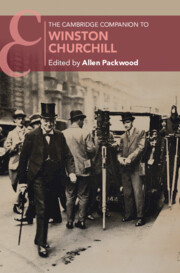
Viewed by some as the saviour of his nation, and by others as a racist imperialist, who was Winston Churchill really, and how has he become such a controversial figure? Combining the best of established scholarship with important new perspectives, this Companion places Churchill's life and legacy in a broader context. It highlights different aspects of his life and personality, examining his core beliefs, working practices, key relationships and the political issues and campaigns that he helped shape, and which in turn shaped him. Controversial subjects, such as area bombing, Ireland, India and Empire are addressed in full, to try and explain how Churchill has become such a deeply divisive figure. Through careful analysis, this book presents a full and rounded picture of Winston Churchill, providing much needed nuance and context to the debates about his life and legacy.
In December 1951, the London foreign exchange market reopened. Now, London was again connected with international capital markets. But capital controls remained, and sterling was not yet integrated into other capital markets. Data from alternative markets show that sterling in London was still isolated from international crises.
By November 1940, les forces françaises libres had swelled to 19,679 soldiers. Arguably the setback at Dakar became a benefit, because it hardened and focused the French exile movement, forced it to adjust to a long-war strategy, and obliged de Gaulle to initiate the transition from a military organization with a political agenda into a political movement with an, albeit constricted, armed wing. With the creation on 27 October 1940 of a Conseil de la défense de l’Empire, the external resistance was now a legitimate territorial power. In the BCRA, la France libre had an organization with the potential to structure and operationalize an as yet diminutive but inevitable internal resistance. On the debit side, la France libre remained an insecure movement with a narrow and underdeveloped African base, factionalized between soldiers and civilians, between the various branches of the movement, torn between its civil war with Vichy and the compulsion to fight the Germans. The BCRA was inexperienced in clandestine mobilization, without a strategy, and dependent on the British for resources. While de Gaulle exhibited many noble qualities, even elements of true greatness, and had stamped his personality on his organization, his attributes were offset by an autocratic temperament and imperious behavior that exasperated allies and alienated potential supporters. Furthermore, Vichy still commanded its High Seas Fleet and controlled the strategically important Levant, Dakar, and AFN. Pétain also enjoyed patriotic prestige and credibility with a French population disoriented by defeat, eager to secure the release of French POWs, and convinced that he was plotting “la revanche” against Germany. British policy continued to recognize Vichy while supporting de Gaulle. With the United States poised to enter the conflict, relations among the three allies would grow more complex.
From 1938, French policy suddenly pivoted from a policy of appeasement to one of confrontation with Nazi Germany. But once war was declared on 3 September 1939, Anglo-French governments seemed unable to articulate a strategy to win it. Gamelin’s strategy was to build up an impregnable defense of the Hexagon, mount an economic blockade of Germany, and fight a war on the periphery – la guerre ailleurs – until the enemy was enfeebled and the Allies had amassed enough military power take the offensive. But without a Soviet alliance, this strategy failed to pressure Germany and was vulnerable to preemption. The frenzy of mobilization followed by the serenity of Sitzkrieg hollowed out civil resolve and basically neutered the “primordial violence, hatred, and enmity” of the population which Clausewitz argued was essential to the successful waging of war. The drôle de guerre seemed to offer evidence of the drift of Allied policy that portended a lack of national resolve. Daladier stood as a bulwark against military reform and the removal of Gamelin, and encouraged wishful thinking about the ability of Poland to defend itself and the unpopularity in Germany of Hitler’s aggressive policies, which would restrain German aggression. While it appeared on the surface that France had recovered its nerve, the spirit of appeasement in the guise of “victory without combat” hovered over the French declaration of war and lingered in the form of an absence of urgency that affected morale in the long winter of 1939–1940. It also encouraged a flirtation with peripheral operations that culminated in the Narvik fiasco in May 1940, which offered a curtain raiser for the Fall of France.
English Bards and Scotch Reviewers (1809), Byron’s vicious early satire on the contemporary literary scene, started life as ‘British Bards’, a shorter piece of about 500 lines focussed predominantly on ‘the poetry of the present Day’.1 When Byron first tried to publish it in December 1807 his bookseller refused, on the grounds that it contained ‘if not gunpowder, at least half a dozen libels’.2 As a would-be satiric debut, ‘British Bards’ was certainly combustible and very confident. But a large part of its assurance came from the authority of the company it joined. In its approach and in some of the particulars of its critique, it sought to continue the work of a number of recent heroic couplet satires on literary subjects: Richard Mant’s The Simpliciad (1808), Lady Anne Hamilton’s Epics of the Ton (1807), and – in the previous century – William Gifford’s influential Baviad (1791) and Maeviad (1795) and T. J. Mathias’s Pursuits of Literature (1794–97). Each of these satires attacks a group of upstart poets who are trying to do something new: in Mant, Hamilton and Byron’s cases, the Lake Poets and various minor poets associated with their group; in Gifford’s poem a decade earlier, the Della Cruscan poets grouped around Robert Merry, Hannah Cowley and Mary Robinson; and in Mathias’s case, the Della Cruscans in company with almost anyone else who dared to lift a pen. Each satirist shoulders the responsibility of protecting and speaking for the established neoclassical tradition they see themselves as belonging to, and which they believe to be under siege.
Chapter 5 explores the politics and practices of Allied relief, which were characterised by continuous tensions between military strategies and humanitarian concerns. The British War Cabinet openly prioritised maintenance of the economic blockade, deferring all civilian relief until after the ultimate defeat of Nazi Germany. Eventually, the Allies and Germans agreed to allow limited relief supplies from neutral resources but only under conditions that would not upset military operations for either side. Throughout the crisis, political and military considerations determined the parameters of food relief. Due to the lengthy and detailed negotiation process, the main impact of the Allied contribution to famine relief took place only after hostilities had ended.
After the Italian declaration of war came the period of their short-lived ‘parallel war’, where they attempted to fight independently of Germany in the theatre. Chapter 2 highlights the great numerical disparity between the scarce British and Commonwealth forces spread from the Middle East to Gibraltar versus those of Italy. Despite this lack of resources, British theatre commanders recognised the need to make inroads into Italian sea communications, and they also received clear direction from Whitehall to pursue this objective. Consequently, the failure to do so was not for lack of will at any level of command, but a question of means. The scattered, incoherent efforts that were made are shown to have been completely ineffectual, with British success against the Italians in North Africa during 1940 instead being the product of a series of other factors. Nevertheless, this period set important foundations for an anti-shipping campaign in terms of the recognition of the vulnerability of Italian sea routes and the need for greater resources to prosecute it.
Despite the qualified successes of Operation ‘Crusader’, Britain was faced with a disastrous turn of events in early 1942. The entry of Japan to the war had compelled a redistribution of force to the Far East, while some key British losses and new in-theatre German commitments had further redefined the Mediterranean balance of power. Chapter 5 outlines how the British were forced to adopt a defensive posture throughout the theatre, as their gains from ‘Crusader’ were rapidly reversed. As the Axis then advanced into Egypt, Malta was subjected to an intense aerial siege and came perilously close to being starved into submission. The difficulties in conducting anti-shipping operations during this period were numerous. Yet in a reversal of the thesis advanced by historians such as van Creveld and Gladman, the chapter demonstrates that significant sinkings (of over 300,000 tons) were achieved during this period. The continued attrition was greatly troubling for the Axis, contributing to a shipping shortage that was to reach crisis point later in the year.
This book opens with a discussion of the importance of the Mediterranean to the British Empire, highlighting its role as a ‘vital artery’ of communication between the eastern and western worlds. By examining the changing position of the Mediterranean in British strategic policy from the construction of the Suez Canal through to the Italian declaration of war in 1940, it shows how important the Mediterranean would be in the event of another global war. However, British foreign policy in the late interwar period included numerous efforts to keep Italy neutral, allowing the Mediterranean to be denude of military assets in favour of their deployment against threats elsewhere. Consequently, these decisions led to a difficult context in which to plan realistically for war in the Mediterranean, and the subsequent paucity of British forces stationed there at the start of hostilities. It was this situation which set the foundation for early failures in the anti-shipping campaign. The pre-war planning debates did, however, see the British develop an appreciation of the importance of cutting Axis sea communications, even if they initially lacked the military power to do so and were initially restricted by legal criteria prohibiting attacks on merchant shipping in most cases.
Chapter 6 begins by illustrating the respective positions of each side by September 1942. It shows that while the Axis position can in retrospect be viewed as highly precarious, the British evinced real concern about a complete collapse in Egypt. It highlights the resurgent emphasis that was placed on the Mediterranean from Whitehall, and on anti-shipping operations by the theatre commanders. These attacks were pursued with a ruthless prioritisation; even after clear evidence that some Axis vessels were carrying British prisoners of war. This allowed anti-shipping operations to thrive, aided by the effective use of intelligence to target the most critical cargoes of fuel and ammunition. As a result, over the three-month period, ninety-five vessels of nearly 200,000 tons were sunk, with grave effects on the Axis. These sinkings helped curtail the final Axis offensive in Egypt and contributed to the vital British victory at El Alamein by depriving the Axis of essential fuel and ammunition. In contrast to arguments put forward by scholars such as van Creveld, Barnett and Gladman, the book uses a mix of Italian, German and British material to conclusively show that the supply shortages suffered by the Axis were primarily the result of seaborne sinkings.