To save content items to your account,
please confirm that you agree to abide by our usage policies.
If this is the first time you use this feature, you will be asked to authorise Cambridge Core to connect with your account.
Find out more about saving content to .
To save content items to your Kindle, first ensure no-reply@cambridge.org
is added to your Approved Personal Document E-mail List under your Personal Document Settings
on the Manage Your Content and Devices page of your Amazon account. Then enter the ‘name’ part
of your Kindle email address below.
Find out more about saving to your Kindle.
Note you can select to save to either the @free.kindle.com or @kindle.com variations.
‘@free.kindle.com’ emails are free but can only be saved to your device when it is connected to wi-fi.
‘@kindle.com’ emails can be delivered even when you are not connected to wi-fi, but note that service fees apply.
This article examines the constitutional situation of the Anglican Church of Australia (ACA) in relation to the Church of England. It examines the development of the Constitution of the ACA and reflects on the meaning of s 6 of that constitution and whether or not the ACA is always in communion with the Church of England. Reflections and conclusions are made in light of the recent statements from Global Fellowship of Confessing Anglicans suggesting that the ACA is no longer in communion with the Church of England. The article concludes on the basis of the constitutional evidence that the ACA is always in communion with the Church of England.
This chapter anchors the insights gleaned from John of the Cross and Thérèse of Lisieux in biblical perspectives on sacrifice, as developed by Augustine, Thomas Aquinas, and Matthias Joseph Scheeben. Contemporary criticism of sacrifice (proposed by René Girard, feminist authors, and Robert Daly) are also addressed.
Parental shared reminiscing and positive parenting are important for the development of autobiographical memory and narrative identity. Yet, even though parents influence the content and structure of narrative identity throughout the lifespan (Camia et al., 2021; Köber & Habermas, 2018), it is understudied whether narrative themes such as agency and communion are associated with experienced parenting and whether this sustains beyond early childhood. Therefore, we investigated the influence of parenting on agency and communion in life stories provided at ages 26 and 32. Narratives with and without parental topics scored similarly on agency and communion. However, agency in narratives with mentions of parents was supported by an increased understanding of parents and by opposing parents’ advice. Communion in narratives mentioning parents was supported by positive evaluations of the parental relationship and by an increased understanding of parents. These results suggest that parents not only are part of the content of personal narratives but also influence narrative themes well into adulthood.
Pope Francis’s “Pilgrims of Hope” and Pope Leo’s emphasis on listening and dialogue invite us to reflect on how communal action within the College Theology Society fosters hope in a period of destabilizing social and ecclesial challenges. Hope is both a gift and a task—it sustains action for justice while being nurtured by such action. The story of Joseph of Arimathea provides an example of small, faithful acts of resistance to injustice and dehumanization, taken in community, that can generate hope. Our work together as a theological society and our new CTS initiatives—our visioning process, decolonization efforts, and renewed international partnerships—are practices of intentional communion that embody resistance to polarizing forces and open pathways for theological engagement that promote solidarity, hope, and human flourishing.
Panama’s most important festivity, the annual Corpus Christi processions, featured the performance of gender and ethnicity. Celebrations involved Congo, Biafara, Bran, and other Black confraternities, as well as a longstanding dispute for precedence between members of the ship-builders’ and the stocking-makers’ guilds, who struggled for proximity to the monstrance. The most dramatic dispute in the Cathedral, however, entailed a battle for precedence between the wives of the city councilors and the spouses of the royal judges. Controversy over seating arrangements enabled the judges and city councilors to submit conflicts over their respective status to the king, who eventually allowed the judges’ wives, and even their mothers, to receive communion in the main chapel.
Thomas Pott takes as a point of departure the gospel’s unmistakable call for the unity of the Body of Christ. This leads him to reflect on several issues over which there is division in the Church. However, none of these issues is capable of endangering the fact that the liturgy bears, manifests, and transmits ecclesial unity uniquely and fundamentally.
Patrick Prétot comments on the individual parts of which the celebration of the Eucharist consists. For that, he takes as his point of departure the script of the Order of Mass, which is used in the Roman Catholic Church but which shows many commonalities with other liturgical and ecclesial traditions.
This chapter explores christological underpinnings to eucharistic theology. It delineates transubstantiation, consubstantiation, and three versions of impanation in the effort to offer an incarnational model of Christ’s presence in the Eucharist.
This chapter of the handbook discusses the role of mind perception in the categorization of individuals as moral agents and moral patients. Moral agents are defined as individuals that can commit morally wrong actions; moral patients are defined as individuals that can be morally wronged. It is generally agreed that the attribution of moral agency and moral patiency is linked to the attribution of mental capacities and traits. The chapter surveys a variety of models of mind perception, some of which focus on the representation of mental capacities, some of which focus on the representation of mental traits. The dominant model of mind perception in moral psychology is the experience-agency model, which divides the space of mindedness into experiential capacities like sentience and self-awareness, and agentic capacities like deliberative reasoning and self-control. Reviewing the empirical literature on moral categorization, the author argues that neither the experience-agency model nor any of the major alternatives to it captures all the factors to which everyday attributions of moral agency and moral patiency are sensitive.
Covenant, community and communion are ways in which God’s means and God’s ends are identical. Covenant is not the ‘Plan B’ after the failure of creation in the fall; it is the fulfilment of the reason for creation, and the anticipation of the true covenant, the incarnation itself. God’s love for Israel goes far beyond any instrumental goodwill: Israel is God’s child, God’s spouse, God’s companion forever. Communion is the centre of the Christian faith: being with but also being together. Communion and community name the two aspirations of church. The one is about being in, and bringing others into, relationship with God; the other is about relating civilly, cordially and sacrificially with one another, and attending to the things that need doing to function humanly. When Jesus talks of the realm of God, he is talking about this communion and community becoming a reality for all people.
I address three questions. First, how do Eastern theologians configure the way the incarnation is rendered as God’s original intention, and how significant is that insight? The answer is that this is central to their portrayal of God’s purpose. Second, what precisely is God’s purpose in the incarnation? The answer lies in the notion of deification, our being made divine, a concept pivotal to Eastern theology – and yet one that seems in significant respects problematic. Third, are there ways in which Eastern theologians portray God’s purpose that are less problematic, yet equally integral to their notion of God’s original and constant purpose? The answer is, yes there are. I conclude with three key motifs that I find more transferable yet nonetheless wholly authentic to the Orthodox theological imagination: communion, participation and transfiguration.
Why did Jesus come? The traditional argument is that he came to redeem us from sin and destroy death, and thus reverse the fall. Many have long found this unsatisfactory, because it centres human deficit, rather than divine abundance. In this study, Samuel Wells traces his notion of 'being with' right into the Trinity itself, and in dialogue with Maximus the Confessor, Duns Scotus and Karl Barth, among others, articulates a truly Christocentric theology in which God's means and God's ends are identical. In the process, Wells not only greatly expands the compass of 'being with,' showing its scriptural and doctrinal significance, but also offers a constructive account of the incarnation, cross and resurrection of Jesus that out-narrates conventional atonement theories. Wells correspondingly proposes an account of sin, evil, suffering and death that accords with this revised understanding. The result is a compelling and transformational proposal in incarnational theology.
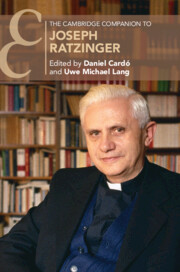
Among the most important modern Catholic thinkers, Joseph Ratzinger, later Pope Benedict XVI, fundamentally shaped Christian theology in the 20th and early 21st centuries. His collaborations and debates with figures such as Henri de Lubac, Karl Rahner, Jean Daniélou, Hans Küng, Hans Urs von Balthasar, and Jürgen Habermas reflect the key role he has played in the development of Christian life and doctrine. The Cambridge Companion to Joseph Ratzinger conveys the depth and breadth of his significant legacy to contemporary Catholic theology and culture. With contributions from an international team of scholars, the volume assesses Ratzinger's theological synthesis in response to contemporary challenges that Christianity faces. It surveys the major themes and topics that Ratzinger explored, and highlights aspects of the ideas that he developed in his engagement with a wide variety of intellectual and religious currents. Collectively, the essays in this volume demonstrate how Ratzinger's epochal contributions to Christian thought will reverberate for generations to come.
The Laudian view of the sacraments as the places where Christ’s presence in its church reached its apogee and of the altar as the site of the most intense divine presence in the church are expounded. The Laudians placed the reception of the sacrament at the centre of the collective worship of the church and of the life of faith, and thus made the altar the focal point of divine worship. The life of faith was defined in sacramental terms as a journey from font to altar, and stress placed on the need to give physical expression to these views and priorities through bowing towards the altar and worshipping towards the east. The Laudian altar policy, which placed railed-off communion tables altarwise at the east end of the church and reoriented worship towards them was the logical expression of such views. Through a case study of the church at East Knoyle, the communion room and altar are shown to have been that part of the church where the Laudians conceived the church triumphant and church militant came into closest contact in this life; something rendered explicit by their repeated insistence that angels attended the reception of the sacrament.
Liturgical revision in the Anglican Communion has proceeded relatively slowly since the days of Gregory Dix. While some changes have occurred, especially in the use of modern language, in other ways most rites remain uninfluenced by changes in society and by recent advances in scholarship.
A number of thinkers in recent decades have argued that, in light of the Trinity, we can see that God's being is communion. Particularly effective was John D. Zizioulas, whose Trinitarian ontology centered on communion. Some skeptical of this claim have invoked Aquinas as a source for countering an ontology of communion. I argue that, while Thomas never explicitly affirms that the divine being is communion, he can give us deep resources for reaching this conclusion. Indeed, he can ultimately lead us towards a divine being which is more thoroughly a matter of communion—and towards an ontology which is more radically Trinitarian—than anything we find in Zizioulas.
This chapter seeks to identify the doctrinal content of Trent’s decrees on the Eucharist, and to understand its engagement with Protestant teaching, in three areas: Christ’s presence in the Eucharist; communion in both kinds; and the Eucharist as sacrifice.
This essay explores the corporate and social dimensions of discipleship by examining the theological vision of the Parish Communion movement of the last century. It outlines what the Parish Communion movement sought to achieve liturgically and how that was undergirded by its underlying ecclesiology. Elements of the theology underpinning the movement are examined, including its corporate Body theology and its social theology. How these themes contribute to contemporary elaborations of discipleship are then explored, including a reflection on the legacy of the movement in the context of the Covid-19 pandemic.
Romano Guardini read Rilke's Duino Elegies as a compelling eschatological vision for the modern world, but one that must be rejected. I argue that in Rilke's writing, Guardini detected the secular analogue to the substantial image at the end of the Christian eschatological imagination—that is, the communion of saints. Rilke's vision is coherent in that the end he perceives follows from the beginning he assumes; therefore, understanding Rilke's end requires his commentator to see all that precedes that end, beginning with Rilke's own beginning. In a time of increasing loneliness, Guardini's response to Rilke rings with renewed contemporary relevance to guard against the ultimate erasure of the human person.
It is now recognized that important interpretative insights are to be gained from reading Kierkegaard’s pseudonymous works in tandem with the upbuilding writings, especially where these are closely connected in time or subject matter. In the case of The Sickness unto Death, a journal entry by Kierkegaard (NB13:79) indicates that the Three Discourses at the Communion on Fridays (“The High Priest,” “The Tax Collector,” and “The Sinful Woman”), published in autumn 1849, “respond to” Anti-Climacus, pseudonymous author of The Sickness unto Death. How do they respond? Kierkegaard writes: “I must have a place of rest, but I cannot rest on a pseudonym; and they respond to Anti-Climacus, and [to] the situation. The discourses for the communion on Friday are once and for all envisaged as the authorship’s place of rest.” This comment invites us to see the discourses as offering a kind of dialectical counterpoint to the argument of The Sickness unto Death, and the chapter explores in detail what this means and, specifically, what Kierkegaard means by “a place of rest.” In addition to the Three Discourses at the Communion on Fridays the chapter also draws on An Upbuilding Discourse (1850) and Two Upbuilding Discourses (1851) that are thematically connected with the discourses of autumn 1849.