Refine search
Actions for selected content:
65 results
4 - Phases near the boundary of the parameter space
-
- Book:
- Emergence and Phase Transitions in Uniform Random Graphs
- Print publication:
- 26 November 2026, pp 49-81
-
- Chapter
- Export citation
1 - Optimization Bootcamp
-
- Book:
- Optimization
- Published online:
- 26 July 2026
- Print publication:
- 16 July 2026, pp 1-44
-
- Chapter
-
- You have access
- Export citation
Whitham modulation equations for the regularized Boussinesq equation with cubic nonlinearity
-
- Journal:
- Journal of Nonlinear Waves / Volume 2 / 2026
- Published online by Cambridge University Press:
- 29 June 2026, e16
-
- Article
-
- You have access
- Open access
- HTML
- Export citation

Risk Measures
- An Introduction to the Mathematical Theory
-
- Published online:
- 26 February 2026
- Print publication:
- 19 February 2026
3 - Optimization Theory and Algorithms
-
- Book:
- Mathematical Methods in Data Science
- Published online:
- 04 November 2025
- Print publication:
- 30 October 2025, pp 128-199
-
- Chapter
- Export citation
Perturbed cone theorems for proper harmonic maps
- Part of
-
- Journal:
- Canadian Mathematical Bulletin / Volume 69 / Issue 2 / June 2026
- Published online by Cambridge University Press:
- 22 October 2025, pp. 647-664
- Print publication:
- June 2026
-
- Article
-
- You have access
- Open access
- HTML
- Export citation
-
Inspired by the halfspace theorem for minimal surfaces in
 $\mathbb {R}^3$ of Hoffman–Meeks, the halfspace theorem of Rodriguez–Rosenberg, and the classical cone theorem of Omori in
 $\mathbb {R}^n$, we derive new non-existence results for proper harmonic maps into perturbed cones in
 $\mathbb {R}^n$, horospheres in
 $\mathbb {H}^n$, culminating in a generalization of Omori’s theorem in arbitrary Riemannian manifolds. The technical tool proved here extends the foliated Sampson’s maximum principle, initially developed in the first author’s Ph.D. thesis, to a non-compact setting.


10 - Optimization tools
-
- Book:
- Financial Data Science
- Published online:
- 17 December 2025
- Print publication:
- 17 July 2025, pp 245-272
-
- Chapter
- Export citation
10 - Quantification of Quantum Resources
- from Part III - The General Framework of Resource Theories
-
- Book:
- Quantum Resource Theories
- Published online:
- 03 May 2025
- Print publication:
- 10 April 2025, pp 426-466
-
- Chapter
- Export citation
Appendix B - Elements of Convex Analysis
-
- Book:
- Theoretical Foundations of Asset Pricing
- Published online:
- 06 February 2025
- Print publication:
- 13 February 2025, pp 206-231
-
- Chapter
- Export citation
14 - Vectors, Preferences and Convexity
-
- Book:
- Mathematics for Economics and Finance
- Published online:
- 24 May 2024
- Print publication:
- 30 May 2024, pp 137-151
-
- Chapter
- Export citation
On some convexity questions of Handelman
- Part of
-
- Journal:
- Canadian Mathematical Bulletin / Volume 67 / Issue 4 / December 2024
- Published online by Cambridge University Press:
- 16 May 2024, pp. 936-939
- Print publication:
- December 2024
-
- Article
-
- You have access
- HTML
- Export citation
-
We resolve some questions posed by Handelman in 1996 concerning log convex
 $L^1$ functions. In particular, we give a negative answer to a question he posed concerning the integrability of
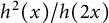 $h^2(x)/h(2x)$ when h is
 $L^1$ and log convex and
 $h(n)^{1/n}\rightarrow 1$.


Multidimensional random motions with a natural number of finite velocities
- Part of
-
- Journal:
- Advances in Applied Probability / Volume 56 / Issue 3 / September 2024
- Published online by Cambridge University Press:
- 22 March 2024, pp. 1033-1063
- Print publication:
- September 2024
-
- Article
-
- You have access
- Open access
- HTML
- Export citation
ON SEPARATE CONTINUITY AND SEPARATE CONVEXITY: A SYNTHETIC TREATMENT FOR FUNCTIONS AND SETS
- Part of
-
- Journal:
- Bulletin of the Australian Mathematical Society / Volume 109 / Issue 3 / June 2024
- Published online by Cambridge University Press:
- 17 July 2023, pp. 541-551
- Print publication:
- June 2024
-
- Article
-
- You have access
- Open access
- HTML
- Export citation
Norms on complex matrices induced by random vectors
- Part of
-
- Journal:
- Canadian Mathematical Bulletin / Volume 66 / Issue 3 / September 2023
- Published online by Cambridge University Press:
- 23 December 2022, pp. 808-826
- Print publication:
- September 2023
-
- Article
-
- You have access
- HTML
- Export citation
-
We introduce a family of norms on the
 $n \times n$ complex matrices. These norms arise from a probabilistic framework, and their construction and validation involve probability theory, partition combinatorics, and trace polynomials in noncommuting variables. As a consequence, we obtain a generalization of Hunter’s positivity theorem for the complete homogeneous symmetric polynomials.

6 - There Is No Thermodynamic Arrow
-
- Book:
- Reversing the Arrow of Time
- Published online:
- 24 November 2022
- Print publication:
- 08 December 2022, pp 139-167
-
- Chapter
-
- You have access
- Open access
- Export citation
Appendix B - Basic Analysis Review
-
- Book:
- Classical Numerical Analysis
- Published online:
- 29 September 2022
- Print publication:
- 20 October 2022, pp 854-873
-
- Chapter
- Export citation
16 - Convex Optimization
- from Part III - Nonlinear Equations and Optimization
-
- Book:
- Classical Numerical Analysis
- Published online:
- 29 September 2022
- Print publication:
- 20 October 2022, pp 451-506
-
- Chapter
- Export citation
Transportation on spheres via an entropy formula
- Part of
-
- Journal:
- Proceedings of the Royal Society of Edinburgh. Section A: Mathematics / Volume 153 / Issue 5 / October 2023
- Published online by Cambridge University Press:
- 05 September 2022, pp. 1467-1478
- Print publication:
- October 2023
-
- Article
-
- You have access
- Open access
- HTML
- Export citation
-
The paper proves transportation inequalities for probability measures on spheres for the Wasserstein metrics with respect to cost functions that are powers of the geodesic distance. Let $\mu$
 be a probability measure on the sphere ${\bf S}^n$
 of the form $d\mu =e^{-U(x)}{\rm d}x$
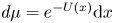 where ${\rm d}x$
 is the rotation invariant probability measure, and $(n-1)I+{\hbox {Hess}}\,U\geq {\kappa _U}I$
 , where $\kappa _U>0$
 . Then any probability measure $\nu$
 of finite relative entropy with respect to $\mu$
 satisfies ${\hbox {Ent}}(\nu \mid \mu ) \geq (\kappa _U/2)W_2(\nu,\, \mu )^2$
 . The proof uses an explicit formula for the relative entropy which is also valid on connected and compact $C^\infty$
 smooth Riemannian manifolds without boundary. A variation of this entropy formula gives the Lichnérowicz integral.


THE SECOND SHIFTED DIFFERENCE OF PARTITIONS AND ITS APPLICATIONS
- Part of
-
- Journal:
- Bulletin of the Australian Mathematical Society / Volume 107 / Issue 1 / February 2023
- Published online by Cambridge University Press:
- 25 August 2022, pp. 66-78
- Print publication:
- February 2023
-
- Article
-
- You have access
- HTML
- Export citation
-
A number of recent papers have estimated ratios of the partition function
 $p(n-j)/p(n)$, which appear in many applications. Here, we prove an easy-to-use effective bound on these ratios. Using this, we then study the second shifted difference of partitions,
 $f(\,j,n) := p(n) -2p(n-j) +p(n-2j)$, and give another easy-to-use estimate of
 $f(\,j,n)$. As applications of these, we prove a shifted convexity property of
 $p(n)$, as well as giving new estimates of the k-rank partition function
 $N_k(m,n)$ and non-k-ary partitions along with their differences.


On equal-input and monotone Markov matrices
- Part of
-
- Journal:
- Advances in Applied Probability / Volume 54 / Issue 2 / June 2022
- Published online by Cambridge University Press:
- 06 June 2022, pp. 460-492
- Print publication:
- June 2022
-
- Article
-
- You have access
- HTML
- Export citation
