To save content items to your account,
please confirm that you agree to abide by our usage policies.
If this is the first time you use this feature, you will be asked to authorise Cambridge Core to connect with your account.
Find out more about saving content to .
To save content items to your Kindle, first ensure no-reply@cambridge.org
is added to your Approved Personal Document E-mail List under your Personal Document Settings
on the Manage Your Content and Devices page of your Amazon account. Then enter the ‘name’ part
of your Kindle email address below.
Find out more about saving to your Kindle.
Note you can select to save to either the @free.kindle.com or @kindle.com variations.
‘@free.kindle.com’ emails are free but can only be saved to your device when it is connected to wi-fi.
‘@kindle.com’ emails can be delivered even when you are not connected to wi-fi, but note that service fees apply.
Towards the end of his narrative history of the First Crusade, the Provençal priest and chronicler Raymond of Aguilers made two important observations about the relationship between crusading and the possession and preservation of objects and spaces that he and his co-religionists held to be sacred. To begin with, Raymond celebrated the crusaders’ discovery on 5 August 1099 of a piece of wood that was identified as a fragment of the True Cross, stressing the significance of the fact that medieval Latins now had custody of both a place (the city of Jerusalem) and a thing (a relic of the Crucifixion) that enabled them to approach and engage more meaningfully with their absent god-man.
Luther offered a paradigm shift for theological method with his particular cross-orientation. With their own experience of suffering and despair serve, theologians of the cross can discern the true meaning of the gospel of Christ, name the reality as it is, and mystically know God radically present and compassionately loving.
With his “born again” experience with Paul’s letter to the Romans about justification by faith alone, and criticizing the Christian church for ignoring people’s suffering, Luther called for reforms in teaching and practice, reimagining the parameters and depth of mystical God–human relationship, with an increased confidence of God’s mystical presence in human life and its transforming impact. Freedom from despair and freedom to compassionate living, with an assurance of salvation by faith became the pillars of Luther’s explicitly Christ-centric religion.
Chapter 5 examines how the Cappadocians utilise an array of protective measures against the devil. The sacrament of baptism is the first defence and the greatest protection against the devil’s attacks; at the same time, however, baptism heightens the likelihood of the devil’s advances. Amongst the numerous tactics that they employ to combat the ongoing threat of the devil, the Cappadocians appeal to the sign of the cross. They also teach on wearing the whole armour of God. These forms of protection emphasise the eschatological nature of the devil’s defeat, since they recall what Christ has done while also highlighting how spiritual warfare continues throughout the Christian life.
Pauline scholars have misconstrued key features of Paul's portrayal of love by arguing that Paul idealises self-sacrifice and 'altruism'. In antiquity, ideal loving behaviour was intended to construct a relationship of shared selves with shared interests; by contrast, modern ethics has rejected this notion of love and selfhood. In this study, Logan Williams explores Paul's Christology and ethics beyond the egoism-altruism dichotomy. He provides a fresh evaluation of self-giving language in Greek literature and shows that 'gave himself' is not a fixed phrase for self-sacrifice. In Galatians, for example, self-giving languages depict Jesus' love as an act of self-gifting. By re-evaluating the apostle's description of Christ's loving action, Williams demonstrates that Paul portrays Jesus' loving action as his positive participation in the condition of others. He also interrogates the ethics in Galatians and shows that Paul's love-ethics encourage the Galatians not to sacrifice themselves for others but to share themselves with others.
The image in Plate 13 is now housed in the City Museum of Münster. The museum dates it to 1491. On the back, their website informs us, is the name of an otherwise unknown painter, Seewald. The museum lists it as “Faces without Eyes,” in which the eyes of all but Christ and two others have been “carefully removed such that one can often see the wood beneath.” The online description glosses the removal of the paint designating eyes as “destructions,” evoking “the immediate association” of “iconoclasts of the Reformation period.” As the Museum’s website suggests, there is a long tradition of using the word “iconoclasm” to name a part of what happened in the sixteenth century and a rich and dense body of scholarship on “the destruction of art.” But, as the painting materializes, the word has never fit as a name for what Evangelicals did.
Sometime around 1593, William Claxton (d. 1597) gathered memories of Durham cathedral in a scroll. Although he titled it Discription or Breef Declaracion of all the Auncyent Monuments, Rytes and Customs Belonging or Beinge within the Monasticall Church of Durham before the Suppression, it has come to be known as The Rites of Durham, reflecting its primary interest for scholars. It is one of the earliest testimonies to the conceptual shift Evangelicals effected. Individuals remembered specific altars, windows, chapels – discrete things. The “church” had become a box containing objects and dead bodies, within which the faithful gathered. It was no longer a place of worship. It was no longer a made world. In Part II, we turn to the acts that sundered. Here let me simply underline, Evangelicals did not simply recast altarpieces and eternal lamps as mere matter, “objects.” They tore apart the fabric of what Durand and medieval European Christians understood ecclesia to be. Far more than altar or vestment, the word – ecclesia, iglesia, église, Kirche, kerk, kirk, church – altered irrevocably in its content in the sixteenth century.
In his letter to the Galatians, Paul sets out an astute vision of what God has done in Christ against the backdrop of a world out-of-joint, a world engulfed in identity-distorting domination systems. Theologically profound and prophetically challenging, Galatians showcases God's initiative to empower liberation from those systems and their relational toxicity. For Paul, the union of Christ with his followers fosters flourishing forms of relational life that testify to the sovereign power of God over all competing forces. In The Theology of Galatians, respected New Testament scholar Bruce Longenecker cuts through the complexity of a notoriously opaque text, disentangling and interpreting Paul's discourse to reveal its multifaceted cosmology, its comprehensive coherence, and its penetrating analysis humanity and the divine. Offering a new interpretation of Galatians, his volume synthesizes the best of four main interpretative alternatives, finding new solutions to scholarly gridlock.
The iconoclast refusal to accept the use of images, particularly of Christ, in public and private worship in Byzantium, is often condemned as a heretical movement. But its emphasis on symbolic representations (the Cross and the Eucharist) and on spiritual veneration was essentially a reform of potentially idolatrous church practice.
Chapter 4 discusses the sign of the cross, another gesture with a long history going back to the early church. In the Middle Ages the cross was believed to have power to protect against evil, and was widely used both as a gesture of everyday blessing and in rituals and charms of healing. After the Reformation its use was discouraged, but it survived in the Prayer Book rite of baptism, where the minister was instructed to trace a cross on the child’s forehead. This necessitated a radical transformation in its meaning, removing the associations with exorcism and purification and redefining it simply as a symbol of allegiance to Christ. Yet the belief in the apotropaic power of the cross persisted in early modern England and was reflected both officially, in the ritual of the royal touch, and unofficially, in the use of the gesture as a form of protection against witchcraft. Even among theologians who regarded the cross as symbolic, there was still a sense that it was not ‘merely’ symbolic but retained some kind of operative power to effect change.
This chapter draws together the whole argument of the book to face the defining question that it must answer, and through that answer to unfurl the full significance of incarnational theology. The question is, what happens when God’s purpose to be with us now and forever meets with a refusal? Addressing the question of humankind’s alienation from God, itself and the wider creation is not, from the point of view of incarnational theology, the central dynamic of Christianity, as it is in conventional accounts. But the utter with-ness of Jesus inevitably encounters the profound, widespread and powerful resistance to God’s embrace: and the truth of God is thereby revealed like never before. Jesus does not ‘come to die’: yet in his death and resurrection he exposes the forces that oppose him and displays the dynamic that sent him and settles the only questions about existence and essence that ultimately matter.
Gregory the Great's Moralia in Job has been said to mark a transitional phase in the development of atonement doctrine. I argue that the Moralia cohesively portrays Christ's redemptive work as achieving something in two directions: towards God, a vicarious payment of humanity's debt of punishment; towards humanity, an efficaciously convicting and restorative example. This sustains a spirituality in which exacting and self-denying moral effort rests on freedom from judgement and on the death accomplished by the Mediator. Engaging the Moralia in this manner illuminates patristic exegetical sensibilities and proves instructive about how the fathers fit into later taxonomies of atonement models.
Between the sixth and eighth centuries CE, the image emerged as a rhetorical category in religious literature produced in the Mediterranean basin. The development was not a uniquely Christian phenomenon. Rather, it emerged in the context of broader debates about symbolic forms that took place across a wide range of ethnic, linguistic, and religious groups who inhabited the late Roman and early Byzantine world. In this book, Alexei Sivertsev demonstrates how Jewish texts serve as an important, and until recently overlooked, witness to the formation of image discourse and associated practices of image veneration in late antiquity and the early Middle Ages. Addressing the role of the image as a rhetorical device in Jewish liturgical poetry, Sivertsev also considers the theme of the engraved image of Jacob in its early Byzantine context and the aesthetics of spaces that bridge the gap between the material and the immaterial in early Byzantine imagination.
This chapter offers a theology of the Atonement, building on Augustine’s account of the Cross. It argues that, on the Cross, Jesus opens and joins himself fully to the death-dealing that is the inner logic of all sinful human community, and overcomes it in the Resurrection.
In An Augustinian Christology: Completing Christ, Joseph Walker-Lenow advances a striking christological thesis: Jesus Christ, true God and true human, only becomes who he is through his relations to the world around him. To understand both his person and work, it is necessary to see him as receptive to and determined by the people he meets, the environments he inhabits, even those people who come to worship him. Christ and the redemption he brings cannot be understood apart from these factors, for it is through the existence and agency of the created world that he redeems. To pursue these claims, Walker-Lenow draws on an underappreciated resource in the history of Christian thought: St. Augustine of Hippo's theology of the 'whole Christ.' Presenting Augustine's christology across the full range of his writings, Joseph Walker-Lenow recovers a christocentric Augustine with the potential to transform our understandings of the Church and its mission in our world.
This essay argues the image of the ‘Mystical Body’ or ‘Body of Christ’ is fully intelligible only in light of the Cross. The Body of Christ is a cruciform Body. As the Body of Christ crucified and risen, it is presently being configured to Christ in the world through self-sacrificial love. The essay traces the place of the Cross in some representative twentieth-century Catholic theologies of the Mystical Body, in light of the perspective of Thomas Aquinas. I first survey four theologians from the first half of the century who, in their understandings of the Mystical Body, gave a place to the Cross: Emile Mersch, Fulton Sheen, Charles Journet, and Pius Pasch. Here I also examine Pope Pius XII's encyclical Mystici Corporis. Second, I explore the approach of some notable Thomistic theologians or interpreters of Aquinas from the early 1960s onward: Jerome Hamer, M. J. Le Guillou, George Sabra, Jean-Pierre Torrell, and Herwi Rikhof. In this section, I also examine Vatican II's Lumen Gentium. My third and final section treats Aquinas himself, in order to reflect upon the place of the Cross in his understanding of the Mystical Body, as found in his biblical commentaries and the Summa theologiae.
Chapter 5 explores Faulkner’s lifelong interest in the physicality of writing and the relationship of this interest to questions about religion and literature. With his 1954 novel A Fable, he foregrounds a play of text and materiality that had been present in his work since his early handmade books. Faulkner persuaded Random House to issue A Fable with no title on the hardbound cover beneath the dust jacket but rather iterations of the cross, a motif they used throughout the book, but which has disappeared from current editions of the novel. Faulkner dedicated the book to his daughter Jill on her twenty-first birthday, which he later maintained was a way of saying that she was now on her own. The book itself, though, which interweaves aspects of the Gospels with a First World War narrative, becomes its own quasi-sacred physical support for readers, a new kind of Bible as material text. Multiple characters in the novel try to find versions of sustenance in physical texts, but many come away disappointed. Finally, the chapter examines Faulkner’s ambiguous use of the term literature, which generally took on a more positive sense for him when connected with the materials of writing.
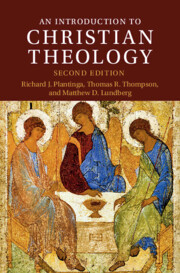
Far from being solely an academic enterprise, the practice of theology can pique the interest of anyone who wonders about the meaning of life. This introduction to Christian theology – exploring its basic concepts, confessional content, and history – emphasizes the relevance of the key convictions of Christian faith to the challenges of today's world. Part I introduces the project of Christian theology and sketches the critical context that confronts Christian thought and practice today. Part II offers a survey of the key doctrinal themes of Christian theology, including revelation, the triune God, and the world as creation, identifying their biblical basis and the highlights of their historical development before giving a systematic evaluation of each theme. Part III provides an overview of Christian theology from the early church to the present. Thoroughly revised and updated, the second edition of An Introduction to Christian Theology includes a range of new visual and pedagogical features, including images, diagrams, tables, and more than eighty text boxes, which call attention to special emphases, observations, and applications to help deepen student engagement.
I return to hymnography in this chapter, looking at the development of a full calendar of Marian praise between about 600 and 1000 CE. The main source of Marian hymnography is the major feasts, which include the Virgin’s Nativity, Entrance into the Temple, Annunciation, Dormition and others. The festal hymns, which include kontakia, stichera, kanons and various other forms, provide Christological teaching, although intercessory supplication to the Virgin may also play a role in short hymns known as theotokia. It is especially in the weekday services that we find intense supplication to the Theotokos, particularly on Wednesdays and Fridays. Her human lament at the foot of the cross, which was remembered on those days throughout the liturgical year, may symbolise the contrition that was expected of monks and nuns at all times; it also highlights Mary’s human qualities, which came to be understood as models for ascetics to imitate.