To save content items to your account,
please confirm that you agree to abide by our usage policies.
If this is the first time you use this feature, you will be asked to authorise Cambridge Core to connect with your account.
Find out more about saving content to .
To save content items to your Kindle, first ensure no-reply@cambridge.org
is added to your Approved Personal Document E-mail List under your Personal Document Settings
on the Manage Your Content and Devices page of your Amazon account. Then enter the ‘name’ part
of your Kindle email address below.
Find out more about saving to your Kindle.
Note you can select to save to either the @free.kindle.com or @kindle.com variations.
‘@free.kindle.com’ emails are free but can only be saved to your device when it is connected to wi-fi.
‘@kindle.com’ emails can be delivered even when you are not connected to wi-fi, but note that service fees apply.
This chapter explores how Gilbert du Motier de La Fayette (also known as the Marquis de Lafayette) eased previous Franco-American hostility after the Seven Years’ War through his diplomacy, celebration of American values, and ability to acquire extensive political, military, and financial aid from the French government. Moreover, Lafayette’s continued cultural flattery soothed the American inferiority complex toward France and resulted in a massive rapprochement. In addition, an increasingly repressive British presence before, during, and after the American Revolution – that is, a common enemy – brought French and American political and military leaders ever closer, resulting in the 1778 commercial and military Franco-American alliance and massive French support of the revolution. This support culminated in the 1783 Treaty of Paris, which secured American independence. One key individual and a common enemy would thus lead France to evolve from the United States’ most bitter enemy to its strongest ally.
This chapter explores how the American Federation of Labor (AFL) used humanitarian aid as an instrument of postwar diplomacy in occupied Germany. Through thousands of Cooperative for American Remittances to Europe (CARE) packages sent to German trade unionists between 1945 and 1949, the AFL sought to promote liberal-democratic labor ideals and counter Soviet influence during the early Cold War. These packages, nominally gifts of solidarity, functioned as vehicles of ideological persuasion and channels of transatlantic communication, allowing the AFL to bypass official state diplomacy while shaping the reemergence of German unionism in an “American image.” Central to this effort was Jay Lovestone and the Free Trade Union Committee, whose anticommunist agenda intertwined humanitarianism with propaganda and intelligence-gathering. The chapter demonstrates how material relief became a form of “humanitarian diplomacy,” blurring the boundaries between altruism, ideology, and power in the reconstruction of Europe’s labor movements after World War II.
This chapter examines how US post-conflict diplomacy toward Italy evolved from the final phase of World War II to the early Cold War. Initially shaped by the need for wartime stabilization, the American “good occupiers” gradually shifted from providing tentative support for antifascist moderates to adopting a proactive strategy of anticommunist containment. The chapter demonstrates how the Italian case fits the broader pattern of American post-conflict diplomacy, which involves transforming former adversaries into partners. However, it also highlights the essential role of Italian agency in this process. As the Truman administration came to view Italian stability as vital for Western security, Italian pro-Western moderates, in turn, used US aid and political support to secure reconstruction and international rehabilitation. Finally, the chapter highlights the contribution of official and unofficial diplomatic networks, including labor and cultural exchanges, to shaping US–Italian relations during this process.
During the Cold War, dance emerged as an important instrument of soft power. In pursuit of cultural diplomacy, choreographers who settled in Pakistan after Partition repurposed South Asian dance traditions shaped by 1930s revivalism in colonial India while also incorporating socialist aesthetics through Sino–Pakistani cultural exchanges. Moving beyond hybridity discourse, this article proposes a new approach to studying South Asian dance by extending Bakhtin’s concept of heteroglossia to embodied performance. Through archaeological, Islamic, regional, and socialist registers, Pakistan’s National Song and Dance Ensemble’s formative choreographies—Sons of the River, Mohenjodaro Dance, and Heer–Ranjha—produced internationally legible narratives of Pakistan’s cultural distinctiveness.
This chapter examines the institutional, economic, cultural, and historical contexts that shaped musical exchange between fascist Italy and Nazi Germany. As a form of soft power that projected both the Axis alliance and its underlying rivalry, cultural diplomacy in realms such as opera, touring, and international festivals generated performative displays of unity and opportunities for propaganda that extended beyond live audiences. Both regimes mobilised the musical canon to assert cultural dominance, with Germany emphasising composers such as Mozart and Wagner while Italy highlighted Verdi, Puccini and an openness to novelty that distinguished it from the German skepticism of modernism. Composers of new music likewise became symbolic assets in transnational exchange, and institutional frameworks for contemporary music became new venues in which to compete for cultural hegemony. Despite differences in policy and aesthetics and growing wartime constraints, Italy and Germany sought to position themselves at the centre of a new European cultural order, a diplomatic dynamic with intriguing continuities into the Cold War.
In 1938 and 1940 the governments of Mexico and Colombia exchanged statues of Benito Juárez and Francisco de Paula Santander. Through this exchange and the diplomatic ceremonies and cultural events that surrounded it, the two governments selectively interpreted their past to fortify their diplomatic relations in the present. Cultural diplomacy played an important role in inter-American relations, and this article demonstrates that rather than serving as empty gestures of goodwill, such exchanges were examples of governments’ political use of the past, pursued with the aim of advancing foreign policy goals. By constructing a narrative of the past based on anti-imperialism and evidenced by their dedication to nineteenth-century liberal heroes, they countered the conservative opposition they faced at home and abroad. Based on analysis of Mexican government documents and periodical sources from both countries, this article shows that the past was present in inter-American cultural diplomacy in the first half of the twentieth century.
This article is about the recent transformation of two powerful, paradoxical, and inseparable narratives of progress that developed in the postwar period: aesthetic autonomy and Holocaust remembrance. As far-right and illiberal parties have gained power across Europe, they adapted these foundational narratives of the liberal-democratic West to assert their own legitimacy and to reimagine the cultural inclinations of the European Union. This article examines how this process has taken place in the reception of Jonathan Glazer's Zone of Interest (2023) and Agnieszka Holland's Green Border (2023)—both international co-productions produced during the repressive eight-year reign of the Law and Justice Party (PiS) in Poland. A close reading of these films and their reception in different contexts, exposes a world more complicated than one-dimensional dichotomies between the liberal and the illiberal. Likewise, the reception of the two films makes apparent the entanglement of the national and transnational, as well as a process of translation and mistranslation that takes place as cultural materials move across geographical and ideological boundaries. Understanding such dynamics helps us to comprehend the options for criticism available to artists working within repressive contexts.
Chapter 1 analyzes the new balance of power emerging in the world of cultural property between source countries and market countries. It begins with a case study of the Benin Bronzes and the recent measures of “cultural diplomacy” employed between Nigeria, as the source territory of these objects, and governments and cultural institutions located in Western countries. It then explores cases where cross-border collaboration takes place to address real-time or recent acts of illegal excavation, looting, and smuggling of cultural objects across national borders. With these in mind, the chapter introduces the concept of new cultural internationalism, suggesting that these changing dynamics should not be seen as leading to “isolationism” or a backlash against globalization. This is particularly true as the cross-border nature of cultural property markets is probably more dominant than ever before, though it now bears more complex and multidirectional traits compared to the traditional categorical division into source countries and market countries.
This article presents a case study of the 1959 UK–USSR film weeks to investigate the political, cultural and industrial motivations shaping Cold War cultural exchange, focusing on the role of the British Council’s Soviet Relations Committee (SRC). Originating from a 1955 Soviet proposal for reciprocal film weeks, the project faced over four years of delays and aborted attempts due to a division of opinion among British state and non-state actors. The SRC sought to bridge the conflicting policy motivations between the British Council, the Foreign Office and the British film industry towards the film weeks, but the contradictory priorities and interests of the groups led to an ambiguous approach. The article reconstructs the negotiations, organisation and delivery of the film weeks from the British perspective, drawing on archival sources including the British Council Records at The National Archives to reveal new perspectives on the divergent policy motivations towards the use of films and film weeks in cultural exchange. In doing so, the article contributes to wider research into the role of the SRC and film weeks in the cultural Cold War.
This article examines Bronisława Niżyńska’s (Bronislava Nijinska) ballet, Pieśń o ziemi (1937), in the Polski Balet Reprezentacyjny’s (Polish Representative Ballet) inaugural 1937–1938 season. The Polski Balet Reprezentacyjny was an ensemble instituted by the Ministry of Foreign Affairs to represent the Second Polish Republic as cultural diplomats. Domestic reviews betray conflicting opinions regarding Niżyńska’s role as an artistic representative of the Second Polish Republic. Therefore, this article argues that tepid reception of her choreographic work reveals an underlying hesitancy towards accepting her as a national artist. At the center of these questions remains the puzzling consideration of Niżyńska, who was situated between Europe’s modernist ballet tradition, heavily shaped by Russian émigrés, and Polish national culture. Examining Niżyńska’s choreographic praxis and complex biography suggests the reconsideration of Niżyńska as a purely Russophone artist, bringing to the fore the hitherto underexplored Polish dimension of her identity.
Over a century and a half, expos have been used by the Japanese state, local authorities, and private companies, not to prescribe meaning, but to aggregate interest – to accommodate the multiple demands of organizers, exhibitors, and visitors – and thereby to foster development. After three decades of economic stagnation, the age of regional expos in Japan seems to have passed, though ‘expo’ (haku) remains a useful, protean term. Japan also remains a reliable participant in international exhibitions overseas, rehearsing an old story about harmony between nature and culture, first retailed in the late nineteenth century. The Japanese state also continues to use expos at home to promote its vision and plans for the future. The next world expo will open in April 2025, promulgating the United Nation’s sustainable development goals and the Japanese government’s vision of Society 5.0, while also promising Osaka’s neoliberal ‘restoration’. Meanwhile, the Japanese lesson about the utility of expos for development has been absorbed elsewhere. Shanghai in 2010 and Dubai in 2021 deployed, Riyadh in 2030 and possibly Busan in 2035 will riff on, a template first made in Japan.
Put simply–although nothing about it is simple–public diplomacy is diplomacy carried out in public, as opposed to most of diplomacy, which is done in private. It is a set of activities that inform, engage and influence international public opinion to support policy objectives or create goodwill for the home country. It is important to understand what public diplomacy is not. It is not an advertising campaign to get foreigners to like your country–even if they dislike it, they can still support, or at least accept, a particular policy or action. It is not a propaganda effort to mislead or lie to audiences for tactical or other advantage. It is a sustained endeavor that advances your country’s policies and reflects a solid understanding of the host-country’s language, culture, history and traditions. Both public diplomacy and propaganda are means to project power.
This chapter examines Bernstein’s complicated relationship with the Soviet Union. Born four years before the creation of the Soviet Union and dying eleven months after the fall of the Berlin Wall, his life story, including his rise to global prominence, paralleled the history of the Soviet republics. As an American of Ukrainian heritage, the composer had personal ties to the region. I examine these family connections and their complexities; his lifelong interest in Russian classical music; his period of attraction to Communism as an ideology, its consequences, and his statements in support of US–Soviet peace; and his 1960 cultural-diplomacy-related tour of the USSR with the New York Philharmonic. Ultimately, I argue that the United States’ relationship with the USSR had a profound impact not only on his family life and conducting career, but also on his attitudes to music-stylistic choices.
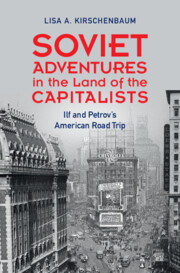
The introduction argues that Soviet satirists Ilf and Petrov’s 1935 American road trip offers a fruitful and innovative means of identifying the mediators who engaged in building friendly Soviet–American relations. Such means are necessary because unlike the Soviet state, the American government in the 1930s did not guide or systematically track Soviet visitors. Providing a brief overview of Ilf and Petrov’s biographies, the introduction highlights the mixture of fact and fiction in their American travelogue. It concludes with a sketch of their American itinerary and the wide range of sources employed to reconstruct their contacts with Americans.
In 1935, two Soviet satirists, Ilia Ilf and Evgeny Petrov, undertook a 10,000 mile American road trip from New York to Hollywood and back accompanied only by their guide and chauffeur, a gregarious Russian Jewish immigrant and his American-born, Russian-speaking wife. They immortalized their journey in a popular travelogue that condemned American inequality and racism even as it marvelled at American modernity and efficiency. Lisa Kirschenbaum reconstructs the epic journey of the two Soviet funnymen and their encounters with a vast cast of characters, ranging from famous authors, artists, poets and filmmakers to unemployed hitchhikers and revolutionaries. Using the authors' notes, US and Russian archives, and even FBI files, she reveals the role of ordinary individuals in shaping foreign relations as Ilf, Petrov and the immigrants, communists, and fellow travelers who served as their hosts, guides, and translators became creative actors in cultural exchange between the two countries.
In this paper, we expand on existing studies of Canadian Inuit art in the international arena by examining ways in which this new art served domestic purposes, focusing primarily on the 1950s and 1960s. The Canadian government developed and promoted Inuit art as part of its project to transform Inuit from semi-independent hunters into modern Canadian citizens. In this effort, Canada took up and assimilated Inuit art as a genuine Canadian cultural product, presenting it as diplomatic gifts and for other forms of international cultural diplomacy. Previous studies of Canadian Inuit art from that era have noted the ways that the promotion of Canadian Inuit art supported the young nation’s claims to a deep history, while simultaneously marking the country’s distinction from both the United States and the United Kingdom. In the context of the Cold War, the promotion of Canadian Inuit art also asserted Canada as an Arctic power. Labelled as “primitive modernist” fine art, Inuit sculpture and prints provided a stark contrast to the contemporaneous socialist realist art of the Soviet Union and its allies. We argue that the success of the Inuit art program sustained a belief among government officials that their programme to remake Inuit lives and livelihoods would succeed. Inuit art likely deflected attention from the many things that were going wrong with that northern modernisation project.
This chapter documents the constellation of films and literary works extending outward from the Eastern international in the late- and post-Soviet years when socialist internationalism pivoted from an east–west to a north–south axis and then dissipated (1960s–1990s). It affirms the enduring coherence of the Persianate literary space, now bound together by Soviet models of literary representation. The chapter samples the occasional poetry produced by Eastern literary representatives involved in Soviet–Third-World cultural diplomacy at Cold War literary congresses, especially through the Afro-Asian Writers’ Association. However, it also shows how artists gripped by classical Persianate forms continued to find and respond to each other after Soviet-backed literary institutions lost international legitimacy. The chapter discusses several Persian and Uzbek texts from the Soviet–Afghan War, including a leading Afghan communist literary bureaucrat’s mystical love poem to an Islamist insurgent, written continuously from 1980–2020. Its other central case study is the impact of the Soviet Armenian filmmaker Sergei Parajanov’s film The Color of Pomegranates as a model for Persianate poetics on film, including in the Islamic Republic of Iran, including in the art films of Muhsin Makhmalbaf. The chapter tempers the elegiac impulse of the post-Persianate left with an affirmation of the tradition’s continued vitality.
The conclusion reviews the arguments developed throughout the book. This summary is framed by a consideration of the changing meanings of the poetic figures of the rose and nightingale in the Persianate twentieth century. Accordingly, each chapter is elucidated through a reading of that chapter’s classical Persian or Turkic epigraph.
This chapter explores the displacement of knowledge following the First World War in two ways. First, it focuses on the displacement of people, specifically the Russian refugees displaced by the civil war in the early 1920s. It shows how thousands of intellectuals were combed out of the wider body of displaced people and relocated in sites across Europe and the wider world. Second, the chapter looks at how other forms of intellectual capital were displaced following post-war treaties and the redrawing of international borders, such as Hungarian institutions that found themselves ‘displaced’ in Czechoslovakia and Romania. Arguments about the displacement of knowledge demonstrated how individuals, institutions, and even modes of thinking were portrayed as synonymous with certain national identities in order to effect political change. The chapter explores the tension between the nationalization of knowledge and its simultaneous claims to universalism.
Edited by
Anja Blanke, Freie Universität Berlin,Julia C. Strauss, School of Oriental and African Studies, University of London,Klaus Mühlhahn, Freie Universität Berlin
Making the People’s Republic of China appear great after 1949 was a technically and organizationally complex problem that required the Chinese Communist Party (CCP) to mobilize all of the cultural resources at its disposal. Messianism about China’s greatness was an important aspect of Mao’s charisma as a leader, and this message was in turn disseminated internationally through repeated reference to the uniqueness and success of China’s revolutionary “path,” particularly within decolonizing Asia. When confronted with the dilemma of how to engage with nonsocialist countries, or those for which revolution was a more distant concern, the CCP’s response was instead to engage in more generic forms of cultural diplomacy which highlighted China’s achievements as a great and developing nation. International cultural display was therefore a relatively low-cost approach to signaling greatness and earning respect even in settings where relations were not carried out on a basis of socialist “fraternity.”
This chapter examines the resulting sequence of steps taken by the CCP to globally communicate China’s greatness and legitimacy. Its main focus is the film industry, which played a significant role in the dissemination of information about China’s post-1949 reconstruction during the politically turbulent Korean War period. By the mid-1950s, the PRC’s nascent international cultural infrastructure stretched from Geneva to Jakarta, underpinned by cultural industries and politically directed exchange networks at home. Mao’s promise to make the world see China as civilized first required that the world be made to see – as influence expanded, recognition of China’s greatness would surely follow
This chapter surveys various forms of identification with and consumption of K-pop idol celebrity and youth culture, from reactions on video logs to K-pop music videos, to theorize the particular forms of vicarious experience that bind K-pop idols to their fans and fans to each other. Vicarity relies on the ubiquitous reflexivity that defines social media platforms as sites of subject formation via media production and consumption. Social media participation constitutes an immersive, everyday form of meta-media, by which vicarious substitution through the consumption of vlogs/reactions induces acutely affective experiences of identification. Vicarious media seem to suggest a proxy for politics as an expression of collective sentiment – the ways in which media platforms bridge the private and the public through the increasingly complex arena of the social. Yet traditional modes of political organizing, remain recognizable in the activities of fan collectives. This chapter thus articulates how K-pop sheds light on the contradictory impulses for intense individuation – through the atomized personas overdetermined by social media and the vlog form – and the corresponding longing for ideals of collective agency and community that we see across multiple nodes of media consumption.