To save content items to your account,
please confirm that you agree to abide by our usage policies.
If this is the first time you use this feature, you will be asked to authorise Cambridge Core to connect with your account.
Find out more about saving content to .
To save content items to your Kindle, first ensure no-reply@cambridge.org
is added to your Approved Personal Document E-mail List under your Personal Document Settings
on the Manage Your Content and Devices page of your Amazon account. Then enter the ‘name’ part
of your Kindle email address below.
Find out more about saving to your Kindle.
Note you can select to save to either the @free.kindle.com or @kindle.com variations.
‘@free.kindle.com’ emails are free but can only be saved to your device when it is connected to wi-fi.
‘@kindle.com’ emails can be delivered even when you are not connected to wi-fi, but note that service fees apply.
In this introductory chapter we provide an overview of the whole book and discuss the wider context of legal practice and lawyers’ ethics. We then explore insights from general morality as an underlying framework for the four approaches to lawyers’ ethics discussed in Chapter 2. This framework compensates, to some extent, for the lack of an explicit statement of values in our current rules of professional conduct. We then consider the ethical decision-making process, including the skills we need to put our ethics into action. In each chapter, we make extensive use of case studies to illustrate our points and to provide an opportunity for students (and other readers) to develop their own values-based judgements and apply the law of lawyering in respect of the topics covered.
This study investigates the development of translated fiction within the United Kingdom publishing sector between 2001 and 2021. Drawing on NielsenIQ BookData, qualitative interviews with publishing professionals, and a detailed case study of Fitzcarraldo Editions, it analyses how translated literature has evolved from a marginal cultural pursuit into an increasingly significant area of publishing activity. The research identifies continuing structural challenges, including the costs of translation, limited linguistic and cultural diversity within publishing teams, and the dominance of a few internationally recognised authors. It also highlights the role of independent presses, literary prizes, and digital platforms in expanding visibility and readership. By situating these findings within debates on cultural diversity, symbolic capital, and global circulation, the study demonstrates how translated fiction reflects and reshapes contemporary publishing practices, contributing to a more inclusive and internationally connected literary landscape.
Reading ability is commonly used as a proxy for educational quality but may be unsuitable for cross-cultural comparisons. This study aimed to evaluate a novel Brief Mathematics Achievement Test (BMAT) as a proxy measure of quality of education (QoE) in culturally and linguistically diverse populations.
Methods:
Data on demographic variables, socioeconomic status (SES), country-level QoE, and performance on the BMAT and brief cognitive tests, were collected from 157 cognitively healthy participants (18–89 years) including native-born and immigrant populations in five European countries.
Results:
No significant differences were found between females and males or between participants with native-born and immigrant backgrounds in BMAT scores. In correlation analyses, BMAT scores were strongly correlated with SES, level of education, and performance on a brief cognitive composite, moderately with student–teacher ratio, country income classification, and a quality of education index, and weakly with age. In regression models controlling for key demographic variables and socioeconomic status, BMAT scores were significantly associated with level of education and the QoE index, while showing no significant relationship with immigrant status. Also, after controlling for demographic variables, SES, and the quality of education index, BMAT scores were the only significant predictor of performance on the brief cognitive composite.
Conclusions:
These findings provide preliminary evidence supporting the potential utility of the BMAT as an objective proxy measure of QoE in culturally and linguistically diverse populations.
A large body of research examines suburban built environments and the effects of urban sprawl, car dependency, and low density on social connections. Yet little attention has been given to how suburban design influences neighbourhood connections for culturally diverse groups, particularly migrants. This chapter focuses on Iranian migrants in Melbourne, who come from a culture that values hospitality and strong neighbourhood ties. Many have faced high residential mobility and settlement in suburban contexts that differ physically and culturally from Iranian neighbourhoods, often challenging their sense of connection to neighbours and place. The chapter investigates how the urban form of suburban Melbourne shapes migrants’ belonging, identification, and expectations of their environment. It highlights the role of liveability indicators and the 20-minute neighbourhood framework in shaping neighbourhood experiences. Finally, it suggests planning policies to strengthen migrants’ capacity to build connections and foster a deeper ‘sense of place.’
The Audiovisual Media Services Directive (AVMSD) serves as a cornerstone of the EU’s efforts to align audiovisual media policies across Member States and candidate countries. Central to the Europeanisation process, the AVMSD aims to safeguard media freedom, pluralism, and cultural diversity while addressing emerging challenges in the digital landscape. However, the transfer of EU media policy has faced significant hurdles, particularly in candidate countries such as Serbia, Ukraine, and Georgia. These challenges include weak institutional capacity, limited independence of national regulatory authorities (NRAs), and the misalignment of EU policies with local contexts. The 2018 AVMSD revision introduced rules extending regulatory frameworks to video-sharing platforms and reinforced NRA independence. Yet enforcement remains inconsistent within the EU, complicating its transfer to countries grappling with systemic political and economic pressures. Furthermore, geopolitical tensions, disinformation, and internal governance failures amplify the risks of exporting untested or problematic EU practices. This chapter critically examines the EU’s media policy transfer mechanisms, highlighting their inadequacies in fostering resilient governance structures. It underscores the need for reciprocal feedback during the accession process, advocating for reforms that integrate diverse cultural and political contexts. These insights contribute to rethinking Europeanisation to strengthen media governance and democratic values.
European policymakers have long sought to strike an appropriate balance between supporting EU-native cultural production and pursuing the objectives of internal market harmonisation. To this end, the 2018 reform of the Audiovisual Media Services Directive (AVMSD) introduced a set of measures for on-demand audiovisual media (VOD) providers, including catalogue quotas, prominence requirements and financial contributions. However, the coherence and effectiveness of these provisions remain highly contested. In particular, national implementations of financial obligations have produced adverse effects. They have intensified fragmentation among Member States and enabled them to prioritise domestic works over non-national European productions. Such fragmentation of the European audiovisual market will also preserve a heterogeneous ecosystem of producers, making it exceedingly difficult for a local service to scale and evolve into a pan-European platform. Consequently, despite the ambitions of EU policymakers, the emergence of European champions capable of competing with foreign players on an equal footing is likely to remain elusive. Moreover, the AVMSD rules on financial obligations create opportunities for regulatory gaming, insofar as Member States use the policy goal of fostering cultural and linguistic diversity as a convenient pretext for subsidising their local economies.
The healthy functioning and long‐term viability of the European Union (EU) ultimately depend on its citizens finding common cause and developing a shared sense of political community. However, in recent years, scholars and pundits alike have expressed doubts about whether the EU's growing cultural, religious and economic diversity is undermining the development of citizens' shared sense of political community, especially following eastern expansion. In this article, this question is examined using data on a key aspect of political community: transnational dyadic trust. Drawing on a unique set of opinion surveys from the formative years of the EU to the first wave of eastward expansion (1954–2004), the development and sources of dyadic trust among EU Member States is studied. While recognising the importance of diversity for trust judgments in the short‐term, the prevailing viewpoint that it is also a long‐term obstacle to integration is challenged. Instead, it is argued that citizens from diverse cultural and economic backgrounds can learn to trust one another and build a sense of political community over time through greater cooperation and interconnectedness. This theory is tested with data on bilateral trade density, which is seen as a proxy and precursor for other forms of cross‐national interconnectedness. Employing longitudinal models, the article also goes beyond existing research to test the theories over time. The study makes a contribution to the research on European integration, suggesting that over time mutual trust and a shared sense of political community can indeed develop in diverse settings.
This chapter traces early migration from Europe during the Gold Rush and the change from multiculturalism to monoculturalism with the advent of the White Australia policy. However, it focuses primarily on first-generation migrant writers from Europe following World War II. The chapter argues that migration should be viewed through the lens of heterogeneity, shaped by geographic, cultural, linguistic and class disparities. The chapter discusses how first-generation migrants existed as ethnic minorities who often experienced hostility and were directed towards manual employment. It examines the emergence of ethnically specific periodicals, following by literary journals, literary and cultural associations, poetry collections, and anthologies. The chapter identifies a predominant theme of nostalgia, with related elements of loss and hope. Another identified theme is social justice, including empathy for the impact of displacement felt by Aboriginal peoples and a support of Aboriginal sovereignty.
Volume III uncovers the radical transformations of European cities from 1850 to the twenty-first century. The volume explores how modern developments in urban environments, socio-cultural dynamics, the relation between work and leisure, and governance have transformed urban life. It highlights these complex processes across different regions, showcasing the latest scholarship and current challenges in the field. The first half provides an overview on the urban development of European regions in the West, North, Centre, East-Southeast and South, and the interconnectedness of European urbanism with the Americas and Africa. The second half explores major themes in European urban history, from the conceptualisation of cities, their built fabric and environment, to the continuities, rhythms and changes in their social, political, economic and cultural histories. Using transborder, transregional and transdisciplinary approaches to discern traits that characterise modern and contemporary European urbanism, the volume invites readers to reconsider major paradigms of European urban history.
Post-stroke neurocognitive disorders are highly prevalent, yet screening tools that are fit for culturally diverse populations are scarce. This study evaluates the impact of cultural differences on the Oxford Cognitive Screen (OCS), a stroke-specific screening tool.
Methods:
To evaluate cultural differences, we compared two populations with varying degrees of cultural diversity and Western, Educated, Industrialized, Rich and Democratic (WEIRD) characteristics. We adapted the Dutch OCS for Suriname through a multi-stage process. Using Bayesian hierarchical regression analysis, we compared 264 Surinamese participants, assessed with the adapted Dutch OCS, with 247 Belgian participants, assessed with the Dutch OCS, while controlling for age and education. We further investigated whether the associations of age and education with performance were comparable between the two populations.
Results:
Our findings revealed minimal differences in OCS performance between the Belgian and Surinamese populations. Both populations showed similar age-related decline and education-related improvement across all subtests, except for Picture naming, where the age-related decline was more pronounced in the Belgian population.
Conclusion:
These findings suggest that with minimal adaptation, the OCS is a viable tool for screening post-stroke neurocognitive disorders in culturally diverse populations.
This chapter focuses on the broader historical, social, and political context of Belize, which is shaped by colonial history, transnational connections, and multilingual practices. Belize’s linguistic composition reflects its complex history, with English as the official language, Kriol as a marker of national identity, and Spanish as both a widespread and contested language. The historical prominence of Afro-European Creoles and the national fear of Guatemalan territorial claims have added to the prestige of anglophone languages. In addition, Belize’s sociolinguistic diversity incorporates indigenous languages, global influences, and a dynamic interaction between English, Kriol, and Spanish. The studied village, initially settled by Spanish speakers, has evolved into a ‘superdiverse’ community due to tourism, migration, and global economic integration. The chapter explores spatial and social stratification within the village, where language use reflects not only ethnicity and class but also local and transnational affiliations. The chapter illustrates the fluidity of linguistic and social boundaries, challenging Eurocentric assumptions about diversity and belonging.
Educators within contemporary Australian educational settings are increasingly being called on to enact their pedagogy in multicultural classrooms, yet pedagogies remain oriented towards a narrow learner cohort. Meaningful inclusion of culturally and religiously diverse learners not only focuses on what is being taught or what knowledge is privileged, but is concerned with how it is taught and from whose perspective. Importantly, it prioritises what learners bring to educational settings – their diverse knowledge(s), languages, values and beliefs; all of which are embedded in their ways of knowing, being and doing informed by their cultural and religious traditions. This chapter aims to support educators in enacting culturally responsive pedagogy, including consideration of learners’ world views, knowledge(s) and ways of knowing, as well as respect for identities and backgrounds as meaningful sources for optimal learning, while simultaneously holding high expectations of them all. Educators will be challenged to examine epistemological and pedagogical diversity in HASS teaching and learning, to further develop learners’ knowledge, values and beliefs towards engaged and informed citizenship.
In this chapter, we explore the unique nature of the Arts along with what the Arts ‘do’ for people. The differences between Arts education policy and its provision in practice will be presented with particular reference to the need for broad access to, and equity in, Arts education in primary and early childhood settings. The importance of an approach to Arts education that encourages and embeds learner agency, cultural diversity and gender equity is discussed, and the benefits of sustained ‘quality’ Arts education are presented. Your role in the provision of the Arts in early childhood and primary education is discussed and a ‘praxial’ vision for the Arts in education is presented.
The human capacity for culture is a key determinant of our success as a species. While much work has examined adults’ abilities to create and transmit cultural knowledge, relatively less work has focused on the role of children (approximately 3–17 years) in this important process. In the cases where children are acknowledged, they are largely portrayed as acquirers of cultural knowledge from adults, rather than cultural producers in their own right. In this paper, we bring attention to the important role that children play in cultural adaptation by highlighting the structure, function, and ubiquity of the large body of knowledge produced and transmitted by children, known as peer cultures. Supported by evidence from diverse disciplines, we argue that children are independent producers and maintainers of these autonomous cultures, which exist with regularity across diverse societies, and persist despite compounding threats. Critically, we argue that peer cultures are a source of community knowledge diversity, encompassing both material and immaterial knowledge related to geography, ecology, subsistence, norms, and language. Through a number of case studies, we further argue that peer culture products and associated practices – including exploration, learning, and the retention of abandoned adult cultural traits – may help populations adapt to changing ecological and social conditions, contribute to community resilience, and even produce new cultural communities. We end by highlighting the pressing need for research which more carefully investigate s children’s roles as active agents in cultural adaptation.
The chapter examines the relationship between the size and diversity of the expellee population and entrepreneurship and occupational change in West Germany. Using statistical data at the municipal and county levels, it documents a reversal of fortune: although expellee presence presented economic challenges in the immediate postwar period, in the long run, it increased entrepreneurship rates, education, and household incomes. The more regionally diverse the expellee population, the better the long-run economic performance in receiving communities.
This chapter explores the relationship between natives and migrants in the territory transferred from Germany to Poland in 1945 using contemporaries’ memoirs. It shows that migration status and region of origin served as salient identity markers, structuring interpersonal relations and shaping collective action in the newly formed communities. Statistical analysis is used to demonstrate that indigenous villages and villages populated by a more homogeneous migrant population were more successful in organizing volunteer fire brigades than villages populated by migrants from different regions.
The chapter examines how the size and diversity of the migrant population shaped economic outcomes in western Poland using statistical analysis. It shows that when state institutions were extractive, the composition of the migrant population played no role in shaping economic performance. Once institutions became more inclusive, however, municipalities settled by more regionally diverse populations registered higher incomes and entrepreneurship rates. The chapter then rules out a series of alternative explanations for these findings.
This chapter provides the historical background necessary to understand the book’s empirical analysis. It discusses the political decisions that led to the displacement of Germans and Poles at the end of WWII and challenges the assumption that uprooted communities were internally homogeneous. It then zooms in on the process of uprooting and resettlement and introduces data on the size and heterogeneity of the migrant population in postwar Poland and West Germany.
The chapter illuminates diverse musical encounters or engagements between ‘minority’ cultures and what was, until recently, an Anglo-Australian majority over four periods of social, cultural and political foment between the pre-Federation colonial era and the present. It first examines the pre-WWI musical contributions of German-speaking residents and visitors, and Italian and Jewish influence on musical entertainment in the inter-war and post-war era. It then considers how, from the 1980s, the twin forces of local multiculturalism and ‘world music’ intersected in Australia to foster a wealth of musical diversity, including creative musical interventions and experimentations. We also consider the many multi-faceted present-day music ‘scenes’ associated with diasporic communities by honing into the local world of Indonesia-related music-making in Australia. Music of minority cultures tends to become articulated through uneven power relationships with the majority culture and its institutions, but the chapter provides a more nuanced view of this relationship. It demonstrates, for example, how ‘minority’ musicians have strategically deployed the ‘power’, or value, of ‘difference’ for professional or other advantage, exploiting opportunities provided by the mainstream, which can simultaneously shape and even redefine minority music.
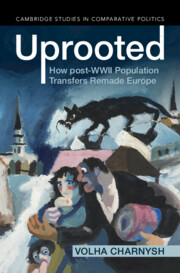
Each year, millions of people are uprooted from their homes by wars, repression, natural disasters, and climate change. In Uprooted, Volha Charnysh presents a fresh perspective on the developmental consequences of mass displacement, arguing that accommodating the displaced population can strengthen receiving states and benefit local economies. Drawing on extensive research on post-WWII Poland and West Germany, Charnysh shows that the rupture of social ties and increased cultural diversity in affected communities not only decreased social cohesion, but also shored up the demand for state-provided resources, which facilitated the accumulation of state capacity. Over time, areas that received a larger and more diverse influx of migrants achieved higher levels of entrepreneurship, education, and income. With its rich insights and compelling evidence, Uprooted challenges common assumptions about the costs of forced displacement and cultural diversity and proposes a novel mechanism linking wars to state-building.