To save content items to your account,
please confirm that you agree to abide by our usage policies.
If this is the first time you use this feature, you will be asked to authorise Cambridge Core to connect with your account.
Find out more about saving content to .
To save content items to your Kindle, first ensure no-reply@cambridge.org
is added to your Approved Personal Document E-mail List under your Personal Document Settings
on the Manage Your Content and Devices page of your Amazon account. Then enter the ‘name’ part
of your Kindle email address below.
Find out more about saving to your Kindle.
Note you can select to save to either the @free.kindle.com or @kindle.com variations.
‘@free.kindle.com’ emails are free but can only be saved to your device when it is connected to wi-fi.
‘@kindle.com’ emails can be delivered even when you are not connected to wi-fi, but note that service fees apply.
There is perhaps no greater anathema to the vocational attitude of George MacDonald than the concept of solitary genius. Implicit in the rural community of his youth, the explicit teaching and practice of such relational theology by key mentors further shaped MacDonald’s own practice. His web of friendships grew notably broad, a compendium of illustrious names from multiple countries, in addition to many obscure figures from a mix of classes and cultures. His keenness to share such friends – be they voices on a page or present in the flesh – is a signature of his craft and scholarship that warrants closer attention. This chapter considers a range of these relationships, from his mentors A. J. Scott and F. D. Maurice to Victorian critics John Ruskin, Matthew Arnold, and many more. A fundamental aspect of MacDonald’s significance to the Victorian era is that this commitment to relationships impacted not only his own work but the lives and works of many notable Victorians.
Although George MacDonald considered poetry his primary literary vocation, his own verse works have received very little critical attention. His works are characterised by a restless experimentalism and a deep erudition. This chapter works to establish a basic understanding of the nature and organisation of MacDonald’s oeuvre. Under consideration are the poems included in his 1893 summative, self-edited anthology Poetical Works. These are approached as a textus receptus to evaluate the intentions and structure of MacDonald’s poetic project. The approach to this chapter, then, is in four parts: the first considers the closely held question of ‘Is MacDonald’s poetry any good?’, the second examines three impediments to the appreciation of MacDonald’s verse, the third offers a section-by-section overview of MacDonald’s Poetical Works (1893) – his self-edited anthology of his poems – and the fourth, a praxis segment, looks at an individual poem to see the various strands of his interests ‘in action’, as it were.
This chapter considers MacDonald’s work as a scholar and lecturer. From his 1859 appointment as professor of English literature and philosophy at Bedford College, to his (often sold-out) lecture tours in Britain, Europe, and North America, to the publication of his annotated Folio-based edition of Hamlet in 1885, MacDonald’s work as a scholar took various forms over the course of his literary career. What remained consistent, however, was his insistence that the critic should take a generous, affective approach, prioritising strengths over weakness and helping readers to experience the works at an emotional level. Drawing on both unpublished lectures and published scholarly works such as A Dish of Orts (1893) and the edition of Hamlet, this chapter explores MacDonald’s emphasis on the multivalence of texts, which anticipates post-critical approaches. However, the chapter also places him in dialogue with nineteenth-century critics Matthew Arnold and F. G. Fleay in order to draw out the distinctiveness of his critical approach within his context.
This essay traces the emergence of a linguistically and culturally bifurcated public literary-cultural sphere in Sri Lanka from the early twentieth century to the postcolonial present. It looks at key “moments” in the history of literary-cultural public discourse and argues that different visions of what a Sri Lankan identity could be jostled for influence. However, the colonial political economy under which this literary-cultural sphere developed, and the ensuing majoritarian political developments in post-independence Sri Lanka, overdetermined the linguistically and culturally segregated “form” this literary-public sphere eventually developed. Through the critical exploration of this history, this essay demonstrates that the literary and the political imaginations reproduce each other and that the literary-cultural public sphere is best understood as a contingent space shaped by ideological and political forces that can be both progressive and regressive rather than a normatively progressive or “open” space of public engagement.
Reading was one of Debussy’s favourite occupations, without doubt one of the activities that nourished and sustained him the most. Still, any attempt to uncover greater detail about the kind of reader Debussy actually was, remains a complicated, almost archaeological task. Although the sale of scores, manuscripts and several books sent to Debussy offers some leads, it does not make it possible to reconstruct their precise importance or to show their full diversity. In order to understand Debussy’s literary inclinations as fully as possible, it is thus necessary to examine other sources, such as letters, books sent to him, testimonies of friends, as well as the diaries and notebooks that have been miraculously preserved – notably those in which he noted references to works likely to interest him and even specific sentences that he particularly liked. By cross-checking these various elements, I sketch a portrait of a composer through one of his most essential passions.
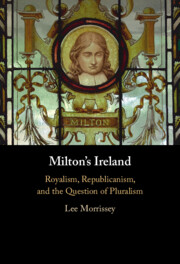
In this first book devoted to Milton's engagement with Ireland, Lee Morrissey takes an archipelagic approach to his subject. The study focuses on the period before the Cromwellian Conquest, explaining Milton's emergence as a public figure because of Ireland and tracing the paradoxical resonances of Milton's republicanism in Ireland to this day. Informed by developments in Irish history but foregrounding a lucid discussion of Milton's governmental prose works, Morrissey explores the tension between Milton's long-established image as a proto-Enlightenment, democratic figure, and the historical reality of his association with a Protestant invading force. Milton's Ireland incisively negotiates this complex subject, addressing clear absences in Milton scholarship, in the history of Ireland, and in the fraught relationship between Ireland and England.
The myth that schools must regulate writing starts as English shifts to schools (away from home instruction), and schools shift to English (away from classical languages). Its consequences include making English regulation common and desirable, and making language variation a threat. Diverse ways of writing persist, but they aren’ studied in school. Closer to the truth is that language diversity and language knowledge are human rights, but school writing focuses only on a narrow part of a continuum of common ways of writing.
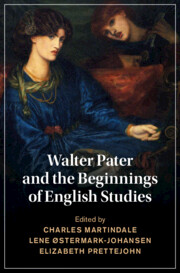
Walter Pater's significance for the institutionalization of English studies at British universities in the nineteenth century is often overlooked. Addressing the importance of his volume Appreciations (1889) in placing English literature in both a national and an international context, this book demonstrates the indebtedness of the English essay to the French tradition and brings together the classic, the Romantic, the English and the European. With essays on drama, prose, and poetry, from Shakespeare and Browne, to Lamb, Coleridge, Wordsworth and Pater's contemporaries Rossetti and Morris, Appreciations exemplifies ideals of aesthetic criticism formulated in Pater's first book, Studies in the History of the Renaissance (1873). Subjectivity pervades Pater's essays on the English authors, while bringing out their exceptional qualities in a manner reaching far into twentieth-century criticism. This title is part of the Flip it Open Programme and may also be available Open Access. Check our website Cambridge Core for details.
This essay proposes that the English literary anthology is a genre that triangulates the canon, the curriculum, and the classroom. Its colonial legacy is undeniable, and the core processes of anthology editing – selection, excerption, arrangement, and framing – do closely replicate the decontextualizing and objectifying practices of imperial epistemologies. Nonetheless, the anthology remains an affordable textbook and is most popular in nonelite universities and college classrooms where survey and general literature courses are taught as important parts of the English literary curriculum. Rather than dismiss the anthology as a pedagogical tool, the author presents editorial strategies for decolonizing it and for presenting literary tradition in the English language in more equitable ways. Drawing upon her experience editing the eleventh edition of The Norton Anthology of English Literature (NAEL), the author offers a reappraisal of critical theories of anthologizing alongside strategies for reframing the global diffusion of English literature through the power dynamics of territorial, educational, and cultural imperialism.
This Element develops a close reading of 'Britain's leading late modernist poet', J. H. Prynne. Examining the political and literary contexts of Prynne's work of the 1980s, the Element offers an intervention into the existing scholarship on Prynne through close attention to the ways in which his poems respond to the social and political forces that define both modern Britain and the wider world of financialized capitalism.
Russian novels are in intense, ambivalent dialogue with the European tradition; Tolstoy’s take up the British and the French in particular. In Anna Karenina, Tolstoy reminds us that adultery is an ever-present threat in the British family novel, as it is in the novel of sensation. Like Tolstoy, Mrs. Henry Wood and Mary Elizabeth Braddon contrast the dynamics of different marriages. They also set adultery in the context of a system that works against women. In Wood’s East Lynne, Carlyle not only forgives his dying ex-wife, but declines to indict her former lover for murder; as he says, “I leave him to a higher retribution: to One who says ‘Vengeance is mine.’” This quote becomes Tolstoy’s epigraph.
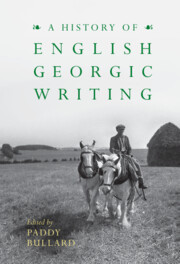
The interconnected themes of land and labour were a common recourse for English literary writers between the sixteenth and twentieth centuries, and in the twenty-first they have become pressing again in the work of nature writers, environmentalists, poets, novelists and dramatists. Written by a team of sixteen subject specialists, this volume surveys the literature of rural working lives and landscapes written in English between 1500 and the present day, offering a range of scholarly perspectives on the georgic tradition, with insights from literary criticism, historical scholarship, classics, post-colonial studies, rural studies and ecocriticism. Providing an overview of the current scholarship in georgic literature and criticism, this collection argues that the work of people and animals in farming communities, and the land as it is understood through that work, has provided writers in English with one of their most complex and enduring themes.
This essay provides insight into some of the content of Britten and Pears’s book collection. It draws attention to why certain volumes were used as the source material for various musical works. The essay also emphasises how friendships with writers, such as art historian Kenneth Clark and novelist and critic E. M. Forster, influenced key aspects of Britten and Pears’s lives: their passion for fine art and their faith in pacifism. This survey of the collection underlines why their books are often useful bases of information for biographical background about both musicians. Their library tells us stories about their childhoods and discloses their interests in topics ranging from classic English literature to gardening to the developing genre of gay fiction. Additionally, it adds context to fundamental aspects of their lives, such as their anti-war stance and their enduring commitment to one another.
Chapter 28 of The Cambridge Companion to Sappho examines the Anglophone receptions of Sappho’s poetry in the twentieth and twenty-first centuries, examining figures such as Harriette Andreadis, Margaret Goldsmith, Lawrence Durrell, Peter Green, Denys Page, Erica Jong, Michael Field (Katharine Bradley/Edith Cooper), Richard Aldington, Ezra Pound, H.D., Mary Barnard,Jeannette Winterson, Judy Grahn, Anne Carson, Josephine Balmer, and Diane Rayor.
Chapter 26 of The Cambridge Companion to Sappho examines the reception of Sappho’s poetry in eighteenth- and nineteenth-century France, England, and the United States, examining figures such as Cicely Hamilton, Michael Field (Katharine Bradley/Edith Cooper), Renée Vivien, Natalie Barney,Alexander Pope, Mary Robinson, Jean-Jacques Barthélemy, Samuel Taylor Coleridge, William Wordsworth, Samuel-Auguste André David Tissot, Sapphism, Honoré Daumier, Pierre Lou?s, Henry Thornton Wharton, and Emily Dickinson.
Toria Johnson interrogates the classification and portrayal of compassion in two major texts: the anonymous morality play Everyman (c. 1508) and Shakespeare’s King Lear (1606). Taking these plays as examples of pre- and post-Reformation approaches to compassionate interaction, she scrutinises a noticeable shift in attitudes towards the idea of pity, both as a fundamental human trait, and as an organising principle for human interaction. Whereas pre-Reformation plays like Everyman stress the volatility and unreliability of an emotion like pity – preferring instead the more established structure offered by charity – King Lear imagines a world without charity, and without the Church as an overseer of interpersonal exchange. Lear, she argues, reflects an emotional response to the Protestant revision of medieval penitential culture, and in so doing, Shakespeare imagines the possible consequences of England’s new emotional landscape. This chapter examines how the language, structure and ceremony of ‘compassion’ changed in the wake of the English Protestant Reformation, and how these shifts altered the way people experienced or understood the compassion of their communities.
John Staines explores the role of compassion in Aphra Behn’s Oroonoko; or, The Royal Slave (1688). He argues that although the novel’s attitude towards slavery is complicated, its pathos makes readers feel compassion for an injustice committed against a noble human. Behn’s narrative stands at the start of the creation of the modern novel, a new genre that justified itself as a means of educating readers in sentiment and sympathy. Yet Behn’s decision to end her story by torturing and dismembering her hero is, by the standards of later novels, shockingly indecorous as it forces readers to confront his body in a final scene of compassion. In this chapter, John Staines demonstrates that the appeal to compassion is central to Behn’s text, as it is central to neoclassical discussions of rhetoric and poetics. Oroonoko’s pathos helped it continue to have influence long after its political interventions had passed into obscurity and irrelevance. Its shared suffering endured.
How is academia portrayed in children's literature? This Element ambitiously surveys fictional professors in texts marketed towards children. Professors are overwhelmingly white and male, tending to be elderly scientists who fall into three stereotypes: the vehicle to explain scientific facts, the baffled genius, and the evil madman. By the late twentieth century, the stereotype of the male, mad, muddlehead, called Professor SomethingDumb, is formed in humorous yet pejorative fashion. This Element provides a publishing history of the role of academics in children's literature, questioning the book culture which promotes the enforcement of stereotypes regarding intellectual expertise in children's media. The Element is also available, with additional material, as Open Access.
This study employs keyword searches of literary databases such as Literature Online (LION) in an attempt to map the image of “Persia” in nineteenth-century English poetry as it was molded by a proliferation of thoughts and ideas in a variety of contexts. Completeness is not possible, of course, but the article aims to identify and explore some of the major categories within which the image of Persia was formed and disseminated in the nineteenth-century. The scope of the study is not confined to a corpus of poetic works that were written specifically on or about “Persia,” but takes account of a broader range of poems, and attends to the structure, texture and variations of the presence of “Persia” in nineteenth-century English poetry.
During the Great Plague of London (1665), William Winstanley veered from his better known roles as arbiter of success and failure in his works of biography or as a comic author under the pseudonym Poor Robin, and instead engaged with his reading audience as a plague writer in the rare book The Christians Refuge: Or Heavenly Antidotes Against the Plague in this Time of Generall Contagion to Which is Added the Charitable Physician (1665). From its extensive paratexts, including a table of mortality statistics and woodcut of king death, to its temporal and providential interpretation of the disease between the covers of a single text, The Christians Refuge is a compendium of contemporary understanding of plague. This article addresses The Christians Refuge as an expression of London’s print marketplace in a moment of transformation precipitated by the epidemic. The author considers the paratextual elements in The Christians Refuge that engage with the presiding norms in plague writing and publishing in 1665 and also explores how Winstanley’s authorship is expressed in the work. Winstanley has long been seen as a biographer or as a humour writer; attributing The Christians Refuge extends and challenges previous perceptions of his work.