To save content items to your account,
please confirm that you agree to abide by our usage policies.
If this is the first time you use this feature, you will be asked to authorise Cambridge Core to connect with your account.
Find out more about saving content to .
To save content items to your Kindle, first ensure no-reply@cambridge.org
is added to your Approved Personal Document E-mail List under your Personal Document Settings
on the Manage Your Content and Devices page of your Amazon account. Then enter the ‘name’ part
of your Kindle email address below.
Find out more about saving to your Kindle.
Note you can select to save to either the @free.kindle.com or @kindle.com variations.
‘@free.kindle.com’ emails are free but can only be saved to your device when it is connected to wi-fi.
‘@kindle.com’ emails can be delivered even when you are not connected to wi-fi, but note that service fees apply.
Crusade history has been a popular and fruitful pursuit among modern historians of the Middle Ages. An unprecedented number of scholarly publications on the subject have appeared in recent years, not least because from the 1960s onwards the concept of crusade has been understood by many to include an increasing number of topics and a wider chronological and geographical scope than ever before. For centuries, crusade history was a relatively narrow field of study, which principally had at its centre one master narrative with strong roots in medieval times. The story of the momentous events of the First Crusade and the establishment of the kingdom of Jerusalem at the turn of the eleventh to the twelfth centuries was predominantly based on the chronicles of the First Crusade and William of Tyre’s history of the kingdom of Jerusalem. The chronological limits of this master narrative largely stretched between the Council of Clermont in 1095, when Pope Urban II proclaimed the First Crusade, and the fall of the kingdom of Jerusalem, which ceased to exist as a territorial entity in 1291. Its main plot was the conquest of Jerusalem by the First Crusaders, the events and subsequent crusades relating to the kingdom of Jerusalem and its neighbouring Latin principalities during the twelfth and thirteenth centuries and, to a lesser extent, attempts to reconquer the Latin East after 1291.
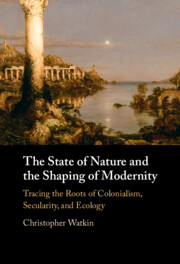
The state of nature is a powerful idea at the heart of the fragmented and sometimes conflicting stories the modern West tells about itself. It also makes sense of foundational Western commitments to equality and accumulation, freedom and property, universality and the individual. By exploring the social and cultural imaginaries that emerge from the distinct and often contradictory accounts of the state of nature in the writing of Hobbes, Locke and Rousseau, The State of Nature and the Shaping of Modernity offers a fresh perspective on some of the most pressing debates of our time, showing how the state of nature idea provides a powerful lens through which to focus the complex forces shaping today's political and cultural landscape. It also explores how ideas about human nature and origins drive today's debates about colonialism, secularism, and the environment, and how they can shed new light on some of society's most heated debates.
Recommend this
Email your librarian or administrator to recommend adding this to your organisation's collection.