To save content items to your account,
please confirm that you agree to abide by our usage policies.
If this is the first time you use this feature, you will be asked to authorise Cambridge Core to connect with your account.
Find out more about saving content to .
To save content items to your Kindle, first ensure no-reply@cambridge.org
is added to your Approved Personal Document E-mail List under your Personal Document Settings
on the Manage Your Content and Devices page of your Amazon account. Then enter the ‘name’ part
of your Kindle email address below.
Find out more about saving to your Kindle.
Note you can select to save to either the @free.kindle.com or @kindle.com variations.
‘@free.kindle.com’ emails are free but can only be saved to your device when it is connected to wi-fi.
‘@kindle.com’ emails can be delivered even when you are not connected to wi-fi, but note that service fees apply.
This article argues that environmental crises in 17th-century Morocco led to the increased importance of rural scholarship hubs, contributing to a changing Moroccan intellectual culture. I use quantitative data and anecdotes from biographical dictionaries, tree-ring data, and insights from text mining to bridge environmental and intellectual history. The biographical dictionaries of al-Qadiri (d. 1773) and al-Hudaygi (d. 1775) reveal an increase in activity in rural areas for scholars who died after 1631. Tree-ring data and observations by Moroccan historians show that the early 17th century coincided with severe environmental crises that were especially destructive in the cities. Meanwhile, rural areas offered environmental security. Anecdotes of people fleeing cities due to environmental crises demonstrate the link between the impact of these crises on urban areas and the shift to rural learning. Increased scholarly activity in rural areas changed Moroccan intellectual culture, as shown by the rise of rural themes in the text mining of poetry and the growth of Tamazight-language literature. This paper recenters environmental crisis in Moroccan history and shows that a methodology such as that described in Bulliet’s Cotton, Climate and Camels in Early Islamic Iran can succeed with greater specificity.
The copra industry that developed in the Pacific region from the mid-nineteenth century was a global, thriving enterprise. Imperial powers and trade companies jointly set up palm tree plantations that shaped the livelihoods of island societies and recruited Chinese contract labourers. Such monocultural territorialisations also radically transformed the environments and lives of non-humans (plants, insects, fungi), creating ecological conditions that challenged the same economic endeavours at work. ‘Economic entomology’, a novel branch of the scientific study of insects related to profit-oriented land management, emerged globally in the early twentieth century to protect plantations more efficiently from insect pests and other plant diseases. By focusing on the unprecedented outbreak of rhinoceros beetle (Oryctes rhinoceros) in the Samoan islands during German colonial rule and its aftermath in the Pacific world, this article examines the history of coconut capitalism in this region as a more-than-human history and explores the potential of reading the global archive against the grain while applying a multispecies ethnographic lens. In so doing, it reconsiders both the colonial anxieties exposed by the beetle outbreak and the kind of multispecies spaces that this insect opened up for Samoan resistance. This paradigmatic case of the global co-constitution of plantation economies and transimperial pest control research sheds light on the intersections of capitalist expansion in the modern era and the correlated environmental transformations that forged a new epistemic and ecological regime in commodity frontiers during the early twentieth century.
The expression of military power—whether through armed combat or through peacetime development and training—is inherently environmental, just as it is inherently social, and yet scholars tend to separate the natural from the cultural when it comes to studying martial activity. This chapter explores a variety of ways war, society, and environment intersect in the U.S. context and makes a case for better integrating the methods of environmental history into the study of war and society. It takes a thematic rather than chronological approach, not only to highlight the ubiquity of nature across all military activities, but to draw attention to both continuities and ruptures in the ways Americans and their armed forces have interacted with nature over time. This includes how global environmental change has influenced the mission of the American armed forces and their outlook on the future. Nature has influenced and guided American military actions, just as it has shaped American social and political developments, and we must take nature seriously in our discussions of war and society if we are to achieve a full understanding of the dynamics of human conflict.
Drawing on textual, archaeological, and palaeoclimatic evidence, this article reconstructs the broad patterns of plague’s arrival in the southern Red Sea region during the 1430s. It contends that this initial introduction led to the formation of a medium-term reservoir that generated recurrent epidemic waves over the subsequent 150–200 years. This development is attributed to the interplay of environmental and human-driven factors acting together. The study adopts a dual approach: first, it examines how commercial networks across the Red Sea facilitated the spread of the plague; second, it investigates the environmental and topographical shifts in the southern Red Sea between 1370 and 1470 to understand how these conditions allowed the disease to become endemic to the region.
This article examines the development of Japan’s early modern sugar industry from the late seventeenth to the mid-nineteenth century, arguing that it followed two distinct but interrelated paths: a colonial monoculture in the Amami Islands under Satsuma Domain control, and a decentralized household economy centred in eastern Shikoku. Drawing on domain administrative records, sugar-making manuals, household documents, and the journal of a samurai exile, the article traces how sugar-making knowledge entered Japan primarily through Ryukyuan intermediaries rather than directly from China, and how Japanese producers adapted, innovated, and hybridized imported technologies, including the three-cylinder mill, waterwheel-powered crushers, and claying and pressing methods for refining white sugar, to suit local conditions, labour regimes, and market demands. In Amami, the intensification of sugar production under Satsuma’s monopsony transformed the islands’ environment and social order, producing deforestation, food insecurity, debt bondage, and a dependent colonial relationship. On Shikoku and in mainland Japan, by contrast, farmers and agriculturalists developed a white sugar industry within the structures of village life. By situating these developments within broader global patterns of sugar technology diffusion, including possible Latin American and Jesuit connections, the article makes the case that Japan’s sugar industry, though modest in scale compared to the Atlantic or Chinese systems, was a site of significant technological innovation and merits fuller integration into global histories of sugar.
This article links the transnational environmental history of agriculture with the history of racial formation and immigration in the United States. Focusing on the San Joaquin Valley of California and its global connections, the account explains how the region’s nascent late-nineteenth-century bounty derived in part from both crops and people with origins in the Ottoman empire. Seeds for figs, grapes, and melons all made their way from the Ottoman empire to the United States, and so, too, did Armenians. The article thus first offers historical and spatial precision to the oft-repeated description of California as ‘Mediterranean’, rooting it in the people and plants that made it so rather than taking it for granted as a climatic descriptor. Second, it accounts for the varied racial formations of Armenians. They were at once settlers redeeming a desert land but also, in the eyes of their detractors, they dangerously hailed from Asia. Compared at different times to African Americans, Native Americans, Turks, and others, Armenians occupied a precarious place in the American racial hierarchy.
This article uses digital Geographic Information Systems (GIS) to visualize changing crop choice over time in nineteenth-century equatorial eastern Africa. It maps the locations of crops mentioned in early imperial sources, using contemporary cartographic representations of the region as a base. This enables a novel visualization of changing agricultural potential and vulnerability to climate variability over time. The maps contextualize the growth of commercial and political centers, a series of famines during years and seasons of below average rainfall, and the well-known environmental challenges of the early colonial period.
This Element brings together historical sources and contemporary experiences to explore the interplay between singing, sociality, body, and meaning in the English landscape over the past century. It explores the connections between air and song and between singing and movement, through the context of the early twentieth century open-air recreation movement. This is supplemented by recent literature on singing and wellbeing, and the experiences of a contemporary walking choir captured via interviews in the field. The authors argue that outdoor singing has been part of co-constructed soundscapes of the modern English leisure landscape, and ask what this meant for those who participated in collective open-air singing and rambling. They explore how open-air singing connected with conceptions of the countryside, with a sense of fellow-feeling, and how this might have both reified and challenged normative ways of being in landscapes. This title is also available as Open Access on Cambridge Core.
This article is an environmental history of Anaconda Copper Company’s disposal of hundreds of thousands of tons of toxic waste from its Potrerillos and El Salvador mines into Chile’s Río Salado and Bahía de Chañaral. First, it uncovers a long history of disputes between copper companies and workers who panned the river for tailings. This early water war in Chile was shaped by competing understandings of water’s legal status. While workers claimed rights under the water law’s definition of water as a bien nacional de uso común, mining companies invoked the mining code and contended that the river’s water and waste were private property under civil law. Mining companies claimed rivers’ water by treating rivers in legal terms as mines and property of the state, bienes fiscales, that could be conceded as private property. They argued that human engineering of rivers in dams and canals, and through pollution, made rivers into a commodity and a form of property akin to subsoil minerals. Second, the article describes how, during the social reformist government of Eduardo Frei (1964–1970) and the revolutionary government of Salvador Allende (1970–1973), the state asserted control over Chile’s waterways while balancing centralized state management of water in the name of development with local users’ claims of long-standing riparian use rights. Third, the article traces the long history of the state and mining companies treating water as an economic commodity, often superseding local use rights, and argues that this history built the foundation for the later privatization of water during the Pinochet dictatorship. The article demonstrates that the privatization of water in Chile under Pinochet had its origins in the resolution of the tension between water and civil law in favor of extending property rights to water and building as a subsidy to transnational mining companies. This meant rolling back state management of rivers and often eroding local users’ water rights. Finally, the article concludes by examining the town of Chañaral’s successful 1987 lawsuit against the El Salvador mine to win an injunction against further pollution of the Salado as part of a moment of broader Latin American “environmental constitutionalism” during the 1980s. While this legal victory reflected a significant change in environmental law and an emergent environmentalist movement in Chile and across Latin America, it struck a blow to hundreds of workers who depended on extracting tailings from the river for their livelihood and who responded with unsuccessful protests.
This Introduction provides an overview of the main arguments and contributions of the book to the literature on the environmental and economic history of French colonial Vietnam and the larger French colonial empire. It emphasizes how the book pays special attention to the significance of local networks and the role of diverse indigenous actors as it explores the formation of a regional and transnational coal regime of French colonial Vietnam. The Introduction also offers outlines of all chapters as well as the book’s key sources.
This article analyzes the political ecology of modern Iran as envisioned in the report of Arthur Hills Gleadowe-Newcomen’s 1904–-05 Commercial Mission to South-Eastern Persia and a covert Persian counter-narrative penned by its military attaché, Mirza Riza Muhandis. The commercial ambitions of the British Empire in Qajar Iran involved a transformation of Iran’s environment. The critiques of these programs outlined in the travelogue of Mirza Riza Muhandis concern whom these interventions by science and engineering should serve. This case study highlights tensions over development and inequality at a critical moment in Iran’s history, just months before the beginnings of the 1906 Constitutional Revolution.
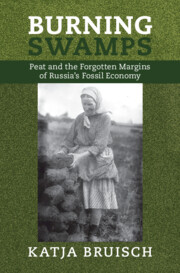
Why do peat and peatlands matter in modern Russian history? The introduction highlights peatlands as a prominent feature of Russia’s physical environment and reflects on their forgotten role as providers of fuel in the nineteenth and twentieth centuries. It discusses the invisibility of peat and peatlands in most existing historical narratives of the fossil fuel age and identifies peat as a lens to reflect upon Russia’s place within global histories of economic growth and associated resource-use. Situating the book at the intersection of modern Russian, energy, and environmental history, the introduction underscores why the planetary predicament makes the seemingly marginal history of peat extraction a topic of global significance.
Chapter 1 introduces the reader to the black geographies of New Granada in the eighteenth century, with the structure following the routes of African captives from the Caribbean region across to the mines of the Pacific. It explores how Caribbean New Granada was connected to Antioquia and the Pacific region by the mobilities of people of African descent and thereby offers an alternative geography of colonial Colombia that nuances traditional understandings of region in Colombian history. The chapter outlines the demographics of New Granada’s provinces, demonstrating the central importance of the jurisdiction’s black population to colonial history, and how New Granada was a society governed through slavery. Rivers and slave caravan routes that connected the Caribbean to the interior and the Pacific. Following an analysis of provenance zones of captives arriving in Cartagena de Indias, the chapter sketches the black geographies of the provinces of the Caribbean coastal cities of Cartagena de Indias and Santa Marta and their forested interior before casting its gaze across to the gold mines of southwestern Colombia. Elites ruled the region from temperate cities upon the backs of black and indigenous labourers.
This groundbreaking environmental history recounts the story of Russia's fossil economy from its margins. Unpacking the forgotten history of how peat fuelled manufacturing industries and power plants in late Imperial and Soviet Russia, Katja Bruisch provides a corrective to more familiar historical narratives dominated by coal, oil, and gas. Attentive to the intertwined histories of matter and labor during a century of industrial peat extraction, she offers a fresh perspective on the modern Russian economy that moves beyond the socialism/capitalism binary. By identifying peat extraction in modern Russia as a crucial chapter in the degradation of the world's peatlands, Bruisch makes a compelling case for paying attention to seemingly marginal places, people, and resources as we tell the histories of the planetary emergency.
The results of a ground-penetrating radar survey and multiproxy studies of the sediment cores collected from two lakes in the Valdai Highlands (East European Plain) provide new insights into the late glacial and Holocene environmental history of the region situated in the marginal zone of the last Scandinavian ice sheet. The cores were analyzed for organic carbon and nitrogen content, as well as for pollen and diatoms. The chronology of the cores is based on radiocarbon dates and pollen-based stratigraphy. The studied records document that vast dead ice masses and associated ice-dammed lakes existed in the Valdai Highlands area until ∼14 cal ka BP. Open tundra-steppe communities dominated the study area during the Oldest Dryas, Bølling, and Older Dryas (between ca. 17 and 14 cal ka BP), but dwarf birch (Betula nana), shrub alder (Alnus fruticosa), and willow (Salix) were also common. Scots pine forest (Pinus sylvestris) became common for a short interval during the Bølling warming (ca. 14.9 and 14.4 cal ka BP). The appearance of spruce (Picea) forest in the landscape occurred in the beginning of the Allerød warming (∼14 cal ka BP), but the open steppe-like plant communities remained common until the onset of the Holocene. The modern lake systems emerged at ∼10 cal ka BP, marked by an onset of organic-type sedimentation and the appearance of modern-type forests. The Mid-Holocene (∼8–4 cal ka BP) was the warmest time, as documented by the maximal distribution of temperate and broadleaved taxa in the region. The onset of agricultural land use and simultaneous trend of increasing lake trophic state and increasing paludification in the area is recorded at ∼2.5 cal ka BP.
This is a reflection on the experience of carrying out an Arts and Humanities Research Council (AHRC)-funded public humanities project during the pandemic, focusing on one pathway to impact – a collaboration with Seven Stories, The National Centre for Children’s Books – as a case study. I want to explore how we adapted these programmes in the light of global and personal circumstances and embraced digital media in unexpected ways. Looking back on what we accomplished, I now believe that, despite considerable challenges, we ended up with outcomes that were even richer and more rewarding precisely because of the challenges we faced and the unexpected paths that the project took us down. The second voice in this article is that of Charlotte Lancaster. Through her role as a Postdoctoral Impact Fellow at Bath Spa University, she worked to evidence the wider public impact of the “Into the Forest” project retrospectively. Here, she evaluates the impact of the project with Seven Stories and offers a coalescent voice to the argument underlining this article: that we need more realistic and flexible approaches to research planning, funding, and evaluation.
In April 2023, eighteen scholars from nine different subjects representing the humanities, natural and social sciences came together for a one-day workshop at St John’s College, Durham. Despite our differences, all had one aim: the study of past environmental change and its effects on human societies. Talking across disciplinary divides, we discussed what environmental history is, how it may or may not contribute to tackling the climate crisis, and the problems of sources, scale and temporality. This article collects select conversations into a roundtable format split into four areas: scale, time and space, interdisciplinarity, and the future of environmental history. We argue that environmental history is more usefully understood not as a distinct sub-field of history, but as an interdisciplinary meeting place for innovative collaboration. This also presents a model for future research aimed at tackling the climate crisis at higher education institutions.
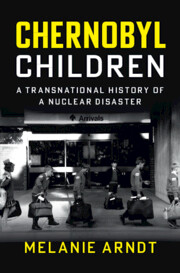
In the wake of the Chernobyl nuclear disaster, more than a million Belarusian, Ukrainian, and Russian children were sent abroad. Aided by the unprecedented efforts of transnational NGOs and private individuals, these children were meant to escape and recover from radiation exposure, but also from the increasing hardships of everyday life in post-Soviet society. Through this opening of the Soviet Union, hundreds of thousands of people in over forty countries witnessed the ecological, medical, social and political consequences of the disaster for the human beings involved. This awareness transformed the accident into a global catastrophe which could happen anywhere and have widespread impact. In this brilliantly insightful work, Melanie Arndt demonstrates that the Chernobyl children were both witness to and representative of a vanishing bipolar world order and the future of life in the Anthropocene, an age in which the human impact on the planet is increasingly borderless.
The destruction of tropical forests is an environmental issue of global significance. This process has deep historical roots, with recent scholarship exploring the role of European colonisation and capitalist expansion in driving tropical deforestation from the sixteenth century onwards. Less attention, however, has been given to how Indigenous resistance has impeded deforestation over this time period. Here we analyse how non-state Indigenous groups obstructed Spanish and Portuguese political control and commodity frontiers in tropical South America. Drawing on archival sources, together with Indigenous Guaraní and Paiter Suruí philosophy and oral history, we assess this phenomenon in two biomes, the Atlantic and Amazon Rainforests. The results highlight that over the longue durée, Indigenous resistance has assisted in the conservation of South American tropical forests, acting as a significant—but under-recognised—factor in both regional and global environmental history. This history is of particular importance given the increased recognition of the role of Indigenous peoples in conserving tropical forests as carbon sinks in the twenty-first century.