Refine search
Actions for selected content:
18 results
1 - Second Quantisation Ignoring Spin
- from Part I - Preliminaries
-
- Book:
- Introduction to Green's Function Methods in Many-Body Physics
- Print publication:
- 03 December 2026, pp 3-27
-
- Chapter
- Export citation
2 - Second Quantisation via Relativistic Treatment of Many Electrons
- from Part I - Preliminaries
-
- Book:
- Introduction to Green's Function Methods in Many-Body Physics
- Print publication:
- 03 December 2026, pp 28-89
-
- Chapter
- Export citation
4 - Superconducting Multiqubit Devices
-
- Book:
- Quantum Engineering
- Published online:
- 25 June 2026
- Print publication:
- 16 July 2026, pp 168-218
-
- Chapter
- Export citation
Nuclear Toeplitz operators between Fock spaces
- Part of
-
- Journal:
- Canadian Mathematical Bulletin , First View
- Published online by Cambridge University Press:
- 07 July 2026, pp. 1-18
-
- Article
-
- You have access
- HTML
- Export citation
-
We characterize the nuclearity of Toeplitz operators $T_\mu : F_\alpha ^p \to F_\alpha ^q$
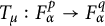 with Borel measure symbols for $1\leq p,q\leq \infty $
 . For positive measures $\mu $
 and $q\leq p$
 , we provide necessary and sufficient conditions in terms of the Berezin transform and establish a rigidity property for nuclearity across this range. In the case $p<q$
 , we obtain separate necessary and sufficient conditions, indicating that the Berezin transform alone is insufficient for a complete characterization. Our results extend to Fock spaces on $\mathbb {C}^n$
 .


On Fock covariance for product systems and the reduced Hao–Ng isomorphism problem by discrete actions
- Part of
-
- Journal:
- Proceedings of the Royal Society of Edinburgh. Section A: Mathematics , First View
- Published online by Cambridge University Press:
- 28 April 2025, pp. 1-53
-
- Article
-
- You have access
- Open access
- HTML
- Export citation
An axiomatics and a combinatorial model of creation/annihilation operators
-
- Journal:
- Mathematical Structures in Computer Science / Volume 35 / 2025
- Published online by Cambridge University Press:
- 10 April 2025, e6
-
- Article
-
- You have access
- Open access
- HTML
- Export citation
New aspects of Bargmann transform using Touchard polynomials and hypergeometric functions
- Part of
-
- Journal:
- Canadian Journal of Mathematics / Volume 78 / Issue 2 / April 2026
- Published online by Cambridge University Press:
- 09 January 2025, pp. 405-450
- Print publication:
- April 2026
-
- Article
-
- You have access
- HTML
- Export citation
-
In this paper, we study the ranges of the Schwartz space
 $\mathcal {S}$ and its dual
 $\mathcal {S}'$ (space of tempered distributions) under the Bargmann transform. The characterization of these two ranges leads to interesting reproducing kernel Hilbert spaces whose reproducing kernels can be expressed, respectively, in terms of the Touchard polynomials and the hypergeometric functions. We investigate the main properties of some associated operators and introduce two generalized Bargmann transforms in this framework. This can be considered as a continuation of an interesting research path that Neretin started earlier in his book on Gaussian integral operators.


Some Fock spaces with depth two action
- Part of
-
- Journal:
- Canadian Journal of Mathematics / Volume 77 / Issue 6 / December 2025
- Published online by Cambridge University Press:
- 05 November 2024, pp. 1890-1918
- Print publication:
- December 2025
-
- Article
-
- You have access
- HTML
- Export citation
Connes fusion of spinors on loop space
- Part of
-
- Journal:
- Compositio Mathematica / Volume 160 / Issue 7 / July 2024
- Published online by Cambridge University Press:
- 27 August 2024, pp. 1596-1650
- Print publication:
- July 2024
-
- Article
-
- You have access
- Open access
- HTML
- Export citation
The Fueter-Sce mapping and the Clifford–Appell polynomials
- Part of
-
- Journal:
- Proceedings of the Edinburgh Mathematical Society / Volume 66 / Issue 3 / August 2023
- Published online by Cambridge University Press:
- 28 June 2023, pp. 642-688
-
- Article
-
- You have access
- HTML
- Export citation
-
The Fueter-Sce theorem provides a procedure to obtain axially monogenic functions, which are in the kernel of generalized Cauchy–Riemann operator in
 ${\mathbb{R}}^{n+1}$. This result is obtained by using two operators. The first one is the slice operator, which extends holomorphic functions of one complex variable to slice monogenic functions in
 $ \mathbb{R}^{n+1}$. The second one is a suitable power of the Laplace operator in n + 1 variables. Another way to get axially monogenic functions is the generalized Cauchy–Kovalevskaya (CK) extension. This characterizes axial monogenic functions by their restriction to the real line. In this paper, using the connection between the Fueter-Sce map and the generalized CK-extension, we explicitly compute the actions
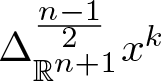 $\Delta_{\mathbb{R}^{n+1}}^{\frac{n-1}{2}} x^k$, where
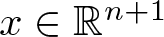 $x \in \mathbb{R}^{n+1}$. The expressions obtained is related to a well-known class of Clifford–Appell polynomials. These are the building blocks to write a Taylor series for axially monogenic functions. By using the connections between the Fueter-Sce map and the generalized CK extension, we characterize the range and the kernel of the Fueter-Sce map. Furthermore, we focus on studying the Clifford–Appell–Fock space and the Clifford–Appell–Hardy space. Finally, using the polyanalytic Fueter-Sce theorems, we obtain a new family of polyanalytic monogenic polynomials, which extends to higher dimensions the Clifford–Appell polynomials.


20 - Open Many-Fermion Systems
-
- Book:
- Quantum Mechanics in Nanoscience and Engineering
- Published online:
- 11 May 2023
- Print publication:
- 01 June 2023, pp 431-472
-
- Chapter
- Export citation
HANKEL MEASURES FOR FOCK SPACE
- Part of
-
- Journal:
- Bulletin of the Australian Mathematical Society / Volume 107 / Issue 2 / April 2023
- Published online by Cambridge University Press:
- 15 September 2022, pp. 290-295
- Print publication:
- April 2023
-
- Article
-
- You have access
- HTML
- Export citation
-
Inspired by Xiao’s work on Hankel measures for Hardy and Bergman spaces [‘Pseudo-Carleson measures for weighted Bergman spaces’. Michigan Math. J. 47 (2000), 447–452], we introduce Hankel measures for Fock space
 $F^p_\alpha $. Given
 $p\ge 1$, we obtain several equivalent descriptions for such measures on
 $F^p_\alpha $.


FINITE SUM OF COMPOSITION OPERATORS ON FOCK SPACE
- Part of
-
- Journal:
- Bulletin of the Australian Mathematical Society / Volume 106 / Issue 1 / August 2022
- Published online by Cambridge University Press:
- 20 December 2021, pp. 151-162
- Print publication:
- August 2022
-
- Article
-
- You have access
- HTML
- Export citation
Unitary representations of type B rational Cherednik algebras and crystal combinatorics
- Part of
-
- Journal:
- Canadian Journal of Mathematics / Volume 75 / Issue 1 / February 2023
- Published online by Cambridge University Press:
- 29 September 2021, pp. 140-169
- Print publication:
- February 2023
-
- Article
-
- You have access
- HTML
- Export citation
-
We compare crystal combinatorics of the level
 $2$ Fock space with the classification of unitary irreducible representations of type B rational Cherednik algebras to study how unitarity behaves under parabolic restriction. We show that the crystal operators that remove boxes preserve the combinatorial conditions for unitarity, and that the parabolic restriction functors categorifying the crystals send irreducible unitary representations to unitary representations. Furthermore, we find the supports of the unitary representations.

13 - Many-Body Physics and Second Quantization
- from Part Three - Many-Body Physics
-
- Book:
- Advanced Quantum Condensed Matter Physics
- Published online:
- 06 March 2020
- Print publication:
- 26 March 2020, pp 375-408
-
- Chapter
- Export citation
TOEPLITZ OPERATORS BETWEEN FOCK SPACES
- Part of
-
- Journal:
- Bulletin of the Australian Mathematical Society / Volume 92 / Issue 2 / October 2015
- Published online by Cambridge University Press:
- 02 June 2015, pp. 316-324
- Print publication:
- October 2015
-
- Article
-
- You have access
- Export citation
-
Given a positive Borel measure
 ${\it\mu}$ on the
 $n$-dimensional Euclidean space
 $\mathbb{C}^{n}$, we characterise the boundedness (and compactness) of Toeplitz operators
 $T_{{\it\mu}}$ between Fock spaces
 $F^{\infty }({\it\varphi})$ and
 $F^{p}({\it\varphi})$ with
 $0<p\leq \infty$ in terms of
 $t$-Berezin transforms and averaging functions of
 ${\it\mu}$. Our result extends recent work of Mengestie [‘On Toeplitz operators between Fock spaces’, Integral Equations Operator Theory78 (2014), 213–224] and others.


Factorization of the canonical bases for higher-level Fock spaces
- Part of
-
- Journal:
- Proceedings of the Edinburgh Mathematical Society / Volume 55 / Issue 1 / February 2012
- Published online by Cambridge University Press:
- 20 June 2011, pp. 23-51
-
- Article
-
- You have access
- Export citation
-
The level l Fock space admits canonical bases
 and
 . They correspond to
 and
 -module structures. We establish that the transition matrices relating these two bases are unitriangular with coefficients in ℕ[v]. Restriction to the highest-weight modules generated by the empty l-partition then gives a natural quantization of a theorem by Geck and Rouquier on the factorization of decomposition matrices which are associated to Ariki–Koike algebras.
 and
 . They correspond to
 and
 -module structures. We establish that the transition matrices relating these two bases are unitriangular with coefficients in ℕ[v]. Restriction to the highest-weight modules generated by the empty l-partition then gives a natural quantization of a theorem by Geck and Rouquier on the factorization of decomposition matrices which are associated to Ariki–Koike algebras.
Closed and Exact Functions in the Context of Ginzburg–Landau Models
-
- Journal:
- Canadian Journal of Mathematics / Volume 60 / Issue 3 / 01 June 2008
- Published online by Cambridge University Press:
- 20 November 2018, pp. 685-702
- Print publication:
- 01 June 2008
-
- Article
-
- You have access
- Export citation
