To save content items to your account,
please confirm that you agree to abide by our usage policies.
If this is the first time you use this feature, you will be asked to authorise Cambridge Core to connect with your account.
Find out more about saving content to .
To save content items to your Kindle, first ensure no-reply@cambridge.org
is added to your Approved Personal Document E-mail List under your Personal Document Settings
on the Manage Your Content and Devices page of your Amazon account. Then enter the ‘name’ part
of your Kindle email address below.
Find out more about saving to your Kindle.
Note you can select to save to either the @free.kindle.com or @kindle.com variations.
‘@free.kindle.com’ emails are free but can only be saved to your device when it is connected to wi-fi.
‘@kindle.com’ emails can be delivered even when you are not connected to wi-fi, but note that service fees apply.
Thucydides presents the case for Sparta in an appropriately laconic manner.1 There is no Spartan equivalent in his book of the Funeral Oration – the longest and most famous speech – nor of the Athenians’ speech at Sparta – the seventh longest speech and the first to offer an explicit account of “human nature” (1.76.3). We find no speech here in which a Spartan statesman or citizen gives an eloquent, elaborate, and theoretically sophisticated account of the greatness of Sparta, its education and regime, and its understanding of the character and condition of human beings. Of the nineteen longest speeches among the forty-eight in the book, ten are by Athenians but none are by Spartans, and it is a Spartan, Brasidas, who gives the shortest speech in the book.2 Of the nineteen named individuals who give speeches in the book, ten are Athenian and the sum total of their speeches is 13,639 words, whereas five are Spartan and the sum total of their speeches is 3,673 words.3 Of Pericles, the man whom he praises most extensively in the book, Thucydides says that he was “most capable [or most powerful – δυνατώτατος] at both speaking and acting” (1.139.4).4 Of Brasidas, the man to whom Thucydides devotes the second most extensive praise in his book and the Spartan whom Thucydides praises most, he remarks that “he was not without a capacity [οὐδὲ ἀδύνατος] for speaking, for a Spartan” (4.84.2).5 The Spartans are men of few words and therefore, inevitably, in contrast with the case for Athens presented in the book, the case for Sparta here is understated and indirect. But that case is no less powerful for being austere rather than dazzling, pithy rather than eloquent, and implicit rather than explicit.6
Thucydides’ account of the demise of the Athenian expedition to conquer Sicily appears to vindicate the Spartans’ understanding of that which is human, that is, of the fundamental character and condition of human beings, as one according to which we are morally free beings who are ruled by just gods. However, Thucydides points to grave problems with that understanding, most clearly–but not only–from his account of the Athenian response to the Sicilian disaster through to the end of the book (8.1-109).
Chapter 8 explores Homeric religion as lived practice rather than abstract theology. It examines fate and choice, divine agents and human responsibility, and the rituals that connected communities to the sacred. The chapter discusses sacred places, prayer and sacrifice, and the afterlife, showing how epic memory uses the gods to think through uncertainty, mortality, and the limits of control.
Thucydides' book on the war between the Peloponnesians and the Athenians has generally been considered a historical chronicle. By contrast, Peter Ahrensdorf here makes the case that it is better understood as a work of philosophy, inasmuch as it seeks to understand the permanent truth about human nature. Thucydides, he argues, focuses on this particular war because of its theoretical significance. It presents a clash, not only between military powers, but between two theoretical outlooks – Periclean Athenians' progressive and humanistic understanding of the fundamental character and condition of human beings, and the Spartans' traditional and religious understanding. Ahrensdorf leads us through Thucydides' examination of the case for and against both Athens and Sparta and shows how Thucydides ultimately offers for our consideration an account of himself as an individual who – unlike outstanding characters such as such Alcibiades, the Athenian ambassadors at Sparta and Melos, Diodotus, and Pericles – ascends to a truly independent and genuinely philosophic understanding of the human condition.
This chapter examines one of Hipponax’s best known (and least understood) fragments, fr. 3a West. With its reference to Kandaules as a supposed ‘Maeonian’ (i.e. Lydian) equivalent of a ‘dog-throttling’ Hermes, the fragment has variously been examined as purported evidence for the Lydian pantheon, kingship, and sacrificial practices. After correcting these less-than-adequate explanations of the supposed theonym on the basis of recent advances in our knowledge of Lydian, this chapter investigates a more pressing and hitherto neglected question: how this glossing of ‘Hermes the dog-throttler’ as Kandaules functions within the poetic objectives of Hipponax and of the iambic genre. In so doing, it becomes clear that Hipponax’s Kandaules is no god and that the passage is purely comical, achieving its effect through a complex juxtaposition of differing elements from the cultural assemblage of sixth-century Ionia. Unpacking the humour of the lines brings into relief the compositional technique of Hipponactean poetry, in particular how Hipponax creates an associative nexus in which interpretation and humour operate at multiple levels. This chapter argues that an understanding of the multi-ethnic and multi-linguistic context of Hipponax’ poetry is critical for appreciating the complexity, linguistic polysemy, and poetic artistry of Hipponax as a poet.
In this commentary, Proclus address the nature of the Demiurge and shows that he is subordinate to and instrumental to the causal activity of the first principle of all, the Idea of the Good. The Demiurge is not the first principle. His role is as an irreducible instrument of the infusion of goodness into the kosmos. The Demiurge and his causal activity is set alongside the causal activity of the Living Animal, the paradigm employed by the Demiurge in order to bring intelligibility into the sensible world. Proclus here addresses the nature of the causality exercised by the Good and the intelligible world, introducing the concept of triads, which are the paradigms of efficient causal activity here below. Proclus also shows that the “traces” of intelligibility found in the Receptacle of Becoming are evidence of a sort of quasi-intelligibility, which is what occurs when intellect is missing. Thus, the hierarchical causal scope of the elements of the intelligible world is demonstrated. The ultimate causal scope of the Good or One is shown by the existence of matter that is bereft of intelligibility altogether but is indispensable for the instantiation of images of the Forms.
Chapter 7: Pausanias in Athens. Here we see what statues stood in Athens during the second century AD – those that Pausanias saw on his walk through the city, from the Piraeus to the Agora to the Akropolis. We can picture those portraits that he mentions that are today well-known types. But we can only imagine the appearance of many of the gods and heroes whose images he mentions. Sometimes his narrative matches reports by other writers. Sometimes surviving inscriptions can be linked to texts or to actual sculptures. Even where material evidence parallels what Pausanias remarks upon, almost no freestanding sculptures are visible in Athens today.
This chapter combines a focus on the scenic trajectories of Antigone and Creon with analyses of the tragedy’s choral songs. It traces the ways in which the characters’ actions, speech and deliberations are conditioned by the extent to which they understand (or misunderstand) the play’s complex reality. It argues that beyond the ethical conflict between them and questions of law and justice, both characters are presented in their own way as paradigms of human vulnerability and the limits of reason. Although Antigone’s action is eventually vindicated, it is not explicitly acknowledged by the gods, at least in her lifetime; instead, by the end of the play, her sacrifice appears to have been mere collateral damage in the gods’ plan to seek compensation for the exposure of Polynices’ corpse. Creon, because of his error of judgement in forbidding Polynices’ burial, undergoes a violent reversal of fortune from powerful and authoritative ruler to a ghost of a man. In the background, a pattern of divine control is interwoven with human agency in ways that are difficult to disentangle, both for the characters and Chorus and for the audience.
This chapter approaches the archaic philosopher-poet Xenophanes of Colophon both as a distinctive religious agent and as an instructive interpreter of traditional religious attitudes and practices. Xenophanes develops a category of belief (dokos) and employs it not only to express the status of his own theological and cosmological views but also to conceptualise traditional, panhellenic religious attitudes as a cohesive system of beliefs. This system of beliefs comprises the interrelated and mutually reinforcing views that the gods are fundamentally human-like in biological, physical, cognitive, behavioural, moral, and political respects. The chapter explores Xenophanes’ critique of the different aspects of this system of beliefs, as well as the sources and grounds that underpin it. Finally, the chapter considers how Xenophanes closely relates expectations for veracity, propriety, and socio-political benefit in a way that suggests a requirement for harmony between religious belief and practice and, therefore, a conception of religious practice as theologically loaded. In the final analysis, Xenophanes teaches the modern student of Greek religion that a Greek thinker of the late sixth and early fifth centuries BCE had the conceptual and expressive resources to articulate a conception of traditional, panhellenic religious attitudes as, at bottom, a system of beliefs.
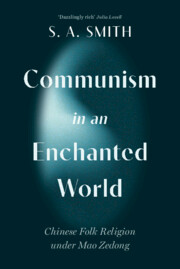
Drawing together decades of research, Steve Smith explores the survival and adaptation of folk beliefs in Mao's China in the face of seismic social change and growing political repression. Bringing an oftenneglected aspect of modern Chinese history to the fore, he shows how folk religion maintained a vital presence in everyday life. In myriad ways, through Buddhism, Daoism, and Confucianism, spirit mediums and spirit healing, divination, geomancy, and the reform of traditional marriage and funeral rites, rituals, and beliefs provided resources for adaptation and resistance to the regime. Nevertheless the survival of folk religion must be set against the secularizing forces that the regime unleashed. This unique history gives readers a vivid sense of life under Mao Zedong as vibrant, contentious, and resilient – a far cry from stereotypes of a secular, regimented, and monochrome society.
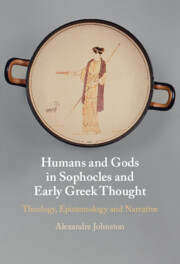
This book proposes that Sophoclean tragedy is a distinctive form of religious discourse concerned with exploring the relationship between humans and gods. Building on recent scholarship that has begun to reintegrate literature within the study of Greek religion after decades of neglect, Alexandre Johnston positions Sophocles' seven extant plays within a vibrant tradition of early Greek theology, literature and philosophy that cuts across modern disciplinary boundaries. Blending an overarching thematic approach with detailed analysis of key case studies, he argues that tragedies such as Antigone and Electra were at once poetic works and religious artefacts that engaged profoundly with contemporary intellectual culture. Through their narrative structure and performance, these tragedies allow spectators privileged insights into the workings of an obscure, unstable world dominated by inscrutable gods, offering distinctive, sometimes radical visions of the divine and its impact on the existence of mortals.
In PA I.5, Aristotle encourages his audience to engage in a novel kind of philosophy: the scientific inquiry into animals and plants. What Aristotle is exhorting his readers to do, biology, is newly and originally conceived, but the literary technique employed – protreptic speech – is one of the oldest and most traditional kinds of philosophical discourse. In his earlier popular dialogue the Protrepticus, Aristotle had defended and promoted the Academic conception of philosophy and its preoccupation with theoretical and mathematical sciences such as astronomy by discussing the clarity of such sciences and the excellence of their objects. In the later protreptic to biology, he adapted these earlier arguments, arguing that biology also has excellent objects and offers a kind of clarity that may even surpass astronomy. These arguments turn out to be part of a general rhetorical strategy for comparing and rank-ordering sciences that was theorized in the Topics and Rhetoric.
During the second and third centuries AD, recruitment in the Roman army brought many Palmyrenes from their home city to various parts of the Roman Mediterranean and its hinterland. Military recruitment brought them to Dacia and Numidia in particular, but a famously well-documented unit of Palmyrenes was stationed at Dura-Europos on the Middle Euphrates. Most Palmyrene soldiers served in units of the auxilia or numeri, and many of these then settled in the regions in which they had served. Their descendants could be found in the same regions generations later. As Palmyrene soldiers and their descendants faced varied degrees of dispersal and isolation from their compatriots, they endured diverse pressures to assimilate. They also witnessed their ancestral divinities being adopted by fellow soldiers, military collectives or networks and local populations. Did Palmyrenes maintain social or cognitive links to their ancestral homeland under such circumstances? Did they conceive of themselves as part of a broader, dispersed Palmyrene community even as they became enmeshed in local ones? This chapter address such questions.
Chapter 6 turns to a cluster of broadly cosmological episodes: the events and agents of creation, the texts that tell of these events and agents, and the authors who wrote these more and less authoritative texts. It focuses on two stretches of Cyril’s Against Julian, broadly concerning the modes of divine management of the cosmos but covering topics ranging from the breadth of human diversity to the Mosaic sacrificial system to the Tower of Babel and Homer’s Aloadae giant brothers. Cyril’s consistent objective is to dislodge the characters of the gods from Julian’s Hellenic story while also demonstrating how much better sense they make within the Christian story as fallen demons. That “all the gods of the nations are demons” (LXX Ps 95:5) was, of course, a common apologetic line. But this re-narrating claim is more than a polemical trope, structuring in fact a surprising range of arguments.
It has often been considered that the representations of the gods in Ancient Central Mexico were purely symbolic and that we should not look for the presence of glottograms, i.e. signs that encode linguistic units pronounced in the Nahuatl language. This article intends to demonstrate that we should reject the image/writing dichotomy in this context. In order to understand the identity of the Nahua gods, it is necessary to combine symbolic deciphering with a reading of the names embedded in their bodies and ornaments. This article takes the example of several representations of gods in codices of the Aztec tradition. It shows that this embedded script used the main scriptural techniques known in Nahuatl writing: logograms, phonograms, and indicators. In this way, the identity of the god, and therefore its ritual effectiveness, was expressed simultaneously visually and phonically.
With their shallow reliefs, depictions of contorted movement, and a historically inflected formal style, first century BCE and CE Neo-Attic reliefs are distinct among Greek and Roman relief sculpture. Primarily made for an elite Roman audience, the reliefs invoke stylistic techniques from different periods of Greek art and creatively combine figural types taken from earlier objects. The scenes are also characterized by a sense of spacelessness, established by the representation of figures, objects, and landscapes in shallow relief and by the frequent distorted play with depth and space. By considering a select number of examples, this chapter argues that the reliefs’ formal elements work together to evoke multiple temporalities and spaces, so that the distinct time and space created by and in these reliefs allowed them to become powerful sites of contact. In connecting their audience with an idealized past that takes place in a generic space, the reliefs offered viewers the opportunity not only to engage visually with the past temporalities of Archaic and Classical Greece, but also to become immersed in them by sharing the same space as the stylized figures, who could slip from their timeless and spaceless background to the Roman world in which they were displayed.
Chapter 2 contextualises the mēchanē within the broader picture of rich visual theologies that existed both on the tragic stage and within the context of the Great Dionysia. The mēchanē should be interpreted alongside actors playing gods, statues depicting gods, and altars denoting sacred places. The plurality of visual theologies in the theatre and in the festival context parallels broader cultural norms in ancient Greece. This is important, on the one hand, to understand how the machine existed within broader religious and cultural expectations. On the other hand, putting the mēchanē and mechanical epiphany among other, contemporary strategies also helps to demonstrate the deus ex machina’s unique material, theatrical and theological characteristics.
Chapter 8 explores how technologies can be used to imitate and challenge the gods. Lucian’s Icaromenippus is analysed first in terms of how the text reimagines divine and human realms as mechanically bridgeable, and then for the possible theomachic implications of the protagonist’s flight. Lucian’s Icaromenippus demonstrates that technologies are integral to navigating the junction between human and divine, but there are also hints that this can be manipulated in ways that pose threats to the existing divine order. The suggestion that Menippus’ actions mark him out as a pseudo or fake god provides a useful entry point for discussion of the issue of technology as a tool for theomachy more generally in the Greek cultural imagination including in figures like Salmoneus.
Since Buddhism does not include a belief in a personal god instrumental to the creation of the world or to human salvation, it is often assumed that gods play no part in Buddhism at all. This Element complicates the simplistic assessment of Buddhism as an 'atheistic religion' and discusses the various roles deities play in Buddhist texts and practice. The Problem of God in Buddhism includes a comprehensive analysis of the Buddhist refutations of a creator God, the idea of salvation without divine intervention, the role of minor deities in Buddhism, the question of whether Buddhas and Bodhisattvas can function as gods in certain forms of Buddhism, and the notion of the sacred as apart from the divine in Buddhist traditions.
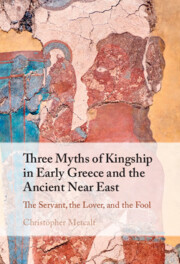
On the basis of recently discovered sources and original research, this book identifies and analyses three story-patterns associated with human kingship in early Greek and ancient Near Eastern myth. The first of these, the 'Myth of the Servant', was used to explain how an individual of non-royal lineage rose to power from obscure origins. The second myth, on the 'Goddess and the Herdsman', made the fundamental claim that the ruler engaged in a sexual relationship with a powerful female deity. Third, although kings are often central to the ancient literary evidence, the texts themselves were usually authored by others, such as poets, priests, prophets or scholars; like kings, these characters similarly tended to base their authority on their ability to articulate and enact the divine will. The stage was thus set for narratives of conflict between kings and other intermediaries of the gods.