To save content items to your account,
please confirm that you agree to abide by our usage policies.
If this is the first time you use this feature, you will be asked to authorise Cambridge Core to connect with your account.
Find out more about saving content to .
To save content items to your Kindle, first ensure no-reply@cambridge.org
is added to your Approved Personal Document E-mail List under your Personal Document Settings
on the Manage Your Content and Devices page of your Amazon account. Then enter the ‘name’ part
of your Kindle email address below.
Find out more about saving to your Kindle.
Note you can select to save to either the @free.kindle.com or @kindle.com variations.
‘@free.kindle.com’ emails are free but can only be saved to your device when it is connected to wi-fi.
‘@kindle.com’ emails can be delivered even when you are not connected to wi-fi, but note that service fees apply.
Liberalism is a foundational school of thought in International Relations with a well-established and rich intellectual heritage dating back to the seventeenth century. It seeks to address core problems in world politics, including the appropriate scope of state authority, the conditions underpinning international cooperation, and the maintenance of international stability. With liberal scholars most notably contributing to debates on the causes and limits of cooperation. Liberal scholars have made their most influential contributions by examining questions such as what enables or constrains cooperation between states, with many claiming that political, economic, and social integration between states leads to more peace and less war. However, liberalism emerged from Western historical and philosophical contexts, and while liberal scholars claim that it is universally applicable, its assumptions can be criticised for not reflecting non-Western experiences. This chapter evaluates liberalism’s applicability to the Middle East by applying liberal theory to the analysis of cosmopolitan law, examining in particular the impact of Special Economic Zones (SEZs) on interstate relations. Thus, it applies liberalism to answer the following questions: do SEZs lead to greater economic integration between states in the Middle East? And is there any observable pacifying effect on political relations between trade partners?
Autism spectrum disorder (ASD) is a lifelong neurodevelopmental condition with substantial functional and societal burden. However, national data on ASD burden remain limited in many middle-income countries, including Jordan.
Aims
This study aimed to quantify temporal trends in the prevalence, incidence and disability burden of ASD in Jordan from 1990 to 2023, using estimates from the Global Burden of Disease (GBD) study 2023.
Method
This population-based longitudinal study used GBD 2023 estimates to quantify the burden of ASD in Jordan from 1990 to 2023. As national epidemiological data are limited, estimates were generated with GBD’s Bayesian meta-regression modelling based on regional covariates. Annual prevalence, incidence and years lived with disability (YLDs) were extracted as counts and rates per 100 000 population with 95% uncertainty intervals, and analysed by age, gender and temporal trends.
Results
Between 1990 and 2023, the burden of ASD in Jordan increased substantially, with estimated point-prevalence cases rising from 23 919 to 97 056, and YLDs increasing from 4541 to 18 399. Point estimates of age-standardised prevalence, incidence and YLD rates increased over time, with consistently higher burdens among males and the highest rates observed in early childhood, particularly ages 2–9 years. However, wide and frequently overlapping 95% uncertainty intervals suggest that temporal changes should be interpreted with caution.
Conclusions
This study describes modelled trends in ASD burden in Jordan from 1990 to 2023, showing an overall increase in prevalence, incidence and disability-related measures. These findings should be interpreted cautiously given the reliance on GBD modelled estimates, but they may support Jordanian and similar countries’ future planning of health services and research priorities.
Health technology assessment (HTA) is a multidisciplinary approach that evaluates the clinical data and cost-effectiveness of health technologies within broader policy and societal contexts. This study aimed to identify barriers and facilitators to conducting HTA and implementing its findings in Jordan and to determine key technical and context-specific priorities to enhance HTA use.
Methods
A cross-sectional study was conducted using an online, self-administered questionnaire distributed between 1 June and 29 July 2024. Participants were purposively sampled and invited via email. The questionnaire’s face and content validity were assessed by two local experts. Responses from researchers and decision-makers were analyzed descriptively.
Results
A total of fifty-one participants were included. Both groups identified “lack of routinely collected local effectiveness data and national health statistics” and “absence of health state preference values for estimating quality-adjusted life-years (QALYs)” as major barriers to conducting HTA. The top-rated facilitator was “the development of a good-quality national real-world database.” Researchers additionally highlighted “financial incentives for particular interventions” as an important barrier, whereas decision-makers emphasized “the lack of formal willingness-to-pay thresholds” as the primary barrier to HTA implementation. Both groups identified “prioritization of economic evaluations targeting high-burden conditions” as the most important facilitator for implementation.
Conclusions
Significant systemic and methodological barriers hinder HTA conduct and implementation in Jordan – including limited local data, a lack of health state preference values, and the absence of explicit willingness-to-pay thresholds. Strengthening national data infrastructure, establishing clear policy frameworks, and prioritizing economic evaluations are critical for enhancing HTA integration and supporting evidence-informed decision-making.
This practical chapter outlines a comprehensive proposal for resolving the Israeli-Palestinian conflict, grounded in clear premises and a structured methodology. The plan unfolds in stages: Gaza must first be rebuilt to address humanitarian and strategic needs. Israel and the Palestinian Authority should renew cooperation in civilian and economic spheres. Militant factions like Hamas and Islamic Jihad must be marginalised and disarmed. Democratic elections in the West Bank should be limited to parties that recognise Israel and reject violence. A two-state solution is central, followed by consideration of a confederation between Palestine (West Bank) and Jordan. Gaza may join this confederation if its leadership commits to peaceful resolution and the proposed principles.
This cross-sectional based market surveillance study examined the level of gluten contamination in commercially manufactured products labelled ‘gluten-free’ in Jordan and compared the results to the globally recognised 20 mg/kg gluten safety limit for people with coeliac disease and other gluten-related disorders. From August 2022 to November 2024, 182 goods from 25 different food categories were tested in retail locations in Jordan’s main governorates. A validated monoclonal-based antibody-sandwich ELISA was used to determine the levels of gluten concentration, and a 95% CI was used to describe the prevalence of contamination. Overall, 47 of 182 products (25.8%; 95% CI: 19.7–32.6%) exceeded 20 mg/kg gluten. With maximum concentrations of 395.8 mg/kg, the highest non-compliance was found in rice-based goods (66.7%), milk products (50.0), and cookies (42.9). On the other hand, with the fact that several categories had rather small sample sizes, no violations were found in any of them. Jordan had a higher rate of contamination than a number of other places, including Europe (0.5%), India (10.8% of packaged items marketed as gluten-free), and Mexico (17.4%). The findings highlight clinically relevant issues with the quality of gluten-free products and support further monitoring, manufacturing supervision, and regulatory actions to better protect customers who depend on strict gluten avoidance guidelines.
Attention-deficit hyperactivity disorder (ADHD) is a common neurodevelopmental disorder that substantially affects behaviour, social functioning and daily performance. However, long-term population-based evidence on its burden in Jordan remains limited.
Aims
This study aimed to assess trends in incidence, prevalence and years lived with disability (YLDs) due to ADHD in Jordan from 1990 to 2023.
Method
A population-based descriptive analysis was conducted using data from the Global Burden of Disease (GBD) 2023 study. ADHD incidence, prevalence and YLDs in Jordan from 1990 to 2023 were extracted and stratified by gender and age group (2–9, 10–19 and 20–69 years). Estimates were reported as rates per 100 000 population, and absolute numbers with 95% uncertainty intervals, following standard GBD methods.
Results
ADHD burden was observed across all age groups in Jordan. Among children aged 2–9 years, incidence ranged from 279.9 to 352.3 per 100 000, prevalence exceeded 5000 per 100 000 in both 1990 and 2023 and YLD rates ranged from 214.8 to 262.8 per 100 000. In adolescents, the burden was concentrated among those aged 10–14 years, with prevalence around 526 per 100 000 and YLDs of 21 per 100 000 in both years; no estimates were reported for ages 15–19 years. In adults aged 20–69 years, although no incident cases were recorded, prevalence remained notable in 2023, ranging from 1626.8 per 100 000 (20–49 years) to 535.2 per 100 000 (50–69 years), with YLD rates between 69.1 and 22.4 per 100 000. Males consistently showed higher burden estimates than females across all age groups.
Conclusions
ADHD is a prevalent and a major source of non-fatal health loss in Jordan from early childhood through adulthood. These findings provide a comprehensive, long-term assessment of ADHD burden in Jordan and establish a robust evidence base for national, regional and global comparisons.
This essay considers how the rural and tribal have been obscured from prevailing scholarly accounts of unrest and protest in the years since the Arab Uprisings of 2010–2012, and what this might mean for wider scholarly theorizations of protest and revolution. It draws on fieldwork in central Jordan, especially with Hirak Dhiban, where historical circumstances render visible dynamics also significant elsewhere. It takes as a heuristic binary two broad discursive modalities of seemingly dissimilar collective action that in fact reference and relate to each other in various revealing ways: on the one hand the politically populist and self-consciously leftist Hirak protest movements, prominent in the waves of protest since 2011, and on the other hosha—"tribal clashes.” It considers how contestations over the legitimacy, revolutionary potential, and moral valence of protests often hinge on discursive claims that, in a sense, Hirak is hosha, or hosha, Hirak. It engages with anthropological theories to interpret protest as a generative and affective process, rooted in local histories and imaginaries, even while responding to wider events. It calls for a broader reappraisal of where revolutionary potential is located and how it is recognized in anthropological and historical scholarship.
This article expands the limited literature on civil society legislative advocacy in the Arab world by examining the frequency of Civil Society Institutions’ (CSIs) legislative advocacy in Jordan, an Arab competitive authoritarian monarchy. The article explores the impact of authoritarian control and organizational factors on CSIs’ legislative advocacy. Based on 82 semi-structured interviews, this qualitative study finds that there is a low frequency of legislative advocacy among Jordanian CSIs. Financial resources, access to legislators, and perceptions of legislators’ interest in advocacy affect CSI legislative advocacy. In contrast, public funding and the law governing CSIs do not affect CSI legislative advocacy. The findings add to both the literature on advocacy in general and on legislative advocacy in particular, and open up new areas for research.
Shortly before midnight on 22 January 1973, Hussain Abu-Khair, the recently appointed PLO representative in Cyprus, went to sleep in his hotel room. Minutes after he turned off the light, six small bombs underneath his bed were activated remotely and ripped him to pieces. Chapter 5 analyses intelligence exchanges regarding this assassination. The chapter also discusses how Black September retaliated, especially its coup of killing a Mossad officer, Baruch Cohen, in Madrid. Intelligence agencies were further reporting about terrorist activities in Jordan and about Libya’s offer to sponsor Palestinian terrorist attacks. Comparing these reports with what is known about terrorist plans at the time, the agencies were often quite accurate in their assessments. While the agencies were tracking Palestinian-Libyan connections, Black September struck another unexpected extra-European location: the Saudi embassy in Khartoum, Sudan. This chapter also discusses an interesting case where Club de Berne cooperation thwarted an attack against the Jordanian and Israeli embassies in Paris.
The chapter delves into the iconic imagery and contested legacy of Moshe Dayan as the “minister of victory” during the Six-Day War. It examines the strategic decisions and military maneuvers orchestrated by Dayan, shedding light on his pivotal role in shaping the objective and management of the war. The emphasizing his focus on neutralizing the Egyptian military threat and avoiding unnecessary entanglements with other Arab armies. Dayan’s adaptability and opportunistic approach to seizing fleeting opportunities are highlighted, underscoring his influence on major decisions while attempting to minimize intervention in routine management. Furthermore, the chapter delves into Dayan’s considerations of international sensitivities, particularly regarding the Holy Basin and the potential involvement of the Soviet Union. The controversy surrounding the war’s objectives and priorities, as well as the tensions between the political and military echelons, is also examined. Additionally, the chapter delves into Dayan’s interactions with political figures and military leaders, revealing the complexities and challenges he faced in navigating the rapidly evolving dynamics of the war.
The chapter outlines Dayan’s transition from commanding the Southern Command to becoming the Chief of Staff, emphasizing his strategic vision and operational command. The document delves into Dayan’s approach to military training, his participation in advanced command courses, and the unique leadership style he exhibited during his command of the Northern Command. Additionally, it sheds light on Dayan’s role in shaping Israel’s security doctrine, particularly through the implementation of reprisal actions to address ongoing security threats. The content elucidates Dayan’s belief in the importance of readiness for both routine security challenges and high-intensity conflict, as well as his deep-seated conviction in the necessity of an reprisal operations for maintaining Israel’s deterrence posture that is necessary for Israel’s survival. Furthermore, it provides insights into Dayan’s perception of the conflict through his famous eulogy for a fallen officer, which underscores his complex sentiments towards peaceful coexistence and the harsh realities of conflicts in the region. Overall, the chapter highlights Dayan’s multifaceted leadership, military strategy, and the evolving nature of Israel’s security challenges during his tenure.
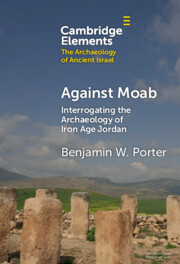
Known as a place, a people, and a kingdom at various points in the second and first millennia BCE, Moab has long sustained the attention of archaeologists, philologists, and historians, in part because of its adjacent location to ancient Israel. The past 150 years of research in what is today west-central Jordan has proffered a significant corpus of evidence from the region's archaeological sites. However, a critical analysis of this evidence reveals significant gaps in knowledge that challenge attempts to narrate Moab's political, economic, and social history. This Element examines the evidence as well as the debates surrounding Moab's development and decline. This title is also available as open access on Cambridge Core.
Language is central to issues of displacement and education. This paper examines how English language teachers in refugee settings negotiated and exercised autonomy in teaching and learning in the context of the COVID-19 pandemic. It draws on the notion of autonomy and its dynamics in language classrooms in refugee settings. The paper focuses on one displacement context – Jordan’s refugee settings – to offer a fine-grained analysis of teachers’ accounts to synthesise how teachers negotiated the transition to online teaching and developed practices and relations across different sites. The study recognises teachers’ rights in contributing their own experience and expertise and draws on the Participatory Ethnographic Evaluation Research (PEER) methodology, which involved working closely with a group of six language teachers as peer researchers, who conducted in-depth interviews with two of their peers. The analysis examines the ways in which autonomy was exercised, mobilised, resourced, constrained and shaped by contextual factors during the pandemic and thus provides a nuanced understanding of teachers’ experiences. The study points to the importance of understanding teacher autonomy in the context of language teaching in technology-poor environments. By providing critical insights into the dynamics of teacher autonomy in unique professional settings, it contributes to the broader discourse on digital language learning and agency, roles and skills needed by teachers to support crisis preparedness for the future.
Chapter 7 concludes the Jordanian case study by analyzing the theory’s expectations for how strategic interactions around delegation and blame influence repression, protest, and accountability in authoritarian political systems. Original protest data indicates that the monarchy permits hundreds of protests each year and that security forces repress only a tiny fraction of these events. Instead, repression is highly targeted at those individuals who cross the regime’s redlines by publicly blaming and criticizing the king. The chapter explains how this approach to repression complicates anti-royal coordination, even among those opposition figures who personally blame the monarchy for Jordan’s ills. The chapter also illustrates how the monarchy provides limited accountability by removing prime ministers and cabinet ministers when the public becomes visibly dissatisfied with the government’s performance.
Chapter 5 provides evidence that power sharing in Jordan is effective at shifting the public’s attributions and protecting the monarchy’s popular support. First, the chapter draws on interviews with opposition activists to show that even these sophisticated political elites frequently do not perceive the king to be most at fault for their grievances. Second, it utilizes survey data to demonstrate that Jordanians perceive institutions like the cabinet and parliament to be important contributors to policy decisions in Jordan and that such attitudes are correlated with higher support for the monarchy. Third, the chapter reports results from a novel Facebook advertising experiment that is used to estimate public approval of the Jordanian monarchy relative to the prime minister and parliament. The experiment indicates that the king is more popular than these other institutions, and it suggests that the king’s popularity is less likely to be affected by unpopular policy decisions like substantial tax increases.
Chapter 6 continues the Jordan case study by providing an important assessment of the theory’s expectations over time. Drawing on archival documents, internet search data, elite interviews, and secondary sources, the chapter shows that Jordan’s kings have shared power more credibly when they have more reasons to be concerned about popular discontent. Furthermore, it also demonstrates that Jordanians have responded to these changes as the theory expects, becoming more likely to blame the king for their grievances when the monarchy controls the decision-making process more directly, and less likely to blame the king when he delegates more credibly to other political elites. Not only do these findings demonstrate the theory’s utility for explaining changes in authoritarian decision-making over time, but they also help to account for alternative explanations to the argument, such as the possibility that the Jordanian monarchy benefits from traditional legitimacy that protects its reputation from popular anger.
Chapter 4 begins the detailed case study of Jordan. It first provides important background information on the country and reviews academic literature explaining the monarchy’s durability over the past century. It then draws on my elite interviews and other country-specific sources to explain how Jordan’s policymaking process functions. The chapter shows that the Jordanian king does grant meaningful decision-making influence to political elites in the cabinet and parliament, even though this delegation can result in policies that do not reflect the monarch’s preferences and can increase potential elite threats against the monarchy. The chapter also provides evidence that this delegation is intentionally used by the monarchs as a blame avoidance strategy. Interviews with senior decision-makers, including former chiefs of the royal court and prime ministers, reveal that the monarchy is aware that its reputation is likely to suffer if the king governs more directly and attracts more blame for the public’s grievances. This awareness is also reflected in how the Jordanian educational system teaches students about the decision-making process, and in the monarch’s willingness to share power more credibly for economic and social issues rather than foreign policy and security issues.
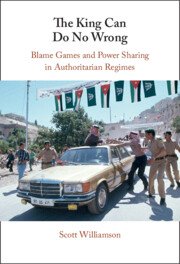
Why are some autocrats more effective than others at retaining popular support even when their governments perform poorly? To develop insights into popular politics and governance across authoritarian regimes, this book stresses the importance of understanding autocratic blame games. Scott Williamson argues that how autocrats share power affects their ability to shift blame, so that they are less vulnerable to the public's grievances when they delegate decision-making powers to other political elites. He shows that this benefit of power-sharing influences when autocrats limit their control over decision-making, how much they repress, and whether their regimes provide accountability. He also argues that ruling monarchs are particularly well positioned among autocrats to protect their reputations by sharing power, which contributes to their surprising durability in the modern world. Drawing on extensive fieldwork in Jordan and cross-national analysis of autocracies, the book illustrates the important role of blame in the politics of authoritarian regimes.
What are the origins and effects of legal ambiguity in authoritarian regimes? Using a detailed case study of nationality rights in Jordan – which draws from interviews with 210 Jordanian political officials, judges, lawyers, activists, and citizens/residents – we develop a framework for understanding how legal ambiguity emerges, and how it matters, under authoritarianism. We first conceptualize four discrete forms in which legal ambiguity manifests: lexical ambiguity (in legal texts); substantive ambiguity (in status as law); conflictual ambiguity (between contradictory legal rules); and operational ambiguity (in enforcement processes). We then scrutinize the emergence and effects of legal ambiguity in Jordanian nationality policy by integrating historical process tracing, detailed interview evidence, and a content analysis of archival documents, laws, and court verdicts pertaining to nationality rights. Our findings contribute to scholarship on legal ambiguity, authoritarian legality, and discretionary state authority by showing that (1) crisis junctures make the emergence of legal ambiguity more likely; (2) legal ambiguity takes a variety of different forms that warrant conceptual disaggregation; and (3) different forms of legal ambiguity often have disparate effects on how authoritarian state power is organized and experienced in public life.
Ferrodimolybdenite with ideal formula FeMo3+2S4 (C2/c, a = 11.8249(8) Å, b = 6.5534(3) Å, c = 13.0052(10) Å, β = 114.474(9)°, V = 917.27(12) Å3 and Z = 8) was discovered in a differentiated sulfide nodule composed of troilite and pentlandite parts. The nodule was detected in the central zone of a diopside–anorthite–tridymite oval paralava body, ∼30 metres in diameter, within the pyrometamorphic Hatrurim Complex in Daba-Siwaqa, Jordan. Ferrodimolybdenite is the first trivalent molybdenum compound discovered in Nature. Its synthetic analogue crystallises in the C1c1 space group. Ferrodimolybdenite with the empirical formula (Fe2+0.99Cu2+0.07Ni2+0.04)Σ1.10Mo3+1.94(S2–3.98P3–0.02)Σ4.00 was identified in the troilite part of the differentiated sulfide nodule. The nodule contains inclusions of tetrataenite, nickelphosphide, molybdenite, galena and rudashevskyite. Ferrodimolybdenite forms platy crystals with dimensions ranging from 3×100 μm to 20×40 μm. The mineral exhibits a grey colour and a dark grey streak. It is opaque with a metallic lustre, and its Mohs hardness is ∼3. The cleavage observed in the mineral is perfect on {001}, good on {100} and poor on {010}. Its tenacity is sectile, and its fracture is smooth. The calculated density of 5.445 g·cm–3 was derived from the empirical formula and unit cell volume refined from single-crystal X-ray diffraction data. In reflected light, ferrodimolybdenite appears grey to light grey with a blueish tinge. It is anisotropic, with a reflectance in the range of 34–40%. The crystallisation of ferrodimolybdenite occurred in reduced conditions in monosulfide Fe(+Ni) melt at a temperature of 1000–1100°C and at low pressure.