Refine search
Actions for selected content:
47 results
ARITHMETIC PROPERTIES SATISFIED BY A RECENT INTEGER PARTITION FUNCTION OF DOMBOS
- Part of
-
- Journal:
- Bulletin of the Australian Mathematical Society , First View
- Published online by Cambridge University Press:
- 03 November 2026, pp. 1-9
-
- Article
-
- You have access
- HTML
- Export citation
-
The set of integer partitions of n, wherein the parts are either divisible by 4 or congruent to $\pm 1 \pmod {6}$
 , arose in a natural way in work of Dombos [‘A new grounded partition identity of type $D_4^{(3)}$
 ’, SIGMA 22 (2026), Article no. 042]. Denote the function that counts the number of such partitions of n by $\mathit {dp}(n)$
 . Using elementary generating function manipulations and classical q-series results, we prove several congruences satisfied by $\mathit {dp}(n)$
 . As an example, we prove that, for all $\alpha \geq 1$
 and all $n \geq 0$
 , $$ \begin{align*} {\it dp} \bigg( 3^{2\alpha + 1}n + \frac{7 \cdot 9^\alpha + 1}{4} \bigg) \equiv 0 \pmod{3}. \end{align*} $$



ELEMENTARY SYMMETRIC POLYNOMIALS AND A POTENTIALLY INJECTIVE FAMILY OF MAPS ON PARTITIONS
- Part of
-
- Journal:
- Bulletin of the Australian Mathematical Society , First View
- Published online by Cambridge University Press:
- 21 July 2026, pp. 1-8
-
- Article
-
- You have access
- HTML
- Export citation
-
Ballantine et al. [‘Partitions and elementary symmetric polynomials: an experimental approach’, Ramanujan J. 66(2) (2025), Article no. 34] proposed two conjectures on the injectivity of a class of maps ${pre}_k$
 defined on integer partitions. These maps arise from applying the sequence of elementary symmetric polynomials to integer partitions. We provide an infinite family of examples to disprove the conjecture for $k\ge 3$
 and state a modified version of it. Throwing fresh light on this class of maps, we study the inter-relationships between them, deviating from the approaches so far, which study these maps one at a time. While the conjecture for $k=2$
 has now been settled, we provide alternate proofs of three subcases. We also discuss lower bounds for the number of partitions of n that are in the image of the map $pre_2$
 .


FURTHER ANALOGUES OF ANDREWS’ SPT-FUNCTION IDENTITY
- Part of
-
- Journal:
- Bulletin of the Australian Mathematical Society , First View
- Published online by Cambridge University Press:
- 16 June 2026, pp. 1-10
-
- Article
-
- You have access
- Open access
- HTML
- Export citation
Distributions associated with small quadratic non-residues and their partitions
- Part of
-
- Journal:
- Canadian Journal of Mathematics , First View
- Published online by Cambridge University Press:
- 02 June 2026, pp. 1-41
-
- Article
-
- You have access
- Open access
- HTML
- Export citation
-
Assuming the Generalized Riemann Hypothesis, it is known that the least quadratic non-residue modulo a prime p is less than or equal to $(\log p)^2$
 . In the present article, we establish unconditional results on the distribution of partitions associated with quadratic non-residues in even smaller intervals of size $(\log p)^A$
 with $A> 0$
 , for almost all primes p.


1 - Congruences and Primes
- from Part I - Elementary Methods
-
- Book:
- Topics in Number Theory
- Published online:
- 27 March 2026
- Print publication:
- 09 April 2026, pp 3-49
-
- Chapter
- Export citation
Perfect partitions of a random set of integers
- Part of
-
- Journal:
- Journal of Applied Probability , First View
- Published online by Cambridge University Press:
- 06 April 2026, pp. 1-30
-
- Article
-
- You have access
- Open access
- HTML
- Export citation
-
Let
 $X_1,\ldots, X_n$ be independent integers distributed uniformly on [M],
 $M\ge 2$. A partition S of [n] into
 $\nu$ non-empty subsets
 $S_1,\ldots, S_{\nu}$ is called perfect if all
 $\nu$ values
 $\sum_{j\in S_{\alpha}}X_j$ are equal. For a perfect partition to exist,
 $\sum_j X_j$ has to be divisible by
 $\nu$. In 2001, for
 $\nu=2$, Christian Borgs, Jennifer Chayes, and the author proved that, conditioned on
 $\sum_j X_j$ being even, with high probability a perfect partition exists if
 $\kappa\;:\!=\; \lim {{n}/{\log M}}>{{1}/{\log 2}}$, and that with high probability no perfect partition exists if
 $\kappa<{{1}/{\log 2}}$. Responding to a question by George Varghese, we prove that for
 $\nu\ge 3$ with high probability no perfect partition exists if
 $\kappa<{{2}/{\log \nu}}$, which is twice as large as the naive threshold
 $1/\log 3$ for
 $\nu=3$. We identify the range of
 $\kappa$ where the expected number of perfect partitions is exponentially high. We show that for
 $\kappa> {{2(\nu-1)}/{\log[(1-2\nu^{-2})^{-1}]}}$ the total number of perfect partitions is exponentially high with probability
 $\gtrsim (1+\nu^2)^{-1}$, i.e. below
 $1/\nu$, the limiting probability that
 $\sum_j X_j$ is divisible by
 $\nu$.


Overpartitions with parts separated by parity
- Part of
-
- Journal:
- Canadian Mathematical Bulletin / Volume 69 / Issue 3 / September 2026
- Published online by Cambridge University Press:
- 05 January 2026, pp. 1043-1053
- Print publication:
- September 2026
-
- Article
-
- You have access
- Open access
- HTML
- Export citation
-
In this article, we generalize Andrews’ partitions separated by parity to overpartitions in two ways. We investigate the generating functions for $16$
 overpartition families whose parts are separated by parity, and we prove various q-series identities for these functions. These identities include relations to modular forms, q-hypergeometric series, and mock modular forms.

The finite forms of MacMahon’s q-series
- Part of
-
- Journal:
- Proceedings of the Edinburgh Mathematical Society / Volume 69 / Issue 3 / August 2026
- Published online by Cambridge University Press:
- 02 January 2026, pp. 867-894
-
- Article
-
- You have access
- HTML
- Export citation
-
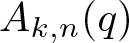
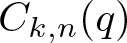
In his seminal work on partitions and divisor functions, MacMahon introduced the following two q-series:
 \begin{align*}A_k(q):= \sum_{0 \lt s_1 \lt s_2 \lt \cdots \lt s_k} \frac{q^{s_1+s_2+\cdots+s_k}}{(1-q^{s_1})^2(1-q^{s_2})^2\cdots(1-q^{s_k})^2},\qquad\quad\quad\quad\\[6pt]C_k(q):= \sum_{0 \lt s_1 \lt s_2 \lt \cdots \lt s_k}\frac{q^{2(s_1+s_2+\cdots+s_k)-k}}{(1-q^{2s_1-1})^2(1-q^{2s_2-1})^2\cdots(1-q^{2s_k-1})^2}.\end{align*}
In 2013, Andrews and Rose proved that
 $A_k(q)$ and
 $C_k(q)$ are quasimodular forms of weight
 $\leq 2k$. Recently, Ono and Singh proved two interesting identities involving
 $A_k(q)$ and
 $C_k(q)$ and showed that the generating functions for the three-coloured partition function
 $p_3(n)$ and the overpartition function
 $\overline{p}(n)$ have infinitely many closed formulas in terms of MacMahon’s quasimodular forms
 $A_k(q)$ and
 $C_k(q)$. In this paper, we introduce the finite forms
 $A_{k,n}(q)$ and
 $C_{k,n}(q)$ of MacMahon’s q-series
 $A_k(q)$ and
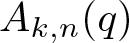
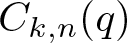
 $C_k(q)$ and prove two identities which generalize Ono–Singh’s identities. We also prove some new identities involving
 $A_{k,n}(q)$,
 $C_{k,n}(q)$ and certain infinite products based on two Bailey pairs. Those identities are analogous to Ono–Singh’s identities.


Totally positive elements with m partitions exist in almost all real quadratic fields
- Part of
-
- Journal:
- Proceedings of the Edinburgh Mathematical Society / Volume 69 / Issue 2 / May 2026
- Published online by Cambridge University Press:
- 21 November 2025, pp. 701-734
-
- Article
-
- You have access
- Open access
- HTML
- Export citation
-
In this paper, we study partitions of totally positive integral elements
 $ \alpha $ in a real quadratic field
 $ K $. We prove that for a fixed integer
 $ m \geq 1 $, an element with
 $ m $ partition exists in almost all
 $ K $. We also obtain an upper bound for the norm of
 $\alpha$ that can be represented as a sum of indecomposables in at most
 $m$ ways, completely characterize the
 $\alpha$’s represented in exactly
 $2$ ways, and subsequently apply this result to complete the search for fields containing an element with
 $ m $ partitions for
 $ 1 \leq m \leq 7 $.


Infinitely repeated partitions of Liouville numbers
- Part of
-
- Journal:
- Canadian Mathematical Bulletin / Volume 69 / Issue 1 / March 2026
- Published online by Cambridge University Press:
- 06 August 2025, pp. 142-149
- Print publication:
- March 2026
-
- Article
-
- You have access
- HTML
- Export citation
ON
 $5^k$-REGULAR PARTITIONS MODULO POWERS OF
 $5$
- Part of
-
- Journal:
- Bulletin of the Australian Mathematical Society / Volume 112 / Issue 3 / December 2025
- Published online by Cambridge University Press:
- 14 April 2025, pp. 449-457
- Print publication:
- December 2025
-
- Article
-
- You have access
- HTML
- Export citation
-
In this work, we investigate the arithmetic properties of
 $b_{5^k}(n)$, which counts the partitions of n where no part is divisible by
 $5^k$. By constructing generating functions for
 $b_{5^k}(n)$ across specific arithmetic progressions, we establish a set of Ramanujan-type congruences.


TWO NEW TRUNCATED IDENTITIES AND PARTITION THEOREMS
- Part of
-
- Journal:
- Bulletin of the Australian Mathematical Society / Volume 113 / Issue 1 / February 2026
- Published online by Cambridge University Press:
- 21 March 2025, pp. 73-80
- Print publication:
- February 2026
-
- Article
-
- You have access
- HTML
- Export citation
ON NEW MINIMAL EXCLUDANTS OF OVERPARTITIONS RELATED TO SOME q-SERIES OF RAMANUJAN
- Part of
-
- Journal:
- Bulletin of the Australian Mathematical Society / Volume 112 / Issue 1 / August 2025
- Published online by Cambridge University Press:
- 11 February 2025, pp. 1-13
- Print publication:
- August 2025
-
- Article
-
- You have access
- HTML
- Export citation
4-Torsion classes in the integral cohomology of oriented Grassmannians
- Part of
-
- Journal:
- Proceedings of the Royal Society of Edinburgh. Section A: Mathematics / Volume 156 / Issue 5 / October 2026
- Published online by Cambridge University Press:
- 15 January 2025, pp. 2491-2533
- Print publication:
- October 2026
-
- Article
-
- You have access
- HTML
- Export citation
EXTENDING CONGRUENCES FOR OVERPARTITIONS WITH
 $\ell $-REGULAR NONOVERLINED PARTS
- Part of
-
- Journal:
- Bulletin of the Australian Mathematical Society / Volume 111 / Issue 3 / June 2025
- Published online by Cambridge University Press:
- 25 November 2024, pp. 478-489
- Print publication:
- June 2025
-
- Article
-
- You have access
- HTML
- Export citation
-
Recently, Alanazi et al. [‘Refining overpartitions by properties of nonoverlined parts’, Contrib. Discrete Math. 17(2) (2022), 96–111] considered overpartitions wherein the nonoverlined parts must be
 $\ell $-regular, that is, the nonoverlined parts cannot be divisible by the integer
 $\ell $. In the process, they proved a general parity result for the corresponding enumerating functions. They also proved some specific congruences for the case
 $\ell =3$. In this paper we use elementary generating function manipulations to significantly extend this set of known congruences for these functions.


CONGRUENCES FOR RANKS OF PARTITIONS
- Part of
-
- Journal:
- Bulletin of the Australian Mathematical Society / Volume 110 / Issue 2 / October 2024
- Published online by Cambridge University Press:
- 29 January 2024, pp. 280-290
- Print publication:
- October 2024
-
- Article
-
- You have access
- HTML
- Export citation
-
Ranks of partitions play an important role in the theory of partitions. They provide combinatorial interpretations for Ramanujan’s famous congruences for partition functions. We establish a family of congruences modulo powers of
 $5$ for ranks of partitions.

Partitions with parts separated by parity: conjugation, congruences and the mock theta functions
- Part of
-
- Journal:
- Proceedings of the Royal Society of Edinburgh. Section A: Mathematics / Volume 155 / Issue 3 / June 2025
- Published online by Cambridge University Press:
- 30 November 2023, pp. 954-974
- Print publication:
- June 2025
-
- Article
-
- You have access
- HTML
- Export citation
-
Noting a curious link between Andrews’ even-odd crank and the Stanley rank, we adopt a combinatorial approach building on the map of conjugation and continue the study of integer partitions with parts separated by parity. Our motivation is twofold. Firstly, we derive results for certain restricted partitions with even parts below odd parts. These include a Franklin-type involution proving a parametrized identity that generalizes Andrews’ bivariate generating function, and two families of Andrews–Beck type congruences. Secondly, we introduce several new subsets of partitions that are stable (i.e. invariant under conjugation) and explore their connections with three third-order mock theta functions $\omega (q)$
 , $\nu (q)$
 , and $\psi ^{(3)}(q)$
 , introduced by Ramanujan and Watson.


ON A CONJECTURE FOR A REFINEMENT OF THE SUM OF MINIMAL EXCLUDANTS
- Part of
-
- Journal:
- Bulletin of the Australian Mathematical Society / Volume 109 / Issue 2 / April 2024
- Published online by Cambridge University Press:
- 20 July 2023, pp. 276-287
- Print publication:
- April 2024
-
- Article
-
- You have access
- HTML
- Export citation
-
In 2019, Andrews and Newman [‘Partitions and the minimal excludant’, Ann. Comb. 23(2) (2019), 249–254] introduced the arithmetic function
 $\sigma \textrm {mex}(n)$, which denotes the sum of minimal excludants over all the partitions of n. Baruah et al. [‘A refinement of a result of Andrews and Newman on the sum of minimal excludants’, Ramanujan J., to appear] showed that the sum of minimal excludants over all the partitions of n is the same as the number of partition pairs of n into distinct parts. They proved three congruences modulo
 $4$ and
 $8$ for two functions appearing in this refinement and conjectured two further congruences modulo
 $8$ and
 $16$. We confirm these two conjectures by using q-series manipulations and modular forms.


PARTITIONING THE REAL LINE INTO BOREL SETS
- Part of
-
- Journal:
- The Journal of Symbolic Logic / Volume 89 / Issue 2 / June 2024
- Published online by Cambridge University Press:
- 11 April 2023, pp. 549-568
- Print publication:
- June 2024
-
- Article
-
- You have access
- Open access
- HTML
- Export citation
-
For which infinite cardinals
 $\kappa $ is there a partition of the real line
 ${\mathbb R}$ into precisely
 $\kappa $ Borel sets? Work of Lusin, Souslin, and Hausdorff shows that
 ${\mathbb R}$ can be partitioned into
 $\aleph _1$ Borel sets. But other than this, we show that the spectrum of possible sizes of partitions of
 ${\mathbb R}$ into Borel sets can be fairly arbitrary. For example, given any
 $A \subseteq \omega $ with
 $0,1 \in A$, there is a forcing extension in which
 ${A = \{ n :\, \text {there is a partition of } {{\mathbb R}} \text { into }\aleph _n\text { Borel sets}\}}$. We also look at the corresponding question for partitions of
 ${\mathbb R}$ into closed sets. We show that, like with partitions into Borel sets, the set of all uncountable
 $\kappa $ such that there is a partition of
 ${\mathbb R}$ into precisely
 $\kappa $ closed sets can be fairly arbitrary.


A CONJECTURE OF MERCA ON CONGRUENCES MODULO POWERS OF 2 FOR PARTITIONS INTO DISTINCT PARTS
- Part of
-
- Journal:
- Bulletin of the Australian Mathematical Society / Volume 109 / Issue 1 / February 2024
- Published online by Cambridge University Press:
- 27 March 2023, pp. 26-36
- Print publication:
- February 2024
-
- Article
-
- You have access
- HTML
- Export citation
-
Let
 $Q(n)$ denote the number of partitions of n into distinct parts. Merca [‘Ramanujan-type congruences modulo 4 for partitions into distinct parts’, An. Şt. Univ. Ovidius Constanţa 30(3) (2022), 185–199] derived some congruences modulo
 $4$ and
 $8$ for
 $Q(n)$ and posed a conjecture on congruences modulo powers of
 $2$ enjoyed by
 $Q(n)$. We present an approach which can be used to prove a family of internal congruence relations modulo powers of
 $2$ concerning
 $Q(n)$. As an immediate consequence, we not only prove Merca’s conjecture, but also derive many internal congruences modulo powers of
 $2$ satisfied by
 $Q(n)$. Moreover, we establish an infinite family of congruence relations modulo
 $4$ for
 $Q(n)$.


