To save content items to your account,
please confirm that you agree to abide by our usage policies.
If this is the first time you use this feature, you will be asked to authorise Cambridge Core to connect with your account.
Find out more about saving content to .
To save content items to your Kindle, first ensure no-reply@cambridge.org
is added to your Approved Personal Document E-mail List under your Personal Document Settings
on the Manage Your Content and Devices page of your Amazon account. Then enter the ‘name’ part
of your Kindle email address below.
Find out more about saving to your Kindle.
Note you can select to save to either the @free.kindle.com or @kindle.com variations.
‘@free.kindle.com’ emails are free but can only be saved to your device when it is connected to wi-fi.
‘@kindle.com’ emails can be delivered even when you are not connected to wi-fi, but note that service fees apply.
Thucydides' book on the war between the Peloponnesians and the Athenians has generally been considered a historical chronicle. By contrast, Peter Ahrensdorf here makes the case that it is better understood as a work of philosophy, inasmuch as it seeks to understand the permanent truth about human nature. Thucydides, he argues, focuses on this particular war because of its theoretical significance. It presents a clash, not only between military powers, but between two theoretical outlooks – Periclean Athenians' progressive and humanistic understanding of the fundamental character and condition of human beings, and the Spartans' traditional and religious understanding. Ahrensdorf leads us through Thucydides' examination of the case for and against both Athens and Sparta and shows how Thucydides ultimately offers for our consideration an account of himself as an individual who – unlike outstanding characters such as such Alcibiades, the Athenian ambassadors at Sparta and Melos, Diodotus, and Pericles – ascends to a truly independent and genuinely philosophic understanding of the human condition.
This chapter analyses the role played by coinage in the Achaemenid empire, exploring the dynamics of royal policy and iconography within the multifaceted political and economic within its imperial space. The vast Persian empire stretched from Mesopotamia and further east to the Aegean Sea. When the Persians captured the Lydian kingdom of Kroisos in 546, at first they took over his coinage in gold and silver, and later, from around 515, they produced distinctively Persian coinage of gold darics and silver sigloi, which had images of an archer, as a symbol of the Persian king. These were only for the western part of their empire, and even there they were not part of a fully coin-using economy. Their purposes were probably gift-giving and payments to mercenary soldiers. Other coinages continued to be made, in electrum, for example at Kyzikos, and especially in silver. A large variety of silver coinages were made at many cities in western Asia Minor and in Cyprus. Some were very small denominations, perhaps to facilitate daily market exchanges. The famous deposits of coins in the Apadana of Persepolis are analysed in detail, and the controversial puzzle of their selection is discussed.
This chapter explores the invention of coinage and asks what this can tell us about the world before coinage. Money has various functions and can be documented before the invention of coinage. For example, from Sumerian times metals, especially silver, became the dominant form of money, replacing grain, and measured by weighing. Standard weights were used in Egypt, and are mentioned in the Bible. Monetary transactions can also be observed in Homer’s poems and some rare early inscriptions from Greece. Spits (obeloi) were used, sometimes in a handful (drachm), and these words were used later to denote coins. By the early sixth century, silver had become a standard form of money also in Greece. The first coins in the Mediterranean world derived from such practices and were struck in the kingdom of Lydia in western Asia Minor around the middle of the seventh century and were made of electrum, an alloy of gold and silver. Several Greek cities established on the Aegean coast, and controlled by the Lydians, shared in this development, as they did also in a distinct second stage, when in the majority of cities coinage in electrum gradually gave way to coinages of silver and (rarely) gold.
The models posited in Chapter 2 are applied to the problem set out in Chapter 1. Sources in Greek, Elamite, and Old Persian, taken together, give every reason to believe that mass nonnative acquisition of Persian was underway from the reign of Darius I onward. The cooperation of multiethnic groups of armed forces, work forces, and especially domestic staff, such as concubines and eunuchs, with their Persian-speaking masters evidently played a large role in the formation of Middle Persian. Contrary to a widespread assumption, Aramaic turns out not to be a lingua franca of the Achaemenian Empire, except at the level of provincial administration, but rather Persian was probably the best candidate for such a role. Middle Persian arose from Old Persian through a process of semicreolization as the term was defined carefully in Chapter 2.
Final reflections on the meaning of the transformation of ancient Persian, from Old to Middle Persian, put these events in the context of growing human mobility, migration, and population contact from the first millennium BCE until today, with its effects on language. This study has also unexpectedly shed light on the role of conquered people, particularly enslaved people in the domestic spaces of the Persians. Such people have left very little trace otherwise, but their role in the shaping of the Persian language and culture is remarkable. Their effects on Persian culture are still evident in the reduced morphology of Persian until toay. Prospects for new research linguistic history along these lines come into view.
The first inscription in Old Persian was carved into the mountainside of Bisitun, in present-day Iran, in 520–518 BCE. Less than two hundred years later, Old Persian inscriptions in the same written tradition appear to be “getting the grammar wrong” – drastically wrong. Scholars agree on the linguistic phenomena but have disagreed about how to explain them. The problem of this book is how the Persian language came to be restructured grammatically so quickly, in about five generations. The outcome was Middle Persian, which apparently was in use in an early form by the time of Alexander. This first chapter frames this problem and explains what is at stake in its resolution.
When ancient Persian conquerors created a vast empire from the Mediterranean to the Indus, encompassing many peoples speaking many different languages, they triggered demographic changes that caused their own language to be transformed. Persian grammar has ever since borne testimony to the social history of the ancient Persian Empire. This study of the early evolution of the Persian language bridges ancient history and new linguistics. Written for historians, philologists, linguists, and classical scholars, as well as those interested specifically in Persian and Iranian studies, it explains the correlation between the character of a language's grammar and the history of its speakers. It paves the way for new investigations into linguistic history, a field complementary with but distinct from historical linguistics. This title is also available as Open Access on Cambridge Core.
In addition to the Old Testament’s Primary History, we have a Chronistic History comprised of 1–2 Chronicles and Ezra–Nehemiah. The two histories contain some of the same materials. We will see that the Chronistic History, however, includes events of the postexilic community down to the late fifth century bce. With the Persian Empire as the background, we will note also a different perspective, characterized by different themes, stylistic devices, portions written in Aramaic, and particular emphases on the Davidic dynasty and Israel’s religious practices associated with Jerusalem.
Chronicles and Ezra–Nehemiah are sequenced differently in various canons, indicating independent collections, but we will see that they are linked literarily by the edict of King Cyrus. This historical event marked the return of Israelite exiles from Babylon to Jerusalem, now part of the Persian province Yehud, and the subsequent restoration and rebuilding of a community. Indeed, these books are significant in the Old Testament for the way in which they confirm the postexilic community as the legitimate successor of preexilic Israel.
Most studies of narrative art in the Bible scarcely mention Chronicles, but this chapter explores ways that readers can build a greater appreciation for the unique art and style of Chronicles, and for its theologically rich portrait of history.
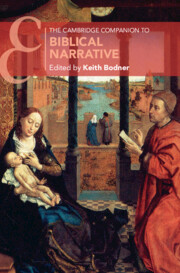
The Cambridge Companion to Biblical Narrative offers an overview and a concise introduction to an exciting field within literary interpretation of the Hebrew Scriptures and New Testament. Analysis of biblical narrative has enjoyed a resurgence in recent decades, and this volume features essays that explore many of the artistic techniques that readers encounter in an array of texts. Specially commissioned for this volume, the chapters analyze various scenes in Genesis, Exodus and the wilderness wanderings, Israel's experience in the land and royal experiment in Kings and Chronicles, along with short stories like Ruth, Jonah, Esther, and Daniel. New Testament essays examine each of the four gospels, the book of Acts, stories from the letters of Paul, and reading for the plot in the book of Revelation. Designed for use in undergraduate and graduate courses, this Companion will serve as an excellent resource for instructors and students interested in understanding and interpreting biblical narrative.
The opening chapter presents an overview of some of the historical-critical issues that shape a theological reading of the text. A better understanding of literary, historical, and social issues provides an interpretive control for theological articulation.
In the opening verses of the Book of Ezra-Nehemiah, King Cyrus exhorts the exiled Judeans to return to Jerusalem to restore worship in Jerusalem. It then narrates this restoration through the construction of the temple, the repair of the city walls, and the commitment to the written Torah. In this volume, Roger Nam offers a new and compelling argument regarding the theology of Ezra-Nehemiah: that the Judeans' return migration, which extended over several generations, had a totalizing effect on the people. Repatriation was not a single event, but rather a multi-generational process that oscillated between assimilation and preservation of culture. Consequently, Ezra-Nehemiah presents a unique theological perspective. Nam explores the book's prominent theological themes, including trauma, power, identity, community, worship, divine presence, justice, hope, and others – all of which take on a nuanced expression in diaspora. He also shows how and why Ezra-Nehemiah naturally found a rich reception among emerging early Christian and Jewish interpretive communities.
A retrospective look at the 1980 Dumbarton Oaks Symposium “Beyond Byzantium” noting its groundbreaking aspects, omissions, and the evolution of the field in subsequent years. A particular emphasis is the increasing breadth of topics in the study of the Byzantine Near East as scholarly interest has moved beyond primarily philological and religious topics. The community of scholars interested in these traditions has also changed. At the 1980 Symposium several presenters were clergy who came to the field via the study of biblical languages. Few were women. Today the field is much more diverse, with many active scholars who belong to Near Eastern Christian communities. Manuscripts are used to illustrate cultural exchanges among Eastern Christian traditions and to highlight issues of ownership and removal of cultural heritage from its original context. A particular emphasis is placed on liturgical manuscripts as a source of information about language acquisition.
This chapter presents new, annotated translations of the principal testimonia and fragments of Skylax of Karyanda (late 6th century BC), arranged as fourteen extracts. Skylax, we are told by Herodotos, was recruited by King Darius of Persia to explore the Indus. The chapter introduction assesses recent studies that trace the echoes of his travel narrative in Philostratos’ Life of Apollonios (3rd century AD) and suggest that Skylax descended the Ganges to the east coast of India, perhaps voyaging as far as Taprobane (Sri Lanka). A specially drawn map indicates the area within which he most likely travelled.
Biblical Aramaic and Related Dialects is a comprehensive, introductory-level textbook for the acquisition of the language of the Old Testament and related dialects that were in use from the last few centuries BCE. Based on the latest research, it uses a method that guides students into knowledge of the language inductively, with selections taken from the Bible, the Dead Sea Scrolls, and papyrus discoveries from ancient Egypt. The volume offers a comprehensive view of ancient Aramaic that enables students to progress to advanced levels with a solid grounding in historical grammar. Most up-to-date description of Aramaic in light of modern discoveries and methods. Provides more detail than previous textbooks. Includes comprehensive description of Biblical dialect, along with Aramaic of the Persian period and of the Dead Sea Scrolls. Guided readings begin with primary sources, enabling students learn the language by reading historical texts.
This chapter explores the effects of empire-building on both local economies and global connectivity, and the impact imperial expansion may have had on what one might call economic growth and complexity. It deals with agriculture and its development under imperial conditions. The chapter considers the impact of governance structures and taxation on ancient economies. By financing flood control and irrigation, and maintaining the bureaucracy to implement the projects, the dynasty benefited through taxation and power, but it also fostered agrarian development and social prosperity. The use of limited-purpose money in some spheres of exchange preceded all monetary systems of the Afro-Eurasian world of the mid-first millennium and helps to explain monetization as a path-dependent process. Taxation was one of the most important means of asserting and maintaining empire both financially and symbolically. Democracy was not long-lasting, but with the Macedonian conquest of the Persian Empire, including Egypt, Greek urban culture, centered on civic interaction spread toward Central Asia and Egypt.
This chapter explains the geographical coverage of Christianity in the third century. It deals with Christians relations with the Roman state and the persecutions which formed a backdrop to the mental lives of many Christians even if physically they may have been little affected by them. The chapter describes the literary and intellectual life of third-century Christianity. Persecution of Christians by Roman officials had been in the course of the second century sporadic and unsystematic, and basically local in range, and is best seen in the context of the occasional harassment of many another exotic group equally regarded as deviant. By autumn 249 the emperor Decius was secured in power after his usurpation. Mani and his disciple missionaries, the narrow band of high achieving 'Elect' and their devoted faithful, the 'Hearers', had in the course of the third century made remarkable proselytizing progress both inside and outside the permeable boundaries of the Roman world, especially in the eastern empire.
In the Achaemenid period, when the Persian empire extended from Greece to Gandhara, a meeting between the east and the west had taken place. Indian soldiers in the Persian army fought on Greek soil, and Greeks such as Scylax made explorations in India for the Persians. The Greeks of Bactria under Diodotus gained their independence from the Seleucids as a result of open revolt or through a gradual transition to power. Diodotus I considered himself a saviour of the Greeks in Bactria, some of his coins include the title of Soter. On the other hand, coins of Pantaleon and Agathocles are rare in the western parts of Bactria. The policy initiated by Agathocles was followed by Menander. It is generally accepted that Menander was married to Agathocleia, probably a sister or daughter of Agathocles. After Menander there began the process of decline and fall of the Graeco- Bactrian and Graeco-Indian kings.
At the beginning of his History, for which he was gathering the material in the middle of the 5th century, the Greek writer Herodotus tells us what Persian men of learning had to say about the first confrontations of Europe and Asia. Modern scholars have varied greatly in the use they make of him for early Achaemenid history. The historians of Alexander the Great provide first-hand information about the Persian empire; and in particular it is to them that we owe our knowledge of the eastern Iranian lands as they first come into the light of recorded history. The whole of Western Asia as far as the Arabian desert was now under Persian suzerainty. The Persian satraps in the far western provinces of Asia Minor and Egypt were not involved in the clashes of rivals, though Oroites in Sardis took the opportunity to avenge an insult on the satrap of the Hellespontine region.
It was during the campaigns of Alexander the Great, after the Macedonians had overrun the western provinces of the Persian empire, that the eastern Iranian element became especially prominent in the Persian camp. The majority of the eastern Iranian troops had been mustered by Bessus, who after the Persian defeat quickly emerged as the most powerful of the Persian leaders under Darius III. After the assassination of the king, it was Bessus who assumed the royal prerogatives, and retired to his satrapy of Bactria to carry on the struggle against Alexander in eastern Iran. The complex and disturbed succession of the later Indo-Bactrian rulers was to a large extent the consequence of a far-reaching event. After the fall of the Kushan dynasty in AD 225, the provinces of Gandhara, Bactria and Sogdiana passed under the rule of Sasanian governors who bore the title of Kushanshah 'King of the Kushans'. This Persian administration continued until about AD 360.
Recommend this
Email your librarian or administrator to recommend adding this to your organisation's collection.