Refine search
Actions for selected content:
4 results
A NEW WEAK CHOICE PRINCIPLE
- Part of
-
- Journal:
- The Journal of Symbolic Logic / Volume 91 / Issue 2 / June 2026
- Published online by Cambridge University Press:
- 19 February 2026, pp. 538-555
- Print publication:
- June 2026
-
- Article
-
- You have access
- HTML
- Export citation
-
For every natural number n we introduce a new weak choice principle
 $\mathrm {nRC_{fin}}$:
Given any infinite set x, there is an infinite subset
 $y\subseteq x$ and a selection function f that chooses an n-element subset from every finite
 $z\subseteq y$ containing at least n elements.
By constructing new permutation models built on a set of atoms obtained as Fraïssé limits, we will study the relation of
 $\mathrm {nRC_{fin}}$ to the weak choice principles
 $\mathrm {RC_m}$ (that has already been studied in [3] and [6]):
Given any infinite set x, there is an infinite subset
 $y\subseteq x$ with a choice function f on the family of all m-element subsets of y.
Moreover, we prove a stronger analogue of the results in [6] when we study the relation between
 $\mathrm {nRC_{fin}}$ and
 $\mathrm {kC_{fin}^-}$ which is defined by
Given any infinite family
 $\mathcal {F}$ of finite sets of cardinality greater than k, there is an infinite subfamily
 $\mathcal {A}\subseteq \mathcal {F}$ with a selection function f that chooses a k-element subset from each
 $A\in \mathcal {A}$.


ALMOST DISJOINT AND MAD FAMILIES IN VECTOR SPACES AND CHOICE PRINCIPLES
- Part of
-
- Journal:
- The Journal of Symbolic Logic / Volume 87 / Issue 3 / September 2022
- Published online by Cambridge University Press:
- 29 October 2021, pp. 1093-1110
- Print publication:
- September 2022
-
- Article
-
- You have access
- Open access
- HTML
- Export citation
-
In set theory without the Axiom of Choice (
 $\mathsf {AC}$), we investigate the open problem of the deductive strength of statements which concern the existence of almost disjoint and maximal almost disjoint (MAD) families of infinite-dimensional subspaces of a given infinite-dimensional vector space, as well as the extension of almost disjoint families in infinite-dimensional vector spaces to MAD families.

THE RELATION BETWEEN TWO DIMINISHED CHOICE PRINCIPLES
- Part of
-
- Journal:
- The Journal of Symbolic Logic / Volume 86 / Issue 1 / March 2021
- Published online by Cambridge University Press:
- 15 February 2021, pp. 415-432
- Print publication:
- March 2021
-
- Article
-
- You have access
- Export citation
-
For every
 $n\in \omega \setminus \{0,1\}$ we introduce the following weak choice principle:
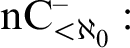 $\operatorname {nC}_{<\aleph _0}^-:$ For every infinite family
 $\mathcal {F}$ of finite sets of size at least n there is an infinite subfamily
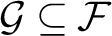 $\mathcal {G}\subseteq \mathcal {F}$ with a selection function
 $f:\mathcal {G}\to \left [\bigcup \mathcal {G}\right ]^n$ such that
 $f(F)\in [F]^n$ for all
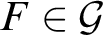 $F\in \mathcal {G}$.
Moreover, we consider the following choice principle:
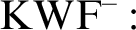 $\operatorname {KWF}^-:$ For every infinite family
 $\mathcal {F}$ of finite sets of size at least
 $2$ there is an infinite subfamily
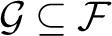 $\mathcal {G}\subseteq \mathcal {F}$ with a Kinna–Wagner selection function. That is, there is a function
 $g\colon \mathcal {G}\to \mathcal {P}\left (\bigcup \mathcal {G}\right )$ with
 $\emptyset \not =f(F)\subsetneq F$ for every
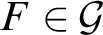 $F\in \mathcal {G}$.
We will discuss the relations between these two choice principles and their relations to other well-known weak choice principles. Moreover, we will discuss what happens when we replace
 $\mathcal {F}$ by a linearly ordered or a well-ordered family.


ON RAMSEY’S THEOREM AND THE EXISTENCE OF INFINITE CHAINS OR INFINITE ANTI-CHAINS IN INFINITE POSETS
-
- Journal:
- The Journal of Symbolic Logic / Volume 81 / Issue 1 / March 2016
- Published online by Cambridge University Press:
- 09 March 2016, pp. 384-394
- Print publication:
- March 2016
-
- Article
-
- You have access
- Export citation
-
Ramsey’s Theorem is naturally connected to the statement “every infinite partially ordered set has either an infinite chain or an infinite anti-chain”. Indeed, it is a well-known result that Ramsey’s Theorem implies the latter principle.
In the book “Consequences of the Axiom of Choice” by P. Howard and J. E. Rubin, it is stated as unknown whether the above implication is reversible, that is whether the principle “every infinite partially ordered set has either an infinite chain or an infinite anti-chain” implies Ramsey’s Theorem. The purpose of this paper is to settle the aforementioned open problem. In particular, we construct a suitable Fraenkel–Mostowski permutation model
 ${\cal N}$ for ZFA and prove that the above principle for infinite partially ordered sets is true in
 ${\cal N}$, whereas Ramsey’s Theorem is false in
 ${\cal N}$. Then, based on the existence of
 ${\cal N}$ and on results of D. Pincus, we show that there is a model of ZF which satisfies “every infinite partially ordered set has either an infinite chain or an infinite anti-chain” and the negation of Ramsey’s Theorem.
In addition, we prove that Ramsey’s Theorem (hence, the above principle for infinite partially ordered sets) is true in Mostowski’s linearly ordered model, filling the gap of information in the book “Consequences of the Axiom of Choice”.


