To save content items to your account,
please confirm that you agree to abide by our usage policies.
If this is the first time you use this feature, you will be asked to authorise Cambridge Core to connect with your account.
Find out more about saving content to .
To save content items to your Kindle, first ensure no-reply@cambridge.org
is added to your Approved Personal Document E-mail List under your Personal Document Settings
on the Manage Your Content and Devices page of your Amazon account. Then enter the ‘name’ part
of your Kindle email address below.
Find out more about saving to your Kindle.
Note you can select to save to either the @free.kindle.com or @kindle.com variations.
‘@free.kindle.com’ emails are free but can only be saved to your device when it is connected to wi-fi.
‘@kindle.com’ emails can be delivered even when you are not connected to wi-fi, but note that service fees apply.
This chapter discusses the importance of the phenomenon of epistemic relativity for Plato’s metaphysics and conception of truth. The argument from epistemic relativity, applied to attributes in the phenomenal world, is Plato’s favored strategy to highlight the need for a separate ontological domain of intelligible essences exempt from relativity. It is also a starting point for his metaphysical conception of truth. After a general discussion of the Platonic perspective on relative attributes, I introduce a set of terminological distinctions that help to categorize his various uses of the truth terminology. I then turn to the Phaedo, as it is the first dialogue to provide a broad exposition of Plato’s new metaphysical vision. I trace the various characteristic aspects of his truth terminology, as they emerge throughout this dialogue, and link them to his idea of philosophy and the underlying metaphysical conception. The last section discusses how a passage in the final proof of immortality qualifies the stark metaphysical dichotomy of truth and appearance by pointing to the possibility of certain kinds of determinate truth pertaining to objects in the phenomenal world.
This book argues that the key to understanding the philosophical connections between Plato and Proclus is found in Proclus' extant commentaries on the dialogues. Although none are complete, they comprise some 3000 pages of detailed exegesis and philosophical argument. Lloyd P. Gerson examines each of these commentaries and demonstrates how Proclus' constructive metaphysics is dedicated to filling in 'gaps' in Plato's own presentation of a philosophical system, gaps that Plato himself repeatedly flags in the dialogues. He shows that Proclus draws out many of the implications of what Plato says, supplies major premises in arguments that are missing, and makes crucial distinctions in terminology that are only implicit in Plato. Gerson asks whether Plato's philosophy and Proclus' philosophy stand or fall together and argues that the answer is highly relevant to understanding the nature of the dominant philosophical doctrine in the West for 2,000 years, namely, Platonism.
While Marius Victorinus was not on the lists of physicalists given by the German liberal Protestants of the nineteenth century, his physicalism is the closest match to Harnack’s definition of physicalism: Victorinus provides a “textbook example” of physicalist soteriology. Victorinus is the only physicalist who teaches that Christ assumes and transforms a platonic-type form of humanity, which then, through its paradigmatic power, transforms all individuals patterned on that form. Victorinus’ physicalism is both a participation in and development of Neoplatonic chain of being logic. Scholarly emphasis on Victorinus’ famous insistence on salvation by faith has obscured the physicalist foundation of Victorinus’ soteriology.
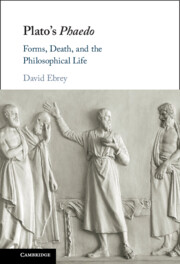
Plato's Phaedo is a literary gem that develops many of his most famous ideas. David Ebrey's careful reinterpretation argues that the many debates about the dialogue cannot be resolved so long as we consider its passages in relative isolation from one another, separated from their intellectual background. His book shows how Plato responds to his literary, religious, scientific, and philosophical context, and argues that we can only understand the dialogue's central ideas and arguments in light of its overall structure. This approach yields new interpretations of the dialogue's key ideas, including the nature and existence of 'Platonic' forms, the existence of the soul after death, the method of hypothesis, and the contemplative ethical ideal. Moreover, this comprehensive approach shows how the characters play an integral role in the Phaedo's development and how its literary structure complements Socrates' views while making its own distinctive contribution to the dialogue's drama and ideas.
In Plato’s dialogues, Socrates calls things like justice, piety, and largeness “forms.” In several of these dialogues, he makes clear that forms are very different from familiar objects like tables and trees. Why, exactly, does he think that they differ and how are they supposed to do so? This chapter argues that in the Phaedo Socrates does not assume that they are different, but rather, over five stages of the dialogue, provides an account of how and why they do so. To fully understand the claims made in the first stage, one must look to the next stage, and so on until the final stage. Socrates' ultimate reason for distinguishing forms from ordinary objects does not depend on our intuitions about things like justice and largeness, nor on the distinction between universals and particulars. Ultimately, forms cannot be ordinary objects because the form of f-ness must cause every f-thing to be f, but no ordinary object could serve as such a cause. They cannot do so because they have multiple parts and are receptive of opposites; by contrast, the form of f-ness must be simple and unchanging, since it causes every f-thing to be f.
This chapter examines the extent to which matter can be said to have being, the role of the Platonic Forms, and the methods for discovering the metaphysical principles of the universe.
Recommend this
Email your librarian or administrator to recommend adding this to your organisation's collection.