To save content items to your account,
please confirm that you agree to abide by our usage policies.
If this is the first time you use this feature, you will be asked to authorise Cambridge Core to connect with your account.
Find out more about saving content to .
To save content items to your Kindle, first ensure no-reply@cambridge.org
is added to your Approved Personal Document E-mail List under your Personal Document Settings
on the Manage Your Content and Devices page of your Amazon account. Then enter the ‘name’ part
of your Kindle email address below.
Find out more about saving to your Kindle.
Note you can select to save to either the @free.kindle.com or @kindle.com variations.
‘@free.kindle.com’ emails are free but can only be saved to your device when it is connected to wi-fi.
‘@kindle.com’ emails can be delivered even when you are not connected to wi-fi, but note that service fees apply.
This introduction to Part I explains how the World Council of Churches (WCC) arrived at its 1948 embrace of human rights, based on its interwar “antisecularism,” the appeal of “personalism,” and the need to resist “totalitarian” state power. Protestant activism on behalf of missionaries and churches predated the turn to human rights, and as did ecumenists’ emphasis on the need to enable Christianity to “leaven” society and international affairs. The emergence of human rights as an foundational principle of the postwar order invited a reframing of these concerns in terms of human rights, even if concern for the corporate rights of churches remained part of the WCC’s approach to religious freedom. Representatives of the ecumenical movement, especially O. Frederick Nolde and Charles Malik, helped to enshrine the ecumenical conception of human rights in Article 18 of the Universal Declaration of Human Rights. The WCC, the International Missionary Council (IMC), and the Commission of the Churches on International Affairs (CCIA) advocated for this conception against what they identified as their three main opponents: Islam, “political” Roman-Catholicism, and Communism.
This introduction opens with the World Council’s foundation in 1948 in Amsterdam, where the organization embraced human rights as a pillar of the postwar international order. Its focus, however, was on safeguarding religious freedom, especially that of coreligionists and missionaries. Going beyond ecumenical lobbying at the United Nations as well as a traditional focus on communist countries, the book’s Part I focuses on the global advocacy of the ecumenical movement. Part II traces how, in the 1970s, the WCC self-consciously rejected liberalism, reoriented itself toward the Third World, and articulated a “liberationist” approach to human rights. Rooted in liberation theology and drawing first and foremost on the experience of Latin American Christians, this approach called attention to the political-economic “root causes” of human rights violations, called for the recognition of collective rights claims, and emphasized the agency of the “poor” and the “oppressed.” It also generated blinders with regard to postcolonial and socialist repression, however, which undermined the WCC’s legitimacy as a global voice for human rights.
‘Religion, Migration and the Irish Novel’ considers the way in which the bitter sectarian divisions that characterised Irish society in the nineteenth century were both reflected in and produced by the fiction of the period. Novels such as William Parnell’s Maurice and Berghetta: or, the Priest of Rahery (1819) were written with the clear intention of repealing the Penal Laws that restricted the rights of Irish Catholics, while Selina Bunbury’s The Abbey of Innismoyle (1828) uses Gothic tropes of abduction by malicious friars to stoke Protestant fears of Catholic conspiracies. These sectarian divisions were reinforced for Irish migrants in novels such as Mary Anne Sadlier’s New Lights (1853), a Famine novel that pits a charitable Catholic priest against a rapacious Protestant evangelical, and which was published in New York for Irish-American readers, taking its place with Irish-American novels such as Peter McCorry’s The Lost Rosary (1870).
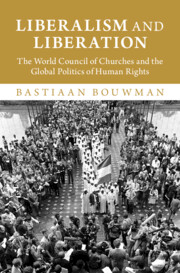
Founded in 1948, the World Council of Churches (WCC) was an important voice for human rights during the establishment of the postwar liberal international order. Bastiaan Bouwman demonstrates how its Christian human rights advocacy underwent a dramatic change over the following decades, from its initial focus on religious freedom to its later emphasis on social justice. By the 1970s, the WCC had moved to the left, focusing on causes such as the struggle against white minority rule in Southern Africa, right-wing repression in Latin America and Asia, and domestic and international inequalities. Drawing on extensive archival research, Bouwman sheds much needed light on a half century of contest over the concept of human rights. He challenges the notion that the rise of human rights was either a strictly secular or liberal phenomenon and shows how the WCC's advocacy interacted with major political developments such as decolonization and the Cold War.
This article discusses the account books of the Suriname Mission of the Moravian Church, a Protestant denomination. It focuses on the goods traded by the missionaries and the embedding of this trade in local, regional, and global networks. It also explores the underlying economic and colonial discourses. The missionaries recorded a wide range of different goods in their account books, including textiles, food, monkeys, and birds. The Moravians traded collectively as a group; only in a few cases are individual missionaries and members of the mission listed as having conducted business on their own. Although the main focus of the trade was on the transatlantic region, the missionaries were connected to local and regional networks and traded with various social and ethnic groups. The trade was embedded in a moral and religious framework: It was considered part of a God-pleasing and industrious life. Even when small mission stations were unable to contribute much economically, the image of industrious trade was maintained. In all mission stations, the local economy was based on the enslavement of human beings. In the account books, enslaved people appear as a standardised item. The practice of accounting thus contributed to the normalisation of transatlantic slavery
This chapter completes the analysis of community protection in the Philippines in two stages. First, a series of focused qualitative comparisons with non-Catholic denominations broadens the attention to other sectors of the Philippine religious landscape such as the Iglesia Ni Cristo, evangelical communities, and denominations of the National Council of Churches in the Philippines such as the United Methodist Church in the Philippines. While the Catholic Church possesses a blend of commitment and capacity that facilitates Drug War intervention, these other traditions offer differing configurations of these variables that, the authors show, shape their responses to the Drug War, which range from narrow self-preservation to internationally oriented protective efforts to, in some cases, religious endorsement of Drug War violence. Second, the chapter turns to an innovative dataset mapping Drug War violence to evaluate a key quantitative implication of the argument: that, all else being equal, neighborhoods with a Catholic church will feature fewer Drug War killings than those without. This community protection does not extend to infrastructure from other religious traditions.
Ideas drive economic growth by freeing us from the curse of diminishing returns. That is true today and was true when economic growth began in northwestern Europe in the 1700s. Back then, ideas such as Arkwright’s factory revolutionized the cotton textile industry and drastically cut the cost of spinning cotton. A torrent of such new ideas, in fact, began began to flow through northwestern Europe from the 1600s on. Some came from scientific discoveries, although the wholesale application of scientific theories had to wait until the 1800s. Others reflected the new belief that innovation was possible and a new epistemological standard for determining what was true and worth investigating. The ideas could not be put to work, though, without the mechanics and engineers who had the skills needed to put the new concepts into practice. Northwestern Europe had such skilled workers, along with institutions that encouraged the search for new ideas. Did Europe’s religion also spur economic growth? Max Weber believed that Protestantism did, though recent research belies his claim. Christianity as whole, however, did foster economic growth in northwestern Europe in a variety of ways.
In this landmark contribution to the study of modern China, Steve Smith examines the paradox of 'supernatural politics'. He shows that we cannot understand the meaning of the Communist revolution to the Han Chinese without exploring their belief in gods, ghosts and ancestors. China was a religious society when the Communist Party took power in 1949, and it sought to erode the influence of the minority religions of Buddhism, Daoism, Catholicism and Protestantism. However, it was the folk religion of the great majority that seemed to symbolize China's backwardness. Smith explores the Party's efforts to eliminate belief in supernatural entities and cosmic forces through propaganda campaigns and popularizing science. Yet he also shows how the Party engaged in 'supernatural politics' to expand its support, utilizing imagery, metaphors and values that resonated with folk religion and Confucianism. Folk religion is thus essential to understanding the transformative experience of revolution.
This chapter deals with the institutional history of Nuer Christianity and examines how various interconnections that were made possible through people’s movement across the frontierlands contributed to the development of churches and the circulation of Christian knowledge. It starts in the early twentieth century with the coming of missionaries to southern Sudan and explores the introduction of Seventh-day Adventism in the 1970s and the consequent emergence of Messianic groups out of the Adventist church since the 1990s. The chapter demonstrates how claims of biblical authenticity (that is, of being the ’true church’) fuelled schisms and institutional fragmentation. The chapter is concerned with both the history and proliferation of Messianic institutions in Gambella, and the ways in which Messianics thought about the history and biblical indexicality of their churches, as institutions that traced their roots to the Holy Bible.
This chapter introduces the main themes and arguments of the book. It opens by introducing the Church of God (Seventh Day) and its offshoots in the frontierlands of Gambella, and the preoccupation of Nuer Messianics with truth and biblical authenticity. It then discusses why and how exploring the ideas and practices of Nuer Messianics in the Ethiopia-South Sudan borderlands contributes to the study of religious mediation and to the literatures on African born-again Christianity, African Judaising movements, and spiritual life in Ethiopia and South Sudan.
This chapter situates the study within a broader historical, political, and scholarly context, and presents the methodology upon which it draws. First, the chapter sketches the history of Gambella as a site of encounter between the Ethiopian state and Nuer society and examines the historical and anthropological scholarships on Ethiopia’s peripheries and on the eastern frontier of Nuerland. It then discusses my own encounter with Gambella, the context and political environment in which research took place, the local religious landscape and the place of Messianic Jews in it, and the ‘data collection’ methods and research approach deployed. The final sections of the chapter explore my positionality in Gambella, as a Jewish Israeli researcher among Messianic Jews, and the sort of intersubjective encounters that informed this study.
The primary source at the center of this chapter’s analysis is produced by a Colombian evangelical pioneer and focuses on the expulsion of his family and the evangelical church in the village of La Tulia, Valle, Colombia, in 1949. The autobiographical account, written some years after the event, recounts memories of the experience and its interpretation considering what it meant for him to be an evangelical Christian in Colombia in the mid-twentieth century. The expulsion occurred against the backdrop of a struggle between liberals and conservatives that involved the Catholic Church and the evangelicals, resulting in an unraveling of the social fabric of the communities where the evangelical presence was very important. Pedro Aguirre, author of the text, was the founder of the town of La Tulia, Valle, and a social and liberal leader who, after having supported the construction of the Catholic temple, abandoned Catholicism for Protestantism. The analysis aims to identify the elements at play in the construction of evangelical memories, which will facilitate not only the use of the source itself but also a deeper understanding of the context in which it was produced.
Although basic freedoms (such as freedom of thought) in Nicaragua were decreed in 1869, their implementation did not have major repercussions until 1893 with the approval of La Liberrima – an important transformation in the country. Its introduction reflected a great change in the relationship of religion and the Constitutions of 1838 and 1858. An analysis of La Liberrima is necessary to study the original development of Protestantism as a social phenomenon within modern Nicaragua. Following the irruption of radical liberalism at the end of the nineteenth century, Protestantism expanded and developed new forms of association. In this context, the emergence and meaning of the phenomenon can be linked to modernizing forms of civil participation that created local bases and fomented its expansion including churches, schools, health-related projects, and publications. The chapter also includes an examination of a Protestant publication, principally the magazine Antorcha, to highlight the evolution of Protestantism as a historical process. Based on these documents, this work aims to broadly assess the emergence of local Protestant actions that developed in a less than welcoming environment.
This chapter presents El Evangelista (1877–1886), the first Protestant, Spanish-language newspaper in the Río de la Plata region of Argentina as well as two articles that appeared in El Estandarte (1883–1901) and El Atalaya (1901–1909). These publications were among the most influential journalistic organs that Protestants used for the initial dissemination of their ideas in the port cities of Buenos Aires, Rosario de Santa Fe, and Montevideo in the period 1870–1900. Using these sources, this chapter analyzes how the anti-Catholic discourse wielded by Protestantism contributed to a growing crisis of meaning by questioning Catholic society, its mediations such as the miracle of the mass, prayers for the dead, relics, the cult of saints, the monastic way of life, and its agents. This challenge aimed to establish a religious reformation that would introduce a new moral order to the society and culture of the region.
Initially, perhaps even unknowingly, the young Mexican Dominican Manuel Aguas was drawn to the path of Martin Luther. Like the German theologian, Aguas read the Bible and his ruminations convinced him to break with the Roman Catholic Church. In response, the ecclesiastical institution excommunicated him. At the heart of this chapter is a letter in which Manuel Aguas provides an account of his conversion to Protestantism. The account caused a great commotion in Mexico City. Aguas's writing was published in El Monitor Republicano on April 26, 1871. Despite the influence of Aguas’ ideas, there is no doubt that he benefited from the past efforts of various converts that attempted to establish Protestantism in Mexico City. In this sense, he fertilized a ground prepared by others but added an activism that, within a few months, garnered public attention for the challenges it posed to the religious and cultural establishment of the time. His account makes visible the construction of a marginalized faith through his vigorous attempts to defend its legitimacy in an environment that overtly denied it.
This book’s Introduction sets out the key intellectual and historical contexts for its argument. It shows that religious belief gained an important cultural emphasis after the Reformation and that it was considered to be distinct from other kinds of belief or assent. Engaging with scholarly discussions of belief, this introduction suggests that the period from around 1580 to the 1650s witnessed an attempt to investigate what was particular about a specifically religious kind of belief. Its certainty and spiritual origin were compared to, and contrasted with, other kinds of assent that were generated by probable forms of argument. An important and widespread way of effecting this comparison involved considering religious belief alongside the kinds of assent generated in legal settings – when witness evidence is evaluated for its credibility. The introduction roots this discursive method in contemporary legal culture, before surveying recent scholarship on literary culture, law and religion.
The sale, twice, of a Medici cabinet ordered for an English estate introduces the modern idea of heritage, initiated by Edmund Burke. It covers Protestant narratives and customary laws, and concludes with Alasdair MacIntyre’s thesis about narrative and identity.
How did Protestant female missionaries influence women’s political participation in colonial Korea? Under Joseon Confucian norms, women were excluded from education and public life. The first Western female missionary arrived in 1885 and trained Korean “Bible women,” creating spaces for women’s education and organization during colonial rule (1910–1945). While existing research examines missionary effects on education and fertility, impacts on political participation remain unexplored. Using historical mission records and data on independence activists, I find that greater exposure to female missionaries led to greater female political activism. Gender-specific ordinary least squares analysis reveals that female missionary exposure strongly predicts women’s activism, whereas it has no effect on men. To strengthen causal identification, I employ missionary children as an instrumental variable. Mechanisms operate through female role models and informal networks, including Bible classes and home visits. These findings provide the first systematic evidence linking Protestant missions to women’s political empowerment before suffrage, with effects persisting in female political representation after 1945.
Chapter 8 examines a neo-Latin university drama, Christus Triumphans, which was written by the English Protestant John Foxe while he was living in exile during the reign of Mary I, and which depicts Mater Ecclesia (Mother Church) as the mother and schoolmistress of the entire human race. The chapter argues that Foxe uses his dramatic work to forge a diverse community of Continental and English Protestants into the impassioned body of the Church as Christ’s bride, who desires the return of Christ and an end to all tyrannical violence.
The Protestant Reformation placed intense scrutiny on religious belief in early modern England. But how did this belief work? What resources did it draw on? How did such a faith differ from other kinds of assent? In this interdisciplinary study, Joseph Ashmore argues that early modern literature became a key site for handling these questions. Focusing on late sixteenth- to mid seventeenth-century writing, he shows how Protestant authors turned to contemporary legal discourses to represent and analyse faith. Techniques for evaluating courtroom testimony became a powerful tool for investigating what was distinctive about religious belief. Examining the sermons of Lancelot Andrewes and John Donne, the philosophy and prose fiction of Francis Bacon, and the poems of Henry Vaughan, Ashmore shows how legal notions of evidence shaped discussions of faith across a number of different genres, and within a variety of social and political contexts.